
Search

Haley Mathiot (9 KP) rated Glorious in Books
Apr 27, 2018


It's really hard to say if I liked Glorious or not. I liked it in some ways, in some ways it was good but I could not like it, and in other ways I disliked it.
One of the reasons I did like it, was the writing. McFadden has an interesting writing style: She writes like people think. You get asked a question and you have a million things you want to say, and a million thoughts go through your head at light speed, but all you say is a short quick answer that has no significance to the person who asked, but has monumental significance to you because of your thoughts behind all of it? That's what reading Glorious feels like, and that's how McFadden writes. It's beautiful and insightful.
Glorious is really hard to enjoy, even if you do like it, because of the things that happen. It's a tragic time period, and a lot of horrible things happen to poor Easter. She witnesses families being torn apart by abuse and rape, she sees people die, she commits sins, she gets wrapped up with the wrong people. There are good parts, wonderful parts that make you smile and sigh and say "thank God something good is finally happening to the poor girl." But then there are other parts that say "oh will it ever end for poor Easter?" It's hard to enjoy stuff like rape and murder and lynching. Glorious is a wakeup call, reminding us what life was like for Black Americans (respectively) after they got their freedom, but before they gained equality with Whites.
I got to Chapter 23, about 2/3 of the way through, when I stopped reading. It didn't feel like anything was happening. I mean, lots of things happened to Easter, but nothing was happening in the story. It was just her life written out, and it was too broad. There was no main plot, it was all subplot.
I "enjoyed" (or maybe appreciated is a better word) the part that I read, however I don't think I should read something unless I feel urged to continue.
Content: Adult content. Language, violence, rape, etc. Has some homosexuality
Recommendation: Ages 18+
One of the reasons I did like it, was the writing. McFadden has an interesting writing style: She writes like people think. You get asked a question and you have a million things you want to say, and a million thoughts go through your head at light speed, but all you say is a short quick answer that has no significance to the person who asked, but has monumental significance to you because of your thoughts behind all of it? That's what reading Glorious feels like, and that's how McFadden writes. It's beautiful and insightful.
Glorious is really hard to enjoy, even if you do like it, because of the things that happen. It's a tragic time period, and a lot of horrible things happen to poor Easter. She witnesses families being torn apart by abuse and rape, she sees people die, she commits sins, she gets wrapped up with the wrong people. There are good parts, wonderful parts that make you smile and sigh and say "thank God something good is finally happening to the poor girl." But then there are other parts that say "oh will it ever end for poor Easter?" It's hard to enjoy stuff like rape and murder and lynching. Glorious is a wakeup call, reminding us what life was like for Black Americans (respectively) after they got their freedom, but before they gained equality with Whites.
I got to Chapter 23, about 2/3 of the way through, when I stopped reading. It didn't feel like anything was happening. I mean, lots of things happened to Easter, but nothing was happening in the story. It was just her life written out, and it was too broad. There was no main plot, it was all subplot.
I "enjoyed" (or maybe appreciated is a better word) the part that I read, however I don't think I should read something unless I feel urged to continue.
Content: Adult content. Language, violence, rape, etc. Has some homosexuality
Recommendation: Ages 18+
A Sinner in Mecca: A Gay Muslim's Hajj of Defiance
Book
This is the Islam you've never been allowed to see. Daringly reported from its frontlines and...
The Story of Sex: From Apes to Robots
Philippe Brenot, Laetitia Coryn and Will McMorran
Book
*The French Best-seller* 'The book France won't stop talking about...undoubtedly a lovely Christmas...

Antonio Banderas recommended Lawrence of Arabia (1962) in Movies (curated)


Hazel (1853 KP) rated What We Left Behind in Books
Dec 7, 2018

<i>This eBook was provided by the publisher via NetGalley in exchange for an honest review </i>
Gretchen and Toni are high school sweethearts who believe they will be together forever, but will they cope being apart at different universities? Toni is off to Harvard and Gretchen to New York where they plan to meet up every weekend however things get in the way, and not just coursework.
The main theme of<i> What We Left Behind</i> is sexual orientation and gender. Both Gretchen and Toni are attracted to girls, however Toni identifies as genderqueer. Throughout school, this never bothered Gretchen, though when Toni begins feeling a connection with a group of transgender students, Gretchen begins to question her position in Toni’s life.
Unlike Talley’s previous novel <i>Lies We Tell Ourselves</i>, which deals with ethnic minorities and homosexuality during a time when it was seen as completely unacceptable, <i>What We Left Behind</i> is set in the present day where peoples’ sexual preferences are accepted in society – mostly. What Talley is attempting to prove with this novel is that everyone, regardless of gender, can experience love, and that long distance relationships can be difficult for everyone. Most importantly this story expresses how difficult it is to understand trans sexuality, genderqueer, gender nonconforming etc. There are characters that are horrified by the idea, comfortable with it, or, like Gretchen, confused about how it effects themselves and their relationship. And then there is Toni. Toni is probably the most confused of all: who is s/he really?
Talley tries to make the reader experience the difficulties the main characters face with the use, or lack of pronouns. For someone who identifies as neither he nor she, Toni has a very hard time trying to find a label Toni feels comfortable with.
I did not enjoy <i>What We Left Behind</i> as much as <i>Lies We Tell Ourselves</i>, not because it was not good – it was – but I am not that into romance novels. After a while the story began to feel boring and repetitive, particularly in terms of Gretchen and Toni’s relationship. It is, however, worth a read. There are not many novels that focus on transgender issues, especially in such a positive way. Therefore I am sure this young adult novel is going to interest a large amount of readers.
Gretchen and Toni are high school sweethearts who believe they will be together forever, but will they cope being apart at different universities? Toni is off to Harvard and Gretchen to New York where they plan to meet up every weekend however things get in the way, and not just coursework.
The main theme of<i> What We Left Behind</i> is sexual orientation and gender. Both Gretchen and Toni are attracted to girls, however Toni identifies as genderqueer. Throughout school, this never bothered Gretchen, though when Toni begins feeling a connection with a group of transgender students, Gretchen begins to question her position in Toni’s life.
Unlike Talley’s previous novel <i>Lies We Tell Ourselves</i>, which deals with ethnic minorities and homosexuality during a time when it was seen as completely unacceptable, <i>What We Left Behind</i> is set in the present day where peoples’ sexual preferences are accepted in society – mostly. What Talley is attempting to prove with this novel is that everyone, regardless of gender, can experience love, and that long distance relationships can be difficult for everyone. Most importantly this story expresses how difficult it is to understand trans sexuality, genderqueer, gender nonconforming etc. There are characters that are horrified by the idea, comfortable with it, or, like Gretchen, confused about how it effects themselves and their relationship. And then there is Toni. Toni is probably the most confused of all: who is s/he really?
Talley tries to make the reader experience the difficulties the main characters face with the use, or lack of pronouns. For someone who identifies as neither he nor she, Toni has a very hard time trying to find a label Toni feels comfortable with.
I did not enjoy <i>What We Left Behind</i> as much as <i>Lies We Tell Ourselves</i>, not because it was not good – it was – but I am not that into romance novels. After a while the story began to feel boring and repetitive, particularly in terms of Gretchen and Toni’s relationship. It is, however, worth a read. There are not many novels that focus on transgender issues, especially in such a positive way. Therefore I am sure this young adult novel is going to interest a large amount of readers.

Phil Leader (619 KP) rated The Novice (Black Magician Trilogy, #2) in Books
Nov 21, 2019
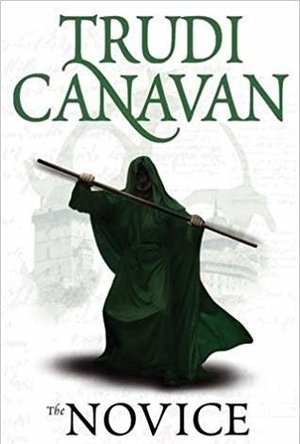
The Novice is the second book in The Black Magician trilogy and continues the story of Sonea, the slum girl who discovers she has magical powers.
A few months after the first book, Sonea is offically inducted as a novice into the Magician's Guild in Imardin. She is immediately looked down on by her fellow novices and indeed other magicians because of her poor upbringing (magicians always being taken from the families of the rich upper class). One novice in particular will go to any lengths to humiliate her. Meanwhile Sonea is hiding a secret. The High Lord of the Guild is practicing black magic, strictly forbidden. Dannyl is sent on a secret mission by Lorlen to try to discover how the High Lord won these powers and if there is anything that can be done to stop him.
I found this book to be far more satisfying than the first book, The Magician's Guild. I think this is due to two factors. Firstly Canavan's writing is far more confident and assured (not surprising for a second novel). Also the story arc is a lot less predictable and allows for more twists and turns since the end is not inevitable (in the first novel it is clear that Sonea will eventually be joining the guild; it is only the sub-plots that provide suprises).
As a consequence this is an easier read than the first book with plenty of good stories, either Sonea's (mis)adventures in the Guild or Dannyl's voyage of discovery on his travels. The end resolves one of the major plot points, leaving the rest for the third book, The High Lord to investigate.
Canavan touches on various topics during the book, particularly bullying by peers and also some nice observations on repression of homosexuality in the intolerant Imardin society.
It is also welcoming to see more of the land; the first book was bound to the city itself but here through Dannyl we get to see the neighbouring lands and discover some of their peoples and customs, together with a fair amount of hazardous travelling.
The magic system is also key; normally magicians throw around a bewildering array of spells with limitless powers. Clearly this isn't an option in these books and each spell and power Sonea learns is neatly and logically explained and consistant. It really makes a change that the magic spells are treated mechanically rather than as, well, 'magic'.
Definitely a recommended read
A few months after the first book, Sonea is offically inducted as a novice into the Magician's Guild in Imardin. She is immediately looked down on by her fellow novices and indeed other magicians because of her poor upbringing (magicians always being taken from the families of the rich upper class). One novice in particular will go to any lengths to humiliate her. Meanwhile Sonea is hiding a secret. The High Lord of the Guild is practicing black magic, strictly forbidden. Dannyl is sent on a secret mission by Lorlen to try to discover how the High Lord won these powers and if there is anything that can be done to stop him.
I found this book to be far more satisfying than the first book, The Magician's Guild. I think this is due to two factors. Firstly Canavan's writing is far more confident and assured (not surprising for a second novel). Also the story arc is a lot less predictable and allows for more twists and turns since the end is not inevitable (in the first novel it is clear that Sonea will eventually be joining the guild; it is only the sub-plots that provide suprises).
As a consequence this is an easier read than the first book with plenty of good stories, either Sonea's (mis)adventures in the Guild or Dannyl's voyage of discovery on his travels. The end resolves one of the major plot points, leaving the rest for the third book, The High Lord to investigate.
Canavan touches on various topics during the book, particularly bullying by peers and also some nice observations on repression of homosexuality in the intolerant Imardin society.
It is also welcoming to see more of the land; the first book was bound to the city itself but here through Dannyl we get to see the neighbouring lands and discover some of their peoples and customs, together with a fair amount of hazardous travelling.
The magic system is also key; normally magicians throw around a bewildering array of spells with limitless powers. Clearly this isn't an option in these books and each spell and power Sonea learns is neatly and logically explained and consistant. It really makes a change that the magic spells are treated mechanically rather than as, well, 'magic'.
Definitely a recommended read
LeftSideCut (3776 KP) rated Nobody Sleeps in the Woods Tonight (2020) in Movies
Oct 29, 2020 (Updated Oct 29, 2020)
Contains spoilers, click to show
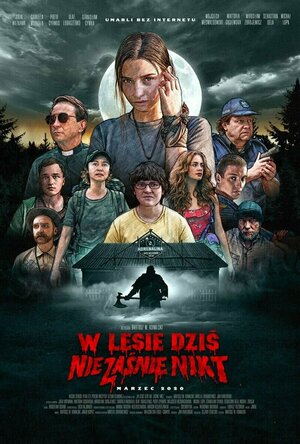
As a starting note, please please please watch this film with the audio set to Polish with subtitles. Netflix started playing the dubbed version for me, and I managed about 30 seconds worth of cheesy American voice over before I couldn't stand it any longer. It's 100% more natural the way it was intended.
Nobody Sleeps in the Woods tonight is absolutely and wholly not original - it cherry picks parts from other horror movies and shamelessly imitates them, and do you know what? I don't hate it.
The whole movie is shot nicely, especially taking into account it's low budget.
Among these moments we have:
- A sleeping bag kill ripped straight out of Friday the 13th Part VII.
- A character explaining the rules of horror movies just like in Scream.
- A character tied to a chair and ballgagged a la Hostel.
- Big cannabalistic, dungaree wearing woodsman straight out of Wrong Turn.
- A cut-in-half-vertically-with-an-axe kill from Wrong Turn 2, using the same damn camera angle and everything.
- A character going through a woodchipper like in Tucker and Dale vs Evil
- An under the bed shot of someone being stabbed repeatedly with a machete, just like in Freddy vs Jason.
So yeah, absolutely zero points for originality, but props for executing it all to a satisfactory degree. A less cynical person could choose to look at it as a horror love letter, rather than a rip off.
Some of the camerawork is genuinely fantastic. There are multiple shots during the runtime that are quite captivating, and took me out of the standard slasher situation now and again.
The make up effects applied to the monster men are pretty good, and the movie delivers some pretty brutal gore. It's hard to fully tell, but it looked like a fair chunk of it was practical, which is always a bonus.
The characters are likable as well, especially the badass final girl Zodiac, played awesomely by Julia Wieniawa-Narkiewicz.
The film also touches on some social issues, such as the perception of homosexuality in Poland. It's a shame it's not explored further than a few lines of dialogue.
Nobody Sleeps in the Woods may be down right predictable, but if you can leave any cynicism at the door, then it's a pretty fun slasher to pass the time.
As my first foray into Polish horror, I found it mostly enjoyable. Worth checking out for any horror fans.
Nobody Sleeps in the Woods tonight is absolutely and wholly not original - it cherry picks parts from other horror movies and shamelessly imitates them, and do you know what? I don't hate it.
The whole movie is shot nicely, especially taking into account it's low budget.
Among these moments we have:
- A sleeping bag kill ripped straight out of Friday the 13th Part VII.
- A character explaining the rules of horror movies just like in Scream.
- A character tied to a chair and ballgagged a la Hostel.
- Big cannabalistic, dungaree wearing woodsman straight out of Wrong Turn.
- A cut-in-half-vertically-with-an-axe kill from Wrong Turn 2, using the same damn camera angle and everything.
- A character going through a woodchipper like in Tucker and Dale vs Evil
- An under the bed shot of someone being stabbed repeatedly with a machete, just like in Freddy vs Jason.
So yeah, absolutely zero points for originality, but props for executing it all to a satisfactory degree. A less cynical person could choose to look at it as a horror love letter, rather than a rip off.
Some of the camerawork is genuinely fantastic. There are multiple shots during the runtime that are quite captivating, and took me out of the standard slasher situation now and again.
The make up effects applied to the monster men are pretty good, and the movie delivers some pretty brutal gore. It's hard to fully tell, but it looked like a fair chunk of it was practical, which is always a bonus.
The characters are likable as well, especially the badass final girl Zodiac, played awesomely by Julia Wieniawa-Narkiewicz.
The film also touches on some social issues, such as the perception of homosexuality in Poland. It's a shame it's not explored further than a few lines of dialogue.
Nobody Sleeps in the Woods may be down right predictable, but if you can leave any cynicism at the door, then it's a pretty fun slasher to pass the time.
As my first foray into Polish horror, I found it mostly enjoyable. Worth checking out for any horror fans.

Eleanor Luhar (47 KP) rated Highly Illogical Behavior in Books
Jun 24, 2019
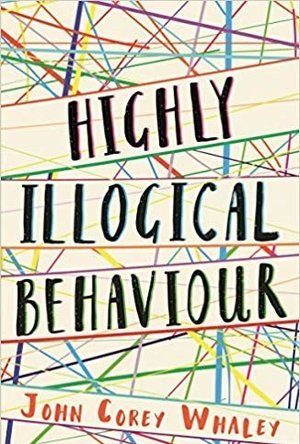

This is only a short book, but there is a huge story between these pages. I personally found this book amazing because I related so much to one character, Solomon, due to my own personal experiences with mental illness. (Hah! You'll get that reference if you read the book.) But I still think that anyone will enjoy this book, and gain a deeper understanding of the mental health issues that are discussed.
Lisa seeks out Solomon, the "crazy" kid who jumped into a fountain three years ago, in hopes of writing a scholarship-winning essay on him. Solomon hasn't left the house in three years. Not even to go in his own back garden. Every time he tries to, or even thinks about it, he has severe panic attacks. So instead of trying anymore, he gave up and made peace with a life inside four walls.
As an aspiring psychologist, Solomon's case is perfect. But they become close friends, and eventually, Lisa even brings her boyfriend, Clark, to meet Sol. One thing they never expected was Sol falling in love... with Clark.
I have had times where I have been unable to leave my house. I used to have my school work sent home, and would avoid seeing anyone for as long as I could. It never got as bad as Sol's case, but I would happily stay inside my house 24/7. (My mum won't let me, though.) So I really did relate to Solomon. The descriptions of his behaviours and thoughts were really accurate in my opinion. It was quite inspiring to watch him slowly emerge from his shell and start living again.
Of course, there's also the topic of homosexuality in this. I love how Clark remained so friendly even when he knew Sol was gay - not doing the whole "ew he might fancy me" thing that a lot of guys tend to. They were best friends. But Lisa was fed ideas by her friend, Janis, that made her worry Clark was cheating on her with Sol. Yeah. Awkward.
Overall, I just thought this was fantastically written. There are aspects for everyone to relate to, I think. And hopefully, it will help people understand why some of us may seem so "crazy".
I can easily give this book 4.5 stars. I really enjoyed it, and loved the characters and their relationships. Even when Lisa was using Sol, I could see how she had good intentions. It was so well written.
Lisa seeks out Solomon, the "crazy" kid who jumped into a fountain three years ago, in hopes of writing a scholarship-winning essay on him. Solomon hasn't left the house in three years. Not even to go in his own back garden. Every time he tries to, or even thinks about it, he has severe panic attacks. So instead of trying anymore, he gave up and made peace with a life inside four walls.
As an aspiring psychologist, Solomon's case is perfect. But they become close friends, and eventually, Lisa even brings her boyfriend, Clark, to meet Sol. One thing they never expected was Sol falling in love... with Clark.
I have had times where I have been unable to leave my house. I used to have my school work sent home, and would avoid seeing anyone for as long as I could. It never got as bad as Sol's case, but I would happily stay inside my house 24/7. (My mum won't let me, though.) So I really did relate to Solomon. The descriptions of his behaviours and thoughts were really accurate in my opinion. It was quite inspiring to watch him slowly emerge from his shell and start living again.
Of course, there's also the topic of homosexuality in this. I love how Clark remained so friendly even when he knew Sol was gay - not doing the whole "ew he might fancy me" thing that a lot of guys tend to. They were best friends. But Lisa was fed ideas by her friend, Janis, that made her worry Clark was cheating on her with Sol. Yeah. Awkward.
Overall, I just thought this was fantastically written. There are aspects for everyone to relate to, I think. And hopefully, it will help people understand why some of us may seem so "crazy".
I can easily give this book 4.5 stars. I really enjoyed it, and loved the characters and their relationships. Even when Lisa was using Sol, I could see how she had good intentions. It was so well written.
Hazel (1853 KP) rated You Know Me Well in Books
May 25, 2017
LGBT
This ARC was provided by the publisher via NetGalley in exchange for an honest review
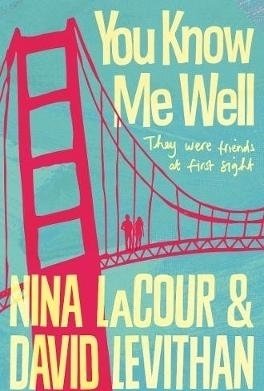
David Levithan is a well-known young adult author particularly in the LGBT communities. Throughout his career he has teamed up with other authors to write contemporary fiction that explores romantic relationships and feelings between teenagers. You Know Me Well is the result of a collaboration between Levithan and Nina LaCour, another American YA author.
Alternating between two points of view, You Know Me Well is about two homosexual teenagers, Mark and Katie, who are both going through difficult times in terms of their love life. Mark is in love with his best friend, but clearly the feelings are not reciprocated. On the other hand, Katie has run away from the chance to meet the girl of her dreams. A case of being in the right place at the right time results in a great friendship blooming between the two characters. Whilst relationships are breaking down all around them as a result of their actions, Mark and Katie discover that they understand each other more than anyone else has done in the past. With each other’s help, they begin to repair or come to terms with their current situations.
Although set near San Francisco during Pride Week – a positive festival to promote the stance against discrimination toward homosexuality – Levithan and LaCour write so freely about the topic that it appears a “normal” way of life, which is ultimately what people are campaigning for. Neither of the main characters experience any judgment on account of their sexuality.
Whilst You Know Me Well is a deeply honest novel about coming to terms with the truth and the heartaches of love, it does not particularly work well as a story. The ending feels ambiguous leaving both Mark and Katie in very similar situations to the beginning of the book, although marginally happier. In a way this enforces the point that there are not always “happy ever after” endings, but in terms of literature it does not make much of a story.
You Know Me Well comes with all sorts of messages about love, coming up with plans for the future, running away from your problems etc. but it is arguably a disappointment for readers who want a fictional tale to delve into and take them away from their everyday life. The subject matter, whilst listed as young adult, is more appropriate for school leavers or college students due to the unrealistic lack of parental intervention. On the other hand, if you are already a fan of David Levithan and know what to expect in his novels, You Know Me Well should live up to your anticipations.
David Levithan is a well-known young adult author particularly in the LGBT communities. Throughout his career he has teamed up with other authors to write contemporary fiction that explores romantic relationships and feelings between teenagers. You Know Me Well is the result of a collaboration between Levithan and Nina LaCour, another American YA author.
Alternating between two points of view, You Know Me Well is about two homosexual teenagers, Mark and Katie, who are both going through difficult times in terms of their love life. Mark is in love with his best friend, but clearly the feelings are not reciprocated. On the other hand, Katie has run away from the chance to meet the girl of her dreams. A case of being in the right place at the right time results in a great friendship blooming between the two characters. Whilst relationships are breaking down all around them as a result of their actions, Mark and Katie discover that they understand each other more than anyone else has done in the past. With each other’s help, they begin to repair or come to terms with their current situations.
Although set near San Francisco during Pride Week – a positive festival to promote the stance against discrimination toward homosexuality – Levithan and LaCour write so freely about the topic that it appears a “normal” way of life, which is ultimately what people are campaigning for. Neither of the main characters experience any judgment on account of their sexuality.
Whilst You Know Me Well is a deeply honest novel about coming to terms with the truth and the heartaches of love, it does not particularly work well as a story. The ending feels ambiguous leaving both Mark and Katie in very similar situations to the beginning of the book, although marginally happier. In a way this enforces the point that there are not always “happy ever after” endings, but in terms of literature it does not make much of a story.
You Know Me Well comes with all sorts of messages about love, coming up with plans for the future, running away from your problems etc. but it is arguably a disappointment for readers who want a fictional tale to delve into and take them away from their everyday life. The subject matter, whilst listed as young adult, is more appropriate for school leavers or college students due to the unrealistic lack of parental intervention. On the other hand, if you are already a fan of David Levithan and know what to expect in his novels, You Know Me Well should live up to your anticipations.
Hazel (1853 KP) rated I'll Be Home for Christmas in Books
Dec 7, 2018
<i>This ARC was provided by the publisher via NetGalley in exchange for an honest review </i>
Christmas can be a very difficult time for many people, especially if they are homeless. A selection of well known YA authors including Holly Bourne, Melvin Burgess and Marcus Sedgwick, have come together to produce an anthology of short stories that explore the idea of “home” during this festive period. Only a couple of the tales are about people living on the streets, however that does not mean those with a roof over their head necessarily have a home.
Once published, £1 of every copy of<i> I’ll Be Home for Christmas </i>sold will be donated to the British charity Crisis, an organization that offer their services to individual homeless citizens. They work all year round but advertise more heavily at Christmas. It is their hope that this book will increase awareness of homelessness and result in an increase of generosities this winter.
The fourteen short stories in this anthology all provide a different meaning of the word “home.” For some it is about having somewhere to live, for others it is about family, love and safety. The key connection between each author’s interpretations is the main character is unhappy or worried and does not feel a sense of home. A few tales result in a happy ending; unfortunately others are not fully resolved. Apart from a couple that take a sci-fi/fantasy direction, the authors have tried to keep their narratives as true to life in order to emphasise the problems many people in the UK, if not the world, face at Christmas and the year in general.
Being targeted at a young adult audience, most of the characters are in their late teens, dealing with issues that sadly many teenagers and children are faced with today. The same themes crop up in many of the stories, such as homosexuality, divorce, family or lack of, and the feeling of loneliness.
As stories go, the individual tales are nothing special. They are not exciting or gripping, as you would expect a novel to be, however some of the scenarios will stick with you long after turning the final page. Although set at Christmas time, these stories are not overly festive, largely due to the negativity the characters are facing. Even if you do not particularly enjoy the tales, it will not be a waste of time reading them. They will leave you with a greater awareness to the struggles of others during a time when “home” plays a vital part in people’s lives. Crisis hopes that the general public will become more mindful and willing to help out in the near future.
Christmas can be a very difficult time for many people, especially if they are homeless. A selection of well known YA authors including Holly Bourne, Melvin Burgess and Marcus Sedgwick, have come together to produce an anthology of short stories that explore the idea of “home” during this festive period. Only a couple of the tales are about people living on the streets, however that does not mean those with a roof over their head necessarily have a home.
Once published, £1 of every copy of<i> I’ll Be Home for Christmas </i>sold will be donated to the British charity Crisis, an organization that offer their services to individual homeless citizens. They work all year round but advertise more heavily at Christmas. It is their hope that this book will increase awareness of homelessness and result in an increase of generosities this winter.
The fourteen short stories in this anthology all provide a different meaning of the word “home.” For some it is about having somewhere to live, for others it is about family, love and safety. The key connection between each author’s interpretations is the main character is unhappy or worried and does not feel a sense of home. A few tales result in a happy ending; unfortunately others are not fully resolved. Apart from a couple that take a sci-fi/fantasy direction, the authors have tried to keep their narratives as true to life in order to emphasise the problems many people in the UK, if not the world, face at Christmas and the year in general.
Being targeted at a young adult audience, most of the characters are in their late teens, dealing with issues that sadly many teenagers and children are faced with today. The same themes crop up in many of the stories, such as homosexuality, divorce, family or lack of, and the feeling of loneliness.
As stories go, the individual tales are nothing special. They are not exciting or gripping, as you would expect a novel to be, however some of the scenarios will stick with you long after turning the final page. Although set at Christmas time, these stories are not overly festive, largely due to the negativity the characters are facing. Even if you do not particularly enjoy the tales, it will not be a waste of time reading them. They will leave you with a greater awareness to the struggles of others during a time when “home” plays a vital part in people’s lives. Crisis hopes that the general public will become more mindful and willing to help out in the near future.