Search

Search only in certain items:

40x40

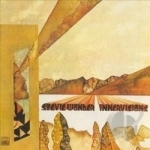
Graham Massey recommended Innervisions by Stevie Wonder in Music (curated)

 
Innervisions by Stevie Wonder
1973 | Rock
9.0 (1 Ratings)
Album Favorite

"I'd already bought the single, 'He's Misstra Know It All' and played that to death. I bought this album on the day that it came out in Woolworth's, when I was on holiday in Eastbourne. And then I had to wait a week to listen to it. I spent that time reading the back cover about Moogs, ARPs and other synth sounds and I didn't even know what those words meant! My imagination was quite engaged because he seemed to have played all of the instruments and that was unusual back then. But I've always liked records that have that much of a one-man stamp on them. The sound of Innervisions was different from what was around at that point. There wasn't anything that sounded as colourful as this album. These new synthesizers sounded sensuous and they were moving in a very animalistic way while being chest-resonators with humanistic kind of sounds. It was fascinating when I was first getting into music. It was a more sophisticated kind of pop music compared to what was going on at that point. All these complicated chords that Stevie Wonder was using were very intriguing to me. The sonics on this album really hit me and some tracks are more fruity than others. Then you had tracks like 'Visions', which are more jazzy and quite guitar-orientated. They gave me feelings that I didn't understand as a teenager, and even after over 40 years, Innervisions keeps on giving. I keep going back to it because it's got so many emotional layers: there's anger there, there's tenderness and there's a lot of commitment to the music. Stevie Wonder seemed more real and that was something you could align yourself with."

Source
  
The Last Thing To Burn
Will Dean | 2021 | Crime, Thriller
9
9.3 (3 Ratings)
Book Rating
Wow ... that was one heck of a powerful read and one where the characters will stay with me for some time.

Jane - named so by her "husband" Lennie - was trafficked from her native Vietnam with her younger sister, she is kept captive on an isolated farm in what can only be described as squalid and run down conditions. She is watched every minute of every day, she is not allowed to speak to anyone, she is not allowed to go anywhere - her day is regimented from start to finish and for each perceived transgression, the treasured possessions she has are slowly burned in front of her eyes.

This is a harrowing story of a desperate life of servitude and abuse; the scary thing is that it is happening to thousands of men, women and children the world over which makes it even more upsetting. However, it is also a story of hope and the desperate will and strength to survive and fight back when things appear to be hopeless.

The whole book is written from "Jane's" perspective and she is an enthralling narrator. The setting is just perfect and described scarily accurately - my job takes me into isolated farmhouses that are pretty bleak and dilapidated and this made the story even more real for me.

This is not an easy read by any stretch of the imagination but despite that, I found it very hard to put down. I was drawn into the story hook, line and sinker; it grabbed me by the throat and didn't let go until the very last page ... it lingers still in the back of my mind and there are very few books that do this.

Highly recommended.

Thank you to Hodder & Stoughton and NetGalley for my advance copy in return for an unbiased and unedited review.

  
It Takes a Nation of Millions to Hold Us Back by Public Enemy
1988 | Rock
8.0 (3 Ratings)
Album Favorite

"I got to love this album when I was 18, working in a second hand clothes shop in Glasgow, where one of the guys I worked with played it constantly. It was the first time I had heard music that felt like genuine contemporary protest music. The combination of Chuck D’s informed eloquence and unashamed confrontational stance was so potent. Here was a guy name-checking Martin Luther King and Malcolm X in the same breath as Coltrane and Anthrax. It was revolutionary in every sense. It felt dangerous. These guys had the FBI tapping their phones and were taking on the behemoth of the US establishment. While in retrospect the S1Ws may be the campest paramilitaries in history, the imagery of guerrilla conflict intensified the sense of resisting persecution. Like the best groups, it felt like a gang, too. Flav the joker, Chuck the boss, Terminator-X voiceless, but ever-present. Tight. Then there was the music. That fragmented repetition. Those bursts of brass and breakbeats, squealing like sirens against stolen guitars. Amazing. It didn’t sound like anything else. While Chuck D and his cartoon foil Flavor Flav had the lyrical articulacy, Terminator-X, Professor Griff and the Bomb Squad matched it musically. Their imagination was in context – how to take something from its original context, place it against something else out of context to create something way more powerful than either in isolation. In many ways, I still see this LP as the pinnacle of rap. Of course it is of its time and sonic trends advanced, but for sheer inventiveness and lyricism it has never been matched. It felt like rap was violently booting the world into a better direction – a brief flash of genius before it became mired in the vocabulary of egoism, misogyny and avarice. There have been great pinnacles since, but nothing matches this moment."

Source
  
Contains spoilers, click to show
Minor spoilers ...

This started out so well. It was incredibly magical - secret doorways on earth, which took the main character Karou, into a shop where her chimeara 'family' resided. Karou has little knowledge, being human, about her own origins or how she ended up in the care of Brimstone, the shop's custodian. All she knows is that he collects an endless supply of teeth (which she is often sent to pick up from around the world - the shop's doorway acting as a portal that deposits her anywhere on earth). There is a second door within the shop, which Karou is not allowed near and she has no idea what lies beyond it. Messages are sent to her via a crow-like creature. So far, so mysterious. It reminded me a little of Narnia or The Adventures of the Wishing Chair / Magic Faraway Tree. Oh, and if that's not enough - the teeth are used to help grant wishes (ranging from minor to major).

I'm a big fan of dual-world/magic-portal books. However, as the novel went on it became less intriguing. It slips into the sort of insta-love that is ten-a-penny in YA fiction. Also, I just felt that the 'big reveal' of what was behind the second door was a bit of a letdown. And the whole war between angels and chimera felt somehow jarring and unimaginative. I feel mean-spirited saying this, but the dynamic and world-building just didn't capture my imagination. The layering of the back-story also felt a bit forced and I started to find it dull.

I suppose the real test of the first book in a trilogy (as this is) is whether the reader can't wait to pick up the next instalment. Personally, I'm not sure I would bother. A shame, really, as it started out so well.
  

"Ziggy was like the entry level for me. I wasn't aware when I bought it that I was buying a concept album about a constructed creature called Ziggy Stardust. I just thought David Bowie WAS Ziggy Stardust. I must have been 12 or 13. I had a friend at school called Peter May who I sat next to, and we were both totally into the same things, like David and Marc. We both bought acoustic guitars and we'd have jamming sessions on Sunday nights at his parent's house, and I would learn the songs of both of them. It really sparked my imagination, and for a whole generation of people, Angie and David were the It couple for us. Forget about Mick [Jagger] and Bianca - that held no interest for me whatsoever, compared to Angie & David's glittering bisexual glamour. That was all a big part of it too, and that - for me - was when sexuality entered into it and I heard the word 'bisexual'. I'd heard the word 'queer' - but I'd never heard the word 'bisexual' or even an artist claiming they were. That was a huge moment for me. From Ziggy onwards, there was no looking back after that. I played truant from school to queue up to get tickets for that final tour of the Spiders, and Aladdin Sane was out by then, and I went to see him at the Liverpool Empire and it was mindblowing. And you know, Ian McCulloch, Marc Almond, Pete Burns - a whole generation of people who were to be the next wave were all there. It was an incredible world of glamour. I know they call it glam rock, but to me that was Sweet. David and Bryan [Ferry] - they were artists."

Source