Search
Search results
The Taster
Book
Amid the turbulence of World War II, a young German woman finds a precarious haven closer to the...
Fiction Historical Fiction WW2
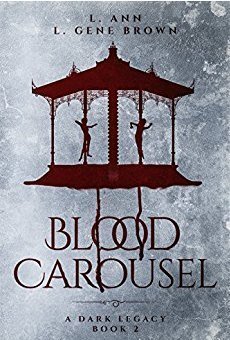
Blood Carousel
L. Gene Brown and L. Ann
Book
Rowan Walker – young college student and coffee house barista – believes that her twin sister,...
vampires paranormal romance

Heather Cranmer (2721 KP) created a post
Aug 20, 2021

Heather Cranmer (2721 KP) created a post
Aug 4, 2022
The Book of Cold Cases
Book
A true crime blogger gets more than she bargained for while interviewing the woman acquitted of two...
ghost story
Emanuela Orlandi and Ettore Majorana: Two Italian Mysteries Resolved?
Book
Discover the captivating true stories of Emanuela Orlandi and Ettore Majorana in this compelling...
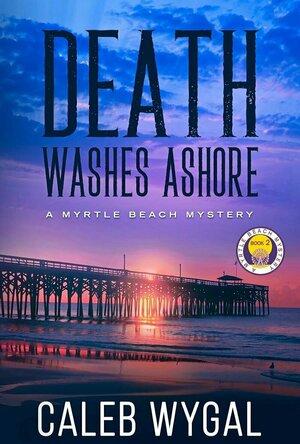
Mark @ Carstairs Considers (2534 KP) rated Death Washes Ashore in Books
Apr 30, 2024
Death of a Gladiator
One morning Clark Thomas is awakened by a text from one of the detectives in town requesting his presence at a crime scene. The body of Connor West has washed up on the local state beach. Connor was the star of one of the local tourist attractions, a gladiator themed dinner and show.
Even after Clark is warned away from the case, he can’t help but dig into Connor’s life and his work at the Gladiator Games Dinner Show. With a face from his past as his way into the lives of those Clark wants to interview, can he figure out what happened?
I had an issue with how Clark got involved in the mystery here, but I put that aside and kept reading. The mystery was good with several strong suspects and twists along the way to a logical climax. I appreciated how Clark went about things in the climax, too. We also got to know him and a couple of characters better, although I feel like we have many who hardly had any page time. The writing could have used polish in several spots, but most of the time it was fine. There is a little advancement on the cliffhanger from the previous book, but we’ll have to keep reading to see where it goes next. Overall, this is a fun second book in the series.
Even after Clark is warned away from the case, he can’t help but dig into Connor’s life and his work at the Gladiator Games Dinner Show. With a face from his past as his way into the lives of those Clark wants to interview, can he figure out what happened?
I had an issue with how Clark got involved in the mystery here, but I put that aside and kept reading. The mystery was good with several strong suspects and twists along the way to a logical climax. I appreciated how Clark went about things in the climax, too. We also got to know him and a couple of characters better, although I feel like we have many who hardly had any page time. The writing could have used polish in several spots, but most of the time it was fine. There is a little advancement on the cliffhanger from the previous book, but we’ll have to keep reading to see where it goes next. Overall, this is a fun second book in the series.
Mark @ Carstairs Considers (2534 KP) rated The Bush Tea Murder (A Caribbean Island Mystery #1) in Books
Apr 24, 2026
Naomi Solves Her First…Side Quest
Naomi Sinclair is a culinary journalist living her dream with her job at EAT TV hosting a show where she gets to interview chefs. When a potential new show investigating culinary related cold cases is presented to her, she immediately thinks of a famous case on her native St. Thomas. Four decades ago, the owner of a tea company on the island was killed while locked in her office. It’s the perfect case for her potential pilot. But will she be able to solve it?
The premise and setting appealed to me, so I decided to give this one a try. Sadly, the structure let it down. We get a series of short stories that tie in to the overall mystery only slightly. They feel like side quests. We also have a framing story of Naomi talking about all of this to executives of her TV network. When I realized how different the structure would be, I tried to give it a fair shot, but it truly didn’t work for me. On the other hand, I loved the characters and the setting, and the writing brought them both to life wonderfully. Also, keep in mind that there’s a bit of foul language for what I would have otherwise considered a cozy. If the next in the series has a more traditional structure, I would definitely read it.
BookblogbyCari (345 KP) rated The Psychopath Test in Books
Sep 11, 2018
This book is remarkably entertaining – I can see why it’s having such a long stint in the bookseller’s shelves! It’s most definitely written for the lay person, and that goes some way to explaining the book’s longevity.
It logs the course of events taken by Jon Ronson as he interviews some people who are deemed crazy, or psychopathic, and some people who diagnose psychological traits. The start of Ronson’s journey is intriguing - it begins when various academics, predominately neuroscientists, are sent mysterious and cryptic packages. They all rush onto online forums trying to figure out what it’s all about. Unfortunately, this section comes to an abrupt and disappointing conclusion (no spoilers).
This all changes in Chapter 2, however. Here, Ronson meets a man, Tony, who claims to have faked mental illness in order to get put into a psychiatric facility rather than a traditional prison. The Scientologists are on his side, and they send Ronson Broadmoor’s file on Tony, but with significant omissions, which shed a whole new light on why Tony should be incarcerated.
Chapter 3 describes how in the 1960’s psychiatrist Elliot Barker, held several nude LSD-induced psychotherapy sessions for psychopaths. In Chapter 4, Ronson goes on a conference to learn about Bob Hare’s psychopath checklist, and by Chapter 5, he’s using it in an interview with a leader of a death squad, Toto Constant. In Chapter 6, he uses it in an interview with Al Dunlan, who apparently enjoyed firing 6.000 people from their jobs.
Following a brief interlude to discuss the media, conspiracy theorists and the second coming, the theme of psychopathy is picked up again in Chapter 9 which looks at criminal profiling, and how it was once used to lure one particular suspect into an unwarranted arrest.
Ronson goes off on another tangent in Chapter 10, which discusses the (very real) problem of an apparent ballooning of mental illness diagnoses. Here he tells the tale of what happened when a 4-year-old girl was given 10 pills a day for “childhood bipolar” disorder.
In Ronson’s concluding chapter, he attends a tribunal for the Tony of Chapter 2, and Tony’s fate is decided (no spoilers). By this point, Tony’s charisma has got Ronson taken in, in spite of Tony showing several psychopathic traits.
My take away from the book is that people will have eccentricities, diagnosis or not, and the way to tell if someone is dangerous, is by their actions. Ronson himself has spotted psychopathic traits in himself, despite being overly anxious and not the slightest bit evil. The book sheds a lot of light, not only on the nature of obtaining a diagnosis, but also on its implications.
Whilst I do recommend the book, this book is most definitely not a thorough analysis of the mental health industry, nor the criminal profiling industry. But for entertainment purposes it gets top marks. If you are looking for a more authoritative book on the mental health industry and diagnosis, I recommend Saving Normal by Allen Frances.
It logs the course of events taken by Jon Ronson as he interviews some people who are deemed crazy, or psychopathic, and some people who diagnose psychological traits. The start of Ronson’s journey is intriguing - it begins when various academics, predominately neuroscientists, are sent mysterious and cryptic packages. They all rush onto online forums trying to figure out what it’s all about. Unfortunately, this section comes to an abrupt and disappointing conclusion (no spoilers).
This all changes in Chapter 2, however. Here, Ronson meets a man, Tony, who claims to have faked mental illness in order to get put into a psychiatric facility rather than a traditional prison. The Scientologists are on his side, and they send Ronson Broadmoor’s file on Tony, but with significant omissions, which shed a whole new light on why Tony should be incarcerated.
Chapter 3 describes how in the 1960’s psychiatrist Elliot Barker, held several nude LSD-induced psychotherapy sessions for psychopaths. In Chapter 4, Ronson goes on a conference to learn about Bob Hare’s psychopath checklist, and by Chapter 5, he’s using it in an interview with a leader of a death squad, Toto Constant. In Chapter 6, he uses it in an interview with Al Dunlan, who apparently enjoyed firing 6.000 people from their jobs.
Following a brief interlude to discuss the media, conspiracy theorists and the second coming, the theme of psychopathy is picked up again in Chapter 9 which looks at criminal profiling, and how it was once used to lure one particular suspect into an unwarranted arrest.
Ronson goes off on another tangent in Chapter 10, which discusses the (very real) problem of an apparent ballooning of mental illness diagnoses. Here he tells the tale of what happened when a 4-year-old girl was given 10 pills a day for “childhood bipolar” disorder.
In Ronson’s concluding chapter, he attends a tribunal for the Tony of Chapter 2, and Tony’s fate is decided (no spoilers). By this point, Tony’s charisma has got Ronson taken in, in spite of Tony showing several psychopathic traits.
My take away from the book is that people will have eccentricities, diagnosis or not, and the way to tell if someone is dangerous, is by their actions. Ronson himself has spotted psychopathic traits in himself, despite being overly anxious and not the slightest bit evil. The book sheds a lot of light, not only on the nature of obtaining a diagnosis, but also on its implications.
Whilst I do recommend the book, this book is most definitely not a thorough analysis of the mental health industry, nor the criminal profiling industry. But for entertainment purposes it gets top marks. If you are looking for a more authoritative book on the mental health industry and diagnosis, I recommend Saving Normal by Allen Frances.
LucyB (47 KP) rated Three Daughters of Eve in Books
Jul 23, 2017
Powerful, thought-provoking story
I was really happy to receive Three Daughters of Eve on Netgalley, as I'd recently read an interview with the author and thought the book sounded fascinating.
It certainly lived up to expectations. The book is set both in the past and the present, focusing on Peri as a student in Oxford, and as a wealthy wife (14 years later) in Istanbul. It starts with something of a red herring, focusing on Peri's attack (and almost rape) by a beggar, then develops into an exploration of her past, as a Turkish Muslim at Oxford University.
She's flanked by Shirin, a non-believer, and Mona, a devout Muslim - making them 'the sinner, the believer and the confused'. They're united by a man called Professor Azur, who has a major influence in their lives, both positive and negative.
The book is an intriguing exploration into religion, belief and culture-clash - and in particular, the scenes detailing Peri's past, with a non-believing father and a devout mother, worked particularly well. A few moments jarred slightly - for example, the sudden revelation about the twin brother towards the end, and the abrupt shift in perspective from Peri to Professor Azur (again, towards the end), but for the most part, this book was masterfully executed and beautifully sustained throughout.
I think Shafak has a strong, resonant style, combined with a philosophical approach - which works really well. I'd definitely like to read more of her books
It certainly lived up to expectations. The book is set both in the past and the present, focusing on Peri as a student in Oxford, and as a wealthy wife (14 years later) in Istanbul. It starts with something of a red herring, focusing on Peri's attack (and almost rape) by a beggar, then develops into an exploration of her past, as a Turkish Muslim at Oxford University.
She's flanked by Shirin, a non-believer, and Mona, a devout Muslim - making them 'the sinner, the believer and the confused'. They're united by a man called Professor Azur, who has a major influence in their lives, both positive and negative.
The book is an intriguing exploration into religion, belief and culture-clash - and in particular, the scenes detailing Peri's past, with a non-believing father and a devout mother, worked particularly well. A few moments jarred slightly - for example, the sudden revelation about the twin brother towards the end, and the abrupt shift in perspective from Peri to Professor Azur (again, towards the end), but for the most part, this book was masterfully executed and beautifully sustained throughout.
I think Shafak has a strong, resonant style, combined with a philosophical approach - which works really well. I'd definitely like to read more of her books