

Alarmy - Alarm clock
Lifestyle and Utilities
7.0 Rate It
App
■ "World's Most Annoying Alarm App, featured by Cnet, Gizmodo,Huffington post etc." ■ #1 in the...

Emma @ The Movies (1786 KP) rated What We Do In The Shadows (2014) in Movies
Jun 2, 2020
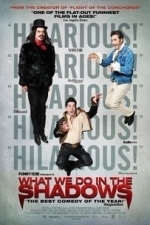


Viago, Deacon, Vladislav and Petyr live together in Wellington, New Zealand. There's nothing too odd about a group of men living together, they do all the usual things, argue over the chores, have guests for dinner, clean blood out of their new second-hand clothing... oh right, yes, and they're vampires. Life is fine until Nick comes into their lives. He's young and hip and starts to show them what the modern world has to offer. We watch the story of these ordinary vampires as their night to night lives unfold.
The documentary style is always an interesting idea, it's not even something that actual documentaries get right all the time so a fictionalised version was intriguing and they really staked it through the heart with this one. We cut between interview and footage styles and it really does help to give you that real-life documentary feel as well as a sense of each individual character. The addition of historical photographs and illustrations was a fun way to get bits of their backstory and I thought they were created really well.
There is a brilliant casual nature about all the acting and being able to just be yourself means it does all feel a lot more real. While I like all the characters my favourite is definitely Viago played by Taika Waititi. There's a wonderful innocence to him and a kind nature that is really at odds with the whole vampire thing. He's keen for everyone to get along and he's got a very positive outlook on death. Waititi gives Viago that bouncy energy that always makes me smile, so many of his moments genuinely made me smile.
Everyone brings that bit of supernatural fun, the rivalry with the werewolves, meeting with other vampires on the street, and the vampire "tricks" that lead to one of my favourite pieces in the whole film... the police officers. Their reactions to everything were priceless.
I've watched it a few times recently and honestly, each watch is just as entertaining as the first. It might not have the high production values of other films but it really has a wonderful presence. There are some days when you need this sort of amusement (with a tiny bit of devastation thrown in), this is the antidote to so many of the world's troubles.
If you haven't already done so then check out these episodes of At The Flicks (Mega Shark In Lockdown) and MovieDrone (Episode 91) where I talking with all your favourite movie men about What We Do In The Shadows.
Originally posted on: https://emmaatthemovies.blogspot.com/2020/06/what-we-do-in-shadows-movie-review.html

Violet Magazine for Female Entrepreneurs And Women In Business.
Magazines & Newspapers and Lifestyle
App
Welcome to Violet! Enjoy a FREE Trial! Violet Magazine is for female entrepreneurs and women in...

Darren (1599 KP) rated A Patch Of Fog (2017) in Movies
Jun 20, 2019
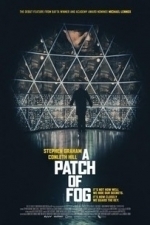
As Sandy tries to get himself out of the blackmail, he learns that Robert has a much darker side which puts his and his girlfriend, presenter Lucy (Pulver) lives at risk.
Thoughts on A Patch of Fog
Characters – Robert is mild mannered security guard in a general store, he is a lonely figure that takes advantage of the situation of power once he catches acclaimed author stealing in his store. He blackmails Sandy into being his friend and tries to stay one step ahead of him as he tries his best to escape from position. Sandy is the acclaimed author that has become a celebrity on television, though he wants to take a step away from the spotlight and the endless conversations about his book, A Patch of Fog. He tries his best to outsmart Robert though he can only get so far before learning Robert has everything planned out. Lucy is the television presenter just starting a relationship with Sandy, she has been trying to get the interview together for long time now.
Performances – Stephen Graham in the leading role as the slightly unhinged loner works very well, he shows that given the chance the moments of darkness can shine through. Conleth Hill is great in his role as the author that wants out of the limelight. When it comes to the rest of the cast they are fine without being overly involved in the main story.
Story – The story follows an author and celebrity being blackmailed by a security guard that catches him stealing. The story does come down to a cat-n-mouse style thriller where each character tries to stay ahead of the other, which brings twists along the way. This is a style of story telling we have seen before and it is one that is always interesting to watch unfold, by having both sides having secrets this does make it feel like one of the better ones too.
Thriller – This is a film that does keep you on the edge of your seat throughout as we wait to see just where things will go next.
Settings – The film does show the different lives both Robert and Sandy live, one with success, one with loneliness, though most of the scenes try to take place in everyday locations.
Scene of the Movie – The truth about A Patch of Fog.
That Moment That Annoyed Me – Not truly knowing is Robert has done this before or whether something made him snap.
Final Thoughts – This is a by the books blackmailing movie, it does keep you guessing throughout the film and with the two leads shining we did just want to see more.
Overall: By the book stalker thriller.
https://moviesreview101.com/2019/03/05/a-patch-of-fog-2015/
Kayleigh (12 KP) rated Aberrant (Aberrant, #1) in Books
Jan 2, 2019

I thoroughly enjoyed this book. I was thrown headfirst into the action, first meeting Olivia when she is preparing for her wedding day. This piqued my interest, which was held right the way to the end. It was a brilliant dystopian plot, full of turns that I wasn’t expecting. It reminded me a bit of [b:The Hunger Games|2767052|The Hunger Games (The Hunger Games #1)|Suzanne Collins|http://d.gr-assets.com/books/1358275334s/2767052.jpg|2792775] and [b:Brave New World|5129|Brave New World|Aldous Huxley|http://d.gr-assets.com/books/1327865608s/5129.jpg|3204877], in that the government was very much in control – so much so that it could control the most intimate of features in its inhabitants’ lives. There’s a lot of uncertainty throughout the book as to what will happen to Olivia. She’s often not as safe as she would like to be, and feels the weight of expectation, the latter of which is something I think a lot of young adults can relate to.
I think what enhanced the book for me was Olivia and Joshua. Their relationship is written really well; as best friends with a complicated aspect thrown in, there’s the right touch of familiarity versus the unknown. Throughout, they work as a team, the realism of which I liked – it makes a change to the power games that appear in other YA books where sexual tension is at the forefront. Josh and Olivia have been raised in an environment where conception – and therefore sex – doesn’t happen, which made a really refreshing change. Even though they’re 18, the reader is able to see certain realisations bloom in their minds, and that was great to read!
When I interviewed her, Ruth Silver said about what inspired her to write the book:
<blockquote><i>Often, we as a society implement the use of vaccines, especially in preventing disease and now even cervical cancer. Of course the vaccines are all safe and approved by the relevant authorities for the country you live in. I decided to think a little further ahead, and a little darker. What if it was an epidemic where everyone was required to get vaccinated and testing had been shortened or barely done at all?</i></blockquote>
Hearing it put like that made me uneasy, because it brings home how potentially easy it could be for something to strike the world, and for us to find ourselves in a dystopia. I think stories such as this one, where it stems from a simple idea, are the most effective. Mix that in with great characterisation, a little bit of the supernatural, and a plot that twists and turns, and you’re sorted. A great read, thoroughly recommended.
Emma @ The Movies (1786 KP) rated Second Act (2018) in Movies
Jun 22, 2019 (Updated Sep 25, 2019)
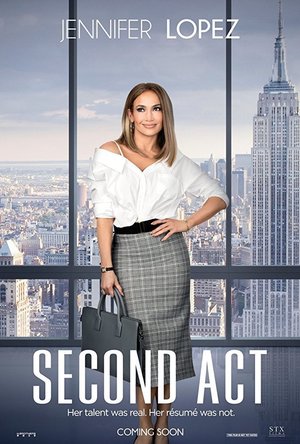


There's no doubt for me that Lopez is a master in this category of film, she probably has several of the top ten slots, so apart from saying that she was yet again a great leading lady I don't want to bombard you with all the reasons why. What I do want to do is talk about how some of the supporting actors nailed their roles.
Leah Remini as Maya's best friend Joan... yeeeeeees. I can totally identify with Joan, the performance that Remini gives is so entertaining. The swearing, the jeans button, just everything. She's the comic relief, and I know that sounds odd to say about someone in a comedy film but I just mean that you know you're going to get something great from her character.
Dave Foley gets the line of the movie though... "Coxswain my ass." His delivery is perfect and you can guarantee great return for him if you give him one liners like that.
Despite loving this romcom it is a little light on the rom. One of the only notes I made about the romance angle was the fact that I didn't really understand how that whole part of the film played out. I don't think it's really a spoiler to say that they're together, some stuff happens and then they break up... after all that's basically what you'd expect from a romcom. In this genre's world, woman make terrible choices, go out and do things for themselves and then realise what a terrible mistake they've made somewhere along the line. (I may be living in a romcom... I don't want to think about it.) Second Act sticks to that premise really well but I think that it's actually more to do with the rest of her life than the romance side which really just feels like it's there to be able to kick start the rest of the story.
If you love classics like Maid In Manhattan and When Harry Met Sally I honestly think you'll enjoy this, there's something very nostalgic about it that sets it apart from modern attempts at the genre.
(On a separate note, if anyone fancies some crazy dancing to Salt-N-Pepa's Push It please let me know.)
What you should do
This is perfect girls' night out fodder. It's a very enjoyable watch and something a little more light hearted in this bleak January schedule.
Movie thing you wish you could take home
The dress that Maya wears to her interview at F&C is incredible. One of those please!
"The only thing stopping you is you." - This is something I think we should probably all take home from this film

Civil Engineering Basics - Study Material App
Book and Education
App
The app is a complete free guide of Civil Engineering Basics which covers all the important topics,...

Blueprint Entrepreneur Magazine - Actionable content for entrepreneurs on marketing, sales, lean startup, pricing, blogging, community building and more. Your action packed guide to business success principles all in one inspiring mag.
Business and Magazines & Newspapers
5.5 Rate It
App
Want the real actionable strategies of entrepreneurship? Get the real stories of struggle and...

A Woman's Decision: Breast Care, Treatment & Reconstruction
Karen Berger, John Bostwick and Glyn E. Jones
Book
Answers to your patients' most vital, heartfelt questions! For years, A Woman's Decision has been...
Matthew Krueger (10051 KP) rated Clue (1985) in Movies
Nov 3, 2020
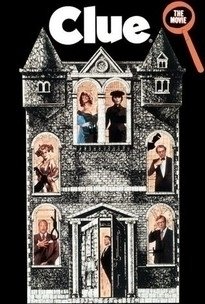
The plot: Based on the popular board game, this comedy begins at a dinner party hosted by Mr. Boddy (Lee Ving), where he admits to blackmailing his visitors. These guests, who have been given aliases, are Mrs. Peacock (Eileen Brennan), Miss Scarlet (Lesley Ann Warren), Mr. Green (Michael McKean), professor Plum (Christopher Lloyd), Mrs. White (Madeline Kahn) and Col. Mustard (Martin Mull). When Boddy turns up murdered, all are suspects, and together they try to figure out who is the killer.
The film was produced by Debra Hill and the story was by John Landis.
In keeping with the nature of the board game, the theatrical release included three possible endings, with different theaters receiving one of the three endings. In the film's home video release, all three endings were included.
The multiple-ending concept was developed by John Landis, who claimed in an interview to have invited playwright Tom Stoppard, writer and composer Stephen Sondheim, and actor Anthony Perkins to write the screenplay. The script was ultimately finished by director Jonathan Lynn.
A fourth ending was filmed, but Lynn removed it because as he later stated, "It really wasn't very good. I looked at it, and I thought, 'No, no, no, we've got to get rid of that.'" In the unused fourth ending, Wadsworth committed all of the murders. He was motivated by his desire for perfection. Having failed to be either the perfect husband or the perfect butler, he decided to be the perfect murderer instead. Wadsworth reports that he poisoned the champagne the guests had drunk earlier so they would soon die, leaving no witnesses. The police and the FBI arrive and Wadsworth is arrested. He breaks free and steals a police car, but his escape is thwarted when three police dogs lunge from the back seat. This ending is documented in Clue: The Storybook, a tie-in book released in conjunction with the film.
Carrie Fisher was originally contracted to portray Miss Scarlet, but withdrew to enter treatment for drug and alcohol addiction. Jonathan Lynn's first choice for the role of Wadsworth was Leonard Rossiter, but he died before filming commenced. The second choice was Rowan Atkinson, but it was decided that he wasn't well known enough at the time, so Tim Curry was eventually cast.
Mrs. White's famous "Flames" speech was improvised by Madeline Kahn.
A documentary about the movie is being made, including interviews already filmed with the director, writer, and several cast members including Lesley Ann Warren, Michael McKean, Colleen Camp, and Lee Ving.
I love Clue, it is one of my all time favorite films. In my top ten best films of all time at number #3 and just excellent.
Happy Halloween everybody.