

The Answer Is...
Book
Since debuting as the host of Jeopardy! in 1984, Alex Trebek has been something like a family member...
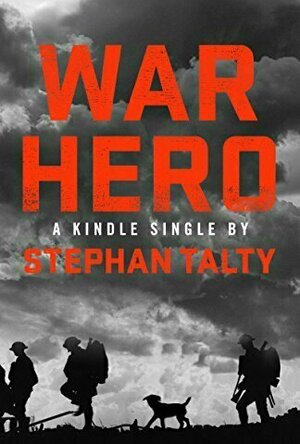
War Hero: The Unlikely Story of A Stray Dog, An American Soldier and the Battle of Their Lives
10.0 Rate It
Book
The dramatic and heartfelt story of the Great War's most unlikely hero – a Parisian stray dog...
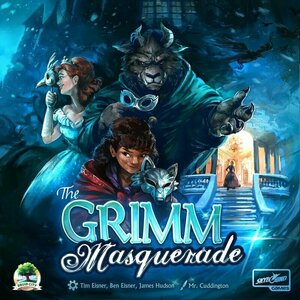
The Grimm Masquerade
8.0 Rate It
Tabletop Game
The Beast has invited you to his castle for a Masquerade. When you enter, you are magically...

Mark @ Carstairs Considers (2658 KP) rated Bayou Book Thief in Books
Jun 13, 2022
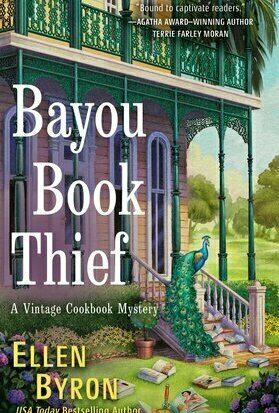
As is often the case with a series debut, the beginning was a little slow as it set up the premise of the series and began introducing us to the characters. The ending was a bit abrupt, although everything that happened did follow logically from what came before. And what came before? It was wonderful, with plenty of twists to keep me engaged. The sub-plots helped as well. Ricki has quite the interesting background, and I appreciated how it was doled out as we needed it. Being a series debut, the potential series regulars also serve as suspects, and that made me care about the outcome that much more. Naturally, there are recipes at the end, but in a twist that fits this book, all six are from vintage cookbooks. This is a fun series debut. I’m already looking forward to revisiting Ricki again in a few months.

Lee (2222 KP) rated Ready Player One (2018) in Movies
Mar 20, 2018
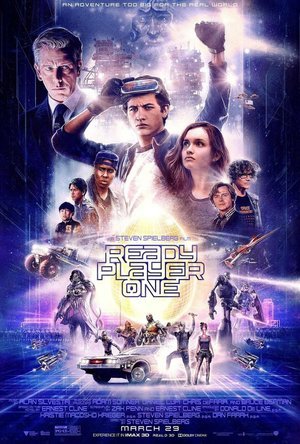
The movie covers a lot of detail up front in a fairly brisk, but very effective introduction in order to set the scene. It's 2045, and our hero is Wade Watts, living high up in 'The Stacks', towers of trailers crudely stacked and held up together by metal beams in a densely populated urban area of Columbus. As Wade descends from his home, he passes his neighbours, many of whom are wearing some kind of VR headsets, involved in different kinds of online activity that we can't see. Wade tells us that at some point in the past people just stopped trying to fix lifes problems and learnt to just live with them instead. And to make things easier, they have the OASIS. The virtual world that his neighbours, and billions of people around the world, all connect to in order to escape the daily grind of the real world. In the OASIS you can be anyone you want to be, do anything you want to do. There are different worlds you can visit, and coins to be earned in order to upgrade your experience. Wade has all his equipment for connecting to the OASIS hidden away among the nearby piles of scrap cars, and when he puts on his headset, we are introduced to his online avatar, Parzival. He tells us about James Halliday, creator of the OASIS, who died five years ago. He left behind a message, informing the world that within the OASIS he'd hidden an Easter egg. Anyone who could find the three keys needed to unlock the door to that Easter egg, would inherit his entire fortune, and gain complete control of the OASIS. Since then, nobody has even got their hands on the first key. Nobody has their name up on the high score board. So... Ready Player One...
And so it kicks off, in dazzlingly glorious fashion, with a crazy multi-vehicle race through New York city in order to get to the finish line and grab the first key. It's like Mario Kart on steroids, with jumps and hazards throughout. Wrecking balls smashing the road, a T-Rex causing havoc and Kong jumping from building to building, smashing things up and taking players out of the game. But nobody can make it to the finish line. It's a fantastic, dizzy assault on the senses, and the first of many scenes where you find yourself frantically scouring the screen to see how many famous cars and characters you can spot. Parzival himself is driving a DeLorean, obviously. We're also introduced to fellow racer, and legend within the OASIS, Art3mis, who after being rescued by Parzival, becomes a close friend. Along with Art3mis, Parzival has a number of other close friends within the OASIS - Aech, Daito and Shoto, none of whom he has met in real life. As Parzival finds the first key, and begins sharing that knowledge with his friends in order to work together for the rest of the keys, they become known as the High Five, in recognition of their names being top of the scoreboard.
The bad guy of the movie is Nolan Sorrento, who used to work for Halliday. He, along with his army of employees, are out to try and take over the OASIS for monetary gain and will do whatever it takes in order to make that happen. When Sorrento discovers the real world identity of Parzival, things begin to get very difficult for the High Five who now have to struggle to not only find the keys first, but also evade capture in the real world.
I don't remember all of the details from the book, so I can't comment too much on what's been missed. But I do know that the puzzles surrounding the keys differ in the movie from those in the book. There are also some pretty big elements which don't feature in the book at all, but the main thing for me was that the overall spirit of the book definitely carries over to the movie. There is some occasional second half drag, but that's inevitable when there are so many prolonged moments of eye-popping visuals on display in-between. One thing I do remember well from the book is the final act, where Wade calls upon an army of OASIS users to help him and the high five fight Sorrento and his army in order to gain access to the final key. It's something I always imagined while reading as being absolutely epic if it were ever to be recreated on screen. Luckily, it is. Wow, just wow!! And once again, like with much of this movie overall, I sat there, wide eyed and with a big gormless geeky grin on my face.

Bob Mann (459 KP) rated Alien: Covenant (2017) in Movies
Sep 29, 2021
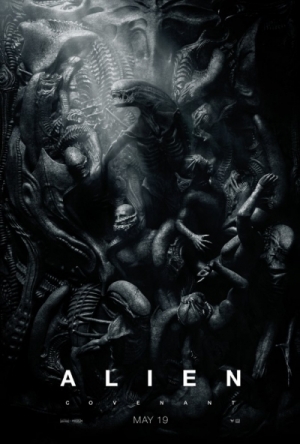


“Covenant” (named again after the spaceship at its heart) is a follow-on sequel to “Prometheus”, so it is worth re-watching it if you can before a cinema trip. At the end of that film we saw Elizabeth Shaw (Noomi Rapace, “The Girl with the Dragon Tattoo”) and a reconstructed android David (Michael Fassbender, “Steve Jobs“) flying off in an alien craft still loaded with its cargo of nasty alien black goo. Shaw had a mission to seek out The Engineer’s home world – named “Paradise” – to find out why after creating man they were intent on going back to finish them off with a WMD. A neat prologue has been released which documents this… here:
We pick up the action 10 years later in a totally improbable 2104. (Give us a break writing team! [Story by Jack Paglen and Michael Green; screenplay by John Logan and Dante Harper]. We know they won’t have got through planning permission on the third Heathrow runway by then, let alone invented interplanetary travel…! 2504, maybe!)
Daniels (Katherine Waterston, “Fantastic Beasts And Where To Find Them“) has just suffered a sudden bereavement (an uncredited James Franco – – blink and you’ll miss him). She has also been rudely awakened from hypersleep due to a sudden system mishap: no, not to find Chris Pratt there like “Passengers“, but by the ship’s android Walter (also Michael Fassbender) who’s also revived the rest of the crew. While effecting repairs they receive a garbled John Denver track mysteriously beamed to them from an earth-like planet not too far away. As this might be a suitable homestead, and as spending weeks more in hypersleep is unattractive, Captain Oram (Billy Crudup, “Spotlight“) votes to check it out, against Daniels’ strong objections. Needless to say, this proves to be a BIG MISTAKE as the new film neatly links hands with the first film.
Kick-ass… Katherine Waterston being careful not to slip in the shower.
There’s a limit to what more I can say about the film without delivering spoilers (so I have added a few more comments in the spoiler section BELOW the trailer). It’s a far more action-oriented film than “Prometheus” and has enough jump scares and gore to please most Alien fans. (In fact, it’s a surprise to me that it got a UK “15” certificate rather than an “18”: how much more violence do you need to show in the film?) A shower scene towards the end of the film is particularly effective and will likely put an end to relaxing shower sex for many people for good!
It also looks visually stunning (cinematography is by Dariusz Wolski (“The Martian“, “Pirates of the Caribbean”) with location shooting in Milford Sound in New Zealand. The special effects are also a cut-above the normal CGI with a devastated Pompeii-like city, a picture of blacks and greys, being particularly effective.
In the acting stakes it is really all down to Waterston and Fassbinder. I wasn’t a great fan of Waterston in “Fantastic Beasts” – a bit insipid I thought – but here she adopts Ripley’s kick-ass mantle with ease but blends it beautifully with doe-eyed vulnerability. Some of her scenes reminded me strongly of Demi Moore in “Ghost”. Fassbinder is fascinating to watch with his dual roles of Walter and David, both slightly different versions of the same being. And the special effects around the Fassbinder-on-Fassbinder action, tending somewhat towards the homoerotic in places, are well done.
Unfortunately the rest of the crew get little in the way of background development, which limits the impact of the inevitable demises. They are also about as clinically stupid as the spaceship crew in “Life” in some of their actions; I guess you could put some of this down to the effects of panic, but in other cases you might see it as a simple cleansing of the gene pool in Darwinian fashion.
Also making uncredited guest appearances are Guy Pearce as Weyland (in a flashback scene) and Noomi Rapace.
Music is “by” Jed Kurzel, but to be honest he does little than wrap around re-versions of the original Jerry Goldsmith classics: not that this is a bad thing, since those themes are iconic and a joy to hear again on the big screen.
My expectations for this movie were sky-high, as it was hinted as a return to form for the franchise. And in many ways it was, with a “man, Gods and androids” theme adding depth to the traditional anatomical-bursting gore. But to be honest, some of the storytelling was highly predictable, and I left slightly disappointed with the overall effort. If my expectations were an 11/10, my reality was more like a 7/10. It’s still a good film, and I look forward to watching it again. But perhaps this is a franchise that has really run its course now for Mr Scott and he should look to his next “Martian”-type movie for a more novel foundation to build his next movie “log cabin on the lake” on.

The Bandersnatch (199 KP) rated The Hunger Games in Books
Nov 7, 2019
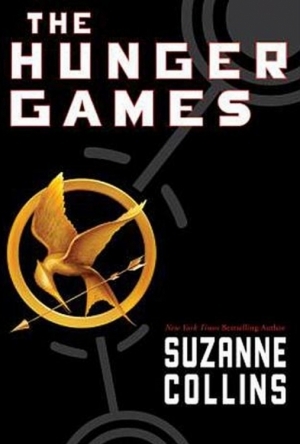
The Hunger Games the titular book was released on September 14th 2008 under the publishing house Scholastic Press. The book had an initial print run of 50,00 copies eventually being bumped up twice to 200,000 copies. By February 2010 the book had sold 800,000 copies and rights to the novel have been sold in 38 territories. In November 2008 The Hunger Games was placed on the New York Times best seller list where it would remain for 100 weeks (just over three months). By the time the books film adaption released in march 2012 the book had been on USA Today's best seller list for 135 weeks (Four months) and sold over 17.5 million copies. The book received several awards and honours such as Publishers Weekley's “Best book of the year 2008”, the New York Times “Notable children's book 2008” and was the 2009 young adult fiction category winner of the Golden Duck award. The book also received the California Young Reader medal in 2011.
Catching Fire, the second book was published on September 1st 2009 under Scholastic. As the sequel to the Hunger Games book it continues the story of Katniss Everdeen and the post-apocalyptic nation of Panem as rebellion begins. The book received mixed reviews but was placed on Time Magazines Top 100 fiction list of 2009. Catching fire had an initial print of 350,00 copies but was (Like its predecessor) had grown to 750,00 by February 2010. The book has sold over 10 million copies.
Mocking-jay the third and final book in the Hunger Games Trilogy and was published August 24th 2010 by Scholastic. The book had a 1.2 million copy print that was bumped up from 750,000 copies and in its first week sold over 450,00 copies. Reviews were favourable with the book and notes that it thoroughly explores the themes of the other books.
I really love the books and regularly read them. Whenever I do read them I tend to read all three of them in the space of a week. To be fair whilst I had heard of them before the first movie release I didn't start reading them until I'd seen the first movie. I did read Catching Fire and Mockingjay before their movie equivalents hit the screens. Whilst The Hunger Games was a brilliant opener and Mockingjay was a brilliant ender, I agree with a few reviewers that Catching fire had a delayed start and it took a bit of time to get into the action of the story at large.
Suzanne Collins was born in Hartford Connecticut on the 10th of August 1962 as the youngest fourth child to Jane Bradley Collins and Lt. Col. Michael Jon Collins a decorated U. S. Air Force officer. As a daughter of a military man she was constantly moving with her family and spent her childhood in the eastern united states. Collins went to the Alabama school of fine arts in Birmingham 1980 as a theatre arts Major. Collins went on to complete a Bachelor of arts from Indiana University in 1985 and telecommunications and in 1989 Collins earned her M. F. A. in dramatic writing from NYU Tisch school of arts. Collins began her career in 1991 as a writer for children's television shows and won a nomination in animation for co-writing the critically acclaimed Christmas special Santa, Baby!. Collins after meeting James Proimos whilst working on a children's show felt the urge to write children's books and spent the early 2000's writing five books of the Underland Chronicles; Gregor the Overlander, Gregor and the Prophecy of Bane, Gregor and the curse of the Warmbloods, Gregor and the Marks of Secret and Gregor and the Code of Claw. The influence for those books came from Alice in Wonderland. During the late 2000's she ends up writing the Hunger Games trilogy which went onto a famous movie trilogy. As the result of the hunger games trilogy popularity Collins was named one of Times Magazine's most Influential people of 2010. On June 17th 2019 Collins announced she was writing a prequel to the Hunger Games and is scheduled to be released on 19th May 2020, the book is to focus on the failed rebellion 64 years before the Hunger Games trilogy.
I highly respect the Author Suzanne Collins for both her work as a writer of Children's media and for her creativity in creating both the Hunger Games and the Underland Chronicles. Her creativity has been awarded with her books popularity and being announced amongst Time Magazine's 2010's most influential people and Amazons best selling Kindle author in 2012.
In March 2009 Lions Gate Entertainment entered into a co-production agreement with Nina Jacobson's Production company Color Force for the Hunger Games. Novel writer Suzanne Collins adapted the book in collaboration with screenwriter Billy Ray and Director Gary Ross. Actors Jennifer Lawrence, Josh Hutchinson and Liam Hemsworth were hired for the roles of Katniss, Peeta and Gale respectively. Lawrence was four years older than Katniss was in the books but Collins said she would rather the actress be older than the character since it demanded a certain maturity and power. Collins also liked Lawrence stating she was the “only one who truly captured the character I wrote in the book”. The Hunger Games Movie was released on march 23rd 2012. The Hunger Games: Catching Fire was released on November 22nd 2013 with Francis Lawrence being hired as Director and actors Phillip Seymour Hoffman, Jena Malone and Sam Claflin being hired as Plutarch Heavensbee, Johanna Mason and Finneck Odair respectively. The Hunger Games: Mockingjay was split into 2 and Part 1 was released on November 21st 2014 and part 2 on November 20th 2015 Francis Lawrence remained Director for the final movies with Actor Julianne Moore joining the cast as President Alma Coin.
I loved the movies point blank and whilst it has its flaws like most movies often do I think its redeeming quality has been it faithfulness in sticking to the books as closely as possible and the actors representation of Suzanne Collins characters such as Jennifer Lawrence as Katniss, Donald Sunderland and President Snow, Stanley Tucci as Ceaser Flickerman, Woody Harrelson as Haymich Abernathy and Elizabeth Banks as Effie Trinkett. Whilst all the actors were very good and were chosen well for their characters. These actors in particular I feel did exceptionally well in bringing their characters to life especially Elizabeth Banks, Stanley Tucci and Woody Harrelson but then I am a very big fan of theirs so I may be a little biased.

Eilidh G Clark (177 KP) rated A Portable Shelter in Books
May 13, 2017

Kirsty Logan’s first collection of short stories, The Rental Heart and Other Fairytales, published by Salt in 2014, won the Polari First Book Prize in 2015. A Portable Shelter is her second collection. Set in a small cottage in the rural north coast of Scotland, Ruth and Liska are expecting their first child. The couple believe that their unborn baby will have a better chance of survival away from the harshness of suburban life. They make a pact with one another, that they will only ever tell their child the truth. Yet while Liska is asleep or Ruth is at work, each whispers secret stories to their unborn child. Delving into fantastical tales about people from their past and re-telling stories that span from generation to generation, the couple unfold the horrors of the real world. Whilst these tales, laced in myth and legend, and fattened with the magic of the imagination, demonstrate the art of oral storytelling, Logan reaches further to show the reader why storytelling is important.
While this book is primarily a collection of short stories, its novel like structure frames each story with a preceding monologue from either Ruth or Liska. The monologues offer delightful morsels of description that bring the harshness of Mother Nature into the safety of the couple’s bedroom, “right now our home is speaking to you. The walls creak their approval in the wind. The rain applauds on the roof. The lighthouse beam swoops, swoops, swoops. The tide breathes loud and slow like a giant. If you listen carefully, perhaps you can even hear the moon hum.” The pace of these sentences, combined with the delicacy of language demonstrates Logan’s skill at describing the sublime spirit of the natural world, which brings the narrative to life.
Most impressive though, is Logan’s poetic language and carefully crafted sentences which create the most beautiful imagery. In ‘Flinch,’ for example – James is a fisherman struggling with his identity, yet his affiliation with the land is locked into his first-person point of view where the reader gets to closely experience what he sees, “The sky is pinkish-grey like the insides of shells. Speckled bonxies wheel overhead. Seals loll on the rocks, fat as kings. The rising mist is cool and milky.” Any of these lines could easily be arranged into a poem and with sentences that are squeezed tight; they create a wonderful poetic rhythm. Logan uses this technique throughout her novel, demonstrating the precision and craft in her work. There are definite similarities in her writing style to fellow Scottish novelist and poet Jenni Fagan. Both authors use rich language, which is well crafted and smattered with vernacular. Furthermore, combining this with the reoccurring theme of identity, the oral storytelling tradition, landscape, folklore, and myth, it is clear to see why these authors contribute to the growing canon in Scottish literature.
This is a book that I will read over and over again because I know that in each reading, I will find something new. A Portable Shelter, I feel, deserves a place on my ‘keep’ book shelf.
A Portable Shelter, Kirsty Logan, London: Vintage, 2015

Gareth von Kallenbach (980 KP) rated Knight and Day (2010) in Movies
Aug 8, 2019
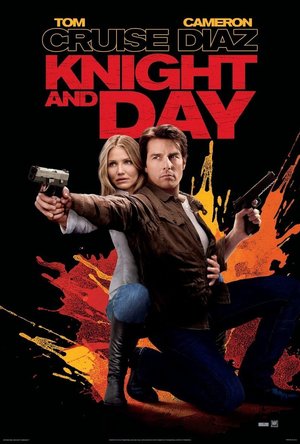

The plot of the movie started out fun and original, but again, the lack of a spark between the two leads just led to disinterest. The director made ample use of what I’ll call the “invisible montage,” wherein one of the main characters is semi-conscious, and what happens to them is revealed in a series of blurred, but outlandishly crazy situations only a few seconds in length and increasing in surrealism. This was a clever, if overused technique, but oftentimes the entire movie felt like longer episodes of these montages, with little reason for each to be happening other than to fill the quota for requisite action sequences. Because of some poor foreshadowing in the beginning of the film, even the finale became extremely predictable and had no weight.
Tom Cruise, playing the bizarrely comic spy Roy Miller, manages to pull his weight in his role. Cruise’s special kind of natural crazy is actually an advantage to the character he is playing. His unpredictability and his utter charm kept me, at the very least, entertained throughout the film.
Cameron Diaz, playing clueless midwesterner June Havens is obviously the weak link here. She can’t seem to keep up with Cruise’s character on screen, and aside from a few cutesy moments in the film, is outclassed by her co-star, and often by members of the supporting cast as well. Diaz doesn’t have a reputation for doing in-depth character studies of her portrayals, but the very least she could do is drop the same confused face she uses for most of the movie.
Together, Cruise and Diaz lack the chemistry that would have made this a decent movie without forcing the audience to shut off the emotional parts of their brains. In fact, the key make-out scene between the two of them was so clichéd as to be boring. Looking back at the entire movie, I believe that after their first few minutes together, the rest of their interactions just felt forced.
As for the rest of the cast, I have no special complaints or accolades, but I would like to single out one individual, and say that I would have loved to see more of Peter Sarsgaard. It’s immediately obvious that knows what he is doing on screen, and he deserved a much larger role than the one given to him.
In summary, Knight and Day is definitely worth skipping out on. Wait a week and soon enough some real 4th of July action blockbusters will be coming out. We’ll be sure to let you know which ones are the real deal and which ones are the duds. It’s just too bad this one was a dud, because it definitely had a lot of potential.
Gareth von Kallenbach (980 KP) rated The Muppets (2011) in Movies
Aug 7, 2019
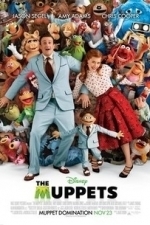
The new films stars Jason Segel as Gary, a mild-mannered guy who has a swell life in his small community. He has been dating the lovely Mary (Amy Adams) for ten years and they are excited to plan their first visit to Los Angeles. Gary has a younger brother named Walter who is a huge fan of the Muppets, having grown up watching the beloved show with Gary. The fact that Walter actually is a Muppet might explain his utter devotion to the show and characters. So when Gary invites Walter to accompany Mary and him on their trip, Walter is ecstatic. At long last, he can visit The Muppet Studios.
Upon their arrival in L.A., Walter is shocked to find the studio in shambles and disrepair. Undaunted, Walter sneaks into Kermit’s old office and accidentally overhears a businessman named Tex Richman (Chris Cooper) plotting to steal the property from the Muppets. Determined to thwart Richman, Walter and Gary look up Kermit the Frog who, despite his reluctance, agrees to reunite the gang to put on a tele-thon to raise the needed money to save the theater.
Along the way there are some great and touching segments where we see what many of the characters have been up to in the recent years, and more than a few laughs and musical numbers also follow. In a race against time, and despite the lack of confidence the network has in their relevance, Kermit must whip the cast and theater into shape for an epic performance.
The movie was an absolute joy. It was so refreshing to see how Segel and director James Bobin have brought the Muppets to a new generation without losing the previous ones and staying very faithful to the characters and to Jim Henson’s vision. Segel, who came up with the story and co-wrote the script, seems to be having the time of his life as he sings and dances his way through several production numbers and gives a very funny, and in turns, tender performance.
Adams is a joy as the sweet, yet determined Mary, and the addition of the new Muppet Walter was a treat. Sure the plot may have been fairly formulaic but there were more than enough moments to keep the adults happy. At our screener, the adults were laughing even lauder than the kids in attendance, especially at the numerous pop culture reference, celebrity cameos, and nostalgic nods to the show.
I do not want to spoil the film but from Beaker doing his take on the Nirvana classic “Smells Like Teen Spirit”, to the Swedish Chef channeling Tony Montana from “Scarface” I was thoroughly entertained. I can honestly say this is not only one of the best of the Muppet movies but it is a perfect film to take the family. Just don’t be surprised if you find yourself enjoying the magic as much, if not more, than the kids.