
Search
Search results

Mandy and G.D. Burkhead (26 KP) rated The Book of Kings in Books
May 20, 2018
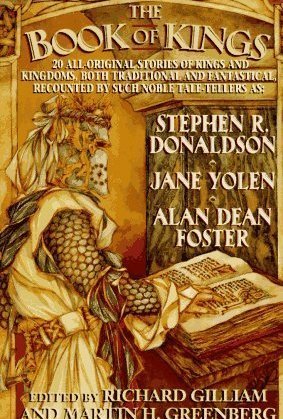
Shelf Life – The Book of Kings Has a Few Gems and a Few Warts
Contains spoilers, click to show
Unlike other short story anthologies I could mention, this one wasn’t mostly horrible. Instead, the stories inside run the gamut from stupid to brilliant and from annoying to nothing special to fun and memorable. A little something for everyone, then.
So since I can’t review it with one blanket sentiment, let’s instead take a quick look at a handful of the 20 all-original stories inside. The following are the tales that most stood out to me during my reading, for better or worse.
“The Kiss” by Alan Dean Foster – A woman walking through a snowy city finds a frog who says he’s a prince, so she kisses him. He turns into a guy and stabs her to death.
Oh boy, we’re not off to a great start here. This story could have been told in a page or so and been an interesting twist on the old tale, but instead the author drew it out over three pages by choosing the absolute most pretentious choice of words for every damn sentence. The guy doesn’t stab the woman, his “knife describes a Gothic arc.” She doesn’t shout or whisper or ask what’s going on, she “expels a querrelous trauma.” It’s not snowing on her face, “trifles of ice as beautiful as they were capricious tickled her exposed cheeks, only to be turned into simulacra of tears as they were instantly metamorphosed by the bundled furnace of her body.”
Yes, really.
The sheer purpleness of this prose might be excused for a deliberately lofty and overwrought tale, but it absolutely does not fit a story about a girl getting shanked by a frog on the street. If the contrast between what’s happening and how it’s presented is supposed to seem absolutely ridiculous, then it’s a success. This reads more like a writing exercise for seeing how unbearably melodramatic you can tell a simple story that the author went ahead and published anyway. I only read it last night as of the time of this particular bit of review, but I still have a headache.
“Divine Right” by Nancy Holder – A king grieving for his recently passed daughter and only heir tries to figure out how to keep his legacy from dying out and eventually decides on a way to choose a successor, sealing his decision by making a pact with God.
I really liked this one, partly for the great characterization of the king via his priorities. He’s not a bastion of righteousness or a tyrannical despot. He might be a pretty decent ruler, or he might not, depending on your priorities and the angle from which you view him. Mostly he’s written to be believable for his position and time period, pride and failings and all.
But what really sealed this story for me was the ironic bent of the plot that I can’t really discuss in any more depth without spoiling it except to say that it definitely fit with the tone and left an appropriate message. So let’s just give it a thumbs up and leave it at that.
“In the Name of the King” by Judith Tarr – If you know the story of Hatshepsut, an Egyptian queen who ruled as Pharaoh, then this is an extra interesting story. It follows both Hatshepsut and her lover in the afterlife and the legacy they’re leaving behind after their deaths, in which they take a surprisingly active interest for dead people.
If you know your history, though, you know where this is going, and it’s very touching as it gets there. It’s also character-centric in a way that makes its dead cast members seem very much alive. This one’s a good contender for my favorite story in the whole anthology.
“Please to See the King” by Debra Doyle and James D. Macdonald – A small glimpse of about one evening each into the lives of two seemingly unrelated, seemingly unimportant men against the backdrop of the battles being fought over a vague and distant rebellion against a vague and distant crown.
To say more would be to spoil the story, which is short, sweet, and interesting. It gives you just enough details, and no more, that you can piece together a much deeper story with room left for speculation about who certain characters really were and what exactly just happened. I’ve spent more time thinking about how the ending may be interpreted than it took me to read it, which is a good sign of nuance done right.
“The Name of a King” by Diana L. Paxson – This’n c’n rightf’ly b’ put in w’ th’ other st’ries I woul’n’t oth’rwise b’ther t’ mention ‘cept fer th’ o’erwrought dialectic style o’ nearly all o’ th’ dialogue, whut c’n git on yer nerves right quick-like whene’er any’ne op’ns their mouths. An’ while I’m ‘ere, th’ settin’ w’s rife wi’ plen’y o’ hints at deeper d’tails whut was ne’er sufficien’ly delved into or whut impact’d th’ actu’l plot much. Felt like part o’ a fant’sy series whut I was ‘spected t’ b’ f’miliar wit’ but wasn’t, an’ whut di’n’t give me ’nuff t’ git f’miliar wit’ just fr’m this st’ry.
Oth’rwise, t’w’sn’t t’ b’d, I s’pose. Bit borin’.
“Coda: Working Stiff” by Mike Resnick and Nicholas A. DiChario – This one was just fun. Again trying not to give away any twists or revelations, this one follows a journalist interviewing a bus driver who used to be a big, famous king back in his heyday but is now content (or so he says) with his obscure life of working a simple job in the day and drinking in his spartan home at night.
Who this ex-king really is probably isn’t who you think it’s gonna be at first, but the story does still technically, and cheekily, fit in with the premise of the book overall. It reminds me very much of something Neil Gaiman might have written, or maybe Terry Pratchett if he’d decided to tackle the kingly premise from a more modern and realistic approach.
There are still 14 stories left in here, many of which are also good reads, or at least decent. In fact, looking back through it again, the only real dud that stands out to me is “The Kiss.” The weakest of what’s left are either adaptations of stories that didn’t really do it for me (“The Tale of Lady Ashburn” by John Gregory Betancourt) or weird original works that weren’t really memorable in what they set out to do (“A Parker House Roll” by Dean Wesley Smith).
Overall, The Book of Kings is a fun and interesting romp through a number of royal worlds, themes, and tones. As such, anyone who gives it a look will probably have the same general sentiment I did at the end, with a few things to like and a few to point to as examples of what doesn’t work for them. Me, I got a bit of the inspiration I was looking for and a few memorable tales out of it, so I’ll forgive the warts.
So since I can’t review it with one blanket sentiment, let’s instead take a quick look at a handful of the 20 all-original stories inside. The following are the tales that most stood out to me during my reading, for better or worse.
“The Kiss” by Alan Dean Foster – A woman walking through a snowy city finds a frog who says he’s a prince, so she kisses him. He turns into a guy and stabs her to death.
Oh boy, we’re not off to a great start here. This story could have been told in a page or so and been an interesting twist on the old tale, but instead the author drew it out over three pages by choosing the absolute most pretentious choice of words for every damn sentence. The guy doesn’t stab the woman, his “knife describes a Gothic arc.” She doesn’t shout or whisper or ask what’s going on, she “expels a querrelous trauma.” It’s not snowing on her face, “trifles of ice as beautiful as they were capricious tickled her exposed cheeks, only to be turned into simulacra of tears as they were instantly metamorphosed by the bundled furnace of her body.”
Yes, really.
The sheer purpleness of this prose might be excused for a deliberately lofty and overwrought tale, but it absolutely does not fit a story about a girl getting shanked by a frog on the street. If the contrast between what’s happening and how it’s presented is supposed to seem absolutely ridiculous, then it’s a success. This reads more like a writing exercise for seeing how unbearably melodramatic you can tell a simple story that the author went ahead and published anyway. I only read it last night as of the time of this particular bit of review, but I still have a headache.
“Divine Right” by Nancy Holder – A king grieving for his recently passed daughter and only heir tries to figure out how to keep his legacy from dying out and eventually decides on a way to choose a successor, sealing his decision by making a pact with God.
I really liked this one, partly for the great characterization of the king via his priorities. He’s not a bastion of righteousness or a tyrannical despot. He might be a pretty decent ruler, or he might not, depending on your priorities and the angle from which you view him. Mostly he’s written to be believable for his position and time period, pride and failings and all.
But what really sealed this story for me was the ironic bent of the plot that I can’t really discuss in any more depth without spoiling it except to say that it definitely fit with the tone and left an appropriate message. So let’s just give it a thumbs up and leave it at that.
“In the Name of the King” by Judith Tarr – If you know the story of Hatshepsut, an Egyptian queen who ruled as Pharaoh, then this is an extra interesting story. It follows both Hatshepsut and her lover in the afterlife and the legacy they’re leaving behind after their deaths, in which they take a surprisingly active interest for dead people.
If you know your history, though, you know where this is going, and it’s very touching as it gets there. It’s also character-centric in a way that makes its dead cast members seem very much alive. This one’s a good contender for my favorite story in the whole anthology.
“Please to See the King” by Debra Doyle and James D. Macdonald – A small glimpse of about one evening each into the lives of two seemingly unrelated, seemingly unimportant men against the backdrop of the battles being fought over a vague and distant rebellion against a vague and distant crown.
To say more would be to spoil the story, which is short, sweet, and interesting. It gives you just enough details, and no more, that you can piece together a much deeper story with room left for speculation about who certain characters really were and what exactly just happened. I’ve spent more time thinking about how the ending may be interpreted than it took me to read it, which is a good sign of nuance done right.
“The Name of a King” by Diana L. Paxson – This’n c’n rightf’ly b’ put in w’ th’ other st’ries I woul’n’t oth’rwise b’ther t’ mention ‘cept fer th’ o’erwrought dialectic style o’ nearly all o’ th’ dialogue, whut c’n git on yer nerves right quick-like whene’er any’ne op’ns their mouths. An’ while I’m ‘ere, th’ settin’ w’s rife wi’ plen’y o’ hints at deeper d’tails whut was ne’er sufficien’ly delved into or whut impact’d th’ actu’l plot much. Felt like part o’ a fant’sy series whut I was ‘spected t’ b’ f’miliar wit’ but wasn’t, an’ whut di’n’t give me ’nuff t’ git f’miliar wit’ just fr’m this st’ry.
Oth’rwise, t’w’sn’t t’ b’d, I s’pose. Bit borin’.
“Coda: Working Stiff” by Mike Resnick and Nicholas A. DiChario – This one was just fun. Again trying not to give away any twists or revelations, this one follows a journalist interviewing a bus driver who used to be a big, famous king back in his heyday but is now content (or so he says) with his obscure life of working a simple job in the day and drinking in his spartan home at night.
Who this ex-king really is probably isn’t who you think it’s gonna be at first, but the story does still technically, and cheekily, fit in with the premise of the book overall. It reminds me very much of something Neil Gaiman might have written, or maybe Terry Pratchett if he’d decided to tackle the kingly premise from a more modern and realistic approach.
There are still 14 stories left in here, many of which are also good reads, or at least decent. In fact, looking back through it again, the only real dud that stands out to me is “The Kiss.” The weakest of what’s left are either adaptations of stories that didn’t really do it for me (“The Tale of Lady Ashburn” by John Gregory Betancourt) or weird original works that weren’t really memorable in what they set out to do (“A Parker House Roll” by Dean Wesley Smith).
Overall, The Book of Kings is a fun and interesting romp through a number of royal worlds, themes, and tones. As such, anyone who gives it a look will probably have the same general sentiment I did at the end, with a few things to like and a few to point to as examples of what doesn’t work for them. Me, I got a bit of the inspiration I was looking for and a few memorable tales out of it, so I’ll forgive the warts.

Bob Mann (459 KP) rated Ad Astra (2019) in Movies
Sep 28, 2021

Impressive visuals, but rather disappointing as an overall package.
Like father, like son?
I really love sci-fi films with high ambitions. “Psychological” sci-fi like “Solaris” for example. And “Arrival” topped my movie list for 2016. In similar vein, “Ad Astra” is also a movie concerning attempted contact with alien life. So I had high hopes for it. But would this Sci-fi epic ultimately challenge my brain again, or end up in the “Crystal Skull” sin bin with a dodgy alien meeting?
The Plot
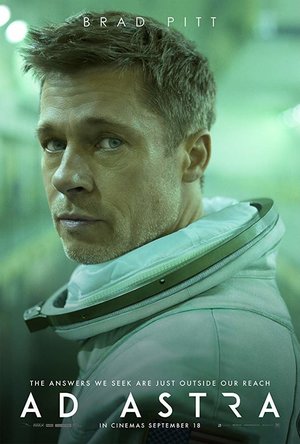
Set a few years into the future, Roy McBride (Brad Pitt) is the son of a legend. H. Clifford McBride (Tommy Lee Jones) was a space exploration pioneer. His picture hangs in the NASA hall of fame next to Buzz Aldrin’s. McBride senior went missing presumed dead near Neptune during a mission. The mission was to get outside the Sun’s heliosphere to scan for potential alien transmissions from nearby solar systems.
But something went badly wrong, and now the earth (and potentially all human life migrating into the solar system) is at risk from massive electromagnetic bursts arising from Neptune. Is Clifford alive and involved in the emerging crisis? The authorities send Roy on a secret mission to Mars to try to communicate with his father.
Majestic cinematography
Let’s start with a real positive. The cinematography here is first rate. Hoyte Van-Hoytema – well known for “Interstellar“, “Spectre” and “Dunkirk” – knocks this out of the park. In the same manner as “Blade Runner 2049“, many of the frames of this film could be blown up and placed on art gallery walls around the world.
Add to that some cracking film editing from John Axelrad and Lee Haugen, and some beautiful sound design and I predict the movie should feature strongly in the technical awards at the Oscars.
But “science fiction” has the word “science” in it….
I’d like to park my physics brain sometimes when I go to the movies, but I just can’t. So I really need sci-fi films to live up to the science part of their name. There are a number of areas, particularly at the back end of the film, when credibility goes out the window.
I can’t really say more here without giving spoilers, so I will leave them to a “Spoiler section” below the trailer…. don’t read this if you haven’t seen the film!
What IS this movie trying to be?
In my view the film is pretty schizophrenic in nature. This is what confused me about the trailer, jumping from a cerebral sci-fi vibe to moon buggy shoot-outs.
On one hand, its the standard (but always interesting) tale of a child abandoned by a hero-father and his attempts to reconcile what that’s done to his life and relationships. How can he ever square that circle without contacting his dad? As the film’s tag-line goes “The answers we seek are just outside our reach”.
On the other there are episodes of action that would fit happily into an action scene from Star Trek.
The two elements never really gel, leading to the feeling of the film having been written as a set of disconnected pages and the writers then saying “Hey, Jimmy, once you’ve finished making us the tea, could you just write a few lines to join those pages up into a shooting script?”. Then later, “What do you mean Jimmy you used BOTH piles of paper?!”.
The greatest sin of all
Unfortunately, the film commits a cardinal sin in my book. Those of you who follow my blog regularly might know what I’m going to say….
Voiceovers! I BLOODY HATE THEM!! It’s at the very extreme of what the great Mark Kermode calls “show don’t tell”.
Here, we don’t just have a little Brad Pitt set-up intro and he then shuts up. He just drones on and on and on with his inner thoughts. At least Matt Damon in “The Martian” got away with it by cleverly filming his video blog. And it’s not as if there isn’t a prime opportunity to use that device here! He is constantly having to talk to a computer to do his regular psychological tests! But that option is not picked up.
BIG BLACK MARK!
But the film has its moments
Bubbling under all of this are some stand-out moments where, for me, the film soared. One of them (ultimately setting me up for as much of a disappointing fall as some of the characters!) is the stunning opening shots aboard the “Sky Antenna” structure. Impressive and exciting, with falling bits of metal playing Russian Roulette with Roy’s iife.
Another strength for me is Brad Pitt. I’ve seen wildly differing views on this, but for me its a quiet but strong acting performance. There are many scenes when he has no lines, his inner (and our outer) voice gives it a miss, and he acts the socks off his peers. What with “Once Upon A Time… In Hollywood” its been a really good year for Pitt. I suspect “Hollywood” might be the one though that gets him his fourth acting Oscar nomination.
For a 2019 film, it’s actually a very male-heavy film, made more so by Pitt’s love-interest (Liv Tyler) being given virtually nothing to do other that look a bit sulky from a distance. I’m not even sure she gets a single line in the whole film! (“Miss Tyler – please sign for your script”. “But, there’s nothing in the envelope?”. “Quite Miss Tyler, Quite”).
The only decent female role goes to Ruth Negga as the Mars colony leader. Even then, she only has limited screen time and although having the title “Mars CEO” really doesn’t seem to have much power.
Elsewhere, its great to see both Tommy Lee Jones and Donald Sutherland back on the big screen again.
Final Thoughts
As any veteran RAF person will know, “Ad Astra” is Latin for “To the stars”. In space terms this is less “to the stars” and more “just beyond your front door”.
James Gray‘s film undoubtedly has high ambitions but, through its spasmodic script, never really gets there. It has the beauty of “Gravity” but none of the refinement; there’s an essence of “Space Odyssey” in places, but it never goes for the mystical angle; it has the potential to reflect the near-insanity through loneliness of “Silent Running” but never commits fully to that storyline. But if its novelty you’re looking for, it ticks the “floating monkeys in space” box!
I think it’s worth seeing on the big screen just for its visual beauty and Pitt’s performance. And as a major block-buster sci-fi film I enjoyed it to a degree. But for me it had just so many irritations that it failed to live up to my high expectations. A great shame and a frustrating disappointment.
But at least it’s great news for Richard Branson and Virgin Atlantic shareholders. They can be assured that the future is bright for their “long distance” flights in the future!
I really love sci-fi films with high ambitions. “Psychological” sci-fi like “Solaris” for example. And “Arrival” topped my movie list for 2016. In similar vein, “Ad Astra” is also a movie concerning attempted contact with alien life. So I had high hopes for it. But would this Sci-fi epic ultimately challenge my brain again, or end up in the “Crystal Skull” sin bin with a dodgy alien meeting?
The Plot
Set a few years into the future, Roy McBride (Brad Pitt) is the son of a legend. H. Clifford McBride (Tommy Lee Jones) was a space exploration pioneer. His picture hangs in the NASA hall of fame next to Buzz Aldrin’s. McBride senior went missing presumed dead near Neptune during a mission. The mission was to get outside the Sun’s heliosphere to scan for potential alien transmissions from nearby solar systems.
But something went badly wrong, and now the earth (and potentially all human life migrating into the solar system) is at risk from massive electromagnetic bursts arising from Neptune. Is Clifford alive and involved in the emerging crisis? The authorities send Roy on a secret mission to Mars to try to communicate with his father.
Majestic cinematography
Let’s start with a real positive. The cinematography here is first rate. Hoyte Van-Hoytema – well known for “Interstellar“, “Spectre” and “Dunkirk” – knocks this out of the park. In the same manner as “Blade Runner 2049“, many of the frames of this film could be blown up and placed on art gallery walls around the world.
Add to that some cracking film editing from John Axelrad and Lee Haugen, and some beautiful sound design and I predict the movie should feature strongly in the technical awards at the Oscars.
But “science fiction” has the word “science” in it….
I’d like to park my physics brain sometimes when I go to the movies, but I just can’t. So I really need sci-fi films to live up to the science part of their name. There are a number of areas, particularly at the back end of the film, when credibility goes out the window.
I can’t really say more here without giving spoilers, so I will leave them to a “Spoiler section” below the trailer…. don’t read this if you haven’t seen the film!
What IS this movie trying to be?
In my view the film is pretty schizophrenic in nature. This is what confused me about the trailer, jumping from a cerebral sci-fi vibe to moon buggy shoot-outs.
On one hand, its the standard (but always interesting) tale of a child abandoned by a hero-father and his attempts to reconcile what that’s done to his life and relationships. How can he ever square that circle without contacting his dad? As the film’s tag-line goes “The answers we seek are just outside our reach”.
On the other there are episodes of action that would fit happily into an action scene from Star Trek.
The two elements never really gel, leading to the feeling of the film having been written as a set of disconnected pages and the writers then saying “Hey, Jimmy, once you’ve finished making us the tea, could you just write a few lines to join those pages up into a shooting script?”. Then later, “What do you mean Jimmy you used BOTH piles of paper?!”.
The greatest sin of all
Unfortunately, the film commits a cardinal sin in my book. Those of you who follow my blog regularly might know what I’m going to say….
Voiceovers! I BLOODY HATE THEM!! It’s at the very extreme of what the great Mark Kermode calls “show don’t tell”.
Here, we don’t just have a little Brad Pitt set-up intro and he then shuts up. He just drones on and on and on with his inner thoughts. At least Matt Damon in “The Martian” got away with it by cleverly filming his video blog. And it’s not as if there isn’t a prime opportunity to use that device here! He is constantly having to talk to a computer to do his regular psychological tests! But that option is not picked up.
BIG BLACK MARK!
But the film has its moments
Bubbling under all of this are some stand-out moments where, for me, the film soared. One of them (ultimately setting me up for as much of a disappointing fall as some of the characters!) is the stunning opening shots aboard the “Sky Antenna” structure. Impressive and exciting, with falling bits of metal playing Russian Roulette with Roy’s iife.
Another strength for me is Brad Pitt. I’ve seen wildly differing views on this, but for me its a quiet but strong acting performance. There are many scenes when he has no lines, his inner (and our outer) voice gives it a miss, and he acts the socks off his peers. What with “Once Upon A Time… In Hollywood” its been a really good year for Pitt. I suspect “Hollywood” might be the one though that gets him his fourth acting Oscar nomination.
For a 2019 film, it’s actually a very male-heavy film, made more so by Pitt’s love-interest (Liv Tyler) being given virtually nothing to do other that look a bit sulky from a distance. I’m not even sure she gets a single line in the whole film! (“Miss Tyler – please sign for your script”. “But, there’s nothing in the envelope?”. “Quite Miss Tyler, Quite”).
The only decent female role goes to Ruth Negga as the Mars colony leader. Even then, she only has limited screen time and although having the title “Mars CEO” really doesn’t seem to have much power.
Elsewhere, its great to see both Tommy Lee Jones and Donald Sutherland back on the big screen again.
Final Thoughts
As any veteran RAF person will know, “Ad Astra” is Latin for “To the stars”. In space terms this is less “to the stars” and more “just beyond your front door”.
James Gray‘s film undoubtedly has high ambitions but, through its spasmodic script, never really gets there. It has the beauty of “Gravity” but none of the refinement; there’s an essence of “Space Odyssey” in places, but it never goes for the mystical angle; it has the potential to reflect the near-insanity through loneliness of “Silent Running” but never commits fully to that storyline. But if its novelty you’re looking for, it ticks the “floating monkeys in space” box!
I think it’s worth seeing on the big screen just for its visual beauty and Pitt’s performance. And as a major block-buster sci-fi film I enjoyed it to a degree. But for me it had just so many irritations that it failed to live up to my high expectations. A great shame and a frustrating disappointment.
But at least it’s great news for Richard Branson and Virgin Atlantic shareholders. They can be assured that the future is bright for their “long distance” flights in the future!

RəX Regent (349 KP) rated Saving Private Ryan (1998) in Movies
Feb 25, 2019 (Updated Feb 25, 2019)

Groundbreaker mired in slop
Contains spoilers, click to show
Regarded as one of the best war films ever made, it certainly qualifies. The opening twenty minutes are still as breathtaking, shocking and disturbing realistic as they were back in 1998. It is hard to imagine that it has now been over twelve years since Saving Private Ryan broke the mold of World War II film making.
Winner of five Academy Awards, including Best Director for Spielberg, Best Cinematography, and Sound, which was astonishing, even by today's standards, it failed to win Best Picture, losing out to Shakespeare In Love. Shakespeare In Love! Don't get me wrong, it's a good film, but easily forgettable compared to Ryan, only proving yet again that if you touch upon the British monarchy you get Oscars.
The film is a fictional account of four brothers, all serving in the U.S. Army, three of which were killed in action on or around the D-Day landings. The fourth, James Ryan played by Matt Damon is somewhere in Europe, and Tom Hanks with his platoon are sent to bring him home, to spare his mother anymore heartache.
Tom Hanks, who was also snubbed at the 1998 Oscars for his perfect performance as Captain Miller, the everyman who was losing himself in the horrors of war, underplayed his role perfectly. He is believable on every level, emotionally, physically and has a sense of subtly with makes him of Hollywood's greats.
The action is visceral, gritty and horrifying. But never played for crass effect. Scenes of soldiers intestines spilling out, limbs flying a sunder and brutal killing left, right and centre are recreated for one purpose. To truly demonstrate the horrors of war, and to change our perceptions of the global conflict which had almost become a joke, a setting for gung- ho action films, where the Yanks reign supreme and single-handedly win the war.
This shows troops crying, hurting and making decisions which should not be made under any moral circumstances, but you understand why, whether you agree or not. There is no doubt that Spielberg is not innocent of making an American film, but it is about as even-handed as you might expect, with the exception of Tora! Tora! Tora! or The Longest Day.
So, the action is first-rate, graphic and perfectly toned to recreate to horror of the last century's greatest and most of destructive conflicts. But that's only half the story.
The other half is the talking, reminiscing and the almost sepia tone is more than a little cloying. The U.S. General's monologues, which seem to consist almost entirely of Lincoln quotations are overly sentimental, erring on the side of sloppy patriotism rather than Jingoism, which is hardly a bad thing but it isn't good either.
The civilian scenes, such as Mrs Ryan, washing a plate as she sees the car drive down to road to inform her of her sons deaths are so sentimental that they jar against the realism of the war scenes. It's not so much contrast as it is as extreme as black and white.
The action is obviously interspersed, as all war films are, with rest stops and moments of talking, pondering etc., but the scenes drag on too long and disrupt the tone of the film. On the other hand, the direction is brilliant when explaining the situations during and around the action, but Spielberg seemed to think that we needed these sloppy and often boring moments, such as The Church, and the outside the cafe in Ramelle, to express the emotional torment of the characters, but I think that these scenes are so boring and pointless that I' can hardly remember them, as my attention drifts off during them! But I do have an understanding of the soldiers, and this was achieved, quite adorably without these scenes.
Overall, this is a film of two halves if ever there was one. The battle scenes and the journey through war-torn France are brilliant, gritty and educational, but the scenes of American sentimentality are in danger of derailing the whole film. Many feel that is the best war film of all time. I do not agree, favouring Black Hawk Down over this, but I would be remiss if I didn't acknowledge that Blank Hawk Down owes a debt to Saving Private Ryan, by opening the door to the gritty war dramas of the naughties and to the style itself.
This film is on of the most important contributions to cinema ever, and has done so much to finally show to true nature of WWII and war in general. But even though I would rate this 10/10 if it was just for the war scenes, the slop just gets in the way and devalues what should have been perfection.
Winner of five Academy Awards, including Best Director for Spielberg, Best Cinematography, and Sound, which was astonishing, even by today's standards, it failed to win Best Picture, losing out to Shakespeare In Love. Shakespeare In Love! Don't get me wrong, it's a good film, but easily forgettable compared to Ryan, only proving yet again that if you touch upon the British monarchy you get Oscars.
The film is a fictional account of four brothers, all serving in the U.S. Army, three of which were killed in action on or around the D-Day landings. The fourth, James Ryan played by Matt Damon is somewhere in Europe, and Tom Hanks with his platoon are sent to bring him home, to spare his mother anymore heartache.
Tom Hanks, who was also snubbed at the 1998 Oscars for his perfect performance as Captain Miller, the everyman who was losing himself in the horrors of war, underplayed his role perfectly. He is believable on every level, emotionally, physically and has a sense of subtly with makes him of Hollywood's greats.
The action is visceral, gritty and horrifying. But never played for crass effect. Scenes of soldiers intestines spilling out, limbs flying a sunder and brutal killing left, right and centre are recreated for one purpose. To truly demonstrate the horrors of war, and to change our perceptions of the global conflict which had almost become a joke, a setting for gung- ho action films, where the Yanks reign supreme and single-handedly win the war.
This shows troops crying, hurting and making decisions which should not be made under any moral circumstances, but you understand why, whether you agree or not. There is no doubt that Spielberg is not innocent of making an American film, but it is about as even-handed as you might expect, with the exception of Tora! Tora! Tora! or The Longest Day.
So, the action is first-rate, graphic and perfectly toned to recreate to horror of the last century's greatest and most of destructive conflicts. But that's only half the story.
The other half is the talking, reminiscing and the almost sepia tone is more than a little cloying. The U.S. General's monologues, which seem to consist almost entirely of Lincoln quotations are overly sentimental, erring on the side of sloppy patriotism rather than Jingoism, which is hardly a bad thing but it isn't good either.
The civilian scenes, such as Mrs Ryan, washing a plate as she sees the car drive down to road to inform her of her sons deaths are so sentimental that they jar against the realism of the war scenes. It's not so much contrast as it is as extreme as black and white.
The action is obviously interspersed, as all war films are, with rest stops and moments of talking, pondering etc., but the scenes drag on too long and disrupt the tone of the film. On the other hand, the direction is brilliant when explaining the situations during and around the action, but Spielberg seemed to think that we needed these sloppy and often boring moments, such as The Church, and the outside the cafe in Ramelle, to express the emotional torment of the characters, but I think that these scenes are so boring and pointless that I' can hardly remember them, as my attention drifts off during them! But I do have an understanding of the soldiers, and this was achieved, quite adorably without these scenes.
Overall, this is a film of two halves if ever there was one. The battle scenes and the journey through war-torn France are brilliant, gritty and educational, but the scenes of American sentimentality are in danger of derailing the whole film. Many feel that is the best war film of all time. I do not agree, favouring Black Hawk Down over this, but I would be remiss if I didn't acknowledge that Blank Hawk Down owes a debt to Saving Private Ryan, by opening the door to the gritty war dramas of the naughties and to the style itself.
This film is on of the most important contributions to cinema ever, and has done so much to finally show to true nature of WWII and war in general. But even though I would rate this 10/10 if it was just for the war scenes, the slop just gets in the way and devalues what should have been perfection.

Gareth von Kallenbach (980 KP) rated Terminator Salvation (2009) in Movies
Aug 14, 2019
Following up the legendary first two Terminator films was no easy task. Without series creator, James Cameron. many fans found “Terminator: Rise of the Machines” to be lacking the depth, action, and character of the earlier films. When Director McG was announced to continue the war between humanity and the machines in “Terminator Salvation” fans feared that the series might become a campy action film in the vein of the directors “Charlie’s Angels” films. Thankfully for fans, the film more than delivers and continues the dark and intensely human story about the battle for humanities’ survival against the ruthless computer network, Skynet.
The film opens in 2018 where John Connor (Christian Bale), is involved in a raid on a Skynet facility with a group of fellow soldiers. The team is attempting to gain sensitive information from the main servers about Skynet. Along the way, they discover many human prisoners are being kept by the machines and learn what they believe is a weakness in the network that will allow them to defeat Skynet once and for all.
In the aftermath of the mission, John is debriefed by the human leadership and learns that their names are on a Skynet kill list and ironically John is #2 on the list behind someone named Kyle Reese (Anton Yelchin). While the name does not ring any bells with the command staff, John knows the name all too well and how his future, and all of humanity, hinges on this person staying alive.
At the same time, a man emerges named Marcus Wright (Sam Worthington), who meets up with Reese. Together they flee from a an array of deadly machines intent on capturing Reese. In a spectacular action sequence, Reese and Marcus battle a giant machine as well as Hunter Killers and cycle-like assassins that are as relentless as their terminator counterparts. Separated from Reese by the enemy, Marcus meets a resistance pilot named Blair Williams (Moon Bloodgood), who convinces him to return to the resistance camp where John Connor can help him locate Reese.
Fates collide and a shocking secret is revealed that causes division in the resistance and places Connor at odds with his chain of command. As a pending strike on Skynet looms, Connor is forced to undertake a desperate mission to save the future, one that challenges much of what he believes and rocks the very foundation of the resistance. What follows is an intense series of events and an explosive series of action scenes that should delight fans of the series and sets the stage well for future films.
Bale brings his signature intensity to Connor, smoothly moving between the action and dramatic scenes well, something he’s had practice with as Batman. Worthington was a very pleasant surprise. His character not only has an interesting back-story but provides a great compass for the storyline. I did have some questions about how, in a post-Apocalypse setting, things like water were free from fallout, as were blasted out cities, and how military planes and ships survived without having their chips scrambled by a nuclear pulse. That being said, the film works very well. A strong cast and good action were well blended with great effects to create a winning formula. I did wonder where the plasma rifles that were shown in the earlier films were, but did remember that those were shown in a time 11 years in the future from this film.
Of great significance in James Cameron’s earlier films was the way he deftly combined action and real characters with a complex storyline. “Terminator Salvation” is not as deep as the first two films but it also does not rely on explosions of CGI effects to carry the story. At the core of the film is a bleak but human drama about love, sacrifice, survival, and determination. While some may have issues with the dark tone of the film, it is important to remember that this is about humanities’ struggle against extinction. McG keeps things moving at a brisk pace and has crafted a slick and enjoyable film that has many clever nods to the source material without ever being disrespectful to the franchise. I am looking forward to see what future films in the story will offer, as truly the battle for humanity has just begun.
The film opens in 2018 where John Connor (Christian Bale), is involved in a raid on a Skynet facility with a group of fellow soldiers. The team is attempting to gain sensitive information from the main servers about Skynet. Along the way, they discover many human prisoners are being kept by the machines and learn what they believe is a weakness in the network that will allow them to defeat Skynet once and for all.
In the aftermath of the mission, John is debriefed by the human leadership and learns that their names are on a Skynet kill list and ironically John is #2 on the list behind someone named Kyle Reese (Anton Yelchin). While the name does not ring any bells with the command staff, John knows the name all too well and how his future, and all of humanity, hinges on this person staying alive.
At the same time, a man emerges named Marcus Wright (Sam Worthington), who meets up with Reese. Together they flee from a an array of deadly machines intent on capturing Reese. In a spectacular action sequence, Reese and Marcus battle a giant machine as well as Hunter Killers and cycle-like assassins that are as relentless as their terminator counterparts. Separated from Reese by the enemy, Marcus meets a resistance pilot named Blair Williams (Moon Bloodgood), who convinces him to return to the resistance camp where John Connor can help him locate Reese.
Fates collide and a shocking secret is revealed that causes division in the resistance and places Connor at odds with his chain of command. As a pending strike on Skynet looms, Connor is forced to undertake a desperate mission to save the future, one that challenges much of what he believes and rocks the very foundation of the resistance. What follows is an intense series of events and an explosive series of action scenes that should delight fans of the series and sets the stage well for future films.
Bale brings his signature intensity to Connor, smoothly moving between the action and dramatic scenes well, something he’s had practice with as Batman. Worthington was a very pleasant surprise. His character not only has an interesting back-story but provides a great compass for the storyline. I did have some questions about how, in a post-Apocalypse setting, things like water were free from fallout, as were blasted out cities, and how military planes and ships survived without having their chips scrambled by a nuclear pulse. That being said, the film works very well. A strong cast and good action were well blended with great effects to create a winning formula. I did wonder where the plasma rifles that were shown in the earlier films were, but did remember that those were shown in a time 11 years in the future from this film.
Of great significance in James Cameron’s earlier films was the way he deftly combined action and real characters with a complex storyline. “Terminator Salvation” is not as deep as the first two films but it also does not rely on explosions of CGI effects to carry the story. At the core of the film is a bleak but human drama about love, sacrifice, survival, and determination. While some may have issues with the dark tone of the film, it is important to remember that this is about humanities’ struggle against extinction. McG keeps things moving at a brisk pace and has crafted a slick and enjoyable film that has many clever nods to the source material without ever being disrespectful to the franchise. I am looking forward to see what future films in the story will offer, as truly the battle for humanity has just begun.
Gareth von Kallenbach (980 KP) rated Baby Driver (2017) in Movies
Jul 11, 2019
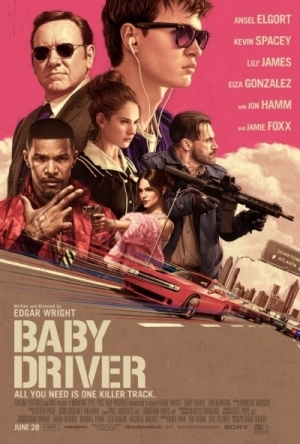
After falling into debt with a crime boss, Baby (Ansel Elgort), must pay back what he owes by being the getaway driver for brazen daytime heists. The crime boss, Doc (Kevin Spacey), promises Baby that once the next job is done he will be debt free. Baby does the job and heads home feeling finally free and ready to start doing good things with his life. He meets a beautiful waitress, Debora (Lily James), and plans to drive across the country with her. It may be too good to be true. He soon learns that being debt free may not mean that he gets to walk away from the life of crime. Being an exceptional driver has made him indispensable to Doc. Now Baby has a choice between walking away, which Doc has promised to hurt him and those he cares about if he does, or do one more job, and hope he find a way out of the criminal world and onto the road with Debora.
Writer/Director Edgar Wright (Shaun of the Dead, Hot Fuzz) does a masterful job of drawing the audience into the story with the soundtrack in a really fun and original way. From the chase scenes to the mundane task of getting coffee, the music immerses the viewer into Baby’s world. The film starts out with an exciting car chase sequence and keeps moving all the way to the end. All of the chase/driving scenes are really well done, which was expected for a movie with driver in the name, but impressive none the less. The pace of the film was consistent and it flowed all the way to the end. Kevin Spacey, Jamie Foxx, John Hamm, Eliza Gonzalez and the rest of the supporting cast did really well and all brought interesting characters to the film.
I loved the originality of the story and how it was executed. This is definitely a soundtrack I will have to listen to again. There were couple loose ends with some of the characters that didn’t get tied up but that was minimal. It is a fun ride and has a little bit of something for everyone. There is a love story, action, a compelling story, and a mixed in comedy that lightens the mood.
Writer/Director Edgar Wright (Shaun of the Dead, Hot Fuzz) does a masterful job of drawing the audience into the story with the soundtrack in a really fun and original way. From the chase scenes to the mundane task of getting coffee, the music immerses the viewer into Baby’s world. The film starts out with an exciting car chase sequence and keeps moving all the way to the end. All of the chase/driving scenes are really well done, which was expected for a movie with driver in the name, but impressive none the less. The pace of the film was consistent and it flowed all the way to the end. Kevin Spacey, Jamie Foxx, John Hamm, Eliza Gonzalez and the rest of the supporting cast did really well and all brought interesting characters to the film.
I loved the originality of the story and how it was executed. This is definitely a soundtrack I will have to listen to again. There were couple loose ends with some of the characters that didn’t get tied up but that was minimal. It is a fun ride and has a little bit of something for everyone. There is a love story, action, a compelling story, and a mixed in comedy that lightens the mood.

LeftSideCut (3776 KP) rated It: Chapter Two (2019) in Movies
Sep 15, 2019 (Updated Oct 25, 2019)

If it ain't broke
The second chapter of the extremely popular reboot of Stephen King's It is more of the same...and that's a good thing.
The first film feels like a ghost train, with creepy imagery, and well crafted jump scares that don't feel too cheap.
Chapter Two takes the same formula, and if anything, actually does more with it. Pennywise seams more brutal and unforgiving in his ways this time around.
Bill Skarsgård once again is great as Pennywise, sinister, whilst remaining weirdly charming, and sometimes sympathetic.
The fantastic child actors from the first film are present once again via flashbacks, and are just as likable, but as the bulk of Chapter Two is set 27 years later, these characters are now grown up and played by a whole host of incredibly well casted adults.
Bill Hader in particular is a highlight throughout. I always have time for James McAvoy as well, the guy is an hugely underrated actor.
The scares arrive thick and fast after a slow start where we're reintroduced to everyone - and they are mixed...some are genuinely unsettling (as is the tone for a lot of Chapter Two). The Paul Bunyun statue is a memorable moment, as is the creepy old lady scene from the trailers.
Some others are more tame, and some occasionally cartoony CGI take away from the scares themselves.
The climax of the film is pretty fun, as The Losers once again prepare to battle Pennywise, and it's once again, a truly memorable sequence.
The overall ending suffers slightly from Return of the King syndrome, and feels unessecarily drawn out at the end of an already lengthy film.
Another thing that didn't quite sit well with me was the opening scene - I understand that said scene is in the original novel, and it's a way of reintroducing us to Pennywise, but it felt out of place. Homophobia is still a huge issue in 2019, and there is nothing wrong with shouting about it. But the scene is cruel, and ultimately has no connection to the larger narrative.
Nevertheless, it's a very chilling and effective opening to the film.
The duo of new It films is modern horror done pretty well - unnerving and at times scary, whilst still being accessible to a wider audience.
Certainly worth watching them!
The first film feels like a ghost train, with creepy imagery, and well crafted jump scares that don't feel too cheap.
Chapter Two takes the same formula, and if anything, actually does more with it. Pennywise seams more brutal and unforgiving in his ways this time around.
Bill Skarsgård once again is great as Pennywise, sinister, whilst remaining weirdly charming, and sometimes sympathetic.
The fantastic child actors from the first film are present once again via flashbacks, and are just as likable, but as the bulk of Chapter Two is set 27 years later, these characters are now grown up and played by a whole host of incredibly well casted adults.
Bill Hader in particular is a highlight throughout. I always have time for James McAvoy as well, the guy is an hugely underrated actor.
The scares arrive thick and fast after a slow start where we're reintroduced to everyone - and they are mixed...some are genuinely unsettling (as is the tone for a lot of Chapter Two). The Paul Bunyun statue is a memorable moment, as is the creepy old lady scene from the trailers.
Some others are more tame, and some occasionally cartoony CGI take away from the scares themselves.
The climax of the film is pretty fun, as The Losers once again prepare to battle Pennywise, and it's once again, a truly memorable sequence.
The overall ending suffers slightly from Return of the King syndrome, and feels unessecarily drawn out at the end of an already lengthy film.
Another thing that didn't quite sit well with me was the opening scene - I understand that said scene is in the original novel, and it's a way of reintroducing us to Pennywise, but it felt out of place. Homophobia is still a huge issue in 2019, and there is nothing wrong with shouting about it. But the scene is cruel, and ultimately has no connection to the larger narrative.
Nevertheless, it's a very chilling and effective opening to the film.
The duo of new It films is modern horror done pretty well - unnerving and at times scary, whilst still being accessible to a wider audience.
Certainly worth watching them!
Hairpin Bridge
8.0 Rate It
Book
Looking for a thriller that you can’t put down? Then try this book that everyone’s talking...

Whatchareadin (174 KP) rated Invisible in Books
May 10, 2018
Emmy Dockery is on a mission to find out who killed her twin sister Marta. As a research analyst for the FBI she has been researching fires all over the country that are made to look like accidents. She brings her work to her superiors, but they don't believe her. When she takes what she has found to her ex-fiance Books, who is also a former FBI agent, he agrees to take her information to the top, with the caveat that she will do as he says, when he says.
As I continue my impossible quest of reading all of James Patterson's books, this one was really good.
From the outside accidental fires are being started all over the country. But Emmy Dockery sees something different. She sees something even trained arson investigators aren't seeing. All of these fires over 50 of them, have all been started in a bedroom and the body of the person has been found at the point of origin of the fire. That is very strange, first because fires rarely start in the bedroom and second because you hardly ever find a body at the point of origin of a fire. Usually the person is trying to get away as quick as possible. As soon as Emmy is given the green light to go ahead with the investigation, she is on an all out war to find the person who is doing these heinous crimes. But this killer is really good and finding him is not going to be an easy task. Traveling all over the country, with fire investigators on full alert, will Emmy and her team be able to find the killer before he finishes another killing spree?
As I continue my impossible quest of reading all of James Patterson's books, this one was really good.
From the outside accidental fires are being started all over the country. But Emmy Dockery sees something different. She sees something even trained arson investigators aren't seeing. All of these fires over 50 of them, have all been started in a bedroom and the body of the person has been found at the point of origin of the fire. That is very strange, first because fires rarely start in the bedroom and second because you hardly ever find a body at the point of origin of a fire. Usually the person is trying to get away as quick as possible. As soon as Emmy is given the green light to go ahead with the investigation, she is on an all out war to find the person who is doing these heinous crimes. But this killer is really good and finding him is not going to be an easy task. Traveling all over the country, with fire investigators on full alert, will Emmy and her team be able to find the killer before he finishes another killing spree?

Sarah (7800 KP) rated Glass (2019) in Movies
Jan 22, 2019 (Updated Jan 22, 2019)
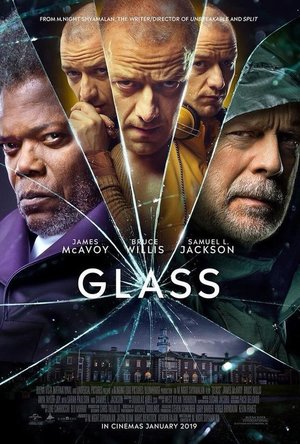

A huge disappointment
This is one of the films I've been dying to see ever since it was announced, and I'm afraid to say it was a massive disappointment after the brilliant Split.
There is such a thing as overkill in sequels, and sadly Glass is full of it. It starts off fairly well, but then dips into sheer boredom as soon as they enter the psychiatric hospital. It does pick up when Mr Glass finally emerges towards the end, but sadly by then most of the damage is done. I hated that they went down the cliched predictable and overused mechanism of a psychiatrist trying to disprove something that everyone else knows is true. Admittedly without saying too much this does at least tie into the ending & it does make sense, but sitting through an hour of dull scenes before we finally get to the fun parts had me nearly falling asleep.
The ending and twists themselves were for the most part predictable and a little bit silly and over the top. Although in a way the final ending was rather fitting. Some of the cinematography was terrible, there were some very bad camera angles and some awful scenes that looked like they'd been shot by a go pro. James McAvoy excels in every scene he's in as expected, it's just a shame that even he couldn't turn this around. The rest of the cast were pretty unremarkable although it was nice to see the original son back from Unbreakable.
I'm very much a less is more kind of person when it comes to stories and films, and sadly Glass tries to elaborate on stories from Unbreakable and Split that didn't need enhancing in the first place.
There is such a thing as overkill in sequels, and sadly Glass is full of it. It starts off fairly well, but then dips into sheer boredom as soon as they enter the psychiatric hospital. It does pick up when Mr Glass finally emerges towards the end, but sadly by then most of the damage is done. I hated that they went down the cliched predictable and overused mechanism of a psychiatrist trying to disprove something that everyone else knows is true. Admittedly without saying too much this does at least tie into the ending & it does make sense, but sitting through an hour of dull scenes before we finally get to the fun parts had me nearly falling asleep.
The ending and twists themselves were for the most part predictable and a little bit silly and over the top. Although in a way the final ending was rather fitting. Some of the cinematography was terrible, there were some very bad camera angles and some awful scenes that looked like they'd been shot by a go pro. James McAvoy excels in every scene he's in as expected, it's just a shame that even he couldn't turn this around. The rest of the cast were pretty unremarkable although it was nice to see the original son back from Unbreakable.
I'm very much a less is more kind of person when it comes to stories and films, and sadly Glass tries to elaborate on stories from Unbreakable and Split that didn't need enhancing in the first place.


Elefant eBooks Reader
Book and Education
App
Aplicație pentru lectura cărților electronice, compatibilă cu soluția de securizare Adobe DRM....