

Bird (1704 KP) rated Prison Break in TV
Nov 29, 2024
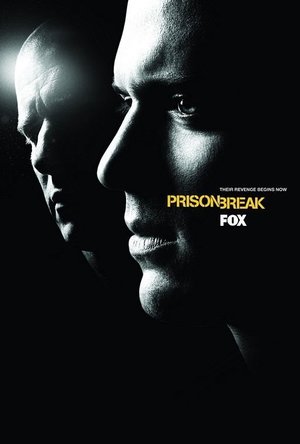

The standout feature of Prison Break is undoubtedly its core premise. The idea of a structural engineer, Michael Scofield (played by Wentworth Miller), intentionally landing himself in prison to break out his falsely accused brother, Lincoln Burrows (Dominic Purcell), is fascinating. The execution of Michael’s plan, complete with hidden clues in his tattooed body map, is both ingenious and fun to watch unfold. The first season, in particular, excels at building tension as Michael carefully navigates the treacherous world of Fox River Penitentiary, laying the groundwork for the escape. It’s a slow burn at times, but the payoff is worth it.
The cast is another highlight. Wentworth Miller’s calm and calculated performance as Michael is captivating, and Dominic Purcell brings a solid, if sometimes overly stoic, presence to Lincoln. Robert Knepper steals the show as Theodore "T-Bag" Bagwell, delivering a performance that’s equal parts chilling and oddly charismatic. Supporting characters like Sucre (Amaury Nolasco) and Sara Tancredi (Sarah Wayne Callies) add warmth and heart to balance the often dark and gritty tone of the series.
However, the show isn’t without its flaws. While the first season is nearly airtight in its storytelling, later seasons can feel uneven. The second season’s shift to a manhunt format is exhilarating but occasionally stretches believability, with some plot twists feeling more like conveniences than organic developments. As the series progresses, the introduction of larger conspiracies and shadowy organisations adds scale but also detracts from the grounded tension that made the first season so compelling. By the time you reach the third and fourth seasons, the narrative occasionally veers into melodrama and over-the-top scenarios, which may pull some viewers out of the experience.
The pacing can also be hit or miss. While some episodes are packed with heart-pounding tension, others feel like filler, particularly in the later seasons. The show sometimes leans too heavily on cliffhangers, which can feel manipulative rather than earned. Additionally, while the cast is strong overall, some characters, like Lincoln, can come across as one-dimensional at times, and a few storylines feel underdeveloped or rushed.
That said, Prison Break is undeniably entertaining. Its gritty atmosphere, clever plotting, and high-stakes drama make it a standout among action-thrillers. The relationships between characters, particularly Michael and Lincoln’s unshakable brotherly bond, give the series emotional weight. Even with its flaws, the show’s twists and turns keep you engaged, and there’s a palpable sense of satisfaction when long-brewing plans come to fruition.
In summary, Prison Break is a fantastic watch, especially for fans of crime dramas and action-packed thrillers, though it occasionally falters under the weight of its ambition. It’s an 8/10 for me—hugely enjoyable, if not always perfect. While it may not stick the landing as well as it starts, the journey is more than worth taking.

Bob Mann (459 KP) rated Shazam! (2019) in Movies
Sep 28, 2021
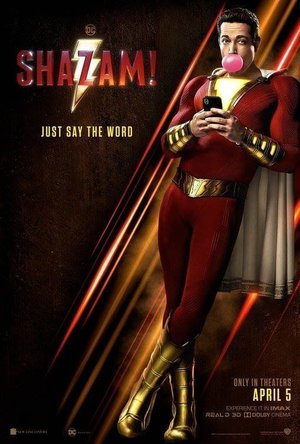

Every review I’ve seen of this starts off with the hackneyed comment that “At last, DC have produced a fun film” – so I won’t (even though it’s true!).
The Plot
“Shazam!” harks back, strongly, to the vehicle that helped launch Tom Hanks‘ illustrious career – Penny Marshall’s “Big” from 1988. In that film the young teen Josh (David Moscow) visits a deserted fairground where “Zoltar” mystically (and without explanation) morphs Josh into his adult self (Hanks). Much fun is had with Hanks showing his best friend Billy the joys (and sometimes otherwise) of booze, girls and other adult pastimes. In similar vein, in “Shazam!” we see the parent-less Billy Batson (Asher Angel) hijacked on a Philadelphia subway train and transformed into a DC superhero as a last-gasp effort of the ancient-wizard (Djimon Hounsou) to find someone ‘good’ to pass his magic onto. “Grab onto my staff with both hands” (Ugh) and say my name – “Juman….”…. no, sorry, wrong film…. “Shazam!”. And as in “Big”, Billy has to explore his new superhero powers with the only person vaguely close to him; his new foster-brother Freddie (Jack Dylan Grazer from “It”).
Billy is not the first to have met the wizard – not by a long shot. There has been a long line of potential candidates examined and rejected on this road, one of which, back in 1974, was the unhappy youngster Thaddeus Sivana (Ethan Pugiotto, but now grown up as Mark Cross), who has a seething chip on his shoulder as big as the Liberty Bell. Gaining evil super-powers of his own, the race is on to see if Dr Sivana can track down the fledgling Billy before he can learn to master his superhero skills and so take him down.
Wizards with red capes?
With the loose exception of possibly Scarlet Witch, I don’t think it’s actually ever been explored before that “superheroes” are actually “magicians” with different coloured capes… it’s a novel take. Before the Marvel/DC wheels eventually come off – which before another twenty years are up they surely must? – will we see a “Harry Potter vs Superman” crossover? “YOUR MOTHER’S NAME WAS LILY AND MINE WAS MARTHA…. L AND M ARE NEXT TO EACH OTHER IN THE DICTIONARY!!!!” The mind boggles.
What does make “Shazam!” interesting is that the story is consciously set in a DC world where Superman, Batman, Wonder Woman, Aquaman and the rest all live and breathe. Freddie has a Bat-a-rang (“only a replica”) and a carefully shrink-wrapped squashed bullet that had impacted on Superman’s body. So when Billy – in superhero form – makes his appearances on the streets of Philly, this makes “Shazam” an “oh look, there’s another one” curiosity rather than an out-and-out marvel.
(Source: Warner Brothers). Lightning from the fingers! Proving very useful for Shazam’s own….
Much fun is obviously had with “Shazam” testing out his powers. Freddie’s Youtube videos gather thousands of hits baas Billy tries to fly; tries to burn; tries to use his “laser sight”; etc.
What works well.
It’s a fun flick that delivers the Marvel laughs of “Ragnarok” and “Ant Man” without ever really getting to the gravitas of either. The screenplay writer (Henry Gayden) is clearly a lover of cinema, as there are numerous references to other movies scattered throughout the film: the victory run of “Rocky” (obviously); the cracking windshield of “The Lost World”; the scary-gross-out body disintegrations of “Indiana Jones”; the portal entry doors of “Monsters, Inc”. Even making an appearance briefly, as a respectful nod presumably to the story’s plagiarism, is the toy-store floor piano of “Big”. There are probably a load of other movie Easter Eggs that I missed.
Playing Billy, the relatively unknown Zachary Levi also charms in a similarly goofball way as Hanks did all those years ago. (Actually, he’s more reminiscent of the wide-eyed delight of Brendan Fraser’s “George of the Jungle” rather than Hanks). In turns, his character is genuinely delighted then shocked at his successes and failures (“Leaping buildings with a single bound” – LOL!). Also holding up their own admirably are the young leads Asher Angel and Jack Dylan Grazer.
Mark Cross, although having flaunted with being the good guy in the “Kingsman” films, is now firmly back in baddie territory as the “supervillain”: and very good he is at it too; I thought he was the best thing in the whole film.
Finally, the movie’s got a satisfying story arc, with Billy undergoing an emotional journey that emphasises the importance of family. But it’s not done in a slushy manipulative way.
What works less well.
As many of you know, I have a few rules-of-thumb for movies, one of which is that a comedy had better by bloody good if it’s going to have a run-time of much more than 90 minutes. At 132 minutes, “Shazam!” overstayed its welcome for me by a good 20 or 30 minutes. Director David F. Sandberg could have made a much tighter and better film if he had wielded the editing knife a bit more freely. I typically enjoy getting backstory to characters, and in many ways this film delivers where many don’t. The pre-credit scenes with Thaddeus nicely paint the character for his (hideous) actions that follow. However, Billy is over-burdened with backstory, and it takes wayyyyyyy too long for the “Shazam!” to happen and the fun to begin. We also lapse into an overlong superhero finale. I didn’t actually see the twist in the plot coming, which was good, but once there then the denouement could and should have been much swifter.
The film also has its scary moments and deserves its 12A certificate. As a film rather painted as kid-friendly from the trailer and the poster, there is probably the potential to traumatise young children here, particularly in a terrifying scene in a board room (with a view). As well as the physical scares there is also a dark streak running under the story that reminded me of both the original “Jumanji” and “Ghostbusters”. Parents beware.
Monkeys?
Following on from the Marvel expectations, there are a couple of “monkeys” (see Glossary) in the title roll: one mid-titles, featuring Dr Sivana and implying an undoubted sequel, and one right at the end pointing fun at the otherwise ignored “Aquaman”.
Final thoughts.
It’s clearly been a long overdue hit for DC, and on the whole I enjoyed it. If the film had been a bit tighter, this would have had the potential to be a classic.
Curiosity Quills: Chronology
Richard Roberts, Tony Healey, Piers Anthony, J.R. Rain, Jordan Elizabeth Mierek, James Wymore, Stan Swanson, Darin Kennedy , Julie Frost , Andrew Buckley , J.P. Moynahan, B. C. Johnson, J. P. Sloan, Andrew J. Rausch, Katie Young , Scott Nicholson, Wilbert Stanton, Tara Tyler, Mark W. Woodring, J. E. Anckorn, Nathan L. Yocum, G. Miki Hayden, Matthew S. Cox and Matthew Graybosch
6.0 Rate It
Book
It's time... for time! Embark on a literary journey through the ages with Curiosity Quills Press in...

Never Look at the Empty Seats: A Memoir
Book
A tale of hard work, musical discovery, and faith, Charlie Daniels’s journey has been one of a...
Music biography

Illeana Douglas recommended Easy Rider (1969) in Movies (curated)


Kristy H (1252 KP) rated Two Kinds of Truth (Harry Bosch #20) in Books
Jan 10, 2018
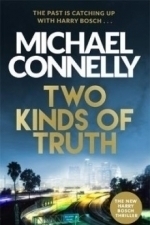

I love Harry Bosch so much, and there will be a hole in my heart when Connelly no longer writes about him. I actually moved this book up in my rotation (something I rarely ever do!) so I could read it on a weekend trip to Chicago, and my only regret is that it meant I finished it in about 48 hours, and now it's over. Per usual, Connelly gives us yet another wonderful mystery novel featuring his excellently developed lead detective. This one covers the timely topic of the opiate crisis, which looms fairly large in America today. It's well-researched, as always.
Reading a Bosch novel is like picking up with an old friend, and this one is no different. Our Bosch is aging, which this book acknowledges well. We see Bosch still grappling with having left the LAPD--who can he trust, what can he do with his life now. We even get some appearances from previous characters in earlier novels. Perhaps the best thing is a fairly large role for Bosch's half brother Mickey Haller, the famed "Lincoln Lawyer." These two are still figuring out their own relationship, but it's a treat for us readers to get a glimpse of Mickey; we even get to see some of his enjoyable courtroom antics. There's even an appearance from Mickey's investigator, Cisco! (See, it's like being old friends!)
And, of course, we can't forget the actual story, which, in usual Connelly style is excellent and tracks along flawlessly along Bosch's own journey. The opiate tale is both fascinating and depressing, while Bosch's unraveling of the backstory behind the reopened cold case will certainly keep you reading. There's never really any crazy twists or turns, but the novel moves along steadily and easily. There's both growth and angst with Bosch--I have to admit, I worry about the end of his arc, but I will still enjoy every moment I get with him until them.
Another enjoyable one for the Bosch canon--certainly recommend!
Shock Treatment
Book
-If you haven't read this book yet--buy it, take it home, and read it now! This is the work that...

Dressbox — your closet organizer
Lifestyle and Shopping
App
Do you want to be more organized and even more attractive? Now it is possible with e-wardrobe...

Dressbox — your closet organizer.
Shopping and Lifestyle
App
Do you want to be more organized and even more attractive? Now it is possible with e-wardrobe...