

Molly J (Cover To Cover Cafe) (106 KP) rated An Amish Homecoming in Books
Feb 27, 2019


Amy Clipston's NO PLACE LIKE HOME is beautifully and tenderly written. Her unique writing style shines through and the messages from God are woven throughout. The characters are chiseled beautifully and I could feel myself walking along side them, as Eva returned home and came face to face with a man she once knew, and know is unsure of. Her story of letting go and moving on, is truly a tender one and one that will have me coming back to this story again and again.
Kathleen Fuller's WHAT LOVE BUILT is another beautiful, moving story. Carolyn quickly stole my heart and when Atlee is introduced, bless! These two sweet souls truly had me pulling for them! I cold feel their heartaches, their love for the Lord, all of it, as if the story was written just for me. I loved the messages of acceptance, of faith, of trust, all woven together to spin a story I won't soon forget!
These stories together create a 5 star worthy novella collection that will be on my keeper shelf for many years to come. The Amish simplicity and the hope and love within, will forever pull me back. Each author did a wonderful job in their stories and I am looking forward to another collection like this from these talented ladies! Well done, and I highly recommend this book to all!
*I received a complimentary copy of this book from Publisher and was under no obligation to post a review, positive or negative.*

Clair (5 KP) rated My Sister's Bones in Books
Sep 29, 2017
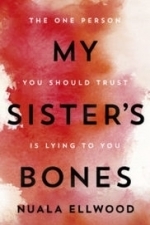

Kate Rafter is a journalist who works in some of worst places in the world, seeing some of the world's worst atrocities. She returns home on the death of her mother. Her sister Sally has never left Herne Bay and is an alcoholic, who hates Kate. The book is split between the main events of the story and scenes in a police station where Kate is being assessed on her mental health. We know that Kate keeps hearing and seeing a young boy in the family garden - but her experiences in Syria which have left her traumatised means that no one believes her.
Marketed as a rival to The Girl on the Train (I wish they wouldn't do that), I enjoyed this book and would ideally have given it 3.5 stars.
Negatives first...I didn't think it was that well written, there were plot holes that annoyed me and I found the characters one dimensional.
BUT the story was fast moving and intriguing and then there is a major twist which I didn't see coming which made me gasp.

Suswatibasu (1703 KP) rated Burial Rites in Books
Nov 5, 2017
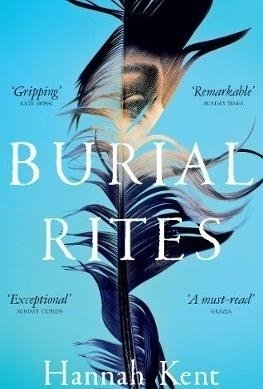

It isn't a murder mystery, more a fictional portrayal of Agnes Magnusdottir, who was condemned to death after the murder of two men, one of whom was her employer. It surrounds her last months kept in the home of a lawman and his family, as they grew closer to her and as she revealed more about the case to them. She confides in a young assistant priest, Toti, appointed as her spiritual guardian.
Here we find a rather ambiguous story about her so-called heroic employer, who seems to be more callous than what most thought about him. It is moving to read about the intense poverty she faced, and the loveless life she led, forcing people to behave in many different ways. There is a recurrent theme of jealousy throughout the book which shows what people are truly capable of. It is a battle for survival in a harsh, wintry landscape.
Erika Kehlet (21 KP) rated Address to Die For (A Maggie McDonald Mystery #1) in Books
Feb 21, 2018

This was a great start to a new series, and a great introduction to a cast of characters I expect to be seeing more of in the near future. I loved that I wasn't sure who would still be around next time until almost the end of the novel!
<I>NOTE: I received a free copy in exchange for an honest review. All remarks and opinions are my own.</I>

Awix (3310 KP) rated On Chesil Beach (2018) in Movies
Jun 1, 2018
Not the kind of film you walk home from whistling, unless you're some kind of militant celibacy advocate, but an undeniably fine one (or so it seems to me): very good performances from the young stars, and well-judged direction. Initially the film seems like a slightly dark comedy-drama of manners (the excruciating scenes of people failing to have sex are very awkward to watch), but it develops into something profoundly moving and deeply sad before the end. Thank God for the permissive society.

David McK (3929 KP) rated The Blooding (Matthew Hawkwood, #5) in Books
Jan 30, 2019
I say mostly as, for approximately the first half, the novel actually flits back and forth - almost chapter about - between current events and those of Hawkwood's childhood (also in the States).
I also have to say that, as the series has progressed, it has seemingly moved further and further away from it's original Bow Street Runner in the Regency period: moving closer, perhaps, in mold (IMO) to the classic Sharpe stories of Bernard Cornwell, and - as a consequence - becoming in danger of losing it's own flavour that originally made it stand out.
Having said that, however, this - I felt - was an improvement on the previous book, which I personally struggled somewhat to connect with.
Letters Between a Father and Son
Book
In 1950, V. S. Naipaul travelled from Trinidad to England to take up a place at Oxford University....

Alderley Park Discovered: History, Wildlife, Pharmaceuticals
Book
Alderley Park Discovered is written by former AstraZeneca chemist George Hill, whose carefully...
The Stranger In The Woods:The Extraordinary Story Of The Last True Hermit
3.0 Rate It
Book
In 1986, a shy and intelligent twenty-year-old named Christopher Knight left his home in...
Honor Among Thieves: The Honors Book 1
7.0 Rate It
Book
Meet your new favorite kickass heroine in this daring YA series by New York Times bestselling...
young adult