
Search
The Gunning of America: Business and the Making of American Gun Culture
Book
Americans have always loved guns. This special bond was forged during the American Revolution and...

Metro 2033
9.0 Rate It
Book
The year is 2033. The world has been reduced to rubble. Humanity is nearly extinct. The...

Eilidh G Clark (177 KP) rated A Portable Shelter in Books
May 13, 2017

‘…there’s no other way to give you the truth except to hide it in a story and let you find your own way inside.’
‘…there’s no other way to give you the truth except to hide it in a story and let you find your own way inside.’
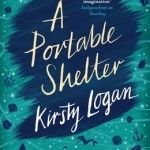
Kirsty Logan’s first collection of short stories, The Rental Heart and Other Fairytales, published by Salt in 2014, won the Polari First Book Prize in 2015. A Portable Shelter is her second collection. Set in a small cottage in the rural north coast of Scotland, Ruth and Liska are expecting their first child. The couple believe that their unborn baby will have a better chance of survival away from the harshness of suburban life. They make a pact with one another, that they will only ever tell their child the truth. Yet while Liska is asleep or Ruth is at work, each whispers secret stories to their unborn child. Delving into fantastical tales about people from their past and re-telling stories that span from generation to generation, the couple unfold the horrors of the real world. Whilst these tales, laced in myth and legend, and fattened with the magic of the imagination, demonstrate the art of oral storytelling, Logan reaches further to show the reader why storytelling is important.
While this book is primarily a collection of short stories, its novel like structure frames each story with a preceding monologue from either Ruth or Liska. The monologues offer delightful morsels of description that bring the harshness of Mother Nature into the safety of the couple’s bedroom, “right now our home is speaking to you. The walls creak their approval in the wind. The rain applauds on the roof. The lighthouse beam swoops, swoops, swoops. The tide breathes loud and slow like a giant. If you listen carefully, perhaps you can even hear the moon hum.” The pace of these sentences, combined with the delicacy of language demonstrates Logan’s skill at describing the sublime spirit of the natural world, which brings the narrative to life.
Most impressive though, is Logan’s poetic language and carefully crafted sentences which create the most beautiful imagery. In ‘Flinch,’ for example – James is a fisherman struggling with his identity, yet his affiliation with the land is locked into his first-person point of view where the reader gets to closely experience what he sees, “The sky is pinkish-grey like the insides of shells. Speckled bonxies wheel overhead. Seals loll on the rocks, fat as kings. The rising mist is cool and milky.” Any of these lines could easily be arranged into a poem and with sentences that are squeezed tight; they create a wonderful poetic rhythm. Logan uses this technique throughout her novel, demonstrating the precision and craft in her work. There are definite similarities in her writing style to fellow Scottish novelist and poet Jenni Fagan. Both authors use rich language, which is well crafted and smattered with vernacular. Furthermore, combining this with the reoccurring theme of identity, the oral storytelling tradition, landscape, folklore, and myth, it is clear to see why these authors contribute to the growing canon in Scottish literature.
This is a book that I will read over and over again because I know that in each reading, I will find something new. A Portable Shelter, I feel, deserves a place on my ‘keep’ book shelf.
A Portable Shelter, Kirsty Logan, London: Vintage, 2015
Kirsty Logan’s first collection of short stories, The Rental Heart and Other Fairytales, published by Salt in 2014, won the Polari First Book Prize in 2015. A Portable Shelter is her second collection. Set in a small cottage in the rural north coast of Scotland, Ruth and Liska are expecting their first child. The couple believe that their unborn baby will have a better chance of survival away from the harshness of suburban life. They make a pact with one another, that they will only ever tell their child the truth. Yet while Liska is asleep or Ruth is at work, each whispers secret stories to their unborn child. Delving into fantastical tales about people from their past and re-telling stories that span from generation to generation, the couple unfold the horrors of the real world. Whilst these tales, laced in myth and legend, and fattened with the magic of the imagination, demonstrate the art of oral storytelling, Logan reaches further to show the reader why storytelling is important.
While this book is primarily a collection of short stories, its novel like structure frames each story with a preceding monologue from either Ruth or Liska. The monologues offer delightful morsels of description that bring the harshness of Mother Nature into the safety of the couple’s bedroom, “right now our home is speaking to you. The walls creak their approval in the wind. The rain applauds on the roof. The lighthouse beam swoops, swoops, swoops. The tide breathes loud and slow like a giant. If you listen carefully, perhaps you can even hear the moon hum.” The pace of these sentences, combined with the delicacy of language demonstrates Logan’s skill at describing the sublime spirit of the natural world, which brings the narrative to life.
Most impressive though, is Logan’s poetic language and carefully crafted sentences which create the most beautiful imagery. In ‘Flinch,’ for example – James is a fisherman struggling with his identity, yet his affiliation with the land is locked into his first-person point of view where the reader gets to closely experience what he sees, “The sky is pinkish-grey like the insides of shells. Speckled bonxies wheel overhead. Seals loll on the rocks, fat as kings. The rising mist is cool and milky.” Any of these lines could easily be arranged into a poem and with sentences that are squeezed tight; they create a wonderful poetic rhythm. Logan uses this technique throughout her novel, demonstrating the precision and craft in her work. There are definite similarities in her writing style to fellow Scottish novelist and poet Jenni Fagan. Both authors use rich language, which is well crafted and smattered with vernacular. Furthermore, combining this with the reoccurring theme of identity, the oral storytelling tradition, landscape, folklore, and myth, it is clear to see why these authors contribute to the growing canon in Scottish literature.
This is a book that I will read over and over again because I know that in each reading, I will find something new. A Portable Shelter, I feel, deserves a place on my ‘keep’ book shelf.
A Portable Shelter, Kirsty Logan, London: Vintage, 2015
Bones: Brothers, Horses, Cartels, and the Borderland Dream
Book
The dramatic true story of two brothers living parallel lives on either side of the U.S.-Mexico...
Politics social issues

Mayhawke (97 KP) rated The Durrells of Corfu in Books
Feb 13, 2018
Truth Without Disenchantment
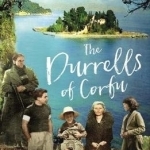
I think the first thing to note is that there is probably no point in reading this book if you haven't at the very least watched one of the T.V. series. Indeed a lot of it will probably go right over your head if you are not well-versed in Durrell's tales of his childhood in Corfu.
I am, and have been since I first picked My Family And Other Animals when I was eleven - which is longer ago now than I would really like to think about! Age aside, my point is this: I have read and loved these books many times, and for several decades. Durrell was my first 'grown up' read as a child and the Corfu trilogy has long been ranked in my 'comfort reads' - those books you turn to again and again when you just want something familiar and easy. It was with some concern, then, that I picked up the ARC of Haag's book when it landed in our staff room. I didn't want my illusions destroyed, and whilst it goes largely without saying that there was going to be some massaging of the truth in Durrell's autobiographical stories I wasn't sure that I was ready for The Truth, The Whole Truth, and Nothing But.
Haag, it turns out, is also a little bit in love with the Durrells. As such I can think of few better people to write the bald truth about this family without destroying the charm and good humour of Gerald Durrell's books for those of us who want to hold on to the myth. This delicate unravelling begins on the very first page as Haag presents the reader with the brutal and tragic truth behind the Corfu sojourn - the sudden death of Durrell Snr at the age of just forty-four. In My Family Gerald Durrell manages to skim over this uncomfortable truth with such success that he imparts the information that his mother is a widow without ever giving the reader space to think or question more deeply into the effect on the family beyond their enforced to move back to cold, rainy England - a place from which they then escaped to Corfu, so legend has it, for no more pressing reason than to avoid colds.
And so Haag's biography continues, with a gentle but unrelenting quality, to pull scales from eyes. Using tracts from Durrell's books he often does little more than a simple but effective compare and contrast with reality: introducing characters who were completely written out of the Durrell legend, yet were significant members of the Durrell collective; opening up the more Bohemian aspects of their life, and the way they were perceived by other immigrant British at the time.
Haag also exposes the more complex relationships within the family. Lawrence, who is presented through young Gerry's eyes as probably his greatest critic it transpires is his greatest champion: directing and ensuring Gerry's education whilst keeping him free of the structure and strictures of school; the somewhat sadder story of belligerent and boisterous Leslie - so much larger-than-life in the Corfu books, who later seems to become estranged from the family; and perhaps most surprising of all - Margo, who had a life that rivals either of her famous brothers for interest and adventure, at least in her younger years.
All of these uncomfortable exposes Haag achieves, and I feel far better informed about the family now, than I ever have yet never once have I felt that I will not be able to return and pick up Gerry Durrell's books and read them with the same joy and pleasure that I have done for the last four decades.
I am, and have been since I first picked My Family And Other Animals when I was eleven - which is longer ago now than I would really like to think about! Age aside, my point is this: I have read and loved these books many times, and for several decades. Durrell was my first 'grown up' read as a child and the Corfu trilogy has long been ranked in my 'comfort reads' - those books you turn to again and again when you just want something familiar and easy. It was with some concern, then, that I picked up the ARC of Haag's book when it landed in our staff room. I didn't want my illusions destroyed, and whilst it goes largely without saying that there was going to be some massaging of the truth in Durrell's autobiographical stories I wasn't sure that I was ready for The Truth, The Whole Truth, and Nothing But.
Haag, it turns out, is also a little bit in love with the Durrells. As such I can think of few better people to write the bald truth about this family without destroying the charm and good humour of Gerald Durrell's books for those of us who want to hold on to the myth. This delicate unravelling begins on the very first page as Haag presents the reader with the brutal and tragic truth behind the Corfu sojourn - the sudden death of Durrell Snr at the age of just forty-four. In My Family Gerald Durrell manages to skim over this uncomfortable truth with such success that he imparts the information that his mother is a widow without ever giving the reader space to think or question more deeply into the effect on the family beyond their enforced to move back to cold, rainy England - a place from which they then escaped to Corfu, so legend has it, for no more pressing reason than to avoid colds.
And so Haag's biography continues, with a gentle but unrelenting quality, to pull scales from eyes. Using tracts from Durrell's books he often does little more than a simple but effective compare and contrast with reality: introducing characters who were completely written out of the Durrell legend, yet were significant members of the Durrell collective; opening up the more Bohemian aspects of their life, and the way they were perceived by other immigrant British at the time.
Haag also exposes the more complex relationships within the family. Lawrence, who is presented through young Gerry's eyes as probably his greatest critic it transpires is his greatest champion: directing and ensuring Gerry's education whilst keeping him free of the structure and strictures of school; the somewhat sadder story of belligerent and boisterous Leslie - so much larger-than-life in the Corfu books, who later seems to become estranged from the family; and perhaps most surprising of all - Margo, who had a life that rivals either of her famous brothers for interest and adventure, at least in her younger years.
All of these uncomfortable exposes Haag achieves, and I feel far better informed about the family now, than I ever have yet never once have I felt that I will not be able to return and pick up Gerry Durrell's books and read them with the same joy and pleasure that I have done for the last four decades.
Phil Leader (619 KP) rated The Rise of the Iron Moon (Jackelian #3) in Books
Nov 25, 2019
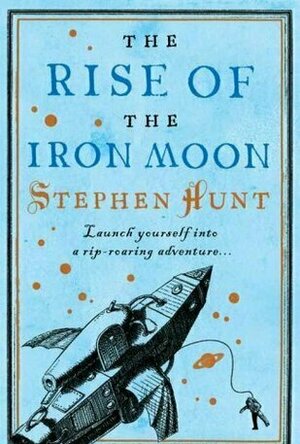
This book looked interesting so I picked it up. I'd not heard of Stephen Hunt or this series but the premise intrigued me.
Although this is the third book of the series and there are plenty of references to events that must take place in the previous books, and despite the writing being immersive rather than explanatory, I found it easy to get into the story.
The world is very interesting. I have read other novels set in a faux Victorian Steampunk-like world but nothing like this. This is like an alternative history, extremely divergeant from ours but with enough similarities that the combination is quite striking.
For example there was a civil war in the past which parliament won, as in the 'real' British history. However all of the royals have been locked up ever since in the Royal Breeding House - kept as figureheads under constant house arrest and threat of execution at the whim of parliament to appease the masses.
There are also countries ruled by thinking, steam driven machines. Others beneath the waves or living strictly by some political principal.
However the world is under threat. All the countries are being slowly invaded from the North by a very aggressive foe. Under attack the land of Jackals itself calls on its heroes to save the day. Purity Blake, one of the inmates of the Royal Breeding House. Molly Templar, writer of penny dreadful science fiction stories and sometimes defender of the land. Coppertracks, a machine life steam man and scientist. Their companions must overcome impossible odds and put aside the enmity between nations to fight off the attackers. Against all the odds, can they succeed?
The book is a little slow to start up, as the characters are introduced in their diverse environments. But slowly the threads are drawn together and each play their part in the fight. And as they begin to weave into the plot the pace quickens. The story twists and turns, always astonishing in its concept and direction.
The outstanding part of this book is the imagination that has gone into it. Nearly everything is completely different from our world and yet it ties together convincingly into a land both of industry and grime, poverty and privilege but also of very real myth and legend.
The ending is a little bit Deus Ex Machina but really this fits in with the tone quite well and at least keeps the pace up in the final pages. There are enough wonderful and fantastic ideas let loose to wander around in this book for several novels.
Definitely a recommended book. I now need to search out the first book - The Court Of The Air - so I can find out what has happened to the characters before.
Although this is the third book of the series and there are plenty of references to events that must take place in the previous books, and despite the writing being immersive rather than explanatory, I found it easy to get into the story.
The world is very interesting. I have read other novels set in a faux Victorian Steampunk-like world but nothing like this. This is like an alternative history, extremely divergeant from ours but with enough similarities that the combination is quite striking.
For example there was a civil war in the past which parliament won, as in the 'real' British history. However all of the royals have been locked up ever since in the Royal Breeding House - kept as figureheads under constant house arrest and threat of execution at the whim of parliament to appease the masses.
There are also countries ruled by thinking, steam driven machines. Others beneath the waves or living strictly by some political principal.
However the world is under threat. All the countries are being slowly invaded from the North by a very aggressive foe. Under attack the land of Jackals itself calls on its heroes to save the day. Purity Blake, one of the inmates of the Royal Breeding House. Molly Templar, writer of penny dreadful science fiction stories and sometimes defender of the land. Coppertracks, a machine life steam man and scientist. Their companions must overcome impossible odds and put aside the enmity between nations to fight off the attackers. Against all the odds, can they succeed?
The book is a little slow to start up, as the characters are introduced in their diverse environments. But slowly the threads are drawn together and each play their part in the fight. And as they begin to weave into the plot the pace quickens. The story twists and turns, always astonishing in its concept and direction.
The outstanding part of this book is the imagination that has gone into it. Nearly everything is completely different from our world and yet it ties together convincingly into a land both of industry and grime, poverty and privilege but also of very real myth and legend.
The ending is a little bit Deus Ex Machina but really this fits in with the tone quite well and at least keeps the pace up in the final pages. There are enough wonderful and fantastic ideas let loose to wander around in this book for several novels.
Definitely a recommended book. I now need to search out the first book - The Court Of The Air - so I can find out what has happened to the characters before.
Uptown Oracle (24 KP) rated Moroda in Books
Jun 30, 2017
A Great Debut Fantasy Novel!
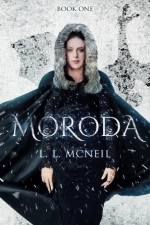
As we traipse the countries and cities of Linaria following a band of unlikely comrades, we're introduced to magic, dragons, and a foe leading a trail of destruction in his wake. Moroda and her allies must find a way to save Linaria before the war destroys them and everything around them.
One of my favourite parts of the book is that there's multiple wonderful characters. We have our main character, Moroda and her sister Eryn, two former Goldstones trying to survive after their fathers death. There's Morgen an Imperial Guard from Corhaven, who's unsure as to whether life in the Guard is for him. Amarah, a brusk sky pirate who cares more for money and treasure. Palom and Anahrik, two Ittallan traders who want to get back to their homeland before war hits. Sapora, a Varkain who also wants to return to his homeland, away from the prejudice against his kind. And Kohl, an exiled Arillian who can control wind and lightening. Groups are often used within the fantasy genre but Moroda doesn't confuse you with multitudes of characters.
The world of Linaria has different prejudices and stereotypes against races and the inclusion of these races allows to get a much better, unbiased opinion. Each of our characters has their own thoughts, motivations, backgrounds and histories. Despite preconceived views of each other, the characters are all individual. There's also strong character growth, especially for Moroda throughout the book. There was definitely the risk of falling into common female fantasy tropes with Moroda, but McNeil manages to miss each of these skillfully.
The only criticism is the antagonist, Aciel. Being told by other characters what Aciel was doing and how, is very different to be able to see it. There was a lost connection that I personally like having with the villains. We meet him and he does speak a little bit, but there's definitely that lack of attachment. This criticism is also very personal, as I know a lot of people wouldn't mind this at all.
As with any fantasy novel, you need a wonderful fantasy land. There's exploration of multiple cities, and also some comparisons by the characters themselves. Each place has it's own background and vivid descriptions. I'm really looking forward to more exploration of Sereth, the Varkain capital. There's also undertones of myth, lore and legend within Linaria. Which although not explored completely within this book will be fantastic to build upon in later books.
Moroda is romance free which I loved. I've read so many books recently where the romantic subplot overshadows the real plot, and this was so refreshing. The focus was on the friendships being made over the journey, and the sisterly bond between Moroda and Eryn.
Overall I loved Moroda. Perfect to go into reading more over summer as I've finally finished exams!
One of my favourite parts of the book is that there's multiple wonderful characters. We have our main character, Moroda and her sister Eryn, two former Goldstones trying to survive after their fathers death. There's Morgen an Imperial Guard from Corhaven, who's unsure as to whether life in the Guard is for him. Amarah, a brusk sky pirate who cares more for money and treasure. Palom and Anahrik, two Ittallan traders who want to get back to their homeland before war hits. Sapora, a Varkain who also wants to return to his homeland, away from the prejudice against his kind. And Kohl, an exiled Arillian who can control wind and lightening. Groups are often used within the fantasy genre but Moroda doesn't confuse you with multitudes of characters.
The world of Linaria has different prejudices and stereotypes against races and the inclusion of these races allows to get a much better, unbiased opinion. Each of our characters has their own thoughts, motivations, backgrounds and histories. Despite preconceived views of each other, the characters are all individual. There's also strong character growth, especially for Moroda throughout the book. There was definitely the risk of falling into common female fantasy tropes with Moroda, but McNeil manages to miss each of these skillfully.
The only criticism is the antagonist, Aciel. Being told by other characters what Aciel was doing and how, is very different to be able to see it. There was a lost connection that I personally like having with the villains. We meet him and he does speak a little bit, but there's definitely that lack of attachment. This criticism is also very personal, as I know a lot of people wouldn't mind this at all.
As with any fantasy novel, you need a wonderful fantasy land. There's exploration of multiple cities, and also some comparisons by the characters themselves. Each place has it's own background and vivid descriptions. I'm really looking forward to more exploration of Sereth, the Varkain capital. There's also undertones of myth, lore and legend within Linaria. Which although not explored completely within this book will be fantastic to build upon in later books.
Moroda is romance free which I loved. I've read so many books recently where the romantic subplot overshadows the real plot, and this was so refreshing. The focus was on the friendships being made over the journey, and the sisterly bond between Moroda and Eryn.
Overall I loved Moroda. Perfect to go into reading more over summer as I've finally finished exams!

Gareth von Kallenbach (980 KP) rated Hitch (2005) in Movies
Aug 14, 2019
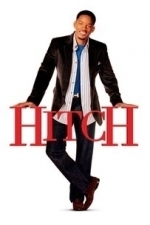

February is the time of year when thoughts turn to romance and the coming spring. It is also the time of year when Hollywood brings new romantic themed films to the theaters in an effort to open big, thanks to the date movie crowd.
Some of the efforts, such as last weekend’s The Wedding Date, never take off, while others, such as Hitch provide a nice mix of romance and comedy which, for the most part, work very well.
The film follows the exploits of urban legend Alex Hitch Hitchens (Will Smith), a self-styled date doctor who specializes in helping men romance the lady of their dreams. Hitch does not provide a dating service but rather helps his clients with their confidence and instructs them on the true way to win and keep and ladies heart.
With his proven results and good rapport with his clients, Hitch is a man in demand, yet due to his policy of privacy and secrecy, to many, the so-called love doctor is little more than an urban myth which is just fine with Hitch. He would rather work in the shadows than bask in the limelight. The adoration of his clients is all he needs. Well, that and a steady supply of ladies to charm at the days end.
Hitch is about to face his toughest case yet in a kind but portly accountant named Albert (Kevin James) who is desperate to win the heart of his wealthy socialite client Allegra (Amber Valletta). When Albert and Allegra start to be seen with one another in public, they catch the eye of celebrity snoop Sara (Eve Mendes), who becomes determined to see what is behind this unexpected couple, which in turn leads her to believe that the so-called Date Doctor is a reality.
If matters were not complicated enough, Hitch starts to see Sara on a social basis with each of them unaware of what the other really does. Sparks fly despite the unflappable and smooth Hitch having one thing after another go awry. Sara really seems to be effecting him, and the more pathetic and hopeless he seems, the more they are drawn to one another.
Instead of turning the film into a whimsical lark, Director Andy Tennant, who helmed the recent Sweet Home Alabama manages to balance comedy with romance, all the while keeping a little bit of drama involved.
Mendes and Smith have good chemistry with one another, as do Smith and James. Smith is very solid and likeable as the charming Hitch. He plays him as a smooth and confident guy, who is actually more reserved and cautious on the inside. The duality of his character is clear without being overwhelming, leaving him not only likeable, but as a character that is easy to root for. The biggest surprise of the film would be Kevin James. His portrayal of Albert is a solid mix of humor and decency. James gets many laughs with Albert’s attempt at being suave, as he portrays a very realistic and believable character who is struggling to find his inner confidence and let his body and voice convey what he has in his heart.
The film does lose momentum during the final twenty minutes when it becomes lazy, resorting to many standard situations that have been done many times before. That being said Hitch as a whole works, and if you are willing to overlook a few blemishes, you may find yourself enjoying the warmth, humor and charm.
Some of the efforts, such as last weekend’s The Wedding Date, never take off, while others, such as Hitch provide a nice mix of romance and comedy which, for the most part, work very well.
The film follows the exploits of urban legend Alex Hitch Hitchens (Will Smith), a self-styled date doctor who specializes in helping men romance the lady of their dreams. Hitch does not provide a dating service but rather helps his clients with their confidence and instructs them on the true way to win and keep and ladies heart.
With his proven results and good rapport with his clients, Hitch is a man in demand, yet due to his policy of privacy and secrecy, to many, the so-called love doctor is little more than an urban myth which is just fine with Hitch. He would rather work in the shadows than bask in the limelight. The adoration of his clients is all he needs. Well, that and a steady supply of ladies to charm at the days end.
Hitch is about to face his toughest case yet in a kind but portly accountant named Albert (Kevin James) who is desperate to win the heart of his wealthy socialite client Allegra (Amber Valletta). When Albert and Allegra start to be seen with one another in public, they catch the eye of celebrity snoop Sara (Eve Mendes), who becomes determined to see what is behind this unexpected couple, which in turn leads her to believe that the so-called Date Doctor is a reality.
If matters were not complicated enough, Hitch starts to see Sara on a social basis with each of them unaware of what the other really does. Sparks fly despite the unflappable and smooth Hitch having one thing after another go awry. Sara really seems to be effecting him, and the more pathetic and hopeless he seems, the more they are drawn to one another.
Instead of turning the film into a whimsical lark, Director Andy Tennant, who helmed the recent Sweet Home Alabama manages to balance comedy with romance, all the while keeping a little bit of drama involved.
Mendes and Smith have good chemistry with one another, as do Smith and James. Smith is very solid and likeable as the charming Hitch. He plays him as a smooth and confident guy, who is actually more reserved and cautious on the inside. The duality of his character is clear without being overwhelming, leaving him not only likeable, but as a character that is easy to root for. The biggest surprise of the film would be Kevin James. His portrayal of Albert is a solid mix of humor and decency. James gets many laughs with Albert’s attempt at being suave, as he portrays a very realistic and believable character who is struggling to find his inner confidence and let his body and voice convey what he has in his heart.
The film does lose momentum during the final twenty minutes when it becomes lazy, resorting to many standard situations that have been done many times before. That being said Hitch as a whole works, and if you are willing to overlook a few blemishes, you may find yourself enjoying the warmth, humor and charm.

Alice (12 KP) rated Skullsworn (Chronicle of the Unhewn Throne #0.5) in Books
Jul 3, 2018


<i>Many thanks to the publisher and Netgalley for providing me with a copy of this book in exchange for an honest review</i>
<i>Skullsworn</i> was the first book by Brian Staveley that I’ve read and it has made me want to read his others for definite - I’ve got the <i>Chronicles of the Unhewn Throne</i> already lined up but this review is about Skullsworn. From what I’ve gathered over the internet this is a standalone prequel to the Chronicles as the main character Pyrre is featured in the original trilogy.
Skullsworn follows Pyrre, a priestess-in-training to the god Ananshael, a god of death. The whole concept of the story is Pyrre’s Trial to become a fully-fledged priestess of Ananshael – she has to kill 7 people in 14 days, all of whom are tied to a song including “the one you love/who will not come again.” Failure to complete all seven deaths will result in her own death at the hands of her two witnesses Ela and Kossal.
I’m going to on about Ela and Kossal for a little bit here – Ela is an incredibly motivated, true-believer in life, love and death, skilled fighter and devout priestess of her faith to her God; she’s comfortbale with all levels of intimacy and she has got a laidback view of everything which is in stark contrast to her counterpart Kossal – an aging priest with stooped shoulders and a gruff demeanour who says what he means and means what he says; he plays his flute to stop himself from killing patrons but gets irritated at their applause – it’s a catch 22 like no other. The two of these together shouldn’t work in any way, shape or form but Brian Staveley has made it work to greatness.
Pyrre’s story is one of conflict all throughout and her biggest road block is going to be that she’s never been in love. She travels back to Dombang in order to try to fall in love with Ruc Lan Lac who becomes her target – a pit fighter from her past who has been given command of the Greenshirts by the Annurian leaders. He’s a staunch disbeliever in all things myth and legend and has no patience for spiritual leanings and prefers to focus on the reality of any situation.
Pyrre doesn’t feel that she is worthy of being a priestess of Ananshael but her journey to Dombang from Rassumbur and through the Trial shows that really, she is. We get a big blast from the past in that Pyrre recounts her first meeting with Ruc Lan Lac to Ela who finds great joy in teasing Pyrre mercilessly about the situation and about her supposed inability to love.
The writing style is perfectly bleak but brilliantly enjoyable with great humour in the banter between Ela and Kossal but they’ve also got a great dryness to their humour which gives a stark contrast. The descriptions of the delta and the Csestriim and Nevariim were full of otherworldly fear and ancient horrors, a dark fantasy of epic proportions!
The ending had twists and turns that I didn’t expect in the slightest, gave Skullsworn a perfect ending and it has made me want to get into the world of The Annurian Empire even more; the epilogue was fantastic!
Expertly written and highly recommended.
<i>Skullsworn</i> was the first book by Brian Staveley that I’ve read and it has made me want to read his others for definite - I’ve got the <i>Chronicles of the Unhewn Throne</i> already lined up but this review is about Skullsworn. From what I’ve gathered over the internet this is a standalone prequel to the Chronicles as the main character Pyrre is featured in the original trilogy.
Skullsworn follows Pyrre, a priestess-in-training to the god Ananshael, a god of death. The whole concept of the story is Pyrre’s Trial to become a fully-fledged priestess of Ananshael – she has to kill 7 people in 14 days, all of whom are tied to a song including “the one you love/who will not come again.” Failure to complete all seven deaths will result in her own death at the hands of her two witnesses Ela and Kossal.
I’m going to on about Ela and Kossal for a little bit here – Ela is an incredibly motivated, true-believer in life, love and death, skilled fighter and devout priestess of her faith to her God; she’s comfortbale with all levels of intimacy and she has got a laidback view of everything which is in stark contrast to her counterpart Kossal – an aging priest with stooped shoulders and a gruff demeanour who says what he means and means what he says; he plays his flute to stop himself from killing patrons but gets irritated at their applause – it’s a catch 22 like no other. The two of these together shouldn’t work in any way, shape or form but Brian Staveley has made it work to greatness.
Pyrre’s story is one of conflict all throughout and her biggest road block is going to be that she’s never been in love. She travels back to Dombang in order to try to fall in love with Ruc Lan Lac who becomes her target – a pit fighter from her past who has been given command of the Greenshirts by the Annurian leaders. He’s a staunch disbeliever in all things myth and legend and has no patience for spiritual leanings and prefers to focus on the reality of any situation.
Pyrre doesn’t feel that she is worthy of being a priestess of Ananshael but her journey to Dombang from Rassumbur and through the Trial shows that really, she is. We get a big blast from the past in that Pyrre recounts her first meeting with Ruc Lan Lac to Ela who finds great joy in teasing Pyrre mercilessly about the situation and about her supposed inability to love.
The writing style is perfectly bleak but brilliantly enjoyable with great humour in the banter between Ela and Kossal but they’ve also got a great dryness to their humour which gives a stark contrast. The descriptions of the delta and the Csestriim and Nevariim were full of otherworldly fear and ancient horrors, a dark fantasy of epic proportions!
The ending had twists and turns that I didn’t expect in the slightest, gave Skullsworn a perfect ending and it has made me want to get into the world of The Annurian Empire even more; the epilogue was fantastic!
Expertly written and highly recommended.