
Search
Search results

The Wild Truth: The Secrets That Drove Chris McCandless into the Wild
Book
The key missing piece of Jon Krakauer's multi million, multi territory bestseller and widely...

Eleanor Luhar (47 KP) rated The Sisters of the Winter Wood in Books
Jun 24, 2019
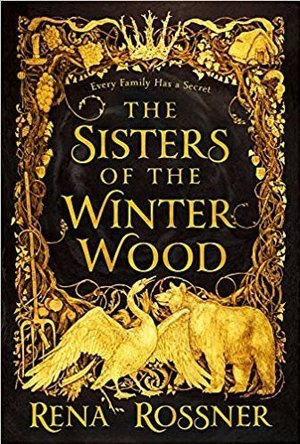

I'm going to avoid discussing the plot too much so I don't spoil any potential readers (and I do recommend you read this!).
This book is set in Dubossary, narrated alternately by Liba and Laya. Liba is the older of the two, the only children in their family. They are Jews, and while this book was hugely about their faith and discrimination against them, it is not only about that. This book was like a new fairytale. It had magic in every page, and was genuinely exciting to read. There were tragic elements, tons of romance, and even a sense of suspense.
The girls are left in their home alone when their parents rush off to Kupel in a family emergency. But just as they plan to leave, the girls' Mami decides it's time to tell her daughters who they really are: a bear and a swan.
As I said, I will not delve into the story too much. But I really loved the story involving Laya and the Hovlin brothers, as well as Liba's own internal struggles. Laya's romance at the end of the book was, in my opinion, a little rushed and unexpected, but that's the only real downside I have.
The writing was lovely - it included Yiddish and Hebrew dialect, which was translated in the Author's Note at the end. (A quick side note; I actually read the entire Note, which is really quite rare for me.) And Laya's account, in particular, felt so poetic. She was definitely my favourite character, as much as I love Liba, too. And the relationship between the girls is so, so lovely. No matter how much they try to push each other away, they are always there for each other in the end.
As I enjoyed this book so much, I tried to talk about it with my boyfriend. However, I soon discovered that describing this story is really quite a feat. It was full of little details and twists that just made the story.
I really liked this book. As I only received an ARC and not a final edition, I didn't have the official layout, which I can imagine may add to it also. Even so, I'm easily giving this 4.5 to 5 stars.
This book is set in Dubossary, narrated alternately by Liba and Laya. Liba is the older of the two, the only children in their family. They are Jews, and while this book was hugely about their faith and discrimination against them, it is not only about that. This book was like a new fairytale. It had magic in every page, and was genuinely exciting to read. There were tragic elements, tons of romance, and even a sense of suspense.
The girls are left in their home alone when their parents rush off to Kupel in a family emergency. But just as they plan to leave, the girls' Mami decides it's time to tell her daughters who they really are: a bear and a swan.
As I said, I will not delve into the story too much. But I really loved the story involving Laya and the Hovlin brothers, as well as Liba's own internal struggles. Laya's romance at the end of the book was, in my opinion, a little rushed and unexpected, but that's the only real downside I have.
The writing was lovely - it included Yiddish and Hebrew dialect, which was translated in the Author's Note at the end. (A quick side note; I actually read the entire Note, which is really quite rare for me.) And Laya's account, in particular, felt so poetic. She was definitely my favourite character, as much as I love Liba, too. And the relationship between the girls is so, so lovely. No matter how much they try to push each other away, they are always there for each other in the end.
As I enjoyed this book so much, I tried to talk about it with my boyfriend. However, I soon discovered that describing this story is really quite a feat. It was full of little details and twists that just made the story.
I really liked this book. As I only received an ARC and not a final edition, I didn't have the official layout, which I can imagine may add to it also. Even so, I'm easily giving this 4.5 to 5 stars.
Originals: How Non-Conformists Move the World
Book
The #1 New York Times bestseller that examines how people can champion new ideas—and how leaders...
Business psychology
The Heartbeat of Wounded Knee: Native America from 1890 to the Present
Book
An informed, moving and kaleidoscopic portrait... Treuer's powerful book suggests the need for...

Cody Cook (8 KP) rated A Black Theology of Liberation in Books
Jun 29, 2018


James Cone is considered to be the founder of Black Liberation Theology, a variant of the Liberation Theology movement most widely connected with South American theologian Gustavo Gutierrez. Liberation Theology emphasizes those biblical concerns that white European flavored Christianity has often looked over– concerns like justice and liberation for the oppressed and downtrodden (Luke 4:16-21, Matthew 25:31-45, etc.). Though these emphases are quite important, in Liberation movements, they can often drown out other, extremely vital, elements of the Christian faith, as they clearly do in Cone’s Black Liberation Theology.
One major issue for Cone is one of authority. The experience of one group of people (the oppressed) becomes equivalent with universal truth, and not simply an important concern in Christian theology. In other words, Cone makes his own experience the judge of who God is and what God is for. While “white” (a term used by Cone not so much to reflect skin color but an oppressor mentality) Christianity commits this grave error without realizing it, Cone does so with full knowledge. So, for instance, while a conservative “white” theologian would say that his own views and actions *should* be directed by the scripture (whether or not he does in fact direct them by this standard), Cone makes the judgement of the oppressed black community the ultimate truth for them– and if mass violence against whites is decided by the group as the best means to effect their liberation, so be it. Cone explicitly distances himself from the approach of King, identifying more with the violence-prone philosophy of the Nation of Islam as propounded by Malcolm X. If someone criticizes his approach, he seems to assume that they’re doing so as a “white” oppressor and should be ignored– an oppressor has no moral right to question the rightness or wrongness of the actions of the people he is oppressing. This of course ignores the criticisms of violence, even from the oppressed, of black Christians like Martin Luther King Jr., Desmond Tutu, etc. Cone is also unfortunately either unfamiliar with or unconvinced by pacifist Christian claims to be committed to peaceful action, since he equates non-violence with inaction and acquiescence. While he is absolutely correct in seeing liberation as an important theme in the Christian faith, he, like “white” religionists, allows his own experience and emotions to determine what is right and wrong to the point of supporting evil in the interest of what he feels is best for his community. However, what can’t be said of Cone’s position on violence is that it is radical, because it is emphatically not. The political heroes of most white Americans are men who used violence to gain political autonomy. Thus, it is not radical for black men and women to look up to figures like Malcolm X and James Cone who advocate doing the same thing if it seems necessary for freedom and self-determination; it is merely status quo. The problem is that Jesus calls all men and women, regardless of color, to rise above the status quo and the myth of redemptive violence.
Seizing on that point, one major problem with Cone’s view of violent revolution is that when oppressed people rise up through violence, they become the oppressor– co-opting the tools of oppression and dehumanization. “Blacks” become “white” through the use of violence. Cone seems unaware of (doubtful) or unaffected by the history of the Bolshevik, Cuban, or French revolutions, wherein the oppressed quickly became the oppressors and became twofold more a child of hell than their oppressors. His view also reshapes Nat Turner, the slave who claimed to have been directed by God to murder white women and children, into an unqualified hero. Cone’s system re-establishes and re-affirms oppression– it does not end it.
For Cone, God is black and the devil is white, because God supports the oppressed and the devil supports the oppressor. But in so closely identifying God with blackness, the actions of those in the black community are now above being questioned, just like the actions of white enslavers were, according to them, above being questioned because they aligned themselves with God and those whom they oppressed with the devil.
What Cone is really trying to get at is that since Jesus supports the cause of the oppressed, the oppressor must so distance himself from his oppressor identity that he becomes indistinguishable from the oppressed– willing to suffer along with them– if he is to be Christ-like. In other words, the “white” must become “black.” Cone says that God can’t be colorless where people suffer for their color. So, where blacks suffer God is black. Taking this logic, which is indeed rooted in Scripture, where the poor suffer, God is poor. Where babies are killed in the womb, God is an aborted baby. Where gay people are bullied, God is gay. It is our obligation to identify with the downtrodden, because that’s what Jesus did. Paul, quoting a hymn of the church about Jesus, puts it this way:
“In your relationships with one another, have the same mindset as Christ Jesus:
‘Who, being in very nature God,
did not consider equality with God something to be used to his own advantage;
rather, he made himself nothing
by taking the very nature of a servant,
being made in human likeness.
And being found in appearance as a man,
he humbled himself
by becoming obedient to death—
even death on a cross!'”
–Philippians 2:5-8
Jesus not only gives up his power to express love to the powerless by identifying with them, He also takes on their sin and suffers with and for them. This is the essence of the gospel, and it often gets lost when we translate it into our daily lives. For Cone, this important truth gets lost in the banner of black militantism and the cycle of violence. For so many American Christians, it gets lost when they reduce the political nature of Christianity to scolding those whose private expression of morality doesn’t line up with theirs. We refuse to identify with sinners (which is a category we all fit into) in love.
One major issue for Cone is one of authority. The experience of one group of people (the oppressed) becomes equivalent with universal truth, and not simply an important concern in Christian theology. In other words, Cone makes his own experience the judge of who God is and what God is for. While “white” (a term used by Cone not so much to reflect skin color but an oppressor mentality) Christianity commits this grave error without realizing it, Cone does so with full knowledge. So, for instance, while a conservative “white” theologian would say that his own views and actions *should* be directed by the scripture (whether or not he does in fact direct them by this standard), Cone makes the judgement of the oppressed black community the ultimate truth for them– and if mass violence against whites is decided by the group as the best means to effect their liberation, so be it. Cone explicitly distances himself from the approach of King, identifying more with the violence-prone philosophy of the Nation of Islam as propounded by Malcolm X. If someone criticizes his approach, he seems to assume that they’re doing so as a “white” oppressor and should be ignored– an oppressor has no moral right to question the rightness or wrongness of the actions of the people he is oppressing. This of course ignores the criticisms of violence, even from the oppressed, of black Christians like Martin Luther King Jr., Desmond Tutu, etc. Cone is also unfortunately either unfamiliar with or unconvinced by pacifist Christian claims to be committed to peaceful action, since he equates non-violence with inaction and acquiescence. While he is absolutely correct in seeing liberation as an important theme in the Christian faith, he, like “white” religionists, allows his own experience and emotions to determine what is right and wrong to the point of supporting evil in the interest of what he feels is best for his community. However, what can’t be said of Cone’s position on violence is that it is radical, because it is emphatically not. The political heroes of most white Americans are men who used violence to gain political autonomy. Thus, it is not radical for black men and women to look up to figures like Malcolm X and James Cone who advocate doing the same thing if it seems necessary for freedom and self-determination; it is merely status quo. The problem is that Jesus calls all men and women, regardless of color, to rise above the status quo and the myth of redemptive violence.
Seizing on that point, one major problem with Cone’s view of violent revolution is that when oppressed people rise up through violence, they become the oppressor– co-opting the tools of oppression and dehumanization. “Blacks” become “white” through the use of violence. Cone seems unaware of (doubtful) or unaffected by the history of the Bolshevik, Cuban, or French revolutions, wherein the oppressed quickly became the oppressors and became twofold more a child of hell than their oppressors. His view also reshapes Nat Turner, the slave who claimed to have been directed by God to murder white women and children, into an unqualified hero. Cone’s system re-establishes and re-affirms oppression– it does not end it.
For Cone, God is black and the devil is white, because God supports the oppressed and the devil supports the oppressor. But in so closely identifying God with blackness, the actions of those in the black community are now above being questioned, just like the actions of white enslavers were, according to them, above being questioned because they aligned themselves with God and those whom they oppressed with the devil.
What Cone is really trying to get at is that since Jesus supports the cause of the oppressed, the oppressor must so distance himself from his oppressor identity that he becomes indistinguishable from the oppressed– willing to suffer along with them– if he is to be Christ-like. In other words, the “white” must become “black.” Cone says that God can’t be colorless where people suffer for their color. So, where blacks suffer God is black. Taking this logic, which is indeed rooted in Scripture, where the poor suffer, God is poor. Where babies are killed in the womb, God is an aborted baby. Where gay people are bullied, God is gay. It is our obligation to identify with the downtrodden, because that’s what Jesus did. Paul, quoting a hymn of the church about Jesus, puts it this way:
“In your relationships with one another, have the same mindset as Christ Jesus:
‘Who, being in very nature God,
did not consider equality with God something to be used to his own advantage;
rather, he made himself nothing
by taking the very nature of a servant,
being made in human likeness.
And being found in appearance as a man,
he humbled himself
by becoming obedient to death—
even death on a cross!'”
–Philippians 2:5-8
Jesus not only gives up his power to express love to the powerless by identifying with them, He also takes on their sin and suffers with and for them. This is the essence of the gospel, and it often gets lost when we translate it into our daily lives. For Cone, this important truth gets lost in the banner of black militantism and the cycle of violence. For so many American Christians, it gets lost when they reduce the political nature of Christianity to scolding those whose private expression of morality doesn’t line up with theirs. We refuse to identify with sinners (which is a category we all fit into) in love.

Madagascar Preschool Surf n Slide Free
Games and Education
App
***** #1 Ranked Educational Game in 55 Countries ***** “…it is worth purchasing. It’s one of...

Rachel King (13 KP) rated Persuasion: A Latter-day Tale in Books
Feb 11, 2019

I said yes to reviewing this book because even though I have not yet read the Jane Austen classic that this book is based on, I was curious about the Mormon aspect of the book and how the author would modernize it. I know some about Mormon customs and traditions, but it was still interesting to read the book from the perspective of a practicing Mormon and see how this specific religious sect influenced the main character in her daily life.
I am sure other reviews will compare and contrast in detail this book with the original Persuasion, but I will write about this book from the perspective of someone who has not read Persuasion by Jane Austen, though I have read some of her other works and I am a fan.
The book as a whole was an enjoyable romantic read with a bit of suspense and drama thrown in to create conflict. While I was reading some of the situations, I did often wonder how Jane Austen would have written them were she still alive today, such as Lily's jellyfish sting or Anne's stalker. The use of modern technology, such as computers and cell phones, also contributed to the modernization quite obviously.
The characterization that Jamison employs closely resembles Austen's skill, with personality traits that translate across any era, such as the ones' whose main concern was about money and what it can buy. There were the females whose only concern was obtaining a husband, as well as the mother who had little regard for disciplining her children. Matchmakers also abounded and many of the characters were related - either by blood or marriage.
The Mormon influences are easy to pick out, such as Anne's avoidance of alcohol and caffeine, and sometimes these little changes did not blend well with the plot, likely because I did not always understand what the terminology referred to, such as references to a "Fireside." I believe the book would have benefited from more explanation of the Mormon practices woven into the background details.
Ironically, my favorite characters were not the main characters, Anne and Neil. I had more interest in the ones that seemed to have a smaller part, such as Jay, who lost his wife after only 8 months of marriage. Anne's character seemed to fall a bit flat, and even when she was supposed to be in a highly emotional state, such as when she gets angry at Will, I had a hard time believing it. I also would have liked more emotion from Neil, as he always seemed to be too cool and collected for the events that were unfolding.
I did enjoy the book, though, and any fan of Jane Austen would enjoy this modernized tale, as well.
I am sure other reviews will compare and contrast in detail this book with the original Persuasion, but I will write about this book from the perspective of someone who has not read Persuasion by Jane Austen, though I have read some of her other works and I am a fan.
The book as a whole was an enjoyable romantic read with a bit of suspense and drama thrown in to create conflict. While I was reading some of the situations, I did often wonder how Jane Austen would have written them were she still alive today, such as Lily's jellyfish sting or Anne's stalker. The use of modern technology, such as computers and cell phones, also contributed to the modernization quite obviously.
The characterization that Jamison employs closely resembles Austen's skill, with personality traits that translate across any era, such as the ones' whose main concern was about money and what it can buy. There were the females whose only concern was obtaining a husband, as well as the mother who had little regard for disciplining her children. Matchmakers also abounded and many of the characters were related - either by blood or marriage.
The Mormon influences are easy to pick out, such as Anne's avoidance of alcohol and caffeine, and sometimes these little changes did not blend well with the plot, likely because I did not always understand what the terminology referred to, such as references to a "Fireside." I believe the book would have benefited from more explanation of the Mormon practices woven into the background details.
Ironically, my favorite characters were not the main characters, Anne and Neil. I had more interest in the ones that seemed to have a smaller part, such as Jay, who lost his wife after only 8 months of marriage. Anne's character seemed to fall a bit flat, and even when she was supposed to be in a highly emotional state, such as when she gets angry at Will, I had a hard time believing it. I also would have liked more emotion from Neil, as he always seemed to be too cool and collected for the events that were unfolding.
I did enjoy the book, though, and any fan of Jane Austen would enjoy this modernized tale, as well.
Jesters_folly (230 KP) rated The Suicide Squad (2021) in Movies
Aug 4, 2021
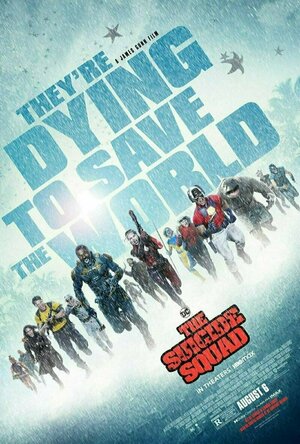


The Suicide Squad is a (possible) reboot that may or may not follow on from Suicide Squad and (or only) Birds of Prey. Honestly I'm not sure that even DC knows what's going on with their movie time line. Anyway, Margot Robbie and Joel Kinnamen return as Harley Quinn and Rick Flagg to lead another team of criminal misfits on an impossible mission (or, if it's a reboot like James Gunn says then it's the first time they are together and we ignore that Flagg askes Harley why she's back in prison or that Waller's team are checking who has worked with who). This time task force X are sent to the island of Corto Maltese to find and destroy 'Project Starfish'.
Ok so 'The Suicide Squad' is a good film, it looks like it has learned form the problems of the first film and incorporated the humour from 'Birds of Prey'. Firstly It's not as formulaic as the first film, a problem that is caused by the premise of 'Task Force X', if each member of the task force is chosen because they have a skill that is useful for the mission then you would expect that skill to be used and the first film took this too literally, each member had a scene where they did their thing then they just faded into the background and 'The Suicide Squad' avoids this by focusing on the characters was, well characters and not powers.
The film is very action driven and very violent but, unlike some of the other recent DC films it's not dark, it has more of a 'Grindhouse' feel than the dark, brooding style of the Batman/Superman/Justice league films (I liked those but they were a bit heavy in parts). The Suicide Squad has humour in it, some of which is quite immature but it fits the tone of the film. The violence and humour is some what balanced out by the comic book feel the film has, King shark, Weasel and Staro are both some what cartoony in appearance and some of the costumes are straight out of the comic books and I think that this is what managed to keep it at a (UK) rating of 15 because (and I know I've said this) it's violent, it's bloody, people get ripped apart and there is torture and lots of talk about killing children.
Somehow 'The Suicide Squad' is a fun watchable film and defiantly one of the better DC films, don't be put of by the original Suicide Squad (no 'The).
Oh and also there's a, after credit scene that set's up for a film that's been announced so stick around until the credits finish.
Ok so 'The Suicide Squad' is a good film, it looks like it has learned form the problems of the first film and incorporated the humour from 'Birds of Prey'. Firstly It's not as formulaic as the first film, a problem that is caused by the premise of 'Task Force X', if each member of the task force is chosen because they have a skill that is useful for the mission then you would expect that skill to be used and the first film took this too literally, each member had a scene where they did their thing then they just faded into the background and 'The Suicide Squad' avoids this by focusing on the characters was, well characters and not powers.
The film is very action driven and very violent but, unlike some of the other recent DC films it's not dark, it has more of a 'Grindhouse' feel than the dark, brooding style of the Batman/Superman/Justice league films (I liked those but they were a bit heavy in parts). The Suicide Squad has humour in it, some of which is quite immature but it fits the tone of the film. The violence and humour is some what balanced out by the comic book feel the film has, King shark, Weasel and Staro are both some what cartoony in appearance and some of the costumes are straight out of the comic books and I think that this is what managed to keep it at a (UK) rating of 15 because (and I know I've said this) it's violent, it's bloody, people get ripped apart and there is torture and lots of talk about killing children.
Somehow 'The Suicide Squad' is a fun watchable film and defiantly one of the better DC films, don't be put of by the original Suicide Squad (no 'The).
Oh and also there's a, after credit scene that set's up for a film that's been announced so stick around until the credits finish.

Kristy H (1252 KP) rated Before I Fall in Books
Jan 10, 2018
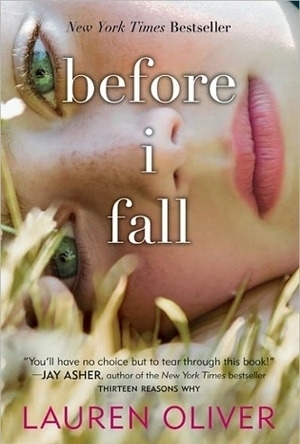
I think I would have enjoyed this book even more if it wasn't coming on the heels of me reading several other tragic YA books about teenagers dying (including The In Between and If I Stay). I sort of felt bludgeoned by the senseless tragedy of it all - perhaps I need to get out more?!
Anyway, the book follows the main character Sam, who dies in a car crash one night after a party. However, she finds herself reliving that day over and over (think Groundhog Day) for some reason and has to figure out how to make it stop. It's a rather weird premise and the way she finally breaks out sort of bothers me, so I felt a little deflated at the end.
That being said, I really liked Sam. She's a compelling character. Also refreshing is the fact that Sam and her gaggle of friends are the popular kids, on top of the pyramid at school. It's a change of pace from the usual romantics and geeks that show up in YA novels. (It does, however, make me 110% terrified for my children to reach high school.) As Sam starts to realize her own mean girl status-- and that of her friends--Oliver sets up a good message about high school and friendship. Not sure it would be readily apparently to every teen reading the novel, but I appreciate the effort.
Anyway, the book follows the main character Sam, who dies in a car crash one night after a party. However, she finds herself reliving that day over and over (think Groundhog Day) for some reason and has to figure out how to make it stop. It's a rather weird premise and the way she finally breaks out sort of bothers me, so I felt a little deflated at the end.
That being said, I really liked Sam. She's a compelling character. Also refreshing is the fact that Sam and her gaggle of friends are the popular kids, on top of the pyramid at school. It's a change of pace from the usual romantics and geeks that show up in YA novels. (It does, however, make me 110% terrified for my children to reach high school.) As Sam starts to realize her own mean girl status-- and that of her friends--Oliver sets up a good message about high school and friendship. Not sure it would be readily apparently to every teen reading the novel, but I appreciate the effort.

Billie Wichkan (118 KP) rated Too Close: A new kind of thriller that will leave you breathless in Books
Mar 15, 2019


How close is too close?
Connie and Ness met in the park while their children played. As they talked, they realised they were neighbours. Perhaps it was only natural that they and their families would become entirely inseparable.
But when Nesss marriage ends in a bitter divorce, she is suddenly at Connies house all the time. Connie doesnt have a moment to herself, no time alone with her husband, not a second to chat to her kids.
Its all too much. Something has to give.
Connie has woken up in a psychiatric hospital. They say she committed a terrible crime but she says she cant remember a thing.
This novel is gripping and absorbing that you won't be able to put this down. I found the pace just right and the dark story well told .
I found myself crying with some of the parts and in others laughing out loud at some of the things said. There are so many emotions covered in this story including mental illness.
I loved the characters development, the plot of the story and oh my that surprising ending you don't see coming.
I don't want to say anymore as I don't want to spoil it for anyone!
I received this debut novel via NetGalley in return for an honest review but I still turned around an purchased this as I truly am astounded with this novel.
Connie and Ness met in the park while their children played. As they talked, they realised they were neighbours. Perhaps it was only natural that they and their families would become entirely inseparable.
But when Nesss marriage ends in a bitter divorce, she is suddenly at Connies house all the time. Connie doesnt have a moment to herself, no time alone with her husband, not a second to chat to her kids.
Its all too much. Something has to give.
Connie has woken up in a psychiatric hospital. They say she committed a terrible crime but she says she cant remember a thing.
This novel is gripping and absorbing that you won't be able to put this down. I found the pace just right and the dark story well told .
I found myself crying with some of the parts and in others laughing out loud at some of the things said. There are so many emotions covered in this story including mental illness.
I loved the characters development, the plot of the story and oh my that surprising ending you don't see coming.
I don't want to say anymore as I don't want to spoil it for anyone!
I received this debut novel via NetGalley in return for an honest review but I still turned around an purchased this as I truly am astounded with this novel.