Toca Birthday Party
Education and Entertainment
App
"Another fun app from Toca Boca. If your kids like playing birthday parties (and whose don’t) then...
Toca House
Education and Entertainment
App
Welcome to Toca House! Help the five friends to do fun chores around a cosy house. Let your kids...
Color by Numbers - Princesses
Games and Education
App
Let your young artist color in these enchanting princesses and heroines from here favorite stories...

Toca Store
Education and Entertainment
App
Have your kids ever played store at home? Now you can turn your iPhone or iPad into a Store Play...
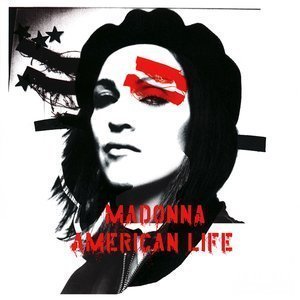
American Life by Madonna
Album
American Life is the ninth studio album by American singer and songwriter Madonna. It was first...
Folk

Video & TV Cast for LG Smart TV: Stream Movies App
Photo & Video and Entertainment
App
Watch any web-video, online movie, livestream or live tv show on your LG Smart TV or Blu-ray Player....
WIW - Sugar Daddy Dating App
Dating, Lifestyle and Social Networking
App
WIW - What I Want The Best app for wealthy and successful sugar daddy meet beautiful and...
Book Creator for iPad
Education and Book
App
* THE No.1 Book app for the iPad in 90+ countries. * Voted Best Educational App in the 2015 BETT...
Eilidh G Clark (177 KP) rated The Sunlight Pilgrims in Books
May 13, 2017
Jenni Fagan’s The Sunlight Pilgrims was published by Windmill Books in 2015 and for me, was a much-anticipated novel. After reading her debut novel, The Panopticon, my expectations were high and I was not disappointed. This is a pre-apocalyptic novel set in a fictional Scottish town of Clachan Fells in the not too distant future of 2020. The novel explores the lives of a community of eccentric individuals living in close the proximity of a caravan park. As the temperatures plunge into extreme minuses, the residents are faced with a bleak and uncertain future, not only of their own survival, but also the survival of the human race.
The most interesting thing about this novel is that on the surface, nothing really happens, yet it would be wise to look deeper. Amongst the daily challenges of individual lives, there lurks a thought provoking tale of identity, community, and environment.
The novel is written from the perspective of two of its main characters Stella – a transgender teenager and Dylan a Londoner who recently moves to Clachan Fells. The most interesting thing about these two characters is the perspectives that each individual has about place. For Stella, her world is a difficult place full of prejudice and rejection, even from her own father. Whilst her own personal identity is unquestionable, the community rejects her choices. This point of view provokes the reader to question the nature of identity, a topic often argued when discussing Scotland. From Stella’s point of view, her own identity is progressive, changing, developing while the society around her static. Alistair’s point of view however, allows the reader a modern and open approach. Described in the prologue as the Incomer (notice the capitalization) directs the reader towards Margaret Elphinstone’s novel The Incomer published in 1987. Elphinstone’s novel is a post-apocalyptic tale and, like Fagan’s, novel examines the question of identity. Thomas Christie suggests in Notional Identities, that Elphinstone is ‘depicting the country’s ability to adapt to extreme change¬ ̶ carving a form of localism from the bones of globalisation ̶ she recognises its progressive aptitude to embrace forces of social transformation while retaining recognisable core cultural imperatives.’ It is no coincidence that Fagan has subtly steered the reader to this novel; identity is clearly a topic that the author is keen to explore. Dylan is a progressive character in Fagan’s novel. Discovering Stella identity very early in the novel, the character never questions her choices or that of Mother who has two partners. Likewise, this progressive thinking expands to the other residents of the caravan park, which houses a prostitute, an alien worshipper, and a disabled man with a crooked back who worships the sky. Not only does Dylan accept people for who they are; his deep connection to the environment makes him instinctive as opposed to the more rational thinkers of the world.
Unlike many modern writers, Fagan raises more questions about society and identity than she answers. This is an interesting technique as it leaves the reader to question the novel as opposed to question to authors own political and societal views. That said there is no doubt that this is a Scottish novel. The story is steeped in Scottish mythical symbolism such as the blackbird that lands on a fence post with his eyes reflecting a vast mountain range, to the eagles and stag’s on the mountains. In addition, the characters take on mythical persona’s including a giant, a girl with second sight, and a moon polisher. With oral tales of Sunlight Pilgrims highlighting the Scottish oral storytelling tradition, and a poetic sentence structure done in true Fagan style this novel feels truly Scottish.
I would highly recommend this postmodern novel, which urges the reader to look beyond society and address the problems of ego and the rational mind in order to create a progressive unified world where outsiders are welcomed as incomers – a prevalent issue in today’s society.
Sophia (Bookwyrming Thoughts) (530 KP) rated Becoming Darkness in Books
Jan 23, 2020
Never have I ever read a book in which Hitler won World War II and succeeded in taking over the world.
Until now. I admit I'm a little fond of this one because of the whole alternative history thing going on right there, but I'm a little disturbed here, Lindsay Francis Brambles. You're as bad as Agatha Christie and came very close to killing everyone. Although technically, you did kill most of the characters that I grew fond of. Not cool. I don't think I can ever forgive you for this transgression of Trigger Happy Book. (More like Explosion Happy Book.)
But in the very long run, I only liked <i>Becoming Darkness</i> for a few things.
Sadistic as it may be, I did like how Brambles made Hitler won the second world war and unleashed a virus that made a lot of people turn into vampires all of that is told within the first few pages. Although the origins of Gemorrah (le virus) is revealed throughout the story and integrated in the plot, I still don't understand how the creators came up with that name in the first place. Does it mean something in German, or is it something they thought sounded sinister and cool and decided to go with it? In my humble opinion, it does not sound cool or sinister. It sounds like a Mary Poppins word.
I also really liked how Brambles didn't go completely off course from history there are some references to the war, there might be another significant historical figure who makes a cameo appearance (under a different name, but don't quote me), etc. Basically, there's not much that's thrown in completely off kilter aside from maybe the virus I still feel fishy about that.
Sophie Harkness does not take BS when there are boys hitting on her in the stupidest, cheesiest ways. Namely: "We're meant for one another because you're a girl, I'm a guy, and we have the parts to create phenomenal offspring." Sorry for the disturbing image, but that was very much implied by the character. Unfortunately for her, she sort of believes in love at first sight when she first met Val back when she was fourteen.
Sophie is also not a judgmental character she's very open-minded and believes vampires aren't exactly sinister blood sucking creatures. Every other Immune, those who can't get Gemorrah, are so judgmental and narrow-minded, it just peeves me greatly. It IS understandable, though, considering the year Brambles sets the book in.
Unfortunately, I didn't really like the whole flashbacks. For awhile in the beginning, it's a little confusing and I had to backtrack to make sure it was a flashback and not actually set in the present day. There's a "sort-of" warning and then we're in flashback mode that feels like it's set in the present but is really Sophie telling a story. On the bright side, all those flashbacks (and the journal entries written by Sophie's mom) all play a relevant role in the overall plot.
I also didn't really like Valentine. Though I eventually warmed up to him over the course of the book, something about him was really disturbing. He's not an annoying "stalker type" of character, but it IS a little weird he still tried to keep his connections to Sophie's family from grandma to mom to Sophie in the hopes of falling in love again. But considering the fact he's doesn't throw out stupidly cheesy lines at Sophie, I like him a little.
Have I mentioned I'm sick and tired of seeing the name Valentine over and over again in literature? We just can't get any more original than St. Valentine, can we?
I would totally summarize <i>Becoming Darkness</i> in a few words if only I didn't end up giving major spoilers. But in a nutshell, the book quite literally tells me all of us should be downright grateful the Third Reich didn't succeed. It also told me I'm royally screwed if the way to a man's heart is through his stomach, but I think I've established that in sixth grade with the whole Ramen Noodle Stove catastrophe.
<a href="https://bookwyrmingthoughts.com/arc-review-becoming-darkness-by-lindsay-francis-brambles/" target="_blank">This review was originally posted on Bookwyrming Thoughts</a>