Blood Red Skies
8.0 Rate It
Tabletop Game Watch
Second World War miniature game designed by Andy Chambers. Players control squadrons of 1/200 scale...
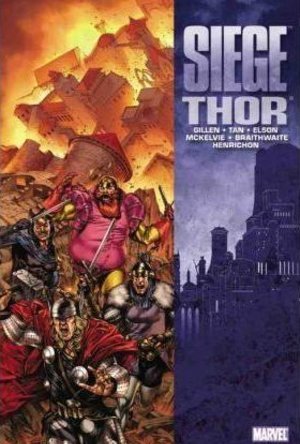
Siege: Thor
9.0 Rate It
Book
Asgard lies under SIEGE! As the evil eye of Norman Osborn falls on Asgard, what happens to...
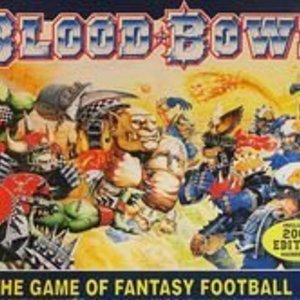
Blood Bowl (Third Edition)
8.4
Rate It
Tabletop Game
Blood Bowl is a game of Fantasy Football. The basic game features a match between a human team and...
BloodBowl Boardgames FantasyFootball
Risk Europe
6.9 Rate It
Tabletop Game
Don a crown, raise the banners, and step into the role of a medieval king in feudal Europe in the...
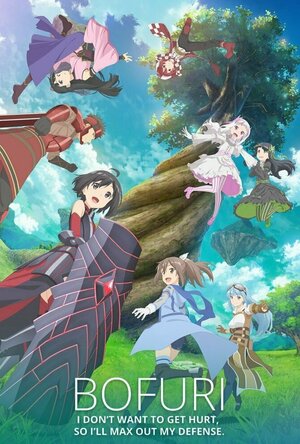
Bofuri: I Don't Want To Get Hurt, So I'll Max Out My Defense
TV Show Watch
A player designing a character for a role-playing game gives up all other skills for the sake of...
Bofuri Bofuri: I Don't Want To Get Hurt So I'll Max Out My Defense Anime Fantasy Isekai

Night Swim (2024)
7.0 Rate It
Movie
Forced into early retirement by a degenerative illness, former baseball player Ray Waller moves into...

Dean (6927 KP) rated Gran Turismo (2023) in Movies
Aug 10, 2023

The racing scenes are very impressive and even some good SFX going from Simulation to real world. The off track story feels a bit cliché but David Harbour stands out from a mixed cast which includes Geri Halliwell. In terms of race action up there with Rush and Ford Vs Ferrari.

Purple Phoenix Games (2266 KP) rated Macaron in Tabletop Games
Oct 20, 2020

Macaron is a baked goods-themed trick-taking card game for one to five players. In it players are bakers in medieval France trying to become the favored royal baker to the king and his family. The player who can earn the most VP by delivering the tastiest macarons to the royal family will be victorious and will then bake the other players a box of macarons to take home (I added that last part, but Ta-Te Wu should consider adding it to the rules).
DISCLAIMER: We were provided a prototype copy of this game for the purposes of this review. These are preview copy components, and I know for sure the final components will be slightly different from these shown. Also, it is not my intention to detail every rule in the game, as there are just too many. You are invited to download the rulebook, back the game through the Kickstarter campaign, or through any retailers stocking it after fulfillment. -T
For this preview I am tackling the solo rule-set provided and my AI opponent is named Emma (per the rules). Multiplayer games will be played somewhat similarly, but against normal-intelligenced real people. Duh.
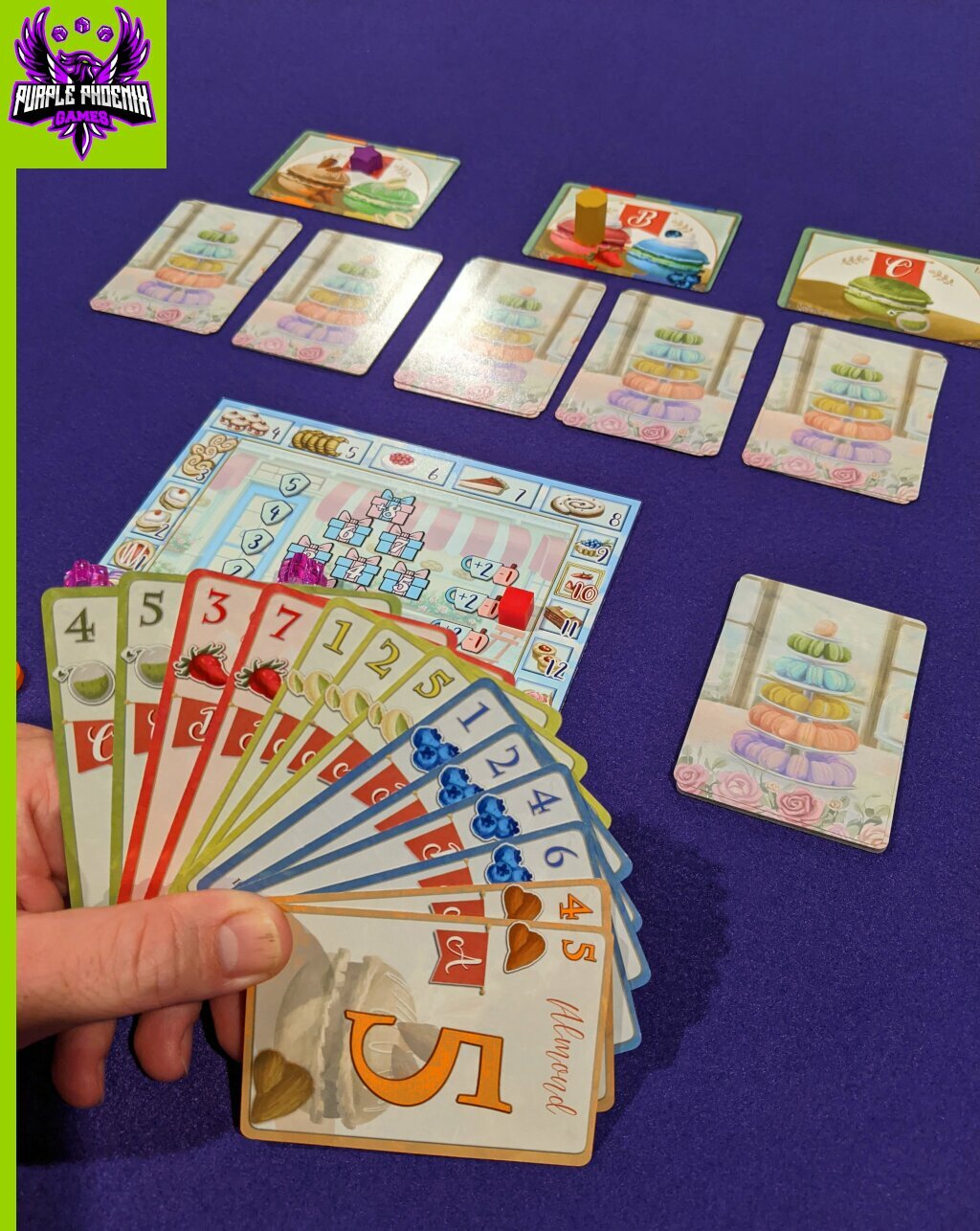
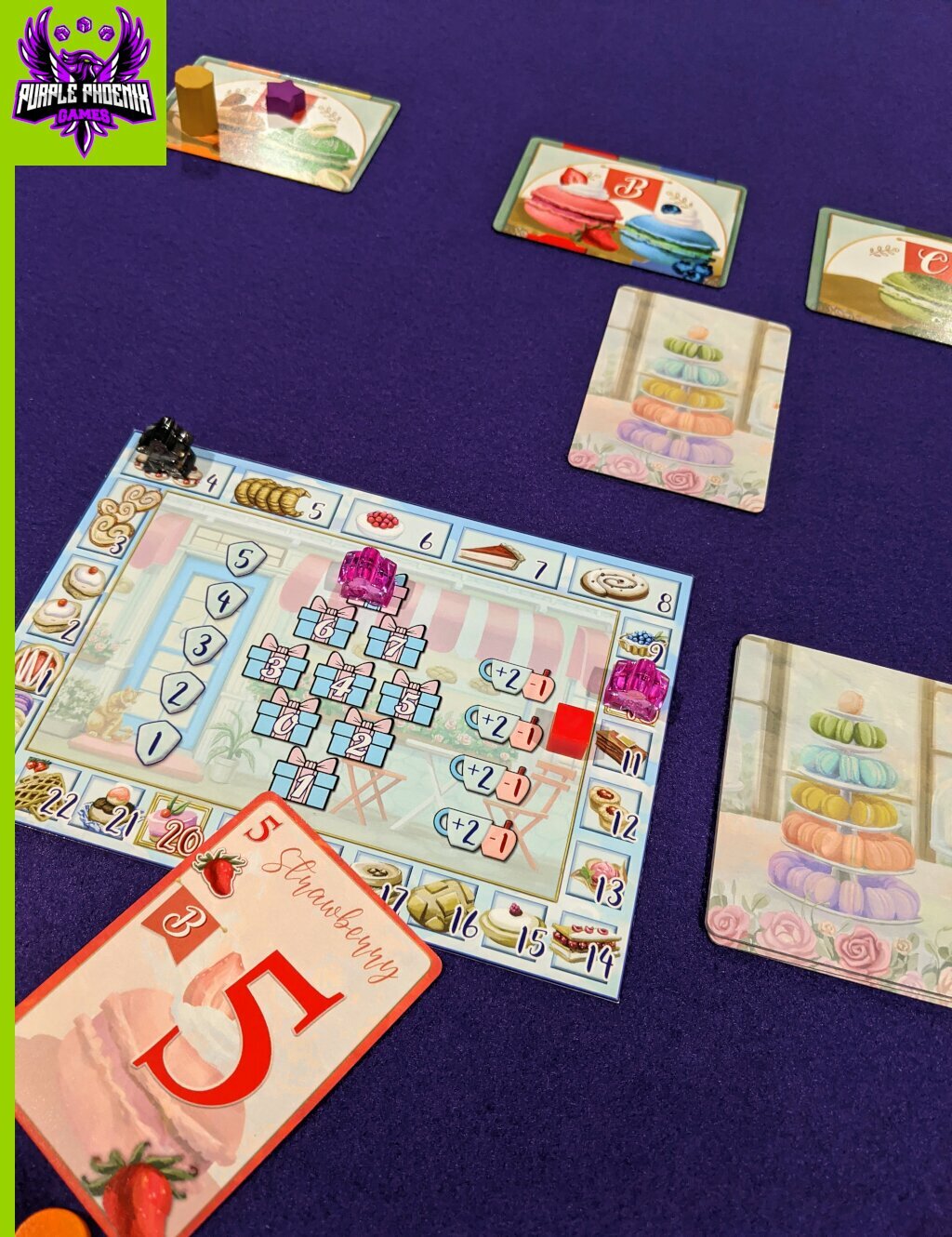
To setup a solo game, place the Score board in the middle of the table on whichever side is decided – one side allows up to 20 points, and the other up to 30. Place the first three Group boards (A with Almond and Pistachio, B with Strawberry and Blueberry, and C with just one Green Tea macaron upon it) somewhere near the Score board to denote the flavors being played. Remove all cards from the deck picturing Earl Grey and Chocolate flavored macarons. Shuffle the remaining macaron cards and deal the solo player 13 of them. Deal Emma one random card from the deck under each flavor on the Group board as shown below. These random cards will take on the flavor of whichever stack to which it now belongs. Continue dealing Emma eight cards to her stacks, but match them to their flavors – the 4 of Pistachio under Pistachio, etc. Emma should now have 13 cards in total, but each flavor stack should be shuffled and arranged as shown below. Choose a color for the player and for Emma, place one of each meeple on the Score board to track final scores, and the other meeples on the Gift Box tracker in the middle. Analyze each of Emma’s stacks to determine which Group contains the most cards. These flavors will be given the Royal token (I used the purple star) and are considered the trump suits this round. Flip over the top card of the deck that remains, and place the Allergen token (I used the tall goldenrod piece) upon the matching flavor. The game may now begin!
The solo player is always the starting player, so they will open the first trick by playing a card from hand. As in most card games, whichever flavor (suit) is led will need to be followed by Emma, if possible. The rulebook gives the player a nice turn-flow summary for Emma based on which player leads and which type of card is played.
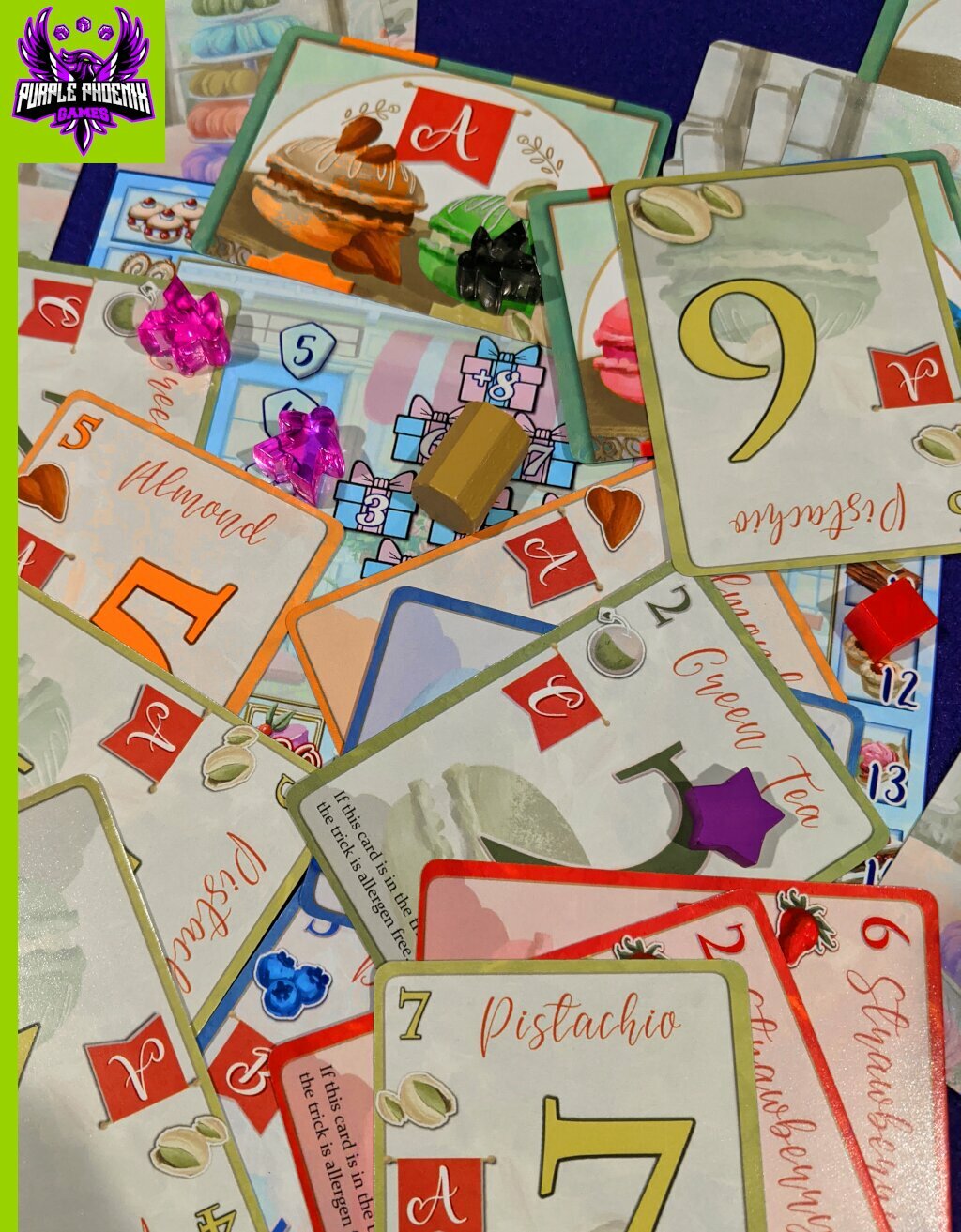
As in Euchre, suit must be followed. If a player is unable to follow, they may play a Royal (trump) card to win the trick or any other non-Royal card. The Royal flavors are both flavors that belong to the same Group, or Green Tea, as it is its own Group. For each trick won, the player will advance their meeple on the Gift Box track to denote number of tricks won. Some card rules adjust the scoring. For example, should a value 1 card win the trick the winning player will increase their number of Gift Boxes three spaces instead of one. Should a trick include an Allergen flavor the winning player will still lead the next trick but will not advance their Gift Box meeple, as Allergens make the royal family sick. However, should a trick contain a value 2 card in it, the 2 cancels the Allergen and the winner may advance their Gift Box meeple as normal.
The round ends when a player, or Emma, has finished their hand of 13 cards played or reaches eight or more Gift Boxes (won tricks). Setup for a new round as the game was initially setup with dealing cards to each player and determining Royal and Allergen flavors. Play continues in this fashion until the player or Emma has reached the pre-determined score of 10, 20, or 30. The winner must now get to baking (again, I added that, but it REALLLLLY needs to happen, I think)!
Components. Again, this is a prototype copy of the game (though still pretty good) and the final components will certainly be different than the ones shown here. That said, the art style is simply wonderful and incredibly enjoyable. Yes, the Score board is a little busy, but it’s functional and fun. The art on the cards is very good, colorblind-friendly with icons in addition to colors, and the art doesn’t get in the way of playing tricks at all. All the other components used in the game will probably be different upon a successful Kickstarter campaign, and though I haven’t seen the proposed components, I am sure they will match the theme and be great to handle.
So as a lover of Euchre, am I also a lover of Macaron? ABSOLUTELY! It takes everything I enjoy about Euchre and somehow simplifies AND complexifies it. Teaching Euchre to new players can be a chore when they don’t latch onto the fact that the highest cards in the game are the Jacks of the same color of trump, but one is higher than the other. It can be awkward at first. Here, there are one or two flavors that are trump suits. It makes sense to be able to visualize a bit easier, and to be able to relate to flavors. In fact, my 4-year-old son wanted to “play” it earlier this morning, so I took out the Allergen mechanic and just did straight suit-following with trumps and he understood it. So, I guess by house-ruling a little you can also play this with children who are learning games for the first time, learning their numbers, or learning trick-taking games. That’s a fun hidden side quest!
Now, I can see how people will totally dig Macaron as a multiplayer game, but I am previewing this as a solo game. Is it just as good? Yep! I like being able to play the game whenever I want, and using another mechanic I didn’t describe earlier – Betting. Having to bet upon how many Gift Boxes you will score for the round adds another layer of analyzation I particularly enjoy. If you guess correctly you score an additional two Gift Boxes. If you’re wrong Emma scores two Boxes. Couple this with Emma’s unpredictable card play and you have an interesting AI player that you may never be able to “figure out” and beat methodically. I like that randomness from Emma. She has made a few games close, but ultimately has lost every game against me.
Macaron is a cute little Euchre-style card game that can be played well solo and multiplayer, and features wonderful style. I love the theme, and I seem to be attracted to food games; I love Bohnanza, Morels, Happy Salmon (my favorite fish to eat), Sushi Go!, Coconuts, and The Three Little Pigs (ok that one was mean, but hey, I love pork)! If you also enjoy food-related games, or trick-taking games, or just fun little card games you can play solo or with other people, please consider backing Macaron via their Kickstarter campaign launching soon. Tell them Purple Phoenix Games sent you and I will share my Gift Box of Macarons with you**. You will have to let me know your food allergies prior, though.
** I don’t actually have a Gift Box of Macarons. That was a lie, and I apologize for that.
Purple Phoenix Games (2266 KP) rated Bunny Party at Maple Valley in Tabletop Games
Oct 11, 2021
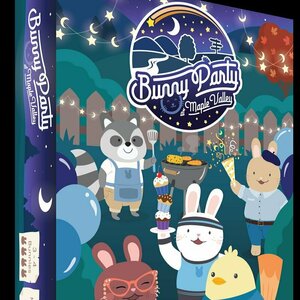
Bunny Party at Maple Valley (which I shall refer to as simply Bunny Party from here) is a sweet and cute little card game for three or four players. In it players are the titular bunnies decorating for and competing to win the chance to host the Night Sky Party at their place. However, in this game more often than not the victory is shared between they who amass the requisite five decorations and their neighbor who also co-hosts the event! The bunnies gotta get crackin’ so let’s get going!
PS – I will be reviewing the 3-player version of the game, which has ever-so-slightly different rules.
DISCLAIMER: We were provided a copy of this game for the purposes of this review. This is a retail copy of the game, so what you see in these photos is exactly what would be received in your box. I do not intend to cover every single rule included in the rulebook, but will describe the overall game flow and major rule set so that our readers may get a sense of how the game plays. For more in depth rules, you may purchase a copy online or from your FLGS. -T
To setup, character cards are shuffled and two dealt to each player. They choose one to be their avatar and discard the other back to the box. The large deck of cards with the house on the back is shuffled and placed on the table within reach. The villager cards are shuffled and one is drawn and placed outside the play area – it will not be used this round. The other five villagers are arranged as a market of friends. Each player draws three cards on the first round, and the game is ready to begin!
Bunny Party is played over a series of rounds until one player satisfies the win condition. Each round consists of eight phases: Turn Start, Tidy a Card, Villagers Visit, Play Cards, Trade, Play Cards (again), Party Start?, and Villagers Go Home. Turn Start typically involves players setting the table for the round. First, the villager cards are re-shuffled, one set aside to be ignored this round (they are staying home), and the remainders displayed. Then each player draws two cards from the deck and collects one Trade Token.
Next, all players will choose one of their cards they drew during the Tidy a Card step to be placed in a temporary discard pile face-down. Alternatively, a player may forego the Tidy in order to place a card in front of another player by spending one Trade Token. Once all players have tidied a card or placed one in front of another player, the Tidy pile is shuffled, then flipped as a stack to the top of the discard pile, face-up.
The villagers are now becoming impatient, so players will allow them audience during this Villagers Visit phase. Each player chooses a villager from those available to host during their party preparation. These villagers offer special abilities each round and can be very valuable at certain times during the game.
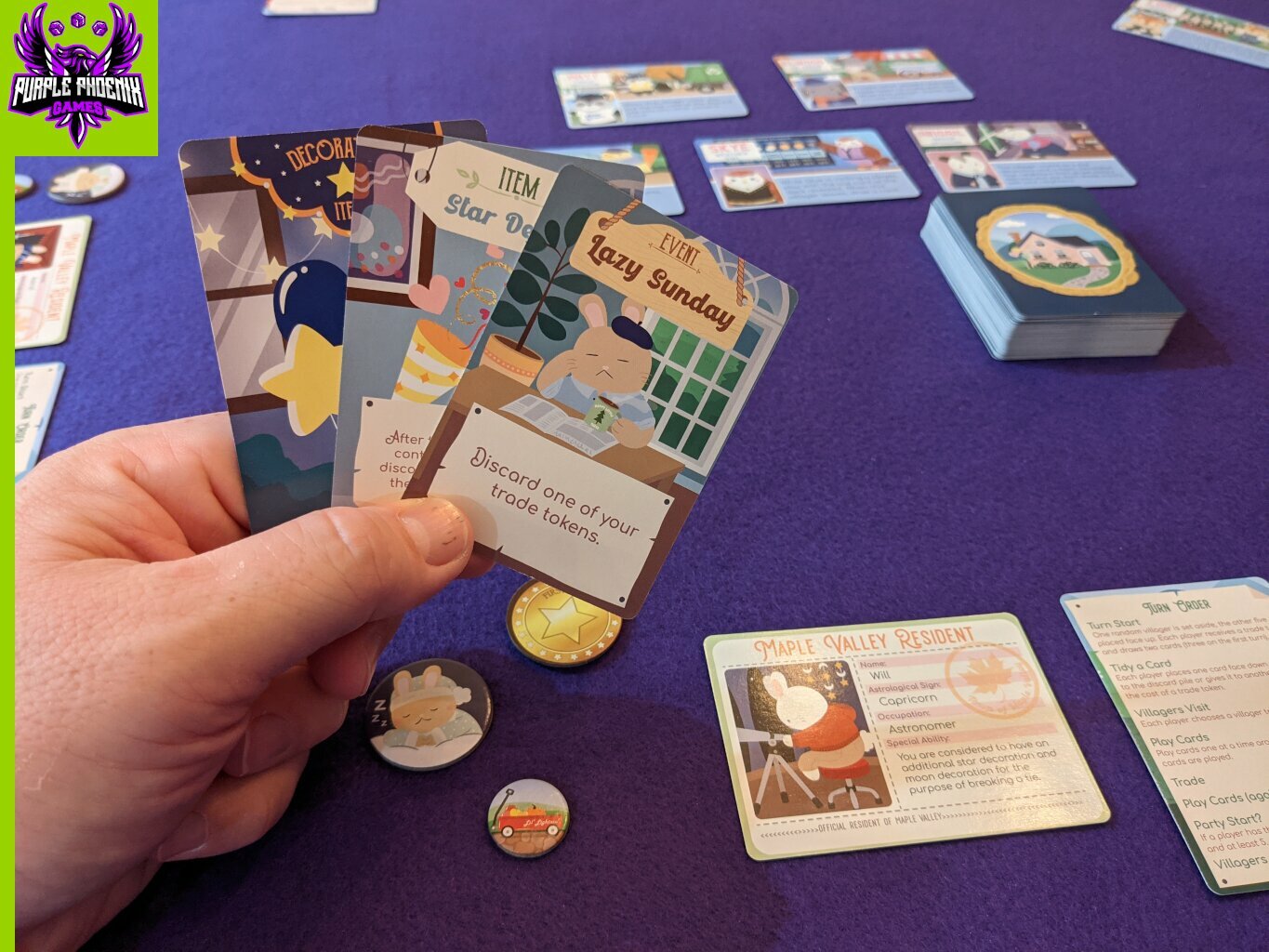
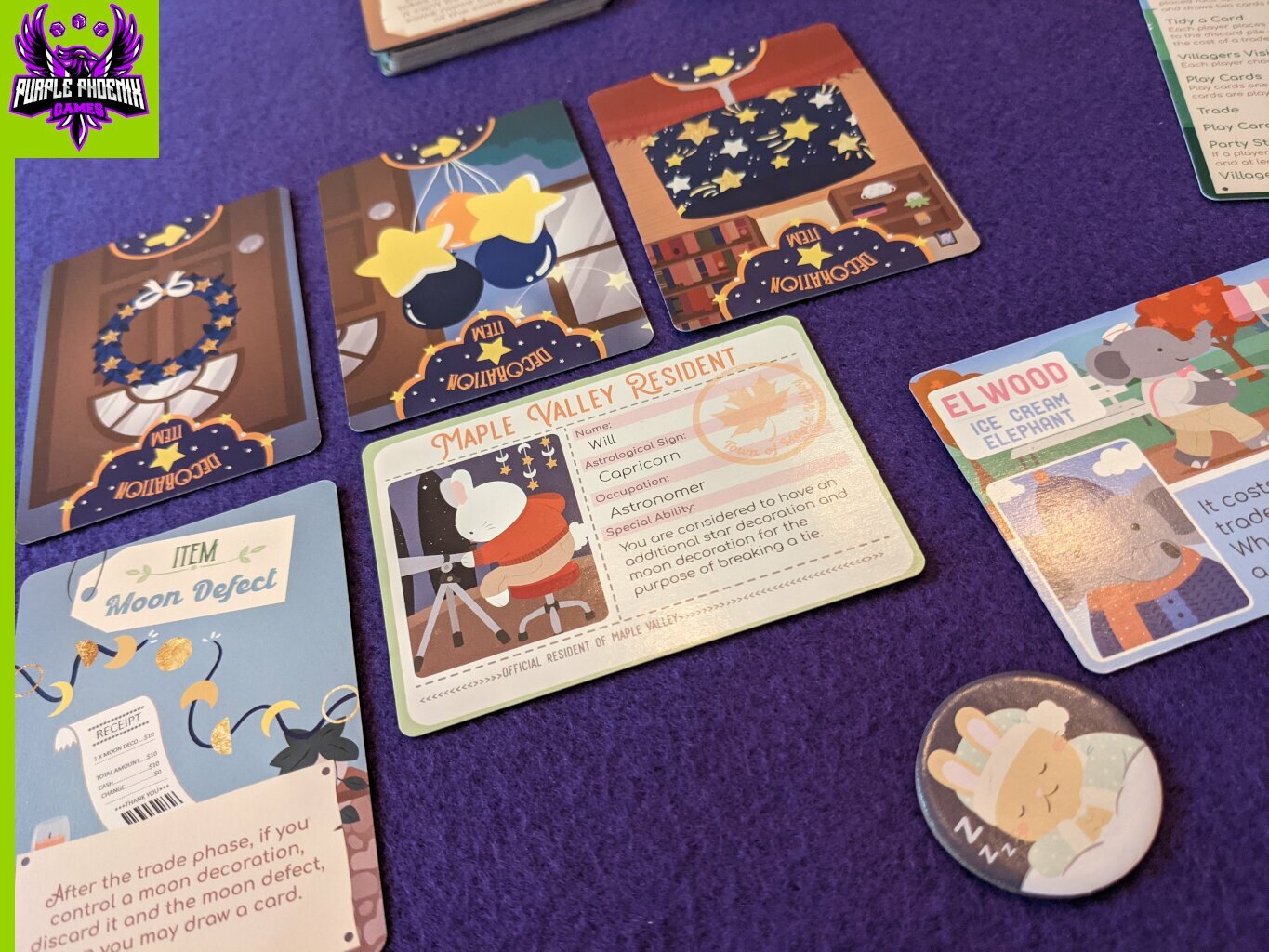
While the villagers are visiting, players may next Play Cards from their hand. These cards are typically of three types: Item, Event, or Decoration. Item cards are placed in the player’s tableau and offer one-time or lingering effects. Event cards are typically one-and-done cards to be completed and then discarded. Decorations are what players are really after, as they are what determine win conditions. With five star or moon cards the player can start the party and end the game. At the bottom of the decoration cards is printed an arrow. This arrow points to the neighbor that will co-host and also win the game. In a three-player game Decoration cards are displayed upside down, so that is why the photo below looks a little strange.
When players have all played their hand of cards, the Trade phase may begin. Players may offer Item cards to other players and a trade may be struck by each player discarding a Trade Token from their stash. This may result in a player receiving a new card to be played. When this happens, the next phase is immediately played (after all trades have been completed). Any player who now holds an unplayed card may Play Cards (again) as before.
If a player (or players) have now collected five or more star or moon Decoration cards, they may claim victory during this Party Start? phase. Again, the Decoration cards have arrows printed to determine the co-host/co-victor in the game, and the winners may then invite the rest of the burrow to their den for the Night Sky Party! However, if no victor emerges during the Party Start? phase, then all the Villagers Go Home, and a new round begins with the Turn Start phase.
Play continues in this fashion until winners have been crowned host and co-host of the Night Sky Party in Maple Valley!
Components. This one is a bunch of cards a few cardboard chits. The cards are all fine quality, as are the chits. What is really great about these components is the art on them. I cannot think of many cuter themes than uber-nice bunnies throwing a party and sharing their victory with a neighbor. So obviously the art has to match the theme, tone, and style of the game. I believe Bunny Party knocks it out of the park here. The art is so playful and cute, and I absolutely have to give a huge shout out to Evan’s Games for the very apparent inclusivity and representation. I see you and I applaud you!
Gameplay for me is where I take just a little issue. Everything works, and once you understand the phases it does flow better, but, I can see myself really only playing this with children or in a gateway/breaking in new gamers situation. It is very light, but there are eight phases to a round! So while each phase is easy to understand and execute, each round takes a little longer because there are a few too many steps. Once my kids really know how to read well they will be playing this with me and I know right now that we will have a great time with it. I really do appreciate the special efforts that were made with regards to representation (yes, even with anthropomorphic cartoon animals) and with the design being more focused on sharing victory and being nice to neighbors. My children will certain have good habits reinforced while playing this, and that is what makes this game important.
Again, this is not the game for hardcore gamers, nor those who are interested in bigger and more complex medium-weight games. This is a quick filler at best during a game night when newer gamers are gathered. That being said, I still find a great deal of value in this one, and will be keeping it for a long time. Purple Phoenix Games gives this one a 4 / 6 on stand-by. I do want to try this with different types of people (once we are able again) to see if my predictions are correct. I have only been able to play it with adult family, and none of them are medium to heavy weight game enthusiasts. If you are needing a nice game that can be played among other games for a themed game night (like Bunny Party + Bob Ross: Art of Chill + Hues and Cues + Escape: The Curse of the Temple) then this certainly fits that niche.
So my official stance, for now, is that Bunny Party has a great theme, excellent art, a wonderful message of harmony, but is both too light and too complex for what it is. I realize that sounds ridiculous. Please try it and let me know your thoughts. For now, I am keeping this close and I will be trying it with various groups with whom I game.

Purple Phoenix Games (2266 KP) rated Disney Villainous in Tabletop Games
Jan 6, 2020
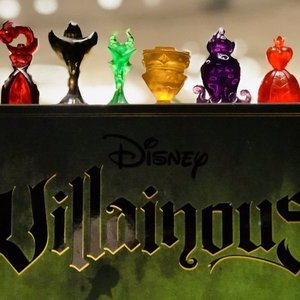
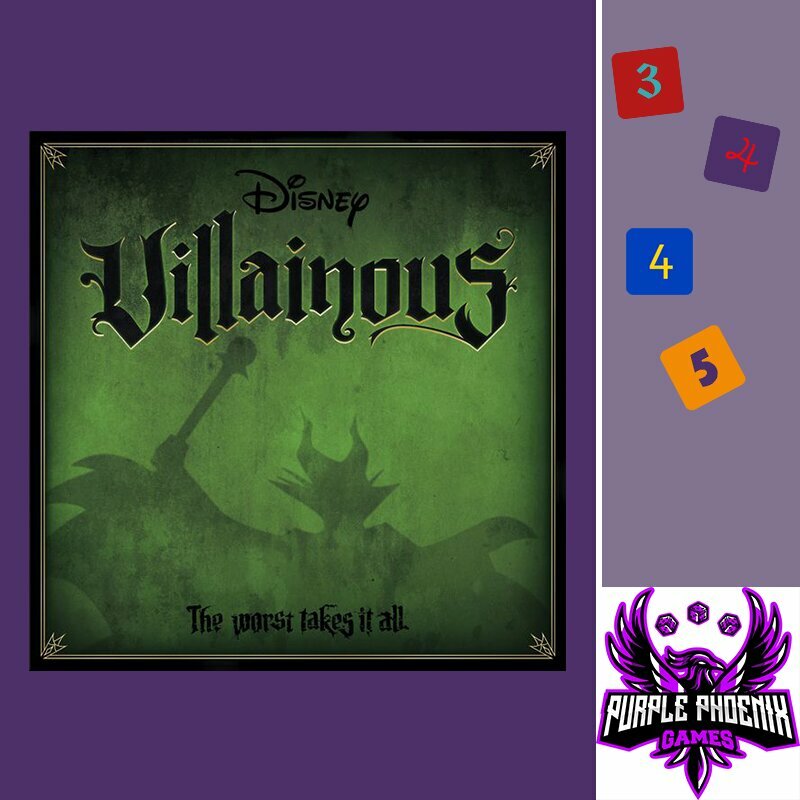
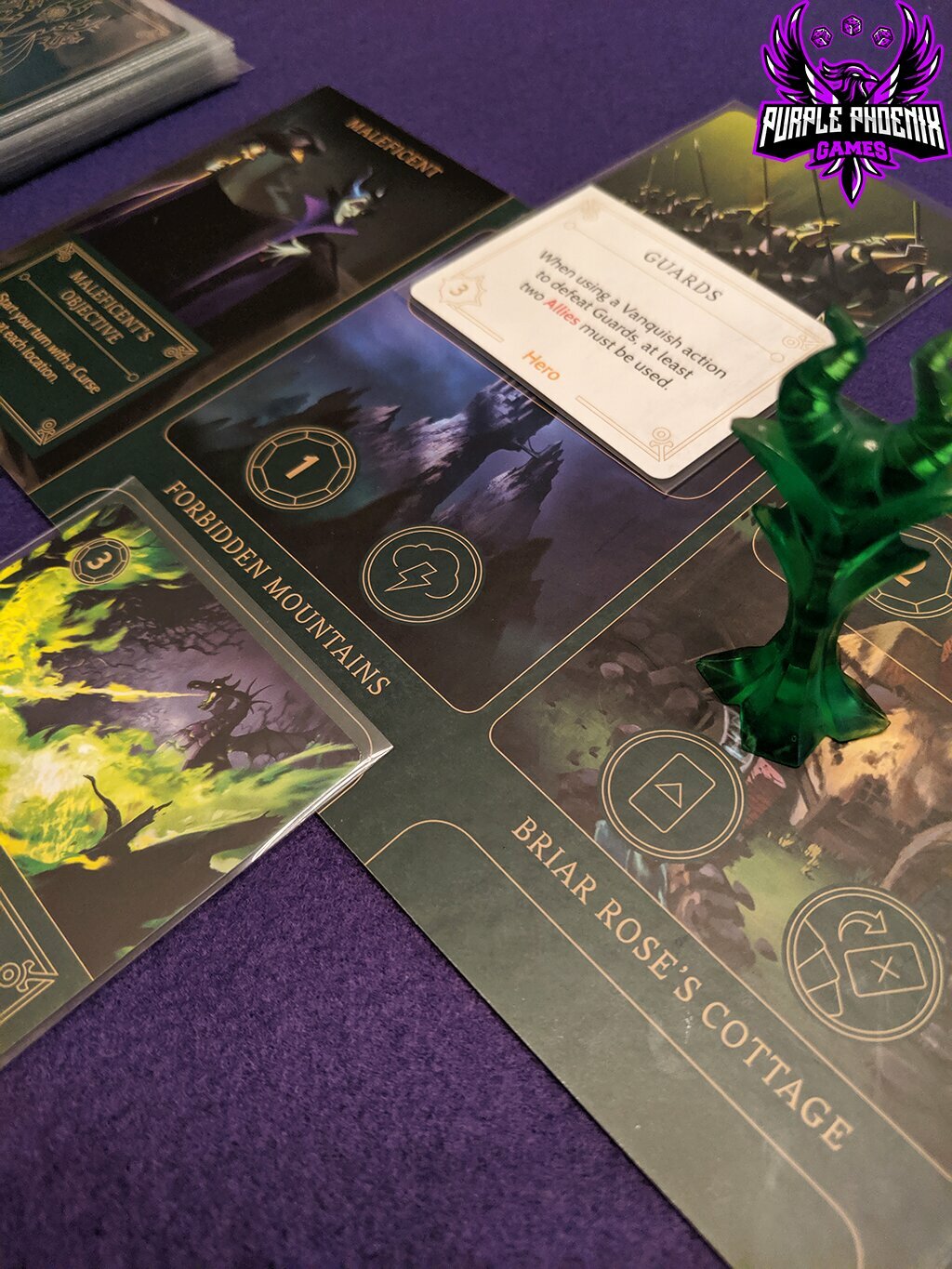
Disney Villainous (“Villainous” from here on) is a card game that pits players against each other in a race to complete individualized objectives to win the game. Players are in direct competition with each other and have devices to employ to spoil the plans of their competitors. Can Maleficent place out curses on all the lands in her realm before Hades can have three Titans storm on Mount Olympus? Can Prince John attain 20 power before either of them win the game? Such is Villainous.
DISCLAIMER: This game has a few standalone expansions now, with more on the way I’m sure. We are using components from the base game as well as the first expansion, “Wicked to the Core,” for this review. Should we decide to review the expansions as standalone games, we will link to the new material here. Furthermore, I do not intend to cover every single rule included in the rule book, but will describe the overall game flow and major rule set so that our readers may get a sense of how the game plays. For more in depth rules, you may purchase a copy from the publisher directly or from your FLGS. -T
To setup, each player will choose a big bad to play. Each character comes equipped with a colored pawn, a realm board with four locations, a deck of cards with matching pawn colored backs, a Fate deck with white back, and a playbook with tips on how to play that character. Also give every player a reference card that details the actions available. Shuffle each deck separately, give the starting player zero power from the cauldron, the second player one power, the third player two power, etc. Each player draws a hand of four colored back cards. Begin the game with the pawns on the leftmost location on the realm board and you are now ready to play.
Play works thusly: move your pawn to any unlocked location, complete any or all actions available at the location, draw your hand back up to four, next player. You MUST move on your turn, unless a card allows you to stay at your current location on your next turn. Once moved, the location will either show two or four options for actions. These could include play a card, activate a card, discard a card, gain power tokens, move an item or ally, move a Hero card, vanquish a Hero, or play cards from an opponent’s Fate deck. Some actions are self-explanatory (gain power tokens, et al), but some require further explanation.
Some cards will have an activation symbol displayed on them. This means that a pawn has to have been moved to a location with an activate card symbol, and the player must pay to activate the card for its special abilities. Easy. Moving an item, ally, or Hero typically means physically moving the cards from one location to another adjacent location. This is important for some villains’ objectives: cards need to enter play in one location but travel to another as part of the win condition. When a villain moves to a location with the Fate symbol, they will choose an opponent, look at the top two cards of their Fate deck, and choose one card to play and one card to discard. These are especially devious and can greatly hinder the player’s progress. In addition, when a Fate card resides on a realm board it covers the top symbols of a location, thus nullifying the player’s ability to use these symbols on future turns. Using the vanquish symbol requires a Hero to have been played on your board, and having enough strength in allies and items to meet or overcome the Hero’s strength. Heroes and any allies/items used in the fight are then all discarded to the appropriate discard piles.
Play continues in this manner until one player has achieved their victory condition.
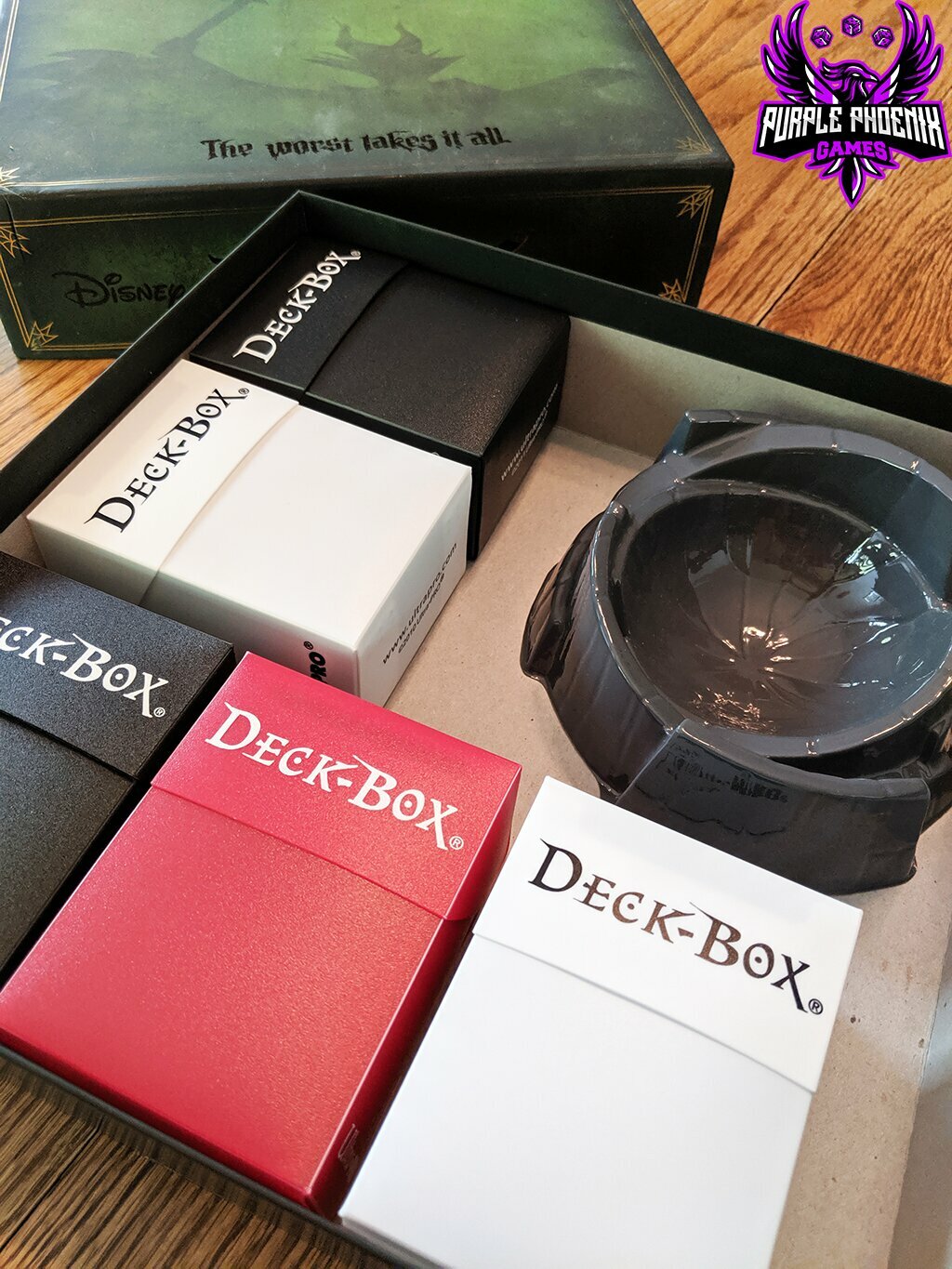
Components. I have good and bad news. Good news first. The components are absolutely fabulous! Those pawns. SOOOO good. Each is a somewhat abstracted figure of the villain, but with some concrete callbacks and recognizable features. They are just so dang fun to handle and play with. I think the cards are good quality, but I forgot what they feel like outside of the sleeves I put mine in. The board components are great, the cauldron is flimsy, unnecessary, and unwieldy when putting back in the box, especially if you have one or more expansions. I have not found a decent way to put everything back in one box, so I am resigned to having both boxes with me every time I want to play. That’s the bad. I also have put all my sleeved cards into plastic deck boxes in the main game box along with the cauldron. Everything else gets put in the expansion box. I hope a better storage solution is on the horizon along with future expansions…
So as you can see from our rating graphic on top that we are spread out on this one. I love it, but I don’t see it ever breaching my Top 10 list. It does have a tendency to overstay its welcome with all the Fate cards making it more and more difficult to win the game. Once a player seems to be near winning every other player gangs up, or seems to when I have played. I get that it may come off as a negative, and the play length as well, but it’s all part of villains out-villaining each other. While Josh rated it as a three and may not ever willingly ask to play it, I have it at a five because I think it’s a great game with a wonderful theme, amazing components, and tons of expandability. With that, we at Purple Phoenix Games give Disney Villainous a boding 16 / 24. If you are a big Disney fan, can live with the Take That, and want something that looks incredible on the table, pick it up.