Search
Search results

ArecRain (8 KP) rated Monster High (Monster High, #1) in Books
Jan 18, 2018
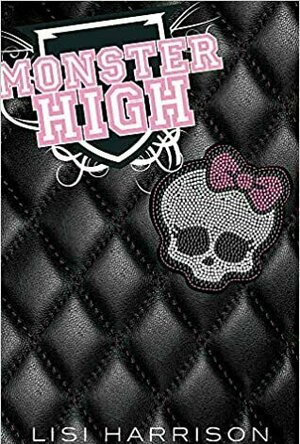


I am twenty years old and I loved this book more than I think an intelligent college student should. There were just way to many things that kept me from not turning the pages and walking away. In fact, I have only one negative thing to say about this book.
This is a book meant strictly for pleasure reading for fantasy and novels alike. While it kept true to the high school novel feel, it also had enough fantasy to make it that much more interesting than just high school girls worrying about losing their boy toys. It was similar to any other young adult novel I have read except for the one factor making it completely different: it revolves around the descendents of monsters. If it wasnt for that, I probably would have hated this book. I have always loved everything to do with fantast monsters and creatures. The fact that Mattel created a doll series about it was cute, but the book made it enjoyable for an audience older than seven years of age.
Quite honestly, I am tired of all the criticism of this book. It is meant to be a light-hearted, moral teaching novel meant for young adults, therefore, it is meant to relatable by teens. All the slang that the students use is how the real world is, people. I am sorry if you dont understand their lingo, but its how kids are, especially high schoolers. They invent words that they think are cool and some tend to catch on. Melodys family is from Beverly Hills. Why wouldnt they have designer clothes? Frankie was born 15 days ago. What else would she wear but what magazines and the media tell her to, which just happens to be designer clothing. As for the celebrity names dropped, this is not in the leagues of Lewis or Tolkien. Few people will read this in 50 years when the current generation doesnt know who Lady Gaga or Justin Beiber is. This was meant for the generation here and now.
This is not a deep novel people. There is no great mission by amazing warriors meant to save the world. The romance is just that: cute teen romance. No sex and no deep involved feeling that are too complicated. If this novel was not grown up for you, then you probably shouldnt be picking up books from the young adult section. Try some Lukyanenko novels and then talk to me. Thanks.
Moving on. The books two main female characters are Melody and Frankie Stein. The description is a bit misleading, however. Frankie and Melody actually dont even really talk to each until the end. Before tragedy strikes, bringing them together, the two are lost in their own little worlds, hardly even concerned with each other. Both girls are focused on making it a new community and high school, while dealing with major crushes and vicious students. Each makes their own friends. Ones are psychotic back-stabbers that need to have cell phone service banned and barred. The others are true and stand behind her even if they dont agree with her.
The characters were adorable, crazy, funny, and had so much well character. It was easy to tell one from another and I absolutely loved reading about them interacting with each other. Most of the novel had me either laughing, or setting the book aside until I could get over my empathetic embarrassment. I found myself sympathizing with all the characters points of view even though none of them know the whole picture like the reader does. Not to mention, sharing Frankies frustration. I was with her 100% even though I kept telling myself her parents way was the safest. How could you not feel frustrated when everyone was telling her to have pride in what she was and the forcing who to hide what she was? Hypocritical much? I thought so.
Now to the only negative thing I have to say about this book: I wanted to continuously shut Melody down. I found it down right annoying that she thought she knew how Jackson (Dr. Jekylls grandson) and Frankie (Frankensteins granddaughter) felt about being outcasts just because she had a nose she considered ugly. Are you kidding me? Really? I thought this was a poor attempt by Harrison to give Melody and Frankie some common ground. Being made fun of because of your nose is nowhere near the devastation of being hunted down because your grandfather was a chemical addict or a stitched together living doll. Oh, I am sure that it was tragic enough for Melody, but how dare she say she understood what it was like. Melody was never in mortal danger for her difference, so please, honey, get off your self-righteous horse.
The main reason I loved this book so much was because it was so distracting. It was such a light and fluffy book about the simplicity that is high school life. It was refreshing from all these novels nowadays where the protagonist is the only person capable of saving the world, their loved, blah blah blah, while the protagonist is some immensely powerful being. Note to writers: that scenario is getting old real quick.
This is a book meant strictly for pleasure reading for fantasy and novels alike. While it kept true to the high school novel feel, it also had enough fantasy to make it that much more interesting than just high school girls worrying about losing their boy toys. It was similar to any other young adult novel I have read except for the one factor making it completely different: it revolves around the descendents of monsters. If it wasnt for that, I probably would have hated this book. I have always loved everything to do with fantast monsters and creatures. The fact that Mattel created a doll series about it was cute, but the book made it enjoyable for an audience older than seven years of age.
Quite honestly, I am tired of all the criticism of this book. It is meant to be a light-hearted, moral teaching novel meant for young adults, therefore, it is meant to relatable by teens. All the slang that the students use is how the real world is, people. I am sorry if you dont understand their lingo, but its how kids are, especially high schoolers. They invent words that they think are cool and some tend to catch on. Melodys family is from Beverly Hills. Why wouldnt they have designer clothes? Frankie was born 15 days ago. What else would she wear but what magazines and the media tell her to, which just happens to be designer clothing. As for the celebrity names dropped, this is not in the leagues of Lewis or Tolkien. Few people will read this in 50 years when the current generation doesnt know who Lady Gaga or Justin Beiber is. This was meant for the generation here and now.
This is not a deep novel people. There is no great mission by amazing warriors meant to save the world. The romance is just that: cute teen romance. No sex and no deep involved feeling that are too complicated. If this novel was not grown up for you, then you probably shouldnt be picking up books from the young adult section. Try some Lukyanenko novels and then talk to me. Thanks.
Moving on. The books two main female characters are Melody and Frankie Stein. The description is a bit misleading, however. Frankie and Melody actually dont even really talk to each until the end. Before tragedy strikes, bringing them together, the two are lost in their own little worlds, hardly even concerned with each other. Both girls are focused on making it a new community and high school, while dealing with major crushes and vicious students. Each makes their own friends. Ones are psychotic back-stabbers that need to have cell phone service banned and barred. The others are true and stand behind her even if they dont agree with her.
The characters were adorable, crazy, funny, and had so much well character. It was easy to tell one from another and I absolutely loved reading about them interacting with each other. Most of the novel had me either laughing, or setting the book aside until I could get over my empathetic embarrassment. I found myself sympathizing with all the characters points of view even though none of them know the whole picture like the reader does. Not to mention, sharing Frankies frustration. I was with her 100% even though I kept telling myself her parents way was the safest. How could you not feel frustrated when everyone was telling her to have pride in what she was and the forcing who to hide what she was? Hypocritical much? I thought so.
Now to the only negative thing I have to say about this book: I wanted to continuously shut Melody down. I found it down right annoying that she thought she knew how Jackson (Dr. Jekylls grandson) and Frankie (Frankensteins granddaughter) felt about being outcasts just because she had a nose she considered ugly. Are you kidding me? Really? I thought this was a poor attempt by Harrison to give Melody and Frankie some common ground. Being made fun of because of your nose is nowhere near the devastation of being hunted down because your grandfather was a chemical addict or a stitched together living doll. Oh, I am sure that it was tragic enough for Melody, but how dare she say she understood what it was like. Melody was never in mortal danger for her difference, so please, honey, get off your self-righteous horse.
The main reason I loved this book so much was because it was so distracting. It was such a light and fluffy book about the simplicity that is high school life. It was refreshing from all these novels nowadays where the protagonist is the only person capable of saving the world, their loved, blah blah blah, while the protagonist is some immensely powerful being. Note to writers: that scenario is getting old real quick.

Bob Mann (459 KP) rated 1917 (2020) in Movies
Jan 12, 2020
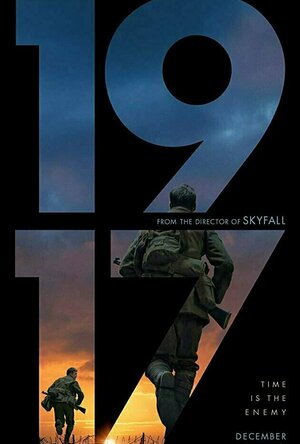

Cinematography (1 more)
Visceral and enormously tense movie experience
Visceral, brilliant and a far from relaxing evening at the movies.
It's already won Best Film at the Golden Globes, and seems set for Oscar glory too. Is Sam Mendes's WW1 epic any good?
"The Man is the Mission" - The similarities with the storyline of Spielberg's "Saving Private Ryan" are evident. Lance Corporal Blake (Dean-Charles Chapman) has a brother serving in another battalion of 1,600 men under the command of Colonel Mackenzie (Benedict Cumberbatch). The problem is that they are walking into a trap and are about to be slaughtered when they go over the top at dawn. General Erinmore (Colin Firth) picks Blake and his mate Lance Corporal Will Schofield (George MacKay) to run a dangerous mission to cross no-mans land, break through the German lines and get the message to Mackenzie to call the attack off.
Famously, the movie uses the "Rope" / "Birdman" technique of appearing to film the action as a single continuous take. This adds enormously to the tension as the duo proceed into danger. Aside from a chance meeting with a French foster mother (Claire Duburcq), the tension is maintained at 110% for the film's duration. Which makes for an exhausting watch! Congratulations by the way to Ms Duburcq for bagging the one female role in the whole movie! This is the anti-dote to the female-heavy movies of 2019!
This is a movie you MUST go to see in the cinema. A star of the show is Roger Deakins' cinematography which is just glorious to look at. The hell-holes (literally) of no-mans land are one thing, but then we get the sweeping landscapes of the green french countryside (actually Wiltshire, just a few miles from where I live!). But the really jaw-dropping cinematography for me came in a flare-lit ruined French town. The effect of a raging fire in the distance and the constantly shifting shadows of the ruins is truly spectacular.
All of this is helped by a great score by Thomas Newman, particularly at this moment in the film. The music suits the action perfectly, which is all you can ask for from a score.
I first noticed George MacKay in one of the lead roles in the Proclaimers musical "Sunshine on Leith" and then again in "Pride": both relatively low-key British films. Here he is catapulted onto the global blockbuster stage, and has nowhere to hide being on-screen literally for the whole running time (and he is running!). He doesn't disappoint: the performance is a stellar one and he holds the drama together.
He's got good support though: small but important supporting roles come from not only Firth and Cumberbatch but also Daniel ("Line of Duty") Mays; Andrew ("Kneel!") Scott; Adrian ("Killing Eve") Scarborough and Richard Madden. But my favourite was a quietly strong (no pun intended) from Mark Strong as a friendly captain with good advice for our hero.
Is the single-shot idea a gimmick? Perhaps. But it is extremely effective at maintaining the momentum. Perhaps to a degree it is a bit of a distraction, since I was constantly looking for the cuts (and very clever they are too). But it is undeniably a marvelous piece of film-making. The choreography involved with getting all of those actors and extras moving in unison for the length of some of those takes would make even Busby Berkeley sweat!
There are also some truly extraordinary action shots: a barn scene (and its dramatic aftermath) is one of the most incredible bits of film-making I've seen not just this year (that's not saying much!) but also last year.
The movie is not for the faint-hearted, with some truly gruesome scenes that stick in the mind afterwards. The illustrious Mrs Movie Man spent most of the movie with her hands over her eyes! But in general, this feels authentic. My own grandfather spent 3 days and nights lying wounded in the French mud, before being rescued... by the Germans. War is hell, and the film reflects that.
Director Sam Mendes - also a Golden Globe winner - only goes a bit Hollywood at one point: a musical interlude where an exhausted Schofield creeps into camp (what? no guards?) and listens to a wistful acappella. The realism felt like it went from 10/10 to 7/10.
This is a top-class piece of movie-making and deserves all its award success. I went in with a bit of an "Oscar-bait" attitude; the one-take gimmick peaking my interest but also stoking my cynicism. Was this to be just a technically fabulous movie that would win the awards but not really entertain? But my cynicism was unfounded. It's a gripping watch and a truly memorable movie.
See it. See it at the cinema. And see it at a cinema with as big a screen and with as great a sound system as possible!
(For the full graphical review, please check out the review on One Mann's Movies at https://bob-the-movie-man.com/2020/01/12/one-manns-movies-film-review-1917-2019/ )
"The Man is the Mission" - The similarities with the storyline of Spielberg's "Saving Private Ryan" are evident. Lance Corporal Blake (Dean-Charles Chapman) has a brother serving in another battalion of 1,600 men under the command of Colonel Mackenzie (Benedict Cumberbatch). The problem is that they are walking into a trap and are about to be slaughtered when they go over the top at dawn. General Erinmore (Colin Firth) picks Blake and his mate Lance Corporal Will Schofield (George MacKay) to run a dangerous mission to cross no-mans land, break through the German lines and get the message to Mackenzie to call the attack off.
Famously, the movie uses the "Rope" / "Birdman" technique of appearing to film the action as a single continuous take. This adds enormously to the tension as the duo proceed into danger. Aside from a chance meeting with a French foster mother (Claire Duburcq), the tension is maintained at 110% for the film's duration. Which makes for an exhausting watch! Congratulations by the way to Ms Duburcq for bagging the one female role in the whole movie! This is the anti-dote to the female-heavy movies of 2019!
This is a movie you MUST go to see in the cinema. A star of the show is Roger Deakins' cinematography which is just glorious to look at. The hell-holes (literally) of no-mans land are one thing, but then we get the sweeping landscapes of the green french countryside (actually Wiltshire, just a few miles from where I live!). But the really jaw-dropping cinematography for me came in a flare-lit ruined French town. The effect of a raging fire in the distance and the constantly shifting shadows of the ruins is truly spectacular.
All of this is helped by a great score by Thomas Newman, particularly at this moment in the film. The music suits the action perfectly, which is all you can ask for from a score.
I first noticed George MacKay in one of the lead roles in the Proclaimers musical "Sunshine on Leith" and then again in "Pride": both relatively low-key British films. Here he is catapulted onto the global blockbuster stage, and has nowhere to hide being on-screen literally for the whole running time (and he is running!). He doesn't disappoint: the performance is a stellar one and he holds the drama together.
He's got good support though: small but important supporting roles come from not only Firth and Cumberbatch but also Daniel ("Line of Duty") Mays; Andrew ("Kneel!") Scott; Adrian ("Killing Eve") Scarborough and Richard Madden. But my favourite was a quietly strong (no pun intended) from Mark Strong as a friendly captain with good advice for our hero.
Is the single-shot idea a gimmick? Perhaps. But it is extremely effective at maintaining the momentum. Perhaps to a degree it is a bit of a distraction, since I was constantly looking for the cuts (and very clever they are too). But it is undeniably a marvelous piece of film-making. The choreography involved with getting all of those actors and extras moving in unison for the length of some of those takes would make even Busby Berkeley sweat!
There are also some truly extraordinary action shots: a barn scene (and its dramatic aftermath) is one of the most incredible bits of film-making I've seen not just this year (that's not saying much!) but also last year.
The movie is not for the faint-hearted, with some truly gruesome scenes that stick in the mind afterwards. The illustrious Mrs Movie Man spent most of the movie with her hands over her eyes! But in general, this feels authentic. My own grandfather spent 3 days and nights lying wounded in the French mud, before being rescued... by the Germans. War is hell, and the film reflects that.
Director Sam Mendes - also a Golden Globe winner - only goes a bit Hollywood at one point: a musical interlude where an exhausted Schofield creeps into camp (what? no guards?) and listens to a wistful acappella. The realism felt like it went from 10/10 to 7/10.
This is a top-class piece of movie-making and deserves all its award success. I went in with a bit of an "Oscar-bait" attitude; the one-take gimmick peaking my interest but also stoking my cynicism. Was this to be just a technically fabulous movie that would win the awards but not really entertain? But my cynicism was unfounded. It's a gripping watch and a truly memorable movie.
See it. See it at the cinema. And see it at a cinema with as big a screen and with as great a sound system as possible!
(For the full graphical review, please check out the review on One Mann's Movies at https://bob-the-movie-man.com/2020/01/12/one-manns-movies-film-review-1917-2019/ )
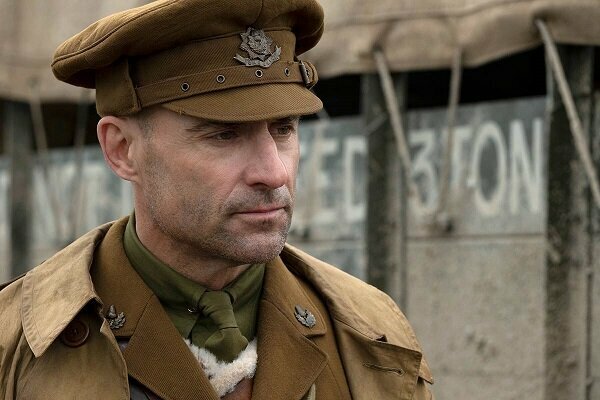

Gareth von Kallenbach (980 KP) rated Ready or Not (2019) in Movies
Sep 2, 2019
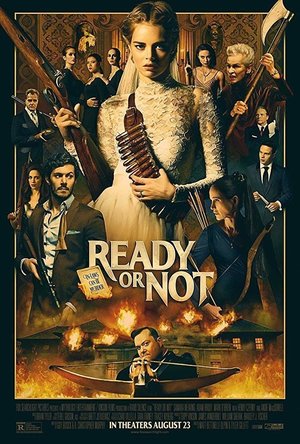
I’ve always loved playing games, board games, role playing games, computer games…whatever. I remember as a kid most of the games we played were played outside, whether it was a game of capture the flag, tag, or the always entertaining game of Hide and Seek. All the games I have ever played have been played in fun, with no real stakes involved outside of maybe some pride or some friendly competition. What if there was more at stake than simply having to sit out the game for the rest of the time? What if hiding and surviving until dawn was the only way you were going to live to see the next day? I don’t know about you, but I’d make sure it was the best game of Hide and Seek I’d ever played, or it would end up being my last. Ready or Not, a dark comedy from Fox Searchlight (now Walt Disney Studios) and directed by Matt Bettinelli-Olpin and Tyler Gillett, explores what happens when a ruthless business man sells his soul to the devil for the sake of a board game empire.
Early on we are introduced to Grace. She spent her childhood bouncing from foster home to foster home, wanting a family but just never quite getting one. When she finally finds the man of her dreams Alex (Mark O’Brien) who also is one of the heirs to a giant gaming empire, she believes that all her longing for a family, even one as messed up as his, is finally paying off. Not long after the wedding it is revealed that part of the tradition to joining the family is to play a game. Alex reassures her that the game could be something as simple as checkers or possibly as complex as chess. He doesn’t know as it’s up to a special box, imbued with mystical powers that selects the game that she will be forced to play.
Upon placing the card in the box, and withdrawing it, three little words are inscribed upon it…Hide and Seek. Thinking this is simply a game, and with no further instructions, the family puts on the Hide and Seek record and begin counting to 100. Once the count is up, weapons are handed out to the “seekers” and the game begins.
Not long after finding her hiding spot, Grace quickly becomes bored of playing and comes out admitting defeat. It is only after a series of unfortunate events resulting in the deaths of some of the key players does Grace finally understand that this family plays for keeps. With the help of an unlikely ally from Alex’s brother Daniel (Adam Brody), she not only is given an opportunity to survive the night, but also learns of the pact with the devil that was made which allowed the family to acquire its great fortune. Unless they can satisfy the curse, the entire family will not live to see the sunrise.
Ready or Not takes an outstanding cast and provides them with an equally fantastic setting. Andie MacDowell portrays the creepy mother-in-law Becky, along with her equally creepy and even more unhinged husband Tony (Henry Czerny). Each character plays out their roles in the most over-the-top performances imaginable, an they pull them off more believably then I think they even had intended. Whether its Kristian Bunn as the bumbling Fitch, who is forced to YouTube how to use a crossbow and googles whether pacts with the devil are real or BS…or Elyse Levesque as the stoic Charity, who has absolutely no problem killing someone, if it means she gets to maintain her lavish lifestyle. The cast is truly what pulls the movie off, with their ability to take the absurdity and make it almost feel normal.
Ready or Not does have the occasional jump scare and is literally coated in blood throughout, but it’s the dark comedy that really sets this movie apart from many that have come before it. I don’t know if it’s wrong to laugh at things that should be completely taboo as much as I did. Ready or Not tries to make you think it’s serious, even when you know it is intentionally not. While some of the dialog might fall a bit flat, you’d be hard pressed to notice between your bursts of laughter. You know a movie does something right, when you find yourself quoting it not only immediately after it finishes, but into the next day (and at this rate probably beyond).
Ready or Not is a fun film, that’s the best way to describe it. It’s gruesome and of course violent, but it doesn’t take itself seriously and asks the same of the audience. There have been other movies who have taken this genre too seriously in the past, and lead to mixed results. Ready or Not wants you to laugh at its absurdity and take glee in the events that take place. Based on the individual characters, it’s amazing that the family has survived as long as it has…must be because that card doesn’t come up very often. If you are looking for a fun film, one that you want to laugh at (and with) you could certainly do worse than Ready or Not. It is one of the best dark comedies to come out in years, and it makes me long for the days when movies were still unique and weren’t simply attempting to reboot everything.
Early on we are introduced to Grace. She spent her childhood bouncing from foster home to foster home, wanting a family but just never quite getting one. When she finally finds the man of her dreams Alex (Mark O’Brien) who also is one of the heirs to a giant gaming empire, she believes that all her longing for a family, even one as messed up as his, is finally paying off. Not long after the wedding it is revealed that part of the tradition to joining the family is to play a game. Alex reassures her that the game could be something as simple as checkers or possibly as complex as chess. He doesn’t know as it’s up to a special box, imbued with mystical powers that selects the game that she will be forced to play.
Upon placing the card in the box, and withdrawing it, three little words are inscribed upon it…Hide and Seek. Thinking this is simply a game, and with no further instructions, the family puts on the Hide and Seek record and begin counting to 100. Once the count is up, weapons are handed out to the “seekers” and the game begins.
Not long after finding her hiding spot, Grace quickly becomes bored of playing and comes out admitting defeat. It is only after a series of unfortunate events resulting in the deaths of some of the key players does Grace finally understand that this family plays for keeps. With the help of an unlikely ally from Alex’s brother Daniel (Adam Brody), she not only is given an opportunity to survive the night, but also learns of the pact with the devil that was made which allowed the family to acquire its great fortune. Unless they can satisfy the curse, the entire family will not live to see the sunrise.
Ready or Not takes an outstanding cast and provides them with an equally fantastic setting. Andie MacDowell portrays the creepy mother-in-law Becky, along with her equally creepy and even more unhinged husband Tony (Henry Czerny). Each character plays out their roles in the most over-the-top performances imaginable, an they pull them off more believably then I think they even had intended. Whether its Kristian Bunn as the bumbling Fitch, who is forced to YouTube how to use a crossbow and googles whether pacts with the devil are real or BS…or Elyse Levesque as the stoic Charity, who has absolutely no problem killing someone, if it means she gets to maintain her lavish lifestyle. The cast is truly what pulls the movie off, with their ability to take the absurdity and make it almost feel normal.
Ready or Not does have the occasional jump scare and is literally coated in blood throughout, but it’s the dark comedy that really sets this movie apart from many that have come before it. I don’t know if it’s wrong to laugh at things that should be completely taboo as much as I did. Ready or Not tries to make you think it’s serious, even when you know it is intentionally not. While some of the dialog might fall a bit flat, you’d be hard pressed to notice between your bursts of laughter. You know a movie does something right, when you find yourself quoting it not only immediately after it finishes, but into the next day (and at this rate probably beyond).
Ready or Not is a fun film, that’s the best way to describe it. It’s gruesome and of course violent, but it doesn’t take itself seriously and asks the same of the audience. There have been other movies who have taken this genre too seriously in the past, and lead to mixed results. Ready or Not wants you to laugh at its absurdity and take glee in the events that take place. Based on the individual characters, it’s amazing that the family has survived as long as it has…must be because that card doesn’t come up very often. If you are looking for a fun film, one that you want to laugh at (and with) you could certainly do worse than Ready or Not. It is one of the best dark comedies to come out in years, and it makes me long for the days when movies were still unique and weren’t simply attempting to reboot everything.

Lee (2222 KP) rated The Founder (2017) in Movies
Jul 26, 2017
These days McDonalds is everywhere. You don’t have to travel too far before you see those familiar golden arches – in fact, there are three of them within a two mile radius of my home! I’m not personally a big fan of them, but that’s not to say I haven’t enjoyed the odd meal occasionally when in a hurry. It’s one of those things that’s just always been there in life, taken for granted without much of a thought as to how it all came to be so huge. Turns out there’s a pretty interesting story to be told involving a couple of pioneering brothers, and the guy who eventually completely screwed them over…
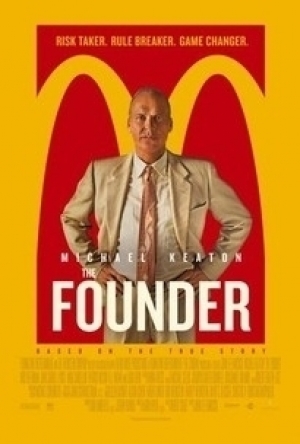
Michael Keaton is Ray Kroc, a hardworking salesman who always seems to be on the road while his bored wife (Laura Dern) is at home. Repeatedly getting the brush off from restaurant owners who don’t want to buy his amazing new five-spindled milkshake machine and frustrated by the slow, unreliable service from the drive-ins where he goes to get his lunch. For this part of the movie, we’re actually pretty sympathetic with Ray as he struggles in his lonely, boring, unfullfilling job, listening to motivational records in motel rooms as he drifts off to sleep. And then he gets a call from two brothers, Dick and Mac McDonald. They don’t just want to buy one of his milkshake machines, they want to buy at least six in order to cope with demand in their restaurant. Ray puts down the phone and his mind immediately goes into overdrive – what kind of restaurant have these guys got that’s producing this kind of demand? He pulls out a map and looks them up – they’re in San Bernadino California, so he heads off in his car to pay them a visit.
When he arrives, the place is packed with customers queuing for food. As Ray joins the queue a woman assures him that he won’t have to wait long and sure enough, after placing his 15 cent order for a burger, fries and soft drink (bargain!), he promptly gets his order within 30 seconds – served in a paper bag, no plates, no cutlery. He thinks there must be some mistake and it’s pretty amusing to see the bemused look on his face as he struggles to accept the concept that we now all take for granted. Fast, cheap food that you can eat absolutely anywhere you want – in your car, at the park, it’s up to you.
Ray offers to take the brothers out to dinner so that he can hear their story. It’s a wonderful, captivating story too, one that could so easily have been the entire movie. The brothers have such a good rapport as they passionately talk about what they’ve worked to achieve. Moving their restaurant to where it is now, developing their own machines for applying perfect amounts of ketchup and mustard into each bun and spending six hours sketching out potential restaurant layouts on a tennis court while their restaurant staff choreograph their optimised cooking routines. Everything has been tweaked to perfection, even down to the exact cooking time and temperature for their fries. After sleeping on all this information, Ray goes back to the brothers early the next morning and offers them the idea of franchising. But, it’s something they’ve dabbled in before and gave up on, having felt that they had no control over the quality and attention to detail that they pride themselves on in their own restaurant. Eventually Ray wins them over though and a contract is drawn up. The brothers get final say on everything and get half a percent of the profits but it’s up to Ray to setup the franchises and find the people to run them.
It’s a slow, hard process though and although Ray does setup a few successful restaurants, he soon becomes frustrated at the lack of money he seems to be making and the lack of control he has on the decision making process whenever he wants to save costs. The McDonald brothers just seem to keep saying ‘no’! But after he receives some business advice, telling him he should be concentrating on buying the land that the restaurants are on rather than the burgers being cooked, the tide begins to turn. He eventually becomes powerful enough to overpower the brothers, trademark their name, and generally take credit for everything the brothers worked for and built, eventually putting them out of business.
Kroc becomes ruthless, and a complete arsehole. The brothers did eventually make some decent money out of their final deal with Ray, but it certainly wasn’t the 100 million dollars a year they could have been making if they’d been treated right. You really feel for them, as they completely lose control of everything. But you can’t help wondering if things would have worked out that much different for them if they had never met Ray at all. Their restaurant will certainly have continued to do well for a while, but by focusing on just their one restaurant, how long before somebody else stole their idea and ran with it, somebody with the drive and vision to make real money like Ray, leaving them with no money settlement at all? After all, as the motivational LP that Ray listens to clearly pointed out at the start of the movie, “Nothing in the world can take the place of persistence, talent will not, nothing is more common than unsuccessful men with talent …”.
Michael Keaton is Ray Kroc, a hardworking salesman who always seems to be on the road while his bored wife (Laura Dern) is at home. Repeatedly getting the brush off from restaurant owners who don’t want to buy his amazing new five-spindled milkshake machine and frustrated by the slow, unreliable service from the drive-ins where he goes to get his lunch. For this part of the movie, we’re actually pretty sympathetic with Ray as he struggles in his lonely, boring, unfullfilling job, listening to motivational records in motel rooms as he drifts off to sleep. And then he gets a call from two brothers, Dick and Mac McDonald. They don’t just want to buy one of his milkshake machines, they want to buy at least six in order to cope with demand in their restaurant. Ray puts down the phone and his mind immediately goes into overdrive – what kind of restaurant have these guys got that’s producing this kind of demand? He pulls out a map and looks them up – they’re in San Bernadino California, so he heads off in his car to pay them a visit.
When he arrives, the place is packed with customers queuing for food. As Ray joins the queue a woman assures him that he won’t have to wait long and sure enough, after placing his 15 cent order for a burger, fries and soft drink (bargain!), he promptly gets his order within 30 seconds – served in a paper bag, no plates, no cutlery. He thinks there must be some mistake and it’s pretty amusing to see the bemused look on his face as he struggles to accept the concept that we now all take for granted. Fast, cheap food that you can eat absolutely anywhere you want – in your car, at the park, it’s up to you.
Ray offers to take the brothers out to dinner so that he can hear their story. It’s a wonderful, captivating story too, one that could so easily have been the entire movie. The brothers have such a good rapport as they passionately talk about what they’ve worked to achieve. Moving their restaurant to where it is now, developing their own machines for applying perfect amounts of ketchup and mustard into each bun and spending six hours sketching out potential restaurant layouts on a tennis court while their restaurant staff choreograph their optimised cooking routines. Everything has been tweaked to perfection, even down to the exact cooking time and temperature for their fries. After sleeping on all this information, Ray goes back to the brothers early the next morning and offers them the idea of franchising. But, it’s something they’ve dabbled in before and gave up on, having felt that they had no control over the quality and attention to detail that they pride themselves on in their own restaurant. Eventually Ray wins them over though and a contract is drawn up. The brothers get final say on everything and get half a percent of the profits but it’s up to Ray to setup the franchises and find the people to run them.
It’s a slow, hard process though and although Ray does setup a few successful restaurants, he soon becomes frustrated at the lack of money he seems to be making and the lack of control he has on the decision making process whenever he wants to save costs. The McDonald brothers just seem to keep saying ‘no’! But after he receives some business advice, telling him he should be concentrating on buying the land that the restaurants are on rather than the burgers being cooked, the tide begins to turn. He eventually becomes powerful enough to overpower the brothers, trademark their name, and generally take credit for everything the brothers worked for and built, eventually putting them out of business.
Kroc becomes ruthless, and a complete arsehole. The brothers did eventually make some decent money out of their final deal with Ray, but it certainly wasn’t the 100 million dollars a year they could have been making if they’d been treated right. You really feel for them, as they completely lose control of everything. But you can’t help wondering if things would have worked out that much different for them if they had never met Ray at all. Their restaurant will certainly have continued to do well for a while, but by focusing on just their one restaurant, how long before somebody else stole their idea and ran with it, somebody with the drive and vision to make real money like Ray, leaving them with no money settlement at all? After all, as the motivational LP that Ray listens to clearly pointed out at the start of the movie, “Nothing in the world can take the place of persistence, talent will not, nothing is more common than unsuccessful men with talent …”.

Sass Perilla (36 KP) rated The Master and Margarita in Books
Aug 9, 2019
Worth a read? Yes. Worth a reread? Maybe not.
Contains spoilers, click to show
The Master and Magarita: Mikhail Bulgakov
Firstly, I didn’t intend to write an essay on this novel. However, once started I found I had a lot to say, and the more I thought about the plot and characters, the more ideas and parallels were sparked, so I am hopeful that the verbosity of this review can be forgiven.
At the risk of sounding both ignorant and uncultured, I found this novel (at least at first) bloody hard slog; not least because the Russian characters have three names, plus a nickname, plus a pun on their name (none of which work particularly well in translation and all of which sound rather similar to the English untrained ear). As an example- Ivan Nikolaevich Ponyrev (who seems to be referred to by any and all of these names) is also known as “Homeless” and “the poet” is a key character in the opening section of the novel. To further demonstrate: there are 17 different names that start with A that are used to refer to 15 different characters with Andreyevich used as the middle name of a bereaved uncle, who makes a journey from Kiev after his nephew is beheaded in a freak tram accident- and Andrey the buffet manager at a Moscow theatre. Clear as mud right? And that is before starting on similarly named characters with the initials M, P, L and S! At my last count there were 45 distinct characters, and I am fairly sure there will be some that I have missed. Hence, I did a lot of re-reading to work out exactly who was doing what to whom.
Additionally, I would suggest you need to be wary of the different translations. The distinct changes in meaning are subtle but important. To triangulate I had three versions at my disposal: Hugh Aplin’s translation (available for free on Kindle), the audiobook version translated by Richard Pevear and Larissa Volokhonsky (which I listened to simultaneously when reading the book to come to my own interpretation, and the subtitles for the Russian TV miniseries from 2005 when I gave up trying to work out who was who from name alone!
So those were my “technical” issues (if you like) with engaging with this novel, and this lack of clarity and understanding (and my own lack of contextual knowledge of Stalinist Russia) meant I missed many of the (what I am sure are hysterically funny to those in the know) satirical jokes in the opening section. That said, the random action and quick changes of focus, undercurrent of chaos in Moscow despite entrenched hierarchal structures and clear threat that (any) one could go missing at any time, for an unclear reason gave a clear insight into the mind and fears of a 1930s Russian citizen. No wonder it was available only in censored form for so long.
Despite these hardships, there were some genuinely laugh out loud moments in the first Moscow based part of the novel. The citizens have not lost their individuality, as they scrabble and fight for bank notes in the theatre, which are later revealed to be worthless. Nor have they lost their sense of pride and vanity, which we see in the female theatre goers, so desperate to attain the fashionable French couture (which later literally disappears from their bodies leaving semi-naked citizenesses desperately trying to cover themselves in a scene reminiscent of “Allo Allo” meets “Benny Hill”). When Professor Woland says his show will “expose” what the locals have failed to realise is that it is their (moral) shortcomings that are about to be revealed. The message is clearly, that no government can successfully legislate against human nature.
Oooh- and another fun fact, apparently Woland (later revealed- or perhaps is implied- to be Satan) was the inspiration to the Rolling Stones 1968 hit “Sympathy for the Devil”, well at least that is what my Google-Fu tells me.
Obviously, there were substantial hurdles to leap, however, I found by the second half of the novel, when we finally meet the eponymous characters, I had got in to the swing of things and begun to embrace the farcical surrealism of the novel.
The second “book” marks a change in tone, although it continues to cut away to scenes of Jesus’ sentencing by Pilate and execution (here known in the Aramaic form Yeshua). Ironically it is these scenes that are the most “real” and substantially human, as Pilate’s decision weighs head achingly heavily on him throughout. The Master and Margarita seem to be the only two characters fully invested in the authenticity of literature, and serve as a counterpoint to the heavily censored “monstrous” writing of Ivan and the rest of the writers’ union Massolit, more interested in fine dining and what their positions can do for them then the production of quality writing.
And it is Margarita’s journey of discovery and liberation from the stodgy, miserable societal expectations of that leads her back to her Master. Bulgakov mixes classical myth, Russian folklore and Bible stories to give us an impression of the timelessness of the central romance. As the worlds of communist Moscow and the inner worlds of the Master and Margarita collide, we are informed of the former’s desire to excuse all magic (and mischief) as the product of mass hypnosis, when the latter (and the reader) are fully aware of the spiritual significance and dimension of the events.
Clever, astute and in places laugh out loud funny, this novel none-the-less requires a level of dedication from the non-Russian speaking reader. Worth a read? Yes. Worth a re-read? Maybe not.
Firstly, I didn’t intend to write an essay on this novel. However, once started I found I had a lot to say, and the more I thought about the plot and characters, the more ideas and parallels were sparked, so I am hopeful that the verbosity of this review can be forgiven.
At the risk of sounding both ignorant and uncultured, I found this novel (at least at first) bloody hard slog; not least because the Russian characters have three names, plus a nickname, plus a pun on their name (none of which work particularly well in translation and all of which sound rather similar to the English untrained ear). As an example- Ivan Nikolaevich Ponyrev (who seems to be referred to by any and all of these names) is also known as “Homeless” and “the poet” is a key character in the opening section of the novel. To further demonstrate: there are 17 different names that start with A that are used to refer to 15 different characters with Andreyevich used as the middle name of a bereaved uncle, who makes a journey from Kiev after his nephew is beheaded in a freak tram accident- and Andrey the buffet manager at a Moscow theatre. Clear as mud right? And that is before starting on similarly named characters with the initials M, P, L and S! At my last count there were 45 distinct characters, and I am fairly sure there will be some that I have missed. Hence, I did a lot of re-reading to work out exactly who was doing what to whom.
Additionally, I would suggest you need to be wary of the different translations. The distinct changes in meaning are subtle but important. To triangulate I had three versions at my disposal: Hugh Aplin’s translation (available for free on Kindle), the audiobook version translated by Richard Pevear and Larissa Volokhonsky (which I listened to simultaneously when reading the book to come to my own interpretation, and the subtitles for the Russian TV miniseries from 2005 when I gave up trying to work out who was who from name alone!
So those were my “technical” issues (if you like) with engaging with this novel, and this lack of clarity and understanding (and my own lack of contextual knowledge of Stalinist Russia) meant I missed many of the (what I am sure are hysterically funny to those in the know) satirical jokes in the opening section. That said, the random action and quick changes of focus, undercurrent of chaos in Moscow despite entrenched hierarchal structures and clear threat that (any) one could go missing at any time, for an unclear reason gave a clear insight into the mind and fears of a 1930s Russian citizen. No wonder it was available only in censored form for so long.
Despite these hardships, there were some genuinely laugh out loud moments in the first Moscow based part of the novel. The citizens have not lost their individuality, as they scrabble and fight for bank notes in the theatre, which are later revealed to be worthless. Nor have they lost their sense of pride and vanity, which we see in the female theatre goers, so desperate to attain the fashionable French couture (which later literally disappears from their bodies leaving semi-naked citizenesses desperately trying to cover themselves in a scene reminiscent of “Allo Allo” meets “Benny Hill”). When Professor Woland says his show will “expose” what the locals have failed to realise is that it is their (moral) shortcomings that are about to be revealed. The message is clearly, that no government can successfully legislate against human nature.
Oooh- and another fun fact, apparently Woland (later revealed- or perhaps is implied- to be Satan) was the inspiration to the Rolling Stones 1968 hit “Sympathy for the Devil”, well at least that is what my Google-Fu tells me.
Obviously, there were substantial hurdles to leap, however, I found by the second half of the novel, when we finally meet the eponymous characters, I had got in to the swing of things and begun to embrace the farcical surrealism of the novel.
The second “book” marks a change in tone, although it continues to cut away to scenes of Jesus’ sentencing by Pilate and execution (here known in the Aramaic form Yeshua). Ironically it is these scenes that are the most “real” and substantially human, as Pilate’s decision weighs head achingly heavily on him throughout. The Master and Margarita seem to be the only two characters fully invested in the authenticity of literature, and serve as a counterpoint to the heavily censored “monstrous” writing of Ivan and the rest of the writers’ union Massolit, more interested in fine dining and what their positions can do for them then the production of quality writing.
And it is Margarita’s journey of discovery and liberation from the stodgy, miserable societal expectations of that leads her back to her Master. Bulgakov mixes classical myth, Russian folklore and Bible stories to give us an impression of the timelessness of the central romance. As the worlds of communist Moscow and the inner worlds of the Master and Margarita collide, we are informed of the former’s desire to excuse all magic (and mischief) as the product of mass hypnosis, when the latter (and the reader) are fully aware of the spiritual significance and dimension of the events.
Clever, astute and in places laugh out loud funny, this novel none-the-less requires a level of dedication from the non-Russian speaking reader. Worth a read? Yes. Worth a re-read? Maybe not.

Purple Phoenix Games (2266 KP) rated Aristotle's Elements and Space in Tabletop Games
Nov 5, 2020


The Cosmos! So many of us dream of flying up into space to enjoy the views and hopes of a better life on another planet. Some would like to study space more closely to unravel its mysteries. Still others would think it’s just kinda cool to be weightless and IN SPACE! I’m a mixture of all these, so when I heard a call for reviewers for a game whose title includes a major philosopher, elements of all matter, AND SPACE I just had to know more and play it. Would Aristotle take pride in this card game’s premise or has it shot for the moon and is now drifting among the space junk?
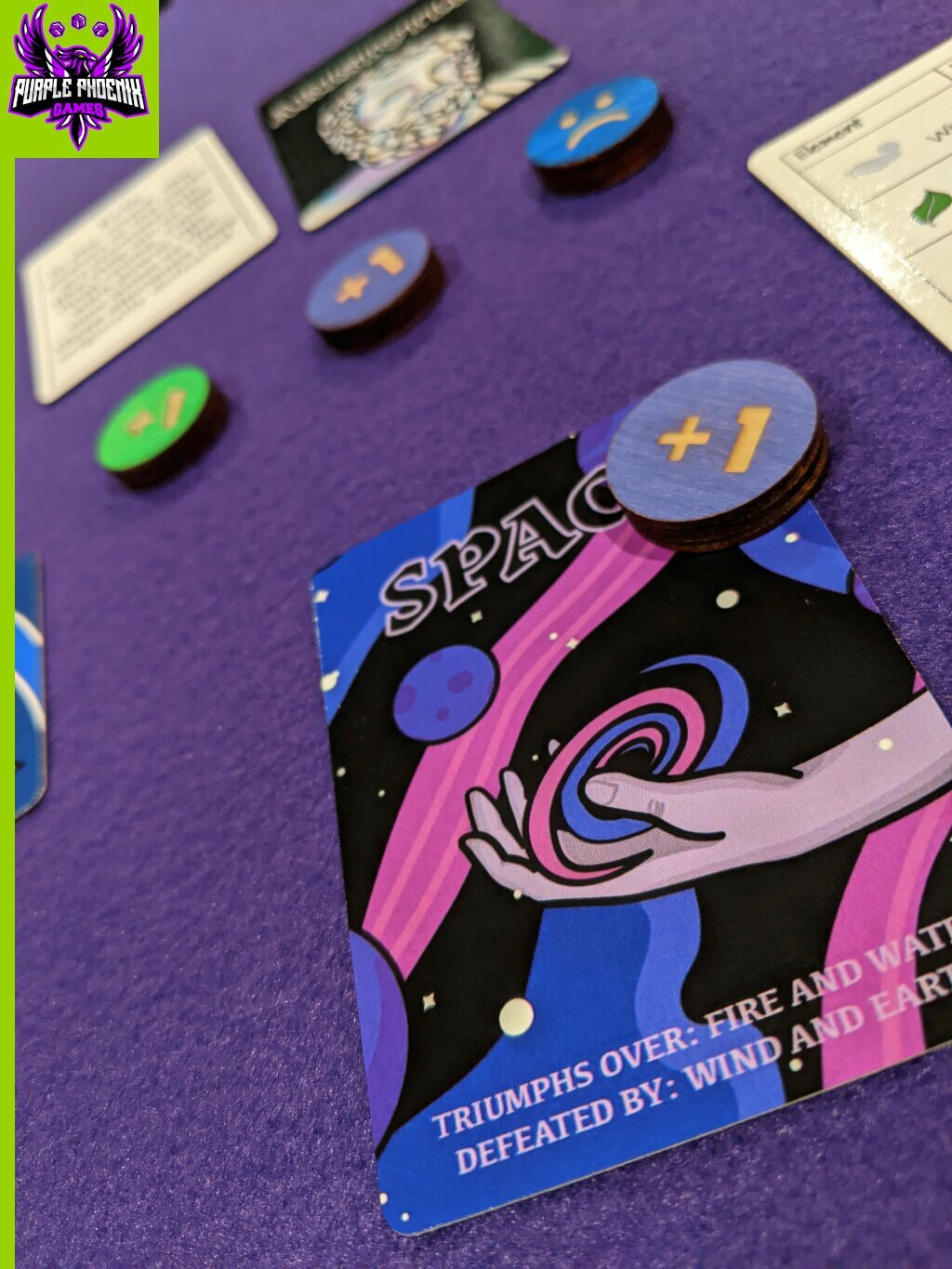
Aristotle’s Elements and Space is a party style card game for three to five players. Players will be attempting to play elements to triumph over their opponents by using tried and true rock-paper-scissors style play.
DISCLAIMER: We were provided a prototype copy of this game for the purposes of this review. These are preview copy components, and I do not know for sure if the final components will be any different from these shown. Also, it is not my intention to detail every rule in the game, as there are just too many. You are invited to download the rulebook, back the game through the Kickstarter campaign, or through any retailers stocking it after fulfillment. -T
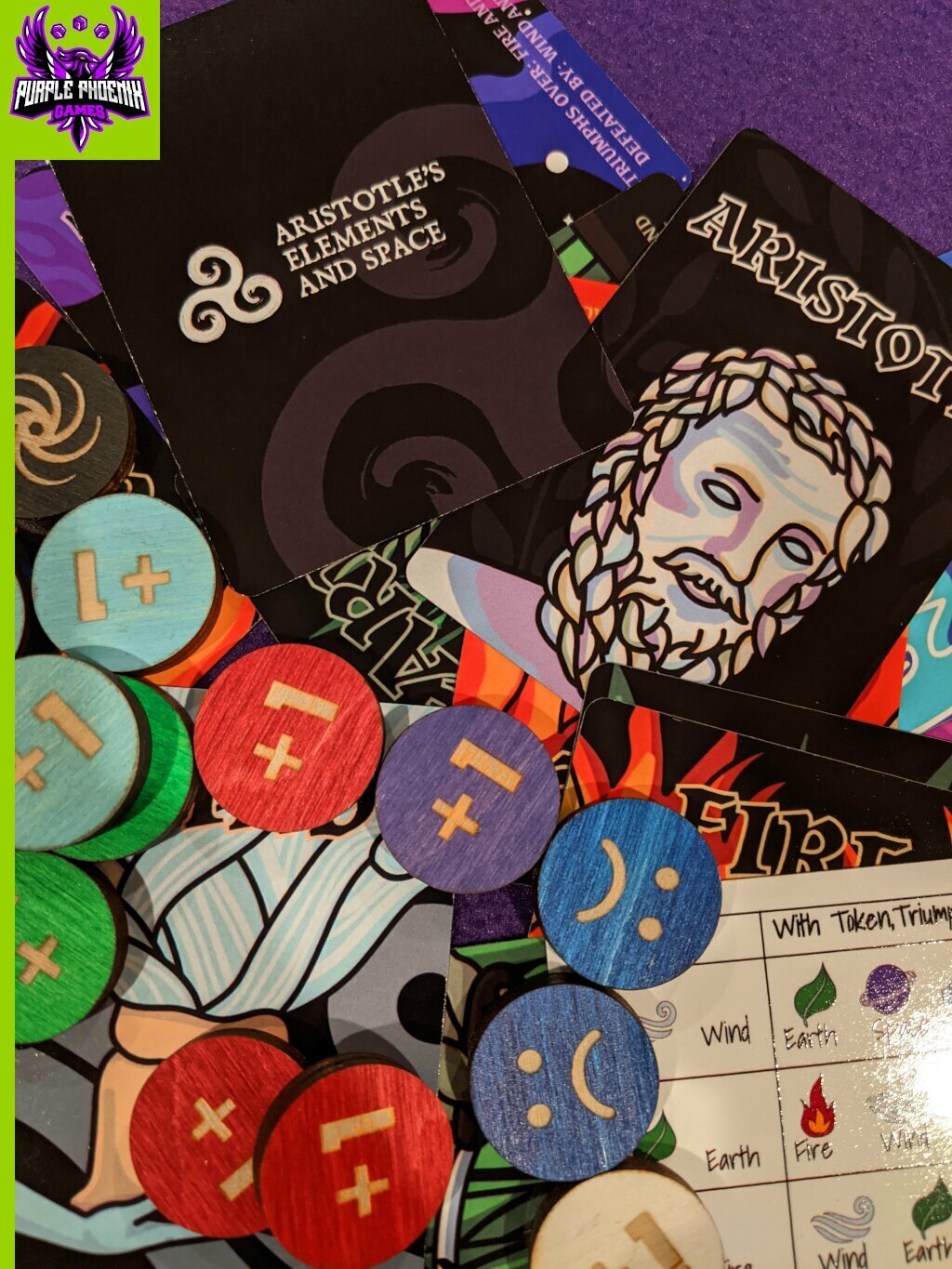
To setup stock the token bag (not pictured) with tokens according to the rulebook suggestions for number of players. Each player will blindly choose three tokens from the bag to place in front of themselves within reach of all players. Shuffle the element cards and deal each player seven. Determine the first Aristotle player and place the Aristotle card facing that player. Shuffle and deal out three Element of Surprise cards face-down within reach of all players. The game may now begin!
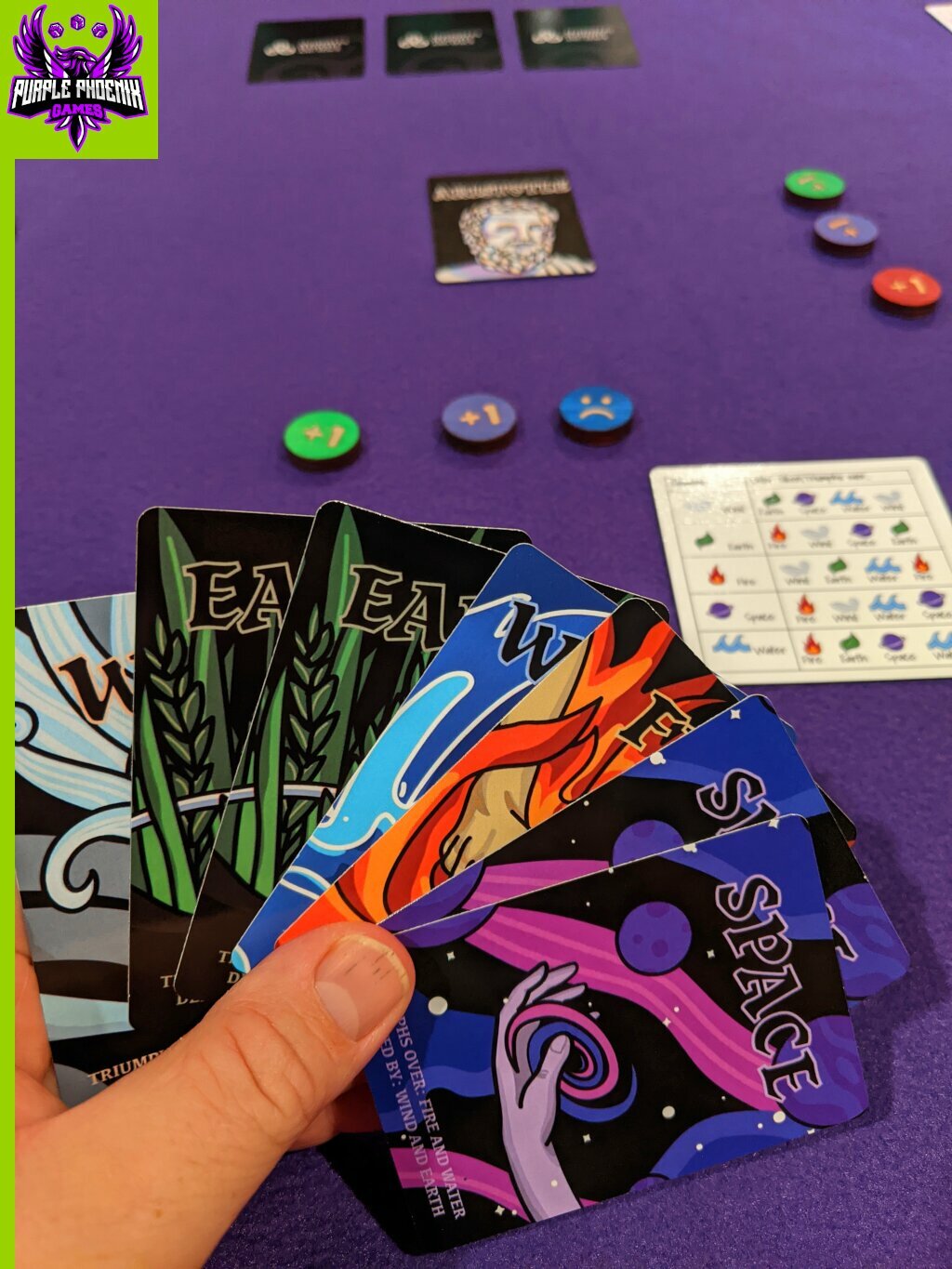
Each game lasts seven rounds. At the start of each round players will secretly choose a card from hand to play to the table face down. Once all players are ready all players must simultaneously say out loud, “Aristotle,” while flipping over their cards. When all cards are revealed the Aristotle player will compare cards with the player on their left. Whichever element card played triumphs over the other will win that battle and continue onward clockwise to battle the other players. This continues until one player has triumphed all the cards and taken the trick. The Aristotle card is then given to the next player in clockwise seating to begin a new round. This is how a basic game is played.
More advanced games will include Power Up Tokens and the Element of Surprise Cards. In order to use a Power Up Token a player would first need to have successfully stolen another player’s token during a round of play. To successfully steal a token the player will physically take a token from another player without being touched by that player. Should the defending player touch or slap the offensive player’s hand during the theft, the heist is unsuccessful. Once stolen a token may be used on a subsequent round.
The Power Up Tokens increase the number of elements that may be triumphed using a particular element. For instance, Fire typically triumphs over Earth and Wind, but with the Power Up Token also applied the Fire triumphs over Earth, Wind, AND Water. A most welcome twist! Also, during a round in which a player is acting as Aristotle they may, once cards are revealed, call, “Element of Surprise!,” and choose a face-down card to read aloud to the group. These cards add a goofy rule that must be thenceforth followed, gives prompts for the players to discuss, or has players searching the room/house/wherever for items to bring back to the table first.
Play continues in this fashion until the last round, where triumph rules are reversed. When all cards have been played the winner is the player who won the most tricks.
Components. Again, this is a prototype version of the game. That said, what we received was a bunch of cards and the Power Up Tokens. The tokens are fine – laser cut plywood discs painted on both sides to match the elements they modify. The cards are glossy and feature unique art. The art is, well, just okay for me. It’s not terribly exciting, but it is very colorful and not bad, necessarily. I feel like the art could be improved some, but art is always a personal preference.
The gameplay itself is certainly a hodge-podge of mechanics from other games that, for the most part, are well-used for a very light trick-taking card game. I enjoy playing it using the Power Up Tokens, but for me and my group, we passed on the Element of Surprise cards. They add a different twist to the game that isn’t necessarily Quelf-ish, but also doesn’t add much to the game. They merely add a distraction from the game. I can see many people totally diggin’ those cards, and I probably would use them if converting a game-noob, but for more serious gamers, just leave them out.
If you are looking for a very light and different trick-taking card game, check out Aristotle’s Elements and Space. I am not entirely sure if any components will be updated before going to retail, but even if not, they are pretty decent. The gameplay is quick and easy to teach; I think I will try it with my 4-year-old as well. This is a decent gateway filler that could fit very well in many collections. Give it a look!
Aristotle’s Elements and Space is a party style card game for three to five players. Players will be attempting to play elements to triumph over their opponents by using tried and true rock-paper-scissors style play.
DISCLAIMER: We were provided a prototype copy of this game for the purposes of this review. These are preview copy components, and I do not know for sure if the final components will be any different from these shown. Also, it is not my intention to detail every rule in the game, as there are just too many. You are invited to download the rulebook, back the game through the Kickstarter campaign, or through any retailers stocking it after fulfillment. -T
To setup stock the token bag (not pictured) with tokens according to the rulebook suggestions for number of players. Each player will blindly choose three tokens from the bag to place in front of themselves within reach of all players. Shuffle the element cards and deal each player seven. Determine the first Aristotle player and place the Aristotle card facing that player. Shuffle and deal out three Element of Surprise cards face-down within reach of all players. The game may now begin!
Each game lasts seven rounds. At the start of each round players will secretly choose a card from hand to play to the table face down. Once all players are ready all players must simultaneously say out loud, “Aristotle,” while flipping over their cards. When all cards are revealed the Aristotle player will compare cards with the player on their left. Whichever element card played triumphs over the other will win that battle and continue onward clockwise to battle the other players. This continues until one player has triumphed all the cards and taken the trick. The Aristotle card is then given to the next player in clockwise seating to begin a new round. This is how a basic game is played.
More advanced games will include Power Up Tokens and the Element of Surprise Cards. In order to use a Power Up Token a player would first need to have successfully stolen another player’s token during a round of play. To successfully steal a token the player will physically take a token from another player without being touched by that player. Should the defending player touch or slap the offensive player’s hand during the theft, the heist is unsuccessful. Once stolen a token may be used on a subsequent round.
The Power Up Tokens increase the number of elements that may be triumphed using a particular element. For instance, Fire typically triumphs over Earth and Wind, but with the Power Up Token also applied the Fire triumphs over Earth, Wind, AND Water. A most welcome twist! Also, during a round in which a player is acting as Aristotle they may, once cards are revealed, call, “Element of Surprise!,” and choose a face-down card to read aloud to the group. These cards add a goofy rule that must be thenceforth followed, gives prompts for the players to discuss, or has players searching the room/house/wherever for items to bring back to the table first.
Play continues in this fashion until the last round, where triumph rules are reversed. When all cards have been played the winner is the player who won the most tricks.
Components. Again, this is a prototype version of the game. That said, what we received was a bunch of cards and the Power Up Tokens. The tokens are fine – laser cut plywood discs painted on both sides to match the elements they modify. The cards are glossy and feature unique art. The art is, well, just okay for me. It’s not terribly exciting, but it is very colorful and not bad, necessarily. I feel like the art could be improved some, but art is always a personal preference.
The gameplay itself is certainly a hodge-podge of mechanics from other games that, for the most part, are well-used for a very light trick-taking card game. I enjoy playing it using the Power Up Tokens, but for me and my group, we passed on the Element of Surprise cards. They add a different twist to the game that isn’t necessarily Quelf-ish, but also doesn’t add much to the game. They merely add a distraction from the game. I can see many people totally diggin’ those cards, and I probably would use them if converting a game-noob, but for more serious gamers, just leave them out.
If you are looking for a very light and different trick-taking card game, check out Aristotle’s Elements and Space. I am not entirely sure if any components will be updated before going to retail, but even if not, they are pretty decent. The gameplay is quick and easy to teach; I think I will try it with my 4-year-old as well. This is a decent gateway filler that could fit very well in many collections. Give it a look!


Kristy H (1252 KP) rated Truly Madly Guilty in Books
Feb 13, 2018

Erika has the whole event planned: an afternoon tea with her friend, Clementine, Clementine's husband, Sam, and the couple's two young daughters, Holly and Ruby. She even has a glittery art table set up for the youngsters. But the day is derailed when Erika runs into her next-door neighbor, Vid, who invites both couples over for a last minute barbecue. Erika and her husband, Oliver, aren't the last minute types; besides, they had something they needed to talk about with Clementine and Sam. But, Erika feels like obligated to say yes. Clementine and Sam are secretly relieved, as Vid and his beautiful wife Tiffany are far more personable than Erika and Oliver. The afternoon starts off well enough; Tiffany and Vid's daughter, Dakota, is even happy enough to hang out with Holly and Ruby. But by the time the night is over, lives will be changed, and all the adults--Sam and Clementine in particular--will find themselves wishing they never attended this impromptu event.
So we all know the drill by now. Liane Moriarty is a well-known master of dramatic suspense, especially at capturing the tension that hides behind ordinary lives. I went through a period where I read all of Moriarty's books; [b:What Alice Forgot|6469165|What Alice Forgot|Liane Moriarty|https://d.gr-assets.com/books/1377159022s/6469165.jpg|6659752] and her last novel, [b:Big Little Lies|19486412|Big Little Lies|Liane Moriarty|https://d.gr-assets.com/books/1399582436s/19486412.jpg|27570886], rank as two of my particular favorites. Anyway, Moriarty has become rather famous in the book world, with [b:Big Little Lies|19486412|Big Little Lies|Liane Moriarty|https://d.gr-assets.com/books/1399582436s/19486412.jpg|27570886] being made into a 7-episode HBO TV series, starring Reese Witherspoon and Nicole Kidman.
Of course, with such fame comes great responsibility. And pressure. Can a new work live up to the hype and excitement of the previous? This one will divide readers. It certainly has all the hallmarks of a typical Moriarty novel: a cast of women (and men) living ordinary lives on the surface, with a hidden veneer beneath. There's a secret layer to all of Moriarty's characters, though the drama associated with those in [b:Truly Madly Guilty|26247008|Truly Madly Guilty|Liane Moriarty|https://d.gr-assets.com/books/1467061262s/26247008.jpg|49997474] may not live up to some of her other novels.
First of all, this book will frustrate you. The beginning is incredibly maddening, as Moriarty starts leading up to the events that happened at the barbecue... in slow, excruciating detail. As she does so, we alternate chapters with the present, with the point-of-view told from our various characters. We have Erika, a slightly repressed accountant whose life has been formed around her stressful childhood as the only daughter of her hoarder mother, and Erika's husband, Oliver, her equally steady mate, who grew up with alcoholic parents and longs for the same order in life as Erika. Clementine and Erika have been friends since childhood, when Clementine basically felt Erika's friendship was forced upon her by Clementine's social worker mother, who felt bad for Erika and her flea-infested home. Clementine is a cellist and a bit of a free spirit, but she's balanced by her more grounded husband Sam, who works in business at an energy drink company. They are parents to five-year-old Holly and two-year-old, Ruby. And then, finally, we have Erika and Oliver's neighbors, Vid and Tiffany. Swarthy, wealthy Vid is a joyous, open man who loves sharing his home (and his food) with friends and family. His gorgeous wife Tiffany is his pride and joy. Their quiet 10-year-old daughter, Dakota, just loves to read.
See how I just distracted you from the events of the barbecue by a description of the characters? Imagine that, for pages and pages! It's a great technique, don't get me wrong, but there was one point where I truly wanted to fling the book across the room. "JUST TELL ME WHAT HAPPENS!" I actually shouted in my (thankfully empty) bedroom. I've read some reviews that state that the big reveal, when it happens, isn't shocking enough, but I disagree: I think that event would certainly change my life and haunt my dreams (no more than that; a spoiler will truly ruin this book).
So while this novel can be a bit frustrating, it really is a Liane Moriarty book. It's compulsively readable. At first, I thought it was a very detailed look at three self-involved couples, but over time, I realized I had really fallen for Erika and Oliver and eventually, Tiffany and Vid, too (and Dakota, I loved Dakota!). Moriarty has a way of humanizing her characters and differentiating each from another: they all stand as individuals. Even Sam and Clementine, who were my least favorites, were their own people. It's the tiny details and pieces about each that she sticks in that really build your picture of each character in your mind. Much of the book takes place in the rain, and I could truly visualize each character and every event, unspooling, in this torrential Sydney downpour.
Overall, this book connected with me less on a dramatic, "oh my gosh" level (though that exists) but more on an emotional one. It speaks to the guilt we can all feel about life events--adults and kids alike--and potentially carry with us all of our days. Not a lot may happen in the book, per se, yet it's really a strong story of friendship, marriage, life, and loss. When I framed it in that perspective, versus looking purely for moments of dramatic tension, I realized I'd really enjoyed it. A strong 3.5 stars and definitely worth picking up. Just keep an open mind.
<a href="http://justacatandabookatherside.blogspot.com/">My Blog</a> ~ <a href="https://www.facebook.com/justacatandabook/">Facebook</a>; ~ <a href="https://twitter.com/mwcmoto">Twitter</a>;
So we all know the drill by now. Liane Moriarty is a well-known master of dramatic suspense, especially at capturing the tension that hides behind ordinary lives. I went through a period where I read all of Moriarty's books; [b:What Alice Forgot|6469165|What Alice Forgot|Liane Moriarty|https://d.gr-assets.com/books/1377159022s/6469165.jpg|6659752] and her last novel, [b:Big Little Lies|19486412|Big Little Lies|Liane Moriarty|https://d.gr-assets.com/books/1399582436s/19486412.jpg|27570886], rank as two of my particular favorites. Anyway, Moriarty has become rather famous in the book world, with [b:Big Little Lies|19486412|Big Little Lies|Liane Moriarty|https://d.gr-assets.com/books/1399582436s/19486412.jpg|27570886] being made into a 7-episode HBO TV series, starring Reese Witherspoon and Nicole Kidman.
Of course, with such fame comes great responsibility. And pressure. Can a new work live up to the hype and excitement of the previous? This one will divide readers. It certainly has all the hallmarks of a typical Moriarty novel: a cast of women (and men) living ordinary lives on the surface, with a hidden veneer beneath. There's a secret layer to all of Moriarty's characters, though the drama associated with those in [b:Truly Madly Guilty|26247008|Truly Madly Guilty|Liane Moriarty|https://d.gr-assets.com/books/1467061262s/26247008.jpg|49997474] may not live up to some of her other novels.
First of all, this book will frustrate you. The beginning is incredibly maddening, as Moriarty starts leading up to the events that happened at the barbecue... in slow, excruciating detail. As she does so, we alternate chapters with the present, with the point-of-view told from our various characters. We have Erika, a slightly repressed accountant whose life has been formed around her stressful childhood as the only daughter of her hoarder mother, and Erika's husband, Oliver, her equally steady mate, who grew up with alcoholic parents and longs for the same order in life as Erika. Clementine and Erika have been friends since childhood, when Clementine basically felt Erika's friendship was forced upon her by Clementine's social worker mother, who felt bad for Erika and her flea-infested home. Clementine is a cellist and a bit of a free spirit, but she's balanced by her more grounded husband Sam, who works in business at an energy drink company. They are parents to five-year-old Holly and two-year-old, Ruby. And then, finally, we have Erika and Oliver's neighbors, Vid and Tiffany. Swarthy, wealthy Vid is a joyous, open man who loves sharing his home (and his food) with friends and family. His gorgeous wife Tiffany is his pride and joy. Their quiet 10-year-old daughter, Dakota, just loves to read.
See how I just distracted you from the events of the barbecue by a description of the characters? Imagine that, for pages and pages! It's a great technique, don't get me wrong, but there was one point where I truly wanted to fling the book across the room. "JUST TELL ME WHAT HAPPENS!" I actually shouted in my (thankfully empty) bedroom. I've read some reviews that state that the big reveal, when it happens, isn't shocking enough, but I disagree: I think that event would certainly change my life and haunt my dreams (no more than that; a spoiler will truly ruin this book).
So while this novel can be a bit frustrating, it really is a Liane Moriarty book. It's compulsively readable. At first, I thought it was a very detailed look at three self-involved couples, but over time, I realized I had really fallen for Erika and Oliver and eventually, Tiffany and Vid, too (and Dakota, I loved Dakota!). Moriarty has a way of humanizing her characters and differentiating each from another: they all stand as individuals. Even Sam and Clementine, who were my least favorites, were their own people. It's the tiny details and pieces about each that she sticks in that really build your picture of each character in your mind. Much of the book takes place in the rain, and I could truly visualize each character and every event, unspooling, in this torrential Sydney downpour.
Overall, this book connected with me less on a dramatic, "oh my gosh" level (though that exists) but more on an emotional one. It speaks to the guilt we can all feel about life events--adults and kids alike--and potentially carry with us all of our days. Not a lot may happen in the book, per se, yet it's really a strong story of friendship, marriage, life, and loss. When I framed it in that perspective, versus looking purely for moments of dramatic tension, I realized I'd really enjoyed it. A strong 3.5 stars and definitely worth picking up. Just keep an open mind.
<a href="http://justacatandabookatherside.blogspot.com/">My Blog</a> ~ <a href="https://www.facebook.com/justacatandabook/">Facebook</a>; ~ <a href="https://twitter.com/mwcmoto">Twitter</a>;

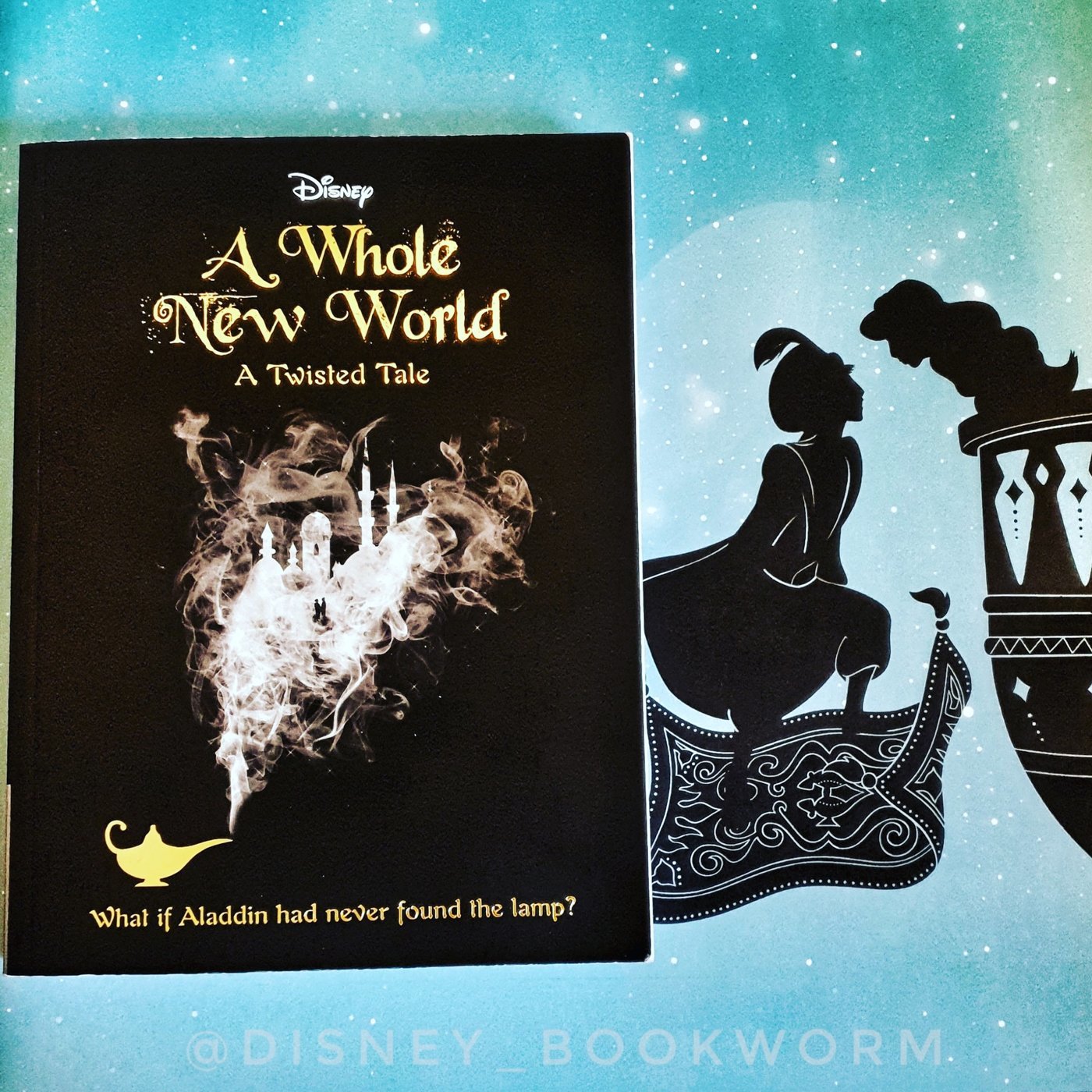
Lottie disney bookworm (1056 KP) rated As Old As Time in Books
Aug 16, 2019

Review by Disney Bookworm
I’m going to come right out and say (although you will probably be able to tell if you make it to the end of this blog) that this is, so far, my favourite book in the twisted tale series. Seriously, this is the second time I have read it and I loved it just as much as the first time. I got just as engrossed in the story and I seriously think Liz Braswell and I could be best friends!
As Old As Time is the retelling of Beauty and the Beast and opens with the familiar story of the enchantress and the young, vain prince that we all know. You can probably still picture the stained-glass scene from the original 1991 movie and the dramatic ballroom scene in the 2017 remake.
Refusing to be eclipsed by these though, Braswell follows the well-known tale with: “It was a very good story. It often entertained the woman who lay in her black hole of a room, manacled to a hard, cold bed.”
Wait! What?
There, with one fell swoop, on the second page, Braswell brings an almost gothic darkness to the fairy tale. Of course, some would say it is already dark: very few people who are cursed to become a beast are particularly jolly about the situation! However, Braswell goes one step further by both revealing the story behind the enchantress and taking us on a journey to discover the ugly truth in the present.
Liz Braswell creates a kingdom where magic and non-magic people have lived together peacefully for years but where politics and a lack of cultural understanding is threatening to tear that apart as les charmantes find themselves persecuted by les naturels. (I can’t imagine where she draws her inspiration from(!))
It is in this kingdom that we meet a young dreamer called Maurice and the enchantress Rosalind, Belle’s mother (nicknamed Rose- so clever!). Maurice is very much a younger version of the character we grew up with: loveable and devoted to his inventions. Rosalind however is much more headstrong and impulsive: even changing her appearance on a whim. Her pride is fierce and we first meet her holding her own against a large man insulting ‘her kind’, calling her unnatural and a child of the devil. The bully soon learns the error of his ways when his nose is replaced by a pig’s snout but a warning runs all the way through this tale: “magic always comes back on itself”.
Maurice and Rosalind’s life is happy and settled at first but they soon start to witness the persecution of les charmantes for themselves. Thus, when the King and Queen call on Rosalind to protect them against the advancing plague, she passionately fights for her people…only to be rejected and turned away. Maurice, always the voice of reason, convinces Rosalind to at least protect the children and servants and so it comes to pass that Rosalind later visits the young prince, on the eve of his coronation, carrying with her the simple gift of a rose.
Braswell’s character development is, as always, impressive. Belle is immediately relatable as the kooky bookworm we know and love: her story running parallel to the film until we, as readers, develop a relationship with her parents. It is then that we discover there is a slight edge to Belle. Although clearly tortured by the fact her mother cursed a 10-year-old boy, Braswell’s Belle is desperate to be adventurous and heroic like the characters in her books but soon realises an adventure is not all it is cracked up to be. Like her mother, Belle can be quite impulsive: grabbing the enchanted rose before the beast can stop her and destroying any chance of breaking the spell. However, she is also quick and cunning, tricking the wardrobe into revealing the curse’s timeline. Nevertheless, the bravery of our protagonist can never be doubted and Belle embarks on one hell of a journey to discover the truth about her family and herself.
Uniquely, within As Old As Time we slowly see side-line characters weave their way into the lives and stories of our characters. Levi and Alaric, for example, are old friends of Maurice and Rosalind and are seemingly insignificant to the story at first. However, Levi is also the godfather to Belle and the village bookseller (“If you like it that much, it’s yours!” – that guy). Alaric on the other hand has a significant link to the castle and both carry clues with them that assist Belle on her quest.
Any Beauty and the Beast tale would not be complete without LeFou and Gaston – that infamous double act- but even Gaston is ever so slightly darker than his animated counterpart. Frederic: another friend from the past and, quite frankly, odd from the start also plays a pivotal role in the story but I won’t spoil the surprise for you!
As Old As Time is true to its name: weaving two stories into its plot at different points in time: the story that we all know and the story of how that came to be. It is an ominous tale with curses, murder, creepy ivy statues and a frankly terrifying tour of the lunatic asylum.
It is not all doom and gloom however; Liz Braswell takes a very tongue-in-cheek attitude towards the infamous scenes within Beauty and the Beast: invoking a dry sense of humour into the story. From a chapter named “Be Our … Oh You Know the Rest” to a direct reference to Stockholm Syndrome: Braswell makes sure that we do not expect her novel to be a copycat, heartfelt tale with a happy ending. Belle even remarks to the Beast that hoping she would fall in love with him within a month or so was wildly unrealistic.
This is very much a novel for the cynical Disney lovers amongst us and highly deserving of its title of a twisted tale!
As Old As Time is the retelling of Beauty and the Beast and opens with the familiar story of the enchantress and the young, vain prince that we all know. You can probably still picture the stained-glass scene from the original 1991 movie and the dramatic ballroom scene in the 2017 remake.
Refusing to be eclipsed by these though, Braswell follows the well-known tale with: “It was a very good story. It often entertained the woman who lay in her black hole of a room, manacled to a hard, cold bed.”
Wait! What?
There, with one fell swoop, on the second page, Braswell brings an almost gothic darkness to the fairy tale. Of course, some would say it is already dark: very few people who are cursed to become a beast are particularly jolly about the situation! However, Braswell goes one step further by both revealing the story behind the enchantress and taking us on a journey to discover the ugly truth in the present.
Liz Braswell creates a kingdom where magic and non-magic people have lived together peacefully for years but where politics and a lack of cultural understanding is threatening to tear that apart as les charmantes find themselves persecuted by les naturels. (I can’t imagine where she draws her inspiration from(!))
It is in this kingdom that we meet a young dreamer called Maurice and the enchantress Rosalind, Belle’s mother (nicknamed Rose- so clever!). Maurice is very much a younger version of the character we grew up with: loveable and devoted to his inventions. Rosalind however is much more headstrong and impulsive: even changing her appearance on a whim. Her pride is fierce and we first meet her holding her own against a large man insulting ‘her kind’, calling her unnatural and a child of the devil. The bully soon learns the error of his ways when his nose is replaced by a pig’s snout but a warning runs all the way through this tale: “magic always comes back on itself”.
Maurice and Rosalind’s life is happy and settled at first but they soon start to witness the persecution of les charmantes for themselves. Thus, when the King and Queen call on Rosalind to protect them against the advancing plague, she passionately fights for her people…only to be rejected and turned away. Maurice, always the voice of reason, convinces Rosalind to at least protect the children and servants and so it comes to pass that Rosalind later visits the young prince, on the eve of his coronation, carrying with her the simple gift of a rose.
Braswell’s character development is, as always, impressive. Belle is immediately relatable as the kooky bookworm we know and love: her story running parallel to the film until we, as readers, develop a relationship with her parents. It is then that we discover there is a slight edge to Belle. Although clearly tortured by the fact her mother cursed a 10-year-old boy, Braswell’s Belle is desperate to be adventurous and heroic like the characters in her books but soon realises an adventure is not all it is cracked up to be. Like her mother, Belle can be quite impulsive: grabbing the enchanted rose before the beast can stop her and destroying any chance of breaking the spell. However, she is also quick and cunning, tricking the wardrobe into revealing the curse’s timeline. Nevertheless, the bravery of our protagonist can never be doubted and Belle embarks on one hell of a journey to discover the truth about her family and herself.
Uniquely, within As Old As Time we slowly see side-line characters weave their way into the lives and stories of our characters. Levi and Alaric, for example, are old friends of Maurice and Rosalind and are seemingly insignificant to the story at first. However, Levi is also the godfather to Belle and the village bookseller (“If you like it that much, it’s yours!” – that guy). Alaric on the other hand has a significant link to the castle and both carry clues with them that assist Belle on her quest.
Any Beauty and the Beast tale would not be complete without LeFou and Gaston – that infamous double act- but even Gaston is ever so slightly darker than his animated counterpart. Frederic: another friend from the past and, quite frankly, odd from the start also plays a pivotal role in the story but I won’t spoil the surprise for you!
As Old As Time is true to its name: weaving two stories into its plot at different points in time: the story that we all know and the story of how that came to be. It is an ominous tale with curses, murder, creepy ivy statues and a frankly terrifying tour of the lunatic asylum.
It is not all doom and gloom however; Liz Braswell takes a very tongue-in-cheek attitude towards the infamous scenes within Beauty and the Beast: invoking a dry sense of humour into the story. From a chapter named “Be Our … Oh You Know the Rest” to a direct reference to Stockholm Syndrome: Braswell makes sure that we do not expect her novel to be a copycat, heartfelt tale with a happy ending. Belle even remarks to the Beast that hoping she would fall in love with him within a month or so was wildly unrealistic.
This is very much a novel for the cynical Disney lovers amongst us and highly deserving of its title of a twisted tale!
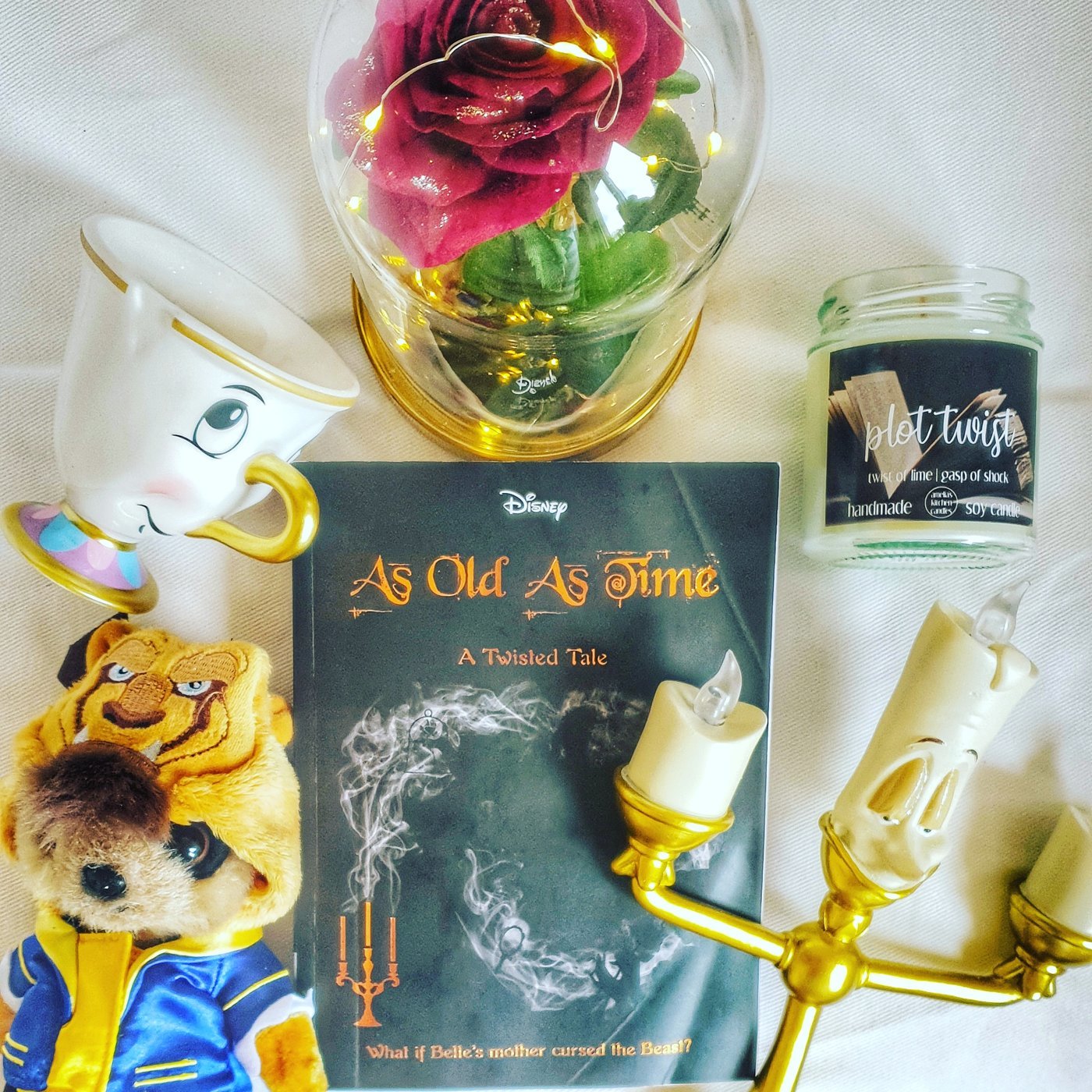
Purple Phoenix Games (2266 KP) rated Terror in Meeple City in Tabletop Games
Aug 6, 2019 (Updated Sep 23, 2021)
I don’t know about you, but one of my guilty pleasures is monster movies. Godzilla, King Kong, even the Jurassic Park franchise – if there are giant creatures terrorizing the world, chances are I’m going to love it. So when I heard of Terror in Meeple City (formerly known as Rampage, RIP), I knew I had to give it a try. Is the chance to embody one of these great monsters and wreak havoc on an innocent city as exciting as it seems? Or will your lack of dexterous ability result in a rampage? (See what I did there?)
Terror in Meeple City is a dexterity game of area movement and set collection in which players are trying to amass the most end-game Victory Points by devouring meeples, collecting building tiles, teeth, and by successfully completing their Character cards. To begin, setup the board as described in the rulebook, constructing buildings and placing meeples and vehicles accordingly. Each player receives a screen, Body (monster), and Paws (disc) in their chosen color, placing the Paws on the starting area closest to them. Players receive 4 Teeth tokens and are dealt a Character card, Power card, and Secret Superpower card. The Character and Power cards are visible to all players, and are permanent throughout the game – providing special abilities or scoring conditions for the end of the game. The Secret Superpower card is secret (duh) and revealed only when you are ready to use it – it is a one-time use in the game, and then discarded. Select a starting player, and the game is ready to begin!
On your turn, you will perform 2 of the following actions: Move, Demolish, Toss a Vehicle, or Breathe. You can perform the same action twice on your turn if you want! To Move, you will first take the Body of your monster off of the Paws disc. Using your finger, you will flick the Paws disc on the board, hopefully to end up where you wanted it! After a successful flick, put your Body back on the Paws. To Demolish, your Paws must be touching the sidewalk surrounding one of the buildings in the city. If that is the case, you can try to demolish that building – by picking up your Body, holding it over the appropriate building, and dropping it! In order to Toss a Vehicle, your monster must be located in the same neighborhood (area of the board) as a vehicle. Pick up the chosen vehicle, place it on top of your monster, and flick it! And finally, you can Breathe – place your chin on top of your monster, inhale, and then blow as hard as you can. While performing these actions, there may be some collateral damage, that could be beneficial or detrimental to you! If you knock down another monster on your turn, collect one of their Teeth and put it behind your screen. If after your action, there is a building tile with nothing on it (meeples, monsters, etc.) then you collect that tile behind your screen as well.
Once you have taken your 2 actions, it is time to Chow Down – eat as many accessible meeples in your same neighborhood as you have Teeth tokens left. Devoured meeples go into your stomach (behind the player screen). If at any point during your turn, any meeples end up fleeing the city (knocked off the board), they will be added, in order, to the Runaway Meeple board. Once a line on this board is filled, the active player suffers the negative consequence – so be careful not to scare off too many yummy meeple morsels! The game continues in this fashion until it ends in one of two ways. Either the last building tile is collected, everyone takes one last turn, and then VP are tallied. Or the final line of the Runaway Meeple board is filled, causing the player who filled it to lose, while everyone else counts up their VP. VP are earned for any Teeth collected, building tiles consumed, sets of meeples devoured, and any points earned from your Character card. The player with the most VP is the winner and is the greatest monster of the game!
So I know that sounds kind of chaotic – and at times it can be. But it is a light-hearted and silly game that engages all involved. The simplicity of the mechanics (flicking/blowing) are countered by the strategy required for success. Yes, by all means, go on a crazy rampage – but the goal is end-game VP, so how can you use all these moving components to your advantage? The strategy is there, with enough luck/randomness from a dexterity stand-point that it keeps the gameplay interesting. And it is just plain fun to play! Getting up to move around the board for a better angle, knocking over opponents accidentally (or on purpose!), and sending components flying across the board makes for an entertaining and engaging game. That being said, unless you are incredibly dextrous and can perfectly execute your desired actions, be prepared for some frustration when you whiff big on a flick.
Let’s talk components for a minute. They are pretty good in this game! The board and cardboard building tiles are all pretty sturdy, which is really necessary in a game where the components can take quite a beating. The wooden meeples and monster parts are thick and high quality as well! I take great pride in keeping my games in good condition, and even this one has withstood the test of time and plays. So, good production quality all around, if you ask me!
Is Terror in Meeple City my favorite game? No. But it’s one that I’m glad to have in my collection. It works well in so many situations – a gateway game, a light-hearted filler game, a game to get everyone up and moving, and a game that can be played with younger gamers as well. Although it’s not really a brain-burner or a game of high-level strategy, it’s one that still makes for a good time. Purple Phoenix Games gives it a 7 / 12. Give it a try if you’re itching to smash some stuff!
Terror in Meeple City is a dexterity game of area movement and set collection in which players are trying to amass the most end-game Victory Points by devouring meeples, collecting building tiles, teeth, and by successfully completing their Character cards. To begin, setup the board as described in the rulebook, constructing buildings and placing meeples and vehicles accordingly. Each player receives a screen, Body (monster), and Paws (disc) in their chosen color, placing the Paws on the starting area closest to them. Players receive 4 Teeth tokens and are dealt a Character card, Power card, and Secret Superpower card. The Character and Power cards are visible to all players, and are permanent throughout the game – providing special abilities or scoring conditions for the end of the game. The Secret Superpower card is secret (duh) and revealed only when you are ready to use it – it is a one-time use in the game, and then discarded. Select a starting player, and the game is ready to begin!
On your turn, you will perform 2 of the following actions: Move, Demolish, Toss a Vehicle, or Breathe. You can perform the same action twice on your turn if you want! To Move, you will first take the Body of your monster off of the Paws disc. Using your finger, you will flick the Paws disc on the board, hopefully to end up where you wanted it! After a successful flick, put your Body back on the Paws. To Demolish, your Paws must be touching the sidewalk surrounding one of the buildings in the city. If that is the case, you can try to demolish that building – by picking up your Body, holding it over the appropriate building, and dropping it! In order to Toss a Vehicle, your monster must be located in the same neighborhood (area of the board) as a vehicle. Pick up the chosen vehicle, place it on top of your monster, and flick it! And finally, you can Breathe – place your chin on top of your monster, inhale, and then blow as hard as you can. While performing these actions, there may be some collateral damage, that could be beneficial or detrimental to you! If you knock down another monster on your turn, collect one of their Teeth and put it behind your screen. If after your action, there is a building tile with nothing on it (meeples, monsters, etc.) then you collect that tile behind your screen as well.
Once you have taken your 2 actions, it is time to Chow Down – eat as many accessible meeples in your same neighborhood as you have Teeth tokens left. Devoured meeples go into your stomach (behind the player screen). If at any point during your turn, any meeples end up fleeing the city (knocked off the board), they will be added, in order, to the Runaway Meeple board. Once a line on this board is filled, the active player suffers the negative consequence – so be careful not to scare off too many yummy meeple morsels! The game continues in this fashion until it ends in one of two ways. Either the last building tile is collected, everyone takes one last turn, and then VP are tallied. Or the final line of the Runaway Meeple board is filled, causing the player who filled it to lose, while everyone else counts up their VP. VP are earned for any Teeth collected, building tiles consumed, sets of meeples devoured, and any points earned from your Character card. The player with the most VP is the winner and is the greatest monster of the game!
So I know that sounds kind of chaotic – and at times it can be. But it is a light-hearted and silly game that engages all involved. The simplicity of the mechanics (flicking/blowing) are countered by the strategy required for success. Yes, by all means, go on a crazy rampage – but the goal is end-game VP, so how can you use all these moving components to your advantage? The strategy is there, with enough luck/randomness from a dexterity stand-point that it keeps the gameplay interesting. And it is just plain fun to play! Getting up to move around the board for a better angle, knocking over opponents accidentally (or on purpose!), and sending components flying across the board makes for an entertaining and engaging game. That being said, unless you are incredibly dextrous and can perfectly execute your desired actions, be prepared for some frustration when you whiff big on a flick.
Let’s talk components for a minute. They are pretty good in this game! The board and cardboard building tiles are all pretty sturdy, which is really necessary in a game where the components can take quite a beating. The wooden meeples and monster parts are thick and high quality as well! I take great pride in keeping my games in good condition, and even this one has withstood the test of time and plays. So, good production quality all around, if you ask me!
Is Terror in Meeple City my favorite game? No. But it’s one that I’m glad to have in my collection. It works well in so many situations – a gateway game, a light-hearted filler game, a game to get everyone up and moving, and a game that can be played with younger gamers as well. Although it’s not really a brain-burner or a game of high-level strategy, it’s one that still makes for a good time. Purple Phoenix Games gives it a 7 / 12. Give it a try if you’re itching to smash some stuff!
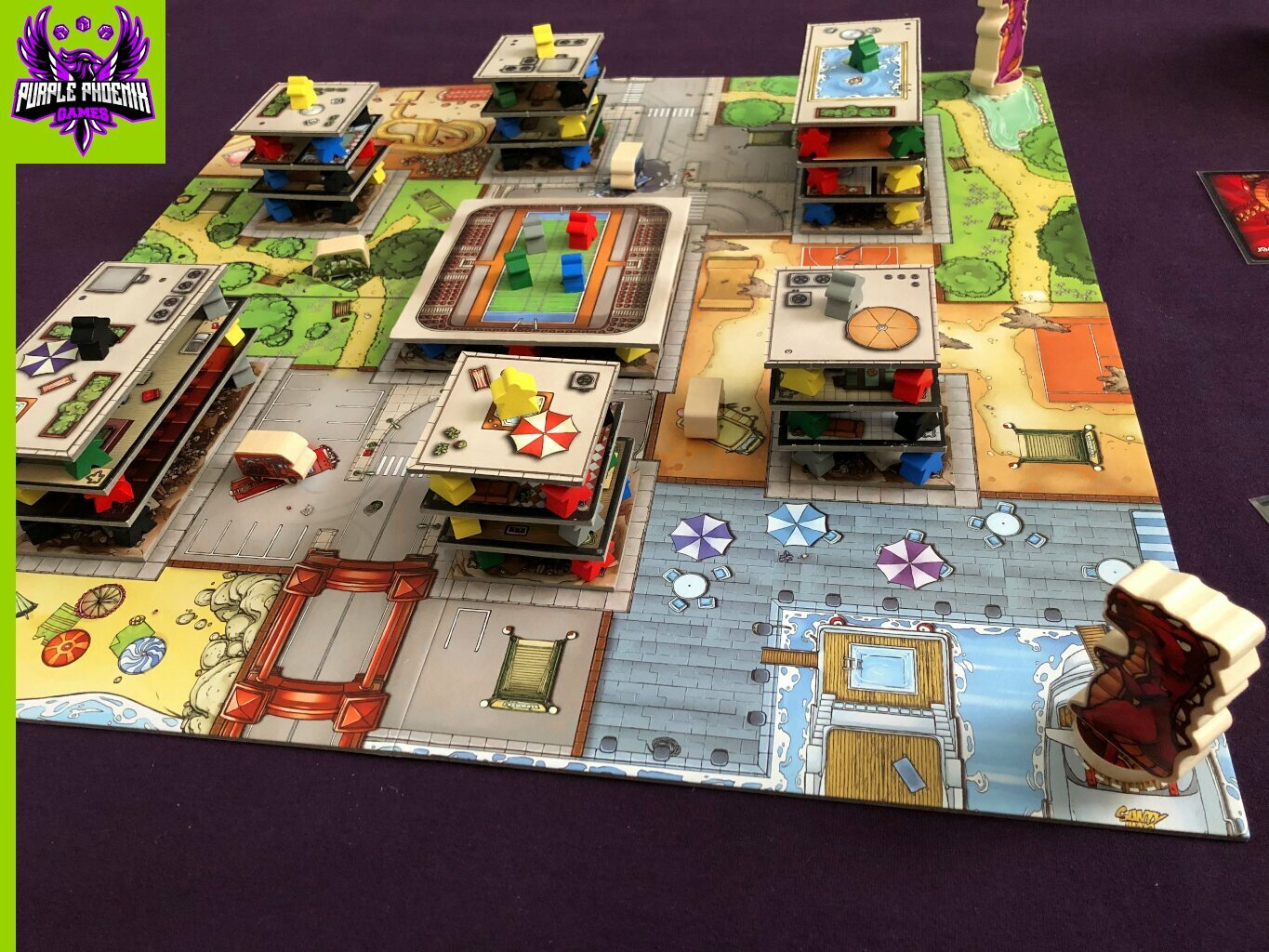
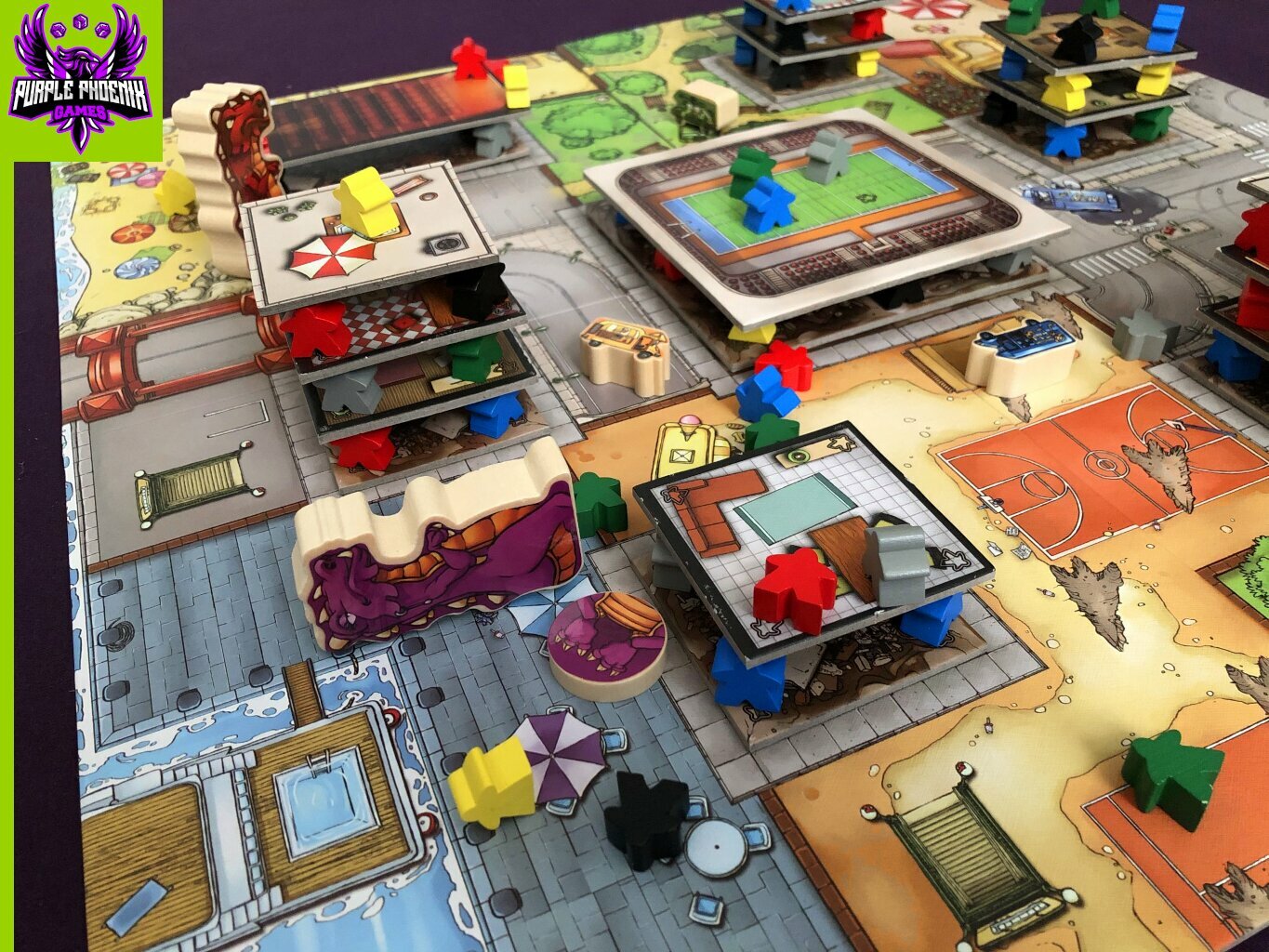
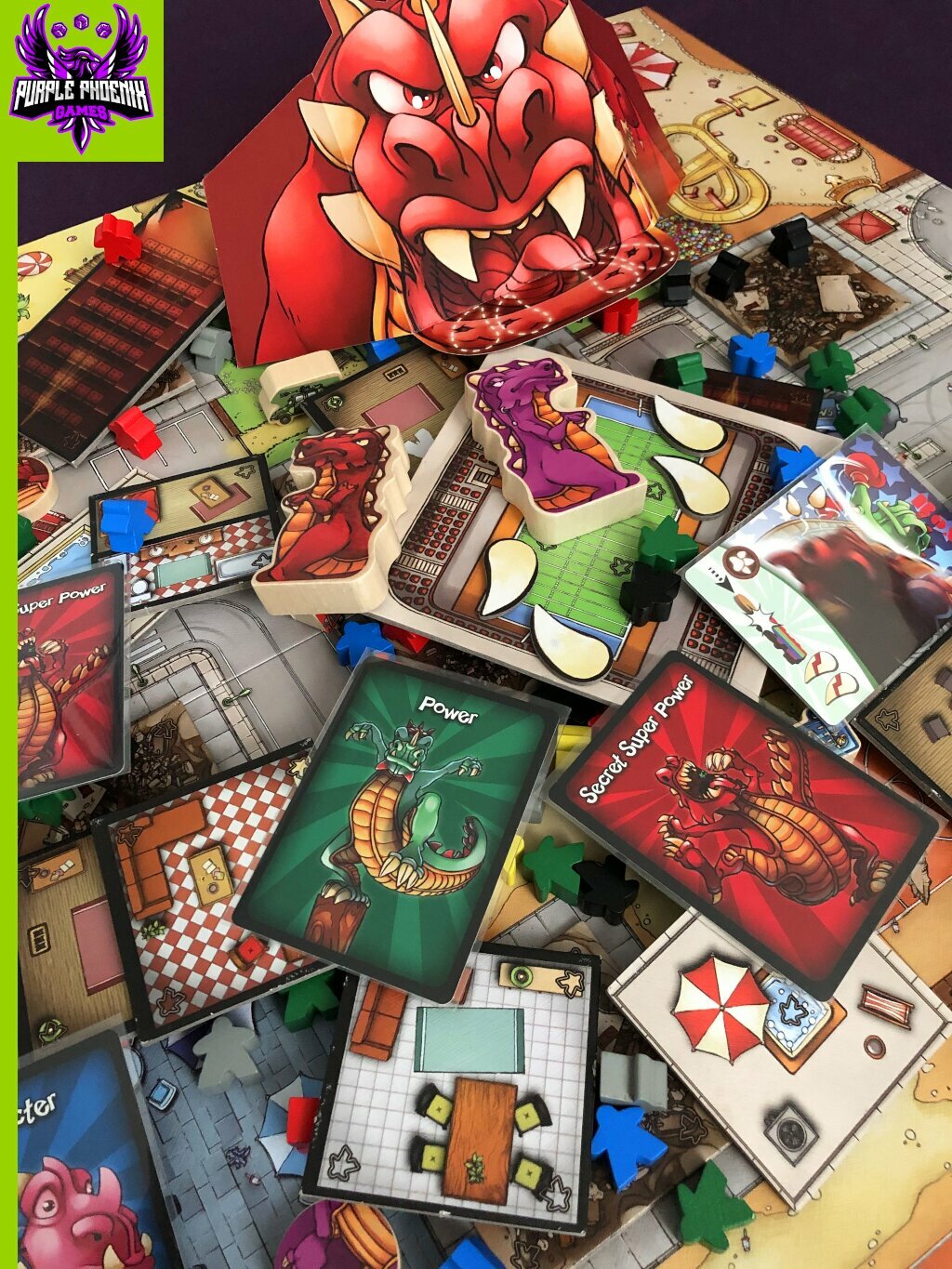
Lottie disney bookworm (1056 KP) rated A Whole New World in Books
Aug 16, 2019
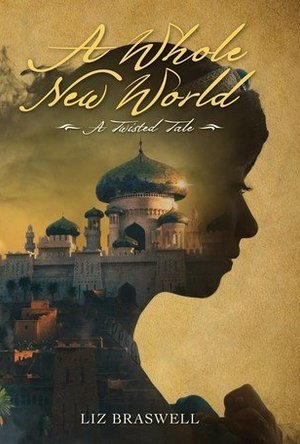
Review by Disney Bookworm
“What if Aladdin had never found the lamp?”
OK so I am going to start off this review with a really pedantic comment and I know I am being petty and that this will almost definitely end in a rant but… he does find the lamp! Of course he does! Aladdin is the diamond in the rough! He is literally the only one who can find the lamp. If he didn’t find the lamp nothing would happen: Jasmine would probably grow old with her tiger; Jafar would carry on hypnotising the Sultan; Aladdin would probably wind up arrested and this would be the shortest twisted tale in history.
*Ahem*
So, Aladdin finds the lamp. Let’s move past it, because if you have read my other reviews, you will know I love Liz Braswell: her twisted tales always wind up being my favourites as she always brings something completely unexpected to the novels. In the circumstances, I can forgive the tagline.
This review of “A Whole New World” comes at a time where Aladdin is everywhere: the live action movie was released in the UK just over a month ago and, I for one, loved it! With this in mind, I just had to re-read this twisted tale and shout about the wholly different Agrabah that it presents to the reader.
Braswell’s Agrabah is a raw, dirty, troubled cousin of the Agrabah we all know and love. I struggle to comprehend exactly how the movies did it, because both showed starving children, but we found ourselves simultaneously accepting and glossing over the poverty of the street rats. We have no such option in “A Whole New World”.
From starving infants; old men shovelling camel dung for coins; to Aladdin’s own mother dying of a wasting disease: this novel takes no prisoners in the Quarter of the Street Rats. However, those in the Palace remain blind to the struggles of the poor, with the Sultan playing with his golden toys whilst some of his citizens have no food or clean water.
The plight of the Agrabah people creates an undercurrent of resentment that runs all the way through Aladdin and Jasmine’s story. It is also a clear indicator of the identity of this novel: Braswell has taken all the romanticism of the familiar story and buried it in her own cave of wonders, leaving behind a highly political but incredibly powerful story.
The twisted tale starts off on a similar vein to both movies, boy meets girl, boy rescues girl from hand severing businessman, boy winds up arrested and transported to a creepy cave where he finds an old lamp, boy’s monkey can’t keep his hands to himself and boy is left clinging on for his life at the entrance to said creepy cave. However, in this version, when Jafar steps on Aladdin’s fingers to prevent his escape, Abu doesn’t grab the lamp! How will Aladdin escape now?
As is to be expected from Braswell’s novels, the characters are phenomenal. Aladdin is the proud, eternal optimist that we recognise but with a strong ethical viewpoint that is introduced by the inclusion of his mother as a character.
Creating a new character, particularly Aladdin’s mother, could simply be a tactic to give some history to the charming thief. However, Braswell uses the matriarch to add depth to Aladdin: she tells him “don’t let how poor you are, decide who you are…you can choose to be something more”.
This is ultimately the lesson the genie would teach Aladdin if they were to meet and so I think it is very clever of Braswell to keep this element of Aladdin’s character. It allows us to witness Aladdin’s pride and strength through these instilled virtues: he has even lost friends over his views of when he considers it acceptable to be a thief.
Although I wouldn’t consider the genie a main character in this tale (he doesn’t get as much airtime as in the films): he remains a funny and flippant sidekick for the most part. However, in keeping with the tone of “A Whole New World”, he does use this humour to provoke our thoughts. The genie and Braswell divulge that there was once a whole race of djinn who have since died out. The genie has lost his home, his wife and his freedom and so, he rightly asks, who would stay sane under those conditions?
Jafar; Mr dark and twisty himself, is a whole other level of evil in this twisted tale. He does present some of the characteristics of the movie villain: power mad, desperate for everyone to love him and all that jazz; however, he also tortures the genie and plans to break the laws of magic in order to create an army of the dead. It’s all very game of thrones all of a sudden!
I know what you’re thinking: what about Jasmine? Surely, she isn’t all dark and twisty as well? The girl looks good in turquoise baggy trousers for goodness sakes!
Jasmine begins her journey as the typical naïve, sheltered princess she is always portrayed as: possessing no knowledge of the price of food or the struggles of her own people. However, Braswell manages to make even the live-action Jasmine appear over-dramatic and petty: she isn’t resisting marriage just because she doesn’t fancy random foreign prince number 3; she is resisting becoming a “baby making machine” and signing herself up to an early grave.
“A princess among men”, Jasmine and the reader soon realise that she has to step forward and become the hero of this tale. This is no small ask for someone who has never led an army or witnessed death before. Nonetheless, Jasmine is clearly up to the task: this is no weak princess trapped in an hourglass of sand, waiting to be rescued by a man. This is a Sultana!
The story of Aladdin typically conjures up images of love, magic carpets and romantic duets. Liz Braswell’s story of Agrabah does orbit around love, how could it not? However, “A Whole New World” explores the shades of grey in life: Street rats are not always bad, Princesses are not always good and magic is not always the solution. This is not a tale of love; it is a tale of finding strength in unlikely places; it is a tale that teaches us you don’t need magic to have a happy ending.
OK so I am going to start off this review with a really pedantic comment and I know I am being petty and that this will almost definitely end in a rant but… he does find the lamp! Of course he does! Aladdin is the diamond in the rough! He is literally the only one who can find the lamp. If he didn’t find the lamp nothing would happen: Jasmine would probably grow old with her tiger; Jafar would carry on hypnotising the Sultan; Aladdin would probably wind up arrested and this would be the shortest twisted tale in history.
*Ahem*
So, Aladdin finds the lamp. Let’s move past it, because if you have read my other reviews, you will know I love Liz Braswell: her twisted tales always wind up being my favourites as she always brings something completely unexpected to the novels. In the circumstances, I can forgive the tagline.
This review of “A Whole New World” comes at a time where Aladdin is everywhere: the live action movie was released in the UK just over a month ago and, I for one, loved it! With this in mind, I just had to re-read this twisted tale and shout about the wholly different Agrabah that it presents to the reader.
Braswell’s Agrabah is a raw, dirty, troubled cousin of the Agrabah we all know and love. I struggle to comprehend exactly how the movies did it, because both showed starving children, but we found ourselves simultaneously accepting and glossing over the poverty of the street rats. We have no such option in “A Whole New World”.
From starving infants; old men shovelling camel dung for coins; to Aladdin’s own mother dying of a wasting disease: this novel takes no prisoners in the Quarter of the Street Rats. However, those in the Palace remain blind to the struggles of the poor, with the Sultan playing with his golden toys whilst some of his citizens have no food or clean water.
The plight of the Agrabah people creates an undercurrent of resentment that runs all the way through Aladdin and Jasmine’s story. It is also a clear indicator of the identity of this novel: Braswell has taken all the romanticism of the familiar story and buried it in her own cave of wonders, leaving behind a highly political but incredibly powerful story.
The twisted tale starts off on a similar vein to both movies, boy meets girl, boy rescues girl from hand severing businessman, boy winds up arrested and transported to a creepy cave where he finds an old lamp, boy’s monkey can’t keep his hands to himself and boy is left clinging on for his life at the entrance to said creepy cave. However, in this version, when Jafar steps on Aladdin’s fingers to prevent his escape, Abu doesn’t grab the lamp! How will Aladdin escape now?
As is to be expected from Braswell’s novels, the characters are phenomenal. Aladdin is the proud, eternal optimist that we recognise but with a strong ethical viewpoint that is introduced by the inclusion of his mother as a character.
Creating a new character, particularly Aladdin’s mother, could simply be a tactic to give some history to the charming thief. However, Braswell uses the matriarch to add depth to Aladdin: she tells him “don’t let how poor you are, decide who you are…you can choose to be something more”.
This is ultimately the lesson the genie would teach Aladdin if they were to meet and so I think it is very clever of Braswell to keep this element of Aladdin’s character. It allows us to witness Aladdin’s pride and strength through these instilled virtues: he has even lost friends over his views of when he considers it acceptable to be a thief.
Although I wouldn’t consider the genie a main character in this tale (he doesn’t get as much airtime as in the films): he remains a funny and flippant sidekick for the most part. However, in keeping with the tone of “A Whole New World”, he does use this humour to provoke our thoughts. The genie and Braswell divulge that there was once a whole race of djinn who have since died out. The genie has lost his home, his wife and his freedom and so, he rightly asks, who would stay sane under those conditions?
Jafar; Mr dark and twisty himself, is a whole other level of evil in this twisted tale. He does present some of the characteristics of the movie villain: power mad, desperate for everyone to love him and all that jazz; however, he also tortures the genie and plans to break the laws of magic in order to create an army of the dead. It’s all very game of thrones all of a sudden!
I know what you’re thinking: what about Jasmine? Surely, she isn’t all dark and twisty as well? The girl looks good in turquoise baggy trousers for goodness sakes!
Jasmine begins her journey as the typical naïve, sheltered princess she is always portrayed as: possessing no knowledge of the price of food or the struggles of her own people. However, Braswell manages to make even the live-action Jasmine appear over-dramatic and petty: she isn’t resisting marriage just because she doesn’t fancy random foreign prince number 3; she is resisting becoming a “baby making machine” and signing herself up to an early grave.
“A princess among men”, Jasmine and the reader soon realise that she has to step forward and become the hero of this tale. This is no small ask for someone who has never led an army or witnessed death before. Nonetheless, Jasmine is clearly up to the task: this is no weak princess trapped in an hourglass of sand, waiting to be rescued by a man. This is a Sultana!
The story of Aladdin typically conjures up images of love, magic carpets and romantic duets. Liz Braswell’s story of Agrabah does orbit around love, how could it not? However, “A Whole New World” explores the shades of grey in life: Street rats are not always bad, Princesses are not always good and magic is not always the solution. This is not a tale of love; it is a tale of finding strength in unlikely places; it is a tale that teaches us you don’t need magic to have a happy ending.