
Search

Charlie Cobra Reviews (1840 KP) rated The Kitchen (2019) in Movies
Jul 7, 2020
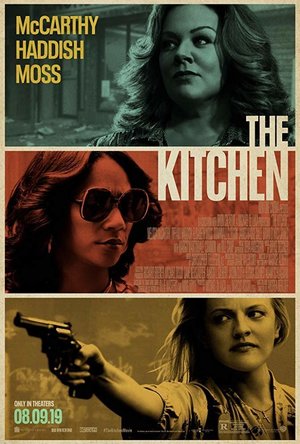

A Very Messy Kitchen: Good Ingredients But No Flavor
The Kitchen is a 2019 action crime movie written and directed by Andrea Berloff and producers Michael Dell Luca and Marcus Viscidi. It's based on the Vertigo comic created by Ollie Masters and Ming Doyle and produced by New Line Cinema, Bron Creative, D.C. Vertigo and Michael Dell Luca Productions with distribution by Warner Bros. Pictures. The film stars Melissa McCarthy, Tiffany Haddish, Elisabeth Moss and Common.
In 1978 Hell's Kitchen, 3 women married to husbands in the Irish mob face hardship as all 3 of their husbands are arrested and sentenced to 3 years in prison. The new head of the mob ensures that they will be taken care of financially but gives them each a tiny pittance. When they go to ask him for more they are aggressively refused. At a loss for what to do next the women seize an opportunity when they are told that despite local businesses paying protection fees, the mob has done little to help them. They themselves begin collecting protection fees and helping the neighborhood becoming beloved and making a huge profit as well as lots of enemies.
This movie was not what I expected. I was really let down, especially for it having a great cast of actors. I don't think it was over hyped either, I felt like it was false advertising. From the trailer it looked like it was supposed to be a gritty female led mob movie but didn't deliver. From the beginning and throughout the movie it felt really lackluster and didn't have enough going for it to remain interesting. I honestly don't know how I made it through the movie, I guess I just kept waiting for it to get better and it never really did. I did like certain things, Melissa McCarthy's acting was good for being a drama and Tiffany Haddish did a decent job, also Elisabeth Moss's character was probably the one that had the most character development, but even then, you'll see what I'm talking about if you ever decide to watch this movie. It also didn't have a very compelling plot, and with the girl's situation and what they were dealing with, you would think it would be more gripping but there was not enough tension for a movie dealing with the mob and the dangers of being killed. I would have to give this movie a 4/10 because I felt it was really below average.
In 1978 Hell's Kitchen, 3 women married to husbands in the Irish mob face hardship as all 3 of their husbands are arrested and sentenced to 3 years in prison. The new head of the mob ensures that they will be taken care of financially but gives them each a tiny pittance. When they go to ask him for more they are aggressively refused. At a loss for what to do next the women seize an opportunity when they are told that despite local businesses paying protection fees, the mob has done little to help them. They themselves begin collecting protection fees and helping the neighborhood becoming beloved and making a huge profit as well as lots of enemies.
This movie was not what I expected. I was really let down, especially for it having a great cast of actors. I don't think it was over hyped either, I felt like it was false advertising. From the trailer it looked like it was supposed to be a gritty female led mob movie but didn't deliver. From the beginning and throughout the movie it felt really lackluster and didn't have enough going for it to remain interesting. I honestly don't know how I made it through the movie, I guess I just kept waiting for it to get better and it never really did. I did like certain things, Melissa McCarthy's acting was good for being a drama and Tiffany Haddish did a decent job, also Elisabeth Moss's character was probably the one that had the most character development, but even then, you'll see what I'm talking about if you ever decide to watch this movie. It also didn't have a very compelling plot, and with the girl's situation and what they were dealing with, you would think it would be more gripping but there was not enough tension for a movie dealing with the mob and the dangers of being killed. I would have to give this movie a 4/10 because I felt it was really below average.
The Deep Dark: Disaster and Redemption
6.0 Rate It
Book
The Deep Dark: Disaster and Redemption in America's Richest Silver Mine For nearly a century,...

Matthew Krueger (10051 KP) rated A Nightmare on Elm Street (1984) in Movies
Jul 3, 2020
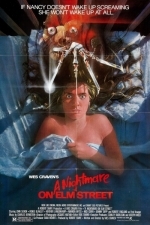


Introduce a horror icon (3 more)
Robert Englund
Freddy
Wes Craven
Whatever you do, don’t fall asleep!
Contains spoilers, click to show
A Nightmare on Elm Street- is one of my all time favorite horror films. Its also one of the greatest horror movies of all time. That being said, the ending sucks and i will get to that, but first lets talk more about the film.
I just love the idea of someone who appears in your dreams. Someone who stalks you, someone who messes with you, someone who kills you in your dreams. Now Wes got the idea from several newspaper articles printed in the Los Angeles Times in the 1970s about Southeast Asian refugees, who, after fleeing to the United States because of war and genocide in Laos, Cambodia, and Vietnam, suffered disturbing nightmares and refused to sleep. Some of the men died in their sleep soon after and some of his own childhood nightmares.
The idea of Freddy was Craven's early life. One night, a young Craven saw an elderly man walking on the sidepath outside the window of his home. The man stopped to glance at a startled Craven and walked off. Now Initially, Fred Krueger was intended to be a child molester, but Craven eventually characterized him as a child murderer to avoid being accused of exploiting a spate of highly publicized child molestation cases that occurred in California around the time of production of the film. This idea happened in the 2010 remake.
Lets talk about the plot: In Wes Craven's classic slasher film, several Midwestern teenagers fall prey to Freddy Krueger (Robert Englund), a disfigured midnight mangler who preys on the teenagers in their dreams -- which, in turn, kills them in reality. After investigating the phenomenon, Nancy (Heather Langenkamp) begins to suspect that a dark secret kept by her and her friends' parents may be the key to unraveling the mystery, but can Nancy and her boyfriend Glen (Johnny Depp) solve the puzzle before it's too late?
The plot/story is excellent, the mystery surrounded of Krueger. Who he exactly is, why is he do this, what made him do this, how do the parnets know about Krueger? All of these questions and more your trying to figure out and the movie does a excellent job explaining them.
The deaths: the death scenes are excellent. Tina revolving around her room, Rod's bed sheets wrapping around him while he is in a prison cell and dies hanging and Glen getting pulled through his bed and then his blood gushes to the ceiling. Excellent deaths and memorable.
The Ending: Craven originally planned for the film to have a more evocative ending: Nancy kills Krueger by ceasing to believe in him, then awakens to discover that everything that happened in the film was an elongated nightmare. However, New Line leader Robert Shaye demanded a twist ending, in which Krueger disappears and all seems to have been a dream, only for the audience to discover that it was a dream-within-a-dream-within-a-dream.
According to Craven, "The original ending of the script has Nancy come out the door. It's an unusually cloudy and foggy day. A car pulls up with her dead friends in it. She's startled. She goes out and gets in the car wondering what the hell is going on, and they drive off into the fog, with the mother left standing on the doorstep and that's it. It was very brief, and suggestive that maybe life is sort of dream-like too. Shaye wanted Freddy Krueger to be driving the car, and have the kids screaming. It all became very negative. I felt a philosophical tension to my ending. Shaye said, "That's so 60s, it's stupid." I refused to have Freddy in the driver's seat, and we thought up about five different endings. The one we used, with Freddy pulling the mother through the doorway amused us all so much, we couldn't not use it."
Heather Langenkamp states that "there always was this sense that Freddy was the car", while according to Sara Risher, "it was always Wes' idea to pan to the little girls' jumping rope". Both a happy ending and a twist ending were filmed, but the final film used the twist ending. As a result, Craven who never wanted the film to be an ongoing franchise, did not work on the first sequel, Freddy's Revenge (1985).
Also Nancy's mom getting pulles through the window door was wierd and you can tell it was a blow up doll.
The Music: The lyrics for Freddy's theme song, sung by the jumprope children throughout the series and based on One, Two, Buckle My Shoe, was already written and included in the script when Bernstein started writing the soundtrack, while the melody for it was not set by Bernstein, but by Heather Langenkamp's boyfriend and soon-to-be husband at the time, Alan Pasqua, who was a musician himself. One of the three girls who recorded the vocal part of the theme was Robert Shaye's then 14-year-old daughter. Per the script, the lyrics are as follow: One two, Freddie's coming for you.Three four, better lock your door. Five six, grab your crucifix. Seven eight, gonna stay up late. Nine ten, never sleep again.
End Thoughts: A Nightmare on Elm Street is a excellent horror movie, it introduces a horror icon, has great charcters, has great death scenes and above all is perfect. Thank you Wes for giving us this movie.
I just love the idea of someone who appears in your dreams. Someone who stalks you, someone who messes with you, someone who kills you in your dreams. Now Wes got the idea from several newspaper articles printed in the Los Angeles Times in the 1970s about Southeast Asian refugees, who, after fleeing to the United States because of war and genocide in Laos, Cambodia, and Vietnam, suffered disturbing nightmares and refused to sleep. Some of the men died in their sleep soon after and some of his own childhood nightmares.
The idea of Freddy was Craven's early life. One night, a young Craven saw an elderly man walking on the sidepath outside the window of his home. The man stopped to glance at a startled Craven and walked off. Now Initially, Fred Krueger was intended to be a child molester, but Craven eventually characterized him as a child murderer to avoid being accused of exploiting a spate of highly publicized child molestation cases that occurred in California around the time of production of the film. This idea happened in the 2010 remake.
Lets talk about the plot: In Wes Craven's classic slasher film, several Midwestern teenagers fall prey to Freddy Krueger (Robert Englund), a disfigured midnight mangler who preys on the teenagers in their dreams -- which, in turn, kills them in reality. After investigating the phenomenon, Nancy (Heather Langenkamp) begins to suspect that a dark secret kept by her and her friends' parents may be the key to unraveling the mystery, but can Nancy and her boyfriend Glen (Johnny Depp) solve the puzzle before it's too late?
The plot/story is excellent, the mystery surrounded of Krueger. Who he exactly is, why is he do this, what made him do this, how do the parnets know about Krueger? All of these questions and more your trying to figure out and the movie does a excellent job explaining them.
The deaths: the death scenes are excellent. Tina revolving around her room, Rod's bed sheets wrapping around him while he is in a prison cell and dies hanging and Glen getting pulled through his bed and then his blood gushes to the ceiling. Excellent deaths and memorable.
The Ending: Craven originally planned for the film to have a more evocative ending: Nancy kills Krueger by ceasing to believe in him, then awakens to discover that everything that happened in the film was an elongated nightmare. However, New Line leader Robert Shaye demanded a twist ending, in which Krueger disappears and all seems to have been a dream, only for the audience to discover that it was a dream-within-a-dream-within-a-dream.
According to Craven, "The original ending of the script has Nancy come out the door. It's an unusually cloudy and foggy day. A car pulls up with her dead friends in it. She's startled. She goes out and gets in the car wondering what the hell is going on, and they drive off into the fog, with the mother left standing on the doorstep and that's it. It was very brief, and suggestive that maybe life is sort of dream-like too. Shaye wanted Freddy Krueger to be driving the car, and have the kids screaming. It all became very negative. I felt a philosophical tension to my ending. Shaye said, "That's so 60s, it's stupid." I refused to have Freddy in the driver's seat, and we thought up about five different endings. The one we used, with Freddy pulling the mother through the doorway amused us all so much, we couldn't not use it."
Heather Langenkamp states that "there always was this sense that Freddy was the car", while according to Sara Risher, "it was always Wes' idea to pan to the little girls' jumping rope". Both a happy ending and a twist ending were filmed, but the final film used the twist ending. As a result, Craven who never wanted the film to be an ongoing franchise, did not work on the first sequel, Freddy's Revenge (1985).
Also Nancy's mom getting pulles through the window door was wierd and you can tell it was a blow up doll.
The Music: The lyrics for Freddy's theme song, sung by the jumprope children throughout the series and based on One, Two, Buckle My Shoe, was already written and included in the script when Bernstein started writing the soundtrack, while the melody for it was not set by Bernstein, but by Heather Langenkamp's boyfriend and soon-to-be husband at the time, Alan Pasqua, who was a musician himself. One of the three girls who recorded the vocal part of the theme was Robert Shaye's then 14-year-old daughter. Per the script, the lyrics are as follow: One two, Freddie's coming for you.Three four, better lock your door. Five six, grab your crucifix. Seven eight, gonna stay up late. Nine ten, never sleep again.
End Thoughts: A Nightmare on Elm Street is a excellent horror movie, it introduces a horror icon, has great charcters, has great death scenes and above all is perfect. Thank you Wes for giving us this movie.

graveyardgremlin (7194 KP) rated Body Count (Sophie Anderson, #1) in Books
Feb 15, 2019

After a somewhat rough and slow start, give or take the first 150 pages, BODY COUNT picked up steam with the turn of each page. Told in first-person, present tense narrative, the book introduces Australian transplant, Sophie Anderson, who now works as a profiler for the F.B.I. and is intent on catching the D.C. Slasher before he strikes too close to home.
Sophie is a sympathetic and smart protagonist, and I liked her even though she felt slightly distant to me; although her distance quite fit with her character. While many books feature headstrong females who idiotically go off half-cocked into precarious situations, I am happy to say Sophie was sensible enough that I don't remember her ever doing anything overtly stupid throughout the duration of the book. At first, I thought too much of the book was given to the romance between Sophie and Josh Marco, a fellow profiler, but luckily that trailed off and it became less of a focus. The psychic angle actually doesn't play as much into this series' first outing as I was led to believe from the synopsis, but it works in the book's favor, as it helps set up the characters and background, especially Sophie's.
Some parts of the book I thought unnecessary but they weren't anything big or too distracting to the plot as a whole. While it is easy to figure out who the serial killer is, if you've read enough mysteries, you're bound to determine who's the one; the fun is in how Sophie and the others get to that point. I did like the main motivation behind the killer and found it fresh and interesting. The passages told from the killer's perspective were especially well-done, very chilling and realistic, and they were at the end of most chapters.
Fast, fun, thrilling and full of twists and turns, BODY COUNT kept me riveted and refused to let me put the book down. Yes, it has some faults but they're minor and this book is a pretty darn good starter to the series.
Sophie Anderson series in order:
[b:Body Count|2440333|Body Count (Sophie Anderson, #1)|P.D. Martin|http://photo.goodreads.com/books/1215115590s/2440333.jpg|2447527]
[b:The Murderers' Club|2354961|The Murderers' Club (Sophie Anderson, #2)|P.D. Martin|http://photo.goodreads.com/books/1215280718s/2354961.jpg|2361686]
[b:Fan Mail|3578656|Fan Mail (Sophie Anderson, #3)|P.D. Martin|http://photo.goodreads.com/books/1230869678s/3578656.jpg|3620904]
[b:The Killing Hands|6980016|The Killing Hands (Sophie Anderson, #4)|P.D. Martin|http://photo.goodreads.com/books/1276308597s/6980016.jpg|6439761]
[b:Kiss of Death|7975977|Kiss of Death (Sophie Anderson, #5)|P.D. Martin|http://photo.goodreads.com/books/1280898964s/7975977.jpg|9636582]
Sophie is a sympathetic and smart protagonist, and I liked her even though she felt slightly distant to me; although her distance quite fit with her character. While many books feature headstrong females who idiotically go off half-cocked into precarious situations, I am happy to say Sophie was sensible enough that I don't remember her ever doing anything overtly stupid throughout the duration of the book. At first, I thought too much of the book was given to the romance between Sophie and Josh Marco, a fellow profiler, but luckily that trailed off and it became less of a focus. The psychic angle actually doesn't play as much into this series' first outing as I was led to believe from the synopsis, but it works in the book's favor, as it helps set up the characters and background, especially Sophie's.
Some parts of the book I thought unnecessary but they weren't anything big or too distracting to the plot as a whole. While it is easy to figure out who the serial killer is, if you've read enough mysteries, you're bound to determine who's the one; the fun is in how Sophie and the others get to that point. I did like the main motivation behind the killer and found it fresh and interesting. The passages told from the killer's perspective were especially well-done, very chilling and realistic, and they were at the end of most chapters.
Fast, fun, thrilling and full of twists and turns, BODY COUNT kept me riveted and refused to let me put the book down. Yes, it has some faults but they're minor and this book is a pretty darn good starter to the series.
Sophie Anderson series in order:
[b:Body Count|2440333|Body Count (Sophie Anderson, #1)|P.D. Martin|http://photo.goodreads.com/books/1215115590s/2440333.jpg|2447527]
[b:The Murderers' Club|2354961|The Murderers' Club (Sophie Anderson, #2)|P.D. Martin|http://photo.goodreads.com/books/1215280718s/2354961.jpg|2361686]
[b:Fan Mail|3578656|Fan Mail (Sophie Anderson, #3)|P.D. Martin|http://photo.goodreads.com/books/1230869678s/3578656.jpg|3620904]
[b:The Killing Hands|6980016|The Killing Hands (Sophie Anderson, #4)|P.D. Martin|http://photo.goodreads.com/books/1276308597s/6980016.jpg|6439761]
[b:Kiss of Death|7975977|Kiss of Death (Sophie Anderson, #5)|P.D. Martin|http://photo.goodreads.com/books/1280898964s/7975977.jpg|9636582]
LeftSideCut (3776 KP) rated Solo: A Star Wars Story (2018) in Movies
Mar 26, 2020


Let's be honest, Solo was getting un-earnt hate from the minute it was announced. "No one asked for this" was thrown around often. "It's not Harrison Ford" was another one, and as a result, it was met in release with a fair amount of vitriol, and underperformed at the box office (apparently, still made shit tons of money...)
This is a great shame in my opinion. Solo isn't a perfect film by any means but it's still a fun and enjoyable sci-fi adventure.
Seeming as the plot revolves mainly around Han Solo, who of course is a huge staple character in the original trilogy, set after this one, the stakes are relatively low, and this gives the film room to relax a present us with what is essentially a heist movie, just one thats set in the Star Wars universe.
Alden Ehrenreich is fine as the titular Solo. He isn't trying to just copy Harrison Ford, but still provides something that feels familiar, whilst giving his own take on the character.
Donald Glover is pitch perfect as a young Lando Calrissian, and is arguably the highlight cast member.
It's great to have the likes of Thandie Newton and Woody Harrelson involved as well.
As I've said in my GoT reviews, I've always struggled to full get on board with Emilia Clarke, and it's no different here. She's just kind of there, and I honestly feel that the film wouldn't have suffered to greatly without her character.
My main gripe with Solo is the constant need to over explain everything - ever wondered how Han got his blaster and jacket? No? Well tough shit because we're going to tell you! Ever wondered where he got those dice that hang in the Millennium Falcon for like two seconds in one of the films? No? Shut up and watch dammit. Ever wondered why Han's second name is Solo? No? Well fuck you, because you're about to find out (and it's horribly cringey) Ever wanted to see what the Kessel Run is that Han spoke about once in the history of Star Wars? Well, maybe, kind of, but surprise, ITS A BIG CGI SQUID HAHAHA.
Any mystery and intrigue that you may have about Han Solo is explained away in incessant detail to the point where it becomes quickly tiresome. Not everything needs a back story dammit.
Honestly though, Solo could have been soooo much worse, but as it happens, it actually decent. It's not perfect as I mentioned, but I would happily take it over episodes 8 and 9. If you're one is those fans who have just straight up refused to watch it for some reason, stop being a silly goose and give it a go.
This is a great shame in my opinion. Solo isn't a perfect film by any means but it's still a fun and enjoyable sci-fi adventure.
Seeming as the plot revolves mainly around Han Solo, who of course is a huge staple character in the original trilogy, set after this one, the stakes are relatively low, and this gives the film room to relax a present us with what is essentially a heist movie, just one thats set in the Star Wars universe.
Alden Ehrenreich is fine as the titular Solo. He isn't trying to just copy Harrison Ford, but still provides something that feels familiar, whilst giving his own take on the character.
Donald Glover is pitch perfect as a young Lando Calrissian, and is arguably the highlight cast member.
It's great to have the likes of Thandie Newton and Woody Harrelson involved as well.
As I've said in my GoT reviews, I've always struggled to full get on board with Emilia Clarke, and it's no different here. She's just kind of there, and I honestly feel that the film wouldn't have suffered to greatly without her character.
My main gripe with Solo is the constant need to over explain everything - ever wondered how Han got his blaster and jacket? No? Well tough shit because we're going to tell you! Ever wondered where he got those dice that hang in the Millennium Falcon for like two seconds in one of the films? No? Shut up and watch dammit. Ever wondered why Han's second name is Solo? No? Well fuck you, because you're about to find out (and it's horribly cringey) Ever wanted to see what the Kessel Run is that Han spoke about once in the history of Star Wars? Well, maybe, kind of, but surprise, ITS A BIG CGI SQUID HAHAHA.
Any mystery and intrigue that you may have about Han Solo is explained away in incessant detail to the point where it becomes quickly tiresome. Not everything needs a back story dammit.
Honestly though, Solo could have been soooo much worse, but as it happens, it actually decent. It's not perfect as I mentioned, but I would happily take it over episodes 8 and 9. If you're one is those fans who have just straight up refused to watch it for some reason, stop being a silly goose and give it a go.
The Class of '79: Three Students Who Risked Their Lives to Destroy Apartheid
Book
Where did this book begin? It's hard to say. This is one version: I was back in South Africa for the...

Ross (3284 KP) rated We Ride The Storm in Books
May 18, 2021
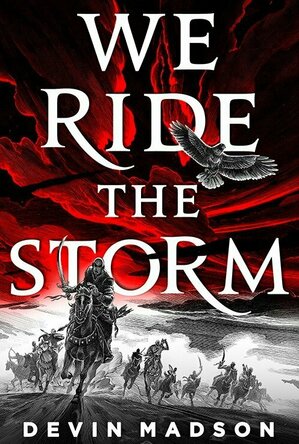
Great Asian-inspired twisting, back-stabbing fantasy
'We Ride the Storm' is an epic fantasy book set in an Asian-inspired world, with savage tribes, in-bred empires and age-old family rivalries.
We see the story unfold through the eyes of three characters: a princess of the Kisian empire (who is the step-daughter of the empire, so a princess in name only); an intriguing assassin and a tribal warrior forced into nomadic life. The plot revolves around a building conflict between the empire and its subjects and neighbours, largely driven by the accidental actions of the aforementioned assassin.
The princess is a well-formed character who quickly moves from plotting with her brother to take their family's rightful place at the head of the empire to siding with the crippled cruel emperor, seeking her own place. Her story is straight out of a Disney film, refused her chance to use her martial skills and forced to marry into power as her only contribution to the family's strength.
The nomadic warrior should have been intriguing, given his initial scene where he is cutting the heads off his fallen comrades and enemies, driven by a religious zeal that a person's head must be removed and properly laid to rest to release their soul. However, he quickly became flat and irritating, his zealous nature making him whiny. His story is the most exciting, though, as his tribe is forced into serving the empire (I think) and put aside their traditionally passive nature in order to secure new lands for themselves.
The final PoV character, the assassin, is by far the most original - she has an extra voice in her head (the background still a mystery), a presence who can inhabit corpses, allowing for some interesting escapes and plans. Her role is slightly comedic, dashing from one job to another across the country, often conflicting jobs, in order to try and release herself from the voice in her head.
The story involves a great amount of plotting and double-crossing, some excellent action scenes and a complex, weaving plot. The only downside for me was remembering who was who, who the empire was, their enemies etc, as different names were sometimes given and I found it hard to remember. Also, some major plot points were initially exposed in fairly throw-away style and later passages made no sense without picking up on them (specifically the voice in the assassin's head, but also aspects of the possession and other events which were easy to miss).
A great read and with a sequel already out, a series I will stick with.
I received a free copy from the publishers and netgalley in exchange for an honest review.
We see the story unfold through the eyes of three characters: a princess of the Kisian empire (who is the step-daughter of the empire, so a princess in name only); an intriguing assassin and a tribal warrior forced into nomadic life. The plot revolves around a building conflict between the empire and its subjects and neighbours, largely driven by the accidental actions of the aforementioned assassin.
The princess is a well-formed character who quickly moves from plotting with her brother to take their family's rightful place at the head of the empire to siding with the crippled cruel emperor, seeking her own place. Her story is straight out of a Disney film, refused her chance to use her martial skills and forced to marry into power as her only contribution to the family's strength.
The nomadic warrior should have been intriguing, given his initial scene where he is cutting the heads off his fallen comrades and enemies, driven by a religious zeal that a person's head must be removed and properly laid to rest to release their soul. However, he quickly became flat and irritating, his zealous nature making him whiny. His story is the most exciting, though, as his tribe is forced into serving the empire (I think) and put aside their traditionally passive nature in order to secure new lands for themselves.
The final PoV character, the assassin, is by far the most original - she has an extra voice in her head (the background still a mystery), a presence who can inhabit corpses, allowing for some interesting escapes and plans. Her role is slightly comedic, dashing from one job to another across the country, often conflicting jobs, in order to try and release herself from the voice in her head.
The story involves a great amount of plotting and double-crossing, some excellent action scenes and a complex, weaving plot. The only downside for me was remembering who was who, who the empire was, their enemies etc, as different names were sometimes given and I found it hard to remember. Also, some major plot points were initially exposed in fairly throw-away style and later passages made no sense without picking up on them (specifically the voice in the assassin's head, but also aspects of the possession and other events which were easy to miss).
A great read and with a sequel already out, a series I will stick with.
I received a free copy from the publishers and netgalley in exchange for an honest review.

GDRFA Dubai
Business and Productivity
App
This application provides you access to the most frequently required services of Dubai Immigration....
Matthew Krueger (10051 KP) rated Lethal Weapon 2 (1989) in Movies
Jul 9, 2020
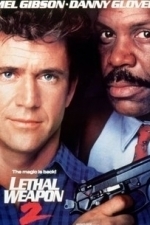
Protect Joe Pesci
Lethal Weapon 2- adds more action, drama, suspense, thrills, comedy, lots of comedy and more chemistry.
The production:
Shane Black and Warren Murphy's original Play Dirty script:
Their original title for the script was Play Dirty. Although many people thought that their script was brilliant, it was rejected by Silver, studio and director Richard Donner for being too dark and bloody, and because in the ending of the script Riggs dies, while they wanted to keep him alive in case of further sequels. They also wanted the second film to focus more on comedy, while Black's draft focused more on courage and heroics, like Riggs willing to die to protect Murtaugh and his family, due to his love for them
When his script was rejected, Black felt that he had failed the producers. He initially offered to give his payment back, but his agent talked him out of it. Black also refused to re-write the script and quit from the project after working for six months on it. Black later said how the problem with the second film was that they did too much comedy, and how he dislikes the third and fourth films because of the way Riggs' character was changed.
Director Richard Donner said in the film's Blu-ray commentary that the film was shot in such a way that it could be edited with two different endings, one in which Riggs dies and one in which he lives. Audiences in test screenings responded well to Riggs' survival, and this was kept, though the last shot in the film with the camera moving away from Murtaugh holding Riggs was shot for the ending in which he dies.
Jeffrey Boam's final script:
Originally, the character of Rika was intended to survive, with the last scene in the film being Riggs and Rika eating Thanksgiving dinner with the Murtaughs, but the director decided to kill the character to increase Riggs' motivation to destroy the South African drug smugglers. The film was the debut of Leo Getz (Joe Pesci), a crooked but whistle-blowing CPA who is placed in protective custody by Riggs and Murtaugh, and makes the detectives' more difficult due to his neurotic behavior. The Getz character remained a regular throughout the remainder of the film series.
The plot: South African smugglers find themselves being hounded and harassed by Riggs and Murtaugh, two mismatched Los Angeles police officers. However, the South Africans are protected by diplomatic immunity, and so the two are assigned to witness-protection duty in an attempt by their captain to keep his job. It is only when this witness reveals to them that he has already dealt with the smugglers that the trouble really starts.
I love the chemistry between Mel and Danny and now adding Joe Pesci to the mix its perfect. The perfrct trio.
Lethal Weapon 2- is a good sequel to the first one, and adds more. Highly recordmend watching it.
The production:
Shane Black and Warren Murphy's original Play Dirty script:
Their original title for the script was Play Dirty. Although many people thought that their script was brilliant, it was rejected by Silver, studio and director Richard Donner for being too dark and bloody, and because in the ending of the script Riggs dies, while they wanted to keep him alive in case of further sequels. They also wanted the second film to focus more on comedy, while Black's draft focused more on courage and heroics, like Riggs willing to die to protect Murtaugh and his family, due to his love for them
When his script was rejected, Black felt that he had failed the producers. He initially offered to give his payment back, but his agent talked him out of it. Black also refused to re-write the script and quit from the project after working for six months on it. Black later said how the problem with the second film was that they did too much comedy, and how he dislikes the third and fourth films because of the way Riggs' character was changed.
Director Richard Donner said in the film's Blu-ray commentary that the film was shot in such a way that it could be edited with two different endings, one in which Riggs dies and one in which he lives. Audiences in test screenings responded well to Riggs' survival, and this was kept, though the last shot in the film with the camera moving away from Murtaugh holding Riggs was shot for the ending in which he dies.
Jeffrey Boam's final script:
Originally, the character of Rika was intended to survive, with the last scene in the film being Riggs and Rika eating Thanksgiving dinner with the Murtaughs, but the director decided to kill the character to increase Riggs' motivation to destroy the South African drug smugglers. The film was the debut of Leo Getz (Joe Pesci), a crooked but whistle-blowing CPA who is placed in protective custody by Riggs and Murtaugh, and makes the detectives' more difficult due to his neurotic behavior. The Getz character remained a regular throughout the remainder of the film series.
The plot: South African smugglers find themselves being hounded and harassed by Riggs and Murtaugh, two mismatched Los Angeles police officers. However, the South Africans are protected by diplomatic immunity, and so the two are assigned to witness-protection duty in an attempt by their captain to keep his job. It is only when this witness reveals to them that he has already dealt with the smugglers that the trouble really starts.
I love the chemistry between Mel and Danny and now adding Joe Pesci to the mix its perfect. The perfrct trio.
Lethal Weapon 2- is a good sequel to the first one, and adds more. Highly recordmend watching it.

Gareth von Kallenbach (980 KP) rated Spiral: From the Book of Saw (2021) in Movies
May 12, 2021
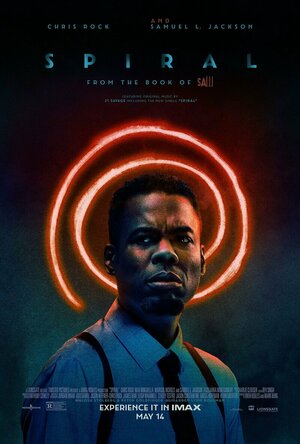
Detective Zeke Banks (Chris Rock); is a man under stress. His decision to report a corrupt cop has made him enemies within his precinct and set him at odds with his father Marcus (Samuel L. Jackson); who also happens to be the former Chief of Police.
This tension has caused Zeke to be shot in the line of duty when fellow officers refused to respond to his calls for backup which even further inflamed a tense situation and made Zeke a Lone Wolf who is hesitant to work with others and has cost him his marriage.
Unfortunately for Zeke; a grisly murder happens and he is assigned a new partner named William Schenk (Max Minghella); to investigate what appears to be a copycat of the long-dead Jigsaw.
The fact that the victim is a fellow cop inflames the office and when Zeke is sent a package from the killer which promises more killings to follow as the corruption within his department needs to be stopped.
As the victims begin to mount; Zeke and William find themselves in a race against time to discover the identity of the killer and stop the killings.
“Spiral: From The Book Of SAW”; is an interesting new entry into the franchise and in keeping with “Jigsaw:’ was more engaging than several of the last films in the main franchise as it gives audiences deeper characters and scenarios than normally shown in the series.
While the traps are as clever and gruesome as fans of the series would expect; the decision to target cops is an interesting choice and in many ways reflects the growing cries for reforming the Police but does it in an extreme way and balances out that there are good cops in the mix who serve and protect.
Chris Rock also served as a Producer was good in the role and it was refreshing to see him play a darker and more dramatic character. While he still has moments of clever riffs; they are appropriately placed within the film and do not take away from the fact that Zeke is a troubled and driven individual.
The supporting cast is solid and while I was able to identify the individual behind the killings fairly early; there were enough Red Herrings along the way that may keep audiences guessing.
Director Darren Lynn Bousman who directed the second to the fourth film in the series has made a solid return to the franchise and keeps the dark and dirty look of the film’s trap sequences and while they are gory; there is a cleverness to them that should delight fans of the series.
In the end “Spiral” has enough of what fans of the franchise expect and infuses some interesting new characters and scenarios to make one of the more complete and enjoyable entries in the series.
This tension has caused Zeke to be shot in the line of duty when fellow officers refused to respond to his calls for backup which even further inflamed a tense situation and made Zeke a Lone Wolf who is hesitant to work with others and has cost him his marriage.
Unfortunately for Zeke; a grisly murder happens and he is assigned a new partner named William Schenk (Max Minghella); to investigate what appears to be a copycat of the long-dead Jigsaw.
The fact that the victim is a fellow cop inflames the office and when Zeke is sent a package from the killer which promises more killings to follow as the corruption within his department needs to be stopped.
As the victims begin to mount; Zeke and William find themselves in a race against time to discover the identity of the killer and stop the killings.
“Spiral: From The Book Of SAW”; is an interesting new entry into the franchise and in keeping with “Jigsaw:’ was more engaging than several of the last films in the main franchise as it gives audiences deeper characters and scenarios than normally shown in the series.
While the traps are as clever and gruesome as fans of the series would expect; the decision to target cops is an interesting choice and in many ways reflects the growing cries for reforming the Police but does it in an extreme way and balances out that there are good cops in the mix who serve and protect.
Chris Rock also served as a Producer was good in the role and it was refreshing to see him play a darker and more dramatic character. While he still has moments of clever riffs; they are appropriately placed within the film and do not take away from the fact that Zeke is a troubled and driven individual.
The supporting cast is solid and while I was able to identify the individual behind the killings fairly early; there were enough Red Herrings along the way that may keep audiences guessing.
Director Darren Lynn Bousman who directed the second to the fourth film in the series has made a solid return to the franchise and keeps the dark and dirty look of the film’s trap sequences and while they are gory; there is a cleverness to them that should delight fans of the series.
In the end “Spiral” has enough of what fans of the franchise expect and infuses some interesting new characters and scenarios to make one of the more complete and enjoyable entries in the series.