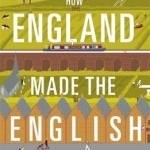
How England Made the English: From Why We Drive on the Left to Why We Don't Talk to Our Neighbours
Book
Harry Mount's How England Made the English: From Why We Drive on the Left to Why We Don't Talk to...
Jesters_folly (230 KP) rated 2 Fast 2 Furious (2003) in Movies
May 28, 2021
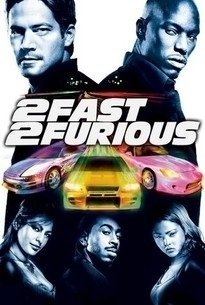


I think that 2 Fast 2 Furious is actually slightly better than the first film (the Fast and the Furious), it has many of the same tropes and ideas of the first film, the street racing, cars and crime and it seems to have a better balance between the main elements. In both films Brian is tasked with infiltrating a criminal organisation with the task of finding out information and, from a narrative prospective 2 Fast seems to make a better job of this.
There is slightly less time given over to actual street racing but this is replaced with car chases which seem to use more police cars than 'The Blues Brothers'.
There is some time given over to character development as we find out more about Brian's past with the introduction of his old friend, Roman Pearce which gives us a bit more information as to his actions at the end of the first film.
Brian's relationship with the polices is surprisingly similar to the first film, even though Brian is now a wanted convict he is still aids and trust him. We also have the agent who doesn't trust Brian, this time in the form of customs Agent Markhan which basically gives us the same police set up the first film.
2 Fast 2 Furious does a good job of not being a clone of it's predecessor whilst still keeping the cars, the speed, the races and chases. There are a couple of scenes at the start that are similar to the first film but these are to help re introduce Brian and set the tone of the film. If you liked the first one then you should give the sequel a watch. (But you probably already know that as this is an old film 😊 )
LeftSideCut (3776 KP) rated Once Upon a Time in Hollywood (2019) in Movies
Aug 28, 2019 (Updated Oct 25, 2019)
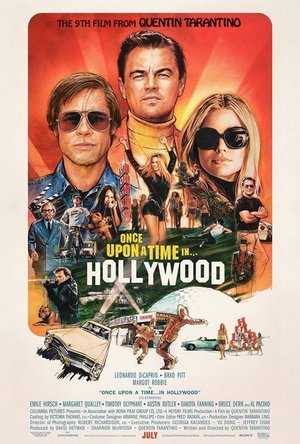

It's a loooong film (perhaps a little too long), and I feel that even some proper Tarantino fans may struggle to get along with it.
The film feels like a full on love letter to Hollywood during the late 60s, and Tarantino's passion for this period is obvious.
The audience are spoiled with gorgeous shots throughout, set to a backdrop of great music (as per usual).
The cast are fantastic - I've mentioned before on here that I'm an unashamed Brad Pitt fanboy, and nothing here changes that. Leonardo DiCaprio is also great (just as he was in Django Unchained) as the two of them stick by each other as Rick Dalton's (DiCaprio) acting career starts to waver.
Living just up the road from Rick are Roman Polanski and Sharon Tate (played by a hugely charming Margot Robbie).
As the film progresses, I found myself wondering what story was trying to be told, but it does all tie up in a very Tarantino way. It's pretty glorious (no spoilers here).
The plot certainly benefits from the viewer having prior knowledge to the horrific Manson family/Tate murder.
The final 20 minutes is where things ramp up, after a very slow burning 2 hours... and after Tarantino's last 3 movies, which I found more action heavy than some of his early work, it's a different approach, and a reason why I think some people may struggle with it.
The pacing is, weirdly, most akin to Death Proof - an extremely dialogue heavy movie with a crazy final act.
But the huge amount of dialogue we're subjected to is pretty much perfect. It's a real treat if you have the patience.
Once Upon a Time... can proudly stand shoulder to shoulder with the rest of Tarantino's portfolio.

GameNet for - UEBS Ultimate Epic Battle Simulator
Reference and Entertainment
App
Here is a sandbox like no other. Create massive battles with absolutely no limits. Want to see...
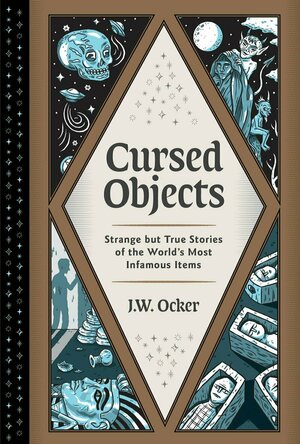
Cursed Objects: Strange but True Stories of the World's Most Infamous Items
8.0 Rate It
Book
An illustrated compendium that reveals the true stories behind the most infamous, creepy, and...

Geocaching Buddy
Navigation and Utilities
App
The ultimate tool for the serious geocacher when solving multi-caches, powered by Geocaching Live....

Matemág: Součtové trojúhelníky
Games and Education
App
Matemágova cvičebnice zaměřená na didaktické prostředí součtových trojúhelníků vznikla,...

Matemág: Hadi
Games and Education
App
Matemágova cvičebnice zaměřená na didaktické prostředí hadů vznikla, aby pomáhala s...
Debbiereadsbook (1849 KP) rated Nothing But the Night (Basic Instincts #2) in Books
Apr 20, 2025
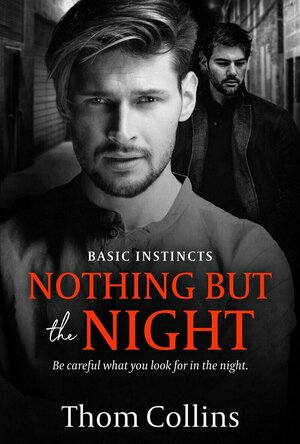

This is book 2 in the Basic Instincts series and I have not read book 1, Now Comes The Dark. I did not feel I missed anything by not doing so, so I would say this can totally be read as a stand alone. Roman and Mallon pop up, but only in passing.
Marc is not happy with the local police about their lack of progress in finding his brother's killer. Because Marc does not believe that Theo's death was an accident. Enter Jason, a local private detective. But just as his investigation gets moving, their chief witness is murdered and both men find themselves in a fight for their lives, with no clue who is behind it all.
I just wanna say: Well played, Mr Collins, so very well played! I did not see the whodunnit coming at me, not at all! I love being kept on my toes, I really do. So, I loved that coming out of nowhere and whooping me upside the head!
As Marc and Jason get to know each other, their relationship builds. I liked that build up and when it spilled over. I can't say I liked the reason it spilled over, and I'm not going to elaborate due to spoilers, but I think when it does spill over, it was exactly at the right time for these two.
It moves at speed sometimes, and slows up in others, just enough for you to catch up. It's dark and deadly, and sweet and emotional. Steamy and smexy. It hit all of the buttons I was expecting and some I wasn't.
I absolutely need to read book 3, but I've no clue who that would be or even IF there will be a book 3! And at some point, I'd like to go back and read book 1.
5 full and shiny stars
*same worded review will appear elsewhere

Bob Mann (459 KP) rated Birds of Prey (And the Fantabulous Emancipation of One Harley Quinn) (2020) in Movies
Feb 15, 2020
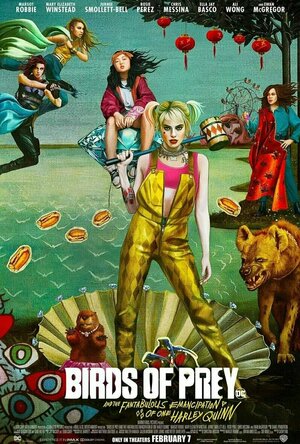
Harley had spent years building up a catalog of enemies in Gotham, with no-one daring to lift a finger for fear of “the big J’s” retribution. With that now a thing of the past, the streets are no longer safe for Harley. Whereas most characters have a reason to want to kill Harley, mid-level gangster Roman Sionis (Ewan McGregor) has a list as long as his arm (a blurred list that will probably make freeze-framing of the blu-ray entertaining!). Roman, who has a penchant for having his right-hand man Victor (Chris Messina) de-glove his victim’s faces, has his heart set on obtaining a missing diamond that (McGuffin-alert) is engraved with account details to $billions.
Through a convoluted and messy plot, Harley meets various ‘birds of prey’ who are either friend or foe: notably young pickpocket Cassandra (Ella Jay Basco); cop Renée Montoya (Rosie Perez); the “Crossbow Killer” (Mary Elizabeth Winstead); and the “Black Canary” (Jurnee Smollett-Bell), who you don’t want to let near your best glasses.
As you might expect from your knowledge of Harley Quinn’s character, the movie is bat-shit crazy, with periodic breaking of the 4th wall; much acrobatic kick-boxing; and some random dream sequences….. Robbie as Marilyn is particularly entertaining, although at times (the ‘egg sandwich’ sequence in particular) the gurning made me muse to myself about just what a good film “I, Tonya” was.
It all comes across as something of a “Deadpool” sequel. Actually, I’d more describe it as “Deadpool-lite” since it’s not powered here by the charisma of Ryan Reynolds. However, I did find myself quite enjoying the first reel of the movie.
Unfortunately, it didn’t last.
It all just becomes incredibly tiresome. Although Margot Robbie is very good in the role, Harley’s incessant squawking just gets annoying.
Also in this battle of men vs women, the women always win and are (mostly) completely unscathed. In one particular scene there are 5 or 6 burly men taking on Harley: clearly she whips their sorry asses in improbable fashion. What? Only one at a time guys?
If you were confused by the timeline of “Little Women“, this will blow your mind! It makes Greta Gerwig‘s masterpiece look as linear as “News at Ten”! It’s really difficult to follow at times as the timeline flashes forwards and backwards and sideways at random!
Also confusing (for me anyway… did I have a nap?) was the finale. There’s something to do with a ring which made NO SENSE to me at all? Am I alone in that?
Ewan MacGregor has fun with his role as the gay (I assume?) gangster, but it all turns cartoonish at times. But perhaps, that’s the point? However while the violence in “Deadpool” was cartoonishly funny (as in Tom and Jerry) the violence here is decidedly of the vicious and unpleasant variety, with a vindictive edge. It makes you not particularly like any of the movie’s characters.
The movie is written by Christina Hodson, who is slated to write too more upcoming superhero films: “The Flash” and “Batgirl”. The director is Chinese director Cathy Yan in only her second directorial feature.
Summary: It’s loud and brash and at 109 minutes it overstays its welcome by about 20 minutes. Less would have been more. It’s somewhat better than “Suicide Squad” (which I unfathomably seem to have given 2.5 stars to), but it’s still a movie that I will struggle to remember in a month’s time.
(For the full graphical review, check out One Mann's Movies here - https://bob-the-movie-man.com/2020/02/15/one-manns-movies-film-review-birds-of-prey-and-the-fantabulous-emancipation-of-one-harley-quinn-2020/