
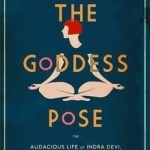
The Goddess Pose: The Audacious Life of Indra Devi, the Woman Who Helped Bring Yoga to the West
Book
When the woman who would become Indra Devi was born in Russia in 1899, yoga was virtually unknown...
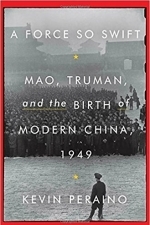
A Force So Swift: Mao, Truman, and the Birth of Modern China, 1949
Book
A gripping narrative of the Truman Administration's response to the fall of Nationalist China and...
History politics
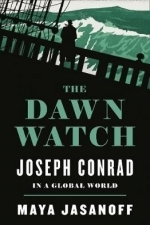
The Dawn Watch: Joseph Conrad in a Global World
Book
A visionary exploration of the life and times of Joseph Conrad, his turbulent age of globalization...
history
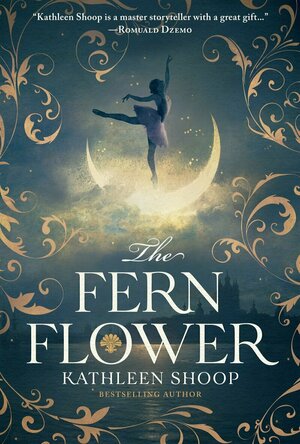
The Fern Flower
Book
Russia 1908-1917 Every good folktale reveals villains and heroes. Mila Belova’s world is...
Historical Fiction

Muhammad
Book
In this book: 'A pioneering writer on Islam' - Guardian Who was the real Muhammad?Muhammad: All That...

Antonio Banderas recommended Lawrence of Arabia (1962) in Movies (curated)

The Soviet Gulag: Evidence, Interpretation and Comparison
Book
Before the collapse of the Soviet Union and the subsequent archival revolution, Aleksandr...
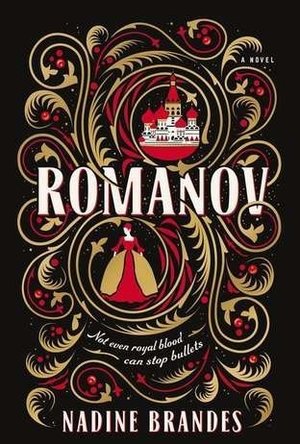
Ivana A. | Diary of Difference (1171 KP) rated Romanov in Books
Oct 5, 2020

The history books say I died.
They don’t know the half of it.
Ever since I read Fawkes, I knew I loved Nadine’s writing, and when Romanov was announced, I couldn’t be happier. As I have spend my childhood and young adult life in the Balkans, whilst travelling across Europe, I have always admired Russia, and always enjoyed reading all the theories about the Romanov family.
As a child I would be told stories and fairy tales, I would watch the Disney adaptation of Anastasia, and as I was growing up, I would read history books and fiction on this very subject. When I got my hands on ‘’Romanov’’, I knew I would be up for an adventure, with lots of expectations, but what I never knew was that I would be blown away of how beautiful this book is!
This book is split into two main parts, before and after the Romanov’s execution, but it is also split into the first being the historical part, and the second being the fictional part. Both parts of the book are quite intense, and very different emotions come up to surface, but they are both very powerful throughout, and fitted together quite well.
In the first part, we are introduced to the Romanov family, and how they are kept as hostages by the Bolsheviks. It would’ve been much better if we had more details on the pre-hostage period, why the revolution began, why the king abducted the throne, who are the Bolsheviks and what they believed in. The book starts in the middle of this whole situation, and whilst I knew the beginning before, I am certain a lot of people wouldn’t have.
The history, as much accurate as it was, also had a personalized feeling that the author wanted to give. I have to admit, a lot of the details, especially around the family were quite accurate. The family did stick together and loved each other, they did have secrets and they did make friends with their captors. Anastasia’s brother did indeed had hemophilia and Rasputin was allegedly helping him. However, the author decided to put her personal feelings into the history as well. The king is presented as a wonderful leader that cares about the people. I understand that we see this story from Anastasia’s point of view, and as his daughter, she is supposed to see her father as the best figure in the world. But I still believe this part should be more objective, if not from Anastasia’s point of view, then at least by the king’s actions and dialogues. The other big element that bothered me was the portrayal of Rasputin. He is shown in this book as a family helper and a kind man, when in fact, he was far from that. In the history books, he is described as a madman, a creepy person, and the king was not happy of him coming in the house. The family’s secrecy and the queen’s silent domination over the king, together with Rasputin’s doings were the start of the revolution, and I believe that it one of the required truths that this books should have included, but didn’t. And that troubled me.
On top of this, is the Russian language used throughout this book. There were a lot of spelling errors, and misinterpretations. And whilst I can understand these words, many people can’t, and translation wasn’t provided in the book. Also, I really found this quote interesting, talking about the Russian culture, and how they don’t show emotions. Just a note – this is most of the time true, people won’t be nice to strangers, but actually, Russian people are quite friendly and emotional as well.
‘’We Russians weren’t required to share any amount of emotion we didn’t want to.’’
Apart from these few things that slightly bothered me, I really enjoyed this book. Anastasia is an amazing character, and through her we can see her love towards her family, her country, and even towards the people that wish her harm. We get to see her love, cry, be hurt, be afraid, forgive, and grow throughout the book, and her journey was magical.
‘’As I lay in the grass next to the spell that could rid me of heart pain, I realized that a part of forgiveness was accepting the things someone had done – and the pain that came with that – and moving on with love. Forgiveness was a personal battle that must always be fought in my heart.’’
I loved the beginning of the book the most. The setting was well-written, and I got the feel the same way as the Romanov family did. They tried to act as if everything was normal, when in fact, they were held captive, and moved out of their home. They weren’t allowed to go out in the garden often, and when they did have this opportunity, they enjoyed every single second of it. And they all had hope every single day. They kept smiling and stayed together.
There are number of scenes that will always stay close to my heart – the relationship between Zash and Anastasia (as unrealistic as it might be), always kept me on my toes, his desperation, and his guilt, and her ability to forgive and love regardless.
The brother’s illness, and his persistence through it. His motivation and his will to never give up. The love he holds for his family, and especially his sister Anastasia, and the toughness and not letting go. A few scenes were unrealistic with him, as I hardly believe anyone suffering from hemophilia can survive all those injuries mentioned in the book and the pools of blood, but above all – this character did achieve what he was meant to do – show hope where there is none.
A wonderful and magical tale, with a history behind it of a mysterious family, especially their end – this book brought tears on my eyes and made me think about the power of forgiveness and love. A true masterpiece.
Thank you to Nadine Brandes, for letting me be a part of her Ninja Team.

Cassie Osbourne (6 KP) rated The Secret Countess in Books
Nov 9, 2018

This is the third Eva Ibbotson book that IÕve read this year and, whilst I have enjoyed them all, I canÕt help noticing that the characters are basically all the same. Heroine who seems completely perfect and has no flaws, love interest who is complex and often broody (also the most well rounded character in the book) and the obvious villain who spends the whole book being obviously villainous. All that being said, I do really like these characters. I could relate to Anna despite her perfectness, I understood RupertÕs problems regardless of how blind he was being at times and I enjoyed just how horrible and ruthless Muriel could be. I also loved the side characters. Ollie was adorable, Lavinia was hilarious and Baskerville was strangely well fleshed out for a dog (seriously, Ibbotson gives him a whole personality where most authors wouldnÕt have bothered). Yes most of the characters were simple without huge character arcs but I liked them all the same.
IbbotsonÕs writing style is easy to slip into and nice to read, if a little over fond of commas. However it is the atmosphere that really lets this book down Ñ there isnÕt really too much of it. There are a moments where a small amount is created, and those passages are certainly the most memorable, but there are unfortunately few and far between. ThatÕs not to say that the general feeling is bad or uncomfortable to read when it shouldnÕt be, but I would liked to have seen more of...well, something.
In a similar vein to what I said about the characters earlier, most of IbbotsonÕs young adult literature seems to follow a similar structure. Girl leaves family to do something or be someone that they often donÕt approve of, meets a misunderstood man, they fall in love but he is unavailable (or she thinks he is) and she leaves him without a word but donÕt worry, they are reunited and they all live happily ever after. However, if it ainÕt broke, donÕt fix it. While the main skeleton structure is used for most of her work, each of IbbotsonÕs books have a difference and a charm that stays with you and is memorable. There are plenty of little surprises and some twists and turns.
While this review may seem mixed and sound negative, I did really enjoy this book. I have kept it on my shelves with my other Eva Ibbotson novels for a reason and IÕm sure I will return to it.
Character: 7.5
Atmosphere: 5.5
Writing Style: 9
Plot: 8
Intrigue: 8
Logic: 8
Enjoyment: 8