

ClareR (6256 KP) rated The Corset in Books
Sep 28, 2018
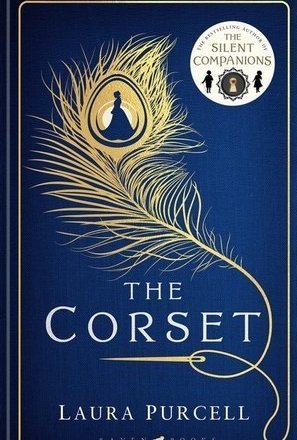

As the story unfolded, I was left wondering if Ruth did indeed have some sort of magical power. It's quite a menacing atmosphere in the book. Dorothea comes across as frivolous, only concerned with her comfy life - but this also changes as the book develops.
And that twist at the end!
Contrary to my He-Man allusions at the start, I really enjoyed this book. It was a real treat to read, and completely unexpected, as I hadn't read her first book. I'll be rectifying that mistake!!
ClareR (6256 KP) rated Remembered in Books
Jul 8, 2019
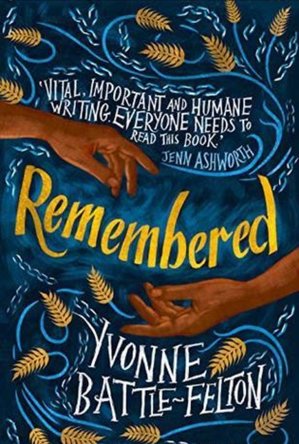

In the ‘present’ timeline, we see Spring sitting by her sons deathbed in hospital, with the ghost of Tempe.
There are several newspaper articles that start chapters, and they go some way to explaining what is happening in the story - at least from a white mans perspective. Spring’s son, Edward, is accused of driving a Philadelphia streetcar into a department store and endangering the lives of white people. It’s not explicitly said (that I can remember), but Edwards injuries aren’t just from the crash. Spring arrives at the hospital knowing that he’s unlikely to survive. Mainly because the ghost of her sister is telling her so, and encouraging her to tell him the true story of his birth, in order that he can ‘go home’ and not become an earth bound ghost.
So we get to see for ourselves what motherhood really is - it’s not about who gives birth to a baby, but about who loves and brings that child up.
It’s a difficult story to read, as it should be. This was a difficult and terrible time in history, but I did enjoy reading it. I can see why it was nominated for the 2019 Women’s Prize. It’s well worth reading.

Gareth von Kallenbach (980 KP) rated The Legend of Tarzan (2016) in Movies
Aug 6, 2019

In “The Legend of Tarzan,” it is the 1880’s and royal corruption brews beneath the surface. Tarzan (Alexander Skarsgard), now an adult, is living as John Clayton III, Lord Greystoke with his wife Jane (Margot Robbie).
His civilized life is interrupted when he is sent back to the Congo as a trade emissary. Unfortunately, he is at the center of the wicked plans of Captain Léon Rom (Christoph Waltz). Rom has made a deal to trade Tarzan in exchange for diamonds to a tribal chief who plans to butcher and eat him. Waltz does a great job playing a sleazy political criminal with beady eyes and a greasy mustache.
Samuel L. Jackson is also fun to watch as George Washington Williams, who accompanies Tarzan to the Congo when he follows up on his own suspicions.
While the film is quite enjoyable, and very pretty to look at (special thanks to Skarsgard). Tarzan isn’t as animalistic as you would expect, Jane lacks authentic emotion, and at times the CGI is a bit low quality.
“The Legend of Tarzan” is one of those short, sweet, and fun summer movies and is definitely worth watching. With political undertones of greed, slavery, and human destruction, it also has deeper value.
This is one that everyone can watch. It’s not too violent, it’s not to edgy, and it’s not too long. I give “The Legend of Tarzan” 3.5 out of 5 stars.
Little Princes: One Man's Promise to Bring Home the Lost Children of Nepal
6.0 Rate It
Book
The riveting story of Conor Grennan's year in Nepal reads like a cross between Into Thin Air and...

Fixing Fashion: Rethinking the Way We Make, Market and Buy Our Clothes
Book
With sales of more than five hundred billion US dollars a year, the fashion industry is one of the...
Cuisine and Culture: A History of Food and People
Book
An illuminating account of how history shapes our diets now in a new revised and updated Third...

Rage for Order: The British Empire and the Origins of International Law, 1800 1850
Book
International law burst on the scene as a new field in the late nineteenth century. Where did it...
The Flood Year 1927: A Cultural History
Book
The Great Mississippi Flood of 1927, which covered nearly thirty thousand square miles across seven...

Great Scottish Heroes: Fifty Scots Who Shaped the World
Book
Which Scottish anti-slavery campaigner lost a son in a Confederate prisoner-of-war camp during the...
Arguments with Silence: Writing the History of Roman Women
Book
Women in ancient Rome challenge the historian. Widely represented in literature and art, they rarely...