
Search

Gareth von Kallenbach (980 KP) rated J. Edgar (2011) in Movies
Aug 7, 2019
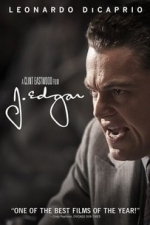


When I first heard about this movie, it intrigued me. When I heard that it starred Leonardo Dicaprio and was directed by Clint Eastwood, I was hooked. And I must say, that with a few small exceptions, the film definitely lived up to expectations for me.
J. Edgar is the story of Hoover’s rise to “power”, as told by J. Edgar Hoover. The movie takes place during three different time periods: when Hoover was just a budding employee of the Department of Justice and his involvement in the creation of the Bureau of Investigation; flash forward to Kennedy’s time in the office of the President of the United States of America, and finally during Nixon’s short-lived administration.
Throughout the film we see the influence that Hoover had in the government at the time. Of course, at the beginning of his career, he had very little. But through lies, deceit and manipulation he quickly became very influential. He began building his “personal files” very early on, which he used to blackmail and coerce government officials into many things, but most of all to keep his position as head of the FBI.
Throughout the film we see J. Edgar Hoover’s struggle with his controlling mother, his sexuality and his political opponents. His mother, Annie Hoover, played by Dame Judi Dench, saw Hoover as the savior of their family name. It had been disgraced in her eyes by his mentally ill father. She was his guiding voice in all areas of his life, including appearance, stature and his sexuality.
We see Hoover make advances towards Helen Gandy, played by Naomi Watts, who is a typist who becomes his personal assistant his entire life. Hoover’s demeanor around her is awkward at best, and she makes it very clear that she is focusing on her career. Shortly after the creation of the Bureau of Investigations he meets Clyde Tolson, played by Armie Hammer of The Social Network fame. It quickly becomes obvious that there is chemistry between these two.
The film takes us all the way to Hoover’s death and the many things he has accomplished, or perhaps did not accomplish, in between. Remember that I said that this a story of J. Edgar Hoover as told by the man himself. This plays into the film in a very great way. Overall, this is definitely a must-see film as it is a great drama sprinkled with spots of humor. I can see a trio of Oscar nominations with this film for Clint Eastwood in directing, and for Leonardo Dicaprio and Armie Hammer in acting.
J. Edgar is the story of Hoover’s rise to “power”, as told by J. Edgar Hoover. The movie takes place during three different time periods: when Hoover was just a budding employee of the Department of Justice and his involvement in the creation of the Bureau of Investigation; flash forward to Kennedy’s time in the office of the President of the United States of America, and finally during Nixon’s short-lived administration.
Throughout the film we see the influence that Hoover had in the government at the time. Of course, at the beginning of his career, he had very little. But through lies, deceit and manipulation he quickly became very influential. He began building his “personal files” very early on, which he used to blackmail and coerce government officials into many things, but most of all to keep his position as head of the FBI.
Throughout the film we see J. Edgar Hoover’s struggle with his controlling mother, his sexuality and his political opponents. His mother, Annie Hoover, played by Dame Judi Dench, saw Hoover as the savior of their family name. It had been disgraced in her eyes by his mentally ill father. She was his guiding voice in all areas of his life, including appearance, stature and his sexuality.
We see Hoover make advances towards Helen Gandy, played by Naomi Watts, who is a typist who becomes his personal assistant his entire life. Hoover’s demeanor around her is awkward at best, and she makes it very clear that she is focusing on her career. Shortly after the creation of the Bureau of Investigations he meets Clyde Tolson, played by Armie Hammer of The Social Network fame. It quickly becomes obvious that there is chemistry between these two.
The film takes us all the way to Hoover’s death and the many things he has accomplished, or perhaps did not accomplish, in between. Remember that I said that this a story of J. Edgar Hoover as told by the man himself. This plays into the film in a very great way. Overall, this is definitely a must-see film as it is a great drama sprinkled with spots of humor. I can see a trio of Oscar nominations with this film for Clint Eastwood in directing, and for Leonardo Dicaprio and Armie Hammer in acting.
The Valet's Witness
Book
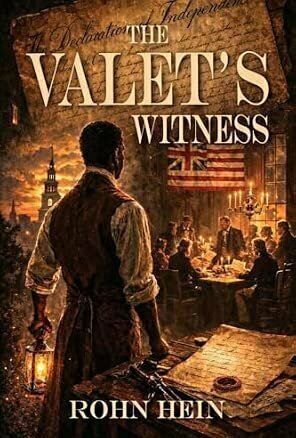
In the summer of 1776, as the Declaration of Independence takes shape within the charged chambers of...
Historical Fiction American History Civil Liberties Social Justice

Hazel (1853 KP) rated The Water Babies in Books
Oct 9, 2017

Worryingly Controversial
This eBook was provided by the publisher via NetGalley in exchange for an honest review
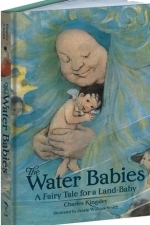
This year (2017), Calla Editions are printing a new hardback version of the original 1863 children’s classic The Water Babies written by the Anglican clergyman, Charles Kingsley (1819-75). Subtitled “A Fairytale for a land-baby” the book was intended for Kingsley’s youngest son and therefore was targeted at a juvenile demographic. However, as a result of the 1800’s vernacular and particularly deep themes, it has become more appropriate for older readers. With full-colour illustrations by Jessie Wilcox Smith (1863-1935) from the height of the golden age of illustration, this edition promises to be a collector’s item.
Charles Kingsley, the founder of England’s Christian Socialist movement, was exceedingly interested in the plight of the working class, particularly of the abuse and protection of children. This is reflected in his story about Tom, the ten-year-old London chimney sweep, who suffers ill-treatment at the hands of his employer. Tom, who has known nothing but the sooty streets of London, is embarrassed after scaring a beautiful young girl with his grimy appearance. Running away through a countryside he is unfamiliar with, Tom dives into a river to wash, however, falls asleep in the water.
On awakening, Tom discovers he has been transformed into a water baby; he can live and breathe amongst all the fishes and other mystical water creatures. Forgetting his horrible past, Tom is soon frolicking with the characters he meets, teasing and provoking unsuspecting individuals. But the fairies in charge of water babies are determined to teach him many lessons about truth, mercy, justice and courage.
The Water Babies is a morality fable with fairy-tale-like qualities. It educates young readers about the consequences of their actions but also enlightens them about the cruelty of some adults. Kingsley often talks to the reader (in this instance his son), drawing them into the story and making the scenarios as relatable as possible. The magical underwater setting is merely a veil to hide the lessons Kingsley is attempting to preach.
For the adult reader, Kingsley has a much more political message. Written at the time of political and scientific advancement, particularly in respect to the concept of natural selection, Kingsley attempts to ridicule the ideas of thinkers such as Charles Darwin by producing a satirical narrative. He suggests that scientists are fools who use unnecessarily long and foreign terms, evidenced by his use of the made-up subject of Necrobioneopalæonthydrochthonanthropopithekology. He also goes as far as to mock the majority of adults and appears to be completely anti-Irish people.
In some instances, Charles Kingsley goes too far in his satire, resulting in something that would not be accepted by publishers today. In order for Tom to be the hero of the story, adults need to be viewed as less than good – people who need to be punished for their discourteous treatment of children, which in this instance, they are, and quite graphically. But the most controversial theme explored is death. The more naïve may not cotton on to the fact that Tom falling asleep in the river equates to drowning, yet that is exactly what happened. Only through death can one become a water baby. To make matters slightly more alarming, Kingsley does not see this death as a bad thing; he describes Tom’s new life as something far better than life on earth – coming from a clergyman this is understandable – which suggests that death is better than living for an abused child.
Despite these controversies, Kingsley’s prose is humorous and entertaining - far more mind-boggling than you may initially expect. With characters named Mrs Bedonebyasyoudid and Professor Ptthmllnsprts, there is plenty to make readers laugh. Some of the hilarities may go above the heads of children since the jargon is no longer used in today’s society, however, adults will be able to appreciate the comical aspect.
Over 150 years old, The Water Babies has remained a classic. It reveals the political, scientific and social situations of the mid-1800s, yet it contains wisdom that is still relevant today. As Kingsley’s daughter Rose says in the introduction, “What a fine thing it is to love truth, mercy, justice, courage, and all things noble and of good report.” No matter how peculiar this novel is, it says a lot about the virtues of our character.
This year (2017), Calla Editions are printing a new hardback version of the original 1863 children’s classic The Water Babies written by the Anglican clergyman, Charles Kingsley (1819-75). Subtitled “A Fairytale for a land-baby” the book was intended for Kingsley’s youngest son and therefore was targeted at a juvenile demographic. However, as a result of the 1800’s vernacular and particularly deep themes, it has become more appropriate for older readers. With full-colour illustrations by Jessie Wilcox Smith (1863-1935) from the height of the golden age of illustration, this edition promises to be a collector’s item.
Charles Kingsley, the founder of England’s Christian Socialist movement, was exceedingly interested in the plight of the working class, particularly of the abuse and protection of children. This is reflected in his story about Tom, the ten-year-old London chimney sweep, who suffers ill-treatment at the hands of his employer. Tom, who has known nothing but the sooty streets of London, is embarrassed after scaring a beautiful young girl with his grimy appearance. Running away through a countryside he is unfamiliar with, Tom dives into a river to wash, however, falls asleep in the water.
On awakening, Tom discovers he has been transformed into a water baby; he can live and breathe amongst all the fishes and other mystical water creatures. Forgetting his horrible past, Tom is soon frolicking with the characters he meets, teasing and provoking unsuspecting individuals. But the fairies in charge of water babies are determined to teach him many lessons about truth, mercy, justice and courage.
The Water Babies is a morality fable with fairy-tale-like qualities. It educates young readers about the consequences of their actions but also enlightens them about the cruelty of some adults. Kingsley often talks to the reader (in this instance his son), drawing them into the story and making the scenarios as relatable as possible. The magical underwater setting is merely a veil to hide the lessons Kingsley is attempting to preach.
For the adult reader, Kingsley has a much more political message. Written at the time of political and scientific advancement, particularly in respect to the concept of natural selection, Kingsley attempts to ridicule the ideas of thinkers such as Charles Darwin by producing a satirical narrative. He suggests that scientists are fools who use unnecessarily long and foreign terms, evidenced by his use of the made-up subject of Necrobioneopalæonthydrochthonanthropopithekology. He also goes as far as to mock the majority of adults and appears to be completely anti-Irish people.
In some instances, Charles Kingsley goes too far in his satire, resulting in something that would not be accepted by publishers today. In order for Tom to be the hero of the story, adults need to be viewed as less than good – people who need to be punished for their discourteous treatment of children, which in this instance, they are, and quite graphically. But the most controversial theme explored is death. The more naïve may not cotton on to the fact that Tom falling asleep in the river equates to drowning, yet that is exactly what happened. Only through death can one become a water baby. To make matters slightly more alarming, Kingsley does not see this death as a bad thing; he describes Tom’s new life as something far better than life on earth – coming from a clergyman this is understandable – which suggests that death is better than living for an abused child.
Despite these controversies, Kingsley’s prose is humorous and entertaining - far more mind-boggling than you may initially expect. With characters named Mrs Bedonebyasyoudid and Professor Ptthmllnsprts, there is plenty to make readers laugh. Some of the hilarities may go above the heads of children since the jargon is no longer used in today’s society, however, adults will be able to appreciate the comical aspect.
Over 150 years old, The Water Babies has remained a classic. It reveals the political, scientific and social situations of the mid-1800s, yet it contains wisdom that is still relevant today. As Kingsley’s daughter Rose says in the introduction, “What a fine thing it is to love truth, mercy, justice, courage, and all things noble and of good report.” No matter how peculiar this novel is, it says a lot about the virtues of our character.
Hazel (1853 KP) rated The Water Babies in Books
Dec 7, 2018
<i>This eBook was provided by the publisher via NetGalley in exchange for an honest review </i>
This year (2017), Calla Editions are printing a new hardback version of the original 1863 children’s classic <i>The Water Babies</i> written by the Anglican clergyman, Charles Kingsley (1819-75). Subtitled “<i>A Fairytale for a land-baby</i>” the book was intended for Kingsley’s youngest son and therefore was targeted at a juvenile demographic. However, as a result of the 1800’s vernacular and particularly deep themes, it has become more appropriate for older readers. With full-colour illustrations by Jessie Wilcox Smith (1863-1935) from the height of the golden age of illustration, this edition promises to be a collector’s item.
Charles Kingsley, the founder of England’s Christian Socialist movement, was exceedingly interested in the plight of the working class, particularly of the abuse and protection of children. This is reflected in his story about Tom, the ten-year-old London chimney sweep, who suffers ill-treatment at the hands of his employer. Tom, who has known nothing but the sooty streets of London, is embarrassed after scaring a beautiful young girl with his grimy appearance. Running away through a countryside he is unfamiliar with, Tom dives into a river to wash, however, falls asleep in the water.
On awakening, Tom discovers he has been transformed into a water baby; he can live and breathe amongst all the fishes and other mystical water creatures. Forgetting his horrible past, Tom is soon frolicking with the characters he meets, teasing and provoking unsuspecting individuals. But the fairies in charge of water babies are determined to teach him many lessons about truth, mercy, justice and courage.
<i>The Water Babies</i> is a morality fable with fairy-tale-like qualities. It educates young readers about the consequences of their actions but also enlightens them about the cruelty of some adults. Kingsley often talks to the reader (in this instance his son), drawing them into the story and making the scenarios as relatable as possible. The magical underwater setting is merely a veil to hide the lessons Kingsley is attempting to preach.
For the adult reader, Kingsley has a much more political message. Written at the time of political and scientific advancement, particularly in respect to the concept of natural selection, Kingsley attempts to ridicule the ideas of thinkers such as Charles Darwin by producing a satirical narrative. He suggests that scientists are fools who use unnecessarily long and foreign terms, evidenced by his use of the made-up subject of <i>Necrobioneopalæonthydrochthonanthropopithekology</i>. He also goes as far as to mock the majority of adults and appears to be completely anti-Irish people.
In some instances, Charles Kingsley goes too far in his satire, resulting in something that would not be accepted by publishers today. In order for Tom to be the hero of the story, adults need to be viewed as less than good – people who need to be punished for their discourteous treatment of children, which in this instance, they are, and quite graphically. But the most controversial theme explored is death. The more naïve may not cotton on to the fact that Tom falling asleep in the river equates to drowning, yet that is exactly what happened. Only through death can one become a water baby. To make matters slightly more alarming, Kingsley does not see this death as a bad thing; he describes Tom’s new life as something far better than life on earth – coming from a clergyman this is understandable – which suggests that death is better than living for an abused child.
Despite these controversies, Kingsley’s prose is humorous and entertaining - far more mind-boggling than you may initially expect. With characters named Mrs Bedonebyasyoudid and Professor Ptthmllnsprts, there is plenty to make readers laugh. Some of the hilarities may go above the heads of children since the jargon is no longer used in today’s society, however, adults will be able to appreciate the comical aspect.
Over 150 years old, <i>The Water Babies</i> has remained a classic. It reveals the political, scientific and social situations of the mid-1800s, yet it contains wisdom that is still relevant today. As Kingsley’s daughter Rose says in the introduction, “What a fine thing it is to love truth, mercy, justice, courage, and all things noble and of good report.” No matter how peculiar this novel is, it says a lot about the virtues of our character.
This year (2017), Calla Editions are printing a new hardback version of the original 1863 children’s classic <i>The Water Babies</i> written by the Anglican clergyman, Charles Kingsley (1819-75). Subtitled “<i>A Fairytale for a land-baby</i>” the book was intended for Kingsley’s youngest son and therefore was targeted at a juvenile demographic. However, as a result of the 1800’s vernacular and particularly deep themes, it has become more appropriate for older readers. With full-colour illustrations by Jessie Wilcox Smith (1863-1935) from the height of the golden age of illustration, this edition promises to be a collector’s item.
Charles Kingsley, the founder of England’s Christian Socialist movement, was exceedingly interested in the plight of the working class, particularly of the abuse and protection of children. This is reflected in his story about Tom, the ten-year-old London chimney sweep, who suffers ill-treatment at the hands of his employer. Tom, who has known nothing but the sooty streets of London, is embarrassed after scaring a beautiful young girl with his grimy appearance. Running away through a countryside he is unfamiliar with, Tom dives into a river to wash, however, falls asleep in the water.
On awakening, Tom discovers he has been transformed into a water baby; he can live and breathe amongst all the fishes and other mystical water creatures. Forgetting his horrible past, Tom is soon frolicking with the characters he meets, teasing and provoking unsuspecting individuals. But the fairies in charge of water babies are determined to teach him many lessons about truth, mercy, justice and courage.
<i>The Water Babies</i> is a morality fable with fairy-tale-like qualities. It educates young readers about the consequences of their actions but also enlightens them about the cruelty of some adults. Kingsley often talks to the reader (in this instance his son), drawing them into the story and making the scenarios as relatable as possible. The magical underwater setting is merely a veil to hide the lessons Kingsley is attempting to preach.
For the adult reader, Kingsley has a much more political message. Written at the time of political and scientific advancement, particularly in respect to the concept of natural selection, Kingsley attempts to ridicule the ideas of thinkers such as Charles Darwin by producing a satirical narrative. He suggests that scientists are fools who use unnecessarily long and foreign terms, evidenced by his use of the made-up subject of <i>Necrobioneopalæonthydrochthonanthropopithekology</i>. He also goes as far as to mock the majority of adults and appears to be completely anti-Irish people.
In some instances, Charles Kingsley goes too far in his satire, resulting in something that would not be accepted by publishers today. In order for Tom to be the hero of the story, adults need to be viewed as less than good – people who need to be punished for their discourteous treatment of children, which in this instance, they are, and quite graphically. But the most controversial theme explored is death. The more naïve may not cotton on to the fact that Tom falling asleep in the river equates to drowning, yet that is exactly what happened. Only through death can one become a water baby. To make matters slightly more alarming, Kingsley does not see this death as a bad thing; he describes Tom’s new life as something far better than life on earth – coming from a clergyman this is understandable – which suggests that death is better than living for an abused child.
Despite these controversies, Kingsley’s prose is humorous and entertaining - far more mind-boggling than you may initially expect. With characters named Mrs Bedonebyasyoudid and Professor Ptthmllnsprts, there is plenty to make readers laugh. Some of the hilarities may go above the heads of children since the jargon is no longer used in today’s society, however, adults will be able to appreciate the comical aspect.
Over 150 years old, <i>The Water Babies</i> has remained a classic. It reveals the political, scientific and social situations of the mid-1800s, yet it contains wisdom that is still relevant today. As Kingsley’s daughter Rose says in the introduction, “What a fine thing it is to love truth, mercy, justice, courage, and all things noble and of good report.” No matter how peculiar this novel is, it says a lot about the virtues of our character.

Emma @ The Movies (1786 KP) rated Queen & Slim (2019) in Movies
Feb 2, 2020
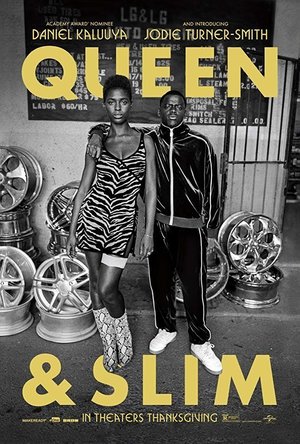

Queen and Slim share a nice, if odd, first date. Driving her home after dinner their night takes a turn as they're pulled over by a police officer. It's clear that he's less than happy, and when he asks Slim to step out of the car with no real reason Queen, as a lawyer, tries to stand for what's right. What happens next leaves them both changed and they need to escape what's coming, but neither are prepared for what it'll lead them to.
Queen and Slim was interesting and yet at times boring. The basic idea is that these two are on the run after committing a crime, that can be a thrilling ride to be on, but between the thrilling, there was a lot of filler. It wasn't bad, it's artistically shot, but at some point that doesn't make up for the lack of scene.
There's also a technique employed that really didn't sit well with me. In those in-between bits when we're shown characters there's a voiceover when they're sitting looking intense. The first time it happened I honestly thought something had gone wrong with the audio but it all went back to normal fairly quickly. Then it happened a second time and I suddenly realised... this is a thing. I didn't feel like it added anything to the film, rather it took me out of the scenes every time.
Our peripheral characters are all solid and I was particularly impressed with the lad playing the mechanics son, Jahi Di'Allo Winston. While he wasn't in a lot of the film his moments were important and held an interesting message about what was occurring in the film.
With our main characters there was a big issue I had from the very beginning. I didn't particularly like Queen as a character. Even considering the events that take place for her outside of the film's main timeline I found her actions to be unbelievable compared to the image of her as a person that we'd already gleaned. In turn, I found the reactions of Slim to be against character too. This led to a lot of other similar issues through the whole film.
Jodie Turner-Smith's performance felt a little flat, while some of that will be to do with the way Queen was written I didn't get any flashes of something unique to latch on to. Daniel Kaluuya also might not have had the best writing to deal with but his performance was much more impressive.
While the story was an interesting one and brings up a lot to think about when it comes to social justice I was almost instantly taken out of it by Queen's actions, and then put off again by the strange voiceovers. I don't think I will need to watch this one again, while there are good bits in Queen and Slim there was way too much that was just okay between them.
Originally posted on: https://emmaatthemovies.blogspot.com/2020/02/queen-slim-movie-review.html
Queen and Slim was interesting and yet at times boring. The basic idea is that these two are on the run after committing a crime, that can be a thrilling ride to be on, but between the thrilling, there was a lot of filler. It wasn't bad, it's artistically shot, but at some point that doesn't make up for the lack of scene.
There's also a technique employed that really didn't sit well with me. In those in-between bits when we're shown characters there's a voiceover when they're sitting looking intense. The first time it happened I honestly thought something had gone wrong with the audio but it all went back to normal fairly quickly. Then it happened a second time and I suddenly realised... this is a thing. I didn't feel like it added anything to the film, rather it took me out of the scenes every time.
Our peripheral characters are all solid and I was particularly impressed with the lad playing the mechanics son, Jahi Di'Allo Winston. While he wasn't in a lot of the film his moments were important and held an interesting message about what was occurring in the film.
With our main characters there was a big issue I had from the very beginning. I didn't particularly like Queen as a character. Even considering the events that take place for her outside of the film's main timeline I found her actions to be unbelievable compared to the image of her as a person that we'd already gleaned. In turn, I found the reactions of Slim to be against character too. This led to a lot of other similar issues through the whole film.
Jodie Turner-Smith's performance felt a little flat, while some of that will be to do with the way Queen was written I didn't get any flashes of something unique to latch on to. Daniel Kaluuya also might not have had the best writing to deal with but his performance was much more impressive.
While the story was an interesting one and brings up a lot to think about when it comes to social justice I was almost instantly taken out of it by Queen's actions, and then put off again by the strange voiceovers. I don't think I will need to watch this one again, while there are good bits in Queen and Slim there was way too much that was just okay between them.
Originally posted on: https://emmaatthemovies.blogspot.com/2020/02/queen-slim-movie-review.html
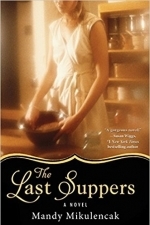
The Last Suppers: A Novel
Book
-A gorgeous novel that finds beauty in the most unlikely of places.- --Susan Wiggs, #1 New York...
fiction
Resilience & Resistance: Building Sustainable Communities for a Post Oil Age
Book
Resilience and Resistance: Building Sustainable Communities for a Post Oil Age is a collection of...

Charlie Cobra Reviews (1840 KP) rated The Curse of La Llorona (2019) in Movies
Jul 7, 2020
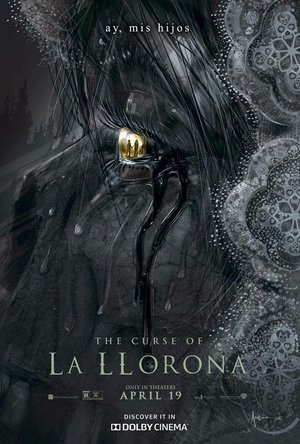
The Mexican Legend
The Curse of La Llorona is a 2019 supernatura/horror movie directed by Michael Chaves and written by Mikki Daughtry and Tobias Iaconis. The film was produced by James Wan through his Atomic Monster Productions. It is based on the Mexican folklore, is Chaves directorial debut, and is set in "The Conjuring" Universe. It stars Linda Cardellini, Raymond Cruz, and Patricia Velasquez.
While playing with his family in 1673 Mexico, a young boy closes his eyes only to re-open them and find his family missing. While searching for them he witnesses his mother drowning his brother in a stream. Frightened, he runs away but is caught and suffers the same fate.
300 years later, in 1973 Los Angeles, Anna Tate-Garcia (Linda Cardellini) works as a social worker and is investigating a well known client of hers, Patrica Alvarez (Patricia Velasquez) whose children have gone missing. Demanding to check on her children's well being, Anna goes to Patricia's home with a police of. She searches for the children and finds them locked in a room. Patricia attacks her as she locates the children and is dragged away by the officer while screaming for her not to open the door. Anna takes the boys, Carlos and Tomas out of the room, ignoring their request to stay in the room where they are safe. That night, two boys are found drowned in a nearby river and Anna is called in to investigate their deaths. At the scene Anna hears Patricia screaming that it was Anna's fault for their deaths. This draws Anna and her family into the frightening supernatural realm of "La Llorona" and her deadly wrath.
I felt like this movie was a tough mix of somewhat silly but still creepy. It was good but had too many jump scares that you could see coming from a mile a way. The acting was generally good with Linda Cardellini really selling the terror of fighting off the evil presence. The children's performances were kind of hit or miss for me.. The tone and atmosphere of the film was great but for me "La Llorona" was scarier when she had her face veiled rather than the highly CGI-ed one they gave her when it was removed. The opening was downright silly to me. I didn't find it scary/creepy at all but a little disturbing. Also for some reason I think they went for too many scares in daylight. I know everything scary doesn't have to be at night, but I felt like it undersold them or didn't do them justice. One aspect that I really liked was how they brought in a faith healer or shaman, in Spanish "Curandero" to the Conjuring Universe. He was an interesting original character addition. Astwo different critics put it, "convincing premise, sufficient drama, decent twists, and enough scares make it worth the watch", but "predictable jump scare treatment and dragging exposition take out the potential from this film despite decent performance Orverall I'd give this movie a 6/10.
While playing with his family in 1673 Mexico, a young boy closes his eyes only to re-open them and find his family missing. While searching for them he witnesses his mother drowning his brother in a stream. Frightened, he runs away but is caught and suffers the same fate.
300 years later, in 1973 Los Angeles, Anna Tate-Garcia (Linda Cardellini) works as a social worker and is investigating a well known client of hers, Patrica Alvarez (Patricia Velasquez) whose children have gone missing. Demanding to check on her children's well being, Anna goes to Patricia's home with a police of. She searches for the children and finds them locked in a room. Patricia attacks her as she locates the children and is dragged away by the officer while screaming for her not to open the door. Anna takes the boys, Carlos and Tomas out of the room, ignoring their request to stay in the room where they are safe. That night, two boys are found drowned in a nearby river and Anna is called in to investigate their deaths. At the scene Anna hears Patricia screaming that it was Anna's fault for their deaths. This draws Anna and her family into the frightening supernatural realm of "La Llorona" and her deadly wrath.
I felt like this movie was a tough mix of somewhat silly but still creepy. It was good but had too many jump scares that you could see coming from a mile a way. The acting was generally good with Linda Cardellini really selling the terror of fighting off the evil presence. The children's performances were kind of hit or miss for me.. The tone and atmosphere of the film was great but for me "La Llorona" was scarier when she had her face veiled rather than the highly CGI-ed one they gave her when it was removed. The opening was downright silly to me. I didn't find it scary/creepy at all but a little disturbing. Also for some reason I think they went for too many scares in daylight. I know everything scary doesn't have to be at night, but I felt like it undersold them or didn't do them justice. One aspect that I really liked was how they brought in a faith healer or shaman, in Spanish "Curandero" to the Conjuring Universe. He was an interesting original character addition. Astwo different critics put it, "convincing premise, sufficient drama, decent twists, and enough scares make it worth the watch", but "predictable jump scare treatment and dragging exposition take out the potential from this film despite decent performance Orverall I'd give this movie a 6/10.
Gareth von Kallenbach (980 KP) rated Watchmen (2009) in Movies
Aug 14, 2019

In an alternate 1985, where Nixon is president, The U.S. won the Vietnam War, and costumed heroes have been banned by an act of the Senate, a superhero is killed. The death of the mercurial entity known as The Comedian (Jeffrey Dean Morgan) sets a string of events into motion that will soon see the world poised on the edge of nuclear annihilation, and the few remaining heroes locked in a life or death race against time to save the world. In the gritty and compelling new movie “Watchmen” by Director Zack Snyder, a clever blend of film noir and gumshoe style films of old combined with action and adventure as well as a deep examination of human frailties to create a film like no other.
No sooner has the death of the Comedian hit the streets (literally), when the edgy vigilante Rorschach (Jackie Earle Haley), begins to suspect that there is a larger and far more sinister plot in effect, one that has targeted the few remaining costumed avengers of New York City. Rorschach’s theory is disbelieved by his former associate Dan (Patrick Wilson), who prowled the streets as Night Owl and is now content to keep to himself, with his days of costumed glory behind him. He keeps his social circle limited to the first Night Owl and visiting with Laurie Jupiter ( Malin Akerman), and her husband, Dr. Manhattan (Billy Crudup).
With his concerns being dismissed, Rorschach is left to do the legwork on the mystery which soon shifts into high gear when he is framed for a murder he actually did not commit and an attempt is made on the life of the other former Watchmen, Ozymandias (Matthew Goode). With Rorschach in prison and surrounded by enemies, Dr. Manhattan, the all powerful and blue skinned being, is forced to take refuge on Mars after Laurie leaves him and a series of accusations are levied against him at a press conference .
It soon becomes clear to all that the death of The Comedian was not a random act of violence or a simple act of revenge, but rather the first salvo in a war against costumed heroes. With the former team in chaos, Laurie to take up residence with Dan, who has long held a torch for her, to defy the government order and suit up again. After saving a group of people from a fire, Laurie and Dan find the passion and purpose that has been missing from their post-hero lives and passionately unite and set out to free Rorschach and get to the bottom of the conspiracy before it is to late.
The film is an amazing mix of comic book action and mystery that includes a suprising amount of mature material that examines everything from humanity’s ultimate destiny to the inner psyche of tortured and flawed individuals. The characters all have their flaws and traumas and compensate by donning masks and taking on new personas. The deeply troubled Rorschach is filled in by some horrific and disturbing flashbacks that show how he became the disturbed and deeply dangerous crusader for justice that he is, so extreme in his measures that he is wanted by the police for his actions. Dan and Laurie try to move on from their past, but find that they are more comfortable in their costumed personas than they are in their day-to-day lives. Dr. Manhattan is perhaps the most dysfunctional of all as he has shut himself off from his wife, humanity, and joy. He has evolved beyond caring for anything but his experiments.
Snyder keeps the nearly three hour film moving at a brisk pace and deftly captures the look and tone of the graphic novel on which the film is based. The opening segment that shows alternate versions of great moments in history is amazing, as is the well choreographed action sequences. Despite being a superhero film, “Watchmen” is a superb mystery and drama that is loaded with interesting characters and clever social commentary. The cast is very strong, and Haley is remarkable as Rorschach. He is utterly captivating whenever he is on the screen and has crafted a true modern anti-hero for the masses.
Some may find the graphic violence and sex in the film a bit extreme, but in order to fully capture the duality of the characters and the dark world that they dwell in, it was in many ways restrained from what is actually implied by the source material. “Watchmen”, is a true marvel and is one of the most entertaining, diverse, and original action films in memory.
No sooner has the death of the Comedian hit the streets (literally), when the edgy vigilante Rorschach (Jackie Earle Haley), begins to suspect that there is a larger and far more sinister plot in effect, one that has targeted the few remaining costumed avengers of New York City. Rorschach’s theory is disbelieved by his former associate Dan (Patrick Wilson), who prowled the streets as Night Owl and is now content to keep to himself, with his days of costumed glory behind him. He keeps his social circle limited to the first Night Owl and visiting with Laurie Jupiter ( Malin Akerman), and her husband, Dr. Manhattan (Billy Crudup).
With his concerns being dismissed, Rorschach is left to do the legwork on the mystery which soon shifts into high gear when he is framed for a murder he actually did not commit and an attempt is made on the life of the other former Watchmen, Ozymandias (Matthew Goode). With Rorschach in prison and surrounded by enemies, Dr. Manhattan, the all powerful and blue skinned being, is forced to take refuge on Mars after Laurie leaves him and a series of accusations are levied against him at a press conference .
It soon becomes clear to all that the death of The Comedian was not a random act of violence or a simple act of revenge, but rather the first salvo in a war against costumed heroes. With the former team in chaos, Laurie to take up residence with Dan, who has long held a torch for her, to defy the government order and suit up again. After saving a group of people from a fire, Laurie and Dan find the passion and purpose that has been missing from their post-hero lives and passionately unite and set out to free Rorschach and get to the bottom of the conspiracy before it is to late.
The film is an amazing mix of comic book action and mystery that includes a suprising amount of mature material that examines everything from humanity’s ultimate destiny to the inner psyche of tortured and flawed individuals. The characters all have their flaws and traumas and compensate by donning masks and taking on new personas. The deeply troubled Rorschach is filled in by some horrific and disturbing flashbacks that show how he became the disturbed and deeply dangerous crusader for justice that he is, so extreme in his measures that he is wanted by the police for his actions. Dan and Laurie try to move on from their past, but find that they are more comfortable in their costumed personas than they are in their day-to-day lives. Dr. Manhattan is perhaps the most dysfunctional of all as he has shut himself off from his wife, humanity, and joy. He has evolved beyond caring for anything but his experiments.
Snyder keeps the nearly three hour film moving at a brisk pace and deftly captures the look and tone of the graphic novel on which the film is based. The opening segment that shows alternate versions of great moments in history is amazing, as is the well choreographed action sequences. Despite being a superhero film, “Watchmen” is a superb mystery and drama that is loaded with interesting characters and clever social commentary. The cast is very strong, and Haley is remarkable as Rorschach. He is utterly captivating whenever he is on the screen and has crafted a true modern anti-hero for the masses.
Some may find the graphic violence and sex in the film a bit extreme, but in order to fully capture the duality of the characters and the dark world that they dwell in, it was in many ways restrained from what is actually implied by the source material. “Watchmen”, is a true marvel and is one of the most entertaining, diverse, and original action films in memory.
Gareth von Kallenbach (980 KP) rated In Time (2011) in Movies
Aug 7, 2019
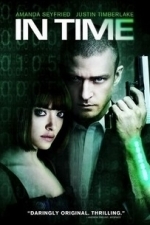
t is said that time is money and in the new film “In Time” this statement takes on an entirely new meaning. In the future we learn that humans have been genetically created to stop aging at the age of 25. Once they reach this selected age, a clock starts to count down from one year. People can obtain more time via work, stealing it from others, or being gifted more time but once their clock hits zero, they expire or “Time Out” as it is called.
As the film opens, we are introduced to Will Salas (Justin Timberlake), a man who is three years past twenty five who lives at home with his mother (Olivia Wilde). Will starts each day with barely enough time on his clock for another day, so he dutifully heads off to work each day to earn more time. As does his mother and everyone he knows since workers are paid at the end of their shifts by having more time added to their accounts. Many need to work daily in order to see the next day. To stop working is to die and since everything from food to rent and clothing is paid for in time from an individual’s account, they often have to make the choice between a transaction or more hours of life.
One evening after work, Will encounters a man named Henry (Matt Bomer), with over 100 years remaining on his clock and cautions the man that in this area he is likely to attract thieves. Will’s warnings go unheeded and soon a group of thugs arrive forcing Will to whisk the man away to safety. During their night in hiding, the man tells Will that after living for over a century, he is tired of the way the system is and how the rich can live forever while the working poor suffer just to live another day.
Will awakens the next morning to find the man gone and that his clock has now been credited the 100 years. Will locates the man just in time to watch him time out with a smile as he watches the sun rise. Flush with new wealth, Will plans to move his mother out of the slums and into a better life but when tragedy strikes, Will decides to move to where the wealth is as to take them for all he can.
Will soon finds himself in a high stakes card game at a casino and in a desperate move finds himself wealthier than he ever imagined. His actions impress very wealthy banking magnet Philippie Weiss (Vincent Kartheiser), who introduces him to his daughter Sylvia (Amanda Seyfried). Will and Sylvia hit it off as she is intrigued by someone who came into money rather than being born with it and imagines what life would be like with some excitement.
Will and Sylvia soon have their worlds turned upside down when Will is suspected in the death of Henry and find themselves on the run from a Timekeeper named Raymond (Cillian Murphy), who wants to bring Will to justice. In a rapid series of events, Will and Sylvia must contend with Raymond, criminals, and a series of unsavory characters to regain their lost time before it is to late so they can implement their master plan to truly make a difference.
The film has some great social commentary and a great cast but is hindered by trying to be too many things. It works well as a science fiction film with elements of action and romance. Sadly the film goes off course by having Will and Sylvia act as a modern day Robin Hood duo taking on the powers-that-be to save the downtrodden masses. While it is a noble effort it derailed the momentum of the story as much of the tension and mystery of the story was lost. If one is wanted by thugs and the authorities, I would think that knocking over one high profile time bank after another would not be the way to keep a low profile.
That being said, despite the flaws, the film works and I found myself thinking about the characters and the setting they lived in days after the I screened the film. I had been concerned that the film would be nothing more than a knockoff of “Logan’s Run” but thankfully the film had enough new content to keep it fresh and interesting. In many ways, “In Time” is science fiction at its best as it allows for timely social commentary and provides a disturbing look at many age old debates on society’s endless quests for wealth, power, and youth.
As the film opens, we are introduced to Will Salas (Justin Timberlake), a man who is three years past twenty five who lives at home with his mother (Olivia Wilde). Will starts each day with barely enough time on his clock for another day, so he dutifully heads off to work each day to earn more time. As does his mother and everyone he knows since workers are paid at the end of their shifts by having more time added to their accounts. Many need to work daily in order to see the next day. To stop working is to die and since everything from food to rent and clothing is paid for in time from an individual’s account, they often have to make the choice between a transaction or more hours of life.
One evening after work, Will encounters a man named Henry (Matt Bomer), with over 100 years remaining on his clock and cautions the man that in this area he is likely to attract thieves. Will’s warnings go unheeded and soon a group of thugs arrive forcing Will to whisk the man away to safety. During their night in hiding, the man tells Will that after living for over a century, he is tired of the way the system is and how the rich can live forever while the working poor suffer just to live another day.
Will awakens the next morning to find the man gone and that his clock has now been credited the 100 years. Will locates the man just in time to watch him time out with a smile as he watches the sun rise. Flush with new wealth, Will plans to move his mother out of the slums and into a better life but when tragedy strikes, Will decides to move to where the wealth is as to take them for all he can.
Will soon finds himself in a high stakes card game at a casino and in a desperate move finds himself wealthier than he ever imagined. His actions impress very wealthy banking magnet Philippie Weiss (Vincent Kartheiser), who introduces him to his daughter Sylvia (Amanda Seyfried). Will and Sylvia hit it off as she is intrigued by someone who came into money rather than being born with it and imagines what life would be like with some excitement.
Will and Sylvia soon have their worlds turned upside down when Will is suspected in the death of Henry and find themselves on the run from a Timekeeper named Raymond (Cillian Murphy), who wants to bring Will to justice. In a rapid series of events, Will and Sylvia must contend with Raymond, criminals, and a series of unsavory characters to regain their lost time before it is to late so they can implement their master plan to truly make a difference.
The film has some great social commentary and a great cast but is hindered by trying to be too many things. It works well as a science fiction film with elements of action and romance. Sadly the film goes off course by having Will and Sylvia act as a modern day Robin Hood duo taking on the powers-that-be to save the downtrodden masses. While it is a noble effort it derailed the momentum of the story as much of the tension and mystery of the story was lost. If one is wanted by thugs and the authorities, I would think that knocking over one high profile time bank after another would not be the way to keep a low profile.
That being said, despite the flaws, the film works and I found myself thinking about the characters and the setting they lived in days after the I screened the film. I had been concerned that the film would be nothing more than a knockoff of “Logan’s Run” but thankfully the film had enough new content to keep it fresh and interesting. In many ways, “In Time” is science fiction at its best as it allows for timely social commentary and provides a disturbing look at many age old debates on society’s endless quests for wealth, power, and youth.