
Search

Mandy and G.D. Burkhead (26 KP) rated Banewreaker in Books
May 20, 2018
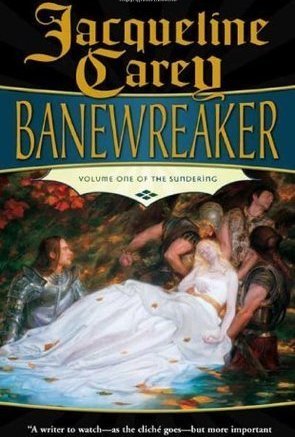


Shelf Life – Banewreaker Will Make You Feel Bad for Sauron
Contains spoilers, click to show
Very few fantasy fans can get away with admitting that they aren’t all that big into sweeping, high epic fantasy à la Lord of the Rings or the Pern stories or everything that Terry Brooks writes. Many non-fantasy fans, however, can point to these tales as examples of why they aren’t into fantasy. Like it or not, it’s hard not to see the latter group’s point, as a lot of high fantasy is riddled with confusing terminology, rehashed stories, and genre clichés. This is not to say that these stories are bad, per sé, just that they can easily turn off readers who aren’t in the right kind of crowd.
Banewreaker, the first book in Jacqueline Carey’s two-part volume The Sundering, will probably not change any opinions in this respect, then, as it’s sweeping high fantasy to the core. This, as it turns out, is both its greatest strength and its greatest weakness.
There are some reviews out there that laud Banewreaker as a masterful examination of subjective viewpoints in an epic fantasy turned into a human tragedy by a simple change of perspective. And they are absolutely correct.
There are other reviews, however, that call the book out as a heap of all of the stalest fantasy clichés piled one atop the other in a confusing and pretentious jumble with a shellacking of purple prose for good measure. And they are also absolutely correct.
Let me explain.
For starters, it would be inaccurate to say that this story is full of clichés. This story is clichés. This story is every familiar and used-up trope you would expect from a high fantasy, all of those details that have been done to death in thousands of other versions until almost nothing that happens seems original anymore.
This is what’s going to turn off a lot of people. But the thing is, Banewreaker has to be this way. It wants the reader to look at all of the things that they’ve come to expect from a fantasy epic and then, by shifting the narrative focus, realize that all of these beloved tropes are actually, when you think about it, tragic as hell.
In other words, it’s Lord of the Rings from Sauron’s point of view.
It’s not a riff, though. It’s not goofy like most of the stuff I go in for. It takes its subject just as seriously as the stories that it’s mirroring, and this is what makes the whole story ultimately so gripping and so moving.
The story starts out like many stories of this magnitude, with exposition stretching back to the Dawn of This Particular Creation. In this case, we have a protogenos world god named Uru-Alat who died and gave rise to seven smaller godlike beings called Shapers. First comes Haomane, who becomes the Lord of Thought and sets himself up as head honcho for this ensuing pantheon. Second is Arahila, the Basically a Love Goddess; and third is Satoris, whose purview was “the quickening of the flesh,” which is high fantasy speak for sexy times. Four more Shapers come after this who, for the sake of brevity, we’ll be glossing over.
To summarize the important godly exposition, the Seven Shapers set about shaping the world to the surprise of no one. Haomane creates elves (here called Ellyl, but if you’ve ever even looked at a fantasy, you know that they’re the elves here), Arahila creates humans, and Satoris doesn’t create anything because he’s busy hanging out with dragons and learning their wisdom. Satoris grants his fleshy quickening to the humans but not the elves, because Haomane didn’t want his elves to do that. Then Haomane decides he doesn’t want the humans to do that either, but Satoris refuses to take the gift away again. Conflict escalates, god wars ensue, and the world splits into two continents, with Satoris ostracized from his brethren on one and the remaining Shapers on the other. By the time the dust has settled, Satoris is scarred and burned pitch black, living in a mostly dead land thanks to Haomane’s wrath, but with a dagger in his possession that is the only weapon capable of killing any of the Shapers.
The story itself picks up thousands of years later, with Satoris as the Satan/Sauron stand-in living in a forbidding land surrounded by classically evil things like trolls, giant spiders, and insane people. Since Haomane is the head god, the rest of the world believes Satoris to be a terrible figure of evil and betrayal, while Satoris’s few allies know him as a pitiable and misunderstood figure who only ever wanted to honor his word and do right by his own sense of morality rather than the dictates of his elder brother god king.
From here the plot becomes the typical Army of Good vs. Army of Evil adventure, but with the protagonistic focus on Satoris and his allies. His trolls we see not as a mindless horde but as a simple, honorable people who happily serve their lord because he happily serves them right back. The mad individuals inhabiting his fortress are castaways from normal society with nowhere else to go. And the giant spiders just happen to live there and be bigger than normal, with no sinister intentions beyond that.
And just like that, by actually showing us the home life of the ultimate in evil fantasy tropes, we see how easily one side’s view of evil is another’s view of good. In doing so, Banewreaker becomes perhaps the first sweeping fantasy epic with no real bad guy, just two sides of an unfortunate conflict. Both sides have their likeable characters, both sides seem from their view to be in the right, and pretty soon you, as the reader, will stop cheering for either one, because whenever one person that you like succeeds it means that another person whom you also like is failing.
In fact, the closest thing that this story has to a clearly-labeled “evil” character is the sorceress Lilias, and even then, she’s not evil so much as a woman who has done some bad things for completely understandable reasons. Lilias, in fact, is one of the most pitiful characters in this whole saga of pitiable characters, with her fears and attachments closely mirroring those of most readers, only amplified by her immortality and magical powers. She is afraid of dying. She wants to be more in the grand scheme of things than just another man’s wife or another country’s momentary ruler, both of which would just be tiny moments in a long history. She likes her youth. She likes having pretty things and pretty people around her. And from her interactions with her dragon mentor and apparently only friend, Calandor, we see that she is also capable of intense affection and even love just as she is capable of indulging in self-centered self-interest that, if not particularly a good trait, is also one that she is not alone in possessing.
Banewreaker, then, is a story with a large cast of characters but very few actual heroes or innocents as well as very few outright villains, which is exactly what it sets out to be. Those who love it and those who hate it both seem to blame this quality in particular for their feelings. The biggest complaint leveled against it (that I have read, anyway) is that the people we should be rooting for do not deserve our sympathy, while the people we should be rooting against are more misguided and unwilling to see things in another light than deserving of our scorn.
This is true. But if it’s a flaw, it’s an intentional one. And if it makes you feel like you shouldn’t be cheering for either side at all in this conflict, that’s the point. This is a story of clichés, yes, but it has something that it needs to say about these clichés and, in doing so, about the subjective and impossibly nebulous quality of morality in general.
In short, here again is another fantasy story about the Forces of Good wiping out an entire nation dedicated to their “evil” enemy. And as the story points out, even if you believe in that cause, you’re still wiping out an entire nation of people. No way is there not a downside to that. Seeing things in a black-and-white morality just means crushing a whole lot of important shades of gray underfoot.
Whether or not you like Banewreaker, then, depends in large part upon how much you realize that Carey as an author is being self-aware. As someone who read and still hasn’t stopped being awed over her Kushiel series, I can’t claim complete objectivity in this area, because I came to Banewreaker already in love with her. I can say, however, that unless you have an intense and searing aversion to ornate and sweeping style, this book is worth any fantasy-lover’s time – especially if you’ve ever felt a pang of empathy for all of the poor villainous mooks that fantasy heroes tend to mow down without a thought because they were the wrong kind of ugly.

Hadley (567 KP) rated The Woman in Black in Books
Jan 1, 2020


Great paranormal aspect (1 more)
Good narrative
Overuse of some words (1 more)
Some scenes that could have been written better
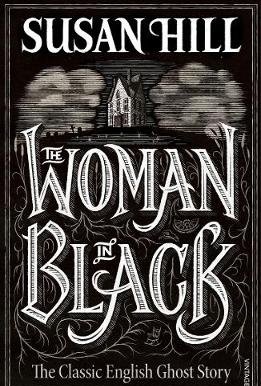
In Susan Hill's novel, "The Woman in Black," she puts a small twist on an urban legend that is widely known to most - - - 'the lady in white,' which if you haven't heard of it, it's a spectral woman that is seen throughout the world, dressed all in white, only to show up in places of tragic events. This novel only has one main character, Arthur Kipps, a 23-year-old young man who is a lawyer in late 1800's England. He usually takes care of the conveyance of property leases, but one day, when his boss, Mr. Bentley, hands over a case and responsibility of finding a newly deceased's Last Will and Testament for their lawfirm, Kipp graciously accepts the new adventure without knowing that what is ahead will haunt him the rest of his life.
As Kipp soon finds out after traveling to the town just outside of the deceased's home, there is more to this woman, Alice Drablow, than just an old hermit- - - anytime her name is mentioned, people fall silent; the same goes for her home: Eel Marsh House. Kipp doesn't allow this to put him off from doing his job, but when he finds out about the marshes the house lives on, he is told that there are only certain times of the day that he can cross before the marshes become too flooded to cross. 'The Woman in Black' has spine-chilling moments and great descriptive details to make this a quick ghost story to be enjoyed.
Before Kipp heads off to the Eel Marsh House, he must attend Mrs. Drablow's funeral; he is accompanied by a man named Mr. Jerome, an agent that had dealt with Mrs. Drablow's property and land business while she was alive. While at the church, only one other person turns up for the funeral: a woman dressed all in black. Kipp takes note that this woman does not look well and, being the gentleman that he is, tells himself that he will offer his arm to her for stability after the funeral, but when they are leaving the church yard, the woman is suddenly gone. Kipp brings this up to Mr. Jerome, but he merely states that they were the only ones at the funeral.
The best scene to come is Kipp's first night at Eel Marsh House, where he experiences his first real scare in the ruins close by the house that is a dilapidated cemetery. " Suddenly conscious of the cold and the extreme bleakness and eeriness of the spot and of the gathering dusk of the November afternoon, and not wanting my spirits to become so depressed that I might begin to be affected by all sorts of morbid fancies, I was about to leave, and walk briskly back to the house, where I intended to switch on a good many lights and even light a small fire if it were possible, before beginning my preliminary work on Mrs. Drablow's papers. But, as I turned away, I glanced once again round the burial ground and then I saw again the woman with the wasted face, who had been at Mrs. Drablow's funeral. She was at the far end of the plot, close to one of the few upright headstones, and she wore the same clothing and bonnet, but it seemed to have slipped back so that I could make out her face a little more clearly. "
Over the entire course of the book, Kipp only visits the house one more time after this incident. The book has a good story, but it isn't flawless; first, there is the overuse of the word 'estuary,' which is practically used on every page whenever Kipp is at the Eel Marsh House or discussing it. It gets very tiresome. There is also instances of bad writing, where I feel that Hill could have delivered the scenes better than she did: Kipp changing his mind the very next sentence (if you read my reviews pretty regularly, you will realize that I can't stand it when a character contradicts themselves within a page or two), and then Kipp saying he can't do something, than directly after, does it. When you read this book, you will realize that Kipp is not the type of character that would change his mind on a whim.
Kipp is also an interesting character for a male set in this era. Most men in the late 1800's were stoic and refused to show an ounce of emotion in public, but Kipp is not afraid to have other men see him fall apart, and he is also very considerate of other people. There isn't much of a backstory on where Kipp came from or how his parents raised him, but it wasn't really needed for this story. Yet, we meet Kipp's step-children and his first and second wife, without too much of a story about them, so when certain things happen (to not give a spoiler), it doesn't really leave an impression.
There isn't much I can say that wouldn't give away what makes this story enjoyable to read. Overall, this is a good and quick ghost story that may cause shivers for some, but even if it doesn't, the Woman in Black is a must-read for lovers of the paranormal. To me, this seems like a good book to read while traveling because it's easy to pick up and set down without getting lost as to what was going on.

Purple Phoenix Games (2266 KP) rated Azul: Stained Glass of Sintra in Tabletop Games
Oct 15, 2019

Sometimes, finding a game that the entire group loves can be extremely difficult. Such was not the case when Purple Phoenix Games played Azul. We immediately fell in love with it, as you can see by its well-earned Golden Feather Award. So when Azul: Stained Glass of Sintra was released, we knew we had to try it! A reimplementation of a game we all loved – we were so stoked to get it to the table. How does this ‘sequel’ hold up to the OG Azul? Keep reading to find out!
For many years you have worked as a tile layer, creating uniquely beautiful mosaics that adorn walls all around the world. Taking your expert skills, you’ve decided to hone your talent into a new form of mosaic decoration – stained glass windows. Select the most colorful glass combinations to create elaborate and beautiful designs, all while being careful not to waste or break any of your supplies in the process! Years of tile-laying have resulted in a steady hand, but glass is a different story. Does your talent and eye for design transcend materials, or are you better left to your familiar ceramic tiles?
Disclaimer: I do not intend to rehash the entire rulebook in this review. I will briefly go over the turn order, but will leave the specifics for you to discover in the rulebook! – L
Like Azul, Azul: Stained Glass of Sintra is a game of pattern building, set collection, and tile placement. To set up, each player receives a palace board, 8 double-sided pattern strips, and glazier (pawn) in their chosen color. All players need to select the same side, A or B, for their palace boards, but the pattern strips can be placed with either side face-up. Place your glazier above the left-most pattern strip, and you are ready to go! The designated score-keeper sets up the score board – placing each players’ scoring cube on the score track and broken glass track, as well as randomly placing 1 tile of each color on the round tracker. Much like OG Azul, a certain number of factories are in play, each populated with 4 pane tiles. Now the game can begin!
On your turn, you may do one of two things – Advance a pattern, or Move your glazier to the left-most pattern strip. If you choose to advance a pattern, you complete these three steps: Select pane pieces of one color from a factory or the middle of the table, place the pieces on one of your pattern strips, and check to see if the pattern is complete. Easy enough! There are a few placement restrictions to keep in mind, and they are detailed in the rulebook. Moving on, after placing your tiles, if the pattern strip is not yet full, your turn is over and play continues with the next player. If you have successfully filled the entire pattern strip, you get to immediately score that window, and then your turn ends. Specific steps for scoring are found in the rulebook. The other action available to you on your turn is to move your glazier back to the left-most pattern strip. Once you do this, your turn is over. Play continues over six rounds, and the player at the end of the game with the most points is the winner!
So how does Azul: Stained Glass of Sintra hold up? I think it’s a pretty great game. It’s very mechanically and thematically similar to the original Azul, but there is enough of a difference in gameplay that keeps it interesting. It doesn’t just feel like the exact same game to me, even if there are many similarities between the two. There definitely is a good amount of strategy involved, and I think the addition of the glazier (which can sorta restrict your placement options) adds a new level of complexity to the game. Do you dare ‘waste’ a turn to reset your glazier, or do you risk the points and try to complete your current pattern strip?
Another great thing about this game is the variability of it. Each player receives 8 double-sided pattern strips to begin the game. The strips can be placed with whichever face up or down that you want. So no two players will ever have the same setup, just as you will probably never have the same setup yourself between plays. One wrong placement could maybe end up costing you the game! There is no ‘right’ setup, and the fact that everyone’s setup will be different makes the game a little more unique.
Of course, the components are great and the tiles are so much fun to handle. Unlike OG Azul, these tiles are semi-transparent and crystalline, giving them the semblance of actual glass. The pattern strips/palace boards are good, sturdy cardboard, and can definitely withstand the amount of manipulation they see each game. My one qualm is with the score tracker. Instead of moving linearly, the score tracker moves kind of zig-zag-y around the board, and it takes me a minute sometimes to read the points and move my marker quickly because my eyes have to figure out the score line. Yeah, it looks cool, but its just a little inconvenient for me while playing.
Overall, I think Azul: Stained Glass of Sintra is a great ‘sequel’ to Azul. It feels familiar in mechanics and theme, but different enough in overall gameplay that I think it is a good stand-alone reimplementation. And guess what? Another Azul game is in the works! Titled Azul: Summer Pavilion, it is yet another game of tile drafting/placement and set collection. Since I have high praise for Stained Glass of Sintra, I am definitely looking forward to this newest version of Azul, coming soon! Purple Phoenix Games gives Azul: Stained Glass of Sintra, a colorful 9 / 12.

Gareth von Kallenbach (980 KP) rated John Carter (2012) in Movies
Aug 7, 2019

Edgar Rice Burroughs is famous for literary creations that have inspired countless generations and given birth to numerous film and television projects. You would be hard-pressed to find anybody not familiar with Tarzan, one of Burrough’s great series. John Carter of Mars is another one, and at long last has finally made it to the big screen.
The film is based on the first book of eleven, a series that began in 1911 and ran through 1964 when the last book was published posthumously. John Carter stars Tylor Kitsch as the title character, a bitter Civil War veteran who, despite an accomplished service record, no longer wants anything to do with the military. Instead he is fixated upon finding a cave of gold.
Despite the fact that he served for the Confederacy, John Carter draws the attention of the U.S. Cavalry whose leader is anxious to recruit an officer of Carter’s skills and experience to aid them in their skirmishes with the Apache tribes. No longer willing to fight or get involved, Carter declines the offer but soon finds himself caught in the middle of an unplanned battle between both sides. As he attempts to find shelter for himself and a wounded officer, Carter accidentally stumbles upon the cave of gold he was seeking.
Carter’s surprise soon turns to shock when he’s attacked by a mysterious individual who presses a glowing amulet in his hand and utters a phrase that transports John Carter instantly to the planet Mars. Of course, Carter at first has no idea where he is but soon realizes that he has incredible leaping abilities due to the lower gravity of the planet.
Shortly after his arrival he gains the attention of Tars Tarkas (Willem Dafoe), the chief of a race of tall, skinny, four armed alien warriors. At first intrigued by Carter, Tarkas and his people become divided over what to do with the new arrival. This becomes further complicated when airships arrive and begin a massive gunbattle. Carter immediately leaps into action with his newfound ability which quickly gains the attention of Dejah Thoris (Lynn Collins), princess of the city of Helium.
It is learned that Princess Dejah is being forced to marry an evil warlord who possesses an awesome destructive ability and is using it to subjugate all those he encounters. Desperate to save their city, the princess is offered up to appease the warlord. Naturally this does not sit well with the free-spirited and feisty princess and before long she and John Carter find themselves united in their quest to save Helium. Despite his reluctance to get involved and fight, Carter realizes the princess may be his only way to get home.
A stranger in a strange land, with danger all around him, John Carter takes his audience on an epic adventure. Despite having little star power, the movie works exceptionally well with amazing special effects. The CGI used to create the various alien characters infuses them with personality and vitality rarely seen in artificially created characters. The film is visually spectacular from the legions of aliens locked in combat, to the stark splendor of the planet and its inhabitants.
Even though the film was presented in converted 3-D which, as many of you will know has long been a very touchy subject with me, the final product was actually better than most conversions. While it was nowhere near the quality of films shot in 3-D, it nonetheless offered an immersive quality to epic battle scenes and did not rely on the gimmicky trick of trying to make things pop out of the screen in order to sell the film.
Kitsch does a great job handling the action of the film and manages to interact with his CGI costars in a believable enough manner to establish as much chemistry with them as he did with the flesh and blood Collins. Although some moments of the film drag, it does have enough action to sustain the nearly two-hour runtime with a touch of humor and romance thrown in for good measure.
I first became aware of the film a year ago at the D23 Expo when Disney showed a few clips and had Kitsch, Collins and Dafoeon hand to promote the pending release. While intriguing, I did not see anything that really made the film stand out as a must-see. I am very happy to say that upon seeing the completed film, the scenes that were shown to us not only had even greater effects in the finished product but were also much more entertaining and dynamic once shown within the full context of the story line.
Director Andrew Stanton, who has made a name for himself with his animated films at Pixar, skillfully blends live-action and CGI to create a very energetic and enjoyable action-adventure film that was a very pleasant surprise.
While the acting, character development, and plot are nothing spectacular in and of themselves, they combined well and set the stage effectively for what should be a series of John Carter films in the future.

Daniel Boyd (1066 KP) rated Batman v Superman: Dawn of Justice (2016) in Movies
Jul 24, 2017

Batfleck (1 more)
It's every comic fan's childhood dream
Sloppy editing (2 more)
Bad performances
Poor script
A Whole Mess Of Awesome
Contains spoilers, click to show
Okay, if you are reading this I assume you have at least read a few other reviews of the movie, as it is all that anyone is talking about online at the minute, so what is left to say I hear you ask? Well first off I’ll give you some context, for the last three years I have been reading and collecting comics to an obsessive level and it is due to this movie. I have always been a superhero fan (especially Batman,) and I had read some comics in the past, but when this movie was announced at San Diego Comic-Con in 2013, (3 years ago!!) I was so hyped and I decided that I had to read the comic that this film was taking inspiration from. So I went to my local A1 Comics and bought The Dark Knight Returns, which underwhelmed me but that’s another story. Since then I have become a huge comic book fan and that is thanks to this movie. Seriously what was not to like here, it would have been so difficult to get this wrong, it’s Batman fighting Superman, how amazing is it that this actually happened? And yet they still managed to fuck it up…
Do you read? You will. And then realise how superior the comic that this is based on is to the actual movie itself, (and I’m not even a massive fan of the comic.)
I saw 10 Cloverfield Lane last week and while that movie wasn’t perfect, what made that a great movie is exactly what makes BvS a subpar movie. 10CL had a small team of people working on a restrictive budget, so every aspect of the movie was scrutinised and perfected to make up the end product and that attention to detail really paid off. BvS had a huge budget and a massive team of people working on it and I think that is what gives the movie it’s unfocused and sloppy feel. The script is a mess, there are clearly scenes cut, the editing is jarring, not all of the performances were up to scratch and while the imagery and visuals are incredible, the best way to describe this movie is all style and no substance. I like Zack Snyder, I love his Watchmen movie, I like 300 and I enjoyed Man of Steel, but I can’t help but feel that this is his fault. His decision to make years of comic book stories into one two and a half hour movie honestly baffles me. The events of this movie should have taken place over at least three movies, which I will discuss more in the spoiler section of this review, so stick around for that if you have seen the movie already. This movie really is all over the place and the pace and tone are random at best and if you have seen the trailers then you have essentially seen the movie. Let’s talk about the best part of the movie, which is quite easily Ben Affleck’s Batman and Jeremy Irons’ Alfred. Seeing the two characters and their chemistry are worth the ticket price of the film alone. This is probably the most faithful to the source material Batman that we have had on the big screen to date, except for one pretty major change. Batman in DoJ is pretty much Punisher in a cowl. During the Batmobile chase (which was really fucking awesome by the way,) he questionably kills some goons. I mean, some of them could have survived like, if they had Wolverine’s healing powers I guess? But then there is that badass warehouse scene that we see in the trailers and during that he near enough shoots some guys himself. If you can get over this and see this as an alternate version of Batman you should be able to appreciate Affleck’s performance though, which by the way is amazing, he knocks it out of the park. I would have liked some kind of reference to it, even a scene where he discusses breaking his code with Alfred, just a few lines would have made me get on board with this version of the character a lot quicker. Critics have been calling Henry Cavil’s Superman performance wooden, but I think that is too harsh, he is perfectly serviceable but he isn’t going to be praised for his memorable performance either. Gal Gadot as Wonder Woman is badass, my only complaint is that she isn’t in the movie enough as Wonder Woman. Jesse Eisenberg is the stand out worst performance in the movie. It isn’t necessarily a bad performance, it just does not fit that character at all. He was truly miscast here, if they had cast him as Riddler in the Batman solo movie and he put in this performance I would be praising him like mad. Lex Luthor shouldn’t be crazy on a surface level, he should be a respectable businessman and an intellectual force to be reckoned with and he will go out of his way to ensure that this is what everyone sees him as, it is only ever the people closest to him that that he allows to see him crack. He certainly shouldn’t be making strange noises and gestures like someone with OCD or a mental issue. Also Doomsday is silly and is just shoehorned in at the end for the sake of giving the trinity and enemy to battle against.
Do you pee? You will. After sitting though near three hours of this garbage.
So to give my overall opinion before I get into spoilers, I will say that I enjoyed this movie better than Man of Steel, but only slightly and I dislike it for a lot of the same reasons. Just like Man of Steel there are parts of this movie that I adored and parts that I hated. Mixed emotions is an understatement. In my mind any movie above a 7 is a great movie and unfortunately I can’t call this a great movie. I fully believe that everyone should see this movie and form their own opinion, especially since reactions have been so mixed, but I felt that it simply didn’t live up to the hype that it set for itself and I feel like Zack Snyder may be doing more harm than good setting up the DCU. 6.5/10.
Do you see? You will. Or at least you better have seen it by now because I am about to spoil the shit out of the whole movie.
Like I said earlier, the events of the movie really should have been split across several movies and explored more rather than rushed through at a breakneck speed. We should have had a whole movie on Batman V Superman, the conflict ideals between them and the discussion of whether or not this world needs a Superman. Then we should have had a movie just based on the dawn of the justice league, with Batman and Superman eventually understanding each other and becoming friends and with way more scenes with Wonder Woman and a proper introduction to the other characters rather than the literal plot device USB stick we got in BvS. Then we should have had a few Justice League movies and once Superman was an established character within the universe, they should have killed him off then and did the Death and Return of Superman story, not in this one where Batman and Wonder Woman hardly know him and the public still don’t know whether he is good or bad. Also if Batman kills now, what reason is there for the Joker to still be alive? The whole point of their relationship is that Batman won’t kill Joker because of his code and Joker won’t kill Batman because he loves fighting him, but if Batman has no code and he has been Batman for years then he really should have killed Joker a long time ago. I did enjoy Batfleck and I am very much looking forward to his solo Batman movie, but BvS is rushed and sloppy. So I’ve said my piece, now let the fanboy hate commence.
Gareth von Kallenbach (980 KP) rated Good Boys (2019) in Movies
Aug 16, 2019
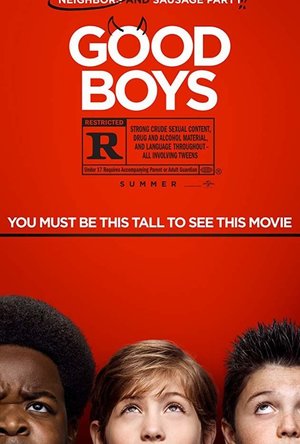
Every generation has a coming of age classic that they can point to and say that it resonated with them. Whether it be classic John Hughes movies such as Pretty in Pink or The Breakfast Club, there is always something that defines the youth of that generation. Whether it be the situations that the main characters find themselves in, or even something as simple as the music and fashion, there is usually something that will strike a familiar chord with the audience. Even when I go back and rewatch the classics, it reminds me of a simpler time, when my life struggles involved asking a girl to a dance or attempting to fit in to any number of awkward first-time moments that each of us at one time or another go through. Good Boys is such a movie, about the awkwardness and naivety of youth, even if the kids had a bigger potty mouth than I did as a child.
Max (Jacob Tremblay), Thor (Brady Noon), and Lucas (Keith L. Williams) are a group of 12-year old boys known to their family and friends as the Bean Bag boys. Why do they refer to themselves as the Bean Bag Boys you ask? Why because they sit on Bean Bag chairs of course. Entering 6th grade they are trying to stand out but tend to do so in all the worst ways. Thor loves to sing but is bullied to not sign up for the school musical because it’s not a cool thing to be. Lucas is dealing with his parent’s new divorce and has a propensity to always tell the truth (even when the truth potentially causes more damage than a lie). Then there is Max, a young man whose hormones are beginning to take over his brain and can only think of the love of his life (and future wife of course) Brixlee.
Max being to shy to even look at Brixlee when she is looking his way is finally given a golden opportunity when he is invited by popular kid Soren (Izaac Wang) to a kissing party. The idea of being able to not only speak to Brixlee but be able to kiss her causes a rush of emotions that gravitate from excitement to terror. Max, believing that the way to his true-loves heart is by being a kissing expert recruits his fellow Bean Bag Boys on a quest to learn to kiss.
His quest will take him from spying on his “nymphomaniac” neighbor, to a treacherous highway crossing to get to the mall. They will have to brave frat houses, and potentially risky run-ins with pedophiles and the police, all to learn how to be a better kisser. Of course, there is plenty of laughs and situations that only naïve children could get themselves into, all of which had me and the entirety of the audience laughing the entire way through
Good Boys is a movie that relies on the audience connection with the main characters to succeed. Without that, you are left with a movie full of foul language and crude humor which have lately become a dime a dozen. Thankfully the casting of Good Boys far exceeds any expectations I had going into the theater. Comedies of these type lean heavily on the actors to carry the story through the hi-jinx that are around every corner and the actors were more than up to the challenge. Jacob Tremblay portrays perfectly the fear that every young boy (or girl) goes through when they imagine their first kiss. Keith L. Williams shows the heart break that a young kid goes through when deal with personal tragedy (in this case his parents’ divorce) and yet still remains true-to-himself anyway. Brady Noon excels at his desire to be cool, and still struggle with how coolness affects what he truly loves and wants to ultimately do. All three as a group convincingly take us on a journey that may seem outlandish, yet ultimately feel believable as well.
Good Boys also has a strong supporting cast, that add further dimension to the film. The two “old” girls Lily (Midori Francis) and Hannah (Molly Gordon) are fantastic in their portrayal of two women who simply want their drugs to get high. They will go to almost any lengths to get them back from the boys who stole them and yet end up becoming a bigger part to the film as a whole. Even the well meaning yet clueless parents of Lucas (Lil Rel Howery and Retta) add to the laughs as a couple trying their best to protect their son even as their own lives are driven apart.
Good Boys may come across in previews as a crude comedy with loads of foul language and sexual situations. While at first glance that may be what it is, as you pull back the layers you soon begin to realize that it’s a story, not about the words that are said, but the innocence of youth and what it means to grow apart as friends. The laughs are non-stop and the language excusable because of the innocence of those on the screen who are spouting them. As parents maybe you’d be looking to wash their mouths out with soap, but as the audience you can’t help but think how innocent they truly are. Good Boys is a movie that will resonate with many in the audience, who likely went through some of these very same dilemmas in their own coming of age stories. Maybe not through paintball fights at a frat house, or crossing a busy freeway, but we each have our own unique stories that helped to mold us into who we are today. It’s funny how watching a film like this can make you reminisce on your own experiences, even if it isn’t on the big screen for all to see.
4 out of 5 stars
http://sknr.net/2019/08/14/good-boys/

5 Minute Movie Guy (379 KP) rated Angel Has Fallen (2019) in Movies
Sep 16, 2019
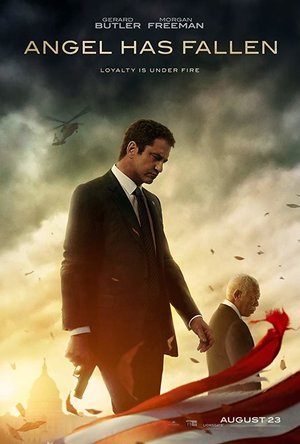
After putting in plenty of years and two prior movies spent protecting the President, Secret Service member Mike Banning is up for promotion. In Angel Has Fallen, the third installment of the Fallen franchise, Banning has been personally hand-picked by President Allan Trumbull to take over as the new Secret Service Director. Trumbull tells him the good news directly during a getaway fishing trip, but then things quickly turn bad when a drone attack attempts to assassinate the President. Banning is able to successfully save himself and the President, but the attack kills all the rest of the Secret Service members on site and the aftermath leaves Trumbull in a coma. Planted DNA evidence linking Banning to an involvement in the attack leads to his arrest, and with the President unconscious, he has no other witness to clear his name. Banning’s obviously been framed and set-up and will have to escape from authorities to find out who is responsible, and to also protect the President from any further attempts on his life.
Directed by Ric Roman Waugh, Angel Has Fallen is a film that starts off pretty well, yet I feel that the whole narrative of Banning being so easily framed is pretty hard to believe, especially given that he’s been the hero of two films already. It’s the driving force of the film’s story and yet it seems highly questionable to me that the intelligence committee would be so quick to blame it all on Banning considering his reputable history. Naturally any attack on the President is taken very seriously, but the FBI is extremely quick to condemn the man that just saved his life. I think it’s the weakest part of the story, although story is not an area this film ever really excels at. I would even say that most of its attempts at being smart usually fall flat. Regardless, this is the kind of movie that would be best enjoyed if you didn’t take it too seriously. It’s in many ways a throwback to the macho action movies of yesteryear, and that’s where it makes up for its shortcomings.
As the first film I’ve seen in this series, I admittedly had low expectations for it. If not for my dad wanting to see it, I probably would have skipped it entirely, but in truth it turned out to be better than I had anticipated. It’s also been the number one movie at the box office for two weeks running, so what do I know? I must confess that ever since seeing Den of Thieves last year, I’ve instantly become a huge fan of Gerard Butler, whose filmography I’ve largely overlooked. I love his energy, his over-the-top acting and his tough guy persona. He’s a great fit here in Angel Has Fallen as Banning and is enjoyable to watch, even if at times it can be a little hard to believe that he’s somehow always the smartest guy in the room.
The rest of the cast in the movie is respectful as well. Morgan Freeman is a comfortable choice as President Trumbull, and he truly makes me long for a time when we had a sane and competent President. It’s a rather reserved role for Freeman, as he spends most of the runtime in a coma. Still, he’s a graceful and welcome presence who has at least a couple moments to shine. Jada Pinkett Smith has the unfortunate role of playing the FBI agent who orders Banning’s arrest, and I wish she had a bit more to work with. Nick Nolte plays Banning’s estranged father Clay, a paranoid war veteran living off the grid, and he’s one of the highlights of the film. I enjoyed his character’s relationship with Banning, and he and Butler play off each other well. Danny Huston also gives a worthwhile performance as Banning’s former military companion Wade Jennings.
Despite having the appearance of a run-of-the-mill, rescue-the-President type of action movie, the action is actually for the most part quite admirable. Right from the get-go, it makes an impressive statement with its tense and exciting introductory scene which feels reminiscent of tactical military-style video games. The movie is heavy on explosions, shootouts, and hand-to-hand combat, and its action is generally fun. There’s also an impressive final stand-off that’s surprisingly well-planned and executed. It’s in moments like this where the movie demonstrates its intelligence and expertise. If not for these strong action sequences, I feel the movie as a whole would have suffered tremendously, but it rightfully delivers on what we came to see. Of course, not all of the action is stellar, and there’s a clunker of a car chase thrown into the mix, but overall I was entertained.
One area where the movie could have used some more improvement was with the special effects. They’re sufficient in the sense that they still clearly convey what the movie is trying to show, but a lot of it looks noticeably fake. It’s unfortunate, but I also don’t believe it was ever a major distraction. Another issue with the film is that its run-time feels a little long and there are some subplots that I really couldn’t care less about. It’s your standard government scheming and political conspiracy stuff, complete with all of the twists you would expect, but it isn’t particularly interesting, even if it does explain the purpose of the initial attack on the President.
Overall, I had a better time with Angel Has Fallen than I would have imagined. It’s far from great, but it’s good enough that I’ll probably now check out the two previous Fallen films at some point. The story might leave a lot to be desired, but the action sequences help fill the void. I would recommend it for fans of action movies, or anyone who likes Gerard Butler. It’s not something anyone needs to rush to the theater to see, but if you’re looking for a little action to end your summer with, it should do the trick.

Bob Mann (459 KP) rated Tenet (2020) in Movies
Aug 28, 2020
Spectacular action set pieces done "in camera" (1 more)
Branagh and Debecki, both superb
Sound mix makes dialogue unintelligible (1 more)
In the words of Huey Lewis, "You're too darn loud"
Only Nolan and Schrödinger’s cat knows what’s going on.
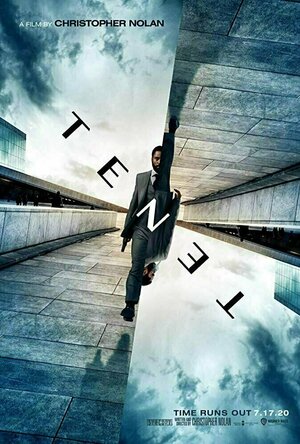
Tenet is the long awaited new movie from Christopher Nolan. The movie that's set to reboot the multiplexes post-Covid. It's a manic, extremely loud, extremely baffling sci-fi cum spy rollercoaster that will please a lot of Nolan fan-boys but which left me with very mixed views.
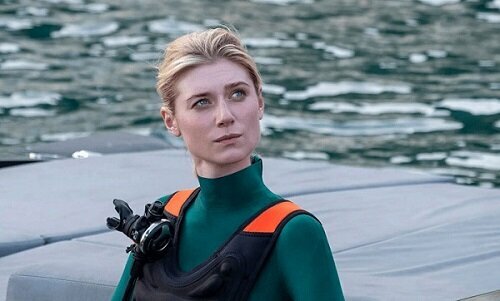
How to write a spoiler-free plot summary? John David Washington (Denzel's lad) plays "The Protagonist" - a crack-CIA field operative who is an unstoppable one-man army in the style of Hobbs or Shaw. Recruited into an even more shadowy organisation, he's on the trail of an international arms dealer, Andrei Sator (Kenneth Branagh in full villain mode). Sator is bullying his estranged wife Kat (Elizabeth Debicki) over custody of their son (and the film unusually has a BBFC warning about "Domestic Abuse"). Our hero jets the world to try to prevent a very particular kind of Armageddon while also keeping the vulnerable and attractive Kat alive.
This is cinema at its biggest and boldest. Nolan has taken a cinema 'splurge' gun, filled it with money, set it on rapid fire, removed the safety and let rip at the screen. Given that Nolan is famous for doing all of his 'effects' for real and 'in camera', some of what you see performed is almost unbelievable. You thought crashing a train through rush-hour traffic in "Inception" was crazy? You ain't seen nothing yet with the airport scene! And for lovers of Chinooks (I must admit I am one and rush out of the house to see one if I hear it coming!) there is positively Chinook-p*rn on offer in the film's ridiculously huge finale.
The 'inversion' aspects of the story also lends itself to some fight scenes - one in particular in an airport 'freeport' - which are both bizarre to watch and, I imagine, technically extremely challenging to pull off. In this regard John David Washington is an acrobatic and talented stunt performer in his own right, and must have trained for months for this role.
Nolan's crew also certainly racked up their air miles pre-lockdown, since the locations range far and wide across the world. The locations encompassed Denmark, Estonia, India, Italy, Norway, the United Kingdom, and United States. Hoyte Van Hoytema's cinematography is lush in introducing these, especially the beautiful Italian coast scenes. Although I did miss the David Arnold strings that would typically introduce these in a Bond movie: it felt like that was missing.
The 'timey-wimey' aspects of the plot are also intriguing and very cleverly done. There are numerous points at which you think "Oh, that's a sloppy continuity error" or "Shame the production design team missed that cracked wing mirror". Then later in the movie, you get at least a dozen "Aha!" moments. Some of them (no spoilers) are jaw-droppingly spectacular.
Perhaps the best twist is hidden in the final line of the movie. I only processed it on the way home.
And so to the first of my significant gripes with Tenet. The sound mix in the movie is all over the place. I'd go stronger than that... it's truly awful (expletive deleted)! Nolan often implements Shakespeare's trick of having characters in the play provide exposition of the plot to aid comprehension. But unfortunately, all of this exposition dialogue was largely incomprehensible. This was due to:
- the ear-splitting volume of the sound: 2020 movie audiences are going to be suffering from 'Tenetis'! (that joke © David Moody, 2020);
- the dialogue is poorly mixed with the thumping music by Ludwig Göransson (Wot? No Hans Zimmer?);
- a large proportion of the dialogue was through masks of varying description (#covid-appropriate). Aaron Taylor-Johnson was particularly unintelligible to my ears.
Overall, watching this with subtitles at a special showing might be advisable!
OK, so I only have a PhD in Physics... but at times I was completely lost as to the intricacies of the plot. It made "Inception" look like "The Tiger Who Came to Tea". There was an obvious 'McGuffin' in "Inception" - - ("These 'dream levels'... how exactly are they architected??".... "Don't worry... they'll never notice". And we didn't!) In "Tenet" there are McGuffins nested in McGuffins. So much of this is casually waved away as "future stuff... you're not qualified" that it feels vaguely condescending to the audience. At one point Kat says "I don't understand what's going on" - darn right luv.
There are also gaps in the storyline that jar. The word "Tenet"? What does it mean. Is it just a password? I'm none the wiser.
The manic pace of Tenet and the constant din means that the movie gallops along like a series of disconnected (albeit brilliant) action set pieces. For me, it has none of the emotional heart of the Cobb's marriage problems from "Inception" or the father/daughter separation of "Interstellar". In fact, you barely care for anyone in the movie, perhaps with the exception of Kat.
It's a talented cast. As mentioned above, John David Washington is muscular and athletic in the role. It's a big load for the actor to carry in such a tent-pole movie, given his only significant starring role before was in the excellent BlacKkKlansman. But he carries it off well. A worthy successor to Gerard Butler and Jason Statham for action roles in the next 10 years.
This is also a great performance by Robert Pattinson, in his most high-profile film in a long time, playing the vaguely alcoholic and Carré-esque support guy. Pattinson's Potter co-star Clemence Poésy also pops up - rather more un-glam that usual - as the scientist plot-expositor early in the movie.
Nolan's regular Michael Caine also pops up. although the 87-year old legend is starting to show his age: His speech was obviously affected at the time of filming (though nice try Mr Nolan in trying to disguise that with a mouth full of food!). But in my book, any amount of Caine in a movie is a plus. He also gets to deliver the best killer line in the film about snobbery!
However, it's Kenneth Branagh and Elizabeth Debicki that really stand out. They were both fabulous, especially when they were bouncing off each other in their marital battle royale.
So, given this was my most anticipated movie of the year, it's a bit of a curate's egg for me. A mixture of being awe-struck at times and slightly disappointed at others. It's a movie which needs a second watch, so I'm heading back today to give my ear drums another bashing! And this is one where I reserve the right to revisit my rating after that second watch... it's not likely to go down... but it might go up.
(For the full graphical review, check out One Mann's Movies here - https://bob-the-movie-man.com/2020/08/28/tenet-only-nolan-and-schrodingers-cat-knows-whats-going-on/ .)

Kristy H (1252 KP) rated The Banker's Wife in Books
Mar 6, 2019
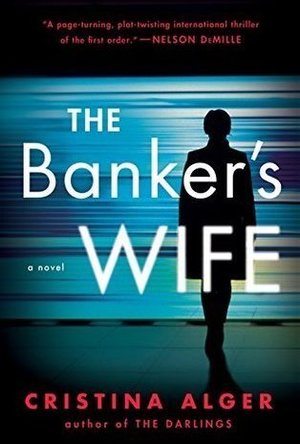
Great, exciting, tense novel
Annabel Lerner feels isolated in Geneva: she's not like the other bankers' wives, and she rarely sees her husband Matthew anymore. They moved to Geneva for a fresh start--and yes, to take advantage of the salary Matthew's private banking job at Swiss United offered. But Annabel never realized how stressed Matthew would be or how often he'd travel. And then, suddenly, he's gone: his private plane simply falling off the radar over the French Alps. Before she can even understand what's happening, Annabel is left to deal with the aftermath, including a trail of secrets and the powerful men at Swiss United who don't want them exposed. Meanwhile, Marina Tourneau is a reporter for The Press. Her mentor, Duncan Carr, has been chasing a story involving Morty Reiss, whose hedge fund was one of the largest Ponzi scams of all time. Supposedly, before he could get caught, Morty committed suicide. But Duncan and Marina believe Marty faked his death and Duncan has become obsessed with proving it--to the detriment of his health, his reputation, and his career. But Marina is also engaged to Grant Ellis, whose wealthy father, James, is about to run for President. The plan is for Marina to stop writing and stand by her man. But when she suddenly realizes she's on the trail of the story of her career, what will she do?
Well, this turned out to be a gem of a novel. When I first started reading it, I was a little worried that I wouldn't see what the fuss was all about, but things quickly picked up, and I was hooked. One of the best things about this novel is that it's an old-style thriller--it reminded me of old-school Grisham or Stieg Larsson. It even throws shade at the glutton of Girl books and their (annoying) unreliable narrators, which I love. This is a mystery for folks who love real stories without any fuss or distraction and with strong characters--all of which combine to leave you befuddled and anxious as everything slowly unfurls.
Alger takes us into the complicated and dark world of Swiss banking, where we are introduced to a lot of real bad guys who have no morals. You can't trust them, you know they are bad, and you know your heroes and heroines are in true danger. Rarely do I think this while reading a book (because, face it, the book is always better), but I really think this book would *actually* make a great movie. It's exciting and tense, and the way things are slowly revealed would make for a very effective film.
But, anyway, it's a wonderful novel. You quickly get sucked into Annabel and Marina's worlds--the majority of the story is told from their points of view. There's a decent amount of ancillary characters to keep track of, but it's certainly manageable. The best is not knowing who to trust, what to believe, or how things went down. There's that Girl with a Dragon Tattoo-reporting vibe that I love: the pleasure of solving a case. The story is set in 2015 but is completely timely, yet utterly timeless in its essence of greed, money, and fear--and what people do in the name of all three. I just loved the old-fashioned thrill of it, the long list of suspects, the excitement of trying to work out who did what.
Overall, this is just a great novel. The plot is excellent--tense, exciting, and expertly woven together. The characters are strong, but it's really the story that's the standout here. It truly reminds you of mysteries and thrillers of old (I sound ancient here, but whatever). Don't let the banking theme scare you off: this is a fabulous read, and if you're a mystery or thriller fan, I think you'll really enjoy this one. 4+ stars.
I received a copy of this novel from the publisher and Netgalley in return for an unbiased review (thank you!).

Dana (24 KP) rated Cress (The Lunar Chronicles, #3) in Books
Mar 23, 2018
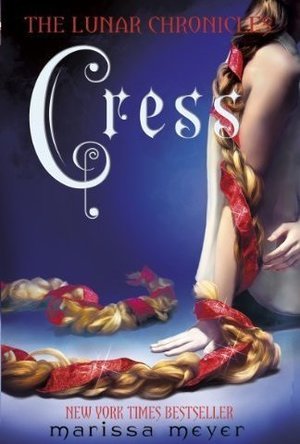
There's going to be spoilers in the review, so be warned.
Marissa Meyer did it again! I have to say this series is a lot better than I had expected it to be. Since it is a book of fairy tale retellings, I expected it to be, not gonna lie, cliche as hell, but it isn't. Though it ties in aspects of the original fairy tales, they are still such separate things that I don't see it as a retelling as much.
Now, the introduction of the new characters, particularly Cress, Jacin, and Winter, was amazing. I love each of them in their own ways because they are not what one would expect them to be.
Cress is just a little ball of happy. I would not have expected her to be so lovely, especially after being mistreated for so much of her life! The little scenarios she makes up in order to get through each situation are just precious and super smart, if I am being completely honest! Cress is strong despite what she looks like. She has the capability of hacking anything she wishes, but even more that that, she is thrown (literally) to Earth after spending seven years basically in isolation and has to learn how to survive and keep another person (who she has a major crush on) alive as well. That's a lot to ask of a girl, but she does it with a smile on her face. If that isn't strength, then I don't know what is.
Then we go onto Jacin Clay. Now this boy is an enigma that I just can't quite figure out yet, but I have a feeling that I will in the next book. So he is a shell in the employ of Sybil, and therefore the queen, but kind of wants to rebel against them because he is in love with the princess, Winter. It gets confusing because Cinder thinks he is a supporter of Selene (her) instead of thinking of the more obvious choice. Jacin seems like he's going to be a pretty okay character, but we haven't gotten enough interaction with him for me to sort him out. There was that last scene in the book where he says he was on the Queen's side the whole time, but I don't think he's telling the truth. There's just something about him that seems trustworthy, and maybe that's myself being too naive, but I want to like him.
Finally, for the new characters, we get to Winter. She seems like a sweet girl, although going a bit mad, but understandably so. She, too, is a captive to the queen, and though it may seem that she has it better because she gets to be on Luna, that also means she is under constant scrutiny. We only get to see her really in one scene, so I can't wait to see what will come of her in the next book!
I loved getting to see all of the old characters again. Thorne is such a romantic loser, I love him so much. He just wants to act all tough, but he's got a major soft spot for Cress and Cinder. Speaking of, Cinder is getting more badass, which I appreciate. She's got some good plans too, so I want to see how that all pans out. Scarlet needs to be rescued ASAP. I need her and Wolf to be besties (and in a relationship forever because, yeah). Wolf needs to be happy, in general.
Now, I'm giving Kai his own paragraph because he is actually doing things in this book. Yay for active King!! Yes, he makes some stupid mistakes. And yes, he got misinformation about Princess Selene, but holy crap he got close to the truth! I am just happy he is taking action, but especially that he and Cinder are in the same space again. (get it...space? I crack myself up). No, but really, the laws he is trying to impose are sound and I stand by them. He is acknowledging the wrongs that have been put into place and is trying to change them for the better, all while sacrificing his own happiness for his country, and inevitably, the world. Go Kai!
I cannot wait to read the next book (but I have to buy it first!!)!!