
Search
Search results

Beckie Shelton (40 KP) rated The Roanoke Girls in Books
Oct 6, 2017
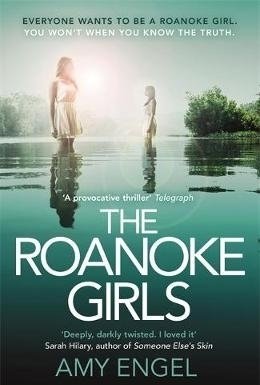


This review may be a bit spoilery concerning the theme of this novel, this couldn't be helped but I've tried to be as vague as possible.
"Roanoke girls never last long around here. In the end, we either run or we die."
These were the words that originally captivated me, pulling me in and compelling me to pick up The Roanoke Girls by Amy Engel.
This was quite a read, an unusual one, reminiscent of bygone authors, setting a stage of intrigue, mystery and dysfunctional family dynamics.
The secrets surrounding Roanoke are subtlely revealed early on leaving the reader highly aware of what flows beneath the seemingly normal surface.
This is a definite page-turner despite the exploration of (view spoiler)
This tale is told in two parts "Now and Then" and the storyline seamlessly hops between these two timelines.
We also get to jump briefly into the heads of each Roanoke girl that came before, which I found very enlightening, I really loved this touch and it greatly added to the storyline giving the reader an insight into what each girl was feeling deep inside her own skin.
Jane, Sophia, Penelope, Eleanor, Camilla, Allegra, Lane there is also little Emmaline but she died of a crib death as a baby.
All Roanoke girls, all carrying the same secrets down through the years, messed up heads and lives affected tragically.
The echoes of this rebounding out through each new generation.
This story is told through Lane Roanoke's point of view after her mother commits suicide and Lane comes to live with her Rich grandparents and cousin Allegra on the family estate.
This is the "THEN" portrayed in the narrative.
The "NOW" is Eleven years later when Lane returns to the family home after a frantic call from her granddad informing her that her cousin Allegra is missing.
After vowing never to return, Lane reluctantly returns home confronting secrets shes buried deep down inside.
I loved Lane as a character, she was a bit of a messed up headcase, but who can blame her.
It's obvious Lane Loved Allegra so deeply and this was the only thing, I think, her disappearing, that could have dragged her back to the bowels of Roanoke.
It was also very thought-provoking to observe Lane's former teenage toxic relationship with cooper rekindled as adults and I really did like him he had his own past baggage but really seemed to have evolved from this, unlike Lane.
I was so rooting for these two and I thought they made a great match, neither party having had it easy in life, they both deserved a bit of stability in the now.
Now Lanes connection with her grandad this was a strange one, confusing even I think to lane herself she really seemed to feel equal measures hate and love towards him.
Struggling with her mixed up emotions, greatly wanting to loathe him but feeling a strange pull, maybe because Lane feels he was the first person to actually seem to want and love her after enduring a lifetime of apathy from her mother.
As for the gran, well, What a cold selfish bitch she was.
I felt she herself held a huge role in what had been allowed to transpire, isn't it a mothers job to protect her daughters.
In this Lillian Roanoke has failed epically actually blaming her daughters instead of shielding them, she was such a cold fish only seeming to feel any affection towards her twisted husband.
Turning a blind eye and looking the other way is her game.
Surprisingly she was my least favourite character even over Myles Roanoke himself.
I think it was the whole lack of maternal anything that contributed to my dislike of her immensely.
The Roanoke Girls has so many diverse flawed individuals that all do their part in making this an enthralling page-turner.
This is a portrayal of a family that is so not right and has not been for a very long time.
It is Love expressed so wrongly and out of context that it has become a sickness consuming from the inside out devouring till nothing remains standing.
A Dysfunctional family with dark concealed secrets at his core.
So I felt the author Amy Engel did an amazing job of dealing with such an explosive subject matter. she has handled it beautifully with finesse and a great understanding of such a delicate topic. Not everyone could have done this so sensitively and without sensationalising it so Really well done.
So that's it from me folk's, I could waffle on all day about this fascinating story, but I'm going to leave it here, but before I go a trigger warning The Roanoke Girls deals with themes of incest, but bar the one small kiss it is only referred to in words not actions and it is really not graphic in its content at all, but if this is a trigger for you please do avoid.
So all that's left is for me to say Thank you to NetGalley, the publisher and the author Amy Engel herself for providing me with an arc of The Roanoke Girls this is my own honest unbiased opinion.
Arc Reviewed By BeckieBookworm
https://www.beckiebookworm.com/
https://www.facebook.com/beckiebookworm/
https://www.goodreads.com/user/show/9460945-bex-beckie-bookworm
"Roanoke girls never last long around here. In the end, we either run or we die."
These were the words that originally captivated me, pulling me in and compelling me to pick up The Roanoke Girls by Amy Engel.
This was quite a read, an unusual one, reminiscent of bygone authors, setting a stage of intrigue, mystery and dysfunctional family dynamics.
The secrets surrounding Roanoke are subtlely revealed early on leaving the reader highly aware of what flows beneath the seemingly normal surface.
This is a definite page-turner despite the exploration of (view spoiler)
This tale is told in two parts "Now and Then" and the storyline seamlessly hops between these two timelines.
We also get to jump briefly into the heads of each Roanoke girl that came before, which I found very enlightening, I really loved this touch and it greatly added to the storyline giving the reader an insight into what each girl was feeling deep inside her own skin.
Jane, Sophia, Penelope, Eleanor, Camilla, Allegra, Lane there is also little Emmaline but she died of a crib death as a baby.
All Roanoke girls, all carrying the same secrets down through the years, messed up heads and lives affected tragically.
The echoes of this rebounding out through each new generation.
This story is told through Lane Roanoke's point of view after her mother commits suicide and Lane comes to live with her Rich grandparents and cousin Allegra on the family estate.
This is the "THEN" portrayed in the narrative.
The "NOW" is Eleven years later when Lane returns to the family home after a frantic call from her granddad informing her that her cousin Allegra is missing.
After vowing never to return, Lane reluctantly returns home confronting secrets shes buried deep down inside.
I loved Lane as a character, she was a bit of a messed up headcase, but who can blame her.
It's obvious Lane Loved Allegra so deeply and this was the only thing, I think, her disappearing, that could have dragged her back to the bowels of Roanoke.
It was also very thought-provoking to observe Lane's former teenage toxic relationship with cooper rekindled as adults and I really did like him he had his own past baggage but really seemed to have evolved from this, unlike Lane.
I was so rooting for these two and I thought they made a great match, neither party having had it easy in life, they both deserved a bit of stability in the now.
Now Lanes connection with her grandad this was a strange one, confusing even I think to lane herself she really seemed to feel equal measures hate and love towards him.
Struggling with her mixed up emotions, greatly wanting to loathe him but feeling a strange pull, maybe because Lane feels he was the first person to actually seem to want and love her after enduring a lifetime of apathy from her mother.
As for the gran, well, What a cold selfish bitch she was.
I felt she herself held a huge role in what had been allowed to transpire, isn't it a mothers job to protect her daughters.
In this Lillian Roanoke has failed epically actually blaming her daughters instead of shielding them, she was such a cold fish only seeming to feel any affection towards her twisted husband.
Turning a blind eye and looking the other way is her game.
Surprisingly she was my least favourite character even over Myles Roanoke himself.
I think it was the whole lack of maternal anything that contributed to my dislike of her immensely.
The Roanoke Girls has so many diverse flawed individuals that all do their part in making this an enthralling page-turner.
This is a portrayal of a family that is so not right and has not been for a very long time.
It is Love expressed so wrongly and out of context that it has become a sickness consuming from the inside out devouring till nothing remains standing.
A Dysfunctional family with dark concealed secrets at his core.
So I felt the author Amy Engel did an amazing job of dealing with such an explosive subject matter. she has handled it beautifully with finesse and a great understanding of such a delicate topic. Not everyone could have done this so sensitively and without sensationalising it so Really well done.
So that's it from me folk's, I could waffle on all day about this fascinating story, but I'm going to leave it here, but before I go a trigger warning The Roanoke Girls deals with themes of incest, but bar the one small kiss it is only referred to in words not actions and it is really not graphic in its content at all, but if this is a trigger for you please do avoid.
So all that's left is for me to say Thank you to NetGalley, the publisher and the author Amy Engel herself for providing me with an arc of The Roanoke Girls this is my own honest unbiased opinion.
Arc Reviewed By BeckieBookworm
https://www.beckiebookworm.com/
https://www.facebook.com/beckiebookworm/
https://www.goodreads.com/user/show/9460945-bex-beckie-bookworm

Zuky the BookBum (15 KP) rated The Surgeon (Rizzoli & Isles, #1) in Books
Mar 15, 2018
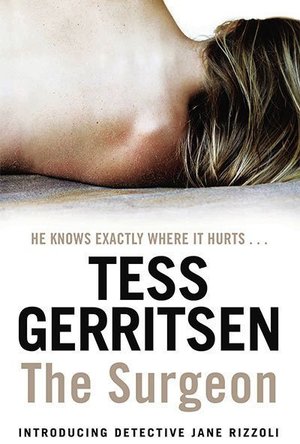


<b>Trigger warning:</b> this book is heavily focused on sexual assault and rape.
This novel is certainly very captivating. I found it difficult to put it down once I had picked it up! I loved the crime and mysterious criminal and I loved the pace of it all. Sometimes, these crime novels can burst with excitement for one second, and then fizzle out until the last few pages, or, completely the opposite of that, be total non-stop action, but feel really over the top and unrealistic. This, on the other hand, had a great mix of action and downtime.
I loved the setting for this, it felt so retro with its mention of floppy disks, pagers, and cassette tapes! This whole book was really well described and brought to life. It felt so real, you completely lost yourselves in the characters worlds. The horror of each murder and plot reveal really grabs you by the throat and give you goosebumps. There’s no escaping the terror in this one.
As for the crime, this one is certainly unique… and gruesome! If you’re like me, and don’t like the thought of surgery or human anatomy, then this will certainly be a struggle to read as it contains many in-depth scenes where we’re walked through what’s happening on the inside of the body. That certainly made it a little hard for me to read because I have this slight fear of our insides and all descriptions of it, but I was too intrigued as to who the killer was, to put it down. While not a particularly twisty turny story, there are plenty of characters in this novel to keep you guessing on who the real killer is.
This always seems to happen to me, but I just can’t seem to get on with female detectives in these kinds of series. Rizzoli wasn’t the worst I have come across, but she still got on my nerves. I’m well aware the message this book was trying to put across was all to do with a “woman in a man’s world”, and I can feel for Rizzoli, it would be hard to be taken seriously in a homicide department in 2001 as a woman… But!!! It was not necessary for her to act as though every single man she encountered was an enemy, needing to be destroyed and put in his place. If she wanted to be taken so seriously as a woman, I’m surprised she couldn’t utter the word “tampon” and described it as being a “disgusting object”. (I have seen this point mentioned by other reviewers and some have said the “fear” of tampons could be a generational thing).
I also wasn’t a fan of the underlying tone this book had, that “all men are capable of evil”. <i>Everyone</i> is capable of evil, why were only men being targeted in this book? Now, I don’t want to sound anti-feminist or something with me saying all this stuff, but I felt the book was a bit radical with some of it’s points about men being raping, murdering bastards. Again, I would like to put my hands up and say I’m <i>really</i> not trying to trivialise or undermine rape “victims” (I prefer the term survivors myself) because I’m close to several, I know how much it fucks them up, but I did feel like this book was a bit heavy hitting towards the male gender as a whole, rather than to the select few scumbags who do that sort of thing <i>(just to rehash this point, I’m not some kind of rape apologist, I just didn’t feel the book needed to be so anti-man).</i>
Another problem I had with this book was sometimes it seemed to have an undermining stance on rape, calling it a woman’s “shameful secret” as though it was their own fault they had been abused in this way. There was also a moment where Rizzoli called herself a “victim of The Surgeon” because she had fucked up part of the investigation, which I thought was completely inappropriate. Comparing a job related incident that was your own fault to being kidnapped and raped is just disgusting. <i>That</i> really got on my nerves. Another thing that grated on me was the overuse of the word “victim” when it came to the rape survivors, but I can imagine that’s more to do with the time this book came out than anything else.
Also!!! (<b>Not a spoiler</b>) There is a disgusting comment on suicide nearer the end of the novel, where Rizzoli calls a man who killed himself a “loser who ate his gun” and “pathetic enough to blow his own brains out”.
Even after having those couple of issues with this novel, I still enjoyed it enough to finish it but I won’t forget the offensiveness of it. I’m going to give myself a break from this series for a month or so, just to really review whether use want to continue with writing I find so problematic. If any of you have gone on to read more of this series, please let me know if it gets any better by not taking digs at traumatised women and mental illness.
This novel is certainly very captivating. I found it difficult to put it down once I had picked it up! I loved the crime and mysterious criminal and I loved the pace of it all. Sometimes, these crime novels can burst with excitement for one second, and then fizzle out until the last few pages, or, completely the opposite of that, be total non-stop action, but feel really over the top and unrealistic. This, on the other hand, had a great mix of action and downtime.
I loved the setting for this, it felt so retro with its mention of floppy disks, pagers, and cassette tapes! This whole book was really well described and brought to life. It felt so real, you completely lost yourselves in the characters worlds. The horror of each murder and plot reveal really grabs you by the throat and give you goosebumps. There’s no escaping the terror in this one.
As for the crime, this one is certainly unique… and gruesome! If you’re like me, and don’t like the thought of surgery or human anatomy, then this will certainly be a struggle to read as it contains many in-depth scenes where we’re walked through what’s happening on the inside of the body. That certainly made it a little hard for me to read because I have this slight fear of our insides and all descriptions of it, but I was too intrigued as to who the killer was, to put it down. While not a particularly twisty turny story, there are plenty of characters in this novel to keep you guessing on who the real killer is.
This always seems to happen to me, but I just can’t seem to get on with female detectives in these kinds of series. Rizzoli wasn’t the worst I have come across, but she still got on my nerves. I’m well aware the message this book was trying to put across was all to do with a “woman in a man’s world”, and I can feel for Rizzoli, it would be hard to be taken seriously in a homicide department in 2001 as a woman… But!!! It was not necessary for her to act as though every single man she encountered was an enemy, needing to be destroyed and put in his place. If she wanted to be taken so seriously as a woman, I’m surprised she couldn’t utter the word “tampon” and described it as being a “disgusting object”. (I have seen this point mentioned by other reviewers and some have said the “fear” of tampons could be a generational thing).
I also wasn’t a fan of the underlying tone this book had, that “all men are capable of evil”. <i>Everyone</i> is capable of evil, why were only men being targeted in this book? Now, I don’t want to sound anti-feminist or something with me saying all this stuff, but I felt the book was a bit radical with some of it’s points about men being raping, murdering bastards. Again, I would like to put my hands up and say I’m <i>really</i> not trying to trivialise or undermine rape “victims” (I prefer the term survivors myself) because I’m close to several, I know how much it fucks them up, but I did feel like this book was a bit heavy hitting towards the male gender as a whole, rather than to the select few scumbags who do that sort of thing <i>(just to rehash this point, I’m not some kind of rape apologist, I just didn’t feel the book needed to be so anti-man).</i>
Another problem I had with this book was sometimes it seemed to have an undermining stance on rape, calling it a woman’s “shameful secret” as though it was their own fault they had been abused in this way. There was also a moment where Rizzoli called herself a “victim of The Surgeon” because she had fucked up part of the investigation, which I thought was completely inappropriate. Comparing a job related incident that was your own fault to being kidnapped and raped is just disgusting. <i>That</i> really got on my nerves. Another thing that grated on me was the overuse of the word “victim” when it came to the rape survivors, but I can imagine that’s more to do with the time this book came out than anything else.
Also!!! (<b>Not a spoiler</b>) There is a disgusting comment on suicide nearer the end of the novel, where Rizzoli calls a man who killed himself a “loser who ate his gun” and “pathetic enough to blow his own brains out”.
Even after having those couple of issues with this novel, I still enjoyed it enough to finish it but I won’t forget the offensiveness of it. I’m going to give myself a break from this series for a month or so, just to really review whether use want to continue with writing I find so problematic. If any of you have gone on to read more of this series, please let me know if it gets any better by not taking digs at traumatised women and mental illness.

Chris Sawin (602 KP) rated Harsh Times (2005) in Movies
Jun 18, 2019
Writer and director (and sometimes producer) David Ayer debuted in the film industry writing films such as Training Day, The Fast and the Furious, and S.W.A.T. but he came into his own once he started directing and producing (as well as continuing to write) his own projects with End of Watch and Fury being two of his best. In the past couple years, Ayer has produced and directed two big budget films (Suicide Squad and Bright) in the past few years that received a negative critical reputation that audiences still seem to love (sequels for both are in development). The first film David Ayer produced, wrote, and directed that’s more in the vein of Training Day and End of Watch and is largely based on the individuals Ayer knew while living in South Central, Los Angeles is a little crime film called Harsh Times.
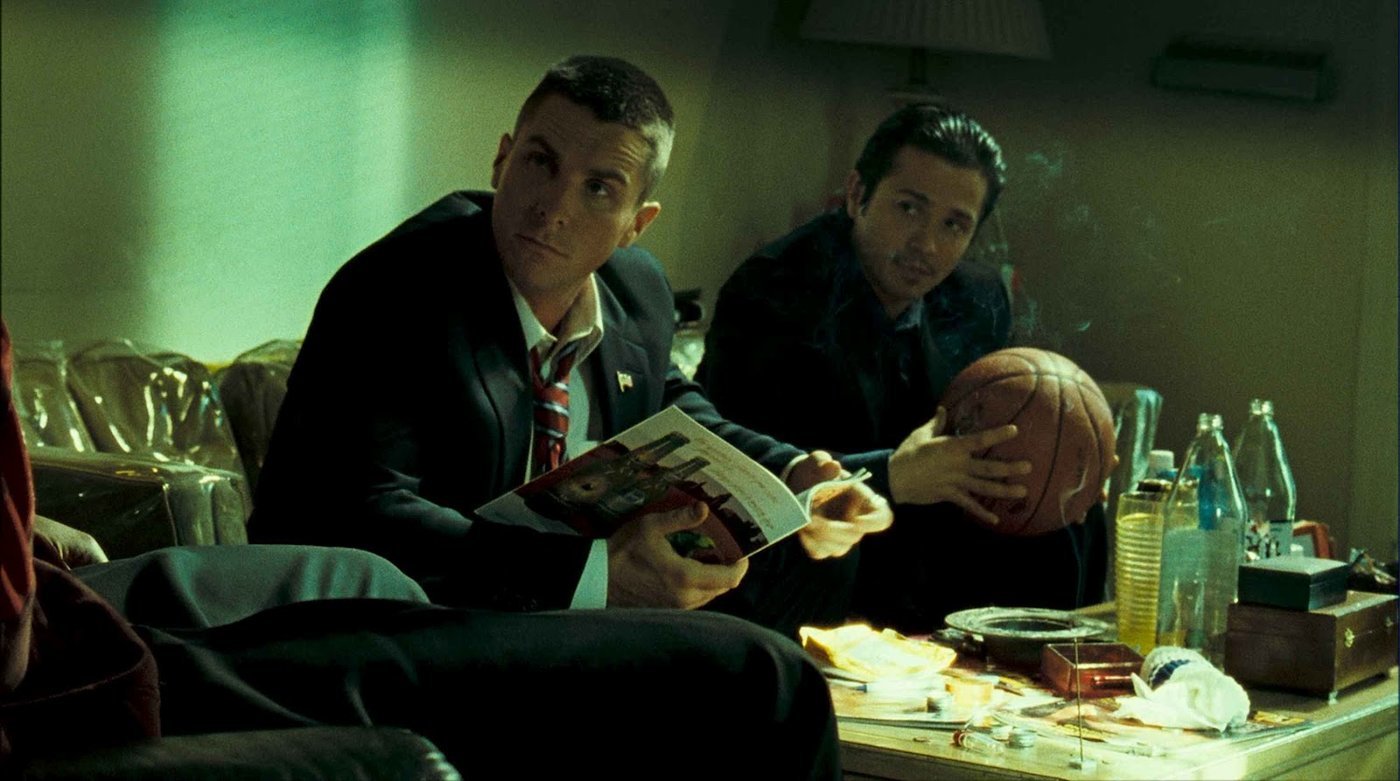
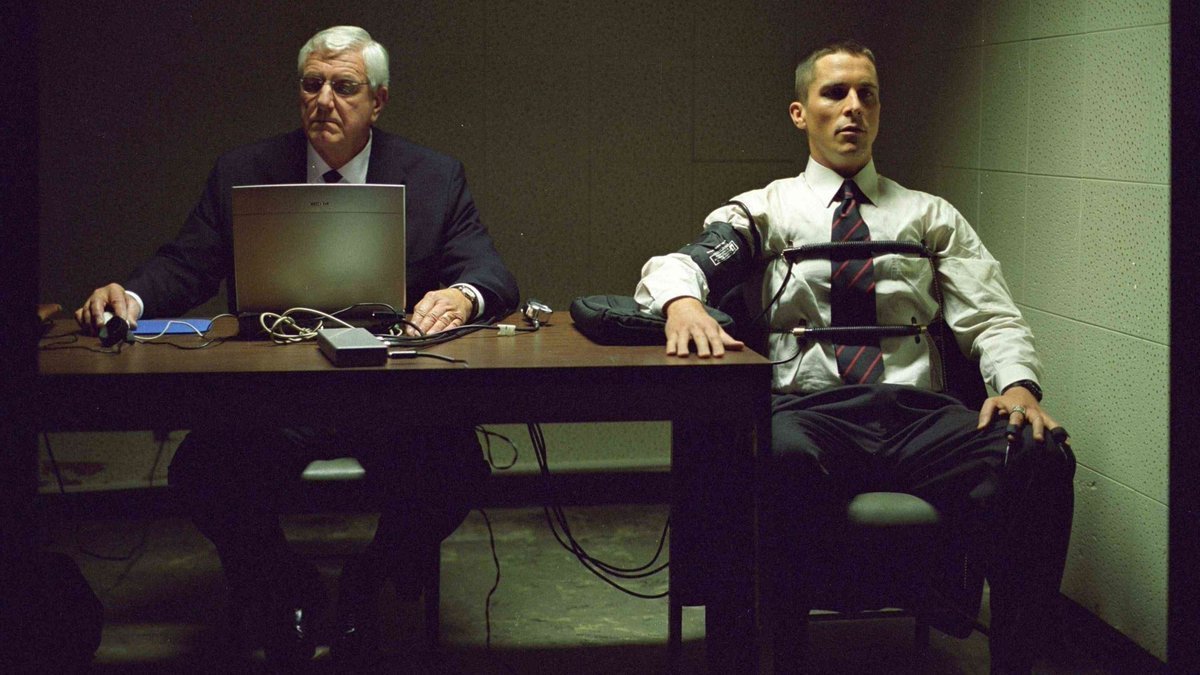
Jim Luther Davis (Christian Bale) seems like a normal guy that anyone could know. Now that he’s done his time as a soldier, it’s now his dream to become a cop in Los Angeles. Unfortunately though, Jim likes to spend most days drinking, smoking pot, and looking for ways to either get laid or kick the snot out of someone and his time as a soldier gets to him more than he lets on. He has nightmares every night and wakes up screaming with cold chills and is on the verge of downright insanity.
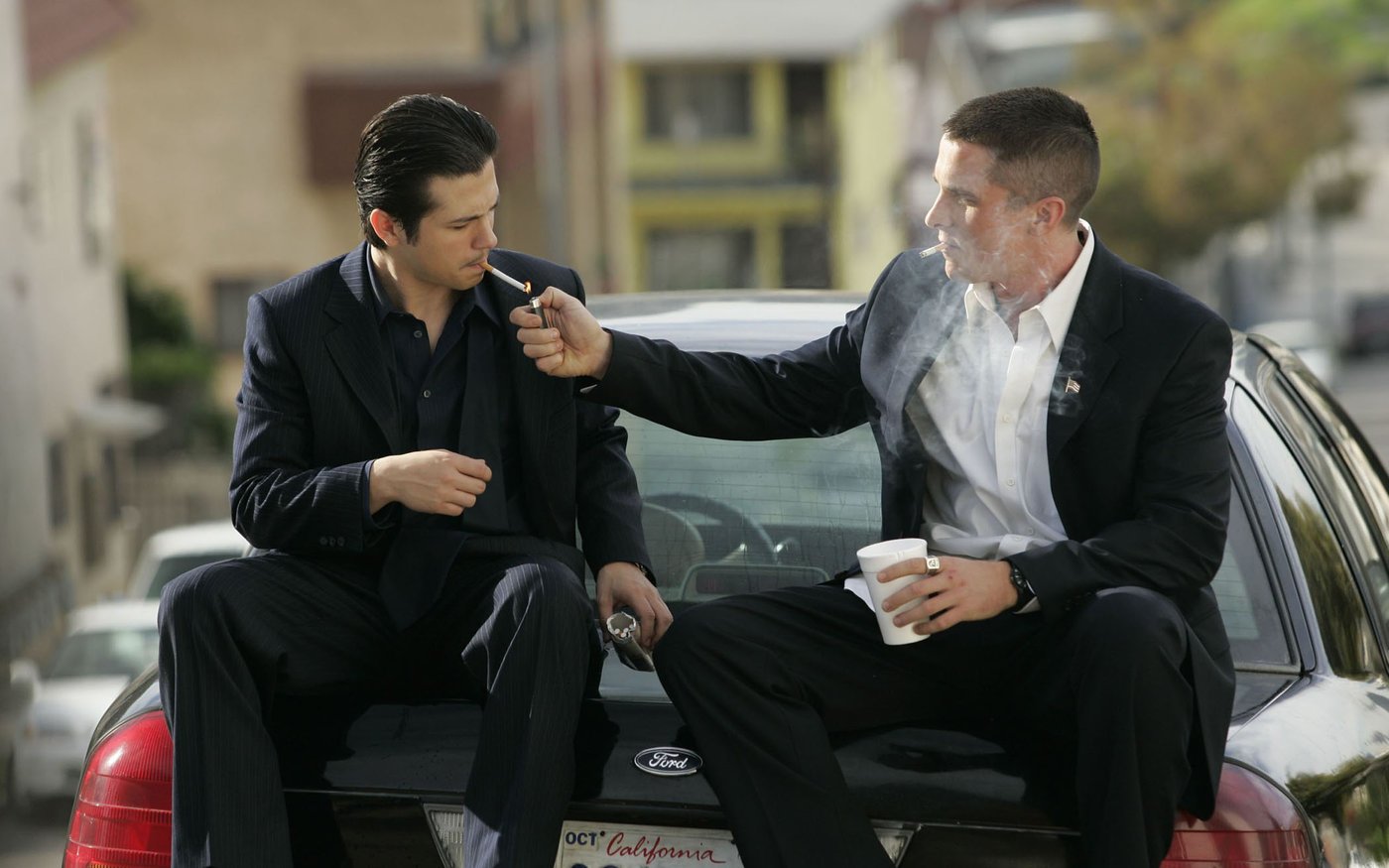
His best friend, Mike Alonzo (Freddy Rodriguez), has the intention of getting a job to make his wife happy but his drinking problem stands in the way of that. While Mike has his wife, Sylvia (Eva Longoria), Jim has his girlfriend, Marta (Tammy Trull), back in Mexico that he hopes to get across the border once he gets that dream job. One day, Jim gets a call from Homeland Security and Mike has an interview go surprisingly well at one of the best businesses in town; the two best friends think their lives are beginning to look up. However, Jim gets pushed too far and innocent people are suddenly caught in the crossfire.
Harsh Times plays out like a song that becomes a sleeper hit or one that eventually evolves into one of your favorites; events unfold rather slowly but they’re also building towards a big finale. Once the ball gets rolling, it’s inevitable to try and resist the mayhem that’s sure to ensue. Harsh Times may not be that appealing on the surface, but David Ayer has mastered the dynamic of two cops (one is usually Caucasian and the other is usually Hispanic or African American) set within a broken neighborhood. Watching Jim and Mike give into their vices and basically flush their dreams down the toilet by relishing the deteriorated reputation they’re known for is a riveting train wreck. Aside from Christian Bale’s outstanding performance, the real gem of the film lies within the last 20 minutes.
Ayer typically aims to shock or catch you off guard with the finales of his crime films, but there’s also a scene involving Jim that is unexpected. It’s an intriguing scene that is spontaneous in nature, but it puts what Jim went through as a soldier into perspective. Jim is completely unfazed by what he puts himself through, but Mike seems to be physically traumatized by the whole ordeal. It seems rather unimportant as it’s occurring, but it’s also the most memorable sequence once the credits roll. Before Don’t Breathe came along in 2016, this was the worst way any Hollywood film ever utilized a turkey baster.
For several years, Christian Bale was known for dramatically changing his appearance and using a different accent in every project he was a part of. Watching Harsh Times after seeing Batman Begins (both films were released in 2005) for the first time allows you to appreciate Bale’s performance even more. Imagine Batman or even Bruce Wayne trying to say with a straight face, “Yeah, homie. That’s how we roll in these streets, dawg.” It seems implausible and almost otherworldly; it’s a transition you never expected Bale to make. The transformation of the Jim Luther Davis character is incredible. The film’s editing when Jim is going through one of his episodes is an admirable nod to how unstable he is. Once the screen has that yellow tint to it, you know something detrimental is about to go down.
Harsh Times has a reputation for being slow and boring, but it’s worth a watch especially if you’re a fan of David Ayer films. The crime film may not appeal to everyone, but it probably has a lot more to offer than anyone gives it credit for. Christian Bale has a particularly strong performance in the film that deserves to behold and the intense finale should make up for any slow or dragging sequences. If you’re watching the film for the first time, try giving it a chance when you know you have a more patient mentality. You may be pleasantly surprised with Harsh Times.
Harsh Times is available to stream on YouTube, Google Play, and Vudu for $2.99 and iTunes for $3.99. It’s available on Amazon Prime for free if you have Showtime with Prime Video channels. The film is available on Amazon on DVD for $7.96 and Multi-Format Blu-ray for $13.49. The pre-owned DVD is currently $4.09 with free shipping while a brand new Multi-Format Blu-ray is $15.98 with free shipping on eBay.
Jim Luther Davis (Christian Bale) seems like a normal guy that anyone could know. Now that he’s done his time as a soldier, it’s now his dream to become a cop in Los Angeles. Unfortunately though, Jim likes to spend most days drinking, smoking pot, and looking for ways to either get laid or kick the snot out of someone and his time as a soldier gets to him more than he lets on. He has nightmares every night and wakes up screaming with cold chills and is on the verge of downright insanity.
His best friend, Mike Alonzo (Freddy Rodriguez), has the intention of getting a job to make his wife happy but his drinking problem stands in the way of that. While Mike has his wife, Sylvia (Eva Longoria), Jim has his girlfriend, Marta (Tammy Trull), back in Mexico that he hopes to get across the border once he gets that dream job. One day, Jim gets a call from Homeland Security and Mike has an interview go surprisingly well at one of the best businesses in town; the two best friends think their lives are beginning to look up. However, Jim gets pushed too far and innocent people are suddenly caught in the crossfire.
Harsh Times plays out like a song that becomes a sleeper hit or one that eventually evolves into one of your favorites; events unfold rather slowly but they’re also building towards a big finale. Once the ball gets rolling, it’s inevitable to try and resist the mayhem that’s sure to ensue. Harsh Times may not be that appealing on the surface, but David Ayer has mastered the dynamic of two cops (one is usually Caucasian and the other is usually Hispanic or African American) set within a broken neighborhood. Watching Jim and Mike give into their vices and basically flush their dreams down the toilet by relishing the deteriorated reputation they’re known for is a riveting train wreck. Aside from Christian Bale’s outstanding performance, the real gem of the film lies within the last 20 minutes.
Ayer typically aims to shock or catch you off guard with the finales of his crime films, but there’s also a scene involving Jim that is unexpected. It’s an intriguing scene that is spontaneous in nature, but it puts what Jim went through as a soldier into perspective. Jim is completely unfazed by what he puts himself through, but Mike seems to be physically traumatized by the whole ordeal. It seems rather unimportant as it’s occurring, but it’s also the most memorable sequence once the credits roll. Before Don’t Breathe came along in 2016, this was the worst way any Hollywood film ever utilized a turkey baster.
For several years, Christian Bale was known for dramatically changing his appearance and using a different accent in every project he was a part of. Watching Harsh Times after seeing Batman Begins (both films were released in 2005) for the first time allows you to appreciate Bale’s performance even more. Imagine Batman or even Bruce Wayne trying to say with a straight face, “Yeah, homie. That’s how we roll in these streets, dawg.” It seems implausible and almost otherworldly; it’s a transition you never expected Bale to make. The transformation of the Jim Luther Davis character is incredible. The film’s editing when Jim is going through one of his episodes is an admirable nod to how unstable he is. Once the screen has that yellow tint to it, you know something detrimental is about to go down.
Harsh Times has a reputation for being slow and boring, but it’s worth a watch especially if you’re a fan of David Ayer films. The crime film may not appeal to everyone, but it probably has a lot more to offer than anyone gives it credit for. Christian Bale has a particularly strong performance in the film that deserves to behold and the intense finale should make up for any slow or dragging sequences. If you’re watching the film for the first time, try giving it a chance when you know you have a more patient mentality. You may be pleasantly surprised with Harsh Times.
Harsh Times is available to stream on YouTube, Google Play, and Vudu for $2.99 and iTunes for $3.99. It’s available on Amazon Prime for free if you have Showtime with Prime Video channels. The film is available on Amazon on DVD for $7.96 and Multi-Format Blu-ray for $13.49. The pre-owned DVD is currently $4.09 with free shipping while a brand new Multi-Format Blu-ray is $15.98 with free shipping on eBay.
Sophia (Bookwyrming Thoughts) (530 KP) rated The Leveller (The Leveller, #1) in Books
Jan 23, 2020

<b>I really enjoyed <i>The Leveller</i> on two things: the concept and the writing.</b> But of course, the concept is why I actually read many books. Whether it's good or bad, I have no clue until I actually crack open the book and actually read it.
In a virtual reality gaming world called MEEP, Nixy Bauer helps parents get their wayward kids back from spending too much time in the MEEP quickly and efficiently. Soon enough, she gets a job from the developer and founder of MEEP himself, whose only son has disappeared in the gaming world for several days, leaving behind a suicide note and world filled with horrifying challenges.
I will fully admit <b>I'm a huge fan of technology and cool gadgets</b>, and I honestly loved the technology <i>The Leveller</i> uses. It's <b>quite similar to <i><a title="Grid Seekers by Logan Byrne" href="https://bookwyrmingthoughts.com/2015/07/dnf-review-grid-seekers-by-logan-byrne/"; target="_blank" rel="noopener">Grid Seekers</a></i> but in a gaming direction rather than an everyday-use direction.</b> Durango explains MEEP simply and straightforward: it's a virtual reality where players can create their own worlds with their minds. Like any game, there are little cheats and codes. <b>Durango's explanation of how MEEP works isn't <a title="A Thousand Pieces of You by Claudia Gray" href="http://www.bookwyrmingthoughts.com/audiobook-review-a-thousand-pieces-of-you-by-claudia-gray"; target="_blank" rel="noopener">written in a complicated and really scientific way</a></b> helpful for all of us who haven't actually taken physics (or ever will/did).
I am, however, still confused. <b>What is the Black, and what is levelling? I have an idea, but I think I want an official definition of what the Black is, and what levelling is.</b> Especially on levelling, because <b>if I formulate my own definition, I'm pretty sure I'll butcher it</b> and Durango will facepalm.
<b>Her writing is also quite entertaining</b> it's fun, but it has puns in there that are sometimes so bad (read: common), it's good. There's <b>not really a dull moment</b> in <i>The Leveller</i>. It's not completely action, action, action, but I just like Durango's writing (then again, <a title="Released by Megan Duncan" href="https://bookwyrmingthoughts.com/dnf-review-released-by-megan-duncan/"; target="_blank" rel="noopener">nonstop action can totally backfire</a> unless you have breathers. You'll have to be like <a title="Killer of Enemies by Joseph Bruchac" href="https://bookwyrmingthoughts.com/review-killer-of-enemies-by-joseph-bruchac/"; target="_blank" rel="noopener">Joseph Bruchac</a>.).
<div class="separator" style="clear: both; text-align: center;"><img src="http://bookwyrmingthoughts.bookblog.io/wp-content/uploads/sites/317/2015/07/giphy28129.gif"; border="0" /></div>
<b>But the names. I'm quite horrified.</b> It might be as bad as making <a title="Princess of Thorns by Stacey Jay" href="https://bookwyrmingthoughts.com/review-princess-of-thorns-by-stacey-jay/"; target="_blank" rel="noopener">a sad effort of being creative by drawing out letters</a> (except that one you could literally tell it was a sad effort).
<b>What kind of name is MEEP?</b> MeaParadisus isn't exactly complicated (though it's a mouthful), but <b>while MEEP sounds all adorable, it just... doesn't sound like something you would name a virtual reality gaming world unless there's a really cute world. I'm expecting chibi people now.</b>
<b>Nixy. Why Nixy?</b> <a href="https://www.goodreads.com/review/show/1251670967?book_show_action=false&from_review_page=1"; target="_blank" rel="nofollow noopener">Contrary to what Ella thinks (she thinks it's lizard-like)</a>, <b>Nixy sounds like Trixie.</b> What does Trixie sound like? A cute dog name that does cute tricks. Oh, and that dog had better be oozing in cuteness.
<div class="separator" style="clear: both; text-align: center;"><img src="http://bookwyrmingthoughts.bookblog.io/wp-content/uploads/sites/317/2015/07/giphy.gif"; width="320" height="179" border="0" /></div>
There are <b>so many nicknames used here by Durango I swear I need a notebook to keep track of who's who at this rate.</b> I mean, there's Nixy, Moose, Chang, Mama Beti, etc. Since <i>The Leveller</i> is the first in a series, <b>there are bound to be more nicknames in the future</b> as Durango introduces us to more characters. I'll have to <b>keep track what's not a nickname, what's a nickname and who it belongs to, blah blah blah.</b>
<b>The ending was a bit of a downfall.</b> It wouldn't be a downfall if I didn't read this in one day, but <b>Durango throws in hints early on in the book that she uses in the end.</b> Everything was going pretty well, but how the story plays out in the very end is <b>predictable if you pay an ounce of attention.</b> How the second book will play out, on the other hand, isn't too predictable yet. <i>The Leveller</i> ends on a solid note, so I'm looking forward to what Durango actually comes up with in the sequel.
<a href="https://bookwyrmingthoughts.com/review-the-leveller-by-julia-durango/"; target="_blank">This review was originally posted on Bookwyrming Thoughts</a>
In a virtual reality gaming world called MEEP, Nixy Bauer helps parents get their wayward kids back from spending too much time in the MEEP quickly and efficiently. Soon enough, she gets a job from the developer and founder of MEEP himself, whose only son has disappeared in the gaming world for several days, leaving behind a suicide note and world filled with horrifying challenges.
I will fully admit <b>I'm a huge fan of technology and cool gadgets</b>, and I honestly loved the technology <i>The Leveller</i> uses. It's <b>quite similar to <i><a title="Grid Seekers by Logan Byrne" href="https://bookwyrmingthoughts.com/2015/07/dnf-review-grid-seekers-by-logan-byrne/"; target="_blank" rel="noopener">Grid Seekers</a></i> but in a gaming direction rather than an everyday-use direction.</b> Durango explains MEEP simply and straightforward: it's a virtual reality where players can create their own worlds with their minds. Like any game, there are little cheats and codes. <b>Durango's explanation of how MEEP works isn't <a title="A Thousand Pieces of You by Claudia Gray" href="http://www.bookwyrmingthoughts.com/audiobook-review-a-thousand-pieces-of-you-by-claudia-gray"; target="_blank" rel="noopener">written in a complicated and really scientific way</a></b> helpful for all of us who haven't actually taken physics (or ever will/did).
I am, however, still confused. <b>What is the Black, and what is levelling? I have an idea, but I think I want an official definition of what the Black is, and what levelling is.</b> Especially on levelling, because <b>if I formulate my own definition, I'm pretty sure I'll butcher it</b> and Durango will facepalm.
<b>Her writing is also quite entertaining</b> it's fun, but it has puns in there that are sometimes so bad (read: common), it's good. There's <b>not really a dull moment</b> in <i>The Leveller</i>. It's not completely action, action, action, but I just like Durango's writing (then again, <a title="Released by Megan Duncan" href="https://bookwyrmingthoughts.com/dnf-review-released-by-megan-duncan/"; target="_blank" rel="noopener">nonstop action can totally backfire</a> unless you have breathers. You'll have to be like <a title="Killer of Enemies by Joseph Bruchac" href="https://bookwyrmingthoughts.com/review-killer-of-enemies-by-joseph-bruchac/"; target="_blank" rel="noopener">Joseph Bruchac</a>.).
<div class="separator" style="clear: both; text-align: center;"><img src="http://bookwyrmingthoughts.bookblog.io/wp-content/uploads/sites/317/2015/07/giphy28129.gif"; border="0" /></div>
<b>But the names. I'm quite horrified.</b> It might be as bad as making <a title="Princess of Thorns by Stacey Jay" href="https://bookwyrmingthoughts.com/review-princess-of-thorns-by-stacey-jay/"; target="_blank" rel="noopener">a sad effort of being creative by drawing out letters</a> (except that one you could literally tell it was a sad effort).
<b>What kind of name is MEEP?</b> MeaParadisus isn't exactly complicated (though it's a mouthful), but <b>while MEEP sounds all adorable, it just... doesn't sound like something you would name a virtual reality gaming world unless there's a really cute world. I'm expecting chibi people now.</b>
<b>Nixy. Why Nixy?</b> <a href="https://www.goodreads.com/review/show/1251670967?book_show_action=false&from_review_page=1"; target="_blank" rel="nofollow noopener">Contrary to what Ella thinks (she thinks it's lizard-like)</a>, <b>Nixy sounds like Trixie.</b> What does Trixie sound like? A cute dog name that does cute tricks. Oh, and that dog had better be oozing in cuteness.
<div class="separator" style="clear: both; text-align: center;"><img src="http://bookwyrmingthoughts.bookblog.io/wp-content/uploads/sites/317/2015/07/giphy.gif"; width="320" height="179" border="0" /></div>
There are <b>so many nicknames used here by Durango I swear I need a notebook to keep track of who's who at this rate.</b> I mean, there's Nixy, Moose, Chang, Mama Beti, etc. Since <i>The Leveller</i> is the first in a series, <b>there are bound to be more nicknames in the future</b> as Durango introduces us to more characters. I'll have to <b>keep track what's not a nickname, what's a nickname and who it belongs to, blah blah blah.</b>
<b>The ending was a bit of a downfall.</b> It wouldn't be a downfall if I didn't read this in one day, but <b>Durango throws in hints early on in the book that she uses in the end.</b> Everything was going pretty well, but how the story plays out in the very end is <b>predictable if you pay an ounce of attention.</b> How the second book will play out, on the other hand, isn't too predictable yet. <i>The Leveller</i> ends on a solid note, so I'm looking forward to what Durango actually comes up with in the sequel.
<a href="https://bookwyrmingthoughts.com/review-the-leveller-by-julia-durango/"; target="_blank">This review was originally posted on Bookwyrming Thoughts</a>

Becs (244 KP) rated The Raven Boys in Books
Sep 22, 2019

Ronan Lynch, Adam Parrish, and Noah Czerny made this novel (1 more)
The rollercoaster of emotions you feel
The villain didn't offer as much as I'd like but it was too big of a letdown (1 more)
The MC wasn't my favorite but she had good complexities that made her unique
Deserves all the hype!
You can also find this review on my blog: bookingwayreads.wordpress.com
TRIGGER WARNINGS: suicidal ideation, (past) suicide attempt, violence, guns, death
REVIEW: Y’all, I think I found a new favorite series. This series… the characters… the world-building… the character development… UGH I absolutely adore everything about it. Ronan Lynch has my heart and Noah Czerny is such a babie and I want to protect him forever and ever. The Raven Boys gave me so much more than what I was expecting.
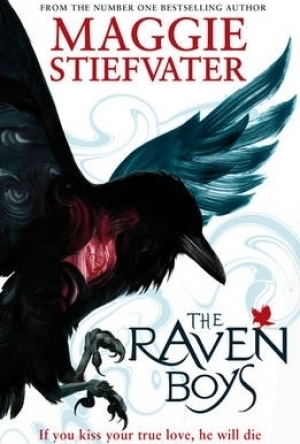
The Raven Boys follows Blue Sargent. But unlike her family of physics, seers, and clairvoyants, Blue has no magical abilities. She has been warned all her life that the first person she kisses, will die. One night, she sees a boy on the Corpse Road and this is a sign. The only way that a non seer sees a ghost is if that ghost is either a true love or the non-seer killed them. This is where the Raven Boys come into play.
The Raven Boys is basically the name of four boys that attend Aglionby – Gansey Richard III, Adam Parrish, Ronan Lynch, and Noah Czerny. Gansey is the so-called leader of the group and he’s on a mission to find the final resting place of Glendower, a Welsh King who passed away in Henrietta. There is a legend that says if he’s awoken, he grants the person who woke him a “favor”. Gansey wants to be the person to wake Glendower but he isn’t the only one looking for him.
I didn’t know too much about this series other than the writing style wasn’t the greatest. I didn’t really see a problem with this as I listened to them on audiobook. The narrator was not my favorite and some of the voices he used I didn’t feel worked with the characters. But all in all, I was really invested in the plot and paranormal aspect of Blue and the Raven Boys.
Speaking of Blue and the Raven Boys, they were so well-written! Each character within this novel was complex and had their own unique peculiarities that made them extremely interesting to read about. They were also really relatable. Even the situations that they each experienced, felt real and not at all cliche’d. Plus, all the sarcastic remarks had me howling with laughter, especially Ronan and Gansey’s friendship. It was *chefs kiss*
“We have to be back in three hours,” Ronan said. “I just fed Chainsaw but she’ll need it again.”
“This,” Gansey replied “is precisely why I didn’t want to have a baby with you.”
The characters that I found the most interesting, were honestly Ronan, Noah, and Adam. Blue was a great protagonist and had her complexities, but I didn’t feel anything special for her. Gansey was also an interesting character but I felt that the book revolved a bit too much about him and his mission. I wanted more scenes with Noah, Adam, and Ronan.
Ronan gave me all the bad boy vibes and has my heart while Noah is such a babie that I must protect. But if we’re talking great backstories and the main character in my book, I would say Adam takes that role. Adam’s story is honestly the best of them all. It was tragic, and made my heart hurt in more places than I expected that he had to go through what he did. I was taken on the biggest roller coaster ride I’ve ever been on and man, this book hit home – hard.
I was unable to put this down and I just wanted to keep listening to it. I was emotional because of the relationship with the OT5, driven due to the quest of finding Glendower and wanting to discover the truth. This is also the first book that I felt nothing for the “villain”. I mean if you know me, I’m always falling for the villain and here, I’m just like meh about him. He didn’t offer a ton to the story but he did offer just enough that without him, this story wouldn’t have made sense one bit.
Also, can we talk about all the foreshadowing within this novel? Cause holy guacamole! There was a ton. For example:
“Ronan said, “I’m always straight.”
Adam replied “Oh, man, that’s the biggest lie you’ve ever told.”
Like.. WHAT!? DO I SMELL A BUDDING ROMANCE? FRIENDS TO LOVERS MAYBE? Please let these two be a couple in the end, cause I need me a Ronan and Adam couple scene. DON’T LET ME DOWN MAGGIE!
The writing was beautiful, and I felt it flowed wonderfully. I got swept into the world of Cabeswater and I loved how you could actually feel like you were there alongside Blue and the Raven Boys.
Okay, before I make this any longer and bore y’all to death with my love for Ronan Lynch and Noah Czerny – just please… I beg of you to pick this up and give The Raven Boys a chance.
“The way Gansey saw it was this: if you had a special knack for finding things, it meant you owed the world to look.”
TRIGGER WARNINGS: suicidal ideation, (past) suicide attempt, violence, guns, death
REVIEW: Y’all, I think I found a new favorite series. This series… the characters… the world-building… the character development… UGH I absolutely adore everything about it. Ronan Lynch has my heart and Noah Czerny is such a babie and I want to protect him forever and ever. The Raven Boys gave me so much more than what I was expecting.
The Raven Boys follows Blue Sargent. But unlike her family of physics, seers, and clairvoyants, Blue has no magical abilities. She has been warned all her life that the first person she kisses, will die. One night, she sees a boy on the Corpse Road and this is a sign. The only way that a non seer sees a ghost is if that ghost is either a true love or the non-seer killed them. This is where the Raven Boys come into play.
The Raven Boys is basically the name of four boys that attend Aglionby – Gansey Richard III, Adam Parrish, Ronan Lynch, and Noah Czerny. Gansey is the so-called leader of the group and he’s on a mission to find the final resting place of Glendower, a Welsh King who passed away in Henrietta. There is a legend that says if he’s awoken, he grants the person who woke him a “favor”. Gansey wants to be the person to wake Glendower but he isn’t the only one looking for him.
I didn’t know too much about this series other than the writing style wasn’t the greatest. I didn’t really see a problem with this as I listened to them on audiobook. The narrator was not my favorite and some of the voices he used I didn’t feel worked with the characters. But all in all, I was really invested in the plot and paranormal aspect of Blue and the Raven Boys.
Speaking of Blue and the Raven Boys, they were so well-written! Each character within this novel was complex and had their own unique peculiarities that made them extremely interesting to read about. They were also really relatable. Even the situations that they each experienced, felt real and not at all cliche’d. Plus, all the sarcastic remarks had me howling with laughter, especially Ronan and Gansey’s friendship. It was *chefs kiss*
“We have to be back in three hours,” Ronan said. “I just fed Chainsaw but she’ll need it again.”
“This,” Gansey replied “is precisely why I didn’t want to have a baby with you.”
The characters that I found the most interesting, were honestly Ronan, Noah, and Adam. Blue was a great protagonist and had her complexities, but I didn’t feel anything special for her. Gansey was also an interesting character but I felt that the book revolved a bit too much about him and his mission. I wanted more scenes with Noah, Adam, and Ronan.
Ronan gave me all the bad boy vibes and has my heart while Noah is such a babie that I must protect. But if we’re talking great backstories and the main character in my book, I would say Adam takes that role. Adam’s story is honestly the best of them all. It was tragic, and made my heart hurt in more places than I expected that he had to go through what he did. I was taken on the biggest roller coaster ride I’ve ever been on and man, this book hit home – hard.
I was unable to put this down and I just wanted to keep listening to it. I was emotional because of the relationship with the OT5, driven due to the quest of finding Glendower and wanting to discover the truth. This is also the first book that I felt nothing for the “villain”. I mean if you know me, I’m always falling for the villain and here, I’m just like meh about him. He didn’t offer a ton to the story but he did offer just enough that without him, this story wouldn’t have made sense one bit.
Also, can we talk about all the foreshadowing within this novel? Cause holy guacamole! There was a ton. For example:
“Ronan said, “I’m always straight.”
Adam replied “Oh, man, that’s the biggest lie you’ve ever told.”
Like.. WHAT!? DO I SMELL A BUDDING ROMANCE? FRIENDS TO LOVERS MAYBE? Please let these two be a couple in the end, cause I need me a Ronan and Adam couple scene. DON’T LET ME DOWN MAGGIE!
The writing was beautiful, and I felt it flowed wonderfully. I got swept into the world of Cabeswater and I loved how you could actually feel like you were there alongside Blue and the Raven Boys.
Okay, before I make this any longer and bore y’all to death with my love for Ronan Lynch and Noah Czerny – just please… I beg of you to pick this up and give The Raven Boys a chance.
“The way Gansey saw it was this: if you had a special knack for finding things, it meant you owed the world to look.”

Lee (2222 KP) rated Justice League (2017) in Movies
Nov 18, 2017
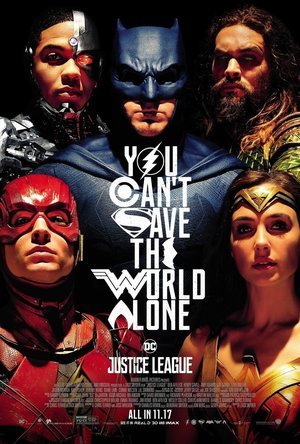
Messy introduction (1 more)
Steppenwolf
A really pleasant surprise
PRE-MOVIE THOUGHTS: Up until very recently, I'd been cautiously optimistic regarding Justice League. I enjoyed Man of Steel, despite some faults, and I thought that Henry Cavill was perfectly suited to the role. I didn't mind Batman V Superman so much either, despite Jesse Eisenbergs Lex Luthor constantly trying to ruin it. The best thing about Batman V Superman though was Gal Gadot as Wonder Woman, which is why her standalone origin movie deservedly did so well earlier this year. But the characters of Superman and Batman were beginning to get a bit of a raw deal in my opinion, and that was starting to piss me off. The original Superman movie with Christopher Reeve, along with Christopher Nolans Dark Knight trilogy, are among my favourite films and these latest movies just weren't doing them 'justice'. Suicide Squad showed that DC couldn't do an ensemble movie, which cast a lot of doubt over just how good Justice League was going to be. And when reports came in of re-shoots and a change of director, it wasn't really looking good. But some of the more recent trailers and teasers actually didn't look so bad, so maybe there wasn't too much to be worried about. Until a few days ago that is, when about 90% of the reviews I read didn't give it higher than two stars! And those that gave it higher were still highlighting some of the weaknesses I've already mentioned here. So, I headed into the cinema, expecting to be pissed off again. But seriously, genuinely hoping I wasn't.
POST-MOVIE REVIEW: Justice League doesn't start things off too well. The world is still mourning the death of Superman, and a few pointless scenes try to highlight that loss and despair. Batman and Wonder Woman appear in a couple of standalone battles to remind us what they're capable of, but those scenes also seem rushed and out of place. We have three new team members to be introduced to as well, along with the big bad of the movie. Whereas Marvel's Avengers took the time to introduce their team over a series of standalone movies, we've had no such luxury in the run up to Justice League, aside from some brief glimpses in previous movies. It all just seems like a rush to get things to the point where the team are together and can start having some fun. Everything up until that point just seems cobbled together. Lacking coherence, and just a little bit dull.
Talking of dull, once again the big bad of the movie is a bit of a let down. Steppenwolf appears on Earth in search of three powerful cubes which when combined together will give him the ability to forge the Earth into something more appealing to him, or something like that anyway. He's accompanied by thousands of flying zombie man-bug type creatures and the whole thing just reeks of supervillain plotlines we've seen many times before. Steppenwolf himself is entirely CGI, and at times the CGI just doesn't look that good.
Onto the league themselves. Well, Wonder Woman is still the most impressive of them all, proving to be a real natural leader. Batman, although greatly improved on his Batman V Superman appearance, just seems like he can't be bothered. Tired and uninterested at times. This might be partly down to Ben Affleck, who never really seemed suited to the role in my opinion. If the rumours of him being recast in the next standalone Batman movie are true, then it may well be for the best. Even if the thought of yet another actor taking on the role so soon already is extremely frustrating.
The two biggest surprise for me were the two characters I was initially least interested about when heading in to the cinema. Cyborg, from his introduction in BvS and glimpses in the trailers, just seemed pointless. But, despite that we gloss over his back story somewhat, actually proves himself to be a valuable and interesting member of the team. And as for The Flash, he manages to get many of the movies better lines and scenes while he tries to come to terms with what he can actually do with his power ("Up until now I usually just run really fast and push people").
Slightly disappointing though was Aquaman. Not the character himself, just the fact that we barely get a glimpse of his undersea world, before he finds himself thrust into the league, reduced to just being some extra muscle. His is a role which would have greatly benefited from a standalone origin movie before appearing in this one.
When the team eventually do come together is when the movie really steps up a gear. They work really well together and I really enjoyed the battle scenes. It soon becomes clear though, that they cannot defeat Steppenwolf on their own, and need somebody even more powerful to help them out.
It's no secret, despite his absence from the trailers, that Superman returns to become part of the league. I felt that this was handled really well and the team helping to overcome his initial disorientation was a really fun scene. When he is fully recovered and battling the bad guys, it's the kind of Superman we all know and love and everything involving him is just hugely enjoyable.
If it wasn't for the rushed, incoherent introduction to the movie, I would have rated this a lot higher. For me, the rest of the movie is right up there with this years Wonder Woman, and is a serious step in the right direction for DC. A really pleasant surprise...
POST-MOVIE REVIEW: Justice League doesn't start things off too well. The world is still mourning the death of Superman, and a few pointless scenes try to highlight that loss and despair. Batman and Wonder Woman appear in a couple of standalone battles to remind us what they're capable of, but those scenes also seem rushed and out of place. We have three new team members to be introduced to as well, along with the big bad of the movie. Whereas Marvel's Avengers took the time to introduce their team over a series of standalone movies, we've had no such luxury in the run up to Justice League, aside from some brief glimpses in previous movies. It all just seems like a rush to get things to the point where the team are together and can start having some fun. Everything up until that point just seems cobbled together. Lacking coherence, and just a little bit dull.
Talking of dull, once again the big bad of the movie is a bit of a let down. Steppenwolf appears on Earth in search of three powerful cubes which when combined together will give him the ability to forge the Earth into something more appealing to him, or something like that anyway. He's accompanied by thousands of flying zombie man-bug type creatures and the whole thing just reeks of supervillain plotlines we've seen many times before. Steppenwolf himself is entirely CGI, and at times the CGI just doesn't look that good.
Onto the league themselves. Well, Wonder Woman is still the most impressive of them all, proving to be a real natural leader. Batman, although greatly improved on his Batman V Superman appearance, just seems like he can't be bothered. Tired and uninterested at times. This might be partly down to Ben Affleck, who never really seemed suited to the role in my opinion. If the rumours of him being recast in the next standalone Batman movie are true, then it may well be for the best. Even if the thought of yet another actor taking on the role so soon already is extremely frustrating.
The two biggest surprise for me were the two characters I was initially least interested about when heading in to the cinema. Cyborg, from his introduction in BvS and glimpses in the trailers, just seemed pointless. But, despite that we gloss over his back story somewhat, actually proves himself to be a valuable and interesting member of the team. And as for The Flash, he manages to get many of the movies better lines and scenes while he tries to come to terms with what he can actually do with his power ("Up until now I usually just run really fast and push people").
Slightly disappointing though was Aquaman. Not the character himself, just the fact that we barely get a glimpse of his undersea world, before he finds himself thrust into the league, reduced to just being some extra muscle. His is a role which would have greatly benefited from a standalone origin movie before appearing in this one.
When the team eventually do come together is when the movie really steps up a gear. They work really well together and I really enjoyed the battle scenes. It soon becomes clear though, that they cannot defeat Steppenwolf on their own, and need somebody even more powerful to help them out.
It's no secret, despite his absence from the trailers, that Superman returns to become part of the league. I felt that this was handled really well and the team helping to overcome his initial disorientation was a really fun scene. When he is fully recovered and battling the bad guys, it's the kind of Superman we all know and love and everything involving him is just hugely enjoyable.
If it wasn't for the rushed, incoherent introduction to the movie, I would have rated this a lot higher. For me, the rest of the movie is right up there with this years Wonder Woman, and is a serious step in the right direction for DC. A really pleasant surprise...
Beckie Shelton (40 KP) rated The Roanoke Girls in Books
Feb 8, 2018
Reviewed By Beckie Bookworm
https://www.beckiebookworm.com
<a href="http://s1376.photobucket.com/user/rosella1974/media/book_reviews_banner_zpsijtujdoj.png.html"; target="_blank"><img src="http://i1376.photobucket.com/albums/ah5/rosella1974/book_reviews_banner_zpsijtujdoj.png~original"; border="0" alt=" photo book_reviews_banner_zpsijtujdoj.png"/></a>
This review may be a bit spoilery concerning the theme of this novel, this couldn't be helped but I've tried to be as vague as possible.
<p>"Roanoke girls never last long around here. In the end, we either run or we die."</p>
These were the words that originally captivated me, pulling me in and compelling me to pick up The Roanoke Girls by Amy Engel.
This was quite a read, an unusual one, reminiscent of bygone authors, setting a stage of intrigue, mystery and dysfunctional family dynamics.
The secrets surrounding Roanoke are subtlely revealed early on leaving the reader highly aware of what flows beneath the seemingly normal surface.
This is a definite page-turner despite the exploration of <spoiler>incestuous family relations.</spoiler>
This tale is told in two parts "Now and Then" and the storyline seamlessly hops between these two timelines.
We also get to jump briefly into the heads of each Roanoke girl that came before, which I found very enlightening, I really loved this touch and it greatly added to the storyline giving the reader an insight into what each girl was feeling deep inside her own skin.
Jane, Sophia, Penelope, Eleanor, Camilla, Allegra, Lane there is also little Emmaline but she died of a crib death as a baby.
All Roanoke girls, all carrying the same secrets down through the years, messed up heads and lives affected tragically.
The echoes of this rebounding out through each new generation.
This story is told through Lane Roanoke's point of view after her mother commits suicide and Lane comes to live with her Rich grandparents and cousin Allegra on the family estate.
This is the "THEN" portrayed in the narrative.
The "NOW" is Eleven years later when Lane returns to the family home after a frantic call from her granddad informing her that her cousin Allegra is missing.
After vowing never to return, Lane reluctantly returns home confronting secrets shes buried deep down inside.
I loved Lane as a character, she was a bit of a messed up headcase, but who can blame her.
It's obvious Lane Loved Allegra so deeply and this was the only thing, I think, her disappearing, that could have dragged her back to the bowels of Roanoke.
It was also very thought-provoking to observe Lane's former teenage toxic relationship with cooper rekindled as adults and I really did like him he had his own past baggage but really seemed to have evolved from this, unlike Lane.
I was so rooting for these two and I thought they made a great match, neither party having had it easy in life, they both deserved a bit of stability in the now.
Now Lanes connection with her grandad this was a strange one, confusing even I think to lane herself she really seemed to feel equal measures hate and love towards him.
Struggling with her mixed up emotions, greatly wanting to loathe him but feeling a strange pull, maybe because Lane feels he was the first person to actually seem to want and love her after enduring a lifetime of apathy from her mother.
As for the gran, well, What a cold selfish bitch she was.
I felt she herself held a huge role in what had been allowed to transpire, isn't it a mothers job to protect her daughters.
In this Lillian Roanoke has failed epically actually blaming her daughters instead of shielding them, she was such a cold fish only seeming to feel any affection towards her twisted husband.
Turning a blind eye and looking the other way is her game.
Surprisingly she was my least favourite character even over Myles Roanoke himself.
I think it was the whole lack of maternal anything that contributed to my dislike of her immensely.
The Roanoke Girls has so many diverse flawed individuals that all do their part in making this an enthralling page-turner.
This is a portrayal of a family that is so not right and has not been for a very long time.
It is Love expressed so wrongly and out of context that it has become a sickness consuming from the inside out devouring till nothing remains standing.
A Dysfunctional family with dark concealed secrets at his core.
So I felt the author Amy Engel did an amazing job of dealing with such an explosive subject matter. she has handled it beautifully with finesse and a great understanding of such a delicate topic. Not everyone could have done this so sensitively and without sensationalising it so Really well done.
So that's it from me folk's, I could waffle on all day about this fascinating story, but I'm going to leave it here, but before I go a trigger warning The Roanoke Girls deals with themes of incest, but bar the one small kiss it is only referred to in words not actions and it is really not graphic in its content at all, but if this is a trigger for you please do avoid.
So all that's left is for me to say Thank you to NetGalley, the publisher and the author Amy Engel herself for providing me with an arc of The Roanoke Girls this is my own honest unbiased opinion.
<a href="http://s1376.photobucket.com/user/rosella1974/media/af70fcc0a46c529f0d6a1b9301e40ac7--funny-reading-quotes-image_zpshi4ayvul.jpg.html"; target="_blank"><img src="http://i1376.photobucket.com/albums/ah5/rosella1974/af70fcc0a46c529f0d6a1b9301e40ac7--funny-reading-quotes-image_zpshi4ayvul.jpg~original"; border="0" alt=" photo af70fcc0a46c529f0d6a1b9301e40ac7--funny-reading-quotes-image_zpshi4ayvul.jpg"/></a>
Reviewed By Beckie Bookworm
https://www.beckiebookworm.com/
https://www.facebook.com/beckiebookworm/
https://www.beckiebookworm.com
<a href="http://s1376.photobucket.com/user/rosella1974/media/book_reviews_banner_zpsijtujdoj.png.html"; target="_blank"><img src="http://i1376.photobucket.com/albums/ah5/rosella1974/book_reviews_banner_zpsijtujdoj.png~original"; border="0" alt=" photo book_reviews_banner_zpsijtujdoj.png"/></a>
This review may be a bit spoilery concerning the theme of this novel, this couldn't be helped but I've tried to be as vague as possible.
<p>"Roanoke girls never last long around here. In the end, we either run or we die."</p>
These were the words that originally captivated me, pulling me in and compelling me to pick up The Roanoke Girls by Amy Engel.
This was quite a read, an unusual one, reminiscent of bygone authors, setting a stage of intrigue, mystery and dysfunctional family dynamics.
The secrets surrounding Roanoke are subtlely revealed early on leaving the reader highly aware of what flows beneath the seemingly normal surface.
This is a definite page-turner despite the exploration of <spoiler>incestuous family relations.</spoiler>
This tale is told in two parts "Now and Then" and the storyline seamlessly hops between these two timelines.
We also get to jump briefly into the heads of each Roanoke girl that came before, which I found very enlightening, I really loved this touch and it greatly added to the storyline giving the reader an insight into what each girl was feeling deep inside her own skin.
Jane, Sophia, Penelope, Eleanor, Camilla, Allegra, Lane there is also little Emmaline but she died of a crib death as a baby.
All Roanoke girls, all carrying the same secrets down through the years, messed up heads and lives affected tragically.
The echoes of this rebounding out through each new generation.
This story is told through Lane Roanoke's point of view after her mother commits suicide and Lane comes to live with her Rich grandparents and cousin Allegra on the family estate.
This is the "THEN" portrayed in the narrative.
The "NOW" is Eleven years later when Lane returns to the family home after a frantic call from her granddad informing her that her cousin Allegra is missing.
After vowing never to return, Lane reluctantly returns home confronting secrets shes buried deep down inside.
I loved Lane as a character, she was a bit of a messed up headcase, but who can blame her.
It's obvious Lane Loved Allegra so deeply and this was the only thing, I think, her disappearing, that could have dragged her back to the bowels of Roanoke.
It was also very thought-provoking to observe Lane's former teenage toxic relationship with cooper rekindled as adults and I really did like him he had his own past baggage but really seemed to have evolved from this, unlike Lane.
I was so rooting for these two and I thought they made a great match, neither party having had it easy in life, they both deserved a bit of stability in the now.
Now Lanes connection with her grandad this was a strange one, confusing even I think to lane herself she really seemed to feel equal measures hate and love towards him.
Struggling with her mixed up emotions, greatly wanting to loathe him but feeling a strange pull, maybe because Lane feels he was the first person to actually seem to want and love her after enduring a lifetime of apathy from her mother.
As for the gran, well, What a cold selfish bitch she was.
I felt she herself held a huge role in what had been allowed to transpire, isn't it a mothers job to protect her daughters.
In this Lillian Roanoke has failed epically actually blaming her daughters instead of shielding them, she was such a cold fish only seeming to feel any affection towards her twisted husband.
Turning a blind eye and looking the other way is her game.
Surprisingly she was my least favourite character even over Myles Roanoke himself.
I think it was the whole lack of maternal anything that contributed to my dislike of her immensely.
The Roanoke Girls has so many diverse flawed individuals that all do their part in making this an enthralling page-turner.
This is a portrayal of a family that is so not right and has not been for a very long time.
It is Love expressed so wrongly and out of context that it has become a sickness consuming from the inside out devouring till nothing remains standing.
A Dysfunctional family with dark concealed secrets at his core.
So I felt the author Amy Engel did an amazing job of dealing with such an explosive subject matter. she has handled it beautifully with finesse and a great understanding of such a delicate topic. Not everyone could have done this so sensitively and without sensationalising it so Really well done.
So that's it from me folk's, I could waffle on all day about this fascinating story, but I'm going to leave it here, but before I go a trigger warning The Roanoke Girls deals with themes of incest, but bar the one small kiss it is only referred to in words not actions and it is really not graphic in its content at all, but if this is a trigger for you please do avoid.
So all that's left is for me to say Thank you to NetGalley, the publisher and the author Amy Engel herself for providing me with an arc of The Roanoke Girls this is my own honest unbiased opinion.
<a href="http://s1376.photobucket.com/user/rosella1974/media/af70fcc0a46c529f0d6a1b9301e40ac7--funny-reading-quotes-image_zpshi4ayvul.jpg.html"; target="_blank"><img src="http://i1376.photobucket.com/albums/ah5/rosella1974/af70fcc0a46c529f0d6a1b9301e40ac7--funny-reading-quotes-image_zpshi4ayvul.jpg~original"; border="0" alt=" photo af70fcc0a46c529f0d6a1b9301e40ac7--funny-reading-quotes-image_zpshi4ayvul.jpg"/></a>
Reviewed By Beckie Bookworm
https://www.beckiebookworm.com/
https://www.facebook.com/beckiebookworm/

Heather Cranmer (2721 KP) rated Failure to Protect (Dre Thomas & Angela Evans #4) in Books
Nov 12, 2019
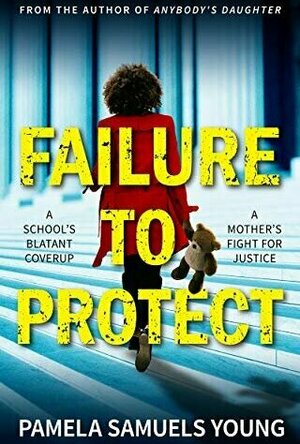
I don't normally read legal thrillers, but there was something about Failure to Protect by Pamela Samuels Young that drew me in. I think it's because I was bullied as a child, but mostly because I'm a mom now. My oldest son has high functioning Autism and ADHD. He was bullied one year in school, and his school seemed to not do anything about it. Failure to Protect was a very emotional read, and I'm really glad I decided to give it a try.
The plot for Failure to Protect was solid. Nine-year-old Bailey Lewis is constantly being bullied at her school. When something major happens, Bailey's mother, Erika, decides to sue the elementary school. However, the principal, Darcella, is more concerned with keeping the school's good record intact instead of worrying about bullied students. The principal will do whatever it takes to make sure her school's stellar reputation doesn't get soiled even if it means doing some bullying herself.
Pamela Samuels Young did such a stellar job with the world building. Her knowledge of the court process and justice system is fantastic. Young is an attorney, and it's obvious she knows her stuff. Unfortunately, the subject of bullying in schools is all too real, and sadly, many schools are more worried about their reputation and all the paperwork and time a bullying case would take than actually caring about a bullied student. This fiction novel reads like a true story. There are a few plot twists which make this book even more interesting! Failure to Protect also answered every question I had. There's no speculation in Failure to Protect, and there's also no cliffhangers. This book is part of a series, but it's the first book I've read in the series, and I feel like it works as a standalone.
The pacing in Failure to Protect is done perfectly. Every single paragraph, and every single chapter flowed smoothly into the next. Not once did I want to put this book down. It had my attention throughout! I was also a fan of the short chapters which I felt helped with the pacing.
The best thing about Failure to Protect, besides everything, were the characters. Each character had such a unique personality which really helped them to feel like a real person rather than just a character in a novel. I loved little Bailey, and I just wanted to hug her and let her know that I'd protect her against her bully. It was heartbreaking reading about all she went through in her young life from losing her father not too long ago to being relentlessly bullied in school and online. I also felt horrible for her mother Erika. She also went through two horrible tragedies including one a parent should never have to go through. I was constantly in her corner, and I kept rooting for her throughout the whole bullying ordeal with the school. Erika felt like what happened to Bailey was mostly her fault, and I wanted to tell Erika that sometimes it's not easy to know everything about our children. Dre was my favorite character. I enjoyed his thought process and how passionate he was about everything. It was obvious how much he loved his goddaughter Bailey. I loved how Angela grew as a character when it came to her relationship with Erika. At first, she wasn't big on Erika, but it was obvious how much she did end up caring for her. Angela and Jenny were both fantastic attorneys, and I loved how they were willing to dedicate all their time and knowledge for Bailey's case. Darcella, the principal, was such a horrible person. Young did a fantastic job at creating Darcella to be the antagonist. So many times I was so angry with Darcella. I wanted to just shake her and ask her why she didn't do anything for Bailey. Darcella does explain why she decided to overlook the bullying, but I just wanted to know why she bothered to work in a profession dealing with children if she didn't have any empathy. I was so annoyed with Darcella. I was also annoyed with Ethan Landers, Darcella's attorney. I know he was just doing his job at the end of the day, but it wasn't easy to read about how he could just side with the enemy. Zola, Bailey's teacher, was also an interesting character. She was so conflicted about doing the right thing, and I liked reading about why she chose to do what she did. Apache, Dre's best friend, was a minor character in Failure to Protect, but he gets a mention because I loved his scenes. He was such a character, and I loved how comical he was especially when it came to helping out Dre.
Trigger warnings in Failure to Protect include bullying, racism, sexual situations (although not too graphic), suicide, death, lying, alcohol, mentions of past drug use and selling, profanity, and mentions of violence.
All in all, Failure to Protect is an emotionally well written novel. It would make a fantastic Lifetime movie - at least that's what I kept thinking whilst reading it. The story line is something that unfortunately is so commonplace in a lot of schools. I would definitely recommend Failure to Protect by Pamela Samuels Young to those aged 18+. I think this is a book that everyone should read and can relate to on at least some level. If you do decide to read Failure to Protect (which you should), please know that you'll feel a vast range of emotions!
--
(A special thank you to Pamela Samuels Young for providing me with an eBook of Failure to Protect in exchange for an honest and unbiased review.)
The plot for Failure to Protect was solid. Nine-year-old Bailey Lewis is constantly being bullied at her school. When something major happens, Bailey's mother, Erika, decides to sue the elementary school. However, the principal, Darcella, is more concerned with keeping the school's good record intact instead of worrying about bullied students. The principal will do whatever it takes to make sure her school's stellar reputation doesn't get soiled even if it means doing some bullying herself.
Pamela Samuels Young did such a stellar job with the world building. Her knowledge of the court process and justice system is fantastic. Young is an attorney, and it's obvious she knows her stuff. Unfortunately, the subject of bullying in schools is all too real, and sadly, many schools are more worried about their reputation and all the paperwork and time a bullying case would take than actually caring about a bullied student. This fiction novel reads like a true story. There are a few plot twists which make this book even more interesting! Failure to Protect also answered every question I had. There's no speculation in Failure to Protect, and there's also no cliffhangers. This book is part of a series, but it's the first book I've read in the series, and I feel like it works as a standalone.
The pacing in Failure to Protect is done perfectly. Every single paragraph, and every single chapter flowed smoothly into the next. Not once did I want to put this book down. It had my attention throughout! I was also a fan of the short chapters which I felt helped with the pacing.
The best thing about Failure to Protect, besides everything, were the characters. Each character had such a unique personality which really helped them to feel like a real person rather than just a character in a novel. I loved little Bailey, and I just wanted to hug her and let her know that I'd protect her against her bully. It was heartbreaking reading about all she went through in her young life from losing her father not too long ago to being relentlessly bullied in school and online. I also felt horrible for her mother Erika. She also went through two horrible tragedies including one a parent should never have to go through. I was constantly in her corner, and I kept rooting for her throughout the whole bullying ordeal with the school. Erika felt like what happened to Bailey was mostly her fault, and I wanted to tell Erika that sometimes it's not easy to know everything about our children. Dre was my favorite character. I enjoyed his thought process and how passionate he was about everything. It was obvious how much he loved his goddaughter Bailey. I loved how Angela grew as a character when it came to her relationship with Erika. At first, she wasn't big on Erika, but it was obvious how much she did end up caring for her. Angela and Jenny were both fantastic attorneys, and I loved how they were willing to dedicate all their time and knowledge for Bailey's case. Darcella, the principal, was such a horrible person. Young did a fantastic job at creating Darcella to be the antagonist. So many times I was so angry with Darcella. I wanted to just shake her and ask her why she didn't do anything for Bailey. Darcella does explain why she decided to overlook the bullying, but I just wanted to know why she bothered to work in a profession dealing with children if she didn't have any empathy. I was so annoyed with Darcella. I was also annoyed with Ethan Landers, Darcella's attorney. I know he was just doing his job at the end of the day, but it wasn't easy to read about how he could just side with the enemy. Zola, Bailey's teacher, was also an interesting character. She was so conflicted about doing the right thing, and I liked reading about why she chose to do what she did. Apache, Dre's best friend, was a minor character in Failure to Protect, but he gets a mention because I loved his scenes. He was such a character, and I loved how comical he was especially when it came to helping out Dre.
Trigger warnings in Failure to Protect include bullying, racism, sexual situations (although not too graphic), suicide, death, lying, alcohol, mentions of past drug use and selling, profanity, and mentions of violence.
All in all, Failure to Protect is an emotionally well written novel. It would make a fantastic Lifetime movie - at least that's what I kept thinking whilst reading it. The story line is something that unfortunately is so commonplace in a lot of schools. I would definitely recommend Failure to Protect by Pamela Samuels Young to those aged 18+. I think this is a book that everyone should read and can relate to on at least some level. If you do decide to read Failure to Protect (which you should), please know that you'll feel a vast range of emotions!
--
(A special thank you to Pamela Samuels Young for providing me with an eBook of Failure to Protect in exchange for an honest and unbiased review.)

Hadley (567 KP) rated Hell House in Books
Sep 3, 2020
" 'It's the Mount Everest of haunted houses, you might say. There were two attempts to investigate it, one in 1931, the other in 1940. Both were disasters. Eight people involved in those attempts were killed, committed suicide, or went insane. Only one survived, and I have no idea how sound he is- - -Benjamin Fischer, one of the two who'll be with me.' " Barrett, our main character, explains before setting out to investigate the Belasco House in the paranormal novel, Hell House.
At the beginning of the book, Barrett is speaking to a rich man named Deutsch, who is on his death bed, and wanting to know if life exists after death:
" 'It isn't lies I want,' Deutsch told him. 'I'll buy the answer, either way. So long as it's definitive.'
Barrett felt a roil of despair. 'How can I convince you, either way?' He was compelled to say it.
'By giving me facts,' Deutsch answered irritably.
'Where am I to find them? I'm a physicist. In the twenty years I've studied parapsychology, I've yet to - - -'
'If they exist,' Deutsch interrupted,' you'll find them in the only place on earth I know of where survival has yet to be refuted. The Belasco house in Maine.' "
Along with Barrett and Fischer a well-known medium named Florence and Barrett's wife, Edith join them on their trip to the Belasco house. Fischer is also a medium, who gets prodded at by Florence for refusing to use his 'gift:'
" 'You were the most powerful physical medium this country has ever known, Ben.'
'Still am, Florence. Just a little bit more careful now, that's all. I suggest the same approach for you. You're walking around this house like an open nerve. When you really do hit something, it'll tear your insides out. This place isn't called Hell House for nothing, you know. It intends to kill every one of us, so you'd damn well better learn to protect yourself until you're ready. Or you'll just be one more victim on the list.' "
Florence's need to prove that spirits exist to Barrett, the skeptic of the group, permeates throughout the entire book. She allows him to subject her to entirely naked pat-downs and the use of all sorts of instruments while she becomes possessed by spirits in the house. She slowly begins to lose her patience with Barrett every time she speaks with him about the possibility of ghosts existing until one day she becomes so infuriated with him that the entire dining area becomes a minefield of seemingly unaided flying dishes.
Even after this incident, Barrett refuses to believe that the Belasco house is haunted and that spirits exist. As the reader continues on through the story, Barrett's skepticism becomes a little annoying with the amount of paranormal things that happen, especially how he has a scientific reasoning for everything: " 'Making use of the power in the room,' he[Barrett] said. 'Converting it to poltergeist-type phenomena directed at me.' " As Fischer and Florence continue to find evidence of paranormal activity, Barrett stays focused on a machine that he invented to arrive soon, which he states will prove his theory of energy causing the 'hauntings,' rather than spirits, while avoiding all evidence that may prove otherwise.
Early on, Florence becomes preoccupied with a spirit in the house, who she believes to be the son of Belasco (the man who owned the house). After coming in contact with this spirit, physical harm starts to come to Florence, one such incident is of something in the night biting her breasts hard enough to leave teeth marks. Barrett and the others find her, crying in bed during this, where she states that Belasco is punishing her for finding and communicating with his son.
During all of this, Edith seems to come under an influence at the house, which causes her to start to drink heavily although she's never touched a drop of alcohol in her life due to an alcoholic father. One incident with a drunk Edith, she comes onto Fischer in a way that makes the reader question whether or not this is a spirit taking her over, or if this is what Edith is like when she's drunk. When Fischer confronts Barrett about his wife and her possible possession by the house, Barrett refuses to see it as that:
" 'Irrelevant?' Fischer looked amazed. 'What the hell do you mean, irrelevant? Whatever's going on is getting to your wife. It's gotten to Florence, and it's gotten to you. Or maybe you haven't noticed.'
Barrett regarded him in silence, his expression hard. 'I've noticed a number of things, Mr. Fischer,' he finally said. 'One of which is that Mr. Deutsch is wasting approximately a third of his money.' "
Although Hell House has all of the great paranormal tropes in it, it objectifies women almost to an extreme, and to a point that it isn't believable at all to the reader: the Belasco house is one of depravity, including sexual interactions, but Belasco's guests were both female and male, yet only sexual things (albeit crude) only happen to Florence and Edith, neither Barrett or Fischer are affected. Hell House is a great story with an even greater villain, but Matheson really ruined the story with his crude fantasies about women. I absolutely think this book is better than the Haunting of Hill House because the scares are better while Haunting lacked a lot of them. If you can get past a horny man's fantasies, then the book is very enjoyable.
At the beginning of the book, Barrett is speaking to a rich man named Deutsch, who is on his death bed, and wanting to know if life exists after death:
" 'It isn't lies I want,' Deutsch told him. 'I'll buy the answer, either way. So long as it's definitive.'
Barrett felt a roil of despair. 'How can I convince you, either way?' He was compelled to say it.
'By giving me facts,' Deutsch answered irritably.
'Where am I to find them? I'm a physicist. In the twenty years I've studied parapsychology, I've yet to - - -'
'If they exist,' Deutsch interrupted,' you'll find them in the only place on earth I know of where survival has yet to be refuted. The Belasco house in Maine.' "
Along with Barrett and Fischer a well-known medium named Florence and Barrett's wife, Edith join them on their trip to the Belasco house. Fischer is also a medium, who gets prodded at by Florence for refusing to use his 'gift:'
" 'You were the most powerful physical medium this country has ever known, Ben.'
'Still am, Florence. Just a little bit more careful now, that's all. I suggest the same approach for you. You're walking around this house like an open nerve. When you really do hit something, it'll tear your insides out. This place isn't called Hell House for nothing, you know. It intends to kill every one of us, so you'd damn well better learn to protect yourself until you're ready. Or you'll just be one more victim on the list.' "
Florence's need to prove that spirits exist to Barrett, the skeptic of the group, permeates throughout the entire book. She allows him to subject her to entirely naked pat-downs and the use of all sorts of instruments while she becomes possessed by spirits in the house. She slowly begins to lose her patience with Barrett every time she speaks with him about the possibility of ghosts existing until one day she becomes so infuriated with him that the entire dining area becomes a minefield of seemingly unaided flying dishes.
Even after this incident, Barrett refuses to believe that the Belasco house is haunted and that spirits exist. As the reader continues on through the story, Barrett's skepticism becomes a little annoying with the amount of paranormal things that happen, especially how he has a scientific reasoning for everything: " 'Making use of the power in the room,' he[Barrett] said. 'Converting it to poltergeist-type phenomena directed at me.' " As Fischer and Florence continue to find evidence of paranormal activity, Barrett stays focused on a machine that he invented to arrive soon, which he states will prove his theory of energy causing the 'hauntings,' rather than spirits, while avoiding all evidence that may prove otherwise.
Early on, Florence becomes preoccupied with a spirit in the house, who she believes to be the son of Belasco (the man who owned the house). After coming in contact with this spirit, physical harm starts to come to Florence, one such incident is of something in the night biting her breasts hard enough to leave teeth marks. Barrett and the others find her, crying in bed during this, where she states that Belasco is punishing her for finding and communicating with his son.
During all of this, Edith seems to come under an influence at the house, which causes her to start to drink heavily although she's never touched a drop of alcohol in her life due to an alcoholic father. One incident with a drunk Edith, she comes onto Fischer in a way that makes the reader question whether or not this is a spirit taking her over, or if this is what Edith is like when she's drunk. When Fischer confronts Barrett about his wife and her possible possession by the house, Barrett refuses to see it as that:
" 'Irrelevant?' Fischer looked amazed. 'What the hell do you mean, irrelevant? Whatever's going on is getting to your wife. It's gotten to Florence, and it's gotten to you. Or maybe you haven't noticed.'
Barrett regarded him in silence, his expression hard. 'I've noticed a number of things, Mr. Fischer,' he finally said. 'One of which is that Mr. Deutsch is wasting approximately a third of his money.' "
Although Hell House has all of the great paranormal tropes in it, it objectifies women almost to an extreme, and to a point that it isn't believable at all to the reader: the Belasco house is one of depravity, including sexual interactions, but Belasco's guests were both female and male, yet only sexual things (albeit crude) only happen to Florence and Edith, neither Barrett or Fischer are affected. Hell House is a great story with an even greater villain, but Matheson really ruined the story with his crude fantasies about women. I absolutely think this book is better than the Haunting of Hill House because the scares are better while Haunting lacked a lot of them. If you can get past a horny man's fantasies, then the book is very enjoyable.
Lee (2222 KP) rated Wonder Woman (2017) in Movies
Jul 14, 2017
After a pretty lengthy drought, we finally get another decent DC movie
As the DC TV universe continues to go from strength to strength, the DC movie universe is gradually going downhill. Don’t get me wrong, I really liked Man of Steel, despite the overloaded CGI destruction at the end. I didn’t mind Batman Vs Superman either, even with Jesse Eisenberg doing his very best to try and ruin it. But, despite successfully introducing two other major DC heavyweight characters (and not so successfully introducing a few others) and picking up steam in the final act, the movie struggled. Suicide Squad then managed to take bad to a completely new level, and was just a complete train-wreck.
Batman Vs Superman was our first introduction to Wonder Woman in the DC movie universe, and she was the most entertaining and promising aspect of the whole movie. As a child of the 70s, I grew up watching and enjoying the Wonder Woman TV show, along with re-runs of the Batman 60s show and of course the Christopher Reeve Superman movies. After all these years of countless Batman and Superman movies, it was great to not only see Wonder Woman finally on the big screen, but also to see her being portrayed so well. Now, with her standalone movie coming out a few months before the mediocre looking Justice League movie, this is not only an important movie for DC but also an important first step in finally bringing strong female superheroes to the big screen. Paving the way for Captain Marvel, a Black Widow standalone movie, and more. This had to be good.
Thankfully, it is. Although there’s still a long way to go in order to reach the level that Marvel already managed to achieve many movies ago, this is indeed a serious step up for DC. Opening with a brief scene set in present day, Wonder Woman then takes us back to Themyscira. A paradise island, hidden from view from the rest of the world, where a young Diana lives peacefully among her Amazon tribe. Despite their peaceful existence though, the Amazons are constantly preparing themselves for the return of Ares, God of War. Archery and combat training is undertaken daily on the island, under the guidance of Dianas aunt, General Antiope (Robin Wright). Diana is keen to train too and her reluctant mother, Queen Hippolyta (Connie Nielsen), eventually agrees, requesting that General Antiope train her hard and make her the best. As Diana grows into a woman, training has clearly gone well and she’s even managing to give her aunt a good run for her money! Just in time too as World War 1 pilot Steve Trevor (Chris Pine) crashes through the invisible barrier cloaking the island and crash lands into the sea, closely followed by a bunch of Germans who are on his tail. Time for the Amazon women to put their training to good use, but not without some casualties…
Steve tells Diana of the great war that’s raging throughout the world and Diana believes this to be the return of Ares. She decides to leave her home and travel with Steve to put an end to Ares once and for all. So, she grabs her shield and lasso of truth and ‘borrows’ the sacred ‘God Killer’ sword from the tower it rests in and off they go. Leaving behind the bright, vibrant island of Themyscira and returning to the traditional, dark grey pallet of colours that we’re used to seeing in our DC movies as they head to war-torn London.
Steve takes over as charming tour guide as Diana enters the human world for the first time. Her innocence and curiosity of the modern world are played beautifully by Gadot, with plenty of fish-out-of-water style humour too. But she’s also never afraid to question and stand up for what she believes in and tackle those who try and oppose her, giving an interesting perspective on aspects of humanity which deserve to be questioned. Her drive to get to the front-line of war, to seek out Ares and supposedly end all war by defeating him, constantly driving her forward. Romance eventually blossoms between Diana and Steve, but it feels natural and believable and helps to hold the movie together during some of its slower moments.
When Wonder Woman manages to get to the front line and steps out into no-mans land, ignoring the advice of Steve and those around her, it’s magnificent. It heralds the first in a series of magnificent action sequences involving German soldiers as she puts her training to good use. Initially shielding herself from the onslaught of bullets before moving onto the offensive with some bad-ass combat moves, slo-mo back-flips, jumps, whip action and displays of pure power and strength. Everything we got a glimpse of in Batman Vs Superman, ramped up to the max, perfectly executed and accompanied by a rocking soundtrack!
Where Wonder Woman doesn’t work so well is in the handling of its villains. Whenever we switch to General Ludendorff and Doctor Poison, busily developing deadly gases to unleash, momentum seems to be lost. And as for Ares, when we do finally meet him he’s pretty laughable, with no clearly defined motivation or character. Following a bit of villain monologue, we get the general gist of what his beef is and then the last 20 minutes or so descend into the over the top CG destruction that we’re so used to seeing now in these movies. It’s a minor gripe, and not handled as badly as some previous movies, but along with the pacing issues it does affect the overall enjoyment of the movie somewhat.
None of this detracts from Wonder Woman herself though. Gal Gadot has truly made this role her own and displays the perfect mix of strength, beauty, brains, confidence, determination and general all-round girl power. She can more than hold her own in the DC universe and should hopefully be a prominent force in the upcoming Justice League movie and beyond.
Batman Vs Superman was our first introduction to Wonder Woman in the DC movie universe, and she was the most entertaining and promising aspect of the whole movie. As a child of the 70s, I grew up watching and enjoying the Wonder Woman TV show, along with re-runs of the Batman 60s show and of course the Christopher Reeve Superman movies. After all these years of countless Batman and Superman movies, it was great to not only see Wonder Woman finally on the big screen, but also to see her being portrayed so well. Now, with her standalone movie coming out a few months before the mediocre looking Justice League movie, this is not only an important movie for DC but also an important first step in finally bringing strong female superheroes to the big screen. Paving the way for Captain Marvel, a Black Widow standalone movie, and more. This had to be good.
Thankfully, it is. Although there’s still a long way to go in order to reach the level that Marvel already managed to achieve many movies ago, this is indeed a serious step up for DC. Opening with a brief scene set in present day, Wonder Woman then takes us back to Themyscira. A paradise island, hidden from view from the rest of the world, where a young Diana lives peacefully among her Amazon tribe. Despite their peaceful existence though, the Amazons are constantly preparing themselves for the return of Ares, God of War. Archery and combat training is undertaken daily on the island, under the guidance of Dianas aunt, General Antiope (Robin Wright). Diana is keen to train too and her reluctant mother, Queen Hippolyta (Connie Nielsen), eventually agrees, requesting that General Antiope train her hard and make her the best. As Diana grows into a woman, training has clearly gone well and she’s even managing to give her aunt a good run for her money! Just in time too as World War 1 pilot Steve Trevor (Chris Pine) crashes through the invisible barrier cloaking the island and crash lands into the sea, closely followed by a bunch of Germans who are on his tail. Time for the Amazon women to put their training to good use, but not without some casualties…
Steve tells Diana of the great war that’s raging throughout the world and Diana believes this to be the return of Ares. She decides to leave her home and travel with Steve to put an end to Ares once and for all. So, she grabs her shield and lasso of truth and ‘borrows’ the sacred ‘God Killer’ sword from the tower it rests in and off they go. Leaving behind the bright, vibrant island of Themyscira and returning to the traditional, dark grey pallet of colours that we’re used to seeing in our DC movies as they head to war-torn London.
Steve takes over as charming tour guide as Diana enters the human world for the first time. Her innocence and curiosity of the modern world are played beautifully by Gadot, with plenty of fish-out-of-water style humour too. But she’s also never afraid to question and stand up for what she believes in and tackle those who try and oppose her, giving an interesting perspective on aspects of humanity which deserve to be questioned. Her drive to get to the front-line of war, to seek out Ares and supposedly end all war by defeating him, constantly driving her forward. Romance eventually blossoms between Diana and Steve, but it feels natural and believable and helps to hold the movie together during some of its slower moments.
When Wonder Woman manages to get to the front line and steps out into no-mans land, ignoring the advice of Steve and those around her, it’s magnificent. It heralds the first in a series of magnificent action sequences involving German soldiers as she puts her training to good use. Initially shielding herself from the onslaught of bullets before moving onto the offensive with some bad-ass combat moves, slo-mo back-flips, jumps, whip action and displays of pure power and strength. Everything we got a glimpse of in Batman Vs Superman, ramped up to the max, perfectly executed and accompanied by a rocking soundtrack!
Where Wonder Woman doesn’t work so well is in the handling of its villains. Whenever we switch to General Ludendorff and Doctor Poison, busily developing deadly gases to unleash, momentum seems to be lost. And as for Ares, when we do finally meet him he’s pretty laughable, with no clearly defined motivation or character. Following a bit of villain monologue, we get the general gist of what his beef is and then the last 20 minutes or so descend into the over the top CG destruction that we’re so used to seeing now in these movies. It’s a minor gripe, and not handled as badly as some previous movies, but along with the pacing issues it does affect the overall enjoyment of the movie somewhat.
None of this detracts from Wonder Woman herself though. Gal Gadot has truly made this role her own and displays the perfect mix of strength, beauty, brains, confidence, determination and general all-round girl power. She can more than hold her own in the DC universe and should hopefully be a prominent force in the upcoming Justice League movie and beyond.