
Search
Search results
Mandi S (1 KP) rated The Sky Is Yours in Books
Jan 23, 2018
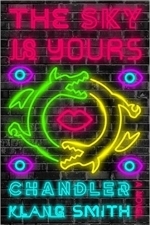

Dystopian futuristic society. Coming of age teen angst. A love triangle. Human/robot hybrids. Dragons unrelentingly setting virtually everything on fire. Check, check, check, check, and check. The Sky is Yours by Chandler Klang Smith has all of this and more. I'll be honest and say that I had no clue what this book was about at first, but I was fascinated by the cover. The neon graffiti-ed look drew me in, but as soon as I read the synopsis I was hooked.
The scene is Empire Island, a once booming metropolis now nearly abandoned as dragons have burned it to the ground. These two dragons appeared randomly in the sky and have not left for years, looming above the city 24/7 and taking no prisoners as they burn and reburn what little remains of Empire Island. Enter Duncan Ripple, a rich, privileged teen set on disregarding orders and living his life, as he crashes his hovercraft on a neighboring desert island. Here is where Abracadabra, or Abby, nurses him back to health until they are both rescued. Upon returning home, they are met by Swanny, Duncan's betrothed, as their parents force a union that neither of them seems to want. Chaos ensues, the three teens escape, and they are left to their own devices on a journey of self-discovery and survival in a smoldering city.
I really enjoyed this book. It is so unique, fun, and engaging, and almost impossible to categorize. The characters were all very well developed, and the plot was exciting and different. While the three characters were intertwined, they each had their own distinctive arc that developed them individually. Although it didn't bother me much, I will say that some of the language used might annoy a more traditional reader. Men are "pros" and women are "fems", and traditional names of objects are abandoned in favor of modernized versions such as the "Toob" for television, a "HowDouse" for a firetruck, and "LookyGlass" for what seems to be a cell phone.
Overall Rating: 4 out of 5 Stars
Thank you so much to Crown Publishing for sending me a finished copy of this beauty!
The scene is Empire Island, a once booming metropolis now nearly abandoned as dragons have burned it to the ground. These two dragons appeared randomly in the sky and have not left for years, looming above the city 24/7 and taking no prisoners as they burn and reburn what little remains of Empire Island. Enter Duncan Ripple, a rich, privileged teen set on disregarding orders and living his life, as he crashes his hovercraft on a neighboring desert island. Here is where Abracadabra, or Abby, nurses him back to health until they are both rescued. Upon returning home, they are met by Swanny, Duncan's betrothed, as their parents force a union that neither of them seems to want. Chaos ensues, the three teens escape, and they are left to their own devices on a journey of self-discovery and survival in a smoldering city.
I really enjoyed this book. It is so unique, fun, and engaging, and almost impossible to categorize. The characters were all very well developed, and the plot was exciting and different. While the three characters were intertwined, they each had their own distinctive arc that developed them individually. Although it didn't bother me much, I will say that some of the language used might annoy a more traditional reader. Men are "pros" and women are "fems", and traditional names of objects are abandoned in favor of modernized versions such as the "Toob" for television, a "HowDouse" for a firetruck, and "LookyGlass" for what seems to be a cell phone.
Overall Rating: 4 out of 5 Stars
Thank you so much to Crown Publishing for sending me a finished copy of this beauty!



I think I'm becoming quite the Ali Smith fan
I absolutely loved this book. I'm becoming quite a fan, and I think I need to read more of Ali Smith's back catalogue. This novel is witty, current, heartfelt with a full-on family! Ali Smith has a lot of political dross and general misery in the news lately to find material from (unfortunately!), but she does so much good WITH it. In the blurb it says about this book that it's "The season that teaches us survival", and the characters in this certainly do just that.
There is a lot of jumping around in time: things that happened in the past that have a bearing on the presents of the characters, and the occasional toe-dip into their futures too. A lot can happen in the few days over Christmas. We're never quite sure if the mother in this is losing her mind or not (it would be a safe bet to say "yes", but then her son isn't particularly stable during the time period that the book is set in either).
I love the wittiness of Smith's writing. For the Brits reading this, you'll probably get this one straight away, but for everyone else, she's referring to Boris Johnson our current (2018) Foreign Secretary (although I think this would probably apply to any politician, regardless of political party or country! Call me a cynic!): "The man who wrote the dictionary. Johnson. Not Boris. The opposite of Boris. A man interested in the meanings of words, not one whose interests leave words meaningless."
And just a quote to finish with. One that represents both the season that the book is set in, and also one of the main story arcs:
"Cymbeline, he says. The one about poison, mess, bitterness, then the balance coming back. The lies revealed. The losses compensated".
Ali Smiths style can take a bit of getting used to (you'll probably have noticed the lack of speech marks - that's not a mistake on my part, by the way), but her books are so worth the effort.
There is a lot of jumping around in time: things that happened in the past that have a bearing on the presents of the characters, and the occasional toe-dip into their futures too. A lot can happen in the few days over Christmas. We're never quite sure if the mother in this is losing her mind or not (it would be a safe bet to say "yes", but then her son isn't particularly stable during the time period that the book is set in either).
I love the wittiness of Smith's writing. For the Brits reading this, you'll probably get this one straight away, but for everyone else, she's referring to Boris Johnson our current (2018) Foreign Secretary (although I think this would probably apply to any politician, regardless of political party or country! Call me a cynic!): "The man who wrote the dictionary. Johnson. Not Boris. The opposite of Boris. A man interested in the meanings of words, not one whose interests leave words meaningless."
And just a quote to finish with. One that represents both the season that the book is set in, and also one of the main story arcs:
"Cymbeline, he says. The one about poison, mess, bitterness, then the balance coming back. The lies revealed. The losses compensated".
Ali Smiths style can take a bit of getting used to (you'll probably have noticed the lack of speech marks - that's not a mistake on my part, by the way), but her books are so worth the effort.

TRUE_REVIEW (8 KP) rated Horizon Zero Dawn: Complete Edition in Video Games
Feb 19, 2018

Amazing Graphics (2 more)
Captivating Storyline
Repeat Playability
A Visually Epic Tale of a Future Dominated By Machines
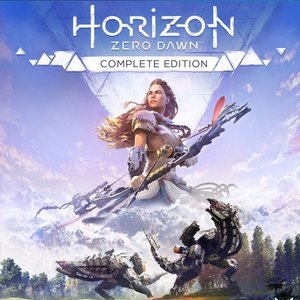
Horizon Zero Dawn tells the tale of Aloy, an outsider in a future ruled by machines who needs to find her place in the world. A story which reaches from her younger years to adulthood and leads us through interweaving story arch from tribe acceptance to standing side by side with royalty.
Take down an array of machines with just a bow and arrow or create multiple strategies using an armoury of inventive weapons. The combat is sleek, often offering multiple ways of achieving your goal. The storytelling is deep and rich with a cast of hundreds of characters, each with their own interesting backstory to be discovered. Controls are superb, rarely limiting your ability to interact with the environment. Graphically stunning (I played this on a standard PS4 but there are significant improvements to be had if you own a PS4 Pro).
For the collector in you there is plenty to find here albeit easy enough to complete with the maps available for purchase.
This version of the game comes complete with The Frozen Wilds DLC which opens up an additional region to the north of the map with new, deadlier enemies to tackle as well as an entirely new story arch to discover. You can also unlock New Game + which (once the base game is complete) allows you to restart the game with all the weapons, armour and collectibles you have found already. New Game + increases the difficulty significantly bringing new challenges to an already discovered map (which in itself is vast to say the least).
All in all, Horizon Zero Dawn: Complete Edition is an incredible story of survival in a hostile world. One of the top games of 2017 for me (if not the best). Certainly deserves all the awards it received and thankfully paves the way for a sequel through multiple unanswered questions. I award Horizon Zero Dawn: Complete Edition 9/10 and a must have for any PS4 owner (exclusive to PS4).
Review Setup Used:
PS4: Standard 500 gig base model
TV: LG 50PZ570T
Audio (interchanged): LG 5.1 Surround BH7440 OR Turtle Beach Wireless PX4 Headphones
Take down an array of machines with just a bow and arrow or create multiple strategies using an armoury of inventive weapons. The combat is sleek, often offering multiple ways of achieving your goal. The storytelling is deep and rich with a cast of hundreds of characters, each with their own interesting backstory to be discovered. Controls are superb, rarely limiting your ability to interact with the environment. Graphically stunning (I played this on a standard PS4 but there are significant improvements to be had if you own a PS4 Pro).
For the collector in you there is plenty to find here albeit easy enough to complete with the maps available for purchase.
This version of the game comes complete with The Frozen Wilds DLC which opens up an additional region to the north of the map with new, deadlier enemies to tackle as well as an entirely new story arch to discover. You can also unlock New Game + which (once the base game is complete) allows you to restart the game with all the weapons, armour and collectibles you have found already. New Game + increases the difficulty significantly bringing new challenges to an already discovered map (which in itself is vast to say the least).
All in all, Horizon Zero Dawn: Complete Edition is an incredible story of survival in a hostile world. One of the top games of 2017 for me (if not the best). Certainly deserves all the awards it received and thankfully paves the way for a sequel through multiple unanswered questions. I award Horizon Zero Dawn: Complete Edition 9/10 and a must have for any PS4 owner (exclusive to PS4).
Review Setup Used:
PS4: Standard 500 gig base model
TV: LG 50PZ570T
Audio (interchanged): LG 5.1 Surround BH7440 OR Turtle Beach Wireless PX4 Headphones
Heather Cranmer (2721 KP) rated Final Girls in Books
Aug 20, 2018

Forgettable Book (1 more)
Overdone Plot
Just Okay
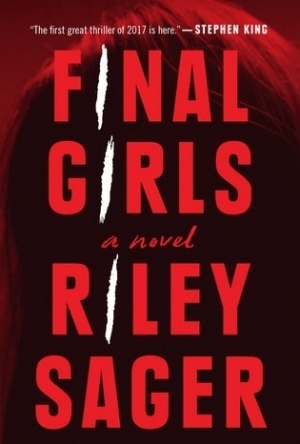
Final Girls by Riley Sager came highly recommended to. I was looking for a good horror book to read. While Final Girls wasn't a great read, it wasn't bad. Final Girls was just an okay read and nothing more.
The pacing is okay in Final Girls. It's not fast paced, but it's not slow either. I didn't hurry to finish this book at all. Every now and then the pacing would get better, but most times it was just okay.
The plot was alright. It's like every other slasher survival type books. Final Girls did have a few plot twists. Most were pretty predictable such as the one with Sam. I just felt like I had read and seen this plot line so many times before. Nothing really stood out with the plot of Final Girls.
The world building was done well. It was easy for me to be transported to the world of Final Girls. Even the attacks on the girls seemed realistic.
I liked the characters enough and felt that they were fairly well written. I did feel that Quincy was a little too gullible and trusting. There were times I had to shake my head at her. For example, I felt like she was too trusting of Samantha. It's like she just took her at her word all the time. Saying all that, I did love Quincy though. She did have a fighting spirit about her, and I loved her determination. Sam annoyed me. She was written well, but she annoyed me with how she said "babe" almost all the time. She was always so shady, and I never trusted her. Even though Jeff and Coop weren't major characters, I still liked them a lot. They just seemed like really nice guys.
There are some themes in this book such as violence, smoking, prescription drug abuse, alcohol, sex, and swearing. Nothing is too over the top, and it fits in with the book perfectly.
All in all, I feel as if Final Girls by Riley Sager is a forgettable book. Nothing really stands out plot wise or character wise. It's just an okay read, but it's been done before.
The pacing is okay in Final Girls. It's not fast paced, but it's not slow either. I didn't hurry to finish this book at all. Every now and then the pacing would get better, but most times it was just okay.
The plot was alright. It's like every other slasher survival type books. Final Girls did have a few plot twists. Most were pretty predictable such as the one with Sam. I just felt like I had read and seen this plot line so many times before. Nothing really stood out with the plot of Final Girls.
The world building was done well. It was easy for me to be transported to the world of Final Girls. Even the attacks on the girls seemed realistic.
I liked the characters enough and felt that they were fairly well written. I did feel that Quincy was a little too gullible and trusting. There were times I had to shake my head at her. For example, I felt like she was too trusting of Samantha. It's like she just took her at her word all the time. Saying all that, I did love Quincy though. She did have a fighting spirit about her, and I loved her determination. Sam annoyed me. She was written well, but she annoyed me with how she said "babe" almost all the time. She was always so shady, and I never trusted her. Even though Jeff and Coop weren't major characters, I still liked them a lot. They just seemed like really nice guys.
There are some themes in this book such as violence, smoking, prescription drug abuse, alcohol, sex, and swearing. Nothing is too over the top, and it fits in with the book perfectly.
All in all, I feel as if Final Girls by Riley Sager is a forgettable book. Nothing really stands out plot wise or character wise. It's just an okay read, but it's been done before.

Sensitivemuse (246 KP) rated Unholy Ghosts (Downside Ghosts, #1) in Books
Sep 14, 2018
Great reading for the first one
Contains spoilers, click to show
***Possible spoilers you’ve been warned***
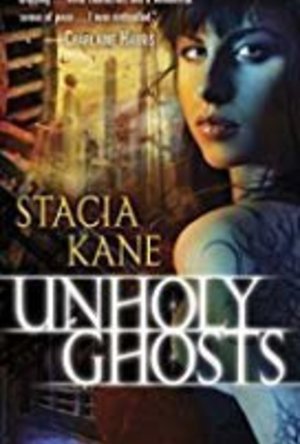
I really enjoyed the world building in this book and wished there was a little more explanation about it. You do get snippets here and there on what happened with the world and why the Church came on top and in charge of the city. The setting is wonderful though. It’s dark, it’s gritty, it’s survival. It’s what you might see from a cyberpunk novel without the futuristic theme.
The plot itself is interesting thanks to the setting. It’s a nice blend of old and new. I say old because of the way the characters talk. It’s meant to be a form of street slang, but it also sounds a mixture of old english and modern. It’s interesting and fun to read (if you have a crush on Lex you’d like it). There is an element of mystery and I like the magic used. It’s a nice blend of using tattoos and actual spell components.
Chess is likable as a character. She’s hard working and is good at what she does, despite her faults and vices. The vices do play a big part on her behavior and takes a hold of her life. She still manages to soldier through her tasks and proves to be a fighter.
There is an aspect of a love triangle in the book although I’m not sure if it could be called that. I don’t see Terrible as a love interest at all, I see him more as a loyal friend and the muscle of the duo. Lex on the other hand - so swoon worthy if you’re into the bad boys. He’s self serving and most likely not a good thing for Chess but they both got this spark. Maybe it’s because of their backgrounds and they’re similar but they get along so well and Lex has this subtle charm about him (let’s not even compare him to Doyle)
This is a must read for urban fantasy fans. It’s got a bit of everything and Chess is such a great character to follow through the journey. Will definitely go onto the second book of the series.
I really enjoyed the world building in this book and wished there was a little more explanation about it. You do get snippets here and there on what happened with the world and why the Church came on top and in charge of the city. The setting is wonderful though. It’s dark, it’s gritty, it’s survival. It’s what you might see from a cyberpunk novel without the futuristic theme.
The plot itself is interesting thanks to the setting. It’s a nice blend of old and new. I say old because of the way the characters talk. It’s meant to be a form of street slang, but it also sounds a mixture of old english and modern. It’s interesting and fun to read (if you have a crush on Lex you’d like it). There is an element of mystery and I like the magic used. It’s a nice blend of using tattoos and actual spell components.
Chess is likable as a character. She’s hard working and is good at what she does, despite her faults and vices. The vices do play a big part on her behavior and takes a hold of her life. She still manages to soldier through her tasks and proves to be a fighter.
There is an aspect of a love triangle in the book although I’m not sure if it could be called that. I don’t see Terrible as a love interest at all, I see him more as a loyal friend and the muscle of the duo. Lex on the other hand - so swoon worthy if you’re into the bad boys. He’s self serving and most likely not a good thing for Chess but they both got this spark. Maybe it’s because of their backgrounds and they’re similar but they get along so well and Lex has this subtle charm about him (let’s not even compare him to Doyle)
This is a must read for urban fantasy fans. It’s got a bit of everything and Chess is such a great character to follow through the journey. Will definitely go onto the second book of the series.
Sensitivemuse (246 KP) rated Radical in Books
Nov 5, 2018
Good plot, good character development but disappointing
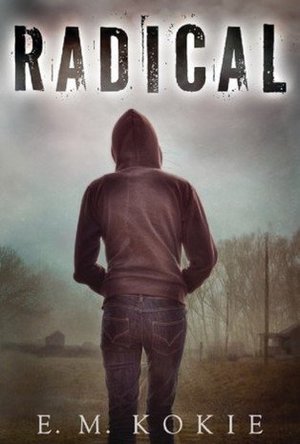
This one was off to a slow start, and it was pretty much slow throughout. What compelled me to finish this book to the end was wondering whether this Clearview group was legit or if there was something more to them.
You also follow through Bex and her life at home, which doesn’t seem very pleasant to start with. Her mom tries to change her despite her orientation, there’s financial issues at the home, and her brother is, quite frankly, an ahole. You quickly figure out Bex is into guns, and survival training. There’s extensive description on how she takes care of the guns, how she loads them, fires them, and we can go on. It gets tedious and lets the plot slow to a crawl. If you want intrigue and surprises, this isn’t going to happen until much later. Much much later.
There’s also focus on Bex and Lucy. They both seem to compliment each other and there is slight chemistry between the two of them but it’s not a romantic type of love story that you get if that’s what you’re looking for. They’re polar opposites and compliment one another but you also get that feeling it’s nice while it lasts.
There isn’t much to the plot until the last third of the novel, which is disappointing. However it’s jarring to see how much of the concept of survivalism is drilled into Bex and pushes her to the edge to the point of becoming paranoid over every minute detail. It’s sad to see what her parents attempt to make her do, when it comes to the subject of her brother. It’s also disappointing to see hardly any mention of Clearview except for smidgens here and there and although it plays a part in the plot, it’s not what you think and you wish there was more to it. It would have made the book much more interesting.
It wasn’t the best, but not the worst either. I’d suggest to take this out from the library instead of a purchase.
You also follow through Bex and her life at home, which doesn’t seem very pleasant to start with. Her mom tries to change her despite her orientation, there’s financial issues at the home, and her brother is, quite frankly, an ahole. You quickly figure out Bex is into guns, and survival training. There’s extensive description on how she takes care of the guns, how she loads them, fires them, and we can go on. It gets tedious and lets the plot slow to a crawl. If you want intrigue and surprises, this isn’t going to happen until much later. Much much later.
There’s also focus on Bex and Lucy. They both seem to compliment each other and there is slight chemistry between the two of them but it’s not a romantic type of love story that you get if that’s what you’re looking for. They’re polar opposites and compliment one another but you also get that feeling it’s nice while it lasts.
There isn’t much to the plot until the last third of the novel, which is disappointing. However it’s jarring to see how much of the concept of survivalism is drilled into Bex and pushes her to the edge to the point of becoming paranoid over every minute detail. It’s sad to see what her parents attempt to make her do, when it comes to the subject of her brother. It’s also disappointing to see hardly any mention of Clearview except for smidgens here and there and although it plays a part in the plot, it’s not what you think and you wish there was more to it. It would have made the book much more interesting.
It wasn’t the best, but not the worst either. I’d suggest to take this out from the library instead of a purchase.

Gareth von Kallenbach (980 KP) rated The Maze Runner: The Death Cure (2018) in Movies
Jun 19, 2019
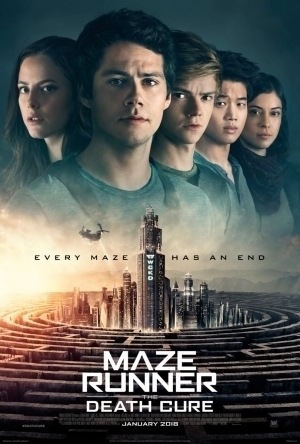

Originally slated to appear in Feb. 2017, but delayed due to the onset
injury of Dylan O”Brien; the final part of the “Maze Runner” trilogy has
arrived with the release of “Maze Runner: The Death Cure”. The film picks
up shortly after the events of the previous film where the heroes are
trying to rescue their friend MinHo from the forces of WCKD who are
looking to find a cure for a devastating virus in his blood. Since Minho
and his fellow “Gladers” are immune, the hope is that they hold the key to
the future of humanity, so WCKD is willing to do whatever it takes to find
the cure even if it means torture and killing individuals and other
captives I n their lab.
Against the wishes of his newly found comrades, Thomas, Newt, and their
friends set off to the last city to rescue their friend even though they
know they will face legions of troops and fortified defenses as well as
swarms of infected individuals along the way.
At the same time, Teresa is busy working with WCKD on a cure and seems to
have had little lasting effecting from betraying Thomas and his friends.
Ava and Rat Man seem to be in a perpetual state of conflict over their
next course of action and with time to find a cure growing shorter and
shorter, desperation begins to grow.
The arrival of Thomas only worsens the situation as the characters find
themselves in a very complicated situation fighting not only for their own
survival but for that of their friends and society as a whole.
The film is over two hours long and at times drags, but does have some
good action sequences and does up the action compared to prior films in
the series.
While it remains to be seen if either of the two prequel books that
followed the trilogy will be adapted, the final film in the trilogy does
offer a satisfying and at times exciting conclusion to the series, as long
as you are willing to be patient with the long run time and slower
portions of the story.
http://sknr.net/2018/01/24/maze-runner-death-cure/
injury of Dylan O”Brien; the final part of the “Maze Runner” trilogy has
arrived with the release of “Maze Runner: The Death Cure”. The film picks
up shortly after the events of the previous film where the heroes are
trying to rescue their friend MinHo from the forces of WCKD who are
looking to find a cure for a devastating virus in his blood. Since Minho
and his fellow “Gladers” are immune, the hope is that they hold the key to
the future of humanity, so WCKD is willing to do whatever it takes to find
the cure even if it means torture and killing individuals and other
captives I n their lab.
Against the wishes of his newly found comrades, Thomas, Newt, and their
friends set off to the last city to rescue their friend even though they
know they will face legions of troops and fortified defenses as well as
swarms of infected individuals along the way.
At the same time, Teresa is busy working with WCKD on a cure and seems to
have had little lasting effecting from betraying Thomas and his friends.
Ava and Rat Man seem to be in a perpetual state of conflict over their
next course of action and with time to find a cure growing shorter and
shorter, desperation begins to grow.
The arrival of Thomas only worsens the situation as the characters find
themselves in a very complicated situation fighting not only for their own
survival but for that of their friends and society as a whole.
The film is over two hours long and at times drags, but does have some
good action sequences and does up the action compared to prior films in
the series.
While it remains to be seen if either of the two prequel books that
followed the trilogy will be adapted, the final film in the trilogy does
offer a satisfying and at times exciting conclusion to the series, as long
as you are willing to be patient with the long run time and slower
portions of the story.
http://sknr.net/2018/01/24/maze-runner-death-cure/
Matthew Krueger (10051 KP) rated Condemned: Criminal Origins in Video Games
Oct 24, 2019
Scary Spooky
Condemned: Criminal Origins (known in Europe as Condemned) is a first-person survival horror video game, that is very good but underrated.
Condemned: Criminal Origins places an emphasis on melee combat and puzzle solving, including searching for fingerprints and gathering evidence. Lets talk more about the crime scene's, and gathing evidence.
Condemned directly involves the player in crime scene investigations, offering the ability to, at the press of a context-sensitive button, call upon a suite of forensic tools to find and record evidence. The player character is linked to an FBI lab via his mobile phone throughout the investigation, allowing (almost immediate) remote examination and analysis by his support worker, Rosa. Crime scene evidence can be used to solve puzzles, allowing the player to pass previously impassable barriers, and provide clues to the overall mysteries of the story.
Examples of evidence include fingerprints, footprints, fibers, fluids (such as blood or chemicals), particles, residues, markings/etchings, material, imprints, wounds, small objects, documents, and body parts.
The player character is gifted with the instinctual ability to detect when forensic evidence is nearby, allowing players to bring up the detection and collection tools when appropriate. However, the "instincts" of the character only vaguely highlight the area in which the evidence resides; it is up to the player to methodically sweep the scene and catalog any findings.
Lets talk about the plot: Condemned: Criminal Origins is set in the fictional American city of Metro. The player takes on the role of Ethan Thomas, a crime scene investigation agent with the FBI's Serial Crime Unit, as he traverses the seedier sides of the city. His journey takes him through a number of condemned buildings as he searches for the one who framed him for murder, the evasive Serial Killer X. Along the way, Ethan must use his investigative intuition and technology to examine evidence left behind by SKX, all the while fighting off the violently psychotic denizens of Metro City, who seem to be driven to such madness by a mysterious, yet seemingly extraneous force.
Their are two different ends: but really its the same ending.
If you do like psychological, crime solving horror games than you will like this one.
Condemned: Criminal Origins places an emphasis on melee combat and puzzle solving, including searching for fingerprints and gathering evidence. Lets talk more about the crime scene's, and gathing evidence.
Condemned directly involves the player in crime scene investigations, offering the ability to, at the press of a context-sensitive button, call upon a suite of forensic tools to find and record evidence. The player character is linked to an FBI lab via his mobile phone throughout the investigation, allowing (almost immediate) remote examination and analysis by his support worker, Rosa. Crime scene evidence can be used to solve puzzles, allowing the player to pass previously impassable barriers, and provide clues to the overall mysteries of the story.
Examples of evidence include fingerprints, footprints, fibers, fluids (such as blood or chemicals), particles, residues, markings/etchings, material, imprints, wounds, small objects, documents, and body parts.
The player character is gifted with the instinctual ability to detect when forensic evidence is nearby, allowing players to bring up the detection and collection tools when appropriate. However, the "instincts" of the character only vaguely highlight the area in which the evidence resides; it is up to the player to methodically sweep the scene and catalog any findings.
Lets talk about the plot: Condemned: Criminal Origins is set in the fictional American city of Metro. The player takes on the role of Ethan Thomas, a crime scene investigation agent with the FBI's Serial Crime Unit, as he traverses the seedier sides of the city. His journey takes him through a number of condemned buildings as he searches for the one who framed him for murder, the evasive Serial Killer X. Along the way, Ethan must use his investigative intuition and technology to examine evidence left behind by SKX, all the while fighting off the violently psychotic denizens of Metro City, who seem to be driven to such madness by a mysterious, yet seemingly extraneous force.
Their are two different ends: but really its the same ending.
If you do like psychological, crime solving horror games than you will like this one.
Gareth von Kallenbach (980 KP) rated The Shallows (2016) in Movies
Aug 6, 2019
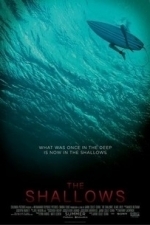
The Shallows is simple, suspenseful and satisfying. Everything you want it to be.
The story is simple. Nancy (Blake Lively) is a young woman on a journey to find herself after her mother passes away. She has finally found the “perfect secret” beach her mother always told her about. Nancy surfs the day away in paradise with two other local surfers who eventually leave for the evening. When trying to catch one last wave of the day, she unexpectedly is attacked by a great white shark. Trapped 200 yards off shore on a rock island in low tide, the film becomes a battle of wits and wills between Nancy and one of nature’s most vicious predators.
No doubt, the twiterverse will dismiss this movie as nothing more than a pretty girl in a bikini stuck on a rock in the ocean. But I want to praise Blake Lively’s performance in the film as she is both likeable and believable. We feel her joy, pain, confusion and fear throughout the film. She does a fantastic job keeping our interest in her survival, which is a fine line to walk when the focus is mostly on her and a shark.
I would actually recommend seeing this film in the theater. Not only to get the visual duality of beauty and danger of the ocean, but more importantly, to get that same experience through fantastic sound. There is no thematic score warning you of danger like “Jaws,” In fact, as I write this I cannot remember there being any kind of score at all. If there was, it was minimal. But the sound design set in realism makes you feel the intimate and intense nature of this experience. This creates a satisfying payoff during those suspenseful moments where you want to look away, but cannot bring yourself to do so.
The Shallows is thoroughly enjoyable as it delivers everything it suggests from the trailer and more. At 83 minutes it does not feel long or forced but rather it delivers a simple story with the precision of timing in suspenseful moments that will keep you on the edge of your seat.
The story is simple. Nancy (Blake Lively) is a young woman on a journey to find herself after her mother passes away. She has finally found the “perfect secret” beach her mother always told her about. Nancy surfs the day away in paradise with two other local surfers who eventually leave for the evening. When trying to catch one last wave of the day, she unexpectedly is attacked by a great white shark. Trapped 200 yards off shore on a rock island in low tide, the film becomes a battle of wits and wills between Nancy and one of nature’s most vicious predators.
No doubt, the twiterverse will dismiss this movie as nothing more than a pretty girl in a bikini stuck on a rock in the ocean. But I want to praise Blake Lively’s performance in the film as she is both likeable and believable. We feel her joy, pain, confusion and fear throughout the film. She does a fantastic job keeping our interest in her survival, which is a fine line to walk when the focus is mostly on her and a shark.
I would actually recommend seeing this film in the theater. Not only to get the visual duality of beauty and danger of the ocean, but more importantly, to get that same experience through fantastic sound. There is no thematic score warning you of danger like “Jaws,” In fact, as I write this I cannot remember there being any kind of score at all. If there was, it was minimal. But the sound design set in realism makes you feel the intimate and intense nature of this experience. This creates a satisfying payoff during those suspenseful moments where you want to look away, but cannot bring yourself to do so.
The Shallows is thoroughly enjoyable as it delivers everything it suggests from the trailer and more. At 83 minutes it does not feel long or forced but rather it delivers a simple story with the precision of timing in suspenseful moments that will keep you on the edge of your seat.
Gareth von Kallenbach (980 KP) rated Wrath of the Titans (2012) in Movies
Aug 7, 2019
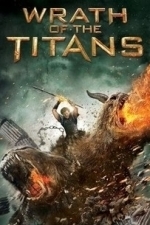
Sequels often struggle to live up to the expectations set by their predecessors. Wrath of the Titans delivers. Sam Worthington, Liam Neeson, and Ralph Fiennes reprise their roles as Perseus, Zeus, and Hades in this continuation of the Clash of the Titans remake from 2010. They’re joined this time by Rosamund Pike, who portrays the strong, female love interest as the beautiful Queen Andromeda.
Perseus has settled down to become a fisherman with his son. His wife has been written out of the story — either by design or because the actress was not available. She seems to be dead for no particular reason. Perseus has chosen to live life as a mortal, despite his father, Zeus (Neeson), offering him a seat of power on Olympus. Early in the movie, Zeus comes to his son and asks for help, telling him something big is coming. Only Perseus, a demi-god, would have the strength to ensure humanity’s survival.
The rest of the story involves Perseus’s journey to save the world from the reawakening of Chronos. Mythology geeks and fantasy buffs will appreciate the severity of this situation.
While the makers of this film certainly didn’t reinvent the wheel, or even attempt to one-up their previous film, they surely succeeded in making an entertaining screenplay. In short: if you liked the first, you will like this one. It has all the action, sword-swinging, flying-horse-riding, and titan-killing you would expect from the series. The CGI is impressive, and the 3D effects were not too objectionable.
One scene in particular stuck out as ill-conceived. The kiss at the end of the film felt forced. There was very little romantic build-up throughout the movie, so it felt as if the filmmakers included the kiss because moviegoers expect to see romantic resolution. Perhaps this is one of the several endings they filmed, at which point they let focus groups make the call. Either way, it felt awkward.
As I said before, if you enjoyed the first, seeing the second is worth your time and money.
Perseus has settled down to become a fisherman with his son. His wife has been written out of the story — either by design or because the actress was not available. She seems to be dead for no particular reason. Perseus has chosen to live life as a mortal, despite his father, Zeus (Neeson), offering him a seat of power on Olympus. Early in the movie, Zeus comes to his son and asks for help, telling him something big is coming. Only Perseus, a demi-god, would have the strength to ensure humanity’s survival.
The rest of the story involves Perseus’s journey to save the world from the reawakening of Chronos. Mythology geeks and fantasy buffs will appreciate the severity of this situation.
While the makers of this film certainly didn’t reinvent the wheel, or even attempt to one-up their previous film, they surely succeeded in making an entertaining screenplay. In short: if you liked the first, you will like this one. It has all the action, sword-swinging, flying-horse-riding, and titan-killing you would expect from the series. The CGI is impressive, and the 3D effects were not too objectionable.
One scene in particular stuck out as ill-conceived. The kiss at the end of the film felt forced. There was very little romantic build-up throughout the movie, so it felt as if the filmmakers included the kiss because moviegoers expect to see romantic resolution. Perhaps this is one of the several endings they filmed, at which point they let focus groups make the call. Either way, it felt awkward.
As I said before, if you enjoyed the first, seeing the second is worth your time and money.