
Search
Search results

Bob Mann (459 KP) rated Star Wars: Episode IX - The Rise of Skywalker (2019) in Movies
Dec 20, 2019
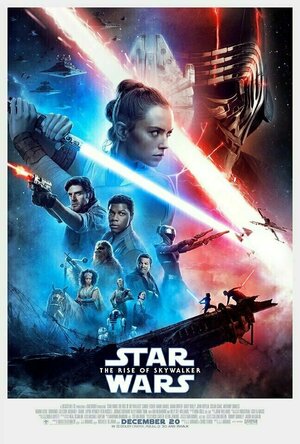


Young ensemble cast actually ensembling! (1 more)
Adam Driver on great form
After 42 years - does it leave with a bang or a whimper?
This review will be spoiler-free.
And so we come to the grand conclusion of George Lucas's nine-film vision, and someone can at last put the multi-limbed behemoth in a coffin and nail down the lid. It's certainly been a bumpy ride for this latest trilogy under Disney's stewardship, with rabidly negative fan-boys getting very hot under the collar about 'their baby' being despoiled by the evil empire!
We left the end of the last film with the Rebellion in tatters, reduced to a tiny fleet of ships. (It was truly fortunate that our key players were not on any of the lost ships wasn't it?) Rey (Daisy Ridley) is progressing her Jedi-training under the guidance of a new teacher. But the presence of Kylo-Ren (Adam Driver) is forever there, and their long-distance "psycho-chats" are becoming ever more 'substantial' as the bond between them grows.
But a dark presence from the past has returned, and both are drawn to it in different ways. A showdown between the forces of good and evil is inevitable.
The pace of the film is frenetic and totally exhausting. The first 30 minutes hardly pause for a breath as we zap around from location to location. Where the film really worked better for me was in the quieter and more reflective moments. Kylo Ren is in many of these moments: one, where he visits a very dark place, is well done; and one, where he receives a special visitor, is an interlude that is surprisingly effective. Adam Driver really is in excellent form here; he's never been my favourite actor in the world, but here truly impresses.
One of the problems of the first two films in the trilogy is that it sent all the young leads off in multiple different directions. The result was that there was very little of the interplay of the first films (between Han, Luke and Leia) that made them so memorable. Here that issue is rectified and Poe (Oscar Isaac) and Finn (John Boyega) develop a close onscreen bond with much resultant banter. Ridley's Rey also gets thrown into the mix, with the result that a group hug feels at last normal and right. It's bizarre, but you suddenly realise what was missing here when - FOR THE FIRST TIME - two of the characters get introduced to each other!
A welcome inclusion is that of the late Carrie Fisher as Leia. It's actually extraordinary that they had enough unused footage to be able to weave in a full role for the character into the story. It never feels forced and there were only a few 'hugs' where I found myself thinking "I bet that's not her".
C3PO (Anthony Daniels) also gets much more screen time and has some really nice and comical scenes in here. And a new uni-wheeled robot (voiced by director J.J. Abrams) adds to both the comic potential (and the available Disney merchandise!).
One of the new characters on show is the physically impressive Naomi Ackie as the horse (or something!) riding Jannah. But she's given little to do in the plot.
Elsewhere, there are a whole bunch of famous faces cropping up. Watching the end credit roll is an "OH! That was who that was" revelation in some cases. I won't list them here, since it is delicious to go in blind and have the surprise of seeing them. But some are famous actors from screen and TV, and one is an Abrams' favourite from a past TV glory. The biggest cheer though was reserved for a certain X-wing fighter near the end of the film. A blink-and-you'll-miss-him moment, it was a white-haired appearance to treasure.
What the film does very well (or very badly if you read some reviews) is hark back to the glories of the earlier films, and particularly Episodes IV to VI. Many places are revisited or scenes re-enacted until the place is just SOGGY with nostalgia (to use an old Tom Lehrer line). Although greatly contrived, I enjoyed these scenes immensely.
Making maximum use of the opportunity, John Williams bashes out theme after theme from most of the nine films. The soundtrack really is a "John Williams Greatest Hits" collection. Williams also actually gets a cameo as well - apparently as an eye-patch wearing bar-tender in the Nepalese-like town, though I must admit I missed it. (I've seen comment online that this is his first on-screen appearance: actually not true... he was conducting the orchestra in the "bird-lady's concert hall" in "Home Alone 2").
There are also a huge number of similarities I saw in certain scenes with other cinematic releases outside of the Star Wars universe:
"Raiders of the Lost Ark" - in two particular scenes;
"Dunkirk" - but done properly!
"Dora and the Lost City of Gold" - it doesn't make any physics sense here either!
"Power Rangers" - just because of one of the characters - you'll know the one
"Harry Potter and the Deathly Hallows Part 2" - but to say more would be a spoiler!
And there are probably others I've forgotten!
One of my key issues with "The Last Jedi" was the way in which it invented mad-cap tasks, objects and people that had to be completed/found for the plot to be moved forwards. A massive and pointless diversion to a casino planet, for example, was made just to get into a secure area of an imperial vessel: something in this film they 'just do'!
This movie also suffers to a degree from the disease of 'McGuffinitis'. Where's the beacon? There's a dagger that must be found; Where's the interpreter?; etc. It's all very formulaic. But at least in this case, there is a certain logical flow that follows within the plot.
The LP soundtrack of "Star Wars" got me into a lifelong love of film music. One of the last tracks on the soundtrack of the first film was called "The Last Battle". Well, THAT wasn't true! There have been so many space battles since then that we've all lost count. But we all knew this would build to a doozy of a finale, and the film doesn't disappoint. There is utter mayhem in the skies: WILL NOBODY THINK OF THE HENCHMEN'S FAMILIES?
It all drives to a satisfying ending for me and feels like a good closure to the saga. Is it perfect? No, not at all. It really sets itself with too much to do, and then tries to do it all within the available running time. The film will - and has by looking at the volume of IMDB 1* ratings - upset a lot of the fan-boys. But, you know what? Stuff 'em! The film should be judged on how it makes YOU feel as a standalone piece of entertainment, rather than as a part of some sort of pseudo-religious cult. And I personally think Abrams did a pretty decent job here of trying to please most of the people most of the time.
(For the full graphical review, please visit One Mann's Movies here - https://bob-the-movie-man.com/2019/12/20/one-manns-movies-film-review-star-wars-the-rise-of-skywalker-2019/ )
And so we come to the grand conclusion of George Lucas's nine-film vision, and someone can at last put the multi-limbed behemoth in a coffin and nail down the lid. It's certainly been a bumpy ride for this latest trilogy under Disney's stewardship, with rabidly negative fan-boys getting very hot under the collar about 'their baby' being despoiled by the evil empire!
We left the end of the last film with the Rebellion in tatters, reduced to a tiny fleet of ships. (It was truly fortunate that our key players were not on any of the lost ships wasn't it?) Rey (Daisy Ridley) is progressing her Jedi-training under the guidance of a new teacher. But the presence of Kylo-Ren (Adam Driver) is forever there, and their long-distance "psycho-chats" are becoming ever more 'substantial' as the bond between them grows.
But a dark presence from the past has returned, and both are drawn to it in different ways. A showdown between the forces of good and evil is inevitable.
The pace of the film is frenetic and totally exhausting. The first 30 minutes hardly pause for a breath as we zap around from location to location. Where the film really worked better for me was in the quieter and more reflective moments. Kylo Ren is in many of these moments: one, where he visits a very dark place, is well done; and one, where he receives a special visitor, is an interlude that is surprisingly effective. Adam Driver really is in excellent form here; he's never been my favourite actor in the world, but here truly impresses.
One of the problems of the first two films in the trilogy is that it sent all the young leads off in multiple different directions. The result was that there was very little of the interplay of the first films (between Han, Luke and Leia) that made them so memorable. Here that issue is rectified and Poe (Oscar Isaac) and Finn (John Boyega) develop a close onscreen bond with much resultant banter. Ridley's Rey also gets thrown into the mix, with the result that a group hug feels at last normal and right. It's bizarre, but you suddenly realise what was missing here when - FOR THE FIRST TIME - two of the characters get introduced to each other!
A welcome inclusion is that of the late Carrie Fisher as Leia. It's actually extraordinary that they had enough unused footage to be able to weave in a full role for the character into the story. It never feels forced and there were only a few 'hugs' where I found myself thinking "I bet that's not her".
C3PO (Anthony Daniels) also gets much more screen time and has some really nice and comical scenes in here. And a new uni-wheeled robot (voiced by director J.J. Abrams) adds to both the comic potential (and the available Disney merchandise!).
One of the new characters on show is the physically impressive Naomi Ackie as the horse (or something!) riding Jannah. But she's given little to do in the plot.
Elsewhere, there are a whole bunch of famous faces cropping up. Watching the end credit roll is an "OH! That was who that was" revelation in some cases. I won't list them here, since it is delicious to go in blind and have the surprise of seeing them. But some are famous actors from screen and TV, and one is an Abrams' favourite from a past TV glory. The biggest cheer though was reserved for a certain X-wing fighter near the end of the film. A blink-and-you'll-miss-him moment, it was a white-haired appearance to treasure.
What the film does very well (or very badly if you read some reviews) is hark back to the glories of the earlier films, and particularly Episodes IV to VI. Many places are revisited or scenes re-enacted until the place is just SOGGY with nostalgia (to use an old Tom Lehrer line). Although greatly contrived, I enjoyed these scenes immensely.
Making maximum use of the opportunity, John Williams bashes out theme after theme from most of the nine films. The soundtrack really is a "John Williams Greatest Hits" collection. Williams also actually gets a cameo as well - apparently as an eye-patch wearing bar-tender in the Nepalese-like town, though I must admit I missed it. (I've seen comment online that this is his first on-screen appearance: actually not true... he was conducting the orchestra in the "bird-lady's concert hall" in "Home Alone 2").
There are also a huge number of similarities I saw in certain scenes with other cinematic releases outside of the Star Wars universe:
"Raiders of the Lost Ark" - in two particular scenes;
"Dunkirk" - but done properly!
"Dora and the Lost City of Gold" - it doesn't make any physics sense here either!
"Power Rangers" - just because of one of the characters - you'll know the one
"Harry Potter and the Deathly Hallows Part 2" - but to say more would be a spoiler!
And there are probably others I've forgotten!
One of my key issues with "The Last Jedi" was the way in which it invented mad-cap tasks, objects and people that had to be completed/found for the plot to be moved forwards. A massive and pointless diversion to a casino planet, for example, was made just to get into a secure area of an imperial vessel: something in this film they 'just do'!
This movie also suffers to a degree from the disease of 'McGuffinitis'. Where's the beacon? There's a dagger that must be found; Where's the interpreter?; etc. It's all very formulaic. But at least in this case, there is a certain logical flow that follows within the plot.
The LP soundtrack of "Star Wars" got me into a lifelong love of film music. One of the last tracks on the soundtrack of the first film was called "The Last Battle". Well, THAT wasn't true! There have been so many space battles since then that we've all lost count. But we all knew this would build to a doozy of a finale, and the film doesn't disappoint. There is utter mayhem in the skies: WILL NOBODY THINK OF THE HENCHMEN'S FAMILIES?
It all drives to a satisfying ending for me and feels like a good closure to the saga. Is it perfect? No, not at all. It really sets itself with too much to do, and then tries to do it all within the available running time. The film will - and has by looking at the volume of IMDB 1* ratings - upset a lot of the fan-boys. But, you know what? Stuff 'em! The film should be judged on how it makes YOU feel as a standalone piece of entertainment, rather than as a part of some sort of pseudo-religious cult. And I personally think Abrams did a pretty decent job here of trying to please most of the people most of the time.
(For the full graphical review, please visit One Mann's Movies here - https://bob-the-movie-man.com/2019/12/20/one-manns-movies-film-review-star-wars-the-rise-of-skywalker-2019/ )

Kristy H (1252 KP) rated The Sunshine Sisters in Books
Jan 21, 2018
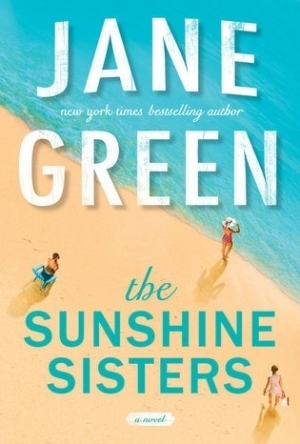

Good beach read
Ronni Sunshine has summoned her daughters home. The aging actress is ill, and she wants her daughters by her side. This, however, will be easier said than done, as her three children--Nell, Meredith, and Lizzy--are estranged, both from each other and their mother: the result of a traumatic childhood. Even Ronni will now readily admit she focused on her acting career and beauty rather than her daughters. Her constant belittlement and pressure on the girls made them turn on each other as well. Nell lives the closest to her mother, on a nearby farm, and her son River is in grad school. Middle child Meredith spent her childhood struggling with her weight, thanks to endless biting comments from Ronni; she fled to England and is now engaged. Youngest Lizzie escaped most of her mother's wrath and appears to be the "golden child": she's a successful chef and celebrity, with a TV show and line of related products, but her marriage and personal life aren't all that they seem. Frustrated by their mother's long history of hypochondria, the girls reluctantly return home, excepting to find her fine. However, it seems this time Ronni may be telling the truth: she's really sick. Can the Sunshine sisters set aside their differences? And can they ever forgive their mother?
In some ways, I'm not sure why I keep giving Jane Green books a chance. I liked Summer Secrets well-enough, but was really let down by Saving Grace and Falling. I was intrigued that in her acknowledgements, Green mentions that this is the first book in while where she's felt like herself. I went in hoping that this was true, but still wary, and truthfully, this wariness may have clouded some of my thoughts and feelings about the book.
Overall, this is a summery read, though it does deal with some serious subject matter. If you're looking for a book that will surprise you, this isn't it. Most of these plot points I saw coming from a few miles away; I predicted the majority of the twists and turns before they happened. And, truly, I think the ending is a foregone conclusion. Green relies a bit to heavily on some tropes, as well. Serious older sister? Check. Insecure middle sister? Check. Flighty younger sister? She's here, too, don't worry.
Still, this was a fun book--despite the dark topic at its core--and I found myself compelled to read through the second half in nearly one sitting. Despite some of the transparency of the characters, I was oddly invested in their lives. The novel starts out with a brief glimpse of Ronni summoning her daughters home, then goes back in the past, allowing us to learn about the Sunshine family via various snippets from the sisters at different points in time. In this way, we sort of catch up with the family fast-forward style--it's like a cheat sheet of sorts. It also allows us to get to know each sister a bit better and explore their relationship with their mother (and other sisters). It's easy to see how much influence Ronni had on their lives and how she shaped them into the women they are today.
The girls can certainly be frustrating at times. Poor, needy Meredith drove me nearly mad, with her insecurities and inability to stand up for herself. There's also a point in the book where Meredith magically cleans up after a party (everything is fixed) and later loses a large amount of weight (everything is fixed, again!). I would have liked to have seen a little more plot realism. It was also hard to see how anyone could be quite as big of a doormat as Meredith, even with her mother's influence. And, truly, Ronni is pretty bad. It's an interesting technique--learning how terrible of a mother she is after we're told in the beginning of the novel that she's sick. But, in this way, we're allowed to see how the sisters were alienated by their poor upbringing and how everyone has reached the point we are at today.
Eventually, we reach the present day, with the girls learning about their mother's illness and coming to grips with reality. And, Ronni, of course, must grapple with the kind of mother she was to her children. She's a surprisingly compelling character considering how awful she was to her children, so that's a testament to Green's characterization. To me, the novel picked up a bit more in the present day time period. There were still some silly, unbelievable moments, but I truly did find myself invested in Meredith, Nell, and Lizzy (and Ronni).
The book does wrap things up too easily, as I stated. It's often quite trite and cliche, so you have to go in prepared. Think Lifetime movie, wrapped up in a bow. Still, it's fun at times and certainly a quick read. Well-suited for the beach or a vacation.
I received a copy of this novel from the publisher and Netgalley (thank you!).
In some ways, I'm not sure why I keep giving Jane Green books a chance. I liked Summer Secrets well-enough, but was really let down by Saving Grace and Falling. I was intrigued that in her acknowledgements, Green mentions that this is the first book in while where she's felt like herself. I went in hoping that this was true, but still wary, and truthfully, this wariness may have clouded some of my thoughts and feelings about the book.
Overall, this is a summery read, though it does deal with some serious subject matter. If you're looking for a book that will surprise you, this isn't it. Most of these plot points I saw coming from a few miles away; I predicted the majority of the twists and turns before they happened. And, truly, I think the ending is a foregone conclusion. Green relies a bit to heavily on some tropes, as well. Serious older sister? Check. Insecure middle sister? Check. Flighty younger sister? She's here, too, don't worry.
Still, this was a fun book--despite the dark topic at its core--and I found myself compelled to read through the second half in nearly one sitting. Despite some of the transparency of the characters, I was oddly invested in their lives. The novel starts out with a brief glimpse of Ronni summoning her daughters home, then goes back in the past, allowing us to learn about the Sunshine family via various snippets from the sisters at different points in time. In this way, we sort of catch up with the family fast-forward style--it's like a cheat sheet of sorts. It also allows us to get to know each sister a bit better and explore their relationship with their mother (and other sisters). It's easy to see how much influence Ronni had on their lives and how she shaped them into the women they are today.
The girls can certainly be frustrating at times. Poor, needy Meredith drove me nearly mad, with her insecurities and inability to stand up for herself. There's also a point in the book where Meredith magically cleans up after a party (everything is fixed) and later loses a large amount of weight (everything is fixed, again!). I would have liked to have seen a little more plot realism. It was also hard to see how anyone could be quite as big of a doormat as Meredith, even with her mother's influence. And, truly, Ronni is pretty bad. It's an interesting technique--learning how terrible of a mother she is after we're told in the beginning of the novel that she's sick. But, in this way, we're allowed to see how the sisters were alienated by their poor upbringing and how everyone has reached the point we are at today.
Eventually, we reach the present day, with the girls learning about their mother's illness and coming to grips with reality. And, Ronni, of course, must grapple with the kind of mother she was to her children. She's a surprisingly compelling character considering how awful she was to her children, so that's a testament to Green's characterization. To me, the novel picked up a bit more in the present day time period. There were still some silly, unbelievable moments, but I truly did find myself invested in Meredith, Nell, and Lizzy (and Ronni).
The book does wrap things up too easily, as I stated. It's often quite trite and cliche, so you have to go in prepared. Think Lifetime movie, wrapped up in a bow. Still, it's fun at times and certainly a quick read. Well-suited for the beach or a vacation.
I received a copy of this novel from the publisher and Netgalley (thank you!).

Heather Cranmer (2721 KP) rated Gold Manor Ghost House in Books
Jun 6, 2018

(This review can be found on my blog <a href="http://themisadventuresofatwentysomething.blogspot.com/">The (Mis)Adventures of a Twenty-Something Year Old Girl</a>).
I have to admit that the blurb is what drew me in to this book. While it wasn't really that ghostly, it was still a good book.
Usually any title with the word "ghost" in it captures my attention, and it was no different for this book. The title references the name of the tv show the characters are in. It also reflects real life for them.
I don't like the cover at all. It's not very captivating nor does it tell us anything about the book besides one of the characters is a girl. There's so many different covers this book could've had, so why settle on a boring photo of some girl. I just hope the cover doesn't put others off because this is a good read.
The world building, while believable, was confusing at some points in the book. I don't know if it's because a lot of questions will be revealed in the next book (if there is one) or what. There were times when I had no idea what was going on. I even would go back a few pages and reread them in case I had missed something, but I hadn't. I don't really know how to describe it other than to say the world building was choppy at times. Besides being confused, I found myself drawn to the world which the author created for this book. There were times when I felt like I was even one of the characters.
I enjoyed the pacing. Once you get past the confusing bits of the story, the pacing is done rather well. I was totally immersed in this book, and I could've wait to read the next chapter to find out what the characters would experience next.
The plot was interesting albeit confusing since we don't really know where and what Anna is yet. It's the typical good versus evil story, but written in a very interesting way. We're not sure who to trust yet, and we're left wondering with whether Anna is good or evil. The plot thickens...in the next book. (At least, I hope there's a next boo since so many questions are left unanswered).
I liked the character of Anna. She's been through a traumatizing experience, yet she's a strong person. I felt bad for her with what she was going through, and I loved her feelings for Adam! I enjoyed Adam. He's still a very mysterious character, not because he wasn't written well, but because I think the author wants to save what he's really about for another book (hopefully) and because she wants her audience to make up their own mind about him. I love how protective he is and how sexy he sounds! He's British (like my husband) so he instantly scored points with that one! I felt bad for Corey when it came to his unrequited love from Anna. He's her best friend, yet he yearns for more. I was Team Corey all the way even though I liked Adam. I wanted Anna and Corey to become a couple all throughout the book! He comes across as being a tad more sweet than Adam, and I don't know what it is about Corey, but I just loved him a lot. To me, he was better boyfriend material.
The dialogue didn't really sound like it was teenage like. It sounded more like the way adults would talk, not a bunch of teenagers. However, I did enjoy the dialogue but kept forgetting that Anna was meant to be only sixteen. It annoyed me how Adam kept saying "love" though. I found it to be too stereotypical. Yes, some British people do say "love," but Adam seemed to say it an awful lot. Having lived in England for 6 years, I can tell you that British people do not say "love" all the time. However that's just a me thing and shouldn't affect the book for others. I enjoyed the scenes Corey was in the most though as his dialogue was the most enjoyable in my opinion. I didn't notice any swearing in this book.
Overall, Gold Manor Ghost House by Merry Brown is an enjoyable book despite some of its confusing scenes and minor faults. I really hope there's a second book in the works because I enjoyed the first one and am wanting my questions to be answered. The way the first book is written, it seems like there will be a second book which I will most definitely read!
I'd recommend this book for those aged 14+ who are fans of the paranormal that are also looking for a bit of romance.
I'd give Gold Manor Ghost House by Merry Brown a 3.75 out of 5.
(I received a free ecopy of this book from the tour host in exchange for a fair and honest review).
I have to admit that the blurb is what drew me in to this book. While it wasn't really that ghostly, it was still a good book.
Usually any title with the word "ghost" in it captures my attention, and it was no different for this book. The title references the name of the tv show the characters are in. It also reflects real life for them.
I don't like the cover at all. It's not very captivating nor does it tell us anything about the book besides one of the characters is a girl. There's so many different covers this book could've had, so why settle on a boring photo of some girl. I just hope the cover doesn't put others off because this is a good read.
The world building, while believable, was confusing at some points in the book. I don't know if it's because a lot of questions will be revealed in the next book (if there is one) or what. There were times when I had no idea what was going on. I even would go back a few pages and reread them in case I had missed something, but I hadn't. I don't really know how to describe it other than to say the world building was choppy at times. Besides being confused, I found myself drawn to the world which the author created for this book. There were times when I felt like I was even one of the characters.
I enjoyed the pacing. Once you get past the confusing bits of the story, the pacing is done rather well. I was totally immersed in this book, and I could've wait to read the next chapter to find out what the characters would experience next.
The plot was interesting albeit confusing since we don't really know where and what Anna is yet. It's the typical good versus evil story, but written in a very interesting way. We're not sure who to trust yet, and we're left wondering with whether Anna is good or evil. The plot thickens...in the next book. (At least, I hope there's a next boo since so many questions are left unanswered).
I liked the character of Anna. She's been through a traumatizing experience, yet she's a strong person. I felt bad for her with what she was going through, and I loved her feelings for Adam! I enjoyed Adam. He's still a very mysterious character, not because he wasn't written well, but because I think the author wants to save what he's really about for another book (hopefully) and because she wants her audience to make up their own mind about him. I love how protective he is and how sexy he sounds! He's British (like my husband) so he instantly scored points with that one! I felt bad for Corey when it came to his unrequited love from Anna. He's her best friend, yet he yearns for more. I was Team Corey all the way even though I liked Adam. I wanted Anna and Corey to become a couple all throughout the book! He comes across as being a tad more sweet than Adam, and I don't know what it is about Corey, but I just loved him a lot. To me, he was better boyfriend material.
The dialogue didn't really sound like it was teenage like. It sounded more like the way adults would talk, not a bunch of teenagers. However, I did enjoy the dialogue but kept forgetting that Anna was meant to be only sixteen. It annoyed me how Adam kept saying "love" though. I found it to be too stereotypical. Yes, some British people do say "love," but Adam seemed to say it an awful lot. Having lived in England for 6 years, I can tell you that British people do not say "love" all the time. However that's just a me thing and shouldn't affect the book for others. I enjoyed the scenes Corey was in the most though as his dialogue was the most enjoyable in my opinion. I didn't notice any swearing in this book.
Overall, Gold Manor Ghost House by Merry Brown is an enjoyable book despite some of its confusing scenes and minor faults. I really hope there's a second book in the works because I enjoyed the first one and am wanting my questions to be answered. The way the first book is written, it seems like there will be a second book which I will most definitely read!
I'd recommend this book for those aged 14+ who are fans of the paranormal that are also looking for a bit of romance.
I'd give Gold Manor Ghost House by Merry Brown a 3.75 out of 5.
(I received a free ecopy of this book from the tour host in exchange for a fair and honest review).

BankofMarquis (1832 KP) rated Anatomy of a Murder (1959) in Movies
Nov 30, 2018

One of the Best Courtroom Dramas of all Time
I have to admit, that (at times) the fun part of going to "SECRET MOVIE NIGHT" is the anticipation of not knowing what the film is. Sometimes the film is "good, not great" (like THE BLUES BROTHERS, BODY HEAT and A FACE IN THE CROWD) and other times it is a CLASSIC (Like CITIZEN KANE, THE APARTMENT and NETWORK). I am happy to report that this month's installment IS a classic, our old pal Jimmy Stewart in 1959's ANATOMY OF MURDER.
Directed by the great Otto Preminger, AOM is often referred to as the finest courtroom drama ever filmed. While I need to give that some thought, I will say AOM is right up there as one of the finest examples of a courtroom drama.
Starring Jimmy Stewart as "country lawyer" Paul Biegler, who is brought in to defend Army Lieutenant Manion (Ben Gazzara). Manion is accused of murdering a man that raped his wife (Lee Remick). The central mystery isn't "did Manion kill the man" (he did), it is more of "did he kill his wife's rapist or lover" and "will Biegler get away with the temporary insanity plea".
This is the kind of plot that we've all seen a dozen times on standard TV shows, but back in 1959, this type of film - and trial - was quite new and fresh and this film was "scandalous" in it's use of frank language. Remember, this is 1959 in Eisenhower "Happy Days" Americana, so hearing words like "bitch, panties, penetration, slut, sperm, bitch and slut" was quite shocking and led to many protests of the film.
Those who were turned off by the language and frankhandling of the subject matter lost out on an intriguing, well-acted, well-written and well-directed courtroom drama, where the verdict is up in the air right up until the foreman of the jury says "We, the jury, find the defendant..."
Jimmy Stewart is perfectly cast in the lead role of Defense Attorney, Biegler. Stewart brings an instant likableness and every man integrity quality to the role. His Attorney is down-to-earth but whip-smart, able to crack a joke to lighten the mood or explode in rage at an affront at a moment's notice. He goes toe-to-toe with Prosecuting Attorney Claude Dancer (a VERY young George C. Scott). Dancer is everything that Biegler is not, crisp, well-polished and arrogant. While it would have been very easy to paint these two characters as good (Stewart) and bad (Scott), Director Preminger and screenwriter Wendell Mayes shy away from this and show these two as fierce competitors playing a very serious game of chess - and this works very well, indeed. Both Stewart and Scott were nominated for Oscars for their work as Best Actor and Supporting Actor respectively.
The Supporting cast is superb, featuring such 1950's/early 1960's stalwarts as Arthur O'Connell (also Oscar nominated as Stewarts's alcoholic law mentor), the always good Eve Arden, Orson Bean and Katherine Grant. It also features three character actors in small roles (witnesses in the trial) who you would recognize from other things - Murray Hamilton (the Mayor in Jaws), Howard McNear (Floyd the Barber from Mayberry) and Joseph Kearns (Mr. Wilson in Dennis the Menace).
Special notice needs to be made for Lee Remick as the sultry and flirtatious woman at the core of the film. Remick is superb in this role, and that is fortunate, for if she wasn't believable in the "would she or won't she" role that she is asked to play, then the film could have easily fallen apart. But the real bright spot in this film is the scene stealing Joseph N. Welch as the Judge in the case. His performance as the judge is the perfect "third leg" to the Stewart/Scott stool, balancing charm, folksiness and strength in even portions (depending on what is needed to balance the other two).
Otto Preminger (LAURA, STALAG 17) is a Director who's name is beginning to fade into the dust of the past - and that's too bad, for he is a strong director who knows how to frame a scene and pace a film. Even though AOM is 2 hours and 40 minutes of talking, it never feels long or slow.
Two other aspects of this film need to be mentioned - the "jazz" score by the great Duke Ellington (which won a grammy) is perfectly suited to the themes and mood of this film and the opening title sequence (and movie poster) is reminiscent of an Alfred Hitchock film - and that is because they are done by frequent Hitchock contributor Saul Bass.
Nominated for 7 Oscars (it won zero, falling to the juggernaut that was BEN HUR that year), ANATOMY OF A MURDER is an intriguing courtroom drama that also opens the door to performers of the past. Well worth the time investment, should you run across it (it is frequently shown on TCM).
Letter Grade: A
9 (out of 10) stars and you can take that to the Bank(ofMarquis)
Directed by the great Otto Preminger, AOM is often referred to as the finest courtroom drama ever filmed. While I need to give that some thought, I will say AOM is right up there as one of the finest examples of a courtroom drama.
Starring Jimmy Stewart as "country lawyer" Paul Biegler, who is brought in to defend Army Lieutenant Manion (Ben Gazzara). Manion is accused of murdering a man that raped his wife (Lee Remick). The central mystery isn't "did Manion kill the man" (he did), it is more of "did he kill his wife's rapist or lover" and "will Biegler get away with the temporary insanity plea".
This is the kind of plot that we've all seen a dozen times on standard TV shows, but back in 1959, this type of film - and trial - was quite new and fresh and this film was "scandalous" in it's use of frank language. Remember, this is 1959 in Eisenhower "Happy Days" Americana, so hearing words like "bitch, panties, penetration, slut, sperm, bitch and slut" was quite shocking and led to many protests of the film.
Those who were turned off by the language and frankhandling of the subject matter lost out on an intriguing, well-acted, well-written and well-directed courtroom drama, where the verdict is up in the air right up until the foreman of the jury says "We, the jury, find the defendant..."
Jimmy Stewart is perfectly cast in the lead role of Defense Attorney, Biegler. Stewart brings an instant likableness and every man integrity quality to the role. His Attorney is down-to-earth but whip-smart, able to crack a joke to lighten the mood or explode in rage at an affront at a moment's notice. He goes toe-to-toe with Prosecuting Attorney Claude Dancer (a VERY young George C. Scott). Dancer is everything that Biegler is not, crisp, well-polished and arrogant. While it would have been very easy to paint these two characters as good (Stewart) and bad (Scott), Director Preminger and screenwriter Wendell Mayes shy away from this and show these two as fierce competitors playing a very serious game of chess - and this works very well, indeed. Both Stewart and Scott were nominated for Oscars for their work as Best Actor and Supporting Actor respectively.
The Supporting cast is superb, featuring such 1950's/early 1960's stalwarts as Arthur O'Connell (also Oscar nominated as Stewarts's alcoholic law mentor), the always good Eve Arden, Orson Bean and Katherine Grant. It also features three character actors in small roles (witnesses in the trial) who you would recognize from other things - Murray Hamilton (the Mayor in Jaws), Howard McNear (Floyd the Barber from Mayberry) and Joseph Kearns (Mr. Wilson in Dennis the Menace).
Special notice needs to be made for Lee Remick as the sultry and flirtatious woman at the core of the film. Remick is superb in this role, and that is fortunate, for if she wasn't believable in the "would she or won't she" role that she is asked to play, then the film could have easily fallen apart. But the real bright spot in this film is the scene stealing Joseph N. Welch as the Judge in the case. His performance as the judge is the perfect "third leg" to the Stewart/Scott stool, balancing charm, folksiness and strength in even portions (depending on what is needed to balance the other two).
Otto Preminger (LAURA, STALAG 17) is a Director who's name is beginning to fade into the dust of the past - and that's too bad, for he is a strong director who knows how to frame a scene and pace a film. Even though AOM is 2 hours and 40 minutes of talking, it never feels long or slow.
Two other aspects of this film need to be mentioned - the "jazz" score by the great Duke Ellington (which won a grammy) is perfectly suited to the themes and mood of this film and the opening title sequence (and movie poster) is reminiscent of an Alfred Hitchock film - and that is because they are done by frequent Hitchock contributor Saul Bass.
Nominated for 7 Oscars (it won zero, falling to the juggernaut that was BEN HUR that year), ANATOMY OF A MURDER is an intriguing courtroom drama that also opens the door to performers of the past. Well worth the time investment, should you run across it (it is frequently shown on TCM).
Letter Grade: A
9 (out of 10) stars and you can take that to the Bank(ofMarquis)

Gareth von Kallenbach (980 KP) rated Maneater in Video Games
Jul 26, 2019
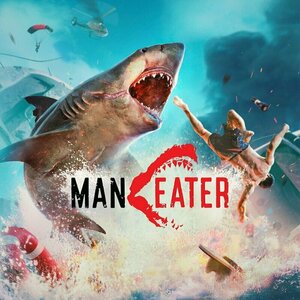
Talking Maneater With Bill Munk – Game Director at Tripwire Interactive
Recently I spoke with Bill Munk – Game Director at Tripwire Interactive about their pending game Maneater. I saw the game at E3 and it looks like a promising game indeed.
What is the background and setting for the game?
Maneater is a single-player, open world, action RPG set in a fictionalized version of the US Gulf Coast. Players take on the role of a baby bull shark torn from its mother’s belly. Your only tools are your wits, your jaws, and an uncanny ability to evolve as you feed. Anything and everything is on the menu… provided you kill it before it kills you.
How did the idea to play as a Shark come about?
The concept for Maneater originally came from Alex Quick, the creator of Depth and director for the original Killing Floor. Tripwire Interactive loved the over-the-top and new approach to the action RPG and open world genres so much, they decided to bring the project in-house, increasing the development staff and budget to bring the team’s concept to life.
How many levels and areas are planned for the game at release?
Players should expect a vast variety of environments to explore, including, swamps, beach resorts, sunken ship wrecks, all the way out to the deep blue sea.
What are some of the customizations that will be available and how will players be able to upgrade their character?
As players continue to eat and explore, they’ll acquire key nutrients, which can be used to help them evolve. This is where the “RPG” progression systems in Maneater really come into play. Players can choose from a variety of evolutions, that may help with increased biting power, more maneuverability, armor, and more.
What are some of the moves players will be able to do and will new moves unlock later in the game?
We really want to make sure the act of swimming and feeding feels satisfying and meaty. During our E3 demo, you saw players knifing along the surface of the water, breaching onto land, barrel rolling and charging shark bounty hunters, and diving deep into the water to gain momentum for large leaps.
What can you tell us about the enemies that players will face in the game?
Each region in the game has an Apex Predator. As you battle smaller predators and consume food in each region, the apex will do whatever it takes to protect their food source. Maneater also features a bounty system. As you wreak havoc along the coast, your infamy level will rise. This causes local bounty hunters to search for you while trying to end your feeding frenzy. Depending on your infamy level, the bounty hunters will become more difficult ranging from hunters on small skiffs, all the way up to bringing out the coast guard.
The gameplay we saw at E3 looked like fun but I was curious about how the story will advance and how do you avoid the issue of repetition in the gameplay?
Maneater is a “dueling tales of revenge” story featuring Scaly Pete, who we revealed in our newest E3 trailer. Without revealing too much, Scaly Pete is responsible for tearing you from your mother’s belly, and you manage to escape into the open waters of the gulf. That’s where our story begins. Maneater is presented through the lens of a reality TV show called “Shark Hunters vs. Maneaters” that follows the adventures of Scaly Pete as he’s hunting you throughout our world. This also allows us to follow our player shark and give a voice to the actions of the player through the show’s narrator, who is voiced by Chris Parnell.
Will the game offer multiplayer or DLC?
Right now, we want to focus on making Maneater a fantastic single-player Action RPG experience.
What are some of your favorite moves in the game?
Breaching is one of the most satisfying shark moves we’ve been working on. Breaching out of shallow waters to feed on unsuspecting beach goers on land or even on a large shark bounty hunter boat captures the over-the-top fun and ridiculousness we’re aiming for with Maneater. We’re also working really hard on what we call the “whip-shot”, where you can tail whip anything that’s in your mouth, turning objects into weaponized projectiles.
What can you tell us about the music and sound effects in the game?
We’ve been working really hard on our dynamic music system, that is constantly adapting to what the player is doing throughout the game. It’s also been an interesting challenge creating sound effects for above the water with boats, explosions and civilians and then creating a whole new set of sound effects for the underwater world, including for the underwater wildlife, underwater sounds of the boats and swimmers and so much more.
Are you planning on being at PAX West with the game?
We can’t wait to tell you more about our plans for Maneater at future shows. In the meantime, we’d recommend your readers follow @maneatergame on Twitter for the latest.
Recently I spoke with Bill Munk – Game Director at Tripwire Interactive about their pending game Maneater. I saw the game at E3 and it looks like a promising game indeed.
What is the background and setting for the game?
Maneater is a single-player, open world, action RPG set in a fictionalized version of the US Gulf Coast. Players take on the role of a baby bull shark torn from its mother’s belly. Your only tools are your wits, your jaws, and an uncanny ability to evolve as you feed. Anything and everything is on the menu… provided you kill it before it kills you.
How did the idea to play as a Shark come about?
The concept for Maneater originally came from Alex Quick, the creator of Depth and director for the original Killing Floor. Tripwire Interactive loved the over-the-top and new approach to the action RPG and open world genres so much, they decided to bring the project in-house, increasing the development staff and budget to bring the team’s concept to life.
How many levels and areas are planned for the game at release?
Players should expect a vast variety of environments to explore, including, swamps, beach resorts, sunken ship wrecks, all the way out to the deep blue sea.
What are some of the customizations that will be available and how will players be able to upgrade their character?
As players continue to eat and explore, they’ll acquire key nutrients, which can be used to help them evolve. This is where the “RPG” progression systems in Maneater really come into play. Players can choose from a variety of evolutions, that may help with increased biting power, more maneuverability, armor, and more.
What are some of the moves players will be able to do and will new moves unlock later in the game?
We really want to make sure the act of swimming and feeding feels satisfying and meaty. During our E3 demo, you saw players knifing along the surface of the water, breaching onto land, barrel rolling and charging shark bounty hunters, and diving deep into the water to gain momentum for large leaps.
What can you tell us about the enemies that players will face in the game?
Each region in the game has an Apex Predator. As you battle smaller predators and consume food in each region, the apex will do whatever it takes to protect their food source. Maneater also features a bounty system. As you wreak havoc along the coast, your infamy level will rise. This causes local bounty hunters to search for you while trying to end your feeding frenzy. Depending on your infamy level, the bounty hunters will become more difficult ranging from hunters on small skiffs, all the way up to bringing out the coast guard.
The gameplay we saw at E3 looked like fun but I was curious about how the story will advance and how do you avoid the issue of repetition in the gameplay?
Maneater is a “dueling tales of revenge” story featuring Scaly Pete, who we revealed in our newest E3 trailer. Without revealing too much, Scaly Pete is responsible for tearing you from your mother’s belly, and you manage to escape into the open waters of the gulf. That’s where our story begins. Maneater is presented through the lens of a reality TV show called “Shark Hunters vs. Maneaters” that follows the adventures of Scaly Pete as he’s hunting you throughout our world. This also allows us to follow our player shark and give a voice to the actions of the player through the show’s narrator, who is voiced by Chris Parnell.
Will the game offer multiplayer or DLC?
Right now, we want to focus on making Maneater a fantastic single-player Action RPG experience.
What are some of your favorite moves in the game?
Breaching is one of the most satisfying shark moves we’ve been working on. Breaching out of shallow waters to feed on unsuspecting beach goers on land or even on a large shark bounty hunter boat captures the over-the-top fun and ridiculousness we’re aiming for with Maneater. We’re also working really hard on what we call the “whip-shot”, where you can tail whip anything that’s in your mouth, turning objects into weaponized projectiles.
What can you tell us about the music and sound effects in the game?
We’ve been working really hard on our dynamic music system, that is constantly adapting to what the player is doing throughout the game. It’s also been an interesting challenge creating sound effects for above the water with boats, explosions and civilians and then creating a whole new set of sound effects for the underwater world, including for the underwater wildlife, underwater sounds of the boats and swimmers and so much more.
Are you planning on being at PAX West with the game?
We can’t wait to tell you more about our plans for Maneater at future shows. In the meantime, we’d recommend your readers follow @maneatergame on Twitter for the latest.

Lee (2222 KP) rated Ford v Ferrari (aka Le Mans '66) (2019) in Movies
Nov 5, 2019 (Updated Nov 5, 2019)
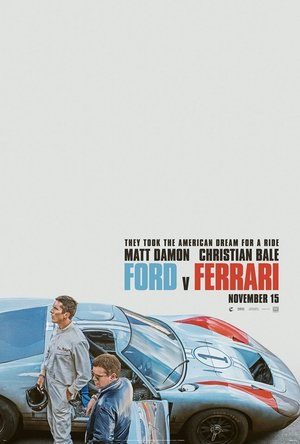
Anyone who knows me knows that I have pretty much zero interest in cars. As long as they can get me from A to B, reliably and comfortably, then that's good enough for me. I have even less interest in watching cars race round and round and round at high speeds for hours on end too - if I wanted to watch that, then I'd just go and stand on a bridge overlooking the M25 for a while. So, a movie about a determined team of American engineers and designers looking to build a Ford racing car with the potential to finally beat Ferrari in the 1966 Le Mans race in France? Well, that doesn't immediately sound like my kind of movie. But, a great looking trailer and an interesting cast got me interested, and in the end I am so glad that I saw it.
Le Mans ‘66 (or Ford v Ferrari as it is known elsewhere - much better name, no idea why it needed to be changed) stars Matt Damon and Christian Bale (once again going through some weight loss for a movie role) as Carroll Shelby and his engineering partner Ken Miles. Shelby was the first American to win Le Mans, the 24 hour race held in France, in 1959, but has since retired from racing due to a heart condition. These days, Shelby designs and sells souped-up cars as well as running the racing team Cobra, along with British racing driver Ken Miles. Shelby is calm, very clever and extremely determined and Miles knows everything there is to know about cars, but isn’t exactly what you might call a good ‘people person’. Together they have a wonderful friendship and partnership, the highs and lows of which form the basis and heart of the movie.
Meanwhile, Ford Motor company is suffering from poor sales and Henry Ford II (Tracy Letts) is looking to his workforce to come up with the next big idea in order to try and boost the Ford name. One of the many corporate suits we see during the movie, Lee Iacocca (Jon Bernthal) proposes that Ford buy into Ferrari in order to create a winning sports car that will make Ford cool again with the kids, so they head to Italy for a meeting with Enzo Ferrari. The meeting doesn't really go according to plan though, and the suits return home with their tails between their legs, and a strong desire to go to war with Ferrari and teach them a lesson.
Ford puts its money where its mouth is, pretty much writing a blank cheque for Shelby to come up with a car worthy enough to defeat Ferrari and win Le Mans ‘66, and we then follow Shelby, Miles and their team as they struggle to make it happen. Problems arise when Shelby is repeatedly put under pressure by the corporate suits at Ford to ditch Miles, feeling that he doesn’t quite fit with the Ford image, and this puts strain on both the project and the friendship between Shelby and Miles, eventually resulting in a comedy brawl reminiscent of the one involving Hugh Grant and Colin Firth in Bridget Jones Diary!.
Caitriona Balfe plays Miles' wife, Mollie, and it’s great to finally see her out of period costume and outside of TV show Outlander. It’s a role that could easily have been relegated to the usual, long-suffering spouse, sitting at home watching hubby race with baited breath, and while there is a fair bit of that, she does prove to be a strong and worthy addition to the cast. As does Josh Lucas, one of the dastardly, clueless suits who thinks he knows best. It’s a fantastic, jam-packed cast, but never detracting from the central Shelby/Miles friendship and dynamic.
I’ve come this far without talking about the race itself. There are a number of enjoyable, smaller races throughout the movie, giving us a taste of the high energy, intense camerawork to come, but that’s nothing compared to the 24 hours of racing we get when the team eventually arrive in France. As Shelby and his team look on in the pits, watched over in the stands above by the suits from Ford, and by team Ferrari in the stand next to them, Miles takes it in turns with other drivers to try and win the race, through the night and in heavy rain, dealing with car problems already experienced and worked upon throughout the movie, as well as yet more meddling from those pesky suits.
The pacing of the race is perfect. Putting you right in the heart of the action, occasionally cutting to the drama in the pits and between the team, all the while desperate to get one over on the all powerful Ferrari. This is a movie that can be enjoyed by petrol heads, and non enthusiasts like me, in equal measure, and I had an absolute blast watching it. Highly recommended.
Le Mans ‘66 (or Ford v Ferrari as it is known elsewhere - much better name, no idea why it needed to be changed) stars Matt Damon and Christian Bale (once again going through some weight loss for a movie role) as Carroll Shelby and his engineering partner Ken Miles. Shelby was the first American to win Le Mans, the 24 hour race held in France, in 1959, but has since retired from racing due to a heart condition. These days, Shelby designs and sells souped-up cars as well as running the racing team Cobra, along with British racing driver Ken Miles. Shelby is calm, very clever and extremely determined and Miles knows everything there is to know about cars, but isn’t exactly what you might call a good ‘people person’. Together they have a wonderful friendship and partnership, the highs and lows of which form the basis and heart of the movie.
Meanwhile, Ford Motor company is suffering from poor sales and Henry Ford II (Tracy Letts) is looking to his workforce to come up with the next big idea in order to try and boost the Ford name. One of the many corporate suits we see during the movie, Lee Iacocca (Jon Bernthal) proposes that Ford buy into Ferrari in order to create a winning sports car that will make Ford cool again with the kids, so they head to Italy for a meeting with Enzo Ferrari. The meeting doesn't really go according to plan though, and the suits return home with their tails between their legs, and a strong desire to go to war with Ferrari and teach them a lesson.
Ford puts its money where its mouth is, pretty much writing a blank cheque for Shelby to come up with a car worthy enough to defeat Ferrari and win Le Mans ‘66, and we then follow Shelby, Miles and their team as they struggle to make it happen. Problems arise when Shelby is repeatedly put under pressure by the corporate suits at Ford to ditch Miles, feeling that he doesn’t quite fit with the Ford image, and this puts strain on both the project and the friendship between Shelby and Miles, eventually resulting in a comedy brawl reminiscent of the one involving Hugh Grant and Colin Firth in Bridget Jones Diary!.
Caitriona Balfe plays Miles' wife, Mollie, and it’s great to finally see her out of period costume and outside of TV show Outlander. It’s a role that could easily have been relegated to the usual, long-suffering spouse, sitting at home watching hubby race with baited breath, and while there is a fair bit of that, she does prove to be a strong and worthy addition to the cast. As does Josh Lucas, one of the dastardly, clueless suits who thinks he knows best. It’s a fantastic, jam-packed cast, but never detracting from the central Shelby/Miles friendship and dynamic.
I’ve come this far without talking about the race itself. There are a number of enjoyable, smaller races throughout the movie, giving us a taste of the high energy, intense camerawork to come, but that’s nothing compared to the 24 hours of racing we get when the team eventually arrive in France. As Shelby and his team look on in the pits, watched over in the stands above by the suits from Ford, and by team Ferrari in the stand next to them, Miles takes it in turns with other drivers to try and win the race, through the night and in heavy rain, dealing with car problems already experienced and worked upon throughout the movie, as well as yet more meddling from those pesky suits.
The pacing of the race is perfect. Putting you right in the heart of the action, occasionally cutting to the drama in the pits and between the team, all the while desperate to get one over on the all powerful Ferrari. This is a movie that can be enjoyed by petrol heads, and non enthusiasts like me, in equal measure, and I had an absolute blast watching it. Highly recommended.
5 Minute Movie Guy (379 KP) rated Godzilla (2014) in Movies
Jun 26, 2019

Godzilla's gigantic scale is impressive. (1 more)
Bryan Cranston gives a terrific performance.
Aaron Taylor-Johnson is a horribly lifeless protagonist. (2 more)
The film repeatedly obscures our chances to see Godzilla or cuts away from him completely.
There seems to be very little sense of panic or concern despite Godzilla and MUTO's destruction.
As promising as this new Godzilla movie may appear to be, it falls far short of expectations, and dare I say, it isn’t even much better than the 1998 version.
This year marks the 60th anniversary of the original Godzilla film, when the King of the Monsters first emerged from the Pacific and terrorized Tokyo, Japan. Roughly 10 years after America dropped two atomic bombs on Japan to end World War II, Godzilla was artistically created to be a physical, living representation of the destructive force of those bombs. Even the texture of his skin is modelled after keloid scars, which were found on survivors as a result of the radiation. Godzilla’s arrival and subsequent attacks were spurred by the use of nuclear weapons, and he as a character wholly embodies the consequences of nuclear warfare.
60 years later, Godzilla remains a global icon, having spawned dozens of movie sequels, while introducing several other enormous monsters to battle with. Then 16 years ago, he was reimagined as he first came to America in Roland Emmerich’s lackluster 1998 film Godzilla, leaving many fans severely disappointed with not only the film, but also the new rendition of the famous monster. While Godzilla is visually depicted much more accurately in Gareth Edward’s new 2014 Godzilla than he was in ’98, his entire presence is surprisingly different than usual. This isn’t the angry, vengeful Godzilla of the past. He actually now seems almost entirely indifferent to humans. Unfortunately, as promising as this new Godzilla movie may appear to be, it falls far short of expectations, and dare I say, it isn’t even much better than the 1998 Godzilla.
Godzilla (2014) starts off pretty well, strengthened by the performance of Bryan Cranston, who plays Joe Brody, a nuclear power plant engineer living in Japan. Brody is present when an unknown disaster occurs at the plant, costing many innocent lives. Despite what the trailers suggest, Cranston’s Brody is not the main character of the film. Nor is it fellow all-star actor Ken Watanabe. The main character is actually only seen for about 4 seconds of the film’s original 2 and a half minute trailer. It’s Joe Brody’s son, Ford, played by Aaron Taylor-Johnson, in a performance that is decent but far from engaging. The protagonist Ford Brody is a character that is largely uninteresting, and who just casually wants to get back to his family after the monster invasion. He fails to convey any genuine sense of urgency amidst the chaos, although the same can be said for the entire cast, with the exception of Cranston’s Brody. Cranston’s performance is the only one that has any emotional weight to it, but he can’t carry the film alone. Meanwhile, Ken Watanabe is essentially reduced to being the quiet, ever-present voice of reason that no one wants to listen to. The film has a solid cast of actors, but they’re not given enough to work with in this convoluted mess of a movie.
For a movie that has so much death and destruction, the people in the film never seem all that concerned. You get no sense of global panic and hysteria. You have a 300-foot-tall monster destroying cities, with millions of people dying, and yet nobody seems all that freaked out by it. It’s almost like the situation isn’t treated as a serious threat, and there’s a major lack of suspense altogether. There’s rarely any edge-of-your-seat terror or excitement, and the lack of emotion just makes the action come off as sort of flat and dull. Not only that, the majority of the destruction that’s taking place isn’t even seen, with the movie instead opting to show you the aftermath. Throughout the first two-thirds of the movie, the camera continuously cuts away from the action you’ve been waiting for. Rather than showing you what you want to see in full-glory, the movie frequently will take you to a different location where you’ll briefly see a few seconds of the catastrophe being watched by someone on television. It feels like a cheap trick to build up to some amazing climax, but it’s incredibly frustrating. It’s like when watching a reality TV show and then the show cuts to a commercial break before revealing the winner. Perhaps it would be more forgivable if the end was enjoyable, but even though it does give you a full display of the showdown, it’s bogged down by a tiresome human story and still lacks any real emotional punch. Despite the fact that the movie tries to convey a serious tone, it’s also incredibly cheesy. To the extent that the big finale that this movie has been trying so hard to build up to ends up being almost laughable. Ultimately the movie ends up just being unsatisfying, disappointing, and overly long.
There are a lot of ways in which Godzilla goes wrong, despite the film’s great potential. One of my issues is with the musical score, which ends up coming off like a bad punchline. Music is supposed to accentuate the action and drama of a film, yet the film feels emotionless and boring. The only time the music really stood out to me was when it was being used to heighten the suspense of the climactic battle, and essentially narrate who was winning. It was done so ineffectively that it was both kind of comical and embarrassing. I also have an issue with all of the special effects, which are being touted as absolutely amazing. They’re not. However, I will say that the use of special effects in the movie is quite ambitious, but it works to the film’s detriment. There’s simply too much of them, and this excessive nature of the film is, I think, its biggest mistake. Godzilla (2014) is ridiculously CGI-heavy, and while their scope is admirable, I really think the quality would have been substantially improved if they didn’t overdo it so much. I think a less-is-more approach would have benefited the film in many ways. It’s excessive to the point of making good things turn bad. Everything is way too over the top, causing the action to lose its impact. It’s evident the filmmakers were trying so hard to make this big-budget movie as epic as possible, but this enormous scale ends up backfiring. The rampage covers two continents, multiple cities, and even traverses the length of the Pacific Ocean. I can appreciate their attempt, but the movie is trying to do too much. In other words, Godzilla (2014) bites off more than it can chew.
I also have some problems with the film’s treatment of the titular character, Godzilla. First of all, for a movie named after him, he sure doesn’t appear much in it. He’s the reason why we want to see the movie, but he’s absent for the majority of the film. Even when he’s around, he’s largely obscured by CGI smoke and storm clouds, up until the final moments of the movie. I’m also not particularly fond of his appearance. He just doesn’t quite look like Godzilla to me. It’s like looking at a T-Rex head on Godzilla’s body. I’m aware that Godzilla’s facial appearance has changed many times over 60 years, but something just doesn’t look quite right here. Additionally, I feel that Godzilla’s face is actually too expressive in this new film. I wonder if this was done to cause viewers to feel more sympathetic to him, because in the film, Godzilla is actually depicted as something of a tragic hero, rather than a colossal beast. This is my biggest concern with the movie’s handling of his character. Godzilla’s destruction in the film is treated like it’s all unintentional, and just a result of his massive size. Even though humans attack him, he’s not angry about it or anything. Never mind the movie’s claim that all of America’s nuclear bomb tests after Hiroshima and Nagasaki were actually secretive but unsuccessful attempts to kill Godzilla. He doesn’t mind. He’s just a poor gentle giant that’s misunderstood. Really, Hollywood? Give me a break!
To say that Godzilla (2014) is almost as bad of a film as Godzilla (1998) is a statement that I don’t take lightly. It’s a bold and controversial thing to say, and it may seem a bit absurd considering that this film goes in the right direction, whereas the previous film was all wrong from the beginning. Yet while the new movie has all the right pieces for greatness, it extends its reach too far and attempts to do too much, while never managing to make any of it very good. In all seriousness, I was more entertained with the ’98 film than I was with this one. I can hardly comprehend how a movie with a giant 300-foot-tall monster destroying cities can be so boring. Godzilla (2014) focuses so much on trying to build up to an epic conclusion that it forgets to worry about making the audience care, or even about keeping them entertained, and it just gets worse as it goes on. It repeatedly tries to raise the stakes, as well as our expectations, while attempting to delay gratification until the end. It’s a risky move, and unsurprisingly, it certainly doesn’t pay off. On the bright side, Godzilla (2014) is probably a pretty sweet movie if you’re a 12-year-old. There’s plenty of action, some cool special effects, and he’s still a pretty awesome monster. However, for me, I was totally pumped up for this movie, but an hour and a half into it, I had endured enough and wanted to walk out. Godzilla (2014) disappointed me on so many levels. It’s a movie without a beating heart. It’s predictable, overly long, has uninspired characters and a weak story, and the action just never hits the right note. A little more emotion and a little less CGI could have a gone a long way in making this movie better. As a fan of Godzilla, I felt frustrated, detached, and perplexed with how they were able to do so much wrong when they had the groundwork for something great. You know, perhaps I’m wrong in claiming it’s comparably bad as Godzilla (1998). After all, the last time I saw that movie was in the theaters when I was 12.
(This review was originally posted at 5mmg.com on 5.17.14.)
60 years later, Godzilla remains a global icon, having spawned dozens of movie sequels, while introducing several other enormous monsters to battle with. Then 16 years ago, he was reimagined as he first came to America in Roland Emmerich’s lackluster 1998 film Godzilla, leaving many fans severely disappointed with not only the film, but also the new rendition of the famous monster. While Godzilla is visually depicted much more accurately in Gareth Edward’s new 2014 Godzilla than he was in ’98, his entire presence is surprisingly different than usual. This isn’t the angry, vengeful Godzilla of the past. He actually now seems almost entirely indifferent to humans. Unfortunately, as promising as this new Godzilla movie may appear to be, it falls far short of expectations, and dare I say, it isn’t even much better than the 1998 Godzilla.
Godzilla (2014) starts off pretty well, strengthened by the performance of Bryan Cranston, who plays Joe Brody, a nuclear power plant engineer living in Japan. Brody is present when an unknown disaster occurs at the plant, costing many innocent lives. Despite what the trailers suggest, Cranston’s Brody is not the main character of the film. Nor is it fellow all-star actor Ken Watanabe. The main character is actually only seen for about 4 seconds of the film’s original 2 and a half minute trailer. It’s Joe Brody’s son, Ford, played by Aaron Taylor-Johnson, in a performance that is decent but far from engaging. The protagonist Ford Brody is a character that is largely uninteresting, and who just casually wants to get back to his family after the monster invasion. He fails to convey any genuine sense of urgency amidst the chaos, although the same can be said for the entire cast, with the exception of Cranston’s Brody. Cranston’s performance is the only one that has any emotional weight to it, but he can’t carry the film alone. Meanwhile, Ken Watanabe is essentially reduced to being the quiet, ever-present voice of reason that no one wants to listen to. The film has a solid cast of actors, but they’re not given enough to work with in this convoluted mess of a movie.
For a movie that has so much death and destruction, the people in the film never seem all that concerned. You get no sense of global panic and hysteria. You have a 300-foot-tall monster destroying cities, with millions of people dying, and yet nobody seems all that freaked out by it. It’s almost like the situation isn’t treated as a serious threat, and there’s a major lack of suspense altogether. There’s rarely any edge-of-your-seat terror or excitement, and the lack of emotion just makes the action come off as sort of flat and dull. Not only that, the majority of the destruction that’s taking place isn’t even seen, with the movie instead opting to show you the aftermath. Throughout the first two-thirds of the movie, the camera continuously cuts away from the action you’ve been waiting for. Rather than showing you what you want to see in full-glory, the movie frequently will take you to a different location where you’ll briefly see a few seconds of the catastrophe being watched by someone on television. It feels like a cheap trick to build up to some amazing climax, but it’s incredibly frustrating. It’s like when watching a reality TV show and then the show cuts to a commercial break before revealing the winner. Perhaps it would be more forgivable if the end was enjoyable, but even though it does give you a full display of the showdown, it’s bogged down by a tiresome human story and still lacks any real emotional punch. Despite the fact that the movie tries to convey a serious tone, it’s also incredibly cheesy. To the extent that the big finale that this movie has been trying so hard to build up to ends up being almost laughable. Ultimately the movie ends up just being unsatisfying, disappointing, and overly long.
There are a lot of ways in which Godzilla goes wrong, despite the film’s great potential. One of my issues is with the musical score, which ends up coming off like a bad punchline. Music is supposed to accentuate the action and drama of a film, yet the film feels emotionless and boring. The only time the music really stood out to me was when it was being used to heighten the suspense of the climactic battle, and essentially narrate who was winning. It was done so ineffectively that it was both kind of comical and embarrassing. I also have an issue with all of the special effects, which are being touted as absolutely amazing. They’re not. However, I will say that the use of special effects in the movie is quite ambitious, but it works to the film’s detriment. There’s simply too much of them, and this excessive nature of the film is, I think, its biggest mistake. Godzilla (2014) is ridiculously CGI-heavy, and while their scope is admirable, I really think the quality would have been substantially improved if they didn’t overdo it so much. I think a less-is-more approach would have benefited the film in many ways. It’s excessive to the point of making good things turn bad. Everything is way too over the top, causing the action to lose its impact. It’s evident the filmmakers were trying so hard to make this big-budget movie as epic as possible, but this enormous scale ends up backfiring. The rampage covers two continents, multiple cities, and even traverses the length of the Pacific Ocean. I can appreciate their attempt, but the movie is trying to do too much. In other words, Godzilla (2014) bites off more than it can chew.
I also have some problems with the film’s treatment of the titular character, Godzilla. First of all, for a movie named after him, he sure doesn’t appear much in it. He’s the reason why we want to see the movie, but he’s absent for the majority of the film. Even when he’s around, he’s largely obscured by CGI smoke and storm clouds, up until the final moments of the movie. I’m also not particularly fond of his appearance. He just doesn’t quite look like Godzilla to me. It’s like looking at a T-Rex head on Godzilla’s body. I’m aware that Godzilla’s facial appearance has changed many times over 60 years, but something just doesn’t look quite right here. Additionally, I feel that Godzilla’s face is actually too expressive in this new film. I wonder if this was done to cause viewers to feel more sympathetic to him, because in the film, Godzilla is actually depicted as something of a tragic hero, rather than a colossal beast. This is my biggest concern with the movie’s handling of his character. Godzilla’s destruction in the film is treated like it’s all unintentional, and just a result of his massive size. Even though humans attack him, he’s not angry about it or anything. Never mind the movie’s claim that all of America’s nuclear bomb tests after Hiroshima and Nagasaki were actually secretive but unsuccessful attempts to kill Godzilla. He doesn’t mind. He’s just a poor gentle giant that’s misunderstood. Really, Hollywood? Give me a break!
To say that Godzilla (2014) is almost as bad of a film as Godzilla (1998) is a statement that I don’t take lightly. It’s a bold and controversial thing to say, and it may seem a bit absurd considering that this film goes in the right direction, whereas the previous film was all wrong from the beginning. Yet while the new movie has all the right pieces for greatness, it extends its reach too far and attempts to do too much, while never managing to make any of it very good. In all seriousness, I was more entertained with the ’98 film than I was with this one. I can hardly comprehend how a movie with a giant 300-foot-tall monster destroying cities can be so boring. Godzilla (2014) focuses so much on trying to build up to an epic conclusion that it forgets to worry about making the audience care, or even about keeping them entertained, and it just gets worse as it goes on. It repeatedly tries to raise the stakes, as well as our expectations, while attempting to delay gratification until the end. It’s a risky move, and unsurprisingly, it certainly doesn’t pay off. On the bright side, Godzilla (2014) is probably a pretty sweet movie if you’re a 12-year-old. There’s plenty of action, some cool special effects, and he’s still a pretty awesome monster. However, for me, I was totally pumped up for this movie, but an hour and a half into it, I had endured enough and wanted to walk out. Godzilla (2014) disappointed me on so many levels. It’s a movie without a beating heart. It’s predictable, overly long, has uninspired characters and a weak story, and the action just never hits the right note. A little more emotion and a little less CGI could have a gone a long way in making this movie better. As a fan of Godzilla, I felt frustrated, detached, and perplexed with how they were able to do so much wrong when they had the groundwork for something great. You know, perhaps I’m wrong in claiming it’s comparably bad as Godzilla (1998). After all, the last time I saw that movie was in the theaters when I was 12.
(This review was originally posted at 5mmg.com on 5.17.14.)

The Bandersnatch (199 KP) rated The Hunger Games in Books
Nov 7, 2019
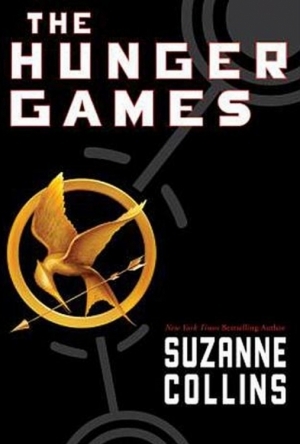
The Hunger Games is a trilogy of YA dystopian novels written by American author Suzanne Collins. The story is set in an unspecified future, in a dystopian, post-apocalyptic nation of Panem located in North America. The country consists of the Wealthy Capital surrounded by the twelve (Originally thirteen) poorer districts, each one in various states of poverty. The story follows Katniss Everdeen as she takes her sisters place in the annual Hunger Games. The games are a televised event created as punishment for a past rebellion. Over the course of the books Katniss and the rest of Panem are plunged into Civil War thanks to Katniss inadvertently fuelling a hidden rebel fraction led by President Alma Coin of (the previously thought to be destroyed) District 13. After going through hell, loosing friends and the sister she tried to protect Katniss is eventually tried for killing Coin at the execution of Ex-President Snow and sent back to District 12. Katniss eventually marries fellow tribute Peeta Mellark (whom she was tied to during the games as the pair of star-crossed lovers) and eventually have two children a boy and a girl. Author Suzanne Collins stated that the inspiration for the story came to her after channel surfing through TV channels, having seen a reality show on one channel then saw footage of the Iraq invasion. The two began to blur in an unsettling way and the idea started to form. The Greek myth of Theseus also served as a basis for the story, with Collins saying that Katniss could be called a future Theseus and The Hunger Games being an interpretation of the old gladiatorial games.
The Hunger Games the titular book was released on September 14th 2008 under the publishing house Scholastic Press. The book had an initial print run of 50,00 copies eventually being bumped up twice to 200,000 copies. By February 2010 the book had sold 800,000 copies and rights to the novel have been sold in 38 territories. In November 2008 The Hunger Games was placed on the New York Times best seller list where it would remain for 100 weeks (just over three months). By the time the books film adaption released in march 2012 the book had been on USA Today's best seller list for 135 weeks (Four months) and sold over 17.5 million copies. The book received several awards and honours such as Publishers Weekley's “Best book of the year 2008”, the New York Times “Notable children's book 2008” and was the 2009 young adult fiction category winner of the Golden Duck award. The book also received the California Young Reader medal in 2011.
Catching Fire, the second book was published on September 1st 2009 under Scholastic. As the sequel to the Hunger Games book it continues the story of Katniss Everdeen and the post-apocalyptic nation of Panem as rebellion begins. The book received mixed reviews but was placed on Time Magazines Top 100 fiction list of 2009. Catching fire had an initial print of 350,00 copies but was (Like its predecessor) had grown to 750,00 by February 2010. The book has sold over 10 million copies.
Mocking-jay the third and final book in the Hunger Games Trilogy and was published August 24th 2010 by Scholastic. The book had a 1.2 million copy print that was bumped up from 750,000 copies and in its first week sold over 450,00 copies. Reviews were favourable with the book and notes that it thoroughly explores the themes of the other books.
I really love the books and regularly read them. Whenever I do read them I tend to read all three of them in the space of a week. To be fair whilst I had heard of them before the first movie release I didn't start reading them until I'd seen the first movie. I did read Catching Fire and Mockingjay before their movie equivalents hit the screens. Whilst The Hunger Games was a brilliant opener and Mockingjay was a brilliant ender, I agree with a few reviewers that Catching fire had a delayed start and it took a bit of time to get into the action of the story at large.
Suzanne Collins was born in Hartford Connecticut on the 10th of August 1962 as the youngest fourth child to Jane Bradley Collins and Lt. Col. Michael Jon Collins a decorated U. S. Air Force officer. As a daughter of a military man she was constantly moving with her family and spent her childhood in the eastern united states. Collins went to the Alabama school of fine arts in Birmingham 1980 as a theatre arts Major. Collins went on to complete a Bachelor of arts from Indiana University in 1985 and telecommunications and in 1989 Collins earned her M. F. A. in dramatic writing from NYU Tisch school of arts. Collins began her career in 1991 as a writer for children's television shows and won a nomination in animation for co-writing the critically acclaimed Christmas special Santa, Baby!. Collins after meeting James Proimos whilst working on a children's show felt the urge to write children's books and spent the early 2000's writing five books of the Underland Chronicles; Gregor the Overlander, Gregor and the Prophecy of Bane, Gregor and the curse of the Warmbloods, Gregor and the Marks of Secret and Gregor and the Code of Claw. The influence for those books came from Alice in Wonderland. During the late 2000's she ends up writing the Hunger Games trilogy which went onto a famous movie trilogy. As the result of the hunger games trilogy popularity Collins was named one of Times Magazine's most Influential people of 2010. On June 17th 2019 Collins announced she was writing a prequel to the Hunger Games and is scheduled to be released on 19th May 2020, the book is to focus on the failed rebellion 64 years before the Hunger Games trilogy.
I highly respect the Author Suzanne Collins for both her work as a writer of Children's media and for her creativity in creating both the Hunger Games and the Underland Chronicles. Her creativity has been awarded with her books popularity and being announced amongst Time Magazine's 2010's most influential people and Amazons best selling Kindle author in 2012.
In March 2009 Lions Gate Entertainment entered into a co-production agreement with Nina Jacobson's Production company Color Force for the Hunger Games. Novel writer Suzanne Collins adapted the book in collaboration with screenwriter Billy Ray and Director Gary Ross. Actors Jennifer Lawrence, Josh Hutchinson and Liam Hemsworth were hired for the roles of Katniss, Peeta and Gale respectively. Lawrence was four years older than Katniss was in the books but Collins said she would rather the actress be older than the character since it demanded a certain maturity and power. Collins also liked Lawrence stating she was the “only one who truly captured the character I wrote in the book”. The Hunger Games Movie was released on march 23rd 2012. The Hunger Games: Catching Fire was released on November 22nd 2013 with Francis Lawrence being hired as Director and actors Phillip Seymour Hoffman, Jena Malone and Sam Claflin being hired as Plutarch Heavensbee, Johanna Mason and Finneck Odair respectively. The Hunger Games: Mockingjay was split into 2 and Part 1 was released on November 21st 2014 and part 2 on November 20th 2015 Francis Lawrence remained Director for the final movies with Actor Julianne Moore joining the cast as President Alma Coin.
I loved the movies point blank and whilst it has its flaws like most movies often do I think its redeeming quality has been it faithfulness in sticking to the books as closely as possible and the actors representation of Suzanne Collins characters such as Jennifer Lawrence as Katniss, Donald Sunderland and President Snow, Stanley Tucci as Ceaser Flickerman, Woody Harrelson as Haymich Abernathy and Elizabeth Banks as Effie Trinkett. Whilst all the actors were very good and were chosen well for their characters. These actors in particular I feel did exceptionally well in bringing their characters to life especially Elizabeth Banks, Stanley Tucci and Woody Harrelson but then I am a very big fan of theirs so I may be a little biased.
The Hunger Games the titular book was released on September 14th 2008 under the publishing house Scholastic Press. The book had an initial print run of 50,00 copies eventually being bumped up twice to 200,000 copies. By February 2010 the book had sold 800,000 copies and rights to the novel have been sold in 38 territories. In November 2008 The Hunger Games was placed on the New York Times best seller list where it would remain for 100 weeks (just over three months). By the time the books film adaption released in march 2012 the book had been on USA Today's best seller list for 135 weeks (Four months) and sold over 17.5 million copies. The book received several awards and honours such as Publishers Weekley's “Best book of the year 2008”, the New York Times “Notable children's book 2008” and was the 2009 young adult fiction category winner of the Golden Duck award. The book also received the California Young Reader medal in 2011.
Catching Fire, the second book was published on September 1st 2009 under Scholastic. As the sequel to the Hunger Games book it continues the story of Katniss Everdeen and the post-apocalyptic nation of Panem as rebellion begins. The book received mixed reviews but was placed on Time Magazines Top 100 fiction list of 2009. Catching fire had an initial print of 350,00 copies but was (Like its predecessor) had grown to 750,00 by February 2010. The book has sold over 10 million copies.
Mocking-jay the third and final book in the Hunger Games Trilogy and was published August 24th 2010 by Scholastic. The book had a 1.2 million copy print that was bumped up from 750,000 copies and in its first week sold over 450,00 copies. Reviews were favourable with the book and notes that it thoroughly explores the themes of the other books.
I really love the books and regularly read them. Whenever I do read them I tend to read all three of them in the space of a week. To be fair whilst I had heard of them before the first movie release I didn't start reading them until I'd seen the first movie. I did read Catching Fire and Mockingjay before their movie equivalents hit the screens. Whilst The Hunger Games was a brilliant opener and Mockingjay was a brilliant ender, I agree with a few reviewers that Catching fire had a delayed start and it took a bit of time to get into the action of the story at large.
Suzanne Collins was born in Hartford Connecticut on the 10th of August 1962 as the youngest fourth child to Jane Bradley Collins and Lt. Col. Michael Jon Collins a decorated U. S. Air Force officer. As a daughter of a military man she was constantly moving with her family and spent her childhood in the eastern united states. Collins went to the Alabama school of fine arts in Birmingham 1980 as a theatre arts Major. Collins went on to complete a Bachelor of arts from Indiana University in 1985 and telecommunications and in 1989 Collins earned her M. F. A. in dramatic writing from NYU Tisch school of arts. Collins began her career in 1991 as a writer for children's television shows and won a nomination in animation for co-writing the critically acclaimed Christmas special Santa, Baby!. Collins after meeting James Proimos whilst working on a children's show felt the urge to write children's books and spent the early 2000's writing five books of the Underland Chronicles; Gregor the Overlander, Gregor and the Prophecy of Bane, Gregor and the curse of the Warmbloods, Gregor and the Marks of Secret and Gregor and the Code of Claw. The influence for those books came from Alice in Wonderland. During the late 2000's she ends up writing the Hunger Games trilogy which went onto a famous movie trilogy. As the result of the hunger games trilogy popularity Collins was named one of Times Magazine's most Influential people of 2010. On June 17th 2019 Collins announced she was writing a prequel to the Hunger Games and is scheduled to be released on 19th May 2020, the book is to focus on the failed rebellion 64 years before the Hunger Games trilogy.
I highly respect the Author Suzanne Collins for both her work as a writer of Children's media and for her creativity in creating both the Hunger Games and the Underland Chronicles. Her creativity has been awarded with her books popularity and being announced amongst Time Magazine's 2010's most influential people and Amazons best selling Kindle author in 2012.
In March 2009 Lions Gate Entertainment entered into a co-production agreement with Nina Jacobson's Production company Color Force for the Hunger Games. Novel writer Suzanne Collins adapted the book in collaboration with screenwriter Billy Ray and Director Gary Ross. Actors Jennifer Lawrence, Josh Hutchinson and Liam Hemsworth were hired for the roles of Katniss, Peeta and Gale respectively. Lawrence was four years older than Katniss was in the books but Collins said she would rather the actress be older than the character since it demanded a certain maturity and power. Collins also liked Lawrence stating she was the “only one who truly captured the character I wrote in the book”. The Hunger Games Movie was released on march 23rd 2012. The Hunger Games: Catching Fire was released on November 22nd 2013 with Francis Lawrence being hired as Director and actors Phillip Seymour Hoffman, Jena Malone and Sam Claflin being hired as Plutarch Heavensbee, Johanna Mason and Finneck Odair respectively. The Hunger Games: Mockingjay was split into 2 and Part 1 was released on November 21st 2014 and part 2 on November 20th 2015 Francis Lawrence remained Director for the final movies with Actor Julianne Moore joining the cast as President Alma Coin.
I loved the movies point blank and whilst it has its flaws like most movies often do I think its redeeming quality has been it faithfulness in sticking to the books as closely as possible and the actors representation of Suzanne Collins characters such as Jennifer Lawrence as Katniss, Donald Sunderland and President Snow, Stanley Tucci as Ceaser Flickerman, Woody Harrelson as Haymich Abernathy and Elizabeth Banks as Effie Trinkett. Whilst all the actors were very good and were chosen well for their characters. These actors in particular I feel did exceptionally well in bringing their characters to life especially Elizabeth Banks, Stanley Tucci and Woody Harrelson but then I am a very big fan of theirs so I may be a little biased.

Sass Perilla (36 KP) rated The Master and Margarita in Books
Aug 9, 2019
Worth a read? Yes. Worth a reread? Maybe not.
Contains spoilers, click to show
The Master and Magarita: Mikhail Bulgakov
Firstly, I didn’t intend to write an essay on this novel. However, once started I found I had a lot to say, and the more I thought about the plot and characters, the more ideas and parallels were sparked, so I am hopeful that the verbosity of this review can be forgiven.
At the risk of sounding both ignorant and uncultured, I found this novel (at least at first) bloody hard slog; not least because the Russian characters have three names, plus a nickname, plus a pun on their name (none of which work particularly well in translation and all of which sound rather similar to the English untrained ear). As an example- Ivan Nikolaevich Ponyrev (who seems to be referred to by any and all of these names) is also known as “Homeless” and “the poet” is a key character in the opening section of the novel. To further demonstrate: there are 17 different names that start with A that are used to refer to 15 different characters with Andreyevich used as the middle name of a bereaved uncle, who makes a journey from Kiev after his nephew is beheaded in a freak tram accident- and Andrey the buffet manager at a Moscow theatre. Clear as mud right? And that is before starting on similarly named characters with the initials M, P, L and S! At my last count there were 45 distinct characters, and I am fairly sure there will be some that I have missed. Hence, I did a lot of re-reading to work out exactly who was doing what to whom.
Additionally, I would suggest you need to be wary of the different translations. The distinct changes in meaning are subtle but important. To triangulate I had three versions at my disposal: Hugh Aplin’s translation (available for free on Kindle), the audiobook version translated by Richard Pevear and Larissa Volokhonsky (which I listened to simultaneously when reading the book to come to my own interpretation, and the subtitles for the Russian TV miniseries from 2005 when I gave up trying to work out who was who from name alone!
So those were my “technical” issues (if you like) with engaging with this novel, and this lack of clarity and understanding (and my own lack of contextual knowledge of Stalinist Russia) meant I missed many of the (what I am sure are hysterically funny to those in the know) satirical jokes in the opening section. That said, the random action and quick changes of focus, undercurrent of chaos in Moscow despite entrenched hierarchal structures and clear threat that (any) one could go missing at any time, for an unclear reason gave a clear insight into the mind and fears of a 1930s Russian citizen. No wonder it was available only in censored form for so long.
Despite these hardships, there were some genuinely laugh out loud moments in the first Moscow based part of the novel. The citizens have not lost their individuality, as they scrabble and fight for bank notes in the theatre, which are later revealed to be worthless. Nor have they lost their sense of pride and vanity, which we see in the female theatre goers, so desperate to attain the fashionable French couture (which later literally disappears from their bodies leaving semi-naked citizenesses desperately trying to cover themselves in a scene reminiscent of “Allo Allo” meets “Benny Hill”). When Professor Woland says his show will “expose” what the locals have failed to realise is that it is their (moral) shortcomings that are about to be revealed. The message is clearly, that no government can successfully legislate against human nature.
Oooh- and another fun fact, apparently Woland (later revealed- or perhaps is implied- to be Satan) was the inspiration to the Rolling Stones 1968 hit “Sympathy for the Devil”, well at least that is what my Google-Fu tells me.
Obviously, there were substantial hurdles to leap, however, I found by the second half of the novel, when we finally meet the eponymous characters, I had got in to the swing of things and begun to embrace the farcical surrealism of the novel.
The second “book” marks a change in tone, although it continues to cut away to scenes of Jesus’ sentencing by Pilate and execution (here known in the Aramaic form Yeshua). Ironically it is these scenes that are the most “real” and substantially human, as Pilate’s decision weighs head achingly heavily on him throughout. The Master and Margarita seem to be the only two characters fully invested in the authenticity of literature, and serve as a counterpoint to the heavily censored “monstrous” writing of Ivan and the rest of the writers’ union Massolit, more interested in fine dining and what their positions can do for them then the production of quality writing.
And it is Margarita’s journey of discovery and liberation from the stodgy, miserable societal expectations of that leads her back to her Master. Bulgakov mixes classical myth, Russian folklore and Bible stories to give us an impression of the timelessness of the central romance. As the worlds of communist Moscow and the inner worlds of the Master and Margarita collide, we are informed of the former’s desire to excuse all magic (and mischief) as the product of mass hypnosis, when the latter (and the reader) are fully aware of the spiritual significance and dimension of the events.
Clever, astute and in places laugh out loud funny, this novel none-the-less requires a level of dedication from the non-Russian speaking reader. Worth a read? Yes. Worth a re-read? Maybe not.
Firstly, I didn’t intend to write an essay on this novel. However, once started I found I had a lot to say, and the more I thought about the plot and characters, the more ideas and parallels were sparked, so I am hopeful that the verbosity of this review can be forgiven.
At the risk of sounding both ignorant and uncultured, I found this novel (at least at first) bloody hard slog; not least because the Russian characters have three names, plus a nickname, plus a pun on their name (none of which work particularly well in translation and all of which sound rather similar to the English untrained ear). As an example- Ivan Nikolaevich Ponyrev (who seems to be referred to by any and all of these names) is also known as “Homeless” and “the poet” is a key character in the opening section of the novel. To further demonstrate: there are 17 different names that start with A that are used to refer to 15 different characters with Andreyevich used as the middle name of a bereaved uncle, who makes a journey from Kiev after his nephew is beheaded in a freak tram accident- and Andrey the buffet manager at a Moscow theatre. Clear as mud right? And that is before starting on similarly named characters with the initials M, P, L and S! At my last count there were 45 distinct characters, and I am fairly sure there will be some that I have missed. Hence, I did a lot of re-reading to work out exactly who was doing what to whom.
Additionally, I would suggest you need to be wary of the different translations. The distinct changes in meaning are subtle but important. To triangulate I had three versions at my disposal: Hugh Aplin’s translation (available for free on Kindle), the audiobook version translated by Richard Pevear and Larissa Volokhonsky (which I listened to simultaneously when reading the book to come to my own interpretation, and the subtitles for the Russian TV miniseries from 2005 when I gave up trying to work out who was who from name alone!
So those were my “technical” issues (if you like) with engaging with this novel, and this lack of clarity and understanding (and my own lack of contextual knowledge of Stalinist Russia) meant I missed many of the (what I am sure are hysterically funny to those in the know) satirical jokes in the opening section. That said, the random action and quick changes of focus, undercurrent of chaos in Moscow despite entrenched hierarchal structures and clear threat that (any) one could go missing at any time, for an unclear reason gave a clear insight into the mind and fears of a 1930s Russian citizen. No wonder it was available only in censored form for so long.
Despite these hardships, there were some genuinely laugh out loud moments in the first Moscow based part of the novel. The citizens have not lost their individuality, as they scrabble and fight for bank notes in the theatre, which are later revealed to be worthless. Nor have they lost their sense of pride and vanity, which we see in the female theatre goers, so desperate to attain the fashionable French couture (which later literally disappears from their bodies leaving semi-naked citizenesses desperately trying to cover themselves in a scene reminiscent of “Allo Allo” meets “Benny Hill”). When Professor Woland says his show will “expose” what the locals have failed to realise is that it is their (moral) shortcomings that are about to be revealed. The message is clearly, that no government can successfully legislate against human nature.
Oooh- and another fun fact, apparently Woland (later revealed- or perhaps is implied- to be Satan) was the inspiration to the Rolling Stones 1968 hit “Sympathy for the Devil”, well at least that is what my Google-Fu tells me.
Obviously, there were substantial hurdles to leap, however, I found by the second half of the novel, when we finally meet the eponymous characters, I had got in to the swing of things and begun to embrace the farcical surrealism of the novel.
The second “book” marks a change in tone, although it continues to cut away to scenes of Jesus’ sentencing by Pilate and execution (here known in the Aramaic form Yeshua). Ironically it is these scenes that are the most “real” and substantially human, as Pilate’s decision weighs head achingly heavily on him throughout. The Master and Margarita seem to be the only two characters fully invested in the authenticity of literature, and serve as a counterpoint to the heavily censored “monstrous” writing of Ivan and the rest of the writers’ union Massolit, more interested in fine dining and what their positions can do for them then the production of quality writing.
And it is Margarita’s journey of discovery and liberation from the stodgy, miserable societal expectations of that leads her back to her Master. Bulgakov mixes classical myth, Russian folklore and Bible stories to give us an impression of the timelessness of the central romance. As the worlds of communist Moscow and the inner worlds of the Master and Margarita collide, we are informed of the former’s desire to excuse all magic (and mischief) as the product of mass hypnosis, when the latter (and the reader) are fully aware of the spiritual significance and dimension of the events.
Clever, astute and in places laugh out loud funny, this novel none-the-less requires a level of dedication from the non-Russian speaking reader. Worth a read? Yes. Worth a re-read? Maybe not.

EmersonRose (320 KP) rated The Blood of Olympus (The Heroes of Olympus #5) in Books
Nov 20, 2019
Alert! Before I begin this review, I need to let it be known that in the case of this particular book I may be a little biased, well maybe really biased! This is the tenth book I have read by this author and the last in the second series I have read. It is safe to say I love these books or else I would not have read this many.
Alright, now that that is out of the way, let me begin. This book is called Blood of Olympus, it is the fifth and final book in the Heroes of Olympus series (if you should ever desire to read these book, I would recommend starting with the Percy Jackson, and the Olympians series as this series is a sequel series. The author of this book is a writer by the name of Rick Riordan. This book is a young adult fantasy novel. It is the final chapter of the adventure of a group of seven young adults who happen to be demigods, modern day children of the ancient gods of Greece and Rome. This adventure, like many great adventures, is a race to save the world.
For me, the initial draw of the book was that it is a fantasy novel, which is one of my favorite genres, and its focus is on Greek Mythology, something of an obsession of mine. The mythology in these books may not always satisfy all mythology nerds because they do take liberties in how the myths are presented in order to showcase how they might have changed to fit in the modern day world. The way Riordan chooses to represent mythology is often fairly close to original stories, showing that he spends the time researching the myths, and they are clever, funny, and entertaining.
As I read the books, I found myself drawn to the relationships between the characters, not surprising as characters are a key draw for me in literature. By this point in the series, the relationships became especially interesting because you have known some of the characters for ten books now while others are just in their second or third book appearances. The central characters have grown into a substantial group that each have their own unique backgrounds, personalities, and even mythologies that create intriguing tension and bonds. Their bonds grow stronger as they work through new struggles and adventures with the added drama of them being a group of teenagers, which obviously means that there is a fair bit of romance involved as well.
For me personally to get into a story the most important aspect is to be very invested in61w3pqVMCZL._US230_ the characters. This does not mean I have to like them, but I do need to be completely invested in what happens to them. If the storyteller can do this, then I will most likely binge the entire thing whether book, movie, tv show, comic…. regardless whether or not the story is good or my normal cup of tea. This was definitely an initial draw in me reading this second series because I was already very invested in both Percy and Annabeth’s characters, who are among the main characters in this series and the main characters in the previous series. The majority of the characters in this book did capture my emotional investment, which kept me reading all five books, but there were a few I found lacking. Maybe I am the only one who felt this, but I thought that Riordan didn’t spend enough time on some of the new characters to pull me into their plots. Unfortunately, this is common in stories that feature such a large cast of main characters, had the time on each character been even plot points might not have been as successful and honestly, I might have been annoyed to not spend as much time on my favorites.
I would be lying if I were to say this was my favorite book in this series but I still greatly enjoyed it. Besides my problem with not feeling emotionally invested enough in some of the characters, I really do not have any other complaints about the book. It was successful in finishing this series story arc while having plenty of plot of its own. And it ended wrapping just about everything up so that I was satisfied, but open enough to still want more. If this were a regular series, the leftover cliffhangers would be dreadful! But Riordan writes series that capture over-arching plots but that connect to his other book series in this same world, so an ending like this simply promising more books about these characters in another series.
Overall I liked this book, if young adult fantasy is your genre, then I would definitely suggest looking at these books. They do what I require of my urban fantasy stories, mix magic into our real world enough that a part of me can almost believe it could be possible. Characters, world, and plot flowing together into an engaging story that obviously captured my interest enough to read ten and counting of these novels.
*This was a review I found while cleaning that I write a few years ago. I have since read two more Riordan novels and counting! I love the way Riordan writes and appreciate how he seems to continually grow as a writer, always tackling new issues and allowing his characters to have growth. Annabeth and Percy especially, they are two of my all-time favorite characters. I highly recommend reading his books!
Alright, now that that is out of the way, let me begin. This book is called Blood of Olympus, it is the fifth and final book in the Heroes of Olympus series (if you should ever desire to read these book, I would recommend starting with the Percy Jackson, and the Olympians series as this series is a sequel series. The author of this book is a writer by the name of Rick Riordan. This book is a young adult fantasy novel. It is the final chapter of the adventure of a group of seven young adults who happen to be demigods, modern day children of the ancient gods of Greece and Rome. This adventure, like many great adventures, is a race to save the world.
For me, the initial draw of the book was that it is a fantasy novel, which is one of my favorite genres, and its focus is on Greek Mythology, something of an obsession of mine. The mythology in these books may not always satisfy all mythology nerds because they do take liberties in how the myths are presented in order to showcase how they might have changed to fit in the modern day world. The way Riordan chooses to represent mythology is often fairly close to original stories, showing that he spends the time researching the myths, and they are clever, funny, and entertaining.
As I read the books, I found myself drawn to the relationships between the characters, not surprising as characters are a key draw for me in literature. By this point in the series, the relationships became especially interesting because you have known some of the characters for ten books now while others are just in their second or third book appearances. The central characters have grown into a substantial group that each have their own unique backgrounds, personalities, and even mythologies that create intriguing tension and bonds. Their bonds grow stronger as they work through new struggles and adventures with the added drama of them being a group of teenagers, which obviously means that there is a fair bit of romance involved as well.
For me personally to get into a story the most important aspect is to be very invested in61w3pqVMCZL._US230_ the characters. This does not mean I have to like them, but I do need to be completely invested in what happens to them. If the storyteller can do this, then I will most likely binge the entire thing whether book, movie, tv show, comic…. regardless whether or not the story is good or my normal cup of tea. This was definitely an initial draw in me reading this second series because I was already very invested in both Percy and Annabeth’s characters, who are among the main characters in this series and the main characters in the previous series. The majority of the characters in this book did capture my emotional investment, which kept me reading all five books, but there were a few I found lacking. Maybe I am the only one who felt this, but I thought that Riordan didn’t spend enough time on some of the new characters to pull me into their plots. Unfortunately, this is common in stories that feature such a large cast of main characters, had the time on each character been even plot points might not have been as successful and honestly, I might have been annoyed to not spend as much time on my favorites.
I would be lying if I were to say this was my favorite book in this series but I still greatly enjoyed it. Besides my problem with not feeling emotionally invested enough in some of the characters, I really do not have any other complaints about the book. It was successful in finishing this series story arc while having plenty of plot of its own. And it ended wrapping just about everything up so that I was satisfied, but open enough to still want more. If this were a regular series, the leftover cliffhangers would be dreadful! But Riordan writes series that capture over-arching plots but that connect to his other book series in this same world, so an ending like this simply promising more books about these characters in another series.
Overall I liked this book, if young adult fantasy is your genre, then I would definitely suggest looking at these books. They do what I require of my urban fantasy stories, mix magic into our real world enough that a part of me can almost believe it could be possible. Characters, world, and plot flowing together into an engaging story that obviously captured my interest enough to read ten and counting of these novels.
*This was a review I found while cleaning that I write a few years ago. I have since read two more Riordan novels and counting! I love the way Riordan writes and appreciate how he seems to continually grow as a writer, always tackling new issues and allowing his characters to have growth. Annabeth and Percy especially, they are two of my all-time favorite characters. I highly recommend reading his books!