
Search
Search results
Amy (7 KP) rated Goddess of Troy in Books
Jan 17, 2018 (Updated Jan 17, 2018)


Terrible. Total destruction.
Contains spoilers, click to show
The premise is one that P.C. Cast recycles throughout her work which is of taking modern women and dropping them into the worlds of myth and magic.
A brilliant idea, occasionally well done in her other novels...not unfortunately for this one.
The problem begins with the plot the goddesses send the women back to end the war...okay, but why not do it themselves? The flimsy excuses just don't hold up. The plot is weakly manipulated and transparently executed to make the neccessity of the modern women going back possible.
Problem 2-is the blatant racism of making the indipendant modern black woman into a white slave girl.
Problem 3- problematic sex scenes which read as thinly disguised rape scenes. A male character is hypnotises and the main female character has sex with him....this is made okay by him giving her consent afterwards. Which is not how consent works. This book being intended for young women just becoming sexual is at best concerning and at most incredibly damaging whilst promoting male rape under the guise of female empowerment.
The dialogue when more old fashioned from the warriors is charming and engaging...from the modern women we are forced to deal with censored cringy curse words, way too much teenage level gossip, and not a smidge of maturity in sight...from grown ass women.
For thirty plus successful women the character profiles should have engaged and fascinated, unfortunately those profiles were ignored during in-story application and replaced with twittering, childish teens who giggle over the word penis and lose their minds over the most vacuous and senseless things.
The plot centres around a boring, romance, and changes the original relationship of Achilles and Patroclus from its canonical implied romance to one of cousins...this at best is a misguided deviation from the canonical Iliad relationship they had.
It could easily be read as a blatant attack and hideous misuse of the original content, that could given the sheer overwhelming heteronormaty we are forced to endure be at its worst an erasure of rare LGBT representation from historical content.
The relationships are forced, and their happy endings so saccharine it hurts to read.
The siege of Troy is horrifically rewritten to make the main female lead the deciding factor that ensured victory and removed nearly all canonical battle events.
Throughout the novel not much happens, and by time something does you just want the novel over with.
It doesn't read as mythology inspired, the myths and characters are used as cheap prop and staging whilst removing the deep themes, and messages that ensured their endurance throughout time.
The vocabulary is below pre-teen level, the grammar is sub-par, and the pacing and plotting absolutely abysmal.
How this book ever made it to print in this state is a large and curious mystery for me.
I cannot urge you to skip this book enough, Margaret George's 'Helen of Troy' is a far more valuable use of your time if you are in want of mythology inspired fantasy...and does so without annihilating the entire original stories.
A brilliant idea, occasionally well done in her other novels...not unfortunately for this one.
The problem begins with the plot the goddesses send the women back to end the war...okay, but why not do it themselves? The flimsy excuses just don't hold up. The plot is weakly manipulated and transparently executed to make the neccessity of the modern women going back possible.
Problem 2-is the blatant racism of making the indipendant modern black woman into a white slave girl.
Problem 3- problematic sex scenes which read as thinly disguised rape scenes. A male character is hypnotises and the main female character has sex with him....this is made okay by him giving her consent afterwards. Which is not how consent works. This book being intended for young women just becoming sexual is at best concerning and at most incredibly damaging whilst promoting male rape under the guise of female empowerment.
The dialogue when more old fashioned from the warriors is charming and engaging...from the modern women we are forced to deal with censored cringy curse words, way too much teenage level gossip, and not a smidge of maturity in sight...from grown ass women.
For thirty plus successful women the character profiles should have engaged and fascinated, unfortunately those profiles were ignored during in-story application and replaced with twittering, childish teens who giggle over the word penis and lose their minds over the most vacuous and senseless things.
The plot centres around a boring, romance, and changes the original relationship of Achilles and Patroclus from its canonical implied romance to one of cousins...this at best is a misguided deviation from the canonical Iliad relationship they had.
It could easily be read as a blatant attack and hideous misuse of the original content, that could given the sheer overwhelming heteronormaty we are forced to endure be at its worst an erasure of rare LGBT representation from historical content.
The relationships are forced, and their happy endings so saccharine it hurts to read.
The siege of Troy is horrifically rewritten to make the main female lead the deciding factor that ensured victory and removed nearly all canonical battle events.
Throughout the novel not much happens, and by time something does you just want the novel over with.
It doesn't read as mythology inspired, the myths and characters are used as cheap prop and staging whilst removing the deep themes, and messages that ensured their endurance throughout time.
The vocabulary is below pre-teen level, the grammar is sub-par, and the pacing and plotting absolutely abysmal.
How this book ever made it to print in this state is a large and curious mystery for me.
I cannot urge you to skip this book enough, Margaret George's 'Helen of Troy' is a far more valuable use of your time if you are in want of mythology inspired fantasy...and does so without annihilating the entire original stories.

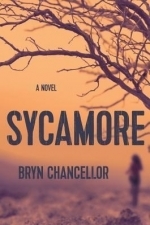

Jess Winters and her mother, Maud, arrive in the small town of Sycamore, Arizona hoping to start afresh: Maud is recently divorced from Jess' father and both are reeling from the event in different ways. Maud copes by sleeping most of the day away, but a restless teenage Jess wanders the town, searching for peace. Eventually she finds a friendship with Dani Newell, the local "smart kid" at the high school, and her boyfriend, Paul, the son of Jess' employer, Iris. Maybe, just maybe, Jess thinks, she could be happy here.
Flash forward nearly twenty years, when a new resident to town, another restless spirit, stumbles upon some bones in the local dried up lake. Residents immediately fear they belong to Jess, who disappeared shortly before Christmas: a young seventeen-year-old who was never seen again.
<i>Oh, this is a magical book.</I> I felt an immediate attachment to Jess from the first opening chapter. I was connected to her as a child of divorce, as someone who once had that urge to wander, who shared that restlessness as an adolescent. You quickly find that Chancellor has the power to create such real characters, who draw you in from the start.
The book--and the story of Jess--unfolds in snatches and snippets of these characters. Each chapter is told by a different inhabitant of Sycamore, and we get reminiscences and memories of their past, telling more about what happened with Jess, as well as their current life. We also get chapters of Jess' time as a sixteen-and seventeen-year-old in the town. In a way, it is as if we are being caught up backwards sometimes. I was captivated by the oddly suspenseful way they each tell stories from different times and varying viewpoints. It's an interesting (and effective) technique. You are piecing together a mystery, yet also reading a beautiful novel of interwoven characters.
One of the most amazing things about this novel is that for each different point of view, for each character, they have their own voice. Chancellor captures each one in their own unique way: the different way they speak. Some chapters are told in a distinctive sort of format and more. Every one has their own personality. It allows the characters--and the entire town--to really come to life so easily as you read. You can picture this entire small town and its inhabitants so clearly because of her beautiful, clear writing. It's just such a powerful book and so well-written.
There's a sweet tenderness to this book that I cannot truly describe. It really touched me. It's not always an easy read, or a happy one, but it's a lovely book in many ways. It's wonderfully written, surprisingly suspenseful, and a heartbreaking but amazing journey. I highly recommend it. 4.5 stars.
I received a copy of this novel from the publisher and Edelweiss (thank you!) in return for an unbiased review; it is available everywhere as of 05/09/2017.
<center><a href="http://justacatandabookatherside.blogspot.com/">Blog</a>; ~ <a href="https://twitter.com/mwcmoto">Twitter</a>; ~ <a href="https://www.facebook.com/justacatandabook/">Facebook</a>; ~ <a href="https://plus.google.com/u/0/+KristyHamiltonbooks">Google+</a></center>;
Flash forward nearly twenty years, when a new resident to town, another restless spirit, stumbles upon some bones in the local dried up lake. Residents immediately fear they belong to Jess, who disappeared shortly before Christmas: a young seventeen-year-old who was never seen again.
<i>Oh, this is a magical book.</I> I felt an immediate attachment to Jess from the first opening chapter. I was connected to her as a child of divorce, as someone who once had that urge to wander, who shared that restlessness as an adolescent. You quickly find that Chancellor has the power to create such real characters, who draw you in from the start.
The book--and the story of Jess--unfolds in snatches and snippets of these characters. Each chapter is told by a different inhabitant of Sycamore, and we get reminiscences and memories of their past, telling more about what happened with Jess, as well as their current life. We also get chapters of Jess' time as a sixteen-and seventeen-year-old in the town. In a way, it is as if we are being caught up backwards sometimes. I was captivated by the oddly suspenseful way they each tell stories from different times and varying viewpoints. It's an interesting (and effective) technique. You are piecing together a mystery, yet also reading a beautiful novel of interwoven characters.
One of the most amazing things about this novel is that for each different point of view, for each character, they have their own voice. Chancellor captures each one in their own unique way: the different way they speak. Some chapters are told in a distinctive sort of format and more. Every one has their own personality. It allows the characters--and the entire town--to really come to life so easily as you read. You can picture this entire small town and its inhabitants so clearly because of her beautiful, clear writing. It's just such a powerful book and so well-written.
There's a sweet tenderness to this book that I cannot truly describe. It really touched me. It's not always an easy read, or a happy one, but it's a lovely book in many ways. It's wonderfully written, surprisingly suspenseful, and a heartbreaking but amazing journey. I highly recommend it. 4.5 stars.
I received a copy of this novel from the publisher and Edelweiss (thank you!) in return for an unbiased review; it is available everywhere as of 05/09/2017.
<center><a href="http://justacatandabookatherside.blogspot.com/">Blog</a>; ~ <a href="https://twitter.com/mwcmoto">Twitter</a>; ~ <a href="https://www.facebook.com/justacatandabook/">Facebook</a>; ~ <a href="https://plus.google.com/u/0/+KristyHamiltonbooks">Google+</a></center>;

Heather Cranmer (2721 KP) rated Amity & Sorrow in Books
Jun 7, 2018

(This review can be found on my blog <a href="http://themisadventuresofatwentysomething.blogspot.com/">The (Mis)Adventures of a Twenty-Something Year Old Girl</a>).
So when I read the blurb about this book, it definitely interested me. I find these kind of cults interesting. Amity & Sorrow: A Novel by Peggy Riley is such a good read when it comes to religious cults and just a great read in general.
Amaranth is on the run from her polygamous, cult leader husband. She's also brought her two children, Amity and Sorrow, with her. When she crashes her car in Oklahoma, she doesn't plan on staying. However, after spending time with Bradley, she wants to stay. Sorrow, her eldest child, wants to go back to her father. Amity just wants to make her sister happy. Sorrow will do anything she can to get back to the compound and her father. Will Amaranth stay with Bradley or will she miss the compound's ways?
The title is pretty straight forward. Amity and Sorrow are the names of the children in this book. I kind of like the title although I think it's not very original.
The cover is simplistic. I was a bit confused though when I started reading the book because the two girls look like adults judging by what their bodies look like. Amity is supposed to be 12 years old, and although Sorrow's age is never revealed, she is referred to as a child. I think the cover would've suited this book better had it looked like a pre-teen and a teenage girl holding hands.
The setting and world building were done beautifully. Everything was written the way I'd think a polygamous cult would be and the how the people in it would act. Riley's portrayal of a woman who escaped from a religious cut is fantastic!
I can not fault the pacing in this book. Not once was I bored when reading Amity & Sorrow: A Novel. Every chapter ending left me wanting more. Every page came alive in my mind for me.
The characters were very well developed and well written. I enjoyed reading about Amity. I loved her innocence and the way she was protective of her sister. I couldn't stand Sorrow, not because she wasn't written well but because I just found her to be so much of a spoiled brat. Amaranth was a great character, and I thought she was a great mother to her children.
Like the pacing, the dialogue is fantastic. The children who were raised in the religious cult speak the way I'd imagine them too. The dialogue between the characters is very interesting. There's no real swear words although there are sexual references.
Amity & Sorrow: A Novel by Peggy Riley is a fantastic read that will leave its readers thinking about it long after they've finished the ending. It is a touching story about love, survival, and the human spirit.
I'd recommend this book to everyone aged 16+ due to sexual references and adult themes.
(I received this book for free from the Goodreads Firstreads program).
So when I read the blurb about this book, it definitely interested me. I find these kind of cults interesting. Amity & Sorrow: A Novel by Peggy Riley is such a good read when it comes to religious cults and just a great read in general.
Amaranth is on the run from her polygamous, cult leader husband. She's also brought her two children, Amity and Sorrow, with her. When she crashes her car in Oklahoma, she doesn't plan on staying. However, after spending time with Bradley, she wants to stay. Sorrow, her eldest child, wants to go back to her father. Amity just wants to make her sister happy. Sorrow will do anything she can to get back to the compound and her father. Will Amaranth stay with Bradley or will she miss the compound's ways?
The title is pretty straight forward. Amity and Sorrow are the names of the children in this book. I kind of like the title although I think it's not very original.
The cover is simplistic. I was a bit confused though when I started reading the book because the two girls look like adults judging by what their bodies look like. Amity is supposed to be 12 years old, and although Sorrow's age is never revealed, she is referred to as a child. I think the cover would've suited this book better had it looked like a pre-teen and a teenage girl holding hands.
The setting and world building were done beautifully. Everything was written the way I'd think a polygamous cult would be and the how the people in it would act. Riley's portrayal of a woman who escaped from a religious cut is fantastic!
I can not fault the pacing in this book. Not once was I bored when reading Amity & Sorrow: A Novel. Every chapter ending left me wanting more. Every page came alive in my mind for me.
The characters were very well developed and well written. I enjoyed reading about Amity. I loved her innocence and the way she was protective of her sister. I couldn't stand Sorrow, not because she wasn't written well but because I just found her to be so much of a spoiled brat. Amaranth was a great character, and I thought she was a great mother to her children.
Like the pacing, the dialogue is fantastic. The children who were raised in the religious cult speak the way I'd imagine them too. The dialogue between the characters is very interesting. There's no real swear words although there are sexual references.
Amity & Sorrow: A Novel by Peggy Riley is a fantastic read that will leave its readers thinking about it long after they've finished the ending. It is a touching story about love, survival, and the human spirit.
I'd recommend this book to everyone aged 16+ due to sexual references and adult themes.
(I received this book for free from the Goodreads Firstreads program).

Hazel (1853 KP) rated The Treatment in Books
Dec 7, 2018

<i>This ARC was provided by the publisher via NetGalley in exchange for an honest review
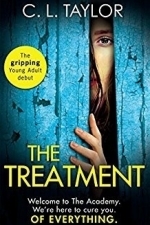
You have to help me. We’re not being reformed. We’re being brainwashed. </i>When sixteen-year-old Drew Finch receives this note from a strange woman on the street claiming to be her brother’s psychologist, she does not know how to react. But when a speeding car hits the doctor immediately after, Drew begins to think something portentous is afoot. In <i>The Treatment</i> by C. L. Taylor, the Residential Reform Academy in Northumberland is achieving great things, turning antisocial teenagers into model citizens. Mason, Drew’s brother, has been expelled from three different schools and has been sent to the academy as a last resort, however, Drew now suspects that Mason is in trouble.
In a slightly dystopian setting, Drew, a usually quiet girl, easily gets herself admitted to the academy by punching the school bully. With the intention of helping Mason escape, Drew calmly arrives at the Academy, not realising how much danger she is placing herself in. She soon discovers that this would not be a transitory admission and, unless she escapes, she will become like all the other narcotised students.
Trying to remain fastidious whilst avoiding garrulous roommates and staff, Drew desperately tries to concoct an escape plan, however, she may be too late. The more she learns about the Residential Reform Academy, the more she discovers about the evil intentions behind it. How can she break out of the prison-like building and seek help when the government is deeply involved with the whole sordid procedure?
C. L. Taylor devises an exciting scenario that will appeal to fans of Cecelia Ahern’s <i>Flawed</i> and Kazuo Ishiguro’s <i>Never Let Me Go</i>. A thriller that needs a hero in the unlikely form of a teenage girl, <i>The Treatment</i> is a stimulating story about those without a public voice overthrowing the immoral experiments of the dastards in power.
A <i>One Flew Over the Cuckoo’s Nest</i> for teenagers, this book deals with themes of mental health, oppression and the misuse of authority. Told from the perspective of a girl who has been bullied most of her life and coming from a dysfunctional family, there is a lot for the reader to connect with. Although it does not allay the growing fears of governmental conspiracies, The Treatment ends with the positive message that by standing up to those who do you wrong has its rewards, not only for yourself but for those in similar situations too.
<i>The Treatment</i> is a very enjoyable book that pulls the reader into the story, causing them to question how they would handle a similar situation. Would they be as brave as Drew and her new friends, or would they be doomed to a fate of mindless obedience? Compelling from beginning to end, C. L. Taylor’s latest novel is a refreshing break from the over-the-top science fiction dystopian novels, preferring to tackle futuristic ideas that are much closer to home. This is a book that can be fully recommended to the Young Adult community.
You have to help me. We’re not being reformed. We’re being brainwashed. </i>When sixteen-year-old Drew Finch receives this note from a strange woman on the street claiming to be her brother’s psychologist, she does not know how to react. But when a speeding car hits the doctor immediately after, Drew begins to think something portentous is afoot. In <i>The Treatment</i> by C. L. Taylor, the Residential Reform Academy in Northumberland is achieving great things, turning antisocial teenagers into model citizens. Mason, Drew’s brother, has been expelled from three different schools and has been sent to the academy as a last resort, however, Drew now suspects that Mason is in trouble.
In a slightly dystopian setting, Drew, a usually quiet girl, easily gets herself admitted to the academy by punching the school bully. With the intention of helping Mason escape, Drew calmly arrives at the Academy, not realising how much danger she is placing herself in. She soon discovers that this would not be a transitory admission and, unless she escapes, she will become like all the other narcotised students.
Trying to remain fastidious whilst avoiding garrulous roommates and staff, Drew desperately tries to concoct an escape plan, however, she may be too late. The more she learns about the Residential Reform Academy, the more she discovers about the evil intentions behind it. How can she break out of the prison-like building and seek help when the government is deeply involved with the whole sordid procedure?
C. L. Taylor devises an exciting scenario that will appeal to fans of Cecelia Ahern’s <i>Flawed</i> and Kazuo Ishiguro’s <i>Never Let Me Go</i>. A thriller that needs a hero in the unlikely form of a teenage girl, <i>The Treatment</i> is a stimulating story about those without a public voice overthrowing the immoral experiments of the dastards in power.
A <i>One Flew Over the Cuckoo’s Nest</i> for teenagers, this book deals with themes of mental health, oppression and the misuse of authority. Told from the perspective of a girl who has been bullied most of her life and coming from a dysfunctional family, there is a lot for the reader to connect with. Although it does not allay the growing fears of governmental conspiracies, The Treatment ends with the positive message that by standing up to those who do you wrong has its rewards, not only for yourself but for those in similar situations too.
<i>The Treatment</i> is a very enjoyable book that pulls the reader into the story, causing them to question how they would handle a similar situation. Would they be as brave as Drew and her new friends, or would they be doomed to a fate of mindless obedience? Compelling from beginning to end, C. L. Taylor’s latest novel is a refreshing break from the over-the-top science fiction dystopian novels, preferring to tackle futuristic ideas that are much closer to home. This is a book that can be fully recommended to the Young Adult community.
Hazel (1853 KP) rated The Upside of Unrequited in Books
Dec 7, 2018

<i>This ARC was provided by the publisher via NetGalley in exchange for an honest review </i>
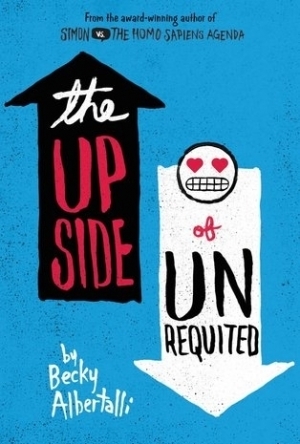
Becky Albertalli, a clinical psychologist turned author, is mostly known for her debut novel <i>Simon vs. the Homo Sapiens Agenda</i> (2015). Sticking with the theme of homosexuality, Albertalli has launched her second novel with the hope that it will be as popular amongst the LGBT community. <i>The Upside of Unrequited</i> is written from a female heterosexual point of view, however includes a wide range of characters with other sexual preferences.
The narrator, Molly, is only seventeen, but desperately wishes she could have a boyfriend. Endlessly teased for the number of crushes she has had – currently standing at 26 – Molly has never experienced a boy liking her back. Her twin sister, Cassie, on the other hand, has no problem attracting a girlfriend, and quickly hooks up with the beautiful Mina. Cassie and Mina are determined to set Molly up with a friend named Will, however Molly has her eye on someone else.
Molly and Cassie have always been close, but Cassie’s surreptitious behaviour involving anything to do with Mina, starts to put a strain on their relationship. As Molly gets torn between two boys, she begins to realise that having crushes on other people is far easier than getting someone to like her back.
Whilst Molly and Cassie focus on their relationships, their Mums (the twins were born via IVF) are celebrating the passing of the law that states gay people can marry their partners. Despite having been together for 20 years or so, they are planning on a big wedding, adding more stress to Molly’s life.
Albertalli uses her background in psychology to reflect the emotions, thoughts and feelings of her characters with great efficacy. She writes in a way that normalises homosexuality, although one does begin to question the authenticity in the gay to straight ratio. It is refreshing to read a Young Adult novel where homophobia is less of an issue.
As with most Young Adult romance novels, <i>The Upside of Unrequited</i> includes the dreaded love triangle – that tedious, unnecessary element. Teenage romance is always farcical and unrealistic, with more eye rolling on the reader’s part, than swooning and such forth. This book was no different, and it was difficult to remain engaged with or even care about the storyline.
Personally I think I may be going off Young Adult literature, and therefore am not the best person to judge the narrative. As a piece of writing however, I was not as impressed as I have been by other authors’ talents. Occasionally, sentences felt stilted, often broken down into several where only one would suffice.
If you are looking for a romantic novel with a happy ending and a diverse character selection, then you will probably not be disappointed with this book – if you are a teenager that is. Beware of occasional use of strong language and sexual references, which are inappropriate for younger readers. Despite the attraction to the LGBT community, <i>The Upside of Unrequited</i> will only be successful amongst a small amount of readers.
Becky Albertalli, a clinical psychologist turned author, is mostly known for her debut novel <i>Simon vs. the Homo Sapiens Agenda</i> (2015). Sticking with the theme of homosexuality, Albertalli has launched her second novel with the hope that it will be as popular amongst the LGBT community. <i>The Upside of Unrequited</i> is written from a female heterosexual point of view, however includes a wide range of characters with other sexual preferences.
The narrator, Molly, is only seventeen, but desperately wishes she could have a boyfriend. Endlessly teased for the number of crushes she has had – currently standing at 26 – Molly has never experienced a boy liking her back. Her twin sister, Cassie, on the other hand, has no problem attracting a girlfriend, and quickly hooks up with the beautiful Mina. Cassie and Mina are determined to set Molly up with a friend named Will, however Molly has her eye on someone else.
Molly and Cassie have always been close, but Cassie’s surreptitious behaviour involving anything to do with Mina, starts to put a strain on their relationship. As Molly gets torn between two boys, she begins to realise that having crushes on other people is far easier than getting someone to like her back.
Whilst Molly and Cassie focus on their relationships, their Mums (the twins were born via IVF) are celebrating the passing of the law that states gay people can marry their partners. Despite having been together for 20 years or so, they are planning on a big wedding, adding more stress to Molly’s life.
Albertalli uses her background in psychology to reflect the emotions, thoughts and feelings of her characters with great efficacy. She writes in a way that normalises homosexuality, although one does begin to question the authenticity in the gay to straight ratio. It is refreshing to read a Young Adult novel where homophobia is less of an issue.
As with most Young Adult romance novels, <i>The Upside of Unrequited</i> includes the dreaded love triangle – that tedious, unnecessary element. Teenage romance is always farcical and unrealistic, with more eye rolling on the reader’s part, than swooning and such forth. This book was no different, and it was difficult to remain engaged with or even care about the storyline.
Personally I think I may be going off Young Adult literature, and therefore am not the best person to judge the narrative. As a piece of writing however, I was not as impressed as I have been by other authors’ talents. Occasionally, sentences felt stilted, often broken down into several where only one would suffice.
If you are looking for a romantic novel with a happy ending and a diverse character selection, then you will probably not be disappointed with this book – if you are a teenager that is. Beware of occasional use of strong language and sexual references, which are inappropriate for younger readers. Despite the attraction to the LGBT community, <i>The Upside of Unrequited</i> will only be successful amongst a small amount of readers.
Hazel (1853 KP) rated Glass Sword in Books
Dec 7, 2018

<i>This ARC was provided by the publisher via NetGalley in exchange for an honest review </i>
It is finally here; the second book in the riveting<i> Red Queen</i> series by Victoria Aveyard – perfect for fans of <i>The Hunger Games, The Selection</i> series and <i>Divergent</i>. Continuing from the exact point the previous book closed on, <i>Glass Sword</i> is packed with action, suspense and emotional entertainment.
To recap, the world is divided by blood colour: Red (inferior) and Silver (superior); but it is the reason why Silvers consider themselves better that is important. Silver-blooded people are born with a superpower; Reds are not. Until Mare Barrow, that is. By pure accident, Mare discovers she can wield electricity with her bare hands, is forced to pretend she is a Silver living with the royal family, and is finally betrayed by someone she thought was on her side.
Now, in <i>Glass Sword</i>, teenage Mare is in hiding with the Scarlet Guard – Red-blooded rebels – with the knowledge that there are other people out there just like her: “Newbloods,” Red blood with Silver abilities. Mare and her companions are determined to find all of these people and train them to use their powers, however the Silver king is doing the same, with the intention of destroying them all. What makes it worse is Mare no longer knows whom she can trust; anyone could betray her.
Unlike the previous book, <i>Glass Sword</i> is one battle after another. There are no more pretty dresses, royal parties or grand castles. From beginning to end there is not a moment when Mare is not in danger; it is easy to lose count the number of times she narrowly escapes death. But as with any form of violence, someone always ends up injured or killed, resulting in some very upsetting outcomes.
Fans of the first book will already be aware of the love triangle that developed – one that made the conclusion so shocking. Whilst <i>Glass Sword</i> continues with the romantic theme, it is barely perceptible underneath all the bloodshed, arguments and warfare. So, do not expect a romance novel within these pages.
The constant action prevents the story from becoming slow or boring. There is a surprise around every corner; every page, to keep the reader engaged. This however has a downside. With conflict running into conflict it is easy to get confused and struggle to follow the course of the action. This is particularly the case in one of the final, most significant, attacks against the Silvers. The quick pace of the narrative results in the violent scene only taking up the space of a few pages, thus not giving the reader time to develop a clear picture in their head or fully understand what they are reading.
Naturally Mare’s story ends on yet another cliffhanger, so now we await the third installment. It must be difficult to provide a sequel as equally entertaining as the first, but Aveyard has gone above and beyond to create something far better than could be imagined. We can only hope this brilliance continues into the following books.
It is finally here; the second book in the riveting<i> Red Queen</i> series by Victoria Aveyard – perfect for fans of <i>The Hunger Games, The Selection</i> series and <i>Divergent</i>. Continuing from the exact point the previous book closed on, <i>Glass Sword</i> is packed with action, suspense and emotional entertainment.
To recap, the world is divided by blood colour: Red (inferior) and Silver (superior); but it is the reason why Silvers consider themselves better that is important. Silver-blooded people are born with a superpower; Reds are not. Until Mare Barrow, that is. By pure accident, Mare discovers she can wield electricity with her bare hands, is forced to pretend she is a Silver living with the royal family, and is finally betrayed by someone she thought was on her side.
Now, in <i>Glass Sword</i>, teenage Mare is in hiding with the Scarlet Guard – Red-blooded rebels – with the knowledge that there are other people out there just like her: “Newbloods,” Red blood with Silver abilities. Mare and her companions are determined to find all of these people and train them to use their powers, however the Silver king is doing the same, with the intention of destroying them all. What makes it worse is Mare no longer knows whom she can trust; anyone could betray her.
Unlike the previous book, <i>Glass Sword</i> is one battle after another. There are no more pretty dresses, royal parties or grand castles. From beginning to end there is not a moment when Mare is not in danger; it is easy to lose count the number of times she narrowly escapes death. But as with any form of violence, someone always ends up injured or killed, resulting in some very upsetting outcomes.
Fans of the first book will already be aware of the love triangle that developed – one that made the conclusion so shocking. Whilst <i>Glass Sword</i> continues with the romantic theme, it is barely perceptible underneath all the bloodshed, arguments and warfare. So, do not expect a romance novel within these pages.
The constant action prevents the story from becoming slow or boring. There is a surprise around every corner; every page, to keep the reader engaged. This however has a downside. With conflict running into conflict it is easy to get confused and struggle to follow the course of the action. This is particularly the case in one of the final, most significant, attacks against the Silvers. The quick pace of the narrative results in the violent scene only taking up the space of a few pages, thus not giving the reader time to develop a clear picture in their head or fully understand what they are reading.
Naturally Mare’s story ends on yet another cliffhanger, so now we await the third installment. It must be difficult to provide a sequel as equally entertaining as the first, but Aveyard has gone above and beyond to create something far better than could be imagined. We can only hope this brilliance continues into the following books.
Ivana A. | Diary of Difference (1171 KP) rated Carrie in Books
Nov 14, 2018
Full review can be found on my blog - www.diaryofdifference.com
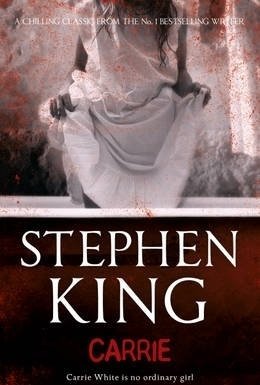
I am probably one of the last people on Earth that hasn’t read a Stephen King book. Carrie is the first book I decided to read. People have been suggesting it to me for a while, and it seemed like a nice short bit of introduction to Stephen’s horror world.
Also, a special thank you to my friend Dave, for constantly recommending Stephen King books to me, until I finally decided to listen to him. He seemed to be right!
Now - Carrie.
A book about a girl that lives with her crazy religious mother in a creepy house. A girl who is being bullied at school all the time. A story about a girl that has the ability to move objects as she wishes. And a prom night, where everything escalates.
Carrie is a sixteen year old girl. And she has been raised by her mother, who is a religious person in a - not healthy way. When Carrie misbehaves, she is sent to a closet to pray for the whole day. Even though Carrie doesn’t share her mother’s beliefs, she can’t really stand up and fight for herself.
The plot gets a grip when Carrie has her first period at the age of sixteen. She thinks she will bleed to death. And all her classmates are laughing at her, because she is stupid. And throw tampons her way. And as I am reading this, I keep thinking - what kind of mother won’t tell her child about menstruation, and puberty, and all the normal teenage phases a kid has to go through while growing up?
This moment, in the school bathroom, is the moment Carrie finds out about her powers.
And a few weeks later, a terrible thing happens.
This is a horror story, but the horror doesn’t lie in what Carrie did, but what led her to do that. Who it is to blame, and why things escalated the way they did.
Stephen King described bullying in its most painful and real way, and the consequences it can lead to. And it does happen, in every school, to a lot of children all over the world each day. A sometimes, most of the times, they are bullied only because they are different, not because they are bad.
This is a story that silently stands up to bullying, and by doing that raises such a strong voice in every corner of the world.
And remember - if you are the bully - think twice before you say things. Words can hurt, and they can result in bad things happening. Think twice about why you say what you say. The classmate of yours might have a talent you don’t know of.
And if you are the bullied child - also remember - you are kind and beautiful, no matter what everyone says. You shouldn’t let people bring you down. And we have all been bullied while growing up. Once you reach a certain age, people stop caring, and you stop caring what people think, and then, finally, you can be comfortable and happy with who you are!
I am probably one of the last people on Earth that hasn’t read a Stephen King book. Carrie is the first book I decided to read. People have been suggesting it to me for a while, and it seemed like a nice short bit of introduction to Stephen’s horror world.
Also, a special thank you to my friend Dave, for constantly recommending Stephen King books to me, until I finally decided to listen to him. He seemed to be right!
Now - Carrie.
A book about a girl that lives with her crazy religious mother in a creepy house. A girl who is being bullied at school all the time. A story about a girl that has the ability to move objects as she wishes. And a prom night, where everything escalates.
Carrie is a sixteen year old girl. And she has been raised by her mother, who is a religious person in a - not healthy way. When Carrie misbehaves, she is sent to a closet to pray for the whole day. Even though Carrie doesn’t share her mother’s beliefs, she can’t really stand up and fight for herself.
The plot gets a grip when Carrie has her first period at the age of sixteen. She thinks she will bleed to death. And all her classmates are laughing at her, because she is stupid. And throw tampons her way. And as I am reading this, I keep thinking - what kind of mother won’t tell her child about menstruation, and puberty, and all the normal teenage phases a kid has to go through while growing up?
This moment, in the school bathroom, is the moment Carrie finds out about her powers.
And a few weeks later, a terrible thing happens.
This is a horror story, but the horror doesn’t lie in what Carrie did, but what led her to do that. Who it is to blame, and why things escalated the way they did.
Stephen King described bullying in its most painful and real way, and the consequences it can lead to. And it does happen, in every school, to a lot of children all over the world each day. A sometimes, most of the times, they are bullied only because they are different, not because they are bad.
This is a story that silently stands up to bullying, and by doing that raises such a strong voice in every corner of the world.
And remember - if you are the bully - think twice before you say things. Words can hurt, and they can result in bad things happening. Think twice about why you say what you say. The classmate of yours might have a talent you don’t know of.
And if you are the bullied child - also remember - you are kind and beautiful, no matter what everyone says. You shouldn’t let people bring you down. And we have all been bullied while growing up. Once you reach a certain age, people stop caring, and you stop caring what people think, and then, finally, you can be comfortable and happy with who you are!

Lucy Buglass (45 KP) rated Deadpool 2 (2018) in Movies
Jun 20, 2019

A surprisingly heart-warming sequel
After the success of Deadpool, it’s natural to feel apprehensive about what comes next. Will it be as good as the first? Or will it fall flat? I was excited to see the Merc with a Mouth back again, but wasn’t entirely sure what to expect. I’d thankfully managed to avoid all spoilers online, so I was excited to see what the sequel would bring to the table.
Thankfully yes – it is absolutely on par with the first, if not better. In this film we get to see a more serious, empathetic version of Wade Wilson as he’s faced with some tough experiences and decisions. Ryan Reynolds does an amazing job of portraying Wilson’s sorrow, which is far removed from what we’re used to. It certainly doesn’t take away from the film’s humour, fourth wall breaking and sarcasm, but instead adds a more complex layer to the narrative. I was surprised to find myself crying at certain points in the film due to the emotional nature. The film also parodies a lot of other films, and I’m sure on a second viewing I’ll be able to spot them all, but the ones I did catch made me laugh out loud.
I adored some of the fight scenes, including Deadpool fighting someone to Skrillex’s “Bangarang” (which has to be one of my favourite cinematic moments of 2018… so far). The soundtrack is brilliant and the use of music plays a big part in this film, effectively setting the mood whether that’s humour or sorrow. An effective soundtrack really completes a film, and I am in love with Deadpool 2’s. Not to spoil anything too much, but you’ll be greeted with the likes of George Michael, Dolly Parton and AC/DC throughout the film which is a selling point if I do say so myself.
There are so many unexpected cameos in Deadpool 2 that I won’t ruin for you, but they all brought a smile to my face and I was excited to see what each actor brought to the table! Alongside these, we see familiar faces in Colossus, Negasonic Teenage Warhead, Dopinder and Weasel who all played a huge part in the first film and reciprocate this in the sequel, as well as brand new ones in vengeful cyborg Cable, ‘lucky’ Domino and out of control mutant Russell Collins.
I was so impressed with the new characters and the way they were acted, so huge praise has to be given to Josh Brolin, Zazie Beetz and Julian Dennison for bringing such complex characters to life on screen. The dynamics between characters, old and new, is a joy to watch and everything is so well scripted throughout the film.
Deadpool 2 is a strong successor to the first, with a heartwarming overall message to tie the film up in a nice little bow. Oh, and remember to sit tight whilst the credits roll… this is a Marvel film after all!
https://lucygoestohollywood.com/2018/05/27/deadpool-2-a-surprisingly-heart-warming-sequel/
Thankfully yes – it is absolutely on par with the first, if not better. In this film we get to see a more serious, empathetic version of Wade Wilson as he’s faced with some tough experiences and decisions. Ryan Reynolds does an amazing job of portraying Wilson’s sorrow, which is far removed from what we’re used to. It certainly doesn’t take away from the film’s humour, fourth wall breaking and sarcasm, but instead adds a more complex layer to the narrative. I was surprised to find myself crying at certain points in the film due to the emotional nature. The film also parodies a lot of other films, and I’m sure on a second viewing I’ll be able to spot them all, but the ones I did catch made me laugh out loud.
I adored some of the fight scenes, including Deadpool fighting someone to Skrillex’s “Bangarang” (which has to be one of my favourite cinematic moments of 2018… so far). The soundtrack is brilliant and the use of music plays a big part in this film, effectively setting the mood whether that’s humour or sorrow. An effective soundtrack really completes a film, and I am in love with Deadpool 2’s. Not to spoil anything too much, but you’ll be greeted with the likes of George Michael, Dolly Parton and AC/DC throughout the film which is a selling point if I do say so myself.
There are so many unexpected cameos in Deadpool 2 that I won’t ruin for you, but they all brought a smile to my face and I was excited to see what each actor brought to the table! Alongside these, we see familiar faces in Colossus, Negasonic Teenage Warhead, Dopinder and Weasel who all played a huge part in the first film and reciprocate this in the sequel, as well as brand new ones in vengeful cyborg Cable, ‘lucky’ Domino and out of control mutant Russell Collins.
I was so impressed with the new characters and the way they were acted, so huge praise has to be given to Josh Brolin, Zazie Beetz and Julian Dennison for bringing such complex characters to life on screen. The dynamics between characters, old and new, is a joy to watch and everything is so well scripted throughout the film.
Deadpool 2 is a strong successor to the first, with a heartwarming overall message to tie the film up in a nice little bow. Oh, and remember to sit tight whilst the credits roll… this is a Marvel film after all!
https://lucygoestohollywood.com/2018/05/27/deadpool-2-a-surprisingly-heart-warming-sequel/

Darren (1599 KP) rated Eight Legged Freaks (2002) in Movies
Jun 20, 2019

Contains spoilers, click to show
Story: Eight Legged Freaks starts by showing us the Mike Parker (Terra) visiting Joshua the spider expert of the town who has been feeding his spiders enlarged crickets and of course they now escape. One week later when Mike goes to return his mother Sheriff Samantha Parker (Wuhrer) stops the visit because of waste being dumped into the local watering hole.
With this we get to see the rebellious teenage daughter Ashley (Johansson) who is dating bad boy biker Bret (Czuchry) step-son of Mayor Wade (Rippy) who is trying to cover up the fact the town is nearly broke. Chris McCormick (Arquette) a local who returned to town after his father’s death refusing to sell the mine in a deal which could save the town.
When Mike makes it back to Joshua’s he learns of the super-sized spiders that have been released into this small town, the resident must now fight against the spiders that have infested the town.
Thoughts on Eight Legged Freaks
Characters/Performance – Chris McCormick returns to his hometown to claim what is his, the mine, he also needs to make up for the mistakes he has made and this gives him the perfect chance too. Sheriff Parker is a single mother of two trying to keep the local community together and being the former love interest of Chris. Mike is the expert on everything going on playing out as the reminder to all the different spiders attacking styles. Ashley is the bad girl daughter of Samantha who is mostly trying to discover who she is. We have the rest of the town which includes the conspiracy crazed radio host, the greedy mayor the comic relief deputy.
Performance wise, David Arquette is great in this leading role managing the comedy side of everything as well as the action horror when needed. Kari Wuhrer fits the part of sexy sheriff very well too. Both Scott Terra and Scarlett Johansson are good choices too. The rest of the actors all give good performances to fit the films mentality.
Story – Small town gets invaded by giant spiders thanks to cost cutting measures. We do have a reluctantly hero needing to help save the day but otherwise this is everything you need in a creature feature, plenty of potential victims, plenty of creature and plenty of laughs.
Action/Comedy/Horror – The action is all big and plans into the idea of the comedy being used in the creature feature side of the film.
Settings – The small town setting helps with the story telling here because they have no communication with the outside world after the attack starts and not many escape routes of places to hide.
Special Effects – We have a mix of practical and CGI here which all help create the low budget feel behind this film and while moments have dated other parts are all fun.
Final Thoughts – This is by far one of my favourite creature features out there, it is fun, over the top and filled with perfect comic timing, never trying to be serious.
Overall: Purely fun creature feature.
https://moviesreview101.com/2018/10/27/a-z-halloween-horror-eight-legged-freaks-2002/
With this we get to see the rebellious teenage daughter Ashley (Johansson) who is dating bad boy biker Bret (Czuchry) step-son of Mayor Wade (Rippy) who is trying to cover up the fact the town is nearly broke. Chris McCormick (Arquette) a local who returned to town after his father’s death refusing to sell the mine in a deal which could save the town.
When Mike makes it back to Joshua’s he learns of the super-sized spiders that have been released into this small town, the resident must now fight against the spiders that have infested the town.
Thoughts on Eight Legged Freaks
Characters/Performance – Chris McCormick returns to his hometown to claim what is his, the mine, he also needs to make up for the mistakes he has made and this gives him the perfect chance too. Sheriff Parker is a single mother of two trying to keep the local community together and being the former love interest of Chris. Mike is the expert on everything going on playing out as the reminder to all the different spiders attacking styles. Ashley is the bad girl daughter of Samantha who is mostly trying to discover who she is. We have the rest of the town which includes the conspiracy crazed radio host, the greedy mayor the comic relief deputy.
Performance wise, David Arquette is great in this leading role managing the comedy side of everything as well as the action horror when needed. Kari Wuhrer fits the part of sexy sheriff very well too. Both Scott Terra and Scarlett Johansson are good choices too. The rest of the actors all give good performances to fit the films mentality.
Story – Small town gets invaded by giant spiders thanks to cost cutting measures. We do have a reluctantly hero needing to help save the day but otherwise this is everything you need in a creature feature, plenty of potential victims, plenty of creature and plenty of laughs.
Action/Comedy/Horror – The action is all big and plans into the idea of the comedy being used in the creature feature side of the film.
Settings – The small town setting helps with the story telling here because they have no communication with the outside world after the attack starts and not many escape routes of places to hide.
Special Effects – We have a mix of practical and CGI here which all help create the low budget feel behind this film and while moments have dated other parts are all fun.
Final Thoughts – This is by far one of my favourite creature features out there, it is fun, over the top and filled with perfect comic timing, never trying to be serious.
Overall: Purely fun creature feature.
https://moviesreview101.com/2018/10/27/a-z-halloween-horror-eight-legged-freaks-2002/
Hazel (1853 KP) rated Way Down Dark (The Australia Trilogy, #1) in Books
Dec 14, 2018
<i>I received this book for free through Goodreads First Reads.
Way Down Dark</i> is the first in the <i>Australia</i> trilogy by J.P. Smythe, a brand new dystopian series for young adult readers. The world has been destroyed and humans boarded space ships in order to find somewhere to live, however, generations later the passengers aboard <i>Australia</i> have not found anywhere. The years have taken their toll on the ship, which is slowly falling to pieces, it’s inhabitants reduced to scavengers.
Recently orphaned Chan is living alone and trying to fend for herself as the Lows, an ever-increasing band of murderous thugs, wage war on everyone else. Nowhere is safe and quite often Chan finds herself in a situation where it is either kill or be killed. When Chan’s mother died her last instructions were to stay out of trouble, be selfish and don’t die. Chan on the other hand finds it extremely difficult to be selfish when she sees other people in life threatening situations. Thankfully she has Angela, a fifty something woman, looking out for her. But then Angela introduces Chan to a part of the ship no one has ever been to before, a part that challenges the truth behind the stories believed by everyone about the destruction of Earth. This new knowledge fuels Chan’s determination to save the lives of as many she can, thus finding herself in perilous situations.
Despite being set in the distant future, the characters at the beginning are living lives similar to those of the past – making clothes, shoes and weapons from scratch, picking fruit in the arboretum in order to eat. So although many dystopian novels involve some kind of enhanced technology, <i>Way Down Dark</i> does not, which separates it from other books of the same genre.
As well as Chan’s narrative, the novel also contains Angela’s stories of the past when Chan’s mother was young. These help to explain some of the situations the characters find themselves in now. It is also through Angela that Chan begins to discover the truth about the ship <i>Australia</i> and the lies they have been led to believe.
The main characters are very likable and display a range of personalities, each adding something different to the story. Chan is quick thinking, strong-willed and unselfish whereas, although Angela cares and protects, she keeps more to herself rather than jump into the fight in order to be a hero. Finally, Jonah, a young man who teams up with Chan and Angela, is a mix of Chan’s personalities with a religious streak, or what passes as religious on the <i>Australia</i>.
Although it is less futuristic than other popular young adult novels such as <i>Divergent</i> or <i>The Hunger Games</i>, readers are bound to enjoy <i>Way Down Dark</i> and its sequels. It is full of action, violence and survival told from the point of view of a teenage girl. <i>Way Down Dark</i> is a highly recommended, gripping novel, which promises to satisfy the needs of dystopian lovers.
Way Down Dark</i> is the first in the <i>Australia</i> trilogy by J.P. Smythe, a brand new dystopian series for young adult readers. The world has been destroyed and humans boarded space ships in order to find somewhere to live, however, generations later the passengers aboard <i>Australia</i> have not found anywhere. The years have taken their toll on the ship, which is slowly falling to pieces, it’s inhabitants reduced to scavengers.
Recently orphaned Chan is living alone and trying to fend for herself as the Lows, an ever-increasing band of murderous thugs, wage war on everyone else. Nowhere is safe and quite often Chan finds herself in a situation where it is either kill or be killed. When Chan’s mother died her last instructions were to stay out of trouble, be selfish and don’t die. Chan on the other hand finds it extremely difficult to be selfish when she sees other people in life threatening situations. Thankfully she has Angela, a fifty something woman, looking out for her. But then Angela introduces Chan to a part of the ship no one has ever been to before, a part that challenges the truth behind the stories believed by everyone about the destruction of Earth. This new knowledge fuels Chan’s determination to save the lives of as many she can, thus finding herself in perilous situations.
Despite being set in the distant future, the characters at the beginning are living lives similar to those of the past – making clothes, shoes and weapons from scratch, picking fruit in the arboretum in order to eat. So although many dystopian novels involve some kind of enhanced technology, <i>Way Down Dark</i> does not, which separates it from other books of the same genre.
As well as Chan’s narrative, the novel also contains Angela’s stories of the past when Chan’s mother was young. These help to explain some of the situations the characters find themselves in now. It is also through Angela that Chan begins to discover the truth about the ship <i>Australia</i> and the lies they have been led to believe.
The main characters are very likable and display a range of personalities, each adding something different to the story. Chan is quick thinking, strong-willed and unselfish whereas, although Angela cares and protects, she keeps more to herself rather than jump into the fight in order to be a hero. Finally, Jonah, a young man who teams up with Chan and Angela, is a mix of Chan’s personalities with a religious streak, or what passes as religious on the <i>Australia</i>.
Although it is less futuristic than other popular young adult novels such as <i>Divergent</i> or <i>The Hunger Games</i>, readers are bound to enjoy <i>Way Down Dark</i> and its sequels. It is full of action, violence and survival told from the point of view of a teenage girl. <i>Way Down Dark</i> is a highly recommended, gripping novel, which promises to satisfy the needs of dystopian lovers.