
Search
Search results

Darren (1599 KP) rated The Island at the Top of the World (1974) in Movies
Sep 13, 2019
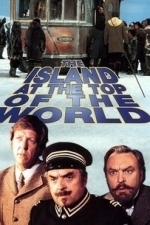

Characters – Professor Ivarsson is an expert on culture and language, he is almost forced into going on this expedition, where he gets to show off all the skills he has, while being wowed by the new location they find. Sir Anthony Ross has put together the expedition in hopes of finding his son, who has been missing for two years. He has always used his position of power and money to get what he wants and must learn to let his son live his own life. Captain Brieux is the captain of the zeppelin, he might have his own style which does clash with Anthony’s but he will take the risks others would consider. Oomiak is a local guide that is known as the most fearless in the land, he is the generic local figure that understands weak English.
Performances – The performances for the most part do feel very British, while that might be what the film was targeting, it does have a lot of, the idea that these people are better than anyone else, Donald Sinden is the highlight of this because he will get laughs from just how over the top he actually is in the performance. David Hartman doesn’t show that much charisma which might have made his character more interesting. Jacques Marin get laughs with his role, while Mako gets the laughs, he is capable of something much more entertaining.
Story – The story here follows four explorers that go in search of a mysterious island in the Artic, this will take people from different backgrounds to an unknown location with an unknown threat which they must survive. The story does feel like it is just another version of ‘Journey to the Centre of the Earth’ or ‘The Lost World’ which can be entertaining to watch, but they aren’t the most challenging of films to watch once you have seen a few. This story does feel tamer, while trying to bring a more realistic balance with the threat being Vikings, which could work with the number of tribes around the world that don’t want human contact. The story does rely on how the visuals of the settings look with most of the running scenes which just takes more away from the story’s impact on us.
Adventure/Fantasy/Sci-Fi – The adventure side of the film is searching for a new world, this is always going to be appealing and once we see the new world, we are left with our jaw dropped at how beautiful it is. The fantasy sci-fi elements mix together as they show how a community of people could have survived in an isolated location away from the world for so long.
Settings – The film does rely heavily on the settings which do look wonderful, we have the open ice location before we hit the land which is a thing of beauty, even if certain parts involving peril could have looked even more threatening.
Scene of the Movie – The escape.
That Moment That Annoyed Me – The dated special effects.
Final Thoughts – This is one of the most British attempts at a brand-new adventure idea, it is filled with stunning locations which only end up leaving us feeling like we have seen this all before.
Overall: The Brits will lead the way.
Performances – The performances for the most part do feel very British, while that might be what the film was targeting, it does have a lot of, the idea that these people are better than anyone else, Donald Sinden is the highlight of this because he will get laughs from just how over the top he actually is in the performance. David Hartman doesn’t show that much charisma which might have made his character more interesting. Jacques Marin get laughs with his role, while Mako gets the laughs, he is capable of something much more entertaining.
Story – The story here follows four explorers that go in search of a mysterious island in the Artic, this will take people from different backgrounds to an unknown location with an unknown threat which they must survive. The story does feel like it is just another version of ‘Journey to the Centre of the Earth’ or ‘The Lost World’ which can be entertaining to watch, but they aren’t the most challenging of films to watch once you have seen a few. This story does feel tamer, while trying to bring a more realistic balance with the threat being Vikings, which could work with the number of tribes around the world that don’t want human contact. The story does rely on how the visuals of the settings look with most of the running scenes which just takes more away from the story’s impact on us.
Adventure/Fantasy/Sci-Fi – The adventure side of the film is searching for a new world, this is always going to be appealing and once we see the new world, we are left with our jaw dropped at how beautiful it is. The fantasy sci-fi elements mix together as they show how a community of people could have survived in an isolated location away from the world for so long.
Settings – The film does rely heavily on the settings which do look wonderful, we have the open ice location before we hit the land which is a thing of beauty, even if certain parts involving peril could have looked even more threatening.
Scene of the Movie – The escape.
That Moment That Annoyed Me – The dated special effects.
Final Thoughts – This is one of the most British attempts at a brand-new adventure idea, it is filled with stunning locations which only end up leaving us feeling like we have seen this all before.
Overall: The Brits will lead the way.

Ross (3284 KP) rated The Darkslayer: Wrath of the Royals in Books
Feb 5, 2019

Strong debut novel, deeper than expected
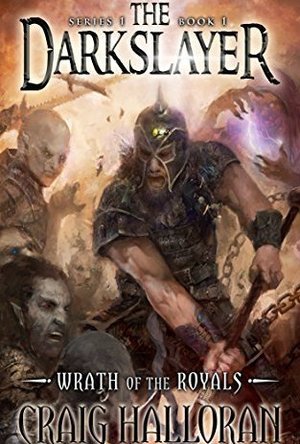
Wrath of the Royals, the first in the 16 book Darkslayer series following Venir, the Darkslayer (an axe-wielding barbarian) and his companion Melagal (the cowardly "rogue") as they run from the titular wrath of one of the royal families. Venir tends to get himself into bets, as alpha male types just seem attracted to him, and one such bet ends him in the bad books with one of the most powerful, and twisted, royal families.
This leads to the pair going on the run to escape the inevitable wrath. However, little do they know that the Underlings (those twisted, evil humanoids Venir is driven to hunt) are after Venir from different angles - one due to his relentless genocide of their race, and another due to being hired to hunt him down by the royals.
On the surface, I expected this to be a basic sword and sorcery tale; the barbarian wandering the wilds hacking down the Underlings. I was pleasantly surprised to find a fairly well told tale with different layers and a more intricate plot than I had expected.
Halloran's prose is decent, with a good knack for getting the balance between over-narration and concise descriptions. There is enough description of the world without it being laboured. There are some odd choices for phrases or wording here or there (eg "Impending pain was on its way"), and the book could do with a decent thorough edit, but for a first book it is a good effort.
The world of Bish turns out to be something of an experiment on the part of a God, seeing if she can design a world that will remain in permanent conflict for eternity, good and evil constantly vying but neither side ever truly winning. While this could be seen as literally setting up for "deus ex machina" whenever the author chooses, this didn't really come to the fore in this book.
Venir is a reasonably well-crafted character, albeit a stupid brute and something like Logen Ninefingers from Joe Abercrombie's First Law (when he puts on his magical helmet (yes I know!) he becomes more driven to destruction, somewhat akin to the emergence of The Bloody Nine). Numerous times he just gets up in the night and wanders off searching for the conflict he has sensed, the helmet guiding him onwards. But his actions play well off those of his travelling companions, which has now become something like the fellowship of the ring, but without a ring.
The book ends with an extended epilogue giving an idea of Venir's life before he found his magical axe, shield and mind-controlling helmet.
A good self-contained book, which concludes well and could be read on its own, without continuing the series, though I plan to (ideally before my Kindle Unlimited period runs out!).
This leads to the pair going on the run to escape the inevitable wrath. However, little do they know that the Underlings (those twisted, evil humanoids Venir is driven to hunt) are after Venir from different angles - one due to his relentless genocide of their race, and another due to being hired to hunt him down by the royals.
On the surface, I expected this to be a basic sword and sorcery tale; the barbarian wandering the wilds hacking down the Underlings. I was pleasantly surprised to find a fairly well told tale with different layers and a more intricate plot than I had expected.
Halloran's prose is decent, with a good knack for getting the balance between over-narration and concise descriptions. There is enough description of the world without it being laboured. There are some odd choices for phrases or wording here or there (eg "Impending pain was on its way"), and the book could do with a decent thorough edit, but for a first book it is a good effort.
The world of Bish turns out to be something of an experiment on the part of a God, seeing if she can design a world that will remain in permanent conflict for eternity, good and evil constantly vying but neither side ever truly winning. While this could be seen as literally setting up for "deus ex machina" whenever the author chooses, this didn't really come to the fore in this book.
Venir is a reasonably well-crafted character, albeit a stupid brute and something like Logen Ninefingers from Joe Abercrombie's First Law (when he puts on his magical helmet (yes I know!) he becomes more driven to destruction, somewhat akin to the emergence of The Bloody Nine). Numerous times he just gets up in the night and wanders off searching for the conflict he has sensed, the helmet guiding him onwards. But his actions play well off those of his travelling companions, which has now become something like the fellowship of the ring, but without a ring.
The book ends with an extended epilogue giving an idea of Venir's life before he found his magical axe, shield and mind-controlling helmet.
A good self-contained book, which concludes well and could be read on its own, without continuing the series, though I plan to (ideally before my Kindle Unlimited period runs out!).

Gareth von Kallenbach (980 KP) rated Alien: Blackout in Video Games
Jun 19, 2019
FoxNext and D3 Go have presented Alien fans a new game for mobile devices entitled Alien: Blackout. When it was first announced; many fans thought it was the Alien Shooter that had been announced earlier in 2018 but that is to come at a later date according to FoxNext.
The game has players play as Amanda Ripley; Daughter of the main character of the “Alien” film series and star of the Alien: Isolation game. Although it is described as not being a sequel to Alien: Isolation, Amanda does briefly mention events from the game as her prior experience with the title creature.
Hidden in an Air Vent; Amanda must direct members of a docked shuttle through seven levels as they attempt to locate items and accomplish tasks needed to escape.
There is of course an Alien on the loose and using Motion Trackers, video cameras, and luck, players have to protect Amanda and the shuttle crew as the movie around the map.
The Alien can come after Amanda who can protect herself by closing a vent. The issue is in doing so she cannot look at the map and cameras, and as such The Alien can vanish anywhere including one of the other tunnels that lead to her. Having to watch two or three tunnels as well as a map can be difficult as players have to rely on sound and luck to assume when the Alien is creeping down a tunnel towards them.
Players also have to make hard choices like allowing the Alien to attack and kill a character so another one can move along toward a goal. Being able to open and close doors also allows Amanda to help fence in the creature but it does not always appear on the cameras and as such players have to guess where it is. Amanda can tell characters to hide or hurry up, but there is also the matter of a ticking clock which requires objectives to be completed before a timer runs out.
The game does offer some fun and challenge but is short as with only seven levels, you can complete the game in under an hour once you get the basics down. The game allows players to pick up from the chapter they last completed and does offer some fun cut scenes to enjoy.
The biggest issue is while affordable at $4.99 fans may want more out of the game as aside from the short play time; this style of game may not be the best use of the Alien franchise. It would make a great segment of a larger game but after guiding Amanda through Alien: Isolation; having her hide in vents and direct others seems to be a step down.
While Alien: Blackout is not the game that fans had hoped for; it does offer some decent entertainment and hopefully will tide players over until the next game in the series is released.
http://sknr.net/2019/01/31/alien-blackout/
The game has players play as Amanda Ripley; Daughter of the main character of the “Alien” film series and star of the Alien: Isolation game. Although it is described as not being a sequel to Alien: Isolation, Amanda does briefly mention events from the game as her prior experience with the title creature.
Hidden in an Air Vent; Amanda must direct members of a docked shuttle through seven levels as they attempt to locate items and accomplish tasks needed to escape.
There is of course an Alien on the loose and using Motion Trackers, video cameras, and luck, players have to protect Amanda and the shuttle crew as the movie around the map.
The Alien can come after Amanda who can protect herself by closing a vent. The issue is in doing so she cannot look at the map and cameras, and as such The Alien can vanish anywhere including one of the other tunnels that lead to her. Having to watch two or three tunnels as well as a map can be difficult as players have to rely on sound and luck to assume when the Alien is creeping down a tunnel towards them.
Players also have to make hard choices like allowing the Alien to attack and kill a character so another one can move along toward a goal. Being able to open and close doors also allows Amanda to help fence in the creature but it does not always appear on the cameras and as such players have to guess where it is. Amanda can tell characters to hide or hurry up, but there is also the matter of a ticking clock which requires objectives to be completed before a timer runs out.
The game does offer some fun and challenge but is short as with only seven levels, you can complete the game in under an hour once you get the basics down. The game allows players to pick up from the chapter they last completed and does offer some fun cut scenes to enjoy.
The biggest issue is while affordable at $4.99 fans may want more out of the game as aside from the short play time; this style of game may not be the best use of the Alien franchise. It would make a great segment of a larger game but after guiding Amanda through Alien: Isolation; having her hide in vents and direct others seems to be a step down.
While Alien: Blackout is not the game that fans had hoped for; it does offer some decent entertainment and hopefully will tide players over until the next game in the series is released.
http://sknr.net/2019/01/31/alien-blackout/

Emma @ The Movies (1786 KP) rated War for the Planet of the Apes (2017) in Movies
Sep 25, 2019
I'm terrible with watching films in sequence, but I've been seeing the trailers for War for the Planet of the Apes repeatedly and really wanted to watch it. I saw the first one when it came out in some fashion, the second one has eluded me though.
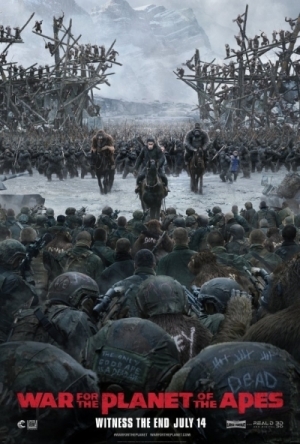
The films begins with the Alpha-Omega paramilitary group laying down an attack on Caesar's ape clan. There is heavy resistance and several of Alpha-Omega's team are captured. Caesar, wanting to bring some form of peace to his clan, sends back the captured soldiers to the Colonel with a message, they did not start this war and that they want to live in peace together.
Caesar's son, Blue Eyes, returns from searching for a safe haven, and has found a place across the desert for them all to live. Thinking that they need more time to prepare, Caesar puts off their departure with tragic consequences. During the night the Colonel and a team of men infiltrate their camp, and her slaughters Blue Eyes and Caesar's wife, believing it was him.
Seeking revenge, Caesar leaves the camp to hunt down the Colonel, accompanied by a small group. Along the way they encounter a single soldier with his daughter in a camp, who Caesar kills when he goes for his gun. The girl doesn't speak and deciding not to leave her there alone, they take her with them on their journey.
The group make their way to the Border with the help of Bad Ape and Caesar discovers that the rest of their clan has been captured and is imprisoned below. After being captured they must plan their escape from both inside and outside the walls of the Border any way they can...
Quite simple put, this was an epic feat, and well worth the watch. At some point while it was on I honestly forgot that what I was seeing wasn't real. The effects are magnificent, and the emotions in Caesar in particular are just incredible. Those alone should be sure fire reasons to watch it, but if you're not convinced, then the story line isn't bad either.
I always think it's amazing how well movies manage to match up the emotion of the actor with their digitised counterpart. That takes an amazingly skilled group behind the scenes. My first reaction when I saw Woody Harrelson in the trailer was not a good one. He's amusing, but I couldn't name a film of his that I've enjoyed him in. I'm happy to say that this one has changed all of that. I thoroughly enjoyed his performance, you see his character go from one end of the spectrum to the other, and Harrelson does it all so well. Amiah Miller who plays Nova was amazing too, barely any lines and acting at something that gets put in the scene after the fact must be incredibly difficult and she managed to pull it off with real emotion.
The films begins with the Alpha-Omega paramilitary group laying down an attack on Caesar's ape clan. There is heavy resistance and several of Alpha-Omega's team are captured. Caesar, wanting to bring some form of peace to his clan, sends back the captured soldiers to the Colonel with a message, they did not start this war and that they want to live in peace together.
Caesar's son, Blue Eyes, returns from searching for a safe haven, and has found a place across the desert for them all to live. Thinking that they need more time to prepare, Caesar puts off their departure with tragic consequences. During the night the Colonel and a team of men infiltrate their camp, and her slaughters Blue Eyes and Caesar's wife, believing it was him.
Seeking revenge, Caesar leaves the camp to hunt down the Colonel, accompanied by a small group. Along the way they encounter a single soldier with his daughter in a camp, who Caesar kills when he goes for his gun. The girl doesn't speak and deciding not to leave her there alone, they take her with them on their journey.
The group make their way to the Border with the help of Bad Ape and Caesar discovers that the rest of their clan has been captured and is imprisoned below. After being captured they must plan their escape from both inside and outside the walls of the Border any way they can...
Quite simple put, this was an epic feat, and well worth the watch. At some point while it was on I honestly forgot that what I was seeing wasn't real. The effects are magnificent, and the emotions in Caesar in particular are just incredible. Those alone should be sure fire reasons to watch it, but if you're not convinced, then the story line isn't bad either.
I always think it's amazing how well movies manage to match up the emotion of the actor with their digitised counterpart. That takes an amazingly skilled group behind the scenes. My first reaction when I saw Woody Harrelson in the trailer was not a good one. He's amusing, but I couldn't name a film of his that I've enjoyed him in. I'm happy to say that this one has changed all of that. I thoroughly enjoyed his performance, you see his character go from one end of the spectrum to the other, and Harrelson does it all so well. Amiah Miller who plays Nova was amazing too, barely any lines and acting at something that gets put in the scene after the fact must be incredibly difficult and she managed to pull it off with real emotion.

Toca Life: Office
Entertainment and Games
App Watch
Ever wonder what grown-ups really do at work all day? In Toca Life: Office, you get to tell stories...
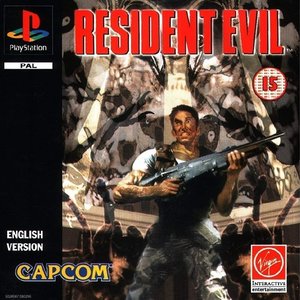
Matthew Krueger (10051 KP) rated the PlayStation version of Resident Evil in Video Games
Jun 27, 2020 (Updated Jun 27, 2020)

The Atmosphere (2 more)
The Horror
The depending on what you need or think that's important.
The Infested Mansion
Resident Evil- like Silent Hill, the atmosphere of a the horror genre is excellent. Resident Evil ask you the question, if you and your team got stranded and the only place to go is a old creepy manison and survive it, can you do it?. The answer for me, no! But for Chris and Jill their have to, no other choice. Thats what i love about Resident Evil, is the atmosphere of the manison, the creepest, the mystery, the suspense, the thrills and the creatures that live inside of it.
The plot: Chris Redfield and Jill Valentine, are members of an elite task force known as S.T.A.R.S., as they investigate the outskirts of Raccoon City following the disappearance of their team members. They soon become trapped in a mansion infested with zombies and other monsters. The player, having selected to play as Chris or Jill at the start of the game, must explore the mansion to uncover its secrets.
Gameplay: The player's character is a member of a special law enforcement task force who is trapped in a mansion populated by dangerous mutated creatures. The objective of the game is to uncover the mystery of the mansion and ultimately escape alive.
To fulfill the game's objective, the player uncovers various documents that provide exposition about the game's narrative, as well as clues that help them solve various puzzles within the mansion. Key items are also available that give the player access to other items or new areas. The player can arm their character with weapons to defend themselves from enemies, although the ammunition available for each firearm is limited and the player must learn to conserve the ammunition they have for situations where they will really need it
The carrying capacity of the player is limited depending on the character and items that the player does not wish to carry at the moment can be stored into an item box to be retrieved for later use. To save their progress, the player must pick up an ink ribbon and use it on any of the typewriters scattered through key locations in the game. However, the supply of ink ribbons the player can acquire is limited much like the player's ammo and healing supplies. Players will encounter and fight various infected creatures as flesh-eating zombies, undead dogs, giant spiders, and other monsters.
Resident Evil was very well received critically and commercially, and is often credited for defining the survival horror genre. Beyond video games, Resident Evil has been credited with re-popularising zombies in mainstream popular culture from the late 1990s onwards (along with The House of the Dead), leading to a renewed interest in zombie films during the 2000s. Resident Evil has since been hailed as one of the most influential and greatest video games of all time. Its success has spawned a multimedia franchise including video games, films, comics, novels, and other merchandise. The game has received dedicated ports to the Sega Saturn, Windows, and Nintendo DS. In 2002, a remake of the same name was released for the GameCube featuring updated graphics, sound, and changes to the gameplay and story. A high-definition remaster of the GameCube game was released in 2015 for modern platforms.
Resident Evil- is one of my favorite survivor horror games of all time and one of my favorite games of all times. Its intense, thrilling, suspenseful and overall scary. Resident Evil is a must to play, if you haven't already. Will you survivie the manison or not!
The plot: Chris Redfield and Jill Valentine, are members of an elite task force known as S.T.A.R.S., as they investigate the outskirts of Raccoon City following the disappearance of their team members. They soon become trapped in a mansion infested with zombies and other monsters. The player, having selected to play as Chris or Jill at the start of the game, must explore the mansion to uncover its secrets.
Gameplay: The player's character is a member of a special law enforcement task force who is trapped in a mansion populated by dangerous mutated creatures. The objective of the game is to uncover the mystery of the mansion and ultimately escape alive.
To fulfill the game's objective, the player uncovers various documents that provide exposition about the game's narrative, as well as clues that help them solve various puzzles within the mansion. Key items are also available that give the player access to other items or new areas. The player can arm their character with weapons to defend themselves from enemies, although the ammunition available for each firearm is limited and the player must learn to conserve the ammunition they have for situations where they will really need it
The carrying capacity of the player is limited depending on the character and items that the player does not wish to carry at the moment can be stored into an item box to be retrieved for later use. To save their progress, the player must pick up an ink ribbon and use it on any of the typewriters scattered through key locations in the game. However, the supply of ink ribbons the player can acquire is limited much like the player's ammo and healing supplies. Players will encounter and fight various infected creatures as flesh-eating zombies, undead dogs, giant spiders, and other monsters.
Resident Evil was very well received critically and commercially, and is often credited for defining the survival horror genre. Beyond video games, Resident Evil has been credited with re-popularising zombies in mainstream popular culture from the late 1990s onwards (along with The House of the Dead), leading to a renewed interest in zombie films during the 2000s. Resident Evil has since been hailed as one of the most influential and greatest video games of all time. Its success has spawned a multimedia franchise including video games, films, comics, novels, and other merchandise. The game has received dedicated ports to the Sega Saturn, Windows, and Nintendo DS. In 2002, a remake of the same name was released for the GameCube featuring updated graphics, sound, and changes to the gameplay and story. A high-definition remaster of the GameCube game was released in 2015 for modern platforms.
Resident Evil- is one of my favorite survivor horror games of all time and one of my favorite games of all times. Its intense, thrilling, suspenseful and overall scary. Resident Evil is a must to play, if you haven't already. Will you survivie the manison or not!
Gareth von Kallenbach (980 KP) rated Vacancy (2007) in Movies
Aug 14, 2019

While driving down a back road late one evening on their way to L.A. an embattled couple, are about to make a stop that could cost them their lives. In Vacancy, Amy and David Fox, are returning home from a trip to celebrate the anniversary of their in laws.
The fact that they had to hide their failing marriage, and the tensions that still remain as a result, have driven Amy and David to the point of irritability and they never cease to find new ways to verbally spar with one another.
When their car breaks down, they are happy to discover a gas station attendant who tells them that he can get their car repaired enough to make it to the next town where they will be able to get the help that they need in the morning.
This proves not to be the case as their car once again breaks down shortly after they resume their trip, which forces Amy and David to walk back into town and stay the night at the only hotel in the remote locale.
Frustrated by their situation, the two resign themselves to their situation and check into the hotel and soon make a startling discovery. A stack of video tapes in the room seems to indicate that a series of ghastly murders has been committed in their room, and when hidden cameras are discovered, Amy and David soon realize that they are to be the stars of a future tape.
Trapped and alone, the duo must stave off a series of attacks and find a way to survive, so they can escape the nightmare they have stumbled into.
At first the premise of the film seems to be a step above the usual genre film, as the two leads, Wilson and Beckinsale, bring acredibility to their roles, and do develop their characters beyond the paper thin constructs that are so common in films of this type.
Sadly the film does not take advantage of this advantage and soon becomes a series of pat situations and a surprisingly odd lack of tension and suspense in the film.
One of the biggest problems in the film is that it tips it’s hand way to early in the film, as we know what is going on as the discovery of the tapes eliminates much of the mystery. Had the film saved this piece of information until the end of the film, it might have had far more impact as the audience would be left wondering why the bizarre events were happening to the couple.
Another issue for me was the small cast, as with only Wilson and Beckinsale in peril for the majority of the film, the tension level was greatly reduced, as you know that neither of them is going to be killed early in the film, as that would leave the movie without any protagonists.
As much as I liked the concept and casting, especially Frank Whaley as the creepy hotel clerk, Vacancy is simply a good idea that never rises above its premise, and ends up content to recycle the same old formula from dozens of other horror films without offering any of the thrills or chills, and leaves you unsatisfied.
The fact that they had to hide their failing marriage, and the tensions that still remain as a result, have driven Amy and David to the point of irritability and they never cease to find new ways to verbally spar with one another.
When their car breaks down, they are happy to discover a gas station attendant who tells them that he can get their car repaired enough to make it to the next town where they will be able to get the help that they need in the morning.
This proves not to be the case as their car once again breaks down shortly after they resume their trip, which forces Amy and David to walk back into town and stay the night at the only hotel in the remote locale.
Frustrated by their situation, the two resign themselves to their situation and check into the hotel and soon make a startling discovery. A stack of video tapes in the room seems to indicate that a series of ghastly murders has been committed in their room, and when hidden cameras are discovered, Amy and David soon realize that they are to be the stars of a future tape.
Trapped and alone, the duo must stave off a series of attacks and find a way to survive, so they can escape the nightmare they have stumbled into.
At first the premise of the film seems to be a step above the usual genre film, as the two leads, Wilson and Beckinsale, bring acredibility to their roles, and do develop their characters beyond the paper thin constructs that are so common in films of this type.
Sadly the film does not take advantage of this advantage and soon becomes a series of pat situations and a surprisingly odd lack of tension and suspense in the film.
One of the biggest problems in the film is that it tips it’s hand way to early in the film, as we know what is going on as the discovery of the tapes eliminates much of the mystery. Had the film saved this piece of information until the end of the film, it might have had far more impact as the audience would be left wondering why the bizarre events were happening to the couple.
Another issue for me was the small cast, as with only Wilson and Beckinsale in peril for the majority of the film, the tension level was greatly reduced, as you know that neither of them is going to be killed early in the film, as that would leave the movie without any protagonists.
As much as I liked the concept and casting, especially Frank Whaley as the creepy hotel clerk, Vacancy is simply a good idea that never rises above its premise, and ends up content to recycle the same old formula from dozens of other horror films without offering any of the thrills or chills, and leaves you unsatisfied.

Yvonne (12 KP) rated The House of Secrets (The Sarah Bennett Mysteries, #2) in Books
Jun 11, 2019
A good addition to the series
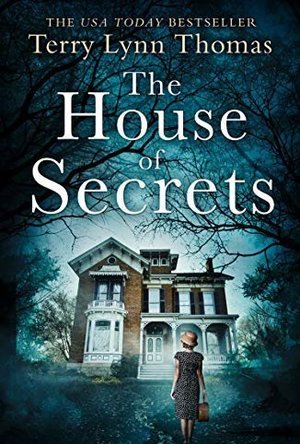
The House of Secret by Terry Lynn Thomas
Published by HQ Digital on 11th April 2019
252 pages
Following on from Sarah Bennett’s father’s murder trial, Sarah gets given a job working with psychiatrist Dr Matthew Geisler. With his fascination into the supernatural, Sarah sees it as a chance to escape the public eye.
Whilst I have read The Spirit of Grace, you don’t have to, to enjoy this story. Anything that was relevant from book 1 was explained in detail, without spoiling the flow. I liked that Sarah was still inquisitive and even having suffered a life-threatening accident, it didn’t stop her trying to help Minna, who was having a really bad time at the Geisler’s Institute. Although there were times that Sarah was put under a lot of pressure from Zeke, Dr Geisler and even Alysse, she was still determined to find out who was behind the threats.
Whilst Zeke being housed in the hospital for his injuries pleased Sarah, as he was so close to her, there were moments that she doubted the real reason he was there. At times it did get annoying as Sarah knew what Zeke did for a living and should have understood that there were occasions that she could not be his No1 priority. However, this did not detract from the mystery and they did work well together.
Whilst the story centred around the characters already mentioned, there were some other characters, that had their own story to tell. Mr Collins, an accomplished pianist, Cynthia Forrester whilst being Sarah’s friend was also a reporter from the San Francisco Chronicle and Aunt Lillian, an eccentric older lady who was Cynthia’s aunt.
The supernatural element was stronger in this story as Sarah was adjusting to her gift and it helped that she had a fan in Dr Geisler. The mystery was well plotted and whilst I had my suspicions who was behind the threats, I could not work the reasons behind them. The story built up to a dramatic ending, with everything explained in detail.
This series can keep going and I hope there will be more to come. If you like historical fiction with an element of supernatural then this is a series for you.
Published by HQ Digital on 11th April 2019
252 pages
Following on from Sarah Bennett’s father’s murder trial, Sarah gets given a job working with psychiatrist Dr Matthew Geisler. With his fascination into the supernatural, Sarah sees it as a chance to escape the public eye.
Whilst I have read The Spirit of Grace, you don’t have to, to enjoy this story. Anything that was relevant from book 1 was explained in detail, without spoiling the flow. I liked that Sarah was still inquisitive and even having suffered a life-threatening accident, it didn’t stop her trying to help Minna, who was having a really bad time at the Geisler’s Institute. Although there were times that Sarah was put under a lot of pressure from Zeke, Dr Geisler and even Alysse, she was still determined to find out who was behind the threats.
Whilst Zeke being housed in the hospital for his injuries pleased Sarah, as he was so close to her, there were moments that she doubted the real reason he was there. At times it did get annoying as Sarah knew what Zeke did for a living and should have understood that there were occasions that she could not be his No1 priority. However, this did not detract from the mystery and they did work well together.
Whilst the story centred around the characters already mentioned, there were some other characters, that had their own story to tell. Mr Collins, an accomplished pianist, Cynthia Forrester whilst being Sarah’s friend was also a reporter from the San Francisco Chronicle and Aunt Lillian, an eccentric older lady who was Cynthia’s aunt.
The supernatural element was stronger in this story as Sarah was adjusting to her gift and it helped that she had a fan in Dr Geisler. The mystery was well plotted and whilst I had my suspicions who was behind the threats, I could not work the reasons behind them. The story built up to a dramatic ending, with everything explained in detail.
This series can keep going and I hope there will be more to come. If you like historical fiction with an element of supernatural then this is a series for you.
Erika Kehlet (21 KP) rated Station Eleven in Books
Feb 21, 2018
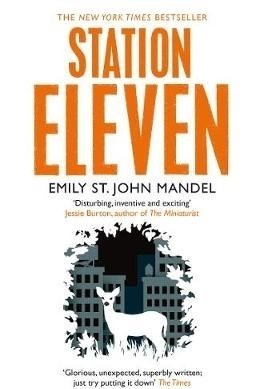

This is an instance of a book cover catching my attention, and refusing to let it go. I started seeing this one first in magazines, and then bookstores and websites all over the place, until I decided I had to read it. I had the impression that it took place in a post-pandemic world, but that was about it. I'm glad I didn't read the book blurb more carefully, because I don't think that I would have been interested in the story of a Hollywood star and a band of travelling actors. I would probably not have picked it up, and I would have missed something beautiful.
This book is, at its heart, a story of survival and resilience. It starts at a point in time just as the flu pandemic is beginning. We meet a variety of individuals at a performance of Kind Lear, and then follow several of them both forward and back ward in time, learning about their past, and watching as their futures unfold in the new world. The author's main focus is on the characters, what drives them, what mattered to them before the collapse of civilization and afterwards, and their personal relationships more than the disaster itself.
Kirsten Potter does an excellent job with the narration - her voice and timing were a pleasure to listen to.
I thoroughly enjoyed this audiobook, and would recommend it to fans of almost any type of fiction or word lovers in general. It was so full of memorable quotes, that I caught myself jotting them down to read later, and that isn't something I normally do. Since I have them though, I'd like to leave you with a few of my favorites....
Hell is the absence of the people you long for.
It was gorgeous and claustrophobic. I loved it and I always wanted to escape.
What I mean to say is, the more you remember, the more youve lost.
First we only want to be seen, but once were seen, thats not enough anymore. After that, we want to be remembered.
She had never entirely let go of the notion that if she reached far enough with her thoughts she might find someone waiting, that if two people were to cast their thoughts outward at the same moment they might somehow meet in the middle.
There are certain qualities of light that blur the years.
This book is, at its heart, a story of survival and resilience. It starts at a point in time just as the flu pandemic is beginning. We meet a variety of individuals at a performance of Kind Lear, and then follow several of them both forward and back ward in time, learning about their past, and watching as their futures unfold in the new world. The author's main focus is on the characters, what drives them, what mattered to them before the collapse of civilization and afterwards, and their personal relationships more than the disaster itself.
Kirsten Potter does an excellent job with the narration - her voice and timing were a pleasure to listen to.
I thoroughly enjoyed this audiobook, and would recommend it to fans of almost any type of fiction or word lovers in general. It was so full of memorable quotes, that I caught myself jotting them down to read later, and that isn't something I normally do. Since I have them though, I'd like to leave you with a few of my favorites....
Hell is the absence of the people you long for.
It was gorgeous and claustrophobic. I loved it and I always wanted to escape.
What I mean to say is, the more you remember, the more youve lost.
First we only want to be seen, but once were seen, thats not enough anymore. After that, we want to be remembered.
She had never entirely let go of the notion that if she reached far enough with her thoughts she might find someone waiting, that if two people were to cast their thoughts outward at the same moment they might somehow meet in the middle.
There are certain qualities of light that blur the years.

Hazel (1853 KP) rated It's About Love in Books
Dec 17, 2018

<i>This eBook was provided by the publisher via NetGalley in exchange for an honest review
It’s About Love</i> is not a typical love story. The author of Tape, Steven Camden, has written a story from the point of view of a sixteen-year-old boy named Luke. In his first week of college he meets a girl in his film studies class. Her name is Leia and, ignoring the Star Wars connection, their passion for film makes them the perfect partners.
Luke, however, comes from a very troubling background. He has purposefully chosen a college two bus journeys away in order to escape his past. He can try to hide his relation to his brother due to be released from prison, but he cannot cover up the scar on his face. Initially Luke wants as little attention as possible, although once he starts developing feelings for Leia he enjoys being around her and her friends.
Yet everything changes when Luke’s past life and friends collide with the new. Believing he has ruined everything with Leia, Luke needs all the encouragement he can get from his film studies tutor, Noah, to keep on going.
Camden writes the story through first person narrative, film directions and ideas in Luke’s notebooks. This is an interesting method and helps to create a clearer picture of Luke’s personality. He is a teenager with potential and the ability to think for himself. It is his past history that makes him feel like he does not deserve happiness or success.
Although I liked the concept I did not care for any of the characters. Many could be described as thuggish and a lot of violence was involved. I understand that Luke needed to be involved with these types of people for the storyline to work, but it was not for me.
Despite the title, <i>It’s About Love</i> is more suitable for young adult males than it is females due to the nature of the story and the main character. Whether a boy would happily be caught reading a book with ‘love’ written on the cover is another matter. Steven Camden clearly has the young adult audience in mind as he writes and, even though I did not think it anything special, I am sure there will be many readers who will love this book.
It’s About Love</i> is not a typical love story. The author of Tape, Steven Camden, has written a story from the point of view of a sixteen-year-old boy named Luke. In his first week of college he meets a girl in his film studies class. Her name is Leia and, ignoring the Star Wars connection, their passion for film makes them the perfect partners.
Luke, however, comes from a very troubling background. He has purposefully chosen a college two bus journeys away in order to escape his past. He can try to hide his relation to his brother due to be released from prison, but he cannot cover up the scar on his face. Initially Luke wants as little attention as possible, although once he starts developing feelings for Leia he enjoys being around her and her friends.
Yet everything changes when Luke’s past life and friends collide with the new. Believing he has ruined everything with Leia, Luke needs all the encouragement he can get from his film studies tutor, Noah, to keep on going.
Camden writes the story through first person narrative, film directions and ideas in Luke’s notebooks. This is an interesting method and helps to create a clearer picture of Luke’s personality. He is a teenager with potential and the ability to think for himself. It is his past history that makes him feel like he does not deserve happiness or success.
Although I liked the concept I did not care for any of the characters. Many could be described as thuggish and a lot of violence was involved. I understand that Luke needed to be involved with these types of people for the storyline to work, but it was not for me.
Despite the title, <i>It’s About Love</i> is more suitable for young adult males than it is females due to the nature of the story and the main character. Whether a boy would happily be caught reading a book with ‘love’ written on the cover is another matter. Steven Camden clearly has the young adult audience in mind as he writes and, even though I did not think it anything special, I am sure there will be many readers who will love this book.