

Village Life: Love & Babies
Games, Entertainment and Stickers
6.5 Rate It
App
START YOUR FAMILY TODAY! Play the smash hit game played by over 15 million people! Guide your...
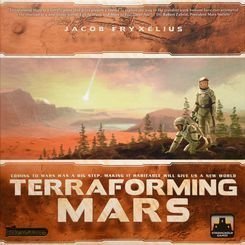
Terraforming Mars
8.7 Rate It
Tabletop Game
In the 2400s, mankind begins to terraform the planet Mars. Giant corporations, sponsored by the...
Boardgame TerraformThis MeeplesChoice

Purple Phoenix Games (2266 KP) rated Robin Hood: Hero of the People in Tabletop Games
Jun 13, 2019
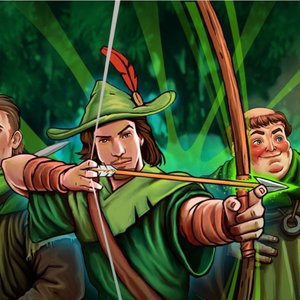
Disclaimer: This review is for a Kickstarter preview. We are not being paid for this preview, but we were sent the game from the designer. Components and rules may be changed before the product and project is finished. -T
As this game is not yet in full production, I will paraphrase the rulebook here for you so you can get an idea of how the game plays. Then I will give my opinions on this little card game.
Robin Hood: Hero of the People is a one-player card game that is played over three phases. To win the game you must have all Merry Men and Maid Marian recruited and active, while the bounty on your head is less than 500. You lose by seeing the bounty at or above 1,000 or by playing through the entire deck of Story Cards without winning. You may set the difficulty level by choosing how much you would like the bounty to start at before you begin play (100, 200, or 300). The rulebook instructs you how to setup the game using several piles of cards to create the play area. Deal yourself three Loot (skill) cards and the game is on!
The first phase of the game is Robbing from the Rich. During this phase you draw three (or more depending on other cards currently in play) Loot cards from the big deck. These cards consist of different skills to use later – like Archery, Strength, Swords, etc. You will also find Gold and Influence cards. These Loot cards are needed to recruit Maid Marian and all the Merry Men, as well as used for negating powerful negative Story Card effects in the third phase of the game. Once you have drawn your Loot cards, you may play up to three of them into your Inventory in front of you (unless a card instructs you otherwise). Only your cards in the Inventory will be used to recruit and rescue Merry Men, or be affected by Story Cards.
You have placed your skills and bargaining cards in the Inventory. It is now time to use them to recruit your Merry Men! The second phase is the Actions phase. You have several options of actions to take on your turn, but you may only take one action. One option is to recruit Merry Men characters. Each character card begins the game face-down in a grid. The card backs show the recruitment costs (paid in skills) for each. They all have different skill cost combinations on each back so you must choose your Inventory cards carefully in the first phase. During the game some characters may become jailed through the Story Cards. Also on the backs of the character cards are the costs to rescue your friends from jail, and the costs are different than the recruitment costs. This throws a wrench into your plans as you are trying to recruit and protect all your Merry Men, just to have them thrown in jail and made unavailable to you. Curse you, Sheriff of Nottingham!
Also during this phase, in addition to recruiting and rescuing your allies, you may purchase King Richard cards, Sherwood Forest cards, or decrease your bounty. King Richard cards are very very costly (requiring up to nine skills to purchase!) but also very powerful and very helpful to your cause. There are three of these in the game and when you have used one you must discard it out of the game. Do you have an abundance of skills and Loot cards to use? Would you like to protect your Merry Men from becoming jailed? Well during this phase you may also purchase Sherwood Forest cards to begin building a hideout. It costs two Strength skills, but once you have acquired all six Sherwood Forest cards, most of the Merry Men are protected from being jailed. Huzzah! The final option you have in this phase is spending any three Loot cards from your Inventory to reduce your bounty by 100.
The third and final phase is the Story Card phase. During setup you are instructed to separate this deck into two piles, shuffle them independently, and place the Story Cards in set one on top of the story cards in set two. Set one cards are annoyances that can bleed you of skill cards or raise the bounty on your head. Annoying! The cards in set two are far worse, as they will jail your unprotected Merry Men and set you back further from victory… also whilst raising your bounty. Super annoying!! Curse you again, Sheriff!!
If no win or lose conditions have been met at this time, you will return to the first phase with this additional rule: switch your active character (you start the game with Robin Hood) with another character you have recruited in the grid. Each character has a different special ability to be used on your next turn as well as a different set of skills printed on the face that you may use as discounts for recruitment, rescues, and purchasing of King Richard and Sherwood Forest cards. Example: Much the Miller shows 1x Sword and 1x Strength. You can use his skills as a discount to purchase a Sherwood Forest card by spending just one Strength card from your Inventory. Time to stick it to the Sheriff!
So how does it all shake down? Overall I say the game is really good. It is unfinished, and has not yet made it to Kickstarter, and I suspect that has something to do with any drawbacks I have experienced. Upon reading the provided rulebook and attempting Game 1, I had several rules questions. Rodney was quick to provide answers and it made the game so much more playable and enjoyable. Since it is a solo game only, every decision you make directly impacts how the game is played (duh, right?). There’s nobody else to mess with your plans, nor help them succeed. There’s no AI or ghost player. Just you versus the game. I have played this many times now on different difficulty levels and have won and lost on each. It would seem balanced, however…
There are a few strategies I attempted to use on my different plays to see how they might add to the complexity and change the results. I noticed that I won more when I completely ignored Sherwood Forest and King Richard’s cards. Yes, one of the King Richard cards reduces the bounty by quite a bit, and that’s just in one turn, but the cost is so mighty that I rarely found them enticing enough to pull the trigger. Same goes for Sherwood Forest. Though the cards cost a paltry two Strength, I found that I needed those Strength cards to recruit or rescue my Men and could not justify spending two per card (and six total cards to build the hideout) for that protection. Your play style may vary, and I am itching to play again to try new things out. Maybe I’m wrong about Sherwood Forest. I think that’s a really great trait for a game – to have its players thinking about different strategies while not playing, and just waiting for when they can play again.
I have to say, I am very excited to see this go to Kickstarter, and to learn what Rodney has in mind for improvements to the components, or rule tweaks, and the almighty stretch goals. I might be backing this one, even though I have a great working version of it now…

Running Cats - Survive The Free Kitty Cat Simulator
Games and Entertainment
9.0 Rate It
App
This a game about love and cats! Little puppy cats and cute kitties are always fun to play with....

Obsession Wears Opals (The Jaded Gentleman, #5)
Book
Darius Thorne has learned to use his wit and intelligence to strategize a better life for himself....
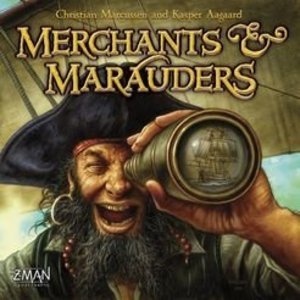
Merchants & Marauders
8.0
Rate It
Tabletop Game
Merchants & Marauders lets you live the life of an influential merchant or a dreaded pirate in the...
BoardGames Pirategames

Wolf in White Van
7.7 Rate It
Book
Welcome to Trace Italian, a game of strategy and survival! You may now make your first move....

Positions 1: Where Do We Go?
Lindsay Little and Seth Little
Book
The grass is wet and squishy, but Alex and his team are still excited for soccer practice because...

The Five-a-Side Bible
Book
In terms of participation, five-a-side football is now much bigger game than league football - with...

Stickman Racer Road Draw
Games
App Watch
Stickman Racer Road Draw is a sequel to the legendary game of survival, where to make incredible...
games