

Purple Phoenix Games (2266 KP) rated Niche in Tabletop Games
Mar 3, 2021
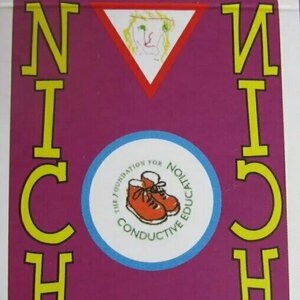

Niche is a puzzly abstracty Sudoku-y card sheddy game for two to seven players that can be played in as few as 10 minutes. In it players attempt to shed their hand and score the most points by adding cards to established lines of cards. As with most of Andy Hopwood’s games, though, there is a twist.
DISCLAIMER: We were provided a copy of this game for the purposes of this review. This is a retail copy of the game, so what you see in these photos is exactly what would be received in your box. I do not intend to cover every single rule included in the rulebook, but will describe the overall game flow and major rule set so that our readers may get a sense of how the game plays. For more in depth rules, you may purchase a copy online or from your FLGS. -T
To setup the dealer will shuffle the deck and, well, deal out seven cards to each player. The cards not dealt form a deck and from this deck a starter card is flipped to the table. Setup is complete and the game may now begin!
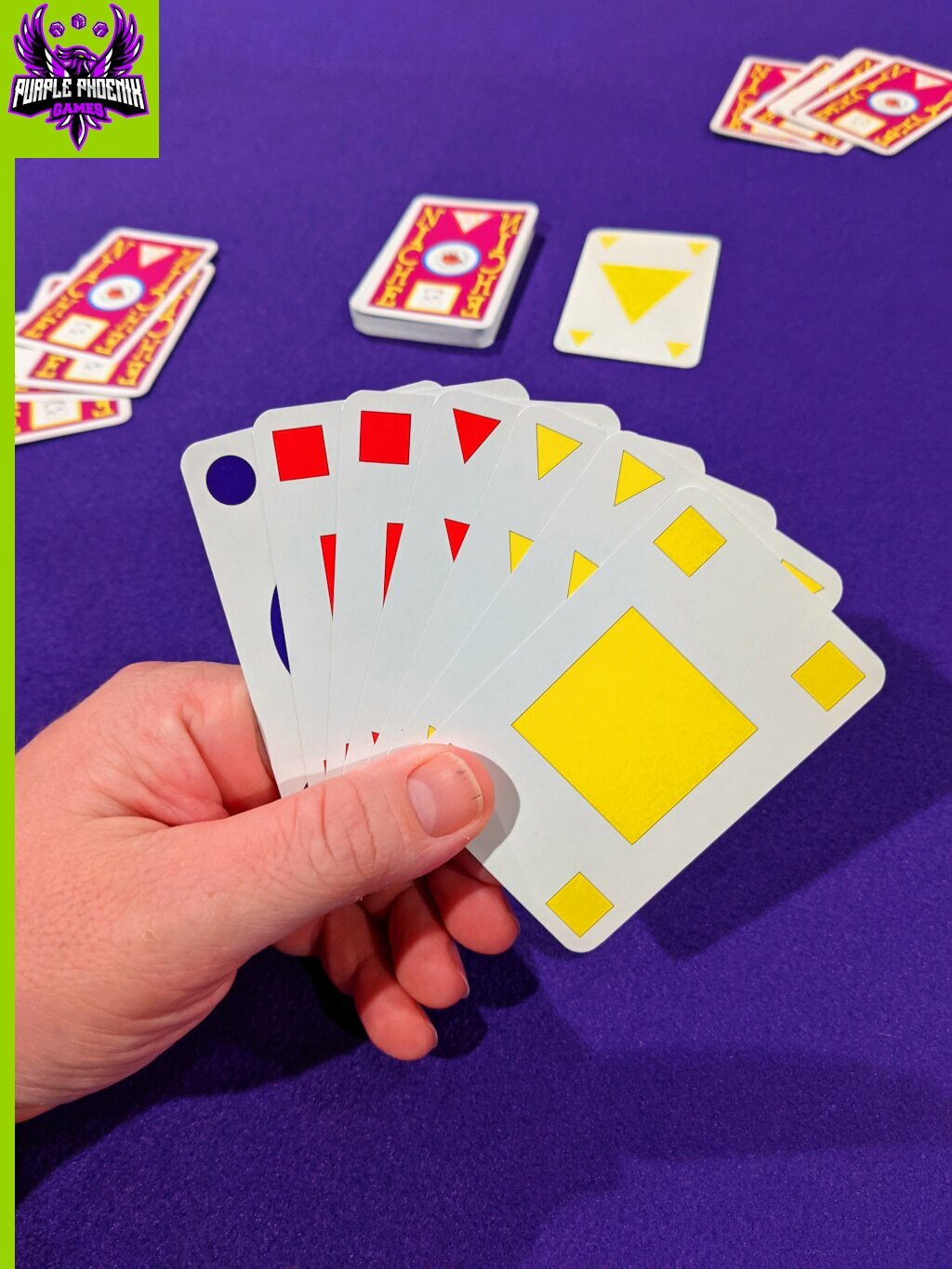
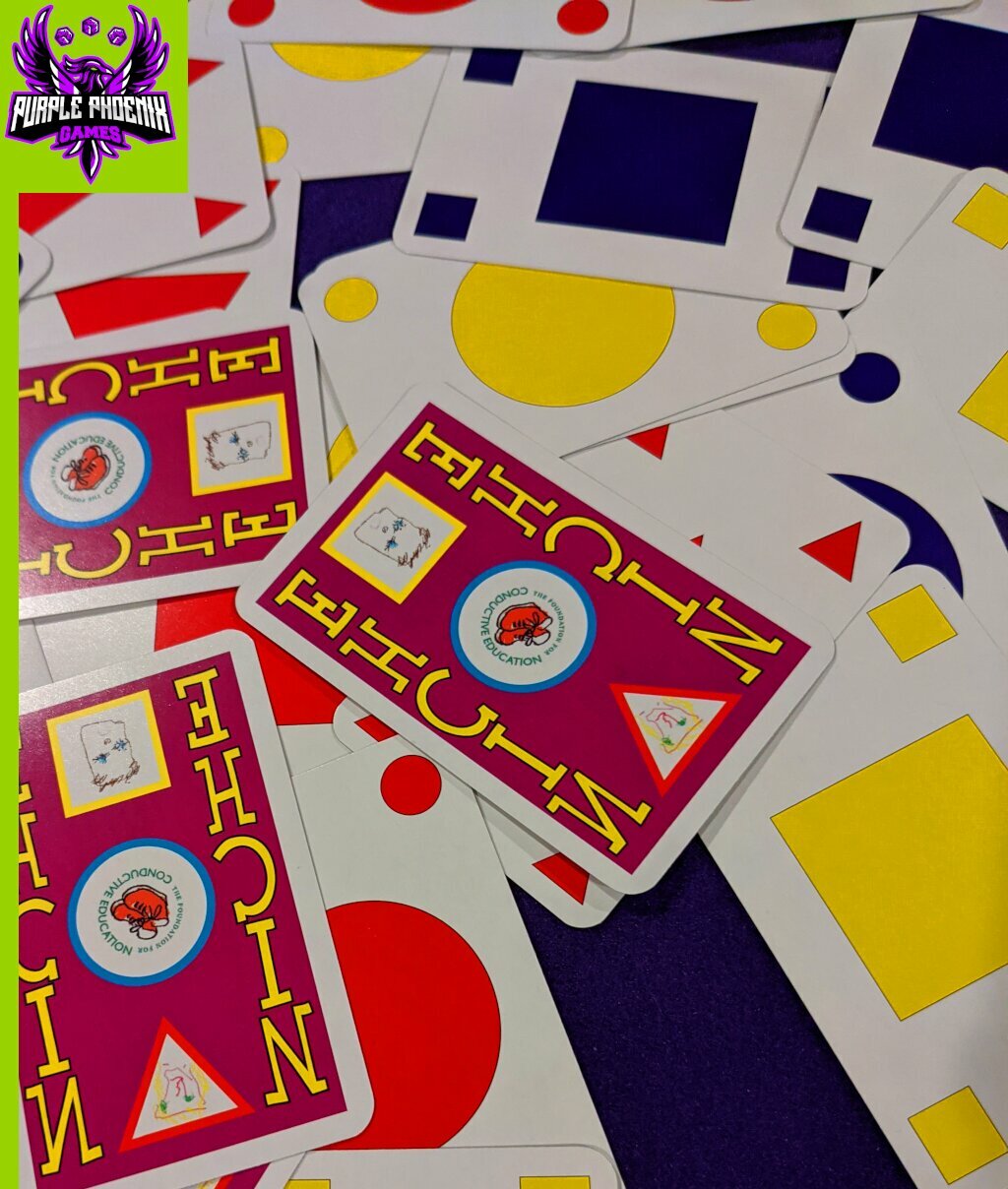
On a turn each player will need to perform three steps: Select, Place, Score. When Selecting a card from their hand the player will need to observe the last played card. This card will essentially inform the player of what CANNOT be played. For example (per the photo above), if a yellow triangle was just played, then the next card played can be NEITHER yellow nor a triangle. So from their hand the active player will select a group of cards that can be played this turn and choose one to add adjacently to the most recently played card.
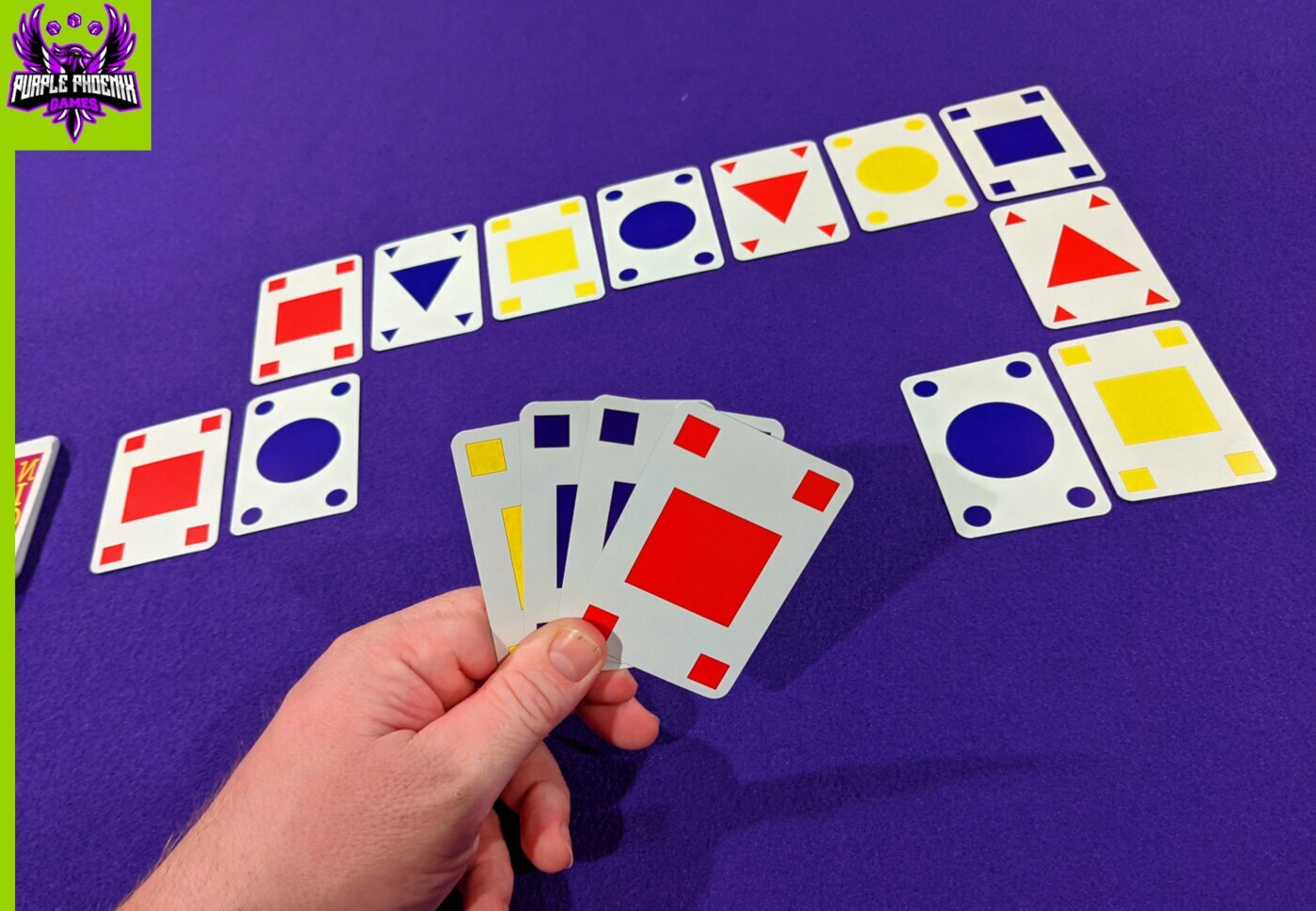
The player then must Place their card such that they do not add the same card to the line that already exists within the line. For an example here (per the photo below), the most recently played card is a blue circle. In hand are two blue squares, a yellow square, and a red square. As the previous card is blue the only choices left are the yellow and red square. However, the card played previous to the blue circle was a yellow square, so that leaves our player with only one choice: the red square connected to the blue circle. Now, the player could actually use the yellow square, but would need to place it below the blue circle forming the beginning of a new line. I will explain why that is a less strategic play.
When players perform the third step in a turn, Scoring, they will count up all cards in the lines extended by their card, both vertically and horizontally. In our previous example the red square continues a line of two cards so their score for that placement is three. Should they place the yellow square below they will only score two as they have added onto only one card. Fans of Azul will be familiar with this scoring system. Players are expected to keep track of their own scores each turn.
Should a player not have any legal plays using cards in their hand they must pass, and await their next turn. Play continues in this manner of players performing these three steps in a turn until a player sheds their entire hand of cards. All other players will have one more chance to play one card to score points. Players add up all the points they have scored throughout the game and the player with the most points is the winner!
Components. This is a deck of cards in a tuckbox. The cards are all fine quality, and the iconography could not be much clearer. I have zero qualms with the components here.
Gameplay is super quick and puzzly, with a great weight for its type of game. This will not be a centerpiece title of the game night, but will offer filler style gameplay for gamers mulling about or waiting for the next game to begin. I enjoy the simplicity of the rules coupled with the puzzly and thinky nature of each turn. Obviously the name of the game is scoring points, so you want to add to an already-long line instead of having to begin a new off-shoot somewhere, but it is near impossible to anticipate what other players will place on their turns. Therefore, more strategic players will find either solace or frustration from the more tactical style of play here.
I do want to mention that this game was originally designed for an event benefiting The Foundation for Conductive Education in the UK. Quote taken from the BGG profile for Niche: “The game aims to promote and support The Foundation for Conductive Education. This method works with children and adults who have conditions such as Cerebral Palsy, Stroke, M.S. or Parkinsons, helping them to lead more independent lives.” I know this organization holds a special place in the designer’s heart and I just wanted to take a moment to give a shout-out to this amazing organization and this amazing person who created a game for the benefit of others. I applaud both entities, and hope for much success.
That said, Niche is a game that can be played with any type of gamer in almost any situation. It takes up little table space (at most nine cards in a line) and is rules-light. Purple Phoenix Games gives this one an extended 8 / 12. If you are a fan of Sudoku and would like to explore a little card game that gives this reviewer the same vibe (but infinitely more fun) then I urge you to grab a copy of Niche. Not only will you be purchasing a good little game, but your purchase also goes toward furthering an organization that is doing very important work in the UK. And if you would like to feel very smart, play Niche with me sometime and watch me struggle to play the right card.

This is my Body - Anatomy for Kids
Education and Medical
App
Children explore and learn about the basic functions of the human body through hands-on gameplay –...

Ross (3284 KP) rated Resistance in Books
Sep 20, 2018
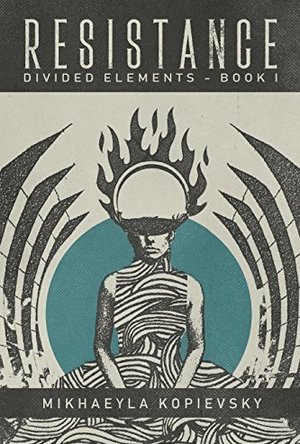

Anaiya, one such peacekeeper, is tasked with finding and infiltrating a group of rebels who have started painting the word "resistance" on walls. In order to infiltrate them, she has to undergo a new untested treatment that tries to change her class from fire to air. Thereafter the tale is a pretty standard one of intrigue, plotting and red herrings.
For me the ideas behind the world were interesting, but not very well explained or explored early on. I realise with a book like this any attempt to do so would jar with the atmosphere it is trying to get at, but there are ways to deliver the information needed.
The storyline was pretty much paper-thin and sacrificed in order to have some lengthy, overly descriptive poetic narrative (for example at least 6 pages of the book is devoted to blow by blow accounts of pool matches). The supposed revelation at the end was such an obvious anti-climax as to be ridiculous. I took it to be a symbol of how Anaiya's treatment warped her judgement of who the main suspect is, but it was delivered as a big revelation.
The use of technology in sci-fi always annoys me - new tech that is not described and overly used, with a ridiculous name (a wristplate that can immediately tell you what substances are in your blood as well as heart rate etc, and also be used to download music, play music, communicate, pay for things etc etc).
Similarly, the plot to reveal the head of the resistance hinged on the use of some new technology invented by a member of the resistance itself. This was so flimsy as to be laughable. Also, the fact that a heavy-handed police force like the peacekeepers would look for such tenuous proof of the leadership of the resistance before acting is just plain wrong. The first few chapters, and some of the conversations Anaiya has after her change, serve to show how heavy-handed they are, and any hint of someone's involvement in such treasonous activity would result in swift action.
Overall, the book is atmospheric and interesting but quite badly executed.
And the word "trajectory" is massively overused and at times wrongly used.

Lonely Planet Amsterdam
Lonely Planet, Catherine Le Nevez and Karla Zimmerman
Book
Lonely Planet: The world's leading travel guide publisher Lonely Planet Amsterdam is your passport...

Lonely Planet Pocket Boston
Lonely Planet and Mara Vorhees
Book
Lonely Planet: The world's leading travel guide publisher Lonely Planet's Pocket Boston is your...

The Ethical Carnivore: My Year Killing to Eat
Book
We should all know exactly where our meat comes from. But what if you took this modern day maxim to...
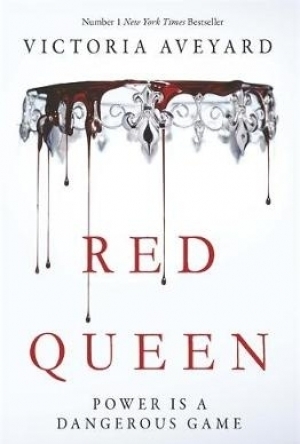

Mare is thrust into a world she never wished for and doesn't fit into. She is given no choice but to accept. There is much to learn about her abilities and how to control them. The one demand she made was to ensure the safety and well-being of her family. Her brothers are called home from the war, but not soon enough to save all of them. <spoiler> One was a member of a rebel/revolutionary group and was executed for it. </spoiler> This pushes Mare over the edge and she joins the rebel group, the Scarlet Guard.
It's intriguing to learn what each person has the ability to do. The control over water, manipulation of light, healing, mind-reading and more. But it's very off-putting and juvenile when the author refers to them as greenies or telkies. It sounds more like a two-year-old naming their stuffed bear Brownie or Fluffy than an author giving life to special abilities.
The world is not our own, so it would be nice to learn more about it. Unfortunately, Mare is not very learned and we must view the world through her lens. It would be fascinating to be given a history, geography and culture lesson from Julian in novella form. What does their domain look like? What about the surrounding kingdoms, their rulers, ruling abilities and geography? How did these new borders come to be? (It is mentioned that the borders were not always the way they are currently.) Overall, the world building is pretty good but could be improved (which it does later in the book.) The physical descriptions of the towns the royals pass on their way to the palace late in the story are good and allow the reader to immese themselves in the world more fully.
The princes are, unsurprisingly good people despite the harshness of the King and Queen. <spoiler> Or at least appear to be that way in the beginning, but it does not last. </spoiler> The future love interest(s) must be liked by the reader. Mare herself is harsh and quick-tempered by likable nonetheless. Though she has no choice in her future, she assures her family's well-being and that shows she has a good heart.
Of course, our protagonist catches the attention of not just one but two princes. The older and future King, Cal, wants to be a good ruler so he secretly ventures out in public to learn and experience his people outside the reports of advisors. He even decides to send a group of Silver soldiers to the front line and chooses to lead them. It may win the war, but it could also kill him. The younger, forever shadowed brother Maven believes that Reds and Silvers are equals. He even joins the Scarlet Guard to help propel change and spark a revolution.
Anyone can betray anyone.
The Scarlet Guard secrets Maven and Mare out of a play and transports them to another town just to have a conversation. Clearly the travel and discussion would take a significant amount of time and yet no one wonders where they are. The return trip and the play ending are just completely skipped. It was abrupt and didn't seem well-thought out.
The book ends with betrayal and bloodshed. But it also ends with a promise and the hope that not all is lost. It makes me want to begin the next book immeiate. Highly recommended book to fans of YA novels with good world building and character development that deal with monarchical rule and upheavals as well as people with special abilities.
City Squares: Eighteen Writers on the Spirit and Significance of Squares Around the World
Book
In this important collection, eighteen renowned writers, including David Remnick, Zadie Smith,...

Lonely Planet Boston
Lonely Planet and Mara Vorhees
Book
Lonely Planet: The world's leading travel guide publisher Lonely Planet Boston is your passport to...

Kyera (8 KP) rated Scarlet (The Lunar Chronicles, #2) in Books
Jan 31, 2018


Scarlet is incredibly different from Cinder, our main character from the first book. With fiery hair and a temper to match, Scarlet is an accomplished pilot and a force to be reckoned with. When her grandmother goes missing, she will stop at nothing to get her back - even if that means teaming up with a street fighter who has never had tomatoes before... named Wolf.
There is a dichotomy in the portrayal of Wolf as he is seen as violent and angry during a fight, but so innocently curious and nervous with Scarlet. She introduces him to the wonders of fresh produce and his reaction is so precious, he just reminds me of a puppy in those moments. I can't say that I like him more than Kai, but he definitely grows on you over the course of the book.
It was nice to see Kai in his role as the Emporer of the Eastern Commonwealth. In the first book, he was only just coming to terms with the drastic change in his circumstances and now he must be the leader his people need. You watch as he struggles to reconcile the needs of his people with the desires of his heart. Completely untested as a ruler, he does what he can to protect his people from Queen Levana but worries that it will not be enough. It was heartbreaking to see the turmoil and know that he will only face more difficult decisions in the future.
Cinder's world was completely turned upside down at the end of the first novel. As a result, she is on the run and teams up with <i>Captain</i> Carswell Thorne. His utter enamorment with himself is hilarious and plays really well off of Cinder's more serious, yet still sarcastic personality.
I really enjoyed seeing the world expand a bit more as we learned about other locations in the Earthen Union and spent time in France. We were given more of Cinder's history and the groundwork was laid for plot points and characters in the future books. This was a great story, but I can't say much else without spoilers - so just go read the series, you won't regret it.