
Search
Search results

Bob Mann (459 KP) rated Jurassic World: Fallen Kingdom (2018) in Movies
Sep 29, 2021



Greedy men + Dinosaurs = Lunch!
I’ve really had a rollercoaster of emotions on this one. As a general fan of dinosaurs running riot, since I saw the brilliant original in 1993, I was pretty disillusioned by the teaser trailer for this one: all over-the-top CGI. But as the lights dimmed and the Universal logo faded to ominous sonar sounds, the hairs stood up again and I thought J.A. Bayona (“A Monster Calls“) *might* deliver something really special here. Ultimately though, I left the theatre disappointed… but only slightly so.
With extreme topicality given what is happening on one of the Hawaiian islands at the moment, Isla Nublar – home to the now derelict Jurassic World theme park – is in serious trouble due to a volcanic eruption. Swayed by chaos theory expert Ian Malcolm (Jeff Goldblum), a US senate committee decides to do…. absolutely nothing, letting the dinosaurs face re-extinction. This is much to the fury of our heroine from the first film, Claire Dearing (Bryce Dallas-Howard), who now runs a “Save the Dinosaurs” group. When all seems lost, help comes from the wallet of philanthropist Benjamin Lockwood (James Cromwell, “Babe”, “LA Confidential”) and his ops manager Eli Mills (Rafe Spall, “The Big Short“) who propose to fund a private rescue mission: a mission that requires the involvement of Velociraptor-wrangler Owen Grady (Chris Pratt, “Guardians of the Galaxy“, “Passengers“). But are their motives truly honourable?
The film has its moments, with some well-executed action scenes, some nice munching of bad people and a few scenes that are truly touching: shots of a brachiosauruses’ last moments is a memorable piece of cinema. But that said, the film is extremely patchy. An exciting (but not particularly logical) pre-title sequence seques into a very wordy and action-free first reel, headed up by Goldblum (always seated: did he have his legs chewed off by a raptor?) droning on (blah blah blah), no doubt for a huge fee but not for much purpose. The early part of the movie is good however at introducing new characters: specifically the geeky Franklin (Justice Smith) and the pre-requisite 2018 ‘Times Up” kick-ass female character Zia ( Daniella Pineda), who is actually very good. As a whole though it’s not terribly engaging, leading to even the reveal of the derelict theme park – which should have been a high point – falling somewhat flat.
The much trailered volcano scenes that follow are impressive but should have been left to impress in the film.
Things ratchet up again though when the action moves to the more confining environment of Lockwood’s estate, bringing in arch-villain Gunnar Eversol played by Toby Jones (“The Snowman“, “Atomic Blonde“), who really should have taken the stairs, and Lockwood’s granddaughter Maisie ( Isabella Sermon) who is excellent as the ‘child in peril’. Some of the character’s actions don’t make a lot of sense (laser-targeting Owen? Why?) but they do generate some memorable scenes, supported by Michael Giacchino’s stirring soundtrack.
So, it pretty much works as an action film, but in terms of character development it doesn’t go anywhere in particular: Claire and Owen come out in about the same condition as they came in. I was expecting something deeper from Bayona (with his “A Monster Calls” being my personal No. 2 film of last year) than just a ‘running and screaming’ film.
It’s also difficult to avoid the fact that after five of these films there’s nothing much new under the Isla Nublar sun. Some of the plot here is a retread of the genetic shenanigans of the last film, mixed with the ‘off-island’ antics of “The Lost World”. And most of the action scenes are just stripped and re-painted from the earlier films. For example, the “about to get eaten but saved by another dinosaur” trope so expertly done by Spielberg in the finale of JP1 is re-hashed not once but THREE times in this movie: leading to more yawning that excitement if I’m honest.
Overall though, it’s an effective summer blockbuster that mostly delivers on the thrills and should be a good crowd-pleaser. By the way, staying through the endless credits is worth it not just for getting the full force of Giacchino and Williams’ majestic themes: there is quite a nice “monkey” at the end, illustrating that gambling might involve more than just money in the future!
With extreme topicality given what is happening on one of the Hawaiian islands at the moment, Isla Nublar – home to the now derelict Jurassic World theme park – is in serious trouble due to a volcanic eruption. Swayed by chaos theory expert Ian Malcolm (Jeff Goldblum), a US senate committee decides to do…. absolutely nothing, letting the dinosaurs face re-extinction. This is much to the fury of our heroine from the first film, Claire Dearing (Bryce Dallas-Howard), who now runs a “Save the Dinosaurs” group. When all seems lost, help comes from the wallet of philanthropist Benjamin Lockwood (James Cromwell, “Babe”, “LA Confidential”) and his ops manager Eli Mills (Rafe Spall, “The Big Short“) who propose to fund a private rescue mission: a mission that requires the involvement of Velociraptor-wrangler Owen Grady (Chris Pratt, “Guardians of the Galaxy“, “Passengers“). But are their motives truly honourable?
The film has its moments, with some well-executed action scenes, some nice munching of bad people and a few scenes that are truly touching: shots of a brachiosauruses’ last moments is a memorable piece of cinema. But that said, the film is extremely patchy. An exciting (but not particularly logical) pre-title sequence seques into a very wordy and action-free first reel, headed up by Goldblum (always seated: did he have his legs chewed off by a raptor?) droning on (blah blah blah), no doubt for a huge fee but not for much purpose. The early part of the movie is good however at introducing new characters: specifically the geeky Franklin (Justice Smith) and the pre-requisite 2018 ‘Times Up” kick-ass female character Zia ( Daniella Pineda), who is actually very good. As a whole though it’s not terribly engaging, leading to even the reveal of the derelict theme park – which should have been a high point – falling somewhat flat.
The much trailered volcano scenes that follow are impressive but should have been left to impress in the film.
Things ratchet up again though when the action moves to the more confining environment of Lockwood’s estate, bringing in arch-villain Gunnar Eversol played by Toby Jones (“The Snowman“, “Atomic Blonde“), who really should have taken the stairs, and Lockwood’s granddaughter Maisie ( Isabella Sermon) who is excellent as the ‘child in peril’. Some of the character’s actions don’t make a lot of sense (laser-targeting Owen? Why?) but they do generate some memorable scenes, supported by Michael Giacchino’s stirring soundtrack.
So, it pretty much works as an action film, but in terms of character development it doesn’t go anywhere in particular: Claire and Owen come out in about the same condition as they came in. I was expecting something deeper from Bayona (with his “A Monster Calls” being my personal No. 2 film of last year) than just a ‘running and screaming’ film.
It’s also difficult to avoid the fact that after five of these films there’s nothing much new under the Isla Nublar sun. Some of the plot here is a retread of the genetic shenanigans of the last film, mixed with the ‘off-island’ antics of “The Lost World”. And most of the action scenes are just stripped and re-painted from the earlier films. For example, the “about to get eaten but saved by another dinosaur” trope so expertly done by Spielberg in the finale of JP1 is re-hashed not once but THREE times in this movie: leading to more yawning that excitement if I’m honest.
Overall though, it’s an effective summer blockbuster that mostly delivers on the thrills and should be a good crowd-pleaser. By the way, staying through the endless credits is worth it not just for getting the full force of Giacchino and Williams’ majestic themes: there is quite a nice “monkey” at the end, illustrating that gambling might involve more than just money in the future!
Bob Mann (459 KP) rated Kingsman: The Golden Circle (2017) in Movies
Sep 29, 2021
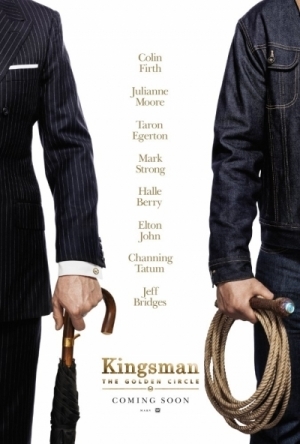
Vaughn and Golding cross the pond to deliver more of the same.
You would probably need to be living under a rock not to know that “Kingsman: The Golden Circle” is the follow-up film to Matthew Vaughn and Jane Goldman’s highly successful 2015 offering “Kingsman: The Secret Service”: a raucous, violent and rude entry into the spy-caper genre. And the sequel is more of the same: why mess with a crowd-pleasing formula?
The fledgling agent Eggsy (Taron Egerton (“Eddie the Eagle“), curiously called “Eggy” at various points in the film for reasons I didn’t understand) is now the new “Galahad” following the demise in the first film of the original, played by Colin Firth (“Magic in the Moonlight“, “Bridget Jones’ Baby“). But just as he’s getting into his stride the whole Kingsman organisation, now headed by Michael Gambon (“Harry Potter”) as Arthur , is ripped apart by an evil drugs cartel called “The Golden Circle” headed by smiling but deadly Poppy (Juliane Moore, “Still Alice”).
Eggsy and Lancelot (Mark Strong, “Miss Sloane“) in desperation turn to Statesman – the US equivalent organisation – and together with some surprising allies set out to defeat the evil plot to poison all casual drug users.
Subtle this film certainly is not, featuring brash and absurdly unrealistic action scenes that are 90% CGI but – for me at least – enormous fun to watch. As with the first film (and I’m thinking of the grotesquely violent church scene here) the action moves however from ‘edgy’ to “over-the-top/offensive” at times. The ‘burger scene’ and (particularly) the ‘Glastonbury incident’ are the standout moments for all the wrong reasons. I have a theory about how these *might* have come about…
One Mann’s Movies Showcase Theatre
The scene: Matthew Vaughn and Jane Golding are working “The Golden Circle” script at Goldman’s English home.
Vaughn: “OK, so Eggsy is in the tent with Clara and needs to plant the tracking device on her.”
Goldman’s husband Jonathan Ross sticks his head round the door.
Ross: “Hey Guys, I’ve an idea about that. I was on the phone to Wussell Bwand and we came up with a GWEAT idea.”
Vaughn: (rolling his eyes, mutters to himself): “Oh God, not again…”
Ross: “We thought that Eggsy could use his finger to stick the tracker right up her – ahem – ‘lady canal’ and… and… here’s the really great bit… the camera’s gonna be his finger. A camera up the muff! It’ll be weally weally funny!”
Vaughn: “But Jonathan…”.
Goldman nudges him hard.
Goldman (whispering): “Just let it go Matthew… you know what he’s like if he doesn’t get at least a couple of his ideas into the film”.
You can only hope a stunt vagina was used for this scene, else Poppy Delavigne (older sister of Cara) is going to find it very hard to find credible future work. One can only guess what tasteful interlude is being planned for Kingsman 3 – – a prostate-based tracker perhaps?
The film works best when the core team of Taron Egerton, Mark Strong and Colin Firth (yes, Colin Firth!) are together. Jeff Bridges (“Hell or High Water“), Channing Tatum (“Foxcatcher“) and Halle Berry (“Monster’s Ball”) all turn up as key members of ‘Statesman’ – adding star power but not a lot else – together with Pedro Pascal (“The Great Wall“) as ‘Whiskey’…. who I expected to be someone equally famous behind the moustache but wasn’t!
There’s also a very entertaining cameo from a star (no spoilers from me) whose foul-mouthed tirades I found very funny, and who also has the funniest line in the film (playing off one of the most controversial elements of the first film). It’s fair to say though that others I’ve spoken to didn’t think this appearance fitted the film at all.
Julianne Moore makes for an entertaining – if less than credible – villain, as does Bruce Greenwood (“Star Trek: Into Darkness”) as a barely disguised Trump. None of the motivations of the bad ‘uns however support any scrutiny whatsoever: this is very much a “park your brain at the door” film.
I really shouldn’t enjoy this crass, brash, brainless movie fast-food… and I know many have hated it! But my guilty secret is that I really did like it – one of the best nights of unadulterated escapist fun I’ve had since “Baby Driver”. Classy it’s certainly NOT, but I enjoyed this just as much as the original.
The fledgling agent Eggsy (Taron Egerton (“Eddie the Eagle“), curiously called “Eggy” at various points in the film for reasons I didn’t understand) is now the new “Galahad” following the demise in the first film of the original, played by Colin Firth (“Magic in the Moonlight“, “Bridget Jones’ Baby“). But just as he’s getting into his stride the whole Kingsman organisation, now headed by Michael Gambon (“Harry Potter”) as Arthur , is ripped apart by an evil drugs cartel called “The Golden Circle” headed by smiling but deadly Poppy (Juliane Moore, “Still Alice”).
Eggsy and Lancelot (Mark Strong, “Miss Sloane“) in desperation turn to Statesman – the US equivalent organisation – and together with some surprising allies set out to defeat the evil plot to poison all casual drug users.
Subtle this film certainly is not, featuring brash and absurdly unrealistic action scenes that are 90% CGI but – for me at least – enormous fun to watch. As with the first film (and I’m thinking of the grotesquely violent church scene here) the action moves however from ‘edgy’ to “over-the-top/offensive” at times. The ‘burger scene’ and (particularly) the ‘Glastonbury incident’ are the standout moments for all the wrong reasons. I have a theory about how these *might* have come about…
One Mann’s Movies Showcase Theatre
The scene: Matthew Vaughn and Jane Golding are working “The Golden Circle” script at Goldman’s English home.
Vaughn: “OK, so Eggsy is in the tent with Clara and needs to plant the tracking device on her.”
Goldman’s husband Jonathan Ross sticks his head round the door.
Ross: “Hey Guys, I’ve an idea about that. I was on the phone to Wussell Bwand and we came up with a GWEAT idea.”
Vaughn: (rolling his eyes, mutters to himself): “Oh God, not again…”
Ross: “We thought that Eggsy could use his finger to stick the tracker right up her – ahem – ‘lady canal’ and… and… here’s the really great bit… the camera’s gonna be his finger. A camera up the muff! It’ll be weally weally funny!”
Vaughn: “But Jonathan…”.
Goldman nudges him hard.
Goldman (whispering): “Just let it go Matthew… you know what he’s like if he doesn’t get at least a couple of his ideas into the film”.
You can only hope a stunt vagina was used for this scene, else Poppy Delavigne (older sister of Cara) is going to find it very hard to find credible future work. One can only guess what tasteful interlude is being planned for Kingsman 3 – – a prostate-based tracker perhaps?
The film works best when the core team of Taron Egerton, Mark Strong and Colin Firth (yes, Colin Firth!) are together. Jeff Bridges (“Hell or High Water“), Channing Tatum (“Foxcatcher“) and Halle Berry (“Monster’s Ball”) all turn up as key members of ‘Statesman’ – adding star power but not a lot else – together with Pedro Pascal (“The Great Wall“) as ‘Whiskey’…. who I expected to be someone equally famous behind the moustache but wasn’t!
There’s also a very entertaining cameo from a star (no spoilers from me) whose foul-mouthed tirades I found very funny, and who also has the funniest line in the film (playing off one of the most controversial elements of the first film). It’s fair to say though that others I’ve spoken to didn’t think this appearance fitted the film at all.
Julianne Moore makes for an entertaining – if less than credible – villain, as does Bruce Greenwood (“Star Trek: Into Darkness”) as a barely disguised Trump. None of the motivations of the bad ‘uns however support any scrutiny whatsoever: this is very much a “park your brain at the door” film.
I really shouldn’t enjoy this crass, brash, brainless movie fast-food… and I know many have hated it! But my guilty secret is that I really did like it – one of the best nights of unadulterated escapist fun I’ve had since “Baby Driver”. Classy it’s certainly NOT, but I enjoyed this just as much as the original.
Mark Jaye (65 KP) rated Avengers: Endgame (2019) in Movies
May 13, 2019


Ending The Game
Contains spoilers, click to show
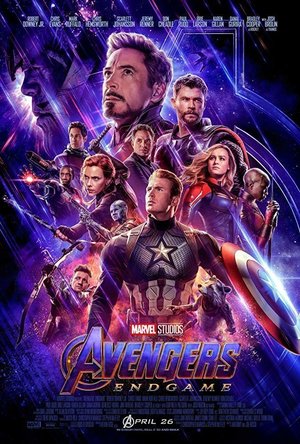
Avengers: Endgame - the concluding installment of the Marvel Cinematic Universe's 'Infinity Saga', has made box office history, breaking a number of records on its' journey (thus far) of becoming the second highest grossing movie ever in a short period of time. Bringing together the story threads of 21 films before it 'Endgame' had a number of hurdles to overcome - not only did the Russo Brothers have to find a satisfying way to reverse the effects of 'The Decimation' (if you have to ask then you're probably reading the wrong review!) but they had to do so in a way that did not lessen the impact of 'Infinity War', whilst bringing to a close a number of character arcs for many well respected and founding members of Marvel's flagship superhero team and setting the course and direction for whatever comes next.
The question is, did it succeed?
At the time of writing 'Endgame' has been in cinemas for over two weeks and all embargoes pertaining to spoilers have since been rescinded. It is on that note that I will make the following SPOILER ALERT and advise anyone yet to see the movie (is there actually anyone out there daring to call themselves a fan who hasn't seen it?!) to leave now.....
Endgame picks up a few short weeks after the events of 'Infinity War' and depicts the surviving heroes of Thanos's snap coming up again him once again. The encounter is very short lived but doesn't go as planned/hoped effectively destroying all hope for returning the vanished. Que a five year time-jump..
Steve Rogers heads up a support group for the survivors, Natasha Romanoff directs the remaining Avengers refusing to move on, Tony Stark and Pepper Potts are living a quiet life raising their daughter, Thor has spiraled into despair at New Asgard effectively leaving Valkyrie in charge, Clint Barton has become the blood-thirsty vigilante Ronin - tracking down and eliminating those criminals who escaped the decimation when his family didn't, and Bruce Banner has found a way to merge personalities with the Hulk allowing both to co-exist as one (Professor Hulk).
Things look pretty grim until AntMan (Scott Lang) returns - quite accidentally, from the Quantum Realm bringing with him the key to bringing everyone back and reversing Thanos's decimation. And that's where time travel appears...
The Avengers must travel back to key moments in their history to remove the Infinity Stones and bring them to the present where Stark and Banner create their own Gauntlet to house them. This involves the second act of the movie displaying some time travel shenanigans as our heroes interact with events - and themselves, of previously seen movies. Such encounters include revisiting the events of Avengers Assemble, Thor:The Dark World, and Guardians Of The Galaxy. Don't expect a retread of the 'Back To The Future' franchise however, as Avengers: Endgame creates its' own rules for time travel. Basically, going back in time and interfering with established events does not alter the future - instead it creates a branched reality (think parallel timeline), however traversing the Quantum Realm will still return you to the original timeline you came from. In other words, go back in time kill Thanos, return to the future and you've changed nothing.... Simple, right?!
That's the basic gist, and all I'll give you for now.
Whilst this does follow on from 'Infinity War', 'Endgame' is stylistically and tonally a different movie. Whereas the former threw us straight into the thick of the action and never let up until the devastating conclusion, throwing a cavalcade of heroes at us in a relentless fashion, 'Endgame' scales it all back (for two thirds of the running time at least) focusing on the original six core Avengers (with strong support from Don Cheadle's War Machine, Karen Gillan as Nebula, Paul Rudd (returning as AntMan), and of course, Rocket Raccoon! With the preceding movie been Captain Marvel you would be forgiven for thinking Brie Larson would play a strong role in this movie, however - with a throwaway line earlier on justifying her absence, Carol Danvers features for all of around fifteen minutes! That's not to say she doesn't make an impact when she does I might add! Given the downbeat tone to 'Endgame' there is a lot of humour from start to finish - Chris Hemsworth, Paul Rudd, Bradley Cooper, I'm looking at you most here!, which in no way detracts from the weight of what's at sake here.
Josh Brolin is back as Thanos, and Thanos...that's right, two versions of the mad Titan appear. The one whom our heroes go up against during the final third act is a past version who travels forward in time to present after seeing into his own future and witnessing the efforts of Earth's Mightiest Heroes and the lengths they are prepared to go to in order to 'decimate' his plans. This is a Thanos whom I would deem more ruthless that 'Infinity War's' protagonist, a Thanos now determined to erase ALL life in the Universe.
I imagine the biggest question - well, one biggie amongst many, fans going into this movie blind had concerned who would return after the shocking climax to 'Infinity War' (along with whether those who died in that movie stayed that way). There was never any doubt - was there, that the vanished would return? It isn't that much of a spoiler then to reveal that the final thirty minutes or so of 'Endgame' features every MCU hero on screen together embroiled in the biggest fight of their lives. And what a visual delight it is. The visuals in this film are fantastic and the final battle rivals anything Peter Jackson gave us.
I was fortunate enough to see 'Endgame' at the first screening (pre-midnight) at a local cinema and what an experience it was - a mini comic con. The atmosphere was electric and it was a highly memorable experience.
Everyone involved in this movie deserves kudos, for this lifelong superhero fanboy Avengers: Endgame is the best movie....ever.
If I may digress somewhat, there has been much confusion reported concerning the movie's ending, namely the resolution to Steve Rogers' story. Having returned the Infinity Stones to their rightful place in the MCU timeline Cap chooses to remain in the past (circa 1940-ish) and to live out his life with Peggy Carter (the final shot shows the two having that well overdue dance). Whilst the perfect sendoff this has left many conflicted as to the implications with some reviewers claiming this goes against the rules established earlier in the movie relating to the use of time travel. It really isn't that complicated. Essentially there are two theories at play that can explain the climax.
The first is that Steve simply lived out a life in secrecy within the established continuity, choosing not to involve himself in major events. This does not contradict what we've seen so far - back in 'The Winter Soldier' we see archive footage of Peggy from the nineteen fifties in which she talks about Captain America saving her (un-named) husband during the war. It isn't really a reach of the imagination to suspect that Cap and this man are one and the same. In the same movie, present day Steve visits a dying Peggy - clearly suffering the effects of dementia, who apologises to him for the life he didn't have. Could this be a reference to the man she married having to live a life of secrecy, choosing to stay out of the fight for fear of creating a divergent reality? Given that the movie establishes that actions in the past will not change the future (within the main timeline) Steve's interference would not change anything in 'our' reality anyhow.
The second theory is that Steve created a branched reality by reuniting with Peggy and lived a fulfilling life in that alternate timeline, only returning to the main timeline an old man when the time was right to handover the shield to Sam Wilson/Falcon (as seen at the end of the movie). Sure, this raises questions as to how Steve was able to cross realities but to be honest - that's a story for another time and the answer isn't important (for now).
Further confusing things is the fact that the Writers and Directors cannot seemingly agree, with Marcus and McFeely disputing the alternate reality theory that the Russo brothers subscribe to. You could argue that surely it is the Writer's view that counts, as..after all, they wrote it! Well, yes and no. The directors translate their understanding of the written word onto the screen and it has been reported that additional material was filmed after test audiences struggled with the time travel aspects of the film. Therefore it's not that hard to believe that the film - and that ending, were shot in a way that supported the film-makers understanding. I subscribe to the former - the romantic in me and all that, with Steve's story coming full circle with the revelation that he was always there with Peggy. Either way, both theories work and preserve the integrity of what has come before.
In any regard it's the perfect ending for Captain America!
So, to conclude....did it succeed? OH YES!!
The question is, did it succeed?
At the time of writing 'Endgame' has been in cinemas for over two weeks and all embargoes pertaining to spoilers have since been rescinded. It is on that note that I will make the following SPOILER ALERT and advise anyone yet to see the movie (is there actually anyone out there daring to call themselves a fan who hasn't seen it?!) to leave now.....
Endgame picks up a few short weeks after the events of 'Infinity War' and depicts the surviving heroes of Thanos's snap coming up again him once again. The encounter is very short lived but doesn't go as planned/hoped effectively destroying all hope for returning the vanished. Que a five year time-jump..
Steve Rogers heads up a support group for the survivors, Natasha Romanoff directs the remaining Avengers refusing to move on, Tony Stark and Pepper Potts are living a quiet life raising their daughter, Thor has spiraled into despair at New Asgard effectively leaving Valkyrie in charge, Clint Barton has become the blood-thirsty vigilante Ronin - tracking down and eliminating those criminals who escaped the decimation when his family didn't, and Bruce Banner has found a way to merge personalities with the Hulk allowing both to co-exist as one (Professor Hulk).
Things look pretty grim until AntMan (Scott Lang) returns - quite accidentally, from the Quantum Realm bringing with him the key to bringing everyone back and reversing Thanos's decimation. And that's where time travel appears...
The Avengers must travel back to key moments in their history to remove the Infinity Stones and bring them to the present where Stark and Banner create their own Gauntlet to house them. This involves the second act of the movie displaying some time travel shenanigans as our heroes interact with events - and themselves, of previously seen movies. Such encounters include revisiting the events of Avengers Assemble, Thor:The Dark World, and Guardians Of The Galaxy. Don't expect a retread of the 'Back To The Future' franchise however, as Avengers: Endgame creates its' own rules for time travel. Basically, going back in time and interfering with established events does not alter the future - instead it creates a branched reality (think parallel timeline), however traversing the Quantum Realm will still return you to the original timeline you came from. In other words, go back in time kill Thanos, return to the future and you've changed nothing.... Simple, right?!
That's the basic gist, and all I'll give you for now.
Whilst this does follow on from 'Infinity War', 'Endgame' is stylistically and tonally a different movie. Whereas the former threw us straight into the thick of the action and never let up until the devastating conclusion, throwing a cavalcade of heroes at us in a relentless fashion, 'Endgame' scales it all back (for two thirds of the running time at least) focusing on the original six core Avengers (with strong support from Don Cheadle's War Machine, Karen Gillan as Nebula, Paul Rudd (returning as AntMan), and of course, Rocket Raccoon! With the preceding movie been Captain Marvel you would be forgiven for thinking Brie Larson would play a strong role in this movie, however - with a throwaway line earlier on justifying her absence, Carol Danvers features for all of around fifteen minutes! That's not to say she doesn't make an impact when she does I might add! Given the downbeat tone to 'Endgame' there is a lot of humour from start to finish - Chris Hemsworth, Paul Rudd, Bradley Cooper, I'm looking at you most here!, which in no way detracts from the weight of what's at sake here.
Josh Brolin is back as Thanos, and Thanos...that's right, two versions of the mad Titan appear. The one whom our heroes go up against during the final third act is a past version who travels forward in time to present after seeing into his own future and witnessing the efforts of Earth's Mightiest Heroes and the lengths they are prepared to go to in order to 'decimate' his plans. This is a Thanos whom I would deem more ruthless that 'Infinity War's' protagonist, a Thanos now determined to erase ALL life in the Universe.
I imagine the biggest question - well, one biggie amongst many, fans going into this movie blind had concerned who would return after the shocking climax to 'Infinity War' (along with whether those who died in that movie stayed that way). There was never any doubt - was there, that the vanished would return? It isn't that much of a spoiler then to reveal that the final thirty minutes or so of 'Endgame' features every MCU hero on screen together embroiled in the biggest fight of their lives. And what a visual delight it is. The visuals in this film are fantastic and the final battle rivals anything Peter Jackson gave us.
I was fortunate enough to see 'Endgame' at the first screening (pre-midnight) at a local cinema and what an experience it was - a mini comic con. The atmosphere was electric and it was a highly memorable experience.
Everyone involved in this movie deserves kudos, for this lifelong superhero fanboy Avengers: Endgame is the best movie....ever.
If I may digress somewhat, there has been much confusion reported concerning the movie's ending, namely the resolution to Steve Rogers' story. Having returned the Infinity Stones to their rightful place in the MCU timeline Cap chooses to remain in the past (circa 1940-ish) and to live out his life with Peggy Carter (the final shot shows the two having that well overdue dance). Whilst the perfect sendoff this has left many conflicted as to the implications with some reviewers claiming this goes against the rules established earlier in the movie relating to the use of time travel. It really isn't that complicated. Essentially there are two theories at play that can explain the climax.
The first is that Steve simply lived out a life in secrecy within the established continuity, choosing not to involve himself in major events. This does not contradict what we've seen so far - back in 'The Winter Soldier' we see archive footage of Peggy from the nineteen fifties in which she talks about Captain America saving her (un-named) husband during the war. It isn't really a reach of the imagination to suspect that Cap and this man are one and the same. In the same movie, present day Steve visits a dying Peggy - clearly suffering the effects of dementia, who apologises to him for the life he didn't have. Could this be a reference to the man she married having to live a life of secrecy, choosing to stay out of the fight for fear of creating a divergent reality? Given that the movie establishes that actions in the past will not change the future (within the main timeline) Steve's interference would not change anything in 'our' reality anyhow.
The second theory is that Steve created a branched reality by reuniting with Peggy and lived a fulfilling life in that alternate timeline, only returning to the main timeline an old man when the time was right to handover the shield to Sam Wilson/Falcon (as seen at the end of the movie). Sure, this raises questions as to how Steve was able to cross realities but to be honest - that's a story for another time and the answer isn't important (for now).
Further confusing things is the fact that the Writers and Directors cannot seemingly agree, with Marcus and McFeely disputing the alternate reality theory that the Russo brothers subscribe to. You could argue that surely it is the Writer's view that counts, as..after all, they wrote it! Well, yes and no. The directors translate their understanding of the written word onto the screen and it has been reported that additional material was filmed after test audiences struggled with the time travel aspects of the film. Therefore it's not that hard to believe that the film - and that ending, were shot in a way that supported the film-makers understanding. I subscribe to the former - the romantic in me and all that, with Steve's story coming full circle with the revelation that he was always there with Peggy. Either way, both theories work and preserve the integrity of what has come before.
In any regard it's the perfect ending for Captain America!
So, to conclude....did it succeed? OH YES!!

Purple Phoenix Games (2266 KP) rated Samurai Spirit in Tabletop Games
Jun 12, 2019


One of the best parts of the board gaming experience is finding a fun group of people with whom to play! Sometimes, though, coordinating a game night is easier said than done. We all must occasionally forego the group experience and face the world as the Lonely Only. But fear not! The world of solo-play is a vast and exciting realm! What follows is a chronicle of my journey into the solo-playing world – notes on gameplay, mechanics, rules, difficulty, and overall experience with solo variations of commonly multiplayer games! I hope this will provide some insight as you continue to grow your collection, or explore your already owned games!
As a Samurai, you spend your life traveling across the land to help those in need. Most recently, you and a handful of other Samurai have been contracted by a small village to defend them against a clan of invading raiders. Only by working together, and by using your extensive training, will you succeed in keeping this village safe!
Samurai Spirit is a cooperative game of press-your-luck. Players take on the role of a Samurai, each with a unique power, and take turns drawing cards and fighting off the invaders or offering support to your fellow Samurai. Invaders can have recurring negative effects, so strategize wisely on how best to combat them and see how far you can push your luck each round. If you are able to survive through 3 rounds (waves) of invaders with at least one surviving farmstead and family, the Samurai are victorious and the village is saved! If any of the Samurai are killed, or the village has been completely destroyed by invaders, then the game is lost. As a solo game, Samurai Spirit plays essentially the same as in group play, with only 2 main differences – the solo player controls 2 Samurai instead of 1, and the support tokens from the unused Samurai are each available for use once during the game.
For such a neat theme, this game falls short for me. It seems simple enough, but there are areas of ambiguity in the rules that lead to some confusion. For starters, the text size is so small that I am not able to find any information at a quick glance! The text itself is not always clear either – like when, at the end of a round, the rules say to collect all cards used this round, does that include cards that have been discarded due to Samurai abilities? How about the cards of the Intruder stack that are presumably discarded after being revealed? The rulebook offers no clarification, and I honestly still don’t know the right answer.
The order/layout of the rules feels mismatched too – relevant information is not always grouped together, and I find myself flipping between several pages at a time trying to figure out one single thing. For example, in the ‘Fight’ action description, it says that if you reach your Kiai value exactly, you can activate your Kiai ability. You have to turn the page to a different section to see exactly what activating that ability means, and then you have to flip an additional 2 more pages to see what each individual Kiai ability is! Why not just put them all in one place? It would certainly be easier to understand if all relevant information was grouped together.
The prominent mechanic of Samurai Spirit is press-your-luck, and I would definitely say that this game is very luck-based. When setting up the game, the initial deck of cards is randomly selected and that can impact whether or not you are able to complete certain requirements each round – if there aren’t enough hat/farm/doll cards for each Samurai, you are guaranteed to incur a penalty at the end of every round. Actual gameplay is very luck-based too, and for me it feels like there are no good ways to strategize – your choices are all dependent on the luck of the draw. You can push your luck to draw more cards and use special abilities, but since you are suffering from recurring penalties each turn, it feels futile to keep going at a certain point.
For me, Samurai Spirit is repetitive and kind of boring – suffer penalty, draw card, and repeat until you eventually pass or the deck runs out. It’s like a too-complicated version of blackjack in which the deck is stacked against you. It’s such a bummer because the theme and artwork are neat, and the gameplay (in theory, at least) should be effective. But the actual execution is too reliant on luck to be successful.
I do quite a bit of solo gaming, but this game is never one that I willingly decide to play. I honestly only broke it out recently as a refresher for this review. Perhaps it is better at higher player counts, but since that is not where most of my gaming occurs, Samurai Spirit is a dud for me.
https://purplephoenixgames.wordpress.com/2019/02/06/solo-chronicles-samurai-spirit/
As a Samurai, you spend your life traveling across the land to help those in need. Most recently, you and a handful of other Samurai have been contracted by a small village to defend them against a clan of invading raiders. Only by working together, and by using your extensive training, will you succeed in keeping this village safe!
Samurai Spirit is a cooperative game of press-your-luck. Players take on the role of a Samurai, each with a unique power, and take turns drawing cards and fighting off the invaders or offering support to your fellow Samurai. Invaders can have recurring negative effects, so strategize wisely on how best to combat them and see how far you can push your luck each round. If you are able to survive through 3 rounds (waves) of invaders with at least one surviving farmstead and family, the Samurai are victorious and the village is saved! If any of the Samurai are killed, or the village has been completely destroyed by invaders, then the game is lost. As a solo game, Samurai Spirit plays essentially the same as in group play, with only 2 main differences – the solo player controls 2 Samurai instead of 1, and the support tokens from the unused Samurai are each available for use once during the game.
For such a neat theme, this game falls short for me. It seems simple enough, but there are areas of ambiguity in the rules that lead to some confusion. For starters, the text size is so small that I am not able to find any information at a quick glance! The text itself is not always clear either – like when, at the end of a round, the rules say to collect all cards used this round, does that include cards that have been discarded due to Samurai abilities? How about the cards of the Intruder stack that are presumably discarded after being revealed? The rulebook offers no clarification, and I honestly still don’t know the right answer.
The order/layout of the rules feels mismatched too – relevant information is not always grouped together, and I find myself flipping between several pages at a time trying to figure out one single thing. For example, in the ‘Fight’ action description, it says that if you reach your Kiai value exactly, you can activate your Kiai ability. You have to turn the page to a different section to see exactly what activating that ability means, and then you have to flip an additional 2 more pages to see what each individual Kiai ability is! Why not just put them all in one place? It would certainly be easier to understand if all relevant information was grouped together.
The prominent mechanic of Samurai Spirit is press-your-luck, and I would definitely say that this game is very luck-based. When setting up the game, the initial deck of cards is randomly selected and that can impact whether or not you are able to complete certain requirements each round – if there aren’t enough hat/farm/doll cards for each Samurai, you are guaranteed to incur a penalty at the end of every round. Actual gameplay is very luck-based too, and for me it feels like there are no good ways to strategize – your choices are all dependent on the luck of the draw. You can push your luck to draw more cards and use special abilities, but since you are suffering from recurring penalties each turn, it feels futile to keep going at a certain point.
For me, Samurai Spirit is repetitive and kind of boring – suffer penalty, draw card, and repeat until you eventually pass or the deck runs out. It’s like a too-complicated version of blackjack in which the deck is stacked against you. It’s such a bummer because the theme and artwork are neat, and the gameplay (in theory, at least) should be effective. But the actual execution is too reliant on luck to be successful.
I do quite a bit of solo gaming, but this game is never one that I willingly decide to play. I honestly only broke it out recently as a refresher for this review. Perhaps it is better at higher player counts, but since that is not where most of my gaming occurs, Samurai Spirit is a dud for me.
https://purplephoenixgames.wordpress.com/2019/02/06/solo-chronicles-samurai-spirit/

Heather Cranmer (2721 KP) rated The Unbecoming of Mara Dyer (Mara Dyer, #1) in Books
Jun 6, 2018

(This review can be found on my blog <a href="http://themisadventuresofatwentysomething.blogspot.com/">The (Mis)Adventures of a Twenty-Something Year Old Girl</a>).
I'd been wanting to read this book for awhile. It was high up on my TBR pile. I finally couldn't wait any longer and bought it. Luckily, it was money well spent!
Mara Dyer is a 16 year old girl who survived a building collapse although her other friends didn't. She doesn't know why she was the only one to survive. She begins to hear her dead friends voices and seeing them in mirrors and in her waking life. She's convinced she had something to do with their deaths and resolves to stay away from people. However, all that changes when she meets the womanizing Noah Shaw. Will Noah and Mara be able to fall in love or will something or someone prevent that from happening?
I love the title of this book! It sounds so ominous and sad at the same time. The title definitely drew me in. It made me want to know more about this book.
I kind of like the cover, but I don't really get why these two people, who I presume are Noah and Mara, are in water. When I first saw the cover, I presumed that this was going to be one of those books that deal with underwater themes like mermaids and what not, but it's not. Then I thought that maybe it was symbolic about Mara feeling like she was drowning, and Noah is supposed to save her although it looks more like Noah is trying to drown her.
The world building felt very believable throughout most of the book. All my questions were answered in this book which I was super happy about! However, towards the end of the book, the story kind of took a left turn, and I was just like "what". I felt that it got a bit crazy here, and I really can't explain why which I know is bad since this is a review. I know this is a fiction book so of course things won't really happen that happen in books, but without some spoilers, I can't really explain why. Maybe it's just a personal thing.
I enjoyed the pacing and thought it was done quite well. I found myself wanting to know what was going to happen next. I was immersed in the writing, and I didn't want to leave Mara's world.
I loved the whole plot. Mara can make things happen just by visualizing them. (Don't worry, that wasn't a spoiler). I've always wished I could do that, so I enjoyed reading about it. Plus, there's the subplot of the romance with Noah. I'm not a big romance fan since I believe it tends to get in the way of the actual plot (unless, of course, it's a romance book), but the romance was done in an enjoyable way.
I liked Mara a lot. She felt like a real teenage girl. She's under a lot of stress, and I liked seeing how she was able to deal with it. Mara felt like a girl I could be friends with. With Noah, there were times I liked him and times where I thought he was being a bit too mean and bossy. There's a few times (and only a few) where he tells Mara what to do. He does get violent when it comes to defending Mara's honor. I also didn't like how Noah would use Daddy's money to get whatever he wanted. I know he was only doing it for Mara, but still, it rubbed me wrong. I loved the character of Jamie. I loved his wit, and I wished that there was more of him in the book.
The dialogue was well written although there were a few times where the characters would talk like they were in a Dawson's Creek episode or for those that don't get that reference, like Sheldon does in Big Bang Theory. Personally, I've never been in any situation where a whole conversation used such a rich vocabulary, especially when it involve teenagers. This could just be a me thing though. I enjoyed reading about what Mara did in certain situations. As for language, there is a lot of swearing in this book although I don't feel like it's over the top.
Overall, The Unbecoming of Mara Dyer by Michelle Hodkin is a super enjoyable read. The plot is great, the romance is enjoyable, and the characters are very down to Earth. I can't wait to read the next book in the series!
I'd recommend this book to those aged 16+ due to language used. Those who appreciate paranormal elements in their books will love this one!
I'd been wanting to read this book for awhile. It was high up on my TBR pile. I finally couldn't wait any longer and bought it. Luckily, it was money well spent!
Mara Dyer is a 16 year old girl who survived a building collapse although her other friends didn't. She doesn't know why she was the only one to survive. She begins to hear her dead friends voices and seeing them in mirrors and in her waking life. She's convinced she had something to do with their deaths and resolves to stay away from people. However, all that changes when she meets the womanizing Noah Shaw. Will Noah and Mara be able to fall in love or will something or someone prevent that from happening?
I love the title of this book! It sounds so ominous and sad at the same time. The title definitely drew me in. It made me want to know more about this book.
I kind of like the cover, but I don't really get why these two people, who I presume are Noah and Mara, are in water. When I first saw the cover, I presumed that this was going to be one of those books that deal with underwater themes like mermaids and what not, but it's not. Then I thought that maybe it was symbolic about Mara feeling like she was drowning, and Noah is supposed to save her although it looks more like Noah is trying to drown her.
The world building felt very believable throughout most of the book. All my questions were answered in this book which I was super happy about! However, towards the end of the book, the story kind of took a left turn, and I was just like "what". I felt that it got a bit crazy here, and I really can't explain why which I know is bad since this is a review. I know this is a fiction book so of course things won't really happen that happen in books, but without some spoilers, I can't really explain why. Maybe it's just a personal thing.
I enjoyed the pacing and thought it was done quite well. I found myself wanting to know what was going to happen next. I was immersed in the writing, and I didn't want to leave Mara's world.
I loved the whole plot. Mara can make things happen just by visualizing them. (Don't worry, that wasn't a spoiler). I've always wished I could do that, so I enjoyed reading about it. Plus, there's the subplot of the romance with Noah. I'm not a big romance fan since I believe it tends to get in the way of the actual plot (unless, of course, it's a romance book), but the romance was done in an enjoyable way.
I liked Mara a lot. She felt like a real teenage girl. She's under a lot of stress, and I liked seeing how she was able to deal with it. Mara felt like a girl I could be friends with. With Noah, there were times I liked him and times where I thought he was being a bit too mean and bossy. There's a few times (and only a few) where he tells Mara what to do. He does get violent when it comes to defending Mara's honor. I also didn't like how Noah would use Daddy's money to get whatever he wanted. I know he was only doing it for Mara, but still, it rubbed me wrong. I loved the character of Jamie. I loved his wit, and I wished that there was more of him in the book.
The dialogue was well written although there were a few times where the characters would talk like they were in a Dawson's Creek episode or for those that don't get that reference, like Sheldon does in Big Bang Theory. Personally, I've never been in any situation where a whole conversation used such a rich vocabulary, especially when it involve teenagers. This could just be a me thing though. I enjoyed reading about what Mara did in certain situations. As for language, there is a lot of swearing in this book although I don't feel like it's over the top.
Overall, The Unbecoming of Mara Dyer by Michelle Hodkin is a super enjoyable read. The plot is great, the romance is enjoyable, and the characters are very down to Earth. I can't wait to read the next book in the series!
I'd recommend this book to those aged 16+ due to language used. Those who appreciate paranormal elements in their books will love this one!

Gareth von Kallenbach (980 KP) rated I, Robot (2004) in Movies
Aug 14, 2019
Tales of a dark and foreboding future where technology has run amuck have been cautioning viewers ever since Orwell made the phrase “Big Brother” a household expression. Other films such as ?”, “Westworld”, “Blade Runner” and “The Terminator” often show a dark and dangerous future where dependence upon technology created to serve mankind has lead to its eventual downfall.
In the film “I Robot” Director Alex Proyas who’s past work includes “The Crow” and “Dark City” tells the tale of a near future where robots have become commonplace and are entrusted to do all manner of tasks ranging from package delivery to waiting table and caring for households. The robots are assured to be safe as they are governed by a set of behavioral restrictors that require them to obey all human commands save for those to harm another human, as robots are not allowed to harm or by inaction allow to be harmed any human.
The film stars Will Smith as Del Spooner, a Chicago Homicide detective who does not trust robots and is highly suspicious of them. The fact that in 2035 there has yet to be one documented case worldwide of a robot ever being involved in a crime is of little concern to Del as he sees the potential for danger in technology that is so widely spread.
Del is in many ways a technophobe as aside from his modern car, he has a retro lifestyle including an old fashioned alarm clock, vintage 2004 shoes, and a fondness for music from the 1970’s. An incident in Del’s past has kept him off the force for a while and has only furthered his distaste for robotics and their growing place in society.
No sooner is Del back at work than an apparent suicide at U.S. Robotics by a friend sets the film into motion. What to all seems to be an open and shut case of suicide only causes Del to become more suspicious. Del soon discovers a new model robot locked in the office of the victim, who flees from crime scene and refuses to obey the orders to halt given to him.
The fact that the robot ignores command given by a human thus violating his central laws of programming is put off as a simple malfunction by Billionaire Lawrence Robertson (Bruce Greenwood), who does not want Del’s suspicions to disrupt his business plans on the eve of the largest rollout of new robots in history. It is explained that the new NX-5 model is about to be released to the public and soon there will be one robot for every 5 humans in the world and with so much invested in this, Robertson places a gag order on Del and the entire police force to forget about the renegade robot and not say a word to anyone.
Naturally Del does not follow this command and he suspects that there is a larger and much more serious threat posed to the public even though everyone around his says that he is paranoid and desperate to find or create any evidence to support his theory that robots are not as safe as everyone believes they are.
What follows is an action packed game of cat and mouse as Del and a U.S. Robotics scientist named Susan (Bridget Moynahan), start to uncover a deeper mystery, once in which the very world they have taken for granted is about to change.
The film is a visual marvel that shows you a fairly realistic view of the future as aside from the robots and futuristic highways, the world of 2035 does not look that much different than today.
Proyas knows that Smith is his star and he does a great job allowing him to carry the picture without allowing the visual effects to dominate the film, though they are spectacular. The futuristic highways and a great chase sequence were highlights of the film and had a surprising amount of tension and drama mixed into what was a solid action sequence.
Smith plays Spooner, as a man with demons yet never ceases to become a sensitive character despite his hard edge. He is a man that is determined to follow his instincts and do what is best for the people he is sworn to protect.
The film does only play lip service to the series of novels by Asimov, but it does tell a very good cautionary tale of human’s interaction and dependence upon technology without becoming preachy or losing site of the message that society must ensure to have a balance between humanity and technology in order to thrive.
If I had to find fault, it would be that many of the supporting roles were fairly bland, as Moynahan was not given much to do aside from play a Damsel in distress and the always solid James Cromwell and Bruce Greenwood were not used nearly enough. That being said “I Robot” delivers everything you want in a summer film and more.
In the film “I Robot” Director Alex Proyas who’s past work includes “The Crow” and “Dark City” tells the tale of a near future where robots have become commonplace and are entrusted to do all manner of tasks ranging from package delivery to waiting table and caring for households. The robots are assured to be safe as they are governed by a set of behavioral restrictors that require them to obey all human commands save for those to harm another human, as robots are not allowed to harm or by inaction allow to be harmed any human.
The film stars Will Smith as Del Spooner, a Chicago Homicide detective who does not trust robots and is highly suspicious of them. The fact that in 2035 there has yet to be one documented case worldwide of a robot ever being involved in a crime is of little concern to Del as he sees the potential for danger in technology that is so widely spread.
Del is in many ways a technophobe as aside from his modern car, he has a retro lifestyle including an old fashioned alarm clock, vintage 2004 shoes, and a fondness for music from the 1970’s. An incident in Del’s past has kept him off the force for a while and has only furthered his distaste for robotics and their growing place in society.
No sooner is Del back at work than an apparent suicide at U.S. Robotics by a friend sets the film into motion. What to all seems to be an open and shut case of suicide only causes Del to become more suspicious. Del soon discovers a new model robot locked in the office of the victim, who flees from crime scene and refuses to obey the orders to halt given to him.
The fact that the robot ignores command given by a human thus violating his central laws of programming is put off as a simple malfunction by Billionaire Lawrence Robertson (Bruce Greenwood), who does not want Del’s suspicions to disrupt his business plans on the eve of the largest rollout of new robots in history. It is explained that the new NX-5 model is about to be released to the public and soon there will be one robot for every 5 humans in the world and with so much invested in this, Robertson places a gag order on Del and the entire police force to forget about the renegade robot and not say a word to anyone.
Naturally Del does not follow this command and he suspects that there is a larger and much more serious threat posed to the public even though everyone around his says that he is paranoid and desperate to find or create any evidence to support his theory that robots are not as safe as everyone believes they are.
What follows is an action packed game of cat and mouse as Del and a U.S. Robotics scientist named Susan (Bridget Moynahan), start to uncover a deeper mystery, once in which the very world they have taken for granted is about to change.
The film is a visual marvel that shows you a fairly realistic view of the future as aside from the robots and futuristic highways, the world of 2035 does not look that much different than today.
Proyas knows that Smith is his star and he does a great job allowing him to carry the picture without allowing the visual effects to dominate the film, though they are spectacular. The futuristic highways and a great chase sequence were highlights of the film and had a surprising amount of tension and drama mixed into what was a solid action sequence.
Smith plays Spooner, as a man with demons yet never ceases to become a sensitive character despite his hard edge. He is a man that is determined to follow his instincts and do what is best for the people he is sworn to protect.
The film does only play lip service to the series of novels by Asimov, but it does tell a very good cautionary tale of human’s interaction and dependence upon technology without becoming preachy or losing site of the message that society must ensure to have a balance between humanity and technology in order to thrive.
If I had to find fault, it would be that many of the supporting roles were fairly bland, as Moynahan was not given much to do aside from play a Damsel in distress and the always solid James Cromwell and Bruce Greenwood were not used nearly enough. That being said “I Robot” delivers everything you want in a summer film and more.
Bob Mann (459 KP) rated Cold Pursuit (2019) in Movies
Mar 15, 2020
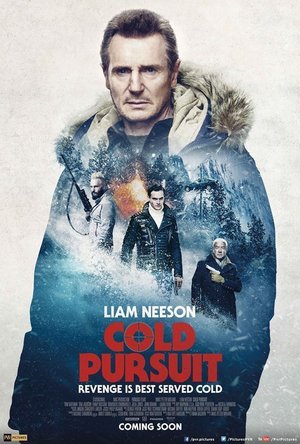

Comments on revenge are best kept on the screen.
I'd completely forgotten the furore about Liam Neeson's comments back last February during the press-tour preceding the film's release. In discussing the destructive feelings of revenge experienced by his character, Nels Coxman, Neeson revealed something he did 40 years ago: after the rape of a friend by "a black man", Neeson went out on the streets to find another "black man" and do them harm. (As a fellow Ballymena-born man, David Moody (from the "Mark and Dave" blog) has an interesting theory about this... that it was not a "rascist" statement in the true sense, but something else entirely. See here - ).
The comments undoubtedly impacted the movie at the box office. Which is a shame. Because in his catalogue of bonkers and violent revenge-porn flicks, this is one of Neeson's more entertaining ones.
Revenge is a dish best served cold. And where colder to serve it than in the ski-resort of Kehoe where Nels Coxman is the local snowplow operative and "man of the year" for his services to the community. But the tracks are about to fall off his orderly life. For his son Kyle (Micheál Richardson) winds up dead through a drugs overdose and his strained marriage with wife Grace (Laura Dern) disintegrates. (One of the most cutting and best-written "Bye" notes ever seen in the movies).
With revenge in mind, Coxman pursues the Denver-based drugs lord Trevor Calcote (Tom Bateman) who dished out the drugs to his son. But he inadvertently manages to stay just below the parapet as he sets in train a gang war between Calcote and a Kehoe-based native-American drugs gang led by White Bull (Tom Jackson). The snow turned progressively pinker as the body count rises.
Calcote (aka "Viking") is painted as a colourful family man, with an annoyingly bright son Ryan (Nicholas Holmes) that he controls with a rod of iron. Viking is estranged from wife Aya (Julia Jones), who seems completely unafraid of him and happily embarrasses him in front of his men. This relationship never really works. Since given all the terrible and irrational things Viking does to people, whether they obstruct him or help him in equal measure, putting a quiet bullet into Aya's head seems to be to least he could do!
Where there is fun to be had is in the "Stockholm syndrome" linkage between young Ryan and Coxman. When his father insists on controlling his diet, feeding him the same insipidly healthy meals morning, noon and night, the alternative of being kidnapped and fed burgers seems eminently more preferable!
The film is at times really difficult to follow. There are lots of inexplicable leaps of logic and really inexplicably bonkers scenes that you can only patch together later. It's as if the filmmakers randomly filmed 5 hours of footage and then tried to edit it all into a cohesive plot!
As one example of this, the relationship between Coxman and "Wingman" (William Forsythe) was poorly introduced such that I was left baffled by a later plot twist.
In another scene, Neeson smashes the head of enforcer "Santa" (Michael Adamthwaite) into his steering wheel, but in the next scene collapses with him utterly exhausted in the snow. There was clearly a significant fight here that was cut out of the finished cut. But as a result the final cut makes no sense at all!
Of course, the local law enforcement team are average at best. Average because although young and keen-as-mustard detective Kim Dash (Emmy Rossum) is hot on the trail of the truth, her partner Gip (John Doman) is f*ckin' useless... wanting to do nothing but drink coffee and eat donuts in true Simpsons style.
Normally with these sort of films, it's difficult to keep track of the body count. No such problem here. Every death is celebrated with a tombstone graphic so it's easy to keep count! Needless to say, there are a lot of tombstones registered.
Directed by Norwegian Hans Petter Moland, it's all good violent cartoonish fun, that keeps its tongue firmly in its cheek for most of the running time. The snowy setting, the partly native-American cast and the presence of Julia Jones brings to mind the truly excellent Jeremy Renner / Elizabeth Olsen movie "Wind River". But there the similarities (and quality levels) definitely stop. It's not a clever movie; it's borderline bonkers for most of its running time (never more so than with a totally bizarre "joke" final shot); but it is entertaining. As a 'park brain at door' action comedy it just about makes the grade.
(For the full graphical review, please check out One Mann's Movies here - https://bob-the-movie-man.com/2020/03/15/one-manns-movies-dvd-review-cold-pursuit-2019/. Thanks.)
The comments undoubtedly impacted the movie at the box office. Which is a shame. Because in his catalogue of bonkers and violent revenge-porn flicks, this is one of Neeson's more entertaining ones.
Revenge is a dish best served cold. And where colder to serve it than in the ski-resort of Kehoe where Nels Coxman is the local snowplow operative and "man of the year" for his services to the community. But the tracks are about to fall off his orderly life. For his son Kyle (Micheál Richardson) winds up dead through a drugs overdose and his strained marriage with wife Grace (Laura Dern) disintegrates. (One of the most cutting and best-written "Bye" notes ever seen in the movies).
With revenge in mind, Coxman pursues the Denver-based drugs lord Trevor Calcote (Tom Bateman) who dished out the drugs to his son. But he inadvertently manages to stay just below the parapet as he sets in train a gang war between Calcote and a Kehoe-based native-American drugs gang led by White Bull (Tom Jackson). The snow turned progressively pinker as the body count rises.
Calcote (aka "Viking") is painted as a colourful family man, with an annoyingly bright son Ryan (Nicholas Holmes) that he controls with a rod of iron. Viking is estranged from wife Aya (Julia Jones), who seems completely unafraid of him and happily embarrasses him in front of his men. This relationship never really works. Since given all the terrible and irrational things Viking does to people, whether they obstruct him or help him in equal measure, putting a quiet bullet into Aya's head seems to be to least he could do!
Where there is fun to be had is in the "Stockholm syndrome" linkage between young Ryan and Coxman. When his father insists on controlling his diet, feeding him the same insipidly healthy meals morning, noon and night, the alternative of being kidnapped and fed burgers seems eminently more preferable!
The film is at times really difficult to follow. There are lots of inexplicable leaps of logic and really inexplicably bonkers scenes that you can only patch together later. It's as if the filmmakers randomly filmed 5 hours of footage and then tried to edit it all into a cohesive plot!
As one example of this, the relationship between Coxman and "Wingman" (William Forsythe) was poorly introduced such that I was left baffled by a later plot twist.
In another scene, Neeson smashes the head of enforcer "Santa" (Michael Adamthwaite) into his steering wheel, but in the next scene collapses with him utterly exhausted in the snow. There was clearly a significant fight here that was cut out of the finished cut. But as a result the final cut makes no sense at all!
Of course, the local law enforcement team are average at best. Average because although young and keen-as-mustard detective Kim Dash (Emmy Rossum) is hot on the trail of the truth, her partner Gip (John Doman) is f*ckin' useless... wanting to do nothing but drink coffee and eat donuts in true Simpsons style.
Normally with these sort of films, it's difficult to keep track of the body count. No such problem here. Every death is celebrated with a tombstone graphic so it's easy to keep count! Needless to say, there are a lot of tombstones registered.
Directed by Norwegian Hans Petter Moland, it's all good violent cartoonish fun, that keeps its tongue firmly in its cheek for most of the running time. The snowy setting, the partly native-American cast and the presence of Julia Jones brings to mind the truly excellent Jeremy Renner / Elizabeth Olsen movie "Wind River". But there the similarities (and quality levels) definitely stop. It's not a clever movie; it's borderline bonkers for most of its running time (never more so than with a totally bizarre "joke" final shot); but it is entertaining. As a 'park brain at door' action comedy it just about makes the grade.
(For the full graphical review, please check out One Mann's Movies here - https://bob-the-movie-man.com/2020/03/15/one-manns-movies-dvd-review-cold-pursuit-2019/. Thanks.)

Purple Phoenix Games (2266 KP) rated Tatorship in Tabletop Games
Feb 18, 2020
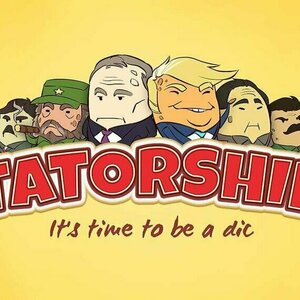

The world of politics and democracy is definitely a complicated and confusing place. Finding your way through all the jargon and political processes can be mind-boggling. Enter Tatorship – the card game specifically designed to teach you about democracy and politics as you play!
Disclaimer: We were provided a copy of this game for the purposes of this preview. This is not the finished product, so some of the components may change in the final printing. -L
Tatorship is a card game of hand management and bidding in which players are racing to complete their secret political missions before their opponents. To set up the game, place the 6 Rights in their respective piles in ascending order. Each player randomly selects a Tator, Top Secret Mission, Bottom Secret Mission, and Executive Mission, as well as Action cards and a Bluff card. The Tator is your character, and provides a unique Executive power. The Mission cards (Top, Bottom, and Executive) each refer to specific Rights in the play area. Action cards provide resources necessary for interacting with the Rights, and for use during the Election.
On your turn, you interact with the current Rights on the table. The Rights in play act as the ‘rules’ for the current round. For example, one Right tells you how many Action cards to draw each turn, and another tells you what your hand limit is at the end of your turn. During this phase, you will also have the opportunity to ‘erode’ (remove) Rights from play. To erode a Right, you must pay the resources displayed on the Right card. Each Right has 4 cards, and the bottom-most card must be showing for that Right to be considered to be completely eroded. Your secret Missions require you to erode specific Rights in play, so you must strategize how to use your resources to best benefit your Missions. After all players have taken a turn, the game moves to the Election phase. During the Election, players are casting votes (the # of resources on the Action card is the # of votes it is worth) in an effort to elect a player to be the Executive for the next round. The Executive goes first in the next round, and gets to assign Roles to all players. In order to complete your Executive mission, you must have the Executive card at time of completion. You can vote for an opponent, as well as yourself. Cast a vote with your Bluff card, however, and your votes do not count! Trick your opponents into thinking you’ve voted for them, but reveal the Bluff and get those votes back. Didn’t win the Election? That’s ok! Take a Backstab card as a condolence. Backstab cards can be played at any time and can negatively affect your opponents, or could give you a leg up over opponents. Play continues until one player has completed all 3 of their secret Missions.
If you are confused at all by the rules/gameplay overview above, I have to admit that I am too. The rules provided with this game are extremely vague and confusing to understand. Not even a rulebook, these rules are compiled on 3 separate playing cards. The text is sparse, ambiguous, and contradictory. For example, one card says that each Right is followed once per turn per player, but in any order. But one of the Rights pertains to the Election phase, which I believe only happens once per round? Or does it happen on every single players’ turn since each Right is supposed to be followed by every player on every turn? The ambiguity of the rules bleeds over into other cards as well. Some cards say to ‘discount’ a Right, but nowhere does it say what ‘discount’ means. Do you immediately erode that Right by one? Or do you just pay one fewer resource to erode? There is no clarification anywhere, and that made this game frustrating to play.
Another qualm with this game is that it is supposed to be educational, but I do not think it achieves its goal. I do have to commend the creators for their efforts, but I think they fall flat. Every Action card has small text at the bottom that details the political concept addressed on the card. Here’s the catch – the text is educational, but it is so small that it can be easily ignored. It also has no bearing whatsoever on the gameplay, so I have to admit that I almost never read any of that extra text.
In theory, this game could be fun and educational. In actuality, though, it falls flat. The ambiguity of the rules meant that we played differently nearly every time. We tried interpreting the rules in several ways, but ultimately we just got frustrated by not knowing how everything actually works. With some serious rules work, this game has the potential to be something good. But in its current state, it feels more like a half-baked potato.
Disclaimer: We were provided a copy of this game for the purposes of this preview. This is not the finished product, so some of the components may change in the final printing. -L
Tatorship is a card game of hand management and bidding in which players are racing to complete their secret political missions before their opponents. To set up the game, place the 6 Rights in their respective piles in ascending order. Each player randomly selects a Tator, Top Secret Mission, Bottom Secret Mission, and Executive Mission, as well as Action cards and a Bluff card. The Tator is your character, and provides a unique Executive power. The Mission cards (Top, Bottom, and Executive) each refer to specific Rights in the play area. Action cards provide resources necessary for interacting with the Rights, and for use during the Election.
On your turn, you interact with the current Rights on the table. The Rights in play act as the ‘rules’ for the current round. For example, one Right tells you how many Action cards to draw each turn, and another tells you what your hand limit is at the end of your turn. During this phase, you will also have the opportunity to ‘erode’ (remove) Rights from play. To erode a Right, you must pay the resources displayed on the Right card. Each Right has 4 cards, and the bottom-most card must be showing for that Right to be considered to be completely eroded. Your secret Missions require you to erode specific Rights in play, so you must strategize how to use your resources to best benefit your Missions. After all players have taken a turn, the game moves to the Election phase. During the Election, players are casting votes (the # of resources on the Action card is the # of votes it is worth) in an effort to elect a player to be the Executive for the next round. The Executive goes first in the next round, and gets to assign Roles to all players. In order to complete your Executive mission, you must have the Executive card at time of completion. You can vote for an opponent, as well as yourself. Cast a vote with your Bluff card, however, and your votes do not count! Trick your opponents into thinking you’ve voted for them, but reveal the Bluff and get those votes back. Didn’t win the Election? That’s ok! Take a Backstab card as a condolence. Backstab cards can be played at any time and can negatively affect your opponents, or could give you a leg up over opponents. Play continues until one player has completed all 3 of their secret Missions.
If you are confused at all by the rules/gameplay overview above, I have to admit that I am too. The rules provided with this game are extremely vague and confusing to understand. Not even a rulebook, these rules are compiled on 3 separate playing cards. The text is sparse, ambiguous, and contradictory. For example, one card says that each Right is followed once per turn per player, but in any order. But one of the Rights pertains to the Election phase, which I believe only happens once per round? Or does it happen on every single players’ turn since each Right is supposed to be followed by every player on every turn? The ambiguity of the rules bleeds over into other cards as well. Some cards say to ‘discount’ a Right, but nowhere does it say what ‘discount’ means. Do you immediately erode that Right by one? Or do you just pay one fewer resource to erode? There is no clarification anywhere, and that made this game frustrating to play.
Another qualm with this game is that it is supposed to be educational, but I do not think it achieves its goal. I do have to commend the creators for their efforts, but I think they fall flat. Every Action card has small text at the bottom that details the political concept addressed on the card. Here’s the catch – the text is educational, but it is so small that it can be easily ignored. It also has no bearing whatsoever on the gameplay, so I have to admit that I almost never read any of that extra text.
In theory, this game could be fun and educational. In actuality, though, it falls flat. The ambiguity of the rules meant that we played differently nearly every time. We tried interpreting the rules in several ways, but ultimately we just got frustrated by not knowing how everything actually works. With some serious rules work, this game has the potential to be something good. But in its current state, it feels more like a half-baked potato.
CI

CCNA ICND2 640-816 Official Cert Guide
Book
New Edition of Best Selling Official Cert Guide: Updated Content, New Exercises, and Expanded...

Lottie disney bookworm (1056 KP) rated A Frozen Heart in Books
Sep 20, 2020

Contains spoilers, click to show
It seems like adaptations of Frozen and Frozen 2 are everywhere right now: it must be so hard for an author to come up with a story that is different enough to draw readers in but still in-keeping with the story. Luckily, Elizabeth Rudnick’s skilled writing turns the typical Frozen tale on its head: telling it solely from the perspective of Anna and Hans.
It is this, seemingly simple, difference that gives “A Frozen Heart” it’s edge. The inclusion of Hans’ viewpoint allows us to witness his upbringing as the 13th Prince of The Southern Isles: we visit looming, black, inhospitable castle with it’s stern, hard-to-please King; an absent-minded, weak but loving Queen and the youngest Prince who has been bullied for his entire life.
Rudnick’s characterisation of Hans is nothing less than pure genius. It is difficult to feel anything but pity for Hans during his childhood: he is constantly disappointing his father and being physically and emotionally bullied by his brothers. The only family member whom Hans truly seems to love is his mother but she is portrayed as somewhat absent in her mental state. (As a mother I can only assume this is from having 13 sons! I struggle with 2!)
Even when Hans “plots” his way to Arendelle, it is purely an evacuation plan. He is so desperate to leave the Southern Isles that he believes Elsa, a social enigma of a future queen, is his best chance for a new life. Then, when Hans realises Elsa is a lost cause and goes off singing and dancing into the night with Anna, at first, the reader genuinely believes his intentions are good. It even reminded me of the fan theory that Hans is the real deal until the trolls sing “get the fiancé out of the way”.
Hans is never completely trustworthy though: he is too acutely aware of how others view him and his actions, as well as the relative power those onlookers have and whether they will support him with his next, calculated move.
Hans also seems to be of the opinion that a Queen needs a King and the King will rule. Apart from being adoringly archaic(!), it is likely that this could be an effect of the relationship between his parents: the brief insight we have into the King and Queen of the Southern Isles suggest Hans has never had a strong female role model in his life. Again, Rudnick’s writing and characters implying that Hans is not 100% to blame: perhaps he is merely a product of the harsh environment he was brought up in?
Unfortunately, the deep-rooted power complex instilled from his father wins out in the end and Hans can see no alternative life but one where he is ruler. Thus, the villain in him rises; constantly calculating and predicting how his actions will be judged by others and the tale with which we are so familiar plays out.
Anna’s story runs along similar parallels to Hans, with neglect and isolation from her closest family. However, the way this pain manifests in Anna could not be further than that of the Prince of the Southern Isles.
‘A Frozen Heart’ reflects Anna’s vulnerability in every sentence. As a young girl Anna lost her freedom as well as her best friend and sister; as a teenager she loses her parents and this has formed an extremely fragile, trusting, naïve young woman. Anna has lived the definition of a sheltered childhood: is it any wonder she falls in love with the first man who pays her attention? Anna’s even confesses to herself: “That is all I ever wanted. For someone to love me”.
Despite this, Anna does not present as a weak character. Yes, she is a hopeless romantic: all the best people are in my opinion! However, she is also strong-willed and is willing to go to any lengths to bring back her sister. Rudnick’s first-person perspective only highlights this strength in Anna: she completely accepts her faults and can see the error in her actions, particularly when it comes to Hans, but she can not and will not give up.
I really enjoyed the insight into Hans and Anna’s thoughts and particularly into Hans’ background. However, once this initial thrill was over, I felt that ‘A Frozen Heart’ merely followed along with the plot of the movie and, dare I say, became a bit lazy?
Please don’t misunderstand me, I did enjoy the book and Rudnick did an amazing job bringing to life our favourite characters on the page but I just needed a little bit more: perhaps an insight into Kristoff’s backstory? How does a young boy with a reindeer find himself adopted by trolls? Is Kristoff even an orphan? What has he experienced in order to consider the trolls love doctors?
‘A Frozen Heart’: an interesting concept but maybe played it a little too safe? Please let me know your thoughts.
It is this, seemingly simple, difference that gives “A Frozen Heart” it’s edge. The inclusion of Hans’ viewpoint allows us to witness his upbringing as the 13th Prince of The Southern Isles: we visit looming, black, inhospitable castle with it’s stern, hard-to-please King; an absent-minded, weak but loving Queen and the youngest Prince who has been bullied for his entire life.
Rudnick’s characterisation of Hans is nothing less than pure genius. It is difficult to feel anything but pity for Hans during his childhood: he is constantly disappointing his father and being physically and emotionally bullied by his brothers. The only family member whom Hans truly seems to love is his mother but she is portrayed as somewhat absent in her mental state. (As a mother I can only assume this is from having 13 sons! I struggle with 2!)
Even when Hans “plots” his way to Arendelle, it is purely an evacuation plan. He is so desperate to leave the Southern Isles that he believes Elsa, a social enigma of a future queen, is his best chance for a new life. Then, when Hans realises Elsa is a lost cause and goes off singing and dancing into the night with Anna, at first, the reader genuinely believes his intentions are good. It even reminded me of the fan theory that Hans is the real deal until the trolls sing “get the fiancé out of the way”.
Hans is never completely trustworthy though: he is too acutely aware of how others view him and his actions, as well as the relative power those onlookers have and whether they will support him with his next, calculated move.
Hans also seems to be of the opinion that a Queen needs a King and the King will rule. Apart from being adoringly archaic(!), it is likely that this could be an effect of the relationship between his parents: the brief insight we have into the King and Queen of the Southern Isles suggest Hans has never had a strong female role model in his life. Again, Rudnick’s writing and characters implying that Hans is not 100% to blame: perhaps he is merely a product of the harsh environment he was brought up in?
Unfortunately, the deep-rooted power complex instilled from his father wins out in the end and Hans can see no alternative life but one where he is ruler. Thus, the villain in him rises; constantly calculating and predicting how his actions will be judged by others and the tale with which we are so familiar plays out.
Anna’s story runs along similar parallels to Hans, with neglect and isolation from her closest family. However, the way this pain manifests in Anna could not be further than that of the Prince of the Southern Isles.
‘A Frozen Heart’ reflects Anna’s vulnerability in every sentence. As a young girl Anna lost her freedom as well as her best friend and sister; as a teenager she loses her parents and this has formed an extremely fragile, trusting, naïve young woman. Anna has lived the definition of a sheltered childhood: is it any wonder she falls in love with the first man who pays her attention? Anna’s even confesses to herself: “That is all I ever wanted. For someone to love me”.
Despite this, Anna does not present as a weak character. Yes, she is a hopeless romantic: all the best people are in my opinion! However, she is also strong-willed and is willing to go to any lengths to bring back her sister. Rudnick’s first-person perspective only highlights this strength in Anna: she completely accepts her faults and can see the error in her actions, particularly when it comes to Hans, but she can not and will not give up.
I really enjoyed the insight into Hans and Anna’s thoughts and particularly into Hans’ background. However, once this initial thrill was over, I felt that ‘A Frozen Heart’ merely followed along with the plot of the movie and, dare I say, became a bit lazy?
Please don’t misunderstand me, I did enjoy the book and Rudnick did an amazing job bringing to life our favourite characters on the page but I just needed a little bit more: perhaps an insight into Kristoff’s backstory? How does a young boy with a reindeer find himself adopted by trolls? Is Kristoff even an orphan? What has he experienced in order to consider the trolls love doctors?
‘A Frozen Heart’: an interesting concept but maybe played it a little too safe? Please let me know your thoughts.