

Hazel (1853 KP) rated The Smoke Thieves in Books
May 8, 2018
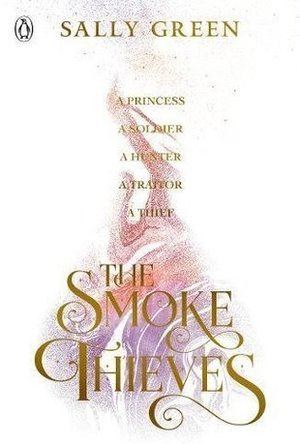

From the author of the popular fantasy trilogy, Half Bad comes a brand new historical-fantasy series: The Smoke Thieves. Featuring a princess, a traitor, a soldier, a hunter and a thief, Sally Green’s fictional world is a dangerous place for these five teenagers. From demons to tyrannical fathers, they must do their best to overcome every obstacle placed in their way to survive a world that is destined for conflict.
The five main characters are a mixed bag of personalities and status. Princess Catherine is preparing for her arranged marriage, which aims to politically unite two nations, or so she believes. Her brutally ambitious father, on the other hand, has other ideas. Ambrose, Catherine’s guard and a traitor to her father, escapes death by chasing after Catherine with news of her father’s real plans.
Meanwhile, March, a soldier whose entire family and heritage were wiped out in a war, aims to get revenge by finding his king’s illegitimate son and only heir, however, he does not anticipate the prince being the naïve thief, Edyon. March and Edyon travel through the country in the company of an elderly man until they are ambushed by a demon hunter and his thirteen-year-old assistant, Tash. All Tash wants to do is hunt demons, collect their drug-like smoke and sell it so she can buy a pair of boots, but fate has other plans, and it is all because of demon smoke.
Coming from all walks of life, the unlikely characters join forces at the conclusion of the book, preparing to face the biggest battle of their young lives. The first book of the series is an exciting introduction to the action promised in the following novels. Slow to start but growing increasingly interesting, The Smoke Thieves is an engaging story with fantastic main characters.
As a work of historical fantasy, The Smoke Thieves is a welcome change from the contemporary fantasy Sally Green has previously written. This book suggests the author has great ideas to come in the near future.
graveyardgremlin (7194 KP) rated First Grave on the Right (Charley Davidson, #1) in Books
Feb 15, 2019
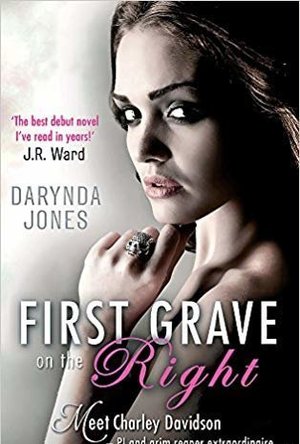
There are two major plot lines involved within the covers: the murder of three lawyers and how it ties into an innocent man and the mysterious entity who steams up Charley's dreams with some hot, hot action (and isn't as stalkerish as it sounds from the description). While the former seems to become an afterthought by the end, it ties up rather nicely, even if it's rather abrupt in comparison to how it's paced at the beginning. Though it is the other plot that is the more intriguing of the two and kept me reading so I could find out what happened next. I'm happy with how it ended and the author did a good job leaving me wanting to know more. The writing is capable, even if there was some redundancy of certain phrases and words, but it got better the further into the story I got. The book is bursting with sarcasm, which I love, and there's rarely a passage that doesn't have one snarky little morsel included. I hope future entries in the series will expand some of the other characters that are glossed over, but overall, this was a blast to read. If you're looking for a fast, fun piece of brain-candy, look no further, pop into this for a sweet treat. Also, kudos to whoever chose the cover, it captures the book perfectly.
3.5 stars

Gail (4 KP) rated Infinitely Mine (Incapable, #3) in Books
Jun 4, 2018

Just like the first two book you develop love and hate emotions for Emmalin. I don’t understand why she is so stubborn. I wanted to rock her in my arms and tell her it would be ok. But then I would want to slap her because she wouldn’t be in the situation if she would’ve talked to Grayson. So much unnecessary pain she caused herself because she wanted to run. Her self worth was so low she believed that the man who would do anything for her would want someone else. There’s no way she believed he loved her if she could do what she did so easily. She was amazing at times and in those moments she was invincible to me. She could do no wrong because she did everything genuinely and without hesitation.
What can I say about Grayson? He is amazing, stubborn, bullheaded and loyal. I was so ped off at him for letting her leave. Then he gets her followed but doesn’t go after her. Instead he acts like a child and deliberately sets out to hurt her. But praise the lord he came to his senses. The while Carmen thing was crazy. How anyone can fake loving someone like Grayson is beyond me. I wanted to hug him for understanding and loving Emma so patiently. To put up with all her moods and still come out loving her.
This couple couldn’t catch a break but it all turned out amazingly at the end. If it hadn’t I would’ve had to do something crazy. If you haven’t started thus series you don’t know what you are missing. The ups and downs alone will have you on edge. But the drama, explosive emotions and love will be what keeps you turning the page.
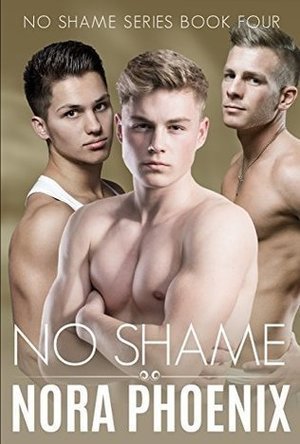
No Shame (No Shame #4)
10.0 Rate It
Book
(This is NOT a stand alone novel. See end of this description for details) Brad feels nothing but...
M_M Contemporary Romance

The Thinking Man's Soldier: The Life and Career of General Sir Henry Brackenbury 1837-1914
Book
Sir Henry Brackenbury is a now largely forgotten but extremely important soldier, writer, and...
Debbiereadsbook (1818 KP) rated HIS Fantasy (HIS #8) in Books
Feb 6, 2018
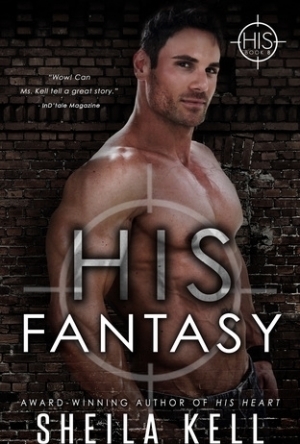

This is book 8 in the HIS series, but they all can be read as stand alones. However reading them in order will give you a better understanding of how the Hamilton family works, and just why Brad fights so hard against falling in love.
Brad Hamilton is the last man standing. (had to say, I chuckled when that appeared in the book!) The last brother to meet t after he said something, she left him. Now Madison is back in town and in danger, so of course Brad goes all ALPHA male on her. But Brad has secrets. and when those secrets threaten Madison, the Hamilton brothers pull out all the stops, to not only keep Madison safe, but to clear their brother's name.
It's always sad to come to the end of a series, especially one you have watched grow from the very first one, one you have watched the author's skill grow with every book along the way. Brad's story is a fitting end to an amazing journey.
Brad's secret has been hinted at along the way, but never fully revealed until now, and I did like being kept waiting on that front. That Brad didn't actually do anything wrong, he just thought he had, shows the depth of character Brad has. His brothers never doubted him, and neither does Madison when she gets the full story.
Brad and Madison's chemistry is hot off the charts, but I liked that it takes them time to finally give in to their feelings, and when Brad falls, he falls HARD and he falls FAST. Madison is half in love with Brad from the very beginning, I think!
I loved that ALL the brothers pop in and out at some part of this story, and Blake and Elizabeth too. We get to catch up with all the babies born, and those on the way, and I really don't think it will be long before Brad and Madison have their own news to share.
I loved the planning of them all being together at Thanksgiving, and the table cloth idea was a fabulous idea I may well steal! Maybe at some point in the future, we can drop in on their Thanksgiving, just to catch up with everyone. I often wonder whether, when their series is finished whether characters actually shut up on their authors, or just lurk in the background waiting to pounce!
It did not feel as long a read as the others, but page length is pretty consistent through the brothers books, but dad's book is only short.
A fitting end, I think. I can't wait to see what Ms Kell comes up with next.
Thank you, for writing these books, I will miss them all.
5 full and shiny stars
**same worded review will appear elsewhere**
Alice (12 KP) rated The Dead Seekers (Dead Seekers, #1) in Books
Jul 3, 2018

Original review can be found on my blog Raptureinbooks <a href="http://wp.me/p5y0lX-1Jk">here</a href>
<i>The Dead Seekers</i> is the first in a new series from Barb & J.C. Hendee which follows in the same vein as their Noble Dead series with strong characters and a good storyline. The Dead Seekers follows Tris - or as he is known throughout the book The Dead’s Man – a ghost hunter with the ability to see, interact with and control the dead after he was stillborn; and Mari, a shape-changing gypsy/traveller (known as a <i>Mondyalitko</i>) whose parents were killed when Tris was a child outside of his ancestral home who is convinced that The Dead’s Man is responsible.
The story begins with the birth/death of Tris and subsequent miracle of his rebirth and with the slaughter of Mari’s family a few years later. It then follows Tris as he performs his job as a ghost hunter and banisher of nasty spirits; Mari manages to track him down after a prolonged period of hunting him herself and follows him to his next job which involves the banishing of a spirit who has been kept on this plane against her will by her mother.
Mari saves Tris’ life the first night they are together as no one else can kill her prey and then continues to save his life on many occasions throughout the remainder of the book which is at odds with her nature to kill him as she believes he is the one responsible for murdering her family when she was a child – in a way, he is which is explained really well later on in the book at the end when their investigations into the spirit of the town take them further afield to a city barracks where several people are dying in odd manners.
The depiction of the ghosts were in themselves quite good, particularly how they weren’t depicted as what I refer to as basic ghosts but instead each one had a description of how they actually died – for example head wounds or missing limbs etc. which I quite liked. I also liked the tension between Tris and Mari which was eventually eased towards the end of the book once Mari realised who and what Tris actually was. The description of Mari as her other side was also written exceedingly well with a more animal personality at the forefront rather than the human side of her as with most shape-changers.
In all, it was an interesting concept with a couple of nifty little bits here and there that I liked. I look forward to the next installment.
Leanne Crabtree (480 KP) rated The Professional (The Game Maker, #1) in Books
Sep 5, 2019
*I received this copy via Netgalley in exchange for an honest review*
As a huge fan of Kresley Cole and her Immortals After Dark series, I was interested to see what this new book would be about since it was a contemporary romance.
From the first chapter I was fascinated by Natalie and her “manalyzer”, managing to figure out every guy in the bar just by watching them for a few seconds. That is, apart from Sevastyan who she can’t read and instantly catches her attention. Things quickly move along after this and she get’s spirited away to Russia to meet her family, but not without a few hot–and I do mean HOT–scenes between her and Sevastyan.
One thing I did like about the book was that the author didn’t do the typical Mafiya man as Natalie’s dad. In fact, I quite liked the man that was described; he seemed like a nice guy who had a love of clocks and family.
For the first half of the book it was kind of serene, everything was going well. Okay, that’s not quite true. There’s a sexual tension between Natalie and Sevastyan that despite the distance they’ve put between them is only growing and I have to tell you I couldn’t wait for it to blow.
I feel about now that I should mention that I’m not the hugest fan of erotica; I tend to get bored of the continuous sex. Depending on what’s going on and how much I like the characters is how I judge the scenes between them. I happened to like both Sevastyan and Natalie and the sex between them but the dirty talk while in bed always had my eyes rolling. That, I’m not a fan of.
After the half way point it seemed to concentrate more on the sex and the BDSM lifestyle, which I found a little boring after a while. BDSM is not one of my favourite things to read about and in small doses I don’t mind but it took up a fair bit of the book.
With about 15% to go, I got a little excited as some information came out that had me wondering what Natalie would do with it. Relationship difficulties coming to a head I wanted to know how it would all play out. And after another round of sex, we found out some things about Sevastyan’s past.
I’m glad I read this, simply because Kresley Cole is a great author and I was interested in reading something of hers that wasn’t paranormal. I read books for the romance and like to see it happening on paper/screen. The first half was great, it just wasn’t quite for me with all the sex and BDSM themes running through. If you’re a fan of it, then I’d check this out.
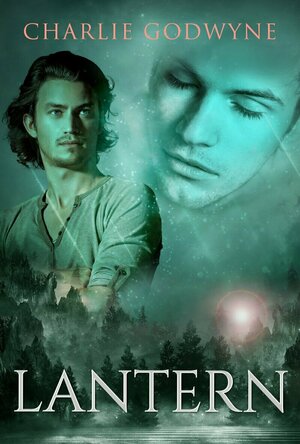
Lantern (Danubian #1)
8.0 Rate It
Book
In the black night, I alone uphold the shrine of the seven lantern gods. The year is 2448....
MM Paranormal Romance

Gareth von Kallenbach (980 KP) rated The Amazing Spider-Man (2012) in Movies
Aug 7, 2019
Selecting the relatively new Marc Webb who, outside of “500 Days of Summer”, had worked on music videos and most recently directed episode of The Office and the pilot for Lone Star, seemed like a very odd choice to turn over the billion-dollar franchise. The selection of American-born English actor Andrew Garfield also seemed to be an interesting choice to don the tights of the wall crawler.
Thankfully this is exactly the fresh start that the series needed. Even though I went into the film with guarded and reserved expectations I must say that I’m absolutely delighted with how the final product came out as this is a very fresh and faithful adaptation of the beloved comic book character that, in my opinion is the best adaptation to date on film.
The screenplay by James Vanderbilt was based on a story credited to three other writers all of whom clearly understand the character and the source material and are focused first and foremost with being respectful to it rather than putting their own unique stamp and take on the franchise.
The film does take a little bit of liberty by showing Peter Parker’s parents as they place young Peter in the custody of Ben and May Parker (Martin Sheen and Sally Fields) as they flee into a rainy night from implied danger, never to be seen again.
The film continues with teenage Peter (Andrew Garfield), plodding his way through high school. As brilliant as Peter is academically, he is extremely awkward around girls especially the lovely Gwen Stacy (Emma Stone), who never fails to catch his eye. When a clue from his father’s past arises, Peter finds himself at Oscorp where Gwen works as an intern. Peter also finds himself on the radar of his dad’s former partner Dr. Curt Connors (Rhys Ifans), who becomes intrigued by young Peter’s scientific theories and even more so in his abilities when he learns that he is the offspring of his former partner.
Dr. Connors is working on cross species genetics and hopes that not only will it someday replaces missing arm, but will also pave a bold new direction for humanity. During a visit to the lab Peter, is bitten by a radioactive spider, and as any fan of the series knows, begins to exhibit amazing strength, agility, and perception, as well as the ability to walk on walls and cling to ceilings. In a very refreshing return to form, Peter fashions his famous web slingers rather than have them be organic as the previous film series did.
When a twist of fate puts Peter on the path of vengeance, he becomes a masked vigilante who uses his newfound abilities to rid New York some of its less pleasant citizens. These activities do not sit well with Captain Stacy (Denis Leary), who also happens to be Gwen’s father. As Peter and Gwen become closer, the duality of hiding his new identity from Capt. Stacy and Aunt May becomes even more imperative.
Naturally, it would not be much of a superhero film without a super villain, and Dr. Connors is more than willing to step up to this. Faced with pressure from his bosses he decides to use an experimental serum on himself. At first he is delighted as he seems to regrow his lost limb, but then in a Jekyll & Hyde-like transformation he transforms into a gigantic lizard creature bent on revenge and destruction as he attempts to complete a plan that will devastate millions of New York citizens.
Since Peter helped provide the equation that led to the formula that transform Dr. Connors, he feels obligated to stop the raging creature and to save his mentor no matter the cost. What follows are some truly spectacular action sequences including sewer battles in an extremely memorable finale across the Manhattan skyline.
While the film did take its time getting started as it established its back story and introduced the characters, once it got rolling it was an extremely fun and exhilarating ride. Garfield and Stone have a very good chemistry with one another and the reports of them recently dating off screen further solidifies their on-screen bond. Garfield wonderfully captures the conflicted emotions of Peter Parker as well as the brilliantly awkward genius that he is.
He runs the gamut of emotions from showing his anger and frustration to the dopey awkwardness of his interactions with Gwen and very believable manner. When he becomes infused with his new abilities you can almost share the glee that he has as he swings and flips around the landscape. The sheltered, socially awkward young man disappears when he dons the mask. He’s free to let himself go and Garfield does this with a childlike delight as well as the trademark quips and wisecracks that made the character such a beloved icon.
Garfield handles the physical duties of the role quite well and shines both in and out of the costume. I thought Tobey Maguire did a fantastic job bringing the character to life previously, but in my opinion Garfield has captured the essence of Peter Parker/ Spider-man and made it his own with a truly wonderful performance all around.
Stone does a great job as the love interest in the film as she is more than just eye candy and the typical damsel in distress far too common with this type of film. She challenges Peter and you can see some gleeful delight in her eyes when Peter awkwardly stumbles around her in an attempt to ask her out. Because she clearly enjoys the situation Gwen is not about to make it any easier on Peter, even though she’s been waiting for him to muster the courage for ages. She’s a strong and determined woman who gives a good range of emotions in her scenes and complements Garfield exceptionally well.
The supporting cast was very good especially Leary and Fields and Ifans does a good job as the quietly restrained Connors. In what could’ve easily been a scenery chewing, over-the-top Machiavellian bad guy, Ifans portrays Connors as a very sympathetic and understandable figure. He is a scientist first and foremost who is trying to do what he believes is right. He is not suited for the political machinations of a large corporation and when he begins this transformation and the animal side takes over there is still a hint of humanity amongst all the CGI work for the re-imagined Lizard.
While it did take me a while to get used to the look of The Lizard having become accustomed to his portrayal in comics and cartoons, I have to say it was a good updating it still stayed faithful to the essence of the original character.
Webb wisely decided to shoot in 3-D and not do a post filming conversion. It is the visually captivating and at times stunning cinema photography that really sets the tone for the film. You can truly get an idea of what it is like to be Spider-man as he swings and flips through the city and the point of view shots of his web firing out to latch onto objects and take down opponents are a lot of fun. Webb clearly knows the subject matter and gets the most out of his very talented cast and tells a very entertaining yet human action story and lets the effects support the film rather than carry it.
The film was much better than “Spider-man 3”. I am so happy that the franchise is in good hands and is moving forward in the right direction. Although the movie did take a while to get up to speed once it got rolling I did not want it to end, and I commented to my wife that I don’t want to have to wait 2 to 3 years for the next installment of the film I’m ready for more now. As a lifelong fan of comic I can honestly say I am beyond delighted with the new film, cast, director, and direction for the series.