
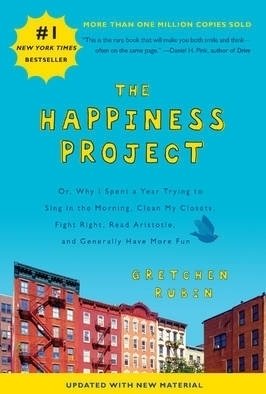
The Happiness Project: Or, Why I Spent a Year Trying to Sing in the Morning, Clean My Closets, Fight Right, Read Aristotle, and Generally Have More Fun
6.0 Rate It
Book
"Wonderful...Rubin shows how you can be happier, starting right now, with small, actionable steps...
Mark Jaye (65 KP) rated Avengers: Endgame (2019) in Movies
May 13, 2019
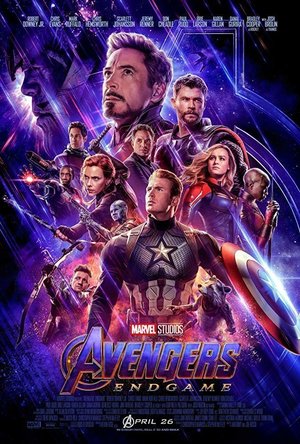


The question is, did it succeed?
At the time of writing 'Endgame' has been in cinemas for over two weeks and all embargoes pertaining to spoilers have since been rescinded. It is on that note that I will make the following SPOILER ALERT and advise anyone yet to see the movie (is there actually anyone out there daring to call themselves a fan who hasn't seen it?!) to leave now.....
Endgame picks up a few short weeks after the events of 'Infinity War' and depicts the surviving heroes of Thanos's snap coming up again him once again. The encounter is very short lived but doesn't go as planned/hoped effectively destroying all hope for returning the vanished. Que a five year time-jump..
Steve Rogers heads up a support group for the survivors, Natasha Romanoff directs the remaining Avengers refusing to move on, Tony Stark and Pepper Potts are living a quiet life raising their daughter, Thor has spiraled into despair at New Asgard effectively leaving Valkyrie in charge, Clint Barton has become the blood-thirsty vigilante Ronin - tracking down and eliminating those criminals who escaped the decimation when his family didn't, and Bruce Banner has found a way to merge personalities with the Hulk allowing both to co-exist as one (Professor Hulk).
Things look pretty grim until AntMan (Scott Lang) returns - quite accidentally, from the Quantum Realm bringing with him the key to bringing everyone back and reversing Thanos's decimation. And that's where time travel appears...
The Avengers must travel back to key moments in their history to remove the Infinity Stones and bring them to the present where Stark and Banner create their own Gauntlet to house them. This involves the second act of the movie displaying some time travel shenanigans as our heroes interact with events - and themselves, of previously seen movies. Such encounters include revisiting the events of Avengers Assemble, Thor:The Dark World, and Guardians Of The Galaxy. Don't expect a retread of the 'Back To The Future' franchise however, as Avengers: Endgame creates its' own rules for time travel. Basically, going back in time and interfering with established events does not alter the future - instead it creates a branched reality (think parallel timeline), however traversing the Quantum Realm will still return you to the original timeline you came from. In other words, go back in time kill Thanos, return to the future and you've changed nothing.... Simple, right?!
That's the basic gist, and all I'll give you for now.
Whilst this does follow on from 'Infinity War', 'Endgame' is stylistically and tonally a different movie. Whereas the former threw us straight into the thick of the action and never let up until the devastating conclusion, throwing a cavalcade of heroes at us in a relentless fashion, 'Endgame' scales it all back (for two thirds of the running time at least) focusing on the original six core Avengers (with strong support from Don Cheadle's War Machine, Karen Gillan as Nebula, Paul Rudd (returning as AntMan), and of course, Rocket Raccoon! With the preceding movie been Captain Marvel you would be forgiven for thinking Brie Larson would play a strong role in this movie, however - with a throwaway line earlier on justifying her absence, Carol Danvers features for all of around fifteen minutes! That's not to say she doesn't make an impact when she does I might add! Given the downbeat tone to 'Endgame' there is a lot of humour from start to finish - Chris Hemsworth, Paul Rudd, Bradley Cooper, I'm looking at you most here!, which in no way detracts from the weight of what's at sake here.
Josh Brolin is back as Thanos, and Thanos...that's right, two versions of the mad Titan appear. The one whom our heroes go up against during the final third act is a past version who travels forward in time to present after seeing into his own future and witnessing the efforts of Earth's Mightiest Heroes and the lengths they are prepared to go to in order to 'decimate' his plans. This is a Thanos whom I would deem more ruthless that 'Infinity War's' protagonist, a Thanos now determined to erase ALL life in the Universe.
I imagine the biggest question - well, one biggie amongst many, fans going into this movie blind had concerned who would return after the shocking climax to 'Infinity War' (along with whether those who died in that movie stayed that way). There was never any doubt - was there, that the vanished would return? It isn't that much of a spoiler then to reveal that the final thirty minutes or so of 'Endgame' features every MCU hero on screen together embroiled in the biggest fight of their lives. And what a visual delight it is. The visuals in this film are fantastic and the final battle rivals anything Peter Jackson gave us.
I was fortunate enough to see 'Endgame' at the first screening (pre-midnight) at a local cinema and what an experience it was - a mini comic con. The atmosphere was electric and it was a highly memorable experience.
Everyone involved in this movie deserves kudos, for this lifelong superhero fanboy Avengers: Endgame is the best movie....ever.
If I may digress somewhat, there has been much confusion reported concerning the movie's ending, namely the resolution to Steve Rogers' story. Having returned the Infinity Stones to their rightful place in the MCU timeline Cap chooses to remain in the past (circa 1940-ish) and to live out his life with Peggy Carter (the final shot shows the two having that well overdue dance). Whilst the perfect sendoff this has left many conflicted as to the implications with some reviewers claiming this goes against the rules established earlier in the movie relating to the use of time travel. It really isn't that complicated. Essentially there are two theories at play that can explain the climax.
The first is that Steve simply lived out a life in secrecy within the established continuity, choosing not to involve himself in major events. This does not contradict what we've seen so far - back in 'The Winter Soldier' we see archive footage of Peggy from the nineteen fifties in which she talks about Captain America saving her (un-named) husband during the war. It isn't really a reach of the imagination to suspect that Cap and this man are one and the same. In the same movie, present day Steve visits a dying Peggy - clearly suffering the effects of dementia, who apologises to him for the life he didn't have. Could this be a reference to the man she married having to live a life of secrecy, choosing to stay out of the fight for fear of creating a divergent reality? Given that the movie establishes that actions in the past will not change the future (within the main timeline) Steve's interference would not change anything in 'our' reality anyhow.
The second theory is that Steve created a branched reality by reuniting with Peggy and lived a fulfilling life in that alternate timeline, only returning to the main timeline an old man when the time was right to handover the shield to Sam Wilson/Falcon (as seen at the end of the movie). Sure, this raises questions as to how Steve was able to cross realities but to be honest - that's a story for another time and the answer isn't important (for now).
Further confusing things is the fact that the Writers and Directors cannot seemingly agree, with Marcus and McFeely disputing the alternate reality theory that the Russo brothers subscribe to. You could argue that surely it is the Writer's view that counts, as..after all, they wrote it! Well, yes and no. The directors translate their understanding of the written word onto the screen and it has been reported that additional material was filmed after test audiences struggled with the time travel aspects of the film. Therefore it's not that hard to believe that the film - and that ending, were shot in a way that supported the film-makers understanding. I subscribe to the former - the romantic in me and all that, with Steve's story coming full circle with the revelation that he was always there with Peggy. Either way, both theories work and preserve the integrity of what has come before.
In any regard it's the perfect ending for Captain America!
So, to conclude....did it succeed? OH YES!!

Purple Phoenix Games (2266 KP) rated Tokyo Highway in Tabletop Games
Oct 30, 2021


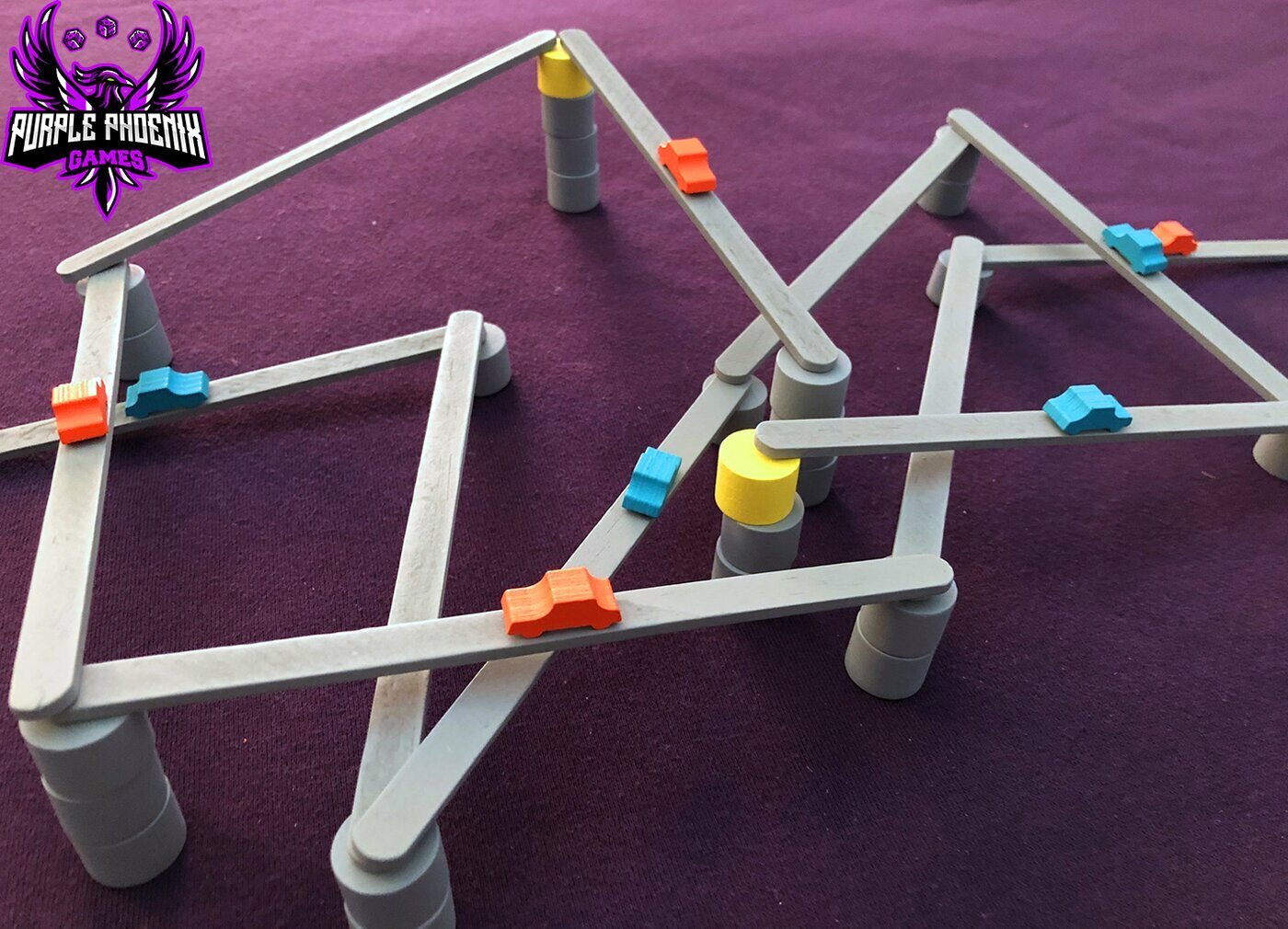
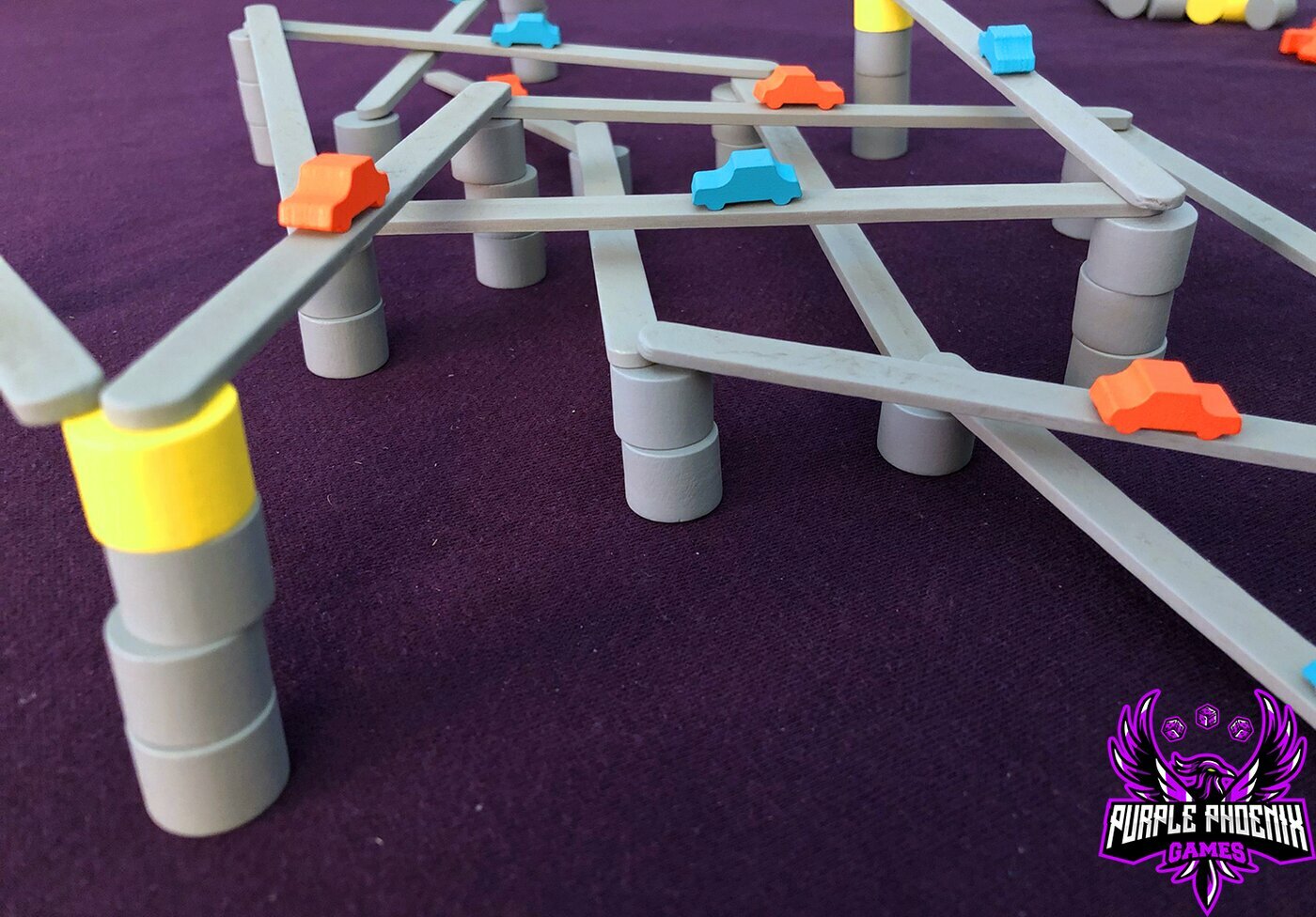
Tokyo Highway is a dexterity game of route building in which players are trying to create a roadway on which their cars will travel. The first player to place all of their cars on the highway is the winner. Originally, Tokyo Highway was for only 2 players, but an expansion has come out to accommodate up to 4 players. This review will address all player counts! To begin the game, hand out components and set up as described in the rulebook for your chosen player count. Select a starting player, and you are ready to begin.
On your turn, you will perform 3 actions: build a column, build a road, and place a car. When building a column, there are 2 things to remember – the column must create a continuation of your existing road, and it must be built exactly 1 level above or 1 level below the column from which it is based. For example, to play off of a column with a height of 2, you must either play a height of 1 or a height of 3. To build a road, take one of your road sticks and place it on the columns so it connects the newly built column to its predecessor. The last part of your turn is to place a car on your road stick, if you have met the placement requirements. The requirements for placing a car are that your new section of road must cross an opponent’s road, either by being the first road to cross over it, or being the first road to cross under it. You may place additional cars on your road stick for additional roads that your segment crosses above/below.
There are a couple of twists in the game, though! First, each player begins the game with a certain amount of Junctions. When you choose to play a Junction, you are allowed to create a column of any height, regardless of the height of its predecessor. Another special power of Junctions is that once you place a Junction, you have the option to branch 2 roads from that single point, instead of only 1 like with regular columns. The other twist? If at any point during your turn, you knock over an opponents’ cars, roads, or columns, you are penalized and must give that opponent the number of equivalent pieces that were toppled from your own personal supply. You then fix the damage, and continue your turn as normal. The game end is triggered when either 1 player has placed all of their cars, or when a player runs out of construction components. The player who places all of their cars first is the winner, or a player that runs out of components loses the game and the other players continue until the game end is triggered again.
For such a seemingly simple game, Tokyo Highway challenges players on 2 fronts: dexterity and strategy. Obviously, your dexterity is put to the test as you try to move steadily, build secure roads, and not topple over any other components in play. It really is harder than it looks, and creates a good physical challenge for players. Strategy comes into play because you have to plan turns in advance and try to anticipate your opponent’s movements in order to create opportunities to place your cars. You’ve got to strategize where you want to build under or over, and then set yourself up for those builds. But you’ve also got to keep an eye on your opponent, because they might unknowingly (or purposefully…) disrupt your strategy with a placement of their own. Players are never idle in this game, everyone is engaged throughout as they plan ahead for success.
My biggest qualm with Tokyo Highway are the rules regarding knocking down roadways on your turn. According to the rules, if you knock anything down, you forfeit components from your supply, and then rebuild the destroyed area. However, as the game progresses and gets more intricate, with roads crossing very tightly together, one misstep could destroy nearly the entire structure. And it is difficult to rebuild since the highway placements vary with literally every turn, and unless you take a picture after every turn, chances are you can’t recreate it from memory. At that point, continuing the game is futile, and then who wins? You either have to restart the game, or just call it then and end it.
The components of Tokyo Highway are pretty great. Everything is sturdy and wooden, and will definitely withstand the test of time. They feel great in hand and are simply just fun to fiddle with between turns! It is a simple and minimalistic game overall, and the components reflect that wonderfully.
So overall, how is Tokyo Highway? I think it is a game with a nearly perfect balance of dexterity and strategy. You must employ both of those to succeed, because focusing on only one will get you nowhere. It definitely offers more than meets the eye, and that is a fun surprise. There is no set game board or layout, so literally every game will be different, allowing for seemingly infinite replayability. It is definitely a game that keeps players engaged and on their toes. Although there are a few issues regarding dexterity ‘accidents,’ the gameplay overall flows well and is logical. Purple Phoenix Games gives Tokyo Highway a speedy 8 / 12.



Cricbuzz Cricket Scores & News
Sports and News
App
Introduction: Cricbuzz, the best app for live cricket scores, created by the same folks at...

MyNetDiary PRO - Calorie Counter and Food Diary
Health & Fitness and Lifestyle
App
Lose weight and get healthy with the world’s smartest diet app. The app takes care of everything -...

Gareth von Kallenbach (980 KP) rated Dusk in Video Games
May 10, 2021



DUSK lovingly blends old and new as it even has a DOS-like startup menu while the game loads to provide plenty of loving nostalgia.
The game is broken down into three chapters and tasks players to survive a dangerous cult and the various creatures and enemies they encounter. The gameplay is fairly simple as players gather weapons, ammunition, health, and other items and dispatch enemies as they race through a level to find various keys needed to open locked doors and advance to the end of the level.
Players will have an impressive arsenal at their disposal from pistols, shotguns, machine guns, hunting rifles, a Rivet gun, grenade launchers, and a sword. All of which will come in handy as there are multiple enemy types that lurk in the darkness.
Players will have a flashlight as well but be warned; there are maps where it will not be functional in certain parts and having to fire guns to provide temporary lighting in order to find a well-hidden path to advance will test your patience.
Players will also be able to double down on some weapons and dual Shotguns can be very enjoyable but may not have the rate of fire that players need.
There are also power-ups along the way that can speed up a player’s rate of fire and other enhancements to help move things along.
Levels were generally very fun and engaging and provided plenty of solid gameplay and enjoyable moments. There is a multiplayer aspect that features the old Deathmatch format but I was unable to find anyone in any of the games during the times I checked.
DUSK was a winning mix of nostalgia and action and had some very clever map designs and sequences such as one frustrating one where gravity was upturned and forced players to be very patient and creative.
I hope we see a DUSK 2 in the near future as the game is a winner and can show bigger studios how to make an engaging shooter that gamers will love without the mega-budget bells and whistles.

Colorimetry PRO
Lifestyle and Education
App
Colorimetry PRO is the first assistant to image consultants and professionals related to the world...

Video & TV Cast for Samsung Smart TV with Remote
Photo & Video and Entertainment
App
Watch any web-video, online movie, livestream or live tv show on your Samsung Smart TV or Blu-ray...

Video & TV Cast for LG Smart TV: Stream Movies App
Photo & Video and Entertainment
App
Watch any web-video, online movie, livestream or live tv show on your LG Smart TV or Blu-ray Player....

Chris Sawin (602 KP) rated Black Swan (2010) in Movies
Jun 21, 2019 (Updated Jun 23, 2019)

Like most ballerinas, Nina (Portman) lives, breathes, and is completely devoted to dance. Artistic director Thomas Leroy (Cassel) is preparing a new spring production of his interpretation of Swan Lake. Nina is next in line to become prima ballerina after the former dancer to hold that spot, Beth Macintyre (Ryder), reluctantly retires. Everything seems to be shifting in that direction until a rather unorthodox, provocative, and unstable (in a dangerous kind of way) dancer named Lily (Kunis) arrives. Lily seems to have an eye for Nina's spot as soon as she walks through the door. Thomas begins to see Nina as the White Swan, which signifies innocence and perfection and Lily as the Black Swan, which is more sensual and deceptive. The problem is that one dancer is required to play both parts. Other than the stiff competition she has to deal with, The Swan Queen role begins to take its toll on Nina who begins to think Lily wants even more than her spot in the production. Nina's obsessive behavior leads to her releasing her dark side that she must now struggle to control.
Aronofsky has always had an exceptional eye for cinematography in his films. His use of micro-photography in The Fountain made the entire film a visually stunning spectacle that will stand the test of time while something like a someone's pupil dilating or a drug deal gone bad in Requiem for a Dream is memorable because of the way and angle Aronofsky shot it rather than relying on its disturbing content to make the scene a classic. Black Swan is no different. Being placed behind Nina whenever she heads to the dance venue gives the viewer a rather unique third person perspective that also gives the impression that you're walking right behind the main character of the film. The intense dream sequences are also shot in a way that flawlessly blur the line between reality and hallucination. Is this really happening or is it all a figment of Nina's deteriorating imagination? Figuring that out is half the film's charm.
The extraordinary main cast is the main ingredient to the film being as great as it is though. The key players all seem to have this twisted side to them that is nearly the exact opposite of the way they first appear to be, which coincides with the Swan Lake theme. Winona Ryder steals most of the screen time she's given whether she's trashing her dressing room, yelling obscenities in Portman's face, or sitting in a hospital room. Even though Mila Kunis seems to play nothing more than her role in Forgetting Sarah Marshall to the most extreme degree on the surface, it's the edge she's given that results in unpredictablity for her character. While Vincent Cassel's performance is strong thanks to his sensual reputation with his dancers and Barbara Hersey is both charming and disturbing as Nina's mother who seems to secretly be trying to live in her daughter's dance shoes after a missed opportunity in her past, it's no surprise to hear that Natalie Portman is the heart of the film. Nina is so consumed with dance that she keeps pushing herself even when her mind and body begin to show her that she's had enough. Her breakdowns are heartbreaking and engaging to watch while her transformation by the end of the film can best be described as a monstrous beauty. It's all thanks to Portman's powerful, phenomenal, tour de force performance.
While some might not be surprised that Aronofsky has created another masterpiece, this may be his most solid and well-rounded film to date. Black Swan is a beautiful, disturbing, and captivating work of art that features gorgeous camera work, an excellent and mindbending story, and one of Natalie Portman's best performances.