
Search
Search results

Boulder Trainer
Sports and Health & Fitness
App
Boulder Trainer is designed for those of you who like the idea of structured fingerboard training...

Merissa (14173 KP) rated Relentless (Relentless, #1) in Books
Jun 8, 2023
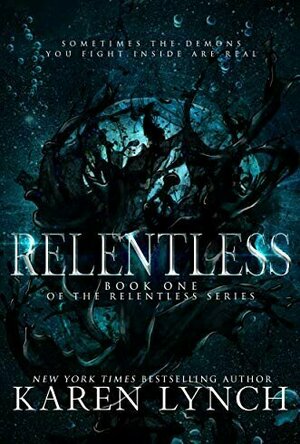


Have you ever picked up a book and thought that you knew exactly where it was heading before you even started it? Well, that's what I thought about this book. I thought it would be a light, easy read where the story follows the 'set' pattern and it would while away a couple of hours. Boy, was I wrong!!!
This story is simply fantastic. It is fresh and incredibly well-written. There aren't many books out there that can blend fantasy with paranormal but Karen Lynch can and does with aplomb. The synopsis states that vampires are involved so fair enough but I certainly wasn't expecting trolls, imps, sylphs, undines and demons - to name but a few! There are enough characters in here so that everyone can have their favourite although I suspect I'm in the majority for thinking that Nikolas is just "Oh Yeah!". The relationships between Sara and her two best friends, Roland and Peter, are not only believable but also in the minority in books. Yes, people, you can be friends with a guy without any benefits apart from a solid friendship. It was so nice to read this part even with the explanation given by Aine as to the why.
Sara has special gifts, some of which can be explained by Nikolas and some that remain a mystery. Sara states that she is not a warrior. Warriors come in different shapes and sizes but Sara definitely is. She has much to learn and I'm really hoping that Nikolas will be there to help her.
Relentless is full of secrets which I loved reading about, it is also full of humour. Sara is a strong female lead and she is not afraid of speaking her mind, especially to Nikolas. One of my favourite parts is when she speaks to Nikolas on the phone and calls Chris "Dimples". It may not be funny here but read the story and you'll see what I mean.
This is book 1 of a trilogy with book 2 (hopefully) due out late this year. I am now stalking, I mean, following 😉 Karen Lynch on Facebook and GoodReads so that I can see it as soon as it's available. Good things come to those that wait and if this book is any indication, book 2 is going to be even better. So many things that I want to see happen. Definitely recommended for anyone who likes YA, Fantasy or Paranormal. Excellent!
* A copy of this book was provided to me with no requirements for a review. I voluntarily read this book, and the comments here are my honest opinion. *
Merissa
Archaeolibrarian - I Dig Good Books!
Mar 9, 2014
This story is simply fantastic. It is fresh and incredibly well-written. There aren't many books out there that can blend fantasy with paranormal but Karen Lynch can and does with aplomb. The synopsis states that vampires are involved so fair enough but I certainly wasn't expecting trolls, imps, sylphs, undines and demons - to name but a few! There are enough characters in here so that everyone can have their favourite although I suspect I'm in the majority for thinking that Nikolas is just "Oh Yeah!". The relationships between Sara and her two best friends, Roland and Peter, are not only believable but also in the minority in books. Yes, people, you can be friends with a guy without any benefits apart from a solid friendship. It was so nice to read this part even with the explanation given by Aine as to the why.
Sara has special gifts, some of which can be explained by Nikolas and some that remain a mystery. Sara states that she is not a warrior. Warriors come in different shapes and sizes but Sara definitely is. She has much to learn and I'm really hoping that Nikolas will be there to help her.
Relentless is full of secrets which I loved reading about, it is also full of humour. Sara is a strong female lead and she is not afraid of speaking her mind, especially to Nikolas. One of my favourite parts is when she speaks to Nikolas on the phone and calls Chris "Dimples". It may not be funny here but read the story and you'll see what I mean.
This is book 1 of a trilogy with book 2 (hopefully) due out late this year. I am now stalking, I mean, following 😉 Karen Lynch on Facebook and GoodReads so that I can see it as soon as it's available. Good things come to those that wait and if this book is any indication, book 2 is going to be even better. So many things that I want to see happen. Definitely recommended for anyone who likes YA, Fantasy or Paranormal. Excellent!
* A copy of this book was provided to me with no requirements for a review. I voluntarily read this book, and the comments here are my honest opinion. *
Merissa
Archaeolibrarian - I Dig Good Books!
Mar 9, 2014

Haley Mathiot (9 KP) rated Sanctuary in Books
Apr 27, 2018


rating: 3.8/5
My Summary: Lea is a refugee who has survived for the past few months living in the wild and traveling from house to random house, just trying to stay alive. When she is found, ill, by American soldiers and taken care of and healed, she has a choice—leave the soldiers and spend the winter by herself, homeless, with no protection in the middle of a war, or trade sex for protection and safety from Major Russell. She chooses the exchange. But Lea and Russell both are not prepared for the outcome of the bargain—Love. Lea and Russell are married, and try to build a real relationship from their original bargain. Can they make it work…
Thoughts: I really hate it when a book has what I call “happy-land syndrome—” where everything works out nicely, relationships are smooth and when they’re rough their fixed quickly and painlessly, and everyone lives happily ever after. This book does have a happily ever after of some sort, but it most certainly does not have happy-land syndrome. This book was a picture of a real marriage—the ups, the downs, the arguments, the forgiveness. There were clear differences between passion, lust, and love (which is always refreshing), and there were arguments the way real arguments happen. There was pride, there was sympathy, and there was forgiveness.
There was a lot of humor in this book! Now mind you it was not a “funny” book, but there were some very good funny pieces of dialogue.
Plot: This book didn’t have a complicated plot, or any huge unexpected occurrences. It was a “simple” story line—but it was a very addicting read. That’s not to say that everything that happened was dull or boring or expected, it just means it was definitely not a sitting-on-the-edge-of-your-seat kind of romance. It was more like a cuddle-up-with-a-cup-of-tea-and-a-blanket kind of romance. It flowed smoothly, and the pacing was very good—not to fast, not too slow. The only thing about the pacing was that the part where they realized that they’d fallen in love didn’t feel like any kind of climax. Which could have been the point, as it did sort of happen slowly.
Characters: I liked the fact that the characters in this book were like real people—they had their strengths and weaknesses, their qualities and their flaws. Lea was stubborn and rebellious, and not at all submissive to her husband, yet she was a sweet and kind girl, and was willing to make sacrifices for Russell. Russell was a very kind man to Lea, and his protective attitude was appealing, however his language and his anger were his downfalls.
Writing: The writing in this book was good. It wasn’t fantastically breathtaking (J.K. Rowling, Robert Frost, Paolini, Dostoyevsky etc.), it wasn’t mediocre (Stephenie Meyer, Becca Fitzpatrick) and it wasn’t atrocious (Meg Cabot.). I can’t really place it in any of those categories. It sort of fell between the first two. It was very readable, it wasn’t dull and empty of good words with barely acceptable sentence structure, but it wasn’t something that sounded like poetry read aloud either. Again, very readable.
Content: There was a lot of sex in this book. I mean, it’s a romance about a girl who trades her body in exchange for being kept alive by a horny soldier, and I expected it, so I’m not saying I was surprised. I think it could have still been a very good powerful romance without all the details. I skipped a few paragraphs here and there. There was also a lot of language. And yes, it is the military, after all. Soldiers swear. They did in the book, too. I guess some people aren’t bothered by stuff like that in books. It wasn’t so bad that I wanted to stop reading, but I thought some of the words (and again, details) could have been left out and the book would have been just as good.
Recommendation: Ages 16+ at least, and wait until you’re 18 if you are picky about content. I rate high for the wonderfully relatable and realistic characters, high-ish for my enjoyment, and medium for plot and writing.
Click here to read the first chapter of Sanctuary.
My Summary: Lea is a refugee who has survived for the past few months living in the wild and traveling from house to random house, just trying to stay alive. When she is found, ill, by American soldiers and taken care of and healed, she has a choice—leave the soldiers and spend the winter by herself, homeless, with no protection in the middle of a war, or trade sex for protection and safety from Major Russell. She chooses the exchange. But Lea and Russell both are not prepared for the outcome of the bargain—Love. Lea and Russell are married, and try to build a real relationship from their original bargain. Can they make it work…
Thoughts: I really hate it when a book has what I call “happy-land syndrome—” where everything works out nicely, relationships are smooth and when they’re rough their fixed quickly and painlessly, and everyone lives happily ever after. This book does have a happily ever after of some sort, but it most certainly does not have happy-land syndrome. This book was a picture of a real marriage—the ups, the downs, the arguments, the forgiveness. There were clear differences between passion, lust, and love (which is always refreshing), and there were arguments the way real arguments happen. There was pride, there was sympathy, and there was forgiveness.
There was a lot of humor in this book! Now mind you it was not a “funny” book, but there were some very good funny pieces of dialogue.
Plot: This book didn’t have a complicated plot, or any huge unexpected occurrences. It was a “simple” story line—but it was a very addicting read. That’s not to say that everything that happened was dull or boring or expected, it just means it was definitely not a sitting-on-the-edge-of-your-seat kind of romance. It was more like a cuddle-up-with-a-cup-of-tea-and-a-blanket kind of romance. It flowed smoothly, and the pacing was very good—not to fast, not too slow. The only thing about the pacing was that the part where they realized that they’d fallen in love didn’t feel like any kind of climax. Which could have been the point, as it did sort of happen slowly.
Characters: I liked the fact that the characters in this book were like real people—they had their strengths and weaknesses, their qualities and their flaws. Lea was stubborn and rebellious, and not at all submissive to her husband, yet she was a sweet and kind girl, and was willing to make sacrifices for Russell. Russell was a very kind man to Lea, and his protective attitude was appealing, however his language and his anger were his downfalls.
Writing: The writing in this book was good. It wasn’t fantastically breathtaking (J.K. Rowling, Robert Frost, Paolini, Dostoyevsky etc.), it wasn’t mediocre (Stephenie Meyer, Becca Fitzpatrick) and it wasn’t atrocious (Meg Cabot.). I can’t really place it in any of those categories. It sort of fell between the first two. It was very readable, it wasn’t dull and empty of good words with barely acceptable sentence structure, but it wasn’t something that sounded like poetry read aloud either. Again, very readable.
Content: There was a lot of sex in this book. I mean, it’s a romance about a girl who trades her body in exchange for being kept alive by a horny soldier, and I expected it, so I’m not saying I was surprised. I think it could have still been a very good powerful romance without all the details. I skipped a few paragraphs here and there. There was also a lot of language. And yes, it is the military, after all. Soldiers swear. They did in the book, too. I guess some people aren’t bothered by stuff like that in books. It wasn’t so bad that I wanted to stop reading, but I thought some of the words (and again, details) could have been left out and the book would have been just as good.
Recommendation: Ages 16+ at least, and wait until you’re 18 if you are picky about content. I rate high for the wonderfully relatable and realistic characters, high-ish for my enjoyment, and medium for plot and writing.
Click here to read the first chapter of Sanctuary.

Acanthea Grimscythe (300 KP) rated Strange Weather in Books
May 16, 2018
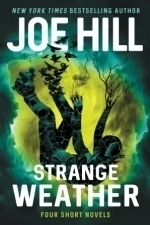


Strange Weather is the first bit of fiction I’ve managed to snare by Joe Hill. I heard some pretty great things about his work, but it’s possible I took those praises a little too much to heart. Rating this book doesn’t come easily. To quote what I told a friend on Twitter, reading Strange Weather felt like an attempt at chewing the gristle on steak. That is, wrong and uncomfortable, but not in a good way. I’ve decided to divvy my review up based on each storry.
SNAPSHOT
“Snapshot,” though a bit lacking in style, is one of two stories in this small collection that I found myself capable of tolerating. I figure it’s because this short tale embodies a sort of Twilight Zone and Night Gallery feel. It read the quickest out of the four stories and I found myself nearly in tears at its conclusion, so the best I can say about it is that I either felt something, or my emotions went bonkers again.
LOADED
The second shorty story in Hill’s collection, “Loaded,” is a bunch of driveling bullshit, for lack of a better word. I’m all about our Second Amendment Rights; I even have a cup that says “Don’t ban guns, ban idiots,” but this story encompasses the stereotypical idea that every gun owner or enthusiast is a batshit crazy blowhard that’s just looking for a reason to go off. I have friends and family that appreciate this machinery, that agree people should under go background and mental wellness checks prior to purchase of a fire arm, but this? This story just adds fuel to a fire that seeks kindling via blame on inanimate objects, rather than the person behind them. The main guy of “Loaded” shows us exactly how restricting gun ownership will fail so hey, better hurry and make it entirely illegal right? Oh, and let’s not get started with the over-saturation of Social Justice Warriorness in this piece. I’m all for equality, but this? This just reeks of extremism in a way that I almost abandoned the book as a whole.
ALOFT
“Aloft” is by far the best in this collection of short stories. An embodiment of the collections title, the main character encounters something unusual while fulfilling a dead friend’s promise and from there, things really take a turn for the bizarre. While I feel Hill gives us a bit too much exposition in this tale, there are many things about it that I feel should be appreciated. For instance, the next time anyone asks me what it’s like to have ulcerative colitis, I’ll probably ask them if they’ve read “Aloft”‘ by Joe Hill, because let’s face it: the torment Aubrey goes through gastrically (is that even a word?) in this story is a pretty damned accurate depiction of the suffering people with Crohn’s and Colitis endure.
RAIN
The final story in Hill’s collection seemed like it could have had a loft of potential. “Rain” further supports the title of the collection when a torrent of crystal nails fall from the sky to impale poor, unexpecting citizens. So what’s the problem then? “Rain” is so fundamentally flawed that it’s just… no. First, Hill is more obsessed with making fun of Trump in this story than the events that occur. This isn’t a bad thing – I absolutely loathe Trump, especially considering his policies may very well shorten my lifespan significantly. “Rain” is more a mockery than the story it could be. At least the twist at the end was fairly amusing, but by that point all I could do is roll my eyes in frustration.
CONCLUSION
Joe Hill’s Strange Weather is probably a poor choice for first time introduction to his work. In fact, it’s almost a deterrent considering it’s the first book by him that I read and I was ecstatic about receiving a review copy. It is with a bit of a heavy heart for the sake of disappointment that I am forced to conclude my review with a largely poor rating. Part of my compliance with FTC guidelines as a reviewer requires that I disclose when I read a free book in exchange for an honest, unbiased review. In this case, I’d like to thank Edelweiss and HarperCollins/William Morrow for this opportunity.
SNAPSHOT
“Snapshot,” though a bit lacking in style, is one of two stories in this small collection that I found myself capable of tolerating. I figure it’s because this short tale embodies a sort of Twilight Zone and Night Gallery feel. It read the quickest out of the four stories and I found myself nearly in tears at its conclusion, so the best I can say about it is that I either felt something, or my emotions went bonkers again.
LOADED
The second shorty story in Hill’s collection, “Loaded,” is a bunch of driveling bullshit, for lack of a better word. I’m all about our Second Amendment Rights; I even have a cup that says “Don’t ban guns, ban idiots,” but this story encompasses the stereotypical idea that every gun owner or enthusiast is a batshit crazy blowhard that’s just looking for a reason to go off. I have friends and family that appreciate this machinery, that agree people should under go background and mental wellness checks prior to purchase of a fire arm, but this? This story just adds fuel to a fire that seeks kindling via blame on inanimate objects, rather than the person behind them. The main guy of “Loaded” shows us exactly how restricting gun ownership will fail so hey, better hurry and make it entirely illegal right? Oh, and let’s not get started with the over-saturation of Social Justice Warriorness in this piece. I’m all for equality, but this? This just reeks of extremism in a way that I almost abandoned the book as a whole.
ALOFT
“Aloft” is by far the best in this collection of short stories. An embodiment of the collections title, the main character encounters something unusual while fulfilling a dead friend’s promise and from there, things really take a turn for the bizarre. While I feel Hill gives us a bit too much exposition in this tale, there are many things about it that I feel should be appreciated. For instance, the next time anyone asks me what it’s like to have ulcerative colitis, I’ll probably ask them if they’ve read “Aloft”‘ by Joe Hill, because let’s face it: the torment Aubrey goes through gastrically (is that even a word?) in this story is a pretty damned accurate depiction of the suffering people with Crohn’s and Colitis endure.
RAIN
The final story in Hill’s collection seemed like it could have had a loft of potential. “Rain” further supports the title of the collection when a torrent of crystal nails fall from the sky to impale poor, unexpecting citizens. So what’s the problem then? “Rain” is so fundamentally flawed that it’s just… no. First, Hill is more obsessed with making fun of Trump in this story than the events that occur. This isn’t a bad thing – I absolutely loathe Trump, especially considering his policies may very well shorten my lifespan significantly. “Rain” is more a mockery than the story it could be. At least the twist at the end was fairly amusing, but by that point all I could do is roll my eyes in frustration.
CONCLUSION
Joe Hill’s Strange Weather is probably a poor choice for first time introduction to his work. In fact, it’s almost a deterrent considering it’s the first book by him that I read and I was ecstatic about receiving a review copy. It is with a bit of a heavy heart for the sake of disappointment that I am forced to conclude my review with a largely poor rating. Part of my compliance with FTC guidelines as a reviewer requires that I disclose when I read a free book in exchange for an honest, unbiased review. In this case, I’d like to thank Edelweiss and HarperCollins/William Morrow for this opportunity.

Mothergamer (1655 KP) rated Heroes of Cosplay - Season 1 in TV
Apr 3, 2019


Plain and simple, after checking out tonight's episode of Heroes Of Cosplay I had a bad taste in my mouth. It just seemed like yet another reality show, but it missed the point of cosplay. While I know the people on the show had no control over the editing, it was disappointing to see them only focus on the competition aspect of it and not showcase the cosplayers who also do it because they love it and have fun doing it. Many of my friends who cosplay come up with some amazing and great costumes. Some compete and some do it for fun, but both love it and enjoy themselves. I really didn't see a lot of joy on this show. I saw a lot of drama, negativity, and judging the other person because they didn't agree with their cosplay choice.
I know it's for TV and it's "scripted", but it would have been nice to see some positive things, such as how encouraging cosplayers can be and supportive of each other about costume choices, or how helpful they can be when asked about how to make a cosplay better or more cost efficient without missing out on making a great costume. Instead, it was essentially The Jersey Shore of cosplay and it was awful. To have the only good thing be Yaya Han with an amazing League Of Legends cosplay by the way, does not make for a good show. There's also the factor that Mark Cronin, an executive producer of the show basically dismissed male cosplayers in a TV Guide interview by stating that their costumes were simpler because it's just body armor, capes, and weaponry and the female cosplayers were more interesting, sexy, and cool. Seriously? Tell that to one of my friends who MAKES his own armor and weapons, actual chain mail and the like. Trust me, there's no simple about it. Both genders put a lot of work into their cosplay, there isn't one is better than the other. Just from that statement alone, I should have known this show was in trouble and not going to be done right at all.
Then there's this wonderful stunt that Syfy pulled:
https://www.facebook.com/photo.php?fbid=615451091819119&set=a.394389740591923.99759.387115251319372&type=1&theater
That's right. They used the photographers' photos WITHOUT permission and they knew exactly what they were doing, as they cropped them so the watermarks did not show on the page, and did not give them credit or get a copyright release from them. They did it to at least seven photographers that we know of. Of course the people who they blatantly STOLE from were angry and they had every right to be. Not only does this show an outrageous show of disrespect to the cosplay community as well as the photographers' whose work they ripped off, it's mind boggling that they thought they could get away with it without anyone noticing! The only one who actually took the time to try and make it right was Yaya Han who stated on her fan page that she had immediately informed Syfy's PR department about it and was doing everything in her power to make sure that the photographers did get credit for their work.
I like Yaya Han. She comes across as genuinely kind, loves cosplay as much as her fans, and unlike Syfy's craptastic PR department, cares about doing the right thing. This is why I really wanted to like this show. I really did. I was pleased to see she was doing this show about cosplay, but after watching this first episode and seeing that Syfy apologized on their page only AFTER they were caught and informed (But let's face it, they KNOW the rules about copyright infringement) that hey, it's bad to steal an artist's work, not even the fantastic Yaya Han can convince me to watch. It's really a shame, because they had an opportunity to do something great and showcase all the aspects of cosplay and what it means to those who enjoy and love it. Instead, they went the let's be gigantic a-holes route and behaved pretty damn shamefully.
So, no I will not be watching this again. One episode was enough.
I know it's for TV and it's "scripted", but it would have been nice to see some positive things, such as how encouraging cosplayers can be and supportive of each other about costume choices, or how helpful they can be when asked about how to make a cosplay better or more cost efficient without missing out on making a great costume. Instead, it was essentially The Jersey Shore of cosplay and it was awful. To have the only good thing be Yaya Han with an amazing League Of Legends cosplay by the way, does not make for a good show. There's also the factor that Mark Cronin, an executive producer of the show basically dismissed male cosplayers in a TV Guide interview by stating that their costumes were simpler because it's just body armor, capes, and weaponry and the female cosplayers were more interesting, sexy, and cool. Seriously? Tell that to one of my friends who MAKES his own armor and weapons, actual chain mail and the like. Trust me, there's no simple about it. Both genders put a lot of work into their cosplay, there isn't one is better than the other. Just from that statement alone, I should have known this show was in trouble and not going to be done right at all.
Then there's this wonderful stunt that Syfy pulled:
https://www.facebook.com/photo.php?fbid=615451091819119&set=a.394389740591923.99759.387115251319372&type=1&theater
That's right. They used the photographers' photos WITHOUT permission and they knew exactly what they were doing, as they cropped them so the watermarks did not show on the page, and did not give them credit or get a copyright release from them. They did it to at least seven photographers that we know of. Of course the people who they blatantly STOLE from were angry and they had every right to be. Not only does this show an outrageous show of disrespect to the cosplay community as well as the photographers' whose work they ripped off, it's mind boggling that they thought they could get away with it without anyone noticing! The only one who actually took the time to try and make it right was Yaya Han who stated on her fan page that she had immediately informed Syfy's PR department about it and was doing everything in her power to make sure that the photographers did get credit for their work.
I like Yaya Han. She comes across as genuinely kind, loves cosplay as much as her fans, and unlike Syfy's craptastic PR department, cares about doing the right thing. This is why I really wanted to like this show. I really did. I was pleased to see she was doing this show about cosplay, but after watching this first episode and seeing that Syfy apologized on their page only AFTER they were caught and informed (But let's face it, they KNOW the rules about copyright infringement) that hey, it's bad to steal an artist's work, not even the fantastic Yaya Han can convince me to watch. It's really a shame, because they had an opportunity to do something great and showcase all the aspects of cosplay and what it means to those who enjoy and love it. Instead, they went the let's be gigantic a-holes route and behaved pretty damn shamefully.
So, no I will not be watching this again. One episode was enough.
Purple Phoenix Games (2266 KP) rated Cthulhu Realms in Tabletop Games
Jun 12, 2019
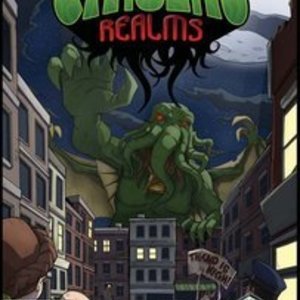

Cthulhu – a theme that is deeply rooted in the board gaming world. There are SO MANY Cthulhu-based games and spin-offs of standard games. Some people really dig the theme, and some people really don’t. So where does this particular game fall on the spectrum? Keep reading to find out!
In Cthulhu Realms, a deck-building game, you are a Cthulhu cultist that is trying to drive your rivals literally insane. By gathering followers, collecting artifacts, and discovering new locations, you will gain enough power to influence the sanity of those who would oppose you! On your turn, you will play cards from your hand to Conjure (acquire new cards from the communal pool), Draw/Discard cards, Gain/Lose Sanity, or Abjure (permanently discard cards from the game). The game ends when a player is reduced to zero sanity – and the player who has retained their sanity is the winner!
I love deck-building games. I really do. I think it’s a neat mechanic that allows you to customize your strategy with every play. So I enjoy playing Cthulhu Realms because of that element. And that’s kind of where my enjoyment ends with this game. Don’t get me wrong – it’s a decent game. I just have a couple of issues with the actual cards and abilities. The cards themselves are very reliant on iconography to communicate powers/abilities. Props to the player boards for having a quick reference for the basic actions, but I still always keep the rule sheet on hand for the in-depth explanation as I play. And even then, the rule sheet still has a bit of ambiguity on how some of the powers work. I wish they’d provided a couple of examples because sometimes I still get confused by certain combinations of icons. Just a little more detail in the rule sheet could alleviate some of the ambiguity of the icon abilities.
For card abilities, each individual card can have anywhere from 1-3 special abilities. The tricky thing is that the abilities do not all have to be used at the same time. So I could use 1 ability from a card, use an ability from a different card, and then come back to my first card and use another of it’s printed abilities. And with a hand of 5 cards every turn (not counting additional cards you may draw…), it can be hard to keep track of which abilities you’ve already used that turn. On top of that, many of the abilities have prerequisites – you can’t use that specific ability unless you’ve already played/have in play the requisite card. Some abilities only have 1 prerequisite, but some have 2, which just adds another layer of bookkeeping to your turns. Not only are you trying to remember which card abilities you’ve already used, but you’re also trying to keep track of your cards/actions that turn that could unlock other card abilities. The rule sheet suggests sliding a card to one side of your play area once you’ve used one of its powers. But again, if it has more than 1 ability on it, you’ve got to remember which ones you’ve used/haven’t used yet, regardless of where they are in your play area. This is a competitive game overall, but with all of these elements to track on your turns, it saps the tension from the game and makes it feel a little more luck-based than strategic.
To alleviate some of my grievances, I think the game could just have more cards with fewer abilities on each. That would make it much easier to execute all of your turns. And eliminate some of the ability prerequisites – having them on most of the abilities just adds another element for you to keep track of, and it feels a little unnecessary. If the turns were a little more clear and concise, I would like this game a lot more. It’s not bad, it just gets bogged down a little bit with too much action on your turns. That’s why Purple Phoenix Games gives Cthulhu Realms a 6/12.
https://purplephoenixgames.wordpress.com/2019/03/22/cthulhu-realms-review/
In Cthulhu Realms, a deck-building game, you are a Cthulhu cultist that is trying to drive your rivals literally insane. By gathering followers, collecting artifacts, and discovering new locations, you will gain enough power to influence the sanity of those who would oppose you! On your turn, you will play cards from your hand to Conjure (acquire new cards from the communal pool), Draw/Discard cards, Gain/Lose Sanity, or Abjure (permanently discard cards from the game). The game ends when a player is reduced to zero sanity – and the player who has retained their sanity is the winner!
I love deck-building games. I really do. I think it’s a neat mechanic that allows you to customize your strategy with every play. So I enjoy playing Cthulhu Realms because of that element. And that’s kind of where my enjoyment ends with this game. Don’t get me wrong – it’s a decent game. I just have a couple of issues with the actual cards and abilities. The cards themselves are very reliant on iconography to communicate powers/abilities. Props to the player boards for having a quick reference for the basic actions, but I still always keep the rule sheet on hand for the in-depth explanation as I play. And even then, the rule sheet still has a bit of ambiguity on how some of the powers work. I wish they’d provided a couple of examples because sometimes I still get confused by certain combinations of icons. Just a little more detail in the rule sheet could alleviate some of the ambiguity of the icon abilities.
For card abilities, each individual card can have anywhere from 1-3 special abilities. The tricky thing is that the abilities do not all have to be used at the same time. So I could use 1 ability from a card, use an ability from a different card, and then come back to my first card and use another of it’s printed abilities. And with a hand of 5 cards every turn (not counting additional cards you may draw…), it can be hard to keep track of which abilities you’ve already used that turn. On top of that, many of the abilities have prerequisites – you can’t use that specific ability unless you’ve already played/have in play the requisite card. Some abilities only have 1 prerequisite, but some have 2, which just adds another layer of bookkeeping to your turns. Not only are you trying to remember which card abilities you’ve already used, but you’re also trying to keep track of your cards/actions that turn that could unlock other card abilities. The rule sheet suggests sliding a card to one side of your play area once you’ve used one of its powers. But again, if it has more than 1 ability on it, you’ve got to remember which ones you’ve used/haven’t used yet, regardless of where they are in your play area. This is a competitive game overall, but with all of these elements to track on your turns, it saps the tension from the game and makes it feel a little more luck-based than strategic.
To alleviate some of my grievances, I think the game could just have more cards with fewer abilities on each. That would make it much easier to execute all of your turns. And eliminate some of the ability prerequisites – having them on most of the abilities just adds another element for you to keep track of, and it feels a little unnecessary. If the turns were a little more clear and concise, I would like this game a lot more. It’s not bad, it just gets bogged down a little bit with too much action on your turns. That’s why Purple Phoenix Games gives Cthulhu Realms a 6/12.
https://purplephoenixgames.wordpress.com/2019/03/22/cthulhu-realms-review/

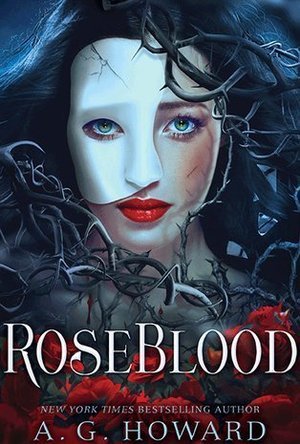
I am most familiar with the tale of the Phantom of the Opera from the musical of that name. It is likely different from the book by Gaston Leroux. I havent read the original novel that inspired the opera and RoseBlood itself in years. As a result, I am sure that I miss some nods to the original or nuances that people more familiar with the story will understand.
Our main character, Rune has a unique relationship with music. Certain works, usually arias written for women, speak to her and make their home in her soul. Upon hearing the soaring notes, she is immediately overtaken by the need to sing and expel the music. When she was younger and her father accompanied her on the violin, those moments were glorious but they did not last. Her father became ill and then died, leaving her with no accompaniment and the music began to cage her. No longer could she just release the notes inside her, but they took something with them and left her feeling ill. If the piece spoke to her she had no choice but let it overwhelm her vocal cords and release.
The Phantom lives in his classic dark dwelling beneath the school, which was once an opera house. He travels the underground river via a boat, has various neglected instruments strewn about and is friendly with a red swan. Just your normal phantom behavior. Pretty early on, we learn that who we first believe to be this iteration of the phantom is not the one from the book and are introduced to the Phantom himself. The Phantom is Thorns guardian and teacher, although he has been sickly lately and Thorn has been taking care of him.
There is an interesting addition in this version of auras and chakras. Rune, Thorn and the Phantom are able to see the music as it fills the air with colour. The Phantom even taught Thorn how to harness that auric energy from emotions, and the even more powerful music, to do things like manipulating feelings and thoughts. Together, Thorn and the Phantom plan to alienate Rune from her teachers and classmates until she discovers the lair surrenders to the darkness and they hope she gives up her music to them.
Runes first day at RoseBlood does not go exactly as she hoped, but her new friend and peer advisor, Sunny introduces her to Jackson Reynolds. My immediate feelings about the two were that they were playing this retelling's version of Meg and Raoul, whether that is, in fact, true you shall have to discover by reading the book. Her relationship with her Phantom parallels that of the original, as he helps her to calm the music inside her.
Although the author provides reasoning later on for their immediate connection and trust, it still feels like insta-love. To know someone for only a short while and frequently consider abandoning or betraying everything youve ever known and believed in for the past decade. That is intense and not something people could just easily give up on whether it is the right way or not.
While I did enjoy this book, I probably would not go out and purchase a copy for myself. In order to make this the next chapter of the Phantom of the Opera, rather than a re-telling the author added some different aspects to the story that were not in the original. I am not entirely sure how I feel about this change it was interesting but as I was reading I didnt feel or believe that it was as well thought out as it should have been. I think that the idea of the story was a lot more intriguing than the actual execution of it ended up being.
After the conclusion of the book, there is a note from the author that describes what inspired her to write this version of the story. It shows where she got each of her ideas and the amount of thought that went into them. As I stated before, I see the merit of each addition (and admire the research that went into them) but it just seemed to be a little too much added and it became unwieldy.
Our main character, Rune has a unique relationship with music. Certain works, usually arias written for women, speak to her and make their home in her soul. Upon hearing the soaring notes, she is immediately overtaken by the need to sing and expel the music. When she was younger and her father accompanied her on the violin, those moments were glorious but they did not last. Her father became ill and then died, leaving her with no accompaniment and the music began to cage her. No longer could she just release the notes inside her, but they took something with them and left her feeling ill. If the piece spoke to her she had no choice but let it overwhelm her vocal cords and release.
The Phantom lives in his classic dark dwelling beneath the school, which was once an opera house. He travels the underground river via a boat, has various neglected instruments strewn about and is friendly with a red swan. Just your normal phantom behavior. Pretty early on, we learn that who we first believe to be this iteration of the phantom is not the one from the book and are introduced to the Phantom himself. The Phantom is Thorns guardian and teacher, although he has been sickly lately and Thorn has been taking care of him.
There is an interesting addition in this version of auras and chakras. Rune, Thorn and the Phantom are able to see the music as it fills the air with colour. The Phantom even taught Thorn how to harness that auric energy from emotions, and the even more powerful music, to do things like manipulating feelings and thoughts. Together, Thorn and the Phantom plan to alienate Rune from her teachers and classmates until she discovers the lair surrenders to the darkness and they hope she gives up her music to them.
Runes first day at RoseBlood does not go exactly as she hoped, but her new friend and peer advisor, Sunny introduces her to Jackson Reynolds. My immediate feelings about the two were that they were playing this retelling's version of Meg and Raoul, whether that is, in fact, true you shall have to discover by reading the book. Her relationship with her Phantom parallels that of the original, as he helps her to calm the music inside her.
Although the author provides reasoning later on for their immediate connection and trust, it still feels like insta-love. To know someone for only a short while and frequently consider abandoning or betraying everything youve ever known and believed in for the past decade. That is intense and not something people could just easily give up on whether it is the right way or not.
While I did enjoy this book, I probably would not go out and purchase a copy for myself. In order to make this the next chapter of the Phantom of the Opera, rather than a re-telling the author added some different aspects to the story that were not in the original. I am not entirely sure how I feel about this change it was interesting but as I was reading I didnt feel or believe that it was as well thought out as it should have been. I think that the idea of the story was a lot more intriguing than the actual execution of it ended up being.
After the conclusion of the book, there is a note from the author that describes what inspired her to write this version of the story. It shows where she got each of her ideas and the amount of thought that went into them. As I stated before, I see the merit of each addition (and admire the research that went into them) but it just seemed to be a little too much added and it became unwieldy.
Fred (860 KP) rated Terraforming Mars in Tabletop Games
Mar 6, 2018
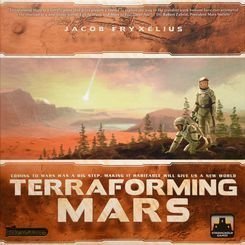

Good game, with one major flaw. The victory points on the cards. See, I've played 4 games of this so far (and one solo) & each time, the victory came due to whoever had the most victory points with their cards. Nothing else mattered. No matter the strategy, no matter the milestones or awards. It was the cards. And here's the problem with that. Getting cards with victory points is luck. You either get them or you don't. First game I played, I didn't even pay attention. I was well ahead of one player, and a few behind the leader. Then, the player in last counted his victory points on the cards & zoomed ahead, winning by at least 10 points. Must have had near to 30 points in cards alone.
Second game, I played against my wife & went for the cards & easily won.
Third game, I played against 4 players & again went for the cards. I got a lot of them & won the game easily. My friend, who had won the first game, said, "I was trying to get the cards with victory points, but I hardly got any. I played every one I got & only got a few points."
Fourth game. Played with my brother, his wife & my wife. Everyone played well, & we were pretty much even along the TR line. I got 3 of the milestones, giving me 15 victory points at the end of the game, which made my brother exclaim that it wasn't fair because he was going to get them, but each time, I went before him in the generation & that those 15 points would win me the game. He grabbed 3 of the awards, but only scored 12 points, while I scored 2 more points & my wife scored 7 points. Scoring for greenery, I got another 7 points. I was well ahead & thought victory was mine. We then started to count the points on our cards. As I was counting, I glanced up to see my brother moving his score cube past mine...way past mine. I thought that he must be cheating & he assured me that he had all these points. I looked at his cards & he had indeed all the points he said. I counted my points. 4. 4 points. What happened to my friend last game, had happened to me. I played every card I got that gave victory points & got 4 points. Actually, I had one more card that would have given me 3 more points, but I needed to already have a card that had a bacteria tag on it. But again, with the luck of the draw, I never got one to play, the entire game.
Now, there's nothing wrong with luck in games. I mean, every dice game is all luck. Every card game, is mostly luck. There is some strategy to the game, but it's basically play what you can to improve. And most people can figure this out & keep the game even. But with this game, every winner has won by at least 10 points & each has won with the points on cards alone.
While this may break a game for some people, I still find the game fun to play. I like the theme & I like the components. Even though the cards are thin & the ME(money) cubes are already flaking, I still like them. The luck factor is good in a way, as it means that one person can't be ridiculously good at the game & win every time. But this is not for everyone. My friend is very competitive & only wants to win. He's the kind of guy that goes online to find strategies on how to win, uses them, wins every game & thus ruins the game for everyone but him.
My bottom line is I like the game. It is one of my current favorites. The solo game is very good too. It's fairly quick, compared to the multi-player game. Less than half the time of the full game. I do recommend it to players who don't care too much about winning every game. You're not going to. Get used to it. Even though this is a major flaw for some, I'm still giving it 7 out of 10 for fun.
Second game, I played against my wife & went for the cards & easily won.
Third game, I played against 4 players & again went for the cards. I got a lot of them & won the game easily. My friend, who had won the first game, said, "I was trying to get the cards with victory points, but I hardly got any. I played every one I got & only got a few points."
Fourth game. Played with my brother, his wife & my wife. Everyone played well, & we were pretty much even along the TR line. I got 3 of the milestones, giving me 15 victory points at the end of the game, which made my brother exclaim that it wasn't fair because he was going to get them, but each time, I went before him in the generation & that those 15 points would win me the game. He grabbed 3 of the awards, but only scored 12 points, while I scored 2 more points & my wife scored 7 points. Scoring for greenery, I got another 7 points. I was well ahead & thought victory was mine. We then started to count the points on our cards. As I was counting, I glanced up to see my brother moving his score cube past mine...way past mine. I thought that he must be cheating & he assured me that he had all these points. I looked at his cards & he had indeed all the points he said. I counted my points. 4. 4 points. What happened to my friend last game, had happened to me. I played every card I got that gave victory points & got 4 points. Actually, I had one more card that would have given me 3 more points, but I needed to already have a card that had a bacteria tag on it. But again, with the luck of the draw, I never got one to play, the entire game.
Now, there's nothing wrong with luck in games. I mean, every dice game is all luck. Every card game, is mostly luck. There is some strategy to the game, but it's basically play what you can to improve. And most people can figure this out & keep the game even. But with this game, every winner has won by at least 10 points & each has won with the points on cards alone.
While this may break a game for some people, I still find the game fun to play. I like the theme & I like the components. Even though the cards are thin & the ME(money) cubes are already flaking, I still like them. The luck factor is good in a way, as it means that one person can't be ridiculously good at the game & win every time. But this is not for everyone. My friend is very competitive & only wants to win. He's the kind of guy that goes online to find strategies on how to win, uses them, wins every game & thus ruins the game for everyone but him.
My bottom line is I like the game. It is one of my current favorites. The solo game is very good too. It's fairly quick, compared to the multi-player game. Less than half the time of the full game. I do recommend it to players who don't care too much about winning every game. You're not going to. Get used to it. Even though this is a major flaw for some, I'm still giving it 7 out of 10 for fun.