
Search
Search results

Gareth von Kallenbach (980 KP) rated Once Upon A Deadpool (Deadpool 2 PG-13 Version) (2018) in Movies
Jun 19, 2019
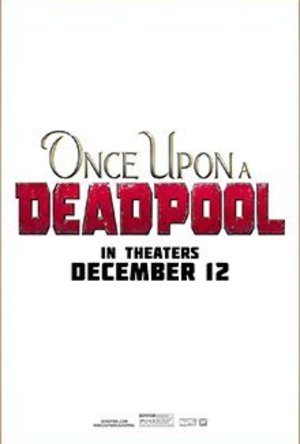

Taking what was old making it new again as long been criticism that is been levied against Hollywood. With abundance equals flooding the theaters as well as reboots; people often cynically ask if Hollywood has run out of new ideas. The latest film to fall under these criteria would be “Once Upon A Deadpool” where audiences are presented with a sanitized version of “Deadpool 2” accompanied by approximately 11 min. worth of new footage at the beginning and spread throughout.
The PG-13 take on what was definitely a very “R” rated film is been met with skeptics who see this as a sign of the pending Disney acquisition of Fox to test the waters to see if audiences will accept a more subdued take on the hero us paving the way for future adventures to be the more box office friendly “PG-13″.
The film cleverly opens with Deadpool (Ryan Reynolds), having kidnapped or as he likes to refer to it” involuntary relocation assistance”; Fred Savage as he attempts to re-create the opening of “The Princess Bride” and reads to him a family-friendlier version of “Deadpool 2”.
The film plays out as it did earlier this summer safe for much of the language being removed and use of pixels and cutaways to remove objectionable or an adult content to preserve the “PG-13” rating. What makes it enjoyable are the new seems where Reynolds and Savage exchange banter and debate topics ranging from Nickelback to the pending Disney acquisition of Fox.
I found myself looking forward to the next cutaway to hear what comments would be coming next including a very clever discussion of possible outcomes of Deadpool’s regenerative properties; and how they were not explored in the film due to “lazy writing”.
For me it was mostly a mixed bag as I enjoyed seeing the new footage as any new Deadpool content is always a treat and Reynolds seem to be having a great time returning to the character in an abbreviated fashion.
While the film basically played out as before; I found a sanitized version to not be as appealing simply because one of the joys of the character and the series is not knowing what will come next. How far will a joke be taken, how much Gore is going to be used for comedic effect, what invented a new profanity is going to spew from Deadpool? Much of this is been taken away to what I believe is a detriment to the franchise. One of the joys about the films is that the wise comments come at the audience and a rapid-fire approach. This makes you want to see the film again in order to catch what you witnessed previously. It felt like I was being deprived of this opportunity because while in many ways it was the same film, much of the adage that made the film stand out has been subdued.
While it is great that younger audiences will have an opportunity to experience the character; those of us who’ve seen him and his full uncensored glory will undoubtedly feel that this is a direction that should not be pursued for the future and that audiences want and deserve a fully uncensored Deadpool.
However for a little bit of family fun and a cute new laughs; “Once Upon A Deadpool”, is a pleasant enough distraction.
http://sknr.net/2018/12/12/once-upon-a-deadpool/
The PG-13 take on what was definitely a very “R” rated film is been met with skeptics who see this as a sign of the pending Disney acquisition of Fox to test the waters to see if audiences will accept a more subdued take on the hero us paving the way for future adventures to be the more box office friendly “PG-13″.
The film cleverly opens with Deadpool (Ryan Reynolds), having kidnapped or as he likes to refer to it” involuntary relocation assistance”; Fred Savage as he attempts to re-create the opening of “The Princess Bride” and reads to him a family-friendlier version of “Deadpool 2”.
The film plays out as it did earlier this summer safe for much of the language being removed and use of pixels and cutaways to remove objectionable or an adult content to preserve the “PG-13” rating. What makes it enjoyable are the new seems where Reynolds and Savage exchange banter and debate topics ranging from Nickelback to the pending Disney acquisition of Fox.
I found myself looking forward to the next cutaway to hear what comments would be coming next including a very clever discussion of possible outcomes of Deadpool’s regenerative properties; and how they were not explored in the film due to “lazy writing”.
For me it was mostly a mixed bag as I enjoyed seeing the new footage as any new Deadpool content is always a treat and Reynolds seem to be having a great time returning to the character in an abbreviated fashion.
While the film basically played out as before; I found a sanitized version to not be as appealing simply because one of the joys of the character and the series is not knowing what will come next. How far will a joke be taken, how much Gore is going to be used for comedic effect, what invented a new profanity is going to spew from Deadpool? Much of this is been taken away to what I believe is a detriment to the franchise. One of the joys about the films is that the wise comments come at the audience and a rapid-fire approach. This makes you want to see the film again in order to catch what you witnessed previously. It felt like I was being deprived of this opportunity because while in many ways it was the same film, much of the adage that made the film stand out has been subdued.
While it is great that younger audiences will have an opportunity to experience the character; those of us who’ve seen him and his full uncensored glory will undoubtedly feel that this is a direction that should not be pursued for the future and that audiences want and deserve a fully uncensored Deadpool.
However for a little bit of family fun and a cute new laughs; “Once Upon A Deadpool”, is a pleasant enough distraction.
http://sknr.net/2018/12/12/once-upon-a-deadpool/
Gareth von Kallenbach (980 KP) rated Vacation (2015) in Movies
Jun 19, 2019
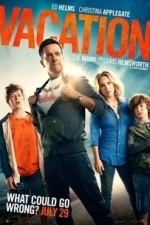

It is hard to believe it has been 32 years since Chevy Chase took his family on their now infamous “Vacation” and in doing so launched a series that would eventually spawn four movies.
The well-meaning but unlucky Griswold family gave new meaning to family trips and Europe, Christmas, and Las Vegas will never be the same.
In the new version, Rusty (Ed Helms) works away as a pilot for a commuter airline which ensures he is home each evening to see his beloved wife Debbie (Christina Applegate) and their sons Kevin and James.
The family tradition has been to go to as cabin for the Memorial Day weekend but after hearing that their neighbors recently went to France and that Debbie yearns for a break from the cabin, Rusty opts to take the family on a road trip to Wally World, where he has fond memories from the trip he took as a child.
The idea of spending a long week in a car does not sit well with his family but they decide to indulge their father and hit the road.
It does not take long for the Griswold legacy to start and after a series of hysterical and outrageous encounters along the way ranging from an ill-fated Sorority reunion, an awkward father and son conversation at a pool, running afoul of a trucker, and some hysterical car problems, and more, the crew make it to Texas to see Rusty’s sister Audrey (Leslie Mann) and her husband Stone (Chris Hemsworth).
Rusty has always had a distrust of Stone as he flirts with his wife and shows off his toned physique whenever he can, and touts his success to all.
Naturally some more mishaps ensue on this visit and Rusty and his family continue their trip with stops to the Grand Canyon and Four Corners.
There are plenty of other moments but suffice it to say that challenges and mishaps are the Griswold way whenever a trip is involved and Rusty has to seek help from his parents which sets up a great finale as Chevy Chase and Beverly D’Angelo add to the fun.
The film has plenty of nods to moments from the series but is very much its own film and not a reboot. The humor in the film is a bit raw for those used to the recent PG-13 efforts from the series, but I think returning the series to the R-Rated origins of the original film was a good idea as it allows the unexpected and outrageous to happen more often and it does many times during the film.
I went in hoping for an amusing continuation of the series and what I got was a film that had me laughing throughout and had some cringe-worthy moments where my wife alternated between laughing and hiding her eyes from the outrageous antics.
The cast did a great job of carrying on the Vacation tradition while establishing their own characters. They are not retreads of Ellen and Clark, as Rusty and Debbie are very much their own people with everyday concerns.
Here is hoping we see this group down the Holiday Road again in the future.
http://sknr.net/2015/07/29/vacation/
The well-meaning but unlucky Griswold family gave new meaning to family trips and Europe, Christmas, and Las Vegas will never be the same.
In the new version, Rusty (Ed Helms) works away as a pilot for a commuter airline which ensures he is home each evening to see his beloved wife Debbie (Christina Applegate) and their sons Kevin and James.
The family tradition has been to go to as cabin for the Memorial Day weekend but after hearing that their neighbors recently went to France and that Debbie yearns for a break from the cabin, Rusty opts to take the family on a road trip to Wally World, where he has fond memories from the trip he took as a child.
The idea of spending a long week in a car does not sit well with his family but they decide to indulge their father and hit the road.
It does not take long for the Griswold legacy to start and after a series of hysterical and outrageous encounters along the way ranging from an ill-fated Sorority reunion, an awkward father and son conversation at a pool, running afoul of a trucker, and some hysterical car problems, and more, the crew make it to Texas to see Rusty’s sister Audrey (Leslie Mann) and her husband Stone (Chris Hemsworth).
Rusty has always had a distrust of Stone as he flirts with his wife and shows off his toned physique whenever he can, and touts his success to all.
Naturally some more mishaps ensue on this visit and Rusty and his family continue their trip with stops to the Grand Canyon and Four Corners.
There are plenty of other moments but suffice it to say that challenges and mishaps are the Griswold way whenever a trip is involved and Rusty has to seek help from his parents which sets up a great finale as Chevy Chase and Beverly D’Angelo add to the fun.
The film has plenty of nods to moments from the series but is very much its own film and not a reboot. The humor in the film is a bit raw for those used to the recent PG-13 efforts from the series, but I think returning the series to the R-Rated origins of the original film was a good idea as it allows the unexpected and outrageous to happen more often and it does many times during the film.
I went in hoping for an amusing continuation of the series and what I got was a film that had me laughing throughout and had some cringe-worthy moments where my wife alternated between laughing and hiding her eyes from the outrageous antics.
The cast did a great job of carrying on the Vacation tradition while establishing their own characters. They are not retreads of Ellen and Clark, as Rusty and Debbie are very much their own people with everyday concerns.
Here is hoping we see this group down the Holiday Road again in the future.
http://sknr.net/2015/07/29/vacation/
Kayleigh (12 KP) rated George's Marvellous Medicine in Books
Jan 2, 2019

This was always my favourite Roald Dahl book, and I’ve re-remembered why now! It’s deliciously naughty, and everybody can imagine gleefully mixing up a concoction to make a disliked person yell “Oweeeee!”
A couple of years ago, I was an au pair in France for three children: a boy aged 9 and two girls, aged 5 years and 9 months old, respectively. I remember I had a little bit of trouble getting the children to settle down and listen to me reading a book, and alas, with the girls, I wasn’t actually successful. They were really intelligent kids, speaking French and German, with English as their third language. With the boy though – I’ll call him L, as I haven’t asked permission to use his name – he ended up loving this book. While there were some words I thought it necessary to replace so that he’d understand, he got really into it, and every day was asking me to read him another chapter.
It’s all slightly cheeky, and very funny. There have certainly been people over the years I’d love to make a magical medicine for, and I remember L getting more and more excited as he firstly wondered what was going to happen to Grandma, and then was fascinated by all the effects the medicine had.
There’s a real childish logic to how George goes about concocting his marvellous medicine, which I know appeals to many kids. She’s got rotten teeth, so he’ll put toothpaste in, and if that doesn’t work, he’ll paint them red with nail varnish. Genius! Here’s one of his ideas:
<blockquote>“The first one he took down was a large box of SUPERWHITE FOR AUTOMATIC WASHING-MACHINES. DIRT, it said, WILL DISAPPEAR LIKE MAGIC. George didn’t know whether Grandma was automatic or not, but she was certainly a dirty old woman.”</blockquote>
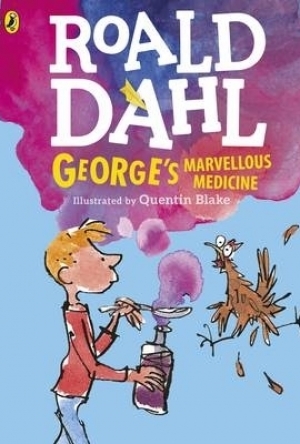
Quentin Blake’s illustrations really add to the story, particularly in the second half of the book, when the child reading it can see just how big the characters are getting.
The imagination is powerful, but even more so when mixed with these visual aids – see the picture to the right. I think the great thing about the detail of these illustrations – particularly Grandma’s face – is that you can project feelings onto them. In the context of the story it’s really easy to see her as a disgusting “old bird”, but if it was slightly different, judging from the front page you could see her as slightly mischievous too. Or is that just me?! However, I’m digressing. For an adult reading the book, the words dance off the tongue just like George, imagining he’s casting a spell over his cauldron. I found that L’s attention was thoroughly captured and he loved hearing the ‘special effects’ of all the whooshes and woweeees. There’s also the magical and triumphant aspects – he’s somehow created this cool concoction that has meant he’s got his own back on his grouchy old Grandma and helped out his dad by enlarging all the animals. I think kids love those feeling of pride and revenge they get on George’s behalf, while at the same time getting vivid images in their head that they’ll remember for a long time – I know I did!
This review is also on my <a href="http://awowords.wordpress.com">blog</a>; - if you liked it, please check it out!
A couple of years ago, I was an au pair in France for three children: a boy aged 9 and two girls, aged 5 years and 9 months old, respectively. I remember I had a little bit of trouble getting the children to settle down and listen to me reading a book, and alas, with the girls, I wasn’t actually successful. They were really intelligent kids, speaking French and German, with English as their third language. With the boy though – I’ll call him L, as I haven’t asked permission to use his name – he ended up loving this book. While there were some words I thought it necessary to replace so that he’d understand, he got really into it, and every day was asking me to read him another chapter.
It’s all slightly cheeky, and very funny. There have certainly been people over the years I’d love to make a magical medicine for, and I remember L getting more and more excited as he firstly wondered what was going to happen to Grandma, and then was fascinated by all the effects the medicine had.
There’s a real childish logic to how George goes about concocting his marvellous medicine, which I know appeals to many kids. She’s got rotten teeth, so he’ll put toothpaste in, and if that doesn’t work, he’ll paint them red with nail varnish. Genius! Here’s one of his ideas:
<blockquote>“The first one he took down was a large box of SUPERWHITE FOR AUTOMATIC WASHING-MACHINES. DIRT, it said, WILL DISAPPEAR LIKE MAGIC. George didn’t know whether Grandma was automatic or not, but she was certainly a dirty old woman.”</blockquote>
Quentin Blake’s illustrations really add to the story, particularly in the second half of the book, when the child reading it can see just how big the characters are getting.
The imagination is powerful, but even more so when mixed with these visual aids – see the picture to the right. I think the great thing about the detail of these illustrations – particularly Grandma’s face – is that you can project feelings onto them. In the context of the story it’s really easy to see her as a disgusting “old bird”, but if it was slightly different, judging from the front page you could see her as slightly mischievous too. Or is that just me?! However, I’m digressing. For an adult reading the book, the words dance off the tongue just like George, imagining he’s casting a spell over his cauldron. I found that L’s attention was thoroughly captured and he loved hearing the ‘special effects’ of all the whooshes and woweeees. There’s also the magical and triumphant aspects – he’s somehow created this cool concoction that has meant he’s got his own back on his grouchy old Grandma and helped out his dad by enlarging all the animals. I think kids love those feeling of pride and revenge they get on George’s behalf, while at the same time getting vivid images in their head that they’ll remember for a long time – I know I did!
This review is also on my <a href="http://awowords.wordpress.com">blog</a>; - if you liked it, please check it out!

Hazel (1853 KP) rated Deep Blue (Waterfire Saga, #1) in Books
Dec 17, 2018

My rating: 3.5
<i>This eBook was provided by the publisher via NetGalley in exchange for an honest review</i>
Mermaids are perhaps one of the least written about mythical creature in novels. On the occasions that they are referred to they are often represented as evil siren-like females luring sailors to their deaths. The mermaids in Jennifer Donnelly’s <i>Waterfire Saga</i> are not like that at all, in fact their lives are not dissimilar to that of humans.
<i>Deep Blue</i> is the first novel in this saga but felt like it was mostly setting the scene for the yet-to-be-published sequels. It begins with Serafina, the Principessa of the House of Merrow, preparing for the Dokimí or betrothal ceremony occurring that evening. Although her songspell, a particularly difficult task, goes perfectly, assassins gatecrash the ceremony. The black-clad mermen fire poison arrows at the crowd, killing Sera’s father and fatally injuring her mother, the Regina.
Along with her best friend Neela, Serafina flees the city but it is not long before their assailants catch up with them. Throughout all this destruction the two mermaids discover that they have been having the same dream about being summoned by the Iele – a legendary group of river witches – and with no where else to go they head to the river Olt in Romania in order to find them and discover what they are being called upon for. As it turns out they are not the only girls heading that way. Six mermaids in total have been having the same dream and they eventually meet up on their way to the Iele.
Although the end of <i>Deep Blue</i> revealed the girls’ purposes, it will not be until the second book that this task is carried out. Due to this it feels as though the main storyline of the <i>Waterfire Saga</i> is yet to begin properly. Having said that, <i>Deep Blue</i> was still an entertaining read. It may take a while for readers to get into the story but the later half is full of action and even contains the odd humorous pun, which prevents the book from becoming too dark.
It must be difficult to write about mermaids as the setting is, naturally, deep under the surface of oceans, seas, rivers and lakes. The writer would need to think carefully about what is possible underwater, and remember to use words such as “swim” instead of “walk”. Even though Donnelly did a fantastic job there were occasions where the characters could easily be mistaken for humans with legs rather than fish tails.
There were lots of made up words and names used in this book which some people may find confusing thus making it difficult to keep track of who is who. The author has helpfully included a glossary of these terms and names which readers can refer to as and when they need to. It does not, however, include a pronunciation guide, which is a shame as some of the words have an Eastern European look to them and readers unfamiliar with those types of dialects may struggle with some of the expressions: for example, Baba Vrăja.
Overall this saga has the potential to become a magnificent set of books with a uniqueness setting them apart from other popular fantasy stories of today.
<i>This eBook was provided by the publisher via NetGalley in exchange for an honest review</i>
Mermaids are perhaps one of the least written about mythical creature in novels. On the occasions that they are referred to they are often represented as evil siren-like females luring sailors to their deaths. The mermaids in Jennifer Donnelly’s <i>Waterfire Saga</i> are not like that at all, in fact their lives are not dissimilar to that of humans.
<i>Deep Blue</i> is the first novel in this saga but felt like it was mostly setting the scene for the yet-to-be-published sequels. It begins with Serafina, the Principessa of the House of Merrow, preparing for the Dokimí or betrothal ceremony occurring that evening. Although her songspell, a particularly difficult task, goes perfectly, assassins gatecrash the ceremony. The black-clad mermen fire poison arrows at the crowd, killing Sera’s father and fatally injuring her mother, the Regina.
Along with her best friend Neela, Serafina flees the city but it is not long before their assailants catch up with them. Throughout all this destruction the two mermaids discover that they have been having the same dream about being summoned by the Iele – a legendary group of river witches – and with no where else to go they head to the river Olt in Romania in order to find them and discover what they are being called upon for. As it turns out they are not the only girls heading that way. Six mermaids in total have been having the same dream and they eventually meet up on their way to the Iele.
Although the end of <i>Deep Blue</i> revealed the girls’ purposes, it will not be until the second book that this task is carried out. Due to this it feels as though the main storyline of the <i>Waterfire Saga</i> is yet to begin properly. Having said that, <i>Deep Blue</i> was still an entertaining read. It may take a while for readers to get into the story but the later half is full of action and even contains the odd humorous pun, which prevents the book from becoming too dark.
It must be difficult to write about mermaids as the setting is, naturally, deep under the surface of oceans, seas, rivers and lakes. The writer would need to think carefully about what is possible underwater, and remember to use words such as “swim” instead of “walk”. Even though Donnelly did a fantastic job there were occasions where the characters could easily be mistaken for humans with legs rather than fish tails.
There were lots of made up words and names used in this book which some people may find confusing thus making it difficult to keep track of who is who. The author has helpfully included a glossary of these terms and names which readers can refer to as and when they need to. It does not, however, include a pronunciation guide, which is a shame as some of the words have an Eastern European look to them and readers unfamiliar with those types of dialects may struggle with some of the expressions: for example, Baba Vrăja.
Overall this saga has the potential to become a magnificent set of books with a uniqueness setting them apart from other popular fantasy stories of today.
My rating 2.5
<i>I received this book for free through Goodreads First Reads. </i>
There is often a preconception that self-published books are not as good as those printed by world famous publishers. Yet, given a chance, there are a few that surprise you. Unfortunately, there are many issues with Laura Foster’s debut novel <i>Crimson</i>. The actual concept has promise of appealing to a range of readers due to falling into a variety of genres: fantasy, science fiction, young adult and paranormal/horror. Where the novel suffers is within the writing style and obvious lack of proof reading.
The storyline concentrates on a homeless young girl whose frightening nightmares have led her to believe she is in grave danger. Dawn Pearson, who the reader is led to believe is only twelve or thirteen years of age, is determined to get as far away from the creature in her dreams as possible. With the help of Mike, a friend she makes on the street, she narrowly escapes being captured by the red-eyed, irascible monster she has named Crimson.
While the pair flee, Dawn and Mike become aware of another terrifying beast, although neither understand why Dawn is being hunted. It soon manifests that Dawn harbours an ethereal power, suggesting that she is far from the human she believed herself to be. As the thrill of the chase heightens, readers are left with questions: who is Dawn? Who is the Crimson? Which characters can be trusted?
It is not clear what the target age group is, however the youthful ages of Dawn and Mike make it suitable for a young adult audience as well as adult readers in general. Dawn and Mike’s relationship, although sudden, becomes a key aspect of the story. For once a friendship between a male and female has no romantic connotations attached, thus not detracting from the surreal circumstances of the plot. Both Dawn and Mike show admiral traits of selflessness – something that ostracizes them from the remainder of ignoble characters.
Sadly, the dramatic climax spirals into confusion. Ever changing plot directions make it unclear who the heroes are, and perplexing scene descriptions make it difficult to picture what the author had in mind. This was a more prominent issue toward the conclusion of the book, resulting in an unsatisfying ending.
One of the major problems with the writing is the constant switching of points of view. Although written in third person, a narrative still speaks from one character’s perspective. This can change from character to character, but usually separated into different chapters. In <i>Crimson</i>, however, Foster alters the viewpoint from paragraph to paragraph. This occasionally makes the text difficult to follow.
As with any lengthy body of text, printing errors can occur – nobody is perfect. On the other hand, the amount of typos in <i>Crimson</i> makes it hard to believe that it had ever been proofread in the first place. Some mistakes are clearly typing errors that are (probably) not the author’s fault, however the repeated misuse of words such as seized/ceased and wondered/wandered are not easy to forgive.
Overall, the premise was there, the writing not so much. It is understood that Laura Foster is currently working on a sequel to <i>Crimson</i>, but its success rests on how well this first book is received. If people can tolerate the errors pinpointed above, then the author has nothing to worry about, yet as it stands, it does not look promising.
<i>I received this book for free through Goodreads First Reads. </i>
There is often a preconception that self-published books are not as good as those printed by world famous publishers. Yet, given a chance, there are a few that surprise you. Unfortunately, there are many issues with Laura Foster’s debut novel <i>Crimson</i>. The actual concept has promise of appealing to a range of readers due to falling into a variety of genres: fantasy, science fiction, young adult and paranormal/horror. Where the novel suffers is within the writing style and obvious lack of proof reading.
The storyline concentrates on a homeless young girl whose frightening nightmares have led her to believe she is in grave danger. Dawn Pearson, who the reader is led to believe is only twelve or thirteen years of age, is determined to get as far away from the creature in her dreams as possible. With the help of Mike, a friend she makes on the street, she narrowly escapes being captured by the red-eyed, irascible monster she has named Crimson.
While the pair flee, Dawn and Mike become aware of another terrifying beast, although neither understand why Dawn is being hunted. It soon manifests that Dawn harbours an ethereal power, suggesting that she is far from the human she believed herself to be. As the thrill of the chase heightens, readers are left with questions: who is Dawn? Who is the Crimson? Which characters can be trusted?
It is not clear what the target age group is, however the youthful ages of Dawn and Mike make it suitable for a young adult audience as well as adult readers in general. Dawn and Mike’s relationship, although sudden, becomes a key aspect of the story. For once a friendship between a male and female has no romantic connotations attached, thus not detracting from the surreal circumstances of the plot. Both Dawn and Mike show admiral traits of selflessness – something that ostracizes them from the remainder of ignoble characters.
Sadly, the dramatic climax spirals into confusion. Ever changing plot directions make it unclear who the heroes are, and perplexing scene descriptions make it difficult to picture what the author had in mind. This was a more prominent issue toward the conclusion of the book, resulting in an unsatisfying ending.
One of the major problems with the writing is the constant switching of points of view. Although written in third person, a narrative still speaks from one character’s perspective. This can change from character to character, but usually separated into different chapters. In <i>Crimson</i>, however, Foster alters the viewpoint from paragraph to paragraph. This occasionally makes the text difficult to follow.
As with any lengthy body of text, printing errors can occur – nobody is perfect. On the other hand, the amount of typos in <i>Crimson</i> makes it hard to believe that it had ever been proofread in the first place. Some mistakes are clearly typing errors that are (probably) not the author’s fault, however the repeated misuse of words such as seized/ceased and wondered/wandered are not easy to forgive.
Overall, the premise was there, the writing not so much. It is understood that Laura Foster is currently working on a sequel to <i>Crimson</i>, but its success rests on how well this first book is received. If people can tolerate the errors pinpointed above, then the author has nothing to worry about, yet as it stands, it does not look promising.
Hazel (1853 KP) rated Blood for Blood (Wolf By Wolf #2) in Books
Dec 17, 2018

<i>This eBook was provided by the publisher via NetGalley in exchange for an honest review </i>
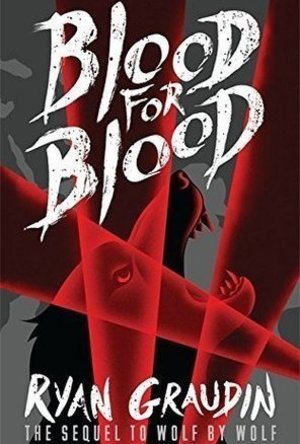
Ryan Graudin blew readers away with her alternate historical novel <i>Wolf by Wolf</i>. Now it is time to conclude the imaginative narrative with the highly anticipated sequel, <i>Blood for Blood. </i>Continuing from the precise moment Yael pulled the trigger on the Führer’s doppelgänger, the reader is thrown into a lively story of twists and turns, where danger lives around every corner.
To recap, it is 1956 and Hitler has won the war. Germany, or Germania, is ruling over Europe and many countries in Asia and Africa. Yael is a Jewish girl who a doctor experimented on whilst she was detained in a concentration camp. As a result of the brutal medical treatment, Yael is a successful result of the Doppelgänger Project – she can now change her physical appearance and anatomy at will.<i> Wolf by Wolf</i> focused on Yael and the resistance’s attempt to win a prestigious motorcycle race in order to get close to the Führer and end his life. As it turns out, Yael is not the only person with this skin shifting ability.
On the run with the entire world knowing her secret, Yael is desperate to make contact with the resistance leaders and continue with their plot to assassinate Hitler. However, unable to leave innocent people to suffer at the hands of the National Socialists, Yael ends up being accompanied and hindered by two Aryan boys, Luka and Felix. Yet with no way of knowing who can be trusted, Yael is taking a fatal risk by helping others instead of saving herself.
Despite circumstances, the blossoming romance that began to advance toward the end of the first book continues to feature in <i>Blood for Blood</i> as characters begin to rely on and trust each other. Nonetheless, constant plot developments obstruct all thoughts of a happy ending. Clever twists and gradually emerging truths prevent any opportunity for rest or safety.
<i>Wolf by Wolf </i>was an exciting, new concept for young adult readers, answering a “what if” question about the second world war. Yet the historical setting – albeit fictional – was impeded by the focus on the Axis Tour as characters raced from Germania to Tokyo. In contrast, <i>Blood for Blood</i> leaves all distractions behind, giving full attention to the life and danger under Hitler’s dictatorship. Despite Germany/Germania’s triumphant win, war is still raging throughout Europe. Anyone not meeting the Aryan description is at risk of death or deportment. Strictly speaking, the situation described must look similar, if not the same, as the true result of Nazi ruling.
Ryan Graudin is a formidable writer with the ability to make fiction seem like reality. Despite the added science fiction twist, the imaginative scenario is so well researched and planned that it becomes almost believable. Graudin comes at the story from so many directions, evidencing the effort put into creating the thrilling plot. It is one thing to be able to string words together, but to make them come alive it takes a genius.
<i>Blood for Blood</i> is by far the better of the two novels, making it the perfect conclusion to a fantastic two-part story. Beginning with explosive action and not stopping until its heart-wrenching conclusion, <i>Blood for Blood</i> will satisfy readers of all ages and genres. Those who have read <i>Wolf by Wolf</i> definitely must get their hands on this amazing sequel. You will not be disappointed.
Ryan Graudin blew readers away with her alternate historical novel <i>Wolf by Wolf</i>. Now it is time to conclude the imaginative narrative with the highly anticipated sequel, <i>Blood for Blood. </i>Continuing from the precise moment Yael pulled the trigger on the Führer’s doppelgänger, the reader is thrown into a lively story of twists and turns, where danger lives around every corner.
To recap, it is 1956 and Hitler has won the war. Germany, or Germania, is ruling over Europe and many countries in Asia and Africa. Yael is a Jewish girl who a doctor experimented on whilst she was detained in a concentration camp. As a result of the brutal medical treatment, Yael is a successful result of the Doppelgänger Project – she can now change her physical appearance and anatomy at will.<i> Wolf by Wolf</i> focused on Yael and the resistance’s attempt to win a prestigious motorcycle race in order to get close to the Führer and end his life. As it turns out, Yael is not the only person with this skin shifting ability.
On the run with the entire world knowing her secret, Yael is desperate to make contact with the resistance leaders and continue with their plot to assassinate Hitler. However, unable to leave innocent people to suffer at the hands of the National Socialists, Yael ends up being accompanied and hindered by two Aryan boys, Luka and Felix. Yet with no way of knowing who can be trusted, Yael is taking a fatal risk by helping others instead of saving herself.
Despite circumstances, the blossoming romance that began to advance toward the end of the first book continues to feature in <i>Blood for Blood</i> as characters begin to rely on and trust each other. Nonetheless, constant plot developments obstruct all thoughts of a happy ending. Clever twists and gradually emerging truths prevent any opportunity for rest or safety.
<i>Wolf by Wolf </i>was an exciting, new concept for young adult readers, answering a “what if” question about the second world war. Yet the historical setting – albeit fictional – was impeded by the focus on the Axis Tour as characters raced from Germania to Tokyo. In contrast, <i>Blood for Blood</i> leaves all distractions behind, giving full attention to the life and danger under Hitler’s dictatorship. Despite Germany/Germania’s triumphant win, war is still raging throughout Europe. Anyone not meeting the Aryan description is at risk of death or deportment. Strictly speaking, the situation described must look similar, if not the same, as the true result of Nazi ruling.
Ryan Graudin is a formidable writer with the ability to make fiction seem like reality. Despite the added science fiction twist, the imaginative scenario is so well researched and planned that it becomes almost believable. Graudin comes at the story from so many directions, evidencing the effort put into creating the thrilling plot. It is one thing to be able to string words together, but to make them come alive it takes a genius.
<i>Blood for Blood</i> is by far the better of the two novels, making it the perfect conclusion to a fantastic two-part story. Beginning with explosive action and not stopping until its heart-wrenching conclusion, <i>Blood for Blood</i> will satisfy readers of all ages and genres. Those who have read <i>Wolf by Wolf</i> definitely must get their hands on this amazing sequel. You will not be disappointed.
<i>I received this book for free through Goodreads First Reads.</i>
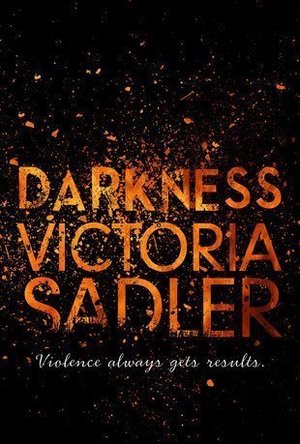
“Violence always gets results.” But at what cost? Victoria Sadler’s dystopian novel <i>Darkness</i> explores and all too realistic scenario set in a not so distant future. The western world has fallen due to war and economic collapse. London has become a ghost city due to the death of thousands of people. Those not killed by bombs or deadly virus succumb to suicide or death by natural causes – if the cold and starvation can be labeled natural.
Laura Lewis is the sole survivor in her block of flats and now needs to make her way through the dangerous streets to St Paul’s Cathedral where what remains of the State will provide her with safety. However before she reaches her final destination she is ambushed by an army of women, a threat to the nation, known as RAZR – Resistance Against State Reformation. Jane, the leader of the resistance, believes she has saved Laura from a fate worse than death. But, as Laura discovers, RAZR may result in an even crueler future.
RAZR was born from a hatred of men, a guerilla feminist movement seizing the opportunity to obliterate the patriarchal society. Since the beginning of time men have oppressed women, regarding them as possessions with which they can do as they please. Despite the apparent equality achieved through past protests, the government, i.e. men, still control the lives of women. RAZR particularly focus on women’s rights to their own body, and are angry at the State’s current use for women: to procreate.
<i>Darkness</i> is full of radical violence, often ending in the mass death of male soldiers. With barely a break to take a breath, the narrative goes from one action scene to the next, heightening the excitement as the novel reaches its climax. As the reader learns more about RAZR and the State, opinions are constantly changed. Who is good, who is bad? Who can Laura trust? Then, to confuse things even more, Laura is not who she initially appears to be at all.
The amount of violence in this novel is disturbing, particularly as the majority of deaths are caused without guilty conscience. <i>Darkness</i> highlights the horrors of war and the wild nature of humanity. Without men and women being able to live in harmony there is no peace, on the other hand, complete equality is not possible. Furthermore, are RAZR feminists or terrorists? It is an obvious fact that the human race cannot survive with merely one gender of the species, so is RAZR doing more harm than good by fatally punishing all men?
Overall, <i>Darkness</i> poses more questions than it answers, yet it is such a griping novel. Women, particularly feminists will enjoy the powerful messages expressed by RAZR, but equally, readers will understand Laura’s hesitation. With so many plot twists to get your head around, you will never get bored of this story. With such an ambiguous ending, it is unclear whether <i>Darkness</i> will remain a standalone novel, or be continued with a sequel. Whatever the case, it will be interesting to read what the feminist, Victoria Sadler, comes up with next.
“Violence always gets results.” But at what cost? Victoria Sadler’s dystopian novel <i>Darkness</i> explores and all too realistic scenario set in a not so distant future. The western world has fallen due to war and economic collapse. London has become a ghost city due to the death of thousands of people. Those not killed by bombs or deadly virus succumb to suicide or death by natural causes – if the cold and starvation can be labeled natural.
Laura Lewis is the sole survivor in her block of flats and now needs to make her way through the dangerous streets to St Paul’s Cathedral where what remains of the State will provide her with safety. However before she reaches her final destination she is ambushed by an army of women, a threat to the nation, known as RAZR – Resistance Against State Reformation. Jane, the leader of the resistance, believes she has saved Laura from a fate worse than death. But, as Laura discovers, RAZR may result in an even crueler future.
RAZR was born from a hatred of men, a guerilla feminist movement seizing the opportunity to obliterate the patriarchal society. Since the beginning of time men have oppressed women, regarding them as possessions with which they can do as they please. Despite the apparent equality achieved through past protests, the government, i.e. men, still control the lives of women. RAZR particularly focus on women’s rights to their own body, and are angry at the State’s current use for women: to procreate.
<i>Darkness</i> is full of radical violence, often ending in the mass death of male soldiers. With barely a break to take a breath, the narrative goes from one action scene to the next, heightening the excitement as the novel reaches its climax. As the reader learns more about RAZR and the State, opinions are constantly changed. Who is good, who is bad? Who can Laura trust? Then, to confuse things even more, Laura is not who she initially appears to be at all.
The amount of violence in this novel is disturbing, particularly as the majority of deaths are caused without guilty conscience. <i>Darkness</i> highlights the horrors of war and the wild nature of humanity. Without men and women being able to live in harmony there is no peace, on the other hand, complete equality is not possible. Furthermore, are RAZR feminists or terrorists? It is an obvious fact that the human race cannot survive with merely one gender of the species, so is RAZR doing more harm than good by fatally punishing all men?
Overall, <i>Darkness</i> poses more questions than it answers, yet it is such a griping novel. Women, particularly feminists will enjoy the powerful messages expressed by RAZR, but equally, readers will understand Laura’s hesitation. With so many plot twists to get your head around, you will never get bored of this story. With such an ambiguous ending, it is unclear whether <i>Darkness</i> will remain a standalone novel, or be continued with a sequel. Whatever the case, it will be interesting to read what the feminist, Victoria Sadler, comes up with next.

Heather Cranmer (2721 KP) rated Girl in Pieces in Books
Jan 29, 2019


Very Raw (2 more)
Great cast of characters
Beautifully written
A Dark Gritty Read
When I read the synopsis of Girl in Pieces by Kathleen Glasgow, I knew it was a book I had to read. I'm a big fan of books that deal with mental illness. I just love how raw they can be. Luckily, Girl in Pieces did not disappoint.
The plot for Girl in Pieces is so raw yet it is beautifully written. The story starts out with Charlie at Creeley, a mental hospital because she's a cutter, and the last time she cut, she cut pretty bad. At first, she is a selective mute, but eventually, she starts talking again. We learn that Charlie's had a pretty bad life. She's been homeless, assaulted, pretty much lost her best friend, had a horrible home life and other things. When the money for her stay at Creeley runs out, Charlie is thrust back into the real world much earlier than expected. She's left to fend for herself. She moves out to Arizona to be with her friend and crush, but things don't turn out as planned. Charlie must learn to survive and heal on her own or risk losing herself once again. Girl in Pieces felt so relatable and so true to life, like it could happen to anyone at any time.
The characters in Girl in Pieces all felt very real and exposed. They were written perfectly and felt like people I know and have known. It was interesting and eye opening to experience Charlie's journey every step of the way from the highs and the lows. There were so many times I wanted to be Charlie's friend so I could support her and let her know when she was making a mistake. I wanted to be there for her after the mistakes had been made and let her know that every day is a new chance to start over. I loved Blue and her joking attitude. Riley was an interesting character. I wanted him to turn out good. I wanted him to get better for Charlie and for himself. Linus was also a very amazing character. I also loved how real Julie was. Every single character in this book played a great part in Charlie's life, and I loved how well written each and every one of them was.
The pacing for Girl in Pieces starts out really strong which I enjoyed. It does slow down a bit after Charlie gets out of the hospital, but it's still flows along at a good pace. There are a few places where the book does get a bit too slow, but it quickly picks up not too much later.
Girl in Pieces is a very raw, gritty, and dark book, so there are a lot of triggers. The whole book could be a possible trigger. Triggers include self harm, self mutilation, cutting, drug use, underage drinking, drinking, death, suicide, violence, physical abuse, emotional abuse, mental illness, dark thoughts, profanity, and sexual acts and references.
Overall, Girl in Pieces is a great read. It's very dark, but it is real and written so well with fantastic characters. I would definitely recommend Girl in Pieces to those aged 16+ who love a dark gritty read.
The plot for Girl in Pieces is so raw yet it is beautifully written. The story starts out with Charlie at Creeley, a mental hospital because she's a cutter, and the last time she cut, she cut pretty bad. At first, she is a selective mute, but eventually, she starts talking again. We learn that Charlie's had a pretty bad life. She's been homeless, assaulted, pretty much lost her best friend, had a horrible home life and other things. When the money for her stay at Creeley runs out, Charlie is thrust back into the real world much earlier than expected. She's left to fend for herself. She moves out to Arizona to be with her friend and crush, but things don't turn out as planned. Charlie must learn to survive and heal on her own or risk losing herself once again. Girl in Pieces felt so relatable and so true to life, like it could happen to anyone at any time.
The characters in Girl in Pieces all felt very real and exposed. They were written perfectly and felt like people I know and have known. It was interesting and eye opening to experience Charlie's journey every step of the way from the highs and the lows. There were so many times I wanted to be Charlie's friend so I could support her and let her know when she was making a mistake. I wanted to be there for her after the mistakes had been made and let her know that every day is a new chance to start over. I loved Blue and her joking attitude. Riley was an interesting character. I wanted him to turn out good. I wanted him to get better for Charlie and for himself. Linus was also a very amazing character. I also loved how real Julie was. Every single character in this book played a great part in Charlie's life, and I loved how well written each and every one of them was.
The pacing for Girl in Pieces starts out really strong which I enjoyed. It does slow down a bit after Charlie gets out of the hospital, but it's still flows along at a good pace. There are a few places where the book does get a bit too slow, but it quickly picks up not too much later.
Girl in Pieces is a very raw, gritty, and dark book, so there are a lot of triggers. The whole book could be a possible trigger. Triggers include self harm, self mutilation, cutting, drug use, underage drinking, drinking, death, suicide, violence, physical abuse, emotional abuse, mental illness, dark thoughts, profanity, and sexual acts and references.
Overall, Girl in Pieces is a great read. It's very dark, but it is real and written so well with fantastic characters. I would definitely recommend Girl in Pieces to those aged 16+ who love a dark gritty read.
Gareth von Kallenbach (980 KP) rated Borat (2006) in Movies
Aug 14, 2019
One of the funniest and most shockingly outrageous comedies in the history of film has arrived, and it is poised not only to make Sacha Baron Cohen a major star, but also ignite controversy. The film is Borat and it follows Cohen’s Kazakhstan news man, Borat, as he leaves his homeland to film a documentary in New York.
Naturally one would expect a fish out of water story, but fans are treated to much more than this as Borat and his backwards thoughts and practices and given form all over the U.S. often to the shock of those around him as well as howls of laughter from the audience.
You see Borat is a man with a few issues. He is anti-Semitic, a misogynist, ignorant and uncultured, and not ashamed of his actions which grow bolder and more outrageous as the film progresses.
The opening segments in his native land like the entire film is filled with one rapid fire joke after another as Borat introduces us to his family and key people in his town such as the town rapist and his sister the prostitute. As funny as the setup and the settings are, it is the clever comments that Cohen slips in that allows Borat to make some biting social and political commentaries.
Once in America, he travels from New York to Los Angeles making several stops along the way with side splitting results as Borat encounters events ranging from a rodeo, polite society, pop culture, a religious revival and much more.
The amazing thing about the film is that it never grows old and over the roughly 84 minutes of the films running time, there are plenty of jokes and a absence of slow spots which are often so common in comedies today.
Cohen is great at portraying Borat as a likeable guy who does not know any better which makes his comments and actions so easy to take. Cohen who is himself Jewish is able to get away with making jokes about his faith as he is doing it through the persona of someone who is ignorant to many realities in the world.
In a way the film allows us to laugh at ourselves as well as Borat is supposed to be a foreigner who does not know better, but is wiser in some ways due to his ignorance of topics. There is a scene where Borat buys a car is a true look at consumerism in the West as he spells out in graphic detail what he wants in a car and what he expects it to do for his love life.
Not only is the scene outrageous but it underscores the message of sex appeal and desirability that is prevalent in car ads aimed at men. Instead of hinting at it, Borat lifts the lid on the subject and takes it on with no punches pulled.
The film is tricky to review as one of the greatest joys of the film is the sense of discovery and not knowing where or what Borat will say or do next. Suffice it to say, that the film is a comedic masterpiece that will have you shocked and laughing harder than any film in recent memory.
Naturally one would expect a fish out of water story, but fans are treated to much more than this as Borat and his backwards thoughts and practices and given form all over the U.S. often to the shock of those around him as well as howls of laughter from the audience.
You see Borat is a man with a few issues. He is anti-Semitic, a misogynist, ignorant and uncultured, and not ashamed of his actions which grow bolder and more outrageous as the film progresses.
The opening segments in his native land like the entire film is filled with one rapid fire joke after another as Borat introduces us to his family and key people in his town such as the town rapist and his sister the prostitute. As funny as the setup and the settings are, it is the clever comments that Cohen slips in that allows Borat to make some biting social and political commentaries.
Once in America, he travels from New York to Los Angeles making several stops along the way with side splitting results as Borat encounters events ranging from a rodeo, polite society, pop culture, a religious revival and much more.
The amazing thing about the film is that it never grows old and over the roughly 84 minutes of the films running time, there are plenty of jokes and a absence of slow spots which are often so common in comedies today.
Cohen is great at portraying Borat as a likeable guy who does not know any better which makes his comments and actions so easy to take. Cohen who is himself Jewish is able to get away with making jokes about his faith as he is doing it through the persona of someone who is ignorant to many realities in the world.
In a way the film allows us to laugh at ourselves as well as Borat is supposed to be a foreigner who does not know better, but is wiser in some ways due to his ignorance of topics. There is a scene where Borat buys a car is a true look at consumerism in the West as he spells out in graphic detail what he wants in a car and what he expects it to do for his love life.
Not only is the scene outrageous but it underscores the message of sex appeal and desirability that is prevalent in car ads aimed at men. Instead of hinting at it, Borat lifts the lid on the subject and takes it on with no punches pulled.
The film is tricky to review as one of the greatest joys of the film is the sense of discovery and not knowing where or what Borat will say or do next. Suffice it to say, that the film is a comedic masterpiece that will have you shocked and laughing harder than any film in recent memory.
Gareth von Kallenbach (980 KP) rated The Butterfly Effect (2004) in Movies
Aug 14, 2019
For most people, childhood is a time filled mainly with happy memories of carefree playing, a loving family, and counting the days until the next school vacation.
Sadly, not everyone has fond memories of their childhood as for some; the years of joy and laughter are filled with pain and sadness. Such is the case of Evan Treborn (Ashton Kutcher) a gifted and caring individual who suffers from memory lapses much like his institutionalized father before him.
A series of traumatic events occur forcing Evan and his mother to move from their home leaving his best friends Kayleigh and Lenny behind.
Years later Evan is a successful and popular student at the state college and has not had a blackout for seven years, which is about the time his mother, moved him from the old neighborhood. Evan is persuaded by a friend to read his old journal entries and in doing so starts to recover some of his lost memories.
With the understanding that he has blacked out traumatic events in his life, Evan returns to his old home to seek out his friends with the hope that his missing memories can be restored. Sadly Evans return does not go well and his questions cause consequences for those who can remember what exactly happened.
Desperate to make sense of what is happening, Evan studies his journals and discovers that he is able to travel back to the time he has blacked out, and proceeds to make changes that he believes will improve the long-term outcome.
Evan awakens to find himself with Kayleigh (Amy Smart) and learns that the two of them have been an item ever since his childhood. What at first seems like a dream come true soon sours when Evan realizes that the ripple effects from his changes in the past have affected others around him. Desperate to undo a situation that now threatens him as well, Evan begins a series of trips into his past in an effort to recover his memories and right the wrongs that he is slowly starting to remember. Evan soon finds himself in a situation gone wild as no matter what Evan changes in the past, things are not put right as improving things for one person often makes others suffer as a result of the altered history.
Skillfully written and directed by Eric Bress and J Mackye Gruber The Butterfly Effect is a stunning look into a troubled psyche and a study in the effects of childhood trauma. The film is equally gripping and disturbing and tackles a wide-range of controversial topics. There is no sugar coating to the film as the depths of Evans repressed memories are explored making the film one of the best Dramas in recent memory.
Kutcher is amazing as he handles a difficult and complex role with skill and passion showing that he is capable of so much more than the brain dead beefcake roles he has been cast in previously. Kutcher is the key that makes the film work as the entire film and supporting cast center on him and he pulls it off brilliantly. Strong supporting work by Amy Smart, Ethan Suplee, and Eldon Henson keep the film gripping and tense.
The only issue I had with the film was the ending, which seemed to me like a tacked on Hollywood ending and not in keeping with the tone of the film. That being said, “The Butterfly Effect is a strong film and one that will not easily be forgotten.
Sadly, not everyone has fond memories of their childhood as for some; the years of joy and laughter are filled with pain and sadness. Such is the case of Evan Treborn (Ashton Kutcher) a gifted and caring individual who suffers from memory lapses much like his institutionalized father before him.
A series of traumatic events occur forcing Evan and his mother to move from their home leaving his best friends Kayleigh and Lenny behind.
Years later Evan is a successful and popular student at the state college and has not had a blackout for seven years, which is about the time his mother, moved him from the old neighborhood. Evan is persuaded by a friend to read his old journal entries and in doing so starts to recover some of his lost memories.
With the understanding that he has blacked out traumatic events in his life, Evan returns to his old home to seek out his friends with the hope that his missing memories can be restored. Sadly Evans return does not go well and his questions cause consequences for those who can remember what exactly happened.
Desperate to make sense of what is happening, Evan studies his journals and discovers that he is able to travel back to the time he has blacked out, and proceeds to make changes that he believes will improve the long-term outcome.
Evan awakens to find himself with Kayleigh (Amy Smart) and learns that the two of them have been an item ever since his childhood. What at first seems like a dream come true soon sours when Evan realizes that the ripple effects from his changes in the past have affected others around him. Desperate to undo a situation that now threatens him as well, Evan begins a series of trips into his past in an effort to recover his memories and right the wrongs that he is slowly starting to remember. Evan soon finds himself in a situation gone wild as no matter what Evan changes in the past, things are not put right as improving things for one person often makes others suffer as a result of the altered history.
Skillfully written and directed by Eric Bress and J Mackye Gruber The Butterfly Effect is a stunning look into a troubled psyche and a study in the effects of childhood trauma. The film is equally gripping and disturbing and tackles a wide-range of controversial topics. There is no sugar coating to the film as the depths of Evans repressed memories are explored making the film one of the best Dramas in recent memory.
Kutcher is amazing as he handles a difficult and complex role with skill and passion showing that he is capable of so much more than the brain dead beefcake roles he has been cast in previously. Kutcher is the key that makes the film work as the entire film and supporting cast center on him and he pulls it off brilliantly. Strong supporting work by Amy Smart, Ethan Suplee, and Eldon Henson keep the film gripping and tense.
The only issue I had with the film was the ending, which seemed to me like a tacked on Hollywood ending and not in keeping with the tone of the film. That being said, “The Butterfly Effect is a strong film and one that will not easily be forgotten.