
graveyardgremlin (7194 KP) rated The Other Countess (The Lacey Chronicles, #1) in Books
Feb 15, 2019

The story itself isn't exactly original and doesn't go into any unfamiliar territory, but it's ably told and fairly inoffensive, making it suitable for older teens (there are numerous allusions to sexual situations but that's as far as it goes). The dialogue and sensibilities are more modern in nature and don't always ring true to the era, but some liberties are always taken in young adult fiction, therefore making it something I can forgive. Very light on historical content, this is more for the romantics out there who like a historical backdrop to a love story. For the first half, I wasn't very involved into either the characters or their story, and it didn't help that it moved at a slow pace, though at the halfway point it picked up and started charming me. However, the hero and heroine were a little too perfect, more so in Ellie's case, as she didn't seem to really have any negative attributes other than she has a bit of a temper. Maybe if they had a few more rough edges I would have rooted for them to have their happy ending, as it is, I wasn't that invested. I do think that the secondary character, Lady Jane Perceval, has promise on that front since her narrative had a more realistic feel to it, so I may just pick up her story when it comes out ([b:The Queen's Lady|8805112|The Queen's Lady (The Lacey Chronicles, #2)|Eve Edwards|http://photo.goodreads.com/books/1327950501s/8805112.jpg|13679272]). The resolution to Will and Ellie's story came far too easily and some more conflict would have made it much better. Still, as I said, it's a sweet story, even if nothing sets it apart from other books. An easy read that should appeal to teenage girls.
Deborah (162 KP) rated The Mythology of Richard III in Books
Dec 21, 2018

Early chapters deal with the mythology perpetuated by Tudor propagandists and blinkered 'traditionalists' despite lack of evidence in many cases and even explicit evidence to the contrary in others! He looks at how some stories, such as the 'body in the river' became perpetuated over time so that they eventually become accepted as 'truth' by the uninformed. Even I had taken rather at face value the story of the White/Blue Boar Inn, but as Ashdown-Hill points out, it would be much more logical for Richard III to have stayed at Leicester Castle, as he had on a previous occasion, and also there is no evidence that an inn with a boar in its name existed at all in Leicester at this time!
The latter part of the book deals with more modern myths and I was really rather saddened and disappointed that it was necessary to have to set the record straight on many aspect of the rediscovery of the king's grave. I completely understand Ashdown-Hill's need to do so. After reading his earlier book 'The Last Days of Richard III' I was thoroughly convinced by his well reasoned arguments and never for a moment did I seriously doubt that that is where Richard III's resting place was. I was almost ready to go and dig the car park up myself! Whatever the rights and wrongs of it, I did find all the arguments over a final resting place to be somewhat distasteful, with some people sinking very low in voicing their opinions. It is disheartening that a British University PR department is less interested in truth than in trying to keep all the kudos for itself and I hope that people will read this and know the truth. With all its apparent misinformation I doubt I will be bothering with the visitor centre in Leicester any more than I have bothered to visit the putative site of Bosworth.
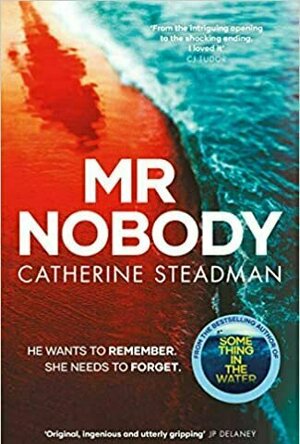
Mr. Nobody
6.0 Rate It
Book
When a man is found on a Norfolk beach, drifting in and out of consciousness, with no identification...
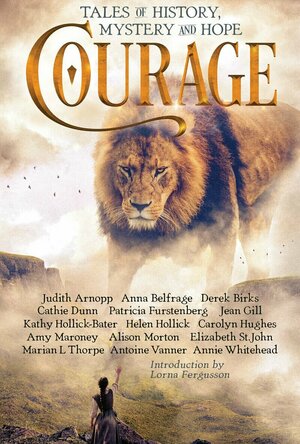
COURAGE: Tales of History, Mystery and Hope
Amy Maroney, Marian L Thorpe, Helen Hollick, Anna Belfrage, Alison Morton, Annie Whitehead, Elizabeth St. John, Carolyn Hughes, Cathie Dunn, Judith Arnopp, Jean Gill, Derek Birks, Patricia Furstenberg, Antoine Vanner and Kathy Hollick-Bater
Book
Fifteen historical short stories, covering eras from Roman to present-dayby Judith Arnopp, Anna...
Historical Short Stories Anthology

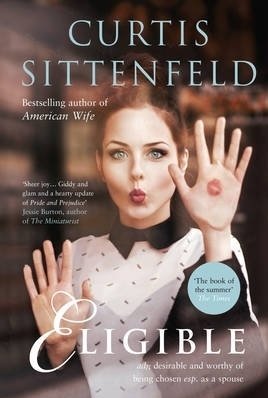


The book is amazing. It's been a while since I read [b:Pride and Prejudice|1885|Pride and Prejudice|Jane Austen|https://d.gr-assets.com/books/1320399351s/1885.jpg|3060926], but even I can tell you that the novel does an excellent job of following the original plot without being annoying or cloying. It's [b:Pride and Prejudice|1885|Pride and Prejudice|Jane Austen|https://d.gr-assets.com/books/1320399351s/1885.jpg|3060926] with lesbians and hate sex! The book comes across as familiar yet new, allowing you to ache, laugh, and rage at what feels like a group of old friends.
Mr. Bennet is a trip, even while having a heartbreaking sadness and sweetness at his core (though some of his zingers are priceless). The younger sisters are as (nearly) vapid as to be expected--truly awful at times--for much of the book. But seriously, Lydia and Kitty loving CrossFit? It's awesome. And Liz is wonderful; you will adore this surprisingly realistic and modern Liz, with all of her foibles and issues: a truly modern Liz struggling mightily to keep her family together and afloat.
As for Darcy, well he's as Darcy as ever. Somehow Sittenfeld has managed to truly capture the essence of Austen's Darcy and Elizabeth in her new characters. I don't know how, but it's funny and lovely all at the same time. (Side note: As a woman in her early thirties, will I ever be able to read about Darcy without picturing Colin Firth? I now have a desperate need to watch the BBC/A&E mini-series again.)
Overall, I found this book funny, touching, and compulsively readable. The characters are truly characters: they are fully formed within moments of picking up the book. The city of Cincinnati makes a great guest appearance, with the city playing a prominent role in many scenes (hi Skyline Chili!). If you loved the original, you'll find this updated version enjoyable and imaginative, with a surprising depth behind it. If you've never read Austen's work (and you should), you will still discover a funny, sweet yet weighty story of a family trying to make it in this day and age. Highly recommended (4.5 stars).
I received an ARC of this novel from Netgalley (thank you!); it is available for U.S. publication on 4/19/16. You can check out a review of this novel and many others on my <a href="http://justacatandabookatherside.blogspot.com/">blog</a>;.

Metroburbia: The Anatomy of Greater London
Book
London's suburbs are home to many thousands of people who travel into the centre every day to work,...
graveyardgremlin (7194 KP) rated The Other Boleyn Girl in Books
Feb 15, 2019

Mary Boleyn, the narrator, is a strange character: sympathetic and of reasonable intelligence one minute, a moronic irritant the next. Personality-wise she went up and down and back and forth. First she was fine not being the King's favorite anymore and seeming to want to leave the court life for the country to be with her children, then she was jealous of a title Anne received, years after the affair between Mary and Henry was over. Possibly this was put in as part of the rivalry between the sisters, but it didn't contextually fit. Her development could have used more work and she didn't mature or change much throughout the whole book, especially between the years 1522 to 1533. I seriously got tired of everybody's patronizing and calling her a fool all the time. They should have just named the book, <b>The Foolish Boleyn Girl</b>. I find it hard to believe Mary was so ignorant the king would have continued to have her as mistress for four years, give or take. She had to offer something other than good looks and being great in the bedroom. Anne herself sure was a piece of work, and even though she was pretty much evil throughout the book, I did still feel sorry for her at the end. Jane Parker was a one-dimensional malicious harpy who wasn't given a reason why she was that way; she was just the resident baddy to the Boleyns. To me, it felt like defamation of character.
Politics and the separation of the Church of England from the Catholic Church were merely mentioned in passing as court life and its primary players took center stage. The whole incest plot, I could have done without. Now if it were the absolute truth then it'd be okay, but since it's highly debatable and based on hearsay, I found it unnecessary and gratuitous. Around the two-thirds mark, the pace let up and it became more sluggish and boring, and it wasn't until the last sixty pages that it recaptured my attention again.
As long as readers know going into this book that the history has been twisted around and invented for pure sensation, then it's fine as a fictional read, but take any "facts" with a grain of salt. While it was an okay read, I didn't love it, but it managed to divert my attention for a few days.
One last note dealing with the fourth question in the Q&A with Philippa Gregory in the back of the book:
<blockquote>How about Mary and Anne's brother, George? Did he really sleep with his sister so that she could give Henry a son?
<i>Nobody can know the answer to this one. Anne was accused of adultery with George at their trials and his wife gave evidence against them both. Most people think the trial was a show trial, but it is an interesting accusation. Anne had three miscarriages by the time of her trial, and she was not a woman to let something like sin or crime stand in her way--she was clearly guilty of one murder. I think if she had thought that Henry could not bear a son she was quite capable of finding someone to father a child on her. If she thought that, then George would have been the obvious choice.</i></blockquote>
Obvious? How in the world is that obvious? You cannot be serious, Ms. Gregory. Now I'm far from an expert in Tudor England, but I cannot imagine that being a common practice. Maybe someone more knowledgeable about this time could tell me if that ever happened, because it just boggles my mind that George would be the "<i>obvious choice</i>." Not to mention, who the hell did Anne supposedly kill? I hadn't heard that anywhere. Even my searches are coming up blank.