
Search

Morgan Sheppard (1036 KP) created a post
Jul 17, 2026

Morgan Sheppard (1036 KP) created a post
Sep 2, 2026

Morgan Sheppard (1036 KP) created a post
Aug 14, 2026

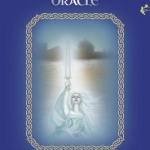
The Avalonian Oracle: Spiritual Wisdom from the Holy Isle
Jhenah Telyndru and Emily Brunner
Book
Woven from threads of Welsh mythos, British legend, and Celtic Druidism, The Avalonian Oracle is a...
Newport Rugby Greats
Book
Formed in 2003 as a result of the regionalisation of Welsh rugby, Newport Dragons started life with...
Morgan Sheppard (1036 KP) created a post
Jun 26, 2026

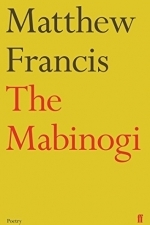
The Mabinogi
Book
'Here at the turn of the leaf a horseman is riding through the space between one world and another...
Morgan Sheppard (1036 KP) created a post
Jun 8, 2026

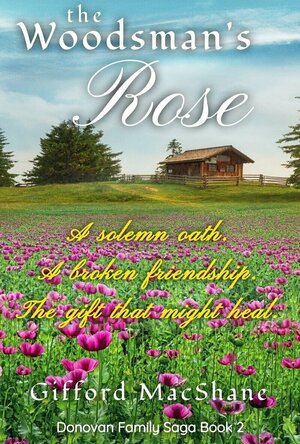
The Woodsman's Rose (Donovan Family Saga #2)
Book
Historical Fiction with Romance & a dash of Celtic mysticism 1880s Arizona: Daniel Donovan wants...
Historical Fiction Celtic Mysticism

Merissa (14150 KP) rated Stalking the Goddess in Books
Dec 17, 2018


Stalking The Goddess by Mark Carter is not a book to be taken lightly or to be read as a fill-in. This book deserves your attention as Mark Carter has tried to do the near-impossible and unravel a book that has long been thought of as a Pagan Must-Have. The White Goddess by Robert Graves has long been considered as one of the ultimate books for a Pagan to own, with links to the Welsh Celtic path and showing how, through poetry, that paganism lived on through the ages.
Stalking The Goddess is written like a thesis or dissertation from a university so will appeal to any academically-minded out there. This did make it quite hard going at times and I would read some and then take a break to digest what I had read.
Mark Carter has “untangled the woods” of The White Goddess and made it more accessible to the Pagan who would like to know more about it and where Robert Graves got his sources. Mark Carter has made it possible to see who has influenced Robert Graves, both in a positive and also a negative way, by showing whose work was used and which was not.
One of the things that I found most interesting was that although The White Goddess boasts a Welsh Celtic basis, Robert Graves had actually pulled on stories from the whole of Europe, as well as from the Bible, the Jews and used stories from the Saracens to compile his book and it somehow all seemed to fit which is where Mark Carter has excelled. Star Wars even makes an appearance!
In no way is Mark Carter dismissing The White Goddess and even states in the Epilogue that without The White Goddess it is unlikely that paganism would have developed as it did.
Overall, I would recommend this book for anyone who is interested in the history of The White Goddess, or for someone who has an academic “twist”. Thought provoking and a very interesting read.
Stalking The Goddess is written like a thesis or dissertation from a university so will appeal to any academically-minded out there. This did make it quite hard going at times and I would read some and then take a break to digest what I had read.
Mark Carter has “untangled the woods” of The White Goddess and made it more accessible to the Pagan who would like to know more about it and where Robert Graves got his sources. Mark Carter has made it possible to see who has influenced Robert Graves, both in a positive and also a negative way, by showing whose work was used and which was not.
One of the things that I found most interesting was that although The White Goddess boasts a Welsh Celtic basis, Robert Graves had actually pulled on stories from the whole of Europe, as well as from the Bible, the Jews and used stories from the Saracens to compile his book and it somehow all seemed to fit which is where Mark Carter has excelled. Star Wars even makes an appearance!
In no way is Mark Carter dismissing The White Goddess and even states in the Epilogue that without The White Goddess it is unlikely that paganism would have developed as it did.
Overall, I would recommend this book for anyone who is interested in the history of The White Goddess, or for someone who has an academic “twist”. Thought provoking and a very interesting read.