
Search
Search results

365Flicks (235 KP) rated Pitching Tents (2017) in Movies
Nov 20, 2019


If you have ever taken the time to listen to our Podcast you will have figured out that I am a big fan of Kevin Smith, John Hughes, Cameron Crowe dialogue heavy story driven movies. Throw one of those coming of age end of summer type movies and ill eat them up like a bowl of Shreddies (Other cereals are available I just happen to be eating a bowl as I write this).
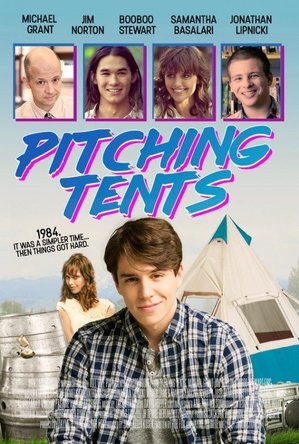
Pitching Tents is exactly this type of movie. Its 1984 its the end of the school year and Danny (Micheal Grant) has very little clue what he is going to do with his life past High School, before he has to really worry about any of that he is having one last weekend at Trout Camp with his buddies. However before his weekend can really begin he is cornered by over zealous guidance counselor Mr. Mulligan (Jim Norton) who has pretty much guaranteed Danny a place at a good college. Obviously though things are never that simple because Danny’s dad (Eric Allan Kramer) has gone to the liberty of securing him a job at the local factory.
Torn between his passion for Art and his desire to please his father, Danny has a tough life choice ahead of him. Of course that can wait because a weekend of smoking weed, contemplating life, trying to get laid lies ahead of Danny and his closest friends. You know standard Dazed and Confused territory.
You could argue that there is not really anything original here and you would right, we have seen these movies before and often done better. However I personally felt the Tug of War between Danny, his father and the Counselor is an interesting spin of the teen coming of age drama. Add to this the supporting cast of friends all hugely believable and relate-able with good turns from Disney alumni BooBoo Stewart (Descendants) as Todd and everyone’s favorite child star Jonathan Lipnicki (who is all growed up nowadays) as Scott. Then there is the final third of the movie in which Danny is to make his choice and the movie shows a level of maturity rarely seen in this type of Flick. Props to director Jacob Cooney on this count.
This is a recommend if these movies take your fancy, I know they are not for everyone but personally it ticked a lot of my boxes, and its always good to see what Lipnicki is doing these days. Oh then theres the soundtrack, typical 80s movie soundtrack, but hey who doesnt love that.
Pitching Tents is exactly this type of movie. Its 1984 its the end of the school year and Danny (Micheal Grant) has very little clue what he is going to do with his life past High School, before he has to really worry about any of that he is having one last weekend at Trout Camp with his buddies. However before his weekend can really begin he is cornered by over zealous guidance counselor Mr. Mulligan (Jim Norton) who has pretty much guaranteed Danny a place at a good college. Obviously though things are never that simple because Danny’s dad (Eric Allan Kramer) has gone to the liberty of securing him a job at the local factory.
Torn between his passion for Art and his desire to please his father, Danny has a tough life choice ahead of him. Of course that can wait because a weekend of smoking weed, contemplating life, trying to get laid lies ahead of Danny and his closest friends. You know standard Dazed and Confused territory.
You could argue that there is not really anything original here and you would right, we have seen these movies before and often done better. However I personally felt the Tug of War between Danny, his father and the Counselor is an interesting spin of the teen coming of age drama. Add to this the supporting cast of friends all hugely believable and relate-able with good turns from Disney alumni BooBoo Stewart (Descendants) as Todd and everyone’s favorite child star Jonathan Lipnicki (who is all growed up nowadays) as Scott. Then there is the final third of the movie in which Danny is to make his choice and the movie shows a level of maturity rarely seen in this type of Flick. Props to director Jacob Cooney on this count.
This is a recommend if these movies take your fancy, I know they are not for everyone but personally it ticked a lot of my boxes, and its always good to see what Lipnicki is doing these days. Oh then theres the soundtrack, typical 80s movie soundtrack, but hey who doesnt love that.

Emma @ The Movies (1786 KP) rated A Simple Favor (2018) in Movies
Sep 25, 2019


Fair warning, if you see this film you will want Blake Lively to be your lover by the end of the it.
There's no denying that this is an entertaining film. There's also no denying that it's predictable. Even without knowing the plot you can basically guess the way it's going to progress.
Blake Lively is amazing though. I honestly thought I'd never seen her in anything, but of course she's been in Green Lantern and Accepted. The latter being a favourite and the former... well, I thought Deadpool had taken care of that one for us... oh well. She does a great job of her role in this one. You can see her devious nature in the way she interacts with everyone and she really does improve the scenes she's in.
I love Anna Kendrick, she's funny and very talented but I wasn't overly keen on her character in this. While I understand that Stephanie takes a major character shift when she realises what has happened, I didn't enjoy the way they did that on the screen. There were some baby steps followed by some huge leaps. At one point I was convinced that they'd gone... "Anna Kendrick always sings... we should get some of that in there." I don't feel like it added anything to the film at all. I'd be interested to see how her character unfolds in the book.
The humour in it is entertaining but the side story of the other "mums" and particularly their inclusion in the summing up of the story feels out of place and more comedy than was right for this film.
Rating this one is tricky. Apart from those odd bits I didn't hate the film and none of it was badly dont... but I don't think I enjoyed it either. I took the evening to think it over and honestly I'm still not sure so therefore it's sitting at the three and a half mark. There's an outside possibility that I'll watch it again to see if I can figure it out, but I don't think it'll be any time soon unless I'm really at a loose end.
Based on the book A Simple Favour by Darcey Bell.
What should you do?
I personally wouldn't recommend watching this until it's streaming. But plenty of other people would disagree with me on that.
Movie thing you wish you could take home
Emily and Sean's house. Although I'm baffled as to why the kitchen is so small so I'd probably expand into the living room space.
There's no denying that this is an entertaining film. There's also no denying that it's predictable. Even without knowing the plot you can basically guess the way it's going to progress.
Blake Lively is amazing though. I honestly thought I'd never seen her in anything, but of course she's been in Green Lantern and Accepted. The latter being a favourite and the former... well, I thought Deadpool had taken care of that one for us... oh well. She does a great job of her role in this one. You can see her devious nature in the way she interacts with everyone and she really does improve the scenes she's in.
I love Anna Kendrick, she's funny and very talented but I wasn't overly keen on her character in this. While I understand that Stephanie takes a major character shift when she realises what has happened, I didn't enjoy the way they did that on the screen. There were some baby steps followed by some huge leaps. At one point I was convinced that they'd gone... "Anna Kendrick always sings... we should get some of that in there." I don't feel like it added anything to the film at all. I'd be interested to see how her character unfolds in the book.
The humour in it is entertaining but the side story of the other "mums" and particularly their inclusion in the summing up of the story feels out of place and more comedy than was right for this film.
Rating this one is tricky. Apart from those odd bits I didn't hate the film and none of it was badly dont... but I don't think I enjoyed it either. I took the evening to think it over and honestly I'm still not sure so therefore it's sitting at the three and a half mark. There's an outside possibility that I'll watch it again to see if I can figure it out, but I don't think it'll be any time soon unless I'm really at a loose end.
Based on the book A Simple Favour by Darcey Bell.
What should you do?
I personally wouldn't recommend watching this until it's streaming. But plenty of other people would disagree with me on that.
Movie thing you wish you could take home
Emily and Sean's house. Although I'm baffled as to why the kitchen is so small so I'd probably expand into the living room space.

Debbiereadsbook (1829 KP) rated The Hitman's Omega Priest (River City Omegas #1) in Books
Jul 2, 2025
A welcome return to Arthur's omegaverse world
Independent reviewer for GRR, I was gifted my copy of this book.
I found AM Arthur through the Breaking Free series, and I loved them. Painful reading in places, but amazingly written and well delivered. I found myself comparing those books to this and found this a little . . . different. So bare with me while I try to get out of my book brain what it needs to say.
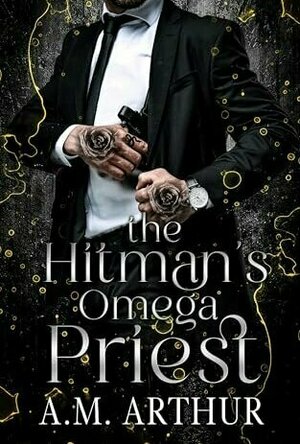
Kensley presented as omega at 14, and in this world, a male omega is shut away for his own good, forced into the priesthood. He hated it, and it never really believed, he was basically paying lip service and keeping his head above water. He never forgave his brother, King, nor Bishop,King's 2nd in command. He still grieved when he heard Bishop had died. Except why does the man standing in front of him make him feel like Bishop did? And who wants Kensley dead?
There is much darkness in Kensley's world and being a male omega puts him way at the bottom of the totem pole. But he should be safe in the church. Until he isn't and the man who comes to save him, he thought dead. But he trusts Bishop, right from the very beginning and things spiral and they have to go into hiding until Kensley is safe.
And therein lies my biggest issue with this book. We never did find out who wants Kens gone, or why. I got that the Master person wanted him cos he is omega, but still. Questions, people, my brain has questions and I cannot dig any more out, no matter how many times I type this paragraph!
So, what I did like?? So much with the steam! It does tend to take over a bit, in places though. Emotional in places, both Kens and Bishop have some deep feelings towards the other that were never resolved and this is the perfect opportunity. But there are other emotions as well, Kensley's life as a priest, Bishop's reasons for disappearing. What King will do when he finds out his best friend ahs defiled his younger brother? And that, I saw coming! I was surprised King waited, but Bishop had just been shot after all. ANd Bishop took it, like a trooper, but he made his point to King and when King sees how Bishop is with Kens gone, he really knows that Bishop loves his brother.
I did not see the thing with King and Malori coming at me. I don't think KING saw it coming to be honest! Malori will need a good deal of love to recover enough to have some sort of reasonable life and I hope King is up to the mark.
Hopefully I will get some answers in their book!
Despite the missing questions/answers to those questions, I really enjoyed this, but there are some trigger warnings and if you have any, you should check out the list.
4 very VERY good stars
*same worded review will appear elsewhere
I found AM Arthur through the Breaking Free series, and I loved them. Painful reading in places, but amazingly written and well delivered. I found myself comparing those books to this and found this a little . . . different. So bare with me while I try to get out of my book brain what it needs to say.
Kensley presented as omega at 14, and in this world, a male omega is shut away for his own good, forced into the priesthood. He hated it, and it never really believed, he was basically paying lip service and keeping his head above water. He never forgave his brother, King, nor Bishop,King's 2nd in command. He still grieved when he heard Bishop had died. Except why does the man standing in front of him make him feel like Bishop did? And who wants Kensley dead?
There is much darkness in Kensley's world and being a male omega puts him way at the bottom of the totem pole. But he should be safe in the church. Until he isn't and the man who comes to save him, he thought dead. But he trusts Bishop, right from the very beginning and things spiral and they have to go into hiding until Kensley is safe.
And therein lies my biggest issue with this book. We never did find out who wants Kens gone, or why. I got that the Master person wanted him cos he is omega, but still. Questions, people, my brain has questions and I cannot dig any more out, no matter how many times I type this paragraph!
So, what I did like?? So much with the steam! It does tend to take over a bit, in places though. Emotional in places, both Kens and Bishop have some deep feelings towards the other that were never resolved and this is the perfect opportunity. But there are other emotions as well, Kensley's life as a priest, Bishop's reasons for disappearing. What King will do when he finds out his best friend ahs defiled his younger brother? And that, I saw coming! I was surprised King waited, but Bishop had just been shot after all. ANd Bishop took it, like a trooper, but he made his point to King and when King sees how Bishop is with Kens gone, he really knows that Bishop loves his brother.
I did not see the thing with King and Malori coming at me. I don't think KING saw it coming to be honest! Malori will need a good deal of love to recover enough to have some sort of reasonable life and I hope King is up to the mark.
Hopefully I will get some answers in their book!
Despite the missing questions/answers to those questions, I really enjoyed this, but there are some trigger warnings and if you have any, you should check out the list.
4 very VERY good stars
*same worded review will appear elsewhere

Simpler Pro
Productivity and Utilities
App
* Over 3,000,000 people love Simpler Pro :) Your address book is a mess? Simpler Pro will fix it in...

colin... (64 KP) rated Star Wars: Episode IX - The Rise of Skywalker (2019) in Movies
Sep 30, 2020

So, I'd like to preface this review by saying that I never thought i would. Thank you Star Wars fans. My experience while watching Endgame on opening night was one of the most atrocious theater going experiences I have ever had, with every single person yelping like baboons at every single line or character appearance. The Star Wars fans that showed up to almost sell out my theater were super respectful and didn't make a single peep through the runtime, thus making my experience much more enjoyable and giving me a clearer head to rate this film. Therefore, I have made the assertion that Marvel is the lowest common denominator and Star Wars gains a bit of respect in my books!
Now, on to the actual film. Listen, if you love the series, you're gonna love this film. It does enough fan service that it satisfies the craving, yet doesn't let it interfere with the story too much. If you hate what the series has become, you're gonna hate the movie. It's way too convenient how everything works out and there are multiple points where I resisted face palming or aggressively whispering to myself. That being said, as I do on most blockbuster films such as this, I land pretty solidly in the middle.
Listen, this piece has a lot of issues with double and triple twists constricting the narrative and not giving it enough room to breathe. It also implements the music in a worse way than I have observed in a Star Wars film to date and the acting by most of the cast was just average at best to me. I was invested for the first eighty minutes or so, but then I just got uninvested and a tad bored. It felt like we were kinda just being ran around the same circle in a repetitive manner without getting to the point until the last twenty minutes or so.
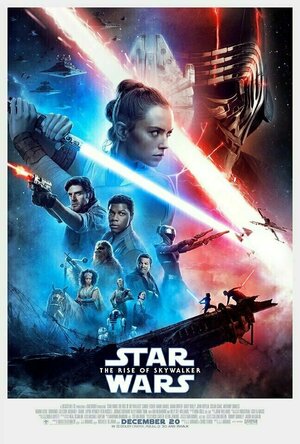
Yet, there's magic here and it is undeniable. I considered it to be nostalgia and then I realised that I don't have the right to be nostalgic about this property. There's just something about the universe construction that seems masterful, and the performances by Adam Driver and Daisy Ridley kick it into overdrive into getting me to care about a world that I would normally give two shits about. The cinematography is surprisingly well done and cleverly varied to accompany certain emotions or appropriate responses.
Overall, it is an acceptable ending to the franchise that doesn't blow anything out of the water, but instead skids along with a bit of turbulence. Thanks for the ride, Abrams.
Now, on to the actual film. Listen, if you love the series, you're gonna love this film. It does enough fan service that it satisfies the craving, yet doesn't let it interfere with the story too much. If you hate what the series has become, you're gonna hate the movie. It's way too convenient how everything works out and there are multiple points where I resisted face palming or aggressively whispering to myself. That being said, as I do on most blockbuster films such as this, I land pretty solidly in the middle.
Listen, this piece has a lot of issues with double and triple twists constricting the narrative and not giving it enough room to breathe. It also implements the music in a worse way than I have observed in a Star Wars film to date and the acting by most of the cast was just average at best to me. I was invested for the first eighty minutes or so, but then I just got uninvested and a tad bored. It felt like we were kinda just being ran around the same circle in a repetitive manner without getting to the point until the last twenty minutes or so.
Yet, there's magic here and it is undeniable. I considered it to be nostalgia and then I realised that I don't have the right to be nostalgic about this property. There's just something about the universe construction that seems masterful, and the performances by Adam Driver and Daisy Ridley kick it into overdrive into getting me to care about a world that I would normally give two shits about. The cinematography is surprisingly well done and cleverly varied to accompany certain emotions or appropriate responses.
Overall, it is an acceptable ending to the franchise that doesn't blow anything out of the water, but instead skids along with a bit of turbulence. Thanks for the ride, Abrams.

Sassy Brit (97 KP) rated A Week to Be Wild in Books
Jun 6, 2019

Smart and intelligent books for smart and intelligent people. I would say women, by why should we have all the fun?
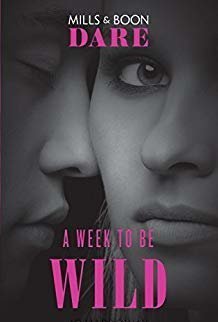
^^ A Week to be Wild by JC Harroway is the first in a daring new, sexy series — aptly named DARE — by Mills and Boon, and boy have they upped their sizzle with this range, if this book is anything to go by!
^^ This bold story features an intelligent American business woman, Libby Noble, and her adventure with British billionaire businessman Alex Lancaster. When I say adventure, I mean that on more levels than one. He wants to invest in services as a marketer for Able-Active, a new charity, which is very meaningful to him. With a week to be wild, he’d agreed to play a sensual game by her rules, and as part of that agreement, she’ll have to agree to try out his charity’s programme, forcing her to step outside her comfort zone with some daredevil pursuits of his own. All for a good cause, of course! If you’re going to work for any company, it’s certainly wise to get stuck right in and get down and dirty, as they say. Well, I hope they do!
^^ The only trouble is, will she be able to focus with Alex around? After all, he’s a movie star, bad-boy, gentleman rogue, geeky surfer dude, with brains and business acumen, (and quite a mouthful!) all rolled into one mouth-watering package. He’s also worth quite a bit, too. Always a bonus.
^^ I love the way both Libby and Alex are vying for alpha status, yet she comes out on top (pun intended) and manages to control an alpha male who is usually used to getting his own way. Alex thinks she’s a stubborn, independent women, and Libby is keen to show she’s no pushover, whilst forcing his natural alpha tendencies into submission. It’s a battle of wills, I can tell you!
^^ In addition to the actual storyline I must also comment on the style of this new range and branding. It. Is. Gorgeous! They’re hot, without being in your face pornographic. Very classy. The paperbacks are just the right size to carry around in a handbag for when you’re on the go.
^^ In fact, their whole site has had a stunning makeover, and they’ve launched a definitive guide to the Rules of Romance. Check it out!
Overall: I’m really pleased to be part of Mills and Boon’s Dare launch, and excited to read more stories from this range. If I could compare this style to other books I’ve read like this, I’d say it’s up there with the Black Lace titles. Happy to recommend JC Harroway’s book, A Week to be Wild, because it’s a well-written story, highly engaging and brimming with passion. As is, I suspect, the rest of this range is going to be… Stay seated, and switch on that electric fan. It doesn’t matter what the weather’s like out there, it’s going to get hot in here!
^^ A Week to be Wild by JC Harroway is the first in a daring new, sexy series — aptly named DARE — by Mills and Boon, and boy have they upped their sizzle with this range, if this book is anything to go by!
^^ This bold story features an intelligent American business woman, Libby Noble, and her adventure with British billionaire businessman Alex Lancaster. When I say adventure, I mean that on more levels than one. He wants to invest in services as a marketer for Able-Active, a new charity, which is very meaningful to him. With a week to be wild, he’d agreed to play a sensual game by her rules, and as part of that agreement, she’ll have to agree to try out his charity’s programme, forcing her to step outside her comfort zone with some daredevil pursuits of his own. All for a good cause, of course! If you’re going to work for any company, it’s certainly wise to get stuck right in and get down and dirty, as they say. Well, I hope they do!
^^ The only trouble is, will she be able to focus with Alex around? After all, he’s a movie star, bad-boy, gentleman rogue, geeky surfer dude, with brains and business acumen, (and quite a mouthful!) all rolled into one mouth-watering package. He’s also worth quite a bit, too. Always a bonus.
^^ I love the way both Libby and Alex are vying for alpha status, yet she comes out on top (pun intended) and manages to control an alpha male who is usually used to getting his own way. Alex thinks she’s a stubborn, independent women, and Libby is keen to show she’s no pushover, whilst forcing his natural alpha tendencies into submission. It’s a battle of wills, I can tell you!
^^ In addition to the actual storyline I must also comment on the style of this new range and branding. It. Is. Gorgeous! They’re hot, without being in your face pornographic. Very classy. The paperbacks are just the right size to carry around in a handbag for when you’re on the go.
^^ In fact, their whole site has had a stunning makeover, and they’ve launched a definitive guide to the Rules of Romance. Check it out!
Overall: I’m really pleased to be part of Mills and Boon’s Dare launch, and excited to read more stories from this range. If I could compare this style to other books I’ve read like this, I’d say it’s up there with the Black Lace titles. Happy to recommend JC Harroway’s book, A Week to be Wild, because it’s a well-written story, highly engaging and brimming with passion. As is, I suspect, the rest of this range is going to be… Stay seated, and switch on that electric fan. It doesn’t matter what the weather’s like out there, it’s going to get hot in here!

KittyMiku (138 KP) rated Bones Don't Lie (Morgan Dane, #3) in Books
May 23, 2019
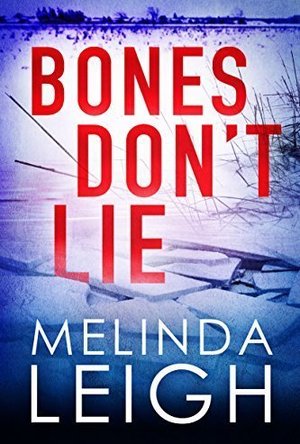
First I would like to say, Melinda Leigh does it again. With the suspense and the ever lying sense of danger, Bones Don't Lie kept me turning pages well into the night. However, unlike the previous books, it was a lot harder to figure out who could be killing anyone or if Lance's missing father did it. I thought I had it figured out within the first few chapters, but the twists and turns kept me guessing and wanting to switch up who I thought the main suspect was. I did enjoy how it became quite clear how people were related to the case of the dead girl whose bones where in the trunk of the sunken car. I also found that the relationship between Morgan and Lance and its growth to be quite touching. To see how they can overcome any obstacle, including Lance's own feelings and way of doing things, was truly heart warming. Especially, when it became clear how he loved Morgan's three little girls enough to be willing to do anything to keep their mother safe.
In this book, we were able to see more on Jenny (Lance's Mother), Lance, and Sharp in plenty of aspects that were only hinted at before. To learn more about the night Lance's father disappeared and how it affected those three people, gave a lot of new perspective to their characters. I definitely enjoyed seeing how Jenny was before and after her husband's disappearance affected her own mental illnesses. I found this story, though not entirely harsh on your mind and heart, to be full of suspense and heart breaking situations. It got worse as you got to see how the case was causing Lance to lose himself to his old ways of shutting out people, and causing him to not be able to control his own temper.
Lance is by far my favorite character. So watching him take a few steps back in his character development was a little rough to bare for me. I won't lie, I very much like the Lance and Morgan relationship, but watching Morgan struggle to get Lance to open up and to keep him in check, was heart breaking. She wanted to be there for him, as we all want to for those we love, and he had a hard time letting her. This is an aspect that is hard, whether fictional or not, to deal with. So when I had to watch her do it and actually put up a fight to make him understand that she was there, I found it exciting. It was one of the most romantic things I have ever read. Especially since she wanted to there for Jenny and Lance wanted to do things his own way to protect her and his mother.
As the story went on, people dying and all, it kept throwing you through loops. To show that people have tells when they lie and secrets they hide to keep themselves from trouble, became one of the biggest things in the book. Everyone lies about something, but with all the lies being told to anyone investigating the case, it became hard as a reader to try and decipher what was a lie and what was the truth. I even wanted to beat some of the characters up for lying over things I thought were trivial. However, I found that they got their own just desserts in the end to be sweet enough to keep my temper in check.
Learning more about Sharp, Lance's boss, was quite exciting. He even got his own chapter or two in the book to help us see how the case was affecting him. I always thought he was extremely clever when it came to finding out facts, going over files, but to see him struggle and have to call in some outside help on his own cold missing persons case that became a murder mystery, was quite something else. Though, its clear he isn't a prideful person, I just never thought he would be at a complete loss. However, I did enjoy seeing things from his perspective. After all, there is always mystery around the man. I believe the interactions on all the characters were done amazingly. To see them all work and grabbing help from every angle they could, was just amazing. It made the story feel much more wholesome than it could have.
Overall, I believe this book is truly breathtaking. I would rate it 5 stars out of 5 stars. I don't think there was anything I wouldn't change. The story kept twisting and turning, which kept my interest peeked. The characters and their depths coming to light was truly fascinating. It makes you feel like you could easily run into them in your own city or town. It definitely showcased how well Leigh understands how the human mind can work. To have that kind of skill and be able to create such deep characters with outstanding personalities of all kind, really helps make the story that much better. I definitely recommend this book and this series to everyone. It has a little something for everyone. With the characters all having such different personalities and ways to go about things, it truly makes the story unforgettable and amazing to read.
In this book, we were able to see more on Jenny (Lance's Mother), Lance, and Sharp in plenty of aspects that were only hinted at before. To learn more about the night Lance's father disappeared and how it affected those three people, gave a lot of new perspective to their characters. I definitely enjoyed seeing how Jenny was before and after her husband's disappearance affected her own mental illnesses. I found this story, though not entirely harsh on your mind and heart, to be full of suspense and heart breaking situations. It got worse as you got to see how the case was causing Lance to lose himself to his old ways of shutting out people, and causing him to not be able to control his own temper.
Lance is by far my favorite character. So watching him take a few steps back in his character development was a little rough to bare for me. I won't lie, I very much like the Lance and Morgan relationship, but watching Morgan struggle to get Lance to open up and to keep him in check, was heart breaking. She wanted to be there for him, as we all want to for those we love, and he had a hard time letting her. This is an aspect that is hard, whether fictional or not, to deal with. So when I had to watch her do it and actually put up a fight to make him understand that she was there, I found it exciting. It was one of the most romantic things I have ever read. Especially since she wanted to there for Jenny and Lance wanted to do things his own way to protect her and his mother.
As the story went on, people dying and all, it kept throwing you through loops. To show that people have tells when they lie and secrets they hide to keep themselves from trouble, became one of the biggest things in the book. Everyone lies about something, but with all the lies being told to anyone investigating the case, it became hard as a reader to try and decipher what was a lie and what was the truth. I even wanted to beat some of the characters up for lying over things I thought were trivial. However, I found that they got their own just desserts in the end to be sweet enough to keep my temper in check.
Learning more about Sharp, Lance's boss, was quite exciting. He even got his own chapter or two in the book to help us see how the case was affecting him. I always thought he was extremely clever when it came to finding out facts, going over files, but to see him struggle and have to call in some outside help on his own cold missing persons case that became a murder mystery, was quite something else. Though, its clear he isn't a prideful person, I just never thought he would be at a complete loss. However, I did enjoy seeing things from his perspective. After all, there is always mystery around the man. I believe the interactions on all the characters were done amazingly. To see them all work and grabbing help from every angle they could, was just amazing. It made the story feel much more wholesome than it could have.
Overall, I believe this book is truly breathtaking. I would rate it 5 stars out of 5 stars. I don't think there was anything I wouldn't change. The story kept twisting and turning, which kept my interest peeked. The characters and their depths coming to light was truly fascinating. It makes you feel like you could easily run into them in your own city or town. It definitely showcased how well Leigh understands how the human mind can work. To have that kind of skill and be able to create such deep characters with outstanding personalities of all kind, really helps make the story that much better. I definitely recommend this book and this series to everyone. It has a little something for everyone. With the characters all having such different personalities and ways to go about things, it truly makes the story unforgettable and amazing to read.
Christina Haynes (148 KP) rated Avoiding Alpha in Books
Jun 14, 2018

Contains spoilers, click to show
So Tessa is now a Werewolf, Human and Bruja (Witch in Spanish) She has accepted the fact she is one and can't do anything about it. She has also accepted that Dastien is her mate. But what she hasn't accepted is that she is going to have to change into a wolf... And that scares her.
With the Vampires gone, and her and Dastien enjoying life as mates. Things couldn't be better (other than the changing into a Werewolf part) However there is a Tribunal approaching because of the whole Dastien biting her thing... (Because wolves aren't allowed to bite human and Dastien broke that rule. They have to have tribubal. Although he bit her due to her being his mate, it still has to happen) She is terrified of what might happen to them both.
Then Meredith her best friend and room neighbor. Was cursed a few years ago so her wolf can't come out and she is never about to change into one again. This curse is now breaking. With Meredith finding her mate in Donovan, who is one of the seven (one of the high Werewolves, who are in charge of all Were.) She freaks and her wolf tries to break out and this gets her really ill. So ill she could die.
Tessa tries to find away to help her by breaking the curse and freeing her wolf. She tries magic and asks for her cousins help. But unfortunately there is no way to break another Witches curse. So Tessa suggests trying to keep the curse to save her life and then working on away to stop this curse later. Once Meredith is better.
We then find out who cursed her and why, Tessa then tries to talk to this Witch and get her to break that curse. But this Witch the leader of the Coven hates all Werewolves and will only break this curse (put the curse back on her and stop the wolf coming back) if she can do the same to Tessa and she joins the Coven she is destined to lead. But Tessa won't join.
Tessa tries to break the curse again and tries to keep Meridith's wolf at bay. But is unsuccessful in doing so. She goes back to the Coven ready to make a deal, but in going there she learns how to break the curse completely. But in order to break this curse she needs to accept she is going to have to change to become a wolf. Which she finally does.
With the Tribunal approaching Tessa has so many emotions. She needs to relax and save Meredith and become one with who she is.
3☕ – NOT A BAD BOOK
Love, Christina ?
With the Vampires gone, and her and Dastien enjoying life as mates. Things couldn't be better (other than the changing into a Werewolf part) However there is a Tribunal approaching because of the whole Dastien biting her thing... (Because wolves aren't allowed to bite human and Dastien broke that rule. They have to have tribubal. Although he bit her due to her being his mate, it still has to happen) She is terrified of what might happen to them both.
Then Meredith her best friend and room neighbor. Was cursed a few years ago so her wolf can't come out and she is never about to change into one again. This curse is now breaking. With Meredith finding her mate in Donovan, who is one of the seven (one of the high Werewolves, who are in charge of all Were.) She freaks and her wolf tries to break out and this gets her really ill. So ill she could die.
Tessa tries to find away to help her by breaking the curse and freeing her wolf. She tries magic and asks for her cousins help. But unfortunately there is no way to break another Witches curse. So Tessa suggests trying to keep the curse to save her life and then working on away to stop this curse later. Once Meredith is better.
We then find out who cursed her and why, Tessa then tries to talk to this Witch and get her to break that curse. But this Witch the leader of the Coven hates all Werewolves and will only break this curse (put the curse back on her and stop the wolf coming back) if she can do the same to Tessa and she joins the Coven she is destined to lead. But Tessa won't join.
Tessa tries to break the curse again and tries to keep Meridith's wolf at bay. But is unsuccessful in doing so. She goes back to the Coven ready to make a deal, but in going there she learns how to break the curse completely. But in order to break this curse she needs to accept she is going to have to change to become a wolf. Which she finally does.
With the Tribunal approaching Tessa has so many emotions. She needs to relax and save Meredith and become one with who she is.
3☕ – NOT A BAD BOOK
Love, Christina ?

Sensitivemuse (246 KP) rated You Are Not Alone in Books
Mar 4, 2020
Better Than Anonymous Girl
Contains spoilers, click to show
Spoilers in Effect. You’ve been warned.
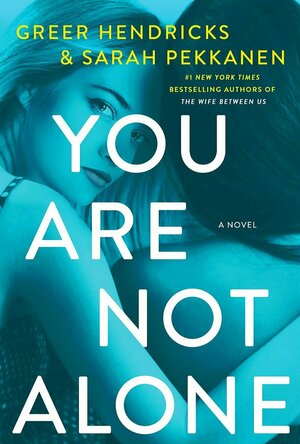
So I read the first two books by these lovely authors, loved The Wife Between Us. Didn’t really like An Anonymous Girl. So although I didn’t set the bar too high this time around it’s always worth giving them another chance. Luckily I’m glad I did. I did quite enjoy this one and loved the little twists and turns that got me going.
Shay isn’t likable. But she’s not one to underestimate either. She’s quirky and may seem a bit off and not so socially inclined but she may be one of those types of people where you once get to know them, they seem to be pleasant to be around with. Now I’m not quite sure why she had to lie to the sisters like that in the first place. Did she feel that awkward? She had so many opportunities to come clean but decided to continue the lie. I’m not sure if that was because we still want her flawed or it was just a plot hook to keep the story going. Nevertheless it was just odd how she just continued the lie (although it would have changed the story, but it might have changed for the better?)
I loved the Moore sisters despite their manipulative behavior. I’d rather hoped there was more backstory to them instead of the little breadcrumbs here and there but the twist behind it was so good! I definitely was not expecting that! What I didn’t appreciate was they could have used Shay’s skills! It was infuriating! They were just so hung up on her lying (which was stupid of Shay to do it to begin with) that they couldn’t see how much value she would bring to the group. Can you just imagine what this group can do if Shay was a part of them? It would have been a completely different novel but perhaps a good one.
The plot itself is good. The intrigue and the twists and turns are there, perhaps not as much as I would like as I’ve read their previous works in the past. The back and forth between points of view was good and a breadcrumb trail is set throughout the storyline to keep you wanting to read more. Love that twist in the end but I have to admit, the ending could have been better. Sure the Moore sisters had good interests in mind, but whether their hearts were in it, maybe not so much.
Loved this book and was happy with it. It’s so much better than the last one and brings me back to wanting to read more of these two authors in the future.
So I read the first two books by these lovely authors, loved The Wife Between Us. Didn’t really like An Anonymous Girl. So although I didn’t set the bar too high this time around it’s always worth giving them another chance. Luckily I’m glad I did. I did quite enjoy this one and loved the little twists and turns that got me going.
Shay isn’t likable. But she’s not one to underestimate either. She’s quirky and may seem a bit off and not so socially inclined but she may be one of those types of people where you once get to know them, they seem to be pleasant to be around with. Now I’m not quite sure why she had to lie to the sisters like that in the first place. Did she feel that awkward? She had so many opportunities to come clean but decided to continue the lie. I’m not sure if that was because we still want her flawed or it was just a plot hook to keep the story going. Nevertheless it was just odd how she just continued the lie (although it would have changed the story, but it might have changed for the better?)
I loved the Moore sisters despite their manipulative behavior. I’d rather hoped there was more backstory to them instead of the little breadcrumbs here and there but the twist behind it was so good! I definitely was not expecting that! What I didn’t appreciate was they could have used Shay’s skills! It was infuriating! They were just so hung up on her lying (which was stupid of Shay to do it to begin with) that they couldn’t see how much value she would bring to the group. Can you just imagine what this group can do if Shay was a part of them? It would have been a completely different novel but perhaps a good one.
The plot itself is good. The intrigue and the twists and turns are there, perhaps not as much as I would like as I’ve read their previous works in the past. The back and forth between points of view was good and a breadcrumb trail is set throughout the storyline to keep you wanting to read more. Love that twist in the end but I have to admit, the ending could have been better. Sure the Moore sisters had good interests in mind, but whether their hearts were in it, maybe not so much.
Loved this book and was happy with it. It’s so much better than the last one and brings me back to wanting to read more of these two authors in the future.

Darren (1599 KP) rated Nanny McPhee (2006) in Movies
Aug 6, 2019
Story: Nanny McPhee starts when widow Mr Brown (Firth) is struggling to keep a nanny to care for his seven children led by the oldest Simon (Brodie-Sangster) who has always planned to push the nanny away with schemes that will leave them in terror. Reaching the end of his potential candidates, Mr Brown is drawn to a mystical Nanny McPhee (Thompson).
Nanny McPhee uses different methods to get the children in order, using her magic, with the warning When you need me but do not want me, then I must stay. When you want me but no longer need me, then I have to go. Can the children be put into order before it is too late.
Thoughts on Nanny McPhee
Characters – Nanny McPhee is a magical nanny that comes when families need her most, she uses the magic to push the children into following her rules, letting them learn from their mistakes unlike any previous nanny. Mr Brown is the widowed father of seven that runs a funeral parlour, he has become distant from his children because of the added pressure of needing to find a new wife as h is clearly stricken with the grief in his life. Evangeline is the help around the house, she is learning from the children in a way that sees her being one of the only adults that can get through to them. Simon is the oldest child that plans what the rest get up to, he needs to learn the biggest lessons as the others will look up to him most.
Performances – Emma Thompson is wonderful choice as Nanny McPhee, she always has your attention on screen no matter what she is teaching. Colin Firth is a great choice in this role, he has the fatherly side down and a man that needs to find love. Kelly Macdonald works well in the maid role in the film bring a calm to the chaos the children usually have. Thomas Brodie-Sangster as the lead of the children stars shows that he was one of Britain’s best at the time.
Story – The story follows a widow that must find a new wife within a month, but is struggle to make sure his children have a nanny after they have chased the rest out of town, a magical nanny comes along to save the day and teach the children a lesson. This story does tackle adult themes like grief and learning to communicate with your family after a tragic loss. We don’t overly focus on the serious side of the film because this is meant to be a kids movie, which is fine, which does pose the question just why would somebody have seven kids and not be able to control them. We do get to through the usual life lessons that the children must learn without being anything special.
Comedy/Fantasy – The comedy in the film usually falls into the slightly more immature level which is more for the children audience, the fantasy comes from just how Nanny McPhee operates.
Settings – The film is set in the house that Mr Brown lives in with his children, it shows that he is in the upper class in the time they are living in.
Special Effects – The effects come from how Nanny McPhee pulls her magic to make the life better for the children.
Scene of the Movie – The wedding.
That Moment That Annoyed Me – Overly childish jokes.
Final Thoughts – This is a simple enjoyable family fantasy film that can be enjoyed by the whole family, it doesn’t bring anything new, but it doesn’t break anything too.
Overall: Fantasy film 101.
Nanny McPhee uses different methods to get the children in order, using her magic, with the warning When you need me but do not want me, then I must stay. When you want me but no longer need me, then I have to go. Can the children be put into order before it is too late.
Thoughts on Nanny McPhee
Characters – Nanny McPhee is a magical nanny that comes when families need her most, she uses the magic to push the children into following her rules, letting them learn from their mistakes unlike any previous nanny. Mr Brown is the widowed father of seven that runs a funeral parlour, he has become distant from his children because of the added pressure of needing to find a new wife as h is clearly stricken with the grief in his life. Evangeline is the help around the house, she is learning from the children in a way that sees her being one of the only adults that can get through to them. Simon is the oldest child that plans what the rest get up to, he needs to learn the biggest lessons as the others will look up to him most.
Performances – Emma Thompson is wonderful choice as Nanny McPhee, she always has your attention on screen no matter what she is teaching. Colin Firth is a great choice in this role, he has the fatherly side down and a man that needs to find love. Kelly Macdonald works well in the maid role in the film bring a calm to the chaos the children usually have. Thomas Brodie-Sangster as the lead of the children stars shows that he was one of Britain’s best at the time.
Story – The story follows a widow that must find a new wife within a month, but is struggle to make sure his children have a nanny after they have chased the rest out of town, a magical nanny comes along to save the day and teach the children a lesson. This story does tackle adult themes like grief and learning to communicate with your family after a tragic loss. We don’t overly focus on the serious side of the film because this is meant to be a kids movie, which is fine, which does pose the question just why would somebody have seven kids and not be able to control them. We do get to through the usual life lessons that the children must learn without being anything special.
Comedy/Fantasy – The comedy in the film usually falls into the slightly more immature level which is more for the children audience, the fantasy comes from just how Nanny McPhee operates.
Settings – The film is set in the house that Mr Brown lives in with his children, it shows that he is in the upper class in the time they are living in.
Special Effects – The effects come from how Nanny McPhee pulls her magic to make the life better for the children.
Scene of the Movie – The wedding.
That Moment That Annoyed Me – Overly childish jokes.
Final Thoughts – This is a simple enjoyable family fantasy film that can be enjoyed by the whole family, it doesn’t bring anything new, but it doesn’t break anything too.
Overall: Fantasy film 101.