
Search

Bob Mann (459 KP) rated Gemini Man (2019) in Movies
Nov 10, 2019
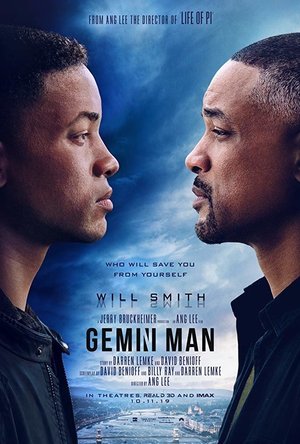


Will Smith plays top US hit-man Henry Brogan who is making the world "safer" one bullet at a time! With the mirror telling him his age, Henry hands in his firearm (not withstanding the arsenal under his stairs) to spend more time going fishing and doing the crossword.
But all is not well when Henry's 'one for the road' hit turns out to not be quite what it seems.
Teaming up with marina manager Danny (Danny??) Zakarweski (Mary Elizabeth Winstead), the pair go on the run from operatives of a government-funded black-ops organization called Gemini. Gemini is a private semi-military organization (didn't we just go here with "Angel Has Fallen"?!). These 'baddie goodies' would rather see Henry - and all who know him - fed to the fishes rather than have him catching them.
But one of these guys, under the direct command of Gemini-boss Clay Verris (Clive Owen), looks kinda familiar...
Let's focus on the positives for a minute. This is a spy movie that has all of the polish that the recent "Angel has Fallen" didn't have. Some nice photogenic locations fly in and out again (Georgia, Budapest and Colombia: the latter for no obvious reason I can remember!). It occasionally reminded me of a glossy Bond film, but without Bond.
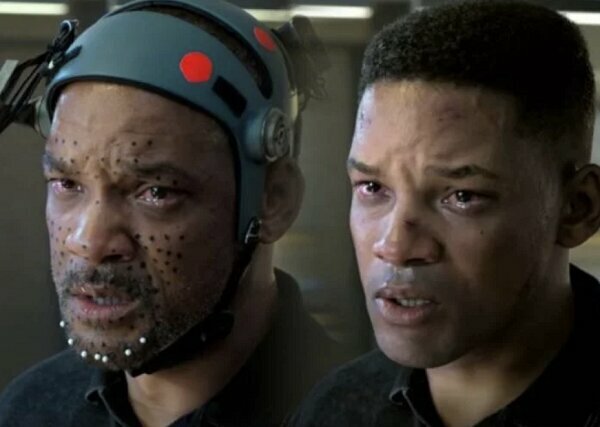
There are also some high-class special effects (the special effects coordinator is Mark Hawker). A moonlit CGI Gulfstream with a zoom into the cockpit is particularly impressive.
Some of the action set pieces also entertain. A Will-on-Will bike chase is well done, and I've not seen a bike used as a hand-to-hand weapon in this way before!
And Will Smith is no doubt a class act, with his 'youngification' (I'm not sure what the official word is) also being effectively done. I also enjoyed Mary Elizabeth Winstead, who was great in "10 Cloverfield Lane". The lady has real screen presence.
But man oh man, that script. Let's name the guilty parties in this film: the scriptwriters David Benioff (Game of Thrones), Darren Lemke and Billy Ray. (I'll put Ray last in the list, since the story was by Benioff and Lemke and this has the smell to me of Ray - who has a history of some great scripts like Captain Phillips under his name - being drafted in to steady a listing ship).
Some of the dialogue in this film is not just a bit dodgy. It's head in the hands groan-worthy (and I actually did at times: fortunately the cinema was barely half full and I was on my own in the whole row). And some of it is just plain offensive. Henry meets his old pal Jack Willis (Douglas Hodge) on his yacht where he explains his wife is on a trip to Paris as a scantily clad dolly-bird wanders past. Henry comically rolls his eyes at this adulterous behaviour, with some sort of "Jack, what are you loike!" comment. Cringe-worthy.
Will Smith, Mary Elizabeth Winstead and Benedict Wong (their ally, adding some comic relief) are clearly good actors. But the script often makes them look utterly vacuous and stupid. And Lee seems to have a "good enough, move on" approach to the filming. One jaw-dropping moment has Will Smith telling the others that they are going to Budapest. "Budapest?" Winstead and Wong are supposed to say in union, but mistime it. "Can we do that again?". Nope. It's on the screen.
As for Clive Owen... sorry, he's really not in the same acting league, and the script does him even fewer favours. As he says at one point "It's like the Hindenburg crashing into the Titanic". I couldn't have put it better myself.
"Uncanny Valley". You know this phrase. The Princess Leia and Moff Tarkin scenes in "Rogue One" is the classic example. Effects that don't quite work on the big screen. "But" - you say to yourself - "Dr Bob just said that the 'youngification' of Will Smith was done really well?". And I'll repeat again that it was. It's on a par with Samuel L. Jackson's 'youngification' in "Captain Marvel". Where something strange happens is in the film's overall projection. Ang Lee has tried again with his experiment of filming at a massive 120 frames per second..... five times the normal movie frame rate of 24 fps. And the quality of the picture - particularly during high-speed action scenes - becomes outstandingly good! But equally it just doesn't 'look right'.
When the human eye presumably works at an equivalent "fps" of thousands of 'frames per second' you'd think that it should all be fine. But for some reason I just found it distracting. Presumably the audiences for "The Jazz Singer" thought the same about sound; and those for "Gone with the Wind" and the "Wizard of Oz" about colour. Maybe we've seen the future, and its the new norm that we just need to get used to. We'll see.
Ang Lee's "Life of Pi" was extraordinary. His "Hulk" was one of the poorest of the Marvel canon. Unfortunately, this movie is at the "Hulk" end of the spectrum. Which is a real shame. The duo of the 51 year old Smith and the 35 year old Winstead work really well together. They have great chemistry, but, you'll be relieved to hear, avoid any icky love interest.
What a shame. With a different script, and some good production values, this could have been a very different story.
(For the full graphical review, please check out https://bob-the-movie-man.com/2019/10/18/one-manns-movies-film-review-gemini-man-2019/ )
But all is not well when Henry's 'one for the road' hit turns out to not be quite what it seems.
Teaming up with marina manager Danny (Danny??) Zakarweski (Mary Elizabeth Winstead), the pair go on the run from operatives of a government-funded black-ops organization called Gemini. Gemini is a private semi-military organization (didn't we just go here with "Angel Has Fallen"?!). These 'baddie goodies' would rather see Henry - and all who know him - fed to the fishes rather than have him catching them.
But one of these guys, under the direct command of Gemini-boss Clay Verris (Clive Owen), looks kinda familiar...
Let's focus on the positives for a minute. This is a spy movie that has all of the polish that the recent "Angel has Fallen" didn't have. Some nice photogenic locations fly in and out again (Georgia, Budapest and Colombia: the latter for no obvious reason I can remember!). It occasionally reminded me of a glossy Bond film, but without Bond.
There are also some high-class special effects (the special effects coordinator is Mark Hawker). A moonlit CGI Gulfstream with a zoom into the cockpit is particularly impressive.
Some of the action set pieces also entertain. A Will-on-Will bike chase is well done, and I've not seen a bike used as a hand-to-hand weapon in this way before!
And Will Smith is no doubt a class act, with his 'youngification' (I'm not sure what the official word is) also being effectively done. I also enjoyed Mary Elizabeth Winstead, who was great in "10 Cloverfield Lane". The lady has real screen presence.
But man oh man, that script. Let's name the guilty parties in this film: the scriptwriters David Benioff (Game of Thrones), Darren Lemke and Billy Ray. (I'll put Ray last in the list, since the story was by Benioff and Lemke and this has the smell to me of Ray - who has a history of some great scripts like Captain Phillips under his name - being drafted in to steady a listing ship).
Some of the dialogue in this film is not just a bit dodgy. It's head in the hands groan-worthy (and I actually did at times: fortunately the cinema was barely half full and I was on my own in the whole row). And some of it is just plain offensive. Henry meets his old pal Jack Willis (Douglas Hodge) on his yacht where he explains his wife is on a trip to Paris as a scantily clad dolly-bird wanders past. Henry comically rolls his eyes at this adulterous behaviour, with some sort of "Jack, what are you loike!" comment. Cringe-worthy.
Will Smith, Mary Elizabeth Winstead and Benedict Wong (their ally, adding some comic relief) are clearly good actors. But the script often makes them look utterly vacuous and stupid. And Lee seems to have a "good enough, move on" approach to the filming. One jaw-dropping moment has Will Smith telling the others that they are going to Budapest. "Budapest?" Winstead and Wong are supposed to say in union, but mistime it. "Can we do that again?". Nope. It's on the screen.
As for Clive Owen... sorry, he's really not in the same acting league, and the script does him even fewer favours. As he says at one point "It's like the Hindenburg crashing into the Titanic". I couldn't have put it better myself.
"Uncanny Valley". You know this phrase. The Princess Leia and Moff Tarkin scenes in "Rogue One" is the classic example. Effects that don't quite work on the big screen. "But" - you say to yourself - "Dr Bob just said that the 'youngification' of Will Smith was done really well?". And I'll repeat again that it was. It's on a par with Samuel L. Jackson's 'youngification' in "Captain Marvel". Where something strange happens is in the film's overall projection. Ang Lee has tried again with his experiment of filming at a massive 120 frames per second..... five times the normal movie frame rate of 24 fps. And the quality of the picture - particularly during high-speed action scenes - becomes outstandingly good! But equally it just doesn't 'look right'.
When the human eye presumably works at an equivalent "fps" of thousands of 'frames per second' you'd think that it should all be fine. But for some reason I just found it distracting. Presumably the audiences for "The Jazz Singer" thought the same about sound; and those for "Gone with the Wind" and the "Wizard of Oz" about colour. Maybe we've seen the future, and its the new norm that we just need to get used to. We'll see.
Ang Lee's "Life of Pi" was extraordinary. His "Hulk" was one of the poorest of the Marvel canon. Unfortunately, this movie is at the "Hulk" end of the spectrum. Which is a real shame. The duo of the 51 year old Smith and the 35 year old Winstead work really well together. They have great chemistry, but, you'll be relieved to hear, avoid any icky love interest.
What a shame. With a different script, and some good production values, this could have been a very different story.
(For the full graphical review, please check out https://bob-the-movie-man.com/2019/10/18/one-manns-movies-film-review-gemini-man-2019/ )

Gareth von Kallenbach (980 KP) rated The Hobbit: An Unexpected Journey (2012) in Movies
Aug 7, 2019


Following the Lord of the Rings Trilogy was going to be no easy feat. The series not only made incredible amounts of cash at the box office worldwide, but also garnered an Academy award for best picture for the final film in the series. In the years since the trilogy, writer-director-producer Peter Jackson has not overwhelmed at the box office. His big-budget remake of “King Kong” performed below expectations and the high-profile collapse of the “Halo” movie to which he was attached, as well as the underwhelming box office of “The Lovely Bones” made many people question if Jackson had peaked and was better suited for the lower budgeted independent films that first gave him his start.
When it was announced that a film version of “The Hobbit” was in the works and that director Guillermo del Toro would direct the film as well as help write the screenplay and that Jackson would produce, the fans’ interest level was definitely piqued. But after a long state of pre-production, del Torro decided not to direct the film as he was unwilling to commit the next six years to living and working in New Zealand. Jackson then took over the film and soon after it was announced that it would be stretched into three movies to form a new trilogy.
For those unfamiliar with the story it was actually the first book written by J.R.R. Tolkien, which sets the stage for what was to follow in the Lord of the Rings even though it was originally conceived as a standalone story. The film opens with an older Bilbo Baggins (Martin Freeman), writing a memoir while preparations for a party are underway. Bilbo discusses how there was one story that he had not disclosed and sets pen to paper in order to chronicle his legendary journey 60 years prior.
Gandolf Wizard (Sir Ian McKellen) visits the younger Bilbo and suggests he go on an adventure. Bilbo immediately declines, as being a Hobbit, he has no desire to leave the creature comforts and serenity of The Shire, much less face the dangers that exist in the world beyond. A group of dwarves arrive’ that evening and despite their gluttonous appetites and loud behavior, Bilbo has a change of heart the following morning and accompanies them on their quest.
The group’s goal is to travel to the dwarves’ kingdom of Erebor to reclaim their stronghold which was lost many years earlier to a vicious Dragon named Smaug. In the decades since, the dwarves existed as people without a home, forced to live as nomads taking work wherever they can find it. Along the way the group deals with all manner of threats and dangers ranging from trolls, goblins, orcs, and other supernatural elements. Of course there were some internal tensions and conflicts within the group as it marched towards a finale that sets the stage for the next film.
The movie has a runtime of nearly 3 hours and there were times that I caught a couple members in press row dozing briefly. While I enjoyed the film more than I did any of the Lord of the Rings movies, it was clearly obvious that things were being stretched out in order to justify a third film in the series. There were countless scenes of the band walking over hills and across the countryside so much so that at times I felt that I was watching the longest commercial for New Zealand tourism ever created. We get it. It’s a long journey. They travel near and far. I got it. I don’t need to see it every 10 minutes.
There were also several scenes that were done almost as if in aside that truthfully did not add much to the story but seem to exist as nothing more than time fillers. In the subsequent films it is learned that characters and scenes that did not appear in the book will be inserted into the film. Once again I have to question this as I do believe they could have easily cut an hour out of this movie and not lose much of the necessary narrative.
There’s been a lot of talk about the higher frame rate 3-D that was used to create the film. There have been claims that it was distracting, jerky, and detracted from the movie. I on the other hand found it absolutely captivating because it did not have that movie look to it, and it felt like I was watching an HD television. Even during the CGI heavy sequences, it did appear as if the performers were literally right there in front of me and I got the impression more of watching a play than of watching a movie.
The visual effects in the film were quite stunning. The live-action and computer-generated elements were absolutely amazing, especially during the latter part of the film when we meet Gollum (Andy Serkis), and during the battle and the goblin stronghold. Although the book is considered a children’s novel, I would really have to think twice about bringing young children to see this film as there is a lot of action and violence in the film as well as potential scares in the form of the monsters that abound.
The film could have definitely used some star power to it. While the cast does a solid job, they are fairly generic and almost interchangeable during certain segments of the film. That being said, the film works because despite its issues, it’s a visually spectacular masterpiece that, if you can endure the long periods of inaction, pays off especially well during the film’s battle sequences.
When it was announced that a film version of “The Hobbit” was in the works and that director Guillermo del Toro would direct the film as well as help write the screenplay and that Jackson would produce, the fans’ interest level was definitely piqued. But after a long state of pre-production, del Torro decided not to direct the film as he was unwilling to commit the next six years to living and working in New Zealand. Jackson then took over the film and soon after it was announced that it would be stretched into three movies to form a new trilogy.
For those unfamiliar with the story it was actually the first book written by J.R.R. Tolkien, which sets the stage for what was to follow in the Lord of the Rings even though it was originally conceived as a standalone story. The film opens with an older Bilbo Baggins (Martin Freeman), writing a memoir while preparations for a party are underway. Bilbo discusses how there was one story that he had not disclosed and sets pen to paper in order to chronicle his legendary journey 60 years prior.
Gandolf Wizard (Sir Ian McKellen) visits the younger Bilbo and suggests he go on an adventure. Bilbo immediately declines, as being a Hobbit, he has no desire to leave the creature comforts and serenity of The Shire, much less face the dangers that exist in the world beyond. A group of dwarves arrive’ that evening and despite their gluttonous appetites and loud behavior, Bilbo has a change of heart the following morning and accompanies them on their quest.
The group’s goal is to travel to the dwarves’ kingdom of Erebor to reclaim their stronghold which was lost many years earlier to a vicious Dragon named Smaug. In the decades since, the dwarves existed as people without a home, forced to live as nomads taking work wherever they can find it. Along the way the group deals with all manner of threats and dangers ranging from trolls, goblins, orcs, and other supernatural elements. Of course there were some internal tensions and conflicts within the group as it marched towards a finale that sets the stage for the next film.
The movie has a runtime of nearly 3 hours and there were times that I caught a couple members in press row dozing briefly. While I enjoyed the film more than I did any of the Lord of the Rings movies, it was clearly obvious that things were being stretched out in order to justify a third film in the series. There were countless scenes of the band walking over hills and across the countryside so much so that at times I felt that I was watching the longest commercial for New Zealand tourism ever created. We get it. It’s a long journey. They travel near and far. I got it. I don’t need to see it every 10 minutes.
There were also several scenes that were done almost as if in aside that truthfully did not add much to the story but seem to exist as nothing more than time fillers. In the subsequent films it is learned that characters and scenes that did not appear in the book will be inserted into the film. Once again I have to question this as I do believe they could have easily cut an hour out of this movie and not lose much of the necessary narrative.
There’s been a lot of talk about the higher frame rate 3-D that was used to create the film. There have been claims that it was distracting, jerky, and detracted from the movie. I on the other hand found it absolutely captivating because it did not have that movie look to it, and it felt like I was watching an HD television. Even during the CGI heavy sequences, it did appear as if the performers were literally right there in front of me and I got the impression more of watching a play than of watching a movie.
The visual effects in the film were quite stunning. The live-action and computer-generated elements were absolutely amazing, especially during the latter part of the film when we meet Gollum (Andy Serkis), and during the battle and the goblin stronghold. Although the book is considered a children’s novel, I would really have to think twice about bringing young children to see this film as there is a lot of action and violence in the film as well as potential scares in the form of the monsters that abound.
The film could have definitely used some star power to it. While the cast does a solid job, they are fairly generic and almost interchangeable during certain segments of the film. That being said, the film works because despite its issues, it’s a visually spectacular masterpiece that, if you can endure the long periods of inaction, pays off especially well during the film’s battle sequences.
Gareth von Kallenbach (980 KP) rated Hellboy (2019) in Movies
Jul 2, 2019
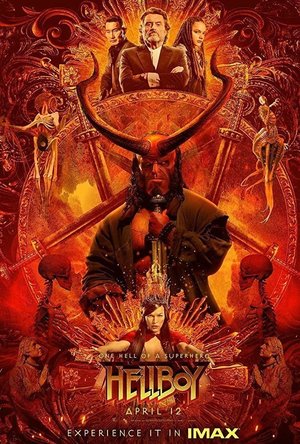

Trivia question for you…what does an immortal evil queen, King Arthur, Nazis and a boy born from Hell itself have in common? If you answered Hellboy you win a prize. The prize is going to the theater and watching the film and whether it’s a prize worth winning is something you’ll have to decide for yourself. I’m getting a bit ahead of myself though, so let’s rewind a bit and start at the beginning.
Hellboy (David Harbour) is a demon from Hell (hence the name), his backstory as we learn early on in the movie is pretty standard fare. The Nazi’s are on the verge of losing World War II and in a desperate move to turn the tide call upon the evil sorcerer Rasputin to call upon the depths of Hell and raise a champion who will fight for them. The incantation is interrupted when famous Nazi hunter Lobster Johnson (Thomas Haden Church) goes in with guns blazing, as other allied troops join the fray. Their relief at stopping the incantation is short-lived as the alter opens and a young demon climbs through. Professor Broom who had infiltrated the Nazi team had been brought in to put down any evil that was successfully summoned. Upon seeing the young demon, Professor Broom (for reasons known only to him at the time) decides not to kill him, but to take him in and raise him as his own.
Flash forward to present day, and Hellboy as we now know him alongside his father are members of the B.P.R.D (Bureau for Paranormal Research and Defense). On a mission to defeat some giants that are roaming the countryside in England they stumble upon an ancient evil that dark forces are trying to retrieve. It seems back in the dark ages a war between humans and monsters was being waged. Seeing no end to the violence King Arthur (Mark Stanley) and his faithful wizard Merlin (Brian Gleeson) offer to surrender to The Blood Queen (Milla Jovovich). On top the hill where the surrender is to take place, the Blood Queen is betrayed by one of her own and King Arthur, using the infamous blade Excalibur, cut the Blood Queen into several parts. While she can’t be killed, she can be contained and each of her body parts are placed in separate boxes. These boxes are then sealed with holy water that only a holy man can unlock and are sent to the farthest corners of England. If the Blood Queen ever returns, she will release a plague that will not only destroy England but spread across the entire world. Thus, sets the stage for Hellboy.
Being a fan of the previous movies and in particular the portrayal of Hellboy by Ron Pearlman, I wasn’t sure how to feel about David Harbour in this role. It’s always a bit hit or miss when a series is rebooted, and I was pleasantly surprised with how David Harbour stepped up and into the role. While he doesn’t have the same menacing size and gruffness that Ron Pearlman possesses, it didn’t take me long to adjust to this new version. He is joined by a strong supporting cast consisting of Sasha Lane as his ghost whispering friend Alice and Ben Daimo as an MI-11 agent weary of teaming up with a monster. Milla Jovovich does an outstanding job as the Blood Queen and her fairy-pig friend portrayed by Stephen Graham and Douglas Tait.
Visually the movie is stunning, with the numerous monsters and fairy creatures coming to life before your eyes. The movie is exceptionally gory as one might expect, with numerous limb dismemberments, decapitations, and more blood than anyone would expect to erupt from such wounds. It’s over-the-top and meant to be that way which tended to bring some uncomfortable laughter at times from those around me. Having recently played Mortal Kombat 11, I couldn’t help but feel that some of the fatality screens in that game would have felt right at home in this movie.
Story is where I feel Hellboy falls a bit flat. There are so many characters and side stories going on that it’s easy to get lost in it. From my description above, you can see that it includes King Arthur, Rasputin, Nazis, Secret Societies, Witches that eat children, monsters…and that’s only in the first half of the movie. There is a ton going on and there are a lot of disconnects. While trying to avoid spoilers, there is a part in the film where Hellboy is talking to Baba Yaga (see another character reference), and after tricking her she places a curse on him. I’m still trying to figure out if the curse she placed on him occurred in the movie or not. In fact, I’m trying to figure out exactly what the point of that scene was. It’s not a bad story, but it tries to pack in a TON of references in its brief hour and forty five-ish minutes.
I’ll be the first to admit that I’ve never read any of the Hellboy graphic novels, I have seen both of the previous films, so I had a little bit of background going into this movie. I don’t know if all the references in the movie are pivotal to the novels or not. You certainly don’t have to have read them or seen the previous movies to appreciate this one, I just wonder if they tried to fit in too many Hellboy references into one film. Hellboy is an enjoyable ride, and it certainly doesn’t drag at all, in fact I was surprised at how quickly it was over. With all that being said, it’s a fun action-packed movie, with lots of gratuitous violence if that’s your thing. I certainly wouldn’t recommend taking your children to see it, violence aside, I just think there is way too much going on and it can be difficult to follow. Oh, and don’t forget to stay through the credits for the end credit scene. It’s not pivotal to the movie, but worth waiting around for.
Hellboy (David Harbour) is a demon from Hell (hence the name), his backstory as we learn early on in the movie is pretty standard fare. The Nazi’s are on the verge of losing World War II and in a desperate move to turn the tide call upon the evil sorcerer Rasputin to call upon the depths of Hell and raise a champion who will fight for them. The incantation is interrupted when famous Nazi hunter Lobster Johnson (Thomas Haden Church) goes in with guns blazing, as other allied troops join the fray. Their relief at stopping the incantation is short-lived as the alter opens and a young demon climbs through. Professor Broom who had infiltrated the Nazi team had been brought in to put down any evil that was successfully summoned. Upon seeing the young demon, Professor Broom (for reasons known only to him at the time) decides not to kill him, but to take him in and raise him as his own.
Flash forward to present day, and Hellboy as we now know him alongside his father are members of the B.P.R.D (Bureau for Paranormal Research and Defense). On a mission to defeat some giants that are roaming the countryside in England they stumble upon an ancient evil that dark forces are trying to retrieve. It seems back in the dark ages a war between humans and monsters was being waged. Seeing no end to the violence King Arthur (Mark Stanley) and his faithful wizard Merlin (Brian Gleeson) offer to surrender to The Blood Queen (Milla Jovovich). On top the hill where the surrender is to take place, the Blood Queen is betrayed by one of her own and King Arthur, using the infamous blade Excalibur, cut the Blood Queen into several parts. While she can’t be killed, she can be contained and each of her body parts are placed in separate boxes. These boxes are then sealed with holy water that only a holy man can unlock and are sent to the farthest corners of England. If the Blood Queen ever returns, she will release a plague that will not only destroy England but spread across the entire world. Thus, sets the stage for Hellboy.
Being a fan of the previous movies and in particular the portrayal of Hellboy by Ron Pearlman, I wasn’t sure how to feel about David Harbour in this role. It’s always a bit hit or miss when a series is rebooted, and I was pleasantly surprised with how David Harbour stepped up and into the role. While he doesn’t have the same menacing size and gruffness that Ron Pearlman possesses, it didn’t take me long to adjust to this new version. He is joined by a strong supporting cast consisting of Sasha Lane as his ghost whispering friend Alice and Ben Daimo as an MI-11 agent weary of teaming up with a monster. Milla Jovovich does an outstanding job as the Blood Queen and her fairy-pig friend portrayed by Stephen Graham and Douglas Tait.
Visually the movie is stunning, with the numerous monsters and fairy creatures coming to life before your eyes. The movie is exceptionally gory as one might expect, with numerous limb dismemberments, decapitations, and more blood than anyone would expect to erupt from such wounds. It’s over-the-top and meant to be that way which tended to bring some uncomfortable laughter at times from those around me. Having recently played Mortal Kombat 11, I couldn’t help but feel that some of the fatality screens in that game would have felt right at home in this movie.
Story is where I feel Hellboy falls a bit flat. There are so many characters and side stories going on that it’s easy to get lost in it. From my description above, you can see that it includes King Arthur, Rasputin, Nazis, Secret Societies, Witches that eat children, monsters…and that’s only in the first half of the movie. There is a ton going on and there are a lot of disconnects. While trying to avoid spoilers, there is a part in the film where Hellboy is talking to Baba Yaga (see another character reference), and after tricking her she places a curse on him. I’m still trying to figure out if the curse she placed on him occurred in the movie or not. In fact, I’m trying to figure out exactly what the point of that scene was. It’s not a bad story, but it tries to pack in a TON of references in its brief hour and forty five-ish minutes.
I’ll be the first to admit that I’ve never read any of the Hellboy graphic novels, I have seen both of the previous films, so I had a little bit of background going into this movie. I don’t know if all the references in the movie are pivotal to the novels or not. You certainly don’t have to have read them or seen the previous movies to appreciate this one, I just wonder if they tried to fit in too many Hellboy references into one film. Hellboy is an enjoyable ride, and it certainly doesn’t drag at all, in fact I was surprised at how quickly it was over. With all that being said, it’s a fun action-packed movie, with lots of gratuitous violence if that’s your thing. I certainly wouldn’t recommend taking your children to see it, violence aside, I just think there is way too much going on and it can be difficult to follow. Oh, and don’t forget to stay through the credits for the end credit scene. It’s not pivotal to the movie, but worth waiting around for.
Bob Mann (459 KP) rated The Nutcracker and the Four Realms (2018) in Movies
Sep 28, 2021
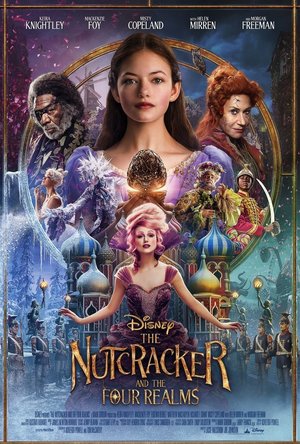
A fantasy that’s glossy and beautiful to look at.
Before the heavyweight juggernaut of “Mary Poppins Returns” arrives at Christmas, here’s another Disney live action feature to get everyone in the festive spirit.
The Plot.
It’s Victorian London and Young Clara (Mackenzie Foy) lives with her father (Matthew Macfadyen), her older sister Louise (Ellie Bamber) and her younger brother Fritz (Tom Sweet). It’s Christmas and the family are having a hard time as they are grieving the recent death of wife and mother Marie (Anna Madeley). Like her mother, Clara has an astute mind with an engineering bias and is encouraged in this pursuit by her quirky inventor godfather, Drosselmeyer (Morgan Freeman). At his fabled Christmas ball, Clara asks for his help in accessing a gift Clara’s mother has bequeathed to her. This leads Clara on a magical adventure to a parallel world with four realms, where everything is not quite peace and harmony.
The Review.
This is a film that visually delights from the word go. The film opens with a swooping tour of Victorian London (who knew the Disney castle was in the capital’s suburbs?!) via Westminster bridge and into the Stahlbaum’s attic. It’s a spectacular tour-de-force of special-effects wizardry and sets up the expectation of what’s to come. For every scene that follows is a richly decorated feast for the eyes. Drosselmeyer’s party is a glorious event, full of extras, strong on costume design and with a rich colour palette as filmed by Linus Sandgren (“La La Land“). When we are pitched into the Four Realms – no wardrobe required – the magical visions continue.
The film represents a Narnia-esque take on the four compass-point lands of Oz, and on that basis it’s a bit formulaic. But the good vs evil angles are more subtley portrayed. Of the Four Realms leaders, Keira Knightley as Sugar Plum rather steals the show from the others (played by Richard E. Grant, Eugenio Derbez and Helen Mirren). Mirren in particular is given little to do.
What age kids would this be suitable for? Well, probably a good judge would be the Wizard of Oz. If your kids are not completely freaked out by the Wicked Witch of the West and the flying monkeys, then they will probably cope OK with the scary bits of the “Realm of Entertainment”. Although those who suffer from either musophobia or (especially) coulrophobia might want to give it a miss! All kids are different though, and the “loss of the mother” is also an angle to consider: that might worry and upset young children. It is definitely a “PG” certificate rather than a “U” certificate.
Young people who also enjoy ballet (I nearly fell into a sexist trap there!) will also get a kick out of some of the dance sequences, which are “Fantasia-esque” in their presentation and feature Misty Copeland, famously the first African American Female Principal Dancer with the American Ballet Theatre. (I have no appreciation at all for ballet, but I’m sure it was brilliant!)
As for the moral tone of the film, the female empowerment message is rather ladled on with a trowel, but as it’s a good message I have no great problem with that. I am often appalled at how lacking in confidence young people are in their own abilities. Here is a young lady (an engineer!) learning self-resilience and the confidence to be able to do anything in life she puts her mind to. Well said.
The story is rather generic – child visits a magical other world – but the screenplay is impressive given its the first-feature screenplay for Ashleigh Powell: there is an article on her approach to screenwriting that you might find interesting here.
The film is credited with two directors. This – particularly if there is also an army of screenwriters – is normally a warning sign on a film. (As a case in point, the chaotic 1967 version of “Casino Royale” had six different directors, and it shows!). Here, there clearly were issues with the filming since Disney insisted on reshoots for which the original director, Lasse Hallström, was not available. This is where the “Captain America” director Joe Johnston stepped in.
The turns.
I really enjoyed Mackenzie Foy‘s performance as Clara. Now 18, she is a feisty and believable Disney princess for the modern age. (If, like me, you are struggling to place where you’ve heard her name before, she was the young Murph in Nolan’s “Interstellar“).
Another name I was struggling with was Ellie Bamber as her sister. Ellie was excellent in the traumatic role of the daughter in the brilliant “Nocturnal Animals“, one of my favourite films of 2016. (Hopefully the therapy has worked and Ellie can sleep at night again!).
A newcomer with a big role is Jayden Fowora-Knight as the Nutcracker soldier: Jayden had a bit part in “Ready Player One” but does a great job here in a substantial role in the film. He stands out as a black actor in a Disney feature: notwithstanding the Finn character in “Star Wars”, this is a long-overdue and welcome approach from Disney.
British comedians Omid Djalili and Jack Whitehouse turn up to add some light relief, but the humour seems rather forced and not particularly fitting.
Final thoughts
I wasn’t expecting to enjoy this one much, but I did. Prinicipally because it is such a visual feast and worth going to see just for that alone: I have a prediction that this film will be nominated for production design, costume design and possible special effects.
I think kids of the right age – I would have thought 6 to 10 sort of range – will enjoy this a lot, particularly if they like dance. Young girls in particular will most relate to the lead character. For such kids, I’d rate this a 4*. The rating below reflects my rating as an adult: so I don’t think ‘drag-a-long’ parents in the Christmas holidays (if it is still on by then) will not be totally bored.
The Plot.
It’s Victorian London and Young Clara (Mackenzie Foy) lives with her father (Matthew Macfadyen), her older sister Louise (Ellie Bamber) and her younger brother Fritz (Tom Sweet). It’s Christmas and the family are having a hard time as they are grieving the recent death of wife and mother Marie (Anna Madeley). Like her mother, Clara has an astute mind with an engineering bias and is encouraged in this pursuit by her quirky inventor godfather, Drosselmeyer (Morgan Freeman). At his fabled Christmas ball, Clara asks for his help in accessing a gift Clara’s mother has bequeathed to her. This leads Clara on a magical adventure to a parallel world with four realms, where everything is not quite peace and harmony.
The Review.
This is a film that visually delights from the word go. The film opens with a swooping tour of Victorian London (who knew the Disney castle was in the capital’s suburbs?!) via Westminster bridge and into the Stahlbaum’s attic. It’s a spectacular tour-de-force of special-effects wizardry and sets up the expectation of what’s to come. For every scene that follows is a richly decorated feast for the eyes. Drosselmeyer’s party is a glorious event, full of extras, strong on costume design and with a rich colour palette as filmed by Linus Sandgren (“La La Land“). When we are pitched into the Four Realms – no wardrobe required – the magical visions continue.
The film represents a Narnia-esque take on the four compass-point lands of Oz, and on that basis it’s a bit formulaic. But the good vs evil angles are more subtley portrayed. Of the Four Realms leaders, Keira Knightley as Sugar Plum rather steals the show from the others (played by Richard E. Grant, Eugenio Derbez and Helen Mirren). Mirren in particular is given little to do.
What age kids would this be suitable for? Well, probably a good judge would be the Wizard of Oz. If your kids are not completely freaked out by the Wicked Witch of the West and the flying monkeys, then they will probably cope OK with the scary bits of the “Realm of Entertainment”. Although those who suffer from either musophobia or (especially) coulrophobia might want to give it a miss! All kids are different though, and the “loss of the mother” is also an angle to consider: that might worry and upset young children. It is definitely a “PG” certificate rather than a “U” certificate.
Young people who also enjoy ballet (I nearly fell into a sexist trap there!) will also get a kick out of some of the dance sequences, which are “Fantasia-esque” in their presentation and feature Misty Copeland, famously the first African American Female Principal Dancer with the American Ballet Theatre. (I have no appreciation at all for ballet, but I’m sure it was brilliant!)
As for the moral tone of the film, the female empowerment message is rather ladled on with a trowel, but as it’s a good message I have no great problem with that. I am often appalled at how lacking in confidence young people are in their own abilities. Here is a young lady (an engineer!) learning self-resilience and the confidence to be able to do anything in life she puts her mind to. Well said.
The story is rather generic – child visits a magical other world – but the screenplay is impressive given its the first-feature screenplay for Ashleigh Powell: there is an article on her approach to screenwriting that you might find interesting here.
The film is credited with two directors. This – particularly if there is also an army of screenwriters – is normally a warning sign on a film. (As a case in point, the chaotic 1967 version of “Casino Royale” had six different directors, and it shows!). Here, there clearly were issues with the filming since Disney insisted on reshoots for which the original director, Lasse Hallström, was not available. This is where the “Captain America” director Joe Johnston stepped in.
The turns.
I really enjoyed Mackenzie Foy‘s performance as Clara. Now 18, she is a feisty and believable Disney princess for the modern age. (If, like me, you are struggling to place where you’ve heard her name before, she was the young Murph in Nolan’s “Interstellar“).
Another name I was struggling with was Ellie Bamber as her sister. Ellie was excellent in the traumatic role of the daughter in the brilliant “Nocturnal Animals“, one of my favourite films of 2016. (Hopefully the therapy has worked and Ellie can sleep at night again!).
A newcomer with a big role is Jayden Fowora-Knight as the Nutcracker soldier: Jayden had a bit part in “Ready Player One” but does a great job here in a substantial role in the film. He stands out as a black actor in a Disney feature: notwithstanding the Finn character in “Star Wars”, this is a long-overdue and welcome approach from Disney.
British comedians Omid Djalili and Jack Whitehouse turn up to add some light relief, but the humour seems rather forced and not particularly fitting.
Final thoughts
I wasn’t expecting to enjoy this one much, but I did. Prinicipally because it is such a visual feast and worth going to see just for that alone: I have a prediction that this film will be nominated for production design, costume design and possible special effects.
I think kids of the right age – I would have thought 6 to 10 sort of range – will enjoy this a lot, particularly if they like dance. Young girls in particular will most relate to the lead character. For such kids, I’d rate this a 4*. The rating below reflects my rating as an adult: so I don’t think ‘drag-a-long’ parents in the Christmas holidays (if it is still on by then) will not be totally bored.

Purple Phoenix Games (2266 KP) rated Gnomes & Wizards in Tabletop Games
Jan 21, 2020
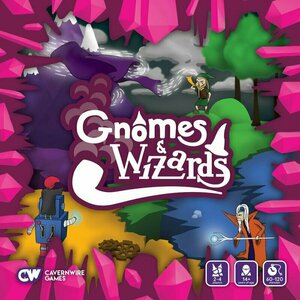
I always thought that Gnomes could BE Wizards. This whole time I was led to believe that a Gnome could take on the class of Wizard and join these two houses splendidly. I did not, however, realize that Gnomes and Wizards were different species and vying for the same power crystals to fuel their magicks… until recently.
Gnomes & Wizards is an area control, map deformation, dice assignment battle game where the players are attempting to earn the most victory points (VP) at the end of the game. Players gain VP by defeating other players’ active characters (clan leaders and tribesmen henchpeople), and having the most hit points (HP) between all their active characters at game end. Sounds easy, right? Read on, my friend.
DISCLAIMER: We were provided a prototype copy of this game for the purposes of this review. These are preview copy components, and the final components will probably be different from these shown. Also, it is not my intention to detail every rule in the game, as there are just too many. You are invited to download the rulebook from the publisher’s website, purchase the game through the Kickstarter campaign, or through any retailers stocking it after fulfillment. -T
As I mentioned in my disclaimer, I will not be explaining every rule for this one as there are quite a few little nuances that make it tick. However, I will cover the basic gameplay, and I will be focusing on a 2-player game for this preview.
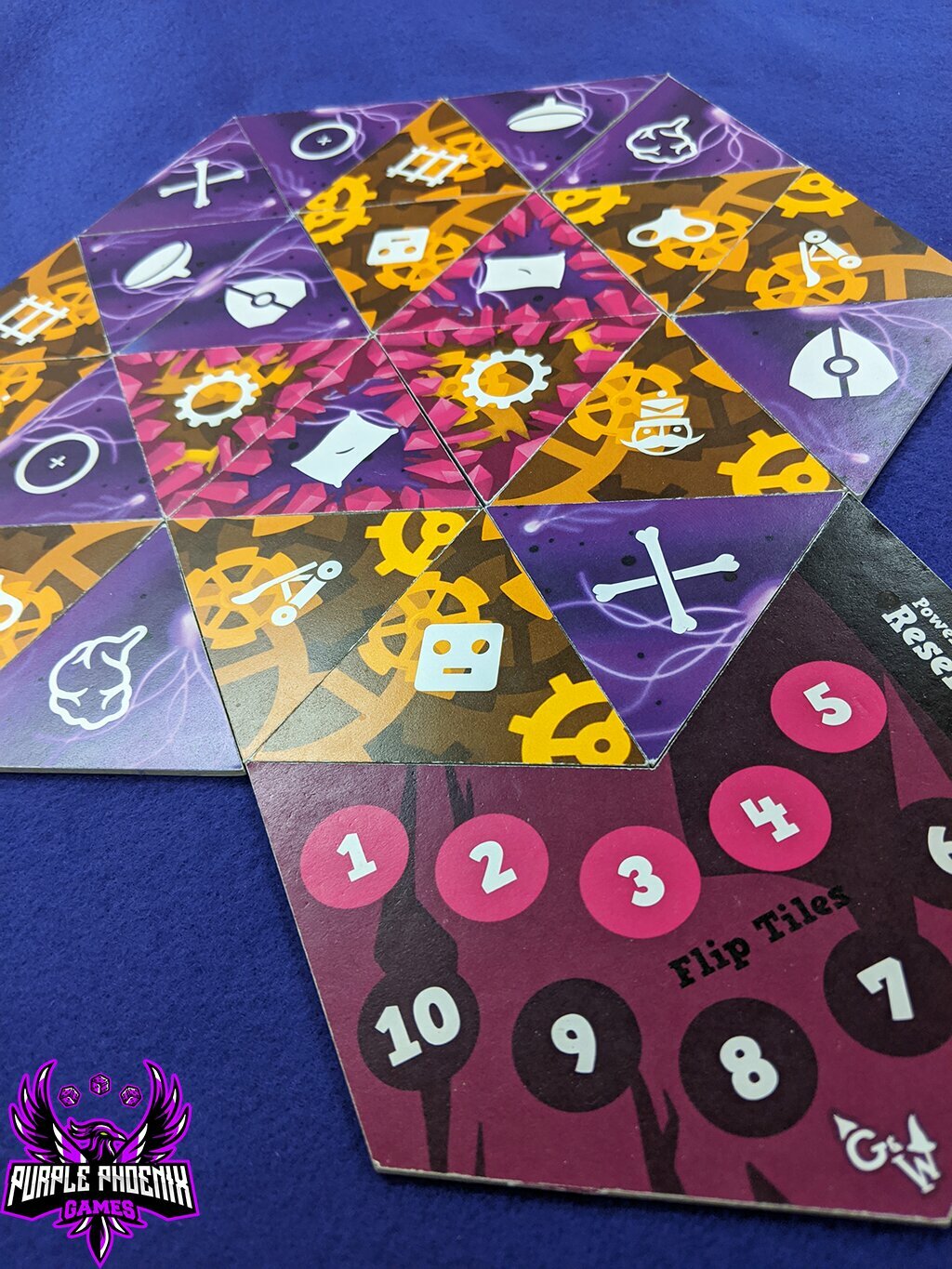
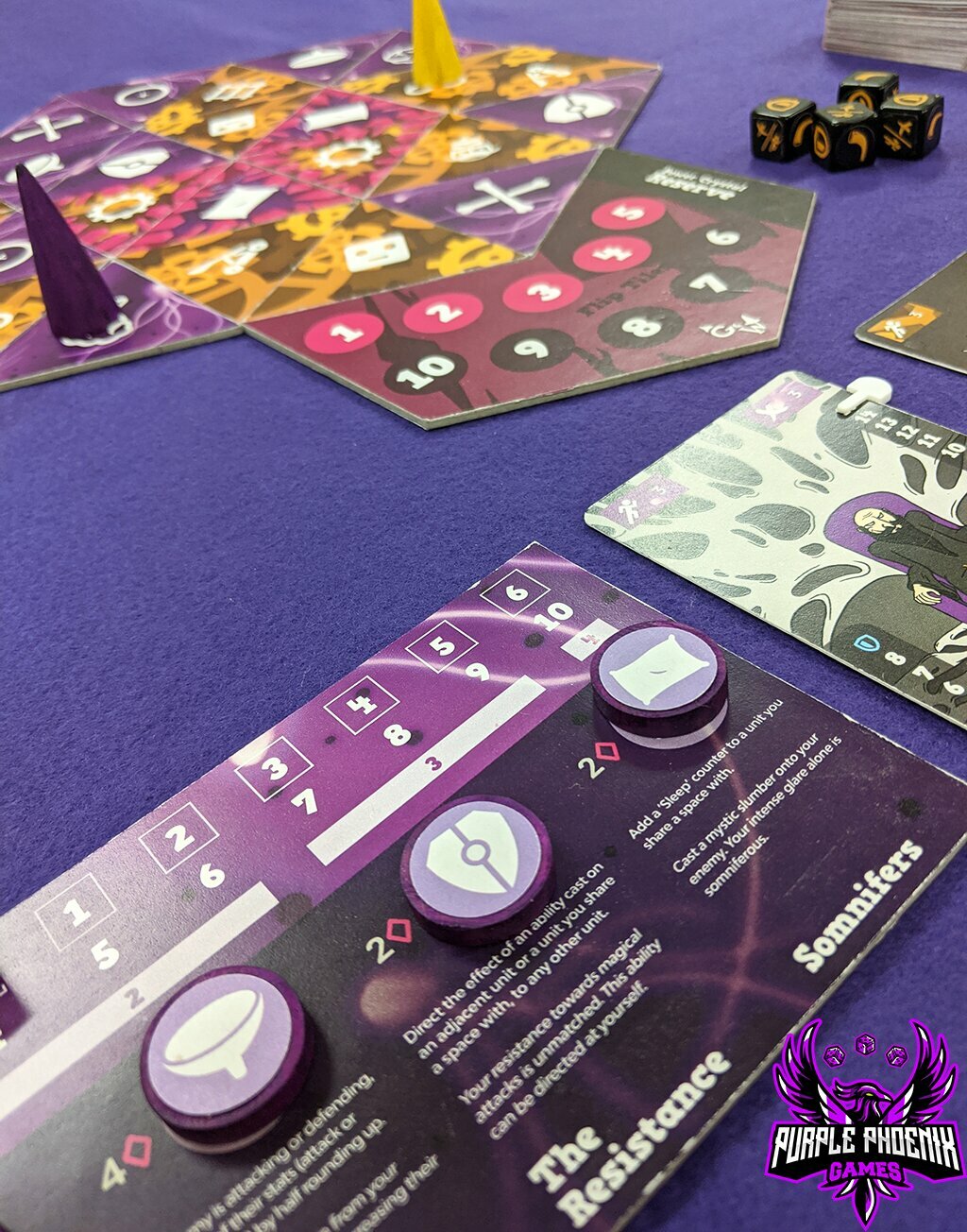
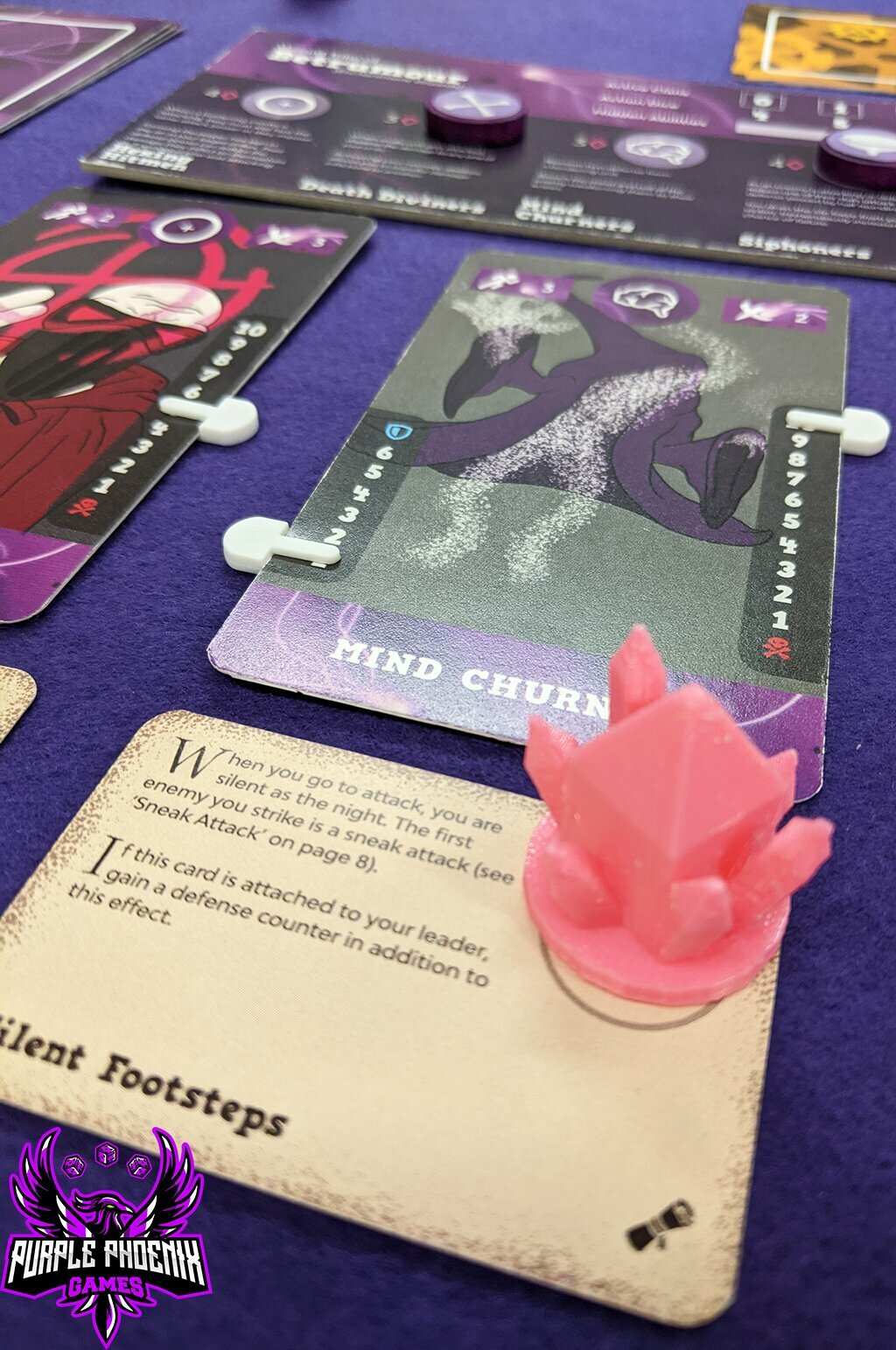
To setup the game, each player receives all the components in their chosen color for their clan. A clan consists of a leader (which is represented by the cone on the board) and six tribesmen (henchpeople represented by discs with their specific icon). The board is an elaborate puzzle of triangular pieces that fit together beautifully and create a very interesting map on the table. In the middle of this puzzle map will always be the mine tiles – tiles that have pink power crystals outlining the inner icons. Each leader will have clips placed on their cards to keep track of HP and Defense, and these cards also show baseline movement speed and attack power. Once all players have completed their setup and the black dice have been rolled to determine the starting player, the game is ready to begin and the crystals are primed to be exploited.
Gnomes & Wizards is a game of dice manipulation and allocation at its core. Leaders and tribesmen will always have base movement, attack, defense, and HP, but the dice rolls can alter these. Perhaps you are a super-aggressive player and are just out to destroy the other clan(s). I have played that way and it works very well. If so, then when rolling you will want to concentrate your efforts on the move/attack die face. These add to either your movement speed or to your attack power (not both). Other die faces include defense (which raise your defense clip), horns (which can buy you an ability card OR help to call a tribe – more on this later), or collect power crystals.
Power crystals are used to charge clan abilities (printed on the clan board) and card abilities (attached to clansmen). You can earn your power crystals via die rolls or by passing through the mine tiles in the center of the board map. These power crystals, and the abilities they fuel, are very powerful and can make or break encounters against other clans.
Horns are what need to be rolled to bring more tribesmen on the board. Initially, each clan will only have the leader cones available on the board to play with until more tribesmen can be called to the fray. Rolling three horns and having a leader cone or tribesman disc on tribe-specific icon tiles will allow that tribe to be called onto the board. Did you only roll one or two horns? That’s okay, because horns are also used to draw ability cards from the deck. Draw as many cards as you have rolled horns and choose one of those to keep and the others are discarded to the bottom of the deck. You may attach certain ability cards to your clansmen to be charged by power crystals and used later, or keep certain other cards hidden in your stash to be used any time – even on another player’s turn.
The winner of Gnomes & Wizards is the player who earns the most VP by knocking out opponent clansmen/leaders and earning 1VP per HP remaining on active clansmen cards. I purposely left out a couple twists for you here. Your gameplan needs to be carried out in just 10 rounds in a normal game. So you only have 10 turns to create your all-star clan, earn power crystals, and beat up your opponents. Not enough? Okay how about this – after Round 5 each player will flip over two map tiles at the beginning of their turns – thus eliminating possibilities of calling clansmen to war because their icon is now flipped and unavailable. Each turn is incredibly important to maximize as best as possible as you only get 10 of them, and the map will begin to crumble away.
Components. Again, we were provided a prototype version of the game, so I will not comment on component quality, even though it’s already pretty good. I can see what CavernWire is trying to do here and I am very excited by the plans. The layout on the cards is great. The dice will be cool when final. The amazing power crystals will be a little fragile, so do take care of them, but the design is awesome. The best part about the components on this one – the colors. This game is so wonderfully colorful, and extremely attractive on the table. When playing at work, my coworkers all walked by the table and wanted to know what I was up to. I play games at work a lot, but this one was so vibrant and interesting that they wanted to know more – and they are all mostly non-gamers.
I find Gnomes & Wizards to be a game that I wish I could spend lots of time exploring every strength and weakness of each clan. Trying new strategies, and watching them be dismantled by newcomers. I have not seen every ability card yet. I have not played with each clan yet. But I want to. It’s a deeply colorful game with engaging mechanics (and lots of them) that I feel offers something special to a game collection. So if you are interested in grabbing a copy for yourself, head over to CavernWire’s website and hop on the Kickstarter campaign. Or purchase a copy from your FLGS or favorite online retailer. We dig it.
Gnomes & Wizards is an area control, map deformation, dice assignment battle game where the players are attempting to earn the most victory points (VP) at the end of the game. Players gain VP by defeating other players’ active characters (clan leaders and tribesmen henchpeople), and having the most hit points (HP) between all their active characters at game end. Sounds easy, right? Read on, my friend.
DISCLAIMER: We were provided a prototype copy of this game for the purposes of this review. These are preview copy components, and the final components will probably be different from these shown. Also, it is not my intention to detail every rule in the game, as there are just too many. You are invited to download the rulebook from the publisher’s website, purchase the game through the Kickstarter campaign, or through any retailers stocking it after fulfillment. -T
As I mentioned in my disclaimer, I will not be explaining every rule for this one as there are quite a few little nuances that make it tick. However, I will cover the basic gameplay, and I will be focusing on a 2-player game for this preview.
To setup the game, each player receives all the components in their chosen color for their clan. A clan consists of a leader (which is represented by the cone on the board) and six tribesmen (henchpeople represented by discs with their specific icon). The board is an elaborate puzzle of triangular pieces that fit together beautifully and create a very interesting map on the table. In the middle of this puzzle map will always be the mine tiles – tiles that have pink power crystals outlining the inner icons. Each leader will have clips placed on their cards to keep track of HP and Defense, and these cards also show baseline movement speed and attack power. Once all players have completed their setup and the black dice have been rolled to determine the starting player, the game is ready to begin and the crystals are primed to be exploited.
Gnomes & Wizards is a game of dice manipulation and allocation at its core. Leaders and tribesmen will always have base movement, attack, defense, and HP, but the dice rolls can alter these. Perhaps you are a super-aggressive player and are just out to destroy the other clan(s). I have played that way and it works very well. If so, then when rolling you will want to concentrate your efforts on the move/attack die face. These add to either your movement speed or to your attack power (not both). Other die faces include defense (which raise your defense clip), horns (which can buy you an ability card OR help to call a tribe – more on this later), or collect power crystals.
Power crystals are used to charge clan abilities (printed on the clan board) and card abilities (attached to clansmen). You can earn your power crystals via die rolls or by passing through the mine tiles in the center of the board map. These power crystals, and the abilities they fuel, are very powerful and can make or break encounters against other clans.
Horns are what need to be rolled to bring more tribesmen on the board. Initially, each clan will only have the leader cones available on the board to play with until more tribesmen can be called to the fray. Rolling three horns and having a leader cone or tribesman disc on tribe-specific icon tiles will allow that tribe to be called onto the board. Did you only roll one or two horns? That’s okay, because horns are also used to draw ability cards from the deck. Draw as many cards as you have rolled horns and choose one of those to keep and the others are discarded to the bottom of the deck. You may attach certain ability cards to your clansmen to be charged by power crystals and used later, or keep certain other cards hidden in your stash to be used any time – even on another player’s turn.
The winner of Gnomes & Wizards is the player who earns the most VP by knocking out opponent clansmen/leaders and earning 1VP per HP remaining on active clansmen cards. I purposely left out a couple twists for you here. Your gameplan needs to be carried out in just 10 rounds in a normal game. So you only have 10 turns to create your all-star clan, earn power crystals, and beat up your opponents. Not enough? Okay how about this – after Round 5 each player will flip over two map tiles at the beginning of their turns – thus eliminating possibilities of calling clansmen to war because their icon is now flipped and unavailable. Each turn is incredibly important to maximize as best as possible as you only get 10 of them, and the map will begin to crumble away.
Components. Again, we were provided a prototype version of the game, so I will not comment on component quality, even though it’s already pretty good. I can see what CavernWire is trying to do here and I am very excited by the plans. The layout on the cards is great. The dice will be cool when final. The amazing power crystals will be a little fragile, so do take care of them, but the design is awesome. The best part about the components on this one – the colors. This game is so wonderfully colorful, and extremely attractive on the table. When playing at work, my coworkers all walked by the table and wanted to know what I was up to. I play games at work a lot, but this one was so vibrant and interesting that they wanted to know more – and they are all mostly non-gamers.
I find Gnomes & Wizards to be a game that I wish I could spend lots of time exploring every strength and weakness of each clan. Trying new strategies, and watching them be dismantled by newcomers. I have not seen every ability card yet. I have not played with each clan yet. But I want to. It’s a deeply colorful game with engaging mechanics (and lots of them) that I feel offers something special to a game collection. So if you are interested in grabbing a copy for yourself, head over to CavernWire’s website and hop on the Kickstarter campaign. Or purchase a copy from your FLGS or favorite online retailer. We dig it.


Chris Sawin (602 KP) rated Midsommar (2019) in Movies
Jun 26, 2019 (Updated Jul 4, 2019)
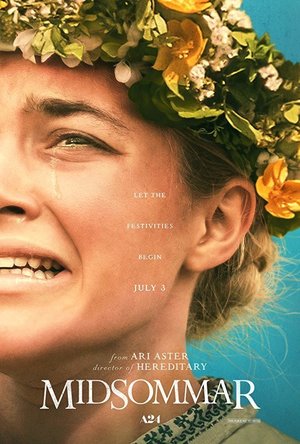
When a director like Ari Aster only has two full-length features under his belt, it’s difficult not to compare his works but the truth of the matter is that Hereditary and Midsommar are two incredibly different films. Hereditary seemed to thrive on lurking in the shadows visually to assist in its dark storytelling. Nearly all of Midsommar takes place under blinding sunlight making the horrific events that unfold feel stranger and even more out of place, confusing, and bizarrely unsettling. Based on his two films though, Aster does seem to flock towards a few common themes. Grief, loss, and the inability to cope have plagued the main characters of his films while the importance of family takes a high precedence. Hereditary was more about a specific family attempting to stay together while already being in shambles and Midsommar attempts to create a new family on more than one occasion with the possibility of constant expansion.
Dani’s (Florence Pugh) life is turned inside out once a devastating tragedy leaves her dumbstruck. She leans on her boyfriend of four years, Christian (Jack Reynor), for support, but their relationship is obviously strained. Along with their friends Josh (William Jackson Harper) and Mark (Will Poulter), Dani and Christian end up going on vacation to rural Sweden. They travel to a small village where their friend Pelle (Vilhelm Blomgren) grew up and now serves as their host. A rare nine-day festival that only occurs once every 90 years is being celebrated. Josh is utilizing the trip as a means to bulk up his folklore thesis for college while Mark is more interested in partaking in the Swedish women. Christian is attempting to figure out what his thesis will be while Dani searches for some sort of guidance after such a tragic occurrence. Their trip becomes increasingly more peculiar the longer they stay as they’re forced to witness violent rituals and are encouraged to embrace the ways of a Pagan cult.
The intricate illustrations throughout the film like in the opening shot, the elongated love potion cloth, or the walls of the barn-like structure Dani and her friends sleep in, give Midsommar this dark fairy tale aspect to it that a film like Pan’s Labyrinth would be proud of. The Pagan roots of Pelle’s village and the film’s metaphorical feet being so firmly planted in such rich folklore give Midsommar this cautiously fanciful aesthetic. The film capitalizes on the nostalgic sensation of when fairy tales and children’s books were read to you as a child. There are consistent signs that things aren’t right, paranoia lurks around every corner, and the locals set off every ominous alarm in your body, but there’s that naïve part of us buried deep down that wishes for and hopes for a happy ending because cosmetically we believe that is what resides at the end of every fairy tale not written by Jakob and Wilhelm Grimm (The Brothers Grimm).
It’s also interesting observing the main and supporting characters of the film or basically all of the “outsider” guests of the festival. Pelle acts as a conduit/guide between his village and the outside world, Josh is a historian/researcher, Mark is a mocker/fool, Dani and Christian are a strained couple, and Connie (Ellora Torchia) and Simon (Archie Madekwe) are a flourishing one. According to Wikipedia, Ari Aster based Dani and Christian’s relationship on a bad breakup. Midsommar is also way funnier than it has any right to be; something Hereditary completely distanced itself from. Midsommar goes out of its way to boast about who Dani’s real family is in the film. The unified chanting, outrageous theatrics, and harmonized moaning may seem like mockery or complete insanity to some. While it is humorous at times, it seems like this is the way the locals can experience everything everyone else does as a cohesive unit. This seems relevant to emotions, hallucinogens, and even sustenance; this cult does everything together.
Midsommar isn’t going to sit right with a lot of people, especially since Ari Aster desired to be confusing when it came to making the film. With all of the drug-taking in the film being so common, Midsommar may leave you feeling as groggy and disoriented as the characters on screen. However, in between the sacrifices, the brutality, the graphic nature of the film, inbred oracles, and plethora of naked mature women moaning in unison there’s something unique and brilliant about Midsommar you can’t find elsewhere. It may draw parallels to films like Robin Hardy’s The Wicker Man and may feel like a bleaker version of The Wizard of Oz on a bad acid trip, but Midsommar is unlike any other film you’ll see this year. In a way, Dani and her friends all get exactly what they came for but the end outcome is that the majority of them bit off more than they could chew. Truth be told, you’ll never look at a bear in a film the same way again even if it does remind you of the Tanooki suit Mario wore in Super Mario Bros 3. This is the type of film where you could literally tell someone everything that happens and it wouldn’t really spoil the film for them. The context of these events is important to witness in succession and in their entirety since what each individual takes away from the film will likely differ person to person.
There’s a deliberate pacing of the film many will find too slow and uneventful as the film’s two and a half hour runtime will already feel daunting. Aster has teased that the original cut of the film was three hours and 45 minutes and he has a version of the film that is 25 minutes longer that was difficult to cut down to the theatrical cut currently in theaters. An extended cut of the film or a large amount of deleted scenes on the Blu-ray (how about that levitation sequence from the trailer?) would certainly be intriguing.
If you enjoy ambiguous filmmaking where everything isn’t explained and the film’s imagery can mean more than one specific thing, then Midsommar may be worth checking out. It is an outlandish experiment by Ari Aster that a large quantity will likely deem a failure. Personally speaking though, Midsommar is such an unconventionally different ceremonial fever dream loaded with preposterousness, beautiful cinematography, hilarity, and anxiety-fueled-dread that it’s not only memorable and bold but also the type of one-of-a-kind film experience I crave whenever the lights dim and the quiet hum of a projector accelerates into a dull yet soothing roar.
Dani’s (Florence Pugh) life is turned inside out once a devastating tragedy leaves her dumbstruck. She leans on her boyfriend of four years, Christian (Jack Reynor), for support, but their relationship is obviously strained. Along with their friends Josh (William Jackson Harper) and Mark (Will Poulter), Dani and Christian end up going on vacation to rural Sweden. They travel to a small village where their friend Pelle (Vilhelm Blomgren) grew up and now serves as their host. A rare nine-day festival that only occurs once every 90 years is being celebrated. Josh is utilizing the trip as a means to bulk up his folklore thesis for college while Mark is more interested in partaking in the Swedish women. Christian is attempting to figure out what his thesis will be while Dani searches for some sort of guidance after such a tragic occurrence. Their trip becomes increasingly more peculiar the longer they stay as they’re forced to witness violent rituals and are encouraged to embrace the ways of a Pagan cult.
The intricate illustrations throughout the film like in the opening shot, the elongated love potion cloth, or the walls of the barn-like structure Dani and her friends sleep in, give Midsommar this dark fairy tale aspect to it that a film like Pan’s Labyrinth would be proud of. The Pagan roots of Pelle’s village and the film’s metaphorical feet being so firmly planted in such rich folklore give Midsommar this cautiously fanciful aesthetic. The film capitalizes on the nostalgic sensation of when fairy tales and children’s books were read to you as a child. There are consistent signs that things aren’t right, paranoia lurks around every corner, and the locals set off every ominous alarm in your body, but there’s that naïve part of us buried deep down that wishes for and hopes for a happy ending because cosmetically we believe that is what resides at the end of every fairy tale not written by Jakob and Wilhelm Grimm (The Brothers Grimm).
It’s also interesting observing the main and supporting characters of the film or basically all of the “outsider” guests of the festival. Pelle acts as a conduit/guide between his village and the outside world, Josh is a historian/researcher, Mark is a mocker/fool, Dani and Christian are a strained couple, and Connie (Ellora Torchia) and Simon (Archie Madekwe) are a flourishing one. According to Wikipedia, Ari Aster based Dani and Christian’s relationship on a bad breakup. Midsommar is also way funnier than it has any right to be; something Hereditary completely distanced itself from. Midsommar goes out of its way to boast about who Dani’s real family is in the film. The unified chanting, outrageous theatrics, and harmonized moaning may seem like mockery or complete insanity to some. While it is humorous at times, it seems like this is the way the locals can experience everything everyone else does as a cohesive unit. This seems relevant to emotions, hallucinogens, and even sustenance; this cult does everything together.
Midsommar isn’t going to sit right with a lot of people, especially since Ari Aster desired to be confusing when it came to making the film. With all of the drug-taking in the film being so common, Midsommar may leave you feeling as groggy and disoriented as the characters on screen. However, in between the sacrifices, the brutality, the graphic nature of the film, inbred oracles, and plethora of naked mature women moaning in unison there’s something unique and brilliant about Midsommar you can’t find elsewhere. It may draw parallels to films like Robin Hardy’s The Wicker Man and may feel like a bleaker version of The Wizard of Oz on a bad acid trip, but Midsommar is unlike any other film you’ll see this year. In a way, Dani and her friends all get exactly what they came for but the end outcome is that the majority of them bit off more than they could chew. Truth be told, you’ll never look at a bear in a film the same way again even if it does remind you of the Tanooki suit Mario wore in Super Mario Bros 3. This is the type of film where you could literally tell someone everything that happens and it wouldn’t really spoil the film for them. The context of these events is important to witness in succession and in their entirety since what each individual takes away from the film will likely differ person to person.
There’s a deliberate pacing of the film many will find too slow and uneventful as the film’s two and a half hour runtime will already feel daunting. Aster has teased that the original cut of the film was three hours and 45 minutes and he has a version of the film that is 25 minutes longer that was difficult to cut down to the theatrical cut currently in theaters. An extended cut of the film or a large amount of deleted scenes on the Blu-ray (how about that levitation sequence from the trailer?) would certainly be intriguing.
If you enjoy ambiguous filmmaking where everything isn’t explained and the film’s imagery can mean more than one specific thing, then Midsommar may be worth checking out. It is an outlandish experiment by Ari Aster that a large quantity will likely deem a failure. Personally speaking though, Midsommar is such an unconventionally different ceremonial fever dream loaded with preposterousness, beautiful cinematography, hilarity, and anxiety-fueled-dread that it’s not only memorable and bold but also the type of one-of-a-kind film experience I crave whenever the lights dim and the quiet hum of a projector accelerates into a dull yet soothing roar.
Daniel Boyd (1066 KP) rated Fantastic Beasts and Where to Find Them (2016) in Movies
Jul 19, 2017

Some of the lighting is well implemented (1 more)
Colin Farrell
Bad CGI (2 more)
The movies 3 leads are extremely annoying
Johnny 'oooh' Depp
Fantastic Beasts and Where To Find Them - Or JK Rowling and the Never Ending Quest for More Money
Contains spoilers, click to show
First off, full disclosure, I have never been a fan of the Harry Potter franchise. I’ve read a few of the books and seen a few of the movies and it just isn’t my thing. Honestly, I’m not even a fan of fantasy in general, I think Lord Of The Rings is nonsense and Game Of Thrones is vastly overrated and the last Harry Potter movie I saw was the fourth one. However, I was willing to go into this movie with a clean slate and hopefully have it win me over and unfortunately it didn’t. Also this review will contain spoilers if you care about that sort of thing.
This film is a prequel to the other Harry Potter movies, this time set in America rather than Britain and telling the story of the events that led to the great wizarding war between Dumbledore and Grindlewald. The film did have potential, to see what would have essentially been WWII fought with magic could be really cool but unfortunately all we get here is setup and that actual event we want to see will probably take place 4 or 5 movies down the line. The film opens with Eddie Redmayne’s character, Newt Scamander going to New York from London to set free one of the beasts that he keeps inside his Tardis-like brief case. Then he ends up in a bank and meets a ‘Nomaj,’ which is this film’s lazy version of a ‘muggle,’ who we learn is a simple lonely guy that just wants to open his own bakery and that’s another character cliché ticked off the list. We now have the double act of the nerdy, sniveling protagonist and the overweight sympathetic sidekick. Also, for the rest of this review I will be referring to the baker character as fat bloke and this isn’t to be derogatory, but is purely because the script relies on the, ‘fat, jolly, sympathetic, pathetic loner’ stereotype and passes it off as a character arc. If the script isn’t treating the character with any respect, then why should I? So fat bloke it is then.
So the two of them of course have the exact same briefcase and after some cartoony looking CGI animals escape from Redmayne’s case in the bank the suitcases predictably get mixed up and then the fat bloke gets his bakery loan declined and returns home with Redmayne’s suitcase, then more bad CGI animals open the case and attack the fat bloke. Redmayne’s character then gets arrested by some wizarding inspector for letting the, ‘Nomaj,’ (urgh) get away after seeing the animals in the case and is taken to the New York Wizards base, I guess? Then it’s revealed that the wizarding inspector that arrested Redmayne is a bit of a shit inspector and she is trying to redeem herself in the eyes of her superiors, so in front of this high wizard council, she confiscates the case from Redmayne and opens it only to reveal a bunch of cakes inside. Yes, really… Who writes this shit? Rowling is doing to Harry Potter what Lucas did to Star Wars during the prequels at this point.
So Redmayne gets set free and he goes to fat bloke’s house to find him lying on the floor, then some more bad CGI later the inspector turns up and they take him back to her house to meet her sister? Friend? Does it matter? She ends up becoming the love interest for fat bloke. Then for no apparent reason Redmayne and fat bloke enter the case and he shows fat bloke all this crazy shit that apparently humans aren’t supposed to see and then Redmayne does some more sniveling and decides they have to sneak out of the girls’ apartment and recapture the animals that escaped in the bank and from fat bloke’s apartment. They get a couple of the beasts back then they go to central park to find Redmayne’s horny rhino and they dress fat bloke up in a leather rhino costume and use him as rape bait then they ice skate for a bit and capture the rhino. Again, really… I am not making this shit up for satirical reasons.
Then we see a real life prick Ezra Miller playing some sort of weird emo child who is beat by his mother and we see he is working with Colin Farrell to find a big bad dark spirit that is killing people around New York. Colin Farrell is definitely the best thing about the film at this point. After this a bunch of other stupid shit happens, like Ron Perlman and John Voight coming into the movie, showing a ray of potential then being totally wasted. The movie drags in the middle, but eventually after some more fat jokes, bad CGI and sniveling, all of the creatures are captured and Ezra Miller turns into a black death cloud or some such nonsense. Then he is boosting around New York, fucking up shit as he goes and so Redmayne and Farrell follow him down to the subway to stop him. Redmayne seems to be talking him down and then Farrell shows up and essentially tells him to join the dark side. Then there is a CGI wand battle and the council from earlier show up out of nowhere and kill the black cloud of death. Then Colin Farrell gets pissed off and in the best scene in the movie murders half of the council members before he gets arrested by Eddie Redmayne with some magic handcuffs.
Then the worst part in the movie takes place. It is revealed that Colin Farrell is actually Johnny Depp in disguise. I mean he is Grindlewald in disguise but the important part for me is the replacement of Colin Farrell with Johnny Depp. Now I’m not the world’s biggest Colin Farrell fan, he is great in, ‘In Bruges,’ but other than that he is pretty meh, but he was definitely the best thing that this movie had going for it and they fucking swapped him out! With fucking Johnny-‘ooh’-Depp. As if this movie wasn’t shit enough they swapped out the best thing about it for Johnny Depp, the biggest joke in Hollywood. I’m done, fuck this movie, fuck Johnny Depp, fuck JK Rowling, fuck Harry Potter, I’m out.
Okay, let’s briefly talk about the technical side of the film before I score this thing. The whole cast of this movie is phoning it in, so the acting is fine but nothing to write home about, Farrell is the best thing in this movie, but I feel that in the sequels it will just be an ‘ooh,’ off between Depp and Redmayne. The direction is okay as the movie plods along sufficiently, but the writing is wildly inconsistent and the plot as stated above is all over the place. The lighting and cinematography in one scene are fantastic, when Farrell and Miller are conversing in a dark alleyway but other than that they are pretty mundane too. The score is suitably Harry Potter like and the CGI is also to a similar standard of the Harry Potter films. The problem with that is that the CGI was ropey and of a fairly poor standard in the Harry Potter movies 10 years ago and it doesn’t seem like it has improved much since then. This movie isn’t for me, but even from an objective standpoint, based solely from a moviemaking perspective this movie is poor.
This film is a prequel to the other Harry Potter movies, this time set in America rather than Britain and telling the story of the events that led to the great wizarding war between Dumbledore and Grindlewald. The film did have potential, to see what would have essentially been WWII fought with magic could be really cool but unfortunately all we get here is setup and that actual event we want to see will probably take place 4 or 5 movies down the line. The film opens with Eddie Redmayne’s character, Newt Scamander going to New York from London to set free one of the beasts that he keeps inside his Tardis-like brief case. Then he ends up in a bank and meets a ‘Nomaj,’ which is this film’s lazy version of a ‘muggle,’ who we learn is a simple lonely guy that just wants to open his own bakery and that’s another character cliché ticked off the list. We now have the double act of the nerdy, sniveling protagonist and the overweight sympathetic sidekick. Also, for the rest of this review I will be referring to the baker character as fat bloke and this isn’t to be derogatory, but is purely because the script relies on the, ‘fat, jolly, sympathetic, pathetic loner’ stereotype and passes it off as a character arc. If the script isn’t treating the character with any respect, then why should I? So fat bloke it is then.
So the two of them of course have the exact same briefcase and after some cartoony looking CGI animals escape from Redmayne’s case in the bank the suitcases predictably get mixed up and then the fat bloke gets his bakery loan declined and returns home with Redmayne’s suitcase, then more bad CGI animals open the case and attack the fat bloke. Redmayne’s character then gets arrested by some wizarding inspector for letting the, ‘Nomaj,’ (urgh) get away after seeing the animals in the case and is taken to the New York Wizards base, I guess? Then it’s revealed that the wizarding inspector that arrested Redmayne is a bit of a shit inspector and she is trying to redeem herself in the eyes of her superiors, so in front of this high wizard council, she confiscates the case from Redmayne and opens it only to reveal a bunch of cakes inside. Yes, really… Who writes this shit? Rowling is doing to Harry Potter what Lucas did to Star Wars during the prequels at this point.
So Redmayne gets set free and he goes to fat bloke’s house to find him lying on the floor, then some more bad CGI later the inspector turns up and they take him back to her house to meet her sister? Friend? Does it matter? She ends up becoming the love interest for fat bloke. Then for no apparent reason Redmayne and fat bloke enter the case and he shows fat bloke all this crazy shit that apparently humans aren’t supposed to see and then Redmayne does some more sniveling and decides they have to sneak out of the girls’ apartment and recapture the animals that escaped in the bank and from fat bloke’s apartment. They get a couple of the beasts back then they go to central park to find Redmayne’s horny rhino and they dress fat bloke up in a leather rhino costume and use him as rape bait then they ice skate for a bit and capture the rhino. Again, really… I am not making this shit up for satirical reasons.
Then we see a real life prick Ezra Miller playing some sort of weird emo child who is beat by his mother and we see he is working with Colin Farrell to find a big bad dark spirit that is killing people around New York. Colin Farrell is definitely the best thing about the film at this point. After this a bunch of other stupid shit happens, like Ron Perlman and John Voight coming into the movie, showing a ray of potential then being totally wasted. The movie drags in the middle, but eventually after some more fat jokes, bad CGI and sniveling, all of the creatures are captured and Ezra Miller turns into a black death cloud or some such nonsense. Then he is boosting around New York, fucking up shit as he goes and so Redmayne and Farrell follow him down to the subway to stop him. Redmayne seems to be talking him down and then Farrell shows up and essentially tells him to join the dark side. Then there is a CGI wand battle and the council from earlier show up out of nowhere and kill the black cloud of death. Then Colin Farrell gets pissed off and in the best scene in the movie murders half of the council members before he gets arrested by Eddie Redmayne with some magic handcuffs.
Then the worst part in the movie takes place. It is revealed that Colin Farrell is actually Johnny Depp in disguise. I mean he is Grindlewald in disguise but the important part for me is the replacement of Colin Farrell with Johnny Depp. Now I’m not the world’s biggest Colin Farrell fan, he is great in, ‘In Bruges,’ but other than that he is pretty meh, but he was definitely the best thing that this movie had going for it and they fucking swapped him out! With fucking Johnny-‘ooh’-Depp. As if this movie wasn’t shit enough they swapped out the best thing about it for Johnny Depp, the biggest joke in Hollywood. I’m done, fuck this movie, fuck Johnny Depp, fuck JK Rowling, fuck Harry Potter, I’m out.
Okay, let’s briefly talk about the technical side of the film before I score this thing. The whole cast of this movie is phoning it in, so the acting is fine but nothing to write home about, Farrell is the best thing in this movie, but I feel that in the sequels it will just be an ‘ooh,’ off between Depp and Redmayne. The direction is okay as the movie plods along sufficiently, but the writing is wildly inconsistent and the plot as stated above is all over the place. The lighting and cinematography in one scene are fantastic, when Farrell and Miller are conversing in a dark alleyway but other than that they are pretty mundane too. The score is suitably Harry Potter like and the CGI is also to a similar standard of the Harry Potter films. The problem with that is that the CGI was ropey and of a fairly poor standard in the Harry Potter movies 10 years ago and it doesn’t seem like it has improved much since then. This movie isn’t for me, but even from an objective standpoint, based solely from a moviemaking perspective this movie is poor.
Purple Phoenix Games (2266 KP) rated Barnyard Roundup in Tabletop Games
Apr 12, 2021
I live in Illinois. I can see cornfields from my house. I do not live on a farm, but have visited farms in the past. There is more to Illinois than Chicago and corn. That all said, farming games tickle me so much and I just enjoy playing them. So imagine my interest level when you combine a publisher known for excellent productions, the designer from said publisher, a member of an art studio in my top three favorite board game artists (Kwanchai and The Mico for the others), and a theme that I already enjoy. This is going to be great! Right?
Barnyard Roundup is a silly game of bluffing and hand management set on a farm. In it players are farmhands trying to help Farmer Brown sell the most animals at market. They do this by bluffing their hands in trade deals with other farmhands, thus making no friends in the process. The player with the most points at the end of the game, when all cards from the draw deck have been drawn, will be the winner!
DISCLAIMER: We were provided a copy of this game for the purposes of this review. This is a retail copy of the game, so what you see in these photos is exactly what would be received in your box. I do not intend to cover every single rule included in the rulebook, but will describe the overall game flow and major rule set so that our readers may get a sense of how the game plays. For more in depth rules, you may purchase a copy online or from your FLGS. -T
To setup place the five Animal Bonus cards in a line with the Set Bonus cards nearby. Shuffle the large deck of animal cards and deal out cards according to the rulebook per the number of players in the game. The Burglar and Excuse Me tokens are sorted and dealt out with the remainders face-down near the other cards. Remove eight cards from the draw deck and decide who will be the start player. The game may now begin!
Barnyard Roundup turns are quite simple: take two or three actions and end the turn. The first action is mandatory and it is Passing Cards to another player. Choose anywhere from one to six cards, place them face-down on the table in front of the player with whom to be traded, and announce the number and type of cards to be traded. For example, a player may say, “This is four chickens.” The targeted player now must decide whether that group actually IS a group of four chickens or if they believe the trader (not traitor) is bluffing. If so the targeted player may say, “That is NOT four chickens.” Once the agree/disagree statement has been made the cards are flipped over to see which player will be adding the cards to their pens. If the targeted player guessed correctly then they will received all the animal cards that were passed to them. That is, unless the cards were actually CROWS. Crows are worth -5 VP at the end of the game (see the photo below) and will be taken into the pen of the defeated player in the trade. In addition to crows (bad) the game includes Copy Cats (good) which can be wild cards to be placed with other animals and they copy the animal in their group. When the trade is resolved the active player may choose to perform the next step, but it is not mandatory.
Players must note that any time a player gains crows that would extend their collection of crows to any multiple of 3 that player must then draw another Action Token (Burglar, Excuse Me, Scarecrow) from the supply. If a Scarecrow is drawn it is immediately revealed and three crows are discarded from that player’s collection. The Excuse Me token may be used during a trade, but before cards are revealed, by a player not involved in the trade. When they announce, “Excuse Me,” they immediately take the place of the targeted player and will decide whether the trade is correct as announced or is a bluff.
Should they wish, the active player may now Play a Burglar Token from their collection in order to target another player and ask for all of their animals of a specific type – “I wish to procure all of your cows” That player must then immediately hand over all their cows, or else may tell the active player to Go Fish. Okay, that last part isn’t in the rules, but I started doing it and it stuck for me.
The third and final step of a turn is simply to Draw Cards and End Your Turn. Draw cards back up to the hand limit of 5 or 6 and end the turn. Play then passes to the next player.
Play continues in this fashion until the last card has been drawn. The game ends immediately and players tally their points per the rulebook to arrive at an ultimate winner!
Components. This game is a bunch of cards and some tokens in a double-wide+ tuckbox. I love the art, and that makes sense as it is illustrated by Lina Cossette, half of Mr. Cuddington. If you don’t know about Mr. Cuddington, please check out their website. The cards are good quality, as are the tokens. But that box. Now, it LOOKS great, and is a fine size. But a tuckbox? I would have preferred a lidded box, or even one of those with the magnetic fold-out lids. But it’s a tuckbox and the opening flap dented upon its first opening. Oy. I could give a chef’s kiss to everything else though.
Now, there’s a reason why I rated this game a 4 and my wife a 6: she beats me every single time we play and I just cannot find the strategy to take her down. Am I just horrible at bluffing games? Does she just dominate me at ALL games? I’m not sure, but this one certainly highlights the fact that she’s just better than me. I can still hear her haunting and taunting me with, “OH MY GOSH I LOVE THIS GAME! I’M SOOOOO GOOD AT IT!” Meanwhile I am sitting pretty with a whole flock of crows laughing at me like I am the Scarecrow from Wizard of Oz. Perhaps I am truly brainless as well.
That said, the game is enjoyable. I do like to play bluffing games, but I’m the poor soul who would rather play straight than do ANY sort of bluffing at all. Except when I have lulled my prey into trusting my every declaration. Then pull out the big guns and laugh my way to the bank. Well, I tried that several times and no dice. But I do enjoy playing, and I do keep coming back for more torture. And if that isn’t a sign of a good game, then what is?
All in all the game is quick, light on rules, and features wonderful art style. This is the game I will probably use to introduce my children (or new gamers) to bluffing games as the theme is easily digestible and when you get stuck with the negative points you don’t feel super bad about it. It is easy to pronounce that Purple Phoenix Games gives this one a squawkin’-good 10 / 12. If you are looking for a light introductory game to teach bluffing or to hit that sweet-spot, then I recommend you check out Barnyard Roundup from Druid City Games. I ain’t a-bluffin’ ya.
Barnyard Roundup is a silly game of bluffing and hand management set on a farm. In it players are farmhands trying to help Farmer Brown sell the most animals at market. They do this by bluffing their hands in trade deals with other farmhands, thus making no friends in the process. The player with the most points at the end of the game, when all cards from the draw deck have been drawn, will be the winner!
DISCLAIMER: We were provided a copy of this game for the purposes of this review. This is a retail copy of the game, so what you see in these photos is exactly what would be received in your box. I do not intend to cover every single rule included in the rulebook, but will describe the overall game flow and major rule set so that our readers may get a sense of how the game plays. For more in depth rules, you may purchase a copy online or from your FLGS. -T
To setup place the five Animal Bonus cards in a line with the Set Bonus cards nearby. Shuffle the large deck of animal cards and deal out cards according to the rulebook per the number of players in the game. The Burglar and Excuse Me tokens are sorted and dealt out with the remainders face-down near the other cards. Remove eight cards from the draw deck and decide who will be the start player. The game may now begin!
Barnyard Roundup turns are quite simple: take two or three actions and end the turn. The first action is mandatory and it is Passing Cards to another player. Choose anywhere from one to six cards, place them face-down on the table in front of the player with whom to be traded, and announce the number and type of cards to be traded. For example, a player may say, “This is four chickens.” The targeted player now must decide whether that group actually IS a group of four chickens or if they believe the trader (not traitor) is bluffing. If so the targeted player may say, “That is NOT four chickens.” Once the agree/disagree statement has been made the cards are flipped over to see which player will be adding the cards to their pens. If the targeted player guessed correctly then they will received all the animal cards that were passed to them. That is, unless the cards were actually CROWS. Crows are worth -5 VP at the end of the game (see the photo below) and will be taken into the pen of the defeated player in the trade. In addition to crows (bad) the game includes Copy Cats (good) which can be wild cards to be placed with other animals and they copy the animal in their group. When the trade is resolved the active player may choose to perform the next step, but it is not mandatory.
Players must note that any time a player gains crows that would extend their collection of crows to any multiple of 3 that player must then draw another Action Token (Burglar, Excuse Me, Scarecrow) from the supply. If a Scarecrow is drawn it is immediately revealed and three crows are discarded from that player’s collection. The Excuse Me token may be used during a trade, but before cards are revealed, by a player not involved in the trade. When they announce, “Excuse Me,” they immediately take the place of the targeted player and will decide whether the trade is correct as announced or is a bluff.
Should they wish, the active player may now Play a Burglar Token from their collection in order to target another player and ask for all of their animals of a specific type – “I wish to procure all of your cows” That player must then immediately hand over all their cows, or else may tell the active player to Go Fish. Okay, that last part isn’t in the rules, but I started doing it and it stuck for me.
The third and final step of a turn is simply to Draw Cards and End Your Turn. Draw cards back up to the hand limit of 5 or 6 and end the turn. Play then passes to the next player.
Play continues in this fashion until the last card has been drawn. The game ends immediately and players tally their points per the rulebook to arrive at an ultimate winner!
Components. This game is a bunch of cards and some tokens in a double-wide+ tuckbox. I love the art, and that makes sense as it is illustrated by Lina Cossette, half of Mr. Cuddington. If you don’t know about Mr. Cuddington, please check out their website. The cards are good quality, as are the tokens. But that box. Now, it LOOKS great, and is a fine size. But a tuckbox? I would have preferred a lidded box, or even one of those with the magnetic fold-out lids. But it’s a tuckbox and the opening flap dented upon its first opening. Oy. I could give a chef’s kiss to everything else though.
Now, there’s a reason why I rated this game a 4 and my wife a 6: she beats me every single time we play and I just cannot find the strategy to take her down. Am I just horrible at bluffing games? Does she just dominate me at ALL games? I’m not sure, but this one certainly highlights the fact that she’s just better than me. I can still hear her haunting and taunting me with, “OH MY GOSH I LOVE THIS GAME! I’M SOOOOO GOOD AT IT!” Meanwhile I am sitting pretty with a whole flock of crows laughing at me like I am the Scarecrow from Wizard of Oz. Perhaps I am truly brainless as well.
That said, the game is enjoyable. I do like to play bluffing games, but I’m the poor soul who would rather play straight than do ANY sort of bluffing at all. Except when I have lulled my prey into trusting my every declaration. Then pull out the big guns and laugh my way to the bank. Well, I tried that several times and no dice. But I do enjoy playing, and I do keep coming back for more torture. And if that isn’t a sign of a good game, then what is?
All in all the game is quick, light on rules, and features wonderful art style. This is the game I will probably use to introduce my children (or new gamers) to bluffing games as the theme is easily digestible and when you get stuck with the negative points you don’t feel super bad about it. It is easy to pronounce that Purple Phoenix Games gives this one a squawkin’-good 10 / 12. If you are looking for a light introductory game to teach bluffing or to hit that sweet-spot, then I recommend you check out Barnyard Roundup from Druid City Games. I ain’t a-bluffin’ ya.
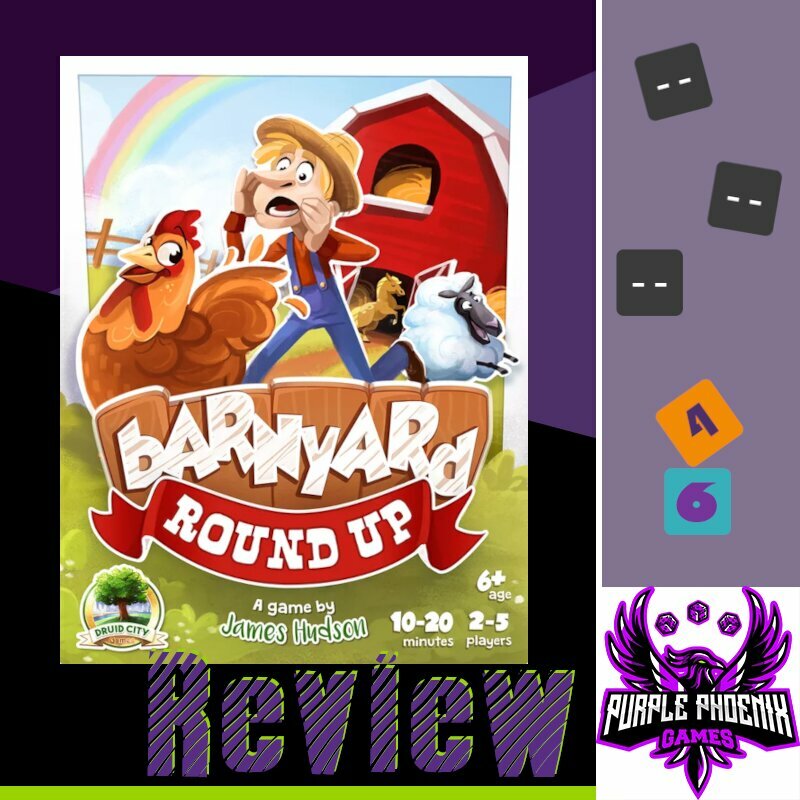
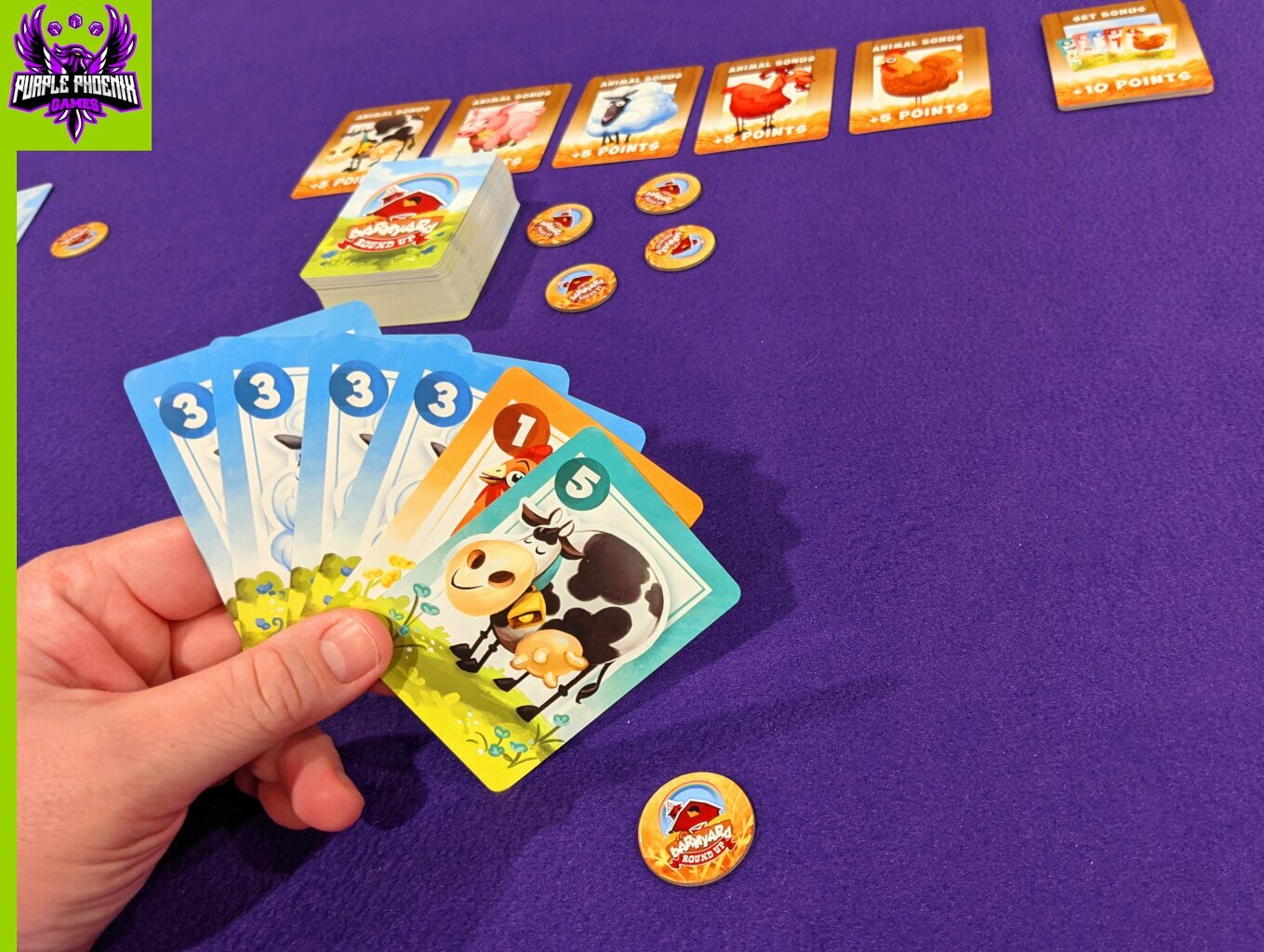
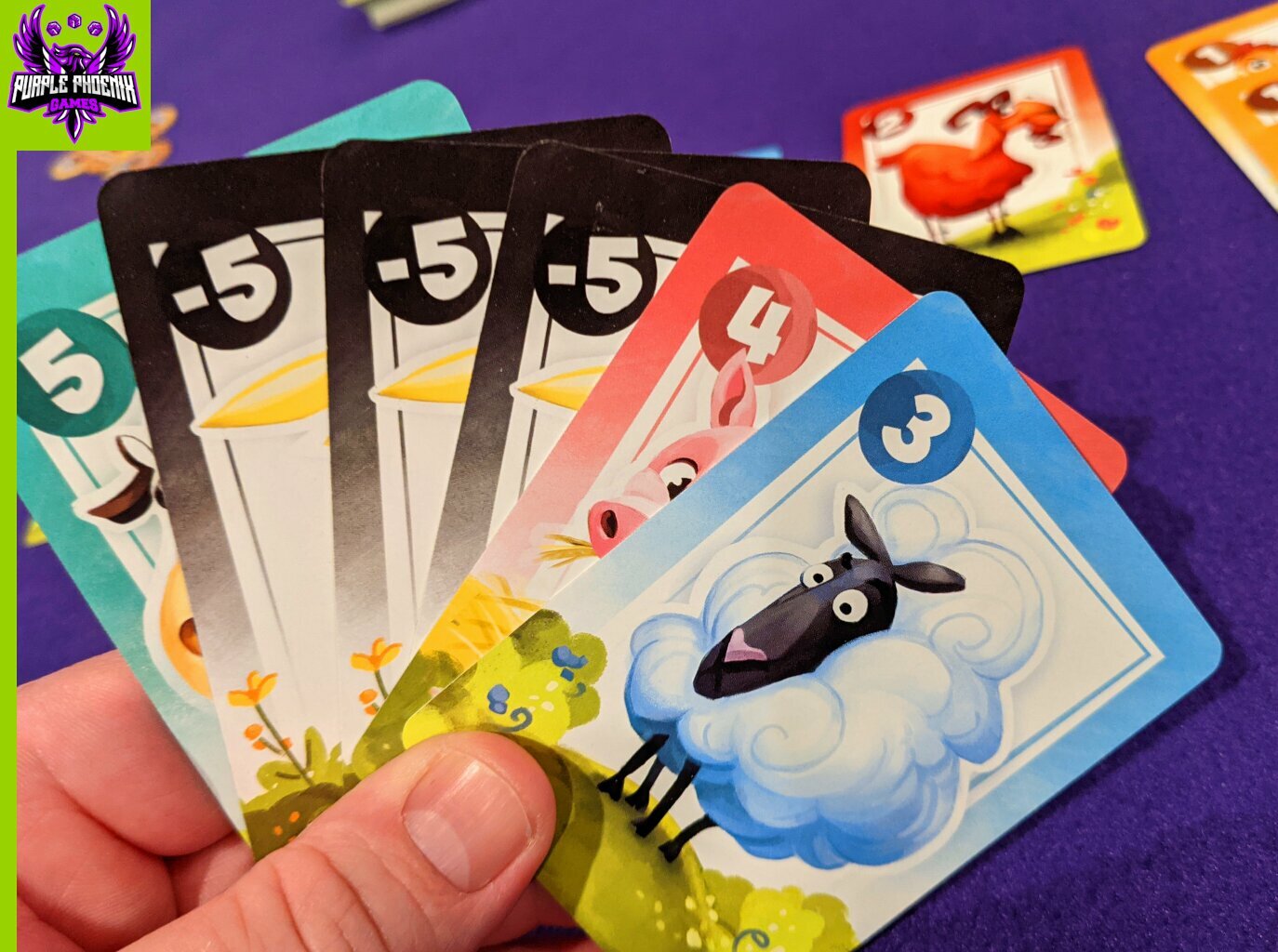

Hadley (567 KP) rated Beautiful Creatures (Caster Chronicles, #1) in Books
Sep 3, 2019
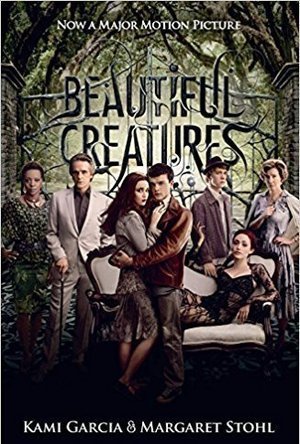
Great story (1 more)
Witches and supernatural beings!
A lot of inconsistencies (1 more)
Bad writing
Given the great success of the 'Harry Potter' series, witchcraft has become a prevalent theme in most books written in the last decade. 'Beautiful Creatures' may not have a wizard school, but they do have the old town of Gatlin, South Carolina.
'Beautiful Creatures,' is a witchy novel series by Kami Garcia and Margaret Stohl, that brings the family of witches (among other supernatural creatures) to life: focusing on the niece, Lena, who just came to town to live with her shut-in uncle, Macon. Readers soon find out that Lena belongs to one of the oldest families in the Southern town of Gatlin.
Yet, the main character of this book isn't Lena, but a young man named Ethan Wate; a long time resident of Gatlin who attends the local high school. When we meet Ethan, we find out that he has been having dreams of a girl and a song for some time before Lena showed up, but when he overhears Lena playing the exact same song from his dream, he's sure it's her he's dreaming of.
Suddenly, the two, are able to communicate telepathically. This part is written in a way that is not believable for the reader because Ethan has been feeling that he is going crazy up until this point: hearing the song being played by Lena caused him to flee the school, as with some other things (not to give away too much), but when he can suddenly speak to Lena telepathically, it's as if this is completely normal to him. A more believable part would have had Ethan freaking out as he did before, maybe even more so.
The story takes a dramatic turn when Ethan finds an old locket out in a garden beside Macon's house. He and Lena are quickly transported to visions of a past event that happened nearby involving that very locket. For most of the book, the two are trying to find out more about this locket and who it belonged to. Each time Ethan and Lena touch the locket together, they are transported to another event in the same vision. They soon find out that the locket belonged to the loved one of a distant relative belonging to Lena's family from 1865. And as the reader continues, this locket and it's visions hold a very important key to the story.
Throughout the story, it's hinted at that Ethan may not just be a human, but may have some supernatural powers of his own, but unfortunately, this never comes to fruition. Being that this is the first of four books, and I have only read this one, the other books may bring light to this subject. Lena, on the other hand, is about to turn sixteen, and turning sixteen in her family means you will be 'claimed.' Lena explains: " 'In my family, when you turn sixteen, you're Claimed. Your fate is chosen for you, and you become Light, like Aunt Del and Reece, or you become Dark, like Ridley. Dark or Light, Black or White. There's no grey in my family. We can't choose, and we can't undo it once we're Claimed. ' " In summary, Lena's family either become good witches (or whatever supernatural being they are) or bad witches (and such). Lena, by family, is considered a Natural at this point, where she can control the weather, write on walls without her hands or a pen,and break glass at will, so they believe she is most likely to be a Light witch, and they try to reinforce this thought into her throughout the entire book.
'Beautiful Creatures' is a great story, but it has quite a few flaws. The flow of the story is good, but when you come across so many inconsistencies, it can break the connection between story and reader, such as Lena suddenly revealing that her family had a word for what they called the telepathic communication between her and Ethan:
" 'Who knew Kelting would save my life.'
I had missed something, as usual. 'What's Kelting?'
'That's what it's called, the way we're able to communicate with each other no matter where we are. Some Casters can Kelt, some can't. Ridley and I used to be able to talk to each other at school that way, but---' ." Up until this scene, the reader is left to believe that this has never happened to Lena before, so to just bring this out so suddenly leaves us to think that this was a quick add-on to give Lena and her sister, Ridley, more of a connection,. Another time is when the popular girls at the local high school have it out for Lena, Lena lets on that she can't face them, but the very next page she's telling Ethan that she has to:
" I tried to pull her up, but she pulled me back down. She shrunk back next to the tire. 'I just need a minute.'
'Are you okay?'
'Look at them. They think I'm a monster. They formed a club.'
'They can't stand outsiders, and you're the new girl. A window broke. They need someone to blame. This is just a ---'
'Witch hunt.'
I wasn't going to say that.
But you were thinking it.
I squeezed her hand and my hair stood on end.
You don't have to do this.
Yes I do. I let people like them run me out of my last school. I'm not going to let it happen again. "
The story continues with Lena fearing that she is going to go Dark, so her and Ethan come across a locket vision of a witchcraft book that may be of help called 'the Book of Moons.' This is, personally, one of my favorite parts of 'Beautiful Creatures' because, in order for them to get the book, they have to go to a specific grave and dig it up! In this very chapter, we get to see a ghost - and this is the only chapter we see a ghost - and it is done wonderfully:
" She was only partially materialized, a mix of cloudy haze and light, fading in and out as the air moved through her ghostly form, but there was no mistaking it. It was Genevieve, the woman in the painting. She had the same golden eyes and long, wavy red hair. Her hair blew gently in the wind, as if she was just a woman sitting on a bench at the bus stop, instead of an apparition sitting on a headstone in a graveyard. She was beautiful, even in her present state, and terrifying at the same time. "
The majority of the story involves Lena's family and Ethan trying everything they can to keep her from being claimed Dark. This seems to be a nod to reality, where all of us have a choice to be a good person or a bad person, but in 'Beautiful Creatures,' the authors play off of the fear that many people have: that they are just like their family, and have no control over who they are or will be. Overall, I believe readers of the 'Harry Potter' series would like this book, but would I read this again, although I gave it a very low rating? Yes, the story is that intriguing, but the writing could use quite a bit of work.
'Beautiful Creatures,' is a witchy novel series by Kami Garcia and Margaret Stohl, that brings the family of witches (among other supernatural creatures) to life: focusing on the niece, Lena, who just came to town to live with her shut-in uncle, Macon. Readers soon find out that Lena belongs to one of the oldest families in the Southern town of Gatlin.
Yet, the main character of this book isn't Lena, but a young man named Ethan Wate; a long time resident of Gatlin who attends the local high school. When we meet Ethan, we find out that he has been having dreams of a girl and a song for some time before Lena showed up, but when he overhears Lena playing the exact same song from his dream, he's sure it's her he's dreaming of.
Suddenly, the two, are able to communicate telepathically. This part is written in a way that is not believable for the reader because Ethan has been feeling that he is going crazy up until this point: hearing the song being played by Lena caused him to flee the school, as with some other things (not to give away too much), but when he can suddenly speak to Lena telepathically, it's as if this is completely normal to him. A more believable part would have had Ethan freaking out as he did before, maybe even more so.
The story takes a dramatic turn when Ethan finds an old locket out in a garden beside Macon's house. He and Lena are quickly transported to visions of a past event that happened nearby involving that very locket. For most of the book, the two are trying to find out more about this locket and who it belonged to. Each time Ethan and Lena touch the locket together, they are transported to another event in the same vision. They soon find out that the locket belonged to the loved one of a distant relative belonging to Lena's family from 1865. And as the reader continues, this locket and it's visions hold a very important key to the story.
Throughout the story, it's hinted at that Ethan may not just be a human, but may have some supernatural powers of his own, but unfortunately, this never comes to fruition. Being that this is the first of four books, and I have only read this one, the other books may bring light to this subject. Lena, on the other hand, is about to turn sixteen, and turning sixteen in her family means you will be 'claimed.' Lena explains: " 'In my family, when you turn sixteen, you're Claimed. Your fate is chosen for you, and you become Light, like Aunt Del and Reece, or you become Dark, like Ridley. Dark or Light, Black or White. There's no grey in my family. We can't choose, and we can't undo it once we're Claimed. ' " In summary, Lena's family either become good witches (or whatever supernatural being they are) or bad witches (and such). Lena, by family, is considered a Natural at this point, where she can control the weather, write on walls without her hands or a pen,and break glass at will, so they believe she is most likely to be a Light witch, and they try to reinforce this thought into her throughout the entire book.
'Beautiful Creatures' is a great story, but it has quite a few flaws. The flow of the story is good, but when you come across so many inconsistencies, it can break the connection between story and reader, such as Lena suddenly revealing that her family had a word for what they called the telepathic communication between her and Ethan:
" 'Who knew Kelting would save my life.'
I had missed something, as usual. 'What's Kelting?'
'That's what it's called, the way we're able to communicate with each other no matter where we are. Some Casters can Kelt, some can't. Ridley and I used to be able to talk to each other at school that way, but---' ." Up until this scene, the reader is left to believe that this has never happened to Lena before, so to just bring this out so suddenly leaves us to think that this was a quick add-on to give Lena and her sister, Ridley, more of a connection,. Another time is when the popular girls at the local high school have it out for Lena, Lena lets on that she can't face them, but the very next page she's telling Ethan that she has to:
" I tried to pull her up, but she pulled me back down. She shrunk back next to the tire. 'I just need a minute.'
'Are you okay?'
'Look at them. They think I'm a monster. They formed a club.'
'They can't stand outsiders, and you're the new girl. A window broke. They need someone to blame. This is just a ---'
'Witch hunt.'
I wasn't going to say that.
But you were thinking it.
I squeezed her hand and my hair stood on end.
You don't have to do this.
Yes I do. I let people like them run me out of my last school. I'm not going to let it happen again. "
The story continues with Lena fearing that she is going to go Dark, so her and Ethan come across a locket vision of a witchcraft book that may be of help called 'the Book of Moons.' This is, personally, one of my favorite parts of 'Beautiful Creatures' because, in order for them to get the book, they have to go to a specific grave and dig it up! In this very chapter, we get to see a ghost - and this is the only chapter we see a ghost - and it is done wonderfully:
" She was only partially materialized, a mix of cloudy haze and light, fading in and out as the air moved through her ghostly form, but there was no mistaking it. It was Genevieve, the woman in the painting. She had the same golden eyes and long, wavy red hair. Her hair blew gently in the wind, as if she was just a woman sitting on a bench at the bus stop, instead of an apparition sitting on a headstone in a graveyard. She was beautiful, even in her present state, and terrifying at the same time. "
The majority of the story involves Lena's family and Ethan trying everything they can to keep her from being claimed Dark. This seems to be a nod to reality, where all of us have a choice to be a good person or a bad person, but in 'Beautiful Creatures,' the authors play off of the fear that many people have: that they are just like their family, and have no control over who they are or will be. Overall, I believe readers of the 'Harry Potter' series would like this book, but would I read this again, although I gave it a very low rating? Yes, the story is that intriguing, but the writing could use quite a bit of work.

Heather Cranmer (2721 KP) rated The Exalted Gate in Books
Jun 7, 2018

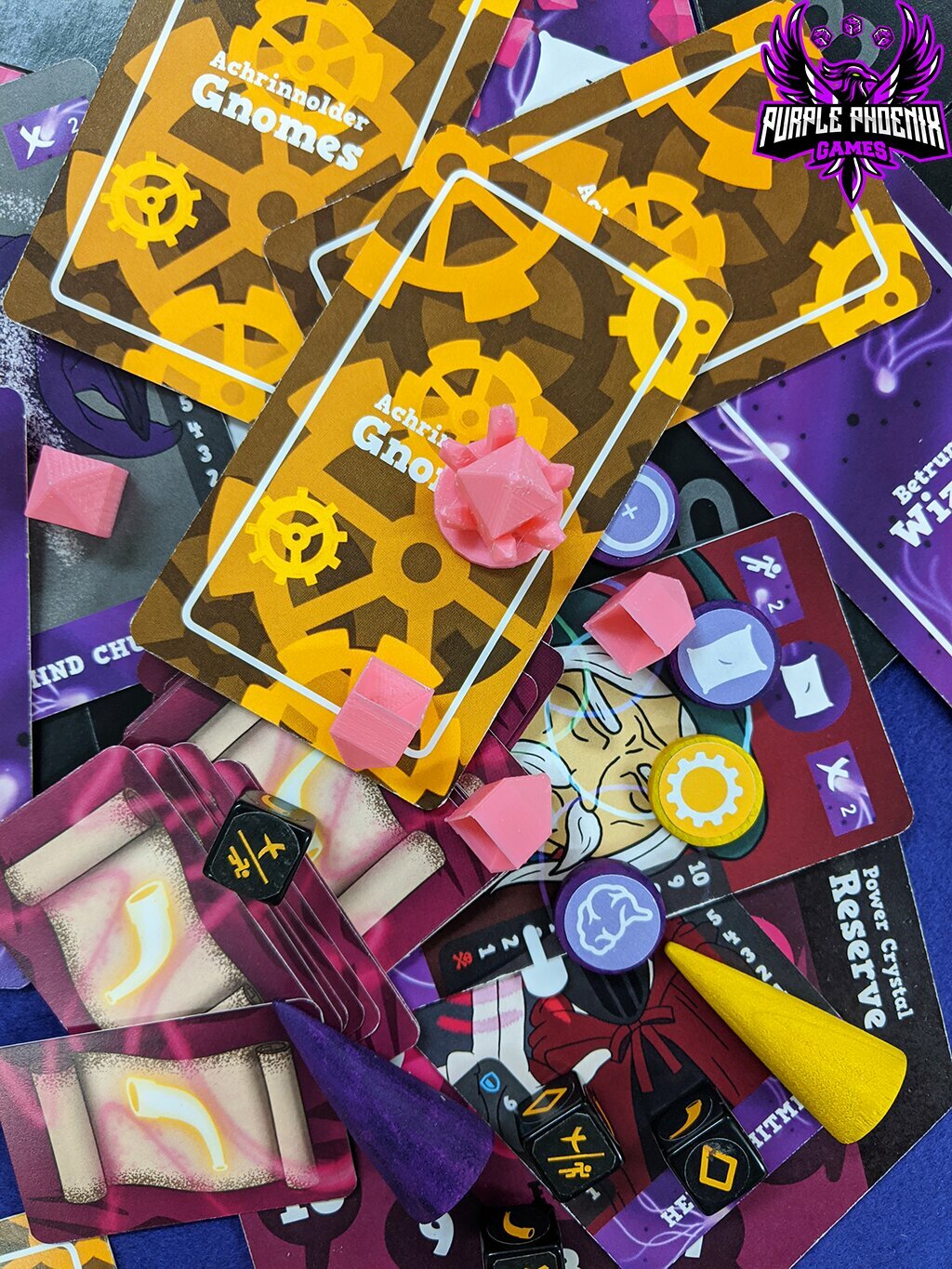
(This review can be found on my blog <a href="http://themisadventuresofatwentysomething.blogspot.com/">The (Mis)Adventures of a Twenty-Something Year Old Girl</a>.
I absolutely love the cover of this book. It is gorgeous!! Anyway, this book has ten stories in it, so I will review and rate each one individually.
*
Boots
Judith (of an undisclosed age) is a girl that hates wearing shoes. However, she is in a play where she has to play a Polish tramp. She doesn't want to wear shoes, but the director says even tramps wear shoes. She finds some beat up looking boots in the prop room and puts them on. As soon as they are on her feet, it's like they have a mind of their own. They take Judith where they want to go. What ensues in an adventure that Judith won't soon forget.
I thought the story of Boots was a really cute and interesting read. I definitely think this will appeal to children of all ages. The only slight problem was with punctuation, but that's nothing that major. Judith is an interesting girl. I'd recommend this story.
I'd give Boots a 4.5 out of 5.
*
Five Gifts
Lonia is a thirteen year old girl whose parents are already nagging her to get married. (Yeah, it's a bit much, but it does say in the story that this was way back in the day). She'd rather spend her days in the children's glade talking to her elf friend, Pintak. One day, Pintak is kidnapped by a mean old wizard, and Lonia decides that she must go rescue him. She is given five gifts from different creatures of the forest to help her on her quest.
I was impressed with this story, and I found it quite interesting. There's also a lesson to be learned about experimenting on animals. Lonia was definitely a brave little girl and was willing to risk everything to save her friend. There are a few punctuation mistakes and a mispelt word, but other than that, this story was a good one.
I'd give Five Gifts a 5 out of 5.
*
Sintinko
Sintinko is a story set in Japan back when it was all emperors and generals. The emperor is jealous of Sintinko and wants to have him killed. It's only because of Ilyo, Sintinko's love interest, that the emperor spares his life. However, Sintinko is banished from Japan until he can find a maple tree that can sit in the hand of the emperor. Ilyo and Sintinko know that they will most likely never see each other. Unbeknownst to Sintinko and everyone else, Ilyo disguises herself as a geisha to help Sintinko on his journey. Love and loss are the themes of this story.
This was such a bittersweet love story. I felt sorry for both Sintinko and Ilyo. Sintinko thought he would never see his beloved again and swore off any type of relationship. Ilyo had her beloved right there in front of her, yet she couldn't do anything about it.
The names, being Japanese, were a bit hard to pronounce, but it's easy to get past that since the story is so strong. Speaking of names, this story even lets us know how the Bonsai tree got its name.
There's a few punctuation mistakes, but nothing that takes away from the story.
I think this story would be better suited for ages 11+. Personally, I found the story a bit slow, but not painfully slow.
I'd give Sintinko a 3.5 out of 5.
*
Tivurambhat
Tivurambhat is the story of a ghost by the same name of the title who helps people out in times of need in India. A mean man forces people to work for him by letting them borrow money, putting the interest up, and paying them such low wages they can never afford to pay him pack. One man decides to do something about it and goes to Tivurambhat for help.
I loved the message behind the story. Towards the ending, it even had me smiling. I couldn't pronounce the names since they were all Indian names, so I just shortened them so my American self could pronounce them. I loved the character of Tiv. He kind of reminded me of an American version of Casper for some reason. I really enjoyed the conversation between Pradesh and Tiv the most. This was such a happy story!
Again, there's some punctuation mistakes and a few grammar ones as well, but the story itself was excellent.
I'd give Tivurambhat a 5 out of 5.
*
St. Penalyn's Well
St Penalyn's Well tells the story of Rebecca (of an undisclosed age) who ventures into an overgrown garden with her dog. She stumbles across a well with an inscription. It is while reading this inscription that she becomes trapped in the well. Lucky for her, she meets an elf named Opickle who keeps her company and gives her the inspiration she needs to find her way out.
This was definitely an interesting story. I was hooked all the way through. It's a story about friendship amongst diversity and not giving up. I found Opickle to be just a tad bit of a snob but not enough to put me off the story.
A few punctuation mistakes throughout the story but not enough to be distracting.
St. Penalyn's Well gets a 5 out of 5 from me.
*
Quint and Trout's Mistake
Quint and Trout's Mistake is a story I didn't finish because of the name calling and making fun of someone who is overweight. It starts out innocently enough. A lake is being overrun by a white smelly substance. Two brothers, Quint and Trout, talk their friend Ned into investigating why this is happening. Ned swims down to the bottom of the lake and finds an overweight creature living in a cave who has been kicked out of his house. This is when the name calling starts, and I stopped reading.
I do not like stories aimed at children that condone name calling of any sort whether it be because of weight, disabilities, race, etc. Children do not need to read something like this and feel bad about themselves or view it as an excuse to tease others. I was very disappointed something like this was in a children's book.
Quint and Trout's Mistake gets a 0 out of 5 from me. What a vile story!
*
Densus
Densus is a boy who was born with blue fingernails and blue streaks in his hair. This is because he has a destiny to fulfill. When a crab named Arnold asks him if he'd go tell a giant that he has found a perfect wife for him, Densus agrees because it's his destiny even if there's a possibility the giant could kill him.
This is a story about destinies. It lets us know that we all have destinies if only we weren't too busy trying to find out what they are. This is a fun story which I think children would love! I loved Arnold the crab!! I think a majority of children would love him.
Again, there's a few punctuation and grammar mistakes but nothing major.
I'd give Densus a 5 out of 5.
*
Alice's Granddaughter
Alice's Granddaughter takes place years after Alice in Wonderland. Alice's granddaughter, Alicia, is recruited by a thief named Cheng to go down into a rabbit hole to get him a yellow dragon. Alicia discovers that things in Wonderland haven't changed much.
I thoroughly enjoyed this story! I'm a sucker for everything Alice in Wonderland-esque, and this was no exception! I loved how the author still managed to preserve the original Wonderland in his tale and how he even managed to keep the style of writing similar to that of Lewis Carroll. My favorite character was definitely the talking table. My only gripe is that I wish this story would've been longer!
As like with the previous story, there are some punctuation and grammar mistakes that can be overlooked.
Alice's Granddaughter gets a bit 5 out of 5.
*
The Dragon
The Dragon is a story about death. In this story, we follow a dragon in her very last moments as she dies of what I assume to be old age. We get to see her memories of when she was her prime and when she takes her last breath.
This is a sad story and probably one for the older children unless younger children can handle the topic of death. It's not written in a morbid way though. It's actually written quite beautifully especially when we get to see the memory of the dragon in her prime. I think this story can show that death is not always bad.
There are grammar and punctuation mistakes but nothing that deters from the story.
The Dragon gets a 3.75 out of 5.
*
The Wisdom of a Dog
The Wisdom of a Dog is about a man named Keith and his dog who go on an adventure and wind up in a crystal city. Keith must found out who is destroying the city and save it.
This story was a good read, and I think most children would enjoy it especially as it involves a talking dog. I enjoyed how the author even placed his own dialogue in the story. This is a good versus bad story that shows that bad people never win.
Again, there are grammar and punctuation mistakes, but it doesn't take away from the story.
The Wisdom of a Dog gets a 3.5 out of 5.
*
The Exalted Gate by Daniel Nanavati averages out to a 3.5 out of 5. I'd definitely recommend this book to old and young alike!
(I received a free physical copy of this title from the publisher in exchange for a fair and honest review).
I absolutely love the cover of this book. It is gorgeous!! Anyway, this book has ten stories in it, so I will review and rate each one individually.
*
Boots
Judith (of an undisclosed age) is a girl that hates wearing shoes. However, she is in a play where she has to play a Polish tramp. She doesn't want to wear shoes, but the director says even tramps wear shoes. She finds some beat up looking boots in the prop room and puts them on. As soon as they are on her feet, it's like they have a mind of their own. They take Judith where they want to go. What ensues in an adventure that Judith won't soon forget.
I thought the story of Boots was a really cute and interesting read. I definitely think this will appeal to children of all ages. The only slight problem was with punctuation, but that's nothing that major. Judith is an interesting girl. I'd recommend this story.
I'd give Boots a 4.5 out of 5.
*
Five Gifts
Lonia is a thirteen year old girl whose parents are already nagging her to get married. (Yeah, it's a bit much, but it does say in the story that this was way back in the day). She'd rather spend her days in the children's glade talking to her elf friend, Pintak. One day, Pintak is kidnapped by a mean old wizard, and Lonia decides that she must go rescue him. She is given five gifts from different creatures of the forest to help her on her quest.
I was impressed with this story, and I found it quite interesting. There's also a lesson to be learned about experimenting on animals. Lonia was definitely a brave little girl and was willing to risk everything to save her friend. There are a few punctuation mistakes and a mispelt word, but other than that, this story was a good one.
I'd give Five Gifts a 5 out of 5.
*
Sintinko
Sintinko is a story set in Japan back when it was all emperors and generals. The emperor is jealous of Sintinko and wants to have him killed. It's only because of Ilyo, Sintinko's love interest, that the emperor spares his life. However, Sintinko is banished from Japan until he can find a maple tree that can sit in the hand of the emperor. Ilyo and Sintinko know that they will most likely never see each other. Unbeknownst to Sintinko and everyone else, Ilyo disguises herself as a geisha to help Sintinko on his journey. Love and loss are the themes of this story.
This was such a bittersweet love story. I felt sorry for both Sintinko and Ilyo. Sintinko thought he would never see his beloved again and swore off any type of relationship. Ilyo had her beloved right there in front of her, yet she couldn't do anything about it.
The names, being Japanese, were a bit hard to pronounce, but it's easy to get past that since the story is so strong. Speaking of names, this story even lets us know how the Bonsai tree got its name.
There's a few punctuation mistakes, but nothing that takes away from the story.
I think this story would be better suited for ages 11+. Personally, I found the story a bit slow, but not painfully slow.
I'd give Sintinko a 3.5 out of 5.
*
Tivurambhat
Tivurambhat is the story of a ghost by the same name of the title who helps people out in times of need in India. A mean man forces people to work for him by letting them borrow money, putting the interest up, and paying them such low wages they can never afford to pay him pack. One man decides to do something about it and goes to Tivurambhat for help.
I loved the message behind the story. Towards the ending, it even had me smiling. I couldn't pronounce the names since they were all Indian names, so I just shortened them so my American self could pronounce them. I loved the character of Tiv. He kind of reminded me of an American version of Casper for some reason. I really enjoyed the conversation between Pradesh and Tiv the most. This was such a happy story!
Again, there's some punctuation mistakes and a few grammar ones as well, but the story itself was excellent.
I'd give Tivurambhat a 5 out of 5.
*
St. Penalyn's Well
St Penalyn's Well tells the story of Rebecca (of an undisclosed age) who ventures into an overgrown garden with her dog. She stumbles across a well with an inscription. It is while reading this inscription that she becomes trapped in the well. Lucky for her, she meets an elf named Opickle who keeps her company and gives her the inspiration she needs to find her way out.
This was definitely an interesting story. I was hooked all the way through. It's a story about friendship amongst diversity and not giving up. I found Opickle to be just a tad bit of a snob but not enough to put me off the story.
A few punctuation mistakes throughout the story but not enough to be distracting.
St. Penalyn's Well gets a 5 out of 5 from me.
*
Quint and Trout's Mistake
Quint and Trout's Mistake is a story I didn't finish because of the name calling and making fun of someone who is overweight. It starts out innocently enough. A lake is being overrun by a white smelly substance. Two brothers, Quint and Trout, talk their friend Ned into investigating why this is happening. Ned swims down to the bottom of the lake and finds an overweight creature living in a cave who has been kicked out of his house. This is when the name calling starts, and I stopped reading.
I do not like stories aimed at children that condone name calling of any sort whether it be because of weight, disabilities, race, etc. Children do not need to read something like this and feel bad about themselves or view it as an excuse to tease others. I was very disappointed something like this was in a children's book.
Quint and Trout's Mistake gets a 0 out of 5 from me. What a vile story!
*
Densus
Densus is a boy who was born with blue fingernails and blue streaks in his hair. This is because he has a destiny to fulfill. When a crab named Arnold asks him if he'd go tell a giant that he has found a perfect wife for him, Densus agrees because it's his destiny even if there's a possibility the giant could kill him.
This is a story about destinies. It lets us know that we all have destinies if only we weren't too busy trying to find out what they are. This is a fun story which I think children would love! I loved Arnold the crab!! I think a majority of children would love him.
Again, there's a few punctuation and grammar mistakes but nothing major.
I'd give Densus a 5 out of 5.
*
Alice's Granddaughter
Alice's Granddaughter takes place years after Alice in Wonderland. Alice's granddaughter, Alicia, is recruited by a thief named Cheng to go down into a rabbit hole to get him a yellow dragon. Alicia discovers that things in Wonderland haven't changed much.
I thoroughly enjoyed this story! I'm a sucker for everything Alice in Wonderland-esque, and this was no exception! I loved how the author still managed to preserve the original Wonderland in his tale and how he even managed to keep the style of writing similar to that of Lewis Carroll. My favorite character was definitely the talking table. My only gripe is that I wish this story would've been longer!
As like with the previous story, there are some punctuation and grammar mistakes that can be overlooked.
Alice's Granddaughter gets a bit 5 out of 5.
*
The Dragon
The Dragon is a story about death. In this story, we follow a dragon in her very last moments as she dies of what I assume to be old age. We get to see her memories of when she was her prime and when she takes her last breath.
This is a sad story and probably one for the older children unless younger children can handle the topic of death. It's not written in a morbid way though. It's actually written quite beautifully especially when we get to see the memory of the dragon in her prime. I think this story can show that death is not always bad.
There are grammar and punctuation mistakes but nothing that deters from the story.
The Dragon gets a 3.75 out of 5.
*
The Wisdom of a Dog
The Wisdom of a Dog is about a man named Keith and his dog who go on an adventure and wind up in a crystal city. Keith must found out who is destroying the city and save it.
This story was a good read, and I think most children would enjoy it especially as it involves a talking dog. I enjoyed how the author even placed his own dialogue in the story. This is a good versus bad story that shows that bad people never win.
Again, there are grammar and punctuation mistakes, but it doesn't take away from the story.
The Wisdom of a Dog gets a 3.5 out of 5.
*
The Exalted Gate by Daniel Nanavati averages out to a 3.5 out of 5. I'd definitely recommend this book to old and young alike!
(I received a free physical copy of this title from the publisher in exchange for a fair and honest review).