
Search
Search results
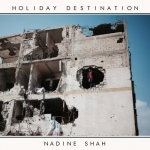
Holiday Destination by Nadine Shah
Album Watch
For most of us, 2016 was a tumultuous and ugly year - one steeped in political chaos and an air of...
rock pop

Hazel (1853 KP) rated A Robot in the Garden in Books
May 25, 2017

So Sweet
This ebook was provided by the publisher via NetGalley in exchange for an honest review
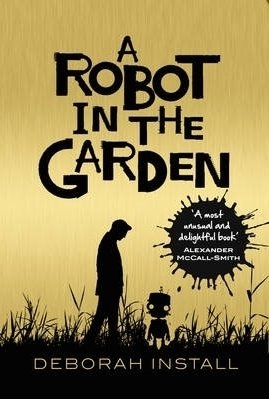
What would you do if you found a robot in your garden? That is exactly what, as the title suggests, 34-year-old Ben has to answer on making this discovery early one September morning. Set in the near future where many people have androids in their houses to do the chores they do not wish to do, finding a robot is not a completely unsettling event. What is unusual, however, is that this particular robot is the opposite of the modern, shiny models: he appears to be a mishmash of Japanese fine art and something you would find on a scrap heap.
As Ben discovers, the robot, named Tang is broken and is in need of urgent care and repair. Ben becomes obsessed with trying to pry information out of the robot as to where he came from and to whom he belongs to. Bringing Tang into the house is the last straw for his wife, Amy, who after letting him know all his faults – unemployment, never achieved anything – walks out on him. Now alone, with no one else to worry about, Ben is determined to locate Tang’s creator and save the robot’s life.
What continues is a wild goose chase across America and over to Asia as the strange pairing – human and robot – follows hints and clues that could help them reach their destination. Along the way Ben gets to know Tang and learns to love him in the same way a father loves a child. No matter what mischief Tang gets himself into, Ben is always there to fix the situation. The only thing he cannot fix is Tang’s internal parts, and time is running out.
Initially the story was about a man who wanted to prove he could achieve something to show his sister and his, now, ex-wife that they were wrong about him. However later on in the novel Ben realizes he is changing for himself, not for anyone else, and the person – or robot – that has helped him to achieve this is Tang. On the other hand it is also a humorous tale that explores a character that is unable to connect to the world around him. Tang is like a human toddler who needs constant care and attention, and is fascinated by everything around him. With Ben’s love and attention he proves to the world that he is much more than a rusty metal box.
A Robot in the Garden is a gem of a novel that is guaranteed to make the reader laugh. It is also touching and emotionally engaging, with both heartwarming and heart wrenching moments. Deborah Install has created an accurate representation of a character that has no understanding of the happenings in the world around it, basing many hilarious instances on those of her young son.
Whilst reading this book I could not help but compare it to the film Short Circuit (1986) in which a robot is electrocuted and gains human intelligence. I kept picturing the storyline of A Robot in the Garden in my head and thinking up ways it could be portrayed on screen. Whether there are plans to make it into a film I have no idea, but I am sure it would make prize-winning picture.
Do not be put off by its science fiction classification; A Robot in the Garden is no War of the Worlds or Doctor Who type of story. Instead it is a brilliant piece if fiction suitable for all adults. Those with children will laugh at the similarities between Tang and their offspring, whereas those without will sympathise with Ben’s struggles to keep the robot under control. All in all a great novel.
What would you do if you found a robot in your garden? That is exactly what, as the title suggests, 34-year-old Ben has to answer on making this discovery early one September morning. Set in the near future where many people have androids in their houses to do the chores they do not wish to do, finding a robot is not a completely unsettling event. What is unusual, however, is that this particular robot is the opposite of the modern, shiny models: he appears to be a mishmash of Japanese fine art and something you would find on a scrap heap.
As Ben discovers, the robot, named Tang is broken and is in need of urgent care and repair. Ben becomes obsessed with trying to pry information out of the robot as to where he came from and to whom he belongs to. Bringing Tang into the house is the last straw for his wife, Amy, who after letting him know all his faults – unemployment, never achieved anything – walks out on him. Now alone, with no one else to worry about, Ben is determined to locate Tang’s creator and save the robot’s life.
What continues is a wild goose chase across America and over to Asia as the strange pairing – human and robot – follows hints and clues that could help them reach their destination. Along the way Ben gets to know Tang and learns to love him in the same way a father loves a child. No matter what mischief Tang gets himself into, Ben is always there to fix the situation. The only thing he cannot fix is Tang’s internal parts, and time is running out.
Initially the story was about a man who wanted to prove he could achieve something to show his sister and his, now, ex-wife that they were wrong about him. However later on in the novel Ben realizes he is changing for himself, not for anyone else, and the person – or robot – that has helped him to achieve this is Tang. On the other hand it is also a humorous tale that explores a character that is unable to connect to the world around him. Tang is like a human toddler who needs constant care and attention, and is fascinated by everything around him. With Ben’s love and attention he proves to the world that he is much more than a rusty metal box.
A Robot in the Garden is a gem of a novel that is guaranteed to make the reader laugh. It is also touching and emotionally engaging, with both heartwarming and heart wrenching moments. Deborah Install has created an accurate representation of a character that has no understanding of the happenings in the world around it, basing many hilarious instances on those of her young son.
Whilst reading this book I could not help but compare it to the film Short Circuit (1986) in which a robot is electrocuted and gains human intelligence. I kept picturing the storyline of A Robot in the Garden in my head and thinking up ways it could be portrayed on screen. Whether there are plans to make it into a film I have no idea, but I am sure it would make prize-winning picture.
Do not be put off by its science fiction classification; A Robot in the Garden is no War of the Worlds or Doctor Who type of story. Instead it is a brilliant piece if fiction suitable for all adults. Those with children will laugh at the similarities between Tang and their offspring, whereas those without will sympathise with Ben’s struggles to keep the robot under control. All in all a great novel.

Movie Metropolis (309 KP) rated Dad's Army (2016) in Movies
Jun 11, 2019

Full of wasted British talent
I may be fairly young in years, but I grew up around comedies like Only Fools & Horses, One Foot in the Grave and of course Dad’s Army. I remember many evenings sitting at home with my dad as he cried with laughter at all three, though it was the latter’s influence that stuck with me the most.
Now, Dad’s Army like so many classic TV shows is getting the silver screen treatment, but does this modern-day reimagining, with an all-star British cast live up to the series that delighted so many for so long?
The movie adaptation of Dad’s Army follows on from the TV series, taking place just before the Second World War comes to an end. In Walmington-On-Sea, the Home Guard, led by Captain Mainwaring must track down a German spy, who is intent on swaying the war in their favour.
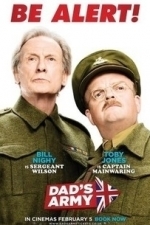
A whole host of British talent, young and old, star and each and every one of them slots perfectly into the well-worn shoes of classic characters. From Michael Gambon’s effervescent performance as Godfrey and Toby Jones’ faithful portrayal of Mainwaring to Inbetweeners star Blake Harrison taking on the role of Pike, it feels as though the casting team really put a lot of thought into getting the characteristics right.
It doesn’t stop there, Welsh beauty Catherine Zeta Jones, TV favourite Sarah Lancashire and Victor Meldrew’s long-suffering wife Margaret (Annette Crosbie) all make appearances for the fairer sex, with each bringing something to the table.
The scenery is beautiful, filmed just a couple of hours up the road in Bridlington, East Yorkshire, the normally vibrant seaside town is transformed into 1940s Walmington with an enviable amount of detail. Elsewhere, the White Cliffs of Dover are replicated exceptionally at Flamborough on the east coast.
Unfortunately, the story is a little on the light side, barely managing to stretch to the film’s slightly overlong running time. This is an issue that blights many TV to film projects and it feels like this unbelievably talented cast is somewhat wasted with a fairly run-of-the-mill plot.
It also feels like the comedy is on rations. Yes, it’s nostalgic with constant references to its small-screen counterpart, but it comes across like the producers were too busy trying to shoehorn as many elements of the TV series into the film, without concentrating on what Dad’s Army was all about – laughs.
Nevertheless, there is plenty to enjoy despite a lack of giggles. The acting is, as said previously, remarkable with fans of the series and newcomers alike being able to enjoy the warm, typically British feeling these thespians bring to the film.
Overall, Dad’s Army is a decent, albeit slightly underwhelming, effort in bringing one of the most popular TV shows of all time to the big screen. Its talent and casting are undeniable and the filming style is very impressive, but a lack of attention to the plot and a comedy drought stop it short of achieving what it clearly set out to do.
https://moviemetropolis.net/2016/02/07/full-of-wasted-british-talent-dads-army-review/
Now, Dad’s Army like so many classic TV shows is getting the silver screen treatment, but does this modern-day reimagining, with an all-star British cast live up to the series that delighted so many for so long?
The movie adaptation of Dad’s Army follows on from the TV series, taking place just before the Second World War comes to an end. In Walmington-On-Sea, the Home Guard, led by Captain Mainwaring must track down a German spy, who is intent on swaying the war in their favour.
A whole host of British talent, young and old, star and each and every one of them slots perfectly into the well-worn shoes of classic characters. From Michael Gambon’s effervescent performance as Godfrey and Toby Jones’ faithful portrayal of Mainwaring to Inbetweeners star Blake Harrison taking on the role of Pike, it feels as though the casting team really put a lot of thought into getting the characteristics right.
It doesn’t stop there, Welsh beauty Catherine Zeta Jones, TV favourite Sarah Lancashire and Victor Meldrew’s long-suffering wife Margaret (Annette Crosbie) all make appearances for the fairer sex, with each bringing something to the table.
The scenery is beautiful, filmed just a couple of hours up the road in Bridlington, East Yorkshire, the normally vibrant seaside town is transformed into 1940s Walmington with an enviable amount of detail. Elsewhere, the White Cliffs of Dover are replicated exceptionally at Flamborough on the east coast.
Unfortunately, the story is a little on the light side, barely managing to stretch to the film’s slightly overlong running time. This is an issue that blights many TV to film projects and it feels like this unbelievably talented cast is somewhat wasted with a fairly run-of-the-mill plot.
It also feels like the comedy is on rations. Yes, it’s nostalgic with constant references to its small-screen counterpart, but it comes across like the producers were too busy trying to shoehorn as many elements of the TV series into the film, without concentrating on what Dad’s Army was all about – laughs.
Nevertheless, there is plenty to enjoy despite a lack of giggles. The acting is, as said previously, remarkable with fans of the series and newcomers alike being able to enjoy the warm, typically British feeling these thespians bring to the film.
Overall, Dad’s Army is a decent, albeit slightly underwhelming, effort in bringing one of the most popular TV shows of all time to the big screen. Its talent and casting are undeniable and the filming style is very impressive, but a lack of attention to the plot and a comedy drought stop it short of achieving what it clearly set out to do.
https://moviemetropolis.net/2016/02/07/full-of-wasted-british-talent-dads-army-review/

Gareth von Kallenbach (980 KP) rated Bridge of Spies (2015) in Movies
Jun 19, 2019
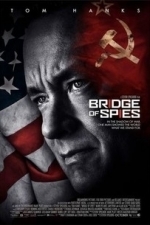

In the 1950s the world was locked in the midst of the Cold War where paranoia, mutual distrust, and fear, combined with the threat of nuclear annihilation between the United States and Soviet Union. In “Bridge of Spies” Director Steven Spielberg has once again used history as a basis for a compelling story filled with real characters and emotions.
When suspected spy Rudolf Abel (Mark Rylance), is arrested New York Tax Attorney James Donovan (Tom Hanks) is asked to provide Abel with a competent defense so the United States can show the world that Abel was given a fair trial and due process despite the charges against him.
Although hesitant what defending an accused spy will bring hatred to him and his family, Donovan takes up the task and despite a judge and process that wants to railroad this to a conviction in spite of possible illegal search and seizure, Donovan is able to avoid the death penalty for his client and even files an appeal before the Supreme Court as he is convinced his client was convicted on evidence that was illegally obtained.
At the same time, a young Air Force pilot named Francis Gary Powers (Austin Stowell), is shot down by the Russians in a U-2 spy plane and is paraded by the Russians on television before being convicted of being a Spy.
This situation increases and already tense situation and when the East German government starts to build the Berlin Wall and takes an American student prisoner for espionage, back channels contact Donovan to discuss a possible exchange of prisoners.
Now since this cannot be done by any official sanction of the U.S. or Russian governments, Donovan must in secret travel to Berlin and meet with figures to obtain a release. The U.S. wants Powers and considers the student an expendable throw in but Donovan is resolute to bring them both home in exchange for his client Abel.
The film is beautifully shot and masterfully acted with top performance by Hanks and the leads. The events are fairly close to the historical accounts I studied as a child and Spielberg is wise to let the story and the characters drive the film and not create over impassioned speeches or tacked on action sequences to build the drama.
The film is an early contender for several Oscar nominations as far as I am concerned as is one of the best movies of 2015.
http://sknr.net/2015/10/16/bridge-of-spies/
When suspected spy Rudolf Abel (Mark Rylance), is arrested New York Tax Attorney James Donovan (Tom Hanks) is asked to provide Abel with a competent defense so the United States can show the world that Abel was given a fair trial and due process despite the charges against him.
Although hesitant what defending an accused spy will bring hatred to him and his family, Donovan takes up the task and despite a judge and process that wants to railroad this to a conviction in spite of possible illegal search and seizure, Donovan is able to avoid the death penalty for his client and even files an appeal before the Supreme Court as he is convinced his client was convicted on evidence that was illegally obtained.
At the same time, a young Air Force pilot named Francis Gary Powers (Austin Stowell), is shot down by the Russians in a U-2 spy plane and is paraded by the Russians on television before being convicted of being a Spy.
This situation increases and already tense situation and when the East German government starts to build the Berlin Wall and takes an American student prisoner for espionage, back channels contact Donovan to discuss a possible exchange of prisoners.
Now since this cannot be done by any official sanction of the U.S. or Russian governments, Donovan must in secret travel to Berlin and meet with figures to obtain a release. The U.S. wants Powers and considers the student an expendable throw in but Donovan is resolute to bring them both home in exchange for his client Abel.
The film is beautifully shot and masterfully acted with top performance by Hanks and the leads. The events are fairly close to the historical accounts I studied as a child and Spielberg is wise to let the story and the characters drive the film and not create over impassioned speeches or tacked on action sequences to build the drama.
The film is an early contender for several Oscar nominations as far as I am concerned as is one of the best movies of 2015.
http://sknr.net/2015/10/16/bridge-of-spies/

LeftSideCut (3776 KP) rated Jurassic World: Fallen Kingdom (2018) in Movies
Jun 21, 2019
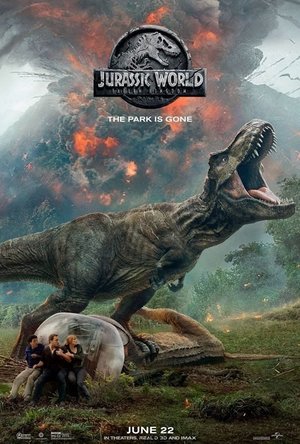

Please stop now
Contains spoilers, click to show
Where to begin...
Fallen Kingdom is full to the brim with stupid.
It sort of imitates The Lost World - first half set on an island, second half set within human population - but it just falls on its face, especially in that second half.
We have a typical evil guy, with a ludicrous plan to use dinosaurs in modern war scenarios (again - for some absurd reason), we have a new "crazy" hybrid lab created dinosaur on the rampage (again!), And to top it all off, the writers decided to throw in a side plot about a little girl who actually a clone? What? Why?
There's also a bit with a velociraptor diving through a window, away from an explosion, like a dinosaur John McClane - we are so far away from the first movie now, is there any point in carrying on?
The first half of the film fairs slightly better, (the opening scene is a highlight for me) and the CGI is pretty solid throughout, but as soon as they leave the island, it's nosedives in spectacular fashion.
Bruce Dallas-Howard and Chris Pratt - again, both fine actors, bit here they are just there, not really adding or taking away from the whole experience.
And just like Jurassic World, it's full of silly plot points that I try not to think too hard about, bit in the end can't help myself such as:
Why is Claire not incarcerated for the events of the first film - she's definitely responsible for a lot of civilians being mailed by rampant dinosaurs.
How does the old guy have absolutely no idea that there is a massive lab/dinosaur prison below his house.
How did they get the T-Rex onto the boat into containment in the few minutes between the main characters jumping into the ocean to getting to the boat themselves?
Why does the Indoraptor happily eat everyone in sight, but then sneak up on the little girl... It's a kind of cool shit but still.
When the film reaches it's conclusion with dinosaurs roaming our everyday lives, you realise that most of the trailer is in the last minute of the film, and this was maybe all filler to reach the inevitable sequel, but to be honest, my interest is low at this point.
On a final note, I love Jeff Goldblum but what was the point of his appearance here? He literally says the name of the film out loud, and that's it. Jesus.
Fallen Kingdom is full to the brim with stupid.
It sort of imitates The Lost World - first half set on an island, second half set within human population - but it just falls on its face, especially in that second half.
We have a typical evil guy, with a ludicrous plan to use dinosaurs in modern war scenarios (again - for some absurd reason), we have a new "crazy" hybrid lab created dinosaur on the rampage (again!), And to top it all off, the writers decided to throw in a side plot about a little girl who actually a clone? What? Why?
There's also a bit with a velociraptor diving through a window, away from an explosion, like a dinosaur John McClane - we are so far away from the first movie now, is there any point in carrying on?
The first half of the film fairs slightly better, (the opening scene is a highlight for me) and the CGI is pretty solid throughout, but as soon as they leave the island, it's nosedives in spectacular fashion.
Bruce Dallas-Howard and Chris Pratt - again, both fine actors, bit here they are just there, not really adding or taking away from the whole experience.
And just like Jurassic World, it's full of silly plot points that I try not to think too hard about, bit in the end can't help myself such as:
Why is Claire not incarcerated for the events of the first film - she's definitely responsible for a lot of civilians being mailed by rampant dinosaurs.
How does the old guy have absolutely no idea that there is a massive lab/dinosaur prison below his house.
How did they get the T-Rex onto the boat into containment in the few minutes between the main characters jumping into the ocean to getting to the boat themselves?
Why does the Indoraptor happily eat everyone in sight, but then sneak up on the little girl... It's a kind of cool shit but still.
When the film reaches it's conclusion with dinosaurs roaming our everyday lives, you realise that most of the trailer is in the last minute of the film, and this was maybe all filler to reach the inevitable sequel, but to be honest, my interest is low at this point.
On a final note, I love Jeff Goldblum but what was the point of his appearance here? He literally says the name of the film out loud, and that's it. Jesus.
Phil Leader (619 KP) rated Half a War (Shattered Sea, Book 3) in Books
Nov 14, 2019
This is the third book of the Shattered Sea trilogy and takes place a couple of years after the previous book, Half the World. The long forecast war between Gettland and the High King commences with the High King's champion, Bright Yilling, invading Throvenland. Princess Skara manages to escape to Gettland where she joins the allies so that she can take her homeland back from the invaders.
Father Yarvi is also determined to strike back, to carry out the oath of vengeance he swore against his father's killers. To do this he must defeat Bright Yilling and his army and then take on the High King himself. But just how far is he prepared to go in order to secure victory?
I actually can't say too much in detail about this book without giving anything away. Much like the previous book, this one seems like a fairly conventional epic fantasy style story for a good half. But then Abercrombie starts to twist the knife as the reader's expectations based on the usual fantasy tropes are knocked down one by one.
Certainly there is much here that is unconventional in many ways and I confess to having a rather mad smile on my face at one point due to the utter craziness of what is going on - but Abercrombie handles it well having laid the groundwork well in advance. It is never clear who is going live and who is going to die, and who is going to win and who is going to lose.
After the first two books, which have quite a lot of conversations and philosophy, this is essentailly one long drawn out battle against various parties in various locations. Some battles are fought with swords and others with words, but both are just as deadly for the loser. The fight scenes are very violent and as expected it's pretty grim and dark at times.
There is plenty of scope left at the end for more stories set in the world of the Shattered Sea and these would be welcome but it also clear that the story of Yarvi and his revenge has been completed.
Not the best of the series, the first half is probably too conventional but the second half turns so much on its head it redeems the book completely.
Rating: Lots of violent battles and deaths, some scatalogical phrases and some non-explict sexual scenes. Young Adult but more at the Adult than Young end of that spectrum
Father Yarvi is also determined to strike back, to carry out the oath of vengeance he swore against his father's killers. To do this he must defeat Bright Yilling and his army and then take on the High King himself. But just how far is he prepared to go in order to secure victory?
I actually can't say too much in detail about this book without giving anything away. Much like the previous book, this one seems like a fairly conventional epic fantasy style story for a good half. But then Abercrombie starts to twist the knife as the reader's expectations based on the usual fantasy tropes are knocked down one by one.
Certainly there is much here that is unconventional in many ways and I confess to having a rather mad smile on my face at one point due to the utter craziness of what is going on - but Abercrombie handles it well having laid the groundwork well in advance. It is never clear who is going live and who is going to die, and who is going to win and who is going to lose.
After the first two books, which have quite a lot of conversations and philosophy, this is essentailly one long drawn out battle against various parties in various locations. Some battles are fought with swords and others with words, but both are just as deadly for the loser. The fight scenes are very violent and as expected it's pretty grim and dark at times.
There is plenty of scope left at the end for more stories set in the world of the Shattered Sea and these would be welcome but it also clear that the story of Yarvi and his revenge has been completed.
Not the best of the series, the first half is probably too conventional but the second half turns so much on its head it redeems the book completely.
Rating: Lots of violent battles and deaths, some scatalogical phrases and some non-explict sexual scenes. Young Adult but more at the Adult than Young end of that spectrum
Phil Leader (619 KP) rated Half the World in Books
Nov 14, 2019
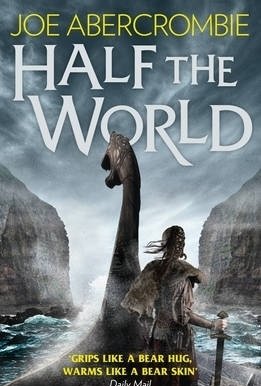
Father Yarvi has a problem. He is minister for Gettland but the High King is determined to engineer a war to remove Gettland from the map. Yarvi needs allies but with half the world swearing allegiance to the High King they may be in short supply.
Brand has a problem. He wants to be a warrior and do good. But he finds that doing good does not always go down well with other people.
Thorn is a problem. She wants to be a warrior like her father, but in Gettland women don't fight and despite her abilities with a sword she is seen as an embarrassment. When an accident in training happens it seems like the perfect excuse to get rid of her once and for all.
This is the second book of a young adult trilogy set in the Shattered Sea. Told from the point of view of both Thorn and Brand as they journey across half the world with Father Yarvi in search of allies this is also a journey of discovery for the two of them as they find out who they really are and what they really stand for.
As would be expected from Abercrombie the journey they undertake is fairly brutal involving physical hardship, battles and meetings with dangerous and powerful rulers. The crew of the boat start off as a rough bunch of (mostly) strangers but bonds are forged between them. As usual characterisaton is excellent and the development of both Thorn and Brand in their different ways is very well done. Abercrombie really does have a magic touch in providing characters that do not fit into the usual rough and tough warrior mould. Each has their own story and their own personality. As usual the female characters are easily as strong as the male ones; Abercrombie is an equal opportunity employer of characters.
I was worried that the ending would use the oldest fantasy trope in the book but I needn't have been concerned. The author is an old hand at setting up expectations on standard epic fantasy lines and then suddenly twisting them a different way and he does that a number of times in this novel.
Sterling work, gritty and harsh as always with that wonderful touch of dark humour from the characters and with a story that drives along leaving the reader guessing all the way.
Rating: Lots of fight scenes, a couple of non-explicit sexual scenes and some scatalogical swearing from the the saltier characters but still suitable for a 'young adult' (or indeed adult) reader.
Brand has a problem. He wants to be a warrior and do good. But he finds that doing good does not always go down well with other people.
Thorn is a problem. She wants to be a warrior like her father, but in Gettland women don't fight and despite her abilities with a sword she is seen as an embarrassment. When an accident in training happens it seems like the perfect excuse to get rid of her once and for all.
This is the second book of a young adult trilogy set in the Shattered Sea. Told from the point of view of both Thorn and Brand as they journey across half the world with Father Yarvi in search of allies this is also a journey of discovery for the two of them as they find out who they really are and what they really stand for.
As would be expected from Abercrombie the journey they undertake is fairly brutal involving physical hardship, battles and meetings with dangerous and powerful rulers. The crew of the boat start off as a rough bunch of (mostly) strangers but bonds are forged between them. As usual characterisaton is excellent and the development of both Thorn and Brand in their different ways is very well done. Abercrombie really does have a magic touch in providing characters that do not fit into the usual rough and tough warrior mould. Each has their own story and their own personality. As usual the female characters are easily as strong as the male ones; Abercrombie is an equal opportunity employer of characters.
I was worried that the ending would use the oldest fantasy trope in the book but I needn't have been concerned. The author is an old hand at setting up expectations on standard epic fantasy lines and then suddenly twisting them a different way and he does that a number of times in this novel.
Sterling work, gritty and harsh as always with that wonderful touch of dark humour from the characters and with a story that drives along leaving the reader guessing all the way.
Rating: Lots of fight scenes, a couple of non-explicit sexual scenes and some scatalogical swearing from the the saltier characters but still suitable for a 'young adult' (or indeed adult) reader.

Ross (3284 KP) rated Across the Broken Stars in Books
Feb 14, 2020
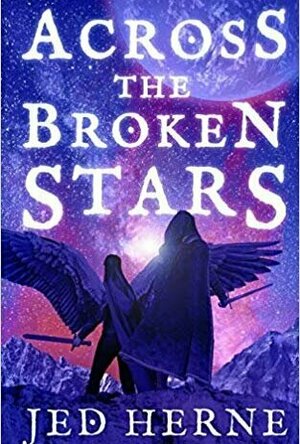
Unusual space fantasy ... with wings!
I received an advance copy of this book from BookSirens and provide this honest review.
This book has a very unusual setting with plenty left to the imagination. The story takes place in a world of "discs" (I presume man-made but not wholly clear), large surfaces with a metal base and a force field keeping oxygen in and gravity working, where single multi-purpose crops ("omnicrops") provide perfect sustenance, various fungi/mosses providing building materials, luminescence and underwater/outer space breathing apparatus.
Despite this apparent sci-fi setting, the technology is at a very early stage - weapons are limited to swords/arrows and vehicles are drawn by pegasi or wind power. Space travel is accomplished by launching oneself towards your destination and hoping to reach the other, orbiting, disc. Unless you're an angel/Pegasus where your wings can apparently help propel you through space (you know, air-less space, where wings wouldn't be of any use) - but hey this is fantasy lets not get bogged down with this.
The angels have been wiped out by the ruling race during a long and nasty war. Leon, a cowardly traitorous "former" angel, is in hiding living a simple life drinking and gambling his days away after back-breaking work unloading airships. He is approached by someone he starts to believe is an angel who has tracked him down. Unfortunately she is also being tracked by an Inquisitor, and the two are forced to run.
Elena, the last angel with wings, is determined to outrun the Inquisition and find Waverrym, the mythical hidden home of the remaining angels. The two (Leon reluctantly) embark on a journey to unravel puzzles and riddles to determine the location of their only haven.
Leon is quite an annoying protagonist, being a whiney, cowardly husk of a man. His role in the story is using his angel training and knowledge to solve the riddles they uncover, while training Elena along the way.
The story is well planned out with a decent plot and well-crafted dungeon-type areas (at times it felt a little D&D/LitRPG). While there was a definite lull to my mind around the halfway mark this didn't impact my enjoyment too much.
If you can accept the fact that angel wings / Pegasus wings can allow someone to fly through space, the world is well thought out and very original, and the story very enjoyable. Some of the dialogue was a little clunky but not overly annoying.
This book has a very unusual setting with plenty left to the imagination. The story takes place in a world of "discs" (I presume man-made but not wholly clear), large surfaces with a metal base and a force field keeping oxygen in and gravity working, where single multi-purpose crops ("omnicrops") provide perfect sustenance, various fungi/mosses providing building materials, luminescence and underwater/outer space breathing apparatus.
Despite this apparent sci-fi setting, the technology is at a very early stage - weapons are limited to swords/arrows and vehicles are drawn by pegasi or wind power. Space travel is accomplished by launching oneself towards your destination and hoping to reach the other, orbiting, disc. Unless you're an angel/Pegasus where your wings can apparently help propel you through space (you know, air-less space, where wings wouldn't be of any use) - but hey this is fantasy lets not get bogged down with this.
The angels have been wiped out by the ruling race during a long and nasty war. Leon, a cowardly traitorous "former" angel, is in hiding living a simple life drinking and gambling his days away after back-breaking work unloading airships. He is approached by someone he starts to believe is an angel who has tracked him down. Unfortunately she is also being tracked by an Inquisitor, and the two are forced to run.
Elena, the last angel with wings, is determined to outrun the Inquisition and find Waverrym, the mythical hidden home of the remaining angels. The two (Leon reluctantly) embark on a journey to unravel puzzles and riddles to determine the location of their only haven.
Leon is quite an annoying protagonist, being a whiney, cowardly husk of a man. His role in the story is using his angel training and knowledge to solve the riddles they uncover, while training Elena along the way.
The story is well planned out with a decent plot and well-crafted dungeon-type areas (at times it felt a little D&D/LitRPG). While there was a definite lull to my mind around the halfway mark this didn't impact my enjoyment too much.
If you can accept the fact that angel wings / Pegasus wings can allow someone to fly through space, the world is well thought out and very original, and the story very enjoyable. Some of the dialogue was a little clunky but not overly annoying.

Mothergamer (1658 KP) rated the PC version of Assassin's Creed: Odyssey in Video Games
Apr 3, 2019
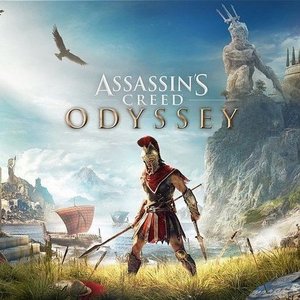
I love the Assassin's Creed series as past Mother Gamer blogs have shown. While there were a couple I wasn't so thrilled with, I have always enjoyed the stories and exploration the games have offered. The recent Origins definitely captured my heart with all the incredible ancient Egypt history and lore. When Odyssey was announced I was pretty excited because it was going to be set in ancient Greece and I could not wait to play it.
Odyssey is a bit different from its predecessors. The story is set at the beginning of the Peloponnesian war; an ongoing struggle between Sparta and Athens for dominion over Greece. This opens up a lot of interesting places to explore and dialogue options. At the beginning of the game you can choose which Misthios (mercenary) you want to play as; Alexios or his sister Kassandra. It really doesn't matter who you choose because the story is essentially the same for both so it's just a matter of whether or not you prefer to play as a man or a woman. For my first playthrough I went with Kassandra.
Kassandra starts her adventure.
Right from the start, Odyssey hooks you in with an action filled introduction and sets the scene for the story. After that you meet the character you chose; in my case Kassandra and you get a brief tutorial on how the gaming controls work. You also get a mount with this and those controls are pretty easy to navigate. Once you have the hang of it, you can get started on your journey with the main story and the vast amount of side quests.
This is where Odyssey differs a bit. There is more of a role playing aspect to the game with you being able to select different dialogue options while talking to people. You can choose to be cutthroat, a mercenary with a conscience, or ridiculously flirty. Yes, with some of the NPC characters be they men or women Kassandra could have flings with them. Don't worry, nothing overly graphic is shown, but it is definitely heavily implied. Your weapons are different as well. There is no assassin's blade here. You have a precursor artifact weapon in the form of a spear and the options of daggers and swords. You also have a bow and arrows which are quite useful for fighting at a distance.
Have a horse for your travels!
As you level up, you gain ability points which you can use to unlock certain skills to enhance your fighting and stealth from the following three categories in the skills menu: Hunter, Warrior, and Assassin. It is beneficial to unlock these because they are incredibly useful in battles against your enemies. There are also ship battles which bring back memories of Black Flag. The ship battles are challenging, but they are so much fun. You can upgrade your ship to make it a force to be reckoned with. Upgrading the hull is definitely a must so you can ram the heck out of other ships and take little to no damage. You need a crew also of course and Odyssey has an ability where rather than assassinating targets, you can knock them out and recruit them to join your crew.
Unlock abilities in the skills menu.
The running theme for your protagonist is all about family. This is where you are introduced to the mysterious villains, The Cult Of Kosmos who have a hand in much of the conflict in Greece all for power. You have to travel all over the world map to find clues about each cult member in order to reveal their true identity and the location of their main hideout. Once you have those, you can find them and take them out. Be wary however, some cult members are heavily guarded and quite the challenge to fight. This is where Odyssey's notoriety system comes in. The more crimes you commit i.e. murder (come on, you know that's what assassination is), the more likely it is that someone will put a bounty on your head. Then you find yourself relentlessly hunted by bounty hunters with very colorful names. The bounty hunters are no joke and if you do not plan out your strategy and tactics, they will end you. There were some who had lions and they would tag team the crap out of me which could be more than a little frustrating, but that's part of the challenge. Two ways around this are offing the person who put the bounty on your head or paying off the bounty. If you have the coin, you can pay the money and the bounty will go away.
Besides the main story, there are a ton of side quests and conquest missions to do. Sneaking around and taking out guards in a fort can be difficult, but rewarding as you take everyone out and diminish that nation's power. Looting the treasures, burning the supplies, and taking out the captains completes that area and will show you a meter with their power depleting. Once you have completely drained their influence, you get a conquest battle option. You get an epic battle between Spartans and Athenians and you have to take out all the captains during this battle in order to win the conquest. There were times where I totally screwed up and a guard saw me and then I had to brawl my way out among five or six of them. That was a whole other adventure in itself. It definitely raises the stakes when that happens and makes Odyssey feel like a whole new game.
Getting caught by guards sucks. Time to brawl my way out!
My favorite thing to do in Odyssey was exploring. I loved discovering new areas and hanging out in ancient Greece. Climbing up to the tops of high buildings, cliffs, and statues just to synchronize the map and see the view from a high vantage point was pretty fantastic. No two areas were alike and there was always something new to see. Some of the small side quests were hit or miss at times, but I was never bored at all. There was always something to see or do.
An eagle's eye view of ancient Greece.
There are a variety of armor and weapons choices in Odyssey. As you progress, you can upgrade to better armor, weapons, and crafting materials. If you have a favorite armor set, when you upgrade you can glamour the armor to look like the favorite set. Again, this adds a role playing aspect where you can actually gather materials and craft weapons and armor in the game. This is also true for your ship. You can choose a variety of sails, ship designs, and even tailor your crew with characters from past Assassin's Creed games as your lieutenants.
If you're looking for more challenge with your challenge, there are legendary beast and mythological monster fights you can do. The locations of each legendary beast is marked on your world map. With the monsters, you happen upon some of them doing certain quests. This was how I accidentally discovered the fight with Medusa. These fights are insanely hard and Medusa seemed to be the hardest one of all. I got my ass handed to me quite a few times before I finally won. It is vindicating when you do win because they are so difficult and you have to be constantly thinking about your tactics and theirs. The fights absolutely keep you on your toes, but man what a thrill!
Medusa fight is crazy!
When you see the world map, it can be a little overwhelming with how vast it is. Areas you have already explored will be highlighted and areas that are not unlocked are grayed out. The map will also show you what level each area is so you can level grind and plan accordingly. I had fun unlocking the areas and receiving contract quests and bounties which offered lots of drachmae and sometimes item rewards such as armor.
The world map is huge. Get out there and explore!
While I loved Odyssey, there were issues with the game. One of the big things was I was one of the unlucky people who got the game breaking bug of the game dropping frames and freezing completely in enemy fort areas. I had wondered if it was just me so I looked up the issue and found that many others had this issue with the game also. The solution Ubisoft offered was to close the game completely and restart the game. That's more than a little irritating. While the voice acting is good, there were strange audio issues with the voices being off sync and delaying at times. In spite of those issues, I still had fun with Odyssey and loved the game. Even after the main crux of the story is finished, there's still so much left to do with legendary hunts and searching for precursor relics and the upcoming DLC. Odyssey is slightly different from the games before it, but it is lots of fun. Now, I'm going to get out there and do more exploring. See you at the next adventure!
Odyssey is a bit different from its predecessors. The story is set at the beginning of the Peloponnesian war; an ongoing struggle between Sparta and Athens for dominion over Greece. This opens up a lot of interesting places to explore and dialogue options. At the beginning of the game you can choose which Misthios (mercenary) you want to play as; Alexios or his sister Kassandra. It really doesn't matter who you choose because the story is essentially the same for both so it's just a matter of whether or not you prefer to play as a man or a woman. For my first playthrough I went with Kassandra.
Kassandra starts her adventure.
Right from the start, Odyssey hooks you in with an action filled introduction and sets the scene for the story. After that you meet the character you chose; in my case Kassandra and you get a brief tutorial on how the gaming controls work. You also get a mount with this and those controls are pretty easy to navigate. Once you have the hang of it, you can get started on your journey with the main story and the vast amount of side quests.
This is where Odyssey differs a bit. There is more of a role playing aspect to the game with you being able to select different dialogue options while talking to people. You can choose to be cutthroat, a mercenary with a conscience, or ridiculously flirty. Yes, with some of the NPC characters be they men or women Kassandra could have flings with them. Don't worry, nothing overly graphic is shown, but it is definitely heavily implied. Your weapons are different as well. There is no assassin's blade here. You have a precursor artifact weapon in the form of a spear and the options of daggers and swords. You also have a bow and arrows which are quite useful for fighting at a distance.
Have a horse for your travels!
As you level up, you gain ability points which you can use to unlock certain skills to enhance your fighting and stealth from the following three categories in the skills menu: Hunter, Warrior, and Assassin. It is beneficial to unlock these because they are incredibly useful in battles against your enemies. There are also ship battles which bring back memories of Black Flag. The ship battles are challenging, but they are so much fun. You can upgrade your ship to make it a force to be reckoned with. Upgrading the hull is definitely a must so you can ram the heck out of other ships and take little to no damage. You need a crew also of course and Odyssey has an ability where rather than assassinating targets, you can knock them out and recruit them to join your crew.
Unlock abilities in the skills menu.
The running theme for your protagonist is all about family. This is where you are introduced to the mysterious villains, The Cult Of Kosmos who have a hand in much of the conflict in Greece all for power. You have to travel all over the world map to find clues about each cult member in order to reveal their true identity and the location of their main hideout. Once you have those, you can find them and take them out. Be wary however, some cult members are heavily guarded and quite the challenge to fight. This is where Odyssey's notoriety system comes in. The more crimes you commit i.e. murder (come on, you know that's what assassination is), the more likely it is that someone will put a bounty on your head. Then you find yourself relentlessly hunted by bounty hunters with very colorful names. The bounty hunters are no joke and if you do not plan out your strategy and tactics, they will end you. There were some who had lions and they would tag team the crap out of me which could be more than a little frustrating, but that's part of the challenge. Two ways around this are offing the person who put the bounty on your head or paying off the bounty. If you have the coin, you can pay the money and the bounty will go away.
Besides the main story, there are a ton of side quests and conquest missions to do. Sneaking around and taking out guards in a fort can be difficult, but rewarding as you take everyone out and diminish that nation's power. Looting the treasures, burning the supplies, and taking out the captains completes that area and will show you a meter with their power depleting. Once you have completely drained their influence, you get a conquest battle option. You get an epic battle between Spartans and Athenians and you have to take out all the captains during this battle in order to win the conquest. There were times where I totally screwed up and a guard saw me and then I had to brawl my way out among five or six of them. That was a whole other adventure in itself. It definitely raises the stakes when that happens and makes Odyssey feel like a whole new game.
Getting caught by guards sucks. Time to brawl my way out!
My favorite thing to do in Odyssey was exploring. I loved discovering new areas and hanging out in ancient Greece. Climbing up to the tops of high buildings, cliffs, and statues just to synchronize the map and see the view from a high vantage point was pretty fantastic. No two areas were alike and there was always something new to see. Some of the small side quests were hit or miss at times, but I was never bored at all. There was always something to see or do.
An eagle's eye view of ancient Greece.
There are a variety of armor and weapons choices in Odyssey. As you progress, you can upgrade to better armor, weapons, and crafting materials. If you have a favorite armor set, when you upgrade you can glamour the armor to look like the favorite set. Again, this adds a role playing aspect where you can actually gather materials and craft weapons and armor in the game. This is also true for your ship. You can choose a variety of sails, ship designs, and even tailor your crew with characters from past Assassin's Creed games as your lieutenants.
If you're looking for more challenge with your challenge, there are legendary beast and mythological monster fights you can do. The locations of each legendary beast is marked on your world map. With the monsters, you happen upon some of them doing certain quests. This was how I accidentally discovered the fight with Medusa. These fights are insanely hard and Medusa seemed to be the hardest one of all. I got my ass handed to me quite a few times before I finally won. It is vindicating when you do win because they are so difficult and you have to be constantly thinking about your tactics and theirs. The fights absolutely keep you on your toes, but man what a thrill!
Medusa fight is crazy!
When you see the world map, it can be a little overwhelming with how vast it is. Areas you have already explored will be highlighted and areas that are not unlocked are grayed out. The map will also show you what level each area is so you can level grind and plan accordingly. I had fun unlocking the areas and receiving contract quests and bounties which offered lots of drachmae and sometimes item rewards such as armor.
The world map is huge. Get out there and explore!
While I loved Odyssey, there were issues with the game. One of the big things was I was one of the unlucky people who got the game breaking bug of the game dropping frames and freezing completely in enemy fort areas. I had wondered if it was just me so I looked up the issue and found that many others had this issue with the game also. The solution Ubisoft offered was to close the game completely and restart the game. That's more than a little irritating. While the voice acting is good, there were strange audio issues with the voices being off sync and delaying at times. In spite of those issues, I still had fun with Odyssey and loved the game. Even after the main crux of the story is finished, there's still so much left to do with legendary hunts and searching for precursor relics and the upcoming DLC. Odyssey is slightly different from the games before it, but it is lots of fun. Now, I'm going to get out there and do more exploring. See you at the next adventure!
Hazel (1853 KP) rated Spilt Milk in Books
May 30, 2017

Not about milk
I received this book for free through Goodreads First Reads.
Spilt Milk is the second historical novel by Amanda Hodgkinson, award-winning British author of 22 Britannia Road. Split into two parts it follows the lives of two sisters over several decades during the first half of the twentieth century. Set in Britain, this is a novel about relationships, family, secrets… and illegitimate pregnancies. Lots of illegitimate pregnancies.
The first part spans from 1913 until 1917 thus covering the First World War period. The second part picks up the storyline in 1939 and continues until the novel’s final pages set in 1965. So yet another world war is included, although it has little impact on the plot. The first chapter is almost like the calm before the storm. Everything appears peaceful and happy until everything spirals out of control. Vivian and Nellie Marsh (aged twenty three and twenty two) have been raised by their older sister Rose in a small farmhouse since the death of their parents when Nellie was a baby. We first meet Nellie rinsing chamber pots outside where she has a feeling that something is going to happen; something good, she hopes. Alas, it turns out it was a bad feeling after all as floodwaters rise and Rose dies. The only apparent good thing is the arrival of a hired farm hand, Joe Ferier. But no, that is also a bad occurrence that leaves one sister pregnant and the other temporarily homeless.
Over the years we see how the sisters deal with the way in which their lives have drastically changed up until Nellie has a child with her husbands brother. Luckily her husband is willing to pass the child off as his own, and so Nellie, unlike the other secret pregnancies in this story, actually gets to keep her love child.
At the start of part two, Nellie’s daughter Bertha (commonly known as Birdie) is eighteen years old and finds herself – can you guess? – pregnant after a one night stand. So that it can remain secret she goes to live with her Aunt Vivian until the baby is born and adopted. Vivian ends up housing many girls including a couple of minor characters who have got themselves in a similar way. I did say there were a lot of illegitimate pregnancies! It also comes to light that supposedly innocent, spinster Rose had not one but two babies during her teenage years.
The remainder of the novel shows us how the girls: Nellie, Vivian and Birdie; get on with their lives under the burden of their personal secrets and emotions. It is Birdie who struggles the most with the knowledge that her daughter is growing up without her but to talk to anyone about it would have deep consequences.
The size of the time period means that the reader can become attached to certain key characters and feel their pain as they struggle with their emotional afflictions, however each scene passes quickly as time goes on which means we do not really get to appreciate the minor characters.
Overall it is a good, reasonably quick read which many women would enjoy, particularly those who appreciate historical fiction and may have sisters of their own and therefore understand what the power of keeping secrets can result in.
Spilt Milk is the second historical novel by Amanda Hodgkinson, award-winning British author of 22 Britannia Road. Split into two parts it follows the lives of two sisters over several decades during the first half of the twentieth century. Set in Britain, this is a novel about relationships, family, secrets… and illegitimate pregnancies. Lots of illegitimate pregnancies.
The first part spans from 1913 until 1917 thus covering the First World War period. The second part picks up the storyline in 1939 and continues until the novel’s final pages set in 1965. So yet another world war is included, although it has little impact on the plot. The first chapter is almost like the calm before the storm. Everything appears peaceful and happy until everything spirals out of control. Vivian and Nellie Marsh (aged twenty three and twenty two) have been raised by their older sister Rose in a small farmhouse since the death of their parents when Nellie was a baby. We first meet Nellie rinsing chamber pots outside where she has a feeling that something is going to happen; something good, she hopes. Alas, it turns out it was a bad feeling after all as floodwaters rise and Rose dies. The only apparent good thing is the arrival of a hired farm hand, Joe Ferier. But no, that is also a bad occurrence that leaves one sister pregnant and the other temporarily homeless.
Over the years we see how the sisters deal with the way in which their lives have drastically changed up until Nellie has a child with her husbands brother. Luckily her husband is willing to pass the child off as his own, and so Nellie, unlike the other secret pregnancies in this story, actually gets to keep her love child.
At the start of part two, Nellie’s daughter Bertha (commonly known as Birdie) is eighteen years old and finds herself – can you guess? – pregnant after a one night stand. So that it can remain secret she goes to live with her Aunt Vivian until the baby is born and adopted. Vivian ends up housing many girls including a couple of minor characters who have got themselves in a similar way. I did say there were a lot of illegitimate pregnancies! It also comes to light that supposedly innocent, spinster Rose had not one but two babies during her teenage years.
The remainder of the novel shows us how the girls: Nellie, Vivian and Birdie; get on with their lives under the burden of their personal secrets and emotions. It is Birdie who struggles the most with the knowledge that her daughter is growing up without her but to talk to anyone about it would have deep consequences.
The size of the time period means that the reader can become attached to certain key characters and feel their pain as they struggle with their emotional afflictions, however each scene passes quickly as time goes on which means we do not really get to appreciate the minor characters.
Overall it is a good, reasonably quick read which many women would enjoy, particularly those who appreciate historical fiction and may have sisters of their own and therefore understand what the power of keeping secrets can result in.