Search
Search results

Purple Phoenix Games (2266 KP) rated VENOM Assault in Tabletop Games
Jan 25, 2021

What would you say if I told you I completely expected a game I received to fall completely flat for me but instead may actually unseat a revered similar game from my Top 10 list of games? That would be surprising, right? Well such is life, and such is this game. I do believe that VENOM Assault may knock off one of my favorite games: Legendary: A Marvel Deck-Building Game. That’s really saying something from me, so let me discuss a bit about why I state this.
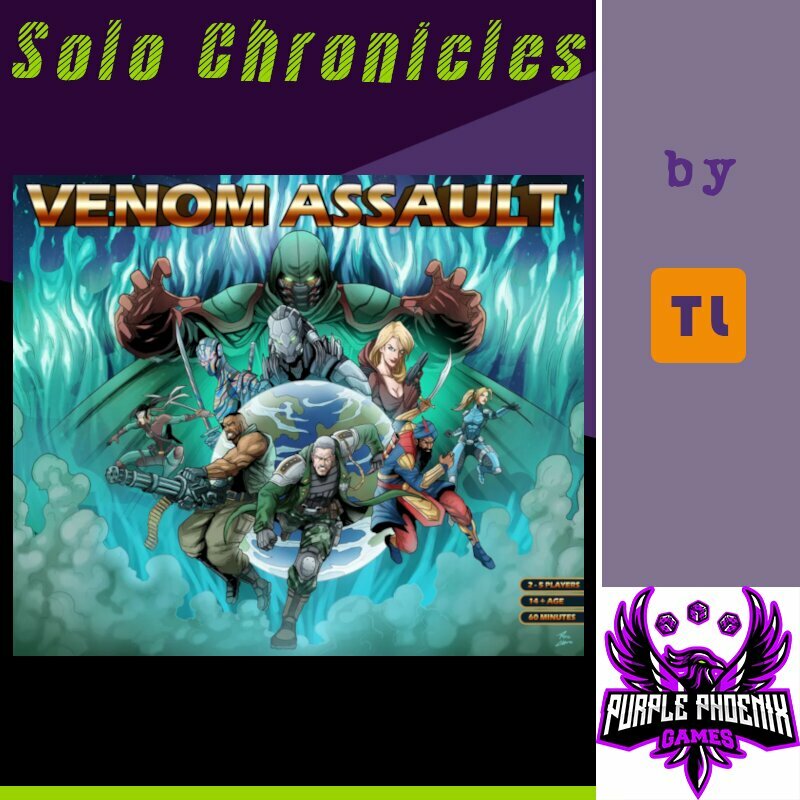
VENOM Assault is a deck-building game very similar in style to Legendary: A Marvel Deck-Building Game (which, if I have to reference again will just call Legendary). Players take control of a team of (relative) wimps in order to help recruit the real elites and battle the evildoers plus their henchmen. Sound familiar? For this review I will be playing the Solo rules, which are the same as the multiplayer rules, but for one player. Novel, eh?
DISCLAIMER: We were provided a copy of this game for the purposes of this review. This is a retail copy of the game, so what you see in these photos is exactly what would be received in your box. I do not intend to cover every single rule included in the rulebook, but will describe the overall game flow and major rule set so that our readers may get a sense of how the game plays. For more in depth rules, you may purchase a copy online or from your FLGS. -T
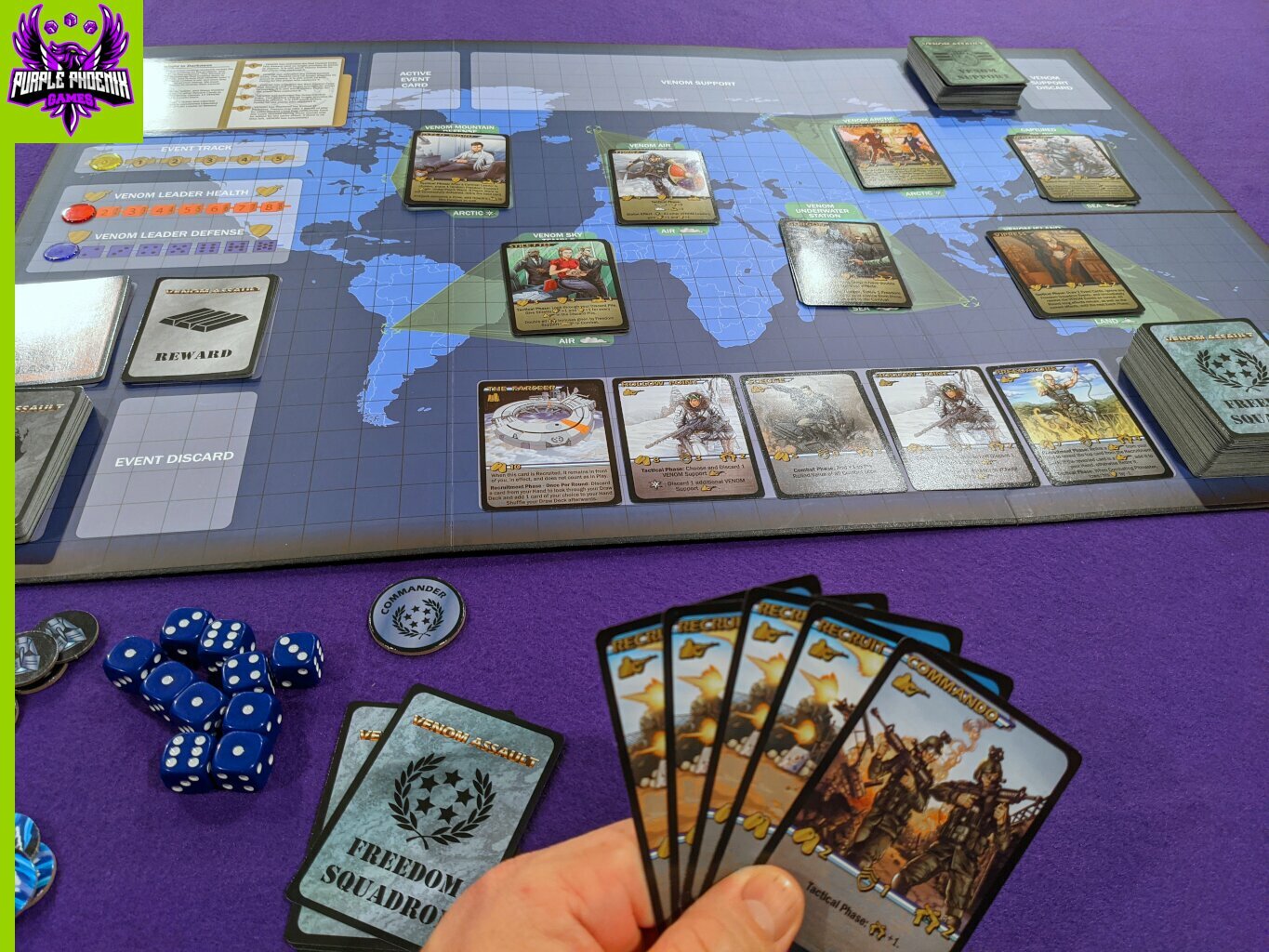
To setup a game, please follow the rulebook as there is way too much to cover here in complete detail. The setup should look similar to the following photo. Here is what you will see: a space for the Mission scenario in the upper left corner. To its right a space for the active Event card. Next to that is the area for the VENOM Support cards to be displayed. Then the VENOM Support deck and discard areas. Below the Mission area is the space to track threat level and the current VENOM Leader’s Health and Defense values. Beneath those trackers is an area for four decks: the VENOM Leader deck, Reward deck, Event deck, and Event discard. To the right of this area is the Training Ground (recruitment zone), the Recruitment deck, and the Retirement pile. In the middle of the board are seven spaces to be populated with Reward cards and VENOM Leaders on top of the Rewards. Each player is dealt six Recruits and four Commandos and will shuffle these to create their draw deck. The players then draw five cards to create their hand and the game may now begin! Go save the world!
I will not be covering every aspect of a turn but will highlight the goings on. The Commander (first player) will draw and read the Event for the round. Events can be helpful for the players, extremely hurtful by advancing the VENOM plot, or even uneventful altogether. Next, player(s) will enter the Recruitment Phase. During this phase players will be using their entire hand to total the recruitment points that can be spent on recruiting those elite soldier, vehicle, and location cards from the Training Ground right into their discard piles.
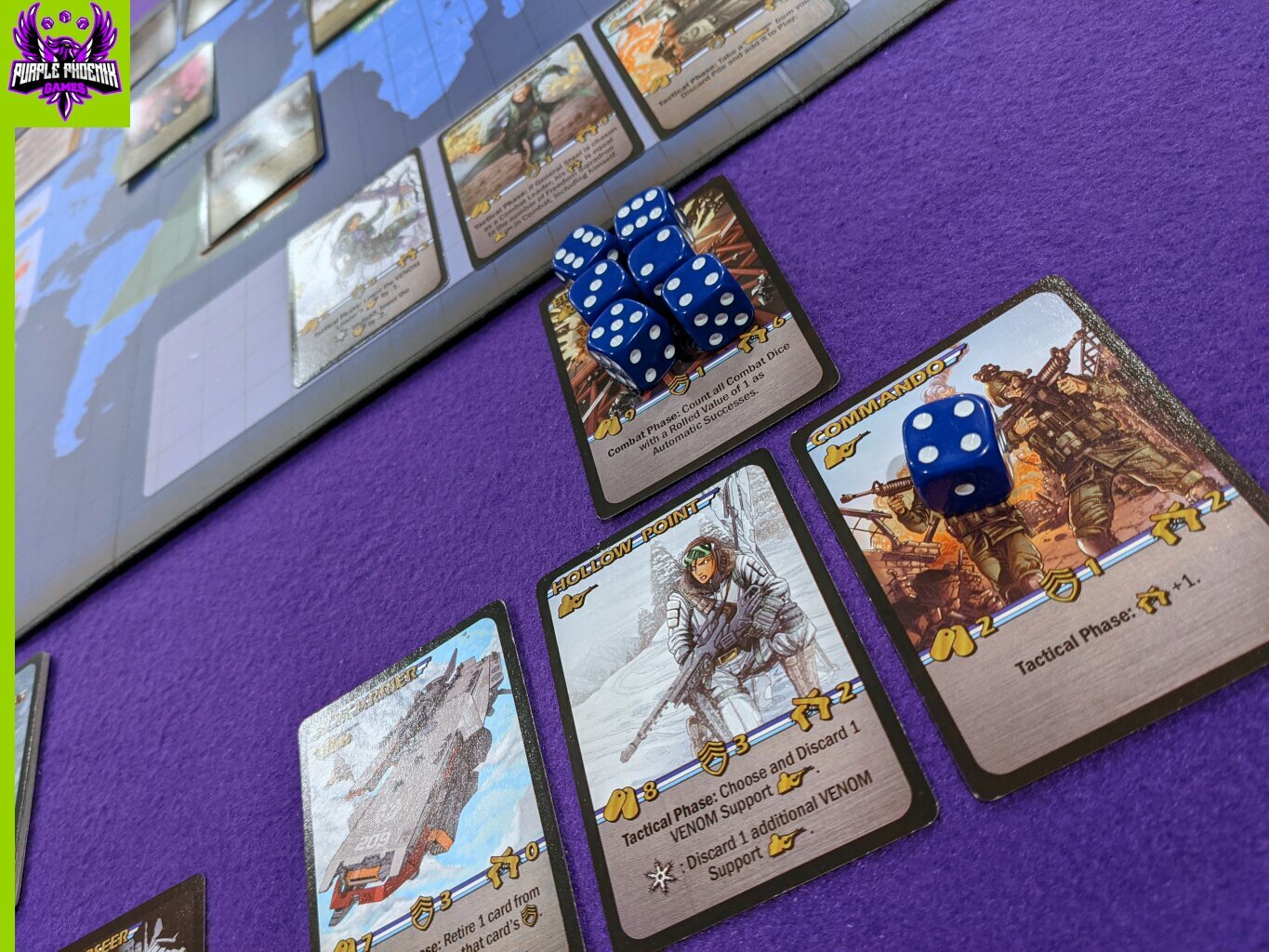
Once the Recruitment Phase is complete, the Tactical Phase begins, and this is a large part of the game that helps differentiate it from others of its like. The players will choose one of the seven revealed VENOM Leaders on the map to attack in combat (if they choose – this is optional). Using the stats on the VENOM Leader card the players will adjust the Health and Defense values on the trackers on the board. If the VENOM Leader has any abilities that would trigger during this phase, then they trigger now. These could include Global Abilities as well. Once the Leader is done with their abilities, the players will choose one of their cards played to become the Combat Leader. This character now may not use their printed ability but will use their Combat Value (crossed pistols) to place combat dice on their card. The other team members in the combat will add dice to the pool as well if their abilities direct them. Next, the VENOM Leader will call forth their VENOM Support armies to aid them in the combat round. Once displayed, any hero Tactical Phase abilities can be resolved. If VENOM Support armies still are active, their abilities may be resolved at this point.
As the Tactical Phase ends, the Combat Phase begins. The Combat Phase is where the players are able to roll their combat dice in the hopes of besting the VENOM Leader’s Health and Defense values. Defense values dictate the dice values that need to be hit or exceeded to equal a successful attack. The Health value is how many successes are needed to defeat the Leader. However, once rolled the VENOM Leader will trigger any Combat Phase abilities at this time. Once complete the hero team will be able to resolve their own Combat Phase abilities, if any. Finally, the VENOM Support will resolve their Combat Phase abilities. Now the dice may be completely resolved against the Leader, after all abilities have been resolved. If the Freedom Squadron (heroes) defeated the Leader, they take the Leader and Reward cards into their VP pile. Depending on the Mission, these Rewards may be necessary to win the game, and all will have VP values.
After a lengthy Tactical and Combat Phase, the players then enter the Retirement Phase. The players may retire a card from their hand, thus removing the card from the game entirely.
Once a card has been retired (or not), the End of Turn Phase will help clean up the mess of the current round. Any other End of Turn Phase abilities will trigger, and used cards will be discarded to the appropriate areas and refills of key points on the board and players’ hands will setup the next round of play.
Once the Mission card’s success or failure stipulations have been met the game is over and, with any luck, the Freedom Squadron has defeated VENOM once and for all!
Components. This game boasts a large game board, a metric ton of cards, some dice, and some cardboard tokens. All the components are of fine quality and I have no issues with them. The art style used in the game is pleasing and, thankfully, not over-the-top gory or bloody or anything.
You may have noticed or thought that perhaps this game is taking inspiration from a cartoon/toy line from the ’80s, and I would very much agree with you. Could it be called Legendary: G.I. Joe? Maybe, but this one stands on its own, though very similar to the Legendary system. What I do like about VENOM Assault is the fact that it already comes with a large amount of incredible cards to be recruited. I do not know if I will ever feel the need for extra heroes in this game, whereas with the Marvel Legendary one can really go overboard trying to collect all the mini expansions and big box expansions just to find their favorite Marvel entities. Since VENOM Assault isn’t tied to any specific IP and is more generic overall, each character provided is its own thing, not a specific hero that one has grown up loving their entire life.
You see, the problem with those mini expansions in Legendary, at least for me, is that each one brings with it a host of heroes AND a host of new keywords and rules that must be remembered or referenced until it becomes second nature. In VENOM Assault, the rules stay the same and play is altered by the Missions and which characters can be recruited. I like a more reliable and static ruleset when I’m playing an intense game. So point goes to VENOM Assault here too.
Now, I was never into G.I. Joe and I am not at all a war or guns kinda guy, but I am really attracted to this game. I don’t necessarily think of my heroes as going in and shooting the place up, but rather taking Navy Seals-style tactical maneuvers to eliminate the target. So the point is that if you were never into that IP before, you should not feel alienated by this one. It appeals to all, in my opinion.
I said previously in this review that VENOM Assault is knocking on the door of bumping Legendary from my Top 10 games. I continue thinking about it even when I am not playing, and that is a mark of an excellent game for me. If I never think of a game again after playing, there is no way it remains in my collection. This one, however, has me considering different strategies in my head even now as I’m typing.
If you are in the market for a great deck-builder with worldwide espionage at its heart, I urge you to grab a copy of VENOM Assault. If you like the Legendary system but are looking for something just a little different, check this one out. If you just enjoy owning games that are fun and make you think, but also include a bit of luck in the dice rolls, then you owe it to yourself to play this. I really think you’ll enjoy it, as I have. Okay, time to setup another game.
VENOM Assault is a deck-building game very similar in style to Legendary: A Marvel Deck-Building Game (which, if I have to reference again will just call Legendary). Players take control of a team of (relative) wimps in order to help recruit the real elites and battle the evildoers plus their henchmen. Sound familiar? For this review I will be playing the Solo rules, which are the same as the multiplayer rules, but for one player. Novel, eh?
DISCLAIMER: We were provided a copy of this game for the purposes of this review. This is a retail copy of the game, so what you see in these photos is exactly what would be received in your box. I do not intend to cover every single rule included in the rulebook, but will describe the overall game flow and major rule set so that our readers may get a sense of how the game plays. For more in depth rules, you may purchase a copy online or from your FLGS. -T
To setup a game, please follow the rulebook as there is way too much to cover here in complete detail. The setup should look similar to the following photo. Here is what you will see: a space for the Mission scenario in the upper left corner. To its right a space for the active Event card. Next to that is the area for the VENOM Support cards to be displayed. Then the VENOM Support deck and discard areas. Below the Mission area is the space to track threat level and the current VENOM Leader’s Health and Defense values. Beneath those trackers is an area for four decks: the VENOM Leader deck, Reward deck, Event deck, and Event discard. To the right of this area is the Training Ground (recruitment zone), the Recruitment deck, and the Retirement pile. In the middle of the board are seven spaces to be populated with Reward cards and VENOM Leaders on top of the Rewards. Each player is dealt six Recruits and four Commandos and will shuffle these to create their draw deck. The players then draw five cards to create their hand and the game may now begin! Go save the world!
I will not be covering every aspect of a turn but will highlight the goings on. The Commander (first player) will draw and read the Event for the round. Events can be helpful for the players, extremely hurtful by advancing the VENOM plot, or even uneventful altogether. Next, player(s) will enter the Recruitment Phase. During this phase players will be using their entire hand to total the recruitment points that can be spent on recruiting those elite soldier, vehicle, and location cards from the Training Ground right into their discard piles.
Once the Recruitment Phase is complete, the Tactical Phase begins, and this is a large part of the game that helps differentiate it from others of its like. The players will choose one of the seven revealed VENOM Leaders on the map to attack in combat (if they choose – this is optional). Using the stats on the VENOM Leader card the players will adjust the Health and Defense values on the trackers on the board. If the VENOM Leader has any abilities that would trigger during this phase, then they trigger now. These could include Global Abilities as well. Once the Leader is done with their abilities, the players will choose one of their cards played to become the Combat Leader. This character now may not use their printed ability but will use their Combat Value (crossed pistols) to place combat dice on their card. The other team members in the combat will add dice to the pool as well if their abilities direct them. Next, the VENOM Leader will call forth their VENOM Support armies to aid them in the combat round. Once displayed, any hero Tactical Phase abilities can be resolved. If VENOM Support armies still are active, their abilities may be resolved at this point.
As the Tactical Phase ends, the Combat Phase begins. The Combat Phase is where the players are able to roll their combat dice in the hopes of besting the VENOM Leader’s Health and Defense values. Defense values dictate the dice values that need to be hit or exceeded to equal a successful attack. The Health value is how many successes are needed to defeat the Leader. However, once rolled the VENOM Leader will trigger any Combat Phase abilities at this time. Once complete the hero team will be able to resolve their own Combat Phase abilities, if any. Finally, the VENOM Support will resolve their Combat Phase abilities. Now the dice may be completely resolved against the Leader, after all abilities have been resolved. If the Freedom Squadron (heroes) defeated the Leader, they take the Leader and Reward cards into their VP pile. Depending on the Mission, these Rewards may be necessary to win the game, and all will have VP values.
After a lengthy Tactical and Combat Phase, the players then enter the Retirement Phase. The players may retire a card from their hand, thus removing the card from the game entirely.
Once a card has been retired (or not), the End of Turn Phase will help clean up the mess of the current round. Any other End of Turn Phase abilities will trigger, and used cards will be discarded to the appropriate areas and refills of key points on the board and players’ hands will setup the next round of play.
Once the Mission card’s success or failure stipulations have been met the game is over and, with any luck, the Freedom Squadron has defeated VENOM once and for all!
Components. This game boasts a large game board, a metric ton of cards, some dice, and some cardboard tokens. All the components are of fine quality and I have no issues with them. The art style used in the game is pleasing and, thankfully, not over-the-top gory or bloody or anything.
You may have noticed or thought that perhaps this game is taking inspiration from a cartoon/toy line from the ’80s, and I would very much agree with you. Could it be called Legendary: G.I. Joe? Maybe, but this one stands on its own, though very similar to the Legendary system. What I do like about VENOM Assault is the fact that it already comes with a large amount of incredible cards to be recruited. I do not know if I will ever feel the need for extra heroes in this game, whereas with the Marvel Legendary one can really go overboard trying to collect all the mini expansions and big box expansions just to find their favorite Marvel entities. Since VENOM Assault isn’t tied to any specific IP and is more generic overall, each character provided is its own thing, not a specific hero that one has grown up loving their entire life.
You see, the problem with those mini expansions in Legendary, at least for me, is that each one brings with it a host of heroes AND a host of new keywords and rules that must be remembered or referenced until it becomes second nature. In VENOM Assault, the rules stay the same and play is altered by the Missions and which characters can be recruited. I like a more reliable and static ruleset when I’m playing an intense game. So point goes to VENOM Assault here too.
Now, I was never into G.I. Joe and I am not at all a war or guns kinda guy, but I am really attracted to this game. I don’t necessarily think of my heroes as going in and shooting the place up, but rather taking Navy Seals-style tactical maneuvers to eliminate the target. So the point is that if you were never into that IP before, you should not feel alienated by this one. It appeals to all, in my opinion.
I said previously in this review that VENOM Assault is knocking on the door of bumping Legendary from my Top 10 games. I continue thinking about it even when I am not playing, and that is a mark of an excellent game for me. If I never think of a game again after playing, there is no way it remains in my collection. This one, however, has me considering different strategies in my head even now as I’m typing.
If you are in the market for a great deck-builder with worldwide espionage at its heart, I urge you to grab a copy of VENOM Assault. If you like the Legendary system but are looking for something just a little different, check this one out. If you just enjoy owning games that are fun and make you think, but also include a bit of luck in the dice rolls, then you owe it to yourself to play this. I really think you’ll enjoy it, as I have. Okay, time to setup another game.


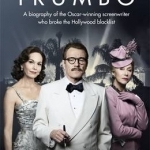

Film tie-in
I received this book for free through Goodreads First Reads.
Nominated for an Oscar, BAFTA and Golden Globe,Trumbo is a recent film based on the original biography Dalton Trumbo written by Bruce Cook in 1977. Its adaptation to film provided the perfect opportunity to republish this extremely well researched book. With a forward written by John McNamara, the screenwriter of the motion picture, the story of Dalton Trumbo’s life is just as intriguing as it was almost forty years ago. But who is Trumbo?
If, like me, you have never heard of Trumbo or even the infamous “Hollywood Ten,” it may take a while for it to become clear as to why it was worth Cook’s time to produce a book about the man. Dalton Trumbo was a well-known screenwriter of films such as Papillon, Lonely Are The Brave and Roman Holiday as well as author of the novel Johnny Got His Gun. However these are not all he is famous for. During his life, Trumbo became a member of the Communist Party, which Hollywood branded as an Un-American Activity and thus blacklisted him, as well as other screenwriters, directors and actors. Ten of these men, Trumbo included, were imprisoned for their political beliefs – yet nothing prevented Trumbo from continuing his fairly successful career.
Interestingly, Cook begins the book with the final stages of Trumbo’s life. At time of writing Trumbo was still alive, although rather poorly. After contracting lung cancer, having a lung removed, and suffering a heart attack, Trumbo was a very sick man; nonetheless he was still enthusiastic about being interviewed and telling his personal story.
From his childhood, to his evening shifts at a bakery, Cook details Trumbo’s early life, emphasizing the hard upbringing he had before he found himself in the world of Hollywood. Although roughly 75% of the book focuses on Trumbo’s career, Cook highlights Trumbo as a family man, with both a wife and three children who he absolutely adores.
Cook constantly refers to the Hollywood Ten as a concept that the reader should already be familiar with. Granted, someone who picks up this book is more likely to do so having a prior interest in the central figure, and thus already know about his background; however those ignorant on the topic eventually gather a better understanding on the topic once reaching the relevant chapters. It also becomes clearer why Trumbo is worth reading/writing about – he may have been blacklisted, but he managed to break through all the barriers and reinstate his name and many others.
Reading this half a century after the event, it seems strange that Trumbo was imprisoned. He had not done anything intrinsically wrong, it was purely prejudice against his political beliefs that got him into the mess he found himself. But when you consider the events of the time: World War Two, the Cold War, the Korean War, and Vietnam; it is understandable why many feared those who claimed to be Communists.
Cook’s narrative does not flow as a story, and much of it is broken up with quotes from various people he interviewed. The timeline jumps about between past and present (1970s), which occasionally gets a bit confusing. A large part of the book is spent analyzing many of Trumbo’s works – both for screen and written formats – which, unless you have a particular interest, can be a little tedious.
It has got to be said that Bruce Cook was an exemplary writer with a great eye for detail. He did not jump to conclusions or only talk about things from his point of view. Instead he interviewed, what seems like, everyone who ever met Trumbo, and based his writing on fact backed up with numerous quotes and citations.
This edition of Trumbo contains a selection of photographs taken on the set of the movie. Disappointingly it does not contain any of Trumbo himself – you would think that some photos could have been tracked down!
Trumbo is not a book that will interest everyone. Most people today – particularly in England – will probably be unaware of who Dalton Trumbo was, and thus would only seek out this publication due to a fascination with film production. I have not seen the film, but after reading this and discovering how books go from novels, to screenplays to moving image, it would be interesting to find out which parts of Trumbo’s life made it onto the big screen.
Nominated for an Oscar, BAFTA and Golden Globe,Trumbo is a recent film based on the original biography Dalton Trumbo written by Bruce Cook in 1977. Its adaptation to film provided the perfect opportunity to republish this extremely well researched book. With a forward written by John McNamara, the screenwriter of the motion picture, the story of Dalton Trumbo’s life is just as intriguing as it was almost forty years ago. But who is Trumbo?
If, like me, you have never heard of Trumbo or even the infamous “Hollywood Ten,” it may take a while for it to become clear as to why it was worth Cook’s time to produce a book about the man. Dalton Trumbo was a well-known screenwriter of films such as Papillon, Lonely Are The Brave and Roman Holiday as well as author of the novel Johnny Got His Gun. However these are not all he is famous for. During his life, Trumbo became a member of the Communist Party, which Hollywood branded as an Un-American Activity and thus blacklisted him, as well as other screenwriters, directors and actors. Ten of these men, Trumbo included, were imprisoned for their political beliefs – yet nothing prevented Trumbo from continuing his fairly successful career.
Interestingly, Cook begins the book with the final stages of Trumbo’s life. At time of writing Trumbo was still alive, although rather poorly. After contracting lung cancer, having a lung removed, and suffering a heart attack, Trumbo was a very sick man; nonetheless he was still enthusiastic about being interviewed and telling his personal story.
From his childhood, to his evening shifts at a bakery, Cook details Trumbo’s early life, emphasizing the hard upbringing he had before he found himself in the world of Hollywood. Although roughly 75% of the book focuses on Trumbo’s career, Cook highlights Trumbo as a family man, with both a wife and three children who he absolutely adores.
Cook constantly refers to the Hollywood Ten as a concept that the reader should already be familiar with. Granted, someone who picks up this book is more likely to do so having a prior interest in the central figure, and thus already know about his background; however those ignorant on the topic eventually gather a better understanding on the topic once reaching the relevant chapters. It also becomes clearer why Trumbo is worth reading/writing about – he may have been blacklisted, but he managed to break through all the barriers and reinstate his name and many others.
Reading this half a century after the event, it seems strange that Trumbo was imprisoned. He had not done anything intrinsically wrong, it was purely prejudice against his political beliefs that got him into the mess he found himself. But when you consider the events of the time: World War Two, the Cold War, the Korean War, and Vietnam; it is understandable why many feared those who claimed to be Communists.
Cook’s narrative does not flow as a story, and much of it is broken up with quotes from various people he interviewed. The timeline jumps about between past and present (1970s), which occasionally gets a bit confusing. A large part of the book is spent analyzing many of Trumbo’s works – both for screen and written formats – which, unless you have a particular interest, can be a little tedious.
It has got to be said that Bruce Cook was an exemplary writer with a great eye for detail. He did not jump to conclusions or only talk about things from his point of view. Instead he interviewed, what seems like, everyone who ever met Trumbo, and based his writing on fact backed up with numerous quotes and citations.
This edition of Trumbo contains a selection of photographs taken on the set of the movie. Disappointingly it does not contain any of Trumbo himself – you would think that some photos could have been tracked down!
Trumbo is not a book that will interest everyone. Most people today – particularly in England – will probably be unaware of who Dalton Trumbo was, and thus would only seek out this publication due to a fascination with film production. I have not seen the film, but after reading this and discovering how books go from novels, to screenplays to moving image, it would be interesting to find out which parts of Trumbo’s life made it onto the big screen.

Bob Mann (459 KP) rated Avengers: Endgame (2019) in Movies
Sep 28, 2021

The final curtain.
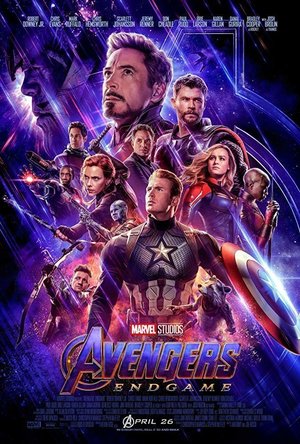
So… thanks again to work and family commitments, I’ve spent 7 days dodging social media to arrive at my showing of “Endgame” spoiler free… and was successful in doing so! It is of course impossible to write just about anything on this film without dropping spoilers. So I will keep this first part of the review short, but add some footnotes (indexed with <#> symbols) to a “spoiler section” below the trailer video. Proceed at your peril if you haven’t yet seen it!
The Plot
The MCU has delivered an impressively well-connected movie series. In the case of Thanos, this is a story-arc that started in the mid-credit “monkey” at the end of 2012’s “The Avengers” and, at the conclusion of “Avengers: Infinity War”, saw half the universe’s population drift away – Voldemort-style – into grey ash. This, of course, also wiped out half of our heroes (good trivia question for future years: who was the first we saw drift away? Answer below* ). This included Spider-Man (Tom Holland); Dr Strange (Benedict Cumberbatch); Black Panther (Chadwick Boseman); Nick Fury (Samuel L. Jackson); half of the remaining Guardians; The Wasp (Evangeline Lilly) and Dr Pym (Michael Douglas). Oblivious to all of this is Ant Man (Paul Rudd), still stranded in the ‘quantum realm’ following the demise of his colleagues, and with no one to flick the ‘return’ switch.
After some early action, Endgame’s story revolves around a desperate attempt by the remaining Avengers, led by Black Widow (Scarlett Johansson) and a ‘retired’ Tony Stark (Robert Downey Jnr) to undo the undoable. Can they succeed against all the odds? (With a new Spider-Man film due out in the summer, I’ll give you a guess!). Of more relevance perhaps is whether the team can stay unscathed from their encounter with the scheming and massively powerful Thanos (Josh Brolin)?
Thoughtful
The film will not be to every fan’s taste. After the virtually non-stop rip-roaring action of “Infinity War”, “Endgame” takes a far more contemplative approach to its first hour.
The film starts with a devastating prologue, and a great lesson in statistics: that you need a decent sized population to guarantee getting a 50:50 split! There is also a very surprising twist in the first 15 minutes or so that I didn’t see coming AT ALL.
But then things settle down into a far more sombre section of the film: short on action; long on character development. The world is grieving for its loss, unable to move on past the non-stop counselling sessions that everyone is getting. This first hour was, for me, by far, my favourite part of the film. Seeing how the characters we know and love have been impacted – some for better rather than for worse – was terrific. Mark Ruffalo’s Hulk (with a rather glib plot-point) takes on an hilarious new aspect; and Chris Hemsworth adds hugely comedic value as Thor, setting up in Scotland a “New Asgard” settlement in uncharacteristically laid-back fashion.
Cast
As an ensemble cast, everyone plays their parts extremely well. But it is just the breadth of the cast that astounds in this film: just about everyone who is anyone in the Marvel Universe – at least, those who are still alive (alive!) and not dead (dead!) – pop up for an appearance! This is great fun with, in one particular case, the opportunity to try some more rejuvenation of an old timer as previously done with Samuel L. Jackson in “Captain Marvel”.
Inevitably, some of these appearances are overly brief, and characters that I wanted to see developed more in this film (particularly Brie Larson’s Captain Marvel) get very little screen time. Drax (Dave Bautista) and Mantis (Pom Klementieff) barely get a single line each. So it will depend on where your loyalties lie as to whether you are satisfied with the coverage or not. (I personally find Chris Evans‘ Captain America a bit of a po-faced bore, so I wasn’t keen on the amount of screen time he had).
Stan Lee again gets another cameo in the bag before his demise: will this actually be his last live one?
Overall view
I enjoyed this movie. It could obviously NEVER live up to the over-hyped expectations of the fan base. But as a cinematic spectacle, for me, it delivered on its billing as a blockbuster finale, but one filled with a degree of nuance I was not expecting. The problem with the way that the plot have been structured (no spoilers – <#>) is that it is easy to pick holes in the storyline. Indeed, some dramatic options (that to me seemed obvious ones to ‘mine’) were left ‘unmined’ <##>; others were left inexplicably hanging <###>.
I suspect the reason for some of this is that the initial cut of this film probably ran to 5 hours rather than the – still bladder-testing – 3 hours as released. There were probably a bunch of scenes left on the cutting room floor that might allow things to make more sense in the extended BluRay release.
It’s at times slow, but for me never dull. It does suffer from one significant flaw though: the “Return of the King” disease. It doesn’t know when to quit. There was a natural MCU arc to follow and a perfect time at which to end it: but the directors (the Russo Brothers, Anthony Russo and Joe Russo) kept adding additional scenes that detracted from the natural ending <####>.
Above all, unlike I think all but one film in MCU history, there is NO “MONKEY” in the end credits: either mid-credit or end-credit! So, after the long title crawl (and some rather odd choices for end-title music by Alan Silvestri), if you are not to look bloody stupid as the lights come up, and face a storm of derision from your partner, then leave after the dramatic roll-call sequence of the film’s stars!
(*BTW, the answer to the trivia question is, I believe, Bucky.)
So… thanks again to work and family commitments, I’ve spent 7 days dodging social media to arrive at my showing of “Endgame” spoiler free… and was successful in doing so! It is of course impossible to write just about anything on this film without dropping spoilers. So I will keep this first part of the review short, but add some footnotes (indexed with <#> symbols) to a “spoiler section” below the trailer video. Proceed at your peril if you haven’t yet seen it!
The Plot
The MCU has delivered an impressively well-connected movie series. In the case of Thanos, this is a story-arc that started in the mid-credit “monkey” at the end of 2012’s “The Avengers” and, at the conclusion of “Avengers: Infinity War”, saw half the universe’s population drift away – Voldemort-style – into grey ash. This, of course, also wiped out half of our heroes (good trivia question for future years: who was the first we saw drift away? Answer below* ). This included Spider-Man (Tom Holland); Dr Strange (Benedict Cumberbatch); Black Panther (Chadwick Boseman); Nick Fury (Samuel L. Jackson); half of the remaining Guardians; The Wasp (Evangeline Lilly) and Dr Pym (Michael Douglas). Oblivious to all of this is Ant Man (Paul Rudd), still stranded in the ‘quantum realm’ following the demise of his colleagues, and with no one to flick the ‘return’ switch.
After some early action, Endgame’s story revolves around a desperate attempt by the remaining Avengers, led by Black Widow (Scarlett Johansson) and a ‘retired’ Tony Stark (Robert Downey Jnr) to undo the undoable. Can they succeed against all the odds? (With a new Spider-Man film due out in the summer, I’ll give you a guess!). Of more relevance perhaps is whether the team can stay unscathed from their encounter with the scheming and massively powerful Thanos (Josh Brolin)?
Thoughtful
The film will not be to every fan’s taste. After the virtually non-stop rip-roaring action of “Infinity War”, “Endgame” takes a far more contemplative approach to its first hour.
The film starts with a devastating prologue, and a great lesson in statistics: that you need a decent sized population to guarantee getting a 50:50 split! There is also a very surprising twist in the first 15 minutes or so that I didn’t see coming AT ALL.
But then things settle down into a far more sombre section of the film: short on action; long on character development. The world is grieving for its loss, unable to move on past the non-stop counselling sessions that everyone is getting. This first hour was, for me, by far, my favourite part of the film. Seeing how the characters we know and love have been impacted – some for better rather than for worse – was terrific. Mark Ruffalo’s Hulk (with a rather glib plot-point) takes on an hilarious new aspect; and Chris Hemsworth adds hugely comedic value as Thor, setting up in Scotland a “New Asgard” settlement in uncharacteristically laid-back fashion.
Cast
As an ensemble cast, everyone plays their parts extremely well. But it is just the breadth of the cast that astounds in this film: just about everyone who is anyone in the Marvel Universe – at least, those who are still alive (alive!) and not dead (dead!) – pop up for an appearance! This is great fun with, in one particular case, the opportunity to try some more rejuvenation of an old timer as previously done with Samuel L. Jackson in “Captain Marvel”.
Inevitably, some of these appearances are overly brief, and characters that I wanted to see developed more in this film (particularly Brie Larson’s Captain Marvel) get very little screen time. Drax (Dave Bautista) and Mantis (Pom Klementieff) barely get a single line each. So it will depend on where your loyalties lie as to whether you are satisfied with the coverage or not. (I personally find Chris Evans‘ Captain America a bit of a po-faced bore, so I wasn’t keen on the amount of screen time he had).
Stan Lee again gets another cameo in the bag before his demise: will this actually be his last live one?
Overall view
I enjoyed this movie. It could obviously NEVER live up to the over-hyped expectations of the fan base. But as a cinematic spectacle, for me, it delivered on its billing as a blockbuster finale, but one filled with a degree of nuance I was not expecting. The problem with the way that the plot have been structured (no spoilers – <#>) is that it is easy to pick holes in the storyline. Indeed, some dramatic options (that to me seemed obvious ones to ‘mine’) were left ‘unmined’ <##>; others were left inexplicably hanging <###>.
I suspect the reason for some of this is that the initial cut of this film probably ran to 5 hours rather than the – still bladder-testing – 3 hours as released. There were probably a bunch of scenes left on the cutting room floor that might allow things to make more sense in the extended BluRay release.
It’s at times slow, but for me never dull. It does suffer from one significant flaw though: the “Return of the King” disease. It doesn’t know when to quit. There was a natural MCU arc to follow and a perfect time at which to end it: but the directors (the Russo Brothers, Anthony Russo and Joe Russo) kept adding additional scenes that detracted from the natural ending <####>.
Above all, unlike I think all but one film in MCU history, there is NO “MONKEY” in the end credits: either mid-credit or end-credit! So, after the long title crawl (and some rather odd choices for end-title music by Alan Silvestri), if you are not to look bloody stupid as the lights come up, and face a storm of derision from your partner, then leave after the dramatic roll-call sequence of the film’s stars!
(*BTW, the answer to the trivia question is, I believe, Bucky.)

Darren (1599 KP) rated I Am Wrath (2016) in Movies
Jul 25, 2019


Story: I Am Wrath starts as we learn the war on crime was getting out of hand, but the Governor has started winning against the gangs. Stanley (Travolta) returns home after a business trip meeting his wife Vivian (De Mornay) where the two are attack with Vivian murdered.
With the police not getting the suspects, Stanley turns to a previous life working his former partner Dennis (Meloni) as a black-ops soldier that will stop at nothing to extract revenge on the people who murdered his wife.
Thoughts on I Am Wrath
Characters – Stanley is a mile-mannered businessman working in the car industry. When is wife is murdered in a senseless crime, he returns to a former life on a warpath with the gang involved as the cold-hearted killer. Dennis is the former partner of Stanley’s that still has the connections in the underworld, he helps Stanley in his revenge mission, he supplies the weapons and details of who were responsible. Abbie is the daughter of Stanley that tries to be there for her father while continue on her adult life. Detective Gibson is the lead on the case, he is forced to let the suspect go believing he will get himself killed soon enough.
Performances – John Travolta is solid enough in this leading role, we do get to see a large number of 50+ year old actors going into this action films, he isn’t the best, but he isn’t the worst. Christopher Meloni plays the best character in the film and is easily the one you want to see more of in this film. Amanda Schull is fine in her role, we need a figure that isn’t involved in the action and she offers it. The rest of the cast bring us the targets for the most part and give us generic bad guy performances.
Story – The story follows one man that goes to war on the gangs of his city to learn who killed his wife and get revenge. When it comes to the story this isn’t the most original, it is extremely watchable for a time killing hour and half, it doesn’t test the audience and doesn’t have any twists along the way. This is one of those stories that is mostly forgettable over bad and checks all the boxes needed to make the audience watch.
Action/Crime – The action is filled with old man action style that Liam Neeson made famous, it works for the film with Meloni getting the best sequence. The crime throws us into the world where gangs are controlling the streets with drug sales going through the roof and one man doing anything to get revenge.
Settings – The film takes us to a city overrun by crime and shows us how people can be forced into actions to get revenge for the lost loved one.
Scene of the Movie – Dennis versus the thugs in the shop.
That Moment That Annoyed Me – We have seen this before.
Final Thoughts – This is a basic action film that will keep you entertained through the whole film without being anything overly original.
Overall: Easy to watch action film.
With the police not getting the suspects, Stanley turns to a previous life working his former partner Dennis (Meloni) as a black-ops soldier that will stop at nothing to extract revenge on the people who murdered his wife.
Thoughts on I Am Wrath
Characters – Stanley is a mile-mannered businessman working in the car industry. When is wife is murdered in a senseless crime, he returns to a former life on a warpath with the gang involved as the cold-hearted killer. Dennis is the former partner of Stanley’s that still has the connections in the underworld, he helps Stanley in his revenge mission, he supplies the weapons and details of who were responsible. Abbie is the daughter of Stanley that tries to be there for her father while continue on her adult life. Detective Gibson is the lead on the case, he is forced to let the suspect go believing he will get himself killed soon enough.
Performances – John Travolta is solid enough in this leading role, we do get to see a large number of 50+ year old actors going into this action films, he isn’t the best, but he isn’t the worst. Christopher Meloni plays the best character in the film and is easily the one you want to see more of in this film. Amanda Schull is fine in her role, we need a figure that isn’t involved in the action and she offers it. The rest of the cast bring us the targets for the most part and give us generic bad guy performances.
Story – The story follows one man that goes to war on the gangs of his city to learn who killed his wife and get revenge. When it comes to the story this isn’t the most original, it is extremely watchable for a time killing hour and half, it doesn’t test the audience and doesn’t have any twists along the way. This is one of those stories that is mostly forgettable over bad and checks all the boxes needed to make the audience watch.
Action/Crime – The action is filled with old man action style that Liam Neeson made famous, it works for the film with Meloni getting the best sequence. The crime throws us into the world where gangs are controlling the streets with drug sales going through the roof and one man doing anything to get revenge.
Settings – The film takes us to a city overrun by crime and shows us how people can be forced into actions to get revenge for the lost loved one.
Scene of the Movie – Dennis versus the thugs in the shop.
That Moment That Annoyed Me – We have seen this before.
Final Thoughts – This is a basic action film that will keep you entertained through the whole film without being anything overly original.
Overall: Easy to watch action film.

Beckie Shelton (40 KP) rated Beast: The Beginning (Hate Story, #1) in Books
Feb 8, 2018
Reviewed By Beckie Bookworm
https://www.beckiebookworm.com/
<a href="http://s1376.photobucket.com/user/rosella1974/media/BookReview_zpsdq9da8x6.jpg.html"; target="_blank"><img src="http://i1376.photobucket.com/albums/ah5/rosella1974/BookReview_zpsdq9da8x6.jpg~original"; border="0" alt=" photo BookReview_zpsdq9da8x6.jpg"/></a>
🌟🌟🌟🌟Stars
I loved Beast: The Beginning (Hate Story, #1). From the minute I started reading This I was lost in another world, one of blood, hate and organised crime.
Where being bad was good and innocence is soon corrupted and lost forever.
So beast is about Frankie Notte and Anteros Drago a boss in the Pavoni family.
Frankie trades herself for her Papas life accompanying the beast to a fate unknown.
The Beast himself has every intention of selling Frankie to the Institute to be sold to the highest bidder.
But sometimes the best-laid plans can go awry, as is what happens here, leaving the beast with a slave that he's not quite sure what to do with.
Now, this was described as a dark read, and there is plenty of evidence of that darkness scattered throughout Beast, but behind closed doors, the Beast becomes increasingly fascinated with his new toy and there is at times a surprising gentleness to some of his interactions with Frankie.
He continues to try and keep up a front in front of his wolves as they start to lose confidence in their leader, questioning his actions towards an inconsequential Slave.
There is also a lot of secrets and intrigue running beneath the surface and rumours running amok concerning the Pavoni Princess, even Beast himself starts to listen and doubt what is real.
So dissecting our two main honchos here.
Anteros Drago/ Beast first, he's Ruthless, cruel, seemingly without mercy, he wants to break Frankie reducing her to nothing, he even initially tells her she is nothing.
His Black-heart is dark to the core, he lives for the job having spent years planning, with his wolves there rise to the top of the family from mere foot soldiers.
He appears to have no weaknesses. that is until Frankie slowly starts to thaw his ice-cold heart, not that you would major notice this as he's still a complete bastard to Frankie subjecting her to awful situations to teach her her place and generally playing mind games, belittling her at every turn while fighting his growing affections and deceiving himself regarding his feelings towards her.
Now Frankie herself, she is multi-faceted in regards to what she portrays outwardly.
Shes, not a worldly girl having been ill much of her teenage years, but From day one despite her apprehension, Frankie refuses to back down, sometimes even stupidly goading Beast, She grows so much in character throughout this story, seeming to get stronger with each new trial experienced, she also tries daily to fight her strange attraction towards the Beast that she swears she hates.
When we get the final satisfying reveal, setting us up for book two all players have been moved around into their new places almost like a chess match.
Or maybe even a new blood war.
You can see straight off that the next instalment is going to be very different in regards to changing tides.
So Really well done to the author I can't wait to get stuck into Beauty: The End (Hate Story, #2).
This may have been my first Mary Catherine Gebhard book, but definitely won't be my last.
It's been quite a while since I indulged myself in a good Dark romance and though this was not as dark as some I have read I found this a great addition to its genre.
So Give this a go if you like a good anti-hero romance, happy reading.
<a href="http://s1376.photobucket.com/user/rosella1974/media/images%205_zpskbahd7a0.jpg.html"; target="_blank"><img src="http://i1376.photobucket.com/albums/ah5/rosella1974/images%205_zpskbahd7a0.jpg~original"; border="0" alt=" photo images 5_zpskbahd7a0.jpg"/></a>
Reviewed By Beckie Bookworm
https://www.beckiebookworm.com/
https://www.facebook.com/beckiebookworm/ (less)
https://www.beckiebookworm.com/
<a href="http://s1376.photobucket.com/user/rosella1974/media/BookReview_zpsdq9da8x6.jpg.html"; target="_blank"><img src="http://i1376.photobucket.com/albums/ah5/rosella1974/BookReview_zpsdq9da8x6.jpg~original"; border="0" alt=" photo BookReview_zpsdq9da8x6.jpg"/></a>
🌟🌟🌟🌟Stars
I loved Beast: The Beginning (Hate Story, #1). From the minute I started reading This I was lost in another world, one of blood, hate and organised crime.
Where being bad was good and innocence is soon corrupted and lost forever.
So beast is about Frankie Notte and Anteros Drago a boss in the Pavoni family.
Frankie trades herself for her Papas life accompanying the beast to a fate unknown.
The Beast himself has every intention of selling Frankie to the Institute to be sold to the highest bidder.
But sometimes the best-laid plans can go awry, as is what happens here, leaving the beast with a slave that he's not quite sure what to do with.
Now, this was described as a dark read, and there is plenty of evidence of that darkness scattered throughout Beast, but behind closed doors, the Beast becomes increasingly fascinated with his new toy and there is at times a surprising gentleness to some of his interactions with Frankie.
He continues to try and keep up a front in front of his wolves as they start to lose confidence in their leader, questioning his actions towards an inconsequential Slave.
There is also a lot of secrets and intrigue running beneath the surface and rumours running amok concerning the Pavoni Princess, even Beast himself starts to listen and doubt what is real.
So dissecting our two main honchos here.
Anteros Drago/ Beast first, he's Ruthless, cruel, seemingly without mercy, he wants to break Frankie reducing her to nothing, he even initially tells her she is nothing.
His Black-heart is dark to the core, he lives for the job having spent years planning, with his wolves there rise to the top of the family from mere foot soldiers.
He appears to have no weaknesses. that is until Frankie slowly starts to thaw his ice-cold heart, not that you would major notice this as he's still a complete bastard to Frankie subjecting her to awful situations to teach her her place and generally playing mind games, belittling her at every turn while fighting his growing affections and deceiving himself regarding his feelings towards her.
Now Frankie herself, she is multi-faceted in regards to what she portrays outwardly.
Shes, not a worldly girl having been ill much of her teenage years, but From day one despite her apprehension, Frankie refuses to back down, sometimes even stupidly goading Beast, She grows so much in character throughout this story, seeming to get stronger with each new trial experienced, she also tries daily to fight her strange attraction towards the Beast that she swears she hates.
When we get the final satisfying reveal, setting us up for book two all players have been moved around into their new places almost like a chess match.
Or maybe even a new blood war.
You can see straight off that the next instalment is going to be very different in regards to changing tides.
So Really well done to the author I can't wait to get stuck into Beauty: The End (Hate Story, #2).
This may have been my first Mary Catherine Gebhard book, but definitely won't be my last.
It's been quite a while since I indulged myself in a good Dark romance and though this was not as dark as some I have read I found this a great addition to its genre.
So Give this a go if you like a good anti-hero romance, happy reading.
<a href="http://s1376.photobucket.com/user/rosella1974/media/images%205_zpskbahd7a0.jpg.html"; target="_blank"><img src="http://i1376.photobucket.com/albums/ah5/rosella1974/images%205_zpskbahd7a0.jpg~original"; border="0" alt=" photo images 5_zpskbahd7a0.jpg"/></a>
Reviewed By Beckie Bookworm
https://www.beckiebookworm.com/
https://www.facebook.com/beckiebookworm/ (less)
Bob Mann (459 KP) rated Mamma Mia: Here We Go Again! (2018) in Movies
Sep 29, 2021

I had a dream. A sob. A sing.
You remember in “Aliens” when Ripley (Sigourney Weaver) fought through hell and high water against that “bitch” to protect the youngster Newt (Carrie Henn)? And then how betrayed you felt in that emotional investment at the start of “Alien 3”?
Which brings us spoiler-free to the start of “Mamma Mia! Here We Go Again”, typically shortened by everyone to “Mamma Mia 2”, the sequel to the enormously successful cheese-fest (and Bros-fest) that was the first film, now – unbelievably – 10 years old.
Sophie (Amanda Seyfried) is trying to open the Bella Donna hotel on that magical Greek island separated from her husband Sky (Dominic Cooper) who is learning the tips of the hotel trade in New York. As preparations for the opening party progress we flash back to the back-story of Donna (as a post-graduate played by Lily James) as she meets Harry (Hugh Skinner, “The Windsors”, “W1A”), Bill (Josh Dylan, “Allied”) and Sam (Jeremy Irvine, “War Horse”) en route to Greece.
If you remember the first film and thought Donna (Meryl Streep) was a bit of a… erm… ‘loose woman’, then this plot point could have been amplified by seeing the “dot, dot, dot” acts in the flesh, as it were. Fortunately, in steps Lily James as the young Donna who is so mesmerisingly gorgeous and vivacious that you can forgive her just about anything. “Beguiling” was the description my better half came up with, and I couldn’t describe her better. Supporting her effectively are Alexa Davies (as the young version of Julie Walters‘ character) and Jessica Keenan Wynn (as the young version of Christine Baranski‘s character). The trio’s exuberant performance of “When I Kissed the Teacher” sets the tone well for the grin-fest to follow. (By the way, if you are a Mary Poppins fan then a bit of trivia is that Wynn is the great-granddaughter of Ed Wynn, the character who “Loved to Laugh” on the ceiling!).
In these days of drought, Trump vs the world, Brexit and universal bruhaha, this is a much-needed joyful film, and far better I would say than the original. A good story, well executed and stuffed with excellent tunes. True, apart from a number of key repeats, we are more in the territory – in CD terms – of “More Abba Gold” than “Abba Gold”, but Bjorn and Benny’s B-sides are still better than many other’s A-sides. What’s really nice is that the songs are well chosen to mesh better into the story and the lead singing of Seyfried and James is uniformly excellent. Pierce Brosnan gets to sing (no, no, come back!) but it is cleverly low-key and genuinely touching. And as for Celia Imrie, you’re a legend and we forgive you!
It’s also far better at finding both humour and pathos than the original, with the splendid Hugh Skinner exhibiting perfect comic timing and comedian Omid Djalili being very funny (stay to the end of the end-credits for a very funny monkey). National treasure Julie Walters also adds excellent comic content, particularly in a number of dance scenes.
And as for the pathos, if the duet at the finale doesn’t move you to tears you are either made of rock or are immune to being shamelessly manipulated! It’s a well-scripted convergence of grief and joy (I feel Richard Curtis‘s hand in the story here) around one of Abba’s most beautifully tear-jerking songs. I will admit to you – don’t tell anyone else – that I was left in a complete mess… another reason to sit through the end titles!
At the elderly end of the cast list Andy Garcia is magnificent as the South American hotel manager Mr Cienfuegos (you’ll NEVER guess what his first name is!) and Cher (“Moonstruck”) literally rocks up trying hard to steal the show as Sophie’s Vegas superstar grandmother.
Directed and scripted by “Best Exotic Marigold Hotel” director Ol Parker (the lucky guy who is married to Thandie Newton!) it drips with cheese again, but who cares when it is so stylishly done. Should you see this? The test is simple: if you hated “Mamma Mia” then you will hate this one; if you loved “Mamma Mia” you will simply adore this one.
Which brings us spoiler-free to the start of “Mamma Mia! Here We Go Again”, typically shortened by everyone to “Mamma Mia 2”, the sequel to the enormously successful cheese-fest (and Bros-fest) that was the first film, now – unbelievably – 10 years old.
Sophie (Amanda Seyfried) is trying to open the Bella Donna hotel on that magical Greek island separated from her husband Sky (Dominic Cooper) who is learning the tips of the hotel trade in New York. As preparations for the opening party progress we flash back to the back-story of Donna (as a post-graduate played by Lily James) as she meets Harry (Hugh Skinner, “The Windsors”, “W1A”), Bill (Josh Dylan, “Allied”) and Sam (Jeremy Irvine, “War Horse”) en route to Greece.
If you remember the first film and thought Donna (Meryl Streep) was a bit of a… erm… ‘loose woman’, then this plot point could have been amplified by seeing the “dot, dot, dot” acts in the flesh, as it were. Fortunately, in steps Lily James as the young Donna who is so mesmerisingly gorgeous and vivacious that you can forgive her just about anything. “Beguiling” was the description my better half came up with, and I couldn’t describe her better. Supporting her effectively are Alexa Davies (as the young version of Julie Walters‘ character) and Jessica Keenan Wynn (as the young version of Christine Baranski‘s character). The trio’s exuberant performance of “When I Kissed the Teacher” sets the tone well for the grin-fest to follow. (By the way, if you are a Mary Poppins fan then a bit of trivia is that Wynn is the great-granddaughter of Ed Wynn, the character who “Loved to Laugh” on the ceiling!).
In these days of drought, Trump vs the world, Brexit and universal bruhaha, this is a much-needed joyful film, and far better I would say than the original. A good story, well executed and stuffed with excellent tunes. True, apart from a number of key repeats, we are more in the territory – in CD terms – of “More Abba Gold” than “Abba Gold”, but Bjorn and Benny’s B-sides are still better than many other’s A-sides. What’s really nice is that the songs are well chosen to mesh better into the story and the lead singing of Seyfried and James is uniformly excellent. Pierce Brosnan gets to sing (no, no, come back!) but it is cleverly low-key and genuinely touching. And as for Celia Imrie, you’re a legend and we forgive you!
It’s also far better at finding both humour and pathos than the original, with the splendid Hugh Skinner exhibiting perfect comic timing and comedian Omid Djalili being very funny (stay to the end of the end-credits for a very funny monkey). National treasure Julie Walters also adds excellent comic content, particularly in a number of dance scenes.
And as for the pathos, if the duet at the finale doesn’t move you to tears you are either made of rock or are immune to being shamelessly manipulated! It’s a well-scripted convergence of grief and joy (I feel Richard Curtis‘s hand in the story here) around one of Abba’s most beautifully tear-jerking songs. I will admit to you – don’t tell anyone else – that I was left in a complete mess… another reason to sit through the end titles!
At the elderly end of the cast list Andy Garcia is magnificent as the South American hotel manager Mr Cienfuegos (you’ll NEVER guess what his first name is!) and Cher (“Moonstruck”) literally rocks up trying hard to steal the show as Sophie’s Vegas superstar grandmother.
Directed and scripted by “Best Exotic Marigold Hotel” director Ol Parker (the lucky guy who is married to Thandie Newton!) it drips with cheese again, but who cares when it is so stylishly done. Should you see this? The test is simple: if you hated “Mamma Mia” then you will hate this one; if you loved “Mamma Mia” you will simply adore this one.

Movie Metropolis (309 KP) rated Transformers: The Last Knight (2017) in Movies
Jun 10, 2019
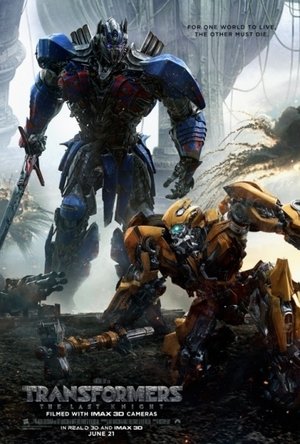
Has anyone got an aspirin?
Shhh! Don’t tell anyone I told you this but I’m a little bit of a Transformers fanboy. As a child I had many of the series’ toys and adored the animated series. Heck, I even have an Optimus Prime bobblehead next to my bed.
So when director Michael Bay announced in 2005 that he was planning a Transformers live-action movie with Steven Spielberg as producer, my heart skipped a beat. 2007 came and the film was everything I wanted.
Fast forward ten years and the series has, rightly or wrongly, become a laughing stock for critics the world over. Derided for nonsensical plots, messy special effects and in some cases racism, it’s been regarded as one of the worst film franchises of all time. Does the fifth entry in the franchise, The Last Knight redeem the series somewhat?
Humans are at war with the Transformers and Optimus Prime (Peter Cullen) has disappeared. The key to saving the future lies buried in the secrets of the past and the hidden history of Transformers on Earth. Now, it’s up to the alliance of Cade Yeager (Mark Wahlberg), Bumblebee, a Lord (Sir Anthony Hopkins) and an Oxford professor (Laura Haddock) to save the planet.
Michael Bay’s swansong is definitely the best of the series since the 2007 original, but suffers from all the problems of its 3 sequels.
On a budget of $260million, there was no doubt The Last Knight would look spectacular, but things really have stepped up a gear. The CGI is some of the best put to film and makes the uncharacteristically sloppy special effects of Age of Extinction look incredibly dated.
The Transformers themselves all look great with Bumblebee in particular taking on the role of “lead bot”. Newcomer Squeeks is sure to become the BB-8 of the franchise and is predictably adorable despite his limited screen-time.
Of the cast, it’s a story of same old. The voice acting on all the Transformers is good with a disappointingly underused Peter Cullen stealing the show once again. Mark Wahlberg is permanently likeable and it’s always a pleasure having John Turturro’s Agent Simmons returning to the screen. Laura Haddock is the typical Michael Bay choice of female lead, channelling Megan Fox, Rosie Huntington-Whitely and Nicola Peltz.
However, Sir Anthony Hopkins is where this film raises itself above the parapet. The veteran actor is really exceptional and brightens the movie in every single scene he appears in. You can tell he’s not taking it too seriously, and that is exactly the point of this series.
Sure, the plot is a hot steaming mess of nonsensical dialogue with loose strands of story, and at 149 minutes it’s a good half hour too long, but with all the fear and hate in real life, sometimes it’s nice to switch your brain off and escape to a world where robots exist – and there’s nothing wrong with that.
Michael Bay may not be the subtlest of directors. Give him a classy love story and he’ll turn it into Fifty Shades of Grey, but he’s clearly a very clever man. The critics have savaged this franchise but audiences keep coming back for more and who can blame them?
If this is, as has been said by the man himself, Michael Bay’s last entry into the Transformers canon, then it’s not a bad film to leave on whatsoever.
You know the score by now. Don’t go in expecting Shakespeare or Oscar-winning performances and you’ll be fine. Just make sure you take some paracetamol; crikey it’s loud.
https://moviemetropolis.net/2017/06/24/transformers-the-last-knight-review/
So when director Michael Bay announced in 2005 that he was planning a Transformers live-action movie with Steven Spielberg as producer, my heart skipped a beat. 2007 came and the film was everything I wanted.
Fast forward ten years and the series has, rightly or wrongly, become a laughing stock for critics the world over. Derided for nonsensical plots, messy special effects and in some cases racism, it’s been regarded as one of the worst film franchises of all time. Does the fifth entry in the franchise, The Last Knight redeem the series somewhat?
Humans are at war with the Transformers and Optimus Prime (Peter Cullen) has disappeared. The key to saving the future lies buried in the secrets of the past and the hidden history of Transformers on Earth. Now, it’s up to the alliance of Cade Yeager (Mark Wahlberg), Bumblebee, a Lord (Sir Anthony Hopkins) and an Oxford professor (Laura Haddock) to save the planet.
Michael Bay’s swansong is definitely the best of the series since the 2007 original, but suffers from all the problems of its 3 sequels.
On a budget of $260million, there was no doubt The Last Knight would look spectacular, but things really have stepped up a gear. The CGI is some of the best put to film and makes the uncharacteristically sloppy special effects of Age of Extinction look incredibly dated.
The Transformers themselves all look great with Bumblebee in particular taking on the role of “lead bot”. Newcomer Squeeks is sure to become the BB-8 of the franchise and is predictably adorable despite his limited screen-time.
Of the cast, it’s a story of same old. The voice acting on all the Transformers is good with a disappointingly underused Peter Cullen stealing the show once again. Mark Wahlberg is permanently likeable and it’s always a pleasure having John Turturro’s Agent Simmons returning to the screen. Laura Haddock is the typical Michael Bay choice of female lead, channelling Megan Fox, Rosie Huntington-Whitely and Nicola Peltz.
However, Sir Anthony Hopkins is where this film raises itself above the parapet. The veteran actor is really exceptional and brightens the movie in every single scene he appears in. You can tell he’s not taking it too seriously, and that is exactly the point of this series.
Sure, the plot is a hot steaming mess of nonsensical dialogue with loose strands of story, and at 149 minutes it’s a good half hour too long, but with all the fear and hate in real life, sometimes it’s nice to switch your brain off and escape to a world where robots exist – and there’s nothing wrong with that.
Michael Bay may not be the subtlest of directors. Give him a classy love story and he’ll turn it into Fifty Shades of Grey, but he’s clearly a very clever man. The critics have savaged this franchise but audiences keep coming back for more and who can blame them?
If this is, as has been said by the man himself, Michael Bay’s last entry into the Transformers canon, then it’s not a bad film to leave on whatsoever.
You know the score by now. Don’t go in expecting Shakespeare or Oscar-winning performances and you’ll be fine. Just make sure you take some paracetamol; crikey it’s loud.
https://moviemetropolis.net/2017/06/24/transformers-the-last-knight-review/

Christina Haynes (148 KP) rated Things a Bright Girl Can Do in Books
Feb 10, 2018

THINGS A BRIGHT GIRL CAN DO by SALLY NICHOLLS
In 1903 Emmeline Pankhurst founded a new organisation called 'The Woman's Social and Political Union’ because she like many other women believed that they should be equal to men and be allowed a vote!
Although women over thirty did get the vote in 1918 - after the bill was passed. It wasn't until 1928 that all women got the vote. But unfortunately, Emmeline Pankhurst died before she got to see this happen.
When WWI broke out men had to go and fight, leaving their jobs to the woman. This was the start of women getting more opportunities. Even though they weren't being paid the same, they were still happy to be doing something to help. (Though that's a different story)
But this whole having a job, and helping with the war was only for the meantime, because after the war men wanted their jobs back!
Things a Bright Girl Can Do is about three girls who live in this time. Three girls who want to do more with their lives. Three girls who want freedom and the chance to be different.
Evelyn, May, and Nell.
Evelyn is seventeen and has dreamt of going to a university like her brother, but is unable to do so because, for the simple fact, she's a girl!
But mind you, she is probably smarter than her brother. Or any boy for that matter. So what does she do? She joins the suffragettes! And by doing this she see’s exactly what it's like to be a suffragette and what they do first hand. Though it's not as nice as it seems. She takes part in a hunger strike while she's in prison; like many suffragettes before her. She gets ill afterward and though she did what she believed was right, she soon realized that it wasn't such a great idea.
But in some ways, it made her a better person in the future because she knew exactly what it was like and why they were fighting for their rights.
May is fifteen and has been a part of the suffragettes along with her mother for a while now. She campaigns and she fights for the rights of women in a peaceful way. By handing out flyers, by going to meetings and talks. Again like Evelyn, she knows what it's like to have money and to be in a better situation than some women who don't even have that.
Nell, who’s grown up not knowing money, she's always tried to work and help her mother with whatever she can. She later meets May and the two of them fall in love and dream of a better world. She joins the cause of ‘Women's Rights’ and fights for them. Because why should men get everything?
All three girls are very different and all want something out of their vote. They all become a part of the suffragettes in their own different ways.
Sally Nicholls gives you a great insight into the past, bringing it to life again. Questioning what life was like back then, for woman and the government. She does all this by turning three stories into a reality that we all now take for granted. Even now women don't use their votes.
My opinion is that no matter whether you like politics or even believe in them, you should always use your vote. That's what I think anyway. For the simple fact, women died for your right to vote. It's your life as well you should use your vote to make the world better. To have a say.
From the suffragettes to WWI and it's 'we can do it’ attitude, this book is amazing inside and out. From the facts and the stories within its pages to the history lesson of fighting for your rights - to what women did to help in the war, you need to try this book.
So would you be one of the suffragettes, or did you have one in your family? It would be interesting to know.
Just remember, we can all do it.
Love, Christina ?
Although women over thirty did get the vote in 1918 - after the bill was passed. It wasn't until 1928 that all women got the vote. But unfortunately, Emmeline Pankhurst died before she got to see this happen.
When WWI broke out men had to go and fight, leaving their jobs to the woman. This was the start of women getting more opportunities. Even though they weren't being paid the same, they were still happy to be doing something to help. (Though that's a different story)
But this whole having a job, and helping with the war was only for the meantime, because after the war men wanted their jobs back!
Things a Bright Girl Can Do is about three girls who live in this time. Three girls who want to do more with their lives. Three girls who want freedom and the chance to be different.
Evelyn, May, and Nell.
Evelyn is seventeen and has dreamt of going to a university like her brother, but is unable to do so because, for the simple fact, she's a girl!
But mind you, she is probably smarter than her brother. Or any boy for that matter. So what does she do? She joins the suffragettes! And by doing this she see’s exactly what it's like to be a suffragette and what they do first hand. Though it's not as nice as it seems. She takes part in a hunger strike while she's in prison; like many suffragettes before her. She gets ill afterward and though she did what she believed was right, she soon realized that it wasn't such a great idea.
But in some ways, it made her a better person in the future because she knew exactly what it was like and why they were fighting for their rights.
May is fifteen and has been a part of the suffragettes along with her mother for a while now. She campaigns and she fights for the rights of women in a peaceful way. By handing out flyers, by going to meetings and talks. Again like Evelyn, she knows what it's like to have money and to be in a better situation than some women who don't even have that.
Nell, who’s grown up not knowing money, she's always tried to work and help her mother with whatever she can. She later meets May and the two of them fall in love and dream of a better world. She joins the cause of ‘Women's Rights’ and fights for them. Because why should men get everything?
All three girls are very different and all want something out of their vote. They all become a part of the suffragettes in their own different ways.
Sally Nicholls gives you a great insight into the past, bringing it to life again. Questioning what life was like back then, for woman and the government. She does all this by turning three stories into a reality that we all now take for granted. Even now women don't use their votes.
My opinion is that no matter whether you like politics or even believe in them, you should always use your vote. That's what I think anyway. For the simple fact, women died for your right to vote. It's your life as well you should use your vote to make the world better. To have a say.
From the suffragettes to WWI and it's 'we can do it’ attitude, this book is amazing inside and out. From the facts and the stories within its pages to the history lesson of fighting for your rights - to what women did to help in the war, you need to try this book.
So would you be one of the suffragettes, or did you have one in your family? It would be interesting to know.
Just remember, we can all do it.
Love, Christina ?

Gareth von Kallenbach (980 KP) rated the PC version of Call of Duty WWII in Video Games
Jun 19, 2019
The long running and very popular Call of Duty series has gone back to where it all began for the latest entry into the series. Call of Duty: WW2 returns the series to where the early games in the series were set and looks to restore its legacy as the best-selling series on the planet in doing so.
Last year’s Call of Duty: Infinite Warfare did not sell as well as other in the series had in recent years, and many fans were upset or divided over a futuristic setting that involved spaceships, energy weapons, and futuristic locations and technology.
It should be noted that the series has three developers working on games so developer Sledgehammer likely started work on the game before Call of Duty: Black Ops 3, and Call of Duty: Infinite Warfare shipped so the return to WW2 was something long in the planning.
The game opens with D-Day and players play as a young Private who is thrown headfirst into the conflict and learns the horrors of war as well as duty, honor, and sacrifice through his missions and interactions with members of his platoon.
Over the course of the missions, players will battle in highly-detailed maps and locales ranging from forests, bunkers, beaches, and bombed out cities as the Allies advance deeper and deeper into enemy held locales. The various locales for the game are so highly-detailed that they seem right out of a movie and would be a dream come true for location scouts looking for filming locations.
As anyone who has played a call of Duty game knows, they will be faced with waves of enemies to fight off as well as the usual stealth and vehicle missions. This time out there are a couple of driving missions as well as a clever one in a tank and one airborne fighter escort.
The attention to detail is very good as enemy Panzer tanks can take any fire from your tank head on, but have weaker armor in the bank which leads players to have to flank the enemy to survive.
Another new wrinkle is the health system which does not regenerate in the story mode and instead requires players to take cover and use a first aid kit in order to heal. The multiplayer portion does use a regenerative system so players can avoid any major disruptions in battle.
I really liked Josh Duhamel as the rough Sargent with a backstory. He was a very interesting character that kept me guessing as to his motivations and next moves as the story advanced.
Players could also call in ammo, mortar strikes, and health by requesting them from select members of their platoon. This could be tricky as when pinned down, having to move to another character to get needed items added to the challenge.
The weaponry was appropriate for the time and I had to adjust to slower load times, accuracy issues, and such with older tech, but it did give me a much greater level of immersion.
While I did enjoy the solo campaign, it did at times seem very familiar and as if I had seen and played some of it all before. I guess that is the trick with a series that has run as long as Call of Duty has as certain aspects of the gameplay are expected and while locations, weapons, locations, and characters may change, some things are going to be constant throughout the series.
The multiplayer aspects of the game really shine as not only are there numerous multiplayer modes, players can now pick a class such as Airborne, Recon, etc. which each have their own weapons and abilities and allow players to pick a division that best matches their abilities and gameplay style.
This comes in very handy in the new War mode where teams much battle one another to accomplish various objectives. Such as escorting tanks, protecting or stealing gas, and taking or defending key locales. My only issue is that this mode and many maps are camp fests where people with scoped rifles can easily hide in the back part of a map and pick off players as they spawn or enter the map. It seems far more pronounced in this game and leads to some frustrations. There is also the matter of iffy hit detection where players take half a clip from a machine gun point blank and yet can absorb them and one shit kill a player all while you unload on them.
There is also a very good Zombie mode where players take on wave after wave of undead soldiers as they attempt to get power restored and activate technology. The speed of the game is intense, the enemies numerous, and the ability to arm, armor up, and accessories your character is key as is having a good team around you.
As one person said that is Call of Duty and you know what you are in for if you have played any of the prior games. As such Call of Duty: World War 2 is not a radical new direction for the series, but rather a return to what made the series and is like slipping into a comfy pair of slippers after a long day., Familiar and comfortable and is in my opinion what the series needed.
http://sknr.net/2017/11/06/call-duty-ww2/
Last year’s Call of Duty: Infinite Warfare did not sell as well as other in the series had in recent years, and many fans were upset or divided over a futuristic setting that involved spaceships, energy weapons, and futuristic locations and technology.
It should be noted that the series has three developers working on games so developer Sledgehammer likely started work on the game before Call of Duty: Black Ops 3, and Call of Duty: Infinite Warfare shipped so the return to WW2 was something long in the planning.
The game opens with D-Day and players play as a young Private who is thrown headfirst into the conflict and learns the horrors of war as well as duty, honor, and sacrifice through his missions and interactions with members of his platoon.
Over the course of the missions, players will battle in highly-detailed maps and locales ranging from forests, bunkers, beaches, and bombed out cities as the Allies advance deeper and deeper into enemy held locales. The various locales for the game are so highly-detailed that they seem right out of a movie and would be a dream come true for location scouts looking for filming locations.
As anyone who has played a call of Duty game knows, they will be faced with waves of enemies to fight off as well as the usual stealth and vehicle missions. This time out there are a couple of driving missions as well as a clever one in a tank and one airborne fighter escort.
The attention to detail is very good as enemy Panzer tanks can take any fire from your tank head on, but have weaker armor in the bank which leads players to have to flank the enemy to survive.
Another new wrinkle is the health system which does not regenerate in the story mode and instead requires players to take cover and use a first aid kit in order to heal. The multiplayer portion does use a regenerative system so players can avoid any major disruptions in battle.
I really liked Josh Duhamel as the rough Sargent with a backstory. He was a very interesting character that kept me guessing as to his motivations and next moves as the story advanced.
Players could also call in ammo, mortar strikes, and health by requesting them from select members of their platoon. This could be tricky as when pinned down, having to move to another character to get needed items added to the challenge.
The weaponry was appropriate for the time and I had to adjust to slower load times, accuracy issues, and such with older tech, but it did give me a much greater level of immersion.
While I did enjoy the solo campaign, it did at times seem very familiar and as if I had seen and played some of it all before. I guess that is the trick with a series that has run as long as Call of Duty has as certain aspects of the gameplay are expected and while locations, weapons, locations, and characters may change, some things are going to be constant throughout the series.
The multiplayer aspects of the game really shine as not only are there numerous multiplayer modes, players can now pick a class such as Airborne, Recon, etc. which each have their own weapons and abilities and allow players to pick a division that best matches their abilities and gameplay style.
This comes in very handy in the new War mode where teams much battle one another to accomplish various objectives. Such as escorting tanks, protecting or stealing gas, and taking or defending key locales. My only issue is that this mode and many maps are camp fests where people with scoped rifles can easily hide in the back part of a map and pick off players as they spawn or enter the map. It seems far more pronounced in this game and leads to some frustrations. There is also the matter of iffy hit detection where players take half a clip from a machine gun point blank and yet can absorb them and one shit kill a player all while you unload on them.
There is also a very good Zombie mode where players take on wave after wave of undead soldiers as they attempt to get power restored and activate technology. The speed of the game is intense, the enemies numerous, and the ability to arm, armor up, and accessories your character is key as is having a good team around you.
As one person said that is Call of Duty and you know what you are in for if you have played any of the prior games. As such Call of Duty: World War 2 is not a radical new direction for the series, but rather a return to what made the series and is like slipping into a comfy pair of slippers after a long day., Familiar and comfortable and is in my opinion what the series needed.
http://sknr.net/2017/11/06/call-duty-ww2/

RəX Regent (349 KP) rated Team America: World Police (2004) in Movies
Feb 19, 2019

AMERICA! F**K YEAH!
The theme’s lyrics sum up this movie as well as any could have. Made in the midst of the War On Terror in 2004, a satire was needed and who better to provide one than the satirical genius’ Trey Parker and Matt Stone, best known for South Park. On the surface, this looks like a straight forward bawdy adult puppet parody, taking the mickey out of Bruckheimer’s blockbusters, Thunderbirds and the reputation being acquired by the U.S. over the past 30 years but reaching boiling point over the last decade, certainly in a post 9/11 world.But that’s just the tip of the iceberg.
This is looking into every major aspect of the above, such as chauvinism, the political interference and undue, and sometimes dangerous influence of celebrities, summed up here with the Film Actor’s Guild (or F.A.G.) with a host of major film stars ripped off, notably upsetting Sean Penn.
The infamous puppet sex scene, which is nothing more than a poke, pardon the pun, at the puppetry employed in the film.But there’s so much more such as the excellent selection of bespoke songs, such as “Only A Woman” for the sex scene, “End Of An Act” as our hero leaves the group to wallow in self-pity to the song with features verse after verse nothing more than slagging off Michael Bay’s, Pearl Harbor and Ben Afleck! But for a film with criticises these blockbusters, it understands them too well to be truly nasty about them.
The entire film IS a well made Bruckheimer film, even recruiting one of his regular composers, Harry Gregson-Williams, to be in at the last-minute, to compose a great score, but why do this if they hated it so much? They don’t; they love these films and the affection for the genre is clear, making their digs enjoyable and not hurtful… There’s even a contradiction with the political tract as one hand this would seem to be an anti-American tome where Team America blow up every city and landmark imaginable in order to protect the world from the destruction of the Terrorists… Get it?
On the other, the song entitled “Freedom Isn’t Free” would seem to suggest that we should all do our part, even though this number ends with the line, “Freedom cost a buck o’five…” But then after all the political and social satire, and the spoofing of Hollywood’s gung-ho films, it’s just a fun film.When the terrorist’s come from Derka Derkastan, the tone is clear. This is like a pair of boys playing “War On Terror” with a collection of action figures.
They’re clearly laughing hysterically as they write, produce and direct this film like two teenagers, as they create the highly insensitive language of the terrorists, use elements from films such as Star Wars and James Bond, certainly as for Kim Jong-il, is nobody safe, well not after offending the North Korean leader, but in all fairness, this is really just Eric Cartman from South Park.But in the end, this is the perfect satire, with a blend of real world political and social commentary, great spoofing but when all’s said and done, this has a great sense if humour, though at times, somewhat bawdy. This is brilliant and one of, if not the best comedy of the past decade, and one of the greatest satires of all time. And, no, I don’t believe that I’m over stating that…
This is looking into every major aspect of the above, such as chauvinism, the political interference and undue, and sometimes dangerous influence of celebrities, summed up here with the Film Actor’s Guild (or F.A.G.) with a host of major film stars ripped off, notably upsetting Sean Penn.
The infamous puppet sex scene, which is nothing more than a poke, pardon the pun, at the puppetry employed in the film.But there’s so much more such as the excellent selection of bespoke songs, such as “Only A Woman” for the sex scene, “End Of An Act” as our hero leaves the group to wallow in self-pity to the song with features verse after verse nothing more than slagging off Michael Bay’s, Pearl Harbor and Ben Afleck! But for a film with criticises these blockbusters, it understands them too well to be truly nasty about them.
The entire film IS a well made Bruckheimer film, even recruiting one of his regular composers, Harry Gregson-Williams, to be in at the last-minute, to compose a great score, but why do this if they hated it so much? They don’t; they love these films and the affection for the genre is clear, making their digs enjoyable and not hurtful… There’s even a contradiction with the political tract as one hand this would seem to be an anti-American tome where Team America blow up every city and landmark imaginable in order to protect the world from the destruction of the Terrorists… Get it?
On the other, the song entitled “Freedom Isn’t Free” would seem to suggest that we should all do our part, even though this number ends with the line, “Freedom cost a buck o’five…” But then after all the political and social satire, and the spoofing of Hollywood’s gung-ho films, it’s just a fun film.When the terrorist’s come from Derka Derkastan, the tone is clear. This is like a pair of boys playing “War On Terror” with a collection of action figures.
They’re clearly laughing hysterically as they write, produce and direct this film like two teenagers, as they create the highly insensitive language of the terrorists, use elements from films such as Star Wars and James Bond, certainly as for Kim Jong-il, is nobody safe, well not after offending the North Korean leader, but in all fairness, this is really just Eric Cartman from South Park.But in the end, this is the perfect satire, with a blend of real world political and social commentary, great spoofing but when all’s said and done, this has a great sense if humour, though at times, somewhat bawdy. This is brilliant and one of, if not the best comedy of the past decade, and one of the greatest satires of all time. And, no, I don’t believe that I’m over stating that…