
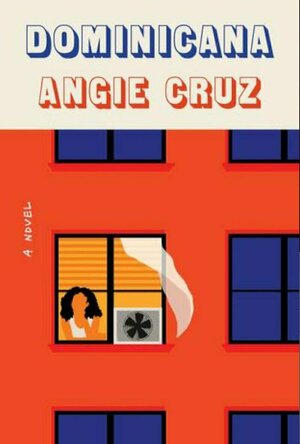
Dominicana
8.0 Rate It
Book
SHORTLISTED FOR THE WOMEN'S PRIZE FOR FICTION 2020 'A story for now, an important story . . ....
Historical Fiction New York Literary Fiction Adult Fiction The Dominican Republic Coming of Age
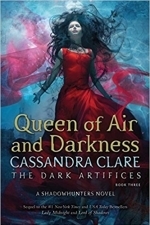
Queen of Air and Darkness: The Dark Artifices
9.4 Rate It
Book
Dark secrets and forbidden love threaten the very survival of the Shadowhunters in Cassandra...
fiction young adult

Ringer
Book
Like its ambitious companion novel, Replica, this far-reaching novel by the powerhouse author of...
Young Adult Science Fiction
Castaway Tales: From Robinson Crusoe to Life of Pi
Book
Ever since Robinson Crusoe washed ashore, the castaway story has survived and prospered, inspiring a...
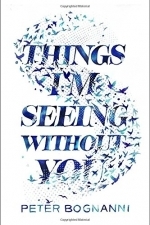
Things I'm Seeing Without You
Book
Fans of Thirteen Reasons Why and All the Bright Places will laugh and cry as they read this...
Young Adult Fiction
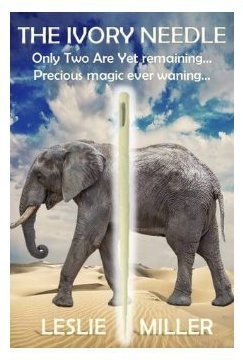
The Ivory Needle
9.0
Rate It
Book
An ancient ivory needle… A desperate plea from beyond the veil… On a trip to Kenya,...
YA Young Adult Fiction Magic Spirits Elephants
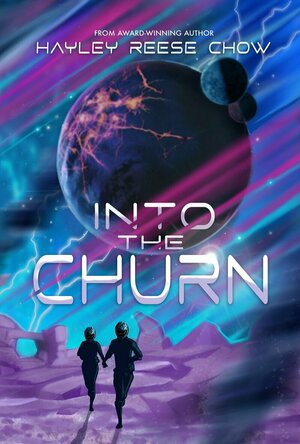
Into The Churn
10.0 Rate It
Book
Seventeen-year-old Ezren Hart interns in her mother’s terraforming lab, studying Belethea’s...
Young Adult Science Fiction Adventure Action Romance

<i>I received this book for free through Goodreads First Reads. </i>
There is often a preconception that self-published books are not as good as those printed by world famous publishers. Yet, given a chance, there are a few that surprise you. Unfortunately, there are many issues with Laura Foster’s debut novel <i>Crimson</i>. The actual concept has promise of appealing to a range of readers due to falling into a variety of genres: fantasy, science fiction, young adult and paranormal/horror. Where the novel suffers is within the writing style and obvious lack of proof reading.
The storyline concentrates on a homeless young girl whose frightening nightmares have led her to believe she is in grave danger. Dawn Pearson, who the reader is led to believe is only twelve or thirteen years of age, is determined to get as far away from the creature in her dreams as possible. With the help of Mike, a friend she makes on the street, she narrowly escapes being captured by the red-eyed, irascible monster she has named Crimson.
While the pair flee, Dawn and Mike become aware of another terrifying beast, although neither understand why Dawn is being hunted. It soon manifests that Dawn harbours an ethereal power, suggesting that she is far from the human she believed herself to be. As the thrill of the chase heightens, readers are left with questions: who is Dawn? Who is the Crimson? Which characters can be trusted?
It is not clear what the target age group is, however the youthful ages of Dawn and Mike make it suitable for a young adult audience as well as adult readers in general. Dawn and Mike’s relationship, although sudden, becomes a key aspect of the story. For once a friendship between a male and female has no romantic connotations attached, thus not detracting from the surreal circumstances of the plot. Both Dawn and Mike show admiral traits of selflessness – something that ostracizes them from the remainder of ignoble characters.
Sadly, the dramatic climax spirals into confusion. Ever changing plot directions make it unclear who the heroes are, and perplexing scene descriptions make it difficult to picture what the author had in mind. This was a more prominent issue toward the conclusion of the book, resulting in an unsatisfying ending.
One of the major problems with the writing is the constant switching of points of view. Although written in third person, a narrative still speaks from one character’s perspective. This can change from character to character, but usually separated into different chapters. In <i>Crimson</i>, however, Foster alters the viewpoint from paragraph to paragraph. This occasionally makes the text difficult to follow.
As with any lengthy body of text, printing errors can occur – nobody is perfect. On the other hand, the amount of typos in <i>Crimson</i> makes it hard to believe that it had ever been proofread in the first place. Some mistakes are clearly typing errors that are (probably) not the author’s fault, however the repeated misuse of words such as seized/ceased and wondered/wandered are not easy to forgive.
Overall, the premise was there, the writing not so much. It is understood that Laura Foster is currently working on a sequel to <i>Crimson</i>, but its success rests on how well this first book is received. If people can tolerate the errors pinpointed above, then the author has nothing to worry about, yet as it stands, it does not look promising.

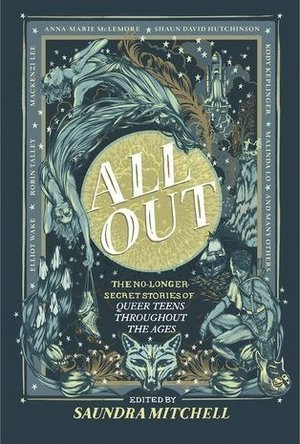

There was a decent amount of cultural diversity while remaining mostly centered in the US; Chinatown in 1950s San Francisco, 1870s Mexico, Colonial New England, 1930s Hispanic New Mexico, Robin Hood-era Britain.
The stories were really good, I just wish they'd included a bisexual story and a transwoman. They did have an asexual girl, which is a sexuality often overlooked, so that was nice.
It's a great collection of stories, just limited in scope. They could have cut a few F/F stories and added in bisexual, nonbinary, and transwomen, and lived up to the open umbrella of the "queer" label a bit more. I really enjoyed it, I think I'm just a little disappointed because I was expecting more of the spectrum.