Search

Search only in certain items:

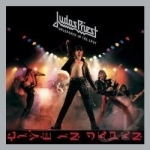
Unleashed in the East by Judas Priest
1979 | Live Performances
8.0 (2 Ratings)
Album Favorite

"Another great live record. Once I started playing the guitar, Judas Priest was one of those bands that went immediately into my playlist, although back then there were obviously no playlists, as we know them now. It was just a case of what vinyl you had. The band that I was in prior to Metallica, a band called Panic, had a guy called Dave Harmon playing in it. He was a huge Judas Priest fan and while we were trying to get that first Panic formation together, he and I would jam 'Victim Of Changes' over and over again. To me it was the heaviest thing I'd heard in my life up to that point. I think we all have our own idea of what a great twin guitar attack is. I always loved K. K. Downing. I haven't seen Priest with this new cat that's in the band, but the key to the dual guitar is how the two interrelate. In Thin Lizzy, for example, the riffs were a little happy. In Iron Maiden they were somewhere in the middle. But with Priest they were a lot darker and I always gravitated towards that. Regarding the rumours that the record was heavily overdubbed, I never heard that and frankly I don't care. We have had to fix some live performances and whenever you say that people automatically assume that you did it because your performance wasn't good or that you want to fake a really great performance. But sometimes stuff just happens. For example, we did a live broadcast of a show in Mesa, Arizona during the Cryptic Writings era. They went ahead and released a live show and I had not heard it. They said: ""Just trust us."" I had never let anything go out unapproved up until that point and the one time I did it, I noticed that one of the kick drums was turned off. And also David Ellefson's background vocals were completely missing. I thought: ""I will never let this happen again."" Sometimes you get into the studio and hear that things are wrong, like a microphone is inverted and it sounds like it was recorded in a fishbowl. But are you going to shitcan all the audio and video just for that? No, you fix it. But if you're going in there and replacing stuff because you play like shit live, then that's different."

Source
  
40x40

Graham Massey recommended Welcome by Santana in Music (curated)

 
Welcome by Santana
Welcome by Santana
1973 | Rock
(0 Ratings)
Album Favorite

"I ended up with this record because it was at that point in my teenage years when I was swapping records with my mates at school. We were all a long-haired, Afghan coat-wearing gang into Black Sabbath, Deep Purple, Led Zeppelin and all those classic rock guitar bands. And Santana were almost amongst that; even when you go to albums like Abraxas and the early albums, they have a quite exotic kind of quality about them, so when Welcome came out, it was really rejected by the gang. It was like, ""Whoah! They've gone too far! What is this nonsense? We don't understand it!"" I got someone else's copy of it and I really started to sink into it. There are so many signposts in this record to the jazz world that has sustained me through the years. The first time I heard the words ""John Coltrane"" was through this record. Alice Coltrane is on the first track, which is this version of Dvořák's 'Going Home', which is adapted from his New World Symphony. It's like a classical piece played on a Mellotron. It's very dramatic and it's got nothing to do with rock music and more to do with that spiritual jazz that Alice Coltrane was knocking about. At that point, you couldn't give Alice Coltrane records away, and it's interesting that they didn't really gain currency until the late 90s. And then you've got people like Leon Thomas on the record, the guy who did the yodeling on Pharoah Sanders' records, which would lead you to his records. And John McLaughlin is on there, which would then lead you to The Mahavishnu Orchestra. Back then, you'd find these names on records and then when you were in the record shop, you'd find these names again and it all connected up like dot-to-dots. The concept of ""fusion"" throws up so many bad images because there's a load of shit there, but there's also so much good stuff as well. With this album, I opened the door expecting that rock guitar thing, but the sound of this record is fascinating: it has so much air in it and you can hear the sound of the room being pushed around. To me, this record is like audio sunshine and it transports me to some transcendental place."

Source
  
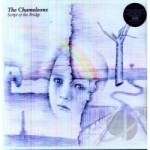
Script of the Bridge by The Chameleons UK
1983 | Rock
10.0 (1 Ratings)
Album Favorite

"I’m going to take us from otherworldly right back into the world itself, to my teenage years. I guess you could say this about nearly all of these songs, but this one in particular got me for the same reason that The Catcher in the Rye gets people, the idea of ‘us versus them’, the real, sincere people pitted against the phonies of the world. “As a teenager I could have written The Catcher in the Rye, nearly any teenager could. At some point you feel yourself isolated against this outside world and The Chameleons were a band, lyrically and musically, that kept ringing this same set of isolated chimes of the individual pitted against this hostile world. Heading into my teenage years I was like everyone, looking for someone that can say something better than you can until you can say it better than they can, and for a while The Chameleons could say it better in song than I could speak it myself. “With ‘Second Skin’ they had the lexicon and the guitars that I loved. It was a sort of musical version of The Catcher in the Rye, of someone trying to make sense of a very perplexing, and at times hostile world that I think all teenagers find themselves in and I was no exception. For some people it was punk rock and for others it was other elements of entertainment, but for me it had a lot to do with music and in The Chameleons I found a direct way of saying it and not in the blunt, abject anger that punk rock sometimes wielded. I didn’t feel it like that, mine was much more of a pointed knife than a blunt nightstick. “It’s even something that people say to us, that they grew up listening to Mercury Rev or Deserter’s Songs. When you’re writing, it’s coming out of you but sometimes you forget that for people who are listening to it when they’re thirteen or fourteen, it’s their lexicon, it’s a newly learned vocabulary. That’s where sometimes as an artist you forget the importance of what you do, because music is what carried you to the point of doing it later in life. “Everyone has one song or a band that seem to take the words out of your young, teenage mouth before you could form them and for The Chameleons were one of those bands."

Source
  
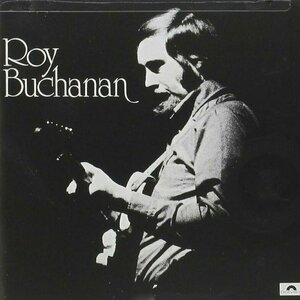
Roy Buchanan by Roy Buchanan
1990 | Blues, Pop, Rock
(0 Ratings)
Album Favorite

"He was a kind of blues/country artist from America - obviously Scottish lineage - and I remember, the first time I heard a bit of his music was a long time ago when I was very young. It was a cover of 'Sweet Dreams' by Patsy Cline; it was an instrumental version and I thought it sounded amazing. I'd just bought an acoustic guitar, and I heard it on the radio and remember thinking… I'm gonna preface this by saying we live in an age where I'm sick of seeing so many people saying, "I'm glad the guitar solo is dead, anybody can play like that" No they fucking can't! I see so many idiots in indie bands try to play solos and they can't fucking do it, because they haven't got the bravery to do it. They haven't got the fucking blood and guts to do it. You have to spill your guts if you want people to believe a guitar solo. That's why I always go for people like this; you can tell, if a Roy Buchanan song comes on, in any obscure station on the world, as soon as the solo comes you know it's him. And that's a really special gift to have. Not many people have that; as soon as he plays one note of a solo, you know it's him. It's beautiful. He always starts off a solo in a beautiful manner, almost slightly depressed, and then it just goes apeshit and he really loses it. It's almost like the guitar's having a fit. He goes from beautiful to really disturbed in one solo. I remember I went to see The Departed in the cinema and this song, his version of 'Sweet Dreams', came on in the end, and I was like, "Fuck me I forgot to buy a Roy Buchanan record!" I meant to buy one 20 years ago and I never did. I went out the next day and bought Roy Buchanan's entire back catalogue. The best one is just called Roy Buchanan. There's some beautiful stuff on it. There's one song called 'The Messiah Will Come Again', with a spoken word intro, and you can tell it's him doing it, and it's just beautiful. There's an old Phil Lynott and Gary Moore song called 'Parisienne Walkways', and you can see it was inspired by this song. I challenge somebody to listen to this song and not actually rethink their prejudice against expression on the guitar."

Source
  
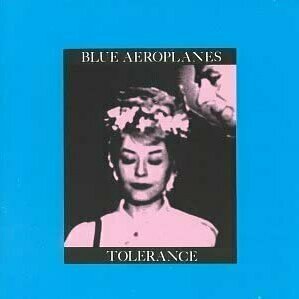
Tolerance by The Blue Aeroplane
(0 Ratings)
Album Favorite

"It's not quite finished, and that's why it's a classic example of what they were becoming, and that's why I love it. I love coming across a record when you can hear what the band could become. Unfortunately with them, I don't think they really ever got there. For me, they could have been the British R.E.M.. I remember myself and Nick saw the band at WOMAD fest in 1986. We decided we had to go to one festival to see what everything was about - it was either '85 or '86 - and we saw James, when they'd just come out with 'Hymn From A Village', when they were a completely different band, and they were brilliant to be honest. We saw Siouxsie And The Banshees and Arrow, and I think The Housemartins were there, and we also saw The Blue Aeroplanes. They were fucking amazing; one of the best live bands I've ever seen. It was pre-Bez and they had a dancer with them onstage; he was called Wojtek [Dmochowski] and the singer was just scatting poetry over the music. For a band that made quite delicate music they were full-on, they were moving lots, it was just pure fully formed erudite freneticism. It was just lovely. We came away thinking, "Wow, we'd love to be in a fucking band who connect onstage like that, with what's in their music and really physically trying to impose yourself on an audience." I love this record because it's got a song on it called 'Arriving', which has the line: "I saw the sun shimmering on a broken breeze." Nick was obsessed with that line when he was young. There's another song called 'When The Wave Comes' which is beautiful, the actual song 'Tolerance' is just brilliant. It's not a perfect album but you can hear this promise of what this band could have been. Me and Nick went to this festival and we fucking hated the experience of going to this festival, we hated people were trying to sell us drugs, but we loved seeing The Blue Aeroplanes. It was a little Damascene moment which made us really, truly believe about how physical a gig could be. We were determined to not be a band that stood still and just looked at our feet or guitar fretboards after that; we were determined that we would move round shitloads. We walked away quite loftily saying, "We're never coming back to a festival unless we play one," which just shows how snotty and fucking deluded we were."

Source
  
White Stripes by The White Stripes
1999 | Alternative
7.3 (3 Ratings)
Album Favorite

"I've got no idea what it's about but from what I can tell it's about a monkey that explodes things, a monkey that likes the colour red but doesn't like green apples, so he explodes the apples. I just think it's really cool. I love The White Stripes. I love Jack White. I love Meg White. I love how simple their songs are, and instinctive. It feels like they've just started playing at that moment and they're making it up as they go along, just seeing how and where it goes. Even the lyrics - the ""exploding monkey"" - it feels so random. They let the music go where it wants to go naturally, they don't get bogged down trying to glue together complicated bits of melody. Quite a lot of the process of songwriting is trying to find ways to stick bits together and it becomes mathematical in that way. Sometimes you get swamped and weighed down with two bits of music that you can't find a way of joining. And then I listen to The White Stripes and think ""Ahh! You just play them next to each other, you don't have to join them."" It's like what I said about Pixies, they make me feel like music can be anything and can be as simple and as messy as you want. And as loud as you want! I find it really freeing. A lot of songwriting is getting in the right frame of mind, so it's good to have this music that doesn't make you feel worried about what you're doing and not be overly precious about it. If one bit of music isn't working with another bit you've got, you can just throw it away and write another bit, it actually doesn't take very long and maybe it will be better. Or maybe it will be worse, but whatever! There's something magical about it. I loved the three-colour thing the White Stripes did, the little codes in the lyrics about the number three and the symbolism in the album covers. And the way they pretended to be brother and sister! Or were they? Or weren't they?! They're just so fucking cool. Out of all the bands to come out of the last twenty years I think they're one of the best. I'm also so glad they broke up. I'm so glad they stopped and that Jack White does his other stuff now. They left the things that they did and they didn't change. It was just perfect."

Source