

Diverse Pedagogies of Place: Educating Students in and for Local and Global Environments
Book
Diverse Pedagogies of Place presents eight original place-responsive pedagogies that address a...

Sam (74 KP) rated Remember This When You're Sad in Books
Mar 27, 2019


Remember This When You’re Sad is part memoir, part self-help, based on the experiences of former Buzzfeed Social Media Editor and current BBC Social Media Manager Maggy Van Eijk. It focuses on her anxiety, depression, panic attacks and disassociation and how she gets through each day with them.
I really loved reading this. I never really read many self-help books before Matt Haig’s Reasons To Stay Alive, but now I really love them and enjoy that they make you feel like you’re being cuddled while reading them.
This book managed to be absolutely hilarious in places while somehow also remaining serious and to the point. It spoke about anxiety in the same way that I address mine. I wouldn’t have gotten through so much if it hadn’t have been for being able to laugh at it sometimes.
It doesn’t preach a miracle cure to mental illnesses. Instead, Maggy Van Eijk talks through different ways of getting through your worst points, from telling you the best places to have a good cry to explaining how to ‘Club Penguin’ your problems. It’s the perfect mental health book for my generation.
I loved how the book is split into lots of lists, and the chapters are split so you can easily flick to the one you need the most at the time you need it.
Maggy Van Eijk even went into the detail of discussing people’s reactions when you talk about your mental health and it made me think about something that happened when I was at college that I had forgotten about until now. I’ve always been open about my mental health, especially when it was much worse when I was in college. I spoke to a girl I knew about it and she said ‘But why are you so open about it? You don’t talk about things like that.’ People’s reactions in the book were quite similar to that.
It’s sad to see that this is a normal thing that people think, but at the same time, it’s not shocking. There is still a massive stigma around mental health conditions, which is why I love books like this that talk openly about it.
This is definitely one of my favourite mental health books. I’ve already had to buy it for a friend and I’ve got two friends waiting to borrow my copy. I’ve never read a book that has been so much like talking to a friend.

GPS Navigation & Offline Maps
Navigation and Travel
App
(scroll down for english summary) *** Upozornění: Uživatelé starší verze (Be-on-road) mohou...

Dependable Multicore Architectures at Nanoscale: 2017
Book
This book provides comprehensive coverage of the dependability challenges in today's advanced...

Phil Leader (619 KP) rated The Last Dickens in Books
Nov 18, 2019
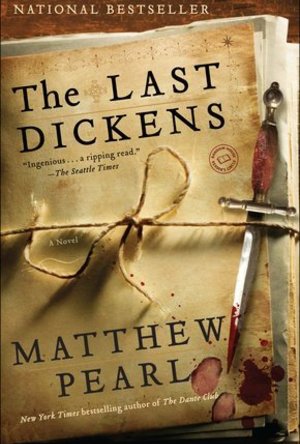

However I can't deny his impact as a novelist at a time when reading as a past time was only just reaching the masses. And so this book looked intriguing.
Primarily set immediately after the death of the famous author, having completed exactly half of the installments of his latest book - The Mystery of Edwin Drood - James Osgood, the junior partner in his American publishers is sent to England to try to track down any other parts of the manuscript.
However dark forces are afoot; there are two murders related to the Dickens papers in short order and Osgood is attacked on the ship to England. Clearly someone does not want any more of Drood to be published.
Pearl has taken one of the greatest literary mysteries of all (there really are no clues about how Drood was supposed to conclude) and wrapped it in another fictional conundrum. He has clearly researched all of the details very well and uses real people - including Osgood and Dickens himself- along with fictional characters to tell the story. This gives the plot a certain solidity because so much of it is based in reality, with the fabricated parts showing through the cracks.
The narrative moves between 1870 and Osgood's quest, to India at the same time where Frank Dickens (son of Charles) is investigating drug smuggling and to 1868 when Dickens is performing a reading tour of America.
The plot is more-or-less highly plausible, just some coincidental points that require a little suspension of disbelief. The writing is excellent throughout, highly descriptive and particularly good at capturing the personalities of the characters (as would be expected given how carefully this has been researched). There are several action scenes at the book progresses and these are handled well. The villains are unmasked in classical style, gloating with our heroes apparently doomed only for the tables to be turned.
Honestly I was expecting this to be reasonably interesting, highlighting aspects of Dickens' life and death with a little light murder mystery thrown in. In the end I would call this nothing less than a triumph and will definitely be looking to read more of Pearl's work.
It's still not tempted me to read any Dickens, though...
Building Brains: An Introduction to Neural Development
David J. Price, Andrew P. Jarman, John O. Mason and Peter C. Kind
Book
Building Brains describes the main elements of current understanding of the mechanisms that create...

Real World Windows 10 Development: 2015
Edward Moemeka and Elizabeth Moemeka
Book
Emphasizing XAML and C#, this book provides readers with all the tools, ideas, and inspiration to...

Hazel (1853 KP) rated A Piece Of The World in Books
May 30, 2018
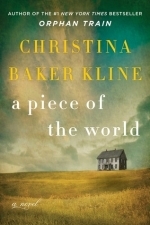
Until reading Christina Baker Kline’s note at the end of the book, it is impossible to guess that it is based on real people, although, admittedly, it is a little strange to name the main character after oneself. In fact, A Piece of the World is written around a single painting in the Museum of Modern Art, New York: Christina’s World (1948) by Andrew Wyeth, a man who appears and paints this work in the story.
Baker Cline researched thoroughly into the background story of the painting. Christina Olson, the main character of this book, was a real person who posed for Wyeth as he painted this striking picture. Although the overall story is a work of fiction, the dates and key characters are biographically accurate. Beginning in 1939, the narrative weaves too and fro, from Christina’s present day to her childhood and back again. Christina is an ageing woman who can barely walk and lives in a dilapidated cottage with her brother on a hill in the village of Cushing, Maine. Having lived in this state for so long, it is a welcome surprise to be visited by the young Andrew Wyeth who falls in love with the cottage and regularly comes to work on his canvases in their upper rooms. Through their peaceful relationship and flashbacks to her past, Christina’s character development is investigated and knitted together to explain why she has become this recluse on a hill.
Christina had problems from a very young age. After almost dying from a fever, she developed an undiagnosed degenerative disease that slowly ate away at the nerves in her arms and legs. Today, neurologists believe this to be Charcot-Marie-Tooth disease but there were no doctors able to provide this diagnosis at the time. Christina suffered aches and pains growing up and could barely walk in a straight line. Her determination to keep going is admirable and makes her a strong female protagonist.
One day in her early twenties, Christina meets a boy who pays her the kind of attention that she has never received before. Believing his promises that they will be together forever, she dares to dream of having a normal life. The reader, however, knows that the future Christina is alone with only her brother for company, making it heartbreaking to read of their developing romance knowing that it is not going to last.
There is no “happy-ever-after” to this story, nor is there a sad ending. It is an account of a woman who had been dealt a raw deal in life but continued getting on despite it. The end result, the painting Christina’s World, shows Christina as she sees herself. She may not be able to walk but she is still a woman; she made the most of her childhood, she never complained. This painting is her “letter to the World that never wrote to [Her].”
A Piece of the World is a powerful novel about purpose and determination. Christina may not have had a typical, successful life or become famous but she had her daily achievements: crawling through a field for an hour to visit a friend, cooking dinners despite not being able to stand up, carrying on after the end of a romantic relationship …
Written as gracefully as the brushstrokes of a painting with elements of Emily Dickinson thrown in here and there, A Piece of the World is a beautiful piece of work. It is something that can be enjoyed as you are mentally drawn into the storyline, leaving you wondering what happens to Christina and her brother after the completion of the painting. It is a novel the author can be proud of.
Hazel (1853 KP) rated A Piece Of The World in Books
Dec 14, 2018

Until reading Christina Baker Kline’s note at the end of the book, it is impossible to guess that it is based on real people, although, admittedly, it is a little strange to name the main character after oneself. In fact, <i>A Piece of the World</i> is written around a single painting in the Museum of Modern Art, New York: <i>Christina’s World</i> (1948) by Andrew Wyeth, a man who appears and paints this work in the story.
Baker Cline researched thoroughly into the background story of the painting. Christina Olson, the main character of this book, was a real person who posed for Wyeth as he painted this striking picture. Although the overall story is a work of fiction, the dates and key characters are biographically accurate. Beginning in 1939, the narrative weaves too and fro, from Christina’s present day to her childhood and back again. Christina is an ageing woman who can barely walk and lives in a dilapidated cottage with her brother on a hill in the village of Cushing, Maine. Having lived in this state for so long, it is a welcome surprise to be visited by the young Andrew Wyeth who falls in love with the cottage and regularly comes to work on his canvases in their upper rooms. Through their peaceful relationship and flashbacks to her past, Christina’s character development is investigated and knitted together to explain why she has become this recluse on a hill.
Christina had problems from a very young age. After almost dying from a fever, she developed an undiagnosed degenerative disease that slowly ate away at the nerves in her arms and legs. Today, neurologists believe this to be <i>Charcot-Marie-Tooth</i> disease but there were no doctors able to provide this diagnosis at the time. Christina suffered aches and pains growing up and could barely walk in a straight line. Her determination to keep going is admirable and makes her a strong female protagonist.
One day in her early twenties, Christina meets a boy who pays her the kind of attention that she has never received before. Believing his promises that they will be together forever, she dares to dream of having a normal life. The reader, however, knows that the future Christina is alone with only her brother for company, making it heartbreaking to read of their developing romance knowing that it is not going to last.
There is no “happy-ever-after” to this story, nor is there a sad ending. It is an account of a woman who had been dealt a raw deal in life but continued getting on despite it. The end result, the painting <i>Christina’s World</i>, shows Christina as she sees herself. She may not be able to walk but she is still a woman; she made the most of her childhood, she never complained. This painting is her “letter to the World that never wrote to [Her].”
<i>A Piece of the World</i> is a powerful novel about purpose and determination. Christina may not have had a typical, successful life or become famous but she had her daily achievements: crawling through a field for an hour to visit a friend, cooking dinners despite not being able to stand up, carrying on after the end of a romantic relationship …
Written as gracefully as the brushstrokes of a painting with elements of Emily Dickinson thrown in here and there, </i>A Piece of the World</i> is a beautiful piece of work. It is something that can be enjoyed as you are mentally drawn into the storyline, leaving you wondering what happens to Christina and her brother after the completion of the painting. It is a novel the author can be proud of.
<imgsrc="https://www.moma.org/media/W1siZiIsIjE2NTQ1NyJdLFsicCIsImNvbnZlcnQiLCItcmVzaXplIDIwMDB4MjAwMFx1MDAzZSJdXQ.jpg?sha=33c151dba7f8de4c"width="100"height="40"alt="ChristinasWorld"/>;

Big Data MBA: Driving Business Strategies with Data Science
Book
Integrate big data into business to drive competitive advantage and sustainable success Big Data MBA...