

Sarah (7800 KP) rated The Devil’s Star (Harry Hole #5) (Oslo Sequence #3) in Books
May 28, 2020
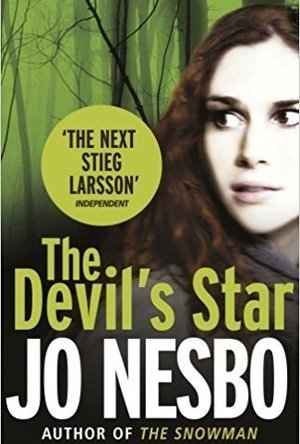

Maybe it's Harry Hole himself. A beyond flawed and almost irredeemable reckless and crazy character, yet one you really can't help but love. Or maybe it's because Nesbo really knows how to write a crime story. He keeps you guessing to the very end and the plot in this story is particularly interesting - an intriguing serial killer mixed in with Harry's vendetta to bring down a corrupt cop. The story in this is just right. The right amount of detail and twists to be thrilling and entertaining yet still plausible.
This isn't my favourite Harry Hole book, the accolade for that probably goes to The Snowman (how they turned such a good book into a terrible film I'll never understand). But this is definitely one of the better books in the Hole series and worth a read.
Clothes, Clothes, Clothes. Music, Music, Music. Boys, Boys, Boys.
Book
Sunday Times Music Book Of The Year. Rough Trade Book Of The Year. MOJO Book Of The Year. In 1975,...
Merissa (14196 KP) rated Shiver (Unbreakable Bonds #1) in Books
Jun 29, 2018
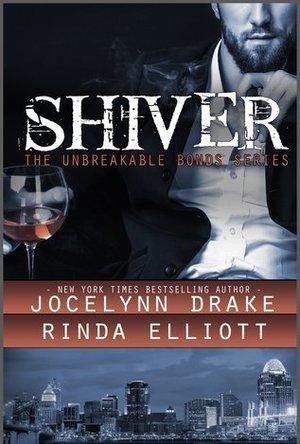


This story is about Lucas and Andrei, self-made millionaire and bodyguard. This book is serious and yet also amusing. They both make a comment about how corny their relationship is, a film was even made about it. This made me chuckle out loud, even as I was concerned about what was going to happen next. I love Lucas - his strength, his friendships, and how he isn't prepared to let others do things for him that he isn't prepared to do himself. He is also an arrogant, high-handed jerk at times, but will admit to when he's wrong. As for Andrei, he is a sweetie. Okay, so that may be the wrong word to describe an underground fighter/bodyguard, but he is. These two have a rocky relationship with a HFN ending, but their relationship is very strong and I can't wait to see where it goes.
The mystery side was enough to keep me guessing (although I'm happy to report my instincts were correct lol). There was plenty of action, as well as action between the sheets. Although the main focus of this book was Lucas, you also get a good glimpse of the others and potential partners for them. As for Rowe, I both want to and don't want to read his, because I think my heart might get broken before I get a HEA!
Excellently written, with no editing or grammatical errors that disrupted my reading flow, I adored this book. The dialogue flowed and felt completely natural whilst reading. I was intrigued and enthralled, and thoroughly loved every word. Absolutely recommended by me.
* A copy of this book was provided to me with no requirements for a review. I voluntarily read this book, and the comments here are my honest opinion. *
Merissa
Archaeolibrarian - I Dig Good Books!

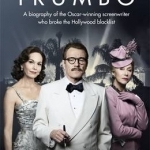

Nominated for an Oscar, BAFTA and Golden Globe,Trumbo is a recent film based on the original biography Dalton Trumbo written by Bruce Cook in 1977. Its adaptation to film provided the perfect opportunity to republish this extremely well researched book. With a forward written by John McNamara, the screenwriter of the motion picture, the story of Dalton Trumbo’s life is just as intriguing as it was almost forty years ago. But who is Trumbo?
If, like me, you have never heard of Trumbo or even the infamous “Hollywood Ten,” it may take a while for it to become clear as to why it was worth Cook’s time to produce a book about the man. Dalton Trumbo was a well-known screenwriter of films such as Papillon, Lonely Are The Brave and Roman Holiday as well as author of the novel Johnny Got His Gun. However these are not all he is famous for. During his life, Trumbo became a member of the Communist Party, which Hollywood branded as an Un-American Activity and thus blacklisted him, as well as other screenwriters, directors and actors. Ten of these men, Trumbo included, were imprisoned for their political beliefs – yet nothing prevented Trumbo from continuing his fairly successful career.
Interestingly, Cook begins the book with the final stages of Trumbo’s life. At time of writing Trumbo was still alive, although rather poorly. After contracting lung cancer, having a lung removed, and suffering a heart attack, Trumbo was a very sick man; nonetheless he was still enthusiastic about being interviewed and telling his personal story.
From his childhood, to his evening shifts at a bakery, Cook details Trumbo’s early life, emphasizing the hard upbringing he had before he found himself in the world of Hollywood. Although roughly 75% of the book focuses on Trumbo’s career, Cook highlights Trumbo as a family man, with both a wife and three children who he absolutely adores.
Cook constantly refers to the Hollywood Ten as a concept that the reader should already be familiar with. Granted, someone who picks up this book is more likely to do so having a prior interest in the central figure, and thus already know about his background; however those ignorant on the topic eventually gather a better understanding on the topic once reaching the relevant chapters. It also becomes clearer why Trumbo is worth reading/writing about – he may have been blacklisted, but he managed to break through all the barriers and reinstate his name and many others.
Reading this half a century after the event, it seems strange that Trumbo was imprisoned. He had not done anything intrinsically wrong, it was purely prejudice against his political beliefs that got him into the mess he found himself. But when you consider the events of the time: World War Two, the Cold War, the Korean War, and Vietnam; it is understandable why many feared those who claimed to be Communists.
Cook’s narrative does not flow as a story, and much of it is broken up with quotes from various people he interviewed. The timeline jumps about between past and present (1970s), which occasionally gets a bit confusing. A large part of the book is spent analyzing many of Trumbo’s works – both for screen and written formats – which, unless you have a particular interest, can be a little tedious.
It has got to be said that Bruce Cook was an exemplary writer with a great eye for detail. He did not jump to conclusions or only talk about things from his point of view. Instead he interviewed, what seems like, everyone who ever met Trumbo, and based his writing on fact backed up with numerous quotes and citations.
This edition of Trumbo contains a selection of photographs taken on the set of the movie. Disappointingly it does not contain any of Trumbo himself – you would think that some photos could have been tracked down!
Trumbo is not a book that will interest everyone. Most people today – particularly in England – will probably be unaware of who Dalton Trumbo was, and thus would only seek out this publication due to a fascination with film production. I have not seen the film, but after reading this and discovering how books go from novels, to screenplays to moving image, it would be interesting to find out which parts of Trumbo’s life made it onto the big screen.
Gendered Frames, Embodied Cameras: Varda, Akerman, Cabrera, Calle, and Maiwenn
Book
Gendered Frames, Embodied Cameras: Varda, Akerman, Cabrera, Calle, and Maiwenn is the first book to...
The Wisdom of Groundhog Day: How to Improve Your Life One Day at a Time
Book
As heard on Chris Evans' Radio 2 Breakfast Show With a foreword by Danny Rubin, screenwriter of...
Sarah (7800 KP) rated I Feel Pretty (2018) in Movies
Oct 4, 2020
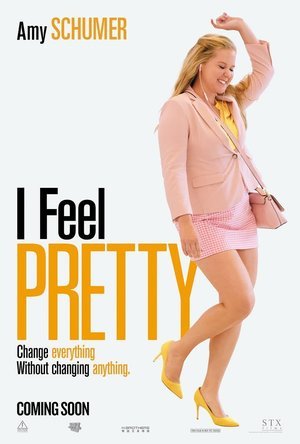

First of all, the message and idea behind this film about body positivity is wonderful and there is a lot in this that I can relate to (the opening scene in the gym for instance). Also the exchanges between Renee and Emily Ratajkowski's character were well done in highlighting how people judge the girls who are lucky enough to look like models (I'd be lying if I said I dont do this myself). The problem is it's very poorly executed. For a comedy, I think I laughed once and despite the good message, I found it rather dull. And Renee's big personality change due to her new perceived beauty seemed a little bit far fetched
I did however enjoy Michelle Williams being utterly ridiculous as Avery and there really needed to be more Tom Hopper!
Overall there's a great message in this but I think it sadly gets lost in poor execution.
The Secret
6.4 Rate It
Book
THE 10TH ANNIVERSARY EDITION OF THE BOOK THAT CHANGED LIVES IN PROFOUND WAYS, NOW WITH A NEW...

Andre Gregory recommended Topsy-Turvy (1999) in Movies (curated)
Leanne Crabtree (480 KP) rated Simon vs. the Homo Sapiens Agenda in Books
Feb 14, 2020
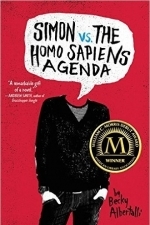
So, this centres around 16 year old Simon who's in the closet, scared to come out to his friends and family. He's instead having an email conversation with someone else from his school - someone whose identity he doesn't know - sharing tales of his life while starting to fall for this someone.
I actually really enjoyed this from the first page. I was drawn into the drama as Simon is pretty much blackmailed by a fellow pupil into helping him get a date with one of Simon's friends. Things escalate and don't go great in the end and I really felt for Simon. Kids can be so cruel to each other and over stupid things that shouldn't matter.
I just fell in love with this group of friends. I loved how protective they could all be of each other and then when Simon and his crush/Blue finally got around to meeting each other...I was smiling like a lunatic. It was so cute. I fell in love with them even more. There was just something so believable about this group. Crushes, friendships, parents.
I cannot write a truly fitting review of this book but if you like young adult books with gay characters or just a sweet romance, then you really should give this book a read.
I definitely feel like I need to read more books by Becky Albertalli now, if they're anything like this one