
The Cinema of Eric Rohmer
Book
Since the death of the French film director Eric Rohmer in 2010, interest in his work has reignited....

Tracking Color in Cinema and Art: Philosophy and Aesthetics
Book
Color is one of cinema's most alluring formal systems, building on a range of artistic traditions...
Drones and Journalism: The All Seeing Eye
Book
Drones and Journalism explores the increased use of unmanned aerial vehicles, or drones, by the...
Mend the Living
Maylis de Kerangal and Jessica Moore
Book
Shortlisted for the Wellcome Book Prize 2017. Longlisted for the Man Booker International Prize...
Bream Gives Me Hiccups: And Other Stories
Book
Bream Gives Me Hiccups: And Other Stories is the whip-smart fiction debut of Academy Award-nominated...

Awix (3310 KP) rated Frankenstein (1931) in Movies
Jan 20, 2021
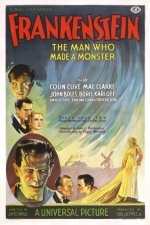


Some parts of this film stand up remarkably well 90 years on: the sets, the direction, some of the performances (Karloff is obviously excellent, Colin Clive perhaps doesn't get the props he deserves); it's quite atmospheric. On the other hand, making the Creature mute removes any possibility of discourse between him and Frankenstein (which is really the heart of the novel) - this is a cautionary gothic melodrama without much interest in exploring the ideas that underpin Mary Shelley's work. Still, obviously, a massively influential movie, and well-done for what it is.

Hip Hop: The Illustrated History of Break Dancing, Rap Music and Graffiti
Book
"Extremely well-written" --Dave Marsh.... "The best and most reliable history" --Robert Palmer.......

The Cinema of Hal Hartley
Book
One of the most significant contributors to the American independent cinema that developed over the...

Movie Metropolis (309 KP) rated The Legend of Tarzan (2016) in Movies
Jun 11, 2019
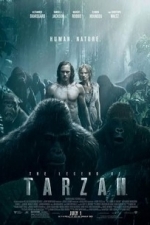

And when Disney announced they were rebooting The Jungle Book in March this year, Warner Bros quickly responded with another jungle-themed film; The Legend of Tarzan. But does this interpretation on the classic character swing or fall?
It’s been nearly a decade since Tarzan (Alexander Skarsgård), aka John Clayton III, left Africa to live in Victorian England with his wife Jane (Margot Robbie). Danger lurks on the horizon as Leon Rom (Christoph Waltz), a treacherous envoy for King Leopold, devises a scheme that lures the couple and friend George Williams (Samuel L Jackson) to the Congo. Rom plans to capture Tarzan and deliver him to an old enemy in exchange for diamonds. When Jane becomes a pawn in his devious plot, Tarzan must return to the jungle to save the woman he loves.
Directed by David Yates (Harry Potter & the Deathly Hallows), Legend of Tarzan features committed performances from its lead cast, immersive scenery and impressive special effects, but all of the glitz can’t save a film that plods along at a dreadful pace. Not since Peter Jackson’s King Kong has there been a movie that wastes so much of its opening act.
Alexander Skarsgård is likeable and commanding as the titular character, but lacks enough acting prowess to tackle the deeper, more emotional side that writers Adam Cozad and Craig Brewer have brought to the table here. Therefore, the scenes featuring a solo Tarzan suffer somewhat and Samuel L Jackson feels wasted in a poorly written and half-hearted role.
It is in Margot Robbie and Christoph Waltz that we find the film’s saving graces. Their characters leap off the screen with Waltz in particular being a highlight throughout. It’s unfortunate that one of our greatest living actors is lambasted with poor dialogue however, though the script just about keeps him afloat.
David Yates brings a similar filming style here to that of his foray into Harry Potter. The action is confidently filmed, but he avoids the use of shaky-cam that many directors seem to find appealing nowadays. The CGI is on the whole very good, especially in the finale which is breath-taking to watch.
It’s just a shame the rest of the film is such a drag. The first hour is incredibly poorly paced with very brief, albeit well-filmed, action sequences not doing enough to brighten Legend of Tarzan up. Elsewhere, the use of flashbacks is at first a decent way of giving the audience some exposition, but after the tenth one, they’re a nuisance.
Overall, The Legend of Tarzan does a lot more with its iconic character than other films have done, but that doesn’t excuse its poor pacing. Thankfully, the exciting finale lifts the final act above the standard of the first hour, and commanding performances from all the cast sustain interest just about enough to see it through to the end.
https://moviemetropolis.net/2016/07/07/cpr-needed-the-legend-of-tarzan-review/
Kayleigh (12 KP) rated The Fault in Our Stars in Books
Jan 2, 2019
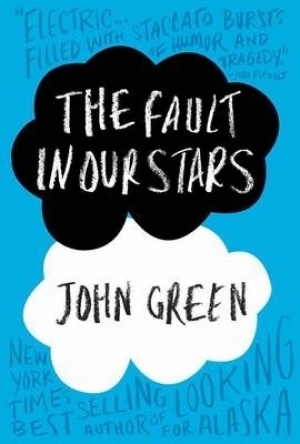

In my last review (of <a href="http://awowords.wordpress.com/2013/02/02/beautiful-creatures/">Beautiful Creatures</a>), I was a little harsh about the portrayal of love stories in teenage/young adult fiction. The backbone of this book is that slowly but surely, the two main characters, Hazel and Augustus, fall in love. It’s not some pre-determined, intense force that sweeps the characters off their feet. It’s slow and steady, with a few set-backs, much like Hazel’s breathing at times, if you like. As Hazel puts it, perfectly:
<blockquote>“I fell in love the way you fall asleep: slowly, and then all at once.”</blockquote>
There’s nothing glamorous – life goes up and down, it’s sad and it’s funny, it’s not fair. It’s real.
In The Fault in Our Stars, John Green introduces us to two extremely philosophical teenagers that have been through a lot more than most people, with the knowledge that there is only more hardship to come. He humanises something I know I have never really thought about – the feelings, and more specifically, the sense of humour cancer sufferers/survivors have throughout it all. I talk about the humour later, but something that really got the message across was Hazel finally admitting her biggest fear to her parents. Hazel, the girl who decided to become a vegetarian so as to “minimise the number of deaths I’m responsible for.”
<blockquote>“‘I’m like. Like. I’m a grenade, Mom. I’m a grenade and at some point I’m going to blow up and I would like to minimise the casualties, okay?’”</blockquote>
It was the realness of the characters that got me so attached. For the last third of the story, I was unabashedly sobbing (luckily, alone. The first time I finished this, I was on a bus). To be blunt (and a little bit gross), the best way I can describe the end of this book is like this. When I was a child, I’d be crying my eyes out over something or other, and my mum would be comforting me. When the worst was over, she’d joke that I’d better not have got snot on her jumper, which would make me laugh through the tears. I’m trying not to put spoilers in here, but the next quote, for example, happens just after one of the most poignant parts of the book. It lightens the mood without altering the seriousness, and at the same time reminding us that they are, after all, only teenagers.
<blockquote>“He smiled. Gallows humour. ‘I’m on a roller coaster that only goes up,’ he said.
‘And it is my privilege and my responsibility to ride all the way up with you,’ I said.
‘Would it be absolutely ludicrous to try to make out?’
‘There is no try,’ I said. ‘There is only do.’”</blockquote>
John Green managed to blend humour and tragedy perfectly. If you’ve read the book already, he wrote a blog post answering questions about the book – I’d recommend a read. I don’t want to waffle, so I’ll leave it there, but I’d wholeheartedly recommend The Fault in Our Stars - it’s an instant favourite and already has a place in my heart. Don’t forget the tissues!
Oh, and about the film that’s apparently in the works – did anyone else picture Hazel as looking a little like Ellen Page in Juno? Maybe it’s a similar attitude to life, but I could only see her as this!
PS – Sorry for anglicising the quotes – habit!
This review is also on my <a href="http://awowords.wordpress.com">blog</a>; - if you liked it, please check it out!