

Purple Phoenix Games (2266 KP) rated Studies in Sorcery in Tabletop Games
Oct 6, 2020

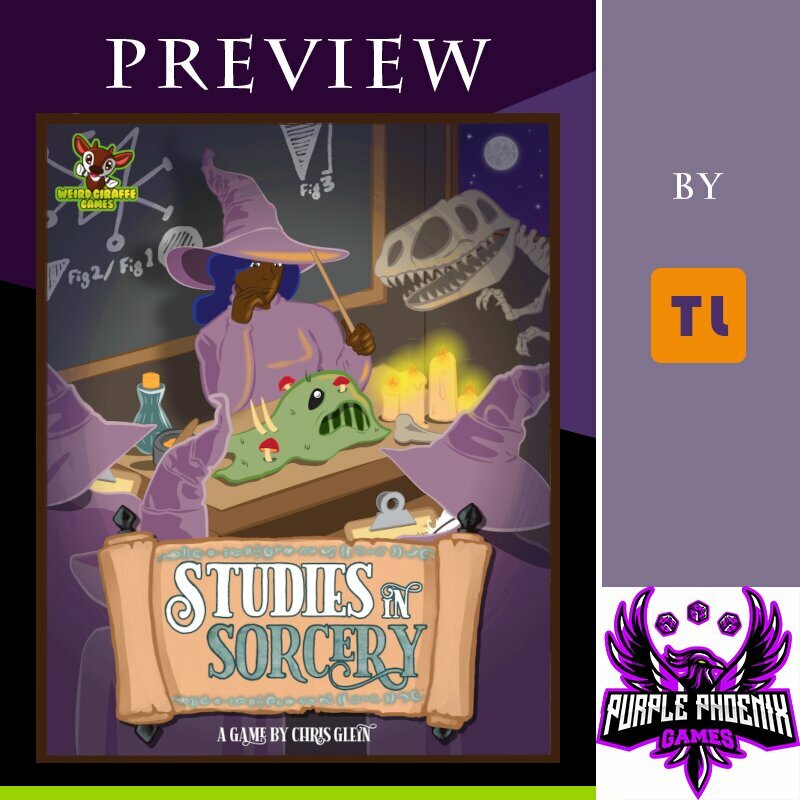
Studies in Sorcery is a competitive card game that uses elements from other well-loved games and puts them with a wonderful theme and some very interesting card synergies. The game takes place over four school semesters (rounds) and each semester lasts four weeks (turns). Can you students complete your thesis using the research grants you are given, or will you fall flat to repeat the program again?
DISCLAIMER: We were provided a prototype copy of this game for the purposes of this preview. These are preview copy components, and the final components may be different from these shown. Also, it is not my intention to detail every rule in the game, but to give our readers an idea of how the game plays. You are invited to back the game on Kickstarter launching October 6, 2020, order from your FLGS, or purchase through any retailers stocking it after it is fulfilled. -T
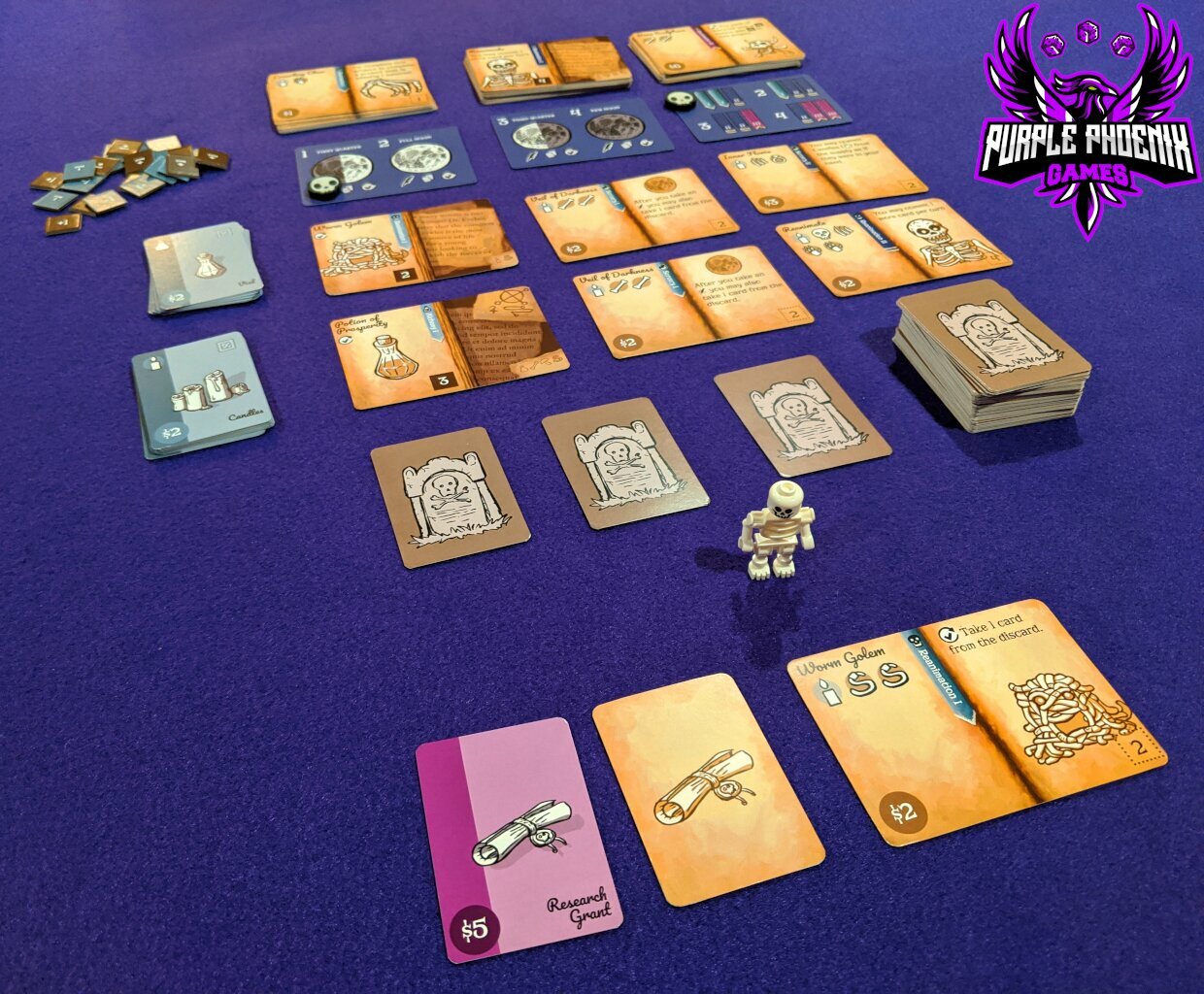
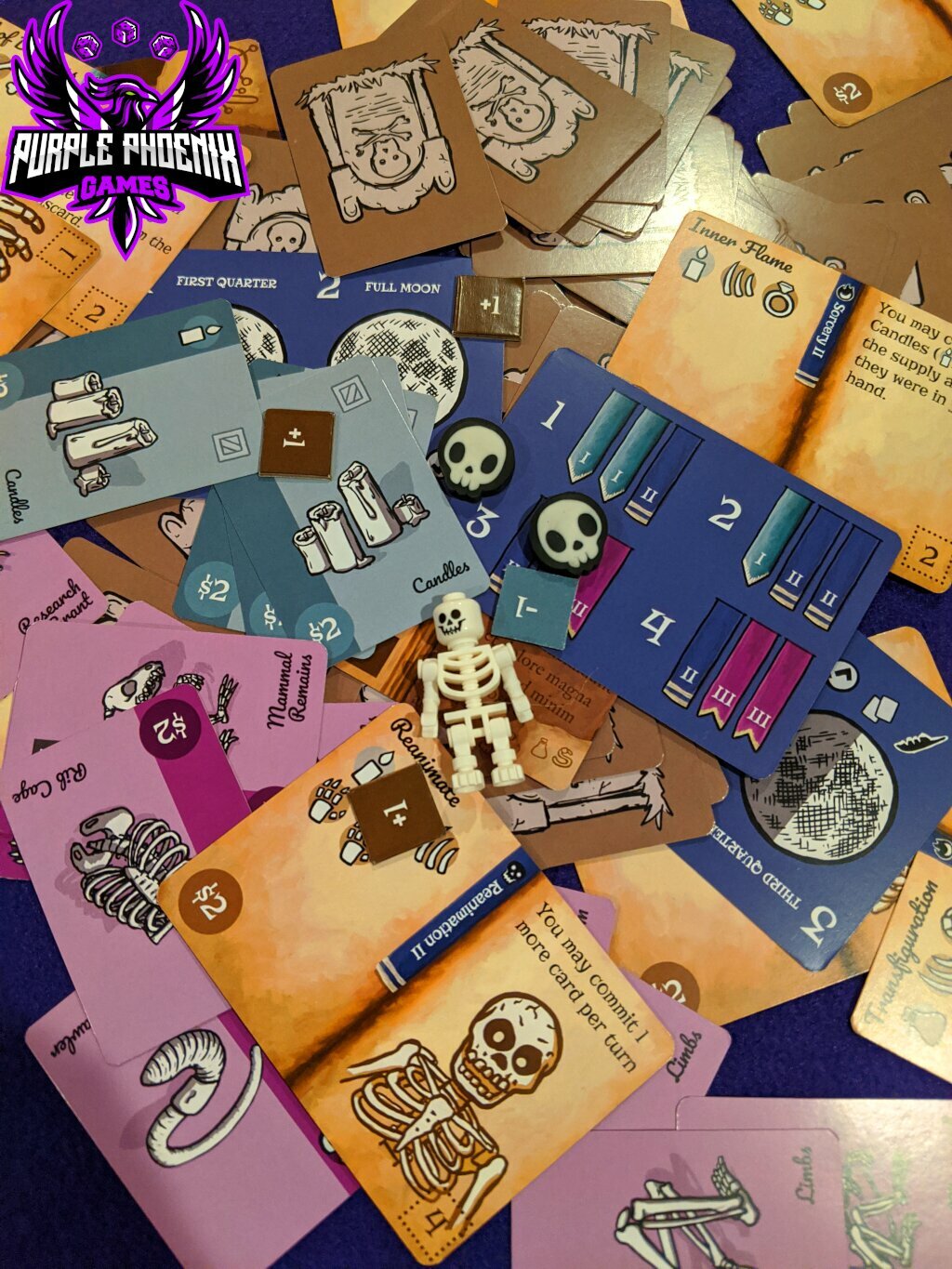
To setup, separate each deck of cards into like piles (Levels 100, 200, and 300 of the projects, graveyard cards, candles, vials) and shuffle them. Lay out the moon phase cards and semester tracker, placing the tracker tokens (skull erasers in the prototype) on the start of the cards to begin play. Set out the candles and vials in their own piles, as well as the point modifier tokens. Deal project cards according to the semester tracker in a 3×2 pattern under the moon phase and semester tracker cards like is shown in the photo below. Initially the graveyard pile will have three stacks of two cards each face-down next to the draw pile. Each player receives a research grant card, two thesis cards to choose one from, and two 100-level project cards from which the player will choose one. Give the first-player token (in this prototype it’s a cute LEGO skeleton) to the player who last attended school, and the game may begin!
Each player will be resolving actions, committing materials to their projects, and using completed project abilities each moon phase (turn). The actions one may take are: Dig, Buy, Cram, and Project Action. When a player uses the Dig action, they are searching for materials. A player can look at the items in the first pile of graveyard cards and take all the contents. If they do not like them, draw a card from the draw deck and place it on the first pile. Continue this for the next pile, and if unsatisfied the player may draw the top card from the draw pile OR either a candle or vial from the supply of stock cards.
Buy actions allow a player to use any unwanted materials or research grant monies to purchase additional candles, vials, or project cards from the middle of the table. To Cram, players may commit up to two materials from their hand to a project by placing the materials under the project cards. Project Actions allow players to use actions printed on any of their completed project cards. These can be very powerful.
Once each player has taken one of these actions, move the tracker token on the moon phase card to the next icon – Commit. To commit materials to projects, simply place the cards under the selected project (exactly like players do with the Cram action). Once all players have completed their commits, they may complete any projects that have sufficient materials by discarding the used materials and flipping the project card to its opposite side earning the printed points at the end of the game.
Play continues in this fashion for four turns each semester and the game lasts four semesters. Therefore the game will last 16 turns total. Whomever earns the most points for combinations of completed thesis cards, completed projects, bonus point modifier tokens, and one point for each $8 worth of materials in hand will be named Valedictorian of their class and winner of Studies in Sorcery!
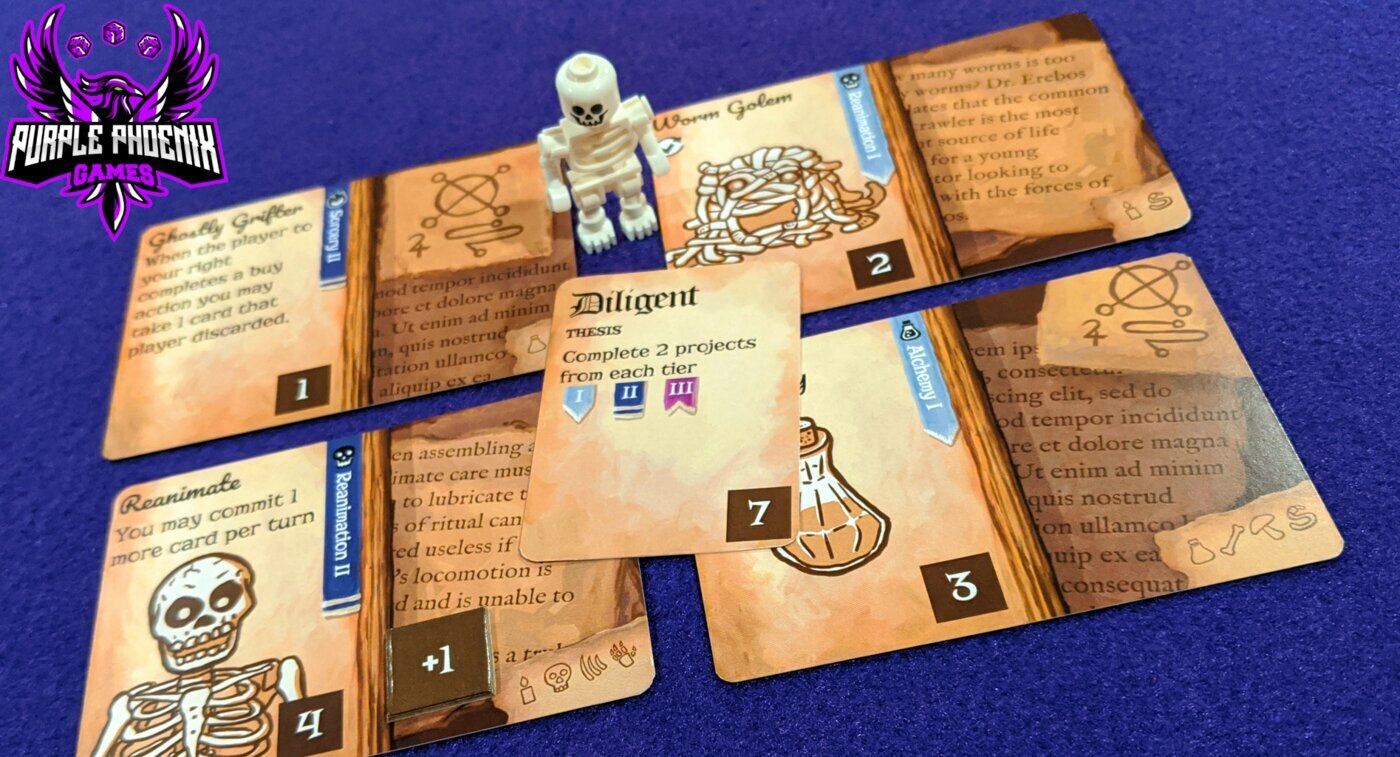
Components. Again, this is a prototype copy of the game, and I know some things will be different in the final version. However, what we were provided is a bunch of cards that have great art, are good quality, and are very easy to read and understand. The cute first player token will more than likely become a different component in the end, and the tracker tokens probably will be changed as well, but these are great bits to include in a game like this. The only negative I have about components is that I wish there was MORE color. Most of the cards are brown-heavy, and it’s completely fine, but I would love to have splashes of weird colors here and there. Overall, I am very pleased with the components in this game. Weird Giraffe Games always has great components in their prototypes AND final games.
It is probably no surprise that I love this game. The theme is wonderful, the wonky art is great, and it’s more thinky than one might imagine. The game play can be somewhat quick, or players can take excruciating amounts of time to think through their turns and chain together impressive actions. One thing remains constant – 16 turns to complete your thesis cards can be a huge undertaking. My first time playing I chose a thesis card worth 7 points (even though the rulebook advised me not to include those for the first play). I wasn’t even really that close to completing the thesis, but I may have with another two or three turns. But then again, that card is worth 7 points for a reason – it’s SUPPOSED to be difficult. My suggestion: take the rulebook’s advice and remove those thesis cards for the first play. Don’t try to be a hero.
Ahhhhhhh! I want to play it again right now just so I can attempt that thesis card again. But there are other thesis cards in the game. And other strategies to apply. And really, when you can’t wait to play a game, that’s a sign of a fantastic game for that specific gamer. Will this be a gem for everyone? I don’t know. It certainly works for me and my circle of gamers.
If you are a fan of the Harry Potter series (even though this is NOT a Harry Potter game) and need a thinky card game with that sort of fantasy classroom theme, or if your collection is begging for something new and quirky, or if you just love Weird Giraffe Games’ catalog and need every game they offer (I wouldn’t blame you), then you need to give Studies in Sorcery a look. Please consider backing it on Kickstarter launching October 6, 2020. I know my collection just got a lot cooler with this one.
Purple Phoenix Games (2266 KP) rated Twisted Game of War in Tabletop Games
Jun 4, 2021
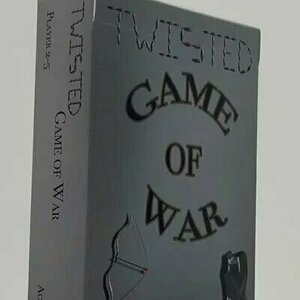

In Twisted Game of War players take hold of their army and attempt to defeat their opponents by capturing and converting their entire army. The winner is the player who manages to collect all of the cards in the deck and hold every soldier.
DISCLAIMER: We were provided a copy of this game for the purposes of this review. This is a retail copy of the game, so what you see in these photos is exactly what would be received in your box. I do not intend to cover every single rule included in the rulebook, but will describe the overall game flow and major rule set so that our readers may get a sense of how the game plays. For more in depth rules, you may purchase a copy online or from your FLGS. -T
To setup give each player a reference card, shuffle the deck of remaining cards, and give each player an equal number of cards. The game may now begin!
On a turn each player will simultaneously blindly draw and play one card from the top of their deck to the table. The cards are compared and the winner of the hand is the card with the higher number value. In Twisted Game of War, however, in addition to gaining the played cards the winner will also consult the chart on the reverse of the reference card. This chart shows additional results based on which suit of card bested the other suit. Possible effects include: a random card from the loser’s deck, a bottom card, the top two cards, or even each card returning to its original owner’s deck. As the game progresses, one player will eventually out-duel their opponent to win the game!
Components. This is a deck of cards in a tuckbox. The cards are normal quality and feature a brown back and numbers with different suit on the fronts. Quality-wise everything is fine. Where I have issues is the artistic design choices made for the game. The suits all suggest medieval-esque weapons and armor, and all utilizing metal as primary materials (save for the bow). However, the card backs and logo for the game seem to feature stitching, as you might find in cloth materials. This mismatch does not affect gameplay at all, but made me do the doggy head-cock motion when I noticed it. Similarly, the cards are all, well, boring to look at. Yes, they give the proper elements that are needed: suit and number. And I suppose players aren’t really looking at them too much anyway, as it’s a slightly fancied-up War and cards are played and discarded almost immediately. In any case, I feel an area of opportunity lies with the aesthetic of the game cards.
All in all this is a decent idea pasted onto a “game” that really is not much fun to play anyway. War takes zero skill and has zero choices. Twisted Game of War plays the exact same way, but has the added bonus of at least DOING something on many hands. So I suppose there is merit to be found.
When all is said and done, I still cannot see this as a “game,” as I happen to define the term personally, but I can see value when playing with children. If used with children, the game introduces the “less than” and “greater than” concepts, and children do not need to be able to read in order to play with the suit effect chart, so long as an adult or older child is able to read the results.
When I am hankering for a good card game, I simply cannot suggest Twisted Game of War with typical adult gamers. However, if I need something that my kids can get into, I may be able to pull this out and help teach them simple math and chaos concepts. I like the idea of trying to improve overly-simple games, but I think a bit more care could have gone into production here and it would have elevated this game for me. If you are searching for such a game as this, please hop over to the publisher’s website at: Mental Eclipse Games and tell them Travis sent ya.


The Marinated Meeple (1853 KP) rated Battle Line in Tabletop Games
Apr 18, 2018


Tarot of Marseille
Lifestyle and Health & Fitness
App
With iTarot, control your future! Discover four drawing methods to learn everything in a few finger...

My NBA 2K18
Games and Sports
10.0 Rate It
App
The companion app for the award-winning NBA 2K franchise is back, with MyNBA2K18. Packed with...

memory® – The Original from Ravensburger
Games and Entertainment
App
Original memory® - THE classic from Ravensburger. The app offers four different sets of cards and...
No Such Thing as a Free Sandwich
7.0 Rate It
Tabletop Game
No Such Thing as a Free Sandwich is a mint tin party game for 2-8 players, ages 13+. Down to their...

Italian Bachelors: Steamy Seductions: Challenging Dante / Dante's Unexpected Legacy / Caroselli's Baby Chase: Book 4: One Night with Consequences: Book 2: The Caroselli Inheritance
Lynne Graham, Catherine George and Michelle Celmer
Book
Steamy Seductions Dante Leonetti Unimpressed by his mother's new companion, shrewd Italian...