
Search
Search results

Purple Phoenix Games (2266 KP) rated Meow! The Cult of Cat in Tabletop Games
Jul 18, 2019


I remember when I joined a cult. Wait, I have not yet done that. I have joined fraternities and other organizations, though, where there are specific ritualistic initiations and periods of testing and awakening just prior. These trials have included written tests, symbolic experiences with the brethren, and sometimes just silly stuff that make no sense but to bring us closer together. This is the tarry of your anthropomorphic character as you attempt to gain the favor of your brethren and pass all the tests along the way into the Cult of Cat.
NOTE: I have never been hazed nor have I hazed another. Just wanted to get that straight.
DISCLAIMER: We were provided a review copy of this game for the purposes of this review. These are preview copy components, and I do not know if the final components will be similar or different, or if the Kickstarter campaign will alter or add anything through stretch goals. -T
As an initiate to the Cult of Cat it is your duty to pass the test and not break any rules. The winning player, therefore, is the one who can perform all of the necessary rules without breaking any. Let me explain. The game is a giant stack of cards. Upon these cards is the name of the rule, an illustration that matches the rule, and an explanation of the action to be completed. At the beginning of the game you are dealt two cards (or one card dependent on number of players in the game) and one card is dealt face-down to the middle of the table. You look at your dealt cards, study them, and pass your hand to the player on your left. So you now have seen two rules that you have passed, and you have received two rules from your neighbor on the right. I hope you remembered what you passed…
On your turn you will play a card from your hand, announce and perform its action, and then perform all the actions on your opponents’ cards that you can possibly remember to impress the brethren and hopefully not break any of their rules in the process. Once you are satisfied with your performance you point to the player on your left and ask, “Have I broken any of your rules?” If you performed one of the rules in their hand incorrectly, or omitted one of their rules, then they are required to say, “Yes.” At this point they announce the rule you have broken, add that card to the card that was dealt face-down to the table, and you add your played card to form a pile of three. Shuffle those and draw one for yourself, your opponent draws one, and the remainder stays on the table. This is the game and it continues until someone has correctly performed the actions of their opponents and not broken any rules.
Components. Again, this is a giant stack of cards. I do not know what the quality will be after the Kickstarter campaign ends, so I cannot really comment on them. My review copy cards were fine. The art on the cards is really comical and funny. I mean comical like in comic books. I like the art quite a bit, and while I am not really looking at the illustrations as I play (there is already so much I am trying to remember), when I look through the deck I chuckle at a lot of the cards.
Guys, this is a great party game. It is rules-light, doesn’t require a ton of strategy, and gets people up and moving and out of their comfort zones. It really is perfect for those times when you have reluctant players or partners to get them into the gaming mood by having them perform ridiculous but super fun actions. Winners, losers, it doesn’t matter at the end of this game. Everyone is sure to have a really great time playing. If you love Happy Salmon, I can almost guarantee that you will also love Meow! as something a little different. And we at Purple Phoenix Games love Happy Salmon! I am really looking forward to the Kickstarter campaign to see what Peter C. Hayward has up his sleeves.
Purple Phoenix Games (2266 KP) rated No Thanks! in Tabletop Games
Jan 6, 2020
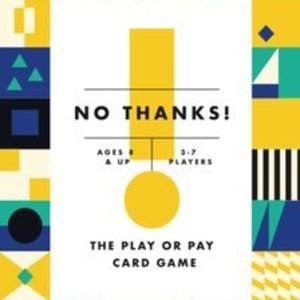

Can a game with absolutely no theme be any good? Let’s find out with today’s game: No Thanks!
Usually in my intros I like throw a little flavor that matches the theme of the game. Well, I just couldn’t think of anything so you get the shortest intro I have done to date. No Thanks! is a great card game of push your luck. Period. I’ll tell you all the rules here since this mighty game may be bypassed in stores as it looks very unassuming and bland.
You are trying to get the least amount of points in a very nontraditional way. In the deck are cards numbered 3-35. You shuffle them all up and randomly eject from the game 9 cards. Nobody will know which 9. Why does that matter? Well, you score points (which is bad) equal to the lowest number of all your runs of cards. So a run of 3-4-5-6 scores 3 points because 3 is the lowest card. However, if 5 was one of the ejected cards and you had 3-4 and 6, you total would be 9 (3 from the first run and 6 from the next run since there wasn’t a 5 to connect them).
How do you get these cards? Well, on your turn you flip over a card from the face-down stack. Decide if you want to take that card into your tableau or if you would like to pass. If passing, you plop a red chip on it (of the 11 you were given at setup) and offer it to the next player. They can take the card along with the chip, or add a chip of their own. The offer now goes to the next player who does the same. Whomever ends up with the card also collects all the chips to be used on future cards.
This doesn’t really sound all that fun does it? Well it most certainly IS fun once you give it a go! Especially when you’re trying to decide if you should just take the 15 because you already have a run of 12-13-14 and it would be worth zero points, but you are also running low on chips. Let it ride around the table a couple times and get those chips! But beware of your opponents who will take the card out of spite and now you can’t connect your runs and you are low on chips. Uh oh Daddy-O!
This game is great with all player counts, and with all ages who can understand the math behind their choices. That’s why we at Purple Phoenix Games authorize a non-themed score of 8 / 12.


MICB Mobile Banking
Finance
App
Ro: Prin intermediul aplicaţiei pentru iOS de la Moldindconbank ai la îndemână acces la...

Millennium
Finance and Productivity
App
We are always seeking to improve the App Millennium user experience, which is why we launched a new...
Purple Phoenix Games (2266 KP) rated Among the Stars in Tabletop Games
Dec 3, 2021

If there is a mechanic that we at Purple Phoenix Games seem to really love, it is card drafting. One such game that has been a big hit for us (well, at least for 3 of us….) is 7 Wonders. Draft a card, pass the rest to your neighbor, draft another card from those received from your other neighbor, and repeat. Set in the Ancient World, you are working to build the most wondrous city. But Laura, why all the 7 Wonders talk in this review? Well, because Among the Stars gives me major 7 Wonders vibes, but IN SPACE. Keep reading to see what I mean.
Disclaimer: Among the Stars can be played in two different modes – Aggressive and Non-Aggressive. This review covers the core game Non-Aggressive mode of play. -L
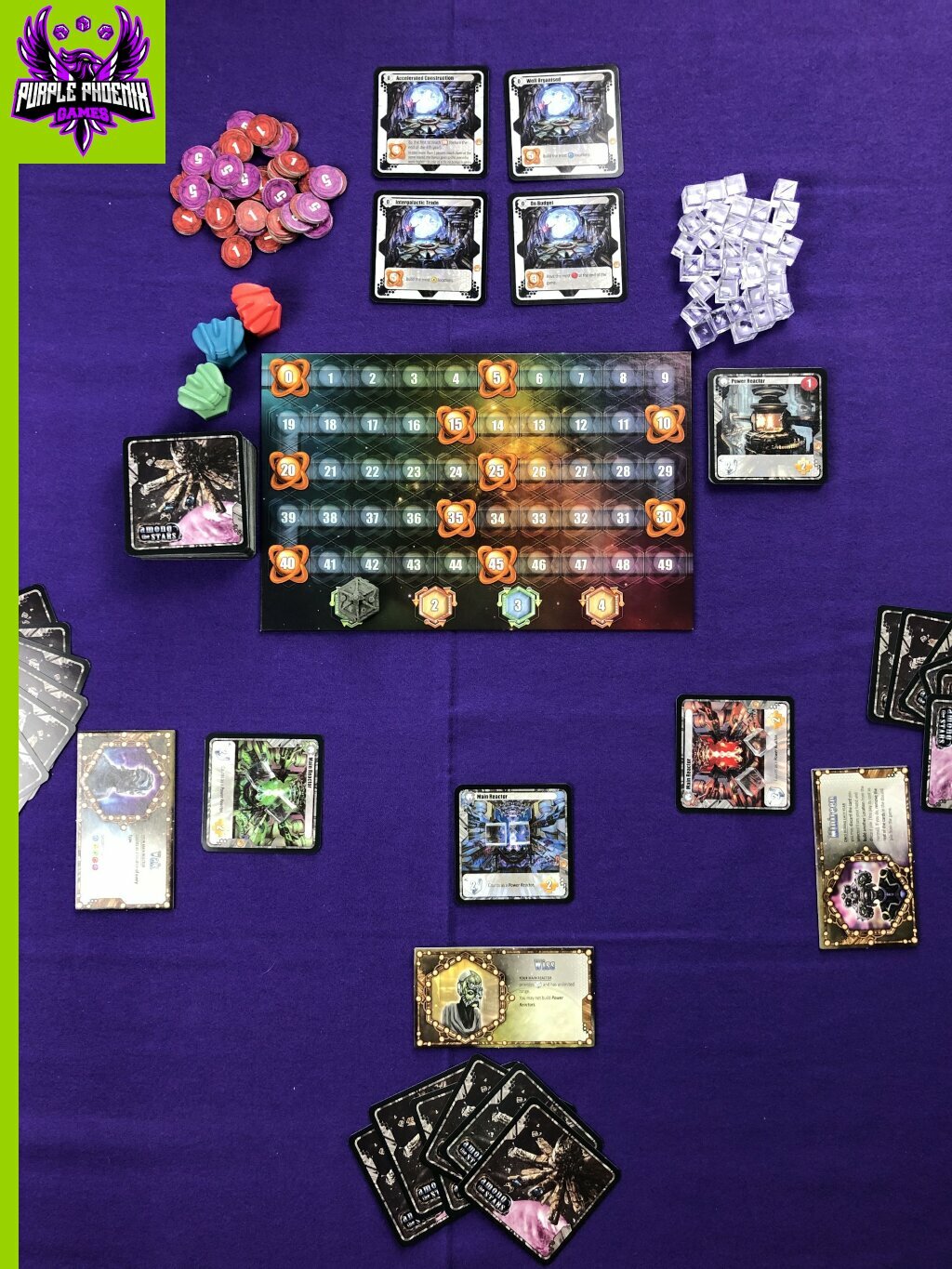
Among the Stars is a game of card drafting and tile placement in which players take on the roles of different alien races attempting to build the most efficient space station over the span of 4 years (rounds). After the 4th and final round, players calculate their final scores, and the player with the highest score is the winner! To setup for a game, assemble the Location deck as described in the rules. Each player takes a Main Reactor card and score marker in their chosen color. Score markers are placed at zero on the score board, and players put their Main Reactor card face-up in front of them, along with 2 Energy Cubes. Players choose, or are randomly given, a Race Tile with a special Racial Ability to be used throughout the game. Randomly draw the requisite number of Objective cards and put them face-up near the score board. The game is now ready to begin!
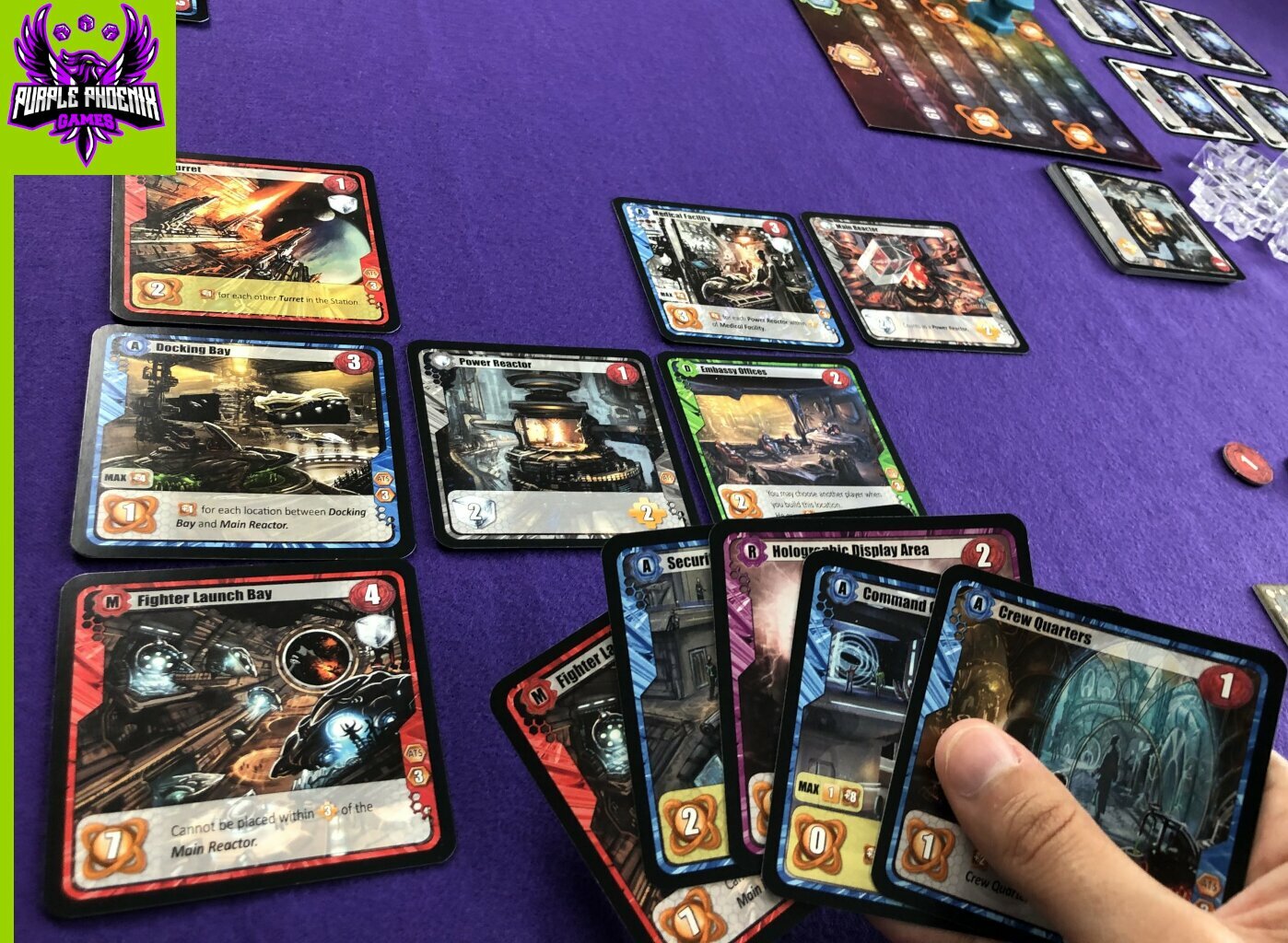
Over the course of 4 rounds, players will be drafting cards and playing them into their Space Station. At the start of each round, every player collects 10 Credits (game currency), and draws a hand of 6 Location cards. Every turn, players will select one card from their hand, place it face-down in front of them, and will pass the remaining cards in their hand to the next player (in either clockwise or counter-clockwise direction, depending on the round). Players will then simultaneously reveal their chosen card and perform one of three actions: Build a Location, Build Power Reactor, or Discard and gain 3 Credits. To Build a Location, you pay its listed cost in Credits and/or Energy and add it to your Space Station. Locations must be placed orthogonally adjacent to an existing Location. When you build a Location, you immediately gain the listed number of VP (tracked on the score board), and may use its ability. Some abilities are immediate and earn you extra VP now, while some are delayed and will be counted at the end of the game. To Build a Power Reactor, you will first discard your selected card for the turn. Pay the 1 Credit cost of a Power Reactor and place it into your Space Station, along with 2 Energy Cubes. Every round, you get 10 Credits, but Energy Cubes do not replenish unless you build more Power Reactors, so keep an eye on your resources! The last possible action is to Discard and gain 3 Credits, and is pretty self-explanatory.
Players continue taking turns (drafting cards, passing cards, and playing cards) until they are left with no cards in hand. The round is now over. Move the round marker to the next space, and begin a new round by drawing another hand of 6 cards. After the 4th round of play, the game ends and final VP are scored. Victory Points have been earned throughout the game, but now any delayed abilities are triggered and scored, Objective points are added, and players gain points for Power Reactors and remaining Credits. The player with the highest score is the winner!
See what I mean about being 7 Wonders in space? The overall gameplay is pretty much the same thing – draft a card, pass cards, play the card – even though thematically they’re on opposite ends of time. That familiarity and simplicity of the gameplay definitely added to my enjoyment of the game. And when I say ‘simplicity’ of gameplay, I do not mean that it is an easy game necessarily. It still requires a decent amount of strategy! Not only do you have to decide what card to draft for maximum benefit, but you also need to figure out exactly where to put it in your Space Station too. Some Locations may give you extra VP for being adjacent to certain other Locations, or they may even earn more VP for distance between two Locations. You’ve got to be thinking in advance, but also able to adapt on the fly. Do you draft a card that you don’t necessarily want because you can see your opponent needs it? Or do you keep your head down and try to fly under the radar? The strategy and mechanics work very well together in creating an engaging and entertaining game.
Components. This game basically just consists of cards, a score board, and some tokens. So even though it’s nothing too fancy or anything, they’re still pretty decent quality! The artwork is thematic and fun to look at, and the layout of the cards is easy to understand. The cards are square, so that makes for some interesting shuffling, but the square shape really lends itself well to the tile-laying aspect of the gameplay. So all in all, good production quality. Just be warned – as the game progresses, it turns into quite a table hog, since you are constantly adding cards to your Space Station. Not a knock on the game, just a heads up so you give yourself plenty of room!
Will Among the Stars replace 7 Wonders for me? Ultimately, no. Don’t get me wrong, it’s still a great game, but 7 Wonders just offers a little more strategy that bumps it to a higher level than Among the Stars. To introduce players to these mechanics and gameplay style, I would use Among the Stars because it is a little ‘lighter’ than 7 Wonders, if you ask me. If you are a fan of 7 Wonders and are interested in a more futuristic theme, I would definitely recommend checking out Among the Stars. It’s a neat game that has been hiding on my game shelf without the playtime it deserves. Purple Phoenix Games gives this one a stellar 15 / 18.


Purple Phoenix Games (2266 KP) rated Horreos in Tabletop Games
Jan 23, 2022

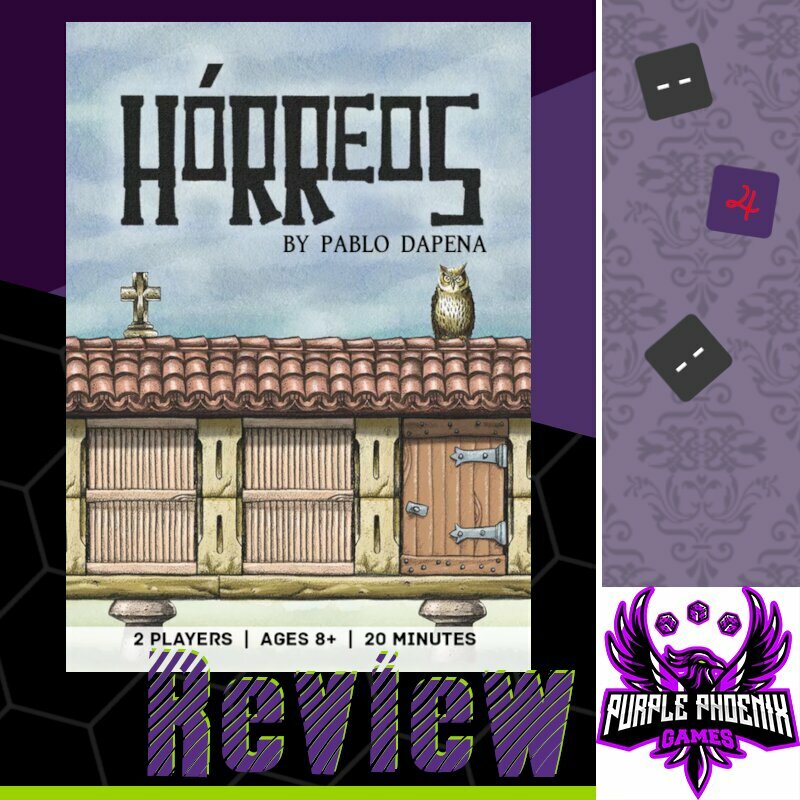
I’m not a huge history buff or anything, but I am definitely interested in my family lineage/ancestry. What does that have to do with this game? Well, with the last name Rodriguez, I’m sure you guessed that there’s some Spanish heritage in my background. My Dad will often talk about how our family originally came from Spain a loooooong time ago. Specifically from Galicia, Spain. So when I saw this ButtonShy game based on the real-life location of Galicia, my roots were calling to me and I had to get it. Hórreos gives us a small glimpse into life in 18th century Galicia – and it sounds pretty great!
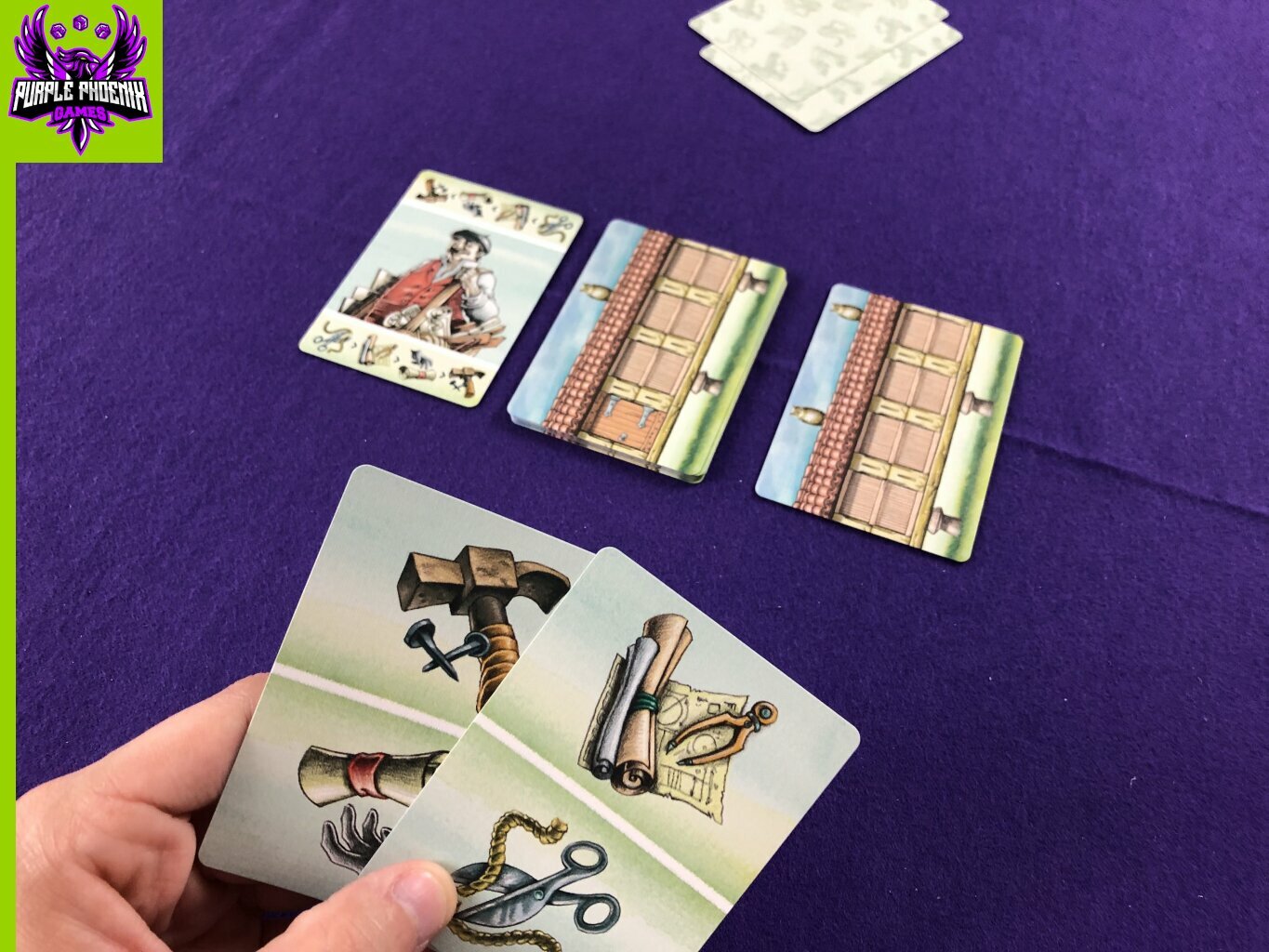
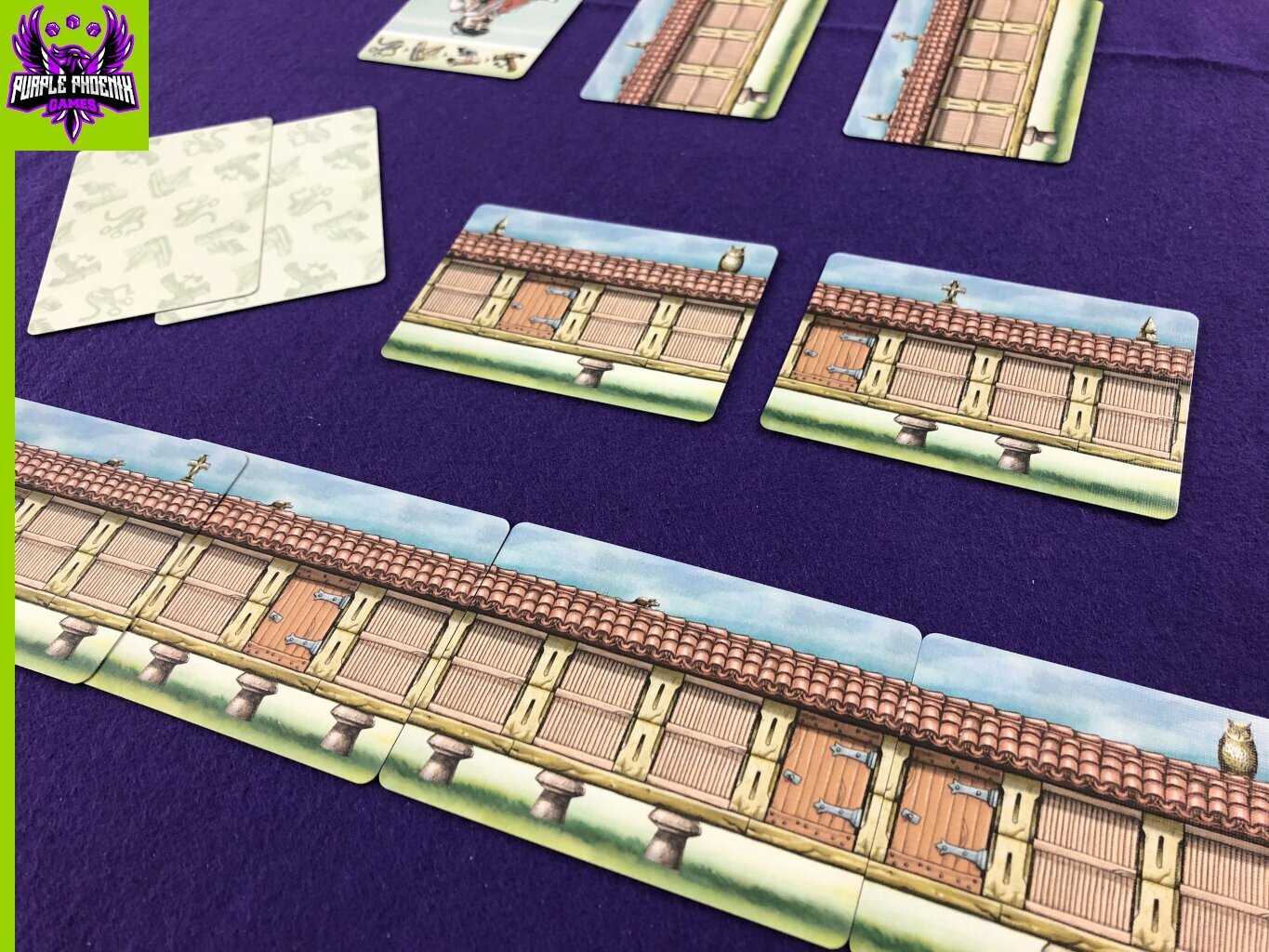
Hórreos is a 2-player game in which players are competing to build the most effective and aesthetically pleasing hórreo in town. What is a hórreo? It is a building for storing grain, elevated from the ground to prevent rodents from infiltrating the structure. So in this game, players are building long and ornate hórreos that not only look stunning, but can keep the rats out of the grain! To setup for a game, each player receives 2 Action cards and the Hórreo cards are shuffled. The deck is placed between the players, and the top card is placed beside the deck to form a 2-card Market. The Leader card is placed beside the Market, facing the starting player. Pictured below is the setup for the beginning of a game.
Over a series of rounds, players will be taking 1 of 4 possible actions as they attempt to build the highest-scoring structure. Each player has 2 Action cards at their disposal. Each Action card has 2 possible Actions on it – one card is Sabotage or Plan, the other is Steal or Build. Both players will secretly choose whichever Action they wish to perform this turn, and place their card face-down in front of them. Players will then simultaneous reveal their chosen Actions, and they will be resolved in the following order – Sabotage, Plan, Steal, and Build. If a player has chosen to Sabotage, they will rotate their opponent’s Action card, forcing them to perform the other listed action this round. To perform the Plan action, the player will select one of the cards from the Market to be placed into their personal supply tableau. If you have chosen to Steal, you will select a card from your opponent’s supply, and take it into your own supply tableau. And finally, to Build is to move a card from your supply to your hórreo. Cards in your hórreo cannot be stolen. As with many other ButtonShy games, cards in your hórreo may be placed adjacent to, or even overlapping, previously played cards – cards may never be tucked under cards in your existing hórreo.
If both players have chosen the same action, the player with the Leader card facing them gets to decide which player will resolve their action first. The Leader card is then rotated to face the opposite player, and so on, for future ‘ties’. An important note – you cannot pick the same Action twice in a row, you must pick one of the other 3 Actions. So take that strategic tidbit into consideration when deciding what to do each round! The game continues in this fashion, with players selecting/simultaneously revealing Actions, resolving their Actions in order, and building their hórreo until there is 1 or fewer cards left in the Market and the players’ supplies at the end of a round. At that point, the game ends, points are tallied, and the winner is declared!
Points are scored in several ways. Most of the hórreo cards are ‘decorated’ with crosses and pikes, and each pair you have in your final hórreo will earn you points. Similarly, the number of doors in your hórreo, as well as adjacent pillars supporting your structure, will earn you points dependent upon the number (the more doors you have, the more points you earn, etc.). As mentioned earlier, you’re trying to keep these pesky rats out of your grain, so any rat pictured on your cards is worth -2 points, but each owl you have pictured eats (cancels out) one rat. And of course, whichever player has build the longest hórreo earns extra points. All points are tallied, and the player with the highest score is the winner!
I have to admit that Hórreos surprised me. The gameplay seems simple enough, so I honestly wasn’t really expecting a lot from this game. For such a small game, Hórreos is all about strategy. Each round, you only have 4 Actions from which to choose, and that really forces you to think long-term with your strategy. But at the same time, since Actions are revealed simultaneously and resolved in a set order, you have to consider what your opponent might do. For example, the Sabotage action forces the opposing player to use the other Action of their chosen card this round. Can you bluff your opponent into playing that Sabotage, forcing you to switch Actions, thus letting you perform the Action you really wanted to perform? That goes hand in hand with the fact that you cannot choose the same Action twice in a row. Can you anticipate your opponents moves to benefit your strategy? Or will you be out of touch, and thus be forced to essentially waste a turn performing an Action that you actually didn’t want to? And don’t forget the Leader card – if players both pick the same Action, the Leader can decide who resolves first. Maybe it’s strategically better to let your opponent resolve first, so then you can just negate what they just did, or vice versa.
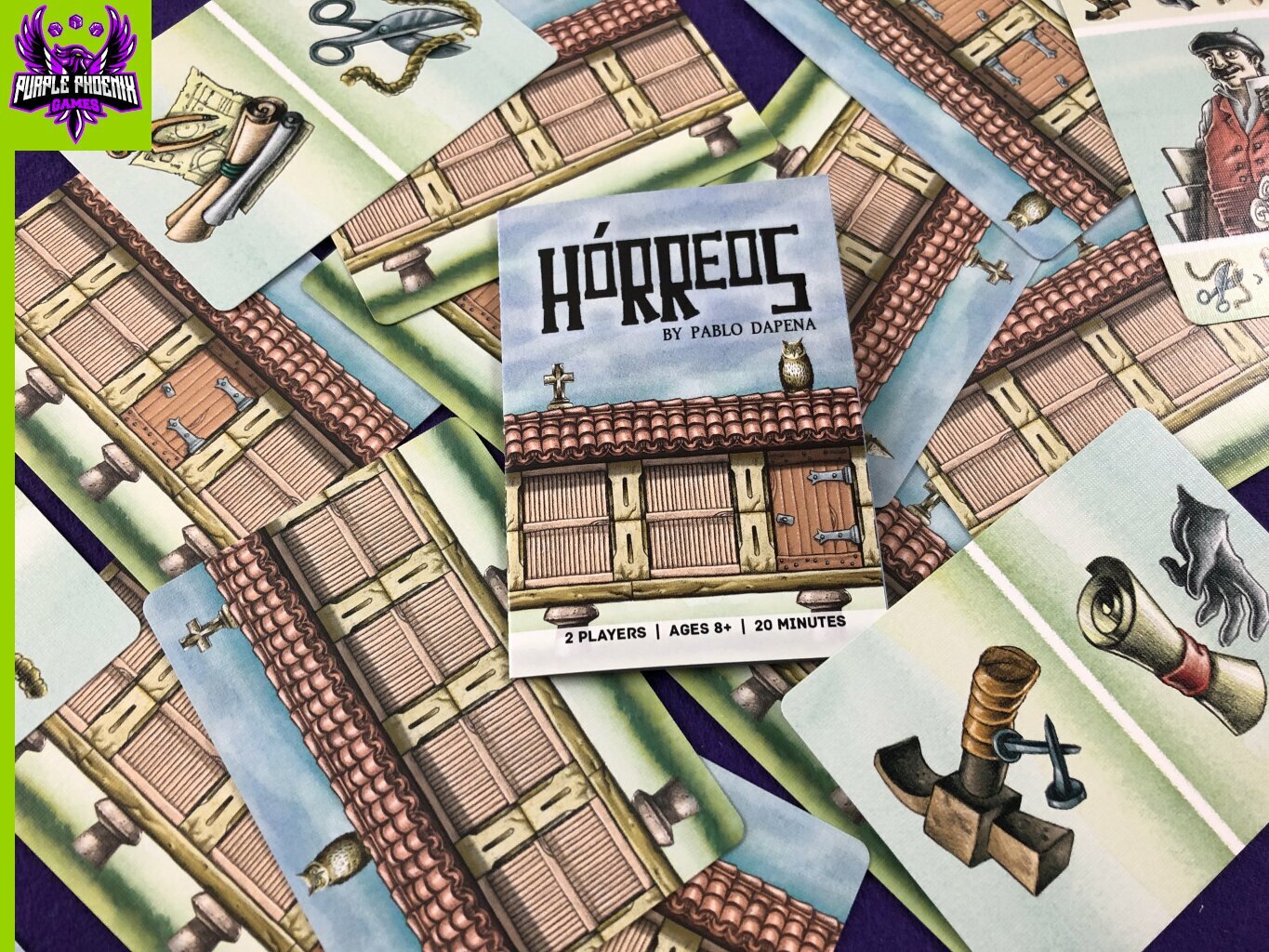
To touch on components for a minute, this is a game of 18 cards in a wallet. So nothing out of the ordinary for ButtonShy. That being said, production quality is always top notch with these games, and I have no complaints. the cards are thick and sturdy, and the wallet is nice and supportive. The artwork is thematic and refreshing, while not being too overwhelming. Is it the most beautiful game I’ve ever seen? No. But it is aesthetically and thematically appropriate, and gives a serene and peaceful vibe. ButtonShy has yet to disappoint with their components, so I am definitely a big fan!
Hórreos is a pretty solid game. I’m not personally a huge fan of ‘take that’ type games, and there is an element of that in this gameplay. But there seems to be enough strategy needed to negate some of that direct competitiveness. The game itself is fast to teach, learn, and play, and that adds to the overall appeal. It’s not necessarily my favorite 2-player game, but it’s one that I can see myself pulling out often when I’ve got a quick minute between other games, or when I’ve got a little downtime. Purple Phoenix Games gives this one a structural 4 / 6. Check it out if you’re in the market for something small, yet strategic!

ErinSJ (112 KP) rated Ex Libris in Tabletop Games
Jun 18, 2018


Lots of smaller objectives to keep track of in order to meet larger objective- keeps it interesting for replay (4 more)
Various special assistants allow for different quirks/twists each time you play
Titles of the books
Can play individually or with a group
Beautiful cards/tiles/board

Amberdang (8 KP) rated Unstable Unicorns in Tabletop Games
Jul 9, 2018


Can screw people over (3 more)
No two games will be alike
Lots of replay
Cute cards
Such a fun game
I love this game and have all the expansions. I have spent about 70-80 dollars on it and I do not regret it at all. My kids love it, and its so much fun to mess peoples games up and keep them from winning.

AT (1676 KP) rated Receipt Hog in Apps
Oct 26, 2018

Receipt Hog is an app that allows you to upload a number of types of receipts for "coins". When you get enough coins saved up, you can redeem them for gift cards or Visa or PayPal payments. It does seem like it takes a long time to save up, but once you get going, it adds up quickly. Definitely worth it since it's so simple to use.

Otway93 (580 KP) rated PowerColor Red Dragon RX 580 8GB DDR5 GPU in Tech
Nov 3, 2019

Quality (3 more)
Cost
Capability
Cooling
Excellent quality, great capability, great price!
The Red Dragon RX 580 is an excellent graphics card, perfect for gaming, and (currently) up to handling whatever you throw at it!
The GPU comes at a very reasonable price for an 8GB card, costing less than some of the more popular 6GB cards, and with two cooling fans, keeps cooler for longer!
The GPU comes at a very reasonable price for an 8GB card, costing less than some of the more popular 6GB cards, and with two cooling fans, keeps cooler for longer!