
Search
Search results

Gareth von Kallenbach (980 KP) rated Dumb and Dumber To (2014) in Movies
Jun 19, 2019



It is hard to believe that it is been 20 years since Jim Carrey and Jeff Daniels brought the moronic Harry and Lloyd to the big screen. The comedic adventures of the well-meaning but idiotic best friends became a box office smash and has maintained a loyal worker fans despite the highly disappointing prequel that was made in an attempt to extend series. With the Farrelly brothers back in place to write and direct the long-awaited follow-up it should come as no surprise as to what viewers are in store for with “Dumb and Dumber To”.
Lloyd (Jim Carrey) has been an institution for the past two decades while Harry (Jeff Daniels), visits him lawyerly once a week. When the reason behind Lloyd’s institutionalization becomes clear Harry informs his old friend that is in desperate need of a kidney transplant. With his options limited, Harry visits his family whom he has not seen in quite some time and goes through some mail that had been delivered over the years.
Harry learns that an old acquaintance was pregnant and in an effort to see if the child he never knew he had could be a donor, the bumbling duo sets out to find child Harry never knew he had. This is easier said than done as the mother (Kathleen Turner), give the child up for adoption and her only effort to communicate resulted in a letter being returned to her with a note asking her not to write again.
Undaunted Harry and Lloyd set out from their Rhode Island home and venture down to Maryland before learning that the object of their quest is already left for New Mexico to attend a very important conference. The duo decided to head on to New Mexico with a third person in tow not knowing that he secretly is aiming to do away with them in a con limited inheritance scheme.
As anyone who’s seen the previous film will remember, traveling with Harry and Lloyd can be extremely dangerous to one’s physical and mental sanity and the ensuing years have done nothing to change this. In short time duo arrives at their goal but finds their natural tendencies to get in and cause trouble has followed them resulting in a series of chaotic misadventures.
While many of the jokes and situations were recycled from previous films including Lloyd’s daydreaming about a perfect date and various car pranks, one thing that is undeniable is the great chemistry and timing between the two leads. The material certainly strains its PG-13 rating in terms of suggestiveness but even though some of the jokes do not quite succeed and the plot is at best paper thin, it was sure good to see these two back in action.
The film is at best a guilty pleasure because it will be easy to say it was kind of dumb and meandering at points and that the two characters were not given much to do other than an act that was funny 20 years earlier but may seem a bit strange to date considering both Daniels and Carrey have shown they are capable of doing so much more.
For me I looked at it is a bit of a nostalgic guilty pleasure that despite the shortcomings and faults offered some enjoyable although mostly forgettable distractions in between some good laughs. For those willing to take more the same and can temper their expectations accordingly you will likely find this trip one worth taking if nothing else than for the nostalgia.
I for one am hoping that we haven’t seen the last these two in action but I certainly would like to see them come back with a better script and certainly do not want have to wait 20 years for this to happen.
http://sknr.net/2014/11/14/dumb-dumber/
Lloyd (Jim Carrey) has been an institution for the past two decades while Harry (Jeff Daniels), visits him lawyerly once a week. When the reason behind Lloyd’s institutionalization becomes clear Harry informs his old friend that is in desperate need of a kidney transplant. With his options limited, Harry visits his family whom he has not seen in quite some time and goes through some mail that had been delivered over the years.
Harry learns that an old acquaintance was pregnant and in an effort to see if the child he never knew he had could be a donor, the bumbling duo sets out to find child Harry never knew he had. This is easier said than done as the mother (Kathleen Turner), give the child up for adoption and her only effort to communicate resulted in a letter being returned to her with a note asking her not to write again.
Undaunted Harry and Lloyd set out from their Rhode Island home and venture down to Maryland before learning that the object of their quest is already left for New Mexico to attend a very important conference. The duo decided to head on to New Mexico with a third person in tow not knowing that he secretly is aiming to do away with them in a con limited inheritance scheme.
As anyone who’s seen the previous film will remember, traveling with Harry and Lloyd can be extremely dangerous to one’s physical and mental sanity and the ensuing years have done nothing to change this. In short time duo arrives at their goal but finds their natural tendencies to get in and cause trouble has followed them resulting in a series of chaotic misadventures.
While many of the jokes and situations were recycled from previous films including Lloyd’s daydreaming about a perfect date and various car pranks, one thing that is undeniable is the great chemistry and timing between the two leads. The material certainly strains its PG-13 rating in terms of suggestiveness but even though some of the jokes do not quite succeed and the plot is at best paper thin, it was sure good to see these two back in action.
The film is at best a guilty pleasure because it will be easy to say it was kind of dumb and meandering at points and that the two characters were not given much to do other than an act that was funny 20 years earlier but may seem a bit strange to date considering both Daniels and Carrey have shown they are capable of doing so much more.
For me I looked at it is a bit of a nostalgic guilty pleasure that despite the shortcomings and faults offered some enjoyable although mostly forgettable distractions in between some good laughs. For those willing to take more the same and can temper their expectations accordingly you will likely find this trip one worth taking if nothing else than for the nostalgia.
I for one am hoping that we haven’t seen the last these two in action but I certainly would like to see them come back with a better script and certainly do not want have to wait 20 years for this to happen.
http://sknr.net/2014/11/14/dumb-dumber/
Gareth von Kallenbach (980 KP) rated Thor: The Dark World (2013) in Movies
Jun 19, 2019
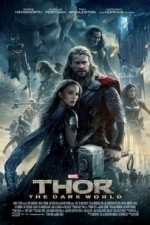


Marvel Studios has certainly been on a roll in recent years with a string of successful film adaptations of their popular comic book series. The recent overwhelming worldwide successes for “The Avengers”, and “Iron Man 3”, which topped $1 billion each globally has certainly raised the bar for their next cinematic offerings.
“Thor: The Dark World”, is poised to carry on the success of the Marvel film franchise as it successfully mixes action and character form the rare sequel that is better than the film that spawned it.
Chris Hemsworth once again stars as the title character who has been spending his time clearing up discord on the planets of the Nine Realms following his outing with The Avengers.
With peace at hand, his father Odin, (Sir Anthony Hopkins), believes the time is right for Thor to prepare for his reign as king of Asgard and protector of the realms.
Thor is not ready to embrace his destiny as his mind and heart are focused on Jane Foster (Natalie Portman), we has not seen since the events of the first film. His father warns him that a mortal is not suited to be his future queen and suggest that his fellow warrior Sif (Jaimie Alexander), would be far more suitable.
To further complicate matters Thor’s treacherous brother Loki (Tom Hiddleston), is seething at the prospect of spending eternity in captivity for his past crimes which only furthers his desire for power and revenge.
While all of this would be enough to keep Thor very busy, a new threat has arisen from the past that threatens to destroy the known universe. A powerful force known as the Aether which had been hidden by Thor’s grandfather has emerged and is drawn the attention of a Dark Elf named Malekith (Christopher Eccleston), who has been hiding away for centuries from those who believed him to be dead.
Malekith wants to take advantage of a pending convergence of the realms to use the supernatural power for his own purposes and in doing so destroy and subjugate all those who are before him. Fate intervenes and brings Jane and Thor together again just as the enemy forces arrived to ransack Asgard.
Faced with a battle against time not only to protect his beloved homeland but to save the known universe, Thor must work with his treacherous brother Loki in a race against time to save the day.
There are plenty of action sequences that follow and the visual effects are quite good even though the film is presented in converted 3-D after being shot in a standard format. The leads are fantastic and truly seem to have a grasp of their characters and the supporting work especially that of Kat Dennings much-needed comic relief is a very nice mix.
The only issue I had with the film other than the converted 3-D, was that the enemy while menacing did not seem to be one of the larger-than-life enemies that one has come to expect from a Marvel film. While certainly dangerous and menacing, there almost seemed to be an air of and confidence about the character as it was clear that he was simply biting off more than he could handle with the forces that were available to him.
That being said the film was extremely enjoyable as were the two bonus scenes that play during the middle of and the end of the credits.
While it may not went over box offices to the level of the two previous Marvel outings, Director Alan Taylor keeps things moving at a steady clip and the film nor the characters do not overstay their welcome.
With another Avengers movie on the horizon and a promise that Thor will return, fans can definitely enjoy this latest offering and look forward to the future for this promising series.
http://sknr.net/2013/11/08/thor-the-dark-world/
“Thor: The Dark World”, is poised to carry on the success of the Marvel film franchise as it successfully mixes action and character form the rare sequel that is better than the film that spawned it.
Chris Hemsworth once again stars as the title character who has been spending his time clearing up discord on the planets of the Nine Realms following his outing with The Avengers.
With peace at hand, his father Odin, (Sir Anthony Hopkins), believes the time is right for Thor to prepare for his reign as king of Asgard and protector of the realms.
Thor is not ready to embrace his destiny as his mind and heart are focused on Jane Foster (Natalie Portman), we has not seen since the events of the first film. His father warns him that a mortal is not suited to be his future queen and suggest that his fellow warrior Sif (Jaimie Alexander), would be far more suitable.
To further complicate matters Thor’s treacherous brother Loki (Tom Hiddleston), is seething at the prospect of spending eternity in captivity for his past crimes which only furthers his desire for power and revenge.
While all of this would be enough to keep Thor very busy, a new threat has arisen from the past that threatens to destroy the known universe. A powerful force known as the Aether which had been hidden by Thor’s grandfather has emerged and is drawn the attention of a Dark Elf named Malekith (Christopher Eccleston), who has been hiding away for centuries from those who believed him to be dead.
Malekith wants to take advantage of a pending convergence of the realms to use the supernatural power for his own purposes and in doing so destroy and subjugate all those who are before him. Fate intervenes and brings Jane and Thor together again just as the enemy forces arrived to ransack Asgard.
Faced with a battle against time not only to protect his beloved homeland but to save the known universe, Thor must work with his treacherous brother Loki in a race against time to save the day.
There are plenty of action sequences that follow and the visual effects are quite good even though the film is presented in converted 3-D after being shot in a standard format. The leads are fantastic and truly seem to have a grasp of their characters and the supporting work especially that of Kat Dennings much-needed comic relief is a very nice mix.
The only issue I had with the film other than the converted 3-D, was that the enemy while menacing did not seem to be one of the larger-than-life enemies that one has come to expect from a Marvel film. While certainly dangerous and menacing, there almost seemed to be an air of and confidence about the character as it was clear that he was simply biting off more than he could handle with the forces that were available to him.
That being said the film was extremely enjoyable as were the two bonus scenes that play during the middle of and the end of the credits.
While it may not went over box offices to the level of the two previous Marvel outings, Director Alan Taylor keeps things moving at a steady clip and the film nor the characters do not overstay their welcome.
With another Avengers movie on the horizon and a promise that Thor will return, fans can definitely enjoy this latest offering and look forward to the future for this promising series.
http://sknr.net/2013/11/08/thor-the-dark-world/

Lucy Buglass (45 KP) rated Dead In A Week (Or Your Money Back) (2018) in Movies
Jun 20, 2019
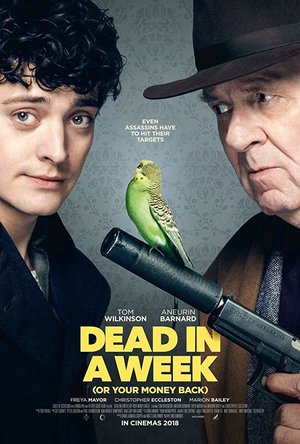

Dark comedy at its finest
This review discusses dark topics such as death and suicide. Reader discretion advised.
Getting comedy right is difficult enough, let alone trying to do it with sensitive topics. But Dead In A Week (or your money back) hits the nail on the head. After several failed suicide attempts, William (Aneurin Barnard) signs a contract with veteran assassin Leslie (Tom Wilkinson), who promises he’ll be dead within the week. This simple concept results in 1 hour and 30 mins of pure entertainment.
Though explicit in the way it discusses suicide, there is a reason for this. Right from the start, William is positioned as an incredibly depressed, isolated failed writer, who is struggling to see the point in living. He is very open about this fact, and spends a lot of time planning ways he could do it, accompanied by a darkly funny montage of the ways he’s tried. He is a troubled character that you can’t help but feel sorry for.
What makes this film even more interesting is the way it makes you sympathise with both target and killer. Leslie is trying his best to avoid retirement, and sees William as an answer to his prayers. If he kills him, he’ll fill his quota, and all will be well. This creates a paradox where you want both men to succeed, but you know that’s impossible.
William changes his mind about the contract when a publisher takes interest in his novel, and he begins to fall in love with Ellie (Freya Mavor), the assistant who called him regarding his latest story. This encounter comes with some rather frank and heartwarming messages about life, reminding us how precious life can be if you give it a chance.
Of course, the film doesn’t just end there. After William’s 360, Leslie is having none of it, and for the rest of the film we see this young writer trying to outrun a seasoned assassin. Leslie’s boss Harvey (Christopher Eccleston) is hot on his tail as well, tired of giving the old man too many chances. It’s a classic tale of a failed assassin, flipped entirely on its head.
Filled with some brilliant twists and turns, the script is formulaic yet hugely entertaining, with some laugh out loud moments throughout. It will certainly appeal to those who like their humour a little darker, with its use of comedic timing and deadpan delivery. It addresses so much in a short space of time, adding depth where needed.
Leslie’s wife Penny (Marion Bailey) adds her own comic relief to the situation, with a delightful satire on middle-class culture. Whilst her husband is trying to keep a dangerous job he loves so much, she’s more concerned about beating her church rivals in a cushion competition. The parallels between the couple are simultaneously heartwarming and awkward, and I enjoyed the way they bounced off each other throughout.
This was a thoroughly enjoyable film, with some unexpectedly touching moments. I really connected with certain characters and loathed others, allowing me to become fully invested in the film. The encounter between these two men should have ended one way, but the two embark on a journey that changes their lives for the better. Underneath all the humour comes an understanding of mental health issues, and sympathy for those who struggle.
This was Tom Edmund’s feature length debut, after directing a few short films. It’s an impressive first film with good pacing, solid characters, and a well-polished look throughout. It was an ambitious first feature length, but it certainly delivered.
https://lucygoestohollywood.com/2019/05/06/dark-comedy-at-its-finest-my-thoughts-on-dead-in-a-week-or-your-money-back/
Getting comedy right is difficult enough, let alone trying to do it with sensitive topics. But Dead In A Week (or your money back) hits the nail on the head. After several failed suicide attempts, William (Aneurin Barnard) signs a contract with veteran assassin Leslie (Tom Wilkinson), who promises he’ll be dead within the week. This simple concept results in 1 hour and 30 mins of pure entertainment.
Though explicit in the way it discusses suicide, there is a reason for this. Right from the start, William is positioned as an incredibly depressed, isolated failed writer, who is struggling to see the point in living. He is very open about this fact, and spends a lot of time planning ways he could do it, accompanied by a darkly funny montage of the ways he’s tried. He is a troubled character that you can’t help but feel sorry for.
What makes this film even more interesting is the way it makes you sympathise with both target and killer. Leslie is trying his best to avoid retirement, and sees William as an answer to his prayers. If he kills him, he’ll fill his quota, and all will be well. This creates a paradox where you want both men to succeed, but you know that’s impossible.
William changes his mind about the contract when a publisher takes interest in his novel, and he begins to fall in love with Ellie (Freya Mavor), the assistant who called him regarding his latest story. This encounter comes with some rather frank and heartwarming messages about life, reminding us how precious life can be if you give it a chance.
Of course, the film doesn’t just end there. After William’s 360, Leslie is having none of it, and for the rest of the film we see this young writer trying to outrun a seasoned assassin. Leslie’s boss Harvey (Christopher Eccleston) is hot on his tail as well, tired of giving the old man too many chances. It’s a classic tale of a failed assassin, flipped entirely on its head.
Filled with some brilliant twists and turns, the script is formulaic yet hugely entertaining, with some laugh out loud moments throughout. It will certainly appeal to those who like their humour a little darker, with its use of comedic timing and deadpan delivery. It addresses so much in a short space of time, adding depth where needed.
Leslie’s wife Penny (Marion Bailey) adds her own comic relief to the situation, with a delightful satire on middle-class culture. Whilst her husband is trying to keep a dangerous job he loves so much, she’s more concerned about beating her church rivals in a cushion competition. The parallels between the couple are simultaneously heartwarming and awkward, and I enjoyed the way they bounced off each other throughout.
This was a thoroughly enjoyable film, with some unexpectedly touching moments. I really connected with certain characters and loathed others, allowing me to become fully invested in the film. The encounter between these two men should have ended one way, but the two embark on a journey that changes their lives for the better. Underneath all the humour comes an understanding of mental health issues, and sympathy for those who struggle.
This was Tom Edmund’s feature length debut, after directing a few short films. It’s an impressive first film with good pacing, solid characters, and a well-polished look throughout. It was an ambitious first feature length, but it certainly delivered.
https://lucygoestohollywood.com/2019/05/06/dark-comedy-at-its-finest-my-thoughts-on-dead-in-a-week-or-your-money-back/

Ross (3284 KP) rated Killer Dungeon (Euphoria Online Book 3) in Books
Jan 4, 2019

So much of the previous books is lost (3 more)
Sudden epic scope creep
Loose ends
deus ex machina abounds
I am (slightly) disappoint
I loved the first two books in this trilogy. The narrative was so detailed and descriptive that you truly lived the action along with the protagonist, you felt every blow, you were part of every strategy, you celebrated every unlikely victory. We knew we were in an epic online world that we hadn't explored yet but were happy with the dangerous little corner we knew inside out.
The book starts off with Chris, low-ranked newbie with a knack for strategy, being the new leader/castellan of Castle Winter, charged with defending, repairing and upgrading the castle, caring for its inhabitants, fending off the nearby army of the undead and still trying to discover the hidden treasure in the dungeon.
This change in his status obviously precipitated a change in focus for him, which is understandable - a castellan with all these responsibilities can't still go off exploring. But this started to feel like those boring aspects of games like the Witcher/Red Dead Redemption where you have to go shopping, play card games, train a horse, collect herbs etc and was relatively dull.
While a raft of super-strength gamers try to tackle the seemingly unbeatable Dungeon, Chris decides he needs to buy goods and services in-game with the help of the deus-ex style pot of money he suddenly inherits. He is taken to explore some of the online world in order to do so. This is where I started to lose interest, as the shopping and political aspects of the world and narrative now takes over, when all you want to do is get into that dungeon (you know, the one mentioned in the title of the book) with the rest of the true gamers.
In all the dungeon is just sort of solved. It just happens. We are treated to a re-telling of the action from some of those gamers but this was totally unsatisfactory. Three perilous rooms are in that dungeon and we get to see next to none of the action in solving them.
There is something of a race against time as Chris has a deadline looming to find the treasure hidden in the dungeon to deliver to the lord of the undead. This adds to the thrill somewhat but then the genre-required conspiracy starts to grow (the game was designed by the all-powerful AI to help save mankind from itself), and then the book loses a lot of its original charm for me.
I loved this trilogy, but can't help but feel Tucker had designed a massive world for the story to take place in, and suddenly realised two books in that he hadn't explored any of it (the first two books were very narrow in scope considering the size of the online world but did not suffer for that) and was nearing the end of the three books he had planned. In my view this story had at least another two or three books in it, I would have loved to have seen the dungeon rooms solved in the same detailed manner as the puzzles in the first two books, and would have liked a lot less metaphysical elephant-god mumbo jumbo. I can't help but feel Tucker realised he had set himself up with unsolvable situations and a character who couldn't really put himself in those positions.
In short: Great story, rushed ending ("sod it, say everyone else does the hard work and then an elephant god solves the unsolvable")
The book starts off with Chris, low-ranked newbie with a knack for strategy, being the new leader/castellan of Castle Winter, charged with defending, repairing and upgrading the castle, caring for its inhabitants, fending off the nearby army of the undead and still trying to discover the hidden treasure in the dungeon.
This change in his status obviously precipitated a change in focus for him, which is understandable - a castellan with all these responsibilities can't still go off exploring. But this started to feel like those boring aspects of games like the Witcher/Red Dead Redemption where you have to go shopping, play card games, train a horse, collect herbs etc and was relatively dull.
While a raft of super-strength gamers try to tackle the seemingly unbeatable Dungeon, Chris decides he needs to buy goods and services in-game with the help of the deus-ex style pot of money he suddenly inherits. He is taken to explore some of the online world in order to do so. This is where I started to lose interest, as the shopping and political aspects of the world and narrative now takes over, when all you want to do is get into that dungeon (you know, the one mentioned in the title of the book) with the rest of the true gamers.
In all the dungeon is just sort of solved. It just happens. We are treated to a re-telling of the action from some of those gamers but this was totally unsatisfactory. Three perilous rooms are in that dungeon and we get to see next to none of the action in solving them.
There is something of a race against time as Chris has a deadline looming to find the treasure hidden in the dungeon to deliver to the lord of the undead. This adds to the thrill somewhat but then the genre-required conspiracy starts to grow (the game was designed by the all-powerful AI to help save mankind from itself), and then the book loses a lot of its original charm for me.
I loved this trilogy, but can't help but feel Tucker had designed a massive world for the story to take place in, and suddenly realised two books in that he hadn't explored any of it (the first two books were very narrow in scope considering the size of the online world but did not suffer for that) and was nearing the end of the three books he had planned. In my view this story had at least another two or three books in it, I would have loved to have seen the dungeon rooms solved in the same detailed manner as the puzzles in the first two books, and would have liked a lot less metaphysical elephant-god mumbo jumbo. I can't help but feel Tucker realised he had set himself up with unsolvable situations and a character who couldn't really put himself in those positions.
In short: Great story, rushed ending ("sod it, say everyone else does the hard work and then an elephant god solves the unsolvable")

Hazel (1853 KP) rated Flame in the Mist in Books
Dec 17, 2018

<i>I received this book for free through Goodreads First Reads.</i>
Famed for her highly rated <i>The Wrath & The Dawn</i>, Renée Ahdieh has created a new fantasy world full of original characters. Set in a land similar to the Middle Eastern countries we are familiar with, <i>Flame in the Mist</i> incorporates out-dated ideology, ancient lifestyle with a hint of supernatural, and, of course – it is a Young Adult novel after all – a dash of romance. With an eclectic mix of themes, it is a book without cessation of adventure.
The protagonist, Hattori Mariko, at the mere age of 17, is destined to marry the son of the Emperor’s favourite concubine, Prince Raidan. The book commences with the journey from her home, however, Mariko never makes it to the city. Ambushed and presumed dead, Mariko is alone in the dangerous forest, at risk of being discovered by the infamous Black Clan. Instead of waiting for rescue, Mariko, fed up of women being treated as inferior to men, decides she does not want to go home, nor does she want to marry the prince. Her only remaining option is to locate the Black Clan and discover who attempted to murder her. But for this to work, she needs to convince everyone she is a boy.
Whilst Mariko is worming her way into the clan, her twin brother is determined to track down and rescue his sister. Unbeknownst to him, Mariko is beginning to feel more affiliated with their enemies than with her own family. And so a dilemma arises. Does Mariko betray her new “friends” or be unfaithful to the brother she loves?
<i>Flame in the Mist</i> is not only about Mariko’s predicament; it also concerns an age-old feud between powerful families, involving the wrongful death of a disgraced Samurai. As the younger generation reach maturity, they determine to avenge the deaths of their fathers, and, without knowing, Mariko ends up in the centre of two warring parties.
It is a little difficult to get into the story initially; many characters are introduced, but their significance is not obvious for some time. To add to the confusion, vital persons are only formally presented at the end of the novel, which finishes on a cliffhanger. The similarity of the foreign sounding names also creates uncertainty.
Ahdieh cleverly includes a problematic situation that our own world has (almost) overcome. Mariko represents the female population, a gender that is believed to be inferior to their male counterparts. Controlled by fathers, husbands, and powerful leaders, women do not have the opportunity to make their own decisions about their lives. Although it is disconcerting that someone wishes to take Mariko’s life, the ambush provides her with the freedom and chance to prove women are as capable as men. Sadly, she has to pretend to be a boy in order to do this.
It was inevitable that there would be a love interest in <i>Flame in the Mist</i>, however, it is not as inspiring as readers may hope for. The attraction between Mariko and a member of the Black Clan almost comes out of nowhere. Not only was Mariko believed to be male for a wide stretch of the novel, the character in question was one of the more abusive.
<i>Flame in the Mist</i> being the first novel I have read by Renée Ahdieh, I have nothing with which to compare it or state why it is readers particularly admire her writing. The story was mediocre at best, with very little characters that garner respect. Having been published less than a month ago, there is already a lot of hype surrounding this book – either I am missing something vital, or readers are going to be disappointed.
Famed for her highly rated <i>The Wrath & The Dawn</i>, Renée Ahdieh has created a new fantasy world full of original characters. Set in a land similar to the Middle Eastern countries we are familiar with, <i>Flame in the Mist</i> incorporates out-dated ideology, ancient lifestyle with a hint of supernatural, and, of course – it is a Young Adult novel after all – a dash of romance. With an eclectic mix of themes, it is a book without cessation of adventure.
The protagonist, Hattori Mariko, at the mere age of 17, is destined to marry the son of the Emperor’s favourite concubine, Prince Raidan. The book commences with the journey from her home, however, Mariko never makes it to the city. Ambushed and presumed dead, Mariko is alone in the dangerous forest, at risk of being discovered by the infamous Black Clan. Instead of waiting for rescue, Mariko, fed up of women being treated as inferior to men, decides she does not want to go home, nor does she want to marry the prince. Her only remaining option is to locate the Black Clan and discover who attempted to murder her. But for this to work, she needs to convince everyone she is a boy.
Whilst Mariko is worming her way into the clan, her twin brother is determined to track down and rescue his sister. Unbeknownst to him, Mariko is beginning to feel more affiliated with their enemies than with her own family. And so a dilemma arises. Does Mariko betray her new “friends” or be unfaithful to the brother she loves?
<i>Flame in the Mist</i> is not only about Mariko’s predicament; it also concerns an age-old feud between powerful families, involving the wrongful death of a disgraced Samurai. As the younger generation reach maturity, they determine to avenge the deaths of their fathers, and, without knowing, Mariko ends up in the centre of two warring parties.
It is a little difficult to get into the story initially; many characters are introduced, but their significance is not obvious for some time. To add to the confusion, vital persons are only formally presented at the end of the novel, which finishes on a cliffhanger. The similarity of the foreign sounding names also creates uncertainty.
Ahdieh cleverly includes a problematic situation that our own world has (almost) overcome. Mariko represents the female population, a gender that is believed to be inferior to their male counterparts. Controlled by fathers, husbands, and powerful leaders, women do not have the opportunity to make their own decisions about their lives. Although it is disconcerting that someone wishes to take Mariko’s life, the ambush provides her with the freedom and chance to prove women are as capable as men. Sadly, she has to pretend to be a boy in order to do this.
It was inevitable that there would be a love interest in <i>Flame in the Mist</i>, however, it is not as inspiring as readers may hope for. The attraction between Mariko and a member of the Black Clan almost comes out of nowhere. Not only was Mariko believed to be male for a wide stretch of the novel, the character in question was one of the more abusive.
<i>Flame in the Mist</i> being the first novel I have read by Renée Ahdieh, I have nothing with which to compare it or state why it is readers particularly admire her writing. The story was mediocre at best, with very little characters that garner respect. Having been published less than a month ago, there is already a lot of hype surrounding this book – either I am missing something vital, or readers are going to be disappointed.
Gareth von Kallenbach (980 KP) rated Push (2009) in Movies
Aug 14, 2019
Inside a secure facility a woman named Kira (Camilla Belle), is about to be injected with an experimental drug that will soon set a chain of events into motion that will turn Hong Kong into a battleground. The facility is operated by the ultra secret agency known as “The Division” who are tasked with locating, controlling, training, and at times, eliminating those who possess psychic abilities as they endeavor to create an army of highly trained specialists with psychic abilities.
In the new action film “Push”, Chris Evans stars as Nick Grant, a man who has tried to keep a low profile after seeing his father murdered by Division ten years earlier. Nick has taken refuge in Hong Kong in an effort to stay away from Division as he has no desire to get involved with their or for that matter, anyone’s agenda or cause.
Nick has become indebted to several local thugs due to his gambling, and his inability to fully use his psychic ability to move objects with his mind and when Division arrives looking for a runaway, Nick is eager to get out of town before he gets dragged into the conflict.
Shortly after the Division agents leave his home, Nick is visited by a young girl named Cassie (Dakota Fanning), who informs him that they need to work with one another to earn 6 million dollars and save themselves. While Nick is hesitant, he remembers that is late father told him a young girl would one day give him a flower and when she comes, he must do as she says.
Before long, Nick and Cassie are attacked by a local gang who like Cassie and Nick are able to use psychic abilities. After a narrow escape, Nick learns that Cassie is able to see the future and she has learned that the woman that Division is seeking is vital as she has stolen a valuable drug that they need to enhance the psychic abilities of those they inject. They fact that the drug has proven fatal to everyone injected aside from Kira and would command a huge price has Division, Nick, Cassie, and the local gang scrambling to locate Kira. Cassie has also informed Nick that she sees both Nick and her dying as a result of their involvement and must find a way to change their fates.
As if matters were not complicated enough, leading the Division search is Henry Carver (Djimon Hounsou), the same man behind the death of Nick’s father. Carver will stop at nothing to retrieve Kira and the missing drug, and he and his dangerous minions do not care how many people die along the way.
“Push” is an interesting film that puts the focus on the characters rather than FX. While there is action in the film, it does not dominate the film. The neon and crowded streets of Hong Kong serve as a perfect backdrop to the film and the strong work by Evans and Fanning make them a winning combination as does the interesting premise of the film. While the film does lose some of its pacing along the way as it seems unsure if it wants to be an all out action flick, or a drama, the film rebounds and provides a conclusion which is an obvious lead for a sequel.
While some people have commented to me that the movies seems like a rip off of Heroes, I found it to be fresher and more entertaining than the show, which in my opinion has be coasting since the spectacular first 12 episodes.
In the end, “Push” has just enough action and originality to combine with the charismatic and interesting cast to make an enjoyable movie experience.
In the new action film “Push”, Chris Evans stars as Nick Grant, a man who has tried to keep a low profile after seeing his father murdered by Division ten years earlier. Nick has taken refuge in Hong Kong in an effort to stay away from Division as he has no desire to get involved with their or for that matter, anyone’s agenda or cause.
Nick has become indebted to several local thugs due to his gambling, and his inability to fully use his psychic ability to move objects with his mind and when Division arrives looking for a runaway, Nick is eager to get out of town before he gets dragged into the conflict.
Shortly after the Division agents leave his home, Nick is visited by a young girl named Cassie (Dakota Fanning), who informs him that they need to work with one another to earn 6 million dollars and save themselves. While Nick is hesitant, he remembers that is late father told him a young girl would one day give him a flower and when she comes, he must do as she says.
Before long, Nick and Cassie are attacked by a local gang who like Cassie and Nick are able to use psychic abilities. After a narrow escape, Nick learns that Cassie is able to see the future and she has learned that the woman that Division is seeking is vital as she has stolen a valuable drug that they need to enhance the psychic abilities of those they inject. They fact that the drug has proven fatal to everyone injected aside from Kira and would command a huge price has Division, Nick, Cassie, and the local gang scrambling to locate Kira. Cassie has also informed Nick that she sees both Nick and her dying as a result of their involvement and must find a way to change their fates.
As if matters were not complicated enough, leading the Division search is Henry Carver (Djimon Hounsou), the same man behind the death of Nick’s father. Carver will stop at nothing to retrieve Kira and the missing drug, and he and his dangerous minions do not care how many people die along the way.
“Push” is an interesting film that puts the focus on the characters rather than FX. While there is action in the film, it does not dominate the film. The neon and crowded streets of Hong Kong serve as a perfect backdrop to the film and the strong work by Evans and Fanning make them a winning combination as does the interesting premise of the film. While the film does lose some of its pacing along the way as it seems unsure if it wants to be an all out action flick, or a drama, the film rebounds and provides a conclusion which is an obvious lead for a sequel.
While some people have commented to me that the movies seems like a rip off of Heroes, I found it to be fresher and more entertaining than the show, which in my opinion has be coasting since the spectacular first 12 episodes.
In the end, “Push” has just enough action and originality to combine with the charismatic and interesting cast to make an enjoyable movie experience.
Gareth von Kallenbach (980 KP) rated White Noise (2005) in Movies
Aug 14, 2019

Ever since the phenomenal success of “The Sixth Sense”, films dealing with the supernatural have been an ever increasing presence at theaters world wide as studios attempt to find the next break out film in the genre to ensure lucrative box office and video returns.
The latest foray into the Supernatural is the new Michael Keaton film White Noise, which is based on the actual study of E.V.P. or Electronic Voice Phenomena which is reputed some paranormal investigators to be the voices of dead people speaking to the living via static in electronic devices.
Although the factuality of this is still a topic of hot debate, as after decades of study, no conclusive finding either way as to the legitimacy of E.V.P. have been found as many people attribute the supposed voices as simply the mind hearing what it wants to hear. Despite this, there are a growing number of groups and organizations worldwide who are dedicated to the study of E.V.P.
The film centers on Jonathan Rivers’s (Michael Keaton), a successful architect who is married to a best selling author Anna (Chandra West). The couple is anxiously awaiting the arrival of their first child as Jonathan has a son from a previous marriage and is thrilled to see his family grow
Tragedy sets in when Anna goes missing and eventually is found dead after an apparent accident. Jonathan has his world collapse around him yet and is living in a state of despair. Shortly, a man named Raymond Price (Ian McNeice) comes to Jonathan claiming that he has been receiving messages from Anna from the afterlife. Jonathan is at first dismissive but when he gets calls on his cell that are originating from Anna’s cell number; he visits Raymond and learns about E.V.P.
Jonathan becomes drawn into the study of E.V.P. and soon becomes obsessed with recording voices and images from the afterlife as he is desperate to stay in contact with Anna. All is not well though as Raymond failed to tell Jonathan that there are evil and dangerous entities in the afterlife and they can also use E.V.P. as a way to access and influence the living.
Jonathan also meets a fellow E.V.P user named Sara (Deborah Kara Unger), who like Jonathan becomes involved in a deeper and darker mystery as Jonathan begins to decipher a pattern behind the messages as well as the intentions behind them.
White Noise starts well as a solid mystery and had a few moments where what you imagine is often more intense than what the reality really is. Early in the film there are some good chills and creepy moments as the story unfolds. Roughly ¾ of the way into the film, the tone of the film changes from supernatural thriller to that of a mystery and I suspect that the film will lose many people at this point. The film was working well as a thrill, yet the last ¼ of the film and the conclusion become confused and sporadic as the momentum and flow of the film is lost.
The conclusion was unsatisfying as I was able to see where it was going and based on the very promising first hour of the film, it was sad to see that the film took the easy way out and relied on tired premises instead of continuing to forge ahead with the new premise and take it to what should have been a much better and more logical conclusion.
Keaton does solid work and carries the film very well. It is great to see him back on the big screen as he is a gifted and versatile actor who is capable of handling a wide range of roles.
While not a bad film, White Noise is sunk by the issues with the finale that I mentioned above. That being said, it is an entertaining film that aside from the ending, does generally work and holds the attention of the viewer.
The latest foray into the Supernatural is the new Michael Keaton film White Noise, which is based on the actual study of E.V.P. or Electronic Voice Phenomena which is reputed some paranormal investigators to be the voices of dead people speaking to the living via static in electronic devices.
Although the factuality of this is still a topic of hot debate, as after decades of study, no conclusive finding either way as to the legitimacy of E.V.P. have been found as many people attribute the supposed voices as simply the mind hearing what it wants to hear. Despite this, there are a growing number of groups and organizations worldwide who are dedicated to the study of E.V.P.
The film centers on Jonathan Rivers’s (Michael Keaton), a successful architect who is married to a best selling author Anna (Chandra West). The couple is anxiously awaiting the arrival of their first child as Jonathan has a son from a previous marriage and is thrilled to see his family grow
Tragedy sets in when Anna goes missing and eventually is found dead after an apparent accident. Jonathan has his world collapse around him yet and is living in a state of despair. Shortly, a man named Raymond Price (Ian McNeice) comes to Jonathan claiming that he has been receiving messages from Anna from the afterlife. Jonathan is at first dismissive but when he gets calls on his cell that are originating from Anna’s cell number; he visits Raymond and learns about E.V.P.
Jonathan becomes drawn into the study of E.V.P. and soon becomes obsessed with recording voices and images from the afterlife as he is desperate to stay in contact with Anna. All is not well though as Raymond failed to tell Jonathan that there are evil and dangerous entities in the afterlife and they can also use E.V.P. as a way to access and influence the living.
Jonathan also meets a fellow E.V.P user named Sara (Deborah Kara Unger), who like Jonathan becomes involved in a deeper and darker mystery as Jonathan begins to decipher a pattern behind the messages as well as the intentions behind them.
White Noise starts well as a solid mystery and had a few moments where what you imagine is often more intense than what the reality really is. Early in the film there are some good chills and creepy moments as the story unfolds. Roughly ¾ of the way into the film, the tone of the film changes from supernatural thriller to that of a mystery and I suspect that the film will lose many people at this point. The film was working well as a thrill, yet the last ¼ of the film and the conclusion become confused and sporadic as the momentum and flow of the film is lost.
The conclusion was unsatisfying as I was able to see where it was going and based on the very promising first hour of the film, it was sad to see that the film took the easy way out and relied on tired premises instead of continuing to forge ahead with the new premise and take it to what should have been a much better and more logical conclusion.
Keaton does solid work and carries the film very well. It is great to see him back on the big screen as he is a gifted and versatile actor who is capable of handling a wide range of roles.
While not a bad film, White Noise is sunk by the issues with the finale that I mentioned above. That being said, it is an entertaining film that aside from the ending, does generally work and holds the attention of the viewer.
Gareth von Kallenbach (980 KP) rated Hostage (2005) in Movies
Aug 14, 2019
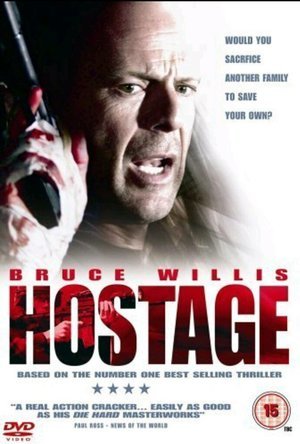
Chief of Police Jeff Talley (Bruce Willis) is a man filled with turmoil. A former S.W.A.T. officer and top hostage negotiator for the Los Angeles Police Department, Talley now toils away in a quite California town where crime is light and very infrequent. The change in locales was made necessary for Jeff in the aftermath of a hostage negotiation where things did not go accordingly leaving Jeff with more questions than answers.
As if this is not bad enough, Talley is having difficulties with his wife Jane (Serena Scott Thomas), and his daughter Amanda (Rumer Willis), who is not happy with their relocation to the quiet locale or the strain that is amongst her parents as it is clear that they still love each other very much.
The quiet town is disrupted when a robbery of a successful locale business man goes horribly wrong and ends up with a dead police officer and three hostages being held in a high tech, high security home.
Jeff responds to the incident and soon finds himself dealing with the three young men who are clearly in over their head and very dangerous due to the instability of the situation. Jeff decides to call in the Sheriff’s office as he believe his police force is not suited for this sort of situation and essentially decides to wash his hands of the situation and go home.
While driving home, Jeff is carjacked by a group of individuals who show Jeff that they have taken his wife and daughter hostage and instruct him not to let anyone in or out of the house where the hostage crisis is taking place. Jeff is also instructed to not deviate in any way from his instructions under pain of immediate death for his wife and daughter. His only communication with his new handlers will be via a cell phone, and he is to resume control of the negotiations.
It is learned that there is something in the house that the people holding Jeff’s family need and are willing to resort to very extreme measure to get it.
It is at this point that the very, very gripping and entertaining setup to the film begins to slide, as the second half of the film does not come close to matching the quality of the opening segments.
There are some very good cat and mouse moments as the men in the house start to argue amongst themselves, and interact with the family inside the house. The supporting performances are solid especially those of Jennifer (Michelle Horn), who plays the daughter held captive by the trio and the eerie performance of Ben Foster as the twisted Hostage taker Mars.
Sadly the film decides to turn to a series of brutal images and sequences rather than continue to develop the characters and work the story. The characters often embark on some inane courses of action and do things that not only contradict what we know about their characters but also fly into the lapse of logic as people in their situations would never do. I would love to expand on this by referencing a segment of the film but in the interest of not spoiling the film, I will explain it as when characters are told not to do something, why would they repeatedly do it, and then continue to do so without any consequences?
It is the continued lack of common sense and the and the very over the top and lazy finale to the film that sinks what could have and should have been a much better movie as the film is clearly sunk by the awful final 40 minutes of the show. Willis does a solid job with his role but the last act of the script let him down as even a star of his magnitude and talents cant make up for the films numerous shortcomings.
As if this is not bad enough, Talley is having difficulties with his wife Jane (Serena Scott Thomas), and his daughter Amanda (Rumer Willis), who is not happy with their relocation to the quiet locale or the strain that is amongst her parents as it is clear that they still love each other very much.
The quiet town is disrupted when a robbery of a successful locale business man goes horribly wrong and ends up with a dead police officer and three hostages being held in a high tech, high security home.
Jeff responds to the incident and soon finds himself dealing with the three young men who are clearly in over their head and very dangerous due to the instability of the situation. Jeff decides to call in the Sheriff’s office as he believe his police force is not suited for this sort of situation and essentially decides to wash his hands of the situation and go home.
While driving home, Jeff is carjacked by a group of individuals who show Jeff that they have taken his wife and daughter hostage and instruct him not to let anyone in or out of the house where the hostage crisis is taking place. Jeff is also instructed to not deviate in any way from his instructions under pain of immediate death for his wife and daughter. His only communication with his new handlers will be via a cell phone, and he is to resume control of the negotiations.
It is learned that there is something in the house that the people holding Jeff’s family need and are willing to resort to very extreme measure to get it.
It is at this point that the very, very gripping and entertaining setup to the film begins to slide, as the second half of the film does not come close to matching the quality of the opening segments.
There are some very good cat and mouse moments as the men in the house start to argue amongst themselves, and interact with the family inside the house. The supporting performances are solid especially those of Jennifer (Michelle Horn), who plays the daughter held captive by the trio and the eerie performance of Ben Foster as the twisted Hostage taker Mars.
Sadly the film decides to turn to a series of brutal images and sequences rather than continue to develop the characters and work the story. The characters often embark on some inane courses of action and do things that not only contradict what we know about their characters but also fly into the lapse of logic as people in their situations would never do. I would love to expand on this by referencing a segment of the film but in the interest of not spoiling the film, I will explain it as when characters are told not to do something, why would they repeatedly do it, and then continue to do so without any consequences?
It is the continued lack of common sense and the and the very over the top and lazy finale to the film that sinks what could have and should have been a much better movie as the film is clearly sunk by the awful final 40 minutes of the show. Willis does a solid job with his role but the last act of the script let him down as even a star of his magnitude and talents cant make up for the films numerous shortcomings.
Gareth von Kallenbach (980 KP) rated Aliens vs. Predator: Requiem (AVP 2) (2007) in Movies
Aug 14, 2019

Two of the biggest creature franchises in cinematic history clash again this Christmas in the new film Aliens VS Predator: Requiem.
Picking up where the last film ended, “AVP-R” follows the surprise attack inside a predator ship and its subsequent crash in the woods near the small town of Gunnison Colorado. The crash does not go unnoticed, and sadly for a father and son on a hunting trip, investigating the crash site turns out to be a fatal mistake when they are infected by a pair of Alien Face-huggers from the crash site.
As if the Aliens were not bad enough, the locales also have to content with a Predator elite warrior who has been dispatched to stop the spread of the Aliens as well as cover up any evidence of the creatures and Predator technology from the crash.
In short order, an Alien infestation of Gunnison is underway and the local townspeople an unprepared to deal with the series of events that are underway and they find that even the local National Guard units are not prepared to face the ever expanding Alien legions.
In a race against time, a few survivors attempt to flee the carnage and our racing against time before even stronger containment methods are put into place.
The film is packed with action and there are enough solid visuals to keep fans entertained. However the films biggest failing, is a complete and utter lack of character development. While I do not usually expect much in this department from a film in this genre, “AVP-R” barely plays this lip service. We know that Dallas (Steven Pasquale) is an ex-con who is returned home to see his brother who in turn is drawing heat from his interest in girl who is dating the locale goon. We also know that Kelly (Reiko Aylesworth) is a soldier who has returned home to her daughter and husband and whose daughter resents her mom being away. Beyond those factors, there is precious else we are given about the characters which in turn makes it very hard to bond with them and care if they survive as they are little more than fodder for the interstellar killing machines.
The plot of the film is also very linear as the script from Shane Salerno does a nice job of setting up the events, but does not hold any real twists or turns and plays out in a very standard manner. While there is an attempt at the end to offer a little bonus for fans, it is not really enough to push the film over the top.
Directors Greg and Colin Strause have done a great job of capturing the look and feel of the franchise and have given fans what they have long asked for, a chance to see the Aliens loose in a modern setting on Earth. While the battle scenes shine and the duo keep the film moving along at a steady pace, they are hampered by the script and character issues I mentioned earlier.
Thankfully the series has returned to its R-Rated roots and the gore is back which is essential to show just how dangerous and destructive the two species are. The introduction of a new Alien/Predator hybrid is a nice touch, and does add a new albeit it controversial new chapter in Alien reproduction that is sure to get the fans talking.
In the end, fans are left with a mixed bag as the film is better than the previous film in the series but pales when compared with “Alien”, “Aliens”, and “Predator” where interesting characters combined with suspense and action to create true genre classics. As it stands,” AVP-R” is a worthy effort that comes up short of its aspirations.
Picking up where the last film ended, “AVP-R” follows the surprise attack inside a predator ship and its subsequent crash in the woods near the small town of Gunnison Colorado. The crash does not go unnoticed, and sadly for a father and son on a hunting trip, investigating the crash site turns out to be a fatal mistake when they are infected by a pair of Alien Face-huggers from the crash site.
As if the Aliens were not bad enough, the locales also have to content with a Predator elite warrior who has been dispatched to stop the spread of the Aliens as well as cover up any evidence of the creatures and Predator technology from the crash.
In short order, an Alien infestation of Gunnison is underway and the local townspeople an unprepared to deal with the series of events that are underway and they find that even the local National Guard units are not prepared to face the ever expanding Alien legions.
In a race against time, a few survivors attempt to flee the carnage and our racing against time before even stronger containment methods are put into place.
The film is packed with action and there are enough solid visuals to keep fans entertained. However the films biggest failing, is a complete and utter lack of character development. While I do not usually expect much in this department from a film in this genre, “AVP-R” barely plays this lip service. We know that Dallas (Steven Pasquale) is an ex-con who is returned home to see his brother who in turn is drawing heat from his interest in girl who is dating the locale goon. We also know that Kelly (Reiko Aylesworth) is a soldier who has returned home to her daughter and husband and whose daughter resents her mom being away. Beyond those factors, there is precious else we are given about the characters which in turn makes it very hard to bond with them and care if they survive as they are little more than fodder for the interstellar killing machines.
The plot of the film is also very linear as the script from Shane Salerno does a nice job of setting up the events, but does not hold any real twists or turns and plays out in a very standard manner. While there is an attempt at the end to offer a little bonus for fans, it is not really enough to push the film over the top.
Directors Greg and Colin Strause have done a great job of capturing the look and feel of the franchise and have given fans what they have long asked for, a chance to see the Aliens loose in a modern setting on Earth. While the battle scenes shine and the duo keep the film moving along at a steady pace, they are hampered by the script and character issues I mentioned earlier.
Thankfully the series has returned to its R-Rated roots and the gore is back which is essential to show just how dangerous and destructive the two species are. The introduction of a new Alien/Predator hybrid is a nice touch, and does add a new albeit it controversial new chapter in Alien reproduction that is sure to get the fans talking.
In the end, fans are left with a mixed bag as the film is better than the previous film in the series but pales when compared with “Alien”, “Aliens”, and “Predator” where interesting characters combined with suspense and action to create true genre classics. As it stands,” AVP-R” is a worthy effort that comes up short of its aspirations.

Chris Sawin (602 KP) rated Biutiful (2010) in Movies
Jun 22, 2019 (Updated Jun 23, 2019)

At times, it's difficult to summarize your thoughts about a specific film. It isn't because the film is necessarily so good or bad that it's beyond words, but because you're unsure how to feel about said film until the credits finally roll. Biutiful is such a film.
The film revolves around Uxbal, portrayed by Javier Bardem (No Country For Old Men) sporting a mullet, so expectations are already high. Uxbal has just been diagnosed with terminal prostate cancer, but isn't ready to leave this world. His two children are still young and Uxbal feels that their mother, who's more interested in partaking in promiscuous behavior while dealing with a bipolar disorder, isn't fit to take care of their children. Meanwhile Uxbal supports his family by partnering with both the Chinese and African street merchants that are in the country illegally. Together they sell pirated movies and cheap knockoffs of clothing and accessories made by Chinese men, women, and children that live in a warehouse used as a sweatshop. To top it off, Uxbal has the ability to communicate with the dead and is called upon to help people who have recently passed to let go and move on to the other side. Although hesitant at first, Uxbal has every intention of getting his affairs in order, reconciling his marriage, and making sure his children have someone to take care of them after he's gone. Unfortunately, things don't always go as planned.
Biutiful, its spelling having a simple yet somewhat brilliant explanation, features a lot of symbolism that will go over viewers heads. It also is incredibly similar to Iñárritu's previous works such as 21 Grams and Babel in both style and tone, but is the director's first film to be presented in Spanish. The drama is beyond bleak and practically hopeless. The out of tune soundtrack, the rocks Uxbal gives to his children, and people clutching to the ceiling will leave many scratching their heads. Many ideas seem to be hinted at, but are never fully fleshed out like reflections and shadows moving out of sync from their source. However, the film is driven by Bardem's emotionally draining, physical, and all around powerful performance.
The scene that really makes the entire film worthwhile is the scene in the Chinese warehouse right before Uxbal visits his brother's strip club. It's the most effective, long-lasting, and memorable scene in the film. In the same breath though, what was up with the sound? It was like it was purposely terrible at certain points in the film. At times, it seemed significant to showcase the sound of the characters' heartbeats, but just felt sloppy the one or two other times it occurred. There were also quite a few memorable quotes in the film including, "It's dangerous to trust a man who's hungry."
Biutiful is an unusual drama that is both confusing at times and ridiculously intriguing at others. A vigorously passionate performance by Javier Bardem may not be enough to save what is otherwise a sometimes mindboggling and hellacious journey through the eyes of what seems like the most unlucky man in the world. Even in comparison to his other works, Biutiful seems even more bleak and dreary than Iñárritu's other works. What's bizarre is that the film does give you a strange sense of hope. No matter how bad you think your life currently is or was, this film proves that it can always be worse even if the presentation is more than a little mentally and emotionally exhausting. It's also interesting to note that even though the film leans more to the bizarre side while being downright depressing, it does make a long-lasting impression and sticks with you as you contemplate scenes and occurrences in the film days after you've seen it.
The film revolves around Uxbal, portrayed by Javier Bardem (No Country For Old Men) sporting a mullet, so expectations are already high. Uxbal has just been diagnosed with terminal prostate cancer, but isn't ready to leave this world. His two children are still young and Uxbal feels that their mother, who's more interested in partaking in promiscuous behavior while dealing with a bipolar disorder, isn't fit to take care of their children. Meanwhile Uxbal supports his family by partnering with both the Chinese and African street merchants that are in the country illegally. Together they sell pirated movies and cheap knockoffs of clothing and accessories made by Chinese men, women, and children that live in a warehouse used as a sweatshop. To top it off, Uxbal has the ability to communicate with the dead and is called upon to help people who have recently passed to let go and move on to the other side. Although hesitant at first, Uxbal has every intention of getting his affairs in order, reconciling his marriage, and making sure his children have someone to take care of them after he's gone. Unfortunately, things don't always go as planned.
Biutiful, its spelling having a simple yet somewhat brilliant explanation, features a lot of symbolism that will go over viewers heads. It also is incredibly similar to Iñárritu's previous works such as 21 Grams and Babel in both style and tone, but is the director's first film to be presented in Spanish. The drama is beyond bleak and practically hopeless. The out of tune soundtrack, the rocks Uxbal gives to his children, and people clutching to the ceiling will leave many scratching their heads. Many ideas seem to be hinted at, but are never fully fleshed out like reflections and shadows moving out of sync from their source. However, the film is driven by Bardem's emotionally draining, physical, and all around powerful performance.
The scene that really makes the entire film worthwhile is the scene in the Chinese warehouse right before Uxbal visits his brother's strip club. It's the most effective, long-lasting, and memorable scene in the film. In the same breath though, what was up with the sound? It was like it was purposely terrible at certain points in the film. At times, it seemed significant to showcase the sound of the characters' heartbeats, but just felt sloppy the one or two other times it occurred. There were also quite a few memorable quotes in the film including, "It's dangerous to trust a man who's hungry."
Biutiful is an unusual drama that is both confusing at times and ridiculously intriguing at others. A vigorously passionate performance by Javier Bardem may not be enough to save what is otherwise a sometimes mindboggling and hellacious journey through the eyes of what seems like the most unlucky man in the world. Even in comparison to his other works, Biutiful seems even more bleak and dreary than Iñárritu's other works. What's bizarre is that the film does give you a strange sense of hope. No matter how bad you think your life currently is or was, this film proves that it can always be worse even if the presentation is more than a little mentally and emotionally exhausting. It's also interesting to note that even though the film leans more to the bizarre side while being downright depressing, it does make a long-lasting impression and sticks with you as you contemplate scenes and occurrences in the film days after you've seen it.