
Search
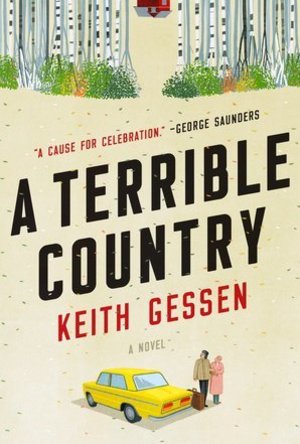
A Terrible Country
Book
When Andrei Kaplan’s older brother Dima insists that Andrei return to Moscow to care for their...
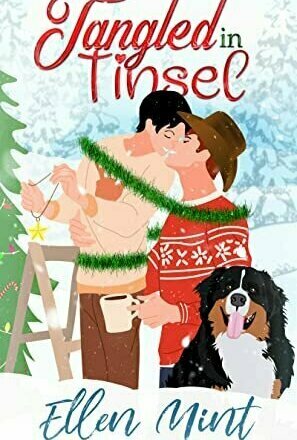
Tangled In Tinsel
Book
Dear Santa, please leave a red-headed lumberjack under the tree. I’ve been a very good boy. ...
Contemporary MM Romance Seasonal
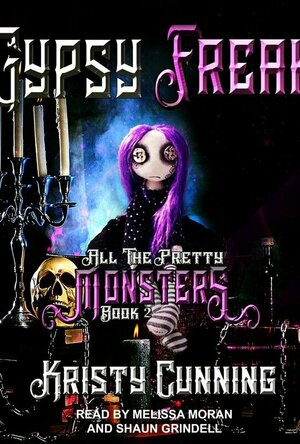
Gypsy Freak (All the Pretty Monsters #2)
Book
What's it like to be a monster in a town full of monsters, who don't know you're a...
Mandy and G.D. Burkhead (26 KP) rated The Grey Bastards in Books
May 20, 2018
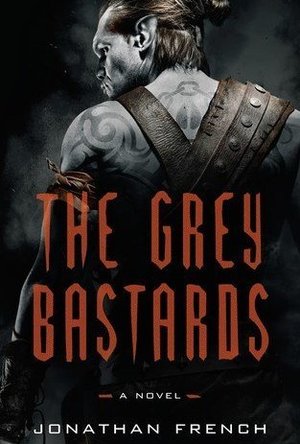
Shelf Life – The Grey Bastards Exemplifies Grimdark Fantasy at Its Damn Finest
Contains spoilers, click to show
The Grey Bastards is a fun, foul-mouthed read. If you’re turned off by bad language, steamy sex, or a good plot with plenty of action and twists, then this book isn’t for you. The Grey Bastards falls into the fantasy sub-genre known as grimdark. Where high fantasy has your Tolkien beautiful and noble elves, dwarves, humans, and wizards with epic battles between good and evil, grimdark takes all of that and covers it in shit, pus, and blood. Notice how in high fantasy nobody ever takes a piss or fucks? In grimdark, everyone does.
But don’t be fooled into thinking this book will be any less intelligent, epic, or heartfelt for it. The Grey Bastards is all of that and more. The novel follows Jackal, a half-breed orc living in the Lot Lands, the barren desert wasteland of Hispartha. He is a Grey Bastard, one of many half-orc hoofs, each protecting its own small town in the Lots. Members of a hoof are elite warriors that ride out on their Barbarians—giant warthogs—and slaughter invading bands of orcs.
Hispartha is a vibrant world, with a mix of fantastical species (orcs, half-orcs, elves, humans, halflings, and centaurs) with unique cultures and religions. Hispartha itself takes influences from Reconquista Spain, which is especially noticeable in the nomenclature, geography, and architecture.
The primarily atheistic half-orcs recently won their freedom from slavery at the hands of humans. Humans treat the half-orcs like second-class citizens, but tolerate them because of their strength, using them as a shield from the orcs. The elves are beautiful, reclusive, and probably the most cliché; there is one important elf character, but for the most part, we don’t get a good look into their culture in the first book. The centaurs worship Romanesque deities and go on crazed, Bacchanalian killing sprees during the blood moon.
Besides the half-orcs, the halflings are perhaps the most interesting. I still have a hard time visualizing them, trying to figure out if they are thin, pixie-like creatures or more stocky like dwarves. Their small stature and black skin makes me think of pygmies. They worship a god they expect will reincarnate someday, (view spoiler)
One thing that has always annoyed me about fantasy is that many authors feel that the characters of their world, being pre-industrial and thus “medieval,” must all be white, straight, Christian (or proto-Christian), cisgender males. If a woman appears at all is to act as the damsel, prize, or, if she’s lucky, a mystical enchantress to guide the heroes or provide a maguffin. It has come to the point in which this has become a tired and accepted baseline for fantasy. I don’t necessarily think that these fantasy authors are intentionally trying to be uninclusive, so much as they just seem to forget that other groups of people can exist in fantasy thanks to its fathers, Tolkien and Lewis.
But enough with my rant, the purpose of which is to highlight why I am often drawn to grimdark fantasy: at the very least I know that women, people of color, lgbt people, and other religions will be present, even if they are often victimized. This is because grimdark fantasy honestly depicts the horrors of rape, war, murder, slavery, and racism (or rather, speciesism in most cases) and has heroes and villains that are morally grey.
However, many authors describe these atrocities and then leave it at that, assuming that simply depicting them is enough to make a book mature and meaningful. They often fail to make any sort of statement on evil, and thus can seem to be, at best, blindly accepting it and, at worst, glorifying it (this often happens in the cases of magnificent bastard characters, who are absolute monsters but are so charming you almost respect or like them).
Jonathan French, however, does not fall short of the mark as many authors do, and for two main reasons: humor and humanity.
Let’s start with the humor. This book is hilarious. I mean in the I literally laughed out loud while reading it way. Sure, the jokes are often crass, but I have a dirty mind, so inappropriate humor is my favorite kind. The dialogue is especially top-notch, and the interactions between Jackal and his friends Fetching and Oats feel genuine, full of in-jokes, insults, and sexually-charged humor, all of which are exactly how I interact with my own close friends. And every major character in this book is so damn witty that I’m honestly jealous of them. If I could be quick enough to make even one of their zingers at the right time in a conversation, I would feel proud of myself for the rest of the day.
Humor is necessary to prevent any grimdark fantasy from becoming too over-the-top or depressing. And honestly, humor is needed most when the world is a dark and frightening place. But too much humor could accidentally downplay the point of grimdark: the brutally honest depiction of the atrocities that people are capable of.
And this is where it is important to have an element of humanity. By this I mean that the “good guys” must make some action or statement on those atrocities. Too often I read or watch hardened badass characters with no emotion who can watch a person get tortured and killed without flinching (maybe even do it themselves) and who never stop to question the nature of their society (even as part of their character growth), and I have difficulty finding them at all relatable or even the least bit interesting.
Now, often for this type of character, he or she is dead inside as a coping mechanism and part of their character arc is learning to allow themselves to feel their repressed emotions: heartbreak, anger, fear, etc. This can be done very well (see The Hunger Games for a great example—dystopian scifi and grimdark fantasy have very similar undertones). But most times it just ends up falling flat.
But Jackal already starts out with more personality than most grimdark protagonists. He is a humorous and light-hearted person. Sure, he lives in a desert wasteland, his race is entirely created by rape, he’s treated as a second-class citizen, and his life and the lives of those around him are in constant danger of rape and/or murder by invading orcs or blood-crazed centaurs. But despite all of that, he still has a sense of humor, people he loves, a community, ambitions, moral code, and all of the other things that these protagonists are often lacking.
Don’t get me wrong, he can be an asshole, and he’s often acts rashly before he thinks. But the scene that really stuck with me the most was [when Jackal and the wizard Crafty come across an unconscious elf sex-slave. I was expecting him to say something along the lines of “There’s nothing we can do for her, we have to save ourselves” or “This isn’t any of our business” or “It would be best to just put her out of her mercy.” These are the typical lines that a grimdark protagonist might utter while their companion—accused of being a bleeding heart—frees the slave. But this was not the case. Jackal and Crafty both immediately set out to free the girl and steal her away from her owner, despite the danger to themselves. And when he comes across an entire castle-full of these women, Jackal again sets about freeing them without a moment’s hesitation. (hide spoiler)]
And it’s no surprise that Jackal has a serious problem with rape. As I’ve mentioned before, half-orcs are entirely the product of roving bands of orcs raping human, elven, or even half-orc women. [When Jackal learns that Starling, the elf slave he rescued, is pregnant with a half-orc baby, he is not only furious with the orcs that gang-raped her, but also disturbed by the fact that elven society shuns any of their women who have been raped, and that these victims often end up taking their own lives rather than give birth to an impure half-elf. (hide spoiler)]
Furthermore, Jackal, unlike many people in Hispartha, does not buy into misogyny or sexism. His best friend Fetching is the first female half-orc to have joined a group of riders. Not only does Jackal respect Fetching, he understands the emotional turmoil that she is dealing with being the first female rider and how she overcompensates as a result to earn the respect of the other men.
While there is quite a bit of speciesism (pretty much none of the species get along with one another), the inhabitants of Hispartha come in every skin color and nobody gives a damn. Furthermore, sexuality is primarily treated as each person’s individual preference and nobody else’s business. While characters may make jokes about acting “backy” (gay), these are made in good humor between friends, and nobody gets particularly offended by them. Fetching is herself openly bisexual (though she seems to suppress her heterosexual desires more than her homosexual ones out of that same need to be “one of the boys”), and Oats and Jackal are one of my favorite bromantic pairings.
Grimdark fantasy can often be depressing to read. But Jonathan French does an excellent job of infusing hope into his narrative. The story actually has a happier ending than I was expecting. [I was especially pleased when Jackal chooses Fetching to be the new leader of the hoof (she is voted in unanimously by the other riders). I find it incredibly annoying in books and movies when revolutionaries/usurpers decide to appoint themselves leaders, as the former does not qualify you for the latter. Part of Jackal’s arc is realizing that he is not meant to lead the hoof like he’d once desired. (hide spoiler)]
For the sequel, The True Bastards, I’m hoping to see [if a cure can be found for the thrice-blood child now infected with plague, how Fetching is doing leading the hoof, and what the mysterious Starling is up to (I don’t buy for a second that she’s killed herself). And of course, I fully expect that Jackal is going to have to fulfill his empty promise to the halfling’s resurrected god, Belico.

But don’t be fooled into thinking this book will be any less intelligent, epic, or heartfelt for it. The Grey Bastards is all of that and more. The novel follows Jackal, a half-breed orc living in the Lot Lands, the barren desert wasteland of Hispartha. He is a Grey Bastard, one of many half-orc hoofs, each protecting its own small town in the Lots. Members of a hoof are elite warriors that ride out on their Barbarians—giant warthogs—and slaughter invading bands of orcs.
Hispartha is a vibrant world, with a mix of fantastical species (orcs, half-orcs, elves, humans, halflings, and centaurs) with unique cultures and religions. Hispartha itself takes influences from Reconquista Spain, which is especially noticeable in the nomenclature, geography, and architecture.
The primarily atheistic half-orcs recently won their freedom from slavery at the hands of humans. Humans treat the half-orcs like second-class citizens, but tolerate them because of their strength, using them as a shield from the orcs. The elves are beautiful, reclusive, and probably the most cliché; there is one important elf character, but for the most part, we don’t get a good look into their culture in the first book. The centaurs worship Romanesque deities and go on crazed, Bacchanalian killing sprees during the blood moon.
Besides the half-orcs, the halflings are perhaps the most interesting. I still have a hard time visualizing them, trying to figure out if they are thin, pixie-like creatures or more stocky like dwarves. Their small stature and black skin makes me think of pygmies. They worship a god they expect will reincarnate someday, (view spoiler)
One thing that has always annoyed me about fantasy is that many authors feel that the characters of their world, being pre-industrial and thus “medieval,” must all be white, straight, Christian (or proto-Christian), cisgender males. If a woman appears at all is to act as the damsel, prize, or, if she’s lucky, a mystical enchantress to guide the heroes or provide a maguffin. It has come to the point in which this has become a tired and accepted baseline for fantasy. I don’t necessarily think that these fantasy authors are intentionally trying to be uninclusive, so much as they just seem to forget that other groups of people can exist in fantasy thanks to its fathers, Tolkien and Lewis.
But enough with my rant, the purpose of which is to highlight why I am often drawn to grimdark fantasy: at the very least I know that women, people of color, lgbt people, and other religions will be present, even if they are often victimized. This is because grimdark fantasy honestly depicts the horrors of rape, war, murder, slavery, and racism (or rather, speciesism in most cases) and has heroes and villains that are morally grey.
However, many authors describe these atrocities and then leave it at that, assuming that simply depicting them is enough to make a book mature and meaningful. They often fail to make any sort of statement on evil, and thus can seem to be, at best, blindly accepting it and, at worst, glorifying it (this often happens in the cases of magnificent bastard characters, who are absolute monsters but are so charming you almost respect or like them).
Jonathan French, however, does not fall short of the mark as many authors do, and for two main reasons: humor and humanity.
Let’s start with the humor. This book is hilarious. I mean in the I literally laughed out loud while reading it way. Sure, the jokes are often crass, but I have a dirty mind, so inappropriate humor is my favorite kind. The dialogue is especially top-notch, and the interactions between Jackal and his friends Fetching and Oats feel genuine, full of in-jokes, insults, and sexually-charged humor, all of which are exactly how I interact with my own close friends. And every major character in this book is so damn witty that I’m honestly jealous of them. If I could be quick enough to make even one of their zingers at the right time in a conversation, I would feel proud of myself for the rest of the day.
Humor is necessary to prevent any grimdark fantasy from becoming too over-the-top or depressing. And honestly, humor is needed most when the world is a dark and frightening place. But too much humor could accidentally downplay the point of grimdark: the brutally honest depiction of the atrocities that people are capable of.
And this is where it is important to have an element of humanity. By this I mean that the “good guys” must make some action or statement on those atrocities. Too often I read or watch hardened badass characters with no emotion who can watch a person get tortured and killed without flinching (maybe even do it themselves) and who never stop to question the nature of their society (even as part of their character growth), and I have difficulty finding them at all relatable or even the least bit interesting.
Now, often for this type of character, he or she is dead inside as a coping mechanism and part of their character arc is learning to allow themselves to feel their repressed emotions: heartbreak, anger, fear, etc. This can be done very well (see The Hunger Games for a great example—dystopian scifi and grimdark fantasy have very similar undertones). But most times it just ends up falling flat.
But Jackal already starts out with more personality than most grimdark protagonists. He is a humorous and light-hearted person. Sure, he lives in a desert wasteland, his race is entirely created by rape, he’s treated as a second-class citizen, and his life and the lives of those around him are in constant danger of rape and/or murder by invading orcs or blood-crazed centaurs. But despite all of that, he still has a sense of humor, people he loves, a community, ambitions, moral code, and all of the other things that these protagonists are often lacking.
Don’t get me wrong, he can be an asshole, and he’s often acts rashly before he thinks. But the scene that really stuck with me the most was [when Jackal and the wizard Crafty come across an unconscious elf sex-slave. I was expecting him to say something along the lines of “There’s nothing we can do for her, we have to save ourselves” or “This isn’t any of our business” or “It would be best to just put her out of her mercy.” These are the typical lines that a grimdark protagonist might utter while their companion—accused of being a bleeding heart—frees the slave. But this was not the case. Jackal and Crafty both immediately set out to free the girl and steal her away from her owner, despite the danger to themselves. And when he comes across an entire castle-full of these women, Jackal again sets about freeing them without a moment’s hesitation. (hide spoiler)]
And it’s no surprise that Jackal has a serious problem with rape. As I’ve mentioned before, half-orcs are entirely the product of roving bands of orcs raping human, elven, or even half-orc women. [When Jackal learns that Starling, the elf slave he rescued, is pregnant with a half-orc baby, he is not only furious with the orcs that gang-raped her, but also disturbed by the fact that elven society shuns any of their women who have been raped, and that these victims often end up taking their own lives rather than give birth to an impure half-elf. (hide spoiler)]
Furthermore, Jackal, unlike many people in Hispartha, does not buy into misogyny or sexism. His best friend Fetching is the first female half-orc to have joined a group of riders. Not only does Jackal respect Fetching, he understands the emotional turmoil that she is dealing with being the first female rider and how she overcompensates as a result to earn the respect of the other men.
While there is quite a bit of speciesism (pretty much none of the species get along with one another), the inhabitants of Hispartha come in every skin color and nobody gives a damn. Furthermore, sexuality is primarily treated as each person’s individual preference and nobody else’s business. While characters may make jokes about acting “backy” (gay), these are made in good humor between friends, and nobody gets particularly offended by them. Fetching is herself openly bisexual (though she seems to suppress her heterosexual desires more than her homosexual ones out of that same need to be “one of the boys”), and Oats and Jackal are one of my favorite bromantic pairings.
Grimdark fantasy can often be depressing to read. But Jonathan French does an excellent job of infusing hope into his narrative. The story actually has a happier ending than I was expecting. [I was especially pleased when Jackal chooses Fetching to be the new leader of the hoof (she is voted in unanimously by the other riders). I find it incredibly annoying in books and movies when revolutionaries/usurpers decide to appoint themselves leaders, as the former does not qualify you for the latter. Part of Jackal’s arc is realizing that he is not meant to lead the hoof like he’d once desired. (hide spoiler)]
For the sequel, The True Bastards, I’m hoping to see [if a cure can be found for the thrice-blood child now infected with plague, how Fetching is doing leading the hoof, and what the mysterious Starling is up to (I don’t buy for a second that she’s killed herself). And of course, I fully expect that Jackal is going to have to fulfill his empty promise to the halfling’s resurrected god, Belico.
Jamie (131 KP) rated Born a Crime: Stories from a South African Childhood in Books
Jul 22, 2017
Noah’s wit and charm (1 more)
Frank discussions of racism, poverty, and family
A stellar memoir
For those that don’t already know who Trevor Noah is, he is a comedian from South Africa that is now the current host of The Daily Show, taking the place of Jon Stewart when he retired. Trevor is an accomplished polyglot, speaking 9 languages fluently and has some fluency in several more. In much of his comedy he talks about his difficulties with racial identity having been born during apartheid to an African mother and a Swiss father. Apartheid was a system of institutionalized segregation in South Africa that lasted from the 1940’s to the 1990’s.
The book is bursting at the seams with humorous anecdotes about growing up as the wild child in his family. Getting in trouble, trying to outrun and outsmart his mom, committing petty crimes with friends, striking out with girls; Trevor’s life was colorful in no small part because of his mother. In interviews Trevor has stated that his memoir became sort of an open love letter to his mother, Patricia Noah–a fiercely independent woman that refused to be held down by her race or gender and sought to show her son the world outside of apartheid South Africa, who tried to save her son from the cruelty of the world.
“The world doesn’t love you. If the police get you, the police don’t love you. When I beat you, I’m trying to save you. When they beat you, they’re trying to kill you.”
The last chapters had me sobbing which was something that I hadn’t anticipated. Trevor mentions his step-father in the early chapters in passing, like a dark cloud that hung over his family’s life. I wasn’t prepared for the deeply troubling and heartbreaking portrait of a loving family ripped apart by abuse and the failures of law enforcement to prevent tragedy despite numerous attempts to get help.
I was already a fan of Trevor Noah, having watched some of his stand-up comedy and was overjoyed when he took over The Daily Show. From this memoir I have a newfound respect for Trevor not only for the horrendous abuse and racism he has endured, but how he allowed these things to shape who he is. He approaches issues of race, identity, poverty, and abuse with honesty and was able to articulate his feelings on topics that I have been struggling with for years. This memoir was surprisingly cathartic to me as someone that has struggled both with a mixed racial background and as a survivor of domestic abuse.
This was a wonderful memoir that really showcased that even in the darkest of places one can still find hope and strength in love. It was both insightful and laugh out loud funny, even if some of the humor could be viewed as highly offensive. I really enjoyed this memoir and am happy that I read it, it’s definitely going down on my shelf as a favorite.
The book is bursting at the seams with humorous anecdotes about growing up as the wild child in his family. Getting in trouble, trying to outrun and outsmart his mom, committing petty crimes with friends, striking out with girls; Trevor’s life was colorful in no small part because of his mother. In interviews Trevor has stated that his memoir became sort of an open love letter to his mother, Patricia Noah–a fiercely independent woman that refused to be held down by her race or gender and sought to show her son the world outside of apartheid South Africa, who tried to save her son from the cruelty of the world.
“The world doesn’t love you. If the police get you, the police don’t love you. When I beat you, I’m trying to save you. When they beat you, they’re trying to kill you.”
The last chapters had me sobbing which was something that I hadn’t anticipated. Trevor mentions his step-father in the early chapters in passing, like a dark cloud that hung over his family’s life. I wasn’t prepared for the deeply troubling and heartbreaking portrait of a loving family ripped apart by abuse and the failures of law enforcement to prevent tragedy despite numerous attempts to get help.
I was already a fan of Trevor Noah, having watched some of his stand-up comedy and was overjoyed when he took over The Daily Show. From this memoir I have a newfound respect for Trevor not only for the horrendous abuse and racism he has endured, but how he allowed these things to shape who he is. He approaches issues of race, identity, poverty, and abuse with honesty and was able to articulate his feelings on topics that I have been struggling with for years. This memoir was surprisingly cathartic to me as someone that has struggled both with a mixed racial background and as a survivor of domestic abuse.
This was a wonderful memoir that really showcased that even in the darkest of places one can still find hope and strength in love. It was both insightful and laugh out loud funny, even if some of the humor could be viewed as highly offensive. I really enjoyed this memoir and am happy that I read it, it’s definitely going down on my shelf as a favorite.
Joe Goodhart (27 KP) rated X-Force, Volume 3: Not Forgotten in Books
Nov 30, 2020
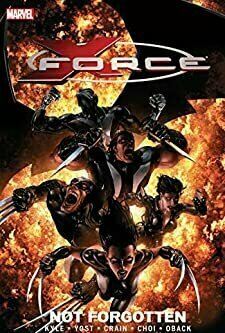
After a brief hiatus, I resumed reading the X-FORCE TPBs, jumping with the third volume of Craig Kyle & Christopher Yost's dark run of X-FORCE.
This trade made up the "Not Forgotten" story arc, which sees the return of Kimura, bringing with her a whole boatload of hateful hurtin' for Laura (X-23). It is also saw some well-deserved (!) hostility on Wolverine's part toward Cry-clops for the casualties suffered in the team's hunt for Hope Summers as well as Laura being kidnapped. And, like the little b he has been all his life (sorry, not a fan of Scott Summers, but it's totally cool if you are), he just says "I know" when Wolverine tells him that it will death for him if either of the two students die. Wow!
Varied opinions on the art (again). I have always been fond of Clayton Crain's art style, especially his attention to facial details, so his art on the first two issues of the trade was outstanding! He brought a darkness mixed with creepiness to the way he drew the Leper Queen. WIN!
And that brings us to the art for the remaining three issues in the trade. I also like Mike Choi's facial details on the characters he draws. However, his attention to women's breasts and his intent to make all the women under his pencils to be well-endowed is a bit uncomfortable, especially in regard to Laura (who is supposed to be age 16, as stated by Domino in Issue 20. No need for it to be as such, to be honest.
Even more offensive was the way Rahne Sinclair, in wolf-form, was rendered like an extra in a hip-hop video (!). Come on, Rahne has always had a tiny form, never rendered like this EVER! Tho' I am sure a more than fair amount of 'shippers (I assume Rahne has 'shippers) feel differently about that. Jus' sayin'..
<a href="https://ibb.co/csQdiy"><img src="https://thumb.ibb.co/csQdiy/Xforce18_rahnegotback.jpg" alt="Xforce18 rahnegotback" border="0" /></a>
So, art quibbling aside, the story, still continuing to be written by Yost and Kyle since it's return in 2008, was all aces! There was more than enough adrenaline-fueled excitement contained within, providing a white-knuckled ride, leading directly into the next volume of X-Force, NECROSHA!
I will advise this one, like the previous two volumes, is dark AF! There is very little, if any, humor. There is a higher violence output in this one as well, but it is warranted for sure, when you considered the odds they're up against! That said, if you can handle all that, then I encourage you to pick this one up!
Also, if you are fan of Laura Kinney/X-23, then I also encourage you, as it will give more backstory to her character.
This trade made up the "Not Forgotten" story arc, which sees the return of Kimura, bringing with her a whole boatload of hateful hurtin' for Laura (X-23). It is also saw some well-deserved (!) hostility on Wolverine's part toward Cry-clops for the casualties suffered in the team's hunt for Hope Summers as well as Laura being kidnapped. And, like the little b he has been all his life (sorry, not a fan of Scott Summers, but it's totally cool if you are), he just says "I know" when Wolverine tells him that it will death for him if either of the two students die. Wow!
Varied opinions on the art (again). I have always been fond of Clayton Crain's art style, especially his attention to facial details, so his art on the first two issues of the trade was outstanding! He brought a darkness mixed with creepiness to the way he drew the Leper Queen. WIN!
And that brings us to the art for the remaining three issues in the trade. I also like Mike Choi's facial details on the characters he draws. However, his attention to women's breasts and his intent to make all the women under his pencils to be well-endowed is a bit uncomfortable, especially in regard to Laura (who is supposed to be age 16, as stated by Domino in Issue 20. No need for it to be as such, to be honest.
Even more offensive was the way Rahne Sinclair, in wolf-form, was rendered like an extra in a hip-hop video (!). Come on, Rahne has always had a tiny form, never rendered like this EVER! Tho' I am sure a more than fair amount of 'shippers (I assume Rahne has 'shippers) feel differently about that. Jus' sayin'..
<a href="https://ibb.co/csQdiy"><img src="https://thumb.ibb.co/csQdiy/Xforce18_rahnegotback.jpg" alt="Xforce18 rahnegotback" border="0" /></a>
So, art quibbling aside, the story, still continuing to be written by Yost and Kyle since it's return in 2008, was all aces! There was more than enough adrenaline-fueled excitement contained within, providing a white-knuckled ride, leading directly into the next volume of X-Force, NECROSHA!
I will advise this one, like the previous two volumes, is dark AF! There is very little, if any, humor. There is a higher violence output in this one as well, but it is warranted for sure, when you considered the odds they're up against! That said, if you can handle all that, then I encourage you to pick this one up!
Also, if you are fan of Laura Kinney/X-23, then I also encourage you, as it will give more backstory to her character.
Kristy H (1252 KP) rated The Adults in Books
Mar 20, 2019
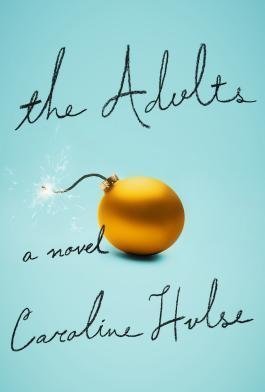
Quick read with its funny moments
Matt and Claire are no longer married, but both want to spend the Christmas holiday with their seven-year-old daughter, Scarlett. It's not quite clear whose idea it was, or how the whole thing came about, but suddenly Matt, Claire, their new partners, and Scarlett are spending a long weekend at the Happy Forest holiday park. Oh yes, and we can't forget that Posey, Scarlett's giant imaginary friend--a nearly life-size rabbit--is along for the ride too. Claire has brought Patrick, a fellow lawyer, a seemingly rational guy who loves Scarlett and is training for an Ironman. And Matt has brought Alex, his scientist girlfriend, who is skeptical about the whole affair. Suddenly the group is jammed into a small lodge, subject to the whims of a mercurial seven-year-old (and her pretend rabbit), and stuck doing a variety of "fun family activities." It's no wonder that this all leads to an event so horrific that the police are called.
This book was an odd one, as if it couldn't decide to be serious or funny. It starts out with a call to the police, so we know that someone has been shot at archery, but we don't yet know who. Then things unfold from the beginning of the holiday, slowly building back up to the incident. Interspersed with the characters' narratives are bits and pieces of the police's discussion with various people at the holiday park involved with the shooting. It's interesting, but it's a little disconcerting: partial mystery/partial character-driven novel/partial "humorous look at family fun gone wrong."
Unfortunately for me, I didn't find a lot of the book all that fun. Yes, I could see the humor in some of the situations, but honestly, a lot of it just made me uncomfortable. Perhaps it's being a child of divorce myself. Maybe too much hit close to home. I felt the most for poor Alex, who was tortured by Scarlett (and that darn fake bunny) and then forced to witness her boyfriend in a series of cozy moments with her ex. Patrick was slightly insane, Claire too good to be true, and Matt, honestly, an infuriating wuss for most of the book. As everyone got more and more tired of each other, I would have had a feeling of doom reading this even without knowing someone gets shot. You just know no good can come of this.
Now, yes, there is some dark humor here, and I did laugh at times. There are definitely some funny places. But I think Scarlett and Posey were supposed to be more funny than they were (I've been that kid angry at her parents for divorcing, but man, Scarlett was really irritating sometimes). When you really only feel for one of the characters (Alex), it's hard to stay invested in the book. Luckily, things improved a bit closer to the end, and I found myself getting a more into the story. Still, I couldn't help but find things a bit implausible and frustrating at times, and I really longed for more of the hilarity the book promised.
Overall, this is a quick read, and it has its funny, crazy moments. Still, the characters are tough to feel invested in and sometimes the plot was almost too zany and stressful for me. I liked this one, but didn't love it.
I received a copy of this book from the publisher and LibraryThing in return for an unbiased review (thank you!).

This book was an odd one, as if it couldn't decide to be serious or funny. It starts out with a call to the police, so we know that someone has been shot at archery, but we don't yet know who. Then things unfold from the beginning of the holiday, slowly building back up to the incident. Interspersed with the characters' narratives are bits and pieces of the police's discussion with various people at the holiday park involved with the shooting. It's interesting, but it's a little disconcerting: partial mystery/partial character-driven novel/partial "humorous look at family fun gone wrong."
Unfortunately for me, I didn't find a lot of the book all that fun. Yes, I could see the humor in some of the situations, but honestly, a lot of it just made me uncomfortable. Perhaps it's being a child of divorce myself. Maybe too much hit close to home. I felt the most for poor Alex, who was tortured by Scarlett (and that darn fake bunny) and then forced to witness her boyfriend in a series of cozy moments with her ex. Patrick was slightly insane, Claire too good to be true, and Matt, honestly, an infuriating wuss for most of the book. As everyone got more and more tired of each other, I would have had a feeling of doom reading this even without knowing someone gets shot. You just know no good can come of this.
Now, yes, there is some dark humor here, and I did laugh at times. There are definitely some funny places. But I think Scarlett and Posey were supposed to be more funny than they were (I've been that kid angry at her parents for divorcing, but man, Scarlett was really irritating sometimes). When you really only feel for one of the characters (Alex), it's hard to stay invested in the book. Luckily, things improved a bit closer to the end, and I found myself getting a more into the story. Still, I couldn't help but find things a bit implausible and frustrating at times, and I really longed for more of the hilarity the book promised.
Overall, this is a quick read, and it has its funny, crazy moments. Still, the characters are tough to feel invested in and sometimes the plot was almost too zany and stressful for me. I liked this one, but didn't love it.
I received a copy of this book from the publisher and LibraryThing in return for an unbiased review (thank you!).
Phillip McSween (751 KP) rated Okja (2017) in Movies
Jan 10, 2018
Solid Film
In their efforts to be cost efficient and profitable, the Mirando Corporation creates a breed of "super pigs" that will be able to feed more homes per pig. One pig in particular, Okja, is being raised by little Mija (Seo-hyeon Ahn) in the mountains of South Korea. When the Mirando Corporation come to claim what is theirs, Mija will stop at nothing to get her best friend back.
There is a lot to like about this film, but one primary thing bothered me overall. At one point, Okja takes an extremely dark turn that I was neither ready for nor did I think was absolutely necessary. People that have seen the film probably know exactly which part I'm referring to. It was merely a piece of an overall delightful puzzle that just didn't match.
Solid acting performances abound in the film and it's not just the big names carrying their weight. Tilda Swinton and Jake Gyllenhaal (almost spelled his name right on the first try!) were really in tune with their respective zany characters. As a viewer the two show you that they are more than mere cardboard antagonists, but rather there were layers and levels to their characters that left you with insight. Of course that can't be pulled off without a solid actor/actress behind the helm. Ahn's performance as Mija was stellar. To be able to exemplify such strength and weakness in the same role takes real talent. My personal favorite of them all was Kim's role played by Choi Woo-Shik. His humor is subtle yet sidesplitting. He accomplishes a lot in the small amount of time he's on screen.
This films captures your attention both in its originality and a consistently entertaining pace. Even during the scenes with heavy dialogue, the film managed to hold on to its unique feel that captured my attention in the first place. Prepare to run the gauntlet of emotions as it goes from funny to heartbreaking to heartwarming to just plain sad at times. So glad I saw what I think has the potential to become a cult classic. I give it an 84.
There is a lot to like about this film, but one primary thing bothered me overall. At one point, Okja takes an extremely dark turn that I was neither ready for nor did I think was absolutely necessary. People that have seen the film probably know exactly which part I'm referring to. It was merely a piece of an overall delightful puzzle that just didn't match.
Solid acting performances abound in the film and it's not just the big names carrying their weight. Tilda Swinton and Jake Gyllenhaal (almost spelled his name right on the first try!) were really in tune with their respective zany characters. As a viewer the two show you that they are more than mere cardboard antagonists, but rather there were layers and levels to their characters that left you with insight. Of course that can't be pulled off without a solid actor/actress behind the helm. Ahn's performance as Mija was stellar. To be able to exemplify such strength and weakness in the same role takes real talent. My personal favorite of them all was Kim's role played by Choi Woo-Shik. His humor is subtle yet sidesplitting. He accomplishes a lot in the small amount of time he's on screen.
This films captures your attention both in its originality and a consistently entertaining pace. Even during the scenes with heavy dialogue, the film managed to hold on to its unique feel that captured my attention in the first place. Prepare to run the gauntlet of emotions as it goes from funny to heartbreaking to heartwarming to just plain sad at times. So glad I saw what I think has the potential to become a cult classic. I give it an 84.
Mothergamer (1613 KP) rated the PC version of Portal 2 in Video Games
Apr 3, 2019
Is Portal 2 worth all the hype? The answer is a resounding yes! Valve really did their homework on making the sequel to Portal fun and interesting. Portal was one of the first person games that I could play because the camera didn't bob around and make me feel nauseous. I was pleased to see that the camera angles are excellent in first person once again and don't have that wobbly bobbing effect that always makes me ill.
There are new items in the game like hard light bridges, aerial faith plates, and propulsion gel. Each item is introduced carefully, allowing the player to become familiar with the items and how to use them. The puzzle rooms are amazingly designed, and while one puzzle may seem obvious to one person, it may not to another. There's no hard and fast learning curve with the difficulty levels of the puzzles and with the voice of GlaDos pouring often hilarious insults at you in a sing song computer voice make it entertaining.
The humor in Portal 2 is perfectly dark with great comedic timing and terrific voice acting especially from Stephen Merchant as Wheatley. You will often find yourself chuckling, but also find yourself having that unsettling feeling throughout the story as it progresses. The main story for Portal 2 is longer than the first one, and perhaps even better which is a great thing for a sequel game.
After you are done with the main story, you can play a co-op multiplayer stand alone story play through of the game featuring two droids Atlas and Peabody who are sent testing for GlaDos and the puzzles rely on them working well together as a team. This mode is a lot of fun with well balanced and greatly constructed puzzles.
Valve has outdone themselves with Portal 2, with great puzzles, game play, and story. If you haven't picked up Portal 2 yet, you definitely should. It promises a great gaming experience for old and new Portal fans alike. This is definitely a game that any gamer worth his or her salt should have in their collection.
There are new items in the game like hard light bridges, aerial faith plates, and propulsion gel. Each item is introduced carefully, allowing the player to become familiar with the items and how to use them. The puzzle rooms are amazingly designed, and while one puzzle may seem obvious to one person, it may not to another. There's no hard and fast learning curve with the difficulty levels of the puzzles and with the voice of GlaDos pouring often hilarious insults at you in a sing song computer voice make it entertaining.
The humor in Portal 2 is perfectly dark with great comedic timing and terrific voice acting especially from Stephen Merchant as Wheatley. You will often find yourself chuckling, but also find yourself having that unsettling feeling throughout the story as it progresses. The main story for Portal 2 is longer than the first one, and perhaps even better which is a great thing for a sequel game.
After you are done with the main story, you can play a co-op multiplayer stand alone story play through of the game featuring two droids Atlas and Peabody who are sent testing for GlaDos and the puzzles rely on them working well together as a team. This mode is a lot of fun with well balanced and greatly constructed puzzles.
Valve has outdone themselves with Portal 2, with great puzzles, game play, and story. If you haven't picked up Portal 2 yet, you definitely should. It promises a great gaming experience for old and new Portal fans alike. This is definitely a game that any gamer worth his or her salt should have in their collection.
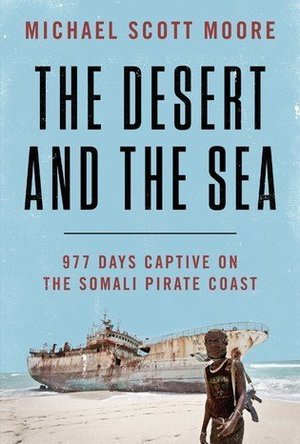
The Desert and the Sea: 977 Days Captive on the Somali Pirate Coast
Book
Michael Scott Moore, a journalist and the author of Sweetness and Blood, incorporates personal...


