

Gay Chat & Dating - Partner
Dating and Social Networking
1.0 Rate It
App
Partner is a cool gay dating app for real communication only. Our superiority over other dating...

Auto Call Recorder - Automatic Recording Phone
Business and Productivity
App
The only Call Recorder App for iPhone really works. DOWNLOAD NOW!!!! How to use the app: 1. Input...

Call Recording - Phone Calls Recorder For iPhone
Utilities and Productivity
App
RECORD ALL INCOMING/ OUTGOING FOR IPHONE DOWNLOAD NOW !!! --------- FEATURES --------- √ Record...

Money Pro: Personal Finance
Finance and Business
App
Manage money like a pro. Money Pro is the next generation of Money app (over 2 million downloads...

Nano Hotel Booking
Business and Travel
App
Nano Hotel Booking - is an application for receiving orders and booking rooms in hotels, recreation...

VPN Pro - Fast and secure VPN
Travel and Productivity
App
The Free VPN™ Network provides fast global service. The VPN Pro app provides priority use of the...

Phil Leader (619 KP) rated Shadow (Pendulum #2) in Books
Nov 25, 2019
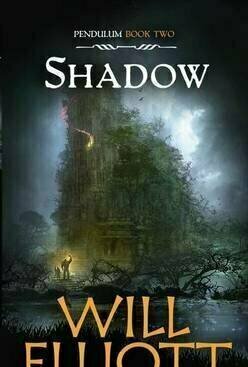

Taking up the story where the predecessor left off, this is a book of regrouping and answers. Following the destruction of the wall between the two halves of Levaal seemingly unstoppable forces are unleashed. The pendulum has started to swing - and signals the end of life on Levaal if it is not stopped.
This book is one of regrouping and answers. The various players were scattered at the end of the first book and now some of them arrive at the same destination. We also have answers to a number of questions from the first book, which given how many questions there were really is a considerable relief. Mysterious protagonists with opaque drives are all very well (and probably required these days to raise any story above the rest) but it is really good to see that Elliott really does know what is going on (even if as a reader it still not entirely clear). The description of how magic works was particularly good, and as with the first book this is a really strong point in the creation of the mythology here.
Most of the characters are the same faces, but there are a few new ones. Most notably Shadow who is referred to a couple of times in the first book (mostly in terms of Eric potentially being Shadow). The title character appears here as a main character and drives most of the plot. Clearly a being of power, the back story of where Shadow came from and why is also touched on. The great dragons who apparently rule the world also take a more direct hand and are as devious and manipulative as expected.
Meanwhile the Arch Mage is losing control of Vous as he nears godhood and the unpredictable destruction wrought by Vous is creating a dangerous instability as the forces representing the Castle fragment into their own factions, each with their own agenda,
The writing continues to be strong, the story moves again at some pace although inevitably there is a lot more talking and exposition as the nature of the threats are explained. Elliott's inventiveness is not diminished with more odd characters and situations and locations at every turn.
Although light on actual plot, this book is clearly required as a bridge between the first book and the third, giving the reader enough information to understand exactly what is going on before what is shaping up to be a strong and no doubt surprising finale.

Musical Maker for iPad and iPhone - Live Video App
Productivity
App
This is the best app that let you make and edit video in real time by adding different sounds on...

China to Chitral: Mountains are the Beginning and End of All Scenery
Book
'Upon this trackless waste of snow, cut by a shrewd wind they sat down and wept.' In China to...
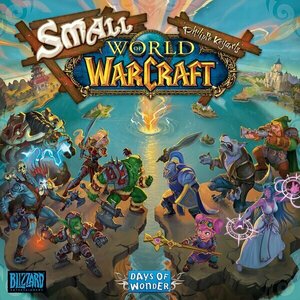
Small World Of Warcraft
Tabletop Game
In Small World of Warcraft, players vie for conquest and control of a world that is simply too small...