
Search
Search results
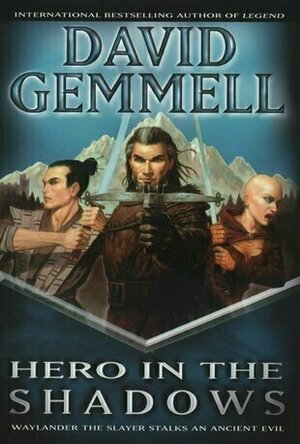
Hero in the Shadows (Drenai 9; Waylander 3)
7.5 Rate It
Book
Thousands of years ago the city of Kuan Hador, a place steeped in evil, was defeated by a vast army...

Lyndsey Gollogly (2893 KP) rated The Demonic ( Supernatural Horror book 1) in Books
Apr 9, 2022

61 of 230
Kindle
The Demonic ( Supernatural Horror book 1)
By Lee Mountford
⭐️⭐️⭐️⭐️
Danni thought she knew fear…
But this house will show her what it is to be truly afraid.
Called back to a childhood home, she must lay to rest a father that made her life hell. But something else waits for her in that house. Something far beyond what she could possibly imagine. Restless spirits and an insidious demon ensure this homecoming is one of nightmares.
Can Danni save her family… and her very soul? To do so, she must face the ghosts of her past as well as an ancient and malevolent evil.
You will love this haunted house novel, because who really needs to sleep at night?
So to get the most out of this book read it during the night in the pitch black! Well that’s what I did 😂 got to admit a few times I actually got seriously spooked and had some crazy dreams! A really good haunting of the demonic. I really enjoy Lee’s books another brilliant British horror writer.
Kindle
The Demonic ( Supernatural Horror book 1)
By Lee Mountford
⭐️⭐️⭐️⭐️
Danni thought she knew fear…
But this house will show her what it is to be truly afraid.
Called back to a childhood home, she must lay to rest a father that made her life hell. But something else waits for her in that house. Something far beyond what she could possibly imagine. Restless spirits and an insidious demon ensure this homecoming is one of nightmares.
Can Danni save her family… and her very soul? To do so, she must face the ghosts of her past as well as an ancient and malevolent evil.
You will love this haunted house novel, because who really needs to sleep at night?
So to get the most out of this book read it during the night in the pitch black! Well that’s what I did 😂 got to admit a few times I actually got seriously spooked and had some crazy dreams! A really good haunting of the demonic. I really enjoy Lee’s books another brilliant British horror writer.
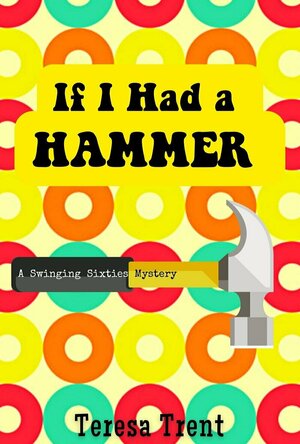
If I Had a Hammer
8.0 Rate It
Book
A new job, a brutal murder, and Camelot has ended. In 1963, Dot Morgan's life was changed...
Lyndsey Gollogly (2893 KP) rated Blood of Elves in Books
May 21, 2023 (Updated May 21, 2023)

64 of 235
Book
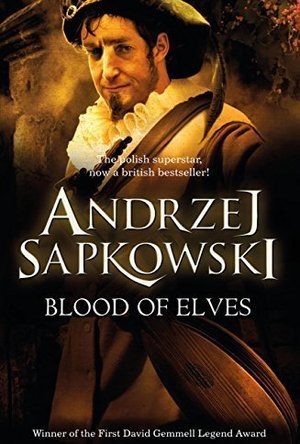
Blood of Elves ( The Witcher 3)
By Andrzej Sapkowski
⭐️⭐️⭐️
For over a century, humans, dwarves, gnomes, and elves have lived together in relative peace. But times have changed, the uneasy peace is over, and now the races are fighting once again. The only good elf, it seems, is a dead elf.
Geralt of Rivia, the cunning assassin known as The Witcher, has been waiting for the birth of a prophesied child. This child has the power to change the world - for good, or for evil.
As the threat of war hangs over the land and the child is hunted for her extraordinary powers, it will become Geralt's responsibility to protect them all - and the Witcher never accepts defeat.
This was a bit flat I’m not sure I can say I really enjoyed it I didn’t hate it and it was ok but meh. I think I’m being slightly generous with a 3 star but not sure it’s as low as a 2!
Book
Blood of Elves ( The Witcher 3)
By Andrzej Sapkowski
⭐️⭐️⭐️
For over a century, humans, dwarves, gnomes, and elves have lived together in relative peace. But times have changed, the uneasy peace is over, and now the races are fighting once again. The only good elf, it seems, is a dead elf.
Geralt of Rivia, the cunning assassin known as The Witcher, has been waiting for the birth of a prophesied child. This child has the power to change the world - for good, or for evil.
As the threat of war hangs over the land and the child is hunted for her extraordinary powers, it will become Geralt's responsibility to protect them all - and the Witcher never accepts defeat.
This was a bit flat I’m not sure I can say I really enjoyed it I didn’t hate it and it was ok but meh. I think I’m being slightly generous with a 3 star but not sure it’s as low as a 2!

Merissa (14198 KP) rated Resurrection of an Empire (The Magic Within #2) in Books
Jun 7, 2023
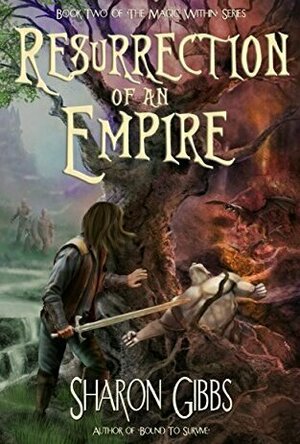
Resurrection of an Empire starts pretty much where Bound to Survive finished. We meet up with Henry, Clarence, Christopher and Elle as they try to reawaken and revitalise the Keep, making it a home for people again. It actually starts with a prologue that will immediately have your heart jumping, but you will have to carry on reading to find out what is happening!
With thrills, spills, action, adventure, evil, love, dying, and hope, there is something in here for all fantasy lovers. Hang on for a thrilling ride as Ms Gibbs puts you through your paces in a fast but smooth adventure fantasy read.
This is part of a series, so I would definitely recommend reading Bound to Survive first. Also, you can get Beginnings, a free prequel novella from her website, or by clicking http://sharongibbsauthor.com/book/beg...
* A copy of this book was provided to me with no requirements for a review. I voluntarily read this book, and the comments here are my honest opinion. *
Merissa
Archaeolibrarian - I Dig Good Books!
Apr 29, 2016
With thrills, spills, action, adventure, evil, love, dying, and hope, there is something in here for all fantasy lovers. Hang on for a thrilling ride as Ms Gibbs puts you through your paces in a fast but smooth adventure fantasy read.
This is part of a series, so I would definitely recommend reading Bound to Survive first. Also, you can get Beginnings, a free prequel novella from her website, or by clicking http://sharongibbsauthor.com/book/beg...
* A copy of this book was provided to me with no requirements for a review. I voluntarily read this book, and the comments here are my honest opinion. *
Merissa
Archaeolibrarian - I Dig Good Books!
Apr 29, 2016
Merissa (14198 KP) rated Discovery (The Gifted #1) in Books
Jun 8, 2023
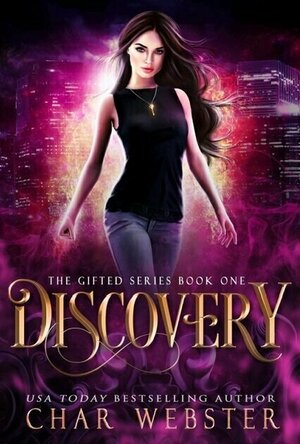
What starts off as a 'normal' story about a young woman and her foster kids, quickly becomes something completely different - with mysterious men popping up at unexpected times, new abilities being found, old abilities becoming stronger, and threats, to name but some.
With a new Discovery in every chapter, this book is very well written, with no editing or grammatical errors that I found. The chemistry between Nick and Kate jumps out from the page at you, but it is still unclear as to whether or not they will end up together. I loved the supporting cast of friends that turned up towards the end of the book.
This is an intriguing story, with no clear definition of 'good' and 'evil'. Are the good guys really good? Are the bad really as bad as they are made out to be? I don't yet know for sure, but one thing I do know is that I can't wait to read Exploration, the second book in this series.
* Verified Purchase on Amazon *
Merissa
Archaeolibrarian - I Dig Good Books!
May 29, 2016
With a new Discovery in every chapter, this book is very well written, with no editing or grammatical errors that I found. The chemistry between Nick and Kate jumps out from the page at you, but it is still unclear as to whether or not they will end up together. I loved the supporting cast of friends that turned up towards the end of the book.
This is an intriguing story, with no clear definition of 'good' and 'evil'. Are the good guys really good? Are the bad really as bad as they are made out to be? I don't yet know for sure, but one thing I do know is that I can't wait to read Exploration, the second book in this series.
* Verified Purchase on Amazon *
Merissa
Archaeolibrarian - I Dig Good Books!
May 29, 2016
Mandy and G.D. Burkhead (26 KP) rated Banewreaker in Books
May 20, 2018
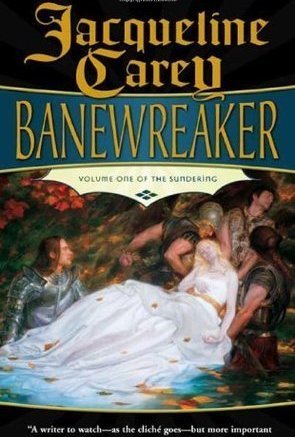


Shelf Life – Banewreaker Will Make You Feel Bad for Sauron
Contains spoilers, click to show
Very few fantasy fans can get away with admitting that they aren’t all that big into sweeping, high epic fantasy à la Lord of the Rings or the Pern stories or everything that Terry Brooks writes. Many non-fantasy fans, however, can point to these tales as examples of why they aren’t into fantasy. Like it or not, it’s hard not to see the latter group’s point, as a lot of high fantasy is riddled with confusing terminology, rehashed stories, and genre clichés. This is not to say that these stories are bad, per sé, just that they can easily turn off readers who aren’t in the right kind of crowd.
Banewreaker, the first book in Jacqueline Carey’s two-part volume The Sundering, will probably not change any opinions in this respect, then, as it’s sweeping high fantasy to the core. This, as it turns out, is both its greatest strength and its greatest weakness.
There are some reviews out there that laud Banewreaker as a masterful examination of subjective viewpoints in an epic fantasy turned into a human tragedy by a simple change of perspective. And they are absolutely correct.
There are other reviews, however, that call the book out as a heap of all of the stalest fantasy clichés piled one atop the other in a confusing and pretentious jumble with a shellacking of purple prose for good measure. And they are also absolutely correct.
Let me explain.
For starters, it would be inaccurate to say that this story is full of clichés. This story is clichés. This story is every familiar and used-up trope you would expect from a high fantasy, all of those details that have been done to death in thousands of other versions until almost nothing that happens seems original anymore.
This is what’s going to turn off a lot of people. But the thing is, Banewreaker has to be this way. It wants the reader to look at all of the things that they’ve come to expect from a fantasy epic and then, by shifting the narrative focus, realize that all of these beloved tropes are actually, when you think about it, tragic as hell.
In other words, it’s Lord of the Rings from Sauron’s point of view.
It’s not a riff, though. It’s not goofy like most of the stuff I go in for. It takes its subject just as seriously as the stories that it’s mirroring, and this is what makes the whole story ultimately so gripping and so moving.
The story starts out like many stories of this magnitude, with exposition stretching back to the Dawn of This Particular Creation. In this case, we have a protogenos world god named Uru-Alat who died and gave rise to seven smaller godlike beings called Shapers. First comes Haomane, who becomes the Lord of Thought and sets himself up as head honcho for this ensuing pantheon. Second is Arahila, the Basically a Love Goddess; and third is Satoris, whose purview was “the quickening of the flesh,” which is high fantasy speak for sexy times. Four more Shapers come after this who, for the sake of brevity, we’ll be glossing over.
To summarize the important godly exposition, the Seven Shapers set about shaping the world to the surprise of no one. Haomane creates elves (here called Ellyl, but if you’ve ever even looked at a fantasy, you know that they’re the elves here), Arahila creates humans, and Satoris doesn’t create anything because he’s busy hanging out with dragons and learning their wisdom. Satoris grants his fleshy quickening to the humans but not the elves, because Haomane didn’t want his elves to do that. Then Haomane decides he doesn’t want the humans to do that either, but Satoris refuses to take the gift away again. Conflict escalates, god wars ensue, and the world splits into two continents, with Satoris ostracized from his brethren on one and the remaining Shapers on the other. By the time the dust has settled, Satoris is scarred and burned pitch black, living in a mostly dead land thanks to Haomane’s wrath, but with a dagger in his possession that is the only weapon capable of killing any of the Shapers.
The story itself picks up thousands of years later, with Satoris as the Satan/Sauron stand-in living in a forbidding land surrounded by classically evil things like trolls, giant spiders, and insane people. Since Haomane is the head god, the rest of the world believes Satoris to be a terrible figure of evil and betrayal, while Satoris’s few allies know him as a pitiable and misunderstood figure who only ever wanted to honor his word and do right by his own sense of morality rather than the dictates of his elder brother god king.
From here the plot becomes the typical Army of Good vs. Army of Evil adventure, but with the protagonistic focus on Satoris and his allies. His trolls we see not as a mindless horde but as a simple, honorable people who happily serve their lord because he happily serves them right back. The mad individuals inhabiting his fortress are castaways from normal society with nowhere else to go. And the giant spiders just happen to live there and be bigger than normal, with no sinister intentions beyond that.
And just like that, by actually showing us the home life of the ultimate in evil fantasy tropes, we see how easily one side’s view of evil is another’s view of good. In doing so, Banewreaker becomes perhaps the first sweeping fantasy epic with no real bad guy, just two sides of an unfortunate conflict. Both sides have their likeable characters, both sides seem from their view to be in the right, and pretty soon you, as the reader, will stop cheering for either one, because whenever one person that you like succeeds it means that another person whom you also like is failing.
In fact, the closest thing that this story has to a clearly-labeled “evil” character is the sorceress Lilias, and even then, she’s not evil so much as a woman who has done some bad things for completely understandable reasons. Lilias, in fact, is one of the most pitiful characters in this whole saga of pitiable characters, with her fears and attachments closely mirroring those of most readers, only amplified by her immortality and magical powers. She is afraid of dying. She wants to be more in the grand scheme of things than just another man’s wife or another country’s momentary ruler, both of which would just be tiny moments in a long history. She likes her youth. She likes having pretty things and pretty people around her. And from her interactions with her dragon mentor and apparently only friend, Calandor, we see that she is also capable of intense affection and even love just as she is capable of indulging in self-centered self-interest that, if not particularly a good trait, is also one that she is not alone in possessing.
Banewreaker, then, is a story with a large cast of characters but very few actual heroes or innocents as well as very few outright villains, which is exactly what it sets out to be. Those who love it and those who hate it both seem to blame this quality in particular for their feelings. The biggest complaint leveled against it (that I have read, anyway) is that the people we should be rooting for do not deserve our sympathy, while the people we should be rooting against are more misguided and unwilling to see things in another light than deserving of our scorn.
This is true. But if it’s a flaw, it’s an intentional one. And if it makes you feel like you shouldn’t be cheering for either side at all in this conflict, that’s the point. This is a story of clichés, yes, but it has something that it needs to say about these clichés and, in doing so, about the subjective and impossibly nebulous quality of morality in general.
In short, here again is another fantasy story about the Forces of Good wiping out an entire nation dedicated to their “evil” enemy. And as the story points out, even if you believe in that cause, you’re still wiping out an entire nation of people. No way is there not a downside to that. Seeing things in a black-and-white morality just means crushing a whole lot of important shades of gray underfoot.
Whether or not you like Banewreaker, then, depends in large part upon how much you realize that Carey as an author is being self-aware. As someone who read and still hasn’t stopped being awed over her Kushiel series, I can’t claim complete objectivity in this area, because I came to Banewreaker already in love with her. I can say, however, that unless you have an intense and searing aversion to ornate and sweeping style, this book is worth any fantasy-lover’s time – especially if you’ve ever felt a pang of empathy for all of the poor villainous mooks that fantasy heroes tend to mow down without a thought because they were the wrong kind of ugly.
Banewreaker, the first book in Jacqueline Carey’s two-part volume The Sundering, will probably not change any opinions in this respect, then, as it’s sweeping high fantasy to the core. This, as it turns out, is both its greatest strength and its greatest weakness.
There are some reviews out there that laud Banewreaker as a masterful examination of subjective viewpoints in an epic fantasy turned into a human tragedy by a simple change of perspective. And they are absolutely correct.
There are other reviews, however, that call the book out as a heap of all of the stalest fantasy clichés piled one atop the other in a confusing and pretentious jumble with a shellacking of purple prose for good measure. And they are also absolutely correct.
Let me explain.
For starters, it would be inaccurate to say that this story is full of clichés. This story is clichés. This story is every familiar and used-up trope you would expect from a high fantasy, all of those details that have been done to death in thousands of other versions until almost nothing that happens seems original anymore.
This is what’s going to turn off a lot of people. But the thing is, Banewreaker has to be this way. It wants the reader to look at all of the things that they’ve come to expect from a fantasy epic and then, by shifting the narrative focus, realize that all of these beloved tropes are actually, when you think about it, tragic as hell.
In other words, it’s Lord of the Rings from Sauron’s point of view.
It’s not a riff, though. It’s not goofy like most of the stuff I go in for. It takes its subject just as seriously as the stories that it’s mirroring, and this is what makes the whole story ultimately so gripping and so moving.
The story starts out like many stories of this magnitude, with exposition stretching back to the Dawn of This Particular Creation. In this case, we have a protogenos world god named Uru-Alat who died and gave rise to seven smaller godlike beings called Shapers. First comes Haomane, who becomes the Lord of Thought and sets himself up as head honcho for this ensuing pantheon. Second is Arahila, the Basically a Love Goddess; and third is Satoris, whose purview was “the quickening of the flesh,” which is high fantasy speak for sexy times. Four more Shapers come after this who, for the sake of brevity, we’ll be glossing over.
To summarize the important godly exposition, the Seven Shapers set about shaping the world to the surprise of no one. Haomane creates elves (here called Ellyl, but if you’ve ever even looked at a fantasy, you know that they’re the elves here), Arahila creates humans, and Satoris doesn’t create anything because he’s busy hanging out with dragons and learning their wisdom. Satoris grants his fleshy quickening to the humans but not the elves, because Haomane didn’t want his elves to do that. Then Haomane decides he doesn’t want the humans to do that either, but Satoris refuses to take the gift away again. Conflict escalates, god wars ensue, and the world splits into two continents, with Satoris ostracized from his brethren on one and the remaining Shapers on the other. By the time the dust has settled, Satoris is scarred and burned pitch black, living in a mostly dead land thanks to Haomane’s wrath, but with a dagger in his possession that is the only weapon capable of killing any of the Shapers.
The story itself picks up thousands of years later, with Satoris as the Satan/Sauron stand-in living in a forbidding land surrounded by classically evil things like trolls, giant spiders, and insane people. Since Haomane is the head god, the rest of the world believes Satoris to be a terrible figure of evil and betrayal, while Satoris’s few allies know him as a pitiable and misunderstood figure who only ever wanted to honor his word and do right by his own sense of morality rather than the dictates of his elder brother god king.
From here the plot becomes the typical Army of Good vs. Army of Evil adventure, but with the protagonistic focus on Satoris and his allies. His trolls we see not as a mindless horde but as a simple, honorable people who happily serve their lord because he happily serves them right back. The mad individuals inhabiting his fortress are castaways from normal society with nowhere else to go. And the giant spiders just happen to live there and be bigger than normal, with no sinister intentions beyond that.
And just like that, by actually showing us the home life of the ultimate in evil fantasy tropes, we see how easily one side’s view of evil is another’s view of good. In doing so, Banewreaker becomes perhaps the first sweeping fantasy epic with no real bad guy, just two sides of an unfortunate conflict. Both sides have their likeable characters, both sides seem from their view to be in the right, and pretty soon you, as the reader, will stop cheering for either one, because whenever one person that you like succeeds it means that another person whom you also like is failing.
In fact, the closest thing that this story has to a clearly-labeled “evil” character is the sorceress Lilias, and even then, she’s not evil so much as a woman who has done some bad things for completely understandable reasons. Lilias, in fact, is one of the most pitiful characters in this whole saga of pitiable characters, with her fears and attachments closely mirroring those of most readers, only amplified by her immortality and magical powers. She is afraid of dying. She wants to be more in the grand scheme of things than just another man’s wife or another country’s momentary ruler, both of which would just be tiny moments in a long history. She likes her youth. She likes having pretty things and pretty people around her. And from her interactions with her dragon mentor and apparently only friend, Calandor, we see that she is also capable of intense affection and even love just as she is capable of indulging in self-centered self-interest that, if not particularly a good trait, is also one that she is not alone in possessing.
Banewreaker, then, is a story with a large cast of characters but very few actual heroes or innocents as well as very few outright villains, which is exactly what it sets out to be. Those who love it and those who hate it both seem to blame this quality in particular for their feelings. The biggest complaint leveled against it (that I have read, anyway) is that the people we should be rooting for do not deserve our sympathy, while the people we should be rooting against are more misguided and unwilling to see things in another light than deserving of our scorn.
This is true. But if it’s a flaw, it’s an intentional one. And if it makes you feel like you shouldn’t be cheering for either side at all in this conflict, that’s the point. This is a story of clichés, yes, but it has something that it needs to say about these clichés and, in doing so, about the subjective and impossibly nebulous quality of morality in general.
In short, here again is another fantasy story about the Forces of Good wiping out an entire nation dedicated to their “evil” enemy. And as the story points out, even if you believe in that cause, you’re still wiping out an entire nation of people. No way is there not a downside to that. Seeing things in a black-and-white morality just means crushing a whole lot of important shades of gray underfoot.
Whether or not you like Banewreaker, then, depends in large part upon how much you realize that Carey as an author is being self-aware. As someone who read and still hasn’t stopped being awed over her Kushiel series, I can’t claim complete objectivity in this area, because I came to Banewreaker already in love with her. I can say, however, that unless you have an intense and searing aversion to ornate and sweeping style, this book is worth any fantasy-lover’s time – especially if you’ve ever felt a pang of empathy for all of the poor villainous mooks that fantasy heroes tend to mow down without a thought because they were the wrong kind of ugly.

Daniel Boyd (1066 KP) rated the PlayStation 4 version of Need for Speed in Video Games
Apr 13, 2018 (Updated Apr 13, 2018)

Time To Move On
One of the reasons that I love the medium of video games so much, is because there are times that you absolutely do not expect to feel anything for a game that you download on a whim and end up pouring an abundance of hours into it until you have almost earned the platinum trophy without even realising it.
By no means am I saying that this is a masterpiece, but I had downloaded it months ago in a PSN sale and totally forgot about it, then while I was playing through Evil Within 2, I wanted something else to break up the time spent in Union, so I stuck it on as sort of a backburner game. At first I hated it, I cringed at every cheesy cutscene and longed for the old days of the Underground games and Most Wanted (OG version,) but slowly, I came to accept the updated version of NFS and before too long, I was spending more time with NFS than I was with Evil Within 2. In fact, I sort of rushed my way through Evil Within 2 against my better judgement, so that I could spend more time in NFS guilt free.
The game isn't very hard once you get the knack for drifting. Choose the Subaru at the start of the game and pour all of your in game cash into upgrades for the car until you max it out with what you have unlocked at that stage, then save up and buy the 1999 Skyline and max that out with upgrades, then buy the Lamborghini Aventador as soon as you can afford it and you won't be faced with many losses, as long as you don't wipe out too often. You will have to go back and buy a lower horsepower car for certain missions in the game, but other than that, just pour all of your money into upgrades and you are golden. (Note: don't waste your money on the F132 Hotrod. It's the most expensive car in the game, but it's balls compared to the Lambo and can't be upgraded.)
Also, this is my first platinum trophy since Infamous: First Light and is by far my most surprising platinum. (I'm not the trophy whore that I used to be.) I played through the story until the end and levelled up to 50 with very minimal grinding, then I checked the trophy list and saw that I was only 2 arbitrary trophies short of the platinum, so I worked towards them and popped the platinum. For those of you that aren't Playstation gamers or trophy hunters, this may mean nothing to you, but let's just say I sincerely didn't believe that I was going to platinum this game back when I first downloaded it, in fact I would have put money on the fact that I wouldn't.
Overall, this is hot trash, but it's fun. Need For Speed is never going to be what it was in the PS2 days, but if you can accept that and stomach the excessive amount of inane fistbumps and cringey dialogue spouted by the game's stereotypical cool kids, there is an enjoyable game in here.
By no means am I saying that this is a masterpiece, but I had downloaded it months ago in a PSN sale and totally forgot about it, then while I was playing through Evil Within 2, I wanted something else to break up the time spent in Union, so I stuck it on as sort of a backburner game. At first I hated it, I cringed at every cheesy cutscene and longed for the old days of the Underground games and Most Wanted (OG version,) but slowly, I came to accept the updated version of NFS and before too long, I was spending more time with NFS than I was with Evil Within 2. In fact, I sort of rushed my way through Evil Within 2 against my better judgement, so that I could spend more time in NFS guilt free.
The game isn't very hard once you get the knack for drifting. Choose the Subaru at the start of the game and pour all of your in game cash into upgrades for the car until you max it out with what you have unlocked at that stage, then save up and buy the 1999 Skyline and max that out with upgrades, then buy the Lamborghini Aventador as soon as you can afford it and you won't be faced with many losses, as long as you don't wipe out too often. You will have to go back and buy a lower horsepower car for certain missions in the game, but other than that, just pour all of your money into upgrades and you are golden. (Note: don't waste your money on the F132 Hotrod. It's the most expensive car in the game, but it's balls compared to the Lambo and can't be upgraded.)
Also, this is my first platinum trophy since Infamous: First Light and is by far my most surprising platinum. (I'm not the trophy whore that I used to be.) I played through the story until the end and levelled up to 50 with very minimal grinding, then I checked the trophy list and saw that I was only 2 arbitrary trophies short of the platinum, so I worked towards them and popped the platinum. For those of you that aren't Playstation gamers or trophy hunters, this may mean nothing to you, but let's just say I sincerely didn't believe that I was going to platinum this game back when I first downloaded it, in fact I would have put money on the fact that I wouldn't.
Overall, this is hot trash, but it's fun. Need For Speed is never going to be what it was in the PS2 days, but if you can accept that and stomach the excessive amount of inane fistbumps and cringey dialogue spouted by the game's stereotypical cool kids, there is an enjoyable game in here.

Gareth von Kallenbach (980 KP) rated Shazam! (2019) in Movies
Jun 19, 2019
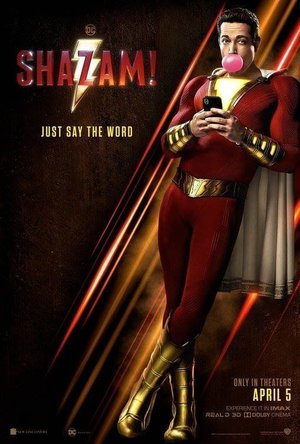
Growing up I was a regular viewer of the Shazam and Isis “Super Power Hour” on television. Back before the days of mega-budgeted Super Hero movies; we had to content ourselves with cartoons and low budget television offerings which did their best to capture the look and action of comic characters within the budget and technology limits they had to deal with.
Warner Bros. has brought their latest DC hero to the big screen with “Shazam!” and it looks to launch a new franchise for the studio and build on the success of “Wonder Woman” and “Aquaman” following some earlier disappointments with their planned hero franchise films.
The film follows the story of young Billy Batson (Asher Angel), who has grown up in and fled several Foster Homes after being lost at a Carnival years earlier and unable to find his mother. Billy has never stopped trying to find her and even takes extreme measures to try to find her that has gotten him in trouble with the law.
While trying to stick up for a family member at his latest Foster Home; Billy is forced to flee from some local goons and finds himself facing an ancient Wizard (Djimon Honsou; who tells him he will now have superior powers when he speaks his name as he is now a guardian against the forces of evil.
Billy does not believe this but upon uttering the name; he transforms into a powerful hero in adult form. Zach Levi plays the title hero and soon finds himself eager to test his new powers and his Super Hero obsessed Foster Brother is more than happy to mentor him and make all sorts of viral videos of his efforts and training.
Their efforts soon draw the attention of an evil individual (Mark Strong), who covets the power Billy has for himself as along with the Seven Deadly Sins; he looks to become an unstoppable force for evil and sets out to destroy all that stands in his way.
The film is aimed more for a younger audience as much of the humor is squarely focused on Middle School level jokes. There are more than a few references to “Big” along the way which does sum up a good portion of the backstory as when he is in hero form; the young boy without a family is a popular and dynamic adult.
In many ways this was one of the more odd aspects of the film. Billy is a dour and untrusting individual most of the time; however when he is hero form he is a jovial and goofy individual who acts like a teenager. I could see an increase in confidence but it is odd considering that they are the same person.
Levi is very energetic in the part and goes all in and he does a great job of conveying a kid in a man’s body. The biggest issue with the film is that there is mostly a lot of humor aimed at a much younger audience and large gaps with minimal action which made sitting through numerous childish antics a bit tedious at times.
Despite this; the film was entertaining and one of the better adaptions of a comic. The door is wide open for future adventures and I look forward to seeing what they come up with next.
http://sknr.net/2019/03/23/shazam/
Warner Bros. has brought their latest DC hero to the big screen with “Shazam!” and it looks to launch a new franchise for the studio and build on the success of “Wonder Woman” and “Aquaman” following some earlier disappointments with their planned hero franchise films.
The film follows the story of young Billy Batson (Asher Angel), who has grown up in and fled several Foster Homes after being lost at a Carnival years earlier and unable to find his mother. Billy has never stopped trying to find her and even takes extreme measures to try to find her that has gotten him in trouble with the law.
While trying to stick up for a family member at his latest Foster Home; Billy is forced to flee from some local goons and finds himself facing an ancient Wizard (Djimon Honsou; who tells him he will now have superior powers when he speaks his name as he is now a guardian against the forces of evil.
Billy does not believe this but upon uttering the name; he transforms into a powerful hero in adult form. Zach Levi plays the title hero and soon finds himself eager to test his new powers and his Super Hero obsessed Foster Brother is more than happy to mentor him and make all sorts of viral videos of his efforts and training.
Their efforts soon draw the attention of an evil individual (Mark Strong), who covets the power Billy has for himself as along with the Seven Deadly Sins; he looks to become an unstoppable force for evil and sets out to destroy all that stands in his way.
The film is aimed more for a younger audience as much of the humor is squarely focused on Middle School level jokes. There are more than a few references to “Big” along the way which does sum up a good portion of the backstory as when he is in hero form; the young boy without a family is a popular and dynamic adult.
In many ways this was one of the more odd aspects of the film. Billy is a dour and untrusting individual most of the time; however when he is hero form he is a jovial and goofy individual who acts like a teenager. I could see an increase in confidence but it is odd considering that they are the same person.
Levi is very energetic in the part and goes all in and he does a great job of conveying a kid in a man’s body. The biggest issue with the film is that there is mostly a lot of humor aimed at a much younger audience and large gaps with minimal action which made sitting through numerous childish antics a bit tedious at times.
Despite this; the film was entertaining and one of the better adaptions of a comic. The door is wide open for future adventures and I look forward to seeing what they come up with next.
http://sknr.net/2019/03/23/shazam/

Ross (3284 KP) rated Awaken Online: Catharsis in Books
Jan 4, 2019
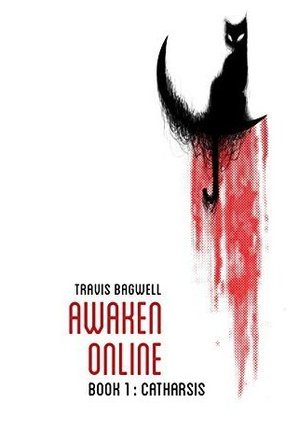
Bloody loved it
Catharsis takes the ideas of LitRPG (see Ready Player One for the best known but lowest explored potential example) and goes to town on it, really showing how open such an online world would be to be exploited.
Jason has always been fairly downtrodden in his high-achieving school and is neglected by his parents. One day, Falling Down-style, events transpire to make him snap and shout at his teacher and headmaster, and is expelled. He rushed home and immerses himself in the brand new online world of AO (Awaken Online).
As with Euphora Online (Phil Tucker), AO has been designed with the help of AI to try and maximise the time gamers would want to spend in the game. We are treated to flashbacks by the developers/testers who are seeing the changes the AI is making to the game's code and are trying to assess whether it remains safe for release.
Jason starts the game from scratch but due to an unusual reaction to an initial test is aligned to evil, and is therefore treated with suspicion by the in-game characters meant to help him train and become familiar with his new surroundings. This begins the chain of events that lead Jason to the path of in-game evil, in true Walter White style as one slightly dubious decision after another sees him become embroiled in some very nasty events.
Over the course of the game, Jason is honest with himself and knows what he's doing is bad but hey its just a game, why not have some fun with it. And he does. As his power grows, so does the nastiness of his actions and he soon becomes very powerful in certain ways (but thankfully more strategically and directing the action than suddenly becoming a battle master or he-man).
The world around Jason develops as he does, and his actions truly start to shape his game experience, and that of other people. I can't really go into much more detail without dropping spoilers but there are some absolutely fantastic sequences.
The game supposedly uses time compression so that an hour in the real world will feel like 3 or 4 hours in the game. My one gripe with the book is that when the game developers notice Jason's unprecedented progress through the game they begin to watch his actions and this seems to be real-time - there is no real attempt to explain how they can watch it as it unfolds (or the fact that what they are seeing will have happened quite some time before and events will have continued from there).
This book has more interaction between Jason's real life and in-game life than Euphoria Online did, which helps to explain his motivation for decisions. His real life troubles and requirements drive his desires in-game.
As usual, there is the evil AI/conspiracy aspect to the world, but this doesn't yet feel quite as big a deal as in other books, but I think that is the groundwork laid for the next two books (plus two side-quests).
I heartily recommend this book, but readers should not expect something like Ready Player one, much more like D&D or The Witcher style gaming.
Jason has always been fairly downtrodden in his high-achieving school and is neglected by his parents. One day, Falling Down-style, events transpire to make him snap and shout at his teacher and headmaster, and is expelled. He rushed home and immerses himself in the brand new online world of AO (Awaken Online).
As with Euphora Online (Phil Tucker), AO has been designed with the help of AI to try and maximise the time gamers would want to spend in the game. We are treated to flashbacks by the developers/testers who are seeing the changes the AI is making to the game's code and are trying to assess whether it remains safe for release.
Jason starts the game from scratch but due to an unusual reaction to an initial test is aligned to evil, and is therefore treated with suspicion by the in-game characters meant to help him train and become familiar with his new surroundings. This begins the chain of events that lead Jason to the path of in-game evil, in true Walter White style as one slightly dubious decision after another sees him become embroiled in some very nasty events.
Over the course of the game, Jason is honest with himself and knows what he's doing is bad but hey its just a game, why not have some fun with it. And he does. As his power grows, so does the nastiness of his actions and he soon becomes very powerful in certain ways (but thankfully more strategically and directing the action than suddenly becoming a battle master or he-man).
The world around Jason develops as he does, and his actions truly start to shape his game experience, and that of other people. I can't really go into much more detail without dropping spoilers but there are some absolutely fantastic sequences.
The game supposedly uses time compression so that an hour in the real world will feel like 3 or 4 hours in the game. My one gripe with the book is that when the game developers notice Jason's unprecedented progress through the game they begin to watch his actions and this seems to be real-time - there is no real attempt to explain how they can watch it as it unfolds (or the fact that what they are seeing will have happened quite some time before and events will have continued from there).
This book has more interaction between Jason's real life and in-game life than Euphoria Online did, which helps to explain his motivation for decisions. His real life troubles and requirements drive his desires in-game.
As usual, there is the evil AI/conspiracy aspect to the world, but this doesn't yet feel quite as big a deal as in other books, but I think that is the groundwork laid for the next two books (plus two side-quests).
I heartily recommend this book, but readers should not expect something like Ready Player one, much more like D&D or The Witcher style gaming.