
Search

Lottie disney bookworm (1056 KP) rated Cinderella is Dead in Books
Jun 6, 2020


Contains spoilers, click to show
Thank you to Netgalley and Kalynn Bayron for giving me the opportunity to read an advance copy of Cinderella is Dead in exchange for an honest review.
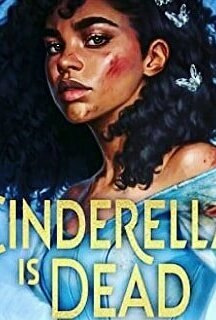
With such a strong title to a novel, it’s easy to predict that an author would struggle to maintain the sense of danger and mystery that is immediately evoked. However, as Kalynn Bayron opens on the revelation that Cinderella has been dead for 200 years and introduces us to two young women hiding from those who are sure to kill them, I think it is safe to say that she has the drama side of things covered!
The kingdom of Mersaille was once ruled by none other than Prince Charming and Cinderella. After her untimely death, Cinderella’s tale is held in almost biblical stature for generations, with young girls reciting it each night in preparation for their own chance to attend an annual ball once they turn 16 and wishing for their own fairy godmother to grant their happily ever after.
However, as the reader enters the town of Lille 200 years later, we witness that life within the kingdom is far from that of a fairytale. The balls that act as a tribute to Cinderella are mandatory meat markets with lecherous “suitors”, domestic violence and the suppression of women is commonplace and the ruler, Prince Manford, thrives on the power, fear and violence.
The reader witnesses this abysmal society through Bayron’s use of a first-person perspective: that of our protagonist Sophia. Sophia is everything a modern protagonist should be: she questions the unjust world around her and, having just turned 16 is preparing to attend her first ball, not with excitement, but with trepidation.
Sophia reveals to the reader that a girl only has three chances to be chosen by a suitor at the ball, after that she is considered forfeit, taken away from her family in disgrace and placed either into a workhouse or service. Men, however, are under no such conditions: they can attend balls when they wish and can choose a number of girls if they want to. Many girls’ singular hope is to be chosen by a good man at the ball, one who will not beat her, perhaps even one who will take them away from Lille. This is not enough for Sophia, she wants more for her life and, as she says herself:
“I don’t want to be saved by some knight in shining armor. I’d like to be the one in the armor, and I’d like to be the one doing the saving.”
At the beginning of the book, Sophia’s main gripe with the society she lives in is that it will not allow her to be with Erin, the girl she loves. As the book continues, the underlying theme of the rights and treatment of women strengthens, along with Sophia, but the first few pages at least are centered on the teenage relationship between Sophia and Erin.
What I absolutely adored about Bayron’s writing style here is the complete lack of shock or awe in this relationship: it is mentioned right from the start and at no point in this novel does Sophia “come out”, there is simply no need. All those around Sophia, who know her and care for her, are aware of her feelings for Erin and, although Sophia is occasionally referred to as “different”, the author chooses to abolish any unnecessary labels within her novel.
Unfortunately, Bayron does not have an easy ride in store for Sophia: reeling from a firm separation from Erin, Sophia is cast a lifeline, an “easy way out” in the form of a local boy who is also “different”. Sadly, this option is quickly and dramatically ripped away from her: forcing her to find her strength pretty damn quickly as she begins a life as an outlaw.
Along her path, Sophia meets two strong female characters: Constance and Amina. Although, wildly different, both these women play a significant role in Sophia’s self-discovery.
Amina is as far from the traditional fairy godmother image as you can get and, although she feels guilt for her previous actions, it takes meeting Sophia for her to recognise her previous denial and to help change the way of the world. Amina is a protector to Sophia right to the end, in her own unique way.
Constance, what can we say about Constance? I defy anyone to read this book and not fall in love with this girl! Constance possesses the strength that Sophia does not yet recognise within herself; she is fiery and, as a descendant of an “evil stepsister”, leads a resistance movement to uncover and publicise the truth about the real tale of Cinderella. Despite, technically saving Sophia towards the beginning of the story, Constance is not Sophia’s saviour: nor is Sophia the saviour; however, the power that they find together is monumental.
Constance is a complete juxtaposition to Erin: whereas Erin accepts the rules of society out of fear for herself and her family, Constance actively rebels against them. It is almost as if they represent the paths Sophia has to choose from. Nevertheless, along their adventure, Sophia and Constance’s relationship strengthens into love. This is no fairytale, love at first sight deal though! If anything, the slow-burning romance between the two made it more believable and I really appreciated that Sophia didn’t just rebound due to Erin’s choices: she had been burnt and she was still unsure of her own feelings never mind anyone else’s.
At the hands of Bayron, Sophia experiences heartbreak, friendship, murder, love and conspiracy: she is on the brink of danger too many times to count and is constantly second guessing who she can trust. Yet, it is clear that the author adores her main character: Sophia’s journey to realise that she is enough is incredible and the strength that she finds within herself is inspirational. Sophia is also surrounded by a cast of strong female characters: there are no Prince Charming’s in this novel that’s for sure!
I wasn’t that far into this book when I decided I need to read more of Kalynn Bayron’s work. I love how there are no chapters in this novel, we are taken on this relentless journey with Sophia: the reader is not given a chance to stop and take stock, reflect or rest until it is all over and this creates the tensest experience. Even we don’t know who to trust towards the end!
‘Cinderella is Dead’ is powerful, thought-provoking and is constantly leaving the reader guessing. On a basic level the novel deals with violence, love, politics and a little bit of necromancy thrown in there for good measure. However, the intelligent writing as well as the massive plot twist and the subjects of LGBTQ love, women’s rights and domestic violence lifts this novel from that basic level into, what I predict could be a bestseller.
With such a strong title to a novel, it’s easy to predict that an author would struggle to maintain the sense of danger and mystery that is immediately evoked. However, as Kalynn Bayron opens on the revelation that Cinderella has been dead for 200 years and introduces us to two young women hiding from those who are sure to kill them, I think it is safe to say that she has the drama side of things covered!
The kingdom of Mersaille was once ruled by none other than Prince Charming and Cinderella. After her untimely death, Cinderella’s tale is held in almost biblical stature for generations, with young girls reciting it each night in preparation for their own chance to attend an annual ball once they turn 16 and wishing for their own fairy godmother to grant their happily ever after.
However, as the reader enters the town of Lille 200 years later, we witness that life within the kingdom is far from that of a fairytale. The balls that act as a tribute to Cinderella are mandatory meat markets with lecherous “suitors”, domestic violence and the suppression of women is commonplace and the ruler, Prince Manford, thrives on the power, fear and violence.
The reader witnesses this abysmal society through Bayron’s use of a first-person perspective: that of our protagonist Sophia. Sophia is everything a modern protagonist should be: she questions the unjust world around her and, having just turned 16 is preparing to attend her first ball, not with excitement, but with trepidation.
Sophia reveals to the reader that a girl only has three chances to be chosen by a suitor at the ball, after that she is considered forfeit, taken away from her family in disgrace and placed either into a workhouse or service. Men, however, are under no such conditions: they can attend balls when they wish and can choose a number of girls if they want to. Many girls’ singular hope is to be chosen by a good man at the ball, one who will not beat her, perhaps even one who will take them away from Lille. This is not enough for Sophia, she wants more for her life and, as she says herself:
“I don’t want to be saved by some knight in shining armor. I’d like to be the one in the armor, and I’d like to be the one doing the saving.”
At the beginning of the book, Sophia’s main gripe with the society she lives in is that it will not allow her to be with Erin, the girl she loves. As the book continues, the underlying theme of the rights and treatment of women strengthens, along with Sophia, but the first few pages at least are centered on the teenage relationship between Sophia and Erin.
What I absolutely adored about Bayron’s writing style here is the complete lack of shock or awe in this relationship: it is mentioned right from the start and at no point in this novel does Sophia “come out”, there is simply no need. All those around Sophia, who know her and care for her, are aware of her feelings for Erin and, although Sophia is occasionally referred to as “different”, the author chooses to abolish any unnecessary labels within her novel.
Unfortunately, Bayron does not have an easy ride in store for Sophia: reeling from a firm separation from Erin, Sophia is cast a lifeline, an “easy way out” in the form of a local boy who is also “different”. Sadly, this option is quickly and dramatically ripped away from her: forcing her to find her strength pretty damn quickly as she begins a life as an outlaw.
Along her path, Sophia meets two strong female characters: Constance and Amina. Although, wildly different, both these women play a significant role in Sophia’s self-discovery.
Amina is as far from the traditional fairy godmother image as you can get and, although she feels guilt for her previous actions, it takes meeting Sophia for her to recognise her previous denial and to help change the way of the world. Amina is a protector to Sophia right to the end, in her own unique way.
Constance, what can we say about Constance? I defy anyone to read this book and not fall in love with this girl! Constance possesses the strength that Sophia does not yet recognise within herself; she is fiery and, as a descendant of an “evil stepsister”, leads a resistance movement to uncover and publicise the truth about the real tale of Cinderella. Despite, technically saving Sophia towards the beginning of the story, Constance is not Sophia’s saviour: nor is Sophia the saviour; however, the power that they find together is monumental.
Constance is a complete juxtaposition to Erin: whereas Erin accepts the rules of society out of fear for herself and her family, Constance actively rebels against them. It is almost as if they represent the paths Sophia has to choose from. Nevertheless, along their adventure, Sophia and Constance’s relationship strengthens into love. This is no fairytale, love at first sight deal though! If anything, the slow-burning romance between the two made it more believable and I really appreciated that Sophia didn’t just rebound due to Erin’s choices: she had been burnt and she was still unsure of her own feelings never mind anyone else’s.
At the hands of Bayron, Sophia experiences heartbreak, friendship, murder, love and conspiracy: she is on the brink of danger too many times to count and is constantly second guessing who she can trust. Yet, it is clear that the author adores her main character: Sophia’s journey to realise that she is enough is incredible and the strength that she finds within herself is inspirational. Sophia is also surrounded by a cast of strong female characters: there are no Prince Charming’s in this novel that’s for sure!
I wasn’t that far into this book when I decided I need to read more of Kalynn Bayron’s work. I love how there are no chapters in this novel, we are taken on this relentless journey with Sophia: the reader is not given a chance to stop and take stock, reflect or rest until it is all over and this creates the tensest experience. Even we don’t know who to trust towards the end!
‘Cinderella is Dead’ is powerful, thought-provoking and is constantly leaving the reader guessing. On a basic level the novel deals with violence, love, politics and a little bit of necromancy thrown in there for good measure. However, the intelligent writing as well as the massive plot twist and the subjects of LGBTQ love, women’s rights and domestic violence lifts this novel from that basic level into, what I predict could be a bestseller.

Emma @ The Movies (1786 KP) rated Avengers: Endgame (2019) in Movies
Jun 22, 2019 (Updated Sep 25, 2019)

Contains spoilers, click to show
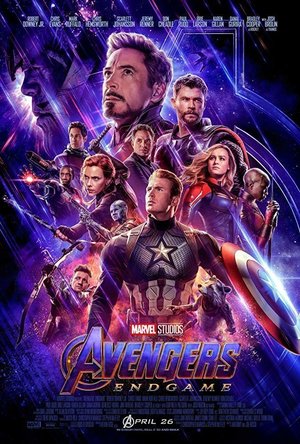
I'm not really sure where to start with this so settle in for a ride. I've tried to avoid major spoilers but some of the things I've written might give away or hint at events in Endgame so please don't read this until you've seen it at the cinema.
We were left forlorn in the wilds of Wakanda after Thanos' snap in Infinity War. 50% of every living creatures on the planet, on every planet, wiped out of existence. Thanos has set off in his retirement while our heroes are reassembling. What's left of the team is trying to get back to a normal life, saving the world, saving each other. Some are moving on, some are stuck on the past, all are lost.
I wrote more notes for this than I've written for any other movie. It was so much of a problem that I condensed the original and then recondensed them into collected topics. I'm vaguely going to go in chronological order, let's do it!
We open with Hawkeye. The scene was simple and effective to help line up the change in him, but it wasn't the tone I expected for the beginning of the film. You have to start it somehow, and I don't know how I thought they would but tonally it didn't say "Marvel" to me. In the trailers we see his darker side coming through, after seeing the film I can't help but wonder if they needed to do this to him. It felt a little like they were just doing it to use for one scene. Clint is a stand-up guy, he would have been there for them regardless in this situation.
As we recap on what's happening in the wake of the snap we find Nebula and Tony attempting to return from Titan on the Guardian's ship. For me, Nebula was the best bit of the whole film. The scenes with Tony are wonderful and touching, she's able to make a connection that she's never really had before and her transformation through the film is a delight.
Something at this point that I feel I should bring up is the partnership that we witness. Tony and Nebula, Nebula and War Machine, Rocket and Thor. We're given lots of different Marvel Mash-ups with great results. Nebula, in particular, shone through in these. Watch out for her with Rhodey.
Steve, Cap, is very much in control throughout this movie, in leadership as well as of his emotions. He still has his positive outlook on life but even when it wanes he's determined. Visually they've left you no room to wonder on whether he is the first Avenger, he leads into a room and he gets a lot of shots that frame him perfectly. But he has changed... on more than one occasion I found myself going "Language, Steve!" I was unsure about his support group in the trailer and after the full scene it felt like it was just there to set up occurrences towards the end of the film. You'd be forgiven for thinking this was actually a Captain America film, it felt much more like one than Civil War did.
Before coming to Endgame one of the things I had been thinking about was how Scott was going to return from the quantum realm. What happens kind of feels like they had no idea how they were going to do it, and it was frustrating and leaves you with questions about what happened in the five years since the snap. There's also a potential horror movie spin-off teased in Scott's walk through San Francisco, he encounters a kid on a bike... classic horror movie moment in that scene.
Nat gets to flex her leadership muscles in the post-snap world trying to keep a new band of Avengers together. Still based in the Avengers complex she's coordinating with members around the world and out in space. We finally see some genuine raw emotion from her as they search for Hawkeye as he's off on his... well what is it? Redirected revenge? She's always had a trusted position with Fury and it seems like his dusting has pushed her to step up.
Carol is back after her recent debut... I still don't think we can call her Captain Marvel when no one else does. I still don't like her, I can't help it. She's cocky and she doesn't seem to have any desire to actually work with the team. If there's anything that I got from this film it's that Black Widow should have had her own film already rather than introducing Carol at the last minute. She's not really a massive feature of the film and her inclusion feels almost like they needed to a solution to a problem and she was the quickest way to fix it.
Now we get to the point where I had some major upset. In my opinion, Marvel have done wrong by Bruce/Hulk and Thor. I saw a spoiler on Twitter for Bruce that I hoped was fan-inspired, but when we get to him in the film I sat in annoyed silence as those around me murmured with excitement. As far as Thor goes, I can see why they made the choices they did with him but it felt like they just turned him into a joke, and that didn't sit right with me at all. Just one small step back from what they did and they would have nailed it, but it felt like they just went for the cheap laugh at his expense.
So it's time to talk about time travel, I think we all knew that we could expect to see it in some way or another in Endgame. Tony and Bruce obvious have a big hand in this one, and it was nice to see them acknowledging the "normal" person discussion of time travel with film references. Outside of that though they threw a lot of complicated script at it, it felt like a very random step away from how they usually deal with technical things in the universe.
From the one hour point of the movie(ish) everything starts to pick up, up until then I wasn't loving the film, and that was upsetting to me. What follows from the quantum suit walk is a lot of fun. There are a lot of nostalgic moments that brought humour and a fun layer to the older films and we get what is probably the most satisfying moment of the entire MCU.
Visually this is one of the better films in the sequence. Shots weren't overly cluttered and so busy that you couldn't see what was happening, and there were a lot more poignant visuals. There are however a few that make me think they had to be reshot because you get very specific angles that give you the back of someone's head and the audio sounds slightly off to the rest of the scene.
Two things left to specifically mention...
The women of Marvel. For so many films we had very few female heroes, certainly none that got their fair share of coverage until The Wasp, Captain Marvel and an excellent female ensemble in Black Panther. I'm all for more female characters but I think Endgame went too far. There is one scene near the end that felt more like they were worried they hadn't had enough women on screen and they really packed them in, it felt awkward rather than awesome.
Stan Lee's cameo. It wasn't the usual fun we're used to. Fleeting and forgettable. Stan deserved better, this just didn't feel right. I even briefly wondered if it was actually him.
For me, Endgame wasn't the finale that we deserved. It wasn't better than Infinity War but I don't think that it could have been because of how much it had to bring to the table. I went and saw it twice because I like to see the 3D and 2D when they come out, it was actually one of the better 3D films I've seen on a regular screen.
I probably would have given this 3 stars, while I had fun watching it I came out both times feeling kind of "meh" about it. Nebula, America's ass and the epic moment in the finale, as well as a few other amusing moments, bumped it up slightly. I sadly found that first hour rather challenging and couldn't get on board with some of the character choices that were made.
What you should do
Let's face it, you're going to watch it if you've invested time in watching all the Marvel movies and I'm sure you'll enjoy it. I'm aware I'm in a minority with my feelings about this, but not everyone can feel the same way about everything. What a world it would be if we could.
Movie thing you wish you could take home
I'd still like an infinity stone... but I don't know which one.
We were left forlorn in the wilds of Wakanda after Thanos' snap in Infinity War. 50% of every living creatures on the planet, on every planet, wiped out of existence. Thanos has set off in his retirement while our heroes are reassembling. What's left of the team is trying to get back to a normal life, saving the world, saving each other. Some are moving on, some are stuck on the past, all are lost.
I wrote more notes for this than I've written for any other movie. It was so much of a problem that I condensed the original and then recondensed them into collected topics. I'm vaguely going to go in chronological order, let's do it!
We open with Hawkeye. The scene was simple and effective to help line up the change in him, but it wasn't the tone I expected for the beginning of the film. You have to start it somehow, and I don't know how I thought they would but tonally it didn't say "Marvel" to me. In the trailers we see his darker side coming through, after seeing the film I can't help but wonder if they needed to do this to him. It felt a little like they were just doing it to use for one scene. Clint is a stand-up guy, he would have been there for them regardless in this situation.
As we recap on what's happening in the wake of the snap we find Nebula and Tony attempting to return from Titan on the Guardian's ship. For me, Nebula was the best bit of the whole film. The scenes with Tony are wonderful and touching, she's able to make a connection that she's never really had before and her transformation through the film is a delight.
Something at this point that I feel I should bring up is the partnership that we witness. Tony and Nebula, Nebula and War Machine, Rocket and Thor. We're given lots of different Marvel Mash-ups with great results. Nebula, in particular, shone through in these. Watch out for her with Rhodey.
Steve, Cap, is very much in control throughout this movie, in leadership as well as of his emotions. He still has his positive outlook on life but even when it wanes he's determined. Visually they've left you no room to wonder on whether he is the first Avenger, he leads into a room and he gets a lot of shots that frame him perfectly. But he has changed... on more than one occasion I found myself going "Language, Steve!" I was unsure about his support group in the trailer and after the full scene it felt like it was just there to set up occurrences towards the end of the film. You'd be forgiven for thinking this was actually a Captain America film, it felt much more like one than Civil War did.
Before coming to Endgame one of the things I had been thinking about was how Scott was going to return from the quantum realm. What happens kind of feels like they had no idea how they were going to do it, and it was frustrating and leaves you with questions about what happened in the five years since the snap. There's also a potential horror movie spin-off teased in Scott's walk through San Francisco, he encounters a kid on a bike... classic horror movie moment in that scene.
Nat gets to flex her leadership muscles in the post-snap world trying to keep a new band of Avengers together. Still based in the Avengers complex she's coordinating with members around the world and out in space. We finally see some genuine raw emotion from her as they search for Hawkeye as he's off on his... well what is it? Redirected revenge? She's always had a trusted position with Fury and it seems like his dusting has pushed her to step up.
Carol is back after her recent debut... I still don't think we can call her Captain Marvel when no one else does. I still don't like her, I can't help it. She's cocky and she doesn't seem to have any desire to actually work with the team. If there's anything that I got from this film it's that Black Widow should have had her own film already rather than introducing Carol at the last minute. She's not really a massive feature of the film and her inclusion feels almost like they needed to a solution to a problem and she was the quickest way to fix it.
Now we get to the point where I had some major upset. In my opinion, Marvel have done wrong by Bruce/Hulk and Thor. I saw a spoiler on Twitter for Bruce that I hoped was fan-inspired, but when we get to him in the film I sat in annoyed silence as those around me murmured with excitement. As far as Thor goes, I can see why they made the choices they did with him but it felt like they just turned him into a joke, and that didn't sit right with me at all. Just one small step back from what they did and they would have nailed it, but it felt like they just went for the cheap laugh at his expense.
So it's time to talk about time travel, I think we all knew that we could expect to see it in some way or another in Endgame. Tony and Bruce obvious have a big hand in this one, and it was nice to see them acknowledging the "normal" person discussion of time travel with film references. Outside of that though they threw a lot of complicated script at it, it felt like a very random step away from how they usually deal with technical things in the universe.
From the one hour point of the movie(ish) everything starts to pick up, up until then I wasn't loving the film, and that was upsetting to me. What follows from the quantum suit walk is a lot of fun. There are a lot of nostalgic moments that brought humour and a fun layer to the older films and we get what is probably the most satisfying moment of the entire MCU.
Visually this is one of the better films in the sequence. Shots weren't overly cluttered and so busy that you couldn't see what was happening, and there were a lot more poignant visuals. There are however a few that make me think they had to be reshot because you get very specific angles that give you the back of someone's head and the audio sounds slightly off to the rest of the scene.
Two things left to specifically mention...
The women of Marvel. For so many films we had very few female heroes, certainly none that got their fair share of coverage until The Wasp, Captain Marvel and an excellent female ensemble in Black Panther. I'm all for more female characters but I think Endgame went too far. There is one scene near the end that felt more like they were worried they hadn't had enough women on screen and they really packed them in, it felt awkward rather than awesome.
Stan Lee's cameo. It wasn't the usual fun we're used to. Fleeting and forgettable. Stan deserved better, this just didn't feel right. I even briefly wondered if it was actually him.
For me, Endgame wasn't the finale that we deserved. It wasn't better than Infinity War but I don't think that it could have been because of how much it had to bring to the table. I went and saw it twice because I like to see the 3D and 2D when they come out, it was actually one of the better 3D films I've seen on a regular screen.
I probably would have given this 3 stars, while I had fun watching it I came out both times feeling kind of "meh" about it. Nebula, America's ass and the epic moment in the finale, as well as a few other amusing moments, bumped it up slightly. I sadly found that first hour rather challenging and couldn't get on board with some of the character choices that were made.
What you should do
Let's face it, you're going to watch it if you've invested time in watching all the Marvel movies and I'm sure you'll enjoy it. I'm aware I'm in a minority with my feelings about this, but not everyone can feel the same way about everything. What a world it would be if we could.
Movie thing you wish you could take home
I'd still like an infinity stone... but I don't know which one.

Movie Metropolis (309 KP) rated Transformers: Age of Extinction (2014) in Movies
Jun 10, 2019

Terrible film making at it's best
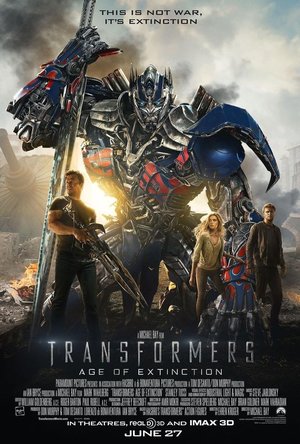
Michael Bay’s Transformers series has received a huge amount of criticism since the first film was released back in 2007, some of it fair, and some of it not. Now, 7 years on and three films later, Bay returns to the helm of one of the biggest movie franchises of all time with Transformers: Age of Extinction, but can it silence his critics?
The answer here is no, but not because Extinction is poor, it’s simply because there seems to be a chip on the shoulders of reviewers who expect Oscar quality film-making, when all the target audience for these films really want is to see Optimus Prime kick some Decepticon ass.
Extinction is a whole new start for the series with new characters and a five year jump to allow people to put Dark of the Moon at the back of their minds.
Mark Wahlberg heads an entirely new cast as Cade, an inventor who has run out of luck after a string of failed concepts which haven’t taken off. Thankfully he comes across an old truck that promises to change his fortunes – I bet you can guess just who that might be.
Much of the criticism of the previous films was directed squarely at Bay’s choice of female leads, from Megan Fox’s pout to Rosie Huntington-Whitely’s laughable acting performance, it’s safe to say the series hasn’t been the pinnacle of the fairer sex’s characterisations. Mercifully, the introduction of Nicola Peltz as Cade’s daughter Tessa goes some way to dissolve that problem.
Yes, she’s not going to be troubling the Academy Awards any time soon, but she is a damn sight better than those that preceded her, though the poor script stops her from being anything but a whining teen.
A brilliant Stanley Tucci and an ingenious bit of casting in Kelsey Grammer complete the film’s human characters and the two act as the main antagonists.
Of the robot kind, Michael Bay has gone into overdrive, introducing characters left, right and centre and leaving no stone unturned. John Goodman and Ken Watanabe are both excellent as Hound and Drift – two new Autobots joining the resistance. Of course all the Transformers are outshone by the wonderful Peter Cullen who again returns to the series as Optimus, his voice work is absolutely superb, though with his previous experience, you wouldn’t expect any less.
Extinction’s premise is simple, there is a bounty on the heads of Optimus Prime and the rest of the Autobots, with the humans wanting to get there planet back after the events in Dark of the Moon.
The story is fun if a little incomprehensible at times; it occasionally feels like each plot point is merely there to act as a bridge until the next big set piece, though this never affects your enjoyment of the film itself.
Thankfully the special effects are absolutely stunning and some of the best seen on the big screen. The Transformers are beautifully rendered in seamless CGI and the CGI environments all look great as well.
Bay has also done well to make the battles look more realistic this time around. Previously, it was difficult to know who was fightingTransformers-Age-of-Extinction-Poster-Optimus-and-Grimlock-Crop who, with close ups of mashed metal stopping the audience from seeing exactly what was happening. Here things are much better, but still not perfect.
Unfortunately it isn’t all good news. The heavily marketed Dinobots are only in the film for about 20 minutes towards the finale which is a real shame, as it makes you feel a little cheated. Also, the running time is a real headache; this is the biggest Transformers film yet at just over three hours long and it feels it with numerous plot fillers that can occasionally detract from the rest of the film.
Overall, Bay has probably created the best Transformers film yet with some cracking special effects and dare I say it; decent acting. However, it is far too long with unnecessary sub-plots, especially at the start, which detract from what is pure entertainment.
The Transformers movies aren’t going to win any awards, and Michael Bay knows that, but they are a fine example of terrible film-making at its very best.
https://moviemetropolis.net/2014/07/06/terrible-film-making-at-its-best-transformers-4-review/
The answer here is no, but not because Extinction is poor, it’s simply because there seems to be a chip on the shoulders of reviewers who expect Oscar quality film-making, when all the target audience for these films really want is to see Optimus Prime kick some Decepticon ass.
Extinction is a whole new start for the series with new characters and a five year jump to allow people to put Dark of the Moon at the back of their minds.
Mark Wahlberg heads an entirely new cast as Cade, an inventor who has run out of luck after a string of failed concepts which haven’t taken off. Thankfully he comes across an old truck that promises to change his fortunes – I bet you can guess just who that might be.
Much of the criticism of the previous films was directed squarely at Bay’s choice of female leads, from Megan Fox’s pout to Rosie Huntington-Whitely’s laughable acting performance, it’s safe to say the series hasn’t been the pinnacle of the fairer sex’s characterisations. Mercifully, the introduction of Nicola Peltz as Cade’s daughter Tessa goes some way to dissolve that problem.
Yes, she’s not going to be troubling the Academy Awards any time soon, but she is a damn sight better than those that preceded her, though the poor script stops her from being anything but a whining teen.
A brilliant Stanley Tucci and an ingenious bit of casting in Kelsey Grammer complete the film’s human characters and the two act as the main antagonists.
Of the robot kind, Michael Bay has gone into overdrive, introducing characters left, right and centre and leaving no stone unturned. John Goodman and Ken Watanabe are both excellent as Hound and Drift – two new Autobots joining the resistance. Of course all the Transformers are outshone by the wonderful Peter Cullen who again returns to the series as Optimus, his voice work is absolutely superb, though with his previous experience, you wouldn’t expect any less.
Extinction’s premise is simple, there is a bounty on the heads of Optimus Prime and the rest of the Autobots, with the humans wanting to get there planet back after the events in Dark of the Moon.
The story is fun if a little incomprehensible at times; it occasionally feels like each plot point is merely there to act as a bridge until the next big set piece, though this never affects your enjoyment of the film itself.
Thankfully the special effects are absolutely stunning and some of the best seen on the big screen. The Transformers are beautifully rendered in seamless CGI and the CGI environments all look great as well.
Bay has also done well to make the battles look more realistic this time around. Previously, it was difficult to know who was fightingTransformers-Age-of-Extinction-Poster-Optimus-and-Grimlock-Crop who, with close ups of mashed metal stopping the audience from seeing exactly what was happening. Here things are much better, but still not perfect.
Unfortunately it isn’t all good news. The heavily marketed Dinobots are only in the film for about 20 minutes towards the finale which is a real shame, as it makes you feel a little cheated. Also, the running time is a real headache; this is the biggest Transformers film yet at just over three hours long and it feels it with numerous plot fillers that can occasionally detract from the rest of the film.
Overall, Bay has probably created the best Transformers film yet with some cracking special effects and dare I say it; decent acting. However, it is far too long with unnecessary sub-plots, especially at the start, which detract from what is pure entertainment.
The Transformers movies aren’t going to win any awards, and Michael Bay knows that, but they are a fine example of terrible film-making at its very best.
https://moviemetropolis.net/2014/07/06/terrible-film-making-at-its-best-transformers-4-review/

Bob Mann (459 KP) rated Blade Runner 2049 (2017) in Movies
Sep 29, 2021

A stunning visual triumph.
I was a sufficient nerd to buy a “Back to the Future” T-shirt to celebrate “future day” from “Back to the Future 2” two-years ago, and I will probably be a sufficient nerd to buy a “Blade Runner” T-shirt in two-years time to celebrate the setting-date for the original film. One thing’s for sure… 2049 is never going to be long enough away to see the world of the new Blade Runner movie come to fruition: so I look forward to ironically buying that T-shirt too (assuming I make it to 88!). But I digress.
I lived in fear of this film since it was announced… having loved the original, a sequel was always going to be a risky prospect. But my fears were slightly quelled when I learned that Denis Villeneuve (“Arrival“) was at the helm. And having now seen it I am pleasantly relieved: this is a memorable film.
In 2049 the first-generation Nexus replicants of the original film are still causing problems, and Ryan Gosling is ‘K’ – a blade runner employed by LAPD lieutenant Joshi (Robin Wright, “Wonder Woman“, “House of Cards”) to track them down and liquidate them. On one of these missions, K uncovers a buried secret that brings the LAPD into a desperate race for a pivotal prize, against replicant-builder Niander Wallace (Jared Leto, “Dallas Buyer’s Club“) and his henchwoman Luv (Sylvia Hoeks). The mission leads to K searching out his illustrious predecessor Deckard (Harrison Ford), who is not keen to be found.
Firstly (and most impressively) this is a spectacle to watch…. “I’ve seen things…”! The visuals are just gorgeous, from the junk-yards of Greater Los Angeles to the radioactive ruins of Las Vegas, vividly glowing amber to glorious effect. Hardly a surprise with Roger Deakins (“Hail Caesar“, “Sicario“) behind the camera, but Adam Heinis (“Rogue One“) and the rest of his special effects team deserve kudos for the effects never feeling overly “CGI-like”.
The music (by Benjamin Wallfisch and Hans Zimmer, via a replaced Johann Johannsson) pays suitable tribute to the spirit of the original Vangelis soundtrack. (It’s curious though that “Tears in the Rain” from the soundtrack is a reworking of the Vangelis original, but Vangelis doesn’t seem to be credited anywhere! Vangelis and Ridley Scott clearly had a SERIOUS falling out!).
On the acting front, Ryan Gosling is his dynamic self as usual! (But here, somewhat justified). Harrison Ford is given very little screen time, but what he does do he does exceptionally well – his best performance in years. It’s some of the supporting parts though that really appeal: Dave Bautista (“Spectre“) is just superb in the opening scenes of the film, and I particularly enjoyed Ana de Armas’s portrayal of K’s holographic girlfriend Joi. I’ve seen comment in other reviews that described this relationship as “laughable” and a downward step for “woman’s rights” compared to Villeneuve’s previous strong female characters (of Louise from “Arrival” and Kate from “Sicario“). But I disagree! I found the relationship truly touching, with Joi’s procurement of a prostitute (Mackenzie Davis) to act as a surrogate body being both loving and giving. And as regards ‘woman’s rights’, come on! Get serious! This is a holographic commercial male companion…. the “Alexa” of the future…. I’m quite sure the male version looks like Ryan Reynolds! Sex still sells, even in 2049!!
My favourite character though was a cameo by Barkhad Abdi (“Captain Phillips“) luxoriating under the name of Doctor Badger!
I was less comfortable with Jared Leto’s dialogue which – for me at least – was barely audible. In general this film is both a challenge for those aurally challenged (with some fuzzy dialogue/effects/music mixes) and those visually challenged (with 8 point font for the on-screen text that was almost impossible to see on the cinema screen, so good luck with the DVD!).
I really wanted to give this film 5-Fads. But I can’t quite get there. The story – while interesting and having emotional depth – is lightweight for a film of this length (a butt-numbing 163 minutes!) and it moves at such a glacial pace that I’m ashamed to say that my mind wandered at times. (Specifically to how many different ways I could imagine harm being done to the American guy in front of me, who was constantly turning on his Apple watch and at one point (to whisperings of very British outrage!) his full-brightness iPhone!) The screenplay was by Hampton Fancher (one of the original Blade Runner writers) and Michael Green (“Logan“, “Alien: Covenant“) but even with this track record, it’s the film’s Achilles heel.
It’s a relief that Blade Runner revisited is not a complete disaster: quite the opposite in fact. It doesn’t quite match C-beams glittering in the dark near the Tannhäuser Gate (what could)… but its a damned good attempt.
I lived in fear of this film since it was announced… having loved the original, a sequel was always going to be a risky prospect. But my fears were slightly quelled when I learned that Denis Villeneuve (“Arrival“) was at the helm. And having now seen it I am pleasantly relieved: this is a memorable film.
In 2049 the first-generation Nexus replicants of the original film are still causing problems, and Ryan Gosling is ‘K’ – a blade runner employed by LAPD lieutenant Joshi (Robin Wright, “Wonder Woman“, “House of Cards”) to track them down and liquidate them. On one of these missions, K uncovers a buried secret that brings the LAPD into a desperate race for a pivotal prize, against replicant-builder Niander Wallace (Jared Leto, “Dallas Buyer’s Club“) and his henchwoman Luv (Sylvia Hoeks). The mission leads to K searching out his illustrious predecessor Deckard (Harrison Ford), who is not keen to be found.
Firstly (and most impressively) this is a spectacle to watch…. “I’ve seen things…”! The visuals are just gorgeous, from the junk-yards of Greater Los Angeles to the radioactive ruins of Las Vegas, vividly glowing amber to glorious effect. Hardly a surprise with Roger Deakins (“Hail Caesar“, “Sicario“) behind the camera, but Adam Heinis (“Rogue One“) and the rest of his special effects team deserve kudos for the effects never feeling overly “CGI-like”.
The music (by Benjamin Wallfisch and Hans Zimmer, via a replaced Johann Johannsson) pays suitable tribute to the spirit of the original Vangelis soundtrack. (It’s curious though that “Tears in the Rain” from the soundtrack is a reworking of the Vangelis original, but Vangelis doesn’t seem to be credited anywhere! Vangelis and Ridley Scott clearly had a SERIOUS falling out!).
On the acting front, Ryan Gosling is his dynamic self as usual! (But here, somewhat justified). Harrison Ford is given very little screen time, but what he does do he does exceptionally well – his best performance in years. It’s some of the supporting parts though that really appeal: Dave Bautista (“Spectre“) is just superb in the opening scenes of the film, and I particularly enjoyed Ana de Armas’s portrayal of K’s holographic girlfriend Joi. I’ve seen comment in other reviews that described this relationship as “laughable” and a downward step for “woman’s rights” compared to Villeneuve’s previous strong female characters (of Louise from “Arrival” and Kate from “Sicario“). But I disagree! I found the relationship truly touching, with Joi’s procurement of a prostitute (Mackenzie Davis) to act as a surrogate body being both loving and giving. And as regards ‘woman’s rights’, come on! Get serious! This is a holographic commercial male companion…. the “Alexa” of the future…. I’m quite sure the male version looks like Ryan Reynolds! Sex still sells, even in 2049!!
My favourite character though was a cameo by Barkhad Abdi (“Captain Phillips“) luxoriating under the name of Doctor Badger!
I was less comfortable with Jared Leto’s dialogue which – for me at least – was barely audible. In general this film is both a challenge for those aurally challenged (with some fuzzy dialogue/effects/music mixes) and those visually challenged (with 8 point font for the on-screen text that was almost impossible to see on the cinema screen, so good luck with the DVD!).
I really wanted to give this film 5-Fads. But I can’t quite get there. The story – while interesting and having emotional depth – is lightweight for a film of this length (a butt-numbing 163 minutes!) and it moves at such a glacial pace that I’m ashamed to say that my mind wandered at times. (Specifically to how many different ways I could imagine harm being done to the American guy in front of me, who was constantly turning on his Apple watch and at one point (to whisperings of very British outrage!) his full-brightness iPhone!) The screenplay was by Hampton Fancher (one of the original Blade Runner writers) and Michael Green (“Logan“, “Alien: Covenant“) but even with this track record, it’s the film’s Achilles heel.
It’s a relief that Blade Runner revisited is not a complete disaster: quite the opposite in fact. It doesn’t quite match C-beams glittering in the dark near the Tannhäuser Gate (what could)… but its a damned good attempt.

Gareth von Kallenbach (980 KP) rated Motherless Brooklyn (2019) in Movies
Oct 31, 2019
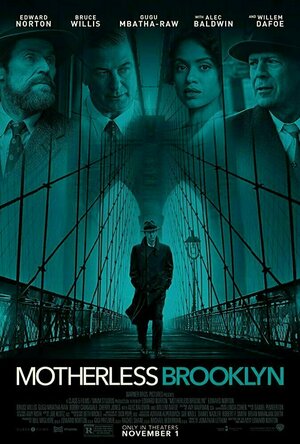
With all the recent big action blockbuster movie releases recently, there is a genre that has been overlooked for some time, a good detective story. Most movies that take place in the 50’s tend to focus more on mob related backdrops and ruthless hits to draw in audiences. Motherless Brooklyn written, directed and starring Edward Norton looks to tell a story that harkens back to the day where gumshoes spoke to key individuals and followed the clues to get to the bottom of the case. This is long before forensics was a thing, and there were no fancy computer databases or DNA matching to utilize to narrow down the suspect pool. This was when it took the skills and abilities of the individual themselves to follow the clues and piece them together like a puzzle to solve each and every case.
Lionel Essrog (Edward Norton) is a private detective who works at a small P.I. firm trying to eek out a living in the streets of New York back in the late 50’s. Lionel along with his fellow gumshoes grew up in a Catholic orphanage that cemented the bond between them all as both friends and family. Lionel suffers from Tourette’s syndrome causing him to tick and burst out in unusual statements which only gets worse as he gets nervous or excited, however he also possesses a photographic memory, able to recall specific conversations and repeat them verbatim when asked.
On what begins as a seemingly routine job, things quickly turn deadly when Frank Minna (Bruce Willis) the lead private investigator (and owner) of the firm is gunned down in an alley. With very little information to go on and forced to confront each suspect while attempting to maintain his composure, Lionel must use his smarts and the help of his friends to piece together what Frank was involved in and unravel the mystery before anyone else gets hurt. His investigation will take him throughout the streets of New York at a time where racial tensions were bubbling over, and the lure of power and money was more than folks could ignore.
Edward Norton does an outstanding job with his portrayal of an average Joe who must overcome a debilitating mental condition to find those who killed his friend. He does such a believable job with his portrayal of Tourette’s that at times it’s hard to believe that he doesn’t suffer from it in his real life. Much the same way Jack Nicholson brought Obsessive-Compulsive Disorder into the public conscious in As Good as it Gets, Norton portrays his Tourette’s in a somewhat comical, but still respectable manner. In a way, his condition disappears into the background allowing his skills and smarts to come across first.
Norton is joined by a star-studded cast featuring Bruce Willis as his best friend Frank Minna, a seemingly well-intentioned man who has stood up and protected Lionel since child-hood. Alec Baldwin portrays a powerful and ruthless city official, looking to extend his power in the city while making a small fortune in the process. Willem DaFoe, fresh off of another Oscar worthy performance in The Lighthouse, once again brings his acting pedigree to the mix and last, but certainly not least Gugu Mbatha-Raw brings a smart and extremely strong female character with what should be an Oscar winning performance.
Motherless Brooklyn is a long movie (chalking in a bit over two and a half hours) and does take some time to gather its footing. This is a detective movie after all, and much of the action takes place speaking with suspects and researching in the library. It certainly brings an authentic feel to detective work in the 50’s and is a surprisingly refreshing detour from the onslaught of action and superhero movies which have dominated the screens in 2019. New York in the 50’s comes to life with the incredible costumes, vehicles and just overall feel of what the city must have been like back in the day. It’s a testament to how much wardrobe and attention to detail can take the viewers back in time. For those who lack the sort of patience that this movie will certainly require, it may seem a bit overwhelming to consider, however once the viewers settle in, they are in for a treat as they join Lionel in piecing the puzzle together, to sort out what led to the death of his friend.
Motherless Brooklyn was exactly the type of movie I was hoping for, a gritty detective movie that isn’t overly concerned with outrageous plots or frantic gun play. It’s a movie about gathering the clues, investigating the leads, and seeing where it takes you. The star-studded cast is outstanding, and I certainly cannot over emphasize the pivotal role that Norton brings to the screen. If old crime novels and private investigator stories are your cup of tea, you’ll find that Motherless Brooklyn checks off all the boxes. In a sea of superhero movies and high action thrillers, it’s refreshing to come across a film that brings some realism back to the cinema.
Lionel Essrog (Edward Norton) is a private detective who works at a small P.I. firm trying to eek out a living in the streets of New York back in the late 50’s. Lionel along with his fellow gumshoes grew up in a Catholic orphanage that cemented the bond between them all as both friends and family. Lionel suffers from Tourette’s syndrome causing him to tick and burst out in unusual statements which only gets worse as he gets nervous or excited, however he also possesses a photographic memory, able to recall specific conversations and repeat them verbatim when asked.
On what begins as a seemingly routine job, things quickly turn deadly when Frank Minna (Bruce Willis) the lead private investigator (and owner) of the firm is gunned down in an alley. With very little information to go on and forced to confront each suspect while attempting to maintain his composure, Lionel must use his smarts and the help of his friends to piece together what Frank was involved in and unravel the mystery before anyone else gets hurt. His investigation will take him throughout the streets of New York at a time where racial tensions were bubbling over, and the lure of power and money was more than folks could ignore.
Edward Norton does an outstanding job with his portrayal of an average Joe who must overcome a debilitating mental condition to find those who killed his friend. He does such a believable job with his portrayal of Tourette’s that at times it’s hard to believe that he doesn’t suffer from it in his real life. Much the same way Jack Nicholson brought Obsessive-Compulsive Disorder into the public conscious in As Good as it Gets, Norton portrays his Tourette’s in a somewhat comical, but still respectable manner. In a way, his condition disappears into the background allowing his skills and smarts to come across first.
Norton is joined by a star-studded cast featuring Bruce Willis as his best friend Frank Minna, a seemingly well-intentioned man who has stood up and protected Lionel since child-hood. Alec Baldwin portrays a powerful and ruthless city official, looking to extend his power in the city while making a small fortune in the process. Willem DaFoe, fresh off of another Oscar worthy performance in The Lighthouse, once again brings his acting pedigree to the mix and last, but certainly not least Gugu Mbatha-Raw brings a smart and extremely strong female character with what should be an Oscar winning performance.
Motherless Brooklyn is a long movie (chalking in a bit over two and a half hours) and does take some time to gather its footing. This is a detective movie after all, and much of the action takes place speaking with suspects and researching in the library. It certainly brings an authentic feel to detective work in the 50’s and is a surprisingly refreshing detour from the onslaught of action and superhero movies which have dominated the screens in 2019. New York in the 50’s comes to life with the incredible costumes, vehicles and just overall feel of what the city must have been like back in the day. It’s a testament to how much wardrobe and attention to detail can take the viewers back in time. For those who lack the sort of patience that this movie will certainly require, it may seem a bit overwhelming to consider, however once the viewers settle in, they are in for a treat as they join Lionel in piecing the puzzle together, to sort out what led to the death of his friend.
Motherless Brooklyn was exactly the type of movie I was hoping for, a gritty detective movie that isn’t overly concerned with outrageous plots or frantic gun play. It’s a movie about gathering the clues, investigating the leads, and seeing where it takes you. The star-studded cast is outstanding, and I certainly cannot over emphasize the pivotal role that Norton brings to the screen. If old crime novels and private investigator stories are your cup of tea, you’ll find that Motherless Brooklyn checks off all the boxes. In a sea of superhero movies and high action thrillers, it’s refreshing to come across a film that brings some realism back to the cinema.

Chris Sawin (602 KP) rated Fast & Furious Presents: Hobbs & Shaw (2019) in Movies
Aug 6, 2019
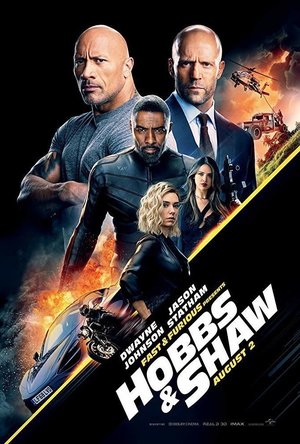


Before you read this review of Fast & Furious Presents: Hobbs & Shaw, I just want you to know that I can’t stand this franchise. I gave up keeping up with them after Furious 7 and felt like the Fast & Furious franchise peaked/was tolerable around Fast Five and never really went anywhere worthwhile before or since. I have not seen all the films and really only seemed to watch every other entry, but whether you’re in a heist or a drag race that lethal dose of masculinity being projectile vomited all over you by an entire cast (women included) for two hours straight is dull and tiresome. In fact, just call this franchise “Dull & Tiresome” from here on out and I doubt anyone would notice. It’s even got “tire” in there for car…stuff.
Ignoring the fact that screenwriters Chris Morgan (writer of every Fast and Furious entry since Tokyo Drift) and Drew Pearce (writer and director of the flop known as Hotel Artemis) were involved, I actually like David Leitch’s work (co-director of John Wick, director of Deadpool 2 and Atomic Blonde) even if he is probably going to screw up that Enter the Dragon remake. The trailers also made Hobbs & Shaw look like the stupid kind of action film I might enjoy; a bunch of fight scenes and chase sequences that give the middle finger to physics. But when a big moment in the film is a group of the good guys willingly bringing a bunch of sharp sticks to a battle where the villains are loaded to the teeth with highly advanced firearms, then you know you’ve jumped headfirst into the deep end of ridiculous without a special needs helmet.
The film is quick to point out that even though Luke Hobbs (Dwayne Johnson) is in Los Angeles and Deckard Shaw (Jason Statham) is in London, they’re essentially similar characters. Hobbs is a big dude who likes to Hulk smash everything while Shaw likes to think he has more class and finesse to his ass beatings and exaggerated torture devices. Despite their different cultures and supposedly unique way of approaching their work, they do nothing but talk trash, jack things up, simultaneously kick unsuspecting guys in the balls, and track stuff that needs tracking because that’s what trackers do. They reluctantly join forces and are in constant competition with one another to find some CT17 virus, which is currently inside Shaw’s MI6 operative sister Hattie Shaw (Vanessa Kirby) and is being hunted by formerly dead, cyber genetically altered, and current superhuman criminal mastermind Brixton Lore (Idris Elba). Don’t get too attached to the whole virus thing since even the film can’t keep up with what the hell it’s supposed to be.
The highlight of Hobbs & Shaw is the amount of cameos it’s able to squeeze into its excruciating two-hour-and-fifteen-minute runtime. The film utilizes about a third of the cast of a certain sequel to a certain film starring a certain Regenerating Degenerate and that cast is responsible for the humor that works best in whatever this spinoff is supposed to accomplish. Idris Elba is unbelievably cool as Brixton Lore. He’s this cocky and unstoppable bad ass who has a history with Shaw and his car chase on his self-driving motorcycle where he slides under a bus in slow motion is too sick for words. Vanessa Kirby has this on-screen presence that outshines the consistent bickering between Hobbs and Shaw. She’s the one capable female character in the film (Helen Mirren sitting behind glass doesn’t count) who seems to be the only one thinking logically, but it took her doing the dumbest thing imaginable at the beginning of the film to get that way.
This action film smorgasbord rides on the chemistry between Dwayne Johnson and Jason Statham, but that gets old as soon as they start sort-of working together. Their incessant ribbing of each other, desire to always outdo one another, and nonstop unfiltered machismo being this palpable elephant in the room leads to nothing but verbal dick size comparisons and leaves you thinking that maybe they’ll make out or grope each other by the end of the film. Spoiler alert: maybe they’re saving that for the sequel.
There isn’t enough of a differentiation between action sequences in Hobbs & Shaw to make it feel worthwhile. There’s chemistry between the cast that is undeniable and some of its outrageousness is entertaining, but it all begins to feel similar and falls apart far sooner than it should. For those who care, there is a mid-credits and after-credits scene but neither is surprising. The cheesy motivational speeches, forced heartfelt stories, and, “all technology in the world doesn’t beat heart,” mumbo jumbo doesn’t help matters. The supposed story for this film is basically a dunce cap disguised as a pocket protector. There are intelligent elements used in ludicrous ways and maybe that’s what could describe the Fast & Furious franchise as a whole. You can bury a diamond in a dog turd and say it’s extravagant and that it’s valuable, but it’s still a dog turd that smells awful and lingers long after it’s been flushed away.
Ignoring the fact that screenwriters Chris Morgan (writer of every Fast and Furious entry since Tokyo Drift) and Drew Pearce (writer and director of the flop known as Hotel Artemis) were involved, I actually like David Leitch’s work (co-director of John Wick, director of Deadpool 2 and Atomic Blonde) even if he is probably going to screw up that Enter the Dragon remake. The trailers also made Hobbs & Shaw look like the stupid kind of action film I might enjoy; a bunch of fight scenes and chase sequences that give the middle finger to physics. But when a big moment in the film is a group of the good guys willingly bringing a bunch of sharp sticks to a battle where the villains are loaded to the teeth with highly advanced firearms, then you know you’ve jumped headfirst into the deep end of ridiculous without a special needs helmet.
The film is quick to point out that even though Luke Hobbs (Dwayne Johnson) is in Los Angeles and Deckard Shaw (Jason Statham) is in London, they’re essentially similar characters. Hobbs is a big dude who likes to Hulk smash everything while Shaw likes to think he has more class and finesse to his ass beatings and exaggerated torture devices. Despite their different cultures and supposedly unique way of approaching their work, they do nothing but talk trash, jack things up, simultaneously kick unsuspecting guys in the balls, and track stuff that needs tracking because that’s what trackers do. They reluctantly join forces and are in constant competition with one another to find some CT17 virus, which is currently inside Shaw’s MI6 operative sister Hattie Shaw (Vanessa Kirby) and is being hunted by formerly dead, cyber genetically altered, and current superhuman criminal mastermind Brixton Lore (Idris Elba). Don’t get too attached to the whole virus thing since even the film can’t keep up with what the hell it’s supposed to be.
The highlight of Hobbs & Shaw is the amount of cameos it’s able to squeeze into its excruciating two-hour-and-fifteen-minute runtime. The film utilizes about a third of the cast of a certain sequel to a certain film starring a certain Regenerating Degenerate and that cast is responsible for the humor that works best in whatever this spinoff is supposed to accomplish. Idris Elba is unbelievably cool as Brixton Lore. He’s this cocky and unstoppable bad ass who has a history with Shaw and his car chase on his self-driving motorcycle where he slides under a bus in slow motion is too sick for words. Vanessa Kirby has this on-screen presence that outshines the consistent bickering between Hobbs and Shaw. She’s the one capable female character in the film (Helen Mirren sitting behind glass doesn’t count) who seems to be the only one thinking logically, but it took her doing the dumbest thing imaginable at the beginning of the film to get that way.
This action film smorgasbord rides on the chemistry between Dwayne Johnson and Jason Statham, but that gets old as soon as they start sort-of working together. Their incessant ribbing of each other, desire to always outdo one another, and nonstop unfiltered machismo being this palpable elephant in the room leads to nothing but verbal dick size comparisons and leaves you thinking that maybe they’ll make out or grope each other by the end of the film. Spoiler alert: maybe they’re saving that for the sequel.
There isn’t enough of a differentiation between action sequences in Hobbs & Shaw to make it feel worthwhile. There’s chemistry between the cast that is undeniable and some of its outrageousness is entertaining, but it all begins to feel similar and falls apart far sooner than it should. For those who care, there is a mid-credits and after-credits scene but neither is surprising. The cheesy motivational speeches, forced heartfelt stories, and, “all technology in the world doesn’t beat heart,” mumbo jumbo doesn’t help matters. The supposed story for this film is basically a dunce cap disguised as a pocket protector. There are intelligent elements used in ludicrous ways and maybe that’s what could describe the Fast & Furious franchise as a whole. You can bury a diamond in a dog turd and say it’s extravagant and that it’s valuable, but it’s still a dog turd that smells awful and lingers long after it’s been flushed away.
Emma @ The Movies (1786 KP) rated Captain Marvel (2019) in Movies
Jun 22, 2019 (Updated Sep 25, 2019)
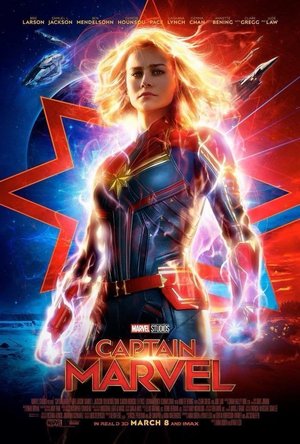
Midnight screening... what was I thinking? Somehow I managed to stay awake in the cinema (others didn't fare so well), but I went in pretty pumped up. Not so much for the film but the overall atmosphere of a Marvel first screening. There were over 100 tickets pre-booked, and the cinema was certainly very busy. There's something about the buzz of an audience that big. I did try and hold a couple of conversations while I was there, they were not successful due to my brain's impaired state.
*sigh*
Let me just get this out now... I enjoyed this movie, but I also didn't like it. I know, what does that even mean? I'm going to waffle a bit and hopefully it'll become clear.
I don't have a lot of pre-knowledge about Captain Marvel, in fact, until the trailers started coming out I'd probably have asked if you meant Ms Marvel or Shazam. As always the similarities between characters and brand is a complete mess.
Brie Larson had some pretty big boots to fill as the MCU's first headlining female character. I feel a bit sorry for Black Widow to be honest, but this is probably a bit lighter than her offering would have been considering her background.
Watching the trailers for this I wasn't left wowed. Vers comes across as rather cocky and after seeing the film I don't think she needed to be that way. Part of me thinks that a difference actress would have played it better, but mainly I'm just happy that they didn't ruin it.
Samuel L. Jackson was a treat, but then when isn't he?! It was nice seeing this more light-hearted side of his character. It leaves us with a little gap in his history that makes me wonder what happened to him. As ever he's a great presence and shows us just a glimpse of what's to come (or rather what we've already seen) while still being funny.
Ben Mendelsohn has made a rather large splash over the last few years in big-ticket movies. Rogue One, Ready Player One, Robin Hood and now Captain Marvel. His character of Talos is comical and warm but I found it slightly strange hearing him with his normal accent. That seems even weirder when I write it down, I guess I'm just hardwired to expect most aliens to sound American! He's definitely my stand out actor in this, he handles the twists and turns of the story wonderfully and made for an incredible surprise. There was one moment with a terrible bit of script that made me cringe at the screen but everything else made up for it.
I probably need to say something about Jude Law, that something is going to be "meh". I'm not sure that I'm fuzzed by any of his roles historically, and this isn't really any different. He also suffered from a dubious bit of script near the end of the film that feels out of place, but I'll leave that one for you to contemplate on.
I know I've been a bit of a mix so far about Captain Marvel but there are a lot of things to like about this movie. In particular, Marvel have really nailed music on the head recently, Guardians Of The Galaxy (1 not 2) and Thor: Ragnarok being two of my favourites. There's that moment of joy when you hear those old tunes, a smile crept across my face for every one of them. It was a great selection and they fitted into place amongst the story so well.
Nostalgia value is high in this one. Ahh, Blockbuster, I do miss you. There are plenty of things to spot, I'm sure that someone has already created a bingo game to go along with it... or a drinking game, "cry into your drink uncontrollably when you see Stan Lee". We obviously knew he'd filmed some cameos before he moved on into his big ol' galaxy, it was lovely to see him smiling out at us. Not only was it a fun little cameo but Marvel also did something magical with those opening titles and it made me cry... don't judge me!! I didn't cry as much as I did during the credit tribute in Once Upon A Deadpool though.
I could keep waffling, I'm fully aware that I've gone on a lot longer than normal about this one. I'll try not to keep you too much longer.
Obviously they've used some artistic license with the characters from the comics, as they do. The Skrull minions are so close to the comics, I was a little dubious about them when they popped up but they're carbon copies. The main thing that I know they changed was Nick Fury's eye, this version is better than the comics. I'd be interested to know how SLJ felt about finally being able to play Fury with both his eyes.
De-aging was used again but with much heavier usage than we've seen before. It was a bold choice doing it on one of the main characters when he's got so much screen time but I'm glad they chose this over recasting him. There weren't any of the minor oddities that were visible during Ant-Man & The Wasp's use of it, it all looked quite natural. There's no denying that Coulson might be a little overdone but *squeeeeee* little Coulson is so adorable that I don't care!
I mentioned my issues with Vers in the trailers, that wasn't the only misgiving I had. There weren't as many as the "I'm never going to see this movie" crowd (you know you're going to see it, get ahold of yourselves) but there were a few.
We've been with this series for over 10 years, this film leads into the last film in the sequence... and now they're giving us a new character? That's what I have an issue with. Don't get me wrong, I like the idea that they're bringing in a female character to clear up the mess created by the (mainly) boy's club, it's art imitating life... I'm joking, partly... but I can't help feeling like this is more of a last minute add-on. Previous new additions have appeared in other films, they've been able to interact with characters. The whole way through we've been shown teamwork and camaraderie, and throwing Captain Marvel in at the last minute flies in the face of that. But if we'd had her around before this then we probably wouldn't have needed Endgame because there would have been no distractions from what needed to be done. (Before you start on me we see that for a fact, none of Thor and Starlord's nonsense.)
For all of my waffling about it feeling separate they have clearly tried to connect her to the existing MCU. There are links in there on multiple fronts which give you hints at other films, it's quite impressive that they managed to make this without it being filled with series continuity errors.
As my last parting comment I want to say that Goose was amazing. Sadly not so hot on the CGI, I did wonder at one point if he was going to jump up and dance Garfield-style at one point. Annoyingly I already knew some details about this fluffy character before seeing the film but it just left me with anticipation. I didn't think that Fury would be a cat person though.
What you should do
If you're a Marvel fan you're going to have to see it before Endgame, but quite frankly you should want to see it. You could skip it if you really want to... but do you want to risk it? No, I didn't think so.
REMEMBER: There are two credit scenes, one in the middle and one at the end.
Movie thing you wish you could take home
Of all the things I'd have to say Goose, that cute little floof would brighten my day as well as coming in handy for several reasons.
*sigh*
Let me just get this out now... I enjoyed this movie, but I also didn't like it. I know, what does that even mean? I'm going to waffle a bit and hopefully it'll become clear.
I don't have a lot of pre-knowledge about Captain Marvel, in fact, until the trailers started coming out I'd probably have asked if you meant Ms Marvel or Shazam. As always the similarities between characters and brand is a complete mess.
Brie Larson had some pretty big boots to fill as the MCU's first headlining female character. I feel a bit sorry for Black Widow to be honest, but this is probably a bit lighter than her offering would have been considering her background.
Watching the trailers for this I wasn't left wowed. Vers comes across as rather cocky and after seeing the film I don't think she needed to be that way. Part of me thinks that a difference actress would have played it better, but mainly I'm just happy that they didn't ruin it.
Samuel L. Jackson was a treat, but then when isn't he?! It was nice seeing this more light-hearted side of his character. It leaves us with a little gap in his history that makes me wonder what happened to him. As ever he's a great presence and shows us just a glimpse of what's to come (or rather what we've already seen) while still being funny.
Ben Mendelsohn has made a rather large splash over the last few years in big-ticket movies. Rogue One, Ready Player One, Robin Hood and now Captain Marvel. His character of Talos is comical and warm but I found it slightly strange hearing him with his normal accent. That seems even weirder when I write it down, I guess I'm just hardwired to expect most aliens to sound American! He's definitely my stand out actor in this, he handles the twists and turns of the story wonderfully and made for an incredible surprise. There was one moment with a terrible bit of script that made me cringe at the screen but everything else made up for it.
I probably need to say something about Jude Law, that something is going to be "meh". I'm not sure that I'm fuzzed by any of his roles historically, and this isn't really any different. He also suffered from a dubious bit of script near the end of the film that feels out of place, but I'll leave that one for you to contemplate on.
I know I've been a bit of a mix so far about Captain Marvel but there are a lot of things to like about this movie. In particular, Marvel have really nailed music on the head recently, Guardians Of The Galaxy (1 not 2) and Thor: Ragnarok being two of my favourites. There's that moment of joy when you hear those old tunes, a smile crept across my face for every one of them. It was a great selection and they fitted into place amongst the story so well.
Nostalgia value is high in this one. Ahh, Blockbuster, I do miss you. There are plenty of things to spot, I'm sure that someone has already created a bingo game to go along with it... or a drinking game, "cry into your drink uncontrollably when you see Stan Lee". We obviously knew he'd filmed some cameos before he moved on into his big ol' galaxy, it was lovely to see him smiling out at us. Not only was it a fun little cameo but Marvel also did something magical with those opening titles and it made me cry... don't judge me!! I didn't cry as much as I did during the credit tribute in Once Upon A Deadpool though.
I could keep waffling, I'm fully aware that I've gone on a lot longer than normal about this one. I'll try not to keep you too much longer.
Obviously they've used some artistic license with the characters from the comics, as they do. The Skrull minions are so close to the comics, I was a little dubious about them when they popped up but they're carbon copies. The main thing that I know they changed was Nick Fury's eye, this version is better than the comics. I'd be interested to know how SLJ felt about finally being able to play Fury with both his eyes.
De-aging was used again but with much heavier usage than we've seen before. It was a bold choice doing it on one of the main characters when he's got so much screen time but I'm glad they chose this over recasting him. There weren't any of the minor oddities that were visible during Ant-Man & The Wasp's use of it, it all looked quite natural. There's no denying that Coulson might be a little overdone but *squeeeeee* little Coulson is so adorable that I don't care!
I mentioned my issues with Vers in the trailers, that wasn't the only misgiving I had. There weren't as many as the "I'm never going to see this movie" crowd (you know you're going to see it, get ahold of yourselves) but there were a few.
We've been with this series for over 10 years, this film leads into the last film in the sequence... and now they're giving us a new character? That's what I have an issue with. Don't get me wrong, I like the idea that they're bringing in a female character to clear up the mess created by the (mainly) boy's club, it's art imitating life... I'm joking, partly... but I can't help feeling like this is more of a last minute add-on. Previous new additions have appeared in other films, they've been able to interact with characters. The whole way through we've been shown teamwork and camaraderie, and throwing Captain Marvel in at the last minute flies in the face of that. But if we'd had her around before this then we probably wouldn't have needed Endgame because there would have been no distractions from what needed to be done. (Before you start on me we see that for a fact, none of Thor and Starlord's nonsense.)
For all of my waffling about it feeling separate they have clearly tried to connect her to the existing MCU. There are links in there on multiple fronts which give you hints at other films, it's quite impressive that they managed to make this without it being filled with series continuity errors.
As my last parting comment I want to say that Goose was amazing. Sadly not so hot on the CGI, I did wonder at one point if he was going to jump up and dance Garfield-style at one point. Annoyingly I already knew some details about this fluffy character before seeing the film but it just left me with anticipation. I didn't think that Fury would be a cat person though.
What you should do
If you're a Marvel fan you're going to have to see it before Endgame, but quite frankly you should want to see it. You could skip it if you really want to... but do you want to risk it? No, I didn't think so.
REMEMBER: There are two credit scenes, one in the middle and one at the end.
Movie thing you wish you could take home
Of all the things I'd have to say Goose, that cute little floof would brighten my day as well as coming in handy for several reasons.

Sass Perilla (36 KP) rated The Master and Margarita in Books
Aug 9, 2019
Worth a read? Yes. Worth a reread? Maybe not.
Contains spoilers, click to show
The Master and Magarita: Mikhail Bulgakov
Firstly, I didn’t intend to write an essay on this novel. However, once started I found I had a lot to say, and the more I thought about the plot and characters, the more ideas and parallels were sparked, so I am hopeful that the verbosity of this review can be forgiven.
At the risk of sounding both ignorant and uncultured, I found this novel (at least at first) bloody hard slog; not least because the Russian characters have three names, plus a nickname, plus a pun on their name (none of which work particularly well in translation and all of which sound rather similar to the English untrained ear). As an example- Ivan Nikolaevich Ponyrev (who seems to be referred to by any and all of these names) is also known as “Homeless” and “the poet” is a key character in the opening section of the novel. To further demonstrate: there are 17 different names that start with A that are used to refer to 15 different characters with Andreyevich used as the middle name of a bereaved uncle, who makes a journey from Kiev after his nephew is beheaded in a freak tram accident- and Andrey the buffet manager at a Moscow theatre. Clear as mud right? And that is before starting on similarly named characters with the initials M, P, L and S! At my last count there were 45 distinct characters, and I am fairly sure there will be some that I have missed. Hence, I did a lot of re-reading to work out exactly who was doing what to whom.
Additionally, I would suggest you need to be wary of the different translations. The distinct changes in meaning are subtle but important. To triangulate I had three versions at my disposal: Hugh Aplin’s translation (available for free on Kindle), the audiobook version translated by Richard Pevear and Larissa Volokhonsky (which I listened to simultaneously when reading the book to come to my own interpretation, and the subtitles for the Russian TV miniseries from 2005 when I gave up trying to work out who was who from name alone!
So those were my “technical” issues (if you like) with engaging with this novel, and this lack of clarity and understanding (and my own lack of contextual knowledge of Stalinist Russia) meant I missed many of the (what I am sure are hysterically funny to those in the know) satirical jokes in the opening section. That said, the random action and quick changes of focus, undercurrent of chaos in Moscow despite entrenched hierarchal structures and clear threat that (any) one could go missing at any time, for an unclear reason gave a clear insight into the mind and fears of a 1930s Russian citizen. No wonder it was available only in censored form for so long.
Despite these hardships, there were some genuinely laugh out loud moments in the first Moscow based part of the novel. The citizens have not lost their individuality, as they scrabble and fight for bank notes in the theatre, which are later revealed to be worthless. Nor have they lost their sense of pride and vanity, which we see in the female theatre goers, so desperate to attain the fashionable French couture (which later literally disappears from their bodies leaving semi-naked citizenesses desperately trying to cover themselves in a scene reminiscent of “Allo Allo” meets “Benny Hill”). When Professor Woland says his show will “expose” what the locals have failed to realise is that it is their (moral) shortcomings that are about to be revealed. The message is clearly, that no government can successfully legislate against human nature.
Oooh- and another fun fact, apparently Woland (later revealed- or perhaps is implied- to be Satan) was the inspiration to the Rolling Stones 1968 hit “Sympathy for the Devil”, well at least that is what my Google-Fu tells me.
Obviously, there were substantial hurdles to leap, however, I found by the second half of the novel, when we finally meet the eponymous characters, I had got in to the swing of things and begun to embrace the farcical surrealism of the novel.
The second “book” marks a change in tone, although it continues to cut away to scenes of Jesus’ sentencing by Pilate and execution (here known in the Aramaic form Yeshua). Ironically it is these scenes that are the most “real” and substantially human, as Pilate’s decision weighs head achingly heavily on him throughout. The Master and Margarita seem to be the only two characters fully invested in the authenticity of literature, and serve as a counterpoint to the heavily censored “monstrous” writing of Ivan and the rest of the writers’ union Massolit, more interested in fine dining and what their positions can do for them then the production of quality writing.
And it is Margarita’s journey of discovery and liberation from the stodgy, miserable societal expectations of that leads her back to her Master. Bulgakov mixes classical myth, Russian folklore and Bible stories to give us an impression of the timelessness of the central romance. As the worlds of communist Moscow and the inner worlds of the Master and Margarita collide, we are informed of the former’s desire to excuse all magic (and mischief) as the product of mass hypnosis, when the latter (and the reader) are fully aware of the spiritual significance and dimension of the events.
Clever, astute and in places laugh out loud funny, this novel none-the-less requires a level of dedication from the non-Russian speaking reader. Worth a read? Yes. Worth a re-read? Maybe not.
Firstly, I didn’t intend to write an essay on this novel. However, once started I found I had a lot to say, and the more I thought about the plot and characters, the more ideas and parallels were sparked, so I am hopeful that the verbosity of this review can be forgiven.
At the risk of sounding both ignorant and uncultured, I found this novel (at least at first) bloody hard slog; not least because the Russian characters have three names, plus a nickname, plus a pun on their name (none of which work particularly well in translation and all of which sound rather similar to the English untrained ear). As an example- Ivan Nikolaevich Ponyrev (who seems to be referred to by any and all of these names) is also known as “Homeless” and “the poet” is a key character in the opening section of the novel. To further demonstrate: there are 17 different names that start with A that are used to refer to 15 different characters with Andreyevich used as the middle name of a bereaved uncle, who makes a journey from Kiev after his nephew is beheaded in a freak tram accident- and Andrey the buffet manager at a Moscow theatre. Clear as mud right? And that is before starting on similarly named characters with the initials M, P, L and S! At my last count there were 45 distinct characters, and I am fairly sure there will be some that I have missed. Hence, I did a lot of re-reading to work out exactly who was doing what to whom.
Additionally, I would suggest you need to be wary of the different translations. The distinct changes in meaning are subtle but important. To triangulate I had three versions at my disposal: Hugh Aplin’s translation (available for free on Kindle), the audiobook version translated by Richard Pevear and Larissa Volokhonsky (which I listened to simultaneously when reading the book to come to my own interpretation, and the subtitles for the Russian TV miniseries from 2005 when I gave up trying to work out who was who from name alone!
So those were my “technical” issues (if you like) with engaging with this novel, and this lack of clarity and understanding (and my own lack of contextual knowledge of Stalinist Russia) meant I missed many of the (what I am sure are hysterically funny to those in the know) satirical jokes in the opening section. That said, the random action and quick changes of focus, undercurrent of chaos in Moscow despite entrenched hierarchal structures and clear threat that (any) one could go missing at any time, for an unclear reason gave a clear insight into the mind and fears of a 1930s Russian citizen. No wonder it was available only in censored form for so long.
Despite these hardships, there were some genuinely laugh out loud moments in the first Moscow based part of the novel. The citizens have not lost their individuality, as they scrabble and fight for bank notes in the theatre, which are later revealed to be worthless. Nor have they lost their sense of pride and vanity, which we see in the female theatre goers, so desperate to attain the fashionable French couture (which later literally disappears from their bodies leaving semi-naked citizenesses desperately trying to cover themselves in a scene reminiscent of “Allo Allo” meets “Benny Hill”). When Professor Woland says his show will “expose” what the locals have failed to realise is that it is their (moral) shortcomings that are about to be revealed. The message is clearly, that no government can successfully legislate against human nature.
Oooh- and another fun fact, apparently Woland (later revealed- or perhaps is implied- to be Satan) was the inspiration to the Rolling Stones 1968 hit “Sympathy for the Devil”, well at least that is what my Google-Fu tells me.
Obviously, there were substantial hurdles to leap, however, I found by the second half of the novel, when we finally meet the eponymous characters, I had got in to the swing of things and begun to embrace the farcical surrealism of the novel.
The second “book” marks a change in tone, although it continues to cut away to scenes of Jesus’ sentencing by Pilate and execution (here known in the Aramaic form Yeshua). Ironically it is these scenes that are the most “real” and substantially human, as Pilate’s decision weighs head achingly heavily on him throughout. The Master and Margarita seem to be the only two characters fully invested in the authenticity of literature, and serve as a counterpoint to the heavily censored “monstrous” writing of Ivan and the rest of the writers’ union Massolit, more interested in fine dining and what their positions can do for them then the production of quality writing.
And it is Margarita’s journey of discovery and liberation from the stodgy, miserable societal expectations of that leads her back to her Master. Bulgakov mixes classical myth, Russian folklore and Bible stories to give us an impression of the timelessness of the central romance. As the worlds of communist Moscow and the inner worlds of the Master and Margarita collide, we are informed of the former’s desire to excuse all magic (and mischief) as the product of mass hypnosis, when the latter (and the reader) are fully aware of the spiritual significance and dimension of the events.
Clever, astute and in places laugh out loud funny, this novel none-the-less requires a level of dedication from the non-Russian speaking reader. Worth a read? Yes. Worth a re-read? Maybe not.
Ryan Hill (152 KP) rated Wonder Woman (2017) in Movies
May 18, 2019
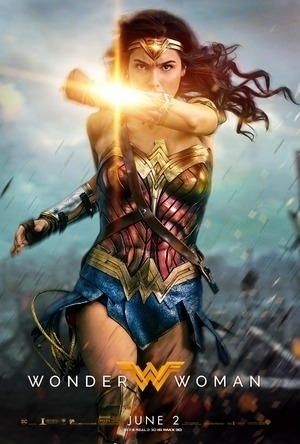
"I can save today, you can save the world"
Remember when some trickster claiming to be a former worker from Warner Bros. wrote an open letter saying that Wonder Woman was just another mess of a DC movie, et cetera? I remember how Patty Jenkins responded to that. She tweeted: "Just wait and you'll see".
Honestly, I don't know how anyone could even consider that there was the slightest chance of this movie not being good, and I'm gonna tell you why: this is the very first big female-led superhero movie, in which the title character also happens to be the greatest female superhero in history. If you really think that Patty Jenkins, also the first woman to ever direct a superhero movie of this caliber in a industry where women barely stand any chances to get to direct major blockbusters, would let this movie be anything less than great... You've got another thing coming, mate.
Wonder Woman is a traditional, oldschool superhero movie, but the first essentially feminist one at it, and they couldn't have chosen a better setting to tell this story, or a better character to star in it. The movie's social comments are strong and constantly present, but never forced, because it is only natural: by placing Diana, a princess raised in an island of warrior women, in the middle of the reality of World War I, the absurdities of the feminine role in the world - and so many other human corruptions - automatically come to light. The way Diana reacts to this world raises a great sense of awareness, with a touch of poignant humor to it. There is a very funny subtle arc of her wanting to take out her cloak, but not being able to because her armor is "barely any clothes", hinting not only at society's sexist feminine dressing code - which is still a thing today -, but also gradually adding power to the iconography of Wonder Woman in full costume; this is Wonder Woman's much awaited debut on the big screen in a solo movie, and like Superman and Batman before her, her first appearance needed to be something incredibly striking. Patty knew that, Gal knew that, and they made it happen. Even if we already saw her in BVS, the very first time Wonder Woman walks up in full costume here is undoubtedly one of the most iconic moments in superhero cinema.
Jenkins is extremely devoted to giving Wonder Woman the iconic debut film she deserves, and she nails it - there's quite a bit of remarkable shots and set pieces that let out the same imagetic power as in Donner's Superman, Burton's Batman or even Raimi's Spider-Man, and I must highlight the No Man's Land sequence. It's my favorite part of the movie; Jenkins and Heinberg carefully work on Diana's mindset as she first witness the horrors of human war, not being able to help everyone, horses being hurt so they can move faster, a mother and a child begging for help, and it all leads up to the powerful moment of a woman crossing the land no man could cross - and Heinberg's dialogue doesn't rely on obvious statements such as "fortunately I'm a woman" (I'm looking at you, Batwoman trailer), it simply lets the image strike us, because it is powerful enough by itself, and boy did that cause some serious goosebumps.
Speaking of dialogue... It's so terrific, so well written. The exchanges between Diana and Steve Trevor are very clever and funny, but most of all natural. All the characters are also extremely likable; Allan Heinberg's writing knows that not all of them can be given deep development, but nonetheless he gives them stories, personalities and purposes, and that - plus the charismatic performances - makes them very empathetic. The villains are not as remarkable as in some of the other DCEU films, but they didn't need to be; the movie doesn't require in-depth arcs from its villains. They have a strong presence when they're in scene and a well elaborated lore, and that's everything they need.
Contrary to the Nordic mythology depicted in the MCU, here we are talking about real gods, true deities, not superpowerful aliens that only strike a similar image - and that also brings a few narrative dangers along with it, after all, it was in greek mythological stories that the concept of Deus Ex Machina first appeared. Heinberg's screenplay, though, makes a few clever twists in that mythology to avoid easy solutions, which adds to the storytelling, the world building and the developing of the themes as well. The lore surrounding the God of War Ares, for example, is not a simple Diabolus Ex Machina as "he influences men to war and if you kill him every man goes back to being good and everything's alright", no, it's more narratively complicated and socially engaging than that.
And Gal Gadot... I'm at a loss for words. I'll confess right here that when she was first announced as Wonder Woman, I was one of the few who were very opposed to that casting. I've never been so wrong in my life, and I've never been so happy about it. She really is Wonder Woman. She's so graceful and adorable, but a major badass when she needs to be. The way she moves, the way she curiously looks at things, the way she speaks, and the way she incarnates Diana's evolving from her naive beginnings to the wise warrior... She's not only an icon, she's a true hero. Comparisons to Christopher Reeve's Superman were made for good reasons.
Chris Pine is also great, he walks perfectly in the line between funny and serious, Steve Trevor is a darling character and his chemistry with Gal is on point. Their relationship is very well constructed and becomes highly emotional by the end - there are scenes that filled my heart with joy, and others that made it ache.
The action is exciting and full of originality, and I like how Jenkins uses slow-motion differently than Zack Snyder. I know that Snyder helped her direct some of the action sequences, which is understandable since Jenkins had no experience with this type of movie, but you can tell it's not the same. In the fights themselves, there's this feel of sensibility to how these people react to Diana, and it's slightly different from the typical "regular people react to superhumans among them" trope. The cinematography is very keen on portraying the difference between Themyscira - an island of colors and natural beauty - and "jolly ol' London" - desaturated and smoggy, a scenario in which Diana's colorful armor shines in a most beautiful contrast.
And the soundtrack. Rupert Gregson-Williams made a beautiful score that brings out the best in every scene. It's heroic, very heartfelt, and loyal to the foundations of what makes superhero music so memorable. Gregson-Williams adds new themes to compose Wonder Woman's musical identity, but Hans Zimmer's main theme from BVS still lives, and it plays in some heart-pounding scenes. I love that they're dedicating that much attention to the musical continuity, because amongst Marvel's many qualities, they're doing a lousy job in that area. Wonder Woman's theme is the most catchy superhero theme in a long time, it quickly gained a lot of appreciation and by continuing on using it, Gregson-Williams collaborates to making Wonder Woman the strong cinematic icon she's setting out to be.
The irregular reception of previous DCEU movies also extols the impact of Wonder Woman, as do the distinct styles between the films. One of the DCEU's biggest virtues is that singularity of each film; be it a near disaster movie epic such as Man Of Steel, a complex deconstruction of heroic values such as Batman v Superman, an stylish chaos such as Suicide Squad or a traditional, graceful superhero film such as Wonder Woman, these movies are all in the same universe, and that very fact is an example of its richness. A lot of people will think Wonder Woman is the best DCEU movie of the lot, some will stick to BVS, others to MOS, maybe for some it's Shazam, but that's the fun of it: we can discuss this forever. Each of these movies mean different things to different people, we're way past simply labelling one as "better" and the other as "worse".
Wonder Woman, however, is not simply a movie about a very strong woman. It's an achievement for every woman. There were tons of girls dressed up as Wonder Woman in the theater, and just seeing how ecstatic they were after the movie brought me joy. There were tons of applause. It's a mark. Be that as it may, Wonder Woman will be remembered as the most impactful superhero film of its time. In 1978, Superman showed to the world how a man could fly; in 2017, Wonder Woman showed to the world how a woman can fight.
Honestly, I don't know how anyone could even consider that there was the slightest chance of this movie not being good, and I'm gonna tell you why: this is the very first big female-led superhero movie, in which the title character also happens to be the greatest female superhero in history. If you really think that Patty Jenkins, also the first woman to ever direct a superhero movie of this caliber in a industry where women barely stand any chances to get to direct major blockbusters, would let this movie be anything less than great... You've got another thing coming, mate.
Wonder Woman is a traditional, oldschool superhero movie, but the first essentially feminist one at it, and they couldn't have chosen a better setting to tell this story, or a better character to star in it. The movie's social comments are strong and constantly present, but never forced, because it is only natural: by placing Diana, a princess raised in an island of warrior women, in the middle of the reality of World War I, the absurdities of the feminine role in the world - and so many other human corruptions - automatically come to light. The way Diana reacts to this world raises a great sense of awareness, with a touch of poignant humor to it. There is a very funny subtle arc of her wanting to take out her cloak, but not being able to because her armor is "barely any clothes", hinting not only at society's sexist feminine dressing code - which is still a thing today -, but also gradually adding power to the iconography of Wonder Woman in full costume; this is Wonder Woman's much awaited debut on the big screen in a solo movie, and like Superman and Batman before her, her first appearance needed to be something incredibly striking. Patty knew that, Gal knew that, and they made it happen. Even if we already saw her in BVS, the very first time Wonder Woman walks up in full costume here is undoubtedly one of the most iconic moments in superhero cinema.
Jenkins is extremely devoted to giving Wonder Woman the iconic debut film she deserves, and she nails it - there's quite a bit of remarkable shots and set pieces that let out the same imagetic power as in Donner's Superman, Burton's Batman or even Raimi's Spider-Man, and I must highlight the No Man's Land sequence. It's my favorite part of the movie; Jenkins and Heinberg carefully work on Diana's mindset as she first witness the horrors of human war, not being able to help everyone, horses being hurt so they can move faster, a mother and a child begging for help, and it all leads up to the powerful moment of a woman crossing the land no man could cross - and Heinberg's dialogue doesn't rely on obvious statements such as "fortunately I'm a woman" (I'm looking at you, Batwoman trailer), it simply lets the image strike us, because it is powerful enough by itself, and boy did that cause some serious goosebumps.
Speaking of dialogue... It's so terrific, so well written. The exchanges between Diana and Steve Trevor are very clever and funny, but most of all natural. All the characters are also extremely likable; Allan Heinberg's writing knows that not all of them can be given deep development, but nonetheless he gives them stories, personalities and purposes, and that - plus the charismatic performances - makes them very empathetic. The villains are not as remarkable as in some of the other DCEU films, but they didn't need to be; the movie doesn't require in-depth arcs from its villains. They have a strong presence when they're in scene and a well elaborated lore, and that's everything they need.
Contrary to the Nordic mythology depicted in the MCU, here we are talking about real gods, true deities, not superpowerful aliens that only strike a similar image - and that also brings a few narrative dangers along with it, after all, it was in greek mythological stories that the concept of Deus Ex Machina first appeared. Heinberg's screenplay, though, makes a few clever twists in that mythology to avoid easy solutions, which adds to the storytelling, the world building and the developing of the themes as well. The lore surrounding the God of War Ares, for example, is not a simple Diabolus Ex Machina as "he influences men to war and if you kill him every man goes back to being good and everything's alright", no, it's more narratively complicated and socially engaging than that.
And Gal Gadot... I'm at a loss for words. I'll confess right here that when she was first announced as Wonder Woman, I was one of the few who were very opposed to that casting. I've never been so wrong in my life, and I've never been so happy about it. She really is Wonder Woman. She's so graceful and adorable, but a major badass when she needs to be. The way she moves, the way she curiously looks at things, the way she speaks, and the way she incarnates Diana's evolving from her naive beginnings to the wise warrior... She's not only an icon, she's a true hero. Comparisons to Christopher Reeve's Superman were made for good reasons.
Chris Pine is also great, he walks perfectly in the line between funny and serious, Steve Trevor is a darling character and his chemistry with Gal is on point. Their relationship is very well constructed and becomes highly emotional by the end - there are scenes that filled my heart with joy, and others that made it ache.
The action is exciting and full of originality, and I like how Jenkins uses slow-motion differently than Zack Snyder. I know that Snyder helped her direct some of the action sequences, which is understandable since Jenkins had no experience with this type of movie, but you can tell it's not the same. In the fights themselves, there's this feel of sensibility to how these people react to Diana, and it's slightly different from the typical "regular people react to superhumans among them" trope. The cinematography is very keen on portraying the difference between Themyscira - an island of colors and natural beauty - and "jolly ol' London" - desaturated and smoggy, a scenario in which Diana's colorful armor shines in a most beautiful contrast.
And the soundtrack. Rupert Gregson-Williams made a beautiful score that brings out the best in every scene. It's heroic, very heartfelt, and loyal to the foundations of what makes superhero music so memorable. Gregson-Williams adds new themes to compose Wonder Woman's musical identity, but Hans Zimmer's main theme from BVS still lives, and it plays in some heart-pounding scenes. I love that they're dedicating that much attention to the musical continuity, because amongst Marvel's many qualities, they're doing a lousy job in that area. Wonder Woman's theme is the most catchy superhero theme in a long time, it quickly gained a lot of appreciation and by continuing on using it, Gregson-Williams collaborates to making Wonder Woman the strong cinematic icon she's setting out to be.
The irregular reception of previous DCEU movies also extols the impact of Wonder Woman, as do the distinct styles between the films. One of the DCEU's biggest virtues is that singularity of each film; be it a near disaster movie epic such as Man Of Steel, a complex deconstruction of heroic values such as Batman v Superman, an stylish chaos such as Suicide Squad or a traditional, graceful superhero film such as Wonder Woman, these movies are all in the same universe, and that very fact is an example of its richness. A lot of people will think Wonder Woman is the best DCEU movie of the lot, some will stick to BVS, others to MOS, maybe for some it's Shazam, but that's the fun of it: we can discuss this forever. Each of these movies mean different things to different people, we're way past simply labelling one as "better" and the other as "worse".
Wonder Woman, however, is not simply a movie about a very strong woman. It's an achievement for every woman. There were tons of girls dressed up as Wonder Woman in the theater, and just seeing how ecstatic they were after the movie brought me joy. There were tons of applause. It's a mark. Be that as it may, Wonder Woman will be remembered as the most impactful superhero film of its time. In 1978, Superman showed to the world how a man could fly; in 2017, Wonder Woman showed to the world how a woman can fight.

Hadley (567 KP) rated Stranger Things: Darkness on the Edge of Town in Books
Jul 17, 2019
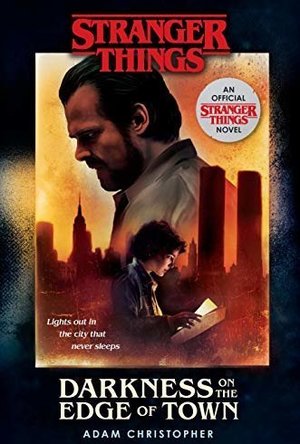
Jim Hopper (1 more)
Serial killers and cults, oh my!
Too much attention to detail (1 more)
Using the same body language for every character
In 1977, New York City was a disaster; men were trying to return to a normal life after Vietnam ended, gangs were on every street corner, and a serial killer, by the name 'Son of Sam,' was on the loose. But for Detective Jim Hopper, New York was housing another serial killer just for him- - - a killer who is killing Vietnam war veterans, and leaving behind a psychic calling card, known as the Zener cards.
Adam Christopher is the chosen author to tell Stranger Things' fans about the most important homicide case that Jim Hopper ever worked on in the novel 'Darkness on the Edge of Town.' Fans may recall from season 2, when Eleven found a secret hatch in Hopper's cabin, it revealed boxes under the floor - one which was labeled 'New York.' This is that story.
The entire book is Hopper telling Eleven about his greatest homicide story from New York City. Readers get to meet new characters from Hopper's past, but the most memorable may be his partner in the Homicide Unit, Rosario Delgado (1977 was a time where Homicide Units didn't allow female detectives, and Delgado is one of the first of few that is allowed into the unit). Delgado, who is Cuban, but was raised in Queens, New York, has all the right attitude that wins over her partner, Hopper. The reader will realize that they are two-peas-in-a-pod.
Quickly, the story gets into the first case the two have together: the Zener card serial killer; here, we learn that there were two previous victims, both murdered the same way: stabbed five times with the wounds joining together to form a five-pointed star. Throughout the book, the story goes back and forth between 1977 and the present, where Eleven asks questions about the story, and also, Hopper questioning himself as to whether he should continue to tell Eleven the story.
But soon, we meet a very important man named Leroy Washington - a gang member who wants protection in exchange for the information that he holds- this leads Hopper to our villain: a cult leader who goes by the name Saint John. This villain believes that Satan is going to rise and destroy New York City.
Backtracking a little before, Hopper and Delgado are taken off the case of the Zener card murders, introducing readers to Special Agent Gallup. Gallup states that the third victim, Jacob Hoeler, was also a Special Agent, so the case is turned over to Federal Agents. "What you don't know, Detective, is that Jacob Hoeler is one of ours- - - Special Agent Jacob Hoeler. He was working on assignment, and the fact that he was killed in the course of his duties is of primary concern to my department. Therefore, we need to be sure that a most thorough investigation is carried out. In order to ensure that happens, we will be taking the case in-house. " Hopper, along with Delgado, refuse to let the case go, and secretly continue to work on it. But, as they dig deeper into the evidence and crime scenes, the two realize the murder case is a part of something much bigger - - - a cult that is armed with vehicles and weapons, ready to take over New York City for their leader, Saint John.
Readers get to see the story from both Hopper's and Delgado's point of view, which readers may question how Hopper knows Delgado's side of the story, but quickly to react, Eleven asks this very question for us: " 'Fair point,' said Hopper. 'But we - - - I mean, Delgado and me- - - we pieced it all together afterward. We had to interview everyone we could, and we put it all into a big official report. Actually, it took way longer to write that thing up than we spent on the investigation itself. We were even flown down to D.C. to present it to a bunch of anonymous suits in some federal building. They grilled us pretty well, too, although I ever found out who they all were. ' He grinned. ' Kinda sums the whole thing up, really.' " Even so, without Delgado's point of view, the story wouldn't have turned out as well as it did.
Hopper's obsession with cracking this case lands him in the center of it- - - he is recruited, not by choice, to the task force that is trying to top Saint John's big plan to destroy New York City. Leroy Washington, the informant from before, is Hopper's wing man for the mission, because Washington turns out to be a recruiting officer for the cult. Hopper is to pretend that he is a new recruit, and that he is an ex-cop, who just happened to 'murder' two people the night before. Hopper infiltrating the cult is one of the most exciting parts of the book, but the sequence of these scenes are much too short, leaving this reader disappointed.
Unfortunately, by this time, Delgado has become somewhat of a secondary character. She still works the case, being in the-know of Hopper going undercover, but we see little else of Delgado's character being developed. This is a missed opportunity indeed.
Although I enjoyed Christopher bringing Hopper's backstory to light, the writer is so detail oriented in his writing, that it bogged down much of the flow in the story. The reader is told things in almost every scene that come to nothing, and just seem to waste the reader's time. You may also find that the author uses the same words or physical actions to describe emotions for every single character (such as neck rolling to show stress), which gets old very quickly.
With that said, and only a few inconsistencies here and there, the book was very good. The story takes off pretty quickly and doesn't seem to slow down. The scenery descriptions put the reader right there with our favorite Hawkins Police Chief, Jim Hopper, but the best part about this book is that you don't have to be a Stranger Things' fan to enjoy it; anyone who enjoys Crime Fiction would love this story. Highly recommend!
Adam Christopher is the chosen author to tell Stranger Things' fans about the most important homicide case that Jim Hopper ever worked on in the novel 'Darkness on the Edge of Town.' Fans may recall from season 2, when Eleven found a secret hatch in Hopper's cabin, it revealed boxes under the floor - one which was labeled 'New York.' This is that story.
The entire book is Hopper telling Eleven about his greatest homicide story from New York City. Readers get to meet new characters from Hopper's past, but the most memorable may be his partner in the Homicide Unit, Rosario Delgado (1977 was a time where Homicide Units didn't allow female detectives, and Delgado is one of the first of few that is allowed into the unit). Delgado, who is Cuban, but was raised in Queens, New York, has all the right attitude that wins over her partner, Hopper. The reader will realize that they are two-peas-in-a-pod.
Quickly, the story gets into the first case the two have together: the Zener card serial killer; here, we learn that there were two previous victims, both murdered the same way: stabbed five times with the wounds joining together to form a five-pointed star. Throughout the book, the story goes back and forth between 1977 and the present, where Eleven asks questions about the story, and also, Hopper questioning himself as to whether he should continue to tell Eleven the story.
But soon, we meet a very important man named Leroy Washington - a gang member who wants protection in exchange for the information that he holds- this leads Hopper to our villain: a cult leader who goes by the name Saint John. This villain believes that Satan is going to rise and destroy New York City.
Backtracking a little before, Hopper and Delgado are taken off the case of the Zener card murders, introducing readers to Special Agent Gallup. Gallup states that the third victim, Jacob Hoeler, was also a Special Agent, so the case is turned over to Federal Agents. "What you don't know, Detective, is that Jacob Hoeler is one of ours- - - Special Agent Jacob Hoeler. He was working on assignment, and the fact that he was killed in the course of his duties is of primary concern to my department. Therefore, we need to be sure that a most thorough investigation is carried out. In order to ensure that happens, we will be taking the case in-house. " Hopper, along with Delgado, refuse to let the case go, and secretly continue to work on it. But, as they dig deeper into the evidence and crime scenes, the two realize the murder case is a part of something much bigger - - - a cult that is armed with vehicles and weapons, ready to take over New York City for their leader, Saint John.
Readers get to see the story from both Hopper's and Delgado's point of view, which readers may question how Hopper knows Delgado's side of the story, but quickly to react, Eleven asks this very question for us: " 'Fair point,' said Hopper. 'But we - - - I mean, Delgado and me- - - we pieced it all together afterward. We had to interview everyone we could, and we put it all into a big official report. Actually, it took way longer to write that thing up than we spent on the investigation itself. We were even flown down to D.C. to present it to a bunch of anonymous suits in some federal building. They grilled us pretty well, too, although I ever found out who they all were. ' He grinned. ' Kinda sums the whole thing up, really.' " Even so, without Delgado's point of view, the story wouldn't have turned out as well as it did.
Hopper's obsession with cracking this case lands him in the center of it- - - he is recruited, not by choice, to the task force that is trying to top Saint John's big plan to destroy New York City. Leroy Washington, the informant from before, is Hopper's wing man for the mission, because Washington turns out to be a recruiting officer for the cult. Hopper is to pretend that he is a new recruit, and that he is an ex-cop, who just happened to 'murder' two people the night before. Hopper infiltrating the cult is one of the most exciting parts of the book, but the sequence of these scenes are much too short, leaving this reader disappointed.
Unfortunately, by this time, Delgado has become somewhat of a secondary character. She still works the case, being in the-know of Hopper going undercover, but we see little else of Delgado's character being developed. This is a missed opportunity indeed.
Although I enjoyed Christopher bringing Hopper's backstory to light, the writer is so detail oriented in his writing, that it bogged down much of the flow in the story. The reader is told things in almost every scene that come to nothing, and just seem to waste the reader's time. You may also find that the author uses the same words or physical actions to describe emotions for every single character (such as neck rolling to show stress), which gets old very quickly.
With that said, and only a few inconsistencies here and there, the book was very good. The story takes off pretty quickly and doesn't seem to slow down. The scenery descriptions put the reader right there with our favorite Hawkins Police Chief, Jim Hopper, but the best part about this book is that you don't have to be a Stranger Things' fan to enjoy it; anyone who enjoys Crime Fiction would love this story. Highly recommend!