
Search
Search results

Haley Mathiot (9 KP) rated The Postmistress in Books
Apr 27, 2018
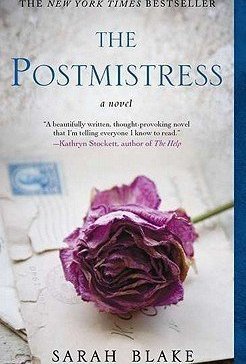


The Postmistress by Sarah Blake
Genre: Fiction
Rating: DNF
(No Summary.)
The thing about reading is that you need to pick up the book, and be wrapped up in it. It needs to flow well. It must be readable. It must be understandable. Words create sentences and sentences create paragraphs, etc.
When I started reading The Postmistress, I felt like I’d jumped into the middle of a book, in the middle of a series, with no idea who was who or what was happening or even who the narrator was. The sentences didn’t make any sense. It was like reading sentences backwards. Have you ever tried that? Do it. Ok now that you’ve tried it, you know how I felt. It felt like a bunch of jumbled words.
The style was strange, there was weird punctuation that made what little clear sentences there were choppy and difficult to read. I kept reading the same phrase over and over and eventually giving up.
The point of view isn’t first person, nor is it third. And whatever person it was, it kept switching mid-chapter so I couldn't keep up. The dialogue felt out of place, like people from that time period shouldn’t be speaking like that (Or maybe I’m just not educated on WWII culture, which is more likely than not. I’ll give the author the benefit of the doubt).
And by page 15 I still had no clue who was who or what was going on. I felt no desire to continue reading, and trying to decipher the paragraphs felt like a chore.
And honestly, reading should not be a chore. I won’t finish a book if I could be reading better things.
I’m sorry to be so negative, I hate writing negative reviews. But I could not read this book. I couldn’t tell you what the plot was or what the characters were like if I tried.
As always, please remember that this is my personal opinion. Never decide to read or not to read a book based on one person’s views.
This was the second stop for Katrina’s Borrow My ARC Tour at Bloody Bad. Check the other tour stops here for other reviews, or see Amazon.com reviews.

RavenclawPrincess913 (253 KP) rated Eclipse (Twilight, #3) in Books
Feb 12, 2019


Contains spoilers, click to show
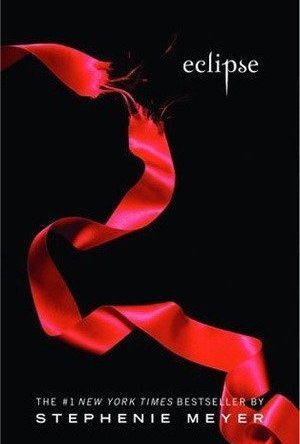
Title: Eclipse
Author: Stephenie Meyer
Summary: In Eclipse by Stephenie Meyer Bella and Jacob make-up and fight again. Edward also wants her no where near the pack because he thinks it’s dangerous so he has Alice “kidnap” Bella for a sleepover while he is out of town so she doesn’t run off to La Push again, but Jacob comes to the rescue and gets her from school. They hang out for a bit until he says he rather she be dead than a vampire. Rosalie goes on to explain to Bella why she doesn’t want her to become a vampire and Jasper tells Bella later on about his first years as a vampire with Maria and the newborn army. Than Victoria’s and Riley’s newborn army comes to fight the Cullens and the Pack. After they are defeated the Voultri show up to clean up the mess.
Review: In the book when Edward had Alice ‘kidnap’ Bella so she wouldn’t run off to La Push to see Jacob was very controlling, just because he’s her boyfriend that doesn’t give him the right to tell her who she can and can’t be friends with. Than when Jacob told her he rather she be dead than a vampire was not right of him either and very messed up. I also understand why Rosalie feels the way she does about Bella becoming a vampire. I also feel for Jasper during what he went through in his newborn years with Maria. Than when Jacob was being pushy and kissed her it pissed me off so much I would have punched him too. Also I knew it was Victoria the whole time it was very obvious and she’s not really good at it. It was also mean of her to use Riley and the newborn vampires for her own selfish games. I was very glad when they defeated her. In my opinion the Voultri should have let Bree live since she surrendered that part was very sad. But I’m glad Bella agreed to marry Edward the old fashioned way like Alice and Him wanted instead of just being to Vegas even though Seth is better than both Edward and Jacob. Both of them are very controlling.
Would I recommend? Yes
Molly J (Cover To Cover Cafe) (106 KP) rated Before I Saw You in Books
Feb 25, 2019
Wow! This is my first ever Amy K. Sorrells novel and it most definitely will not be my last one. This book, it's setting, it's characters, it's messages......all of it absolutely gripped me and took me on an emotional roller coaster ride. I was up, down, sideways, in and out while reading this novel, and it left me with a feeling I haven't had with a book in a long, long time.
As a former street drug abuser, I related with this book on so many levels, with it's work of opioid abuse weaved into the story line. It's a very real thing now a days, and so many people are dying from the use of it. Thankfully, with God's love and kind forgiveness, I was saved and have been drug free for more than 15 years now, and this novel brought with the flood of emotions. Watching Jaycee struggle with certain decisions, watching her and her faith grow stronger through the novel, really made me see myself in her.
Throughout these pages, Ms. Sorrells has woven a message of the utmost importance from our God.......true love. I love my children more than life itself, but my truest love of all comes from, and for, our God. I could feel that message unweaving with each page turn, felt it envelope me and keep me hooked to the story.
This is more than a 5 star book. This is one that I highly recommend to everyone. This book is emotional, gripping, and may not be an easy read for some, but it's one that will forever be on my shelf and one that I will turn to when I need a reminder that sometimes struggles are what are needed to over come the mountains that God puts in my life. Faith,hope, love and more make up this novel and I can't wait to dive into another amazingly chiseled creation from this talented author! Well done, Ms. Sorrell!
*I received a complimentary copy of this book from the publisher and was under no obligation to post a review, positive or negative.*

Mariafrancesca (30 KP) rated Only Ever Yours in Books
Mar 30, 2019
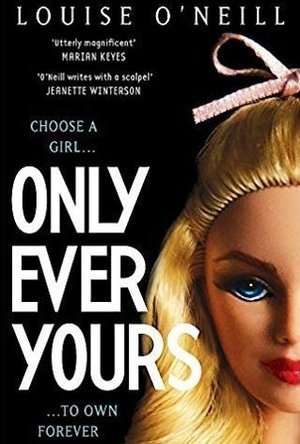
I am not sure what to think about this book.
I didn't like a single thing, I couldn't put it down for a second but I didn't like it: I didn't like the story or the settings, and the characters are horrible.
Then again I don't think this book is meant to be liked.
It disturbs me in a way that I cannot really understand: it disturbs me because it is so cliche that I would like to laugh at it, but in the same time I can see so much of my younger self in those girls that it scares the hell out of me: all the doubts, and the mean best friends, the willing to fit in no matter the costs - even if it means betraying yourself.
This book makes me feel uncomfortable.
At the beginning I didn't like the line that the author put between women and men, like saying "this is all men's fault, they did this, they are the bad guys", and then you meet this men and you realize that they are just scared teenager as well, with a life already decided for them. Maybe this book disturbs me because it just put you in the middle of the story but it does't explain how humanity arrived at that point: how is it possible that people just stopped to have daughters? Why women didn't fight this culture when it was spreading? Why did they accept all of that in the first place?
Maybe again, this is not the point of the book and maybe what it really bothers me about it is the complete lack of hope: there is not a single character that can be considered good (even though no one can be considered the bad guy), not a single character took the right path, they are all absolutely incapable. But worst than that I think is the complete lack of hope for the society, the resignation to a system that cannot be changed, drugs and death as the only way out.
I didn't like this book at all, I wasn't impress by it, I felt offended, angry, sometimes bored.
But I couldn't put it down until the end, and maybe this is why is worth reading it.

Whatchareadin (174 KP) rated This Is Where It Ends in Books
Apr 9, 2019
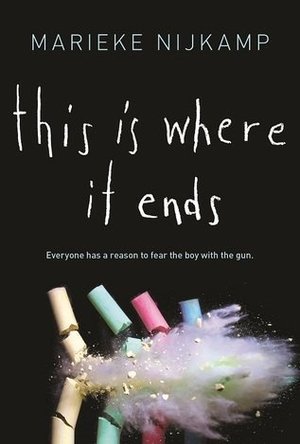

It's every parents worse nightmare. A shooting at their child's school and there is nothing you can do about it. This Is Where It Ends is told from the perspective of four senior students in the thick of the chaos during the 54 minutes Opportunity High School is under attack. Opportunity, Alabama could be any small town in American and we have seen stories like this too many times.
Most of the school is in the auditorium for a new semester assembly they have each year. As the principal finishes the assembly and is about to dismiss everyone, a shot rings out and everyone soon finds out that they are trapped. Why is this happening and who will make it out alive?
Story told by:
- Autumn is a dancer who is destined to follow in her mother's footsteps and go to Julliard and dance all around the world.
- Sylvia is one of the smartest students at Opportunity. She will get into any college that she applies to, but with her mother as sick as she is, will she actually be able to go.
-Claire is a star on the track team and known as "Sarge" to her fellow JROTC classmates. She is fortunate enough not to be in the auditorium during the shooting, but her little brother, Matt is.
-Tomàs is Sylvia's twin brother. He is supposed to be in detention during the assembly, but instead he is in the Principal's office with his best friend Fareed, doing something he shouldn't be doing when he hears the first shot.
Each one of these students have a different view of the terrible incident that is taking place in their school. They all have a different relationship with the shooter. They each play a significant role in helping get students to safety, risking their own lives the entire time.
This is another really good book that I have read this year. I could see myself among those students, feel their fear, and hope for their survival. I thoroughly enjoyed this Big Library Read more than others I have gotten.
I look forward to more books by this author.
Janeeny (200 KP) rated A History of the World in 100 Objects in Books
Jun 10, 2019
When I first read this I didn’t realise that this was a book to accompany a very successful radio show on BBC Radio 4, which is thankfully still available to listen to.
I’ve had this for 6 years and have been reluctant to read this as I have to be in the right frame of mind for certain non-fiction books. Especially ones that seem like they are going to be a stream of facts with not a lot of context, so “A History of the world . . “ pleasantly surprised me. This book isn’t weighed down with facts and history, the author doesn’t go into too much uneccesary detail or waffle on too much. He provides just enough information to peak your interest.
Each object has its own chapter, and each chapter is reassuringly only a few pages long and nicely segmented. Its a bite-size history of the era in which the object was made, the story of the finding the object, and a couple of ‘expert’ opinions on the objects impact on the world.
When I read Non-fiction I like to come away from the experience with a ‘Party fact’ (you know, that bit of useless trivia you tell people at social gatherings to either fill a silence or sound interesting) and I certainly got my fair share with this book.
My party fact would be the flood tablet, the story on the tablet tells the tale of a man who was told by his god to build a boat and load it with his family and animals because a deluge is about to wipe humanity from earth. The thing that made this stick in my mind was that it pre-dated the Noah story by about 400 years.
Of course, since reading I’ve looked into this and found out that there are many flood stories that pre-date Noah, but at the time I was thinking “How does the world not know about this?” “Does Richard Dawkins know about this?” A little research has prevented me from a social faux pas, but still it’s all intriguing.
The History of the world in 100 objects, does exactly what it says on the tin!
ArecRain (8 KP) rated Beating Ruby (Spotless Series Book 2) in Books
Jan 18, 2018

I have been putting off this review for a long time because once I write it, I must accept that I have finished the novel and the wait for book 3 begins. If I loved Spotless, I dont think there are words for how I feel about Beating Ruby. I dont think I could love this series more if I tried. It is utter perfection in every way and has everything you could ever want in a novel whether that be action, romance, or humor. Monk (and her leading lady Island) has a unique voice that gives her life all her own. I didnt think it was possible for an author to fit so much personality into a fictional character, but I feel as if Island and I are old friends, that she is flesh and blood instead of words on paper. Not to mention she is far more relatable than the plethora of heroines I read about.
I will be honest and say that Beating Ruby was a bit hard to get into. Mainly because, like Island, I was still too hung up on March to give Alex, or the plotline itself, a chance. I am so glad I hung in there though. Monk likes to torture her readers with what ifs and maybes, but at least in the instance, she wasnt a complete sadist.
While I enjoyed Spotless, I definitely feel that Beating Ruby surpassed the bar its prequel raised. It still had the same sassy humor and brains that Spotless had. However, I feel Beating Ruby brought more emotions that Spotless just didnt touch. Of course, there was plenty of leftover turmoil from secrets revealed in Spotless to fuel the emotional fire as well as questions that still needed answers.
Again, Monk ends her sequel with what I would consider a cliffhanger. I should be furious that I have to suffer yet again until she graces us with the third in the series. However, I think I can forgive her since Beating Ruby surpassed its predecessor. Even if the third is only half as good as the first two, I will content.

Goddess in the Stacks (553 KP) rated Our Endless Numbered Days in Books
Sep 26, 2018

I don't like unreliable narrators. I didn't realize, at first, that Peggy was one. Even though she mentions at the start of the book that a doctor said she had Korsakoff's syndrome - meaning malnutrition has messed with her memories - I assumed that it was just because her experiences were so unbelievable that the doctor thought she'd made things up. I also don't like unreliable narrators because the author obviously knows what truly happened. Leaving the reader in the dark about it seems rude.
Peggy's narration does seem childlike, often. While at the beginning of the book, that can be excused because she is eight years old, by the end she is seventeen, yet still talking about things with a child's understanding. I thought that was the effect of Korsakoff's syndrome, not that she was entirely making some things up.
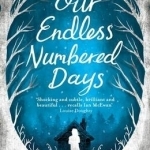
In our endless numbered days, Peggy is effectively kidnapped by her father when she is eight, and taken to some place deep in the German forest. She spends the next nine years alone in the forest with him, trapping squirrels, gathering roots and berries, and growing simple crops in a small vegetable patch. He tells her, repeatedly, making her repeat it back to him, that the rest of the world was destroyed in a massive storm. They are the last two people alive in their small, sheltered valley. She doesn't question it until she sees a man in their forest, and that eventually leads her to find civilization again. The book is told in two timelines, flashing back and forth from her memories of her time in the forest, and the present where she's attempting to re-acclimate to London.
I'm not really sure what to believe; Peggy's memory or what her mother thinks happened. There are just enough oddities to make either story plausible. I think I prefer Peggy's version. But that's the trouble with unreliable narrators; there's no way to actually know. I don't like ending a book frustrated. Books should make you feel things, yes, but frustration is an odd emotion to aim for.
This book is odd.
You can find all my reviews at http://goddessinthestacks.com
Hazel (1853 KP) rated All That is Solid Melts into Air in Books
Dec 14, 2018
<b>My rating: 3.5</b>
<i>I received this book for free through Goodreads First Reads.</i>
<i>All That is Solid Melts into Air</i> (the title taken from a Karl Marx quote) is the debut novel from Irish author Darragh McKeon. Set mostly in 1986, it follows the lives of several people in the aftermath of the Chernobyl disaster.
On reading the blurb I thought that the plot would be solely focused on the Chernobyl disaster however this was not the case. In fact it is difficult to pick out what the actual plot line was. Each character has individual storylines, some of which connect up, but the disaster is not completely the entire focus of the novel.
Beginning in April 1986 we read about Yevgeni, a nine-year-old piano prodigy and his life in Soviet Russia. We also discover his aunt, Maria, who, although through third person narrative, describes her life, thoughts and difficulties at this period of time. The person who appeared to be the main character for the majority of the narrative was Grigory Ivanovich Brovkin, a surgeon who so happens to be Maria’s ex-husband that gets sent out to Ukraine to assist with the clean up after the Chernobyl incident. In Ukraine lives Artyom, a thirteen-year-old boy who is forced to evacuate his home to get away from the radiation. Here, while not until November 1986, Grigory and Artyom’s storylines merge together.
The novel ends in April 2011, but by this point Artyom’s story has fizzled out, his sole purpose being to show the reader what life was like for the evacuees: shockingly terrible.
As I have said, there was not really a main plotline, however the book gives a good account of what happened and how things were dealt with after. That is, of course, if it is historically accurate. Despite studying the Soviet Union at school, my knowledge of the Chernobyl disaster was virtually non-existent. There is also a hint of romance regarding Grigory and Maria.
Overall it was incredibly well written, full of description and very interesting.
